

Stanford University School of Medicine scientists have identified a brain circuit that's indispensable to the sleep-wake cycle. This same circuit is also a key component of the reward system, an archipelago of interconnected brain clusters crucial to promoting behavior necessary for animals, including humans, to survive and reproduce.
The MTPaginate tag only works within PHP documents!
Make sure that the document extension is .php and that your server supports PHP documents.
105)
$paginate_current_page = 105;
$paginate_sections = array( 0
, 30, 60, 90, 120, 150, 180, 210, 240, 270, 300, 330, 360, 390, 420, 450, 480, 510, 540, 570, 600, 630, 660, 690, 720, 750, 780, 810, 840, 870, 900, 930, 960, 990, 1020, 1050, 1080, 1110, 1140, 1170, 1200, 1230, 1260, 1290, 1320, 1350, 1380, 1410, 1440, 1470, 1500, 1530, 1560, 1590, 1620, 1650, 1680, 1710, 1740, 1770, 1800, 1830, 1860, 1890, 1920, 1950, 1980, 2010, 2040, 2070, 2100, 2130, 2160, 2190, 2220, 2250, 2280, 2310, 2340, 2370, 2400, 2430, 2460, 2490, 2520, 2550, 2580, 2610, 2640, 2670, 2700, 2730, 2760, 2790, 2820, 2850, 2880, 2910, 2940, 2970, 3000, 3030, 3060, 3090, 3120, 3146);
$paginate_top_section = $paginate_sections[$paginate_current_page-1]+1;
$paginate_bottom_section = $paginate_sections[$paginate_current_page];
} else {
$paginate_top_section = 1;
$paginate_bottom_section = 3146;
}
$paginate_self = '&' . $_SERVER['QUERY_STRING'] . '&';
$paginate_self = preg_replace("/&page=[^&]*&/", "&", $paginate_self);
$paginate_self = substr($paginate_self, 1, strlen($paginate_self) - 1);
if($paginate_self == '&')
$paginate_self = '';
else
$paginate_self = htmlentities($paginate_self);
$paginate_self = basename($_SERVER['PHP_SELF']) . "?${paginate_self}page";
?>
Make sure that the document extension is .php and that your server supports PHP documents.

Category: Biology
| Biology | September 5, 2016 06:38 PM |
| Biology | August 30, 2016 05:36 PM |
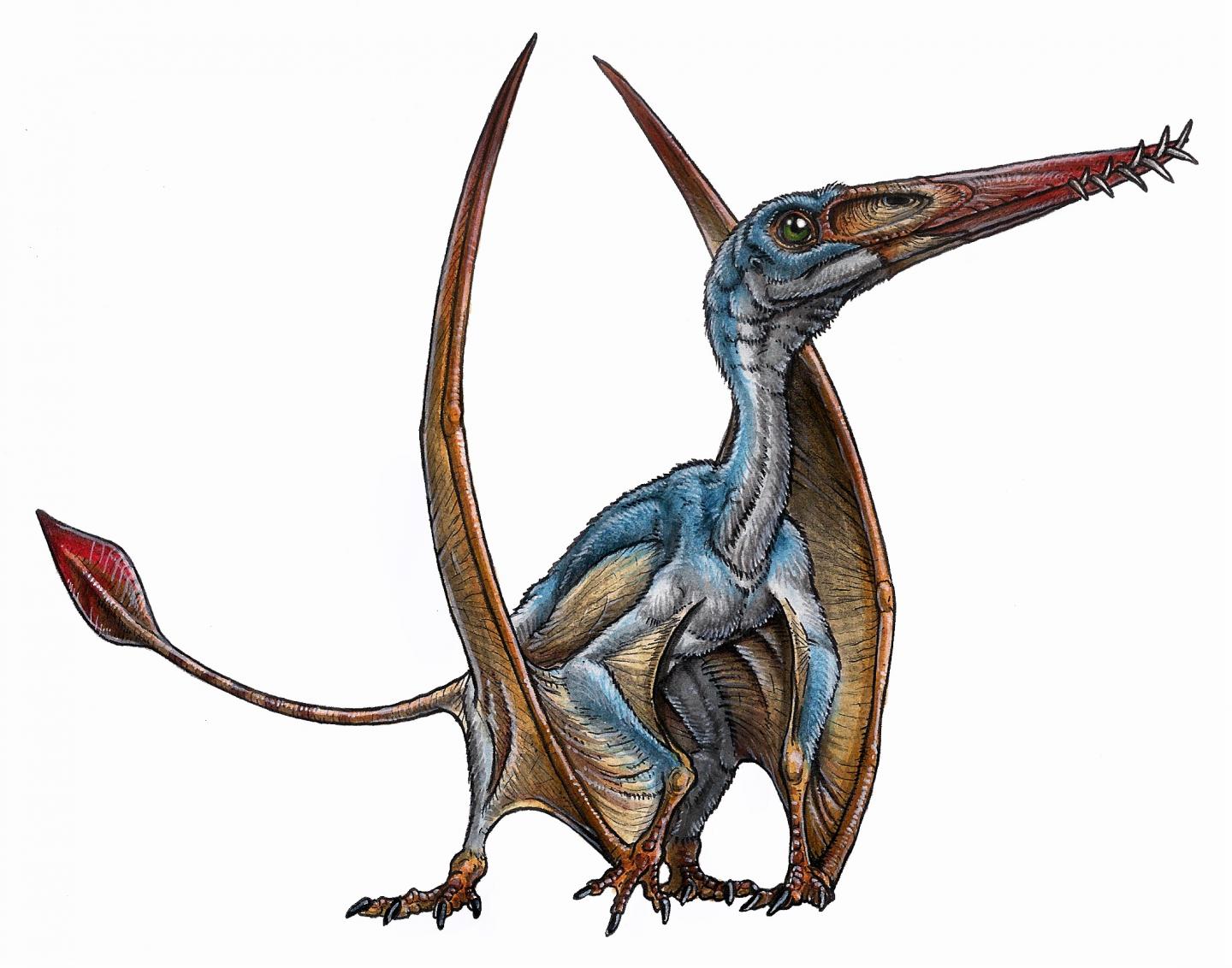
This is a paleoartist's reconstruction of a ptesosaur. Scientists today announced the discovery of a new species of pterosaur from the Patagonia region of South America. The cranial remains were in an excellent state of preservation and belonged to a new species of pterosaur from the Early Jurassic. The researchers have named this new species 'Allkauren koi' from the native Tehuelche word 'all' for 'brain', and 'karuen' for 'ancient'.
| Biology | August 29, 2016 06:12 PM |
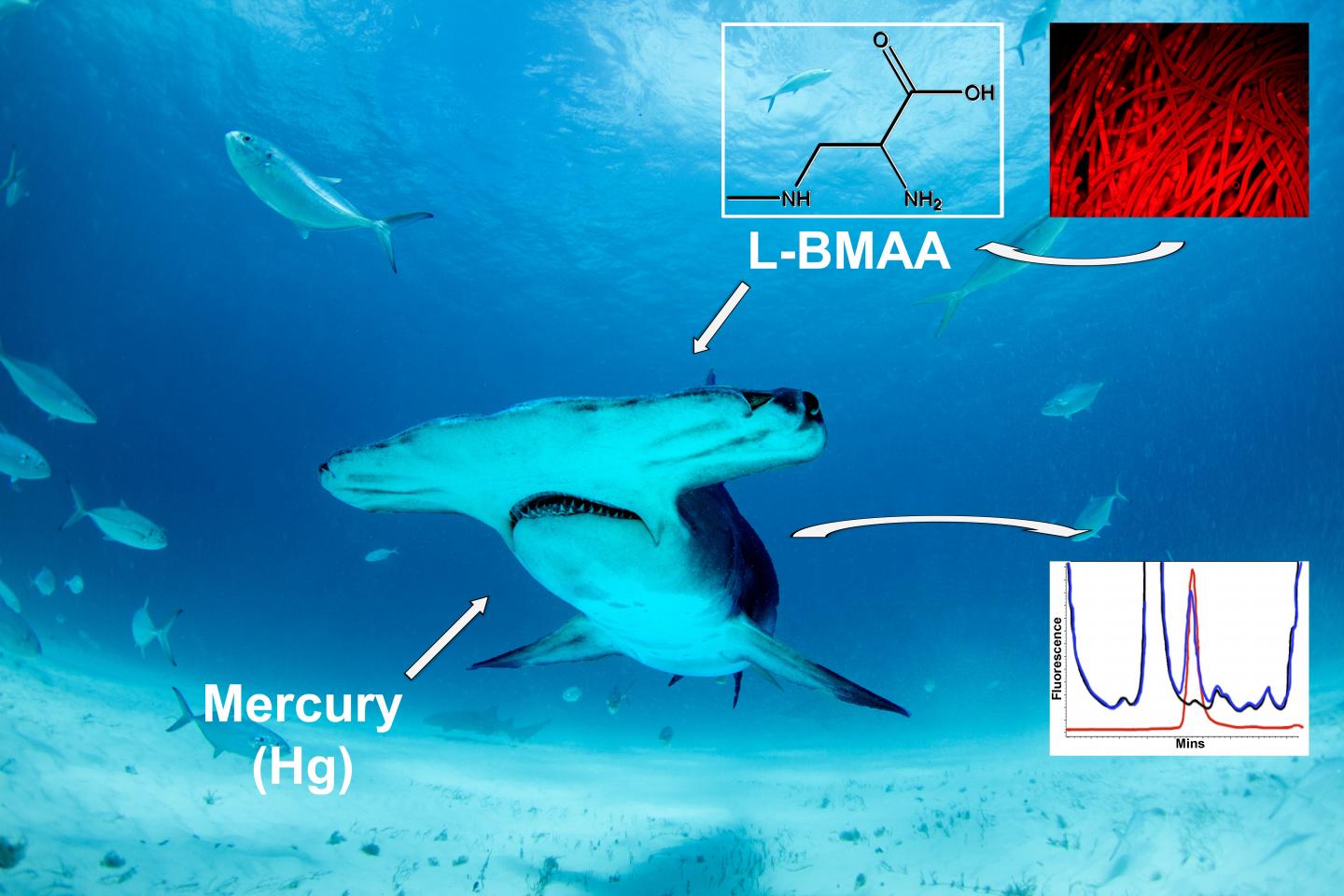
Cyanobacterial neurotoxin β-N-methylamino-L-alanine (BMAA) and Mercury are detected in sharks from the Atlantic and Pacific Oceans. In a new study, University of Miami (UM) scientists found high concentrations of toxins linked to neurodegenerative diseases in the fins and muscles of 10 species of sharks. The research team suggests that restricting consumption of sharks can have positive health benefits for consumers and for shark conservation, since several of the sharks analyzed in the study are threatened with extinction due to overfishing.
| Biology | August 22, 2016 06:24 PM |
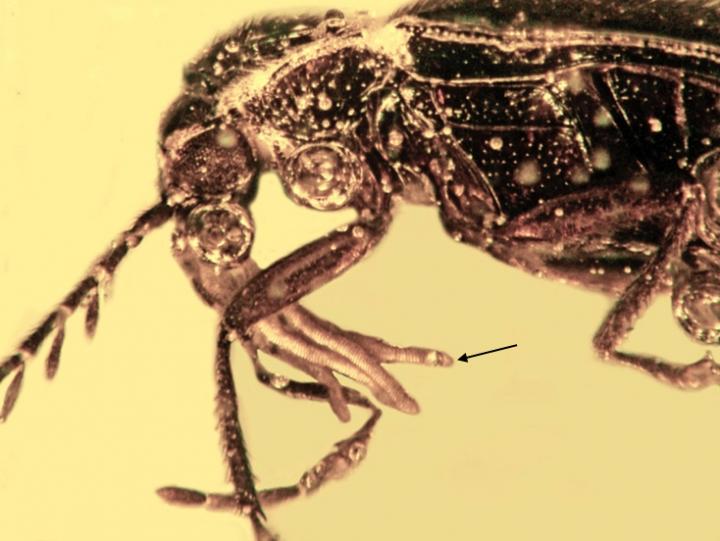
This is a fossil ptilodactyline beetle found in amber from Mexico. The black arrow points to pollinia attached to the beetle's mouthparts. When most people hear the word "pollinator," they think of bees and butterflies. However, certain beetles are known to pollinate plants as well, and new fossil evidence indicates that they were doing so 20 million years ago.
| Biology | August 22, 2016 06:24 PM |
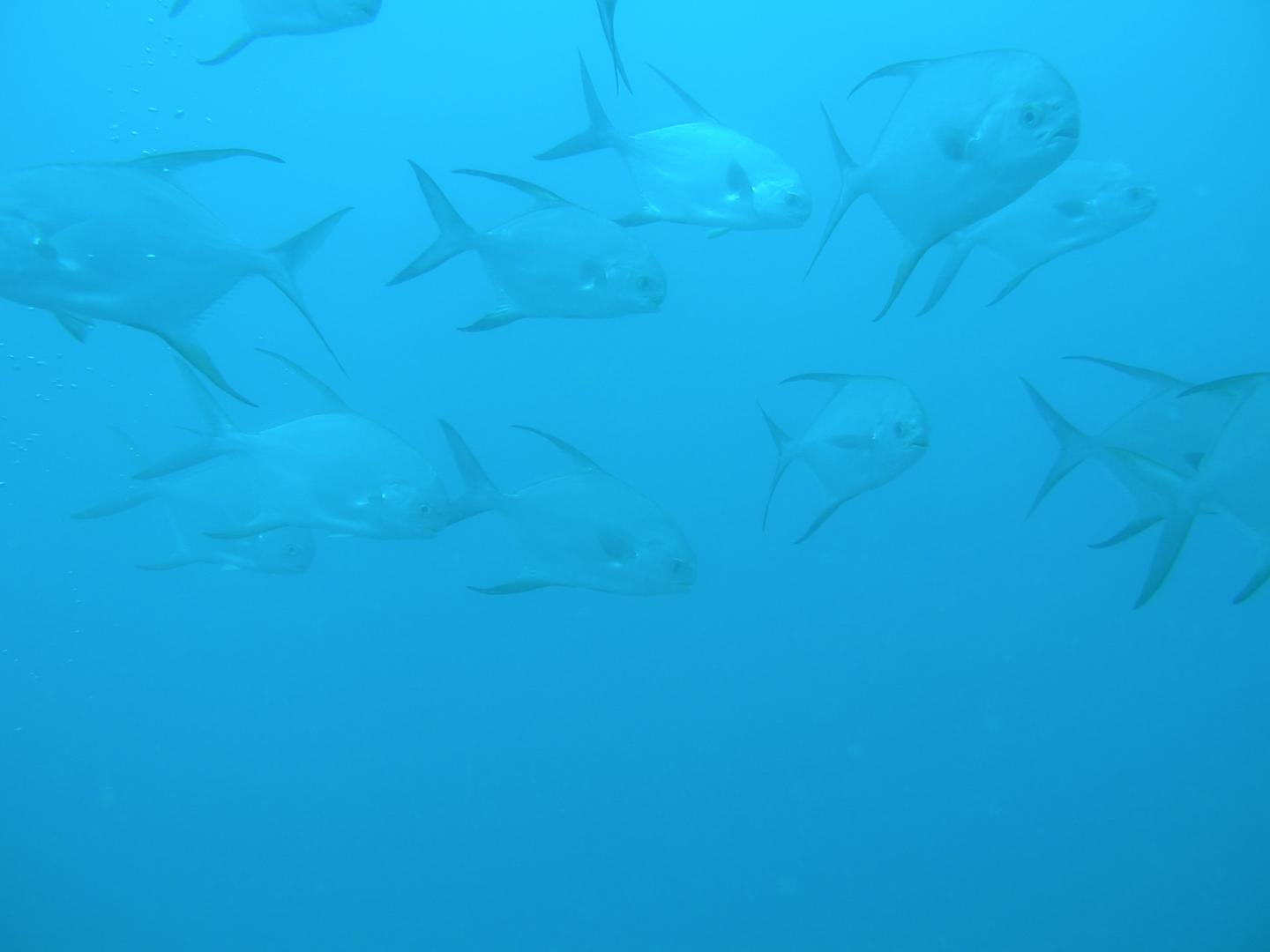
Squinting won't help you spot the fish in this photo. These snub-nosed darts blend seamlessly into their watery surroundings with help from their silvery reflective skin. In a matchup of animal superpowers, a clever form of camouflage might beat super sight -- at least in the ocean.
| Biology | August 11, 2016 06:30 PM |
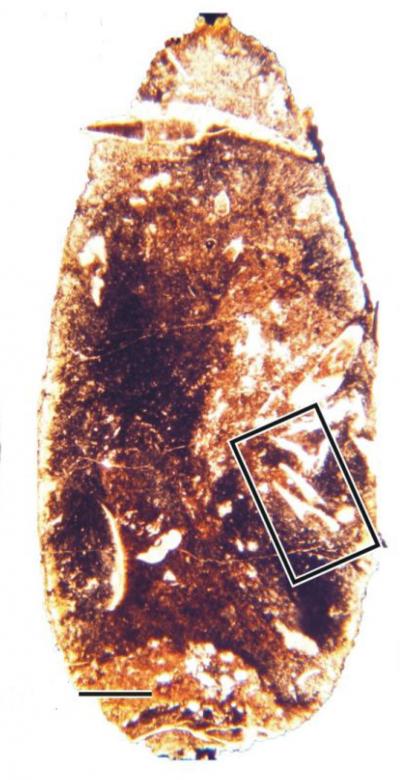
Image of a thin-section through an Orthacanthus coprolite with a black box indicating the tooth of an Orthacanthus. Scientists have discovered macabre fossil evidence suggesting that 300 million-year-old sharks ate their own young, as fossil poop of adult Orthacanthus sharks contained the tiny teeth of juveniles. These fearsome marine predators used protected coastal lagoons to rear their babies, but it seems they also resorted to cannibalising them when other food sources became scarce.
| Biology | August 10, 2016 05:54 PM |
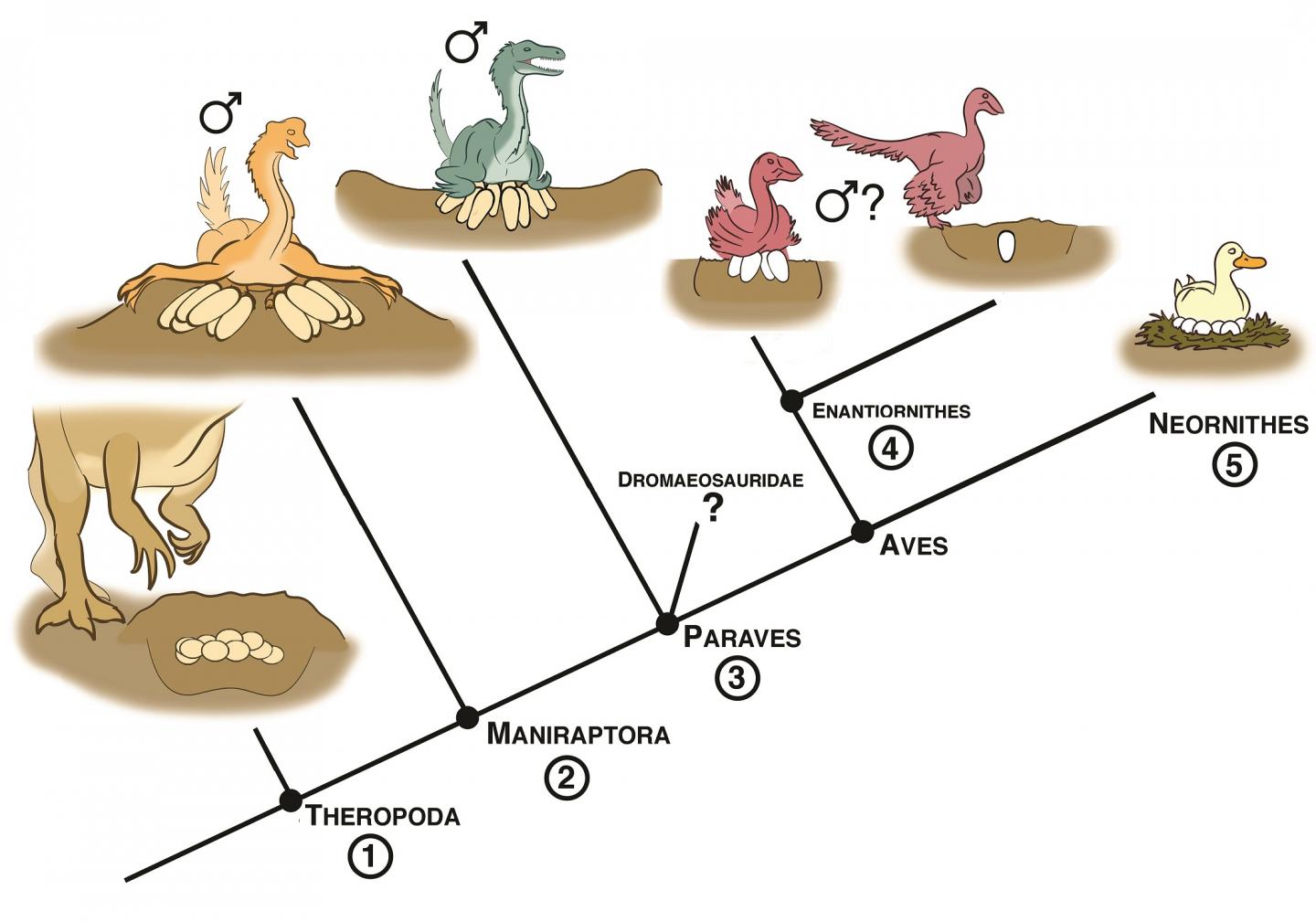
Birds' reproductive strategies have gone through a series of stages, from dinosaurs to today. What really did come first--the chicken or the egg? Birds' reproductive biology is dramatically different from that of any other living vertebrates, and ornithologists and paleontologists have long wondered how and when the unique features of bird reproduction originated. A new Review in The Auk: Ornithological Advances examines answers from three sources--modern birds, fossils of primitive birds, and fossils of the dinosaurs from which birds are descended--to shed new light on the subject.
| Biology | August 8, 2016 05:16 PM |
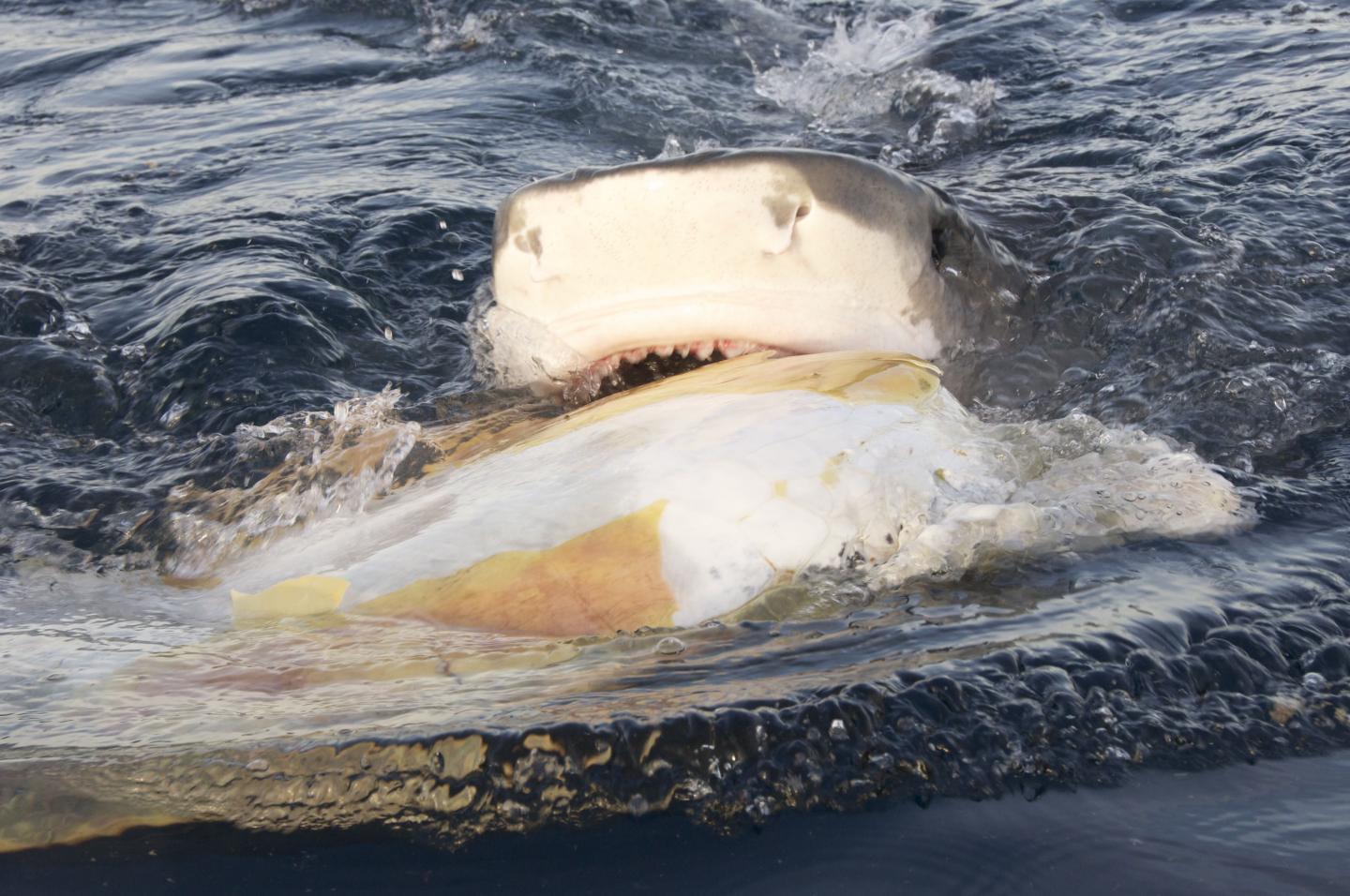
Tiger shark eating a turtle, Tiger sharks are known as impressive predators that hunt and consume almost anything from birds to sea turtles. But when the opportunity presents itself, these sharks easily convert into the role of marine scavengers. This behavior was reported¹ in Springer's journal Behavioral Ecology and Sociobiology by a team of American, Australian and British researchers led by Neil Hammerschlag of the University of Miami Rosenstiel School of Marine and Atmospheric Science in the US. They re-evaluated satellite tracking data collected from tiger sharks and green turtles off the Great Barrier Reef's Raine Island, which is home to the world's largest concentration of nesting green turtles.
| Biology | August 3, 2016 04:41 PM |
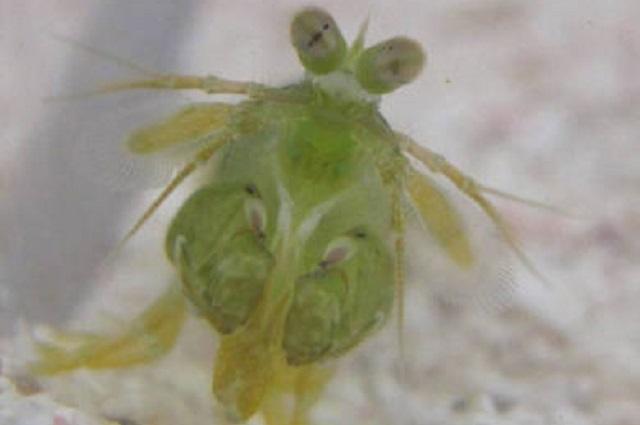
A mantis shrimp displaying its meral spots, visible as two purple dots. Mantis shrimp, often brightly colored and fiercely aggressive sea creatures with outsized strength, use the ultraviolet reflectance of their color spots as well as chemical signals to assess the likelihood of victory in combat, according to research led by a Tufts University doctoral candidate. The findings, published today in Royal Society Open Science, mark the first time that researchers have demonstrated that mantis shrimp (Neogonodactylus oerstedii) use both color and chemical cues when fighting over resources.
| Biology | August 3, 2016 04:41 PM |
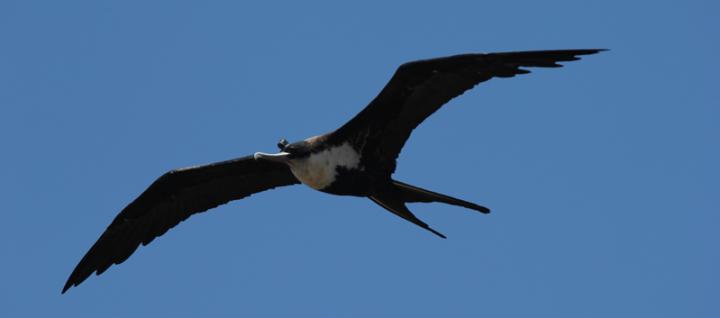
Frigatebirds reaches a wingspan of over two metres. They are excellent gliders and can cover several hundred kilometers a day. For the first time, researchers have discovered that birds can sleep in flight. Together with an international team of colleagues, Niels Rattenborg from the Max Planck Institute for Ornithology in Seewiesen measured the brain activity of frigatebirds and found that they sleep in flight with either one cerebral hemisphere at a time or both hemispheres simultaneously. Despite being able to engage in all types of sleep in flight, the birds slept less than an hour a day, a mere fraction of the time spent sleeping on land. How frigatebirds are able to perform adaptively on such little sleep remains a mystery.
| Biology | August 2, 2016 05:08 PM |
When reaching into a pocket or purse, it is easy to use the sense of touch to distinguish keys from loose change. Our brains seamlessly integrate the tactile, sensory cues from our fingers with hand movements to perceive the different objects.
| Biology | July 14, 2016 05:11 PM |
The discovery of a theropod dinosaur with Tyrannosaurus rex-like arms suggests that these unusual forelimbs may have evolved multiple times, according to a study published July 13, 2016 in the open-access journal PLOS ONE by Sebastián Apesteguía from the Universidad Maimónides, Argentina, and colleagues.
| Biology | July 13, 2016 05:55 PM |
Ants, it turns out, are extremely good at estimating the concentration of other ants in their vicinity. This ability appears to play a role in several communal activities, particularly in the voting procedure whereby an ant colony selects a new nest.
| Biology | July 8, 2016 06:38 PM |
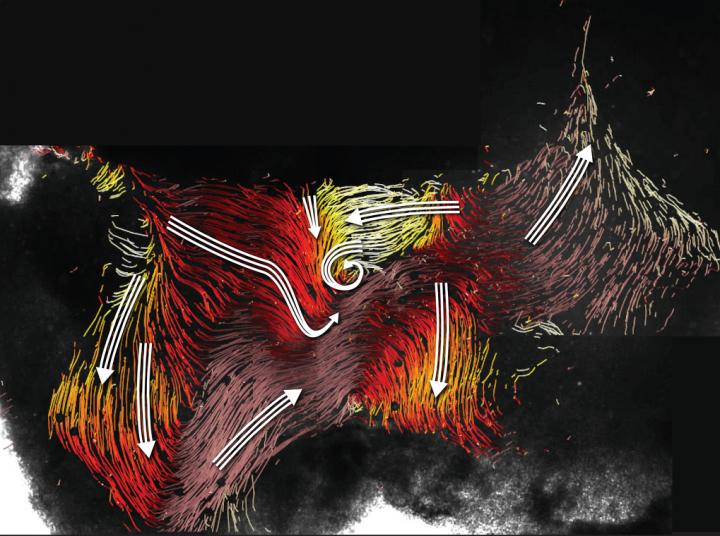
Flow map in the third ventricle of the mouse brain. We have all bumped our heads at some point, and such incidents are usually harmless. This is thanks to fluid-filled chambers in our brain that offset minor knocks and jolts and provide padding for sensitive components of our nervous system. Cerebral fluid, however, has more than just a protective function: It removes cellular waste, supplies our nervous tissue with nutrients, and transports important messenger substances. How these messenger substances are actually being delivered to their destination in the brain, however, was unclear until now. Göttingen-based Max Planck researchers have now discovered that tiny cilia on the surface of specialized cells could lead the way. Through synchronized beating movements, they create a complex network of dynamic flows that act like conveyor belts transporting molecular "freight". The results obtained by the scientists suggest that these flows send messenger substances directly to where they are needed.
| Biology | July 6, 2016 05:31 PM |

Beer bottles are pictured. By activating particular neurons, we may be able to influence alcohol drinking behavior, according to new findings published by researchers at the Texas A&M Health Science Center College of Medicine in the journal Biological Psychiatry.
| Biology | July 5, 2016 05:36 PM |
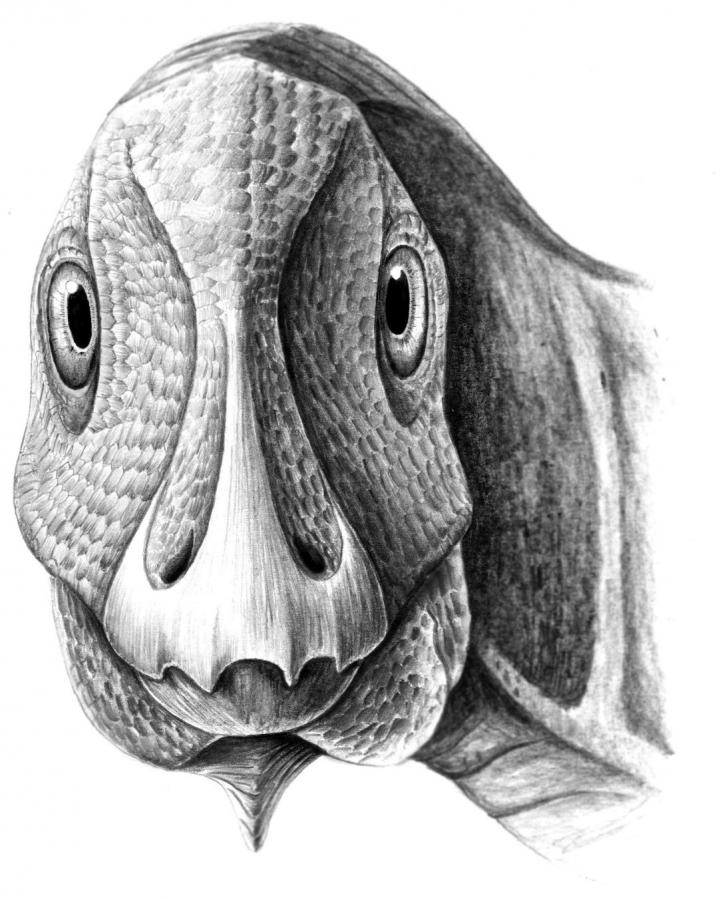
This is a reconstruction of the young, deformed Telmatosaurus individual, with the ameloblastoma just becoming visible on its lower left jaw. The first-ever record of a tumourous facial swelling found in a fossil has been discovered in the jaw of the dwarf dinosaur Telmatosaurus transsylvanicus, a type of primitive duck-billed dinosaur known as a hadrosaur.
| Biology | July 4, 2016 04:55 PM |
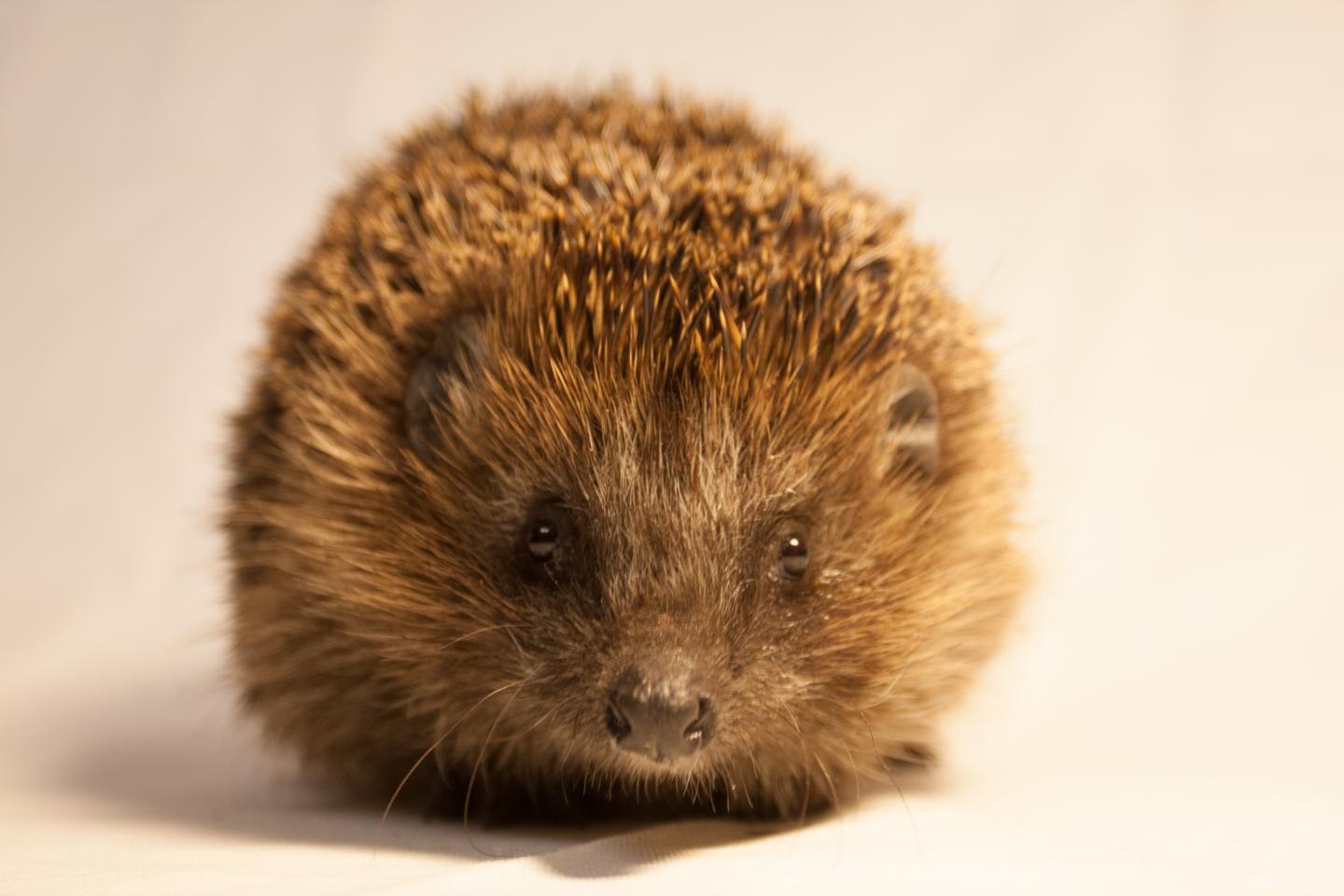
Hedgehogs cope more easily with city living than you might think. A species that is 15 million years old, hedgehogs have survived all kinds of environmental changes over the years, including urbanisation. Surprisingly, cities have often been found to have higher hedgehog populations than rural areas. Understanding why this is could help us to protect them in the future.
| Biology | June 30, 2016 05:30 PM |
An international team of scientists from Oxford University, UK, and Tel-Hai College, Israel, has shown that pea plants can demonstrate sensitivity to risk - namely, that they can make adaptive choices that take into account environmental variance, an ability previously unknown outside the animal kingdom.
| Biology | June 23, 2016 04:55 PM |
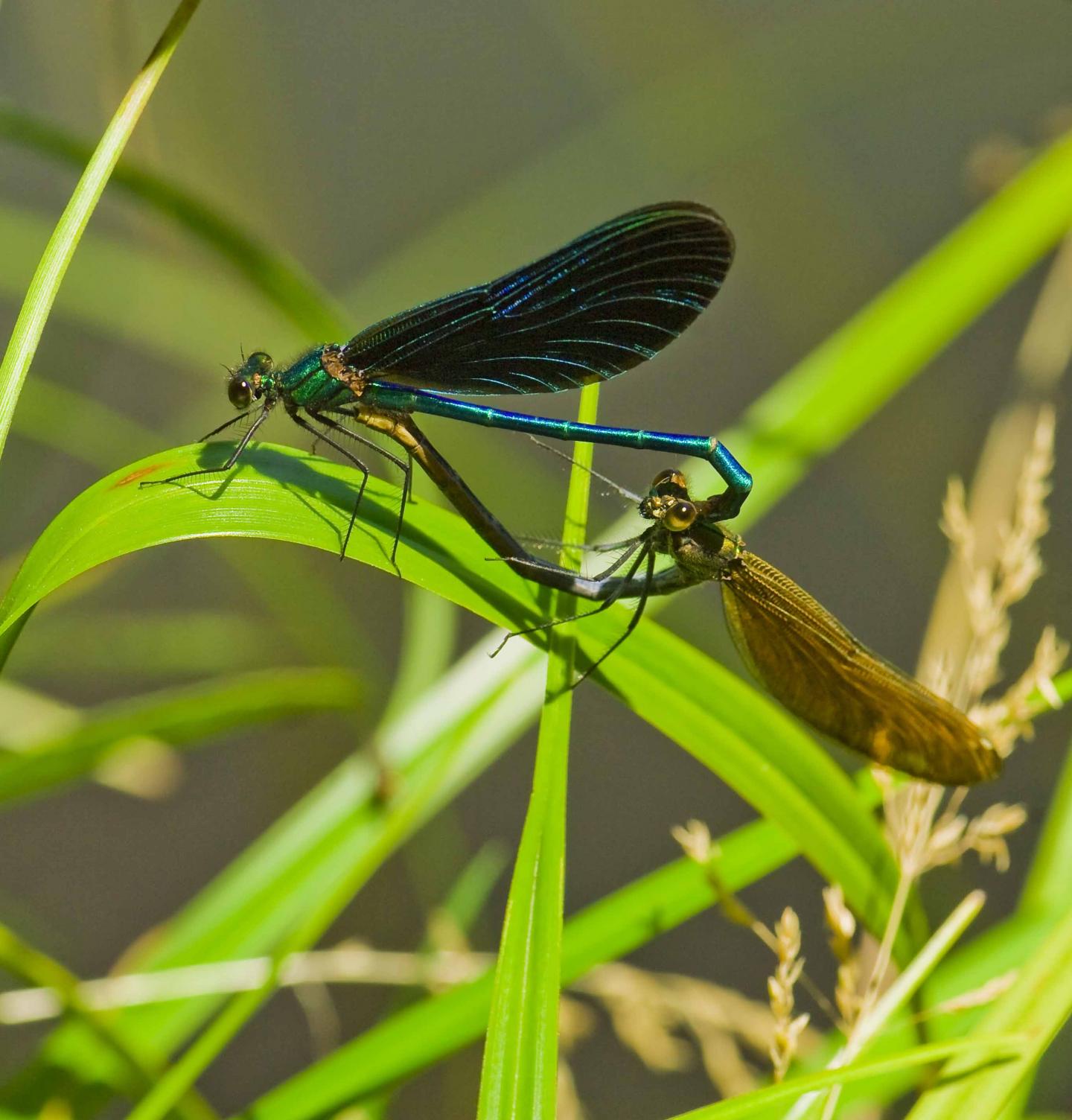
Male and female of the beautiful demoiselle (Calopteryx virgo) in the so-called "mating wheel". Traditionally, the evolutionary development of an insect species has been explained by the notion that the female insect chooses her male partner based on size and other factors, so-called assortative mating. These mating patterns have also been believed to partially explain how the isolation between different species is maintained.
| Biology | June 14, 2016 06:03 PM |
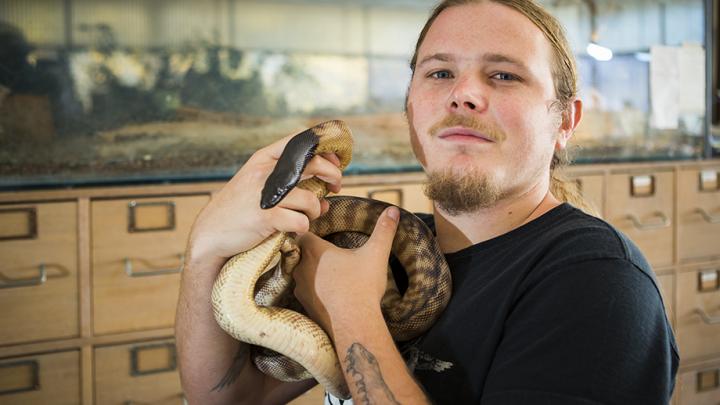
Damien Esquerre with a python. A new study into pythons and boas has for the first time found the two groups of snakes evolved independently to share similar traits, shedding new light on how the reptiles evolved.
| Biology | June 1, 2016 05:30 PM |
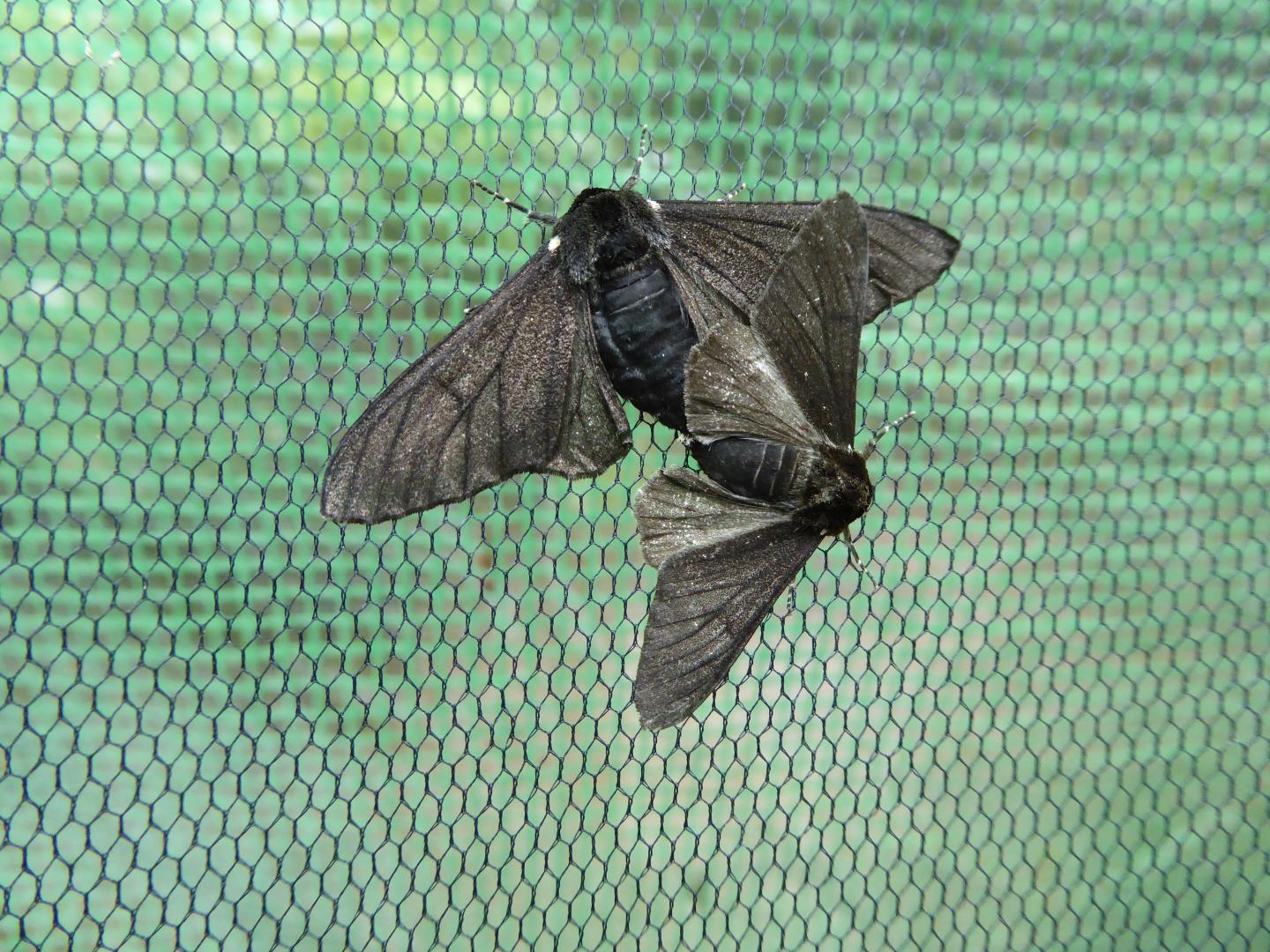
A mating pair of melanic peppered moths Researchers from the University of Liverpool have identified and dated the genetic mutation that gave rise to the black form of the peppered moth, which spread rapidly during Britain's industrial revolution.
| Biology | May 31, 2016 06:05 PM |
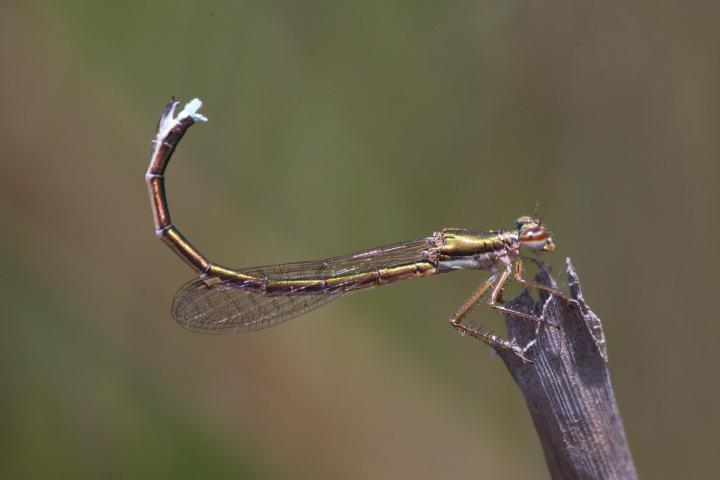
Hemiphlebia mirabilis is a rare species in every sense: it is the most primitive dragonfly known to man, it has unique reproductive behaviors and was believed to be extinct. The dragonfly considered the most primitive in the world lives in Australia and Tasmania, and was believed to be extinct four decades ago. But it is far from being so. A Spanish researcher has observed thousands of these insects in one of the few habitats in which it has been detected and it displays sexual behaviour that is unique, not only directed towards reproduction.
| Biology | May 31, 2016 06:05 PM |
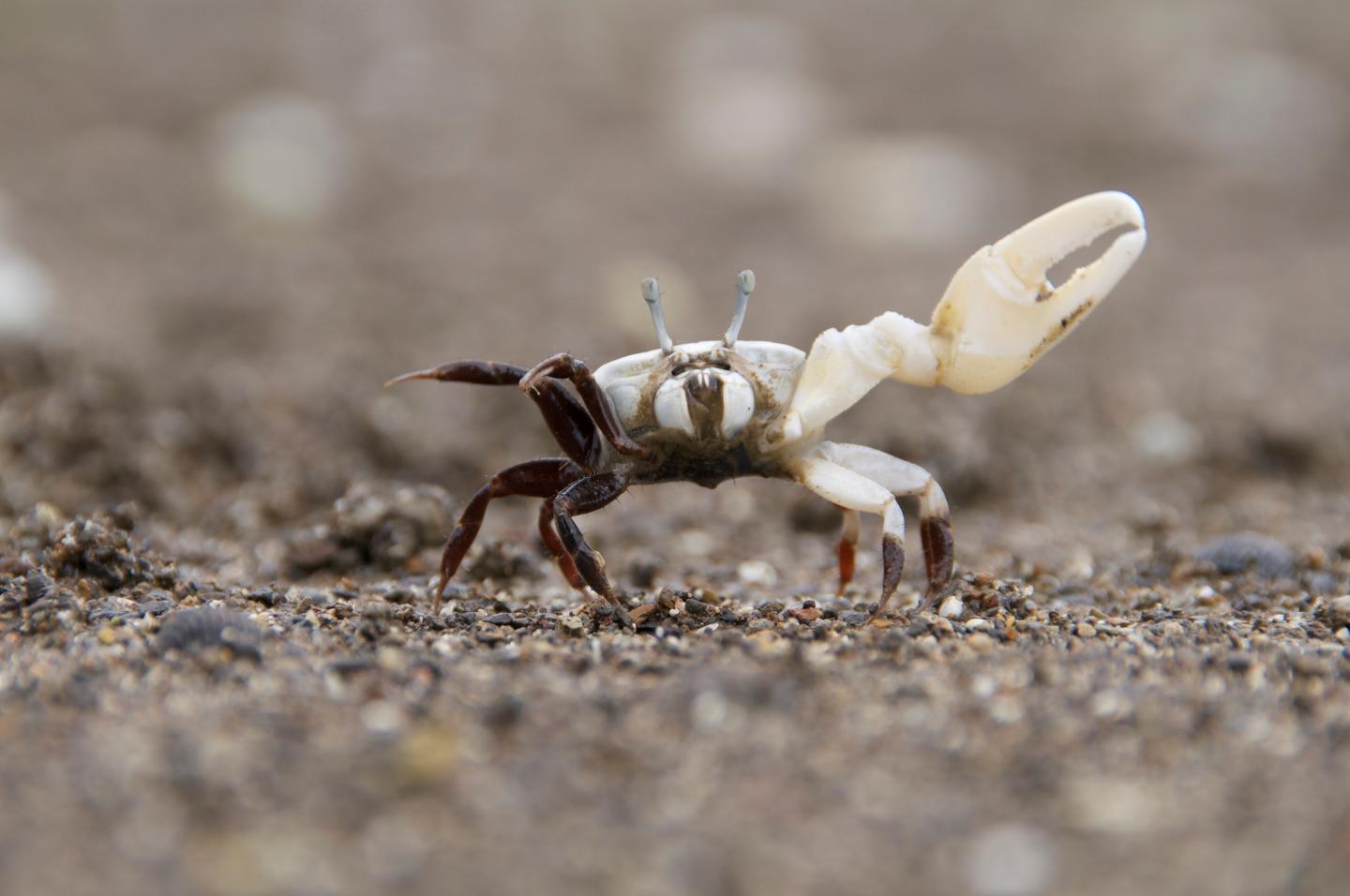
This is the male fiddler crab Uca lactea. The vibrations and pulses that male fiddler crabs produce when they are trying to lure females into their burrows to mate are surprisingly informative. These signals serve as a type of "Morse code" that the females decipher to learn more about the size and stamina of their suitors. This is according to a study by Japanese researchers Fumio Takeshita of Nagasaki University and Minoru Murai of the University of the Ryukyu, published in Springer's journal The Science of Nature.
| Biology | May 16, 2016 01:47 PM |
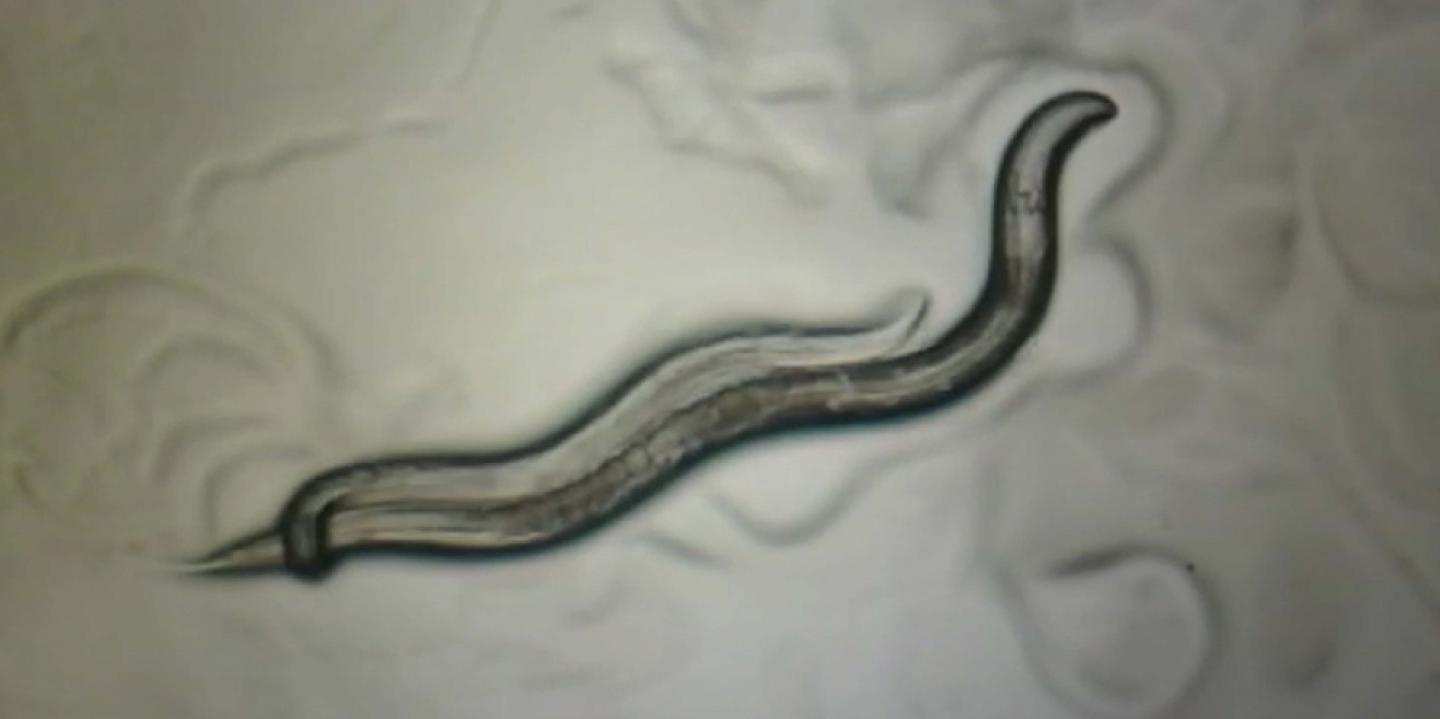
Male and female worms engage in different behaviors, which may result from sex-specific wiring patterns in the brain. Nematode worms may not be from Mars or Venus, but they do have sex-specific circuits in their brains that cause the males and females to act differently. According to new research published in Nature, scientists have determined how these sexually dimorphic (occurring in either males or females) connections arise in the worm nervous system. The research was funded by the NIH's National Institute of Neurological Disorders and Stroke (NINDS).
| Biology | May 11, 2016 05:54 PM |
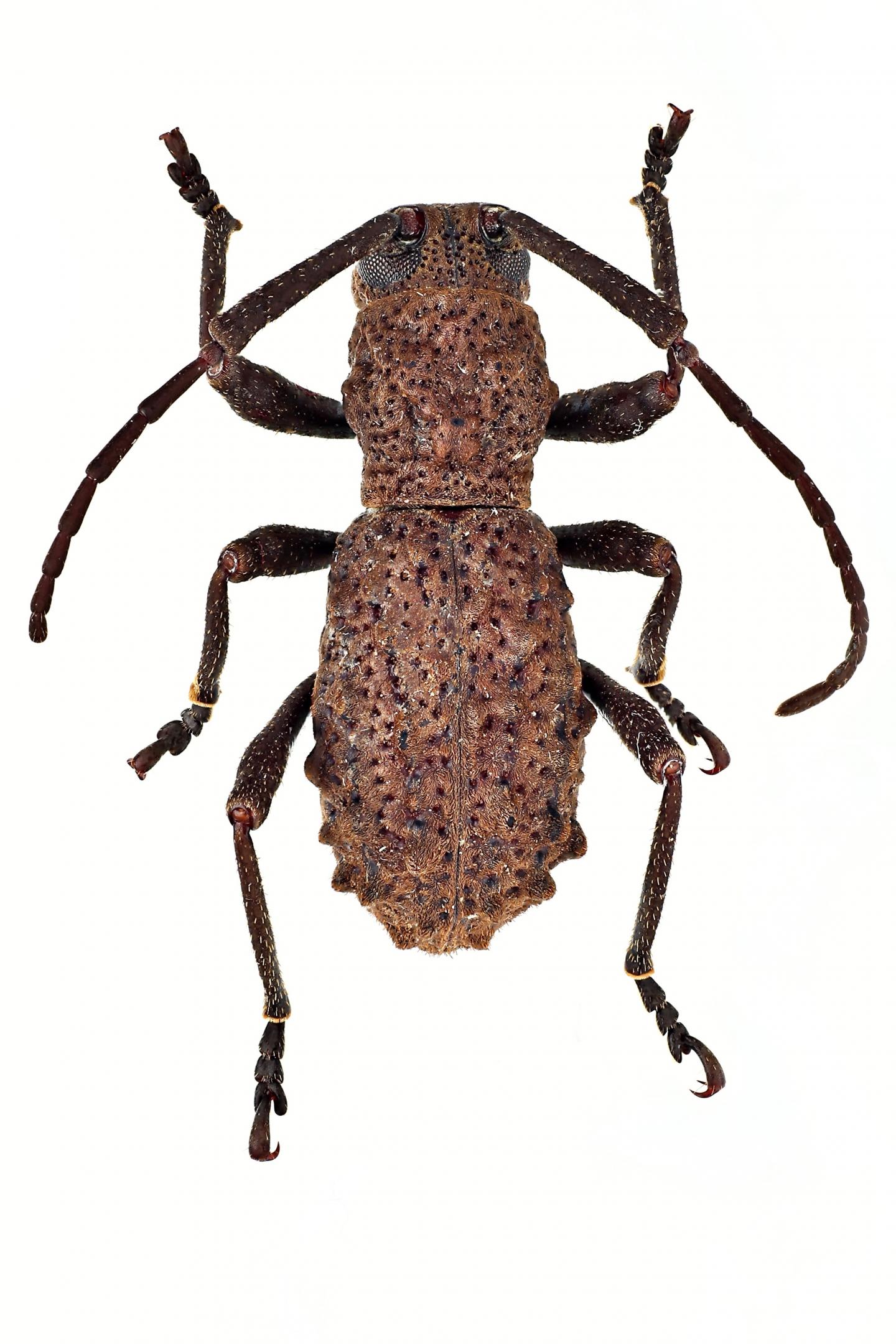
This is a male specimen of the new long-horned beetle species Borneostyrax cristatus gen. et sp. nov. A remarkably high diversity of the wingless long-horned beetles in the mountains of northern Borneo is reported by three Czech researchers from the Palacký University, Olomouc, Czech Republic. Apart from the genera and species new to science, the entomologists report the first case of reproduction by live birth in this rarely collected group of beetles.
| Biology | May 9, 2016 04:45 PM |
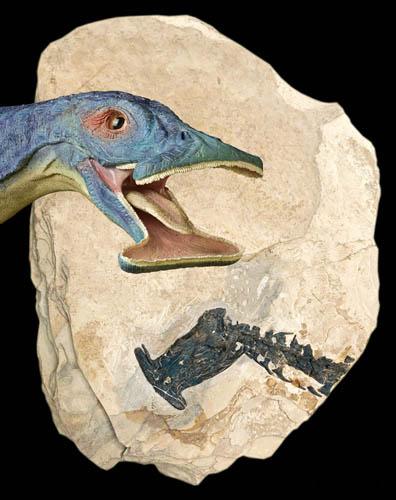
Fossil and reconstruction of Atopodentatus unicus. Some strange creatures cropped up in the wake of one of Earth's biggest mass extinctions 252 million years ago. In 2014, scientists discovered a bizarre fossil--a crocodile-sized sea-dwelling reptile, Atopodentatus unicus, that lived 242 million years ago in what today is southwestern China. Its head was poorly preserved, but it seemed to have a flamingo-like beak. However, in a paper published May 6 in Science Advances, Dr. LI Chun, Institute of Vertebrate Paleontology and Paleoanthropology (IVPP) of the Chinese Academy of Sciences, and his international team described two new specimens and revealed what was really going on--that "beak" is actually part of a hammerhead-shaped jaw apparatus, which it used to feed on plants on the ocean floor. It's the earliest known example of an herbivorous marine reptile.
| Biology | May 5, 2016 06:46 PM |
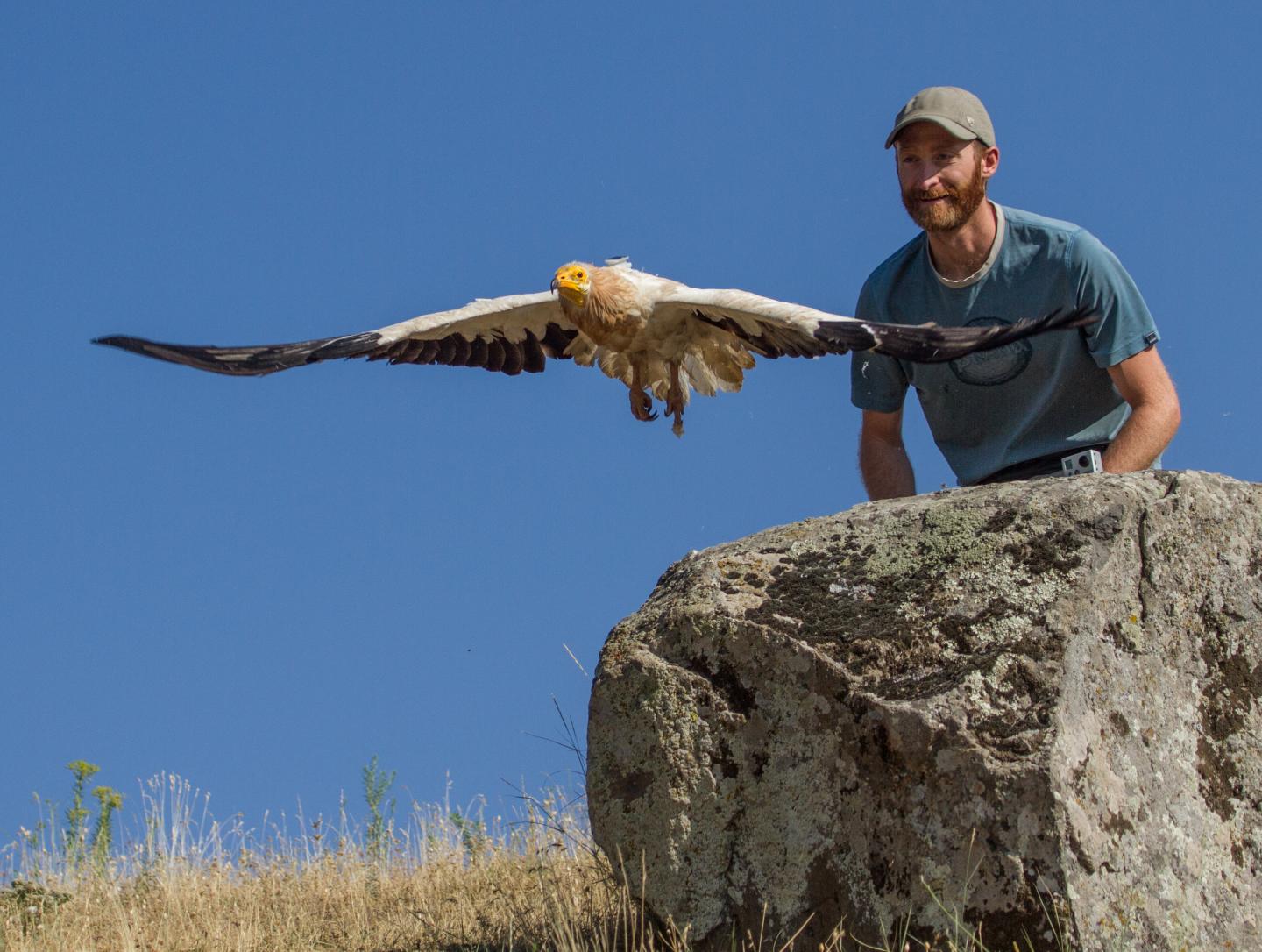
Evan R. Buechley releases an adult Egyptian Vulture in Armenia after tagging it with a satellite tracking device (visible on the back of the bird). Vultures. Cartoon characters in parched deserts often wish them to disappear, since circling vultures are a stereotypical harbinger of death. But, joking aside, vultures in some parts of the world are in danger of disappearing. And according to a new report from University of Utah biologists, such a loss would have serious consequences for ecosystems and human populations alike.
| Biology | May 3, 2016 05:58 PM |
In December 2015 an international group of scientists convened in Austria to discuss the imminent extinction of the northern white rhinoceros and the possibility of bringing the species back from brink of extinction. The discussions of this historic meeting appear in the international Journal Zoo Biology. The publication of this work is designed as part of the ongoing effort to raise awareness for the extinction crisis facing rhinos and many other species while also reaching out to the scientific community to share and gather information.
| Biology | April 28, 2016 04:59 PM |
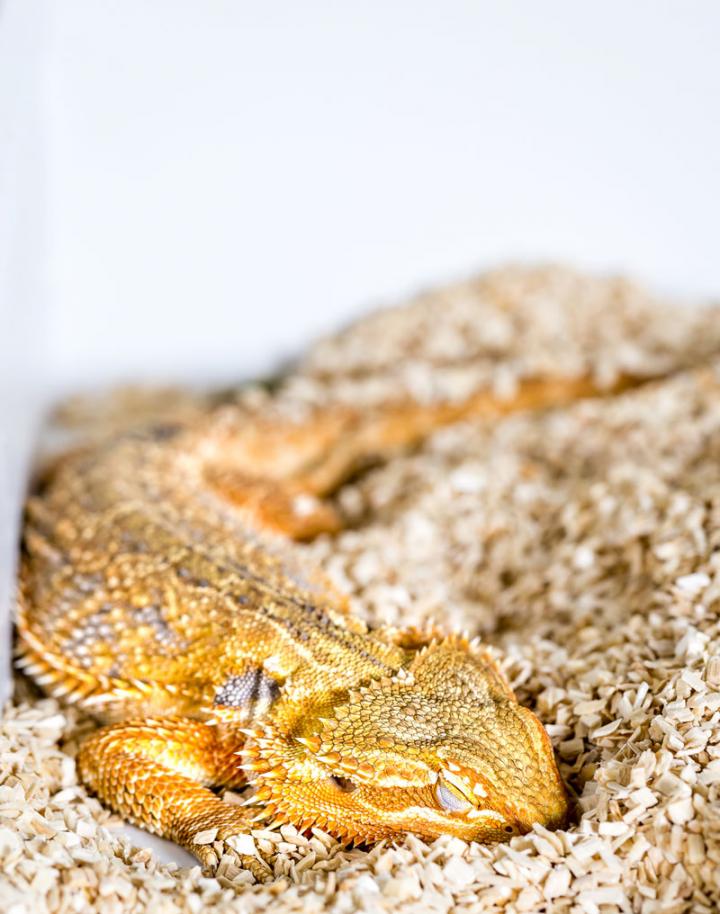
Sleeping bearded dragon (Pogona vitticeps). Behavioural sleep is ubiquitous among animals, from insects to man. In humans, sleep is also characterized by brain activity: periods of slow-wave activity are each followed by short phases of Rapid-Eye-Movement sleep (REM sleep). These electrical features of brain sleep, whose functions are not well understood, have so far been described only in mammals and birds, but not in reptiles, amphibians or fish. Yet, birds are reptiles--they are the feathered descendants of the now extinct dinosaurs. How then did brain sleep evolve? Gilles Laurent and members of his laboratory at the Max Planck Institute for Brain Research in Frankfurt, Germany, describe for the first time REM and slow-wave sleep in a reptile, the Australian dragon Pogona vitticeps. This suggests that brain sleep dates back at least to the evolution of the amniotes, that is, to the beginning of the colonization of terrestrial landmass by vertebrate animals.
| Biology | April 27, 2016 04:45 PM |
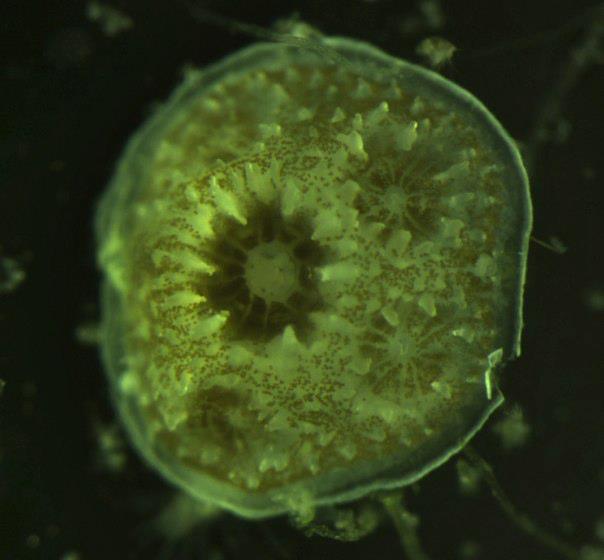
A juvenile lace coral (Pocillopora damicornis), with coral tissue and algal symbionts (brown dots within the tissue) covering the newly grown skeleton. In a study published today, researchers from the University of Hawai'i at Mānoa (UHM), Rutgers University, and the University of Haifa identified key and novel components of the molecular "toolkit" that allow corals to build their skeletons (called biomineralization) and described when -- in the transformation from floating larvae to coral skeleton -- these components are used.
| Biology | April 27, 2016 04:45 PM |
Scientists have been studying how visual space is mapped in the cerebral cortex for many decades under the assumption that the map is equal for lights and darks. Surprisingly, recent work demonstrates that visual brain maps are dark-centric and that, just as stars rotate around black holes in the Universe, lights rotate around darks in the brain representation of visual space. The work was done by Jens Kremkow and collaborators in the laboratories of Jose Manuel Alonso at the State University of New York College of Optometry and will be published in the May 5, 2016 issue of Nature (advance online publication and press embargo lifted on April 27, 2016 at 1800 London time / 1300 US Eastern Time). A similar result will be reported in the same issue of Nature by Kuo-Sheng Lee et al. in the laboratories of David Fitzpatrick at the Max Planck Florida Institute for Neuroscience.
| Biology | April 20, 2016 06:03 PM |
The work of University of Adelaide researchers is shedding new light on the evolution of what are believed to be the largest bears that ever walked the Earth.
| Biology | April 15, 2016 06:56 PM |
Using cutting-edge imaging technology, University of California, Irvine biologists have determined that uncontrolled fluctuations (known at "noise) in the concentration of the vitamin A derivative Retinoic acid (RA) can lead to disruptions in brain organization during development.
| Biology | April 12, 2016 04:22 PM |
Studies in a group of tropical birds have revealed one of the fastest limb muscles on record for any animal with a backbone. The muscle, which can move the wing at more than twice the speeds required for flying, has evolved in association with extravagant courtship displays that involve rapid limb movements, according to a paper to be published in the journal eLife.
| Biology | April 12, 2016 04:21 PM |
EPFL scientists propose a new way of understanding of how the brain processes unconscious information into our consciousness. According to the model, consciousness arises only in time intervals of up to 400 milliseconds, with gaps of unconsciousness in between.
| Biology | April 12, 2016 04:21 PM |
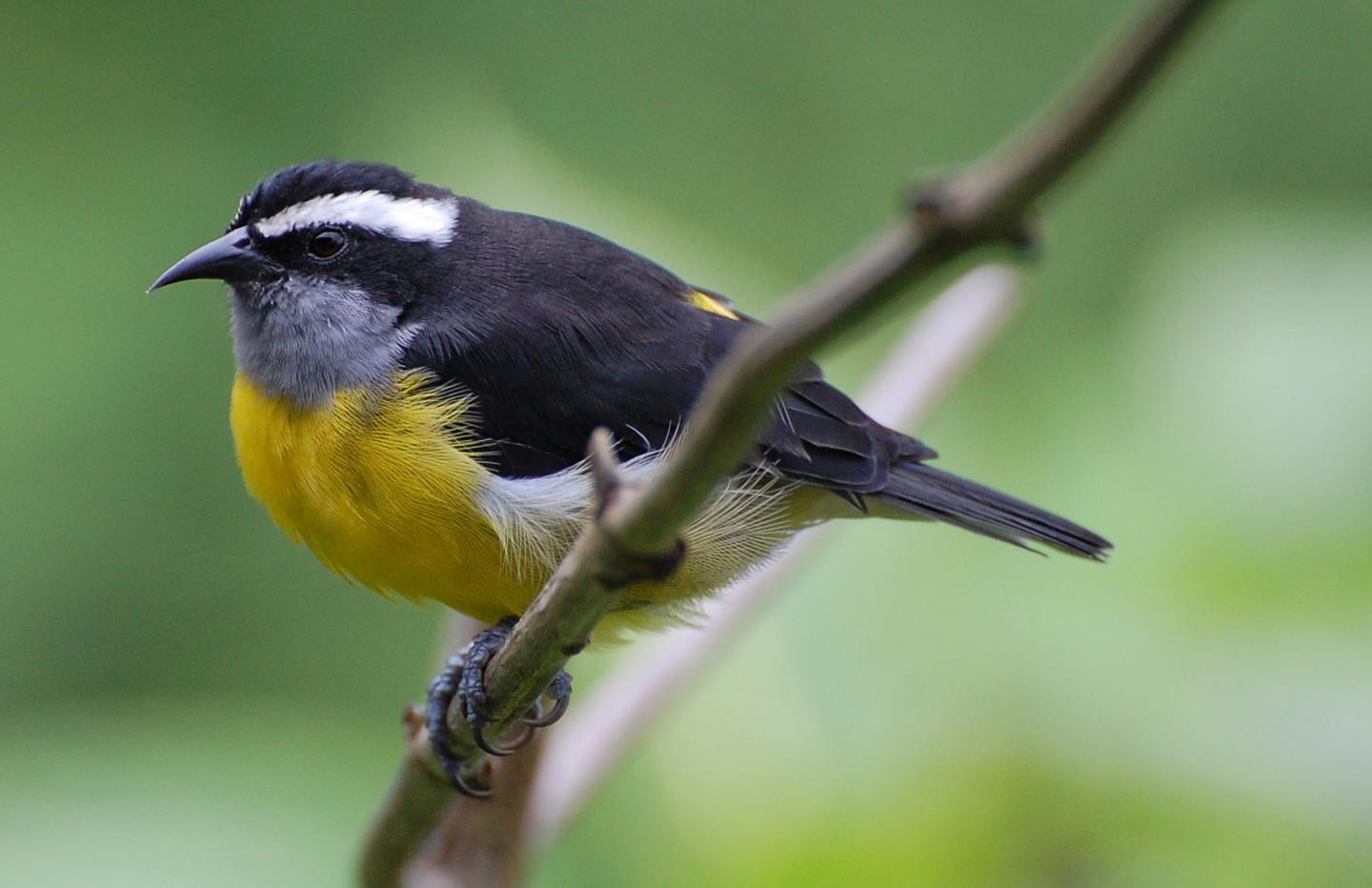
Found throughout the Caribbean, the bananaquit has smaller flight muscles and longer legs on islands with fewer predators. In groundbreaking new work, Natalie Wright, a postdoctoral fellow at the University of Montana, has discovered a predictable trend in the evolution of bird shape.
| Biology | March 30, 2016 06:05 PM |
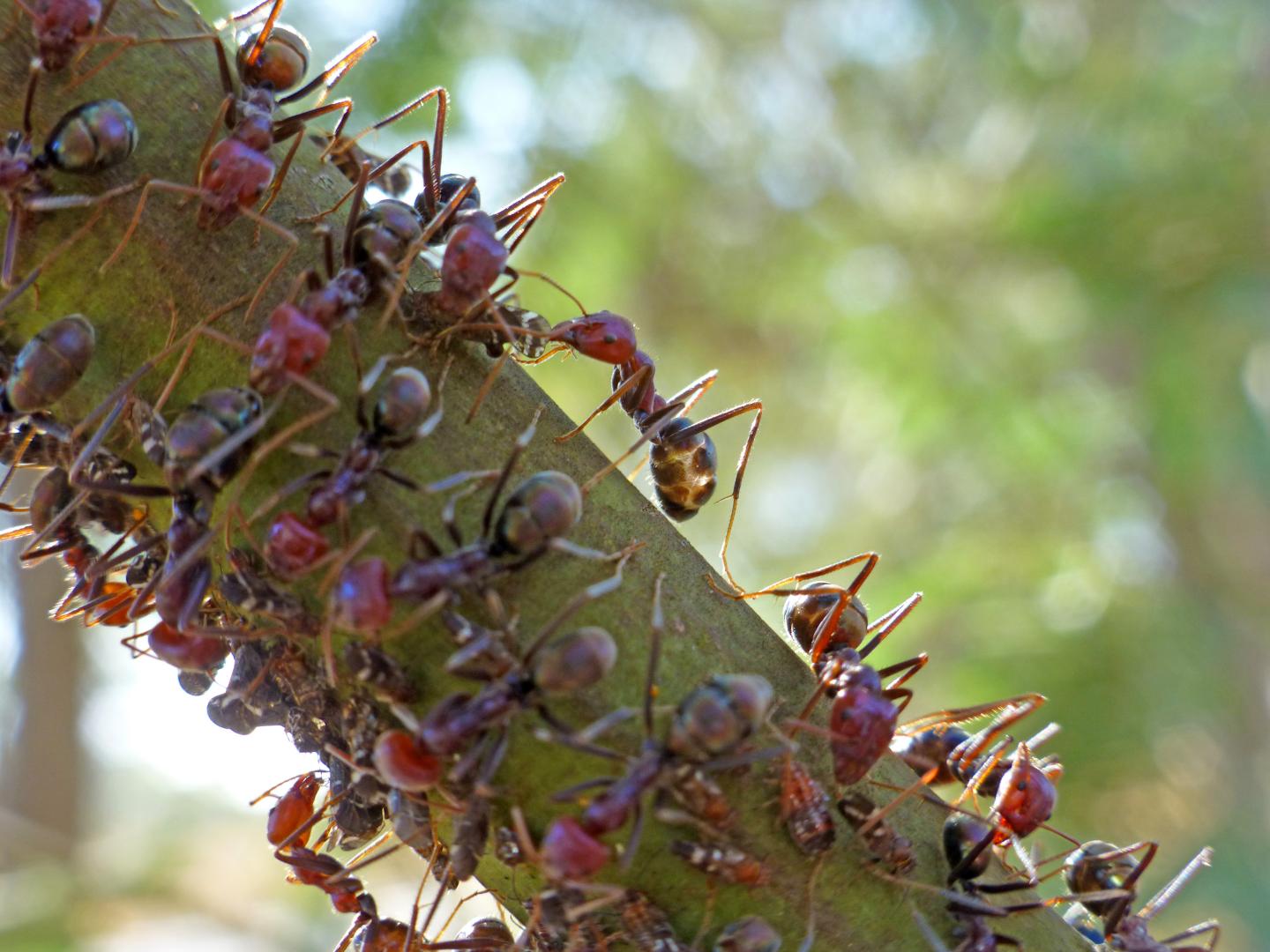
This image shows ants tending to some leave hoppers. University of Melbourne scientists have shone a new light into the complexities of ant communication, with the discovery that ants not only pick up information through their antennae, but also use them to convey social signals.
| Biology | March 11, 2016 04:03 PM |
An international team of scientists, from three Brazilian universities and one UK university, have discovered a new fossil reptile that lived 250 million years ago in the state of Rio Grande do Sul, southernmost Brazil. The species has been identified from a mostly complete and well preserved fossil skull that the team has named Teyujagua paradoxa.
| Biology | March 8, 2016 04:44 PM |
In the first study to use new methods to track antibiotic resistance through the process of intensively farming and slaughtering cattle, scientists have discovered a "startling" lack of resistance genes in meat.
| Biology | March 8, 2016 04:44 PM |
People are intuitive physicists, knowing from birth how objects under the influence of gravity are likely to fall, topple or roll. In a new study, scientists have found the brain cells apparently responsible for this innate wisdom.
| Biology | February 29, 2016 06:43 PM |
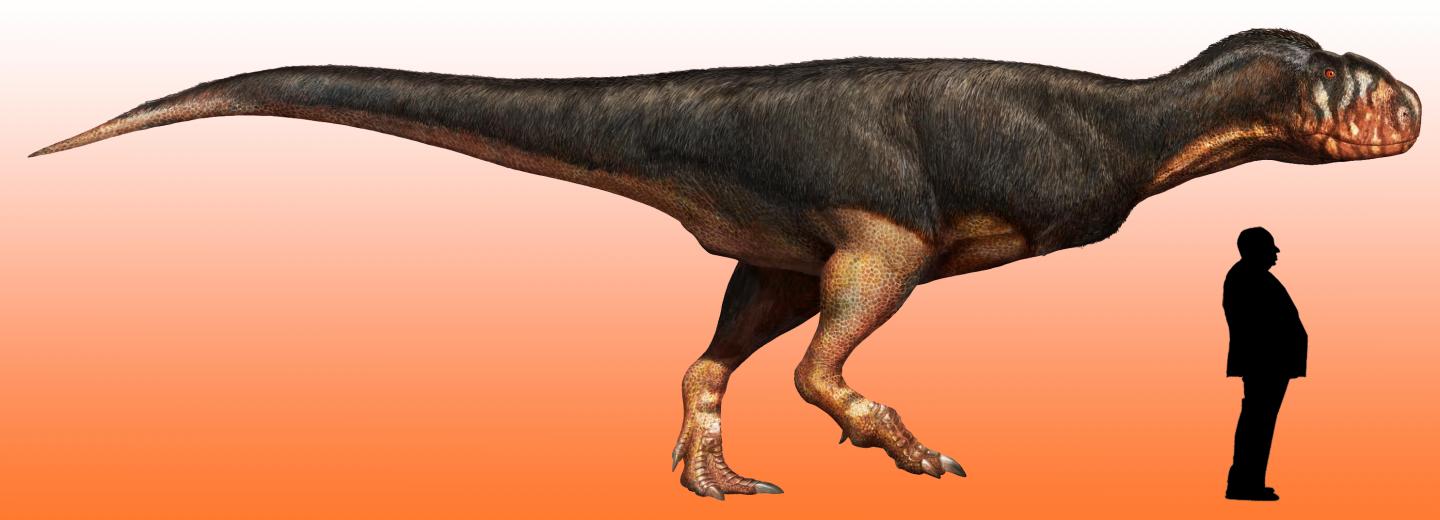
Here is an artist's drawing of the abelisaur. An unidentified fossilised bone in a museum has revealed the size of a fearsome abelisaur and may have solved a hundred-year old puzzle.
| Biology | February 29, 2016 06:43 PM |
Sometimes evolution proceeds much more rapidly than we might think. Genetic analysis makes it possible to detect the earliest stages of species formation and to gain a better understanding of speciation processes. For example, a study just published in PLOS Genetics by researchers from Eawag and the University of Bern - investigating rapid speciation in threespine stickleback in and around Lake Constance - shows that a species can begin to diverge very rapidly, even when the two daughter species breed alongside one another simultaneously.
| Biology | February 26, 2016 04:12 PM |
In a surprise result, James Cook University scientists have found female blacktip reef sharks and their young stay close to shore over long time periods, with adult males only appearing during the breeding season.
| Biology | February 22, 2016 05:56 PM |
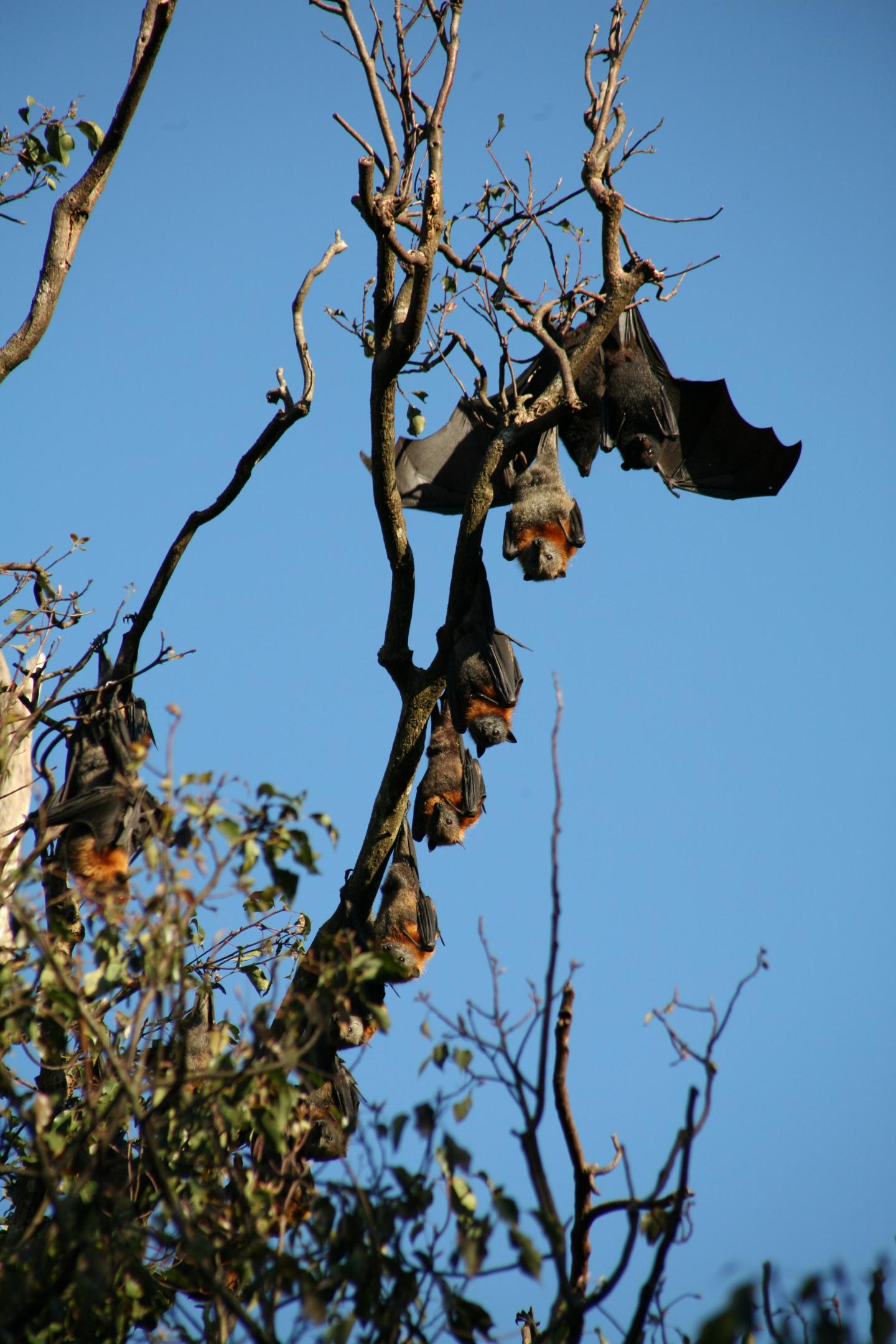
Black-headed flying fox amongst a grey-headed colony. For the first time researchers have uncovered a unique ability in bats which allows them to carry but remain unaffected by lethal diseases.
| Biology | February 16, 2016 05:20 PM |
The mechanism used by the National Institutes of Health (NIH) to allocate government research funds to scientists whose grants receive its top scores works essentially no better than distributing those dollars at random, new research suggests.
| Biology | February 11, 2016 05:06 PM |
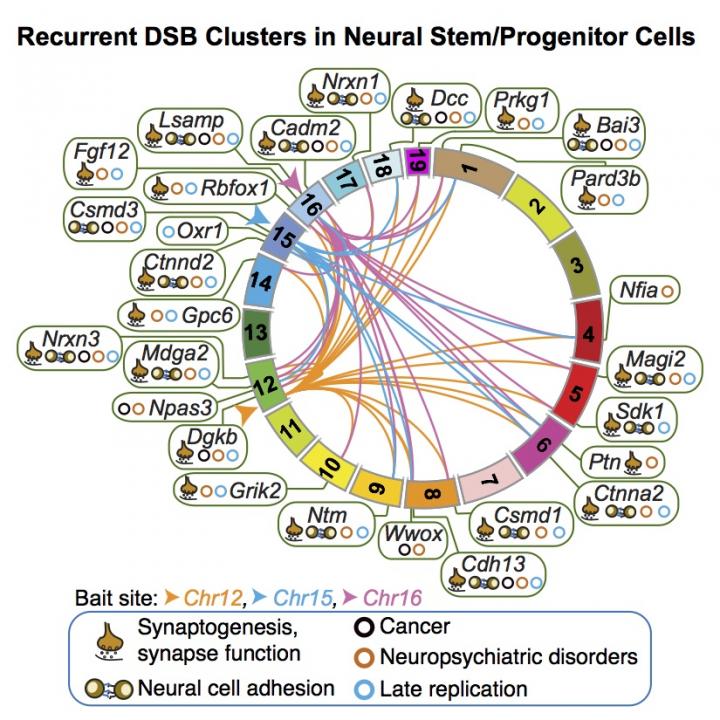
Recurrent DSB clusters in neural stem/progenitor cells are shown. The genome of developing brain cells harbors 27 clusters or hotspots where its DNA is much more likely to break in some places than others, researchers from the Program in Cellular and Molecular Medicine (PCMM) at Boston Children's Hospital, Harvard Medical School, and the Howard Hughes Medical Institute report in the journal Cell. Those hotspots appear in genes associated with brain tumors and a number of neurodevelopmental and neuropsychiatric conditions, raising new questions about these conditions' origins, as well as how the brain generates a diversity of circuitry during development.
| Biology | February 9, 2016 07:45 PM |
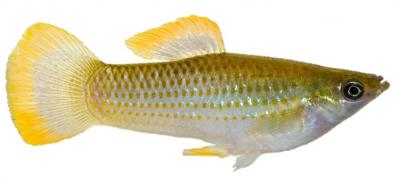
Biologists have found genetic mechanisms that let the Atlantic molly live in toxic, acidic water. A Washington State University biologist has found the genetic mechanisms that lets a fish live in toxic, acidic water. The discovery opens the door to new insights into the functioning of other "extremophiles" and how they adapt to their challenging environments.
| Biology | January 28, 2016 08:54 PM |
In the brain, the visual cortex processes visual information and passes it from lower to higher areas of the brain. However, information also flows in the opposite direction, e.g. to direct attention to particular stimuli. But how does the brain know which path the information should take? Researchers at the Ernst Strüngmann Institute (ESI) for Neuroscience in Frankfurt in Cooperation with Max Planck Society have now demonstrated that the visual cortex of human subjects uses different frequency channels depending on the direction in which information is being transported. Their findings were only possible thanks to previous research with macaque monkeys. They might help to understand the cause of psychiatric illnesses in which the two channels appear to be mixed up.
| Biology | January 25, 2016 04:50 PM |

Aegean wall lizard resting on rock Resting out in the open on rocks can be a risky business for Aegean wall lizards. Out in these habitats they have nowhere to hide and their backs, which show varying shades of green and brown between individuals, are dangerously exposed to birds hunting in the skies above.
| Biology | January 19, 2016 03:57 PM |
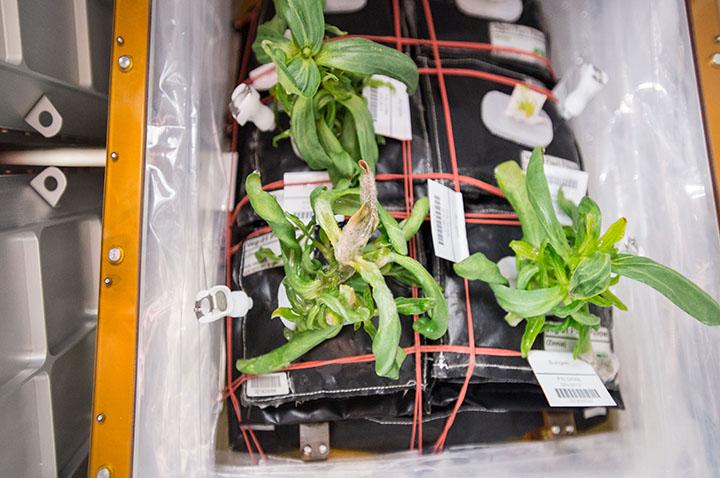
Mold growth initially grew on the plant in pillow E in the bottom left corner of the plant mat. When Scott Kelly tweeted a picture of moldy leaves on the current crop of zinnia flowers aboard the International Space Station, it could have looked like the science was doomed. In fact, science was blooming stronger than ever. What may seem like a failure in systems is actually an exceptional opportunity for scientists back on Earth to better understand how plants grow in microgravity, and for astronauts to practice doing what they'll be tasked with on a deep space mission: autonomous gardening.
| Biology | January 15, 2016 06:26 PM |
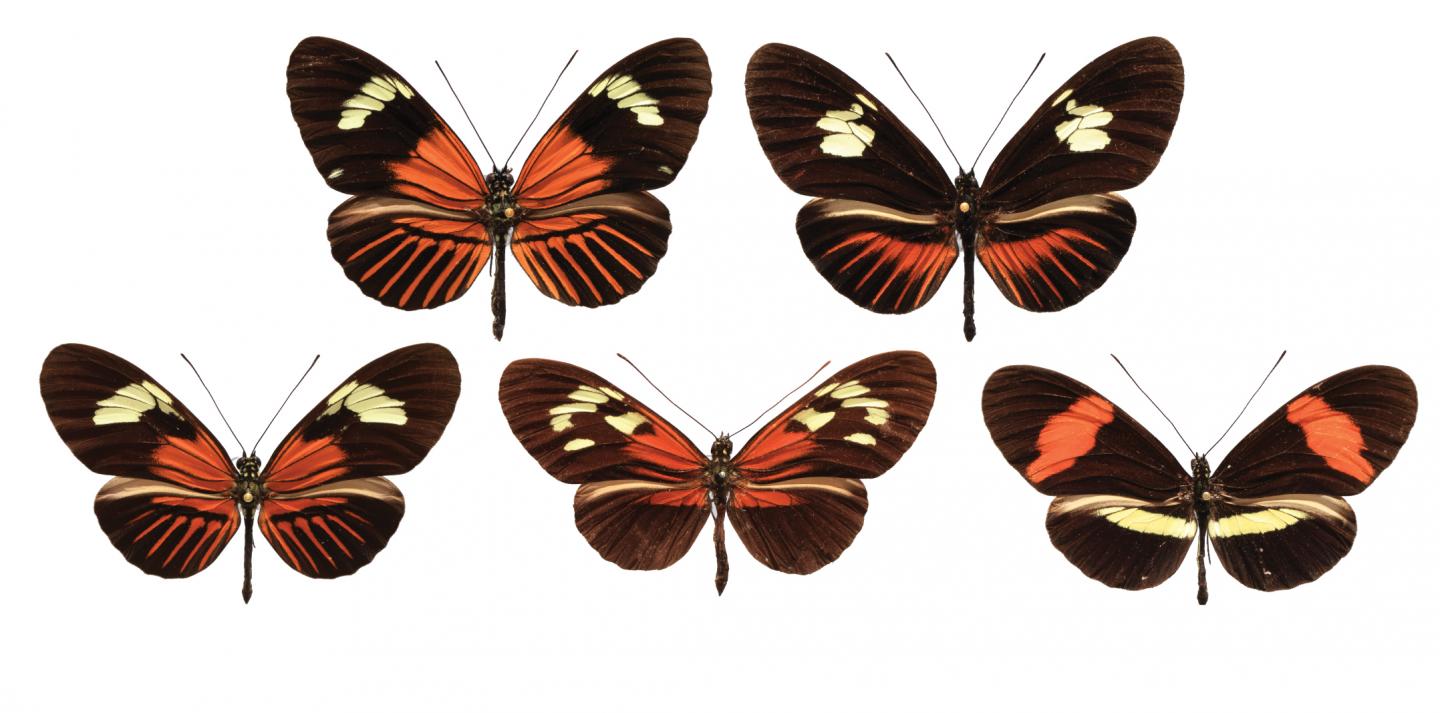
This image shows a range of wing pattern combinations in various Heliconius butterfly species. Clockwise from top left: elevatus; contigua; rosina; meriana; malleti. New research on butterfly genomes has revealed that the genetic components that produce different splotches of colour on wings can be mixed up between species by interbreeding to create new patterns, like a "genetic paint-box".
| Biology | January 15, 2016 06:26 PM |
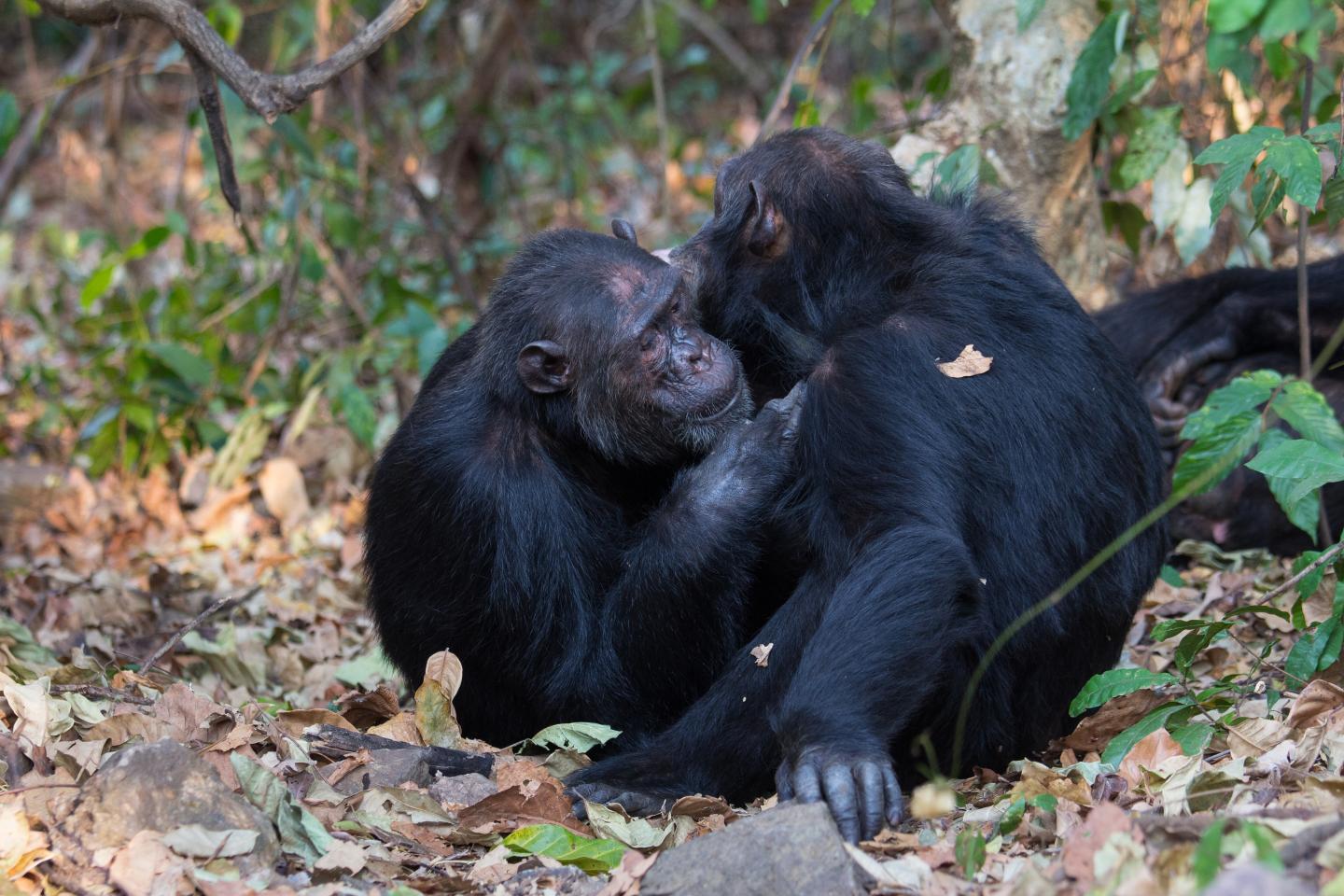
Two chimpanzees interact in Gombe National Park, Tanzania. Spending time in close contact with others often means risking catching germs and getting sick. But being sociable may also help transmit beneficial microbes, finds a multi-institutional study of gut microbiomes in chimpanzees.
| Biology | January 6, 2016 07:56 PM |
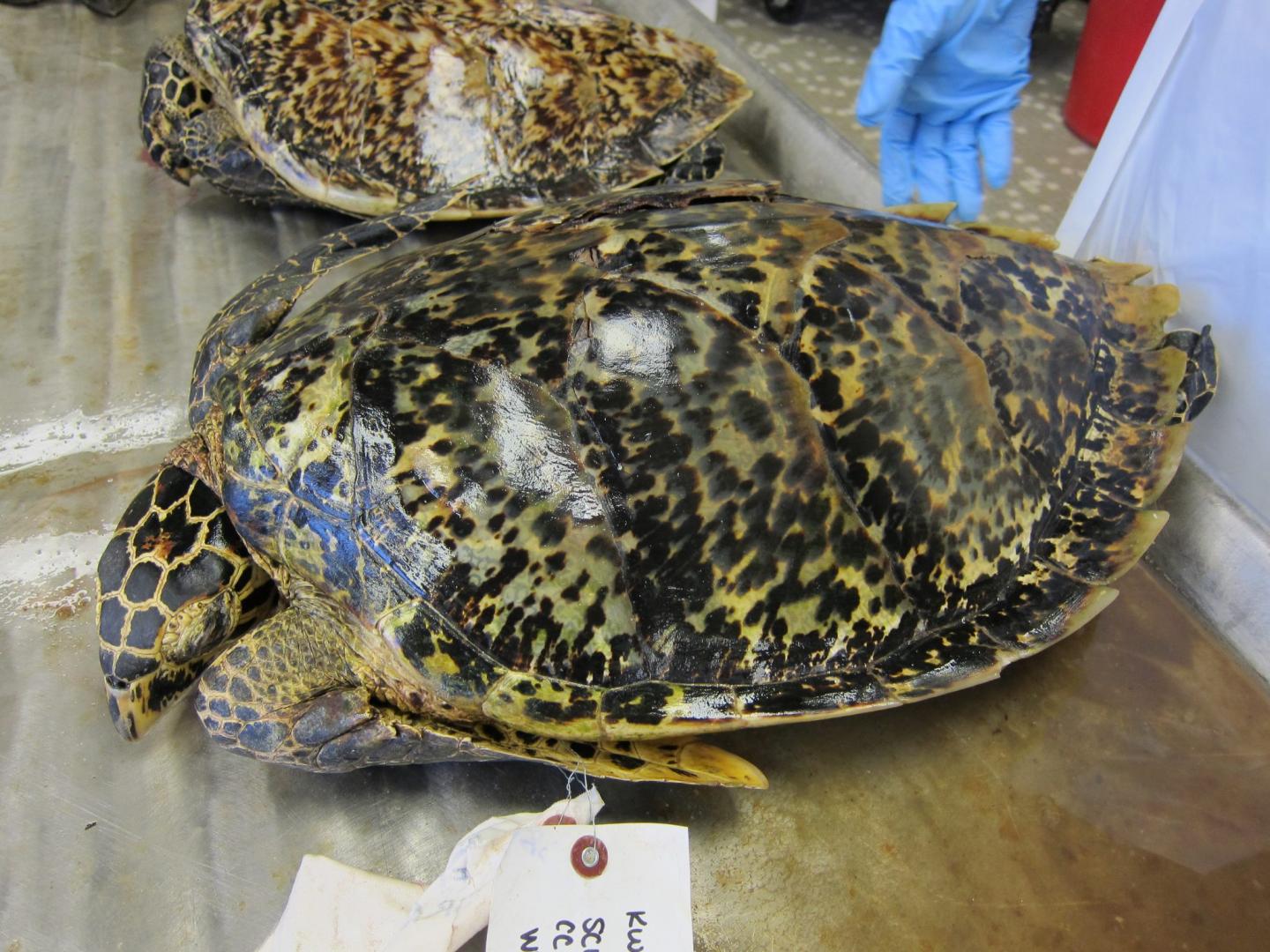
In addition to their natural beauty, the shells of two deceased specimens of Hawksbill sea turtles hold clues to the growth rates and sexual maturity of the endangered species. Radiocarbon dating of atomic bomb fallout found in sea turtle shells can be used to reliably estimate the ages, growth rates and reproductive maturity of sea turtle populations in the wild, a new study led by Duke University and NOAA researchers finds.
| Biology | January 4, 2016 04:01 PM |
Widespread failure to reproduce research results has triggered a crisis of confidence in research findings, eroding public trust in scientific methodology. In response, PLOS Biology is launching on January 4th, 2016, a new Meta-Research Section devoted to research on research.
| Biology | January 4, 2016 04:01 PM |
Chameleons are known for sticking their tongues out at the world fast and far, but until a new study by Brown University biologist Christopher Anderson, the true extent of this awesome capability had been largely overlooked. That's because the smallest species hadn't been measured.
| Biology | December 28, 2015 06:40 PM |
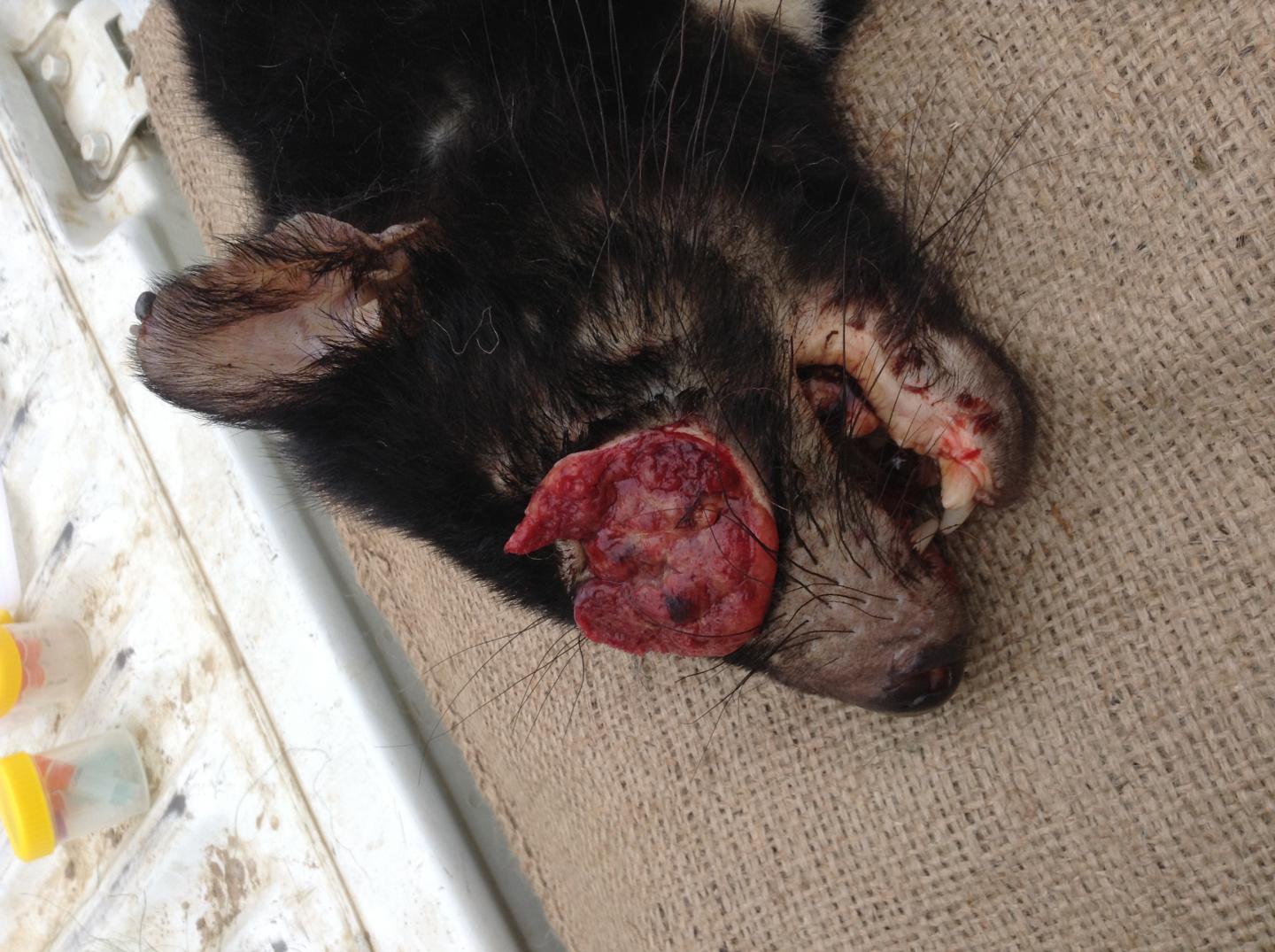
This is a photograph of a Tasmanian Devil with facial tumor. Transmissible cancers -- cancers which can spread between individuals by the transfer of living cancer cells -- are believed to arise extremely rarely in nature. One of the few known transmissible cancers causes facial tumours in Tasmanian devils, and is threatening this species with extinction. Today, scientists report the discovery of a second transmissible cancer in Tasmanian devils. The discovery, published in the journal Proceedings of the National Academy of Science, calls into question our current understanding of the processes that drive cancers to become transmissible.
| Biology | December 23, 2015 04:13 AM |
The diversity of mammals on Earth exploded straight after the dinosaur extinction event, according to UCL researchers. New analysis of the fossil record shows that placental mammals, the group that today includes nearly 5000 species including humans, became more varied in anatomy during the Paleocene epoch - the 10 million years immediately following the event.
| Biology | December 18, 2015 05:01 AM |
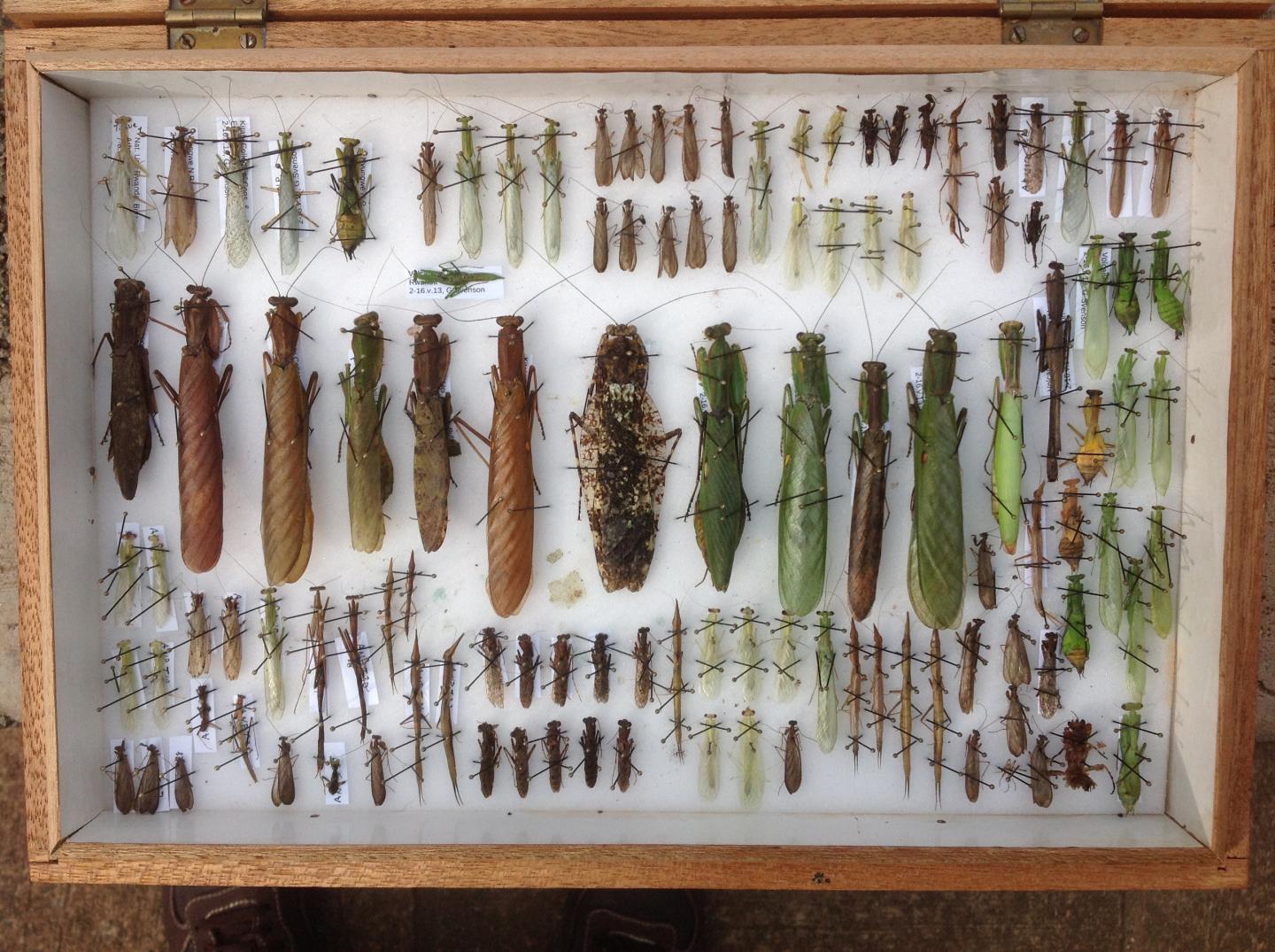
These are specimens collected in Rwanda in 2013 by The Cleveland Museum of Natural History during the first formal praying mantis survey conducted in the African country. A college student working at The Cleveland Museum of Natural History was lead author on the first formal survey of praying mantises in Rwanda, which revealed a 155 percent increase in praying mantis species diversity for the African country. Riley Tedrow, a Case Western Reserve University graduate student pursuing field research for the Museum, participated in two surveys across four locations in Rwanda, including three national parks. The survey was published Oct. 1, 2015 in the journal Zootaxa.
| Biology | November 24, 2015 07:18 PM |
Columns of workers penetrate the forest, furiously gathering as much food and supplies as they can. They are a massive army that living things know to avoid, and that few natural obstacles can waylay. So determined are these legions that should a chasm or gap disrupt the most direct path to their spoils they simply build a new path -- out of themselves.
| Biology | November 23, 2015 11:20 AM |
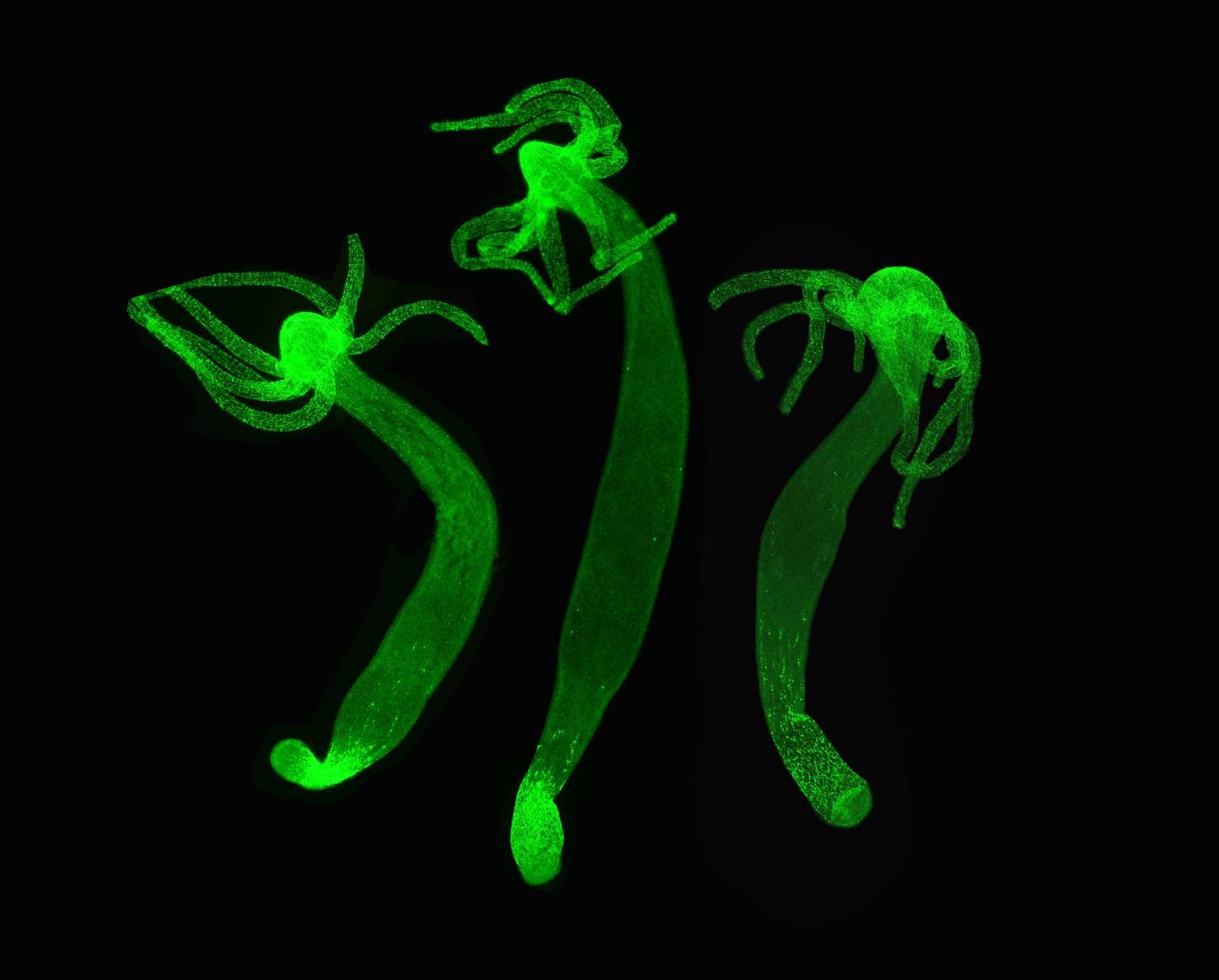
This image shows the nervous system of about 1 cm-long Hydra revealed here with a fluorescent green marker. Champion of regeneration, the freshwater polyp Hydra is capable of reforming a complete individual from any fragment of its body. It is even able to remain alive when all its neurons have disappeared. Researcher the University of Geneva (UNIGE), Switzerland, have discovered how: cells of the epithelial type modify their genetic program by overexpressing a series of genes, among which some are involved in diverse nervous functions. Studying Hydra cellular plasticity may thus influence research in the context of neurodegenerative diseases. The results are published in Philosophical Transactions of the Royal Society.
| Biology | November 19, 2015 07:38 PM |
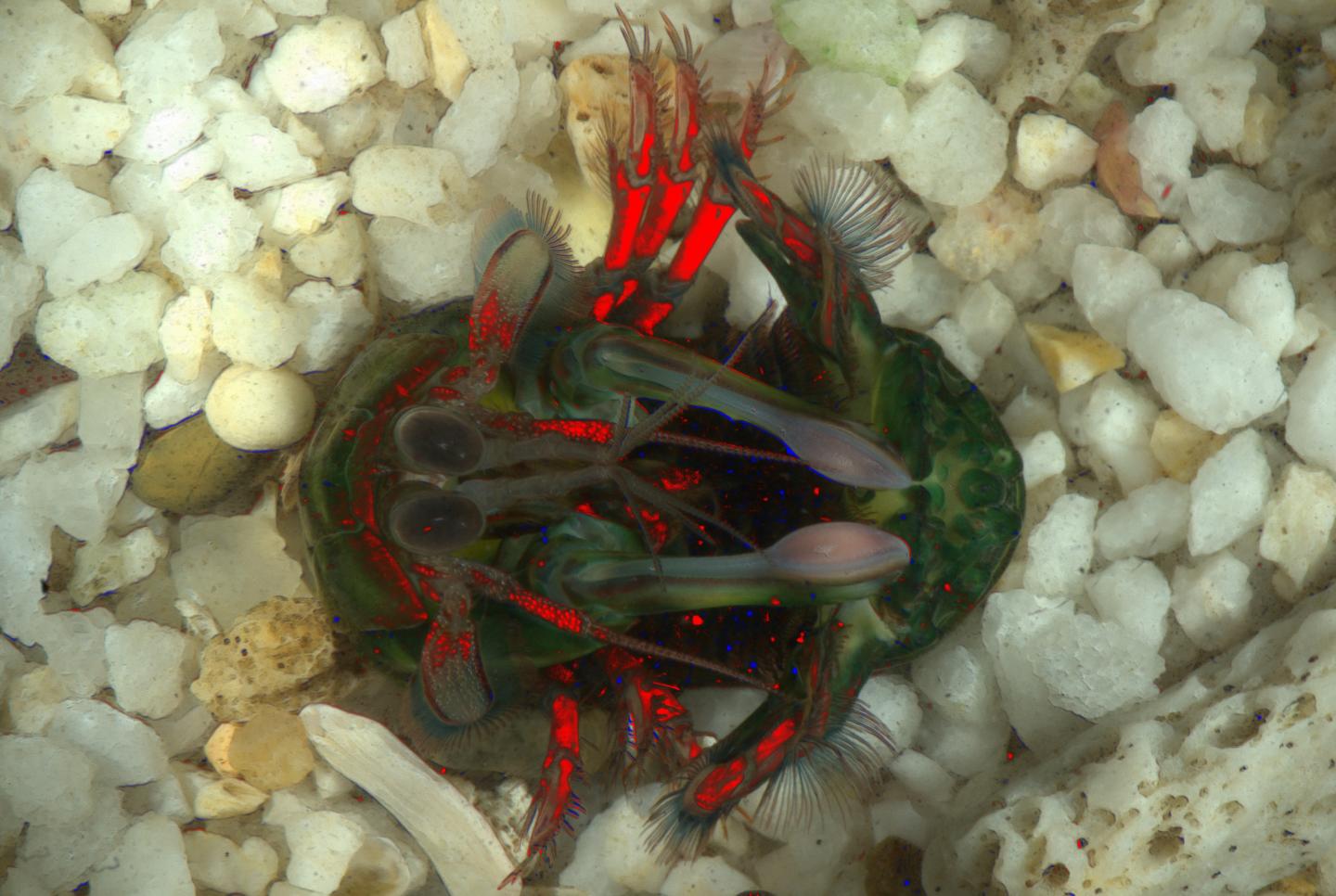
This image shows a mantis shrimp in a defensive position, on its back with its legs, head and heavily armored tail closed over. Researchers from the Queensland Brain Institute at The University of Queensland have uncovered a new form of secret light communication used by marine animals.
| Biology | November 19, 2015 07:38 PM |
Scientists have solved a longstanding mystery about how some fish seem to disappear from predators in the open waters of the ocean, a discovery that could help materials scientists and military technologists create more effective methods of ocean camouflage.
| Biology | November 18, 2015 06:36 PM |
In the animal world, if several males mate with the same female, their sperm compete to fertilize her limited supply of eggs. Longer sperm often seem to have a competitive advantage. However, a study conducted by researchers from the Universities of Zurich and Stockholm now reveals that the size of the animals also matters. The larger the animal, the more im-portant the number of sperm is relative to sperm length. That's why elephants have smaller sperm than mice.
| Biology | November 16, 2015 09:05 PM |
New research reveals that two different evolutionary shifts toward camouflage investment occurred in the the charismatic horned praying mantises. The most recent shift in increased accumulation of numerous cryptic features occurred only after the re-evolution of important leg lobes that help disguise the appearance of the mantis from predators.
| Biology | November 16, 2015 09:05 PM |
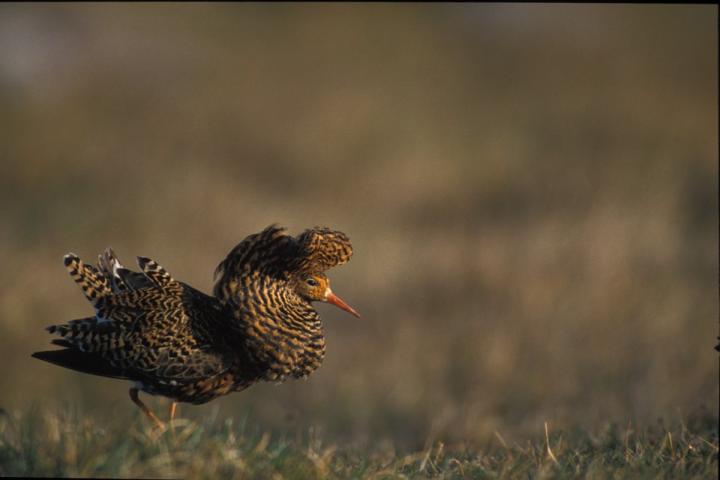
Independent male ruff at lek with colourful ruff and head tuft. The ruff is a Eurasian shorebird that has a spectacular lekking behaviour where highly ornamented males compete for females. Now two groups report that males with alternative reproductive strategies carry a chromosomal rearrangement that has been maintained as a balanced genetic polymorphism for about 4 million years.
| Biology | November 16, 2015 09:05 PM |
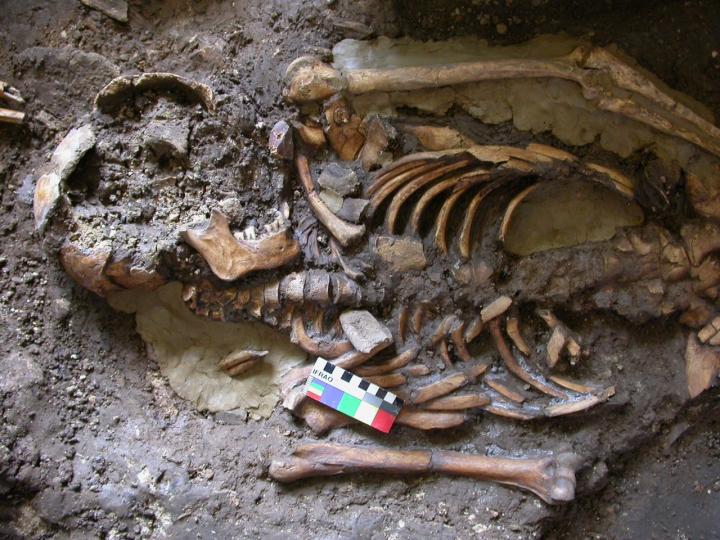
DNA was extracted from the molar teeth of this skeleton, dating from almost 10,000 years ago and found in the Kotias Klde rockshelter in Western Georgia. The first sequencing of ancient genomes extracted from human remains that date back to the Late Upper Palaeolithic period over 13,000 years ago has revealed a previously unknown "fourth strand" of ancient European ancestry.
| Biology | November 5, 2015 07:22 PM |
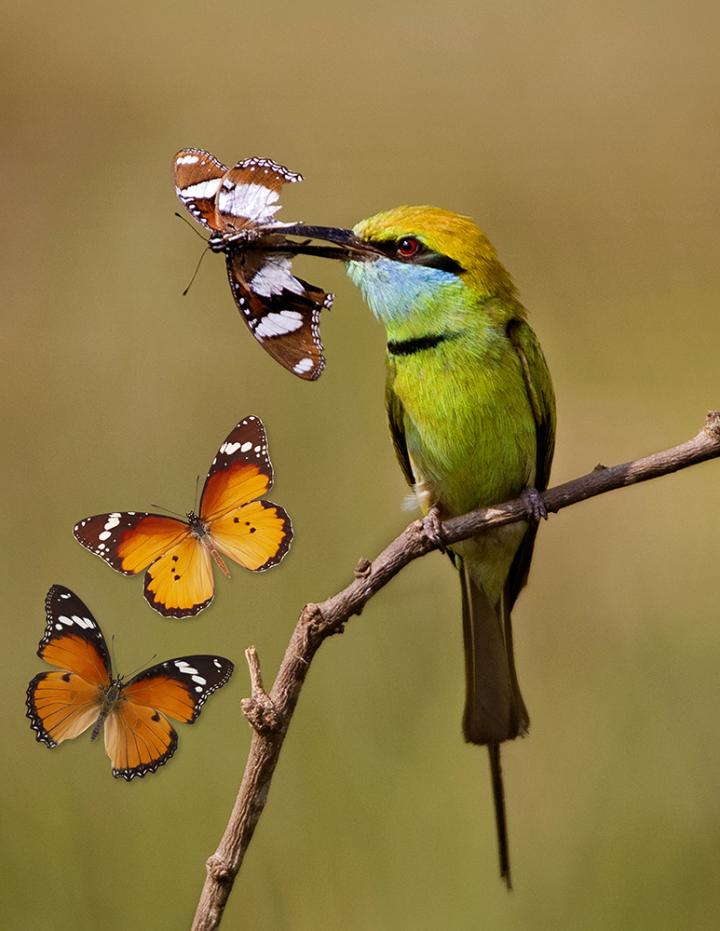
Wing color patterns of butterflies must perform different signalling functions to avoid predators and attract potential mates. In the natural world, mimicry isn't entertainment; it's a deadly serious game spanning a range of senses - sight, smell and hearing. Some of the most striking visual mimics are butterflies. Many butterflies become noxious and unpalatable to predators by acquiring chemical defences from plants they ingest as caterpillars. Other butterflies mimic the 'aposematic' or warning colouration and conspicuous wing patterns of these toxic or just plain foul-tasting butterflies.
| Biology | November 5, 2015 07:22 PM |
Two captive elephants blast air through their trunks to grasp hard-to-reach food, suggests an initial study published today in Springer's journal Animal Cognition. This behaviour, studied in a zoo population of Asian elephants (Elephas maximus), is altered according to the distance to the food, which may indicate advanced mental ability and awareness of their physical environment.
| Biology | November 4, 2015 06:39 PM |
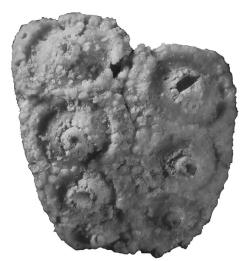
Eotiaris guadalupensis fossil was discovered by USC's Jeffrey Thompson in the Smithsonian collections. Researchers have uncovered a fossil sea urchin that pushes back a fork in its family tree by 10 million years, according to a new study.
| Biology | November 3, 2015 06:42 PM |
Millions of years ago, even before the continents had settled into place, jellyfish were already swimming the oceans with the same pulsing motions we observe today.
| Biology | October 30, 2015 07:15 PM |
Alligators and the Everglades go hand-in-hand, and as water conditions change in the greater Everglades ecosystem, gators are one of the key species that could be affected.
| Biology | October 29, 2015 06:00 PM |
Previously, giant sharks had only been recovered from rock dating back 130 million years, during the age of the dinosaurs. The largest shark that ever lived, commonly called "Megalodon", is much younger, with an oldest occurrence at about 15 million years ago. This means the new fossils from Texas indicate giant sharks go much further back into the fossil record.
| Biology | October 28, 2015 07:29 PM |
Electric eels temporarily paralyze their prey by shocking them with electricity using a series of brief, high-voltage pulses, much as a Taser would do. Now, a researcher reporting in the Cell Press journal Current Biology on October 28 has discovered that the eels can at least double the power of their electrical discharge by curling up their bodies. In bringing their tail up and around, the eels sandwich prey between the two poles of their electric organ, which runs most of the length of their long, flexible bodies.
| Biology | October 28, 2015 07:29 PM |
While the anthropogenic impact on global species diversity is clear, the role of ancient human populations in causing extinctions is more controversial. New data presented at the Society of Vertebrate Paleontology meetings in Dallas, Texas, implicates early humans in the extinction of large mammals, birds and lizards in Australia. More precise dating of these extinction events places them 10 thousand years after the first arrival of humans in Australia, suggesting human predation was the most likely cause.
| Biology | October 28, 2015 07:29 PM |
In 2001, a paleontology field crew from Burpee Museum of Natural History (Rockford, IL) were prospecting for dinosaur fossils near Ekalaka, Montana, when they discovered bones of a half-grown T. rex weathering out from exposures of the Hell Creek Formation. "Jane", as she was later named, turned out to be the most complete adolescent T. rex ever discovered, filling a critical gap between juvenile and adult that had caused decades of scientific debate.
| Biology | October 27, 2015 06:05 PM |
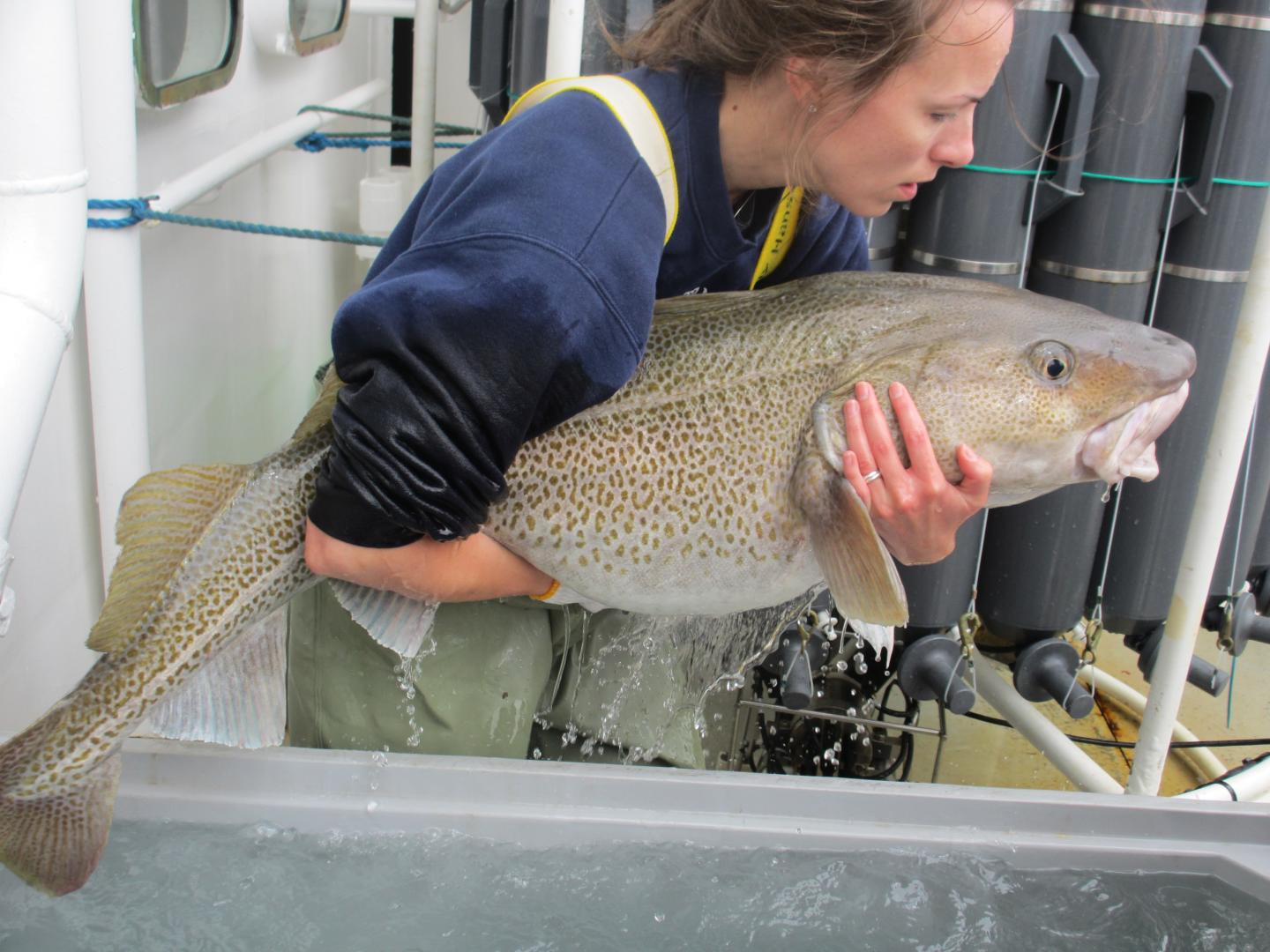
This is Dr. Rowe with a large cod to be tagged and released in Bonavista Corridor. Once an icon of overfishing, mismanagement, and stock decline, the northern Atlantic cod is showing signs of recovery according to new research published today in the Canadian Journal of Fisheries and Aquatic Sciences.
| Biology | October 21, 2015 03:43 AM |
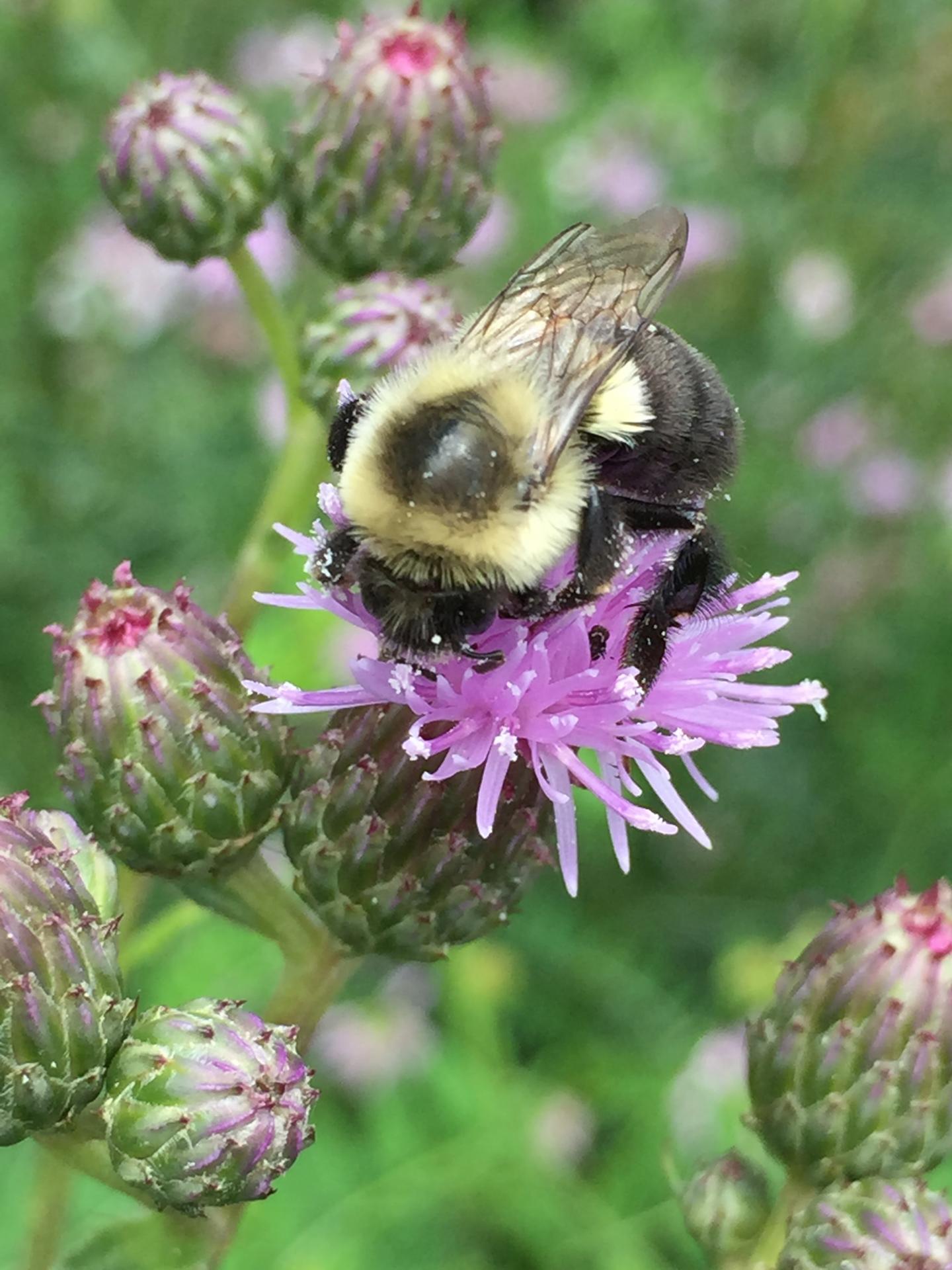
The researchers demonstrated that social insects, including bees, ants and wasps, are more complex than previously was thought. Chemical signaling among social insects, such as bees, ants and wasps, is more complex than previously thought, according to researchers at Penn State and Tel Aviv University, whose results refute the idea that a single group of chemicals controls reproduction across numerous species.
| Biology | October 5, 2015 05:10 PM |
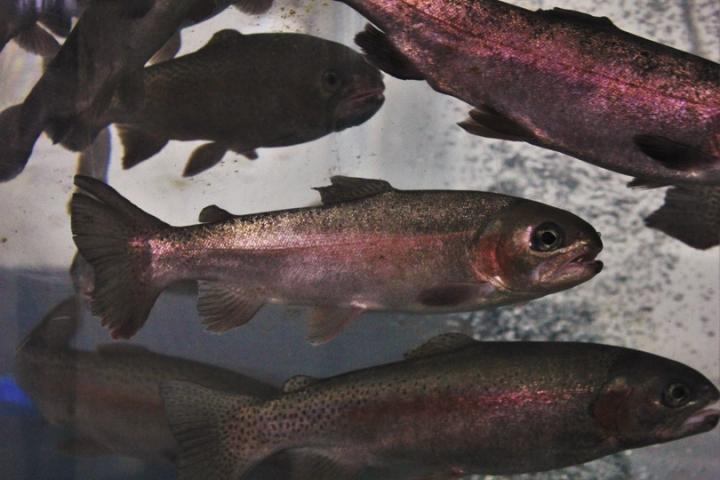
Fish are far more effective at delivering oxygen throughout their body than almost any other animal. When you think of the world's greatest athletes, names like Usain Bolt generally spring to mind, but scientists have discovered the best athletes could well be found in the water, covered in scales.
| Biology | October 5, 2015 05:10 PM |
An endangered monkey species in Tanzania is living in geographical pockets that are becoming isolated from one another. The situation, researchers say, is mostly driven by the monkeys' proximity to villages and the deliberate burning of forests to make way for crops and pastures.
| Biology | October 5, 2015 05:10 PM |
The color of dinosaurs is a fascinating topic, and in recent years the discovery of melanosomes - small, pigment-filled sacs - associated with fossilized dinosaur feathers has given rise to all sorts of speculation about our prehistoric pals, from the hue of their plumage to color's impact on behavior.
| Biology | September 20, 2015 03:37 AM |
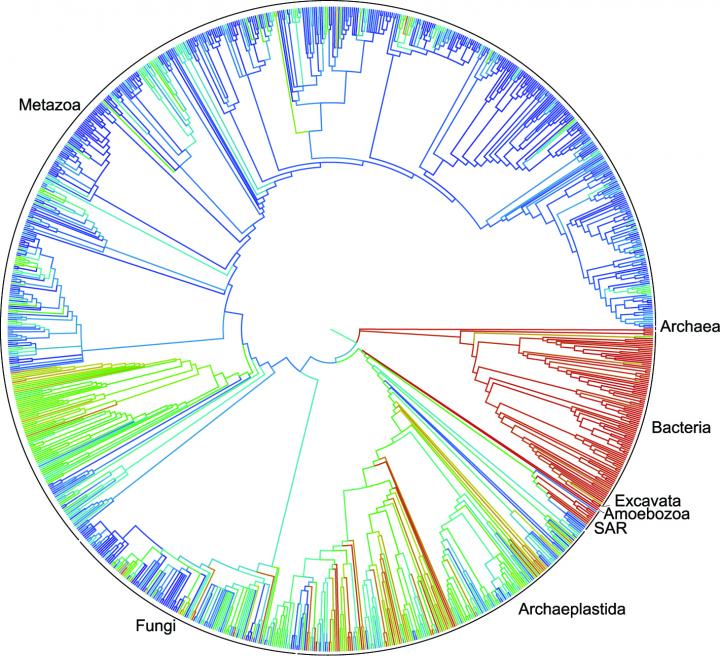
This circular family tree of Earth's lifeforms is considered a first draft of the 3.5-billion-year history of how life evolved and diverged. A first draft of the "tree of life" for the roughly 2.3 million named species of animals, plants, fungi and microbes -- from platypuses to puffballs -- has been released.
| Biology | September 15, 2015 04:05 PM |
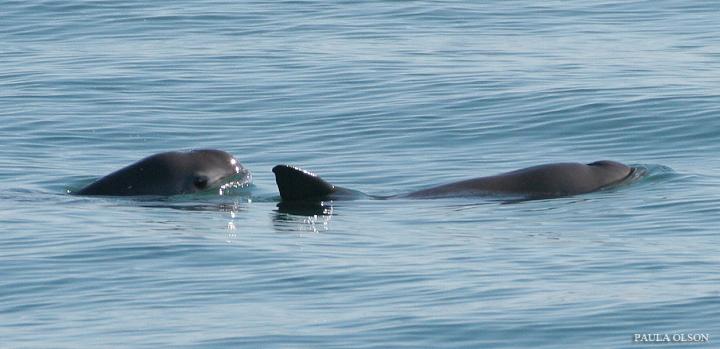
This is a vaquita photo taken from the Secretaria de Medio Ambiente y Recursos Naturales (SEMARNAT), within a natural protected area subject to special management. A new method of teasing information from scarce and highly degraded genetic samples is helping NOAA Fisheries and Mexican scientists unravel the genetic heritage of the enigmatic vaquita, the most endangered marine mammal on Earth.
| Biology | September 14, 2015 06:32 PM |
A new study from researchers at Uppsala University shows that variation in genome size may be much more important than previously believed. It is clear that, at least sometimes, a large genome is a good genome.
| Biology | September 10, 2015 06:45 PM |
The discovery of a new species of human relative was announced today, 10 September 2015, by the University of the Witwatersrand (Wits University), the National Geographic Society and the Department of Science and Technology (DST) and the National Research Foundation of South Africa (NRF).
| Biology | September 10, 2015 06:45 PM |
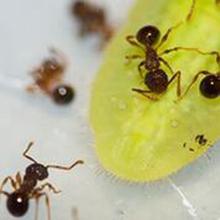
The ants become aggressive in response to the elongated projections (spotted patterns) of the larvae. Project Assistant Professor HOJO Masaru of Kobe University, Graduate School of Science, and joint research groups at the University of the Ryukyus and Harvard University have discovered that lycaenid butterfly larvae, which are in a symbiotic relationship with ants, can control the effect of dopamine by supplying the ants with nectar. The results of this study provide novel insight into the phenomenon of symbiosis and give clues about the physiological functions of dopamine. The study was published in Current Biology on July 31.
| Biology | September 8, 2015 07:08 PM |
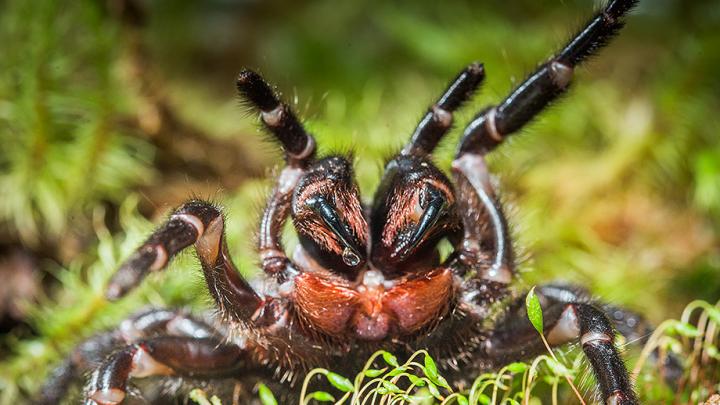
This is a funnel-web spider. Scientists studying funnel-web spiders at Booderee National Park near Jervis Bay on the New South Wales south coast have found a large example of an unexpected funnel-web species.
| Biology | September 3, 2015 04:44 PM |
A sophisticated imaging technique has allowed scientists to virtually peer inside a 10-million-year-old sea urchin, uncovering a treasure trove of hidden fossils.
| Biology | September 2, 2015 04:39 PM |
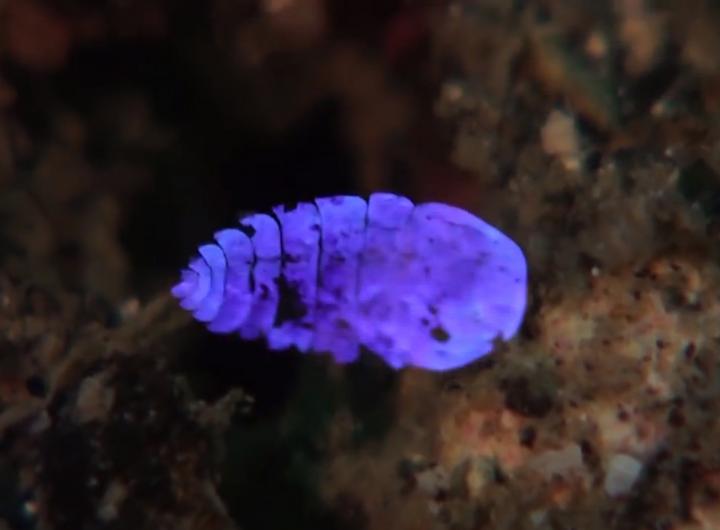
Tiny sea sapphires' iridescence, created by a regular array of thin transparent crystal plates, is also the secret of their "disappearance. " Tiny ocean creatures known as sea sapphires perform a sort of magic trick as they swim: One second they appear in splendid iridescent shades of blue, purple or green, and the next they may turn invisible (at least the blue ones turn completely transparent). How do they get their bright colors and what enables them to "disappear?" New research at the Weizmann Institute has solved the mystery of these colorful, vanishing creatures, which are known scientifically as Sapphirinidae. The findings, which recently appeared in the Journal of the American Chemical Society, could inspire the development of new optical technologies.
| Biology | September 1, 2015 05:59 PM |
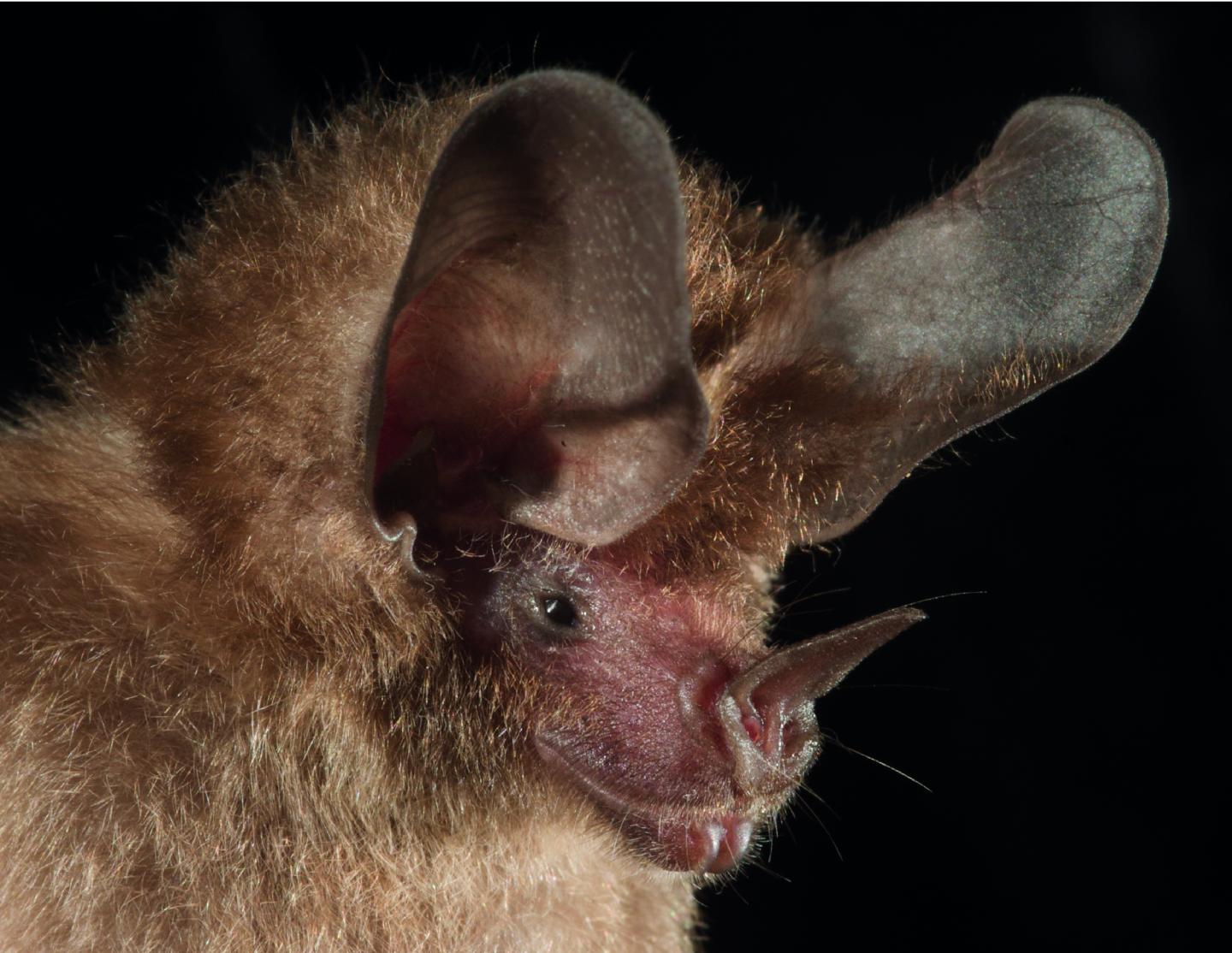
Elite hunter from bat world has previously unknown cues at its disposal. The ability of some bats to spot motionless prey in the dark has baffled experts until now. By creating the first visual images from echolocation, researchers reveal we have been missing how bats sense their world.
| Biology | August 31, 2015 02:34 PM |
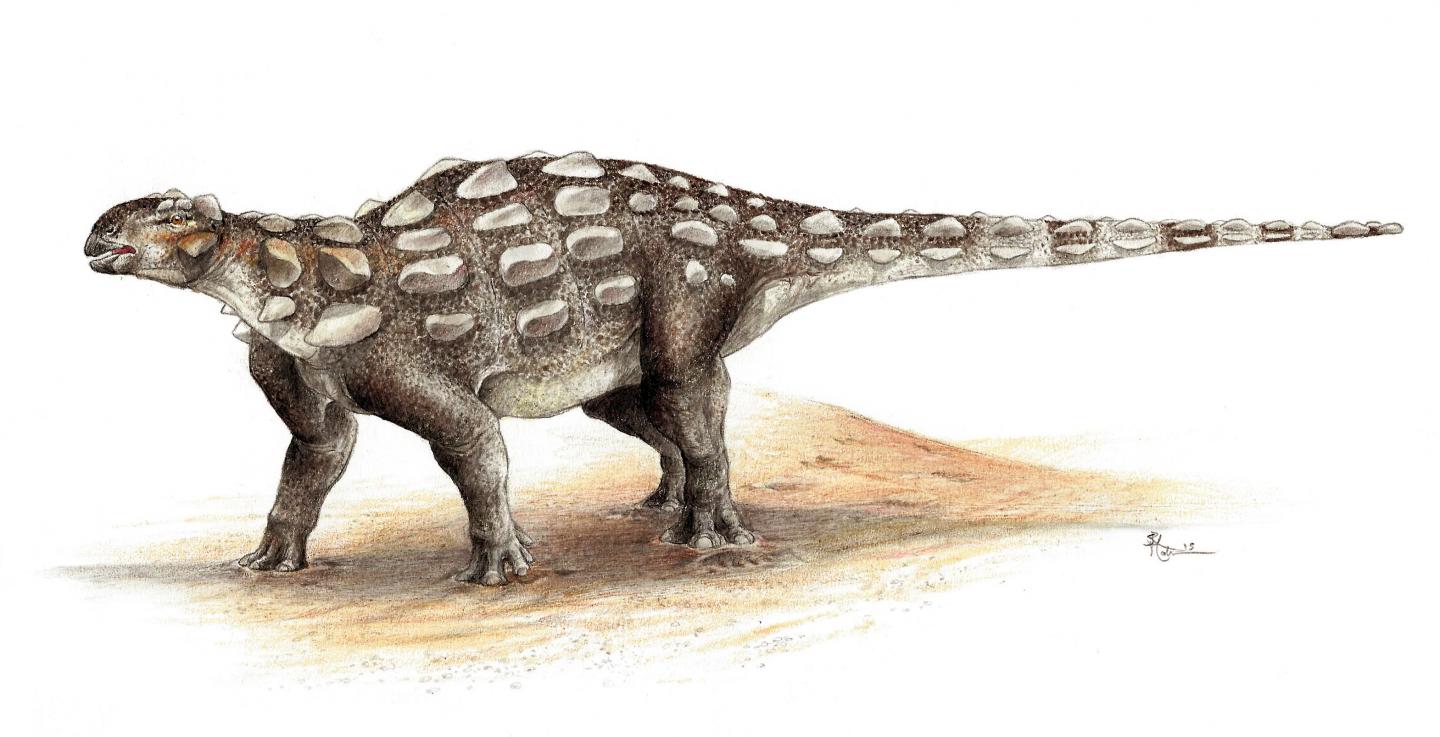
Life illustration of Gobisaurus, an ankylosaur with a stiff tail but no knob of bone at the end. How did the ankylosaur get its tail club? According to research from North Carolina State University and the North Carolina Museum of Natural Sciences that traces the evolution of the ankylosaur's distinctive tail, the handle arrived first on the scene, and the knot at the end of the tail followed.
| Biology | August 25, 2015 05:34 PM |
In early August, biologist Peter Ward returned from the South Pacific with news that he encountered an old friend, one he hadn't seen in over three decades. The University of Washington professor had seen what he considers one of the world's rarest animals, a remote encounter that may become even more infrequent if illegal fishing practices continue.
| Biology | August 24, 2015 05:15 PM |
We humans have been using self-medication to cure the illnesses since the dawn of our species. There is some evidence that also other animals can exhibit this type of behavior, but the evidence has been hard to come by.
| Biology | August 17, 2015 05:55 PM |
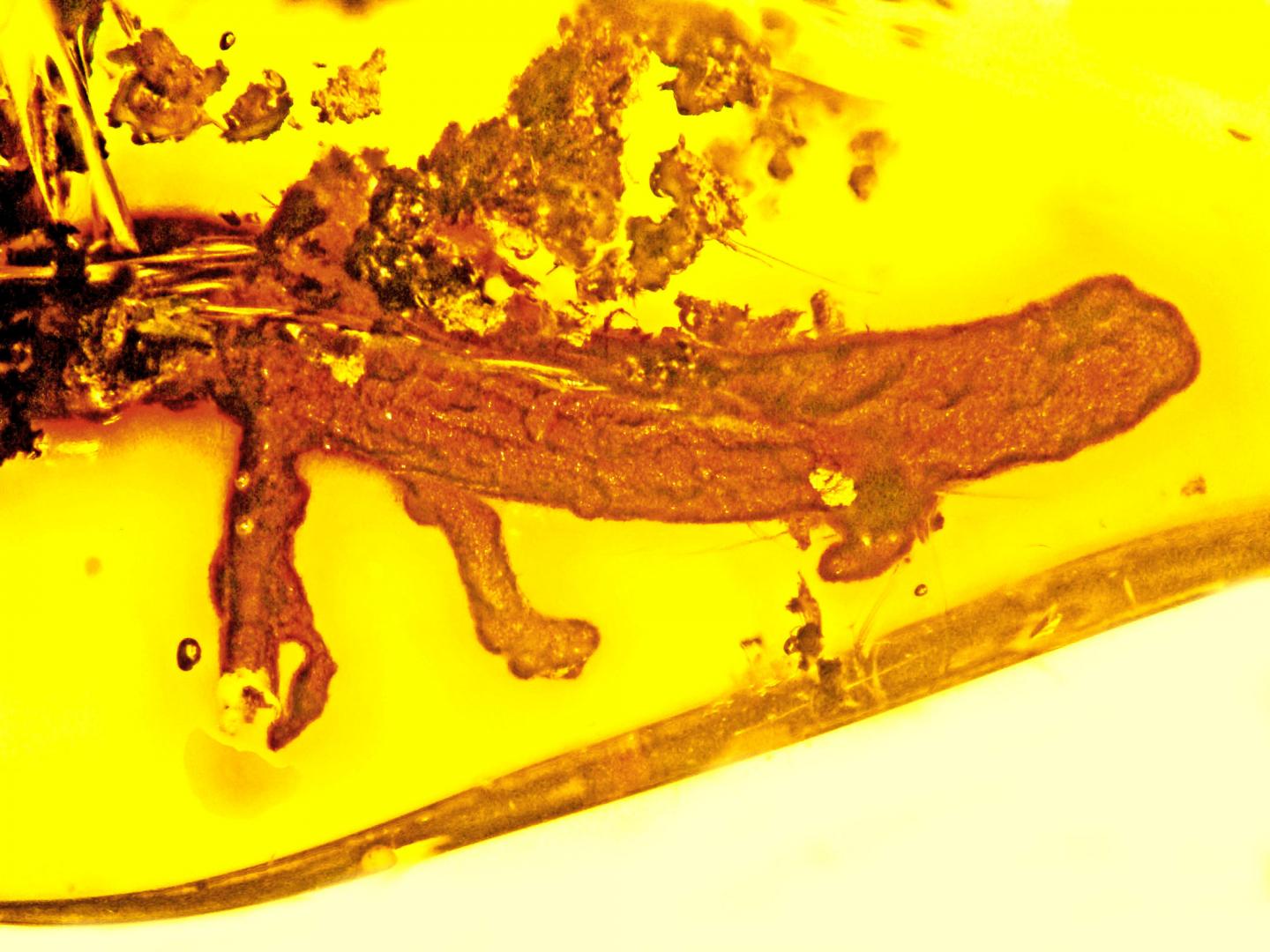
This is the first-ever discovery of a salamander preserved in amber, from an unlikely spot -- the Dominican Republic, where all salamanders are now extinct. More than 20 million years ago, a short struggle took place in what is now the Dominican Republic, resulting in one animal getting its leg bitten off by a predator just before it escaped. But in the confusion, it fell into a gooey resin deposit, to be fossilized and entombed forever in amber.
| Biology | August 13, 2015 06:01 PM |
Early humans were the dominant cause of the extinction of a variety of species of giant beasts, new research has revealed.
| Biology | August 5, 2015 04:50 AM |
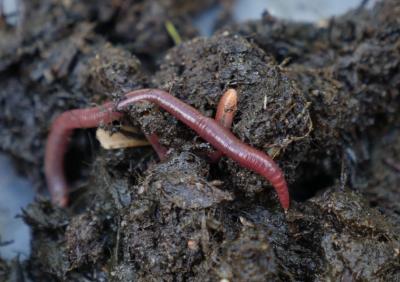
Earthworms in rich organic soil. As they burrow, the worms consume soil in order to remove nutrients from decaying organic matter such as leaves and roots. Scientists have discovered how earthworms can digest plant material, such as fallen leaves, that would defeat most other herbivores.
| Biology | August 5, 2015 04:50 AM |
A study including researchers from the U.S. Department of Energy's Argonne National Laboratory and the University of Chicago found evidence that gut microbes affect circadian rhythms and metabolism in mice.
| Biology | July 31, 2015 05:07 AM |
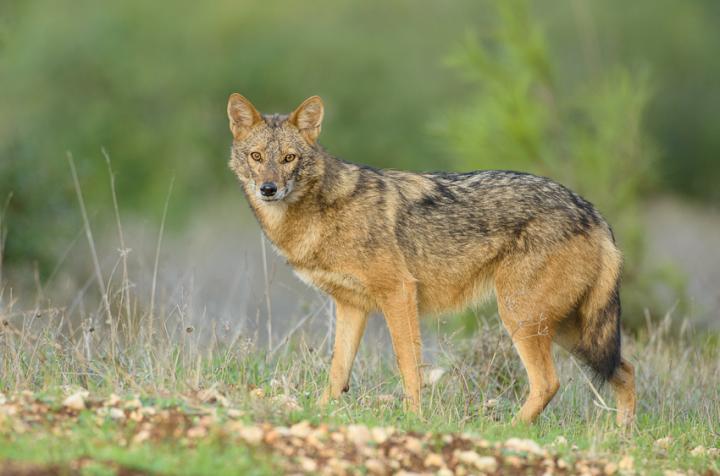
A golden jackal (Canis aureus) from Israel. Based on genomic results, the researchers suggest this animal, the Eurasian golden jackal, is distinct from Canis anthus Despite their remarkably similar appearance, the "golden jackals" of East Africa and Eurasia are actually two entirely different species. The discovery, based on DNA evidence and reported in the Cell Press journal Current Biology on July 30, increases the overall biodiversity of the Canidae--the group including dogs, wolves, foxes, and jackals--from 35 living species to 36.
| Biology | July 31, 2015 05:06 AM |
In research that could lead to protective probiotics to fight the "chytrid" fungus that has been decimating amphibian populations worldwide, Jenifer Walke, PhD, a postdoctoral researcher at Virginia Tech University, Blacksburg, and her collaborators have grown bacterial species from the skin microbiome of four species of amphibians. The research appears July 10 in Applied and Environmental Microbiology, a journal of the American Society for Microbiology.
| Biology | July 16, 2015 06:42 PM |
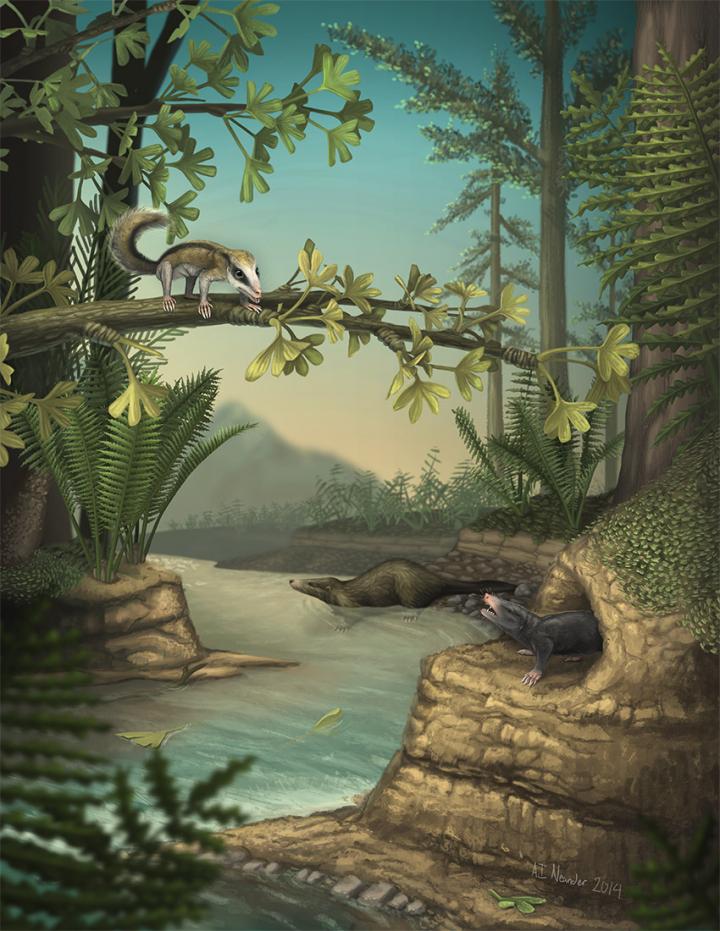
Research led by Oxford University scientists shows that mammals were evolving up to ten times faster in the middle of the Jurassic Mammals were evolving up to ten times faster in the middle of the Jurassic than they were at the end of the period, coinciding with an explosion of new adaptations, new research shows.
| Biology | July 13, 2015 07:06 PM |
From the smell of flowers to the taste of wine, our perception is strongly influenced by prior knowledge and expectations, a cognitive process known as top-down control.
| Biology | July 13, 2015 07:06 PM |
The world's rarest ape has an increased chance of survival after a team led by international conservation charity the Zoological Society of London (ZSL) found a new family group of Hainan gibbons (Nomascus hainanus).
| Biology | June 29, 2015 06:10 PM |
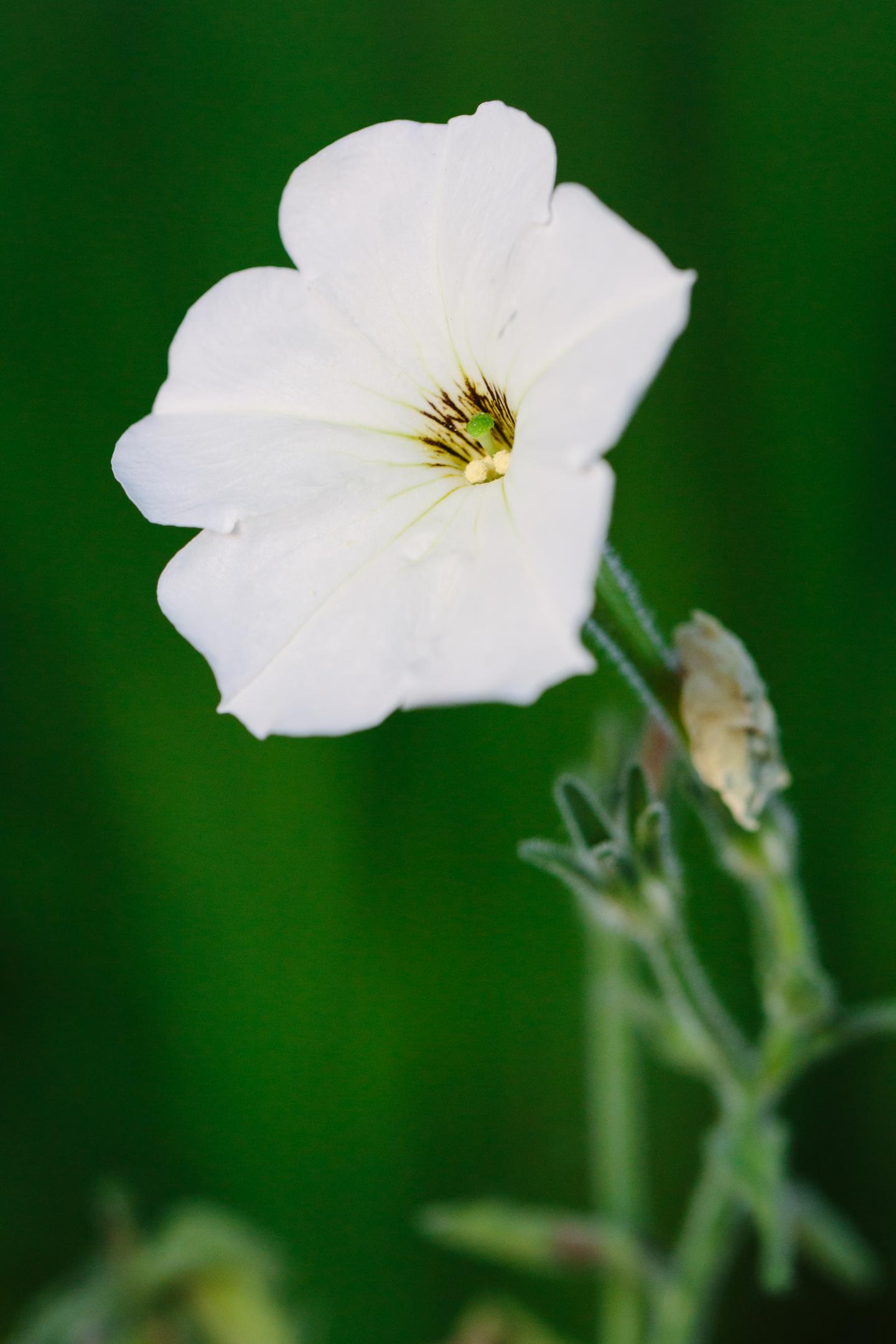
University of Washington researchers have discovered a link between floral scent release and circadian rhythms in the common garden petunia. Good timing is a matter of skill. You would certainly dress up for an afternoon business meeting, but not an evening session of binge-watching Netflix. If you were just a few hours off in your wardrobe timing, your spouse might wonder why you slipped into a stiff business suit to watch "House of Cards."
| Biology | June 3, 2015 06:53 PM |

Drilling deep into the night: The team of researchers headed by Christian Hallmann and Katherine French took elaborate precautions to keep their samples clean Contaminated samples have evidently created some confusion in the timetable of life. On the basis of ultra-clean analyses, an international team, including scientists from the Max Planck Institute for Biogeochemistry, has disproved supposed evidence that eukaryotes originated 2.5 to 2.8 billion years ago. In contrast to prokaryotes such as bacteria, eukaryotes have a nucleus. Some researchers thought they had discovered molecular remnants of living organisms in rock samples up to 2.8 billion years old. However, as the current study shows, these molecular traces were introduced by contamination. The oldest evidence for the existence of eukaryotes is now provided by microfossils that are ca. 1.5 billion years old.
| Biology | June 3, 2015 06:53 PM |
Scientists at the German Center for Neurodegenerative Diseases (DZNE) and the University of Bonn led by Prof. Stefan Remy report on this in the journal "Neuron". Their investigations give new insights into the workings of spatial memory. Furthermore, they could also help improve our understanding of movement related symptoms associated with Parkinson's disease.
| Biology | June 2, 2015 06:32 PM |
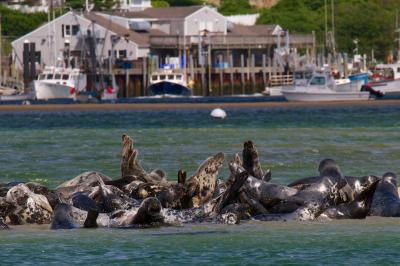
The restoration of formerly endangered species is raising conflict in some places. A study of marine mammals and other protected species finds that several once endangered species, including the iconic humpback whale, the northern elephant seal and green sea turtles, have recovered and are repopulating their former ranges.
| Biology | June 1, 2015 06:02 PM |
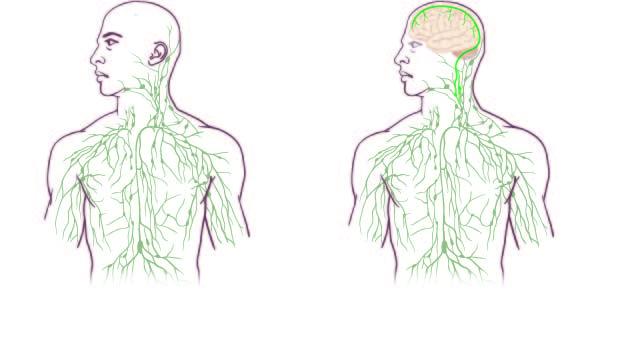
Maps of the lymphatic system: old (left) and updated to reflect UVA's discovery.
- Vessels directly connecting brain, lymphatic system exist despite decades of doctrine that they don't
- Finding may have substantial implications for major neurological diseases
- Game-changing discovery opens new areas of research, transforms existing ones
- Major gap in understanding of the human body revealed
- 'They'll have to change the textbooks'
| Biology | May 27, 2015 06:52 PM |
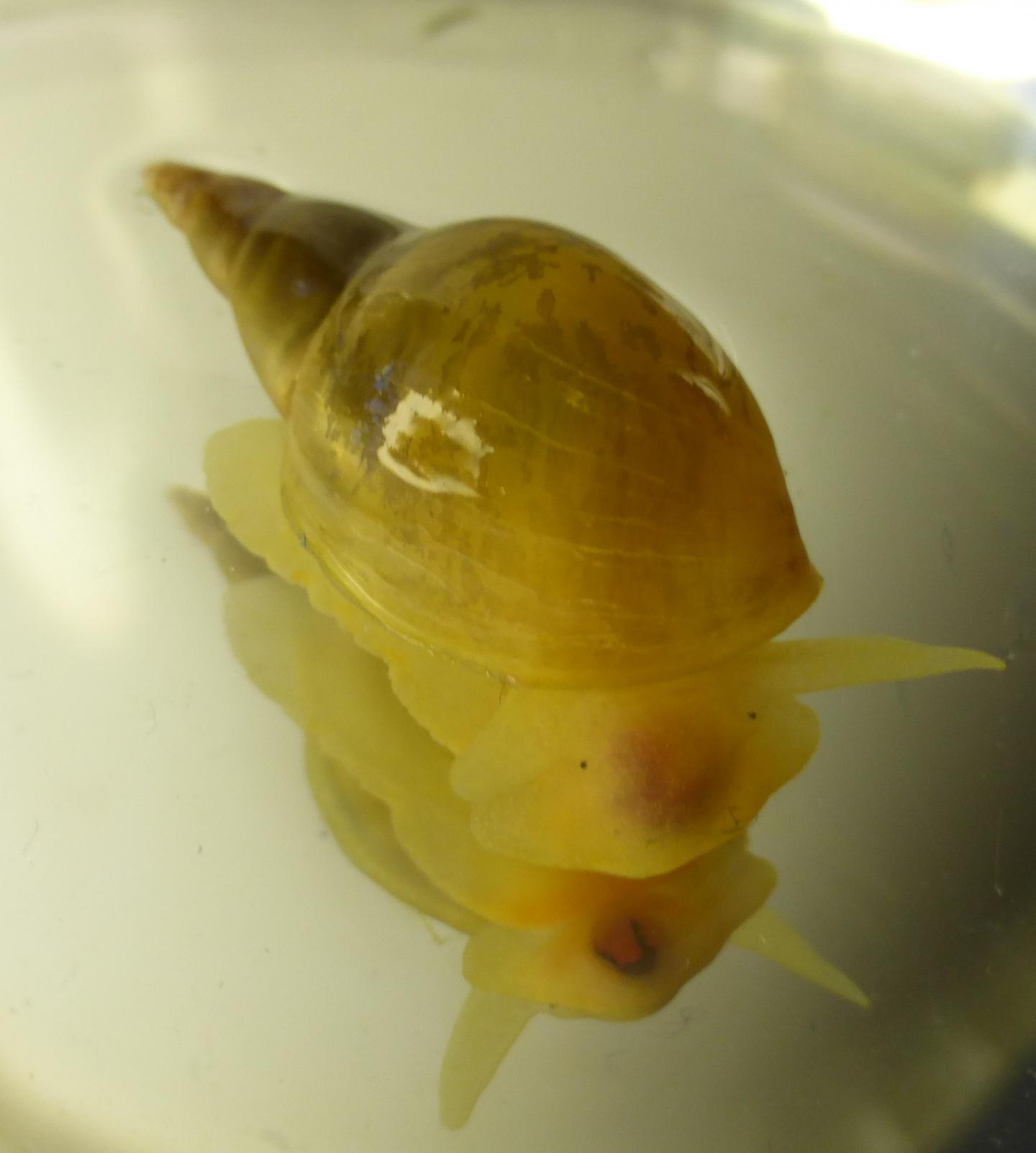
Pond snails used in the experiment, Lymnaea stagnalis, have been used for over 25 years to study learning and memory. Animals, like humans, excel at some tasks but not others according to a new study published in the journal Scientific Reports.
| Biology | May 26, 2015 06:51 AM |
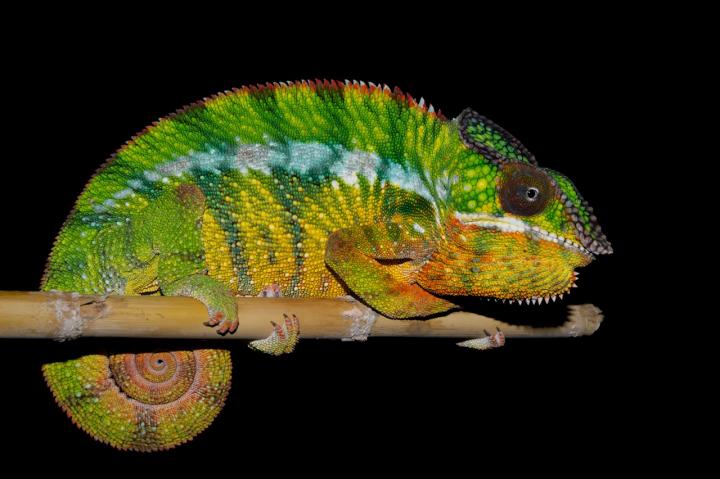
Shown here is a panther chameleon. Madagascar is home to extraordinary biodiversity, but in the past few decades, the island's forests and associated biodiversity have been under greater attack than ever. Rapid deforestation is affecting the biotopes of hundreds of species, including the panther chameleon, a species with spectacular intra-specific colour variation. A new study by Michel Milinkovitch, professor of genetics, evolution, and biophysics at the University of Geneva (UNIGE), led in close collaboration with colleagues in Madagascar, reveals that this charismatic reptilian species, which is only found in Madagascar, is actually composed of eleven different species. The results of their research appear in the latest issue of the Molecular Ecology journal. They also discuss the urgent need to protect Madagascar's habitats.
| Biology | May 21, 2015 06:51 PM |
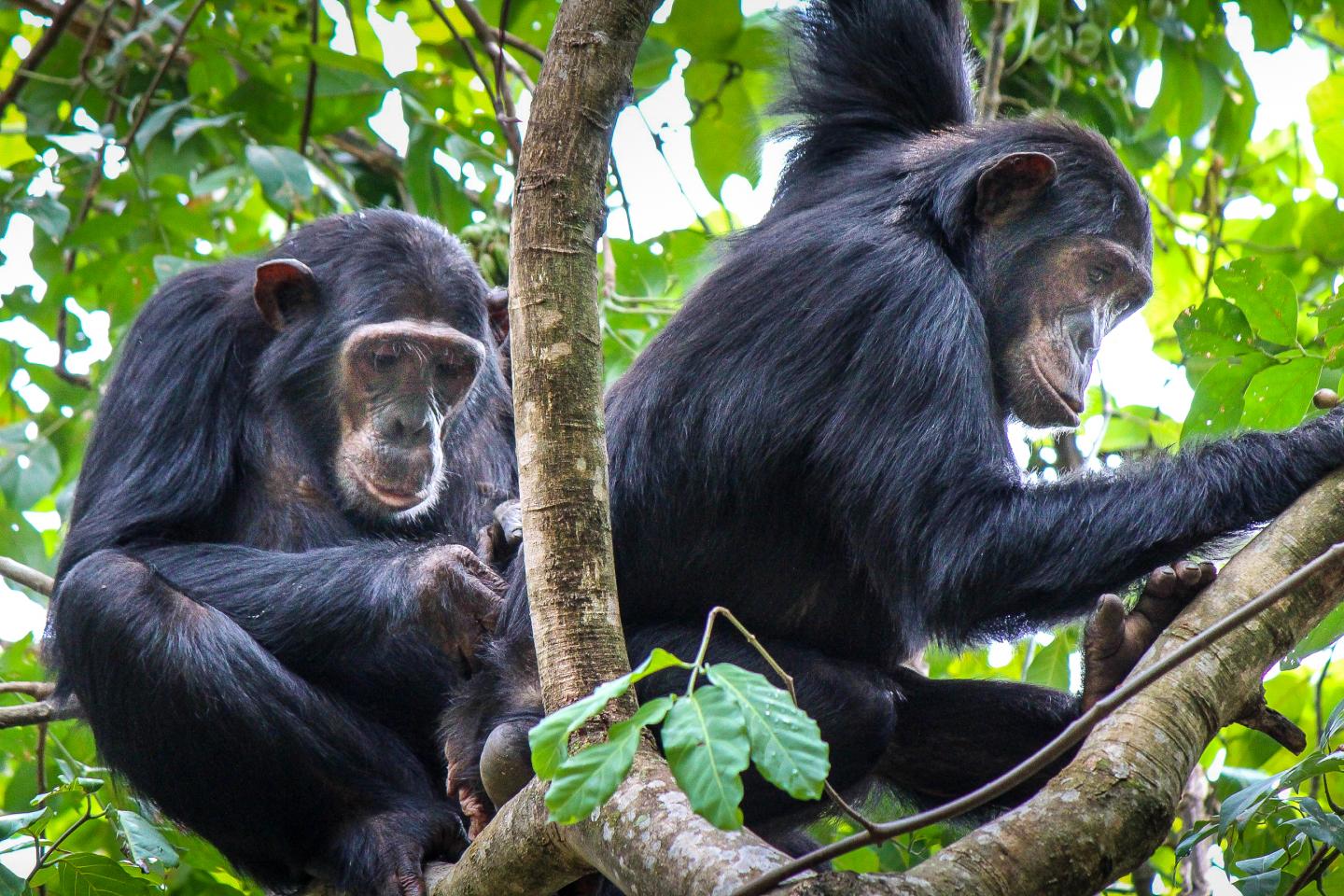
Chema and Rumumba, two low-ranking immigrant female chimpanzees, take turns grooming each other in Gombe National Park, Tanzania. Low-ranking "new girl" chimpanzees seek out other gal pals with similar status, finds a new study of social relationships in the wild apes.
| Biology | May 21, 2015 06:51 PM |
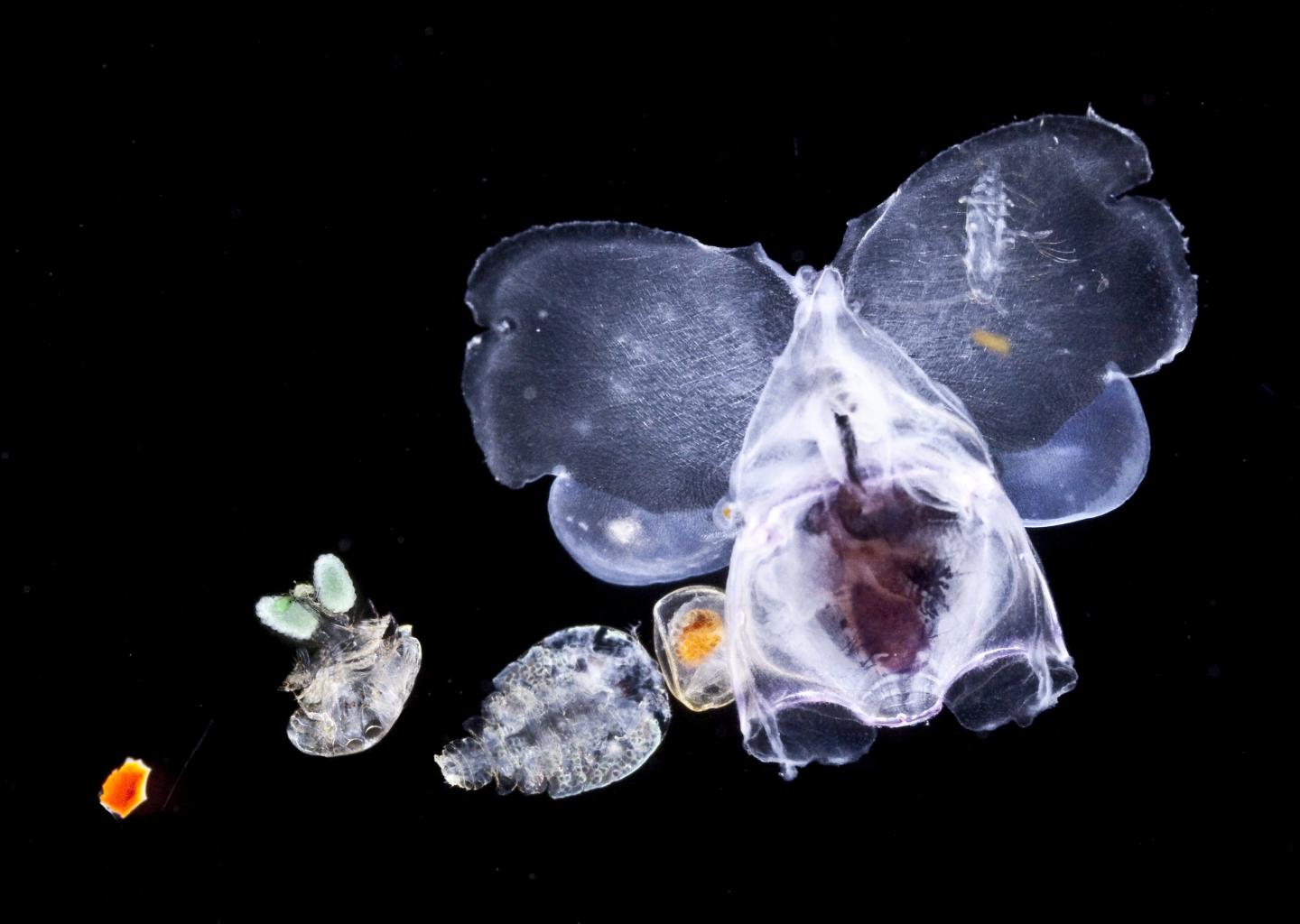
The Tara Oceans expedition collected these small zooplanktonic animals in the Indian Ocean: a molluscan pteropod on the right, and 2 crustacean copepods. On the left is a fragment of... In five related reports in this issue of the journal Science, a multinational team of researchers who spent three and a half years sampling the ocean's sunlit upper layers aboard the schooner Tara unveil the first officially reported global analyses of the Tara Oceans consortium. Planktonic life in the ocean is far more diverse than scientists knew, these reports show. They provide new resources for cataloguing the ocean's numerous planktonic organisms, which -- though critical to life on Earth, providing half the oxygen generated annually through photosynthesis, for example -- have largely been uncharacterized. The reports also reveal how planktonic life is distributed and how planktonic species interact, and they suggest that these organisms' interactions, more so than environmental conditions, help explain their community structures.
| Biology | May 21, 2015 06:51 PM |
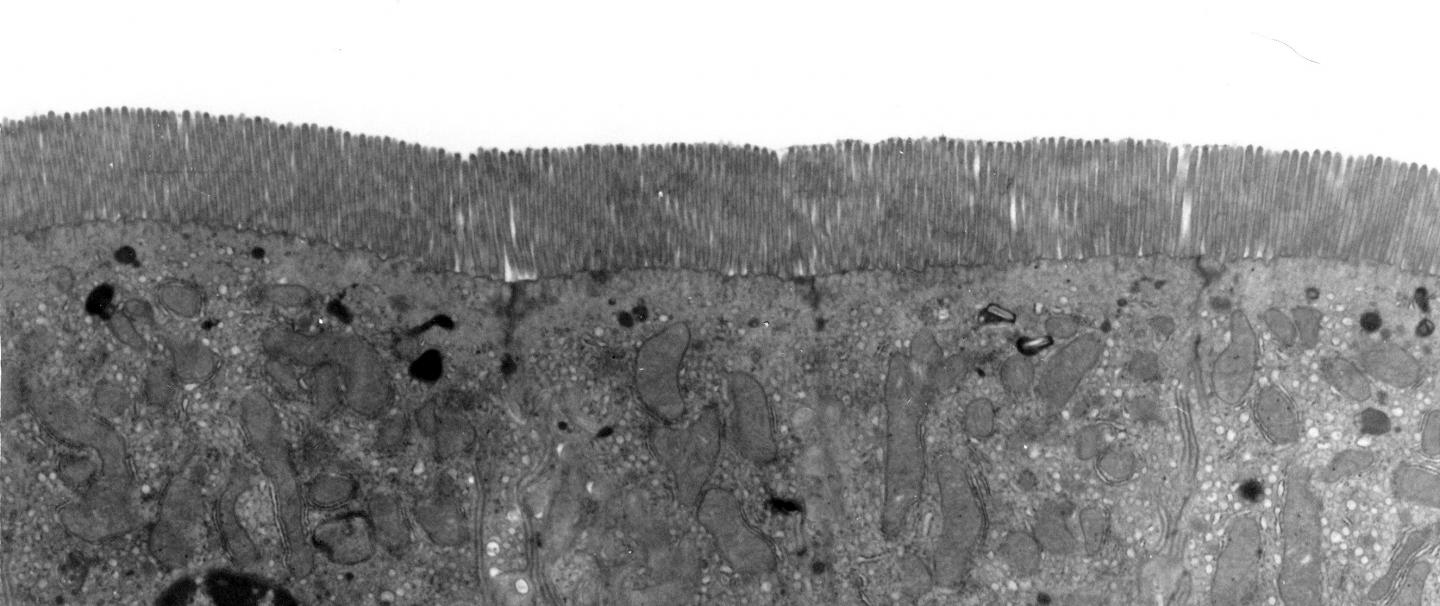
This image shows the epithelial lining of the gut. Scientists and clinicians on the Norwich Research Park have carried out the first detailed study of how our intestinal tract changes as we age, and how this determines our overall health.
| Biology | May 21, 2015 06:51 PM |
A cartwheeling spider, a bird-like dinosaur and a fish that wriggles around on the sea floor to create a circular nesting site are among the species identified by the SUNY College of Environmental Science and Forestry (ESF) as the Top 10 New Species for 2015.
| Biology | May 18, 2015 05:27 PM |

In a study using functional magnetic resonance imaging, Virginia Tech Carilion Research Institute scientists found that our inherent risk-taking preferences affect how we view and act on information from other... The hottest hairstyle, the latest extreme sport, the newest viral stunt -- trends happen for a reason and now scientists have a better understanding of why.
| Biology | May 18, 2015 05:27 PM |
Duke and MIT scientists have discovered an area of the brain that is sensitive to the timing of speech, a crucial element of spoken language.
| Biology | May 14, 2015 04:37 PM |
The evolutionary age of grass has been hotly contested. Scientists have previously dated the earliest grasses to 55 million years ago; after the dinosaurs went extinct. Now, a new 100-million-year-old specimen of amber from Myanmar potentially pushes back grass evolution to the Late Cretaceous.
| Biology | May 12, 2015 05:42 PM |
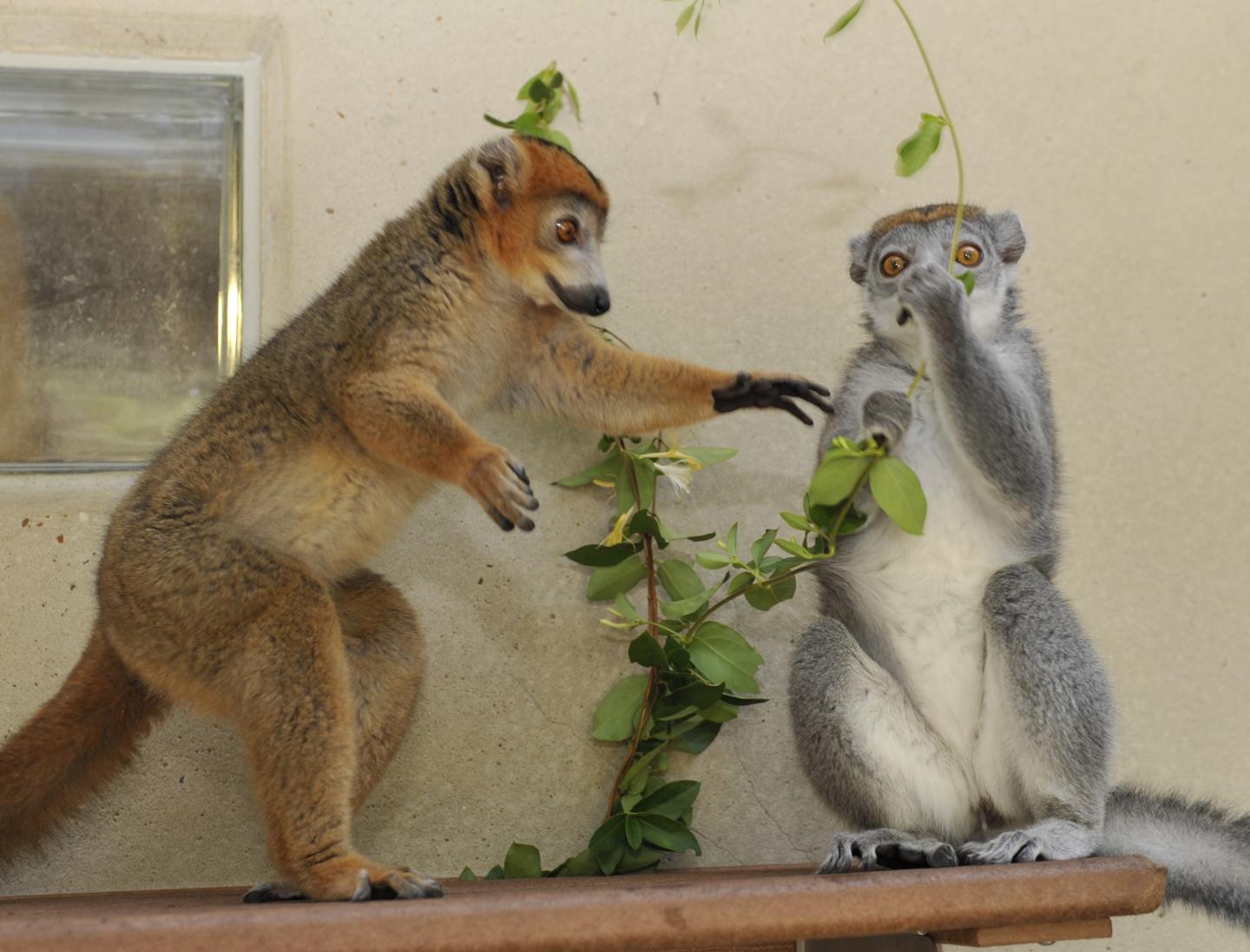
In many of the more than 100 recognized species of lemurs, females run the show. Here, a crowned lemur female hogs a sprig of honeysuckle from her mate. Lemur girls behave more like the guys, thanks to a little testosterone, according to a new study.
| Biology | May 8, 2015 03:10 AM |
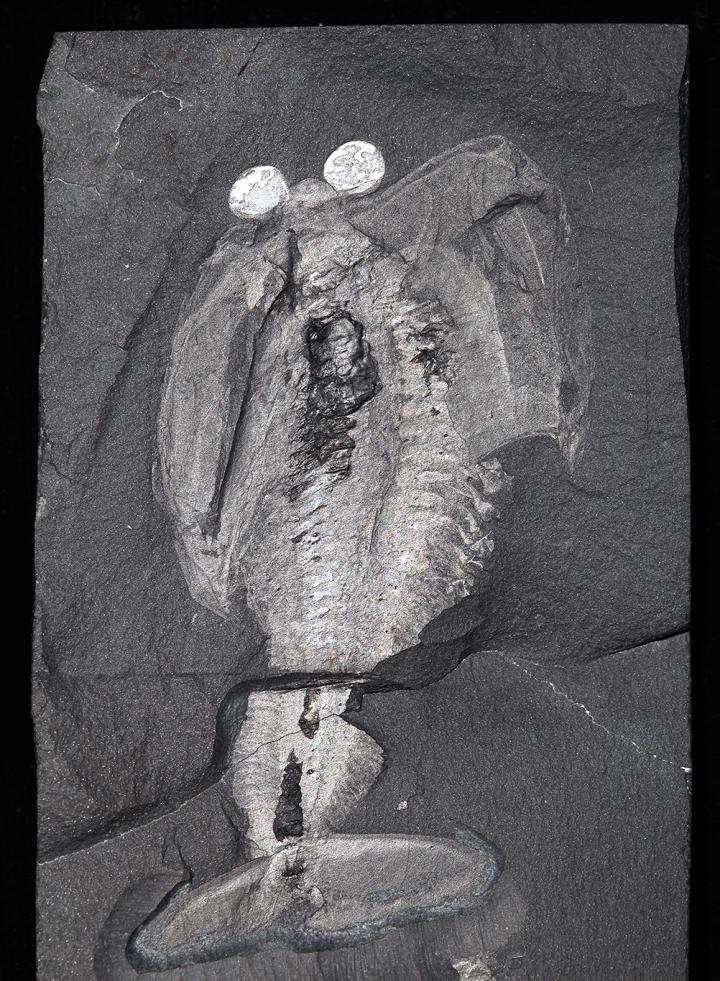
This is Odaraia alata, an arthropod resembling a submarine from the middle Cambrian Burgess Shale. A new study from the University of Cambridge has identified one of the oldest fossil brains ever discovered - more than 500 million years old - and used it to help determine how heads first evolved in early animals. The results, published today (7 May) in the journal Current Biology, identify a key point in the evolutionary transition from soft to hard bodies in early ancestors of arthropods, the group that contains modern insects, crustaceans and spiders.
| Biology | May 4, 2015 07:35 PM |
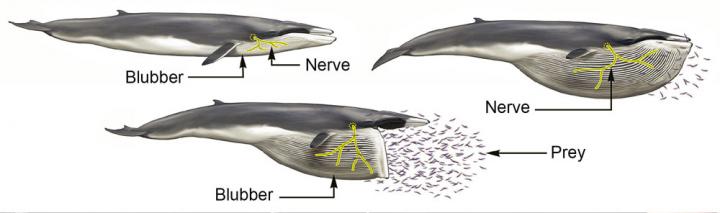
To eat, rorqual whales open their mouths and lunge while their tongues invert and their mouths fill like giant water balloons full of floating prey. Nerves aren't known for being stretchy. In fact, "nerve stretch injury" is a common form of trauma in humans. But researchers reporting in the Cell Press journal Current Biology on May 4 have discovered that nerves in the mouths and tongues of rorqual whales can more than double their length with no trouble at all.
| Biology | April 30, 2015 06:11 PM |
A team of Ludwig-Maximilians-Universitaet (LMU) in Munich has identified the first fossil specimens of a major group of killifishes that is widely distributed in freshwater habitats today. The 6-million-year-old material sheds new light on the evolution of the bony fishes.
| Biology | April 30, 2015 06:11 PM |
Researchers of Ludwig-Maximilians-Universitaet (LMU) in Munich have carried out the first detailed study of the molecular mechanisms responsible for formation of the brachiopod shell. Comparison with shell synthesis in other groups reveals the deep evolutionary roots of the process.
| Biology | April 30, 2015 06:11 PM |
If you thought that a beetle with a machine gun built into its rear end was something that only exists in sci-fi movies, you should talk to Wendy Moore at the University of Arizona.
| Biology | April 29, 2015 07:13 PM |
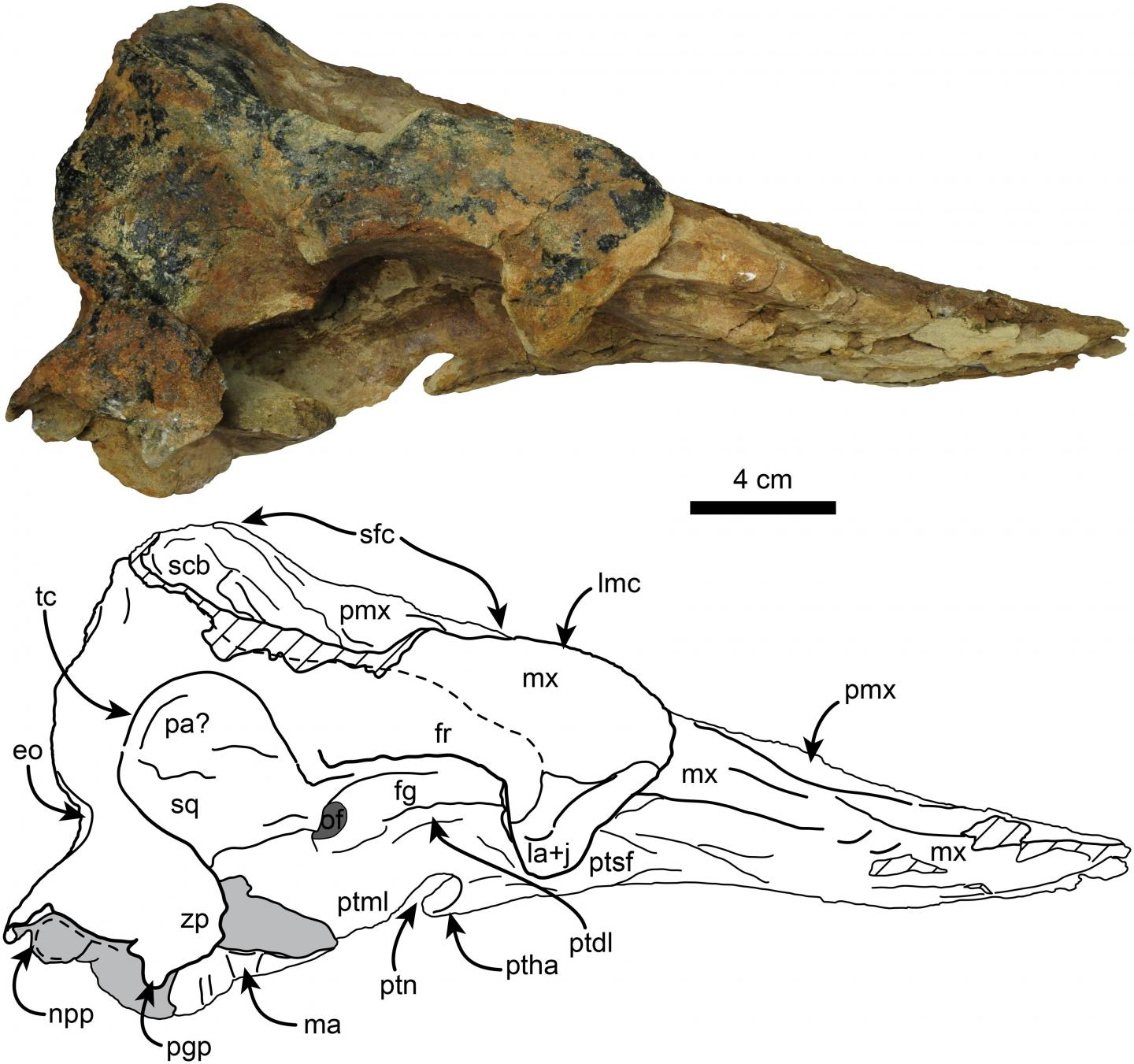
Rare fossils from extinct pygmy sperm whales found in Panama indicate the bone involved in sound generation and echolocation, the spermaceti organ, reduced in size throughout the whales' evolution, according to a study published April 29, 2015 in the open-access journal PLOS ONE by Jorge Velez-Juarbe from Natural History Museum of Los Angeles County and colleagues.
| Biology | April 29, 2015 07:13 PM |
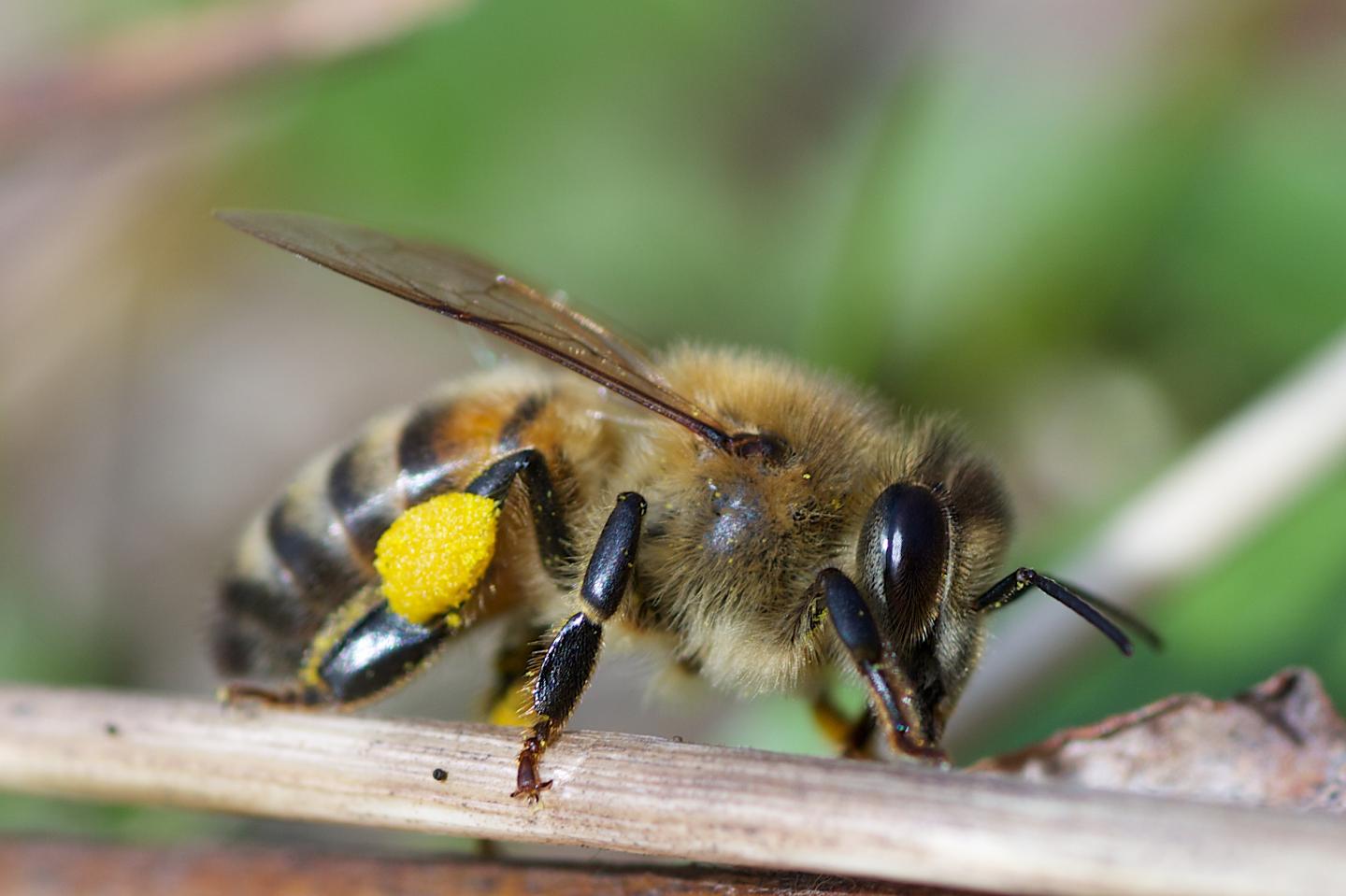
Matthew Webster and Andreas Wallberg at Uppsala University, have studied recombination in honeybees. Recombination, or crossing-over, occurs when sperm and egg cells are formed and segments of each chromosome pair are interchanged. This process plays an crucial role in the maintanance of genetic variation. Matthew Webster and Andreas Wallberg at the Biomedical Centre, Uppsala University, have studied recombination in honeybees. The extreme recombination rates found in this species seem to be crucial for their survival.
| Biology | April 29, 2015 07:13 PM |
Genetic testing of Iñupiat people currently living in Alaska's North Slope is helping Northwestern University scientists fill in the blanks on questions about the migration patterns and ancestral pool of the people who populated the North American Arctic over the last 5,000 years.
| Biology | April 28, 2015 06:32 PM |
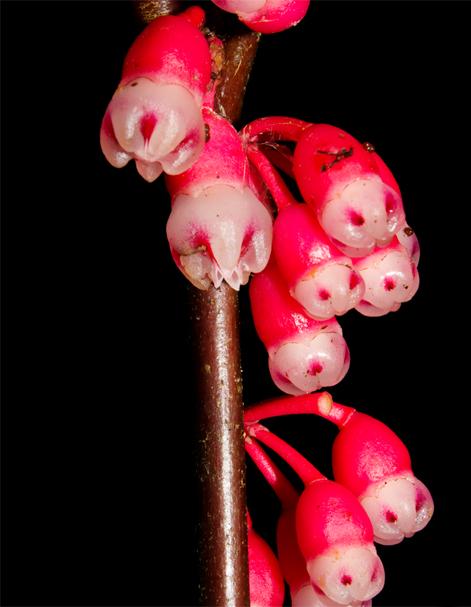
This is the gorgeous new Psammisia sophiae from Colombia. The description of five new species of blueberry relatives from Colombia highlights the country's great diversity of the plant family Ericaceae and the importance of field exploration. These new mortiños, as locally known, are added to the hundreds of blueberry relatives that are native to Colombia. The new additions are endemic species that exhibit morphological characters unparalleled within the genera in which they are classified. The study was published in the open access journal PhytoKeys.
| Biology | April 27, 2015 05:48 PM |

The discovery of a single anatomical difference between males and females in the species Stegosaurus mjosi provides some of the most conclusive evidence that some dinosaurs looked different based on sex The discovery of a single anatomical difference between males and females of a species of Stegosaurus provides some of the most conclusive evidence that some dinosaurs looked different based on sex, according to new research.
| Biology | April 20, 2015 07:58 PM |
Among soft-bodied cephalopods, vampire squid live life at a slower pace. At ocean depths from 500 to 3,000 meters, they don't swim so much as float, and they get by with little oxygen while consuming a low-calorie diet of zooplankton and detritus. Now, researchers reporting in the Cell Press journal Current Biology on April 20 have found that vampire squid differ from all other living coleoid cephalopods in their reproductive strategy as well.
| Biology | April 17, 2015 07:04 PM |
An evolutionary biologist fascinated by the way new species evolve, J. Albert C. Uy has longed to have his research featured in a film geared toward the general public. But concerns over the way some nature documentaries distort science always dissuaded him from collaborating with filmmakers.
| Biology | April 15, 2015 06:12 PM |
The neural network necessary for normal face recognition has been not fully understood yet until now. Here, the research group of Dr. Daisuke Matsuyoshi (present affiliation: The University of Tokyo) led by Prof. Ryusuke Kakigi and Prof. Norihiro Sadato of the National Institute for Physiological Sciences (NIPS), National Institutes of Natural Sciences (NINS), by using the functional magnetic resonance imaging (fMRI), revealed that suppression of the brain area responsible for object recognition by that for face recognition is necessarily for "normal face" recognition. The researchers simulated mathematically networks between the brain areas and showed that not only brain areas that execute face recognition but also brain areas that had been considered non-essential to face recognition are important for "normal face" recognition. This result was published in The Journal of Neuroscience, the weekly official journal of the Society for Neuroscience, Washington, DC.
| Biology | April 13, 2015 06:16 PM |
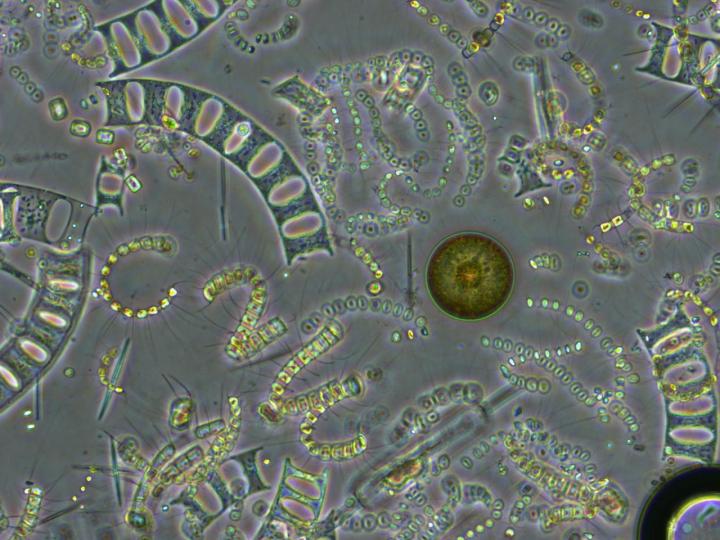
The high diversity of phytoplankton has puzzled biological oceanographers for a long time. Diversity of life abounds on Earth, and there's no need to look any farther than the ocean's surface for proof. There are over 200,000 species of phytoplankton alone, and all of those species of microscopic marine plants that form the base of the marine food web need the same basic resources to grow--light and nutrients.
| Biology | April 10, 2015 07:09 PM |
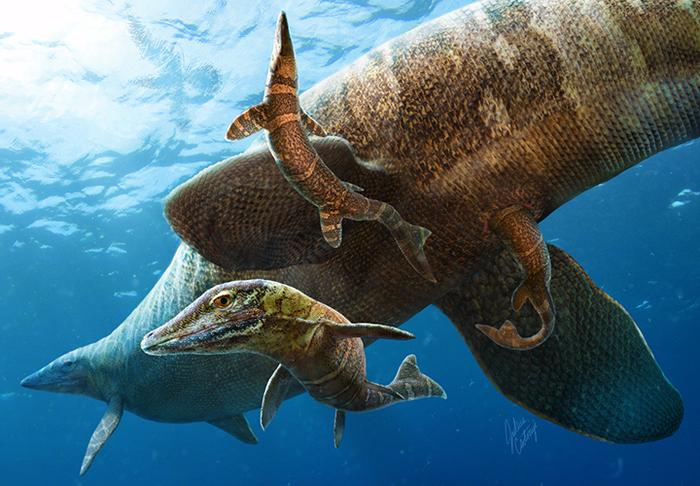
Researchers have discovered a new birth story for mosasaurs. New Haven, Conn. - They weren't in the delivery room, but researchers at Yale University and the University of Toronto have discovered a new birth story for a gigantic marine lizard that once roamed the oceans.
| Biology | April 9, 2015 05:49 PM |
Outbreaks of leukemia that have devastated some populations of soft-shell clams along the east coast of North America for decades can be explained by the spread of cancerous tumor cells from one clam to another. Researchers call the discovery, reported in the Cell Press journal Cell on April 9, 2015, "beyond surprising."
| Biology | April 9, 2015 05:49 PM |
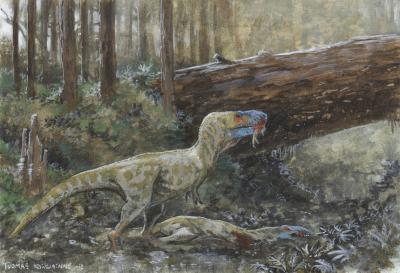
This is an artist's reconstruction of one Daspletosaurus feeding on another. A new study documents injuries inflicted in life and death to a large tyrannosaurine dinosaur. The paper shows that the skull of a genus of tyrannosaur called Daspletosaurus suffered numerous injuries during life, at least some of which were likely inflicted by another Daspletosaurus. It was also bitten after death in an apparent event of scavenging by another tyrannosaur. Thus there's evidence of combat between two large carnivores as well as one feeding on another after death.
| Biology | April 1, 2015 07:10 PM |
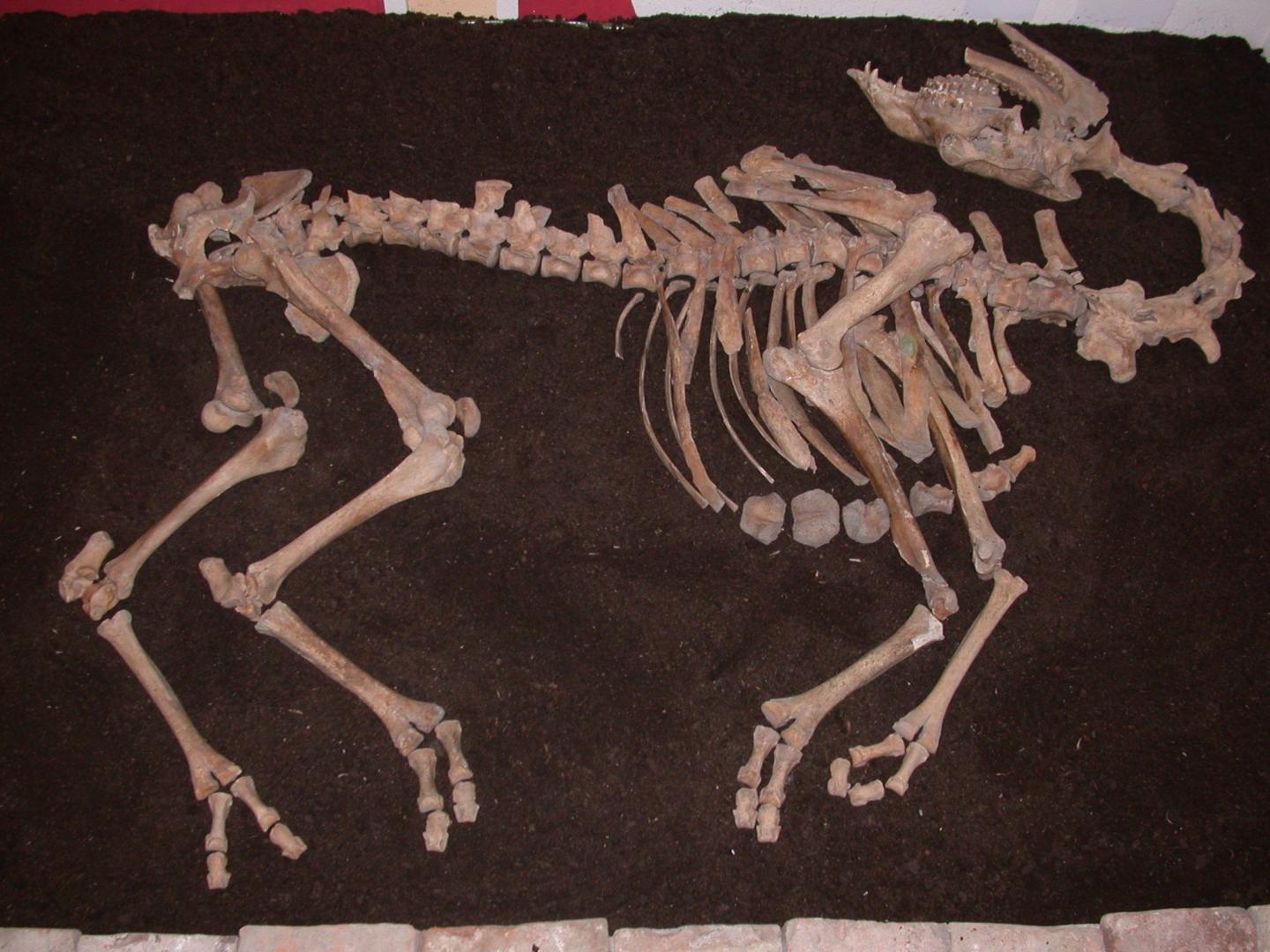
The camel skeleton was unearthed near the river Danube in Lower Austria, Tulln. In 2006 construction began on a new shopping centre in Tulln. The works unearthed various archaeologically valuable objects that were salvaged during rescue excavations. Among these objects was also the complete skeleton of a large mammal.
| Biology | March 26, 2015 07:53 PM |
Foraging bats obey their own set of 'traffic rules', chasing, turning and avoiding collisions at high speed according to new research publishing in PLOS Computational Biology.
| Biology | March 26, 2015 07:53 PM |
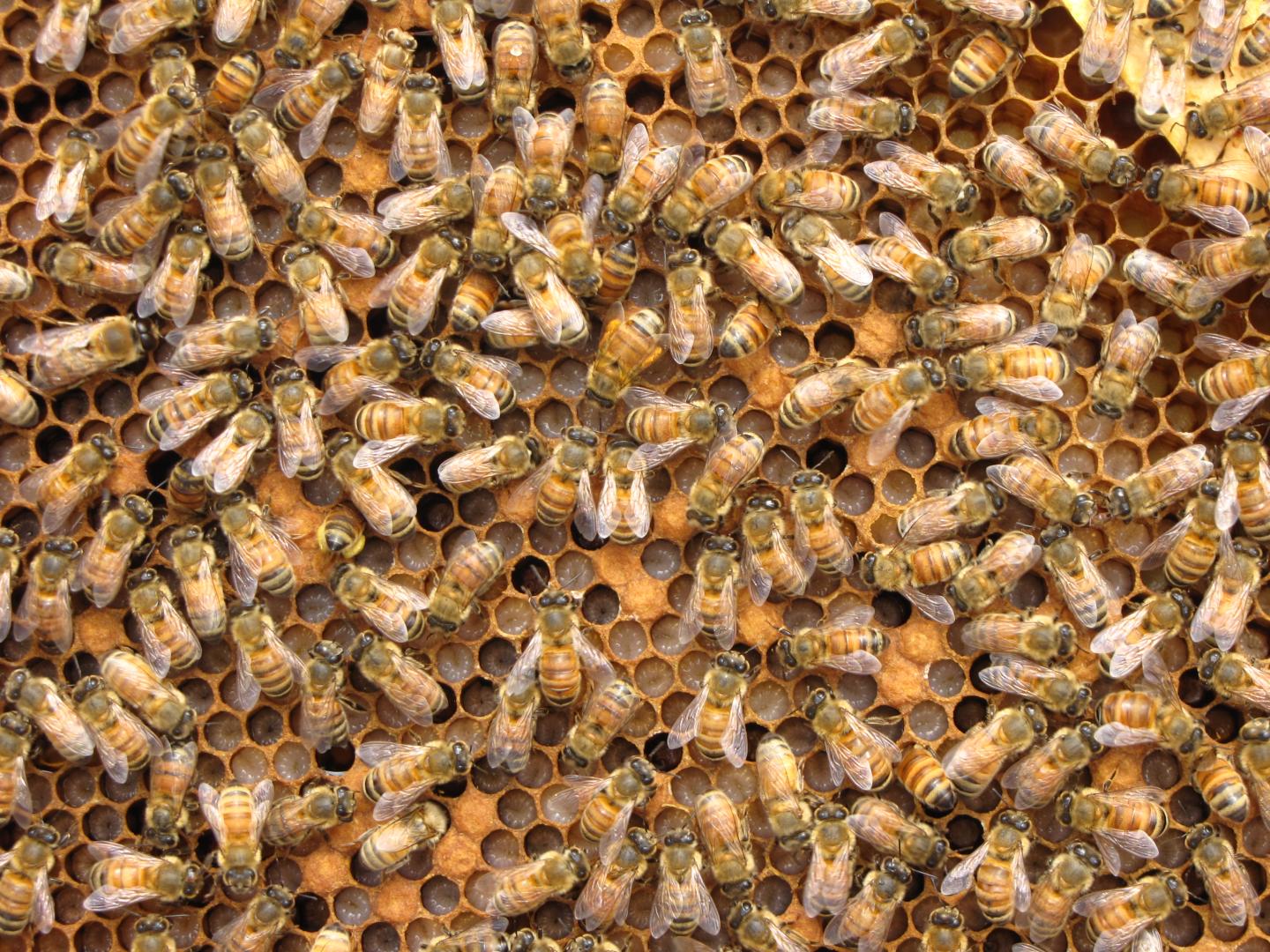
These are bees on a hive. Honey bees use different sets of genes, regulated by two distinct mechanisms, to fight off viruses, bacteria and gut parasites, according to researchers at Penn State and the Georgia Institute of Technology.
| Biology | March 25, 2015 07:47 PM |
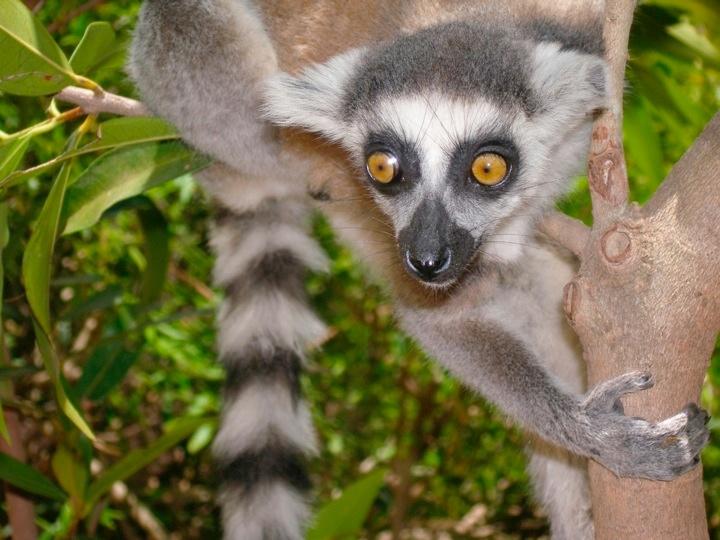
This is a ring-tailed lemur (Lemur catta) indigenous only to Madagascar. UC's Brooke Crowley is researching lemurs' geographic mobility. Out of the mouths of lemurs come many answers to old mysteries about Madagascar's unique fauna. What were their origins, and how and why did they move around?
| Biology | March 18, 2015 07:09 PM |
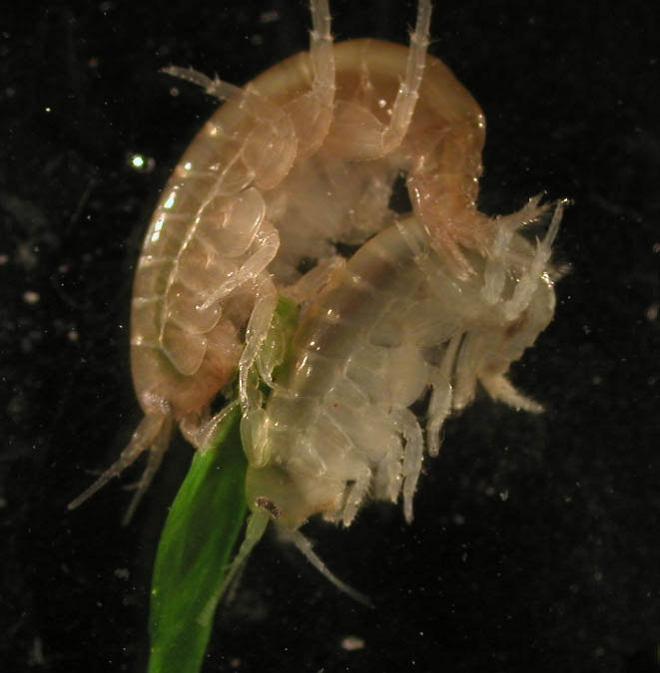
This image shows a Gammarus duebeni celticus pair. Parasites can play an important role in driving cannibalism, according to a new study.
| Biology | March 18, 2015 07:09 PM |
New research shows that courtship rituals evolve very fast in cichlid fish in Lake Malawi. Whenever species evolve to feed at different depths, their courtship evolves as well. In the shallows where the light is good, males build sand castles to attract females. Males of deep-dwelling species dig less elaborate pits and compensate with longer swimming displays. The results are published in the open-access journal Frontiers in Ecology and Evolution.
| Biology | March 16, 2015 08:06 PM |
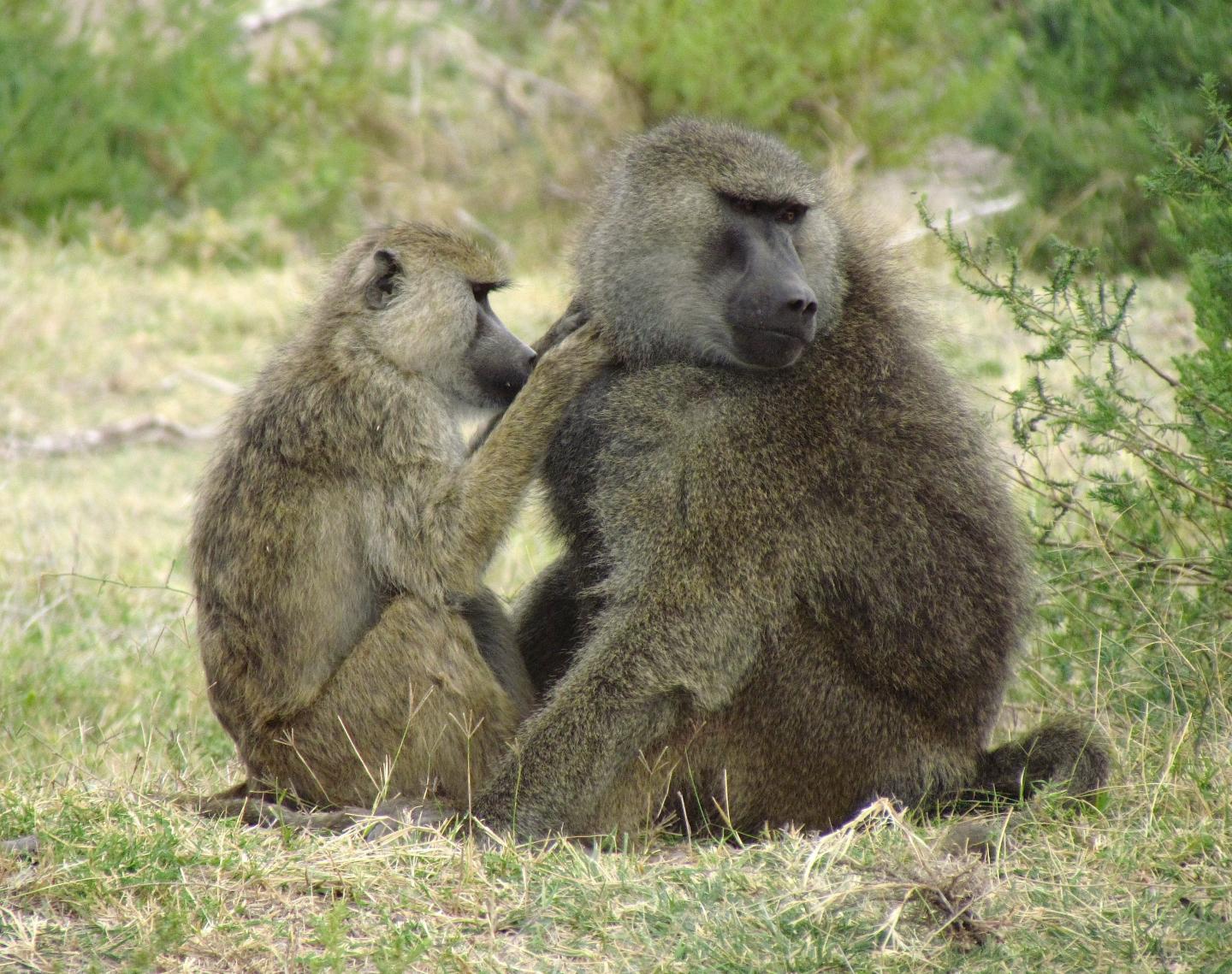
Baboons take turns grooming each other to make friends and cement social bonds. A new study finds that baboon friendships influence the microscopic bacteria in their guts. The warm soft folds of the intestines are teeming with thousands of species of bacteria. Collectively known as the gut microbiome, these microbes help break down food, synthesize vitamins, regulate weight and resist infection.
| Biology | March 10, 2015 07:33 PM |
A study of a recently discovered fossil published by LMU zoologists reveals the specimen to be the oldest known crab larva: The fossil is 150 million years old, but looks astonishingly modern.
| Biology | March 9, 2015 08:21 PM |
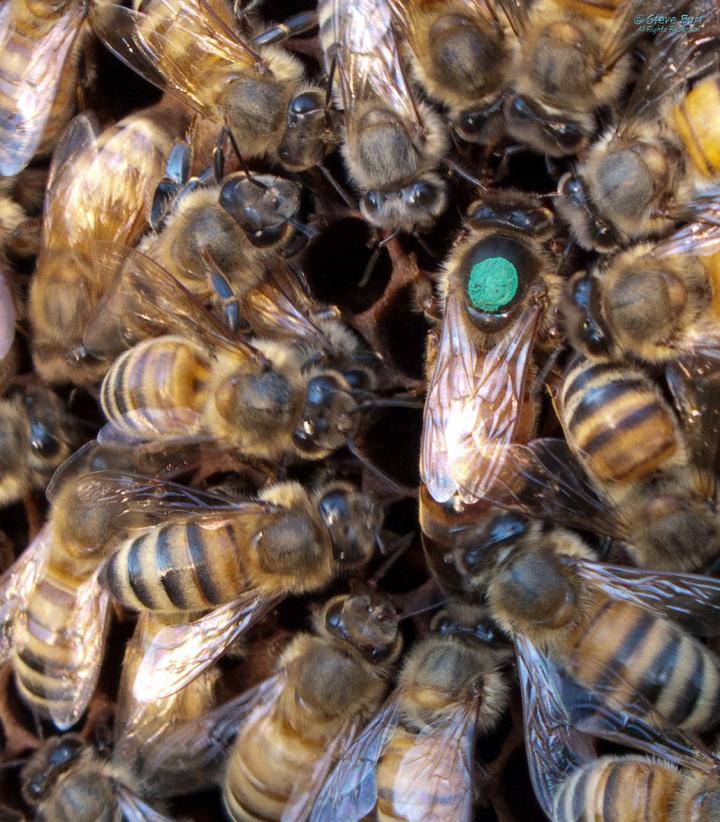
Researchers used a painted dot to track queen bees. An Indiana University researcher and collaborators have published the first comprehensive analysis of the gut bacteria found in queen bees.
| Biology | March 5, 2015 07:02 PM |
Older brains may be more similar to younger brains than previously thought.
| Biology | March 3, 2015 06:39 PM |

Scientists find that people use the touch of a handshake to sample and sniff signaling molecules. A sterile glove was used to identify signaling molecules transmitted via a handshake. Limp or firm, your handshake conveys subliminal social cues. Now, research reveals it also transmits chemical signals that could explain why the greeting evolved in the first place.
| Biology | March 3, 2015 06:39 PM |
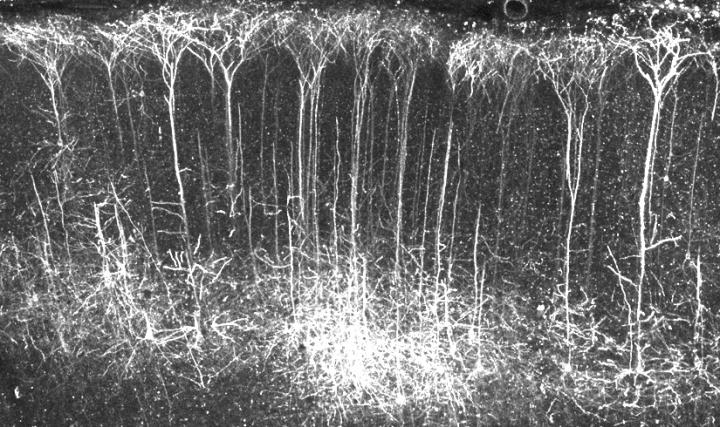
Scientists mapped and read sound memories in rat brains. Lights, sound, action: we are constantly learning how to incorporate outside sensations into our reactions in specific situations. In a new study, brain scientists have mapped changes in communication between nerve cells as rats learned to make specific decisions in response to particular sounds. The team then used this map to accurately predict the rats' reactions. These results add to our understanding of how the brain processes sensations and forms memories to inform behavior.
| Biology | March 2, 2015 06:03 PM |
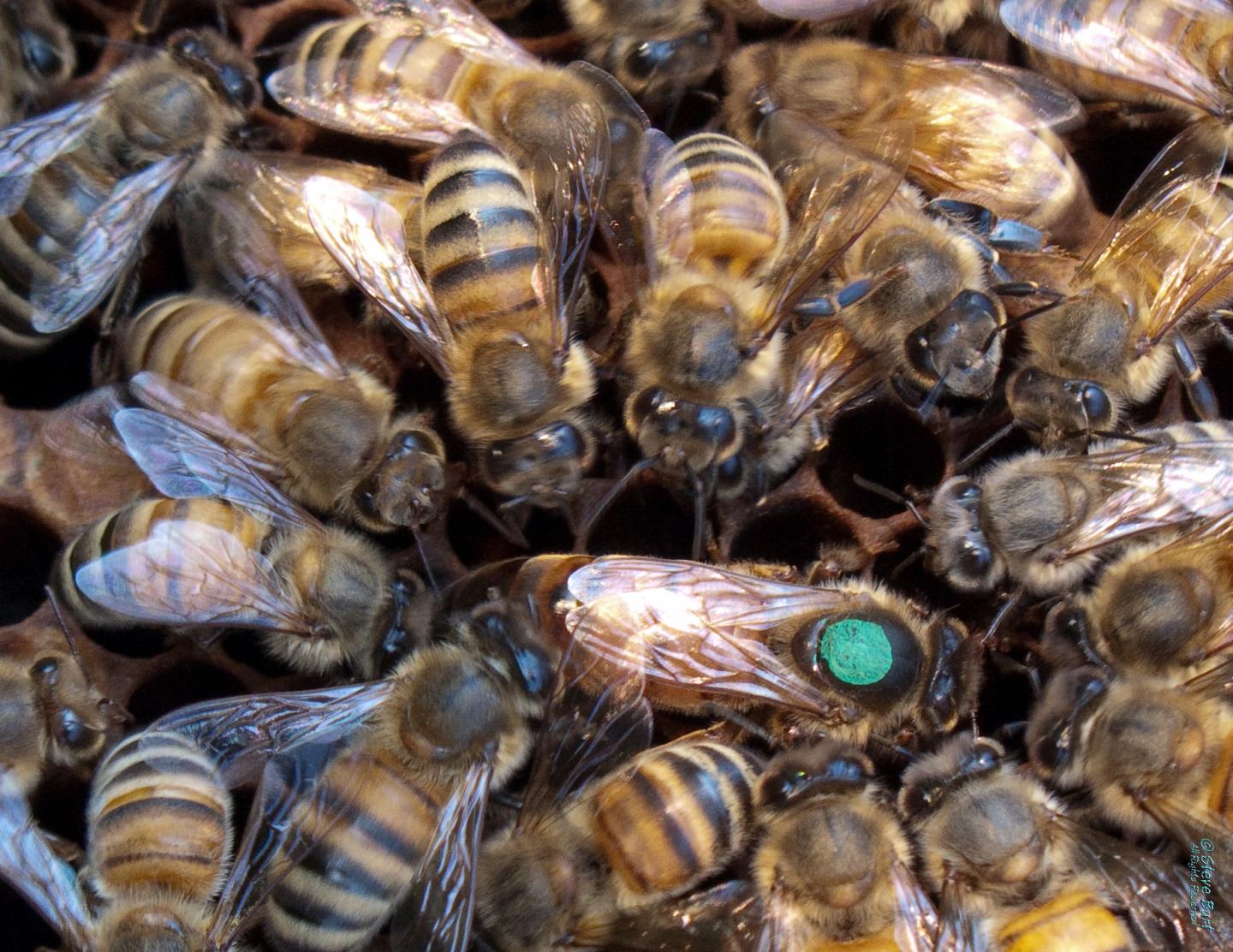
The queen bee in this image is marked with a green dot. Researchers from North Carolina State University, Indiana University and Wellesley College have characterized the gut microbiome of honey bee queens. This is the first thorough census of the gut microbiome - which consists of all the microorganisms that live in the gut of the organism - in queen bees.
| Biology | February 26, 2015 07:59 PM |
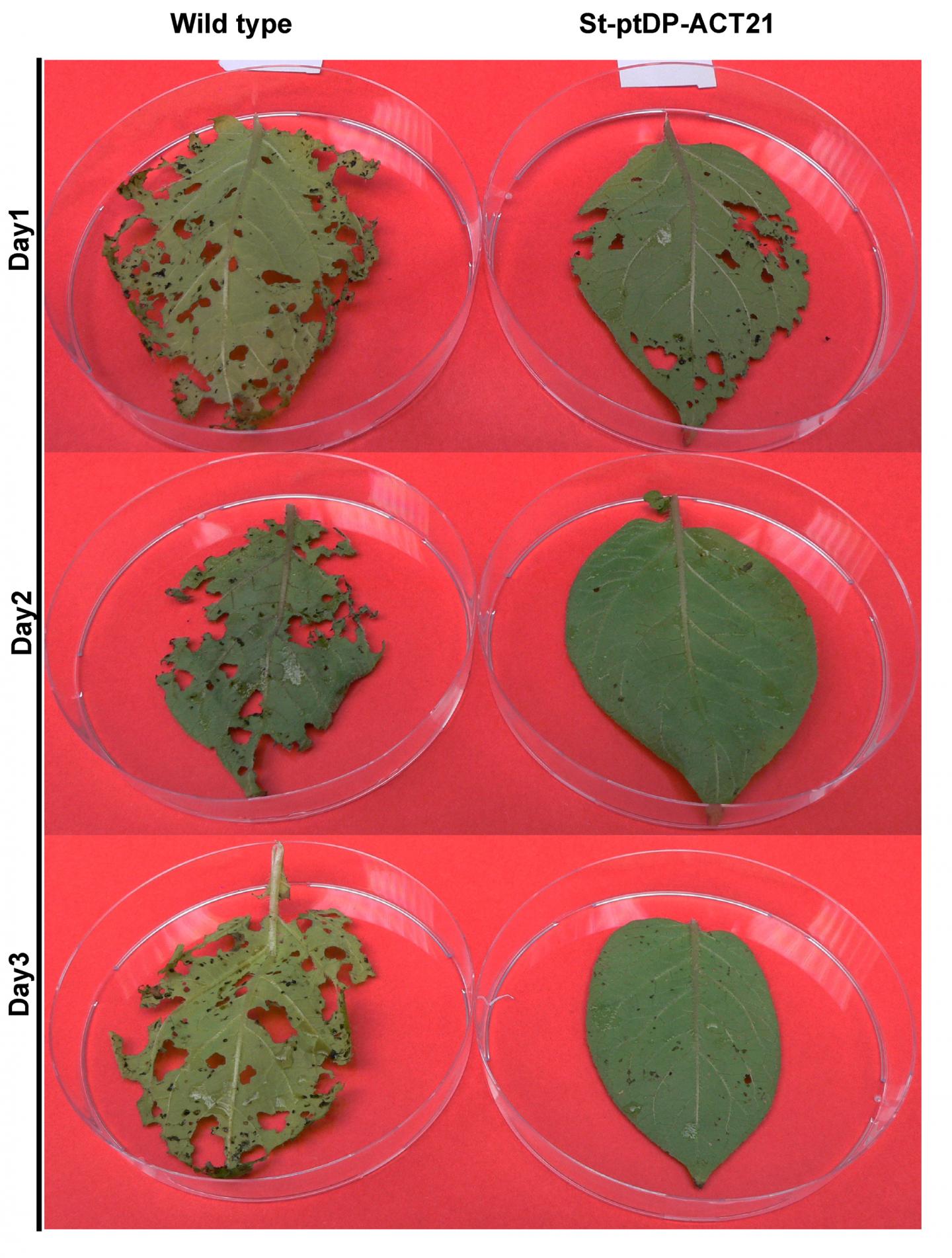
Feeding experiment with different potato leaves: Detached leaves of unmodified plants were compared to plants with an altered chloroplast genome. Colorado potato beetles are a dreaded pest of potatoes all over the world. Since they do not have natural enemies in most potato producing regions, farmers try to control them with pesticides. However, this strategy is often ineffective because the pest has developed resistances against nearly all insecticides. Now, scientists from the Max Planck Institutes of Molecular Plant Physiology in Potsdam-Golm and Chemical Ecology in Jena have shown that potato plants can be protected from herbivory using RNA interference (RNAi). They genetically modified plants to enable their chloroplasts to accumulate double-stranded RNAs (dsRNAs) targeted against essential beetle genes. (Science, February 2015).
| Biology | February 26, 2015 07:59 PM |
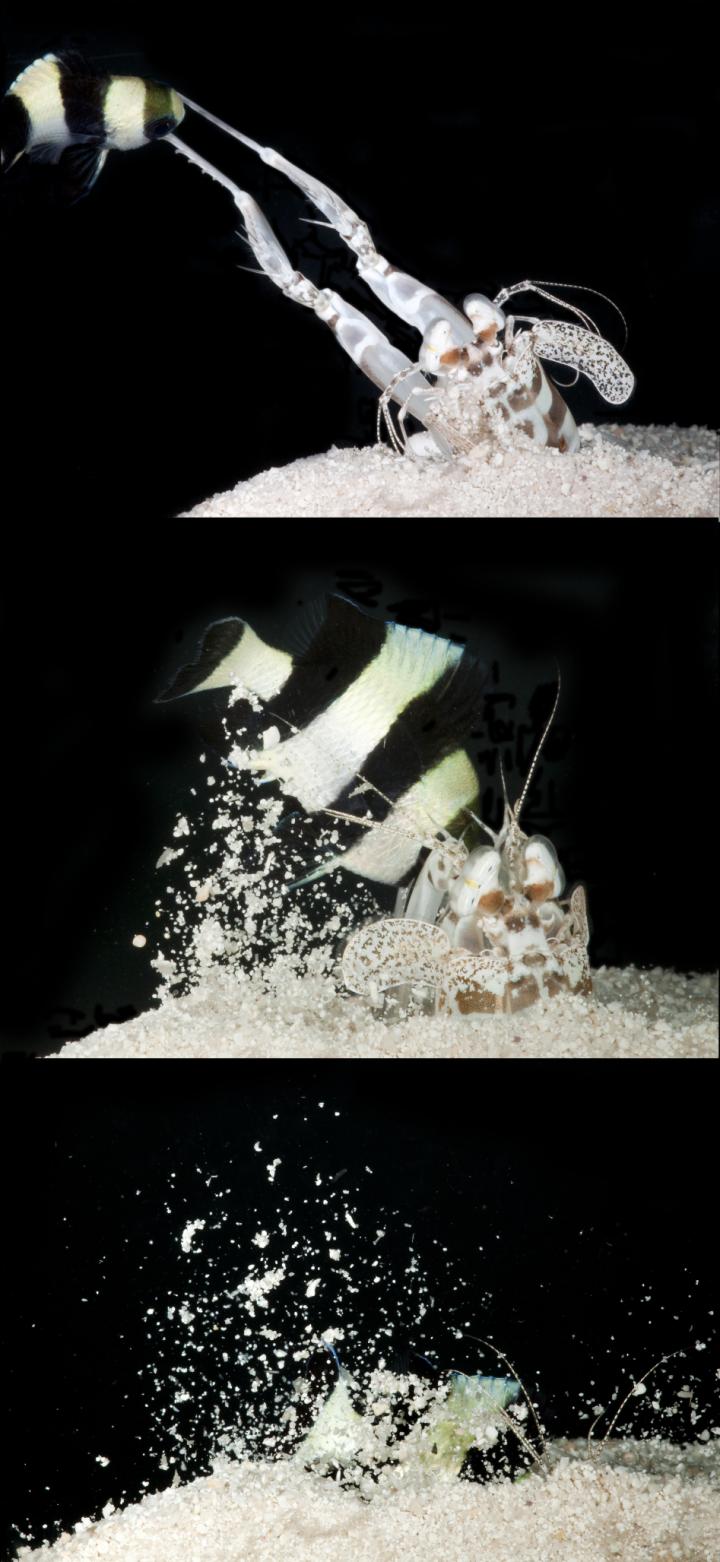
Mantis shrimp attack their dinners with the help of spring-loaded claws. DURHAM, N.C. -- The miniweight boxing title of the animal world belongs to the mantis shrimp, a cigar-sized crustacean whose front claws can deliver an explosive 60-mile-per-hour blow akin to a bullet leaving the barrel of a gun.
| Biology | February 24, 2015 04:27 AM |
With apologies to the poet John Donne, and based on recent work from the U.S. Department of Energy Joint Genome Institute (DOE JGI), a DOE Office of Science user facility, it can be said that no plant is an island, entire of itself. Unseen by the human eye, plants interact with many species of fungi and other microbes in the surrounding environment, and these exchanges can impact the plant's health and tolerance to stressors such as drought or disease, as well as the global carbon cycle.
| Biology | February 16, 2015 06:33 PM |
A University of Michigan-led study of penguin genetics has concluded that the flightless aquatic birds lost three of the five basic vertebrate tastes--sweet, bitter and the savory, meaty taste known as umami--more than 20 million years ago and never regained them.
| Biology | February 11, 2015 06:22 PM |

In the Room of DOOM (Dissolved Oxygen Oyster Mortality), oyster tanks mimic the day-night oxygen swings that oysters experience in shallow Bay waters. In shallow waters around the world, where nutrient pollution runs high, oxygen levels can plummet to nearly zero at night. Oysters living in these zones are far more likely to pick up the lethal Dermo disease, a team of scientists from the Smithsonian Environmental Research Center discovered. Their findings were published Wednesday in the journal PLOS ONE.
| Biology | February 3, 2015 06:34 PM |
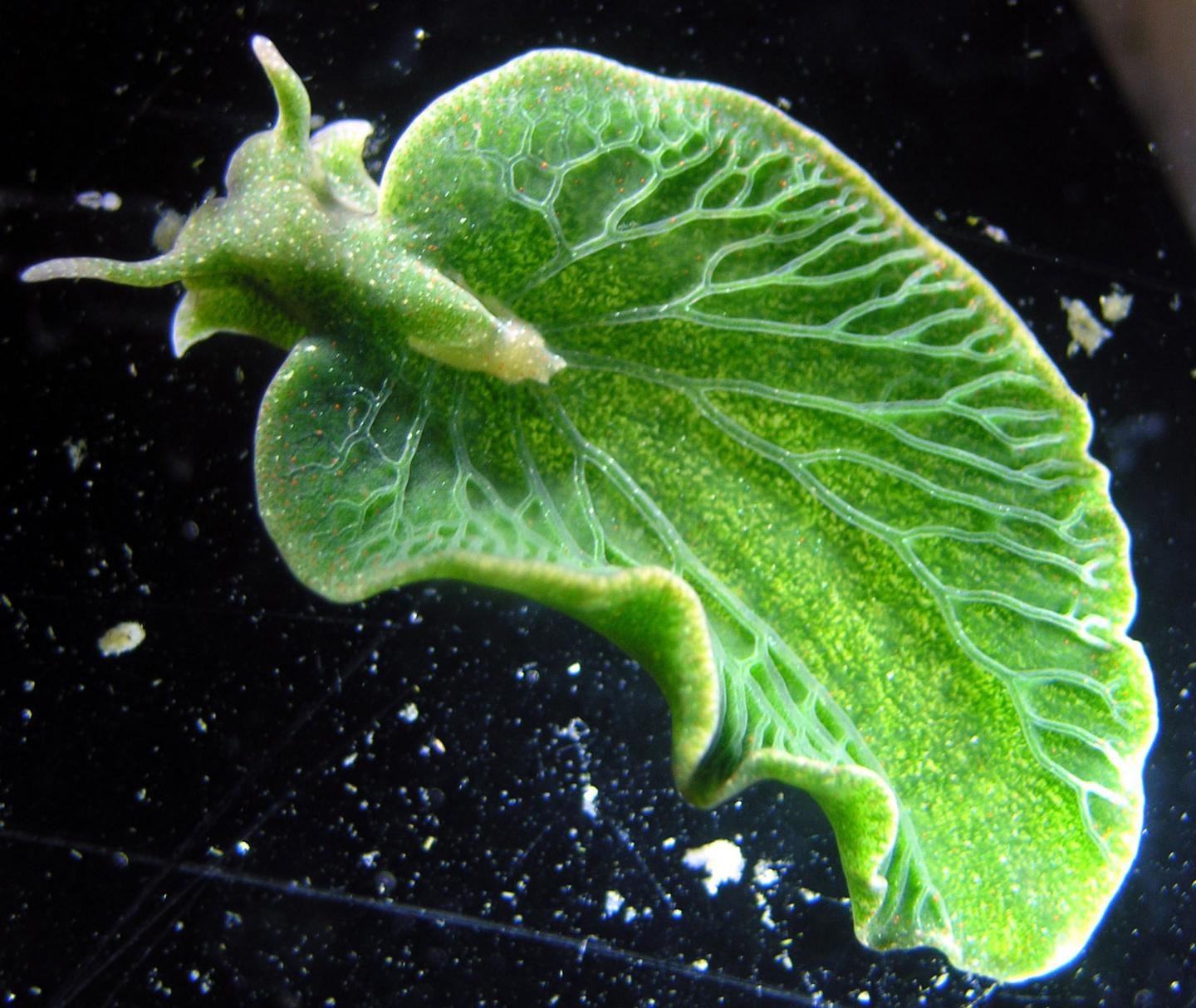
The rich green color of the photosynthesizing sea slug, Elysia chlorotica, helps to camouflage it on the ocean floor. How a brilliant-green sea slug manages to live for months at a time "feeding" on sunlight, like a plant, is clarified in a recent study published in The Biological Bulletin.
| Biology | January 29, 2015 06:35 PM |
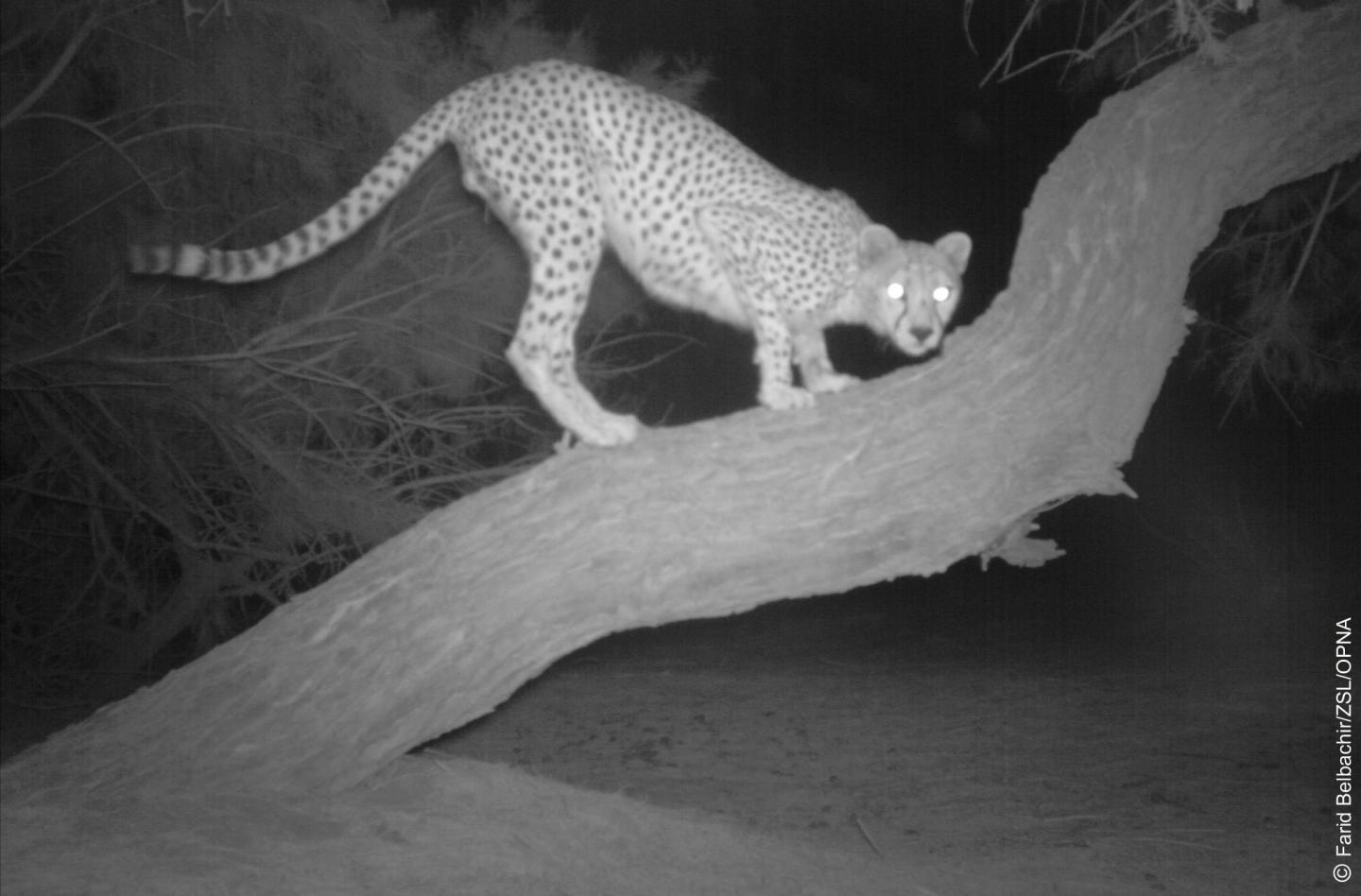
Research by scientists and conservationists from the Wildlife Conservation Society, the Zoological Society of London, and other groups published today in PLOS ONE shows that critically endangered Saharan cheetahs exist... Research by scientists and conservationists from the Wildlife Conservation Society, the Zoological Society of London, and other groups published today in PLOS ONE shows that critically endangered Saharan cheetahs exist at incredibly low densities and require vast areas for their conservation. The research also offers some of the world's only photographs of this elusive big cat.
| Biology | January 19, 2015 04:49 PM |
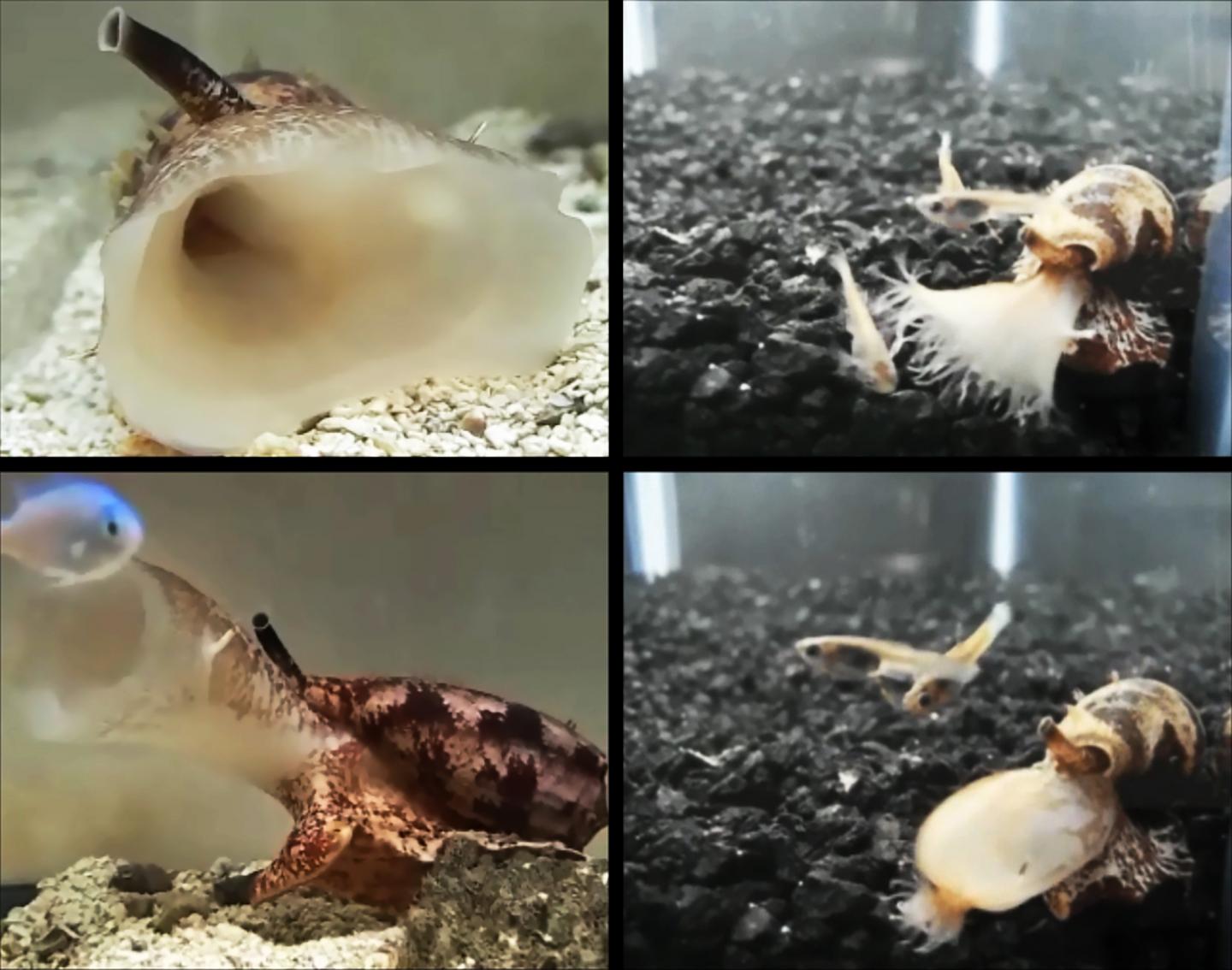
The images show two species of cone snail, Conus geographus (left) and Conus tulipa (right) attempting to capture their fish prey. As they approach potential prey, the snails release a... As predators go, cone snails are slow-moving and lack the typical fighting parts. They've made up for it by producing a vast array of fast-acting toxins that target the nervous systems of prey. A new study reveals that some cone snails add a weaponized form of insulin to the venom cocktail they use to disable fish.
| Biology | January 15, 2015 06:00 PM |
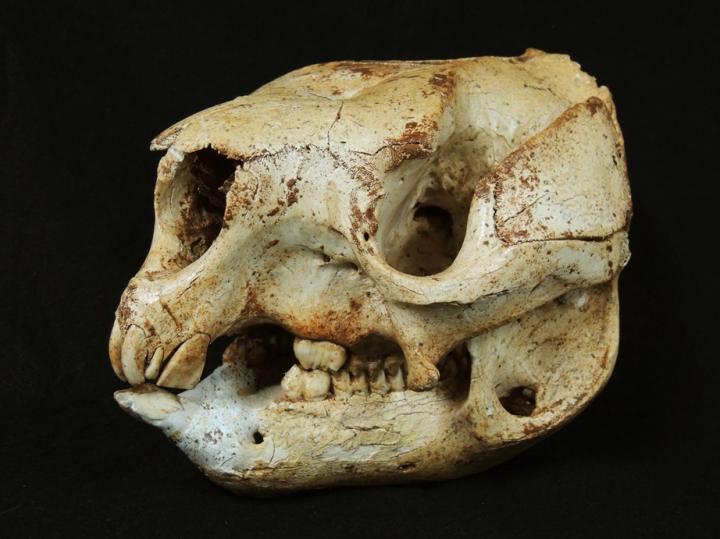
This is the skull of an extinct short-faced kangaroo (Simosthenurus occidentalis). Ancient DNA from these animals reveals they are a highly distinct evolutionary lineage. Scientists have finally managed to extract DNA from Australia's extinct giant kangaroos - the mysterious marsupial megafauna that roamed Australia over 40,000 years ago.
| Biology | January 14, 2015 05:32 PM |
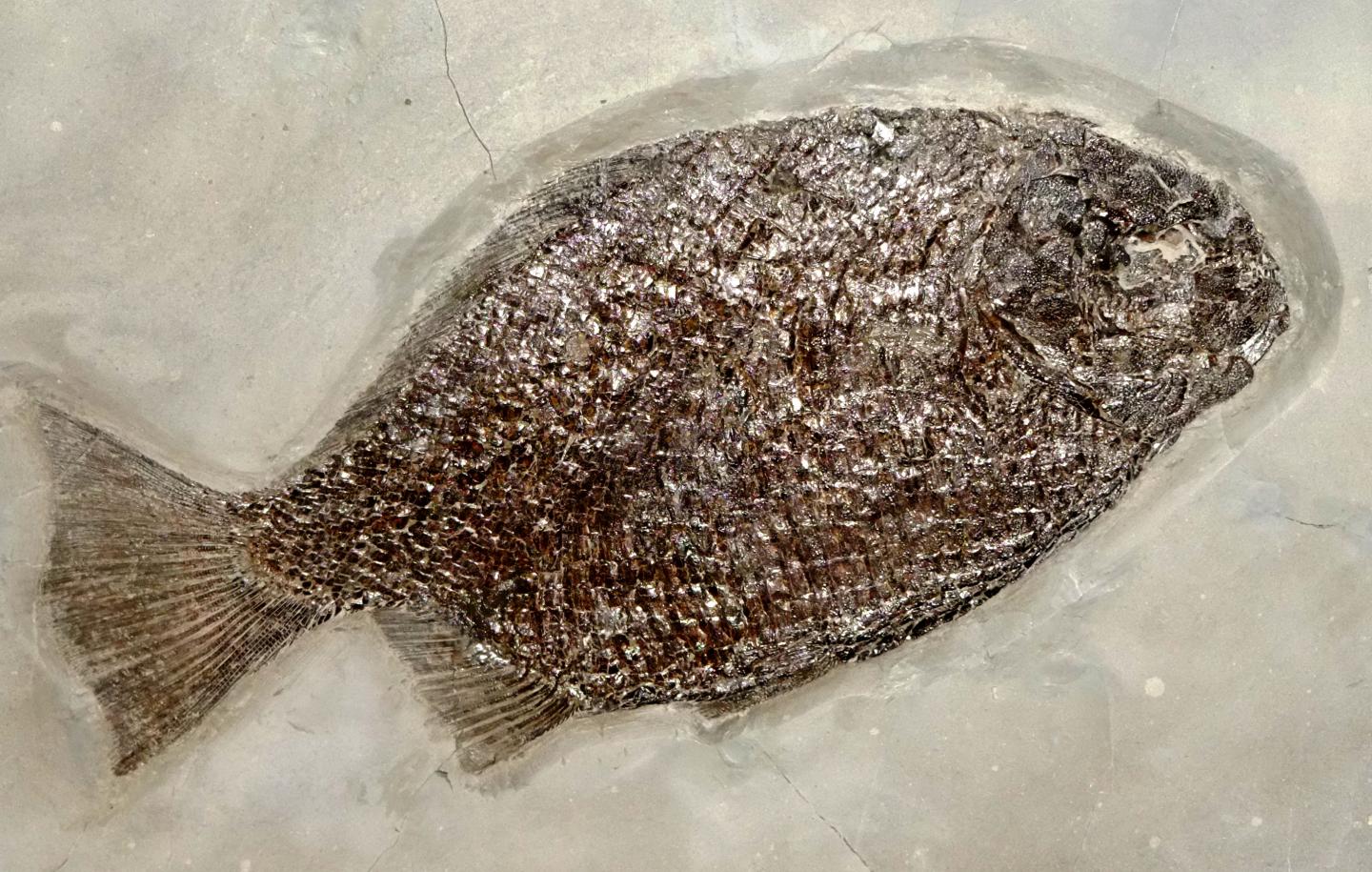
This image shows a perfectly preserved example of the Lower Jurassic fish Dapedium from Lyme Regis, Dorset. Perfectly preserved specimens such as this allow us to calculate the biomechanical function... The feeding habits of an unusual 200-million-year-old fish have been uncovered by a University of Bristol undergraduate in a groundbreaking study which has been published in Palaeontology, a leading scientific journal, this week - a rare achievement for an undergraduate student.
| Biology | December 9, 2014 06:20 PM |
This is Dr Stephen Munro at the School of Anthropology and Archaeology at ANU. An international team of scientists has discovered the earliest known engravings from human ancestors on a 400,000 year-old fossilised shell from Java.
| Biology | December 2, 2014 06:51 PM |

Pictured here are Dr. Turi King and Professor Kevin Schürer from the University of Leicester. International research led by the University of Leicester published in Nature Communications reveals:
- Analysis of all the available evidence confirms identity of King Richard III to the point of 99.999% (at its most conservative).
- Analysis of the mitochondrial DNA shows a match between Richard III and modern female-line relatives, Michael Ibsen and Wendy Duldig.
- The male line of descent is broken at one or more points in the line between Richard III and living male-line relatives descended from Henry Somerset, 5th Duke of Beaufort.
- King Richard was almost certainly blue-eyed and probably had blond hair at least during his childhood.
- The portrait which appears to most closely match the genetically-determined hair and eye colour is the Arched-Frame Portrait in the Society of Antiquaries.
| Biology | December 1, 2014 06:25 PM |
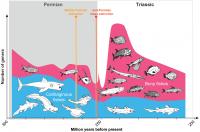
Cartilaginous fishes were very diverse during the Permian period. However, after severe losses among cartilaginous fishes during the Middle Permian extinction, bony fishes experienced a massive diversification in the subsequent... Today, ray-finned fish, which belong to the bony fish, are by far the most biodiverse fish group in both salt- and freshwater. Their spectacular variety of forms ranges from eels, tuna, flounders and angler fish all the way to seahorses. With around 1,100 species, the second most biodiverse group is the cartilaginous fish, which are almost exclusively marine and include sharks, rays and chimaeras. Exactly why bony fish managed to prevail in different habitats is the subject of debate: Do they have a better body plan, which is suited to more ecological niches than that of the cartilaginous fish? Or are other factors involved in their successful distribution? Paleontologists from the University of Zurich now reveal that climate catastrophes in the past played a crucial role in the dominance of ray-finned fish today.
| Biology | November 24, 2014 04:47 PM |
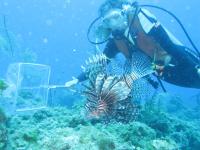
Stephanie Green studies lionfish in The Bahamas. If you live in lionfish territory in the Atlantic Ocean, the last thing you want to be is a small fish with a long, skinny body, resting by yourself at night, near the bottom of the seafloor.
| Biology | November 20, 2014 06:24 PM |

Electrical and computer engineering professor Barry Van Veen wears an electrode net used to monitor brain activity via EEG signals. As real as that daydream may seem, its path through your brain runs opposite reality.
| Biology | October 28, 2014 07:59 PM |
A population of endangered giant tortoises, which once dwindled to just over a dozen, has recovered on the Galapagos island of Española, a finding described as "a true story of success and hope in conservation" by the lead author of a study published today (Oct. 28).
| Biology | October 27, 2014 07:20 PM |
Making mistakes while learning can benefit memory and lead to the correct answer, but only if the guesses are close-but-no-cigar, according to new research findings from Baycrest Health Sciences.
| Biology | October 21, 2014 05:19 PM |
The way in which male moths locate females flying hundreds of meters away has long been a mystery to scientists.
| Biology | October 16, 2014 05:21 PM |
Scientists tracing the real-time impact of viruses in the wild have found that entire amphibian communities are being killed off by closely related viruses introduced to mountainous areas of northern Spain.
| Biology | October 6, 2014 07:35 PM |

This is a 3-D image of the hippocampus of a rat. The way neurons are interconnected in the brain is very complicated. This holds especially true for the cells of the hippocampus. It is one of the oldest brain regions and its form resembles a see horse (hippocampus in Latin). The hippocampus enables us to navigate space securely and to form personal memories. So far, the anatomic knowledge of the networks inside the hippocampus and its connection to the rest of the brain has left scientists guessing which information arrived where and when.
| Biology | October 2, 2014 02:47 PM |
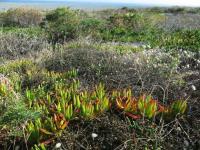
An iceplant, from a region of high diversity in South Africa, is overtopping and killing a native shrub on the New Zealand coast, a region with far less diversity. Dov Sax of Brown University and Jason Fridley of Syracuse University aren't proposing a novel idea to explain species invasiveness. In fact, Charles Darwin articulated it first. What's new about Sax and Fridley's "Evolutionary Imbalance Hypothesis" (EIH) is that they've tested it using quantifiable evidence and report in Global Ecology and Biogeography that the EIH works well.
| Biology | September 24, 2014 06:26 PM |
Eyeless Mexican cavefish show no metabolic circadian rhythm in either light and dark or constant dark conditions, according to a study published September 24, 2014 in the open-access journal PLOS ONE by Damian Moran from Lund University, Sweden, and colleagues.
| Biology | September 23, 2014 06:19 PM |
Achieving complete breakdown of plant biomass for energy conversion in industrialized bioreactors remains a complex challenge, but new research shows that termite fungus farmers solved this problem more than 30 million years ago. The new insight reveals that the great success of termite farmers as plant decomposers is due to division of labor between a fungus breaking down complex plant components and gut bacteria contributing enzymes for final digestion.
| Biology | September 23, 2014 06:19 PM |
Although the immediate welfare consequences of removing infant chimpanzees from their mothers are well documented, little is known about the long-term impacts of this type of early life experience. In a year-long study, scientists from Lincoln Park Zoon observed 60 chimpanzees and concluded that those who were removed from their mothers early in life and raised by humans as pets or performers are likely to show behavioral and social deficiencies as adults.
| Biology | September 19, 2014 06:16 PM |
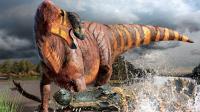
Rhinorex, a newly discovered dinosaur from the Late Cretaceous period, had an impressive nose. Call it the Jimmy Durante of dinosaurs – a newly discovered hadrosaur with a truly distinctive nasal profile. The new dinosaur, named Rhinorex condrupus by paleontologists from North Carolina State University and Brigham Young University, lived in what is now Utah approximately 75 million years ago during the Late Cretaceous period.
| Biology | September 17, 2014 05:48 PM |
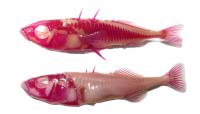
These are adult marine (top) and freshwater (bottom) threespine sticklebacks (Gasterosteus aculeatus) stained with a red dye that labels calcified bone. Sticklebacks, the roaches of the fish world, are the ideal animal in which to study the genes that control body shape. They've moved from the ocean into tens of thousands of freshwater streams and lakes around the world, each time changing their skeleton to adapt to the new environment.
| Biology | September 3, 2014 05:17 AM |
It's hard to comprehend how bad the current rate of species extinction around the world has become without knowing what it was before people came along. The newest estimate is that the pre-human rate was 10 times lower than scientists had thought, which means that the current level is 10 times worse.
| Biology | September 3, 2014 05:17 AM |
Move over antibiotic ointment, there might be a new salve to dominate medicine cabinets of the future, and it comes from an unlikely place—the lowly salamander. Salamanders may not be the cuddliest of animals, but they can regenerate lost limbs and achieve amazing recovery of seriously damaged body parts. Now, a new report published in the September 2014 issue of The FASEB Journal, identifies a small protein (called a "peptide") from the skin of salamanders that may be the key to unlocking the secret of this amazing wound healing trick in humans.
| Biology | August 27, 2014 06:44 PM |
About 400 million years ago a group of fish began exploring land and evolved into tetrapods – today's amphibians, reptiles, birds, and mammals. But just how these ancient fish used their fishy bodies and fins in a terrestrial environment and what evolutionary processes were at play remain scientific mysteries.
| Biology | August 25, 2014 06:06 PM |
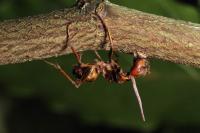
A dead ant manipulated by a species of so-called "zombie ant fungus " clings to a twig in a South Carolina forest. A parasitic fungus that reproduces by manipulating the behavior of ants emits a cocktail of behavior-controlling chemicals when encountering the brain of its natural target host, but not when infecting other ant species, a new study shows.
| Biology | August 20, 2014 06:08 PM |
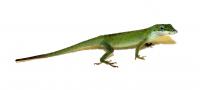
The green anole lizard (Anolis carolinensis), when caught by a predator, can lose its tail and then grow it back. By understanding the secret of how lizards regenerate their tails, researchers may be able to develop ways to stimulate the regeneration of limbs in humans. Now, a team of researchers from Arizona State University is one step closer to solving that mystery. The scientists have discovered the genetic "recipe" for lizard tail regeneration, which may come down to using genetic ingredients in just the right mixture and amounts.
| Biology | August 13, 2014 06:16 PM |
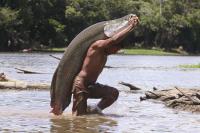
The arapaima fish, which once dominated Amazon fisheries, is long and can weigh as much as 400 pounds. An international team of scientists has discovered that a large, commercially important fish from the Amazon Basin has become extinct in some local fishing communities.
| Biology | August 5, 2014 04:55 PM |
Spider silk is an impressive material; lightweight and stretchy yet stronger than steel. But the challenge that spiders face to produce this substance is even more formidable. Silk proteins, called spidroins, must convert from a soluble form to solid fibers at ambient temperatures, with water as a solvent, and at high speed. How do spiders achieve this astounding feat? In new research publishing in the open access journal PLOS Biology on August 5, Anna Rising and Jan Johansson show how the silk formation process is regulated. The work was done at the Swedish University of Agricultural Sciences (SLU) and Karolinska Institutet in collaboration with colleagues in Latvia, China and USA.
| Biology | August 5, 2014 04:55 PM |
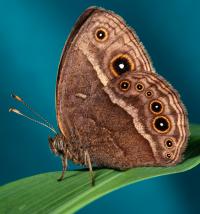
Yale University scientists have performed the first artificial selection on a structural color, using butterfly wings. This image shows a male Bicyclus anynana butterfly Yale University scientists have chosen the most fleeting of mediums for their groundbreaking work on biomimicry: They've changed the color of butterfly wings.
| Biology | August 5, 2014 05:36 AM |
Whale sharks (Rhincodon typus)—which grow more than 30 feet long—are the largest fish in the world's ocean, but little is known about their movements on a daily basis or over years. A newly discovered juvenile whale shark aggregation off Saudi Arabia is giving researchers a rare glimpse into the lives of these gentle giants.
| Biology | August 5, 2014 05:36 AM |
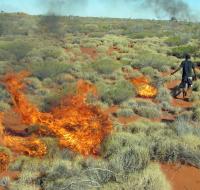
A member of the Martu Aboriginal community in western Australia sets fire to mature spinifex grass as a way to expose burrows occupied by sand monitor lizards Australia's Aboriginal Martu people hunt kangaroos and set small grass fires to catch lizards, as they have for at least 2,000 years. A University of Utah researcher found such man-made disruption boosts kangaroo populations – showing how co-evolution helped marsupials and made Aborigines into unintentional conservationists.
| Biology | August 5, 2014 05:36 AM |
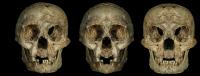
LB1 is shown in three different views to illustrate facial asymmetry. In October 2004, excavation of fragmentary skeletal remains from the island of Flores in Indonesia yielded what was called "the most important find in human evolution for 100 years." Its discoverers dubbed the find Homo floresiensis, a name suggesting a previously unknown species of human.
| Biology | July 30, 2014 02:33 PM |
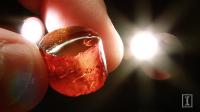
Sir David Attenborough narrates and appears in a video about the digital curation of a 20-million-year-old amber collection at the Illinois Natural History Survey at Illinois. Scientists are searching through a massive collection of 20-million-year-old amber found in the Dominican Republic more than 50 years ago, and the effort is yielding fresh insights into ancient tropical insects and the world they inhabited.
| Biology | July 17, 2014 05:56 PM |
Birdsongs automatically decoded by computer scientists
| Biology | July 14, 2014 05:53 PM |
This is an image of the inflorescence of Arabidopsis thaliana. In close collaboration with Jürg Schönenberger and Yannick Städler from the Department of Botany and Biodiversity Research of the Faculty of Life Sciences, University of Vienna, 14 developmental stages of the flower of Arabidopsis thaliana from very early meristematic floral initiation to fully developed seeds were monitored with micro-computed tomography in 3D. From the same set of developmental stages a full metabolic profile using mass spectrometry was measured covering hundreds of biochemical pathways.
| Biology | July 7, 2014 04:08 PM |
Paleontologist Dan Ksepka examines the fossilized skull of what may be the biggest flying bird ever found. Scientists have identified the fossilized remains of an extinct giant bird that could be the biggest flying bird ever found. With an estimated 20-24-foot wingspan, the creature surpassed size estimates based on wing bones from the previous record holder -- a long-extinct bird named Argentavis magnificens -- and was twice as big as the Royal Albatross, the largest flying bird today. Scheduled to appear online the week of July 7, 2014, in the journal Proceedings of the National Academy of Sciences, the findings show that the creature was an extremely efficient glider, with long slender wings that helped it stay aloft despite its enormous size.
| Biology | July 1, 2014 06:45 PM |
Pushing closer to understanding the mechanisms behind the mysterious glow of light produced naturally by certain animals, scientists at Scripps Institution of Oceanography at UC San Diego have deciphered the structural components related to fluorescence brightness in a primitive sea creature.
| Biology | June 24, 2014 06:42 PM |
This reconstruction shows how scientists think the fly larvae adhered to the skin of the amphibian. Around 165 million years ago, a spectacular parasite was at home in the freshwater lakes of present-day Inner Mongolia (China): A fly larva with a thorax formed entirely like a sucking plate. With it, the animal could adhere to salamanders and suck their blood with its mouthparts formed like a sting. To date no insect is known that is equipped with a similar specialised design. The international scientific team is now presenting its findings in the journal "eLIFE".
| Biology | June 19, 2014 05:25 PM |
Chance events may profoundly shape history. What if Franz Ferdinand's driver had not taken a wrong turn, bringing the Duke face to face with his assassin? Would World War I still have been fought? Would Hitler have risen to power decades later?
| Biology | June 18, 2014 06:29 PM |
Artist reconstruction of Mercuriceratops gemini, a new species of horned dinosaur that had wing-shaped ornamentation on the sides of its skull. Scientists have named a new species of horned dinosaur (ceratopsian) based on fossils collected from Montana in the United States and Alberta, Canada. Mercuriceratops (mer-cure-E-sare-ah-tops) gemini was approximately 6 meters (20 feet) long and weighed more than 2 tons. It lived about 77 million years ago during the Late Cretaceous Period. Research describing the new species is published online in the journal Naturwissenschaften.
| Biology | June 18, 2014 06:29 PM |
For some birds, recognising their own eggs can be a matter of life or death.
| Biology | June 18, 2014 06:29 PM |
During evolutionary diversification of vertebrate limbs, the number of toes in even-toed ungulates such as cattle and pigs was reduced and transformed into paired hooves. Scientists at the University of Basel have identified a gene regulatory switch that was key to evolutionary adaption of limbs in ungulates. The study provides fascinating insights into the molecular history of evolution and is published by Nature today.
| Biology | June 4, 2014 03:11 AM |
In a new study published in the Geological Society of America Bulletin, geoscientists Wolfgang Stinnesbeck of the University of Heidelberg and colleagues document the discovery of forty-six ophthalmosaurid ichthyosaurs (marine reptiles). These specimens were discovered in the vicinity of the Tyndall Glacier in the Torres del Paine National Park of southern Chile. Among them are numerous articulated and virtually complete skeletons of adults, pregnant females, and juveniles.
| Biology | May 26, 2014 06:22 PM |
Ants are capable of complex problem-solving strategies that could be widely applied as optimization techniques. An individual ant searching for food walks in random ways, biologists found. Yet the collective foraging behaviour of ants goes well beyond that, as a mathematical study to be published in the Proceedings of the National Academy of Sciences reveals: The animal movements at a certain point change from chaos to order. This happens in a surprisingly efficient self-organized way. Understanding the ants could help analyze similar phenomena - for instance how humans roam in the internet.
| Biology | May 21, 2014 03:56 AM |
This is the winged male Dystacta tigrifrutex, or bush tiger mantis from Nyungwe National Park, southwestern Rwanda. Scientists describe a new species of praying mantis, Dystacta tigrifrutex, or the bush tiger mantis from Rwanda's mountainous Nyungwe National Park. Like all praying mantises the new species is a vicious hunter. The wingless females are adapted for catching prey close to the ground and in the undergrowth, which inspired the name of the species due to the similarities in hunting practices with one of the world's favorite big cats. The study was published in the open access journal ZooKeys.
| Biology | May 19, 2014 06:26 PM |
Octopus investigators: From left to right, Dr. Nir Nesher (standing), Dr. Guy Levy and Prof. Benny Hochner at the Hebrew University of Jerusalem have discovered how octopuses don't tie themselves in knots. An octopus's arms are covered in hundreds of suckers that will stick to just about anything, with one important exception: those suckers generally won't grab onto the octopus itself, otherwise the impressively flexible animals would quickly find themselves all tangled up.
| Biology | May 15, 2014 07:55 PM |
This is a model of the nurse shark's immunoglobulin new antigen receptor molecule containing two stabilization principles, which could be transferred to human anitbodies to receive enhansed stability. Custom-tailored antibodies are regarded as promising weapons against a multitude of serious illnesses. Since they can accurately recognize specific structures on the surface of viruses, bacteria or cancer cells, they are already being deployed successfully in cancer diagnostics and therapy, as well as against numerous other diseases. The stability of the sensitive antibodies is a decisive factor in every step, from production and storage to therapeutic application.
| Biology | May 10, 2014 06:10 PM |
Marine scientists at the Northeastern University Marine Science Center have shown that the behavior of middle predators in marine food webs plays an important role in the welfare of the... Northeastern University researchers at the Marine Science Center have shown that the behavior of the "middle child" in the predator-prey food chain plays a strong role in determining how the reef as a whole will fare. The new research from the team was published online on Tuesday in the journal Ecology Letters.
| Biology | May 10, 2014 06:10 PM |
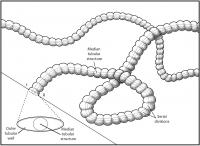
This image shows a reconstruction of Plexus ricei. Scientists at the University of California, Riverside have discovered a fossil of a newly discovered organism from the "Ediacara Biota" — a group of organisms that occurred in the Ediacaran period of geologic time.
| Biology | April 17, 2014 07:39 PM |
This shows the female penis of N. aurora. Researchers reporting in the Cell Press journal Current Biology on April 17 have discovered little-known cave insects with rather novel sex lives. The Brazilian insects, which represent four distinct but related species in the genus Neotrogla, are the first example of an animal with sex-reversed genitalia.
| Biology | April 11, 2014 07:52 PM |
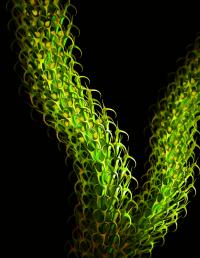
The 375 million-year-old fossil lycopod Leclercqia scolopendra, described and beautifully rendered by UC Berkeley graduate student Jeffrey Benca. Jeff Benca is an admitted über-geek when it comes to prehistoric plants, so it was no surprise that, when he submitted a paper describing a new species of long-extinct lycopod for publication, he ditched the standard line drawing and insisted on a detailed and beautifully rendered color reconstruction of the plant. This piece earned the cover of March's centennial issue of the American Journal of Botany.
| Biology | April 10, 2014 05:44 PM |
New research from scientists at the University of Massachusetts Medical School shows that fruit flies are secretly harboring the biochemistry needed to glow in the dark —otherwise known as bioluminescence.
| Biology | April 10, 2014 05:44 PM |
Stunning images of a 305-million-year-old harvestman fossil reveal ancestors of the modern-day arachnids had two sets of eyes rather than one.
| Biology | April 7, 2014 06:34 PM |
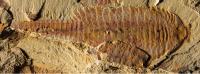
This image shows the dorsal view of Fuxianhuia protensa. An international team of researchers from the University of Arizona, China and the United Kingdom has discovered the earliest known cardiovascular system, and the first to clearly show a sophisticated system complete with heart and blood vessels, in fossilized remains of an extinct marine creature that lived over half a billion years ago. The finding sheds new light on the evolution of body organization in the animal kingdom and shows that even the earliest creatures had internal organizational systems that strongly resemble those found in their modern descendants.
| Biology | April 1, 2014 05:13 PM |
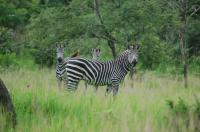
UC Davis scientists have learned why zebras, like these plains zebras in Katavi National Park, Tanzania, have stripes. Why zebras have black and white stripes is a question that has intrigued scientists and spectators for centuries. A research team led by the University of California, Davis, has now examined this riddle systematically. Their answer is published April 1 in the online journal Nature Communications.
| Biology | March 25, 2014 06:26 PM |
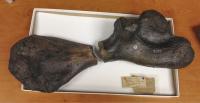
The two partial limb fossils from the ancient sea turtle Atlantochelys mortoni fit together perfectly, leaving little room for doubt that they are from the same bone. "As soon as those two halves came together, like puzzle pieces, you knew it," said Ted Daeschler, PhD, associate curator of vertebrate zoology and vice president for collections at the Academy of Natural Sciences of Drexel University.
| Biology | March 24, 2014 09:25 PM |
How does the Arctic tern (a sea bird) fly more than 80,000 miles in its roundtrip North Pole-to-South Pole migration? How does the Emperor penguin incubate eggs for months during the Antarctic winter without eating? How does the Rufous hummingbird, which weighs less than a nickel, migrate from British Columbia to Mexico? These physiological gymnastics would usually be influenced by leptin, the hormone that regulates body fat storage, metabolism and appetite. However, leptin has gone missing in birds - until now.
| Biology | March 20, 2014 06:55 PM |
This is an example of the horned pollinaria found in South American milkweed. Rutting stags and clawing bears are but two examples of male animals fighting over a mate, but research in New Phytologist has uncovered the first evidence of similar male struggles leading to the evolution of weaponry in plants.
| Biology | March 20, 2014 06:55 PM |
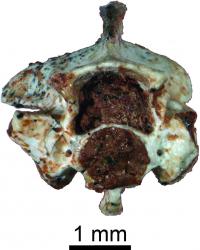
Ohio University scientists have found the oldest definitive fossil evidence of modern, venomous snakes in Africa, according to a new study published March 19 in the journal PLOS ONE Ohio University scientists have found the oldest definitive fossil evidence of modern, venomous snakes in Africa, according to a new study published March 19 in the journal PLOS ONE.
| Biology | March 19, 2014 08:10 PM |
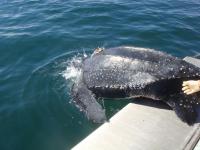
A leatherback turtle equipped with a satellite tag crawls off the tagging vessel, the F/V Sea Holly A first-of-its-kind satellite tagging study of migrating New England leatherback turtles in the North Atlantic offers a greatly improved understanding of their seasonal high-use habitats, diving activity and response to key ocean and environmental features in relation to their search behavior. Leatherbacks are considered endangered species in all the world's oceans.
| Biology | March 11, 2014 05:36 PM |
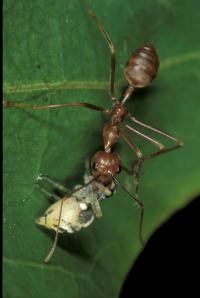
The protector species, the weaver ant Oecophylla smaragdina, can also turn predator of the associate species, the jumping spider Phintella piatensis. A timid jumping spider uses the scent of ants as a secret weapon to save itself from becoming the somewhat soggy prey of the predatory spitting spider. The downside to this plan is that jumping spiders are also a favorite snack of its very own saviors. To overcome this additional hazard, the spider has made yet another plan in the form of an ant-proof nest, writes Ximena Nelson of the University of Canterbury in New Zealand and Robert Jackson of the University of Canterbury and the International Centre of Insect Physiology and Ecology in Kenya, in Springer's journal Behavioral Ecology and Sociobiology.
| Biology | March 6, 2014 05:16 PM |
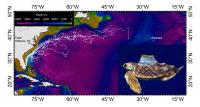
This shows the North Atlantic tracking routes of 17 juvenile loggerhead sea turtles. A new study satellite tracked 17 young loggerhead turtles in the Atlantic Ocean to better understand sea turtle nursery grounds and early habitat use during the 'lost years.' The study, conducted by a collaborative research team, including scientists from the University of Miami (UM) Rosenstiel School of Marine and Atmospheric Science, was the first long-term satellite tracking study of young turtles at sea.
| Biology | March 5, 2014 05:59 PM |
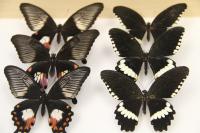
Papilio polytes, an Asian swallowtail butterfly species also known as the Common Mormon, possesses distinctive mimicry patterns (left). The same species also has non-mimetic forms (right). A single gene regulates the complex wing patterns, colors and structures required for mimicry in swallowtail butterflies, report scientists from the University of Chicago, March 5 in Nature. Surprisingly, the gene described, doublesex, is already well-known for its critical role in sexual differentiation in insects.
| Biology | February 17, 2014 06:16 PM |
Why does a mouse's heart beat about the same number of times in its lifetime as an elephant's, although the mouse lives about a year, while an elephant sees 70 winters come and go? Why do small plants and animals mature faster than large ones? Why has nature chosen such radically different forms as the loose-limbed beauty of a flowering tree and the fearful symmetry of a tiger?
| Biology | February 13, 2014 06:13 PM |
Invasive "crazy ants" are rapidly displacing fire ants in areas across the southeastern U.S. by secreting a compound that neutralizes fire ant venom, according to a University of Texas at Austin study published this week in the journal Science Express. It's the first known example of an insect with the ability to detoxify another insect's venom.
| Biology | February 12, 2014 05:46 PM |
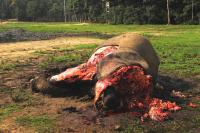
New data from the field in Central Africa shows that between 2002 and 2013, 65 percent of forest elephants were killed. New data from the field in Central Africa shows that between 2002 and 2013, 65 percent of forest elephants were killed. They are being poached, for their ivory, at a shocking 9 percent per year.
| Biology | February 10, 2014 05:38 PM |
Associate Professor Joan Heath has uncovered a new way that protein production is regulated in development. Melbourne researchers have made a major step forward in understanding how changes in an essential cellular process, called minor class splicing, may cause a severe developmental disease.
| Biology | February 6, 2014 08:22 PM |
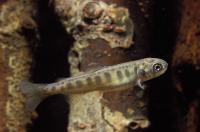
A new study using small Chinook salmon "parr " found the fish use the Earth's magnetic field to orient themselves. A team of scientists last year presented evidence of a correlation between the migration patterns of ocean salmon and the Earth's magnetic field, suggesting it may help explain how the fish can navigate across thousands of miles of water to find their river of origin.
| Biology | February 5, 2014 08:33 PM |
Sponges are an important animal for marine and freshwater ecology and represent a rich animal diversity found throughout the world, from tropical climates to the arctic poles. For evolutionary biologists, they also present an interesting animal for comparative study because they are simple filter feeders, and lack nervous, digestive or circulatory systems, suggesting that they diverged early from other animals.
| Biology | February 5, 2014 08:33 PM |
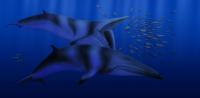
A speculative life rendering of the fossil whale Balaenoptera bertae unearthed in the San Francisco Bay Area.
The whale belongs within the same genus as minke and fin whales, indicating... The pre-Ice Age marine mammal community of the North Pacific formed a strangely eclectic scene, research by a Geology PhD student at New Zealand's University of Otago reveals.
| Biology | January 26, 2014 06:14 PM |
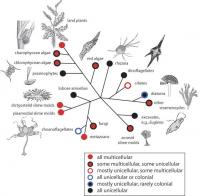
Representative diverse origins of multicellularity are shown on a highly redacted and unrooted phylogenetic diagram of the major eukaryotic clades (modified from a variety of sources). In the beginning there were single cells. Today, many millions of years later, most plants, animals, fungi, and algae are composed of multiple cells that work collaboratively as a single being. Despite the various ways these organisms achieved multicellularity, their conglomeration of cells operate cooperatively to consume energy, survive, and reproduce. But how did multicellularity evolve? Did it evolve once or multiple times? How did cells make the transition from life as a solo cell to associating and cooperating with other cells such that they work as a single, cohesive unit?
| Biology | January 20, 2014 06:56 PM |
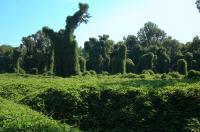
One of the most damaging invasive species in history, kudzu, or Japanese arrowroot, found its way from Japan to the southeastern United States. In 1859 an Australian farmer named Thomas Austin released 24 grey rabbits from Europe into the wild because it "could do little harm and might provide a touch of home, in addition to a spot of hunting."
| Biology | January 15, 2014 07:04 PM |
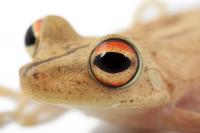
Gunther's Banded Treefrog, Hypsiboas fasciatus, was believed to have a wide distribution in the Amazon region. Amazonian biodiversity has been studied for hundreds of years. Early explorers of Amazonian plants and animals included renowned naturalists of the stature of Alexander von Humboldt and A. R. Wallace. Despite this long history of exploration, new studies are resulting in the discovery of a large number of new species. The key of these discoveries lies in the use of advanced new tools for species detection.
| Biology | January 9, 2014 05:46 PM |
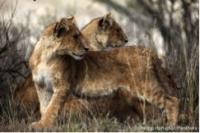
This shows two lion cubs in West Africa. A report published today concludes that the African lion is facing extinction across the entire West African region. The West African lion once ranged continuously from Senegal to Nigeria, but the new paper reveals there are now only an estimated 250 adult lions restricted to four isolated and severely imperiled populations. Only one of those populations contains more than 50 lions.
| Biology | January 8, 2014 07:54 PM |
Great white sharks—top predators throughout the world's ocean—grow much slower and live significantly longer than previously thought, according to a new study led by the Woods Hole Oceanographic Institution (WHOI).
| Biology | January 3, 2014 11:11 PM |
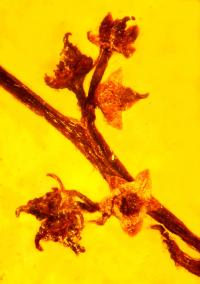
This flower preserved in 100-million-year old amber is one of the most complete ever found. A 100-million-year old piece of amber has been discovered which reveals the oldest evidence of sexual reproduction in a flowering plant – a cluster of 18 tiny flowers from the Cretaceous Period – with one of them in the process of making some new seeds for the next generation.
| Biology | January 2, 2014 12:05 AM |
Scientists have discovered how plants use steroid hormones to choose growth over defence when their survival depends on it.
| Biology | December 21, 2013 12:09 PM |
Common hippopotami (Hippopotamus amphibius) are vulnerable to extinction in the wild, but reproduce extremely well under captive breeding conditions. Females can give birth to up to 25 young over their 40 year lifespan – evidently too many for zoos to accommodate. Captive populations of hippopotamus must therefore be controlled. Male castration is useful in this respect because it can simultaneously limit population growth and reduce inter-male aggression. However, documented cases of successful hippo castrations are scant. The procedure is notoriously difficult due to problems with anaesthesia and difficulties in locating the testes.
| Biology | December 12, 2013 07:32 PM |
Two teams of researchers, including a scientist from Case Western Reserve University, have announced the discovery of a new species of fossil horse from 4.4 million-year-old fossil-rich deposits in Ethiopia.
| Biology | December 10, 2013 05:21 PM |

This is a view eastward along the spine of the Azorean island of São Jorge, showing the area where the new orchid has been discovered. Image: Rob Poot. Researchers studying speciation of butterfly orchids on the Azores have been startled to discover that the answer to a long-debated question "Do the islands support one species or two species?" is actually "three species". Hochstetter's Butterfly-orchid, newly recognized following application of a battery of scientific techniques and reveling in a complex taxonomic history worthy of Sherlock Holmes, is arguably Europe's rarest orchid species. Under threat in its mountain-top retreat, the orchid urgently requires conservation recognition.
| Biology | December 5, 2013 06:14 PM |
Viruses alter plant biochemistry in order to manipulate visiting aphids into spreading infection.
| Biology | December 5, 2013 06:14 PM |
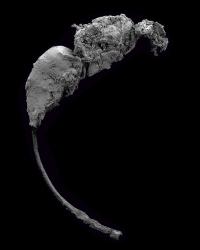
Although it lived roughly 65 million years before the earliest known occurrence of figs, the fossil wasp's ovipositor closely resembles those of today's fig wasps. A 115-million-year-old fossilized wasp from northeast Brazil presents a baffling puzzle to researchers. The wasp's ovipositor, the organ through which it lays its eggs, looks a lot like those of present-day wasps that lay their eggs in figs. The problem, researchers say, is that figs arose about 65 million years after this wasp was alive.
| Biology | December 4, 2013 06:06 PM |
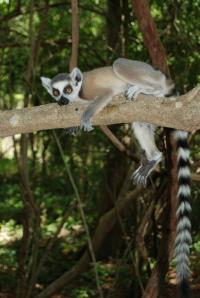
A new study led by CU-Boulder has shown Madagascar's ring-tailed lemurs are the only wild primates in the world that sleep in the same caves on a nightly basis. Scientists have discovered that some ring-tailed lemurs in Madagascar regularly retire to limestone chambers for their nightly snoozes, the first evidence of the consistent, daily use of the same caves and crevices for sleeping among the world's wild primates.
| Biology | December 3, 2013 06:25 PM |
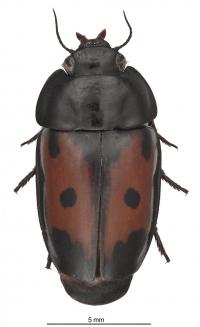
This image shows the beautiful body pattern of the new species G. spectabilis Erwin. Scientists from the Smithsonian Institution describe the Spectacular Guyane False-form beetle, or Guyanemorpha spectabilis, from Guyane (French Guiana). As its name suggests, the newly discovered species stands out among its dull relatives in the Western Hemisphere, with its great size and beautiful coloration. The study was published in the open access journal ZooKeys.
| Biology | December 2, 2013 06:19 PM |
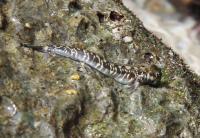
A male Pacific leaping blenny, Alticus arnoldorum, in Guam. These terrestrial fishes spend all their adult lives on land, on the rocks in the splash zone. One of the world's strangest animals – a legless, leaping fish that lives on land - uses camouflage to avoid attacks by predators such as birds, lizards and crabs, new research shows.
| Biology | November 27, 2013 04:35 PM |
Researchers reporting in the Cell Press journal Current Biology on November 27 have identified a cryptic new species of wild cat living in Brazil. The discovery is a reminder of just how little scientists still know about the natural world, even when it comes to such charismatic creatures. The findings also have important conservation implications for the cats, the researchers say.
| Biology | November 20, 2013 06:39 PM |
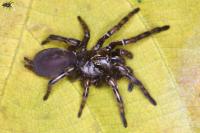
This image shows the female Fufius lucasae described for the first time in this study. Scientists discover three new gorgeous species of the wafer trapdoor genus Fufius – F. minusculus, F. jalapensis, and F. candango. The discovery of the three new species, published in the open access journal ZooKeys, paves the road to understanding the morphological variability of the species in this little known mygalomorph genus.
| Biology | November 18, 2013 07:19 PM |
University of Illinois anthropology professor Ripan Malhi looks to DNA to tell the story of how ancient humans first came to the Americas and what happened to them once they were here.
| Biology | November 13, 2013 05:55 PM |
Many of us have mixed feelings when remembering painful lessons in German or Latin grammar in school. Languages feature a large number of complex rules and patterns: using them correctly makes the difference between something which "sounds good", and something which does not. However, cognitive biologists at the University of Vienna have shown that sensitivity to very simple structural and melodic patterns does not require much learning, or even being human: South American squirrel monkeys can do it, too.
| Biology | November 13, 2013 05:55 PM |
Johns Hopkins researchers report that the deletion of any single gene in yeast cells puts pressure on the organism's genome to compensate, leading to a mutation in another gene. Their discovery, which is likely applicable to human genetics because of the way DNA is conserved across species, could have significant consequences for the way genetic analysis is done in cancer and other areas of research, they say.
| Biology | November 11, 2013 06:00 PM |
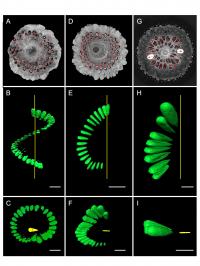
This shows fossil and recent araucarian cones sectioned in 2-D by microCT (A, D, G), and showing one segmented spiral or row of seeds By integrating high-resolution X-ray imaging (termed microCT), 3D image segmentation, and computer animation, a new study conducted by Carole Gee at the University of Bonn, Germany, demonstrates the visualization of fossils without destroying the material. Traditional techniques, such as thin-sectioning, require investigators to physically cut up the fossil in order to observe internal structures. Dr. Gee, however, has now successfully applied microCT to visualize silicified conifer seed cones as old as 150 million years without cutting, sawing, or damaging the specimens in any way.
| Biology | November 3, 2013 03:43 AM |
Mammal body size decreased significantly during at least two ancient global warming events, a new finding that suggests a similar outcome is possible in response to human-caused climate change, according to a University of Michigan paleontologist and his colleagues.
| Biology | October 31, 2013 06:49 PM |
Bee colonies consist of a queen bee, lots of female worker bees and some male drones. The gene that determines the sex of the bees is much more complex than has been assumed up until now and has developed over the course of evolution at a very high rate. This is the finding of an international team of scientists under the direction of Dr. Martin Hasselmann of the Institute for Genetics of the University of Cologne. The study has been published in the renowned Oxford journal Molecular Biology and Evolution.
| Biology | October 30, 2013 08:05 PM |

Get gaming! Scientists found that playing Super Mario can make you brainier, or at least cause increases in the brain regions responsible for spatial orientation, memory formation and strategic planning. Video gaming causes increases in the brain regions responsible for spatial orientation, memory formation and strategic planning as well as fine motor skills. This has been shown in a new study conducted at the Max Planck Institute for Human Development and Charité University Medicine St. Hedwig-Krankenhaus. The positive effects of video gaming may also prove relevant in therapeutic interventions targeting psychiatric disorders.
| Biology | October 29, 2013 07:07 PM |
An international team of scientists, led by physicists from the University of York, has shed important new light on coral skeleton formation.
| Biology | October 22, 2013 06:00 PM |
A chance find by a high school student led to the youngest, smallest and most complete fossil skeleton yet known from the iconic tube-crested dinosaur Parasaurolophus. The discovery, announced today by the Raymond M. Alf Museum of Paleontology at The Webb Schools, shows that the prehistoric plant-eater sprouted its strange headgear before it celebrated its first birthday. Three-dimensional scans of nearly the entire fossil are freely available online, making this the most digitally-accessible dinosaur to date.
| Biology | October 17, 2013 06:28 PM |
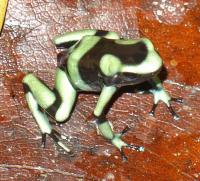
Poison dart frogs like this one, photographed by Louise Rollins-Smith during a trip to Panama in 2010, are threatened by fungal infections that paralyze their immune response. A fungus that is killing frogs and other amphibians around the world releases a toxic factor that disables the amphibian immune response, Vanderbilt University investigators report Oct. 18 in the journal Science.
| Biology | October 14, 2013 07:21 PM |
Researchers studying young bonobos in an African sanctuary have discovered striking similarities between the emotional development of the bonobos and that of children, suggesting these great apes regulate their emotions in a human-like way. This is important to human evolutionary history because it shows the socio-emotional framework commonly applied to children works equally well for apes. Using this framework, researchers can test predictions of great ape behavior and, as in the case of this study, confirm humans and apes share many aspects of emotional functioning.
| Biology | October 10, 2013 06:42 PM |
Research conducted by the National Geographic Genographic Project, a multiyear global initiative that uses DNA to map the history of human migration, is helping unravel the timing and source of human settlement in Central Europe.
| Biology | October 9, 2013 05:29 PM |
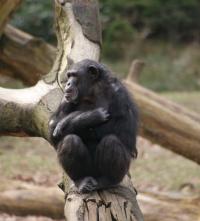
This is chimpanzee Tushi. Jorg Massen (University of Vienna) and Sonja Koski (University of Zurich) together measured chimpanzee personality in two zoos with behavioural experiments and years of observations of chimpanzee behaviour. They also carefully logged which chimpanzee sat in body contact with whom most. "This is a clear sign of friendship among chimpanzees", explains Jorg Massen. Subsequently, the researchers tested, if those chimpanzees who sit together frequently have similar or different personality types.
| Biology | October 8, 2013 04:04 PM |
Ants and bees are surprisingly more genetically related to each other than they are to social wasps such as yellow jackets and paper wasps, a team of University of California, Davis, scientists has discovered. The groundbreaking research is available online and will be published Oct. 21 in the print version of the journal Current Biology.
| Biology | October 4, 2013 06:30 PM |
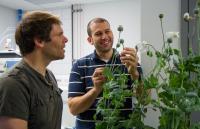
Researcher Peter Facchini (left) and PhD student Scott Farrow's (right) paper sheds light on how the opium poppy -- the world's only source of the valuable painkillers University of Calgary scientists have discovered metabolic enzymes in the opium poppy that play "widespread roles" in enabling the plant to make painkilling morphine and codeine, and other important compounds.
| Biology | October 3, 2013 05:50 PM |
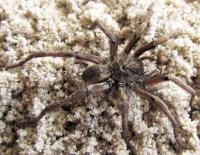
This image shows a male Chaco costai. The two new species described from Uruguay, Chaco castanea and Chaco costai, are middle sized spiders that range between 1 and 2 cm in body size. Like all Nemesiids they have elongated body and robust legs with predominantly black-brownish coloration. A recent study in the open access journal Zookeys provides a detailed description of the two news species and a rare glimpse into their living habits.
| Biology | September 26, 2013 04:33 PM |
Animals living in marine environments keep to their schedules with the aid of multiple independent—and, in at least some cases, interacting—internal clocks. The findings, presented by two research groups in papers appearing in the Cell Press journals Current Biology and Cell Reports on September 26, suggest that multiple clocks—not just the familiar, 24-hour circadian clock—might even be standard operating equipment in animals.
| Biology | September 26, 2013 04:33 PM |
Professor Hannes Lohi's research group at the University of Helsinki and Folkhälsan Research Center has identified a mutation in ITGA10 gene, causing chondrodysplasia in two dog breeds, the Norwegian Elkhound and the Karelian Bear Dog. The research revealed a new chondrodysplasia gene in dogs, and a candidate gene for human chondrodysplasias. The finding has implications on bone biology as well as canine health. A genetic test can now be used to identify mutation carriers in the two affected dog breeds. The study was published on the scientific journal PLOS ONE on 25 September 2013.
| Biology | September 26, 2013 04:33 PM |
When termites munch on wood, the small bits are delivered to feed a community of unique microbes living in their guts, and in a complex process involving multiple steps, these microbes turn the hard, fibrous material into a nutritious meal for the termite host. One key step uses hydrogen to convert carbon dioxide into organic carbon—a process called acetogenesis—but little is known about which gut bacteria play specific roles in the process. Utilizing a variety of experimental techniques, researchers from the California Institute of Technology (Caltech) have now discovered a previously unidentified bacterium—living on the surface of a larger microorganism in the termite gut—that may be responsible for most gut acetogenesis.
| Biology | September 25, 2013 07:07 PM |
In May-June of 2008, WCS led an international stranding response team to a mass stranding of approximately 100 melon-headed whales in the coastal mangroves of northeastern Madagascar. An independent scientific review panel has concluded that the mass stranding of approximately 100 melon-headed whales in the Loza Lagoon system in northwest Madagascar in 2008 was primarily triggered by acoustic stimuli, more specifically, a multi-beam echosounder system operated by a survey vessel contracted by ExxonMobil Exploration and Production (Northern Madagascar) Limited.
| Biology | September 25, 2013 07:07 PM |
A specific gene variant is more frequent among elite athletes in power sports, reports a study in the October issue of The Journal of Strength and Conditioning Research, official research journal of the National Strength and Conditioning Association (NSCA). The journal is published by Lippincott Williams & Wilkins, a part of Wolters Kluwer Health.
| Biology | September 20, 2013 04:43 AM |
Scientists have successfully analysed the genetic make-up of the offspring of pregnant coelacanth females for the first time. They found that the likelihood that the offspring is fathered by one single individual is very high – unlike with many other fish species. Dr Kathrin Lampert from the Ruhr-Universität Bochum and Prof Dr Manfred Schartl from the University of Würzburg, together with their colleagues, report about their findings in the journal "Nature Communications".
| Biology | September 12, 2013 04:28 PM |
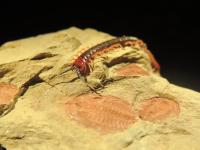
A living arthropod (centipede Cormocephalus) crawls over its 515-million-year-old relative that lived during the Cambrian explosion (trilobite Estaingia). The incredible burst of innovation in animals' body plans and habits during the Cambrian explosion, between 540 and 520 million years ago, can be explained by a reasonable uptick in evolutionary rates. The discovery, based on the first rigorous estimates of early evolutionary rates in arthropods, shows that evolution's "big bang" is compatible with natural selection as Darwin envisioned it, say researchers reporting their findings in Current Biology, a Cell Press publication, on September 12.
| Biology | September 2, 2013 06:11 PM |
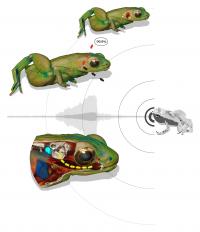
This is an illustration how a Gardiner's frog can hear with its mouth. Gardiner's frogs from the Seychelles islands, one of the smallest frogs in the world, do not possess a middle ear with an eardrum yet can croak themselves, and hear other frogs. An international team of scientists using X-rays has now solved this mystery and established that these frogs are using their mouth cavity and tissue to transmit sound to their inner ears. The results are published in PNAS on September 2, 2013.
| Biology | September 2, 2013 06:11 PM |
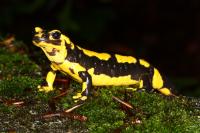
This image shows a fire salamander. A new species of fungus that eats amphibians' skin has ravaged the fire salamander population in the Netherlands, bringing it close to regional extinction.
| Biology | September 2, 2013 06:11 PM |
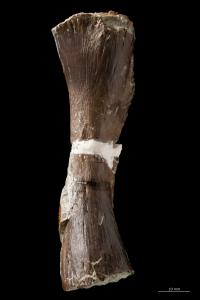
This is the femur of Metoposaurus diagnosticus krasiejowensis as viewed from behind (posterior). The sectioned plane is marked by the white stripe. Krasiejów, Poland was a vastly different place 230 million years ago during the Triassic Period. It was part of a giant continent called Pangea, had a warm climate throughout the year, and was populated by giant amphibians that weighed half a ton and were 10 feet long. Metoposaurus diagnosticus was one of these giant amphibians, and its environment had only two seasons: wet and dry. Like modern amphibians, Metoposaurus needed water for its lifestyle, but the extremely long dry season in Triassic Krasiejów drove this species to burrow underground and go dormant when water was scarce.
| Biology | August 22, 2013 05:16 PM |
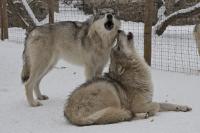
When a member of the wolf pack leaves the group, the howling by those left behind isn't a reflection of stress but of the quality of their relationships. When a member of the wolf pack leaves the group, the howling by those left behind isn't a reflection of stress but of the quality of their relationships. So say researchers based on a study of nine wolves from two packs living at Austria's Wolf Science Center that appears in Current Biology, a Cell Press publication, on August 22.
| Biology | August 19, 2013 05:40 PM |
Small prey fish can grow a bigger 'eye' on their rear fins as a way of distracting predators and dramatically boosting their chances of survival, new scientific research has found.
| Biology | August 11, 2013 07:10 PM |
A new analysis of dinosaur fossils by University of Pennsylvania researchers has revealed that a number of specimens of the genus Psittacosaurus — once believed to represent three different species — are all members of a single species. The differences among the fossil remains that led other scientists to label them as separate species in fact arose from how the animals were buried and compressed, the study found.
| Biology | August 5, 2013 05:59 PM |
Using direct human brain recordings, a research team from Drexel University, the University of Pennsylvania, UCLA and Thomas Jefferson University has identified a new type of cell in the brain that helps people to keep track of their relative location while navigating an unfamiliar environment.
| Biology | July 16, 2013 06:42 PM |
Scientists from Griffith University have taken part in an international study which has revealed the genetic secrets of how a small bird can survive in one of the most hostile environments on earth.
| Biology | July 10, 2013 05:50 PM |
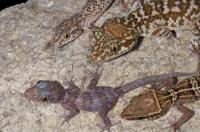
Paroedura ground geckos illustrate species diversity on Madagascar. Madagascar has long been known as a hotspot of biodiversity. Although it represents only one percent of the earth's area, it is home to about three percent of all animal and plant species on the planet. But research suggests the island's heyday of species development may be all but over.
| Biology | June 26, 2013 06:31 PM |
Contrary to popular belief, crabgrass does not thrive in lawns, gardens and farm fields by simply crowding out other plants. A new study in ACS' Journal of Agricultural and Food Chemistry has found that the much-despised weed actually produces its own herbicides that kill nearby plants.
| Biology | June 24, 2013 06:09 PM |
The brain's pleasure response to tasting food can be measured through the eyes using a common, low-cost ophthalmological tool, according to a study just published in the journal Obesity. If validated, this method could be useful for research and clinical applications in food addiction and obesity prevention.
| Biology | June 20, 2013 04:17 PM |
A line of genetically modified mice that Western University scientists call "Forrest Gump" because, like the movie character, they can run far but they aren't smart, is furthering the understanding of a key neurotransmitter called acetylcholine (ACh). Marco Prado and his team at Robarts Research Institute say the mice show what happens when too much of this neurotransmitter becomes available in the brain. Boosting ACh is a therapeutic target for Alzheimer's disease because it's found in reduced amounts when there's cognitive failure. Prado's research is published in the Journal of Neuroscience.
| Biology | June 12, 2013 06:18 PM |
The teeth of a kangaroo and other extinct marsupials reveal that southeastern Queensland 2.5-5-million-years ago was a mosaic of tropical forests, wetlands and grasslands and much less arid than previously thought. The chemical analysis of tooth enamel that suggests this diverse prehistoric habitat is published June 12 in the open access journal PLOS ONE by Shaena Montanari from the American Museum of Natural History and colleagues from other institutions.
| Biology | June 12, 2013 06:18 PM |
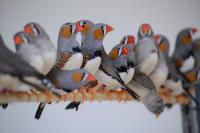
Singing siblings: zebra finches that grew up without their dads and therefore without a "song model ", don't have to worry about a lack of singing repertoire. The song of songbirds is usually transmitted from one generation to the next by imitation learning and is thought to be similar to the acquisition of human speech. Although song is often learnt from an adult model, there is some evidence of active vocal learning among siblings. Researchers from the Max Planck Institute for Ornithology in Seewiesen now showed that juvenile zebra finches that have been raised without their fathers are able to learn their song via a brother that for a short period had been exposed to the father's' song.
| Biology | June 12, 2013 06:18 PM |
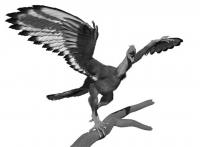
This is an artist's illustration of how Archaeopteryx may have looked sporting its new pigmentation. The first complete chemical analysis of feathers from Archaeopteryx, a famous fossil linking dinosaurs and birds, reveals that the feathers were patterned—light in color, with a dark edge and tip—rather than all black, as previously thought.
| Biology | June 5, 2013 04:36 PM |
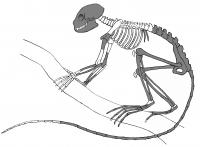
This is an artist's illustration of the skeleton of Archicebus achilles. The darkened bones represent the known bony elements of the skeleton found in China. An international team of paleontologists that includes Northern Illinois University anthropologist Dan Gebo is announcing the discovery of a nearly complete, articulated skeleton of a new tiny, tree-dwelling primate dating back 55 million years.
| Biology | June 3, 2013 06:50 PM |
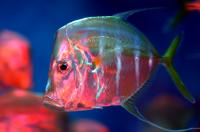
Researchers found that lookdown fish camouflage themselves through a complex manipulation of polarized light after it strikes the fish skin. Fish can hide in the open ocean by manipulating how light reflects off their skin, according to researchers at The University of Texas at Austin. The discovery could someday lead to the development of new camouflage materials for use in the ocean, and it overturns 40 years of conventional wisdom about fish camouflage.
| Biology | June 3, 2013 06:50 PM |
This is Machaeracanthus goujeti. Researchers from the University of Valencia and the Natural History Museum of Berlin have studied the fossilised remains of scales and bones found in Teruel and the south of Zaragoza, ascertaining that they belong to a new fish species called Machaeracanthus goujeti that lived in that area of the peninsula during the Devonian period. The fossils are part of the collection housed in the Palaeontology Museum of Zaragoza.
| Biology | May 28, 2013 04:35 PM |
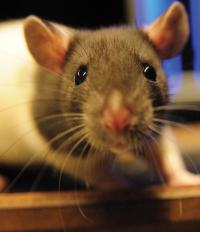
Rats process visual information from their eyes similar to other mammals. Nevertheless, their eyes move in a very different way. Unlike humans, their eyes can move in opposite directions. Scientists from the Max Planck Institute for Biological Cybernetics in Tübingen, using miniaturised high-speed cameras and high-speed behavioural tracking, discovered that rats move their eyes in opposite directions in both the horizontal and the vertical plane when running around. Each eye moves in a different direction, depending on the change in the animal's head position. An analysis of both eyes' field of view found that the eye movements exclude the possibility that rats fuse the visual information into a single image like humans do. Instead, the eyes move in such a way that enables the space above them to be permanently in view – presumably an adaptation to help them deal with the major threat from predatory birds that rodents face in their natural environment.
| Biology | May 28, 2013 04:35 PM |
The growth of plants toward light is particularly important at the beginning of their lifecycle. Many seeds germinate in the soil and get their nutrition in the dark from their limited reserves of starch and lipids. Reaching for the surface, the seedlings rapidly grow upwards against the gravitational pull, which provides an initial clue for orientation. With the help of highly sensitive light-sensing proteins, they find the shortest route to the sunlight – and are even able to bend in the direction of the light source.
| Biology | May 22, 2013 06:10 PM |
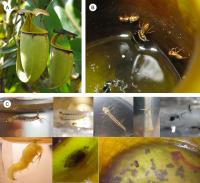
The carnivorous pitcher plant Nepenthes bicalcarata (A) and the ant Camponotus schmitzi (B) team up to fight fly larvae (C) that steal the plant's prey. An insect-eating pitcher plant teams up with ants to prevent mosquito larvae from stealing its nutrients, according to research published May 22 in the open access journal PLOS ONE by Mathias Scharmann and colleagues from the University of Cambridge and the University Brunei Darussalam.
| Biology | May 16, 2013 04:57 PM |
A scientist has discovered an ancient extinct creature with 'scissor hand-like' claws in fossil records and has named it in honour of his favourite movie star.
| Biology | May 11, 2013 05:33 AM |
Different brain areas are activated when we choose to suppress an emotion, compared to when we are instructed to inhibit an emotion, according a new study from the UCL Institute of Cognitive Neuroscience and Ghent University.
| Biology | April 29, 2013 06:58 PM |
Nesting green sea turtles are benefiting from marine protected areas by using habitats found within their boundaries, according to a U.S. Geological Survey study that is the first to track the federally protected turtles in Dry Tortugas National Park.
| Biology | April 11, 2013 02:04 PM |
The sensation of having a physical body is not as self-evident as one might think. Almost everyone who has had an arm or leg amputated experiences a phantom limb: a vivid sensation that the missing limb is still present. A new study by neuroscientists at the Karolinska Institutet in Sweden shows that it is possible to evoke the illusion of having a phantom hand in non-amputated individuals.
| Biology | April 11, 2013 02:04 PM |
In the laboratory are Dr. Koen Stein (right) and Olaf Dülfer, University of Bonn from the Steinmann-Institute. An international team of researchers, including a paleontologist from the University of Bonn, have proven dinosaur embryos to be the oldest ever found. The specimens of Lufengosaurus discovered in China lived during the lower Jurassic about 200 to 190 million years ago. Based on the bone tissue, Dr. Koen Stein was able to show that the fossils must have been in a very early stage of development. The rapid growth and high reproductive rate of these Chinese dinosaurs is astounding. The results are now being presented in the renowned scientific journal "Nature".
| Biology | April 8, 2013 06:07 PM |
The vocal lip-smacks that geladas use in friendly encounters have surprising similarities to human speech, according to a study reported in the Cell Press journal Current Biology on April 8th. The geladas, which live only in the remote mountains of Ethiopia, are the only nonhuman primate known to communicate with such a speech-like, undulating rhythm. Calls of other monkeys and apes are typically one or two syllables and lack those rapid fluctuations in pitch and volume.
| Biology | April 4, 2013 07:40 PM |
Researchers at the University of Leeds may have solved a key puzzle about how objects from space could have kindled life on Earth.
| Biology | April 2, 2013 05:23 PM |
Glowing bacteria inside squids use light and chemical signals to control circadian-like rhythms in the animals, according to a study to be published on April 2 in mBio®, the online open-access journal of the American Society for Microbiology. The Hawaiian bobtail squid, Euprymna scolopes, houses a colony of Vibrio fischeri bacteria in its light organ, using the bacteria at night as an antipredatory camouflage while it ventures out to hunt. The results of the study show that, in addition to acting as a built-in lamp, the bacteria also control when the squid expresses a gene that entrains, or synchronizes, circadian rhythms in animals.
| Biology | March 21, 2013 08:05 PM |
System-wide networks of proteins are indispensable for organisms. Function and evolution of these networks are among the most fascinating research questions in biology. Bioinformatician Thomas Rattei, University of Vienna, and physicist Hernan Makse, City University New York (CUNY), have reconstructed ancestral protein networks. The results are of high interest not only for evolutionary research but also for the interpretation of genome sequence data. Recently, the researchers published their paper in the renowned journal PLOS ONE.
| Biology | March 19, 2013 05:56 PM |
Teamwork has been fundamental in humanity's greatest achievements but scientists have found that working together has its evolutionary roots in our nearest primate relatives – chimpanzees.
| Biology | March 15, 2013 06:26 AM |
A University of Florida researcher has described a new genus and species of extinct saber-toothed cat from Polk County, Fla., based on additional fossil acquisitions of the animal over the last 25 years.
| Biology | March 3, 2013 02:42 PM |

An international consortium of university researchers has produced the most comprehensive virtual reconstruction of human metabolism to date. Building on earlier pioneering work by researchers at the University of California, San Diego, an international consortium of university researchers has produced the most comprehensive virtual reconstruction of human metabolism to date. Scientists could use the model, known as Recon 2, to identify causes of and new treatments for diseases like cancer, diabetes and even psychiatric and neurodegenerative disorders. Each person's metabolism, which represents the conversion of food sources into energy and the assembly of molecules, is determined by genetics, environment and nutrition.
| Biology | February 20, 2013 05:13 PM |
A team of researchers at UC San Francisco has uncovered the neurological basis of speech motor control, the complex coordinated activity of tiny brain regions that controls our lips, jaw, tongue and larynx as we speak.
| Biology | February 5, 2013 06:43 PM |
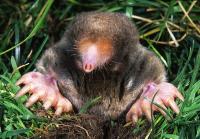
The eastern mole (Scalopus aquaticus) Most mammals, including humans, see in stereo and hear in stereo. But whether they can also smell in stereo is the subject of a long-standing scientific controversy. Now, a new study shows definitively that the common mole (Scalopus aquaticus) – the same critter that disrupts the lawns and gardens of homeowners throughout the eastern United States, Canada and Mexico – relies on stereo sniffing to locate its prey. The paper that describes this research, "Stereo and Serial Sniffing Guide Navigation to an Odor Source in a Mammals," was published on Feb. 5 in the journal Nature Communications.
| Biology | February 4, 2013 06:06 PM |
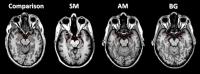
Researchers at the University of Iowa show that the human brain has new regions that sense internally derived fear. When doctors at the University of Iowa prepared a patient to inhale a panic-inducing dose of carbon dioxide, she was fearless. But within seconds of breathing in the mixture, she cried for help, overwhelmed by the sensation that she was suffocating.
| Biology | February 4, 2013 06:06 PM |
A new kind of pterosaur, a flying reptile from the time of the dinosaurs, has been identified by scientists from the Transylvanian Museum Society in Romania, the University of Southampton in the UK and the Museau Nacional in Rio de Janiero, Brazil.
| Biology | January 18, 2013 01:16 PM |
Dogs and wolves are genetically so similar, it's been difficult for biologists to understand why wolves remain fiercely wild, while dogs can gladly become "man's best friend." Now, doctoral research by evolutionary biologist Kathryn Lord at the University of Massachusetts Amherst suggests the different behaviors are related to the animals' earliest sensory experiences and the critical period of socialization. Details appear in the current issue of Ethology.
| Biology | January 14, 2013 06:17 PM |
This is a painting by one of Prof. Inzelberg's Parkinson's patients. Parkinson's experts across the world have been reporting a remarkable phenomenon — many patients treated with drugs to increase the activity of dopamine in the brain as a therapy for motor symptoms such as tremors and muscle rigidity are developing new creative talents, including painting, sculpting, writing, and more.
| Biology | January 10, 2013 06:59 PM |
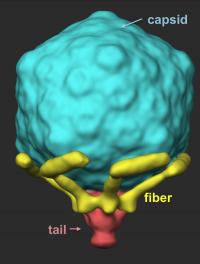
Researchers found that the T7 virus has six tail fibers that are folded back against its capsid. The detailed changes in the structure of a virus as it infects an E. coli bacterium have been observed for the first time, report researchers from The University of Texas at Austin and The University of Texas Health Science Center at Houston (UT Health) Medical School this week in Science Express.
| Biology | January 7, 2013 06:20 PM |
An international team of scientists has described a fossil marine predator measuring 8.6 meters in length (about 28 feet) recovered from the Nevada desert in 2010 as representing the first top predator in marine food chains feeding on prey similar to its own size. A paper with their description will appear the week of January 7, 2013 in the EE (early electronic) issue of Proceedings of the National Academy of Sciences.
| Biology | January 3, 2013 06:30 PM |
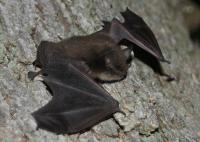
This is a little brown bat (Myotis lucifugus). Much of the DNA that makes up our genomes can be traced back to strange rogue sequences known as transposable elements, or jumping genes, which are largely idle in mammals. But Johns Hopkins researchers report they have identified a new DNA sequence moving around in bats — the first member of its class found to be active in mammals. The discovery, described in a report published in December on the website of the Proceedings of the National Academy of Sciences, offers a new means of studying evolution, and may help in developing tools for gene therapy, the research team says.
| Biology | January 3, 2013 06:30 PM |
Bigger brains can make animals, well, brainier, but that boost in brain size and ability comes at a price. That's according to new evidence reported on January 3rd in Current Biology, a Cell Press publication, in which researchers artificially selected guppies for large and small brain sizes.
| Biology | January 2, 2013 02:35 PM |
Certain plants and animals protect themselves against temperatures below freezing with antifreeze proteins. How the larva of the beetle Dendroides canadensis manages to withstand temperatures down to -30 degrees Celsius is reported by an international team of researchers led by Prof. Dr. Martina Havenith from the Department of Physical Chemistry II at the Ruhr-Universität in the journal PNAS. Together with American colleagues, the RUB-researchers showed that interactions between the antifreeze proteins and water molecules contribute significantly to protection against the cold. Previously, it was assumed that the effect was only achieved through direct contact of the protein with ice crystals. The team obtained the results through a combination of terahertz spectroscopy and molecular dynamics simulations.
| Biology | December 18, 2012 07:17 PM |
In 2010, almost 50 million couples worldwide were unable to have a child after five years of trying. Infertility rates have hardly changed over the past 20 years, according to a study by international researchers published in this week's PLOS Medicine.
| Biology | December 13, 2012 05:42 PM |
A venomous primate with two tongues would seem safe from the pet trade, but the big-eyed, teddy-bear face of the slow loris (Nycticebus sp.) has made them a target for illegal pet poachers throughout the animal's range in southeastern Asia and nearby islands. A University of Missouri doctoral student and her colleagues recently identified three new species of slow loris. The primates had originally been grouped with another species. Dividing the species into four distinct classes means the risk of extinction is greater than previously believed for the animals but could help efforts to protect the unusual primate.
| Biology | December 13, 2012 05:42 PM |
A study published by Université Laval researchers and their colleagues from the Canadian Forest Service reveals that the genome of conifers such as spruce, pine, and fir has remained very much the same for over 100 million years. This remarkable genomic stability explains the resemblance between today's conifers and fossils dating back to the days when dinosaurs roamed the Earth. Details of this finding are presented in a recent issue of the journal BMC Biology.
| Biology | December 3, 2012 06:39 PM |
Plants grow upward from a tip of undifferentiated tissue called the shoot apical meristem. As the tip extends, stem cells at the center of the meristem divide and increase in numbers. But the cells on the periphery differentiate to form plant organs, such as leaves and flowers. In between these two layers, a group of boundary cells go into a quiescent state and form a barrier that not only separates stem cells from differentiating cells, but eventually forms the borders that separate the plant's organs.
| Biology | December 3, 2012 06:39 PM |
The ability of male chimpanzees to form coalitions with one another in order to direct aggression at other male chimpanzees has certain benefits. A new study by Ian Gilby at Duke University in North Carolina and his colleagues has further revealed that it may not just be the coalition that is important, but who the coalition is with that determines future success. Their study finds that male chimpanzees with central positions in the coalitionary network were most likely to father offspring and increase in rank. Specifically, those who formed coalitions with males who did not form coalitions with each other were the most successful. Their work is published in the Springer journal Behavioral Ecology and Sociobiology.
| Biology | November 29, 2012 06:14 PM |
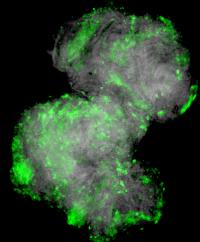
This shows the epithelial tumor (in grey), expressing the Matrix Metalloproteinase MMP1, that helps degradate the membrane (in green). The wing of a fruit fly may hold the key to unraveling the genetic and molecular events that transform a normal cell into a cancerous one. The study, conducted on Drosophila melanogaster by scientists at the Institute for Research in Biomedicine (IRB Barcelona) and led by ICREA researcher Marco Milán, has reproduced each of the steps known to take place when a healthy cell turns cancerous. The researchers have thus provided an inexpensive and effective model that will allow the scientific community to scrutinize the genes and molecules involved in each step. Given that the vast majority of genes in Drosophila are conserved in mice and humans, the results obtained may also lead researchers to perform similar studies in more clinically relevant models. Proceedings of the National Academy of Sciences USA (PNAS) has published the study online this week.
| Biology | November 19, 2012 06:07 PM |
Many of the world's most unfamiliar species are just sitting around on museum shelves collecting dust. That's according to a report in the November 20th issue of the Cell Press journal Current Biology showing that it takes more than 20 years on average before a species, newly collected, will be described.
| Biology | November 1, 2012 07:41 PM |
Plant roots are surrounded by thousands of bacteria and fungi living in the soil and on the root surface. To survive in this diverse environment, plants employ sophisticated detection systems to distinguish pathogenic microorganisms from beneficial microorganisms.
| Biology | October 31, 2012 07:06 PM |
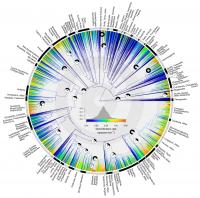
This shows the Bird Family Tree. The world's first family tree linking all living bids and revealing when and where they evolved and diversified since dinosaurs walked the earth has been created by scientists from the University of Sheffield.
| Biology | October 30, 2012 07:17 PM |
Biologists from the University of Bonn have discovered that the cichlid fish Pelvicachromis taeniatus can see in the near infrared range; this was thought to be unlikely until now. Seeing in the infrared range is apparently helping fish to hunt in shallow African rivers. The results will be published in the journal "Naturwissenschaften" and are already available online now.
| Biology | October 30, 2012 07:17 PM |
Bacteria in the guts of honeybees are highly resistant to the antibiotic tetracycline, probably as a result of decades of preventive antibiotic use in domesticated hives. Researchers from Yale University identified eight different tetracycline resistance genes among U.S. honeybees that were exposed to the antibiotic, but the genes were largely absent in bees from countries where such antibiotic use is banned. The study appears on October 30 in mBio®, the online open-access journal of the American Society for Microbiology.
| Biology | October 23, 2012 06:04 PM |
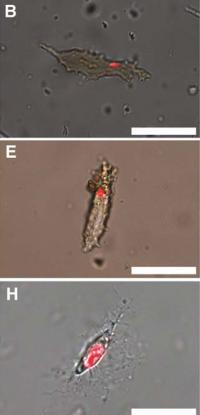
T.rex (B), B. canadensis (E) and ostrich osteocytes (H) showing positive response to propidium iodide A team of researchers from North Carolina State University and the Palo Alto Research Center (PARC) has found more evidence for the preservation of ancient dinosaur proteins, including reactivity to antibodies that target specific proteins normally found in bone cells of vertebrates. These results further rule out sample contamination, and help solidify the case for preservation of cells – and possibly DNA – in ancient remains.
| Biology | October 22, 2012 04:59 PM |
For the first time, researchers have been able to show by acoustic analysis that whales—or at least one very special white whale—can imitate the voices of humans. That's a surprise, because whales typically produce sounds in a manner that is wholly different from humans, say researchers who report their findings in the October 23 issue of Current Biology, a Cell Press publication.
| Biology | October 16, 2012 05:48 PM |
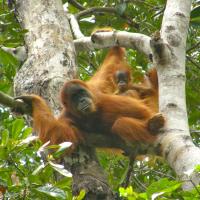
Sumatran orangutans have undergone a substantial recent population decline Sumatran orangutans have undergone a substantial recent population decline, according to a new genetic study, but the same research revealed the existence of critical corridors for dispersal migrations that, if protected, can help maintain genetic diversity and aid in the species' conservation.
| Biology | October 10, 2012 05:19 PM |
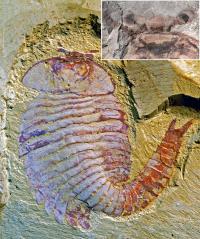
This picture shows a nearly intact fossil of Fuxianhuia protensa. The inset shows the fossilized brain in the head of another specimen. The remarkably well-preserved fossil of an extinct arthropod shows that anatomically complex brains evolved earlier than previously thought and have changed little over the course of evolution. According to University of Arizona neurobiologist Nicholas Strausfeld, who co-authored the study describing the specimen, the fossil is the earliest known to show a brain.
| Biology | October 5, 2012 03:01 AM |
Nearly 100 years after a British neurologist first mapped the blind spots caused by missile wounds to the brains of soldiers, Perelman School of Medicine researchers at the University of Pennsylvania have perfected his map using modern-day technology. Their results create a map of vision in the brain based upon an individual's brain structure, even for people who cannot see. Their result can, among other things, guide efforts to restore vision using a neural prosthesis that stimulates the surface of the brain. The study appears in the latest issue of Current Biology, a Cell Press journal.
| Biology | October 5, 2012 03:01 AM |
This is a large natural population of evening primrose (yellow), which is a common plant in eastern North America.
Agrawal's team set up 16 identical plots. During each growing season for... At first blush, many people would probably love to get rid of insects, such as pesky mosquitoes, ants and roaches. But a new study indicates that getting rid of insects could trigger some unwelcome ecological consequences, such as the rapid loss of desired traits in plants, including their good taste and high yields.
| Biology | October 5, 2012 03:01 AM |
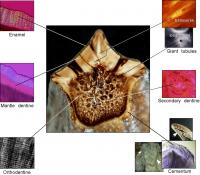
This cross-section of a duck-billed dinosaur tooth (Edmontosaurus) shows the remarkably complex architecture. Six main tissues compose the tooth, where most reptiles only have two (enamel and orthodentine). A team of paleontologists and engineers has found that duck-billed dinosaurs had an amazing capacity to chew tough and abrasive plants with grinding teeth more complex than those of cows, horses, and other well-known modern grazers. Their study, which is published today in the journal Science, is the first to recover material properties from fossilized teeth.
| Biology | September 26, 2012 07:06 PM |
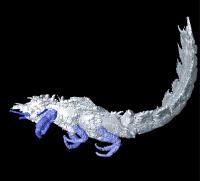
This shows the spiney-type insect. Writing in the journal PLoS One, the scientists have used a high resolution form of CT scanning to reconstruct two 305-million year old juvenile insects. Without the pioneering approach to imaging, these tiny insects – which are three-dimensional holes in a rock – would have been impossible to study.
| Biology | September 26, 2012 07:06 PM |
Ants that are held as slaves in nests of other ant species damage their oppressors through acts of sabotage. Ant researcher Professor Dr. Susanne Foitzik of Johannes Gutenberg University Mainz (JGU) in Germany first observed this "slave rebellion" phenomenon in 2009. According to the latest findings, however, this behavior now appears to be a widespread characteristic that is not limited to isolated occurrences. In fact, in three different populations in the U.S. states of West Virginia, New York, and Ohio, enslaved Temnothorax longispinosus workers have been observed to neglect and kill the offspring of their Protomognathus americanus slavemakers rather than care for them. As a result, an average of only 45 percent of the parasite's offspring survived. This presumably reduces the strength of the parasites in the area and thereby increases the chances of survival for the neighboring colonies populated by the slave ants' relatives.
| Biology | September 17, 2012 07:01 PM |

Nurse bees generally remain in the hive to feed and take care of the queen and her larvae. Johns Hopkins scientists report what is believed to be the first evidence that complex, reversible behavioral patterns in bees – and presumably other animals – are linked to reversible chemical tags on genes.
| Biology | September 12, 2012 03:08 PM |
The ageing process has its roots deep within the cells and molecules that make up our bodies. Experts have previously identified the molecular pathway that react to cell damage and stems the cell's ability to divide, known as cell senescence.
| Biology | September 6, 2012 03:57 PM |
Crabs living half-a-mile down in the ocean, beyond the reach of sunlight, have a sort of color vision combining sensitivity to blue and ultraviolet light. Their detection of shorter wavelengths may give the crabs a way to ensure they grab food, not poison.
| Biology | September 4, 2012 07:27 PM |
Released en masse, sterile Mexican fruit flies can undermine a wild population of the fruit-damaging pests so that fewer applications of insecticide are needed. But the irradiation used to sterilize the flies weakens them, hindering their ability to outcompete wild-type males for female mates.
| Biology | August 30, 2012 05:50 PM |
The California mouse (Peromyscus californicus) is a species of rodent in the family Cricetidae found in northwestern Mexico and central to southern California. In the foothills of the Santa Cruz Mountains two closely related species of mice share a habitat and a genetic lineage, but have very different social lives. The California mouse (Peromyscus californicus) is characterized by a lifetime of monogamy; the deer mouse (Peromyscus maniculatus) is sexually promiscuous.
| Biology | August 30, 2012 05:50 PM |
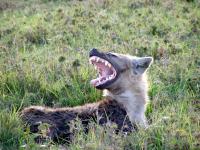
MSU researchers show that microbes help hyenas communicate via scent. Bacteria in hyenas' scent glands may be the key controllers of communication.
| Biology | August 29, 2012 06:51 PM |
On the surface, ants and the Internet don't seem to have much in common. But two Stanford researchers have discovered that a species of harvester ants determine how many foragers to send out of the nest in much the same way that Internet protocols discover how much bandwidth is available for the transfer of data. The researchers are calling it the "anternet."
| Biology | August 29, 2012 06:51 PM |
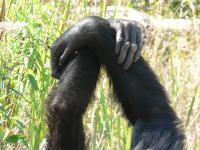
This image shows a wrist-to-wrist grooming handclasp. A research collaboration between the Gonzaga University and the Max Planck Institute shows that the way in which chimpanzees groom each other depends on the community to which they belong. Specifically, it is the unique handclasp grooming behaviour that reveals this local difference.
| Biology | August 23, 2012 06:00 PM |
Ninety-six percent of a chimpanzee's genome is the same as a human's. It's the other 4 percent, and the vast differences, that pique the interest of Georgia Tech's Soojin Yi. For instance, why do humans have a high risk of cancer, even though chimps rarely develop the disease?
| Biology | August 22, 2012 06:17 PM |
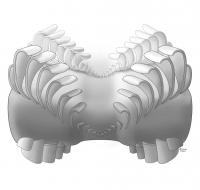
This is a reconstruction of the Odontogriphus mouthparts. The radula sounds like something from a horror movie – a conveyor belt lined with hundreds of rows of interlocking teeth. In fact, radulas are found in the mouths of most molluscs, from the giant squid to the garden snail. Now, a "prototype" radula found in 500-million-year-old fossils studied by University of Toronto graduate student Martin Smith, shows that the earliest radula was not a flesh-rasping terror, but a tool for humbly scooping food from the muddy sea floor.
| Biology | August 15, 2012 04:04 PM |
Brain scans have revealed distinctive features in the brain structure of karate experts, which could be linked to their ability to punch powerfully from close range. Researchers from Imperial College London and UCL (University College London) found that differences in the structure of white matter – the connections between brain regions – were correlated with how black belts and novices performed in a test of punching ability.
| Biology | August 13, 2012 04:37 PM |
University of Florida researchers curating a 17-foot-7-inch Burmese python, the largest found in Florida, discovered 87 eggs in the snake, also a state record.
| Biology | August 9, 2012 03:41 PM |
Geckos are remarkable little creatures, clinging to almost any dry surface, and Alyssa Stark, from the University of Akron, USA, explains that they appear to be equally happy scampering through tropical rainforest canopies as they are in urban settings. 'A lot of work is done on geckos that looks at the very small adhesive structures on their toes to really understand how the system works at the most basic level', says Stark. She adds that the animals grip surfaces with microscopic hairs on the soles of their feet that make close enough contact to be attracted to the surface by the minute van der Waals forces between atoms. However, she and her colleagues Timothy Sullivan and Peter Niewiarowski were curious about how the lizards cope on surfaces in their natural habitat.
| Biology | August 8, 2012 03:46 PM |
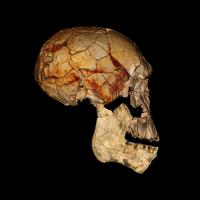
The KNM-ER 1470 cranium, discovered in 1972, combined with the new lower jaw KNM-ER 60000; both are thought to belong to the same species. Exciting new fossils discovered east of Lake Turkana confirm that there were two additional species of our genus – Homo – living alongside our direct human ancestral species, Homo erectus, almost two million years ago. The finds, announced in the prestigious scientific journal Nature on August 9th, include a face, a remarkably complete lower jaw, and part of a second lower jaw. They were uncovered between 2007 and 2009 by the Koobi Fora Research Project (KFRP), led by Meave and Louise Leakey. KFRP's fieldwork was facilitated by the Turkana Basin Institute (TBI), and supported by the National Geographic Society, which has funded the KFRP since 1968.
| Biology | August 6, 2012 04:53 PM |
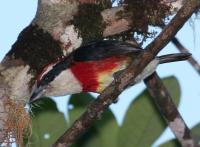
The Sira Barbet, Capito fitzpatricki, has been discovered and named by Cornell University graduates following an expedition to the remote Peruvian Andes. A colorful, fruit-eating bird with a black mask, pale belly and scarlet breast – never before described by science – has been discovered and named by Cornell University graduates following an expedition to the remote Peruvian Andes
| Biology | August 2, 2012 05:27 PM |
A postdoctoral researcher at the University of Rhode Island has observed a never-before-seen defensive strategy used by a small species of deep-sea squid in which the animal counter-attacks a predator and then leaves the tips of its arms attached to the predator as a distraction.
| Biology | July 26, 2012 05:08 PM |
Ever since Darwin first published The Origin of the Species, scientists have been striving to identify a last universal common ancestor of all living species. Paleontological, biochemical, and genomic studies have produced conflicting versions of the evolutionary tree. Now a team of researchers, led by a professor at the State University of New York at Buffalo and including area high school students, has developed a novel method to search the vast archives of known gene sequences to identify and compare similar proteins across the many kingdoms of life. Using the comparisons to quantify the evolutionary closeness of different species, the researchers have identified Actinobacteria, a group of single membrane bacteria that include common soil and water life forms, as the base of the evolutionary tree. They will present their findings at the annual meeting of the American Crystallographic Association (ACA), held July 28 – Aug. 1 in Boston, Mass.
| Biology | July 26, 2012 05:08 PM |
Researchers reporting online on July 26 in Current Biology, a Cell Press publication, have for the first time shown that they can control the behavior of monkeys by using pulses of blue light to very specifically activate particular brain cells. The findings represent a key advance for optogenetics, a state-of-the-art method for making causal connections between brain activity and behavior. Based on the discovery, the researchers say that similar light-based mind control could likely also be made to work in humans for therapeutic ends.
| Biology | July 19, 2012 06:11 PM |
Anyone who has looked at the jagged recording of the electrical activity of a single neuron in the brain must have wondered how any useful information could be extracted from such a frazzled signal.
| Biology | July 17, 2012 05:46 PM |
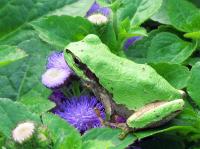
The "desynchronized " calls of the Japanese tree frog has inspired the development of an artificial intelligence algorithm. Males of the Japanese tree frog have learnt not to use their calls at the same time so that the females can distinguish between them. Scientists at the Polytechnic University of Catalonia have used this form of calling behaviour to create an algorithm that assigns colours to network nodes – an operation that can be applied to developing efficient wireless networks.
| Biology | June 21, 2012 05:54 PM |
In a 0-60 mph stand off, most cars would be hard pressed to give a cheetah a run for its money, and at their highest recorded speed of 29m/s (65mph) cheetahs easily outstrip the fastest greyhounds. But, according to Alan Wilson from the Royal Veterinary College, UK, there is no clear reason for the cheetah's exceptional performance. 'Cheetahs and greyhounds are known to use a rotary gallop and physically they are remarkably similar, yet there is this bewitching difference in maximum speed of almost a factor of two', he says. Teaming up with Penny Hudson and Sandra Corr, Wilson decided to compare how cheetahs and greyhounds sprint to see if there were any mechanical differences between the two animals' movements and they publish their findings in The Journal of Experimental Biology at http://jeb.biologists.org.
| Biology | June 6, 2012 06:26 PM |
In a finding that could fundamentally re-write science's understanding of how some parasite-host relationships work, Harvard researchers have found that, despite being separated by more than 100 million years of evolution, the parasitic "corpse flower" found in southeast Asian rainforests appears to share large parts of its genome with its host vines, members of the grapevine family.
| Biology | June 4, 2012 06:32 PM |
An international team of researchers has announced the discovery of Afrasia djijidae, a new fossil primate from Myanmar that illuminates a critical step in the evolution of early anthropoids—the group that includes humans, apes, and monkeys. The 37-million-year-old Afrasia closely resembles another early anthropoid, Afrotarsius libycus, recently discovered at a site of similar age in the Sahara Desert of Libya. The close similarity between Afrasia and Afrotarsius indicates that early anthropoids colonized Africa only shortly before the time when these animals lived. The colonization of Africa by early anthropoids was a pivotal step in primate and human evolution, because it set the stage for the later evolution of more advanced apes and humans there. The scientific paper describing the discovery appears today in Proceedings of the National Academy of Sciences.
| Biology | May 30, 2012 05:23 AM |
The tuatara, an iconic New Zealand reptile, chews its food in a way unlike any other animal on the planet – challenging the widespread perception that complex chewing ability is closely linked to high metabolism.
| Biology | May 30, 2012 05:23 AM |
They're tiny creatures with glossy, chocolate-brown hair, out-sized ears and wings. They gobble mosquitoes and other insect pests during the summer and hibernate in caves and mines when the weather turns cold. They are little brown bats, and a deadly disease called white-nose syndrome is threatening their very existence.
| Biology | May 28, 2012 06:31 PM |
It took some 10 million years for Earth to recover from the greatest mass extinction of all time, latest research has revealed.
| Biology | May 24, 2012 06:57 PM |
Marine scientists studying life around deep-sea vents have discovered that some hardy species can survive the extreme change in pressure that occurs when a research submersible rises to the surface. The team's findings, published in Conservation Biology, reveal how a species can be inadvertently carried by submersibles to new areas, with potentially damaging effects on marine ecosystems.
| Biology | May 24, 2012 06:57 PM |
A hundred years ago wild elephants on the Malay Peninsular could be counted in their thousands — now there are less than 1500. Over the last century around 50 per cent of forest cover in Peninsular Malaysia has been lost.
| Biology | May 17, 2012 07:20 PM |
Next Mother's Day, say it with an evolved model of logistical efficiency — a flower. A new discovery about how nature's icons of romance manage the distribution of sperm among female gametes with industrial precision helps explain why the delicate beauties have reproduced prolifically enough to dominate the earth.
| Biology | May 17, 2012 07:19 PM |
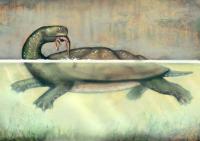
This is a reconstruction of Carbonemys preying upon a small crocodylomorph. Picture a turtle the size of a Smart car, with a shell large enough to double as a kiddie pool. Paleontologists from North Carolina State University have found just such a specimen – the fossilized remains of a 60-million-year-old South American giant that lived in what is now Colombia.
| Biology | May 15, 2012 09:27 PM |
Researchers at the University of California, Santa Cruz, who pioneered the use of satellite tags to monitor the migrations of elephant seals have compiled one of the largest datasets available for any marine mammal species, revealing their movements and diving behavior at sea in unprecedented detail.
| Biology | May 14, 2012 06:37 PM |
A male robin will be more diligent in caring for its young if the eggs its mate lays are a brighter shade of blue.
| Biology | May 10, 2012 04:41 PM |
A research team involving Yale University and the University of Colorado Boulder has developed a first public demonstration version of its "Map of Life," an ambitious Web-based endeavor designed to show the distribution of all living plants and animals on the planet.
| Biology | May 9, 2012 03:56 PM |
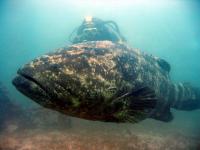
The critically endangered Atlantic goliath grouper, Epinephelus itajara, is from the subtropical and tropical Atlantic. Groupers, a family of fishes often found in coral reefs and prized for their quality of flesh, are facing critical threats to their survival. As part of the International Union for Conservation of Nature (IUCN) Species Survival Commission, a team of scientists has spent the past ten years assessing the status of 163 grouper species worldwide. They report that 20 species (12%) are at risk of extinction if current overfishing trends continue, and an additional 22 species (13%) are Near Threatened. These findings were published online on April 28 in the journal Fish and Fisheries.
| Biology | May 8, 2012 05:29 PM |
Researchers at Auburn University have reported the discovery a new trapdoor spider species from a well-developed housing subdivision in the heart of the city of Auburn, Alabama. Myrmekiaphila tigris, affectionately referred to as the Auburn Tiger Trapdoor spider, is named in honor of Auburn University's costumed Tiger mascot, Aubie.
| Biology | May 7, 2012 04:46 PM |
New research indicates that domestic horses originated in the steppes of modern-day Ukraine, southwest Russia and west Kazakhstan, mixing with local wild stocks as they spread throughout Europe and Asia. The research was published today, 07 May, in the journal PNAS.
| Biology | May 3, 2012 02:57 AM |
Coelacanths, an ancient group of fishes once thought to be long extinct, made headlines in 1938 when one of their modern relatives was caught off the coast of South Africa. Now coelacanths are making another splash and University of Alberta researchers are responsible.
| Biology | April 27, 2012 03:26 AM |
A team led by psychology professor Ian Spence at the University of Toronto reveals that playing an action videogame, even for a relatively short time, causes differences in brain activity and improvements in visual attention.
| Biology | April 27, 2012 03:26 AM |
They say you can't teach an old dog new tricks. Fortunately, this is not always true. Researchers at the Netherlands Institute for Neuroscience have now discovered how the adult brain can adapt to new situations. The Dutch researchers' findings are published on Wednesday in the prestigious journal Neuron. Their study may be significant in the treatment of neurodevelopmental disorders such as epilepsy, autism and schizophrenia.
| Biology | April 27, 2012 03:25 AM |
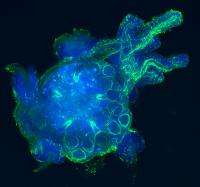
This image shows extensive histamine containing cells in metamorphic all competent sea urchin larvae (Strongylocentrotus purpuratus). Now that hay fever season has started, sufferers are well aware of the effect of histamines. However it is easy to forget that histamine is also a neurotransmitter involved in controlling memories, regulating sleep, and controlling secretion of gastric acid. New research published in BioMed Central's open access journal BMC Developmental Biology shows that for the purple sea urchin (Strongylocentrotus purpuratus) histamine is also responsible for controlling metamorphosis from a free swimming larval form to the spiny adult living on the sea floor.
| Biology | April 25, 2012 04:36 PM |
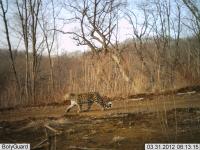
This is the first know camera trap photo of an Amur leopard in China. The first-known camera trap photos of an Amur leopard in China have recently been taken by protected area staff in Hunchun Amur Tiger National Nature Reserve in Jilin Province according to the Wildlife Conservation Society. Coupled with Jilin Province's recent announcement of a survey estimating 8-11 leopards across that northern province, the photographs suggest that leopards may be returning to China.
| Biology | April 18, 2012 04:09 PM |
The longstanding mystery of how selective hearing works – how people can tune in to a single speaker while tuning out their crowded, noisy environs – is solved this week in the journal Nature by two scientists from the University of California, San Francisco (UCSF).
| Biology | April 16, 2012 06:15 PM |
The eggs laid by two African bird species have evolved different color patterns over a period of just 40 years, according to new research published in The American Naturalist. The quick change appears to be driven by an unwanted guest in the nest.
| Biology | April 16, 2012 06:14 PM |
Shrinkage of the hippocampus occurs with age and is caused by the cumulative effect of various factors. Hippocampal atrophy is a recognized biological marker of Alzheimer's disease, so it is vital that researchers determine the cause of this process.
| Biology | April 12, 2012 03:50 PM |
Abandoned army bunkers along the Jordan River have become a habitat for 12 indigenous bat species, three of which are already designated as endangered and two that are on the critical list. The bats were recently identified by a group of Tel Aviv University researchers who were granted access to the bunkers, spread out along a 60-mile-long stretch of land between the Sea of Galilee in the north of Israel to the Dead Sea's northern edge.
| Biology | April 11, 2012 04:46 PM |
The theory that pigeons' famous skill at navigation is down to iron-rich nerve cells in their beaks has been disproved by a new study published in Nature.
| Biology | April 9, 2012 04:13 PM |
A female's social status affects how her genes turn on and off, and those who rank higher tend to be healthier -- so long as their social status doesn't decline, according to a study of rhesus macaques published in the April 9 Proceedings of the National Academy of Sciences.
| Biology | March 28, 2012 06:34 PM |
A team of scientists has announced the discovery of a 3.4 million-year-old partial foot from the Woranso-Mille area of the Afar region of Ethiopia. The fossil foot did not belong to a member of "Lucy's" species, Australopithecus afarensis, the famous early human ancestor. Research on this new specimen indicates that more than one species of early human ancestor existed between 3 and 4 million years ago with different methods of locomotion. The analysis will be published in the March 29, 2012 issue of the journal Nature.
| Biology | March 22, 2012 08:05 PM |
Hunting in the ocean's murky depths, vision is of little use, so toothed whales and dolphins (odontocetes) rely on echolocation to locate tasty morsels with incredible precision. Laura Kloepper from the University of Hawaii, USA, explains that odontocetes produce their distinctive echolocation clicks in nasal structures in the forehead and broadcast them through a fat-filled acoustic lens, called the melon. 'Studies by other people showed odontocetes have the ability to control the shape of the echolocation beam and it has always been assumed that they are using the melon to focus sound' explains Kloepper. However, no one had ever tested this directly, so Kloepper and her PhD supervisor, Paul Nachtigall, decided to tackle the question. They publish their discovery that false killer whales are able to focus their echolocation beams on targets in The Journal of Experimental Biology at http://jeb.biologists.org.
| Biology | March 19, 2012 05:59 PM |

These are blood and blonde varieties of sweet orange (Citrus sinensis). The anthocyanin pigments that provide the "blood" color of blood oranges are not produced in significant amounts unless the fruit is exposed to cold conditions during its development or post-harvest. No cold exposure means poor anthocyanin production and the loss of the entire crop. This means that blood oranges can be grown in many areas of the world, but they are most likely to be exposed to the correct temperature conditions in only a few regions, including their major area of production in Sicily. Solving the mystery of why cold exposure causes anthocyanin production would benefit both agriculture and health; like many other anthocyanin-rich foods, blood oranges have notable human health benefits. Indeed, blood oranges have the healthful vitamin C, fiber, and carotenoids of regular "blonde" oranges, with the added antioxidant punch provided by anthocyanins. However, unreliable production limits the availability and consumption of these delicacies.
| Biology | March 14, 2012 05:45 PM |
Fossils from two caves in south-west China have revealed a previously unknown Stone Age people and give a rare glimpse of a recent stage of human evolution with startling implications for the early peopling of Asia.
| Biology | March 12, 2012 05:12 PM |
Aragosaurus is the oldest of its kind and could even be a common ancestor. The research group from Aragon that has the same name as the first Aragosaurus ischiaticus dinosaur discovered 25 years ago in Teruel reveals that it is 15 million years younger than originally believed. Its new dating now means that it was the ancestor of the Titanosauriforms, which includes the biggest dinosaurs.
| Biology | March 9, 2012 06:48 PM |
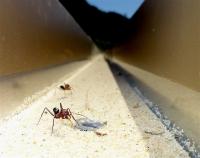
Cataglyphis noda ants approach their nest entrance -- a small hole in the ground of an experimental tube.
Desert ants have adapted to a life in a barren environment which only provides very few landmarks for orientation. Apart from visual cues and odors the ants use the polarized sunlight as a compass and count their steps in order to return safely to their home after searching for food. In experiments with ants of the genus Cataglyphis in their natural habitats in Tunisia and Turkey, behavioral scientists of the Max Planck Institute for Chemical Ecology in Jena, Germany, have now discovered that ants can also use magnetic and vibrational landmarks in order to find their way back to their nest − a small hole in the desert ground. In addition, carbon dioxide produced by their nestmates' breathing also helps homing ants to pinpoint their nest entrance. Hence, the ants' navigational skills prove enormously adaptable to their inhospitable environment. (PLoS ONE, March 7, 2012; Current Biology, March 8, 2012)
| Biology | February 22, 2012 05:51 PM |
Scientists have recently described the deepest terrestrial animal ever found, together with 4 new species for science. These animals are springtails (Arthropoda, Insecta, Collembola), a minute primitive wingless insect with six-legs and without eyes that live in total darkness.
| Biology | February 20, 2012 04:06 PM |
Cuttlefish have the most acute polarization vision yet found in any animal, researchers at the University of Bristol have discovered by showing them movies on a modified LCD computer screen to test their eyesight.
| Biology | February 16, 2012 05:37 PM |

This is an artist's rendering of Ramat Rahel site. Researchers have long been fascinated by the secrets of Ramat Rahel, located on a hilltop above modern-day Jerusalem. The site of the only known palace dating back to the kingdom of Biblical Judah, digs have also revealed a luxurious ancient garden. Since excavators discovered the garden with its advanced irrigation system, they could only imagine what the original garden might have looked like in full bloom — until now.
| Biology | February 16, 2012 05:37 PM |
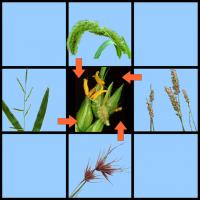
New research shows genes can travel from plant to plant between distant cousins, not just from one generation to the next. The evolution of plants and animals generally has been thought to occur through the passing of genes from parent to offspring and genetic modifications that happen along the way. But evolutionary biologists from Brown University and the University of Sheffield have documented another avenue, through the passing of genes from plant to plant between species with only a distant ancestral kinship.
| Biology | February 15, 2012 05:48 PM |
Four new species of miniaturized lizards have been identified in Madagascar. These lizards, just tens of millimeters from head to tail and in some cases small enough to stand on the head of a match, rank among the smallest reptiles in the world. The full report can be found in the Feb. 15 issue of the open access journal PLoS ONE.
| Biology | February 15, 2012 05:48 PM |
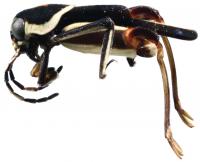
This is the new insect, Ripipteryx mopana. Scientists at the University of Illinois, USA have discovered a new species of tiny, grasshopper-like insect in the tropical rainforests of the Toledo District in southern Belize. Dr Sam Heads and Dr Steve Taylor co-authored a paper, published in the open access journal ZooKeys, documenting the discovery and naming the new species Ripipteryx mopana. The name commemorates the Mopan people – a Mayan group, native to the region.
| Biology | February 14, 2012 12:59 AM |
When it comes to choosing a place to hang out, big reef fish like coral trout, snappers and sweetlips have strong architectural preferences.
| Biology | February 9, 2012 04:04 PM |
Streamlined sharks are legendary for their effortless swimming. George Lauder from Harvard University, USA, explains that the fish have long inspired human engineers, but more recently attention has focused on how the fish's remarkable skin boosts swimming. Coated in razor sharp tooth-like scales, called denticles, the skin is thought to behave like the dimples on a golf ball, disturbing the flow of water over the surface to reduce the drag. But something didn't quite sit right with Lauder. 'All of the shark skin studies were done on flat shark skin mimics that were held straight and immovable. But shark skin moves', recalls Lauder. So, when Masters student Johannes Oeffner joined his lab, Lauder suggested that they take a look at the fluid dynamics of shark skin and its analogues to find out how the fish's motion affects fluid flowing over the rough surface. The duo publishes its discovery that shark skin actually generates thrust to give the fish an additional boost in The Journal of Experimental Biology at http://jeb.biologists.org/.
| Biology | February 9, 2012 04:03 PM |
Aging takes its toll on sex appeal and now an international team of researchers led by Baylor College of Medicine and the University of Michigan find that in fruit flies, at least, it even diminishes the come-hither effect of the chemicals of love – pheromones.
| Biology | February 9, 2012 04:03 PM |
Global warming is having an effect on the dive behaviour and search for food of southern elephant seals. Researchers from the Alfred Wegener Institute for Polar and Marine Research in the Helmholtz Association cooperating in a joint study with biologists and oceanographers from the Universities of Pretoria and Cape Town have discovered that the seals dive deeper for food when in warmer water. The scientists attribute this behaviour to the migration of prey to greater depths and now wish to check this theory using a new sensor which registers the feeding of the animals below water.
| Biology | February 6, 2012 05:29 PM |
Satellite tracking of threatened loggerhead sea turtles has revealed two previously unknown feeding 'hotspots' in the Gulf of Mexico that are providing important habitat for at least three separate populations of the turtles, according to a study published recently in the journal Biological Conservation.
| Biology | February 3, 2012 08:28 PM |
They are tiny, ugly, disease-carrying little blood-suckers that most people have never seen or heard of, but a new discovery in a one-of-a-kind fossil shows that "bat flies" have been doing their noxious business with bats for at least 20 million years.
| Biology | February 1, 2012 05:56 PM |
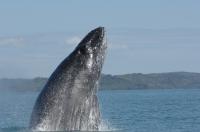
A recently published study by the Wildlife Conservation Society and others reveals that humpback whales on both sides of the southern Indian Ocean are singing different tunes, unusual since humpbacks... A recently published study by the Wildlife Conservation Society and others reveals that humpback whales on both sides of the southern Indian Ocean are singing different tunes, unusual since humpbacks in the same ocean basin usually all sing very similar songs.
| Biology | January 27, 2012 04:39 PM |
The camera enables the researchers to see an aspect of light that humans are essentially blind to: polarized light. Though humans aren't sensitive to polarized light, many reef dwelling animals are but this has not always been taken into account in previous studies of reef communities.
| Biology | January 27, 2012 04:39 PM |
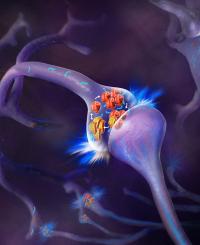
Drosophila Orb2 plays an important role in the persistence of memory. Memories in our brains are maintained by connections between neurons called "synapses". But how do these synapses stay strong and keep memories alive for decades? Neuroscientists at the Stowers Institute for Medical Research have discovered a major clue from a study in fruit flies: Hardy, self-copying clusters or oligomers of a synapse protein are an essential ingredient for the formation of long-term memory.
| Biology | January 23, 2012 05:21 PM |
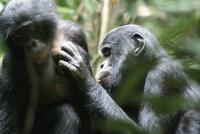
Bonobos groom each other in Lui Kotale, Salonga National Park, Democratic Republic of Congo. Mate competition by males over females is common in many animal species. During mating season male testosterone levels rise, resulting in an increase in aggressive behavior and masculine features. Male bonobos, however, invest much more into friendly relationships with females. Elevated testosterone and aggression levels would collide with this increased tendency towards forming pair-relationships.
| Biology | January 23, 2012 05:21 PM |
An excavation at a site in South Africa has unearthed the 190-million-year-old dinosaur nesting site of the prosauropod dinosaur Massospondylus – revealing significant clues about the evolution of complex reproductive behaviour in early dinosaurs.
| Biology | January 21, 2012 02:51 PM |
Simon Fraser University PhD student Brent Loken was hoping to capture images of the elusive Bornean clouded leopard when he set up a camera trap in the rainforest. Instead, he made the re-discovery of a lifetime.
| Biology | January 18, 2012 06:03 PM |
A new study suggests that the impact of predation on juvenile Steller sea lions in the Gulf of Alaska has been significantly underestimated, creating a "productivity pit" from which their population will have difficulty recovering without a reduction of predators.
| Biology | January 18, 2012 06:03 PM |
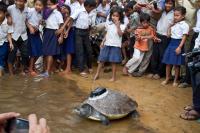
This shows the release of the Southern River terrapin at a ceremony on the Sre Ambel River in Cambodia attended by representatives of WCS, Cambodia’s Fisheries Administration’s Conservation Department The Wildlife Conservation Society, in conjunction with the Cambodian Fisheries Administration and Wildlife Reserves Singapore, announced today the successful release of a Southern River terrapin (Batagur affinis) – one of the most endangered turtles on earth – into the Sre Ambel River in Cambodia.
| Biology | January 17, 2012 04:17 PM |
More than 500 million years ago, single-celled organisms on the Earth's surface began forming multicellular clusters that ultimately became plants and animals. Just how that happened is a question that has eluded evolutionary biologists.
| Biology | January 11, 2012 06:10 PM |
LSU's Chris Austin recently discovered two new species of frogs in New Guinea, one of which is now the world's tiniest known vertebrate, averaging only 7.7 millimeters in size – less than one-third of an inch. It ousts Paedocypris progenetica, an Indonesian fish averaging more than 8 millimeters, from the record. Austin, leading a team of scientists from the United States including LSU graduate student Eric Rittmeyer, made the discovery during a three-month long expedition to the island of New Guinea, the world's largest and tallest tropical island.
| Biology | January 8, 2012 07:31 PM |
Headlines usually tell the story. A young athlete who seems no different from his colleagues on the football field dies suddenly during exercise under the baleful sun of a blistering summer day.
| Biology | January 5, 2012 07:50 PM |
Researchers have produced the world's first chimeric monkeys. The bodies of these monkeys, which are normal and healthy, are composed of a mixture of cells representing as many as six distinct genomes. The advance holds great potential for future research as chimeric animals had been largely restricted to mice, the researchers say. The report, published online ahead of the release of the January 20th issue of Cell, a Cell Press publication, also suggests there may be limits to the use of cultured embryonic stem cells.
| Biology | January 5, 2012 07:50 PM |
The new edition of America Speaks, a compilation of public opinion polls commissioned by Research!America, demonstrates increasing public support for research and innovation to improve health, create jobs and boost the economy. However, nearly 60% of Americans don't believe we are making enough progress in medical research, and 54% don't believe the U.S. has the best health care system in the world.
| Biology | January 4, 2012 05:47 PM |
The Encyclopedia of Life (EOL, www.eol.org) continues to expand at a record pace with the addition of new content and partners. At the start of 2012, EOL provides data on nearly half of all described species, with new content in Spanish, rich information about conservation issues from the International Union for the Conservation of Nature (IUCN) and NatureServe, and more images and videos than ever before.
| Biology | January 4, 2012 05:47 PM |
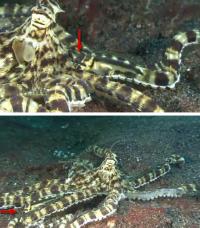
This photo shows the jawfish in association with the mimic octopus -- a case of a fish mimicking an octopus that mimics fish. Nature's game of intimidation and imitation comes full circle in the waters of Indonesia, where scientists have recorded for the first time an association between the black-marble jawfish (Stalix cf. histrio) and the mimic octopus (Thaumoctopus mimicus).
| Biology | January 3, 2012 06:51 PM |
Communities of species previously unknown to science have been discovered on the seafloor near Antarctica, clustered in the hot, dark environment surrounding hydrothermal vents.
| Biology | January 3, 2012 06:51 PM |
Identifying species, separating out closely related species and managing each type on its own, is an important part of any animal management system. Some species, like the two types of two-toed sloth, are so close in appearance and behavior that differentiation can be challenging. Conservation researchers at San Diego Zoo Global's Institute of Conservation Research have developed a mechanism for identifying these reclusive species from each other.
| Biology | December 19, 2011 05:55 PM |
For the first time, the presence of large bodied herbivorous dinosaurs in Antarctica has been recorded. Until now, remains of sauropoda - one of the most diverse and geographically widespread species of herbivorous dinosaurs - had been recovered from all continental landmasses, except Antarctica. Dr. Ignacio Alejandro Cerda, from CONICET in Argentina, and his team's identification of the remains of the sauropod dinosaur suggests that advanced titanosaurs (plant-eating, sauropod dinosaurs) achieved a global distribution at least by the Late Cretaceous*. Their work has just been published online in Springer's journal, Naturwissenschaften – The Science of Nature.
| Biology | December 19, 2011 05:55 PM |
New research has found that a protein associated with learning and memory plays an integral role in changing the behaviour of locusts from that of harmless grasshoppers into swarming pests.
| Biology | December 15, 2011 06:25 PM |
WHAT: UCR entomologists will release Tamarixia radiata, a tiny parasitic wasp that lays eggs in Asian citrus psyllid (ACP) nymphs. The larvae eat the ACP nymphs, killing them, and emerge as adults about 12 days later. Adult female Tamarixia also eat other ACP nymphs, thus killing them.
| Biology | December 14, 2011 05:24 PM |
Researchers from the University of Bristol have discovered that a chemical compound in the brain can weaken the synaptic connections between neurons in a region of the brain important for the formation of long-term memories. The findings, published today [13 Dec] in the Journal of Neuroscience, may also provide a potential explanation for the loss of memory associated with Alzheimer's.
| Biology | December 13, 2011 05:08 PM |
Jackson is the male southern elephant seal tracked by the Wildlife Conservation Society that traveled an astonishing 18,000 miles The Wildlife Conservation Society tracked a southern elephant seal for an astonishing 18,000 miles – the equivalent of New York to Sydney and back again.
| Biology | December 12, 2011 05:49 PM |
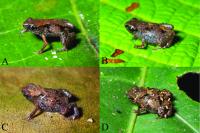
These are images of specimens of Paedophryne dekot (A) and (B), and P. verrucosa (C), and (D). Field work by researcher Fred Kraus from Bishop Museum, Honolulu has found the world's smallest frogs in southeastern New Guinea. This also makes them the world's smallest tetrapods (non-fish vertebrates). The frogs belong to the genus Paedophryne, all of whose species are extremely small, with adults of the two new species - named Paedophryne dekot and Paedophryne verrucosa - only 8-9 mm in length. The study was published in the open access journal ZooKeys.
| Biology | December 8, 2011 06:19 PM |
Swarms of bees and brains made up of neurons make decisions using strikingly similar mechanisms, says a new study in the Dec. 9 issue of Science.
| Biology | December 8, 2011 06:19 PM |
Recent studies show that the populations of African great apes are rapidly decreasing. Many areas where apes occur are scarcely managed and weakly protected. Researchers from the Max Planck Institute for Evolutionary Anthropology in Leipzig, Germany, have carried out an international collaborative project together with field researchers and park managers. The project aim was to evaluate how the lack of conservation effort influences the extinction risk of African great apes. Records were collected over the last 20 years from 109 resource management areas. The researchers found that the long-term presence of local and international non-governmental organization support and of law enforcement guards are the most crucial factors affecting ape survival, and that they have a clear measurable impact. Conversely, national development, often cited as a driver of conservation success, and high human population density had a negative impact on the likelihood of ape survival.
| Biology | December 5, 2011 04:51 PM |
The extent to which we are able to activate our muscles voluntarily depends on motivation and will power or the physical condition and level of fatigue of the muscles, for instance. The latter particularly leads to noticeable and measurable performance impairments. For a long time, the research on muscle fatigue was largely confined to changes in the muscle itself. Now, a joint research project between the University of Zurich and ETH Zurich has shifted the focus to brain research. Headed by neuro-psychologist Kai Lutz from the University of Zurich in collaboration with Urs Boutellier from the Institute of Human Movement Sciences and Sport at ETH Zurich, the researchers discovered neuronal processes for the first time that are responsible for reducing muscle activity during muscle-fatiguing exercise. The third and final part of this series of experiments, which was conducted by Lea Hilty as part of her doctoral thesis, has now been published in the European Journal of Neuroscience.
| Biology | December 5, 2011 04:51 PM |
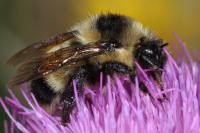
This image shows a Cockerell’s Bumblebee. A team of scientists from the University of California, Riverside recently rediscovered the rarest species of bumblebee in the United States, last seen in 1956, living in the White Mountains of south-central New Mexico.
| Biology | November 30, 2011 06:18 PM |
As global temperatures rise and climatic zones move polewards, species will need to find different environments to prevent extinction. New research, published today in the journal Molecular Ecology, has revealed that climate change is causing certain species to move and adapt to a range of new habitats.
| Biology | November 28, 2011 04:09 PM |
The elusive snow leopard (Panthera uncia) lives high in the mountains across Central Asia. Despite potentially living across 12 countries the actual numbers of this beautiful large cat are largely unknown. It is thought that there might be somewhere between 350 and 500 distributed across Nepal's northern frontier. New research published in BioMed Central's open access journal BMC Research Notes has used genetic analysis to show that the numbers of snow leopards in the central Himalayas is actually much lower than suggested.
| Biology | November 25, 2011 06:12 PM |
Guppies in the wild have evolved over at least half-a-million years — long enough for the males' coloration to have changed dramatically. Yet a characteristic orange patch on male guppies has remained remarkably stable, though it could have become redder or more yellow. Why has it stayed the same hue of orange over such a long period of time?
| Biology | November 17, 2011 06:18 PM |
Examining venom from a variety of poisonous snakes, a group of researchers at the University of California, San Francisco has discovered why the bite of one small black, yellow and red serpent called the Texas coral snake can be so painful.
| Biology | November 17, 2011 06:18 PM |
Vultures in South Asia were on the brink of extinction until Lindsay Oaks and Richard Watson, from The Peregrine Fund in the US, undertook observational and forensic studies to find out why the number of birds was falling so rapidly. They discovered the vultures were being poisoned by residues of an anti-inflammatory drug (diclofenac) used in cattle and other livestock, whose carcasses they feed on. The work is presented in a chapter of the new book, 'Wildlife Ecotoxicology - Forensic Approaches,' published by Springer.
| Biology | November 17, 2011 06:18 PM |
The lowly and simple roundworm may be the ideal laboratory model to learn more about the complex processes involved in repairing wounds and could eventually allow scientists to improve the body's response to healing skin wounds, a serious problem in diabetics and the elderly.
| Biology | November 14, 2011 04:44 PM |
"Certain bats can deform the shapes of their ears in a way that changes the animal's ultrasonic hearing pattern. Within just one tenth of a second, these bats are able to change their outer ear shapes from one extreme configuration to another," said Rolf Müller, associate professor of mechanical engineering at Virginia Tech.
| Biology | November 10, 2011 05:38 PM |
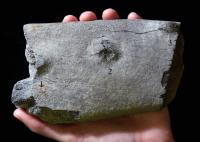
Whale bone fossil showing three tooth marks from a shark. The marks on the rib indicate the whale was once severely bitten by a strong-jawed animal. A fragment of whale rib found in a North Carolina strip mine is offering scientists a rare glimpse at the interactions between prehistoric sharks and whales some 3- to 4-million years ago during the Pliocene.
| Biology | November 8, 2011 06:35 PM |
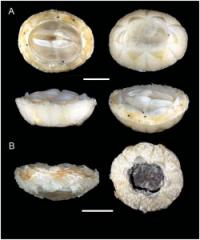
These are barnacles collected from Olive Ridley and green sea turtles during a survey. "It is strange to think of a sea turtle as an ecosystem," says Amanda Feuerstein, program coordinator and research assistant at the Smithsonian's National Museum of Natural History, "but they are…they have all of these other animals living on their skin and shells."
| Biology | November 7, 2011 04:18 PM |
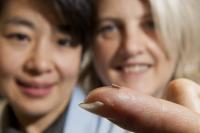
A leaf hopper on a finger, watched by Dr. Akiko Sugio and Dr. Saskia Hogenhout. Pathogens can alter their hosts, for example malaria parasites can make humans more attractive to mosquitoes, but how they do it has remained a mystery. Scientists from the John Innes Centre on Norwich Research Park have identified for the first time a specific molecule from a parasite that manipulates plant development to the advantage of the insect host.
| Biology | November 7, 2011 04:17 PM |
An international team of researchers has used ancient DNA to shed new light on the realism of horses depicted in prehistoric cave paintings.
| Biology | November 1, 2011 07:05 PM |
Human memory has historically defied precise scientific description, its biological functions broadly but imperfectly defined in psychological terms. In a pair of papers published in the November 2 issue of The Journal of Neuroscience, researchers at the University of California, San Diego report a new methodology that more deeply parses how and where certain types of memories are processed in the brain, and challenges earlier assumptions about the role of the hippocampus.
| Biology | October 31, 2011 06:08 PM |
During human evolution our ancestors mated with Neanderthals, but also with other related hominids. In this week's online edition of PNAS, researchers from Uppsala University are publishing findings showing that people in East Asia share genetic material with Denisovans, who got the name from the cave in Siberia where they were first found.
| Biology | October 30, 2011 07:26 PM |
A research team led by investigators at the Virginia Tech Carilion Research Institute has demonstrated the first rapid measurements of dopamine release in a human brain and provided preliminary evidence that the neurotransmitter can be tracked in its movement between brain cells while a subject expresses decision-making behavior.
| Biology | October 13, 2011 05:21 PM |
Thanks to Hollywood, piranhas have a bad reputation and it would be a brave scientist that chose to plunge their hand into a tank of them. But that didn't deter Sandie Millot, Pierre Vandewalle and Eric Parmentier from the University of Liège, Belgium. 'You just have to pick them up and they make sounds,' says Parmentier. However, it wasn't clear when and why piranhas produce sounds naturally. Intrigued by fish acoustic communication and the mechanisms that they use to generate sound, the team monitored the behaviour of small groups of captive red-bellied piranhas and publish their discovery that the fearsome fish have a repertoire of three combative sounds in The Journal of Experimental Biology at http://jeb.biologists.org.
| Biology | October 13, 2011 05:21 PM |
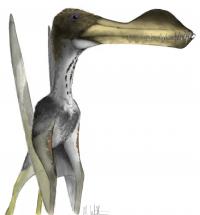
This is an image of a giant pterosaur, Coloborhynchus New research from the Universities of Portsmouth and Leicester has identified a small fossil fragment at the Natural History Museum, London as being part of a giant pterosaur – setting a new upper limit for the size of winged and toothed animals.
| Biology | October 13, 2011 05:21 PM |
Recognizing other individuals from their voices is second nature to humans. Certain primates also have this ability. Whether other mammals that live in social groups are also able to do so, however, is unclear. Like with primates, vocal communication is vital for meerkats. They coordinate their activities with calls, such as to warn other group members of approaching predators, for instance, and thus stick together as a group. Behavior biologists from the University of Zurich have already managed to decipher many calls in meerkat communication. Now, however, they have become the first to establish that meerkats are able to distinguish individual calls.
| Biology | October 10, 2011 04:38 PM |
Research by biologists at the University of York and Hull York Medical School has revealed important new information about the way the brain is affected by age.
| Biology | October 10, 2011 04:38 PM |
Long before whales, the oceans of Earth were roamed by a very different kind of air-breathing leviathan. Snaggle-toothed ichthyosaurs larger than school buses swam at the top of the Triassic Period ocean food chain, or so it seemed before Mount Holyoke College paleontologist Mark McMenamin took a look at some of their remains in Nevada. Now he thinks there was an even larger and more cunning sea monster that preyed on ichthyosaurs: a kraken of such mythological proportions it would have sent Captain Nemo running for dry land. McMenamin will be presenting the results of his work on Monday, 10 October at the Annual Meeting of The Geological Society of America in Minneapolis.
| Biology | October 7, 2011 02:25 AM |
The long-standing consensus of why insects stick together after mating has been turned on its head by scientists from the University of Exeter. Published today (6 October) in Current Biology, their study shows that, contrary to previous thinking, females benefit from this arrangement just as much as males.
| Biology | September 29, 2011 05:57 PM |
A University of Alberta-led research team has taken a rare look inside the skull of a dinosaur and come away with unprecedented details on the brain and nasal passages of the 72 million year old animal.
| Biology | September 29, 2011 05:57 PM |
As nocturnal animals, bats rely echolocation to navigate and hunt prey. By bouncing sound waves off objects, including the bugs that are their main diet, bats can produce an accurate representation of their environment in total darkness. Now, researchers at the University of Southern Denmark and the University of Pennsylvania have shown that this amazing ability is enabled by a physical trait never before seen in mammals: so-called "superfast" muscles.
| Biology | September 21, 2011 02:49 AM |
Scientists have discovered how living organisms – including humans – avoid poisoning from carbon monoxide generated by natural cell processes.
| Biology | September 15, 2011 04:33 PM |
Secrets from the age of the dinosaurs are usually revealed by fossilized bones, but a University of Alberta research team has turned up a treasure trove of Cretaceous feathers trapped in tree resin. The resin turned to resilient amber, preserving some 80 million-year-old protofeathers, possibly from non-avian dinosaurs, as well as plumage that is very similar to modern birds, including those that can swim under water.
| Biology | September 15, 2011 04:33 PM |
Seemingly simple animals such as the snail and squid have ransacked the genetic toolkit over the last half billion years to find different ways to build complex brains, nervous systems and shells, according to an international team of researchers, including a neuroscientist with the University of Florida Whitney Laboratory for Marine Bioscience.
| Biology | September 14, 2011 03:30 PM |
No, this isn't Jurassic Park. Researchers at the Johns Hopkins University School of Medicine with help from an amateur fossil hunter in College Park, Md., have described the fossil of an armored dinosaur hatchling. It is the youngest nodosaur ever discovered, and a founder of a new genus and species that lived approximately 110 million years ago during the Early Cretaceous Era. Nodosaurs have been found in diverse locations worldwide, but they've rarely been found in the United States. The findings are published in the September 9 issue of the Journal of Paleontology.
| Biology | September 7, 2011 06:39 PM |
A team of leading marine scientists from around the world is recommending an end to most commercial fishing in the deep sea, the Earth's largest ecosystem. Instead, they recommend fishing in more productive waters nearer to consumers.
| Biology | September 5, 2011 05:12 PM |
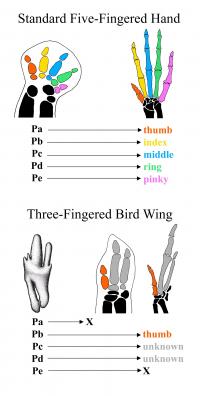
A genomic analysis shows that precursor cells pb that form index finger in five-fingered vertebrates can form the "thumb " (in orange) or first digit in three-digit bird wing Evolution adds and subtracts, and nowhere is this math more evident than in vertebrates, which are programmed to have five digits on each limb. But many species do not. Snakes, of course, have no digits, and birds have three.
| Biology | August 22, 2011 04:10 PM |
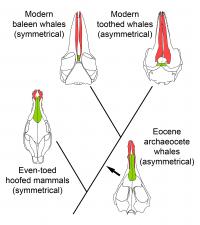
Evolutionary relationships between terrestrial even-toed hoofed mammals (artiodactyls), Eocene archaeocete whales, and modern toothed and baleen whales. Skewed skulls may have helped early whales discriminate the direction of sounds in water and are not solely, as previously thought, a later adaptation related to echolocation. University of Michigan researchers report the finding in a paper to be published online in the Proceedings of the National Academy of Sciences during the week of Aug. 22.
| Biology | August 11, 2011 04:35 PM |
A U.S. Department of Agriculture (USDA) scientist is trying to learn what is causing the decline in bumble bee populations and also is searching for a species that can serve as the next generation of greenhouse pollinators.
| Biology | August 11, 2011 04:35 PM |
In 1991, Carl Lewis was both the fastest man on earth and a profound long jumper, perhaps the greatest track-and-field star of all time in the prime of his career. On June 14th of that year, however, Carl Lewis was human. Leroy Burrell blazed through the 100-meters, besting him by a razor-thin margin of three-hundredths of a second. In the time it takes the shutter to capture a single frame of video, Lewis's three-year-old world record was gone.
| Biology | August 8, 2011 12:20 PM |
Scientists at the University of Liverpool have found that male fruitflies experience a type of 'paranoia' in the presence of another male, which doubles the length of time they mate with a female, despite the female of the species only ever mating with one male.
| Biology | August 5, 2011 07:37 PM |
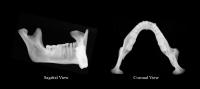
This is a radiograph of adult Arikara specimen. Researchers at Johns Hopkins found that use over time and not just genetics informs the structure of jaw bones in human populations. The researchers say these findings may be used to predict the diet of an ancient population, even if little evidence exists in the fossil record. It can also make it easier for scientists to pinpoint the genetic relationship between fossils.
| Biology | August 4, 2011 10:53 AM |
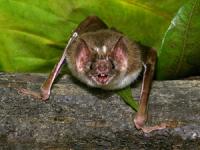
The vampire bat, Desmodus rotundus, must find a blood meal every 1-2 days to survive. Scientists have known for years that when vampire bats tear through an animal's skin with their razor-sharp teeth, their noses guide them to the best spots – where a precise bite will strike a vein and spill forth nourishing blood. But nobody knew exactly how bats knew where to bite.
| Biology | August 4, 2011 10:53 AM |
The research, led by Dr Clea Warburton and Dr Gareth Barker in the University's School of Physiology and Pharmacology and published in the Journal of Neuroscience, has investigated why we can recognise faces much better if we have extra clues as to where or indeed when we encountered them in the first place.
| Biology | August 2, 2011 09:46 PM |
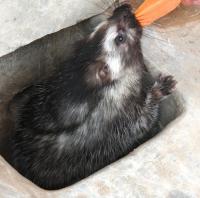
The African crested rat is the only mammal known that acquires its poison from a plant. Woe to the clueless predator trying to make a meal of the African crested rat, a rodent that applies poisonous plant toxin to sponge-like hairs on its flanks, a discovery recently made by Jonathan Kingdon and colleagues from the National Museums of Kenya, the Wildlife Conservation Society, and University of Oxford.
| Biology | August 1, 2011 11:41 PM |
University of Illinois animal biology professor and department head Ken Paige (right) and doctoral student Daniel Scholes discovered that some plants multiply their chromosomes without undergoing cell division Whatever does not kill a plant may actually make it stronger. After being partially eaten by grazing animals, for example, some plants grow bigger and faster and reproduce more successfully than they otherwise would. In a new study, researchers report that one secret to these plants' post-traumatic triumph lies in their ability to duplicate their chromosomes – again and again – without undergoing cell division.
| Biology | July 26, 2011 10:44 PM |
Asian elephants typically live in small, flexible, social groups centered around females and calves while adult males roam independently. However, new research published in BioMed Central's open access journal BMC Ecology shows that while Asian elephants (Elephas maximus) in Sri Lanka may change their day to day associations they maintain a larger, stable, network of friends from which they pick their companions.
| Biology | July 22, 2011 10:52 PM |
An experimental research carried out in Sant Cugat del Vallès and Rubí, coordinated by researchers from UAB, assessed the efficacy of a combination of strategies to reduce the population of tiger mosquitos (Aedes albopictus). The research began in February 2008. The research focused on monitoring eggs found in small experimental traps. Researchers observed that for the first time, the number of eggs diminished after applying the measures.
| Biology | July 20, 2011 06:13 PM |
Taking a trip down memory lane while you are driving could land you in a roadside ditch, new research indicates. Vanderbilt University psychologists have found that our visual perception can be contaminated by memories of what we have recently seen, impairing our ability to properly understand and act on what we are currently seeing.
| Biology | July 19, 2011 12:48 PM |
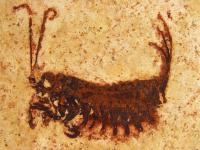
This is a Coxoplectopteralarva. German scientists at the Stuttgart Natural History Museum were leading in the discovery of a new insect order from the Lower Cretaceous of South America. The spectacular fossils were named Coxoplectoptera by their discoverers and their findings were published in a special issue on Cretaceous Insects in the scientific journal Insect Systematics & Evolution.
| Biology | July 15, 2011 11:15 PM |
Your brain works hard to help understand your fellow person – no matter how different they may be.
| Biology | July 13, 2011 01:26 AM |
Humans are getting older and older, and the number of people with dementia is increasing. The factors controlling degeneration of the brain are still mostly unknown. However, researchers assume that factors such as stress, accumulation of toxic waste products as well as inflammation accelerate aging. But, vice versa, there are also mechanisms that can - like a bodyguard - protect the brain from degenerating, or repair defective structures.
| Biology | July 13, 2011 01:25 AM |
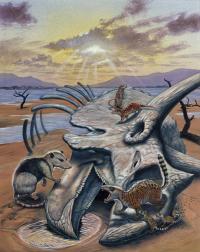
Three small primitive mammals walk over a Triceratops skeleton, one of the last dinosaurs to exist before the mass extinction that gave way to the age of mammals. A team of scientists has discovered the youngest dinosaur preserved in the fossil record before the catastrophic meteor impact 65 million years ago. The finding indicates that dinosaurs did not go extinct prior to the impact and provides further evidence as to whether the impact was in fact the cause of their extinction.
| Biology | July 8, 2011 02:59 AM |
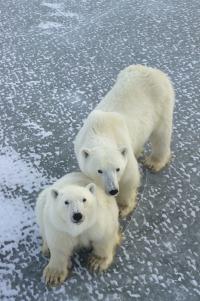
n international team of scientists has discovered that the female ancestor of all living polar bears was a brown bear that lived in the vicinity of present-day Britain and Ireland just prior to the peak of the last ice age An international team of scientists has discovered that the female ancestor of all living polar bears was a brown bear that lived in the vicinity of present-day Britain and Ireland just prior to the peak of the last ice age -- 20,000 to 50,000 years ago. Beth Shapiro, the Shaffer Associate Professor of Biology at Penn State University and one of the team's leaders, explained that climate changes affecting the North Atlantic ice sheet probably gave rise to periodic overlaps in bear habitats. These overlaps then led to hybridization, or interbreeding -- an event that caused maternal DNA from brown bears to be introduced into polar bears. The research, which is led by Shapiro and Daniel Bradley of Trinity College Dublin, is expected to help guide future conservation efforts for polar bears, which are listed as threatened under the Endangered Species Act. The results of the study will be published on 7 July 2011 in the journal Current Biology.
| Biology | June 30, 2011 08:32 PM |
Northwestern University researchers have provided new biological evidence suggesting that the brain works differently when memorizing the face of a person from one's own race than when memorizing a face from another race.
| Biology | June 30, 2011 08:32 PM |
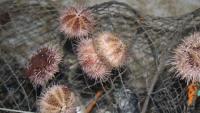
These are sea urchins. Many animals have eyes that are incredibly complex – others manage without. Researchers at the University of Gothenburg have shown that sea urchins see with their entire body despite having no eyes at all. The study has been published in the scientific journal Proceedings of the National Academy of Sciences (PNAS).
| Biology | June 28, 2011 12:12 AM |
A recently completed aerial survey of northern Botswana by Elephants Without Borders (EWB), through the support of Botswana's Dept. of Wildlife & National Parks, indicates that wildebeest, giraffes, kudu, lechwe, ostriches, roan and tsessebe antelope and warthog species are significantly challenged. Populations of these species appear to have dropped significantly over the past 15 years, specifically in Ngamiland, which encompasses the Okavango delta.
| Biology | June 21, 2011 09:24 PM |
Native bees – often small, stingless, solitary and unnoticed in the flashier world of stinging honeybees – are quite discriminating about where they live, according to U.S. Geological Survey research.
| Biology | June 15, 2011 08:31 PM |
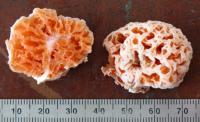
Spongiforma squarepantsii is found in the forests of Borneo. Sing it with us: What lives in the rainforest, under a tree?
| Biology | June 10, 2011 10:49 PM |
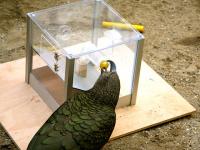
This is the parrot Kea using a ball shaped tool at the Multi Access Box. The kea, a New Zealand parrot, and the New Caledonian crow are members of the two most intelligent avian families. Researchers from the Department of Cognitive Biology of the University of Vienna investigated their problem solving abilities as well as their innovative capacities. They are publishing two new studies – one in cooperation with members of the Behavioral Ecology Research Group in Oxford – in the scientific journals PLoS ONE and Biology Letters.
| Biology | June 9, 2011 10:56 AM |
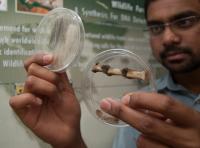
Ph.D. candidate Ashwin Naidu in the School of Natural Resources and the Environment works in the conservation genetics lab to identify individual animals or species from DNA evidence. Wildlife face many threats with spreading urbanization, including habitat loss and inbreeding when populations become fragmented and isolated. It doesn't help that there is a billion-dollar international industry dedicated to the illegal trafficking of wild animals or wild animal parts.
| Biology | June 9, 2011 10:56 AM |
Gazing into the depths of a pond, it's hard to miss the insects that whirl and zip beneath the surface. However, only one species of spider has joined them: the diving bell spider, Argyroneta aquatica. 'It is an iconic animal; I had read about the spider as a small boy in popular literature about ponds,' says Roger Seymour from the University of Adelaide. According to Seymour, each spider constructs a net of silk in vegetation beneath the surface and fills it with air carried down on its abdomen. The spiders spend their entire lives submerged and even lay their eggs in their diving bells. Having already used an oxygen-measuring device called an optode to discover how aquatic insects extract oxygen from water through thin bubbles of air stretched across their abdomens, Seymour was looking for other small bubbles to test his optode. 'The famous water spider came to mind,' remembers Seymour, and when he mentioned the possibility to Stefan Hetz from Humboldt University, Germany, Hetz jumped at the idea. Inviting Seymour to his lab, the duo decided to collect some of the arachnids to find out how they use their diving bells. The duo report their discovery that the spiders can use the diving bell like a gill to extract oxygen from water to remain hidden beneath the surface in The Journal of Experimental Biology at http://jeb.biologists.org/content/214/13/2175.abstract
| Biology | May 31, 2011 07:34 PM |
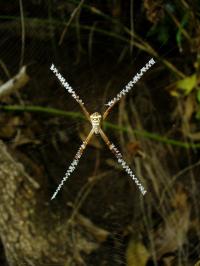
Decorative white silk crosses are an ingenious tactic used by orb-weaving spiders to protect their webs from damage. Decorative white silk crosses are an ingenious tactic used by orb-weaving spiders to protect their webs from damage, a new study from the University of Melbourne has revealed.
| Biology | May 26, 2011 01:45 PM |
Researchers have discovered that the ultraviolet (UV) light that causes the temporary but painful condition of snow blindness in humans is life-saving for reindeer in the arctic.
| Biology | May 26, 2011 01:45 PM |
Some birds that live near noisy sites can alter their songs to deal with din. But closely related species with similar songs may tweak their tunes in different ways, says a new study led by Clinton Francis of the National Evolutionary Synthesis Center in Durham, NC.
| Biology | May 24, 2011 10:31 PM |
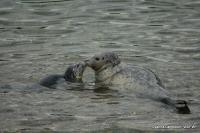
This is a harbor seal and pup. Seals and other marine mammals in the Pacific Northwest are being infected by two kinds of parasites that normally infect land mammals. A study of tissue samples from 161 marine mammals that died between 2004 and 2009 in the Pacific Northwest reveals an association between severe illness and co-infection with two kinds of parasites normally found in land animals. One, Sarcocystis neurona, is a newcomer to the northwest coastal region of North America and is not known to infect people, while the other, Toxoplasma gondii, has been established there for some time and caused a large outbreak of disease in people in 1995.
| Biology | May 24, 2011 04:22 AM |
Johns Hopkins scientists say that a newly discovered "survival protein" protects the brain against the effects of stroke in rodent brain tissue by interfering with a particular kind of cell death that's also implicated in complications from diabetes and heart attack.
| Biology | May 24, 2011 04:22 AM |
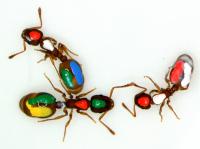
Singled out by unique color codes, ants provide evidence through their interactions that challenges previous assumptions about how social networks function. Be it through the Internet, Facebook, the local grapevine or the spread of disease, interaction networks influence nearly every part of our lives.
| Biology | May 24, 2011 04:22 AM |
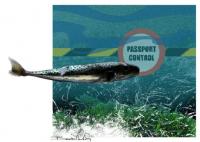
The poisonous pufferfish (Latin: Lagocephalus sceleratus) is one of the species that have invaded the coastal environments of the eastern Mediterranean Sea. More than 900 new alien species have been encountered in the coastal environments of the eastern Mediterranean Sea in recent decades, including the poisonous pufferfish. The invasion of alien species has had the consequence that the whole food chain is changing, while there is a lack of knowledge on which to base relevant risk assessments, a four-year study conducted at the University of Gothenburg shows.
| Biology | May 19, 2011 11:46 PM |
Jaws made of bone are commonplace in the animal kingdom. However, how jaws developed in the course of evolution is still a mystery. Under the direction of paleontologist Nicolas Goudemand, a team of researchers from the University of Zurich and the European Synchrotron Radiation Facility set about solving this puzzle. Living and extinct jawless animals can yield clues as to the development of the jaw. The researchers studied fossilized conodonts – extinct, eel-shaped animals whose precise relationship with the actual vertebrates is still a matter of debate. For their project, which was funded by the Swiss National Science Foundation and just published in the American journal PNAS, the researchers analyzed new conodont fossils that date from around the biggest mass extinction event at the boundary between the Permian and Triassic periods.
| Biology | May 16, 2011 09:57 PM |
Climbing is possibly one of the riskiest things an adult tarantula can do. Weighing in at anything up to 50gm, the dry attachment systems that keep daintier spiders firmly anchored are on the verge of failure in these colossal arachnids. 'The animals are very delicate. They wouldn't survive a fall from any height,' explains Claire Rind from the University of Newcastle, UK. In 2006, Stanislav Gorb and his colleagues published a paper in Nature suggesting that tarantulas may save themselves from falling by releasing silk threads from their feet. However, this was quickly refuted by another group that could find no evidence of the silk. Fascinated by spiders and intrigued by the scientific controversy, Rind decided this was too good a challenge to pass up and discovered that tarantulas shoot silk from their feet when they lose their footing. She publishes her results in The Journal of Experimental Biology at http://jeb.biologists.org/content/214/11/1874.abstract.
| Biology | May 16, 2011 09:57 PM |
A new study offers hope for species such as the Siberian Tiger that might be considered 'too rare to save', so long as conservation efforts can target key threats.
| Biology | May 13, 2011 08:03 PM |
Substances produced by living organisms found in nature—so-called "natural products"—have played a critical role in the development of drugs for life-threatening conditions. The anticancer agent Taxol was sourced from a plant, penicillin from a fungus, and a number of recent breakthroughs have resulted in the development and approval of anticancer drugs derived from marine sources such as coral and sponges.
| Biology | May 12, 2011 02:26 AM |
Researchers at the University of Exeter have uncovered a 'missing link' in the fungal tree of life after analysing samples taken from the university's pond.
| Biology | May 12, 2011 02:26 AM |
The ban on a veterinary drug which caused an unprecedented decline in Asian vulture populations has shown the first signs of progress, according to scientists. However, the recovery of the wild vulture populations requires efforts to see the drug completely removed from the birds' food supply.
| Biology | May 12, 2011 02:26 AM |
Breathing heavily at the edge of an ice hole, an Antarctic emperor penguin prepares to dive. Taking a last gulp of air, the bird descends and may not emerge again for another 20 minutes. The penguin initially carries sufficient oxygen in three stores – the blood, lungs and myoglobin in muscle – to sustain aerobic metabolism. However, around 5.6 minutes after leaving the surface, lactate begins appearing in the penguin's blood and the bird crosses the so-called 'aerobic dive limit', switching to anaerobic metabolism in some tissues. So what triggers this transition?
| Biology | May 10, 2011 02:06 AM |
Scientists at Royal Holloway, University of London and the University of Leicester have discovered animals searching for food do not stick to a complicated pattern of movement as previously thought but tend to wander about randomly.
| Biology | May 9, 2011 02:35 AM |
Tropical carpenter ants (Camponotus leonardi) live high up in the rainforest canopy. When infected by a parasitic fungus (Ophiocordyceps unilateralis) the behaviour of the ants is dramatically changed. They become erratic and zombie-like, and are manipulated by the fungus into dying at a spot that provides optimal conditions for fungal reproduction. New research, published in BioMed Central's open access journal BMC Ecology, looks at altered behaviour patterns in Zombie ants in Thailand and shows how the fungus manipulates ant behaviour.
| Biology | May 5, 2011 02:06 AM |
Scars on the jaw of a 120 million year old marine reptile suggest that life might not have been easy in the ancient polar oceans. The healed bite wounds were probably made by a member of the same species. Such injuries give important clues about the social behaviour of extinct sea creatures from the time of dinosaurs. The find is described in a forthcoming issue of Acta Palaeontologica Polonica.
| Biology | May 5, 2011 02:06 AM |
Over 100 million years ago, the understory of late Mesozoic forests was dominated by a diverse group of plants of the class Equisetopsida. Today, only one genus from this group, Equisetum (also known as horsetail or scouring rush), exists—and it is a prime candidate for being the oldest extant genus of land plant.
| Biology | May 2, 2011 07:50 PM |
Lichen, those drab, fuzzy growths found on rocks and trees, aren't as cuddly and charismatic as kangaroos or intriguing as opossums, but they could be a fungal equivalent, at least evolutionarily.
| Biology | April 29, 2011 01:11 AM |
Box jellyfish may seem like rather simple creatures, but in fact their visual system is anything but. They've got no fewer than 24 eyes of four different kinds. Now, researchers reporting online on April 28 in Current Biology, a Cell Press publication, have evidence revealing that four of those eyes always peer up out of the water, regardless of the way the rest of the animal is oriented. What's more, it appears that those eyes allow the jellies to navigate their way around the mangrove swamps in which they live.
| Biology | April 29, 2011 01:11 AM |
A new study shows for the first time that monkeys can recall and reproduce simple shapes from memory. Identifying this recall ability is critical to our understanding of the evolution of memory and other cognitive abilities, and it could be applied to better diagnosing and treating memory impairments in humans.
| Biology | April 29, 2011 01:11 AM |
An international team of scientists, led by researchers at the University of California, San Diego School of Medicine, have developed a new method for discerning the functions of previously uncharacterized genes and placing them in interactive, functional networks that reveal how gene products interact to bring about cellular events.
| Biology | April 27, 2011 12:43 PM |
Fruit flies that moved from sub-Saharan Africa found themselves confronted by conditions very different from those to which they were accustomed. Most obviously, the average temperatures were considerably lower and so it is no surprise that the flies had to adapt to cope with life in the north. As a result of thousands of years of evolution, populations in sub-Saharan African and in Europe now differ dramatically in a number of characteristics known to relate to temperature (such as pigmentation, size and resistance to cold). Schlötterer's previous work had suggested that a single gene, interestingly known as cramped (crm), might be involved in helping the flies survive in a colder environment but conclusive proof was lacking.
| Biology | April 27, 2011 12:43 PM |
Two groups of small fish, one from a Caribbean island and one from the Yucatan peninsula of Mexico, exhibit some of the fastest rates of evolution known in any organism, according to a new UC Davis study.
| Biology | April 27, 2011 12:43 PM |
The first analysis of the healthful antioxidant content of blueberries that grow wild in Mexico, Central and South America concludes that some of these fruits have even more healthful antioxidants than the blueberries — already renowned as "super fruits" — sold throughout the United States. These extreme super fruits could provide even more protection against heart disease, cancer and other conditions, the report suggests. It appears in ACS' Journal of Agricultural and Food Chemistry.
| Biology | April 22, 2011 12:12 AM |
'Rewilding with taxon substitutes', the intentional introduction of exotic species to fulfil key functions in ecosystems following the loss of recently extinct species, is highly controversial, partly due to a lack of rigorous scientific studies.
| Biology | April 22, 2011 12:12 AM |
It would appear reasonable to assume that two closely related plant species would have similar genetic blueprints. However, scientists from the Max Planck Institute for Developmental Biology in Tübingen, working in cooperation with an international research team have now decoded, for the first time, the entire genome of the lyre-leaved rock cress (Arabidopsis lyrata), a close relative of the thale cress (Arabidopsis thaliana), the model plant used by geneticists. They discovered that the genome of the lyre-leaved rock cress is fifty percent bigger than that of the thale cress. Moreover, these changes arose over a very short period in evolutionary terms. This new high-quality genome analysis will provide a basis for further detailed comparative studies on the function, ecology and evolution of the plant genus Arabidopsis.
| Biology | April 15, 2011 02:55 PM |
Insects have a highly sensitive sense of smell. Extremely low concentrations of odor molecules in the air are sufficient to be detected by receptor neurons on their antennae. Specific proteins, so-called receptor proteins, expressed in these neurons recognize the odors. The odor molecules bind to the receptors and produce chemical and electrical signals that are processed in the insect brain and eventually affect the insect's behavior.
| Biology | April 14, 2011 12:22 AM |
Pigeons may not instill the same aura of fear as a Tyrannosaurus rex, but they inherited their sense of smell from such prehistoric killers.
| Biology | April 7, 2011 11:54 PM |
Cave life is known to favor the evolution of a variety of traits, including blindness and loss of eyes, loss of pigmentation, and changes in metabolism and feeding behavior. Now researchers reporting online on April 7 in Current Biology, a Cell Press publication, have added sleeplessness to that list.
| Biology | April 6, 2011 08:30 PM |
Contagious yawning is not just a marker of sleepiness or boredom. For chimpanzees, it may actually be a sign of a social connection between individuals.
| Biology | April 5, 2011 06:37 PM |
It's been a puzzle why our two closest living primate relatives, chimpanzees and bonobos, have widely different social traits, despite belonging to the same genus. Now, a comparative analysis of their brains shows neuroanatomical differences that may be responsible for these behaviors, from the aggression more typical of chimpanzees to the social tolerance of bonobos.
| Biology | March 30, 2011 04:09 PM |
Two U.S. Department of Agriculture (USDA) scientists may have discovered "the map to El Dorado" for the American elm-a previously hidden population of elms that carry genes for resistance to Dutch elm disease. The disease kills individual branches and eventually the entire tree within one to several years.
| Biology | March 29, 2011 10:59 AM |
New Delhi, India – The Indian Government today released new tiger population numbers for the first time since 2007, indicating that numbers have increased in the country that has half of the world's remaining wild tigers.
| Biology | March 29, 2011 10:59 AM |
By combining sophisticated mathematical techniques more commonly used by spies instead of scientists with the power and versatility of functional magnetic resonance imaging (fMRI), a Penn neurologist has developed a new approach for studying the inner workings of the brain. A hidden pattern is encoded in the seemingly random order of things presented to a human subject, which the brain reveals when observed with fMRI. The research is published in the journal NeuroImage.
| Biology | March 29, 2011 10:59 AM |
For the first time, a virus that causes respiratory disease in humans has been linked to the deaths of wild mountain gorillas, reports a team of researchers in the United States and Africa.
| Biology | March 18, 2011 10:49 AM |
A new plant species is providing an insight into how evolution works and could help improve crop plants, scientists have revealed.
| Biology | March 18, 2011 10:49 AM |
When Geoffrey Murphy, Ph.D., talks about plastic structures, he's not talking about the same thing as Mr. McGuire in The Graduate. To Murphy, an associate professor of molecular and integrative physiology at the University of Michigan Medical School, plasticity refers to the brain's ability to change as we learn.
| Biology | March 14, 2011 11:29 PM |
Sex and violence, or at least death, are the key to reproduction for the orchid Satyrium pumilum. Research led by Timotheüs van der Niet at the University of KwaZulu-Natal shows that the orchid lures flies into its flowers by mimicking the smell of rotting flesh. A new study comparing the scent of the orchids with that of roadkill is to be published in the Annals of Botany http://dx.doi.org10.1093/aob/mcr048 .
| Biology | March 11, 2011 01:13 AM |
Preserving an intact population of weed-eating fish may be vital to saving the world's coral reefs from being engulfed by weed as human and climate impacts grow.
| Biology | March 9, 2011 10:26 PM |
Researchers from Rice University and Georgia Institute of Technology have found support for the theory that the brain has three concentric layers of working memory where it stores readily available items. Memory researchers have long debated whether there are two or three layers and what the capacity and function of each layer is.
| Biology | March 8, 2011 06:19 PM |
Research suggests that intelligence in humans is controlled by the part of the brain known as the 'cortex', and most theories of age-related cognitive decline focus on cortical dysfunction. However, a new study of Scottish older adults, reported in the April 2011 issue of Elsevier's Cortex (http://www.sciencedirect.com/science/journal/00109452), suggests that grey matter volume in the 'cerebellum' at the back of the brain predicts cognitive ability, and keeping those cerebellar networks active may be the key to keeping cognitive decline at bay.
| Biology | March 7, 2011 05:42 PM |
A University of Florida study demonstrates extinction's ripple effect through the animal kingdom, including how the demise of large mammals 20,000 years ago led to the disappearance of one species of cowbird.
| Biology | March 1, 2011 03:35 PM |
Diatoms account for a large proportion of the phytoplankton found in the water, and live both in the open sea and in freshwater lakes. By reviving 100-year-old spores that had laid buried and inactive in bottom sediment, researchers at the University of Gothenburg, Sweden, have shown that diatoms are also genetically stable and survival artists.
| Biology | February 28, 2011 07:45 PM |
In the mating game, some female mites are mightier than their mates, new research at the University of Michigan and the Russian Academy of Sciences suggests. The evidence comes, in part, from 40 million-year-old mating mites preserved in Baltic amber.
| Biology | February 23, 2011 06:35 PM |
A new dinosaur named Brontomerus mcintoshi, or "thunder-thighs" after its enormously powerful thigh muscles, has been discovered in Utah, USA. The new species is described in a paper recently published in the journal Acta Palaeontologica Polonica by an international team of scientists from the U.K. and the U.S.
| Biology | February 23, 2011 06:35 PM |
Almost 600 million years ago, before the rapid evolution of life forms known as the Cambrian explosion, a community of seaweeds and worm-like animals lived in a quiet deep-water niche near what is now Lantian, a small village in south China.
| Biology | February 22, 2011 10:32 PM |
The ferocious Tyrannosaurus rex has been depicted as the top dog of the Cretaceous, ruthlessly stalking herds of duck-billed dinosaurs and claiming the role of apex predator, much as the lion reigns supreme in the African veld.
| Biology | February 22, 2011 10:32 PM |
A report issued today, co-authored by the Wildlife Conservation Society (WCS) working in conjunction with the Turtle Conservation Coalition, lists the 25 most endangered turtle species from around the world – some of which currently number less than five individuals.
| Biology | February 21, 2011 07:23 PM |
Researchers studying the origin of Earth's first breathable atmosphere have zeroed in on the major role played by some very unassuming creatures: plankton.
| Biology | February 18, 2011 09:22 PM |
Sonja Kotz leads the Minerva research group "Neurocognition of Rhythm in Communication" at the Max Planck Institute for Human Cognitive and Brain Sciences in Leipzig. She will present evidence from neuroimaging on the impact of cognitive functions on bilingual processing at the AAAS symposium "Crossing Borders in Language Science: What Bilinguals Tell Us About Mind and Brain".
| Biology | February 17, 2011 02:30 PM |
Researchers at Columbia University Medical Center have discovered that the skeleton acts as a regulator of fertility in male mice through a hormone released by bone, known as osteocalcin.
| Biology | February 14, 2011 10:41 PM |
In an unprecedented coming-out party, 100 newly discovered species are revealed to the world in a single scholarly paper coordinated by Field Museum scientists.
| Biology | February 14, 2011 10:41 PM |
According to Dr Annette Baudisch of the Max Planck Institute for Demographic Research in Rostock, Germany, current methods of comparing patterns of ageing are limited because they confound two different elements of ageing – pace and shape.
| Biology | February 11, 2011 09:47 PM |
The application of a naturally occurring pheromone to honey bee test colonies increases colony growth resulting in stronger hives overall, according to a new study conducted by scientists at Oregon State University and Texas A&M University.
| Biology | February 10, 2011 07:12 PM |
If you thought that we know everything about how the flea jumps, think again. In 1967, Henry Bennet-Clark discovered that fleas store the energy needed to catapult themselves into the air in an elastic pad made of resilin. However, in the intervening years debate raged about exactly how fleas harness this explosive energy. Bennet-Clark and Miriam Rothschild came up with competing hypotheses, but neither had access to the high speed recording equipment that could resolve the problem. Turn the clock forward to Malcolm Burrows' Cambridge lab in 2010. 'We were always very puzzled by this debate because we'd read the papers and both Henry and Miriam put a lot of evidence for their hypotheses in place and their data were consistent with each other but we couldn't understand why the debate hadn't been settled,' says Burrows' postdoc, Gregory Sutton. He adds, 'We had a serendipitous set of hedgehog fleas show up so we figured we'd take a crack at it and try to answer the question'. Filming leaping fleas with a high-speed camera, Sutton and Burrows found that fleas push off with their toes (tarsus) and publish their discovery in The Journal of Experimental Biology at http://jeb.biologists.org/cgi/content/abstract/214/5/836.
| Biology | February 10, 2011 07:12 PM |
Scientists have identified a pheromone produced by female squid that triggers immediate and dramatic fighting in male squid that come into contact with it. The aggression-producing pheromone, believed to be the first of its kind discovered in any marine animal, belongs to a family of proteins found in vertebrates, including humans. Results of the study appear in the February 10th issue of Current Biology.
| Biology | February 4, 2011 10:18 PM |
Things are not always what they seem when it comes to fish—something scientists at the Smithsonian Institution and the Ocean Science Foundation are finding out. Using modern genetic analysis, combined with traditional examination of morphology, the scientists discovered that what were once thought to be three species of blenny in the genus Starksia are actually 10 distinct species. The team's findings are published in the scientific journal ZooKeys, Feb. 3.
| Biology | February 3, 2011 08:27 PM |
Conservationists across the United States are racing to discover a solution to White-Nose Syndrome, a disease that is threatening to wipe out bat species across North America. A review published in Conservation Biology reveals that although WNS has already killed one million bats, there are critical knowledge gaps preventing researchers from combating the disease.
| Biology | February 3, 2011 08:27 PM |
Researchers have discovered the 100 million-year-old ancestor of a group of large, carnivorous, cricket-like insects that still live today in southern Asia, northern Indochina and Africa. The new find, in a limestone fossil bed in northeastern Brazil, corrects the mistaken classification of another fossil of this type and reveals that the genus has undergone very little evolutionary change since the Early Cretaceous Period, a time of dinosaurs just before the breakup of the supercontinent Gondwana.
| Biology | February 3, 2011 08:27 PM |
Timing is everything in the long-standing arms race between the flowering plant Arabidopsis and Hyaloperonospora, a downy mildew pathogen.
| Biology | February 2, 2011 09:46 PM |
Biologists at the University of Leicester have published results of a new study into the intricacies of sex in flowering plants.
| Biology | February 1, 2011 03:03 PM |
Many plants produce toxic chemicals to protect themselves against plant-eating animals, and many flowering plants have evolved flower structures that prevent pollinators such as bees from taking too much pollen. Now ecologists have produced experimental evidence that flowering plants might also use chemical defences to protect their pollen from some bees. The results are published next week in the British Ecological Society's journal Functional Ecology.
| Biology | January 31, 2011 10:45 AM |
Research by the University of Exeter has revealed that ants have a big impact on their local environment as a result of their activity as 'ecosystem engineers' and predators.
| Biology | January 25, 2011 11:12 PM |
Young staghorn coral that fluoresce redder are less likely to settle and develop into coral polyps than their greener peers, University of Texas at Austin biologists have discovered.
| Biology | January 22, 2011 11:30 AM |
The discovery of an ancient fossil, nicknamed 'Mrs T', has allowed scientists for the first time to sex pterodactyls – flying reptiles that lived alongside dinosaurs between 220-65 million years ago.
| Biology | January 19, 2011 06:11 PM |
Some amoebae do what many people do. Before they travel, they pack a lunch.
| Biology | January 19, 2011 03:33 AM |
Only five species of these so-called 'flea' beetles, out of a global total of 60, had been found to date in New Caledonia, in the western Pacific. A three-year study has now enabled Spanish researchers to discover two new herbivorous beetles – Arsipoda geographica and Arsipoda rostrata. These new beetles hold a secret – they feed on plants that the scientists have still not found on the archipelago.
| Biology | January 19, 2011 03:33 AM |
Sharks are unable to distinguish colors, even though their close relatives rays and chimaeras have some color vision, according to new research by Dr. Nathan Scott Hart and colleagues from the University of Western Australia and the University of Queensland in Australia. Their study shows that although the eyes of sharks function over a wide range of light levels, they only have a single long-wavelength-sensitive cone* type in the retina and therefore are potentially totally color blind. Hart and team's findings are published online in Springer's journal Naturwissenschaften – The Science of Nature.
| Biology | January 19, 2011 03:33 AM |
In birds as in people, female fertility declines with age. But some female birds can slow the ticking of their biological clocks by choosing the right mates, says a new study.
| Biology | January 13, 2011 11:27 PM |
A research team from across the United States and Ecuador has pinpointed 1898 as the year the avipoxvirus, or avian pox, hit the Galapagos Islands and started infecting its birds. This estimation is vital to understanding avian diseases that affect today's Galapagos birds. The scientists' paper on the subject, "110 Years of Avipoxvirus on the Galapagos Islands," will be published on January 13 in PLoS ONE, an international, open-access science publication.
| Biology | January 10, 2011 10:17 PM |
Persistence paid off for a University of Alberta paleontology researcher, who after months of pondering the origins of a fossilized jaw bone, finally identified it as a new species of pterosaur, a flying reptile that lived 70 million years ago.
| Biology | January 5, 2011 02:09 AM |
Long before the knights of medieval Europe wielded flails or martial artists brandished nunchucks, it appears that a flightless prehistoric bird used its own wings as a similar type of weapon in combat.
| Biology | January 5, 2011 02:09 AM |
The epic ocean-spanning journeys of the gigantic leatherback turtle in the South Atlantic have been revealed for the first time thanks to groundbreaking research using satellite tracking.
| Biology | December 29, 2010 05:02 PM |
Studying how bacteria incorporate foreign DNA from invading viruses into their own regulatory processes, Thomas Wood, professor in the Artie McFerrin Department of Chemical Engineering at Texas A&M University, is uncovering the secrets of one of nature's most primitive immune systems.
| Biology | December 27, 2010 04:06 PM |
Just as raging hormones are part of the process of a child's maturation through the teen years to adulthood, juvenile hormones, a group of insect isoprenoids, play an important role as butterflies, fruit flies and mosquitoes transform their body structures as they molt from larva to pupa and then adults.
| Biology | December 22, 2010 01:35 AM |
New research from The University of Western Ontario leads investigators to believe that woolly mammoths living north of the Arctic Circle during the Pleistocene Epoch (approx. 150,000 to 40,000 years ago) began weaning infants up to three years later than modern day African elephants due to prolonged hours of darkness.
| Biology | December 22, 2010 01:35 AM |
Honeybees can learn to avoid nectar containing natural plant toxins but will eat it when there is no alternative, scientists at Newcastle University have found.
| Biology | December 22, 2010 01:35 AM |
Contrary to the belief of many scientists (as well as many members of the public), new research confirms that Africa has two—not one—species of elephant. Scientists from Harvard Medical School, the University of Illinois, and the University of York in the United Kingdom used genetic analysis to prove that the African savanna elephant and the smaller African forest elephant have been largely separated for several million years.
| Biology | December 22, 2010 01:35 AM |
"When I first picked up the cub, she was biting my hand," explains wildlife biologist Bruce Marcot. He was trying to calm the squirming cub while its sedated mother slept nearby.
| Biology | December 20, 2010 08:07 PM |
Researchers have reported some of the first evidence that chimpanzee youngsters in the wild may tend to play differently depending on their sex, just as human children around the world do. Although both young male and female chimpanzees play with sticks, females do so more often, and they occasionally treat them like mother chimpanzees caring for their infants, according to a study in the December 21st issue of Current Biology, a Cell Press publication.
| Biology | December 15, 2010 07:47 PM |
Polar bears were added to the threatened species list nearly three years ago when their icy habitat showed steady, precipitous decline because of a warming climate.
| Biology | December 13, 2010 08:55 PM |
A remarkable discovery into how tumour cells invade normal tissue should lead to vital diagnostic tools and help develop strategies to stop the spread of cancer cells. A new study by scientists at the Montreal Neurological Institute and Hospital of McGill University reveals that the surface of aggressive tumour cells lack the strong molecular 'glue' responsible for binding normal cells together. This allows tumour cells to break away, detach from their neighbors, and spread to other regions of the body.
| Biology | December 8, 2010 02:40 AM |
The role a key molecule plays in a plant's ability to remember winter, and therefore bloom in the spring, has been identified by University of Texas at Austin scientists.
| Biology | December 2, 2010 10:21 PM |
The jaws of adolescent great white sharks may be too weak to capture and kill large marine mammals, according to a new study published in the Journal of Biomechanics by an international team of scientists.
| Biology | November 29, 2010 07:00 PM |
Humans are known to play it safe in a situation when they aren't sure of the odds, or don't have confidence in their judgments. We don't like to choose the unknown.
| Biology | November 29, 2010 07:00 PM |
Long a staple of nature documentaries, the somewhat bizarre development of a grub-like pink marsupial embryo outside the mother's womb is curious in another way.
| Biology | November 26, 2010 12:06 AM |
They are the largest fish species in the ocean, but the majestic gliding motion of the whale shark is, scientists argue, an astonishing feat of mathematics and energy conservation. In new research published today in the British Ecological Society's journal Functional Ecology marine scientists reveal how these massive sharks use geometry to enhance their natural negative buoyancy and stay afloat.
| Biology | November 26, 2010 12:06 AM |
Researchers demonstrate that the extinction of dinosaurs 65 million years ago made way for mammals to get bigger - about a thousand times bigger than they had been. The study, which is published in the prestigious journal Science, is the first to show this new pattern of increased body size of mammals after the exit of the dinosaurs.
| Biology | November 23, 2010 06:29 PM |
A team of Australian researchers involving DNA experts from the University of Adelaide has identified a new, critically endangered species of ground parrot in Western Australia.
| Biology | November 17, 2010 05:33 AM |
Do fish feel pain? Victoria Braithwaite, Penn State professor of fisheries and biology, has spent decades studying that question. In her recently published book, "Do Fish Feel Pain?" she examines whether fish are capable of experiencing pain, whether humans cause them to suffer and whether it even matters.
| Biology | November 17, 2010 05:33 AM |
New research indicates that the integration of senses and functions in the brain is common. About two percent of the population has a condition called synesthesia, in which two different sensations, like color and sound, are experienced at once. Although this condition is rare, the new findings suggest the brain is wired in complex and sometimes overlapping ways to help people interpret and understand their environments. The research was presented at Neuroscience 2010, the annual meeting of the Society for Neuroscience and the world's largest source of emerging news on brain science and health.
| Biology | November 15, 2010 10:28 PM |
Scientists have known for some time how important plant steroids called brassinosteroids are for regulating plant growth and development. But until now, they did not know how extensive their reach is. Now researchers, including Yu Sun and Zhi-Yong Wang at Carnegie's Department of Plant Biology, have identified about a thousand brassinosteroid target genes, which reveal molecular links between the steroid and numerous cellular functions and other hormonal and light-activated chain reactions. The study, published in the November 16, 2010, issue of Developmental Cell, provides the first comprehensive action map for a plant hormone. The research will help accelerate basic plant science and crop research.
| Biology | November 15, 2010 10:28 PM |
Tyrannosaurus rex was far from a plodding Cretaceous era scavenger whose long tail only served to counterbalance the up-front weight of its freakishly big head.
| Biology | November 15, 2010 10:28 PM |
Like us, plants rely on an immune system to fight off disease. Proteins that scout out malicious bacterial invaders in the cell and communicate their presence to the nucleus are important weapons in the plant's disease resistance strategy. Researchers at the University of Missouri recently "tapped" into two proteins' communications with the nucleus and discovered a previously unknown level of cross talk. The discovery adds important new information about how plant proteins mediate resistance to bacteria that cause disease and may ultimately lead to novel strategies for boosting a plant's immune system.
| Biology | November 9, 2010 06:24 PM |
A tiny, translucent juvenile zebrafish, on the hunt for even littler prey, has offered up a big insight into how a specific circuit of nerve cells functions in the brain. The technique used to illuminate this circuitry, and the fish model itself, provide one of the first insights into the way individual sets of neurons control a specific behavior.
| Biology | November 8, 2010 12:45 PM |
A new study shows how an amphibious fish stays alive for up to two months on land. It's all in the skin.
| Biology | November 8, 2010 12:45 PM |
The International Rice Research Institute (IRRI) sent 42,627 samples of seeds from different types of rice in its collection last week to the Svalbard Global Seed Vault, dubbed the "Doomsday Vault," to help secure the world's rice diversity.
| Biology | November 2, 2010 05:30 AM |
The meters-long, carnivorous "shrimp" from hell that once ruled the seas of Earth a half billion years ago may have been a real softy, it turns out. A new 3-D modeling of the mouth parts of the Anomalocaris, along with evidence that these parts were not hard like teeth, but flexible, shows that the famed predator could not have been munching on the hard shells of trilobites and other such creatures of the early seas.
| Biology | October 27, 2010 08:47 PM |
People love to speculate about differences between the sexes, and neuroscience has brought a new technology to this pastime. Brain imaging studies are published at a great rate, and some report sex differences in brain structure or patterns of neural activity. But we should be skeptical about reports of brain differences between the sexes, writes psychological scientist Cordelia Fine in Current Directions in Psychological Science, a journal of the Association for Psychological Science. The results from these studies may not necessarily withstand the tests of larger sample sizes or improved analysis techniques—and it's too soon to know for sure what such results, even if they prove to be reliable, might mean for differences in male and female minds.
| Biology | October 26, 2010 11:23 PM |
Increasing numbers of birds, mammals and amphibians have moved closer to extinction in the last several decades—but not as far as they would have if no conservation measures at all had been enacted, researchers report.
| Biology | October 26, 2010 11:23 PM |
Dr. Jack Musick, emeritus professor at the Virginia Institute of Marine Science, has overseen a global study suggesting that 33 percent of shark, skate, and ray species are threatened with extinction.
| Biology | October 26, 2010 11:23 PM |
An international team of primatologists have discovered a new species of monkey in Northern Myanmar (formerly Burma.) The research, published in the American Journal of Primatology, reveals how Rhinopithecus strykeri, a species of snub-nosed monkey, has an upturned nose which causes it to sneeze when it rains.
| Biology | October 26, 2010 12:26 AM |
Large-scale wind farm establishment may have a negative effect on Sweden's golden eagles. In a unique project in northern Sweden, scientists at the Swedish University of Agricultural Sciences (SLU) are trapping adult golden eagles and fitting them with satellite transmitters.
| Biology | October 21, 2010 11:52 PM |
Two strains of the type of mosquito responsible for the majority of malaria transmission in Africa have evolved such substantial genetic differences that they are becoming different species, according to researchers behind two new studies published today in the journal Science.
| Biology | October 18, 2010 08:16 PM |
By examining the development of bones in the vertebral column, limbs, and ribcage, scientists at the University of Cambridge have discovered how sloths evolved their unique neck skeleton.
| Biology | October 15, 2010 02:41 AM |
Even Darwin was a self-admitted orchid lover. Dictionaries describe orchids as exotic ornamentals. Indeed, these plants – more than 30000 different species are thought to exist – are exotic due their extraordinary and diverse flower morphology. However, they are also exotic from a point of view other than beauty: as crafty imposters in order to achieve reproduction and to make sure that their ovaries are pollinated. Orchids depend on the assistance of pollinators, and like many other flowering plants, attract insects.
| Biology | October 15, 2010 02:41 AM |
While not an outright failure, a 2010 goal set by the Convention on Biological Diversity (CBD) for staunching the loss of the world's species fell far short of expectations for "The International Year of Biodiversity."
| Biology | October 13, 2010 02:01 AM |
Despite its primitive structure, the North American comb jellyfish can sneak up on its prey like a high-tech stealth submarine, making it a successful predator. Researchers, including one from the University of Gothenburg, have now been able to show how the jellyfish makes itself hydrodynamically 'invisible'.
| Biology | October 13, 2010 02:01 AM |
The genetic inherited material DNA was long viewed as the sole bearer of hereditary information. The function of its packaging proteins, the histones, was believed to be exclusively structural. Additional genetic information can be stored, however, and passed on to subsequent generations through chemical changes in the DNA or histones. Scientists from the Max Planck Institute for Biophysical Chemistry in Göttingen have succeeded in creating an experimental system for testing the function of such chemical histone modifications and their influence on the organism. Chemical modifications to the histones may constitute an "epigenetic histone code" that complements the genetic code and decides whether the information from certain regions of the DNA is used or suppressed. (EMBO reports, November 1, 2010, advance online publication)
| Biology | October 11, 2010 04:49 PM |
A study has gained new insight into the minds of dogs, discovering that those that are anxious when left alone also tend to show 'pessimistic' like behaviour.
| Biology | October 7, 2010 04:01 AM |
Advocates for seeding regions of the ocean with iron to combat global warming should be interested in a new study published today in Geophysical Research Letters. A Canada-US team led by University of Victoria oceanographer Dr. Roberta Hamme describes how the 2008 eruption of the Kasatochi volcano in the Aleutian Islands spewed iron-laden ash over a large swath of the North Pacific. The result, says Hamme, was an "ocean productivity event of unprecedented magnitude"—the largest phytoplankton bloom detected in the region since ocean surface measurements by satellite began in 1997.
| Biology | October 7, 2010 04:01 AM |
Researchers at the University of California, Santa Cruz, have found that a species of lizard in the Mojave Desert lives in family groups and shows patterns of social behavior more commonly associated with mammals and birds. Their investigation of the formation and stability of family groups in desert night lizards (Xantusia vigilis) provides new insights into the evolution of cooperative behavior.
| Biology | October 5, 2010 10:50 PM |
A new species of dinosaur discovered in Arizona suggests dinosaurs did not spread throughout the world by overpowering other species, but by taking advantage of a natural catastrophe that wiped out their competitors.
| Biology | October 5, 2010 10:50 PM |
The oldest evidence of the dinosaur lineage—fossilized tracks—is described this week in Proceedings of the Royal Society B. Just one or two million years after the massive Permian-Triassic extinction, an animal smaller than a house cat walked across fine mud in what is now Poland. This fossilized trackway places the very closest relatives of dinosaurs on Earth about 250 million years ago—5 to 9 million years earlier than previously described fossilized skeletal material has indicated. The paper also described the 246-million-year-old Sphingopus footprints, the oldest evidence of a bipedal and large-bodied dinosaur.
| Biology | October 4, 2010 02:14 PM |
After a decade of joint work and scientific adventure, marine explorers from more than 80 countries today delivered a historic first global Census of Marine Life.
| Biology | September 30, 2010 12:16 AM |
The story of the double helix's discovery has a few new twists. A new primary source -- a never-before-read stack of letters to and from Francis Crick, and other historical materials dating from the years 1950-76 -- has been uncovered by two professors at the Watson School of Biological Sciences at Cold Spring Harbor Laboratory (CSHL).
| Biology | September 30, 2010 12:16 AM |
An international team of researchers, including a number from the University of North Carolina at Chapel Hill schools of medicine and public health, have discovered hundreds of genes that influence human height.
| Biology | September 28, 2010 01:06 AM |
Diclofenac, an anti-inflammatory agent, has been deployed successfully in human medicine for decades. In most EU countries medication containing Diclofenac is only approved for treatment of humans. In India, Pakistan and Nepal it has been deployed in veterinary medicine as well since the 90s, in particular for livestock. When vultures feed on cattle carcasses, they too ingest the drug. As a result, the populations of three species of these birds of prey – the Indian vulture, the Oriental white-backed vulture and the slender-billed vulture – have shrunk to a mere three percent of their original number.
| Biology | September 28, 2010 01:06 AM |
Long before geese started flying in chevron formation or cyclists learned the value of drafting, fungi discovered an aerodynamic way to reduce drag on their spores so as to spread them as high and as far as possible.
| Biology | September 24, 2010 12:35 AM |
"A giant rhino with a ridiculously supersized head."
| Biology | September 22, 2010 07:40 PM |
Dental caries is a highly prevalent disease that is disproportionately distributed in the population. Caries occurrence and progression is known to be influenced by a complex interplay of both environmental and genetic factors, with numerous contributing factors having been identified including bacterial flora, dietary habits, fluoride exposure, oral hygiene, salivary flow, salivary composition, and tooth structure. Previous reports have characterized the influence of the genetic variation on taste preferences and dietary habits.
| Biology | September 22, 2010 02:18 AM |
Impulsive behaviour can be improved with training and the improvement is marked by specific brain changes, according to a new Queen's University study.
| Biology | September 20, 2010 08:40 PM |
Super-sized electromagnetic coils are helping explain how aquatic life might be affected by renewable energy devices being considered for placement along America's coastal waters and in the nation's rivers.
| Biology | September 15, 2010 10:22 PM |
Animal flocks, be it honeybees, fish, ants or birds, often move in surprising synchronicity and seemingly make unanimous decisions at a moment's notice, a phenomenon which has remained puzzling to many researchers.
| Biology | September 14, 2010 09:32 PM |
Washington State University researchers have discovered the mechanism by which the brain switches from a wakeful to a sleeping state. The finding clears the way for a suite of discoveries, from sleeping aids to treatments for stroke and other brain injuries.
| Biology | September 14, 2010 09:32 PM |
A record-breaking 429 White-shouldered Ibis Pseudibis davisoni have just been recorded in Cambodia, making the known global population much larger than previously thought. With so many birds remaining in the wild the chances of conservation success are greatly improved – welcome news for this Critically Endangered bird species.
| Biology | September 14, 2010 09:32 PM |
Global fisheries, a vital source of food and revenue throughout the world, contribute between US$225-$240 billion per year to the worldwide economy, according to four new studies released today. Researchers also concluded that healthier fisheries could have prevented malnourishment in nearly 20 million people in poorer countries.
| Biology | September 14, 2010 09:32 PM |
A new peer-reviewed paper by the Wildlife Conservation Society and other groups reveals an ominous finding: most of the world's last remaining tigers—long decimated by overhunting, logging, and wildlife trade—are now clustered in just six percent of their available habitat. The paper identifies 42 'source sites' scattered across Asia that are now the last hope and greatest priority for the conservation and recovery of the world's largest cat.
| Biology | September 14, 2010 12:05 AM |
Sexual conflict is not only a human phenomenon. Scientists at the University of Gothenburg have shown that females of the rough periwinkle conceal their gender identity in order to avoid excessive copulation.
| Biology | September 14, 2010 12:05 AM |
An unusual wildflower that accumulates metals in its leaves has been found to use them as a kind of 'armor' against bacterial infection. Scientists from Oxford University have shown that when Alpine pennycress (Thlaspi caerulescens) plants accumulate metals in their leaves, they become resistant to attack by the bacterium Pseudomonas syringae pv. maculicola. They report their findings September 9 in the open-access journal PLoS Pathogens.
| Biology | September 14, 2010 12:05 AM |
The first genetic study to compare nuclear DNA of endangered Antillean manatees in Belize with Florida manatees confirmed their designation as separate subspecies. Belize's manatees, however, were found to have extremely low genetic diversity, raising questions about their long-term genetic viability.
| Biology | September 6, 2010 10:26 PM |
Cockroaches could be more of a health benefit than a health hazard according to scientists from the University of Nottingham, who have discovered powerful antibiotic properties in the brains of cockroaches and locusts.
| Biology | September 2, 2010 09:57 PM |
Our cerebral cortex, or pallium, is a big part of what makes us human: art, literature and science would not exist had this most fascinating part of our brain not emerged in some less intelligent ancestor in prehistoric times. But when did this occur and what were these ancestors? Unexpectedly, scientists at the European Molecular Biology Laboratory (EMBL) in Heidelberg, Germany, have now discovered a true counterpart of the cerebral cortex in an invertebrate, a marine worm. Their findings are published today in Cell, and give an idea of what the most ancient higher brain centres looked like, and what our distant ancestors used them for.
| Biology | September 2, 2010 09:57 PM |
Sometimes size really doesn't matter. A new report published online on September 2 in Current Biology, a Cell Press publication, shows that puny ants can be the best defense against hulking elephants. Without their insect bodyguards, acacia trees in areas that are heavily trafficked by elephants simply get pummeled.
| Biology | August 31, 2010 09:24 PM |
A tiny marine filter-feeder, that anchors itself to the sea bed, offers new clues to scientists studying the stability of the West Antarctic Ice Sheet – a region that is thought to be vulnerable to collapse(1).
| Biology | August 31, 2010 09:24 PM |
With a simple click of the camera, scientists from the Wildlife Conservation Society and Zoological Society of London have developed a new way to accurately monitor long-term trends in rare and vanishing species over large landscapes.
| Biology | August 30, 2010 08:09 PM |
By describing a new double-clawed and highly-unusual relative of Velociraptor, paleontologists have answered a long-standing question: what did the Late Cretaceous predatory dinosaurs in Europe look like? Balaur bondoc, described this week in Proceedings of the National Academy of Sciences, is the first reasonably complete skeleton of a meat-eating dinosaur from the final 60 million years of the Age of Dinosaurs in Europe and provides insight into an ecosystem very different from that of today. Europe at the end of the Cretaceous was awash in higher seas and was an island archipelago dominated by animals smaller and more primitive than their relatives living on larger landmasses.
| Biology | August 27, 2010 05:57 PM |
One of the most spectacular migrations on Earth is that of the Christmas Island red crab (Gecarcoidea natalis). Acknowledged as one of the wonders of the natural world, every year millions of the crabs simultaneously embark on a five-kilometre breeding migration. Now, scientists have discovered the key to their remarkable athletic feat.
| Biology | August 25, 2010 08:31 PM |
Together with cooperation partners from the U.S., the researchers surrounding Prof. Dr. Martina Havenith (Physical Chemistry II of the RUB) describe their discovery in a so-termed Rapid Communication in the prestigious American chemistry journal, the Journal of the American Chemical Society (JACS). The journal's independent reviewers evaluated the work as one of the top 5% of all submissions.
| Biology | August 24, 2010 11:23 PM |
How do female whale sharks meet their perfect mates and go on to produce offspring? While little is known about the reproductive behavior of these ocean-roaming giants, a newly published analysis led by University of Illinois at Chicago biologist Jennifer Schmidt reveals new details about the mating habits of this elusive, difficult-to-study fish.
| Biology | August 24, 2010 11:23 PM |
The cave bear started to become extinct in Europe 24,000 years ago, but until now the cause was unknown. An international team of scientists has analysed mitochondrial DNA sequences from 17 new fossil samples, and compared these with the modern brown bear. The results show that the decline of the cave bear started 50,000 years ago, and was caused more by human expansion than by climate change.
| Biology | August 18, 2010 07:43 PM |
A 48-million-year-old fossilised leaf has revealed the oldest known evidence of a macabre part of nature – parasites taking control of their hosts to turn them into zombies.
| Biology | August 18, 2010 07:43 PM |
When we venture out on a cool morning, nothing energises our body like a nice warm drink and new research reveals that bees also use the same idea when they're feeling cold.
| Biology | August 18, 2010 07:43 PM |
The ancient "terror bird" Andalgalornis couldn't fly, but it used its unusually large, rigid skull—coupled with a hawk-like hooked beak—for a fighting strategy reminiscent of boxer Muhammad Ali. The agile creature repeatedly attacked and retreated, landing well-targeted, hatchet-like jabs to take down its prey, according to a new study published this week in the online, open-access journal PLoS ONE by an international team of scientists.
| Biology | August 12, 2010 06:36 PM |
Two Arizona State University researchers conducting zooarchaeological and archaeometric analyses of four fossilized animal bone fragments found by the Dikika Research Project in northeastern Ethiopia – within walking distance of the discovery of the hominin skeleton "Lucy" (Australopithecus afarensis) – confirm that unusual marks on the bones were inflicted by stone tools. Their conclusion weighs in on findings reported in the Aug. 12 journal Nature, that A. afarensis used sharp-edged stones and a strong striking force to cleave flesh and marrow from large-sized animal carcasses some 3.4 million years ago.
| Biology | August 9, 2010 05:11 PM |
When plant-eating mammals such as goats chomp on a sprig of alfalfa, they could easily gobble up some extra protein in the form of insects that happen to get in their way. But a new report in the August 10th issue of Current Biology, a Cell Press publication, shows that plant-dwelling pea aphids have a strategy designed to help them avoid that dismal fate: The insects sense mammalian breath and simply drop to the ground.
| Biology | August 9, 2010 05:11 PM |
The brain has been mapped to the smallest fold for at least a century, but still no one knows how all the parts talk to each other.
| Biology | August 3, 2010 03:17 AM |
Representing the most comprehensive and authoritative answer yet to one of humanity's most ancient questions -- "what lives in the sea?" -- Census of Marine Life scientists today released an inventory of species distribution and diversity in key global ocean areas.
| Biology | July 30, 2010 02:22 AM |
A new article in press of the journal Earth and Planetary Science Letters unveils groundbreaking research on the hydrothermal formation of Clay-Carbonate rocks in the Nili Fossae region of Mars. The findings may provide a link to evidence of living organisms on Mars, roughly 4 billion years ago in the Noachian period.
| Biology | July 22, 2010 09:40 AM |
General aptitude tests and specific mental ability tests are important tools for vocational guidance. Researchers are now asking whether performance on such tests is based on differences in brain structure, and if so, can brain scans be helpful in choosing a career? In a first step, researchers writing in the open access journal BMC Research Notes have investigated how well eight tests used in vocational guidance correlate to gray matter in areas throughout the brain.
| Biology | July 16, 2010 05:28 PM |
In the battle between insect predators and their prey, chemical signals called kairomones serve as an early-warning system. Pervasively emitted by the predators, the compounds are detected by their prey, and can even trigger adaptations, such a change in body size or armor, that help protect the prey. But as widespread as kairomones are in the insect world, their chemical identity has remained largely unknown. New research by Rockefeller University's Joel E. Cohen and colleagues at the University of Haifa in Israel has identified two compounds emitted by mosquito predators that make the mosquitoes less inclined to lay eggs in pools of water. The findings, published in the July issue of Ecology Letters, may provide new environmentally friendly tactics for repelling and controlling disease-carrying insects.
| Biology | July 14, 2010 10:04 PM |
When paleontologist Iyad Zalmout went looking for fossil whales and dinosaurs in Saudi Arabia, he never expected to come face-to-face with a significant, early primate fossil.
| Biology | July 13, 2010 09:38 PM |
Using molecular techniques, Agricultural Research Service (ARS) and collaborating scientists have shown how the subversion of a single gene in wheat by two fungal foes triggers a kind of cellular suicide in the grain crop's leaves.
| Biology | July 12, 2010 05:17 AM |
A new collection of some of North America's hottest foods—an eclectic range of New World chili peppers—were delivered to the cool Arctic Circle environs of the Svalbard Global Seed Vault this week, where their exotic tongue-scorching qualities can be kept safe for centuries.
| Biology | July 8, 2010 09:54 PM |
In a fascinating example of vocal mimicry, researchers from the Wildlife Conservation Society (WCS) and UFAM (Federal University of Amazonas) have documented a wild cat species imitating the call of its intended victim: a small, squirrel-sized monkey known as a pied tamarin. This is the first recorded instance of a wild cat species in the Americas mimicking the calls of its prey.
| Biology | July 6, 2010 07:14 PM |
At first glance it may seem like a good idea to be a fish living the quiet life on a small and isolated reef.
| Biology | July 6, 2010 07:14 PM |
Scientists have just returned from a voyage with samples of rare animals and more than 10 possible new species in a trip which they say has revolutionised their thinking about deep-sea life in the Atlantic Ocean.
| Biology | July 5, 2010 06:52 PM |
The scientists at the European Molecular Biology Laboratory (EMBL) in Heidelberg, Germany, who 'fathered' the Digital Embryo have now given it wings, creating the Fly Digital Embryo. In work published today in Nature Methods, they were able to capture fruit fly development on film, and were the first to clearly record how a zebrafish's eyes and midbrain are formed. The improved technique will also help to shed light on processes and organisms, which have so far been under-studied because they could not be followed under a microscope.
| Biology | July 1, 2010 07:50 PM |
The evolutionary mystery of menopause is a step closer to being solved thanks to research on killer whales.
| Biology | June 30, 2010 10:11 PM |
The defining feature of social insects is that societies contain queens, which specialise in laying eggs, as well as workers, which are mostly infertile but take care of the offspring and the nest. However, when the queen dies or is re-moved, workers begin laying eggs of their own. Previous observations have suggested that queens possess a specific pheromone which keeps the workers infer-tile, but the pheromone has never been identified except in the well-studied honeybee. Queen pheromones have a lot to tell us about how sociality evolved. For example, if the pheromone was found to be brain-washing the workers into doing something that was bad for them, this would suggest that sociality is rife with hidden conflicts. Alternatively, the pheromone might be more like an advertise-ment that demonstrates to the workers that the queen is doing a good job. Workers that can smell that their queen is laying lots of eggs are expected to remain infertile and let the queen do what she does best.
| Biology | June 23, 2010 05:27 PM |
The evolution of bird bills is related to climate according to latest research by the University of Melbourne, Australia and Brock University, Canada.
| Biology | June 21, 2010 08:29 PM |
Bands of chimpanzees violently kill individuals from neighboring groups in order to expand their own territory, according to a 10-year study of a chimp community in Uganda that provides the first definitive evidence for this long-suspected function of this behavior.
| Biology | June 21, 2010 08:29 PM |
Russ Campbell, Guam's territorial entomologist and Aubrey Moore, UOG extension entomologist, welcomed New Zealand scientist, Trevor Jackson to Guam in early June. Jackson was invited to assist in the release of a virus into the rhino beetle (Oryctes rhinoceros) population. This virus only infects rhino beetles and it has been successful in controlling populations of the pest on other Pacific islands.
| Biology | June 21, 2010 08:29 PM |
Meet "Lucy's" great-grandfather. Scientists from The Cleveland Museum of Natural History, Kent State University, Case Western Reserve University, Addis Ababa University and Berkeley Geochronology Center were part of an international team that discovered and analyzed a 3.6 million-year-old partial skeleton found in Ethiopia. The early hominid is 400,000 years older than the famous "Lucy" skeleton. Research on this new specimen indicates that advanced human-like, upright walking occurred much earlier than previously thought. The discovery and results from this initial analysis will be published this week in the online early edition of the Proceedings of the National Academy of Sciences.
| Biology | June 17, 2010 07:27 PM |
Cold sensing neural circuits in newborn mice take around two weeks to become fully active, according to a new study.
| Biology | June 15, 2010 08:29 PM |
Crayfish make surprisingly complex, cost-benefit calculations, finds a University of Maryland study, opening the door to a new line of research that may help unravel the cellular brain activity involved in human decisions.
| Biology | June 15, 2010 08:29 PM |
A new book by researchers at Oregon State University uses the snapshot-in-time miracle of amber to offer a pioneering viewpoint on all types of animal and plant fossils – not just what ancient life forms looked like, but how they functioned and behaved, especially at the moment of death.
| Biology | June 15, 2010 08:29 PM |
The world's oldest known example of a fig wasp has been found on the Isle of Wight. The fossil wasp is almost identical to the modern species, proving that this tiny but specialised insect has remained virtually unchanged for over 34 million years.
| Biology | June 14, 2010 02:34 PM |
The scientific community already knew that many carnivores eat fruit, but had thought this was something purely anecdotal. Now researchers from the University of Santiago de Compostela (USC) have shown that carnivorous animals such as foxes and martens play an important role in helping fruiting plants to reproduce and disperse their seeds.
| Biology | June 12, 2010 01:05 AM |
Insects may have tiny brains the size of a pinhead, but the latest research from the University of Adelaide shows just how clever they really are.
| Biology | June 10, 2010 03:25 PM |
In 2009 the average uptake of the open access option for participating journals fell to 5.9%, compared with 6.7% in 2008. This reduction was due to a lower uptake amongst 11 new titles joining Oxford Open in 2009. On a like-for-like basis, the average uptake in 2009 for journals which entered the scheme prior to 2008 was stable (6.7%, compared with 6.8% in 2008).
| Biology | June 9, 2010 05:14 PM |
When a plant endemic to several islands in the Western Pacific Ocean taps the services of a helpful insect, a double-dose of benefits comes its way. The plant is a member of a unique group of plants known as cycads, which produce their seeds in cones rather than within fruits. The insect is a tiny moth currently known to exist only on the islands of Guam and Rota. The insect's primary role is to ensure seed production occurs by pollinating the plants. "But what we have learned is the behavior of the moth also triggers the plants into increased frequency of reproduction," said UOG Professor Thomas Marler.
| Biology | June 9, 2010 05:14 PM |
Until now, the scientific community had thought that whistles were the main sounds made by these mammals, and were unaware of the importance and use of burst-pulsed sounds. Researchers from the Bottlenose Dolphin Research Institute (BDRI), based in Sardinia (Italy) have now shown that these sounds are vital to the animals' social life and mirror their behaviour.
| Biology | June 7, 2010 04:04 PM |
The mystery of how the world's largest living reptile - the estuarine crocodile - has come to occupy so many South Pacific islands separated by huge stretches of ocean despite being a poor swimmer has at last been solved by a group of Australian ecologists. Publishing their new study in the British Ecological Society's Journal of Animal Ecology, they say that like a surfer catching a wave, the crocodiles ride ocean currents to cross large areas of open sea.
| Biology | June 2, 2010 05:53 PM |
The West African forest gecko, a secretive but widely distributed species in forest patches from Ghana to Congo, is actually four distinct species that appear to have evolved over the past 100,000 years due to the fragmentation of a belt of tropical rain forest , according to a report in this week's issue of the journal Proceedings of the Royal Society B.
| Biology | June 1, 2010 04:13 PM |
Each year The International Institute for Species Exploration at Arizona State University names the Top 10 new species described in the previous calendar year. The list for 2009 was published to coincide with the 303rd anniversary on May 23rd of the birth of Carl Linnaeus. It contains only two new plant species, one of which was first published in the Botanical Journal of the Linnean Society.
| Biology | May 31, 2010 04:34 PM |
Genetic abnormalities are most often discussed in terms of differences so miniscule they are actually called "snips" — changes in a single unit along the 3 billion that make up the entire string of human DNA.
| Biology | May 27, 2010 04:34 PM |
Trying to stay ahead of a deadly disease that has wiped out more than 100 species, scientists at the Smithsonian Tropical Research Institute continue to discover new frog species in Panama: Pristimantis educatoris, from Omar Torrijos National Park, and P. adnus from Darien Province near the Colombian border.
| Biology | May 26, 2010 04:48 PM |
The polyps of the new gorgonia discovered, Tauroprimnoa austasensis and Digitogorgia kuekenthali, in the region of Austasen, in the Eastern Weddell Sea, and to the south-east of the Falklands and Isla Nueve (in Chilean Patagonia) respectively, are small and elongated. Both species stand out for the number, shape and layout of the scales of calcium carbonate that cover the polyps, and for the type of ramification of the colonies.
| Biology | May 26, 2010 04:48 PM |
A study by researchers at the University of Toronto and the Royal Ontario Museum sheds new light on a previously unclassifiable 500 million-year-old squid-like carnivore known as Nectocaris pteryx.
| Biology | May 20, 2010 12:31 AM |
The Royal Botanic Gardens, Kew's top propagation 'code-breaker', horticulturist Carlos Magdalena, has cracked the enigma of growing a rare species of African waterlily – believed to be the smallest waterlily in the world with pads than can be as little as 1cm in diameter – bringing it back from the brink of extinction; a fitting success story to celebrate International Day for Biological Diversity on 22 May 2010.
| Biology | May 17, 2010 11:21 PM |
German scientist Andre Koch from the Zoological Research Museum Alexander Koenig in Bonn together with his supervisor Dr. Wolfgang Boehme and another colleague have described two new monitor lizard species and one new subspecies from the Philippines in a recent article. The species descriptions were published in Zootaxa, the world's foremost journal for taxonomic zoology.
| Biology | May 17, 2010 11:21 PM |
The sepals of the plant Arabidopsis thaliana—commonly known as the mouse-eared cress—are characterized by an outer layer of cells that vary widely in their sizes, and are distributed in equally varied patterns and proportions.
| Biology | May 17, 2010 11:21 PM |
A mass extinction of fish 360 million years ago hit the reset button on Earth's life, setting the stage for modern vertebrate biodiversity, a new study reports.
| Biology | May 13, 2010 12:22 AM |
Five times the tensile strength of steel and triple that of the currently best synthetic fibers: Spider silk is a fascinating material. But no one has thus far succeeded in producing the super fibers synthetically. How do spiders form long, highly stable and elastic fibers from the spider silk proteins stored in the silk gland within split seconds? Scientists from the Technische Universitaet Muenchen (TUM) and the University of Bayreuth have now succeeded in unraveling the secret. They present their results in the current issue of the prestigious scientific journal Nature.
| Biology | May 11, 2010 06:56 PM |
There is a simple rule of thumb. The larger an animal is, the more time it spends eating. This means an elephant hardly has time to sleep. It spends 18 hours every day satisfying its huge appetite. 'This led us to one of the many riddles that gigantism of dinosaurs puts before us,' Professor Martin Sander from the University of Bonn explains. 'They were just so large that a day would have had to have 30 hours so that they were able to meet their energy demands.'
| Biology | May 10, 2010 04:41 PM |
Researchers have found that a 150 million year old "dinobird" fossil, long thought to contain nothing but fossilized bone and rock, has been hiding remnants of the animal's original chemistry. Using the bright X-ray beam of the Stanford Synchrotron Radiation Lightsource, located at the Department of Energy's SLAC National Accelerator Laboratory, an international team of paleontologists, geochemists and physicists has revealed this transformative glimpse into one of the most important fossils ever discovered: the Archaeopteryx, a half-dinosaur/half-bird species.
| Biology | May 6, 2010 08:03 PM |
People aren't the only living things that suffer from stress. Trees must deal with stress too. It can come from a lack of water or too much water, from scarcity of a needed nutrient, from pollution or a changing climate. Helping trees and crops adapt to stress quickly and efficiently is a pressing goal of plant biologists worldwide.
| Biology | May 3, 2010 05:34 PM |
Human parents often pay more attention to a few favored children among all of their offspring. It has already been known that birds do it too, and it may result in some baby birds dying in the nests. According to the recent discoveries published in Journal of Avian Biology, the top journal in the field of ornithology, one of our famous garden birds, magpies, also favor some of their nestlings, but in a fairly strange and unique manner.
| Biology | April 30, 2010 10:38 PM |
Using DNA samples and images from Earth-orbiting satellites, conservationists from Columbia University, the Wildlife Conservation Society, the American Museum of Natural History, and Fundación AquaMarina, are gathering new insights about the franciscana—a poorly known coastal dolphin species of eastern South America—in an effort to understand populations and conserve them.
| Biology | April 29, 2010 08:59 PM |
Losses of managed honey bee colonies nationwide totaled 33.8 percent from all causes from October 2009 to April 2010, according to a survey conducted by the Apiary Inspectors of America (AIA) and the Agricultural Research Service (ARS). Beekeepers identified starvation, poor weather, and weak colonies going into winter as the top reasons for mortality in their operations.
| Biology | April 29, 2010 08:59 PM |
Researchers at Centre for Ecological Research and Forestry Applications (CREAF, a Universitat Autònoma de Barcelona-affiliated centre) shed new light on the evolution of brain size in birds. Scientists have known for some time that migratory birds have smaller brains than their resident relatives. Now a new study looks into the reasons and concludes that the act of migrating leads to a reduced brain size. Authors point to the fact that the causes could be due to a need to reduce energetic, metabolic and cognitive costs. To reach these conclusions, scientists reconstructed the evolutionary history of one of the most numerous orders of birds, the passeriformes, a group which includes swallows, tits and crows.
| Biology | April 27, 2010 04:44 PM |
Like all vertebrates, snakes, mice and humans have in common a skeleton made of segments, the vertebrae. But a snake has between 200-400 ribs extending from all vertebrae, from the neck to the tail-end, whereas mice have only 13 pairs of ribs, and humans have 12 pairs, in both cases making up the ribcage. In the latest issue of Developmental Cell(*), researchers from the Instituto Gulbenkian de Ciência, in Portugal, reveal that, contrary to what was thought, making ribs is not the default state for vertebrates, but is actually an active process of balancing the activities of a remarkable class of genes - the Hox genes.
| Biology | April 19, 2010 05:20 PM |
Their numbers continue to expand. They are spreading throughout the Caribbean Sea. Eradication appears almost impossible. Even limited amounts of control will be extremely difficult, and right now the best available plan is to capture and eat them.
| Biology | April 13, 2010 04:33 PM |
In an electrifying first, Stanford scientists have plugged in to algae cells and harnessed a tiny electric current. They found it at the very source of energy production – photosynthesis, a plant's method of converting sunlight to chemical energy. It may be a first step toward generating "high efficiency" bioelectricity that doesn't give off carbon dioxide as a byproduct, the researchers say.
| Biology | April 9, 2010 10:29 PM |
In a discovery that could rewrite the story of human evolution, scientists working in South Africa have uncovered the skeletal remains of a new species of ancient human. The anatomy and age are described in two papers in the latest issue of the prestigious journal Science.
| Biology | April 9, 2010 10:29 PM |
"Just as our species could be considered the most violent, since we are capable of serial killings, genocide and other atrocities, we are also the most empathetic species, which would seem to be the other side of the coin", Luis Moya Albiol, lead author of the study and a researcher at the UV, tells SINC.
| Biology | April 8, 2010 11:04 PM |
Indiana University anthropologist Kristian J. Carlson today (April 8) joined an international team of six other scientists announcing discovery of the fossil remains of a new species of early man that could help rewrite the path of human evolution.
| Biology | April 7, 2010 09:36 PM |
If you consider yourself to be too short or too tall, things are looking up, or down, depending on your vertical disposition. New research published online in The FASEB Journal (http://www.fasebj.org) explains how we grow, how our bodies maintain correct proportions, and offers insight into what goes wrong with growth disorders and unregulated cell growth in cancer.
| Biology | April 7, 2010 09:36 PM |
The vivid colors and designs animals use to interact with their environments have awed and inspired since before people learned to draw on the cave wall.
| Biology | April 6, 2010 05:37 PM |
Darwin's finches – some 14 related species of songbirds found on the Galapagos and Cocos Islands – will forever be enshrined in history for having planted the seeds of the theory of evolution through natural selection. Today, exactly 150 years after Darwin's famous book, finches can still teach us a lesson about evolution. A large, international group of researchers, among them Prof. Doron Lancet and Dr. Tsviya Olender of the Weizmann Institute's Molecular Genetics Department, recently produced the full genome of the zebra finch and analyzed it in detail. The report of the zebra finch genome, which appeared April 6 in Nature, is especially significant for what it reveals about the learning processes of language and speech. For Lancet and Olender, however, the findings have provided an interesting twist on the evolution of the sense of smell.
| Biology | April 6, 2010 05:37 PM |
The number of sea turtles inadvertently snared by commercial fishing gear over the past 20 years may reach into the millions, according to the first peer-reviewed study to compile sea turtle bycatch data from gillnet, trawl and longline fisheries worldwide.
| Biology | April 6, 2010 05:37 PM |
The discovery of a new fossil turtle species in Colombia's Cerrejón coal mine by researchers from the Smithsonian Tropical Research Institute in Panama and the Florida Museum of Natural History helps to explain the origin of one of the most biodiverse groups of turtles in South America.
| Biology | April 3, 2010 12:34 AM |
New information about early Native Americans' horticultural practices comes not from hieroglyphs or other artifacts, but from a suite of four gene duplicates found in wild and domesticated sunflowers.
| Biology | March 31, 2010 06:16 PM |
The skull of a juvenile sauropod dinosaur, rediscovered in the collections of Pittsburgh's Carnegie Museum of Natural History, illustrates that some sauropod species went through drastic changes in skull shape during normal growth.
| Biology | March 31, 2010 06:16 PM |
While dominant hyenas have a steady, confident-sounding giggle, subordinate ones produce a more variable call, allowing the animals to keep track of their social hierarchy, according to a new University of California, Berkeley, study.
| Biology | March 31, 2010 06:15 PM |
An international research consortium has identified more than 800 genes that appear to play a role in the male zebra finch's ability to learn elaborate songs from his father. The researchers also found evidence that song behavior engages complex gene regulatory networks within the brain of the songbird– networks that rely on parts of the genome once considered junk.
| Biology | March 30, 2010 07:58 PM |
One of the most common house ant species might have been built for living in some of the smallest spaces in a forest, but the ants have found ways to take advantage of the comforts of city living.
| Biology | March 26, 2010 12:11 AM |
In the '80s, Spanish researchers found the first fossils of Cloudina in Spain, a small fossil of tubular appearance and one of the first animals that developed an external skeleton between 550 and 543 million years ago. Now palaeontologists from the University of Extremadura have discovered a new species, Cloudina carinata, the fossil of which has preserved its tridimensional shape.
| Biology | March 24, 2010 08:59 PM |
Great apes – orangutans, chimpanzees, bonobos and gorillas – realize that they can be wrong when making choices, according to Dr. Josep Call from the Max Planck Institute for Evolutionary Anthropology in Leipzig, Germany. Dr. Call's study was just published online in Springer's journal, Animal Cognition.
| Biology | March 23, 2010 08:27 PM |
Fossils and their surrounding matrix can provide insights into what our world looked like millions of years ago. Fossils of angiosperms, or flowering plants (which are the most common plants today), first appear in the fossil record about 140 million years ago. Based on the material in which these fossils are deposited, it is thought that early angiosperms must have been weedy, fast-growing shrubs and herbs found in highly disturbed riparian stream channels and crevasses.
| Biology | March 20, 2010 02:16 PM |
A new species of dinosaur, a relative of the famous Velociraptor, has been discovered in Inner Mongolia by two PhD students.
| Biology | March 18, 2010 04:56 PM |
Previously unobservable events occurring between insemination and fertilization are the subject of a groundbreaking new article in Science magazine (March 18) by Mollie Manier, John Belote and Scott Pitnick, professors of biology in Syracuse University's College of Arts and Sciences. By genetically altering fruit flies so that the heads of their sperm were fluorescent green or red, Belote and his colleagues were able to observe in striking detail what happens to live sperm inside the female. The findings may have huge implications for the fields of reproductive biology, sexual selection and speciation.
| Biology | March 18, 2010 04:56 PM |
Once the human genome was sequenced in 2001, the hunt was on for the genes that make each of us unique. But scientists at the European Molecular Biology Laboratory (EMBL) in Heidelberg, Germany, and Yale and Stanford Universities in the USA, have found that we differ from each other mainly because of differences not in our genes, but in how they're regulated – turned on or off, for instance. In a study published today in Science, they are the first to compare entire human genomes and determine which changes in the stretches of DNA that lie between genes make gene regulation vary from one person to the next. Their findings hail a new way of thinking about ourselves and our diseases.
| Biology | March 17, 2010 07:22 PM |
Urgent law enforcement action by governments in Central and West Africa and South-east Asia is crucial to addressing the illicit ivory trade, according to a new analysis of elephant trade data released today.
| Biology | March 17, 2010 07:22 PM |
A team of Spanish researchers has studied the diet of three species of sharks living in the deep waters in the area of El Cachucho, the first Protected Marine Area in Spain, which is located in the Cantabrian Sea off the coast of Asturias. These animals feed on the resources available in their environment, according to changes taking place in the ocean depths.
| Biology | March 17, 2010 07:22 PM |
Bees see the world almost five times faster than humans, according to new research from scientists at Queen Mary, University of London.
| Biology | March 17, 2010 07:22 PM |
Dogs likely originated in the Middle East, not Asia or Europe, according to a new genetic analysis by an international team of scientists led by UCLA biologists. The research, funded by the National Science Foundation and the Searle Scholars Program, appears March 17 in the advance online edition of the journal Nature.
| Biology | March 16, 2010 04:45 PM |
It might sound like a mashup of monster movies, but palaeontologists have discovered evidence of how an extinct shark attacked its prey, reconstructing a killing that took place 4 million years ago.
| Biology | March 16, 2010 04:45 PM |
What is causing the largest die-off of great whales ever recorded?
| Biology | March 15, 2010 07:13 PM |
Each cusp of our teeth is regulated by genes which carefully control the development. A similar genetic puzzle also regulates the differentiation of our other organs and of all living organisms. A team of researchers at the Institute of Biotechnology of the University of Helsinki has developed a computer model reproducing population-level variation in complex structures like teeth and organs. The research takes a step towards the growing of correctly shaped teeth and other organs. The results were published last week in Nature, the esteemed science journal.
| Biology | March 15, 2010 12:23 AM |
An international team led by scientists at the Sainsbury Laboratory in Norwich,UK, have transferred broad spectrum resistance against some important plant diseases across different plant families. This breakthrough provides a new way to produce crops with sustainable resistance to economically important diseases.
| Biology | March 15, 2010 12:23 AM |
Researchers at the University of Calgary have discovered the unique genes that allow the opium poppy to make codeine and morphine, thus opening doors to alternate methods of producing these effective painkillers either by manufacturing them in a lab or controlling the production of these compounds in the plant.
| Biology | March 12, 2010 11:01 PM |
Blind scorpions that live in the stygian depths of caves are throwing light on a long-held assumption that specialized adaptations are irreversible evolutionary dead-ends. According to a new phylogenetic analysis of the family Typhlochactidae, scorpions currently living closer to the surface (under stones and in leaf litter) evolved independently on more than one occasion from ancestors adapted to life further below the surface (in caves). The research, currently available in an early online edition, will be published in the April issue of Cladistics.
| Biology | March 11, 2010 06:46 PM |
In the far northern reaches of the Arctic, day versus night often doesn't mean a whole lot. During parts of the year, the sun does not set; at other times, it's just the opposite. A new study reported online on March 11th in Current Biology, a Cell Press publication, shows that Arctic reindeer have come up with a solution to living under those extreme conditions: They've abandoned use of the internal clock that drives the daily biological rhythms in other organisms.
| Biology | March 10, 2010 09:22 PM |
A puzzle that has baffled scientists for centuries – why some birds appear to be male on one side of the body and female on the other – has been solved by researchers.
| Biology | March 10, 2010 09:22 PM |
Days after celebrating its second anniversary, the Svalbard "Doomsday" Global Seed Vault is receiving this week thousands of new seeds that will push its collection to more than half a million unique samples, making it the most diverse assemblage of crop diversity ever amassed anywhere in the world.
| Biology | March 9, 2010 07:53 AM |
Between the grains of sand on the sea floor there is an unknown and unexplored world. Pierre De Wit at Gothenburg University knows this well, and has found new animal species on the Great Barrier Reef, in New Caledonia and in the sea off the Gullmarsfjord in the Swedish county of Bohuslän.
| Biology | March 9, 2010 07:53 AM |
The King Cobra continues to weave its charm with researchers identifying a protein in its venom with the potential for new drug discovery and to advance understanding of disease mechanisms.
| Biology | March 5, 2010 09:08 PM |
An Agricultural Research Service (ARS) scientist is helping to sort through the jumbled genetics of Echinacea, the coneflower known for its blossoms--and its potential for treating infections, inflammation, and other human ailments.
| Biology | March 4, 2010 04:37 PM |
Two Dartmouth biologists have found that brown anole lizards make an interesting choice when deciding which males should father their offspring. The females of this species mate with several males, then produce more sons with sperm from large fathers, and more daughters with sperm from smaller fathers. The researchers believe that the lizards do this to ensure that the genes from large fathers are passed on to sons, who stand to benefit from inheriting the genes for large size.
| Biology | February 25, 2010 09:09 PM |
Two species of damselfish may look identical—not to mention drab—to the human eye. But that's because, in comparison to the fish, all of us are essentially colorblind. A new study published online on February 25th in Current Biology, a Cell Press publication, reveals that the fish can easily tell one species from another based entirely on the shape of the ultraviolet (UV) patterns on their faces.
| Biology | February 25, 2010 09:09 PM |
A team from the University of Copenhagen, led by postdoc Luke Holman of the Center for Social Evolution, describes in Proceedings of the Royal Society B, published on the 24 February 2010, that ant queens are much more devious than previously thought.
| Biology | February 25, 2010 12:36 AM |
Baby monitors of the future could translate infant cries, so that parents will know for certain whether their child is sleepy, hungry, needing a change, or in pain. Japanese scientists report details of a statistical computer program that can analyze a baby's crying in the International Journal of Biometrics.
| Biology | February 25, 2010 12:36 AM |
A paralyzed patient implanted with a brain-computer interface device has allowed scientists to determine the relationship between brain waves and attention.
| Biology | February 23, 2010 05:41 PM |
A team of paleontologists has discovered a new dinosaur species they're calling Abydosaurus, which belongs to the group of gigantic, long-necked, long-tailed, four-legged, plant-eating dinosaurs such as Brachiosaurus.
| Biology | February 23, 2010 05:41 PM |
Iron containing short nerve branches in the upper beak of birds may serve as a magnetometer to measure the vector of the Earth magnetic field (intensity and inclination) and not only as a magnetic compass, which shows the direction of the magnetic field lines. Already several years ago, the Frankfurt neurobiologists Dr.Gerta Fleissner and her husband Prof. Dr. Günther Fleissner have discovered these structures in homing pigeons and have, in close cooperation with the experimental physicist Dr. Gerald Falkenberg (DESY Hamburg), characterized the essential iron oxides."After we had shown the system of dendrites with distinct subcellular iron-containing compartments in homing pigeons, immediately the question was posed whether similar dendritic systems may be found in other bird species, too", as Gerta Fleissner, the principal investigator, comments. Meanwhile they could describe similar candidate structures in the beaks of various avian species. X-Ray-fluorescence measurements at DESY demonstrated that the iron oxides within these nervous dendrites are identical. These findings were published few days ago in the high-ranking interdisciplinary online journal PlosOne.
| Biology | February 22, 2010 07:55 PM |
British Columbia, Canada: DNA recovered from ancient caribou bones reveals a possible link between several small unique caribou herds and a massive volcanic eruption that blanketed much of the Alaskan Yukon territory in a thick layer of ash 1,000 years ago, reports research published today in Molecular Ecology.
| Biology | February 22, 2010 07:55 PM |
New research from scientists in Liverpool has revealed the relationship between agility and vision in mammals. The study, published today in the Journal of Anatomy, sampled 51 species to compare the relationship between agility and vision between frontal eyed species, such as cats, to lateral-eyed mammals such as rabbits, to establish if the positioning of the eyes resulted in limitations to speed and agility.
| Biology | February 15, 2010 10:18 PM |
'Free-stall', untied cattle in small herds produce less milk than cows tied to their stalls but have a higher reproductive performance and suffer less teat injuries and metabolic diseases. Researchers writing in BioMed Central's open access journal Acta Veterinaria Scandinavica compared performance and health within the two stall types in response to a ban on the construction of new tie-stalls.
| Biology | February 11, 2010 02:23 PM |
In order to regulate their body temperature as efficiently as possible, wild female bats switch between two strategies depending on both the ambient temperature and their reproductive status. During pregnancy and lactation, they profit energetically from clustering when temperatures drop. Once they have finished lactating, they use torpor* to a greater extent, to slow their metabolic rate and drop their body temperature right down so that they expend as little energy as possible. These findings by Iris Pretzlaff, from the University of Hamburg in Germany, and colleagues, were just published online in Springer's journal Naturwissenschaften – The Science of Nature.
| Biology | February 11, 2010 02:23 PM |
A biologist at UC San Diego has discovered that honey bees warn their nest mates about dangers they encounter while feeding with a special signal that's akin to a "stop" sign for bees.
| Biology | February 9, 2010 06:31 PM |
Ever get a buzz from eating chocolate? A study published in the open access journal BMC Neuroscience has shown that chocolate-craving mice are ready to tolerate electric shocks to get their fix.
| Biology | February 9, 2010 06:31 PM |
Jordi Casanova, professor at CSIC who heads a developmental biology group at IRB Barcelona, addresses the gene expression that leads to the formation of different parts of an organism. Revealing how respiratory tubes develop in Drosophila is relevant because the genes and mechanisms involved are very similar to those present in the mammalian respiratory and circulatory systems. "Our study explains the formation of the smallest tubes that develop to transport nutrients and oxygen to tissues", says Casanova.
| Biology | February 8, 2010 07:54 PM |
Neuroscientists at the California Institute of Technology (Caltech) and their colleagues have tied the human aversion to losing money to a specific structure in the brain–the amygdala.
| Biology | February 4, 2010 03:22 PM |
In a finding that overturns conventional wisdom, scientists are reporting the first discovery of the female sex hormone progesterone in a plant. Until now, scientists thought that only animals could make progesterone. A steroid hormone secreted by the ovaries, progesterone prepares the uterus for pregnancy and maintains pregnancy. A synthetic version, progestin, is used in birth control pills and other medications. The discovery is reported in the American Chemical Society's Journal of Natural Products, a monthly publication.
| Biology | February 3, 2010 04:57 PM |
Yale University researchers have found more than two dozen scent receptors in malaria-transmitting mosquitoes that detect compounds in human sweat, a finding that may help scientists to develop new ways to combat a disease that kills 1 million people annually.
| Biology | February 1, 2010 01:41 PM |
Researchers writing in the February issue of BioScience propose reintroducing small, managed populations of wolves into national parks and other areas in order to restore damaged ecosystems. The populations would not be self-sustaining, and may consist of a single pack. But the BioScience authors suggest that even managed populations could bring ecological, educational, recreational, scientific, and economic benefits.
| Biology | January 28, 2010 04:49 PM |
The nectar of the almond tree produces an extraordinary and dangerous poison. This is the only known plant to have this poison in its flowers' nectar. A study carried out at the University of Haifa has revealed that bees are mysteriously drawn to the toxic substance.
| Biology | January 28, 2010 04:49 PM |
Humans and human activities have clearly altered the Earth's landscape and oceans in countless ways, often to the detriment of other plants and animals. But a new report published online on January 28th in Current Biology, a Cell Press publication, shows just what a tangled food web we've woven. Two species of Mediterranean seabirds change their every move based on the activities of local fisheries and, in particular, the fish that people toss away. The seabirds' shifting movement patterns can be seen at the regional scale.
| Biology | January 26, 2010 07:50 PM |
When South Carolina Governor Mark Sanford was caught red-handed returning from a tryst with his Argentine mistress last June, he told the Associated Press that he had met his "soul mate." His choice of words seemed to suggest that having a deep emotional and spiritual connection with Maria Belen Chapur somehow made his sexual infidelity to his wife Jenny Sanford less tawdry.
| Biology | January 26, 2010 07:50 PM |
The same evolutionary genetic advantages that have helped increase human lifespans also make us uniquely susceptible to diseases of aging such as cancer, heart disease and dementia, reveals a study to be published in a special PNAS collection on "Evolution in Health and Medicine" on Tuesday, Jan. 26.
| Biology | January 25, 2010 04:59 PM |
Building on prior investigation into the biological mechanisms through which monarch butterflies are able to migrate up to 2,000 miles from eastern North America to a particular forest in Mexico each year, neurobiologists at the University of Massachusetts Medical School (UMMS) have linked two related photoreceptor proteins found in butterflies to animal navigation using the Earth's magnetic field. The work by Steven Reppert, MD, professor and chair of neurobiology at UMMS; Robert Gegear, PhD, research assistant professor of neurobiology; Lauren Foley, BS; and Amy Casselman, PhD, is described in the paper, "Animal cryptochromes mediate magnetoreception by an unconventional photochemical mechanism," to be posted on-line in the journal Nature January 24.
| Biology | January 25, 2010 04:59 PM |
Only some bats and toothed whales rely on sophisticated echolocation, in which they emit sonar pulses and process returning echoes, to detect and track down small prey. Now, two new studies in the January 26th issue of Current Biology, a Cell Press publication, show that bats' and whales' remarkable ability and the high-frequency hearing it depends on are shared at a much deeper level than anyone would have anticipated—all the way down to the molecular level.
| Biology | January 25, 2010 04:59 PM |
A species of bird, which has only been observed alive on three previous occasions since it was first discovered in 1867, has been rediscovered in a remote land corridor in north-eastern Afghanistan. The discovery was made as part of an international collaboration, which included researchers at the University of Gothenburg, Sweden.
| Biology | January 25, 2010 04:59 PM |
A joint team from the University of Kansas and Northeastern University in China says that it has settled the long-standing question of how bird flight began.
| Biology | January 22, 2010 01:15 AM |
A microbe commonly found in the Chesapeake Bay and other waterways emits a poison not just to protect itself but to stun and immobilize the prey it plans to eat, a team of researchers from four universities has discovered. The findings about algae linked to massive fish kills could lead to new ways to slow the growth of these tiny but toxic marine creatures.
| Biology | January 22, 2010 01:15 AM |
We normally think of pollinators as providing a valuable service to plants, and they certainly do. In exchange for nectar, pollinators like the well-known honey bee carry pollen from one plant to the other and thus promote cross-fertilization. But what happens when the pollinators aren't satisfied with their nectar rewards and decide to eat their generous plant partners? Just such a scenario arises in a number of plant-pollinator mutualisms in which the pollinator deposits eggs on the plant, which then develop into herbivorous larvae. What is a plant to do when faced with such a dilemma?
| Biology | January 19, 2010 09:48 PM |
New A team of researchers including scientists from the University of Florida has shown insect colonies follow some of the same biological "rules" as individuals, a finding that suggests insect societies operate like a single "superorganism" in terms of their physiology and life cycle.
| Biology | January 19, 2010 09:48 PM |
A team of scientists has documented that Yasuní National Park, in the core of the Ecuadorian Amazon, shatters world records for a wide array of plant and animal groups, from amphibians to trees to insects.
| Biology | January 14, 2010 05:52 PM |
University of Utah scientists discovered that air flows in one direction as it loops through the lungs of alligators, just as it does in birds. The study suggests this breathing method may have helped the dinosaurs' ancestors dominate Earth after the planet's worst mass extinction 251 million years ago.
| Biology | January 13, 2010 03:33 PM |
Contrary to a widely held scientific theory that the mammalian Y chromosome is slowly decaying or stagnating, new evidence suggests that in fact the Y is actually evolving quite rapidly through continuous, wholesale renovation.
| Biology | January 13, 2010 03:33 PM |
Understanding local human cultures is key to preserving gorillas, elephants and other wildlife in African parks and reserves, according to new research from Purdue University.
| Biology | January 11, 2010 05:09 PM |
Scientists have long puzzled over how iguanas, a group of lizards mostly found in the Americas, came to inhabit the isolated Pacific islands of Fiji and Tonga. For years, the leading explanation has been that progenitors of the island species must have rafted there, riding across the Pacific on a mat of vegetation or floating debris. But new research in the January issue of The American Naturalist suggests a more grounded explanation.
| Biology | January 11, 2010 05:09 PM |
Scorpions deliver a powerful, paralyzing venom ― a complex cocktail of poisonous peptides that immobilize animal prey on the spot. Some of the toxins in this cocktail damage only insects, which is why a Tel Aviv University researcher is harnessing them to create a safe and ecologically sound pesticide.
| Biology | January 7, 2010 04:21 PM |
The discovery of fossil footprints from early backboned land animals in Poland leads to the sensational conclusion that our ancestors left the water at least 18 million years earlier than previously thought. The results of the Polish-Swedish collaboration are published online this week in Nature.
| Biology | January 7, 2010 04:21 PM |
A long-term study showing the changes in habitat associations of polar bears in response to sea ice conditions in the southern Beaufort Sea has implications for polar bear management in Alaska.
| Biology | January 7, 2010 04:21 PM |
A collaboration between the University of Massachusetts Medical School, the Cummings School of Veterinary Medicine at Tufts University and the Broad Institute at the Massachusetts Institute of Technology has identified a genetic locus on canine chromosome 7 which coincides with an increased risk of obsessive compulsive disorder (OCD) susceptibility. The findings, published in the January 2010 edition of Molecular Psychiatry, suggest that particular genetic proteins may possibly influence central nervous system development and increase the risk of OCD.
| Biology | January 7, 2010 04:21 PM |
The teeth of a 30,000-year-old child are shedding new light on the evolution of modern humans, thanks to research from the University of Bristol published this week in PNAS.
| Biology | January 7, 2010 04:21 PM |
Fossils may provide tantalizing clues to human history but they also lack some vital information, such as revealing which pieces of human DNA have been favored by evolution because they confer beneficial traits — resistance to infection or the ability to digest milk, for example. These signs can only be revealed through genetic studies of modern humans and other related species, though the task has proven difficult. Now, in a paper appearing in the January 7 edition of Science Express, researchers describe a method for pinpointing these preferred regions within the human genome that offers greater precision and resolution than ever before, and the possibility of deeply understanding both our genetic past and present.
| Biology | January 6, 2010 03:40 PM |
Scientists who compare insect chirps with ape calls may look like they are mixing aphids and orangutans, but researchers have found common denominators in the calls of hundreds of species of insects, birds, fish, frogs, lizards and mammals that can be predicted with simple mathematical models.
| Biology | January 6, 2010 03:40 PM |
Unlike Hawaii and other island groups, no native bird has gone extinct in the Galapagos Islands, although some are in danger. But University of Utah biologists found that finches – the birds Darwin studied – develop antibodies against two parasites that moved to the Galapagos, suggesting the birds can fight the alien invaders.
| Biology | January 1, 2010 10:47 PM |
An international team of scientists led by a Cold Spring Harbor Laboratory (CSHL) investigator has discovered that the deadly facial tumors decimating Australia's Tasmanian devil population probably originated in Schwann cells, a type of tissue that cushions and protects nerve fibers.
| Biology | December 23, 2009 05:10 AM |
Female ducks have evolved an intriguing way to avoid becoming impregnated by undesirable but aggressive males endowed with large corkscrew-shaped penises: vaginas with clockwise spirals that thwart oppositely spiraled males.
| Biology | December 23, 2009 05:10 AM |
Dark spots on flower petals are common across many angiosperm plant families and occur on flowers such as some lilies, orchids, and daisies. Much research has been done on the physiological and behavioral mechanisms for how these spots attract pollinators. But have you ever wondered what these spots are composed of, how they develop, or how they only appear on some but not all of the ray florets?
| Biology | December 18, 2009 12:30 AM |
The teeth of some apes are formed primarily to handle the most stressful times when food is scarce, according to new research* performed at the National Institute of Standards and Technology (NIST). The findings imply that if humanity is serious about protecting its close evolutionary cousins, the food apes eat during these tough periods—and where they find it—must be included in conservation efforts.
| Biology | December 16, 2009 10:59 PM |
The world's rarest—and most camera shy—great ape has finally been captured on professional video on a forested mountain in Cameroon, according to the Wildlife Conservation Society and Germany's NDR Naturfilm.
| Biology | December 15, 2009 08:12 PM |
Extinct woolly mammoths and ancient American horses may have been grazing the North American steppe for several thousand years longer than previously thought. After plucking ancient DNA from frozen soil in central Alaska, a team of researchers used cutting-edge techniques to uncover "genetic fossils" of both species locked in permafrost samples dated to between 7,600 and 10,500 calendar years. This new evidence suggests that at least one population of these now-extinct mammals endured longer in the continental interior, challenging the conventional view that these and other large species, or megafauna, disappeared from the Americas about 12,000 years ago.
| Biology | December 14, 2009 07:44 PM |
If you are spending the holidays with big Uncle Frank or bossy Aunt Minnie and wondering whether you would be better off with another family, spare a thought for the humble cichlid fish.
| Biology | December 14, 2009 07:44 PM |
This is shown by samples of ancient DNA, analysed by an international team of research scientists under the leadership of Professor Eske Willerslev from Copenhagen University. Analyses of ancient DNA thereby once again revoke results of more common methods of dating, such as carbon 14 analysis of bone and tooth remains from extinct animals. These methods which had previously dated the extinction of mammoths and prehistoric horses in Central Asia to within 13-15,000 years ago. But with the DNA-test methods of Eske Willerslev and his colleagues, this boundary has now moved between 2,600 and 5,600 years closer to our time and has thus revised our previous opinion of when the last mammoths and prehistoric horses grazed on the North American Plains.
| Biology | December 14, 2009 07:44 PM |
University of Alberta researchers are part of an international team that has used DNA samples from frozen dirt, not fossilized bones, to revise the history of North America's woolly mammoths and ancient horses.
| Biology | December 12, 2009 12:08 PM |
Name all the venomous animals you can think of and you probably come up with snakes, spiders, bees, wasps and perhaps poisonous frogs. But catfish?
| Biology | December 10, 2009 11:21 AM |
The sound level of songs blue whales sing across the vast expanses of the ocean to attract potential mates has been steadily creeping downward for the past few decades, and a scientist at Scripps Institution of Oceanography at UC San Diego and his colleagues believe the trend may be good news for the population of the endangered marine mammal.
| Biology | December 10, 2009 11:21 AM |
Ancient DNA retrieved from extinct horse species from around the world has challenged one of the textbook examples of evolution – the fossil record of the horse family Equidae over the past 55 million years.
| Biology | December 9, 2009 02:02 AM |
The eerily beautiful but rarely seen world inside the miniscule cells that compose all living organisms took center stage Tuesday afternoon, Dec. 8, when the winners of "Celldance 2009," the American Society for Cell Biology's annual film and still image contest, were announced at the society's 49th annual meeting.
| Biology | December 9, 2009 02:02 AM |
The human sensory experience is far more complex and nuanced than previously thought, according to a groundbreaking new study published in the December 15 issue of the journal Pain (http://www.painjournalonline.com/article/S0304-3959%2809%2900526-0/abstract). In the article, researchers at Albany Medical College, the University of Liverpool and Cambridge University report that the human body has an entirely unique and separate sensory system aside from the nerves that give most of us the ability to touch and feel. Surprisingly, this sensory network is located throughout our blood vessels and sweat glands, and is for most people, largely imperceptible.
| Biology | December 2, 2009 07:40 PM |
Rhino poaching worldwide is on the rise, according to a new report by TRAFFIC and the International Union for the Conservation of Nature (IUCN).
| Biology | December 2, 2009 07:39 PM |
A scientist from the University of Salamanca and another from Yale University have shown that the presence of predators affects the behaviour of Acanthodactylus beershebensis, a lizard species from the Negev Desert in the Near East. According to the study, these reptiles move less and catch less mobile and different prey if they are under pressure from predators.
| Biology | December 1, 2009 06:10 PM |
To Charles Darwin it was an 'abominable mystery' and it is a question which has continued to vex evolutionists to this day: when did flowering plants evolve and how did they come to dominate plant life on earth? Today a study in Ecology Letters reveals the evolutionary trigger which led to early flowering plants gaining a major competitive advantage over rival species, leading to their subsequent boom and abundance.
| Biology | November 30, 2009 12:47 AM |
Hammerhead sharks are some of the Ocean's most distinctive residents. 'Everyone wants to understand why they have this strange head shape,' says Michelle McComb from Florida Atlantic University. One possible reason is the shark's vision. 'Perhaps their visual field has been enhanced by their weird head shape,' says McComb, giving the sharks excellent stereovision and depth perception. However, according to McComb, there were two schools of thought on this theory. In 1942, G. Walls speculated that the sharks couldn't possibly have binocular vision because their eyes were stuck out on the sides of their heads. However, in 1984, Leonard Campagno suggested that the sharks would have excellent depth perception because their eyes are so widely separated. 'In fact one of the things they say on TV shows is that hammerheads have better vision than other sharks,' says McComb, 'but no one had ever tested this'. Teaming up with Stephen Kajiura and Timothy Tricas, the trio decided to find out how wide a hammerhead's field of view is and whether they could have binocular vision and publish their results on November 27 2009 in the Journal of Experimental Biology at http://jeb.biologists.org.
| Biology | November 26, 2009 06:43 PM |
It is well known that some animal species use camouflage to hide from predators. Individuals that are able to blend in to their surroundings and avoid being eaten are able to survive longer, reproduce, and thus increase their fitness (pass along their genes to the next generation) compared to those who stand out more. This may seem like a good strategy, and fairly common in the animal kingdom, but who ever heard of a plant doing the same thing?
| Biology | November 24, 2009 05:04 PM |
Rocket science is opening new doors to understanding how sounds associated with Navy sonar might affect the hearing of a marine mammal – or if they hear it at all.
| Biology | November 24, 2009 05:04 PM |
The Wildlife Conservation Society (WCS) announced today a report revealing that the last remaining population of Siberian tigers has likely declined significantly due to the rising tide of poaching and habitat loss.
| Biology | November 23, 2009 04:05 PM |
Census of Marine Life scientists have inventoried an astonishing abundance, diversity and distribution of deep sea species that have never known sunlight - creatures that somehow manage a living in a frigid black world down to 5,000 meters (~3 miles) below the ocean waves.
| Biology | November 23, 2009 04:05 PM |
A new species of chameleon has been discovered in Tanzania by a team of scientists.
| Biology | November 23, 2009 04:05 PM |
Not just birds, but also a few species of bats face a long journey every year. Researchers at Princeton University in the U.S. and at the Max Planck Institute for Ornithology in Radolfzell, Germany studied the migratory behaviour of the largest extant family of bats, the so-called "Vespertilionidae" with the help of mathematical models. They discovered that the migration over short as well as long distances of various kinds of bats evolved independently within the family (PLoS One, October 21st, 2009).
| Biology | November 18, 2009 04:30 PM |
DNA recovered from fossilised bones of the moa, a giant extinct bird, has revealed a new geological history of New Zealand, reports a study published this week in the Proceedings of the National Academy of Sciences.
| Biology | November 18, 2009 04:30 PM |
With thousands of stinging cells that can emit deadly venom from tentacles that can reach ten feet in length, the 50 or so species of box jellyfish have long been of interest to scientists and to the public. Yet little has been known about the evolution of this early branch in the animal tree of life.
| Biology | November 18, 2009 04:30 PM |
Visually impaired people appear to be fearless, navigating busy sidewalks and crosswalks, safely finding their way using nothing more than a cane as a guide. The reason they can do this, researchers suggest, is that in at least some circumstances, blindness can heighten other senses, helping individuals adapt.
| Biology | November 17, 2009 04:29 PM |
Are ladybugs being overtaken by wasps? A Université de Montréal entomologist is investigating a type of wasp (Dinocampus coccinellae) present in Quebec that forces ladybugs (Coccinella maculata) to carry their larvae. These wasps lay their eggs on the ladybug's body, a common practice in the insect world, yet they don't kill their host.
| Biology | November 17, 2009 04:29 PM |
A new study finds that a species of sea star stays cool using a strategy never before seen in the animal kingdom. The sea stars soak up cold sea water into their bodies during high tide as buffer against potentially damaging temperatures brought about by direct sunlight at low tide.
| Biology | November 16, 2009 05:19 PM |
Most of the linguistic functions in humans are controlled by the left cerebral hemisphere. A study of captive chimpanzees at the Yerkes National Primate Research Center (Atlanta, Georgia), reported in the January 2010 issue of Elsevier's Cortex (http://www.elsevier.com/locate/cortex), suggests that this "hemispheric lateralization" for language may have its evolutionary roots in the gestural communication of our common ancestors. A large majority of the chimpanzees in the study showed a significant bias towards right-handed gestures when communicating, which may reflect a similar dominance of the left hemisphere for communication in chimpanzees as that seen for language functions in humans.
| Biology | November 11, 2009 06:27 PM |
The concept of altruism has long been debated in philosophical circles, and more recently, evolutionary biologists have joined the debate. From the perspective of natural selection, altruism may have evolved because any action that improves the likelihood of a relative's survival and reproduction increases the chance of an individual's DNA being passed on. Social behavior, kin recognition, and altruism are well known in the animal kingdom; however, although plants have the ability to sense and respond to other plants, their ability to recognize kin and act altruistically has been the subject of few studies.
| Biology | November 11, 2009 06:27 PM |
If humans are genetically related to chimps, why did our brains develop the innate ability for language and speech while theirs did not?
| Biology | November 11, 2009 06:27 PM |
The most extensive DNA study to-date of Africa's rarest monkey reveals that the species had an intriguing sexual past. Of the last two remaining populations of the recently discovered kipunji, one population shows evidence of past mating with baboons while the other does not, says a new study in Biology Letters. The results may help to set conservation priorities for this critically endangered species, researchers say.
| Biology | November 10, 2009 03:17 PM |
Penguins that died 44,000 years ago in Antarctica have provided extraordinary frozen DNA samples that challenge the accuracy of traditional genetic aging measurements, and suggest those approaches have been routinely underestimating the age of many specimens by 200 to 600 percent.
| Biology | November 6, 2009 01:25 AM |
Spanish researchers have studied the fossil record of hadrosaurs, the so-called 'duck-billed' dinosaurs, in the Iberian Peninsula for the purpose of determining that they were the last of their kind to inhabit the European continent before disappearing during the K/T extinction event that occurred 65.5 million years ago. Most notable among these fossils is the discovery of a new hadrosaur, the Arenysaurus ardevoli, found in Huesca, Spain.
| Biology | November 4, 2009 07:11 PM |
For more than 25 years, all attempts at culturing pearls from the queen conch (Strombus gigas) have been unsuccessful—until now. For the first time, novel and proprietary seeding techniques to produce beaded (nucleated) and non-beaded cultured pearls from the queen conch have been developed by scientists from Florida Atlantic University's Harbor Branch Oceanographic Institute (HBOI). With less than two years of research and experimentation, Drs. Héctor Acosta-Salmón and Megan Davis, co-inventors, have produced more than 200 cultured pearls using the techniques they developed. Prior to this breakthrough, no high-quality queen conch pearl had been cultured. This discovery opens up a unique opportunity to introduce a new gem to the industry. This significant accomplishment is comparable to that of the Japanese in the 1920s when they commercially applied the original pearl culture techniques developed for pearl oysters.
| Biology | November 2, 2009 05:01 PM |
Moose eat plants; wolves kill moose. What difference does this classic predator-prey interaction make to biodiversity?
| Biology | November 2, 2009 05:01 PM |
Ever since the Falklands wolf was described by Darwin himself, the origin of this now-extinct canid found only on the Falkland Islands far off the east coast of Argentina has remained a mystery. Now, researchers reporting in the November 3rd issue of Current Biology who have compared DNA from four of the world's dozen or so known Falklands wolf museum specimens to that of living canids offer new insight into the evolutionary ancestry of these enigmatic carnivores.
| Biology | November 2, 2009 05:01 PM |
We all know adolescents get testy from time to time. Thank goodness we don't have young tyrannosaurs running around the neighborhood.
| Biology | November 2, 2009 05:01 PM |
The complicated sex life of the papaya is about to get even more interesting, thanks to a $3.1 million grant from the National Science Foundation. The grant will fund basic research on the papaya sex chromosomes and will lead to the development of a papaya that produces only hermaphrodite offspring, an advance that will enhance papaya health while radically cutting papaya growers' production costs and their use of fertilizers and water.
| Biology | October 29, 2009 11:20 PM |
The coconut rhinoceros beetle (CRB) invasion, first detected in 2007, has been checked by the determined efforts of UOG scientists, Guam Department of Agriculture and the United States Department of Agriculture. "We've stopped the expected population explosion," says UOG entomologist Aubrey Moore, "due to the rapid response of the government of Guam and the federal government. The infestation has been contained to the northwest coast of the island, but we have yet to see a decrease in the population."
| Biology | October 28, 2009 08:09 PM |
Dinosaurs may be the focus of much Cretaceous fossil hunting, but a Penn State researcher and his colleagues are hot on the trail of fossil plants in Patagonia, Argentina, thanks to a $1.57 million grant from the National Science Foundation as part of the American Recovery and Reinvestment Act.
| Biology | October 27, 2009 10:54 PM |
The Government of Nepal announced today an expansion of Bardia National Park in the Terai Arc Landscape by 900 sq km, which will increase critical habitat for tigers.
| Biology | October 27, 2009 10:54 PM |
Experiments led by researchers at the University of California, Berkeley, have demonstrated that normally friendly ants can turn against each other by exploiting the chemical cues they use to distinguish colony-mates from rivals.
| Biology | October 26, 2009 10:13 PM |
What do a West African drummer and a sperm whale have in common? According to some reports, they can both spot rhythms in the chatter of an ocean crowded with the calls of marine mammals -- a feat impossible for the untrained human ear.
| Biology | October 26, 2009 10:13 PM |
Cornell researchers have discovered a genetic mechanism in fruit flies that prevents two closely related species from reproducing, a finding that offers clues to how species evolve.
| Biology | October 25, 2009 02:28 AM |
A Spanish researcher has analysed the preferences of wolves from the north east of the Iberian Peninsula to demonstrate that, in reality, their favourite prey are roe deer, deer and wild boar, ahead of domestic ruminants (sheep, goats, cows and horses).
| Biology | October 20, 2009 11:26 PM |
"2009 Deep Ocean Odyssey" will be held October 21, 2009 in Kristiansand, Norway from 12:00-15:00 Western European Time and live webcast at http://www.mar-eco.no/
| Biology | October 20, 2009 11:26 PM |
Genetic information from an extinct species of bison preserved in permafrost for thousands of years could help improve modern agricultural livestock and breeding programs, according to University of Adelaide researchers.
| Biology | October 15, 2009 07:21 PM |
By directly manipulating the activity of individual neurons, scientists have given flies memories of a bad experience they never really had, according to a report in the October 16th issue of the journal Cell, a Cell Press publication.
| Biology | October 14, 2009 07:21 PM |
The evolution of altruism has long puzzled researchers and has mainly been explained previously from ultimate perspectives—I will help you now because I expect there to be some long-term benefit to me. However, a new study by researchers at the Primate Research Institute (PRI) and the Wildlife Research Center (WRC) of Kyoto University shows that chimpanzees altruistically help conspecifics, even in the absence of direct personal gain or immediate reciprocation, although the chimpanzees were much more likely to help each other upon request than voluntarily. The findings are published October 14 in the open-access, peer-reviewed journal PLoS ONE.
| Biology | October 14, 2009 07:21 PM |
Imagine the gruesome sound of bones snapping as a thirsty, 30-ton dinosaur tramples a heap of fresh carcasses on his way to a rapidly shrinking lake.
| Biology | October 14, 2009 07:21 PM |
For an animal that has a brain about the size of two grains of sand, a lot of plasticity seems to be packed into the head of the tropical paper wasp Polybia aequatorialis.
| Biology | October 14, 2009 07:21 PM |
When Professor Joel Levine's team genetically tweaked fruit flies so that they didn't produce certain pheromones, they triggered a sexual tsunami in their University of Toronto Mississauga laboratory. In fact, they produced bugs so irresistible that normal male fruit flies attempted to mate with pheromone-free males and even females from a different species—generally a no-no in the fruit fly dating scene.
| Biology | October 13, 2009 08:53 PM |
Known to science only by two specimens described in 1900, a critically endangered crow has re-emerged on a remote, mountainous Indonesian island thanks in part to a Michigan State University scientist.
| Biology | October 13, 2009 08:53 PM |
Conservation biologists are setting their minimum population size targets too low to prevent extinction.
| Biology | October 13, 2009 08:53 PM |
An international group of researchers from the University of Leicester (UK), and the Geological Institute, Beijing (China) have identified a new type of flying reptile – providing the first clear evidence of an unusual and controversial type of evolution.
| Biology | October 8, 2009 07:03 PM |
The intense exchanges that human mothers share with their newborn infants may have some pretty deep roots, suggests a study of rhesus macaques reported online on October 8th in Current Biology, a Cell Press publication.
| Biology | October 8, 2009 07:03 PM |
Among the many surprises associated with the discovery of the oldest known, nearly complete skeleton of a hominid is the finding that this species took its first steps toward bipedalism not on the open, grassy savanna, as generations of scientists – going back to Charles Darwin – hypothesized, but in a wooded landscape.
| Biology | October 7, 2009 10:32 AM |
New research from the University of Southampton has demonstrated that it is possible for communication from person to person through the power of thought alone.
| Biology | October 7, 2009 10:32 AM |
Staying at home may have given the very first termite youngsters the best opportunity to rule the colony when their parents were killed by their neighbors. This is according to new research supported by the National Science Foundation and published today in the Proceedings of the National Academy of Sciences.
| Biology | October 7, 2009 10:32 AM |
Scientists from British Antarctic Survey, National Institute of Polar Research, Tokyo, and Hokkaido University, Japan, have recorded the first observations of how albatrosses feed alongside marine mammals at sea.
| Biology | October 5, 2009 10:12 PM |
Seven new glow-in-the-dark mushroom species have been discovered, increasing the number of known luminescent fungi species from 64 to 71. Reported today in the journal Mycologia, the new finds include two new species named after movements in Mozart's Requiem. The discoveries also shed light on the evolution of luminescence, adding to the number of known lineages in the fungi 'family tree' where luminescence has been reported.
| Biology | October 5, 2009 10:12 PM |
Now, just a few weeks after tiny, early Raptorex kriegsteini was unveiled, a new wrench has been thrown into the family tree of the tyrannosaurs. The new Alioramus altai—a horned, long-snouted, gracile cousin of Tyrannosaurus rex—shared the same environment with larger, predatory relatives. A paper published this week in the Proceedings of the National Academy of Sciences describes this exceptionally well-preserved fossil, shedding light on a previously poorly understood genus of tyrannosaurs and describing a new suite of adaptations for meat eating.
| Biology | October 3, 2009 01:50 PM |
Understanding the evolution and domestication of maize has been a holy grail for many researchers. As one of the most important crops worldwide and as a crop that appears very different from its wild relatives as a result of domestication, understanding exactly how maize has evolved has many practical benefits and may help to improve crop yields.
| Biology | October 1, 2009 07:40 PM |
In a special issue of Science, an international team of scientists has for the first time thoroughly described Ardipithecus ramidus, a hominid species that lived 4.4 million years ago in what is now Ethiopia. This research, in the form of 11 detailed papers and more general summaries, will appear in the journal's 2 October 2009 issue. Science is published by AAAS, the nonprofit science society.
| Biology | September 30, 2009 02:22 PM |
According to the AZTI-Tecnalia researchers, the first estimations of the geographical location of the recovered tag revealed that this fish had undertaken migrations between the Azores and Portugal during the winter, later to return to the Gulf of Bizkaia in spring and also that it had dived, during the winter, to depths of more than 1000 metres.
| Biology | September 29, 2009 12:44 PM |
You can learn a lot from an animal. By manipulating the DNA of mice, flies, frogs and worms, scientists have discovered a great deal about the genes and molecules behind many of life's essential processes. These basic functions often work about the same in people as they do in "model" animals. But if you want to study more sophisticated cognitive processes such as humans' ability to learn language from one another, you need a more sophisticated organism. For the first time, researchers have devised a way to alter the genes of the zebra finch, one of a handful of social animals that learn to "speak" by imitating their fellows.
| Biology | September 29, 2009 12:44 PM |
When pondering the demise of a famous dinosaur such as 'Sue,' the mighty Tyrannosaurus rex whose fossilized remains are a star attraction of the Field Museum in Chicago, it is hard to avoid the image of clashing Cretaceous titans engaged in bloody, mortal combat.
| Biology | September 29, 2009 01:19 AM |
There may be plenty of fish in the sea but the medaka knows what it likes. A new study published in the open access journal BMC Biology shows how a single gene mutation that turns Japanese Killifish a drab grey colour renders them significantly less attractive to more colourful members of the opposite sex.
| Biology | September 25, 2009 12:33 AM |
Today's Scandinavians are not descended from the people who came to Scandinavia at the conclusion of the last ice age but, apparently, from a population that arrived later, concurrently with the introduction of agriculture. This is one conclusion of a new study straddling the borderline between genetics and archaeology, which involved Swedish researchers and which has now been published in the journal Current Biology.
| Biology | September 25, 2009 12:33 AM |
Do infants only start to crawl once they are physically able to see danger coming? Or is it that because they are more mobile, they develop the ability to sense looming danger? According to Ruud van der Weel and Audrey van der Meer, from the Norwegian University of Science and Technology in Trondheim, infants' ability to see whether an object is approaching on a direct collision course, and when it is likely to collide, develops around the time they become more mobile. Their findings (1) have just been published online in the Springer journal Naturwissenschaften.
| Biology | September 25, 2009 12:33 AM |
When the ancestors of living cetaceans—whales, dolphins and porpoises—first dipped their toes into water, a series of evolutionary changes were sparked that ultimately nestled these swimming mammals into the larger hoofed animal group. But what happened first, a change from a plant-based diet to a carnivorous diet, or the loss of their ability to walk? A new paper published this week in PLoS One resolves this debate using a massive data set of the morphology, behavior, and genetics of living and fossil relatives. Cetacean ancestors probably moved into water before changing their diet (and their teeth) to include carnivory; Indohyus, a 48-million year-old semi-aquatic herbivore, and hippos fall closest to cetaceans when the evolutionary relationships of the larger group are reconstructed.
| Biology | September 25, 2009 12:33 AM |
By carefully observing and analyzing the pattern of activity in the brain, researchers have found that they can tell what number a person has just seen. They can similarly tell how many dots a person has been presented with, according to a report published online on September 24th in Current Biology, a Cell Press publication.
| Biology | September 23, 2009 01:51 PM |
When it comes to understanding a critical junction in animal evolution, some short, simple flatworms have been a real thorn in scientists' sides. Specialists have jousted over the proper taxonomic placement of a group of worms called Acoelomorpha. This collection of worms, which comprises roughly 350 species, is part of a much larger group called bilateral animals, organisms that have symmetrical body forms, including humans, insects and worms. The question about acoelomorpha, was: Where do they fit in?
| Biology | September 23, 2009 01:51 PM |
A new study explores how our brains synthesize concepts that allow us to organize and comprehend the world. The research, published by Cell Press in the September 24th issue of the journal Neuron, uses behavioral and neuroimaging techniques to track how conceptual knowledge emerges in the human brain and guides decision making.
| Biology | September 18, 2009 07:38 PM |
Bugs in boxes are helping University of California, Davis, researcher Alan Hastings improve scientific tools used to predict the spread of invasive plants and animals.
| Biology | September 17, 2009 03:14 PM |
Spanish scientists have developed a model to identify the agricultural areas with the greatest potential for restoring the habitat of the Iberian lynx (Lynx pardinus), which is at risk of extinction. The study shows that olive groves with low production close to the Natural Park of the Sierra de Cardeña y Montoro, in Córdoba – which is the only place, along with Doñana, where this species lives – are the most appropriate sites for this purpose.
| Biology | September 17, 2009 03:14 PM |
When you think of Tyrannosaurus rex, a small set of striking physical traits comes to mind: an oversized skull with powerful jaws, tiny forearms, and the muscular hind legs of a runner. But, researchers have just unearthed a much smaller tyrannosauroid in China, no more than three meters long, that displays all the same features – and it predates the T. rex by tens of millions of years.
| Biology | September 17, 2009 03:14 PM |
Researchers are one step closer to creating a micro-aircraft that flies with the manoeuvrability and energy efficiency of an insect after decoding the aerodynamic secrets of insect flight.
| Biology | September 17, 2009 03:14 PM |
A 9-foot dinosaur from northeastern China had evolved all the hallmark anatomical features of Tyrannosaurus rex at least 125 million years ago. University of Chicago paleontologist Paul Sereno and five co-authors describe the newly discovered dinosaur in the Sept. 17 Science Express, advanced online edition of the journal Science.
| Biology | September 14, 2009 08:05 PM |
Conservation geneticists who study sea turtles have a new tool to help track this highly migratory and endangered group of marine animals: DNA barcodes. DNA barcodes are short genetic sequences that efficiently distinguish species from each other—even if the samples from which the DNA is extracted are minute or degraded. Now, a recently published research paper by scientists from the American Museum of Natural History and the University of Canberra, among other organizations, demonstrates that this technology can be applied to all seven sea turtle species and can provide insight into the genetic structure of a widely-dispersed and ancient group of animals.
| Biology | September 7, 2009 04:11 PM |
Aquaculture, once a fledgling industry, now accounts for 50 percent of the fish consumed globally, according to a new report by an international team of researchers. And while the industry is more efficient than ever, it is also putting a significant strain on marine resources by consuming large amounts of feed made from wild fish harvested from the sea, the authors conclude. Their findings are published in the Sept. 7 online edition of the Proceedings of the National Academy of Sciences (PNAS).
| Biology | September 5, 2009 04:34 PM |
Sticking with what you know often comes at the price of learning about more favorable alternatives.
| Biology | September 5, 2009 04:34 PM |
Chimpanzees in the Congo have developed specialized "tool kits" to forage for army ants, reveals new research published Sept. 3 in the American Journal of Primatology. This not only provides the first direct evidence of multiple tool use in this context, but suggests that chimpanzees have developed a sustainable way of harvesting food.
| Biology | September 3, 2009 12:17 PM |
Reptiles are not known to be the most social of creatures. But when it comes to laying eggs, female reptiles can be remarkably communal, often laying their eggs in the nests of other females. New research in the September issue of The Quarterly Review of Biology suggests that this curiously out-of-character behavior is far more common in reptiles than was previously thought.
| Biology | September 3, 2009 12:17 PM |
Conservation biologists based in four countries gathered for an emergency meeting in Vientiane, Lao PDR, August 19, to address the peril of extinction facing one the world's most enigmatic mammals, the Saola.
| Biology | September 3, 2009 12:17 PM |
Insects are about to be analyzed in a new way by a host of Virginia Tech engineering faculty. They will be using some fancy state-of-the-art equipment, such as a kilometer-long synchrotron x-ray light source, which might be enough to scare any bug. And first up will be beetles, grasshoppers and silk moths because they have some endearing characteristics.
| Biology | September 2, 2009 07:29 PM |
The first genetic link in the evolution of the heart from three-chambered to four-chambered has been found, illuminating part of the puzzle of how birds and mammals became warm-blooded.
| Biology | September 1, 2009 10:15 PM |
Brain imaging shows playing Tetris leads to a thicker cortex and may also increase brain efficiency, according to research published in the open access journal BMC Research Notes. A research team based in New Mexico is one of the first to investigate the effects of practice in the brain using two image techniques.
| Biology | September 1, 2009 10:15 PM |
Like most invasive plants introduced to the U.S. from Europe and other places, garlic mustard first found it easy to dominate the natives. A new study indicates that eventually, however, its primary weapon – a fungus-killing toxin injected into the soil – becomes less potent.
| Biology | August 31, 2009 12:52 PM |
The drywood termite, Cryptotermes secundus, eavesdrops on its more aggressive subterranean competitor, Coptotermes acinaciformis, to avoid contact with it, according to scientists from CSIRO Entomology and the University of New South Wales at the Australian Defence Force Academy.
| Biology | August 31, 2009 12:52 PM |
Travelers to the neotropics—the tropical lands of the Americas—might be forgiven for thinking that all of the colorful insects flittering over sunny puddles or among dense forest understory are butterflies. In fact, many are not. Some are moths that have reinvented themselves as butterflies, converging on the daytime niche typically dominated by their less hairy relatives. Now, a new revision of the taxonomic relationships among one such group of insects, the subfamily Dioptinae, sheds light on the diversity of tropical moth species and presents a unique story of parallel evolution.
| Biology | August 27, 2009 07:42 PM |
Scientific dogma has long asserted that females are born with their entire lifetime's supply of eggs, and once they're gone, they're gone. New findings by researchers at Fred Hutchinson Cancer Research Center, published online Aug. 27 in Science, suggest that in nematode worms, at least, this does not hold true.
| Biology | August 27, 2009 07:42 PM |
In a vivid illustration of natural selection at work, scientists at Harvard University have found that deer mice living in Nebraska's Sand Hills quickly evolved lighter coloration after glaciers deposited sand dunes atop what had been much darker soil. The work is described this week in the journal Science.
| Biology | August 26, 2009 04:35 PM |
In a new study, researchers at the Montreal Neurological Institute and Hospital (The Neuro), McGill University have found an important mechanism involved in setting up the vast communications network of connections in the brain.
| Biology | August 26, 2009 04:35 PM |
Known for their wide variety of vibrant plumage, birds have evolved various chemical and physical mechanisms to produce these beautiful colors over millions of years.
| Biology | August 25, 2009 12:54 PM |
Love songs aren't only for soft rock FM stations – they're also used by romantic bats, and researchers at Texas A&M University and the University of Texas at Austin are believed to be the first to decode the mysterious love sounds made by the winged creatures. Their work is published in the current issue of PloS One (Public Library of Science).
| Biology | August 24, 2009 12:11 PM |
They gracefully swim through the complete darkness of submarine caves, constantly on the lookout for prey. Instead of eyes, predatory crustaceans of the class Remipedia rely on long antennae which search the lightless void in all directions. Like some type of science fiction monster, their head is equipped with powerful prehensile limbs and poisonous fangs.
| Biology | August 19, 2009 06:58 PM |
A team of scientists led by CSIRO's Dr Kishore Prayaga has been awarded a prestigious Australian Museum Eureka Prize for its work to develop a simple genetic test which has the potential to end the need to dehorn cattle in Australia.
| Biology | August 17, 2009 07:20 PM |
NASA scientists have discovered glycine, a fundamental building block of life, in samples of comet Wild 2 returned by NASA's Stardust spacecraft.
| Biology | August 16, 2009 09:28 PM |
In an advance toward the first portable device for detecting human bodies buried in disasters and at crime scenes, scientists today report early results from a project to establish the chemical fingerprint of death. Speaking here at the 238th National Meeting of the American Chemical Society (ACS), they said a profile of the chemicals released from decomposing bodies could also lead to a valuable new addition to the forensic toolkit: An electronic device that could determine the time elapsed since death quickly, accurately and onsite.
| Biology | August 13, 2009 06:19 PM |
Life in the fruit bowl is no longer the pits, thanks to a University of Alberta researcher.
| Biology | August 13, 2009 06:19 PM |
Honeybees in colonies affected by colony collapse disorder (CCD) have higher levels of pathogens and are co-infected with a greater number of pathogens than their non-CCD counterparts, but no individual pathogen can be singled out as the cause of CCD, according to a study by an international team of researchers.
Ground beetles produce lemon/orange-scented aromas as predator repellents, according to new research
| Biology | August 13, 2009 06:19 PM |
In a paper to appear in the journal "Naturwissenschaften," Stevens Institute of Technology Professor Athula Attygalle and his research student, Xiaogang Wu, report for the first time that some ground beetles produce the natural repellent limonene as their major defensive chemical. The paper is the result of a collaborative research project with Professor Kipling Will (University of California, Berkeley), and Professor David R. Maddison (University of Arizona, Tucson).
| Biology | August 12, 2009 02:02 PM |
Extra genomes appear, on average, to offer no benefit or disadvantage to plants, but still play a key role in the origin of new species, say scientists from Indiana University Bloomington and three other institutions in this week's Proceedings of the National Academy of Sciences.
| Biology | August 12, 2009 02:02 PM |
Sounds and images share a similar neural code in the human brain, according to a new Canadian study. In the online edition of the Proceedings of the National Academy of Sciences (PNAS), scientists from the Université de Montréal and the Montreal Neurological Institute at McGill University explain how the same neural code in the brain allows people to distinguish between different types of sounds, such as speech and music, or different images.
| Biology | August 11, 2009 05:02 PM |
Biologists have long known how adaptive evolution works. New mutations arise within a population and those that confer some benefits to the organism increase in frequency and eventually become fixed in the population.
| Biology | August 11, 2009 05:02 PM |
A study in the September issue of The American Naturalist describes new details about a fungal parasite that coerces ants into dying in just the right spot—one that is ideal for the fungus to grow and reproduce. The study, led David P. Hughes of Harvard University, shows just how precisely the fungus manipulates the behavior of its hapless hosts.
| Biology | August 10, 2009 12:27 PM |
Although you wouldn't want one to balance your checkbook, dogs can count.
| Biology | August 6, 2009 09:56 PM |
Orchids are famous for their deceptions. Most of those with nothing of value to offer their pollinators lure them instead with the scents of more rewarding flowers or potential mates. Now, a report published online on August 6th in Current Biology, a Cell Press publication, reveals for the first time that a species of orchid, which lives on the Chinese island of Hainan, fools its hornet pollinator by issuing a chemical that honeybees use to send an alarm.
| Biology | August 6, 2009 09:56 PM |
Global calamities like the one that doomed most dinosaurs forever alter the varieties of life found on Earth, but new research shows that it doesn't take a catastrophe to end entire lineages. An analysis of 200 million years of history for marine clams found that vulnerability to extinction runs in evolutionary families, even when the losses result form ongoing, background rates of extinction.
| Biology | August 5, 2009 04:10 PM |
Faculty of 1000, the leading scientific evaluation service, has highlighted research providing evidence for the evolution of a new species.
| Biology | August 4, 2009 12:52 PM |
An area of chromosome 6 that affects cattle carcass weight has been identified using two different Japanese species. Knowledge of this four-gene region, described in the open access journal BMC Genetics, should be useful in breeding beef cattle.
| Biology | July 30, 2009 07:25 PM |
An international team of scientists with divergent views on ocean ecosystems has found that efforts to rebuild many of the world's fisheries are worthwhile and starting to pay off in many places around the world. Their study puts into perspective recent reports predicting a total collapse of global fisheries within 40 years.
| Biology | July 29, 2009 06:08 PM |
A new analysis of the remains of a Tyrannosaurus rex (T. rex) that roamed Earth 68 million years ago has confirmed traces of protein from blood and bone, tendons, or cartilage. The findings, scheduled for publication in the Sept. 4 issue of ACS' monthly Journal of Proteome Research, is the latest addition to an ongoing controversy over which biochemical remnants can be detected in the dino.
| Biology | July 29, 2009 06:08 PM |
A bizarre New Zealand bat that is as much at home walking four-legged on the ground as winging through the air had an Australian ancestor 20 million years ago with the same rare ability, a new study has found.
| Biology | July 28, 2009 11:59 PM |
For the first time in nearly 50 years, a population of a nearly extinct frog has been rediscovered in the San Bernardino National Forest's San Jacinto Wilderness. Biologists from the U.S. Geological Survey (USGS) assessing suitability of sites to re-establish frogs and scientists from the San Diego Natural History Museum retracing a 1908 natural history expedition both rediscovered the rare mountain yellow-legged frog in the San Jacinto Wilderness near Idyllwild, Calif.
| Biology | July 28, 2009 11:59 PM |
An international team of scientists has discovered an extinct rodent species, based on fossil tooth remains found in Alborache, Valencia. Eomyops noeliae, from the Eomyidae family, represents the oldest find within this genus in the world.
| Biology | July 27, 2009 09:20 PM |
The first ever overall nation-wide estimate of the tiger population brought a positive ray of hope among conservationists. The figures announced by the Nepal Government's Department of National Parks and Wildlife Conservation (DNPWC) shows the presence of 121 (100 – 194) breeding tigers in the wild within the four protected areas of Nepal. The 2008 tiger population estimate was jointly implemented by the DNPWC, Department of Forests (DOF), WWF, National Trust for Nature Conservation (NTNC) with support from Save The Tiger Fund (STF), WWF-US, WWF-UK, WWF International and US Fish and Wildlife Service (USFWS).
| Biology | July 27, 2009 09:20 PM |
Movement through a complex meshwork of small branches at the heights of tropical forests presents a unique challenge to animals wanting to forage for food safely. It can be particularly dangerous for large animals where a fall of up to 30m could be fatal. Scientists found that dangerous tree vibrations can be countered by the orang-utan's ability to move with an irregular rhythm.
| Biology | July 27, 2009 09:20 PM |
Two University of British Columbia researchers are part of an international team recommending standards for the DNA barcoding of land plants, a step they hope will lead to a universal system for identifying over 400,000 species, and ultimately boost conservation efforts.
| Biology | July 27, 2009 09:20 PM |
Evidence buried in the chromosomes of animals and plants strongly suggests only one group -- mammals -- have seen their genomes shrink after the dinosaurs' extinction. What's more, that trend continues today, say Indiana University Bloomington scientists in the first issue of a new journal, Genome Biology and Evolution.
| Biology | July 24, 2009 04:09 PM |
Acoustic tags and numerical river models are two technologies developed by researchers at the Department of Energy's Pacific Northwest National Laboratory that are helping improve salmon passage at the Columbia Basin's hydroelectric dams.
| Biology | July 23, 2009 10:21 PM |
"If you could read my mind, love, what a tale my thoughts could tell" —Gordon Lightfoot
| Biology | July 23, 2009 10:21 PM |
Thomas Marler recently published the results of his research that reveal some of the attributes of the long-lived leaves of Guam's Cycas micronesica plants. "These leaves are relatively large and are constructed of tough tissues," said Marler. "Both of these factors indicate the construction costs of this leaf form are substantial."
| Biology | July 23, 2009 10:21 PM |
Using high-speed cinematography, scientists at Cambridge University have discovered that individual algal cells can regulate the beating of their flagella in and out of synchrony in a manner that controls their swimming trajectories. Their research was published on the 24th July in the journal Science.
| Biology | July 23, 2009 10:21 PM |
Evolutionarily speaking, parasites make sex a worthwhile thing to do, according to a study published online on July 23rd in Current Biology, a Cell Press publication. The researchers report that freshwater snails, which can reproduce either sexually or asexually, are more likely to have sex if they live in the shallows, where the pressure from trematode parasites is more intense than it is in deeper waters.
| Biology | July 23, 2009 10:21 PM |
"Jewel beetles" are widely known for their glossy external skeletons that appear to change colors as the angle of view changes. Now they may be known for something else--providing a blueprint for materials that reflect light rather than absorbing it to produce colors.
| Biology | July 22, 2009 12:01 PM |
Many animal species such as snakes, insects and fish have evolved camouflage defences to deter attack from their predators. However research published in New Phytologist has discovered that trees in New Zealand have evolved a similar defence to protect themselves from extinct giant birds, providing the first evidence of this strategy in plant life.
| Biology | July 22, 2009 12:00 PM |
Feeling stressed? Then try savoring the scent of lemon, mango, lavender, or other fragrant plants. Scientists in Japan are reporting the first scientific evidence that inhaling certain fragrances alter gene activity and blood chemistry in ways that can reduce stress levels. Their study appears in ACS' Journal of Agricultural and Food Chemistry, a bi-weekly publication.
| Biology | July 21, 2009 11:47 AM |
Ducking a punch or a thrown spear calls for the power of the human brain to process 3-D motion, and to perceive an object (whether it's offensive or not) moving in three dimensions is critical to survival. It also leads to a lot of fun at 3-D movies.
| Biology | July 20, 2009 12:06 PM |
Scientists have long suspected that the sex chromosome that only males carry is deteriorating and could disappear entirely within a few million years, but until now, no one has understood the evolutionary processes that control this chromosome's demise. Now, a pair of Penn State scientists has discovered that this sex chromosome, the Y chromosome, has evolved at a much more rapid pace than its partner chromosome, the X chromosome, which both males and females carry. This rapid evolution of the Y chromosome has led to a dramatic loss of genes on the Y chromosome at a rate that, if maintained, eventually could lead to the Y chromosome's complete disappearance. The research team, which includes Associate Professor of Biology Kateryna Makova, the team's leader, and National Science Foundation Graduate Research Fellow Melissa Wilson, will publish its results in the 17 July 2009 issue of the journal PLoS Genetics. "There are three classes of mammals," said Makova, "egg-laying mammals, like the platypus and the echidna; marsupials, like the opossum and the wallaby; and all other mammals -- called eutherians -- which include humans, dogs, mice, and giraffes. The X and Y chromosomes of marsupials and eutherians evolved from a pair of non-sex chromosomes to become sex chromosomes."
| Biology | July 18, 2009 02:37 PM |
The tremendous diversity of life continues to puzzle scientists, long after the 200 years since Charles Darwin's birth. However, in recent years, consistent patterns of biodiversity have been identified over space, time organism type and geographical region. Two views of the process of "speciation" -- the evolutionary process by which new biological species arise -- dominates evolutionary theory. The first requires a physical barrier such as a glacier, mountain or body of water to separate organisms enabling groups to diverge until they become separate species. In the second, an environment favors specific characteristics within a species, which encourages divergence as members fill different roles in an ecosystem.
| Biology | July 18, 2009 02:36 PM |
Most lacertid lizards are content scurrying in and out of nooks and crannies in walls and between rocks. However, some have opted for an arboreal life style. Neon blue tailed tree lizards (Holaspis guentheri) leap from branch to branch as they scamper through trees in the African forest. There are even anecdotes that the tiny African tree lizards can glide. But without any obvious adaptations to help them to upgrade a leap to a glide, it wasn't clear whether the reptiles really do take to the air and, if they do, how they remain aloft. Intrigued by all aspects of lacertid locomotion, Bieke Vanhooydonck from the University of Antwerp and her colleagues, Anthony Herrel and Peter Aerts, decided to find out whether neon blue tailed tree lizards really glide.
| Biology | July 16, 2009 05:16 PM |
There she is again: the cute girl at the mall. Big eyes. Long legs. She smiles at you. You're about to make your move… but wait! What's she wearing? It's a letterman jacket, one clearly belonging to a hulking football player named "Steve." This girl is taken. Wisely, you move on.
| Biology | July 16, 2009 05:15 PM |
A single evolutionary event appears to explain the short, curved legs that characterize all of today's dachshunds, corgis, basset hounds and at least 16 other breeds of dogs, a team led by the National Human Genome Research Institute (NHGRI), part of the National Institutes of Health, reported today. In addition to what it reveals about short-legged dogs, the unexpected discovery provides new clues about how physical differences may arise within species and suggests new approaches to understanding a form of human dwarfism.
| Biology | July 16, 2009 05:14 PM |
Researchers at Georgia State University have found that diets high in fructose — a type of sugar found in most processed foods and beverages — impaired the spatial memory of adult rats.
| Biology | July 14, 2009 11:59 PM |
A new study finds that a change in a single gene has sent two closely related bird populations on their way to becoming two distinct species. The study, published in the August issue of the American Naturalist, is one of only a few to investigate the specific genetic changes that drive two populations toward speciation.
| Biology | July 14, 2009 11:59 PM |
Drifting across the world's oceans are a group of unicellular marine microorganisms that are not only a crucial source of food for other marine life — but their fossils, which are found in abundance, provide scientists with an extraordinary record of climatic change and other major events in the history of the earth.
| Biology | July 14, 2009 11:59 PM |
In the French cave of Arago, an international team of scientists has analyzed the dental wear of the fossils of herbivorous animals hunted by Homo heidelbergensis. It is the first time that an analytical method has allowed the establishment of the length of human occupations at archaeological sites. The key is the last food that these hominids consumed.
| Biology | July 14, 2009 11:59 PM |
The Wildlife Conservation Society announced today that critically endangered alligators in China have a new chance for survival. The WCS's Bronx Zoo, in partnership with two other North American parks and the Department of Wildlife Conservation and Management of the State Forestry Administration of China, has successfully reintroduced alligators into the wild that are now multiplying on their own.
| Biology | July 14, 2009 11:59 PM |
When it comes to investigating mysteries, Sherlock Holmes has nothing on Rice University biologist Amy Dunham. In a newly published paper, Dunham offers a new theory for one of primatology's long-standing mysteries: Why are male and female lemurs the same size?
| Biology | July 13, 2009 07:06 PM |
The mode of reproduction seen in modern sharks is nearly 400 million years old. That is the conclusion drawn by Professor Per Erik Ahlberg, Uppsala University, from his discovery of a so-called "clasper" in a primitive fossil fish earlier this year. The research results are published today in Nature.
| Biology | July 13, 2009 07:06 PM |
Why do some plants defend themselves from insect attacks better than others? New evidence shows that the difference might be due to whether they're getting any plant love.
| Biology | July 13, 2009 07:05 PM |
A new study of the cognitive processes involved with honesty suggests that truthfulness depends more on absence of temptation than active resistance to temptation.
| Biology | July 9, 2009 01:28 PM |
Attractive males release fewer sperm per mating to maximise their chances of producing offspring across a range of females, according to a new paper on the evolution of ejaculation strategies. The findings by researchers at UCL (University College London) and the University of Oxford suggest that, paradoxically, matings with attractive males may be less fertile than those with unattractive ones.
| Biology | July 8, 2009 12:07 PM |
A new study carried out at the University of Haifa sheds light on how first and second languages are represented in the brain of a bilingual person. A unique single case study that was tested by Dr. Raphiq Ibrahim of the Department of Learning Disabilities and published in the Behavioral and Brain Functions journal, showed that first and second languages are represented in different places in the brain.
| Biology | July 7, 2009 12:18 PM |
Male seahorses have a clear agenda when it comes to selecting a mating partner: to increase their reproductive success. By being choosy and preferring large females, they are likely to have more and bigger eggs, as well as bigger offspring, according to Beat Mattle and Tony Wilson from the Zoological Museum at the University of Zurich in Switzerland. Their findings1 have just been published online in Springer's journal Behavioral Ecology and Sociobiology.
| Biology | July 6, 2009 12:55 PM |
A new UK national genome centre is being officially opened today (3 July) by Nobel Laureate and genome pioneer Prof Sir John Sulston and the Lord-Lieutenant of Norfolk.
| Biology | July 6, 2009 12:55 PM |
Parents compensate for a lazy partner by working harder to bring up their offspring, but not enough to completely make up for the lack of parenting, says research by bird biologists at the University of Bath.
| Biology | July 2, 2009 05:17 PM |
The salamander is a superhero of regeneration, able to replace lost limbs, damaged lungs, sliced spinal cord -- even bits of lopped-off brain.
| Biology | July 2, 2009 05:17 PM |
A good wine needs to ripen. But it's a long way to the barrel. Even before the harvest, the grapevines have to overcome all kinds of obstacles. Extremely hot or rainy periods can destroy entire crops, not to mention the wide variety of pests that can appear on the scene. Bugs such as the vine louse or the rust mite, fungi such as mildew, or viruses such as the "Grapevine fanleaf virus" (GFLV for short) can give the vines a hard time. The GFLV infects the grapevine and causes fanleaf disease, resulting in deformed and very yellowed leaves, smaller grapes and crop loss.
| Biology | July 2, 2009 05:17 PM |
Researchers from the National Oceanography Centre, Southampton, have drawn together 200 years' worth of oceanographic knowledge to investigate the distribution of a notorious deep-sea giant – the king crab. The results, published this week in the Journal of Biogeography, reveal temperature as a driving force behind the speciation and radiation of a major seafloor predator; globally, and over tens of millions of years of Earth's history.
| Biology | July 2, 2009 05:17 PM |
A similarity in brain disturbance between insects and people suffering from migraines, stroke and epilepsy points the way toward new drug therapies to address these conditions.
| Biology | July 1, 2009 06:38 PM |
We are all familiar with the fact that cognitive function declines as we get older. Moreover, recent studies have shown that the specific kind of daily activities we engage in during the course of our lives appears to influence the extent of this decline. A team of researchers from Technische Universität Berlin are studying how division of labour among honey bees affects their learning performance as they age. Surprisingly, they have found that, by switching their social role, aging honey bees can keep their learning ability intact or even improve it. The scientists are planning to use them as a model to study general aging processes in the brain, and they even hope that they may provide some clues on how to prevent them. Dr. Ricarda Scheiner, leader of the research team, will present these findings at the Society of Experimental Biology Annual Meeting in Glasgow on Wednesday 1st July 2009.
| Biology | June 30, 2009 04:15 PM |
Scientists from Texas are batty over a new discovery which could lead to the single most important medical breakthrough in human history—significantly longer lifespans. The discovery, featured on the cover of the July 2009 print issue of The FASEB Journal (http://www.fasebj.org), shows that proper protein folding over time in long-lived bats explains why they live significantly longer than other mammals of comparable size, such as mice.
| Biology | June 29, 2009 04:52 PM |
Many species of animals go through a period of torpor to conserve energy when resources are scarce. But when it comes to switching to energy-saving mode, the champion by far among vertebrates is the burrowing frog (Cyclorana alboguttata), which can survive for several years buried in the mud in the absence of any food or water. How do they accomplish this feat? A team of scientists at the University of Queensland have discovered that the metabolism of their cells changes radically during the dormancy period allowing the frogs to maximise the use of their limited energy resources without ever running on empty. This discovery could prove to have important medical applications in the long term. "It could potentially be useful in the treatment of energy-related disorders such as obesity", explains Ms. Sara Kayes who will present her findings at the Society of Experimental Biology Annual Meeting in Glasgow on Monday 29th June 2009.
| Biology | June 29, 2009 04:52 PM |
Between the 1932 and 2008 Olympic Games, world record times of the men's 100m sprint improved by 0.6 seconds due to improved training techniques and technological advances. Imagine if this improvement could be achieved by a simple change in diet. Scientists at the Research Institute of Wildlife Ecology in Austria have managed to achieve an equivalent feat in mice fed on a diet high in polyunsaturated fatty acids.
| Biology | June 29, 2009 04:52 PM |
Playboy founder Hugh Hefner's legacy will live on with a new University of Central Florida study aimed at saving the endangered bunnies named after him.
| Biology | June 29, 2009 04:52 PM |
Scientists at UC Santa Barbara have zeroed in on the genes responsible for changing flower color, an area of research that began with Gregor Mendel's studies of the garden pea in the 1850's.
| Biology | June 29, 2009 04:52 PM |
A new technique for transplanting the ovaries of women who have lost their fertility as a result of cancer treatment was outlined to the 25th annual conference of the European Society of Human Reproduction and Embryology today (Monday 29 June). Dr. Pascal Piver, manager of the IVF Centre at Limoges University Hospital, Limoges, France, described a new, two-step method of ovarian transplant that has produced excellent results in women whose ovaries have been frozen because of cancer treatment. He said that his team's technique worked to restore ovarian function quickly and already one patient from his clinic had had a baby and another had become pregnant.
| Biology | June 26, 2009 07:44 PM |
The thought of coral reefs tends to conjure up images of tropical vacations, complete with snorkeling among tropical fish in crystal clear waters.
| Biology | June 25, 2009 09:35 PM |
Humans' ability to easily distinguish among many faces and recognize people they know goes way, way back, say researchers reporting online on June 25th in Current Biology, a Cell Press publication. That assertion stems from new evidence that, like us, rhesus monkeys tell their friends from foes by picking up on the precise layout of facial features.
| Biology | June 25, 2009 09:35 PM |
Using a "neurologger" specially designed to record the brain activity of pigeons in flight, researchers reporting online on June 25th in Current Biology, a Cell Press publication, have gained new insight into what goes through the birds' minds as they fly over familiar terrain. The study is the first to simultaneously record electrical brain activity integrated with large-scale navigational movements of free-flying birds, according to the researchers.
| Biology | June 25, 2009 09:35 PM |
Researchers studying the nervous control of nematode mating behavior have produced video footage of a male worm preparing to mate with a hermaphrodite. Writing in the open access journal BMC Biology, Allyson Whittaker and Paul Sternberg from the California Institute of Technology investigated the role of the excitatory neurotransmitter acetylcholine in regulating tail muscles to achieve an exploratory embrace.
| Biology | June 25, 2009 09:35 PM |
How did piranhas — the legendary freshwater fish with the razor bite — get their telltale teeth? Researchers from Argentina, the United States and Venezuela have uncovered the jawbone of a striking transitional fossil that sheds light on this question. Named Megapiranha paranensis, this previously unknown fossil fish bridges the evolutionary gap between flesh-eating piranhas and their plant-eating cousins.
| Biology | June 25, 2009 09:35 PM |
Contrary to predictions, males of high genetic quality are not very successful when it comes to fertilizing eggs. A new study on seed beetles by Swedish and Danish scientists Göran Arnqvist and Trine Bilde shows that when a female mates with several males, the males of low genetic quality are the most successful in fertilizing eggs. The study is published in this week's issue of Science.
| Biology | June 24, 2009 08:46 PM |
Small whales are disappearing from the world's oceans and waterways as they fall victim to fishing gear, pollution, and habitat loss – compounded by a lack of conservation measures such as those developed for great whales, according to a new WWF report.
| Biology | June 24, 2009 08:46 PM |
In addition to providing fundamental insights into the early evolution of the estrogen receptor, research by a team at the University of California, San Diego School of Medicine may lead to a contraceptive for female lampreys – a jawless fish considered an invasive pest species in the Great Lakes region of the United States. This could prove important to the Great Lakes region, where lampreys aggressively consume trout, salmon, sturgeon and other game fish.
| Biology | June 23, 2009 05:58 PM |
Scientists are warning that a new form of unregulated whaling has emerged along the coastlines of Japan and South Korea, where the commercial sale of whales killed as fisheries "bycatch" is threatening coastal stocks of minke whales and other protected species.
| Biology | June 22, 2009 05:06 PM |
What do great white sharks have in common with serial killers? Refined hunting skills, according to a paper published today in the Zoological Society of London's Journal of Zoology.
| Biology | June 22, 2009 05:06 PM |
Researchers from the Teruel-Dinópolis Joint Palaeontology Foundation have compared an Allosauroidea tooth found in deposits in Riodeva, Teruel, with other similar samples. The palaeontologists have concluded that this is the largest tooth of a carnivorous dinosaur to have been found to date in Spain.
| Biology | June 19, 2009 08:23 AM |
Legal loopholes and insufficient law enforcement mean that Thailand continues to harbour the largest illegal ivory market in Asia, says a new report from the wildlife trade monitoring network TRAFFIC.
| Biology | June 19, 2009 08:23 AM |
Money spiders infected with Rickettsia bacteria are less likely to 'balloon' – that is, to use their silk as sails to catch gusts of wind and travel long distances. Researchers writing in the open access journal BMC Biology suggest that it may be in the bacteria's interests to ground the spiders and that this reduction in dispersal could reduce gene flow and impact on reproductive isolation within the meta-population.
| Biology | June 19, 2009 08:23 AM |
Forget the old folk tales about snakes hypnotizing their prey. The tentacled snake from South East Asia has developed a more effective technique. The small water snake has found a way to startle its prey so that the fish turn toward the snake's head to flee instead of turning away. In addition, the fish's reaction is so predictable that the snake actually aims its strike at the position where the fish's head will be instead of tracking its actual movement.
| Biology | June 19, 2009 08:23 AM |
In the competition for a partner, males typically have to vie with each other – be it with a colorful plumage, a large set of antlers or a seductive courtship dance. The females of some species, however, copulate with several males, so that rivals even after mating are still not defeated. So their sperm become rivals. Because greater size can increase the chance of fertilization, in some species truly giant sperm cells have evolved – some grow to be even larger than the male that produced them. Now, an international group of researchers led by Dr. Renate Matzke-Karasz, Ludwig-Maximilians-Universität (LMU) in Munich, has indirectly detected signs of giant sperm in fossilized ostracods. Using synchrotron X-ray holotomography, a highly complex imaging technique developed at the European Synchrotron Radiation Facility, the researchers were able to look non-invasively deep inside these tiny crustaceans, which measure only one millimeter in length. "In these microfossils, we detected organs that are required for transferring giant spermatozoa," reports Matzke-Karasz. "Since recent ostracods still produce giant sperm, and maneuver them with the same organs as 100 million years ago, it's safe to say that this distinctive feature evolved only once in this group. It seems to be an evolutionary successful reproduction strategy, even though it comes at an exceedingly high price for both genders." (Science Early Online Edition, 18 June 2009)
| Biology | June 17, 2009 06:54 PM |
Although worlds apart, the way fish learn could be closer to humans' way of thinking than previously believed, suggests a new research study.
| Biology | June 17, 2009 06:54 PM |
People make value judgements about others based on their facial expressions. A new study, carried out be Spanish and Brazilian researchers, shows that – after looking at a face for only 100 milliseconds – we can detect expressions of happiness and surprise faster than those of sadness or fear.
| Biology | June 17, 2009 06:54 PM |
Scientists have discovered a unique beaked, plant-eating dinosaur in China. The finding, they say, demonstrates that theropod, or bird-footed, dinosaurs were more ecologically diverse in the Jurassic period than previously thought, and offers important evidence about how the three-fingered hand of birds evolved from the hand of dinosaurs.
| Biology | June 12, 2009 11:11 PM |
The zebra mussels that have wreaked ecological havoc on the Great Lakes are harder to find these days — not because they are dying off, but because they are being replaced by a cousin, the quagga mussel. But zebra mussels still dominate in fast-moving streams and rivers.
| Biology | June 12, 2009 11:11 PM |
Elizabeth Derryberry, post-doctoral researcher at the LSU Museum of Natural Science, has found a link between alterations in bird songs and the rapid change in the surrounding habitat. Her research will be featured in the July 2009 issue of the American Naturalist.
| Biology | June 11, 2009 07:29 PM |
Those pesky graying hairs that tend to crop up with age really are signs of stress, reveals a new report in the June 12 issue of Cell, a Cell Press publication.
| Biology | June 11, 2009 07:29 PM |
What dog owner has not come home to a broken vase or other valuable items and a guilty-looking dog slouching around the house? By ingeniously setting up conditions where the owner was misinformed as to whether their dog had really committed an offense, Alexandra Horowitz, Assistant Professor from Barnard College in New York, uncovered the origins of the "guilty look" in dogs in the recently published "Canine Behaviour and Cognition" Special Issue of Elsevier's Behavioural Processes (http://www.elsevier.com/locate/behavproc).
| Biology | June 10, 2009 05:54 PM |
A recent study reveals changes specific to the mother mouse brain that may improve the detection of isolation calls from a mouse baby. The research, published by Cell Press in the June 11th issue of the journal Neuron, provides fascinating new insight into how call-evoked neural inhibition plays a key role in the brain's representation of this important communication vocalization.
| Biology | June 8, 2009 11:59 PM |
A comprehensive investigation into the axial complex of sea urchins (Echinoidea), an internal structure with unknown function, has shown that within that group of marine invertebrates there exists a structural evolutionary interdependence of various internal organs. The research, published in BioMed Central's open access journal Frontiers in Zoology, demonstrates that the approach of combining all structural data available on a given organ in combination with a broad taxonomic coverage can yield novel insights into the evolution of internal organ systems.
| Biology | June 5, 2009 06:48 PM |
Bats can use the characteristics of other bats' voices to recognize each other, according to a study by researchers from the University of Tuebingen, Germany and the University of Applied Sciences in Konstanz, Germany. The study, published June 5 in the open-access journal PLoS Computational Biology, explains how bats use echolocation for more than just spatial knowledge.
| Biology | June 2, 2009 11:32 PM |
Penguin poo (guano) stains, visible from space, have helped British scientists locate emperor penguin breeding colonies in Antarctica. Knowing their location provides a baseline for monitoring their response to environmental change.
| Biology | June 2, 2009 11:32 PM |
Scientists here have determined that combining bed bugs' own chemical signals with a common insect control agent makes that treatment more effective at killing the bugs.
| Biology | June 2, 2009 09:26 AM |
It's hard to miss the huge eye of a squid. But now it appears that certain squids can detect light through an organ other than their eyes as well.
| Biology | June 1, 2009 01:16 PM |
Densely packed wildebeests flowing over the Serengeti, bison teeming across the Northern Plains—these iconic images extend from Hollywood epics to the popular imagination. But the fact is, all of the world's large-scale terrestrial migrations have been severely reduced and a quarter of the migrating species are suspected to no longer migrate at all because of human changes to the landscape. A recently published research paper highlights this global change and presents the first analysis of the dwindling mass migrations.
| Biology | May 22, 2009 06:47 PM |
Dr. William Phillips, an Office of Naval Research (ONR) funded Nobel Prize-winning physicist, delivered the final lecture at ONR's spring distinguished lecture series May 19. Phillips' compelling presentation, titled "Time, Einstein and the Coolest Stuff," highlighted the importance of basic research and ONR's legacy of support for innovative scientists.
| Biology | May 22, 2009 06:47 PM |
The International Institute for Species Exploration at Arizona State University and an international committee of taxonomists – scientists responsible for species exploration and classification – today announce the top 10 new species described in 2008.
| Biology | May 20, 2009 06:07 PM |
The bombardment of Earth nearly 4 billion years ago by asteroids as large as Kansas would not have had the firepower to extinguish potential early life on the planet and may even have given it a boost, says a new University of Colorado at Boulder study.
| Biology | May 20, 2009 06:07 PM |
Using a system of underwater hydrophones that can record sounds from hundreds of miles away, a team of scientists from Oregon State University and the National Oceanic and Atmospheric Administration has documented the presence of endangered North Atlantic right whales in an area they were thought to be extinct.
| Biology | May 20, 2009 06:07 PM |
Octopuses and squid are big brained species that use much of their mental powers to adjust their own appearances. This remarkable ability to camouflage on the fly has inspired the Office of Naval Research to award $7.5 million to Duke University and two collaborating institutions to learn more about how the animals do it.
| Biology | May 20, 2009 06:07 PM |
A study of venomous snails on remote Pacific islands reveals genetic underpinnings of an ecological phenomenon that has fascinated scientists since Darwin.
| Biology | May 18, 2009 06:56 PM |
The carnivorous reptiles (Varanus komodoensis) are known to bite prey and release them, leaving them to bleed to death from their wounds: the victims are reported to go into shock before the dragons kill and eat them.
| Biology | May 16, 2009 12:28 PM |
Any child confronting an outraged parent demanding to know "What were you thinking?" now has a new response: "Scientists have discovered that my brain is organized differently than yours."
| Biology | May 14, 2009 06:55 PM |
Monkeys playing a game similar to "Let's Make A Deal" have revealed that their brains register missed opportunities and learn from their mistakes.
| Biology | May 14, 2009 06:55 PM |
Researchers have discovered why most insect-pollinated flowers have special cone-shaped cells on the surfaces of their petals. They literally help bees get a grip, according to a report published online on May 14th in Current Biology, a publication of Cell Press.
| Biology | May 14, 2009 06:55 PM |
The analysis of a termite entombed for 100 million years in an ancient piece of amber has revealed the oldest example of "mutualism" ever discovered between an animal and microorganism, and also shows the unusual biology that helped make this one of the most successful, although frequently despised insect groups in the world.
| Biology | May 11, 2009 11:14 PM |
Zombie fire ants may not sound like a cool thing, but wait a minute, said a Texas AgriLife Extension Service expert.
| Biology | May 11, 2009 12:04 PM |
UCLA scientists report for the first time on the only known frog species that can communicate using purely ultrasonic calls, whose frequencies are too high to be heard by humans. Known as Huia cavitympanum, the frog lives only on the Southeast Asian island of Borneo.
| Biology | May 7, 2009 12:24 AM |
A detailed analysis of the feet of Homo floresiensis—the miniature hominins who lived on a remote island in eastern Indonesia until 18,000 years ago—may help settle a question hotly debated among paleontologists: how similar was this population to modern humans? A new research paper, featured on the cover of the current issue of Nature, may answer this question. While the so-called "hobbits" walked on two legs, several features of their feet were so primitive that their gait was not efficient.
| Biology | May 1, 2009 10:50 PM |
Ever miss your daily cup of coffee and subsequently get a pounding headache? According to reports from consumers of coffee and other caffeinated products, caffeine withdrawal is often characterized by a headache, fatigue, feeling less alert, less energetic and experiencing difficulty concentrating. Researchers from the University of Vermont College of Medicine and Johns Hopkins School of Medicine sought to investigate the biological mechanisms of caffeine withdrawal in a paper published recently in the online edition of the scientific journal Psychopharmacology. They looked at brain electrical activity and blood flow during caffeine withdrawal to examine what was taking place physiologically during acute caffeine abstinence, including the likely mechanism underlying the common "caffeine withdrawal headache."
| Biology | May 1, 2009 10:50 PM |
Dolphins have a clever trick for overcoming sleep deprivation. Sam Ridgway from the US Navy Marine Mammal Program explains that they are able to send half of their brains to sleep while the other half remains conscious. What is more, the mammals seem to be able to remain continually vigilant for sounds for days on end. All of this made Ridgway and his colleagues from San Diego and Tel Aviv wonder whether the dolphins' unrelenting auditory vigilance tired them and took a toll on the animals' other senses? Ridgway and his team set about testing two dolphins' acoustic and visual vigilance over a 5 day period to find out how well they functioned after days without a break. The team publish their results on May 1 2009 in the Journal of Experimental Biology at http://jeb.biologists.org.
| Biology | April 30, 2009 05:49 AM |
A wolverine first photographed by a remote-controlled camera on the Tahoe National Forest in February 2008 is most closely related to Rocky Mountain populations, according to a team of 10 federal, state and university scientists.
| Biology | April 29, 2009 12:12 PM |
A growing body of basic animal research and studies of abused and neglected children provide a strong basis of support for the hypothesis that individuals with particular genotypes are at greater risk for depression, anxiety disorders, and problems with the abuse of alcohol and other substances. These gene-by-environment interactions are so powerful that some might assume that these genotypes identify people who are predestined to negative life outcomes.
| Biology | April 28, 2009 07:18 PM |
Nature is full of mutually beneficial arrangements between organisms—like the relationship between flowering plants and their bee pollinators. But sometimes these blissful relationships have a dark side, as Harvard biologist Megan Frederickson describes in an article for the May issue of The American Naturalist.
| Biology | April 28, 2009 07:18 PM |
The Lost World, Sir Arthur Conan Doyle's account of an isolated community of dinosaurs that survived the catastrophic extinction event 65 million years ago, has no less appeal now than it did when it was written a century ago. Various Hollywood versions have tried to recreate the lost world of dinosaurs, but today the fiction seems just a little closer to reality. New scientific evidence suggests that dinosaur bones from the Ojo Alamo Sandstone in the San Juan Basin, USA, date from after the extinction, and that dinosaurs may have survived in a remote area of what is now New Mexico and Colorado for up to half a million years. This controversial new research, published today in the journal Palaeontologia Electronica, is based on detailed chemical investigations of the dinosaur bones, and evidence for the age of the rocks in which they are found.
| Biology | April 28, 2009 07:18 PM |
A limestone countertop, a practiced eye and Google Earth all played roles in the discovery of a trove of fossils that may shed light on the origins of African wildlife.
| Biology | April 28, 2009 07:18 PM |
During a seminar at another institution several years ago, University of Chicago paleontologist David Jablonski fielded a hostile question: Why bother classifying organisms according to their physical appearance, let alone analyze their evolutionary dynamics, when molecular techniques had already invalidated that approach?
| Biology | April 27, 2009 12:28 PM |
Most people are expert readers, but it is something of an enigma that our brain can achieve expertise in such a recent cultural invention, which lies at the interface between vision and language. Given that the first alphabetic scripts are thought to have been invented only around four to five thousand years it is unlikely that enough time has elapsed to allow the evolution of specialized parts of the brain for reading. While neuroimaging techniques have made some progress in understanding the neural underpinning of this essentially cultural skill, the exact unfolding of brain activity has remained elusive.
| Biology | April 27, 2009 02:01 AM |
It is said that each of us marches to the beat of a different drum, but new Stanford University research suggests that brain cells need to follow specific rhythms that must be kept for proper brain functioning. These rhythms don't appear to be working correctly in such diseases as schizophrenia and autism, and now two papers due to be published online this week by the journals Nature and Science demonstrate that precisely tuning the oscillation frequencies of certain neurons can affect how the brain processes information and implements feelings of reward.
| Biology | April 24, 2009 01:36 PM |
Researchers funded by the Biotechnology and Biological Sciences Research Council (BBSRC) have gained a key insight into a disease that is devastating the UK's fish farming industry. The researchers have discovered that fish can harbour and spread proliferative kidney disease (PKD), a cause of major stock losses on fish farms, as well as being affected by the infection.
| Biology | April 20, 2009 12:25 PM |
The fossil record usually shows what adult animals looked like. But the appearance and lifestyle of juvenile animals often differ dramatically from those of the adults. A classic example is provided by frogs and salamanders. New discoveries from Uppsala, Cambridge and Duke Universities, published in Science, show that some of the earliest backboned land animals also underwent such changes of lifestyle as they grew up.
| Biology | April 20, 2009 12:25 PM |
Scientists at the Cambridge University have discovered that freshwater algae can form stable groupings in which they dance around each other, miraculously held together only by the fluid flows they create. Their research was published today in the journal Physical Review Letters.
| Biology | April 18, 2009 12:19 PM |
New evidence gleaned from CT scans of fossils locked inside rocks may flip the order in which two kinds of four-limbed animals with backbones were known to have moved from fish to landlubber.
| Biology | April 18, 2009 12:19 PM |
Lack of law enforcement against illegal trade in Indonesia threatens the survival of orangutans and gibbons on Sumatra, a new study by the wildlife trade monitoring network TRAFFIC shows.
| Biology | April 18, 2009 12:19 PM |
During the last 540 million years, the earth's oxygen levels have fluctuated wildly. Knowing that the dinosaurs appeared around the time when oxygen levels were at their lowest at 12%, Tomasz Owerkowicz, Ruth Elsey and James Hicks wondered how these monsters coped at such low oxygen levels. But without a ready supply of dinosaurs to test their ideas on, Owerkowicz and Hicks turned to a modern relative: the alligator. 'We knew testing the effects of different oxygen levels would work with alligators,' Owerkowicz explains, 'because crocodilians have survived in their basic shape and form for 220 million years. They must be doing something right to have survived the oxygen fluctuations.' Choosing to start at the beginning of alligator development, the trio decided to try incubating alligator eggs at different oxygen levels, to find out how the youngsters grew and developed and publish their results on April 17 2009 in The Journal of Experimental Biology at http://jeb.biologists.org.
| Biology | April 16, 2009 06:08 PM |
A newly released study by researchers at the University of Alaska Fairbanks offers evidence that in one breed of northern seabird, the size of males' feather crests may be more than simple ornamentation.
| Biology | April 15, 2009 07:00 PM |
Once thought to be only the realm of the blue-ringed octopus, researchers have now shown that all octopuses and cuttlefish, and some squid are venomous. The work indicates that they all share a common, ancient venomous ancestor and highlights new avenues for drug discovery.
| Biology | April 15, 2009 07:00 PM |
Researchers from the Monell Center report that the red panda is the first non-primate mammal to display a liking for the artificial sweetener aspartame. This unexpected affinity for an artificial sweetener may reflect structural variation in the red panda's sweet taste receptor.
| Biology | April 14, 2009 07:01 PM |
In May 2008 the island of Guam became a living laboratory for scientists as they attached acoustic equipment to coconut trees in order to listen for rhinoceros beetles. A grant from USDA IPM allowed Richard Mankin, a recognized world-class expert on acoustic detection of insects, to travel to Guam to collaborate with island scientists on the Guam Coconut Rhinoceros Beetle Eradication Project. The results of this research were recently published in the journal Florida Entomologist.
| Biology | April 14, 2009 07:01 PM |
Frequent Mental Distress (FMD), defined as having 14 or more days in the previous month when stress, depression and emotional problems were not good , is not evenly distributed across the United States. In fact, certain geographic areas have consistently high or consistently low FMD incidence, as shown in a study published in the June 2009 issue of the American Journal of Preventive Medicine.
| Biology | April 14, 2009 07:01 PM |
In 2005 researchers at the University of Gothenburg and Stockholm University discovered a new species of seaweed. The species, which was named Fucus radicans, evolved from a bladder wrack (Fucus vesiculosus) ancestor from the Baltic Sea. Detailed studies of Fucus radicans show that, from an evolutionary perspective, it was formed extremely rapidly: the species was formed less than 2,500 years ago, and probably as recently as about 400 years ago. This discovery is one of few examples of extremely rapid species formation. The results also show that new species can also be formed in the relatively young and species-poor Baltic Sea.
| Biology | April 14, 2009 07:01 PM |
For the first time, scientists have isolated the parasite Nosema ceranae (Microsporidia) from professional apiaries suffering from honey bee colony depopulation syndrome. They then went on to treat the infection with complete success.
| Biology | April 13, 2009 07:55 PM |
Most fish rely primarily on their vision to find prey to feed upon, but a University of Rhode Island biologist and her colleagues have demonstrated that a group of African cichlids feeds by using its lateral line sensory system to detect minute vibrations made by prey hidden in the sediments.
| Biology | April 13, 2009 07:55 PM |
Two weeks after the rains begin, an elephant family named "the Royals" usually switches to a grass diet to bulk up for pregnancy and birth. But when they wandered off their African reserve one rainy season, cattle grazed the grass so short that elephants couldn't eat it, according to a University of Utah study.
| Biology | April 13, 2009 07:55 PM |
After about seven months growing in the womb, a human fetus spends most of its time asleep. Its brain cycles back and forth between the frenzied activity of rapid eye movement (REM) sleep and the quiet resting state of non-REM sleep. But whether the brains of younger, immature fetuses cycle with sleep or are simply inactive has remained a mystery, until now.
| Biology | April 9, 2009 08:00 PM |
Scorpions possess resistance to high temperatures and the ability to conserve water for long periods of time, and as a result thrive in hot and arid parts of the world. But is this global distribution also seen at a more local level? Reporting in the open-access, peer-reviewed journal PLoS ONE April 9, Doctoral student Shmuel Raz and colleagues at the University of Haifa, Israel now show that this is indeed the case, even when European-like and African-like habitats were separated by no more than 100 metres.
| Biology | April 8, 2009 08:13 PM |
Wild female chimpanzees copulate more frequently with males who share meat with them over long periods of time, according to a study led by researchers from the Max Planck Institute for Evolutionary Anthropology in Germany, published in the open-access, peer-reviewed journal PLoS ONE April 8, 2009.
| Biology | April 7, 2009 07:54 PM |
New genome sequence information from the humble baker's yeast has revealed surprising variation in a set of genes that can be thought of as nature's oldest clock. In a paper published in Genome Research scientists show how ribosomal RNA genes that are essential to all Earth's organisms provide insight into how genomes maintain their integrity on their evolutionary journey.
| Biology | April 7, 2009 07:54 PM |
Whale sharks -- giants of the fish world that strike terror only among tiny creatures like the plankton and krill they eat -- are imperiled by over-fishing of the species in parts of its ocean range.
| Biology | April 7, 2009 07:54 PM |
Leave it to geneticists to answer a question that has perplexed humanity since the dawn of time: does love at first sight truly exist? According to a study published in the April 2009 issue of the journal GENETICS (http://www.genetics.org), a team of scientists from the United States and Australia discovered that at the genetic level, some males and females are more compatible than others, and that this compatibility plays an important role in mate selection, mating outcomes, and future reproductive behaviors. In experiments involving fruit flies, the researchers found that before mating, females experience what amounts to "genetic priming," making them more likely to mate with certain males over others.
| Biology | April 7, 2009 07:54 PM |
Although fractions are thought to be a difficult mathematical concept to learn, the adult brain encodes them automatically without conscious thought, according to new research in the April 8 issue of The Journal of Neuroscience. The study shows that cells in the intraparietal sulcus (IPS) and the prefrontal cortex — brain regions important for processing whole numbers — are tuned to respond to particular fractions. The findings suggest that adults have an intuitive understanding of fractions and may aid in the development of new teaching techniques.
| Biology | April 2, 2009 07:23 PM |
University of California, Berkeley, graduate student Alistair Boettiger has amassed a beautiful collection of seashells, but not by combing the beach. He created them in his computer.
| Biology | April 2, 2009 07:23 PM |
We all know that people sometimes change their behavior when someone is looking their way. Now, a new study reported online on April 2nd in Current Biology, a Cell Press publication, shows that jackdaws—birds related to crows and ravens with eyes that appear similar to human eyes—can do the same.
| Biology | April 2, 2009 07:23 PM |
The wolves on Isle Royale are suffering from genetically deformed bones. Scientists from Michigan Technological University blame the extreme inbreeding of the small, isolated wolf population at the island National Park in northern Lake Superior.
| Biology | April 1, 2009 06:56 PM |
Understanding the cause of the extinction that wiped out some 95% of the living species at the end of the Palaeozoic Era has been one of the greatest problems in the earth and life sciences. All explanations so far proposed have been based on global causes. This Special Paper from the Geological Society of America presents a new approach, one that focuses on the supercontinent of Pangea and the life-rich, enclosed oceanic realm, the Paleo-Tethys.
| Biology | April 1, 2009 06:56 PM |
Butterflies seem able to both attract mates and ward off predators using different sides of their wings, according to new research by Yale University biologists.
| Biology | March 31, 2009 09:29 PM |
A study at the University of Leeds has shown, for the first time, that C. elegans worms crawl and swim using the same gait, overturning the widely accepted belief that these two behaviours are completely different.
| Biology | March 30, 2009 09:01 PM |
February's brutal chimpanzee attack, during which a pet chimp inflicted devastating injuries on a Connecticut woman, was a stark reminder that chimps are much stronger than humans—as much as four-times stronger, some researchers believe. But what is it that makes our closest primate cousins so much stronger than we are? One possible explanation is that great apes simply have more powerful muscles. Indeed, biologists have uncovered differences in muscle architecture between chimpanzees and humans. But evolutionary biologist Alan Walker, a professor at Penn State University, thinks muscles may only be part of the story.
| Biology | March 29, 2009 11:45 PM |
Video games that involve high levels of action, such as first-person-shooter games, increase a player's real-world vision, according to research in today's Nature Neuroscience
| Biology | March 27, 2009 10:35 PM |
The study's findings appear to echo the insect worlds portrayed in the animated films Antz and Bee Movie, in which the characters live in rigidly conformist societies.
| Biology | March 27, 2009 10:35 PM |
New research published by a Queen's University Belfast academic has shown that crabs not only suffer pain but that they retain a memory of it.
| Biology | March 26, 2009 06:51 PM |
The impact fish stocking has on aquatic insects in mountain lakes can be rapidly reversed by removing non-native trout, according to a study completed by U.S. Forest Service and University of California, Davis, scientists.
| Biology | March 25, 2009 08:19 PM |
University of Michigan ecologists and their colleagues have answered a question that has puzzled biologists for more than a century: What is the main factor that determines a lizard's ability to shed its tail when predators attack?
| Biology | March 25, 2009 08:19 PM |
Phantom limbs, often described after amputation, are also experienced as an extra limb in patients who are paralyzed on one side following a stroke. Referred to as supernumerary phantom limb (SPL), patients can usually perceive these limbs as a vivid somatosensory presence of an extra limb, but generally cannot see or intentionally move them. In some unusual cases, however, patients have reported seeing their phantom limb or feeling objects or body parts with it, which indicates that multiple areas of the brain may be involved in SPLs.
| Biology | March 24, 2009 04:57 PM |
Conserving Australia's most endangered snake might mean lighting more bush fires, ecologists have proposed.
| Biology | March 24, 2009 04:57 PM |
Until now, Triceratops was thought to be unusual among its ceratopsid relatives. While many ceratopsids—a common group of herbivorous dinosaurs that lived toward the end of the Cretaceous—have been found in enormous bonebed deposits of multiple individuals, all known Triceratops (over 50 in total) fossils have been solitary individuals. But a new discovery of a jumble of at least three juveniles the badlands of the north-central United States suggests that the three-horned dinosaurs were not only social animals, but may have exhibited unique gregarious groupings of juveniles.
| Biology | March 24, 2009 04:57 PM |
Deep-sea corals from about 400 meters off the coast of the Hawaiian Islands are much older than once believed and some may be the oldest living marine organisms known to man.
| Biology | March 23, 2009 08:46 PM |
The genetic toolkit that animals use to build fins and limbs is the same genetic toolkit that controls the development of part of the gill skeleton in sharks, according to research to be published in Proceedings of the National Academy of Sciences on March 23, 2009, by Andrew Gillis and Neil Shubin of the University of Chicago, and Randall Dahn of Mount Desert Island Biological Laboratory.
| Biology | March 23, 2009 08:46 PM |
Among the hundreds of plants that have been domesticated in the New World, none has received as much attention or been subject to as much debate as corn, or maize (Zea mays L.), arguably the most important crop of the Americas. Controversies have existed for years over what the wild ancestor of maize is and where and when it was domesticated.
| Biology | March 20, 2009 07:45 AM |
Hurdia victoria was originally described in 1912 as a crustacean-like animal. Now, researchers from Uppsala University and colleagues reveal it to be just one part of a complex and remarkable new animal that has an important story to tell about the origin of the largest group of living animals, the arthropods. The findings are being published in this week's issue of Science.
| Biology | March 20, 2009 07:45 AM |
VIB scientists connected to the K.U.Leuven have identified a molecule that can form the basis for a new therapy for Alzheimer's disease. This is the first step toward a medicine that could actually stop the progress of Alzheimer's. Existing medicines can at best limit the loss of memory during the first phases of the disease. The authoritative journal Science is publishing the results of this research. A first step, however, is still a long way from an approved drug − even if everything goes well, it will be another 15 years before the medicine becomes available.
| Biology | March 20, 2009 07:45 AM |
Biologists at the University of Leicester have published results of a new study into plant sex – and discovered that a particular gene switches on 'the essence of male'.
| Biology | March 18, 2009 02:02 PM |
Single events account for many of our most vivid memories – a marriage proposal, a wedding toast, a baby's birth. Until a recent UC Irvine discovery, however, scientists knew little about what happens inside the brain that allows you to remember such events.
| Biology | March 17, 2009 10:10 AM |
Massive predators like Albertosaurus and Tyrannosaurus rex may have been at the top of the food chain, but they were not the only meat-eating dinosaurs to roam North America, according to Canadian researchers who have discovered the smallest dinosaur species on the continent to date. Their work is also helping re-draw the picture of North America's ecosystem at the height of the dinosaur age 75 million years ago.
| Biology | March 16, 2009 09:59 AM |
A herd of young birdlike dinosaurs met their death on the muddy margins of a lake some 90 million years ago, according to a team of Chinese and American paleontologists that excavated the site in the Gobi Desert in western Inner Mongolia.
| Biology | March 14, 2009 12:05 PM |
New tracking and observing technologies are giving marine conservationists a fish-eye view of conditions, from overfishing to climate change, that are contributing to declining fish populations, according to a new study.
| Biology | March 12, 2009 10:34 PM |
New software developed with help from the Wildlife Conservation Society will allow tiger researchers to rapidly identify individual animals by creating a three-dimensional model using photos taken by remote cameras. The software, described in an issue of the journal Biology Letters, may also help identify the origin of tigers from confiscated skins.
| Biology | March 12, 2009 10:34 PM |
The long tails sported by many male birds in the tropics look like they're a drag to carry around and a distinct disadvantage when fleeing predators, but experiments by University of California, Berkeley, biologists shows that they exact only a minimal cost in speed or energy – at least in hummingbirds.
| Biology | March 12, 2009 10:34 PM |
Researchers at Eindhoven University of Technology (TU/e) have for the first time made high-resolution images of the earliest stages of bone formation. They used the world's most advanced electron microscope to make three-dimensional images of the nano-particles that are at the heart of the process. The results provide improved understanding of bone, tooth and shell formation. For industrial applications, they promise better materials and processes based on nature itself. The findings form the cover story of Science magazine's Friday 13 March edition.
| Biology | March 12, 2009 10:34 PM |
Tiny, lightweight fruit flies need to know when it's windy out so they can steady themselves and avoid being knocked off their feet or blown off course. But how do they figure out that it's time to hunker down? According to a team led by California Institute of Technology (Caltech) scientists reporting in this week's issue of the journal Nature, the flies have evolved a specialized population of neurons in their antennae that let them know not only when the wind is blowing, but also the direction from which it is coming.
| Biology | March 11, 2009 06:42 PM |
If you couldn't believe your eyes when you saw the recent photo of a purported record-breaking 771-pound stingray, you may have been on to something.
| Biology | March 11, 2009 06:42 PM |
A new study challenges the prevailing assumption that you must pay attention to something in order to learn it. The research, published by Cell Press in the March 12th issue of the journal Neuron, demonstrates that stimulus-reward pairing can elicit visual learning in adults, even without awareness of the stimulus presentation or reward contingencies.
| Biology | March 11, 2009 06:42 PM |
Purdue University researchers have determined a process that regulates activity of genes that control seed germination and seedling development.
| Biology | March 10, 2009 12:08 PM |
How do the many carnivorous animals of the Americas avoid competing for the same lunch, or becoming each other's meal?
| Biology | March 9, 2009 09:54 PM |
Researchers have found what they say is some of the first unambiguous evidence that an animal other than humans can make spontaneous plans for future events. The report in the March 9th issue of Current Biology, a Cell Press publication, highlights a decade of observations in a zoo of a male chimpanzee calmly collecting stones and fashioning concrete discs that he would later use to hurl at zoo visitors.
| Biology | March 9, 2009 09:54 PM |
The theory that a higher metabolism means a shorter lifespan may have reached the end of its own life, thanks to a study published in the journal Physiological and Biochemical Zoology. The study, led by Lobke Vaanholt (University of Groningen, The Netherlands), found that mice with increased metabolism live just as long as those with slower metabolic rates.
| Biology | March 4, 2009 12:52 PM |
A Queensland University of Technology researcher has filmed hours of prawn "sex tapes" to find out why prawns bred in captivity did not go on to breed well.
| Biology | March 4, 2009 12:51 PM |
The helpless behavior that is commonly linked to depression and post-traumatic stress disorder (PTSD) is preceded by stress-related losses of synapses—microscopic connections between brain cells—in the brain's hippocampal region, researchers at Yale School of Medicine report in the March 1 issue of Biological Psychiatry.
| Biology | March 2, 2009 02:07 PM |
Chronic stress takes a physical and emotional toll on our bodies and scientists are working on piecing together a medical puzzle to understand how we respond to stress at the cellular level in the brain. Being able to quickly and successfully respond to stress is essential for survival.
| Biology | March 1, 2009 02:03 PM |
Ever since insects developed a taste for vegetation, plants have faced the same dilemma: use limited resources to out-compete their neighbors for light to grow, or, invest directly in defense against hungry insects. Now, an international team of scientists at the Salk Institute for Biological Studies and the Institute of Investigaciones Fisiológicas y Ecológicas Vinculadas a la Agronomía (IFEVA) has discovered how plants weigh the tradeoffs and redirect their energies accordingly.
| Biology | February 26, 2009 09:42 PM |
A system of opposing genetic forces determines why mammals develop a single row of teeth, while sharks sport several, according to a study published today in the journal Science. When completely understood, the genetic program described in the study may help guide efforts to re-grow missing teeth and prevent cleft palate, one of the most common birth defects.
| Biology | February 26, 2009 02:15 AM |
In the real world, odors don't happen one puff at a time. Animals move through, and subsequently distort, plumes of odor molecules that constantly drift, changing direction as the wind disperses them. Now, by exploring how animals smell odors under naturalistic conditions, Rockefeller University scientist Maria Neimark Geffen and her colleagues reveal that the brain encodes these swirling, and complex patterns of molecules using surprisingly little neural machinery. The findings suggest a new theory of how animals smell.
| Biology | February 26, 2009 02:15 AM |
Researchers at the University of Pennsylvania School of Medicine have unlocked the mystery of a puzzling human disease and gained insight into cardiovascular development, all thanks to a big-hearted fish.
| Biology | February 24, 2009 09:25 PM |
"Psychedelica" seems the perfect name for a species of fish that is a wild swirl of tan and peach zebra stripes and behaves in ways contrary to its brethren. So says University of Washington's Ted Pietsch, who is the first to describe the new species in the scientific literature and thus the one to select the name.
| Biology | February 24, 2009 09:25 PM |
A team of scientists, led by the University of Exeter, has used game theory to explain the bizarre behaviour of a group of ravens. Juvenile birds from a roost in North Wales have been observed adopting the unusual strategy of foraging for food in 'gangs'. New research, published in the journal PLoS One (on Wednesday 25 February 2009), explains how this curious behaviour can be predicted by adapting models more commonly used by economists to analyse financial trends.
| Biology | February 23, 2009 02:05 PM |
Great Ape Trust of Iowa scientist Dr. Serge Wich and three other internationally respected orangutan experts have edited a book set for release in the United States this month that, for the first time, compares data collected at every known orangutan research site and examines the information to discern differences and similarities among orangutan species, subspecies and populations.
| Biology | February 20, 2009 01:06 AM |
Mating can be exhausting. When fruit flies mate, the females' genes are activated to roughly the same extent as when an immune reaction starts. This is shown in a study at Uppsala University that is now appearing in the scientific publication, Journal of Evolutionary Biology.
| Biology | February 20, 2009 01:06 AM |
Trees do it. Bees do it. Even environmentally stressed fish do it. But Prof. Yossi Loya from Tel Aviv University's Department of Zoology is the first in the world to discover that Japanese sea corals engage in "sex switching" too.
| Biology | February 18, 2009 12:46 AM |
Because of the distinct lack of grocery stores in outer space, scientists are looking for ways to provide food for long-term space missions.
| Biology | February 18, 2009 12:46 AM |
As the popularity of organic produce increases with consumers, growers need more options to manage pests naturally.
| Biology | February 15, 2009 03:01 PM |
Social isolation affects how people behave as well as how their brains operate, a study at the University of Chicago shows.
| Biology | February 15, 2009 03:01 PM |
Earth's unique, forbidding ice oceans of the Arctic and Antarctic have revealed a trove of secrets to Census of Marine Life explorers, who were especially surprised to find at least 235 species live in both polar seas despite a distance of more than 13,000-kilometer distance in between.
| Biology | February 9, 2009 09:41 PM |
University of Utah biologists discovered that young "right whales" learn from their mothers where to eat, raising concern about their ability to find new places to feed if Earth's changing climate disrupts their traditional dining areas.
| Biology | February 9, 2009 09:41 PM |
The decline of amphibian populations worldwide has been documented primarily in frogs, but salamander populations also appear to have plummeted, according to a new study by University of California, Berkeley, biologists.
| Biology | February 6, 2009 10:44 PM |
Researchers at The University of Texas at Austin, in collaboration with the Ethiopian government, have completed the first high-resolution CT scan of the world's most famous fossil, Lucy, an ancient human ancestor who lived 3.2 million years ago.
| Biology | February 5, 2009 03:38 PM |
Emergence of black-colored wolves is the direct result of humans raising dogs as pets and beasts of burden, according to new research by a University of Calgary biologist published today by the prestigious academic journal Science. And dark coloring may also aid the survival of the species as wolf habitat is affected by climate change in the future, the study suggests.
| Biology | February 4, 2009 05:23 PM |
Two newly described fossil whales--a pregnant female and a male of the same species--reveal how primitive whales gave birth and provide new insights into how whales made the transition from land to sea.
| Biology | February 4, 2009 05:23 PM |
Scientists have recovered fossils of a 60-million-year-old South American snake whose length and weight might make today's anacondas and reticulated pythons seem a bit cuter and more cuddly.
| Biology | February 4, 2009 05:23 PM |
RIVERSIDE, Calif. – An international team of scientists from UC Riverside, the Massachusetts Institute of Technology and other institutions has found the oldest evidence for animals in the fossil record.
| Biology | February 3, 2009 05:26 PM |
Most animals, like humans, have separate sexes — they are born, live out their lives and reproduce as one sex or the other. However, some animals live as one sex in part of their lifetime and then switch to the other sex, a phenomenon called sequential hermaphroditism. What remains a puzzle, according to Yale scientists, is why the phenomenon is so rare, since their analysis shows the biological "costs" of changing sexes rarely outweigh the advantages.
| Biology | February 2, 2009 07:02 PM |
With most mammals, the biggest and most aggressive male claims the alpha male role and gets his choice of food and females. But a new study from the University of Minnesota suggests that at least among chimpanzees, smaller, more mild-mannered males can also use political behavior to secure the top position.
| Biology | February 2, 2009 07:02 PM |
Scientists today announced the discovery of 10 amphibians believed to be new to science, including a spiky-skinned, orange-legged rain frog, three poison dart frogs and three glass frogs, so called because their transparent skin can reveal internal organs.
| Biology | February 1, 2009 03:14 PM |
In Arctic Canada, a team of geologists from the University of Rochester has discovered a surprise fossil: a tropical, freshwater, Asian turtle.
| Biology | January 29, 2009 05:32 PM |
A recent study by researchers at the University of Bath and London's Natural History Museum has found that scientists' knowledge of the evolution of dinosaurs is remarkably complete.
| Biology | January 29, 2009 05:32 PM |
Times are tough for wildlife living at the frontier between Uganda and the Democratic Republic of the Congo. Armies are reportedly encamped in a national park and wildlife preserve on the Congolese side, while displaced herders and their cattle have settled in an adjoining Ugandan park.
| Biology | January 29, 2009 05:32 PM |
Followers are just as important to good leadership as are the leaders themselves, reveals a new study of stickleback fish published online on January 29th in Current Biology, a Cell Press publication.
| Biology | January 29, 2009 05:32 PM |
Scientists have uncovered the underlying biological reason why locusts form migrating swarms. Their findings, reported in today's edition of Science, could be used in the future to prevent the plagues which devastate crops (notably in developing countries), affecting the livelihood of one in ten people across the globe.
| Biology | January 28, 2009 02:25 PM |
The declining mountain caribou populations of Canada's southern Rockies are a more distinct breed than scientists previously believed, according to a new study by University of Calgary researchers that is shedding light on the ancient ancestry of the mountain-dwelling herbivores.
| Biology | January 27, 2009 04:22 PM |
Popularized by the 2005 movie "March of the Penguins," emperor penguins could be headed toward extinction in at least part of their range before the end of the century, according to a paper by Woods Hole Oceanographic Institution (WHOI) researchers published January 26, 2009, in the Proceedings of the National Academy of Sciences of the United States of America.
| Biology | January 23, 2009 08:14 PM |
New research from Monash University bee researcher Adrian Dyer could lead to improved artificial intelligence systems and computer programs for facial recognition.
| Biology | January 22, 2009 07:57 PM |
Spitting cobras have an exceptional ability to spray venom into eyes of potential attackers. A new study published in Physiological and Biochemical Zoology reveals how these snakes maximize their chances of hitting the target.
| Biology | January 21, 2009 03:36 PM |
The global trade in frog legs for human consumption is threatening their extinction, according to a new study by an international team including University of Adelaide researchers.
| Biology | January 21, 2009 03:36 PM |
The fossil of a lizard-like New Zealand reptile has been identified by a team of scientists from UCL (University College London), University of Adelaide, and the Museum of New Zealand Te Papa Tongarewa. The fossil, dating back 18 million years, has triggered fresh arguments over whether the continent was fully submerged some 25 million years ago.
| Biology | January 21, 2009 03:36 PM |
A four-week expedition to explore the deep ocean south-west of Tasmania has revealed new species of animals and more evidence of impacts of increasing carbon dioxide on deep-sea corals.
| Biology | January 21, 2009 03:36 PM |
An international team of researchers, with the participation of Universitat Autònoma de Barcelona and CREAF, has achieved to resolve fundamental questions related to the behaviour of ants. Researchers discovered how some species that successfully invade large extensions of land have an unusual way of doing so: they cooperate with other colonies to form a supercolony. Researchers alert that a plague of this type of ant could turn into a global problem. The research, the first of its kind, has been published in the journal PLoS ONE.
| Biology | January 16, 2009 10:32 PM |
Will scientists one day be able to slow the aging of the brain and prevent diseases such as Alzheimer's and Parkinson's? Absolutely – once the genetic coding associated with neuronal degeneration has been unraveled.
| Biology | January 16, 2009 10:32 PM |
Scientists have developed a mathematical model of the mating game to help explain why courtship is often protracted. The study, by researchers at UCL (University College London), University of Warwick and LSE (London School of Economics and Political Science), shows that extended courtship enables a male to signal his suitability to a female and enables the female to screen out the male if he is unsuitable as a mate.
| Biology | January 16, 2009 10:32 PM |
Scientists at deCODE genetics have completed the largest study of ancient DNA from a single population ever undertaken. Analyzing mitochondrial DNA, which is passed from mother to offspring, from 68 skeletal remains, the study provides a detailed look at how a contemporary population differs from that of its ancestors. The study is published January 16 in the open-access journal PLoS Genetics.
| Biology | January 15, 2009 05:07 PM |
Research published today reveals the major influence of fish on maintaining the delicate pH balance of our oceans, vital for the health of coral reefs and other marine life.
| Biology | January 15, 2009 05:07 PM |
A team of NASA and university scientists has achieved the first definitive detection of methane in the atmosphere of Mars. This discovery indicates the planet is either biologically or geologically active.
| Biology | January 14, 2009 09:05 PM |
Adelaide researchers have made a world breakthrough in treating premature babies at risk of developmental disorders.
| Biology | January 14, 2009 09:05 PM |
New data released today by the Wildlife Conservation Society and Malaysia's Department of Wildlife and National Parks (DWNP) reveals that a population of endangered Asian elephants living in a Malaysian park may be the largest in Southeast Asia.
| Biology | January 14, 2009 09:05 PM |
A tug-of-war between the two sides of the brain causes it to become asymmetrical, according to research published today in the journal Neuron. Asymmetry in the brain is thought to be important to enable the two hemispheres to specialise and operate more efficiently.
| Biology | January 13, 2009 05:51 PM |
The official State Dinosaur of Texas is up for a new name, based on Southern Methodist University research that proved the titleholder has been misidentified.
| Biology | January 12, 2009 02:57 PM |
A treasure trove of information about pre-human New Zealand has been found in faeces from giant extinct birds, buried beneath the floor of caves and rock shelters for thousands of years.
| Biology | January 12, 2009 02:57 PM |
In the 13th January print edition of the journal Current Biology, Instituto Gubenkian de Ciencia researchers provide insight into an old mystery in cell biology, and offer up new clues to understanding cancer. Inês Cunha Ferreira and Mónica Bettencourt Dias, working with researchers at the universities of Cambridge, UK, and Siena, Italy, unravelled the mystery of how cells count the number of centrosomes, the structure that regulates the cell's skeleton, controls the multiplication of cells, and is often transformed in cancer.
| Biology | January 12, 2009 02:57 PM |
Last winter, government agencies killed one third of Yellowstone National Park's bison herd due to concerns about the possible spread of a livestock disease to cattle that graze in areas around the park. Such drastic measures may be unnecessary, however, according to researchers who have assessed the risk of disease transmission from Yellowstone bison to cattle.
| Biology | January 11, 2009 10:24 PM |
In his book, Wonderful World, Stephen Jay Gould writes about an experiment of 'replaying life's tape', wherein one could go back in time, let the tape of life play again and see if 'the repetition looks at all like the original'. Evolutionary biology tells us that it wouldn't look the same – the outcome of evolution is contingent on everything that came before. Now, scientists at the Instituto Gulbenkian de Ciência (IGC) in Portugal, New York University and the University of California Irvine, provide the first quantitative genetic evidence of why this is so.
| Biology | January 10, 2009 01:23 AM |
The pain-relieving effects of nitrous oxide – laughing gas – may be enhanced by suggestion or hypnosis, according to a new study by UCL (University College London). The study's findings – that people are more suggestible under the gas – mean that dental patients may benefit from being coached to relax while undergoing sedation.
| Biology | January 10, 2009 01:23 AM |
Birdsongs are used extensively as models for animal signaling and human speech, offering a glimpse of how our own communicating abilities developed. A new study by Adrienne DuBois, a graduate student at the University of Miami (UM) College of Arts and Sciences Department of Biology, shows that the Swamp Sparrow has the ability to emit songs that are physically difficult to produce during hostile situations, implying that songbirds use sophisticated vocal performances as signals in aggressive communication. The findings contribute to the current understanding of how animals use signals to communicate.
| Biology | January 8, 2009 04:34 PM |
New tires allow race cars to take tight turns at high speeds. Hind wings give moths and butterflies similar advantages: They are not necessary for basic flight but help these creatures take tight turns to evade predators.
| Biology | January 8, 2009 04:34 PM |
In ant society, workers normally give up reproducing themselves to care for their queen's offspring, who are their brothers and sisters. When workers try to cheat and have their own kids in the queen's presence, their peers swiftly attack and physically restrain them from reproducing.
| Biology | January 8, 2009 01:55 PM |
Ten years ago, the Chinese National Human Genome Center at Shanghai (South Center, hereafter) was established in the Zhangjiang HiTech Park of Pudong District in Shanghai. To commemorate this important event, which marks the beginning of the Genomics Era in China, we specially organize a series of mini-reviews for this special issue. We hope that this effort may draw the attention of the Chinese life science research workers to collectively recall the short but fruitful history of human genome project and coordinately explore the trend and goal of the future development of this academic discipline in China.
| Biology | January 7, 2009 01:55 PM |
Pterosaurs have long suffered an identity crisis. Pop culture heedlessly — and wrongly — lumps these extinct flying lizards in with dinosaurs. Even paleontologists assumed that because the creatures flew, they were birdlike in many ways, such as using only two legs to take flight.
| Biology | January 7, 2009 01:55 PM |
Human-made light sources can alter natural light cycles, causing animals that rely on light cues to make mistakes when moving through their environment. In the journal Frontiers in Ecology and the Environment, a collaboration of ecologists, biologists and biophysicists has now shown that in addition to direct light, cues from polarized light can trigger animal behaviors leading to injury and often death.
| Biology | January 7, 2009 01:55 PM |
Observing and betting on cricket fights has been part of Chinese cultural tradition since at least the Sung Dynasty (A.D. 960-1278). This ancient practice has resulted in quite a detailed list of characteristics that Chinese practitioners think make for champion fighters. "Because money was involved, there was a strong incentive for the practitioners of this sport to observe their cricket fighters closely," says Kevin Judge, a biology postdoctoral researcher at University of Toronto Mississauga.
| Biology | January 7, 2009 01:55 PM |
A remarkable new discovery shows the four-eyed spookfish to be the first vertebrate ever found to use mirrors, rather than lenses, to focus light in its eyes.
| Biology | January 7, 2009 01:55 PM |
Looking at yourself in the mirror every morning, you never think to question whether the person you see is actually you. You feel familiar—at home with your own unique self image. After all, you have been sporting the same old face for years. An innovative study published December 24, 2008 in the online, open-access, peer-reviewed journal PLoS ONE, by Dr Manos Tsakiris, Department of Psychology, Royal Holloway, University of London, challenges this common-sense notion about our own self image. The study shows for the first time that the image we hold of our own face can actually change through shared experiences with other people's faces.
| Biology | January 2, 2009 05:26 PM |
Aquaculture production of seafood will probably remain the most rapidly increasing food production system worldwide through 2025, according to an assessment published in the January 2009 issue of BioScience. The assessment, by James S. Diana of the University of Michigan at Ann Arbor, notes that despite well-publicized concerns about some harmful effects of aquaculture, the technique may, when practiced well, be no more damaging to biodiversity than other food production systems. Moreover, it may be the only way to supply growing demand for seafood as the human population increases.
| Biology | December 31, 2008 12:19 AM |
The Bronx Zoo-based Wildlife Conservation Society announced today that its efforts to protect a wildlife-rich coastal region in South America have paid off in the form of a new coastal marine park recently signed into law by the Government of Argentina. =
| Biology | December 29, 2008 04:32 PM |
Facial expressions of emotion are hardwired into our genes, according to a study published today in the Journal of Personality and Social Psychology. The research suggests that facial expressions of emotion are innate rather than a product of cultural learning. The study is the first of its kind to demonstrate that sighted and blind individuals use the same facial expressions, producing the same facial muscle movements in response to specific emotional stimuli.
| Biology | December 26, 2008 10:31 PM |
Researchers at the University of Rochester have shown that the human brain—once thought to be a seriously flawed decision maker—is actually hard-wired to allow us to make the best decisions possible with the information we are given. The findings are published in today's issue of the journal Neuron.
| Biology | December 22, 2008 01:32 PM |
Biologists have tracked down genes that control the handedness of snail shells, and they turn out to be similar to the genes used by humans to set up the left and right sides of the body.
| Biology | December 18, 2008 07:31 PM |
Chimpanzees recognize their pals by using some of the same brain regions that switch on when humans register a familiar face, according to a report published online on December 18th in Current Biology, a Cell Press publication. The study—the first to examine brain activity in chimpanzees after they attempt to match fellow chimps' faces—offers new insight into the origin of face recognition in humans, the researchers said.
| Biology | December 18, 2008 07:31 PM |
By applying an old theory that has been used to explain water flow through soil and the spread of forest fires, researchers may have an answer to a perplexing ecological and evolutionary problem: why locusts switch from an innocuous, solitary lifestyle to form massive swarms that can devastate crops and strip fields bare. Their report, published online on December 18th in Current Biology, a Cell Press publication, concludes that once the insects' ranks grow to a certain threshold size, banding together prevents predators from moving from one patch of insects to the next and easily picking the bugs off one by one.
| Biology | December 18, 2008 07:30 PM |
Sure, they're polygamous, but male emus and several other ground-dwelling birds also are devoted dads, serving as the sole incubators and caregivers to oversized broods from multiple mothers. It is rare behavior, but research described in the Dec. 19 Science found that it runs in this avian family, all the way back to its dinosaur ancestors.
| Biology | December 17, 2008 05:30 PM |
University of Minnesota anthropology professor Kieran McNulty (along with colleague Karen Baab of Stony Brook University in New York) has made an important contribution toward solving one of the greatest paleoanthropological mysteries in recent history -- that fossilized skeletons resembling a mythical "hobbit" creature represent an entirely new species in humanity's evolutionary chain.
| Biology | December 17, 2008 05:30 PM |
Los Angeles, CA – December 17, 2008 – A new study in the journal Personal Relationships reveals that women prefer mates who are recognized by their peers for their skills, abilities, and achievements, while not preferring men who use coercive tactics to subordinate their rivals. Indeed, women found dominance strategies of the latter type to be attractive primarily when men used them in the context of male-male athletic competitions.
| Biology | December 15, 2008 02:37 PM |
A rat thought extinct for 11 million years and a hot-pink, cyanide-producing dragon millipede are among a thousand new species discovered in the Greater Mekong Region of Southeast Asia in the last decade, according to a new report launched by World Wildlife Fund (WWF).
| Biology | December 12, 2008 05:45 PM |
Annemarie Surlykke from the University of Southern Denmark is fascinated by echolocation. She really wants to know how it works. Surlykke equates the ultrasound cries that bats use for echolocation with the beam of light from a torch: you won't see much with the light from a small bulb but you could see several hundred metres with a powerful beam. Surlykke explains that it's the same with echolocating bats. Some have big powerful calls for perception over a long range, while others are said to whisper; which puzzled Surlykke. How could 'whispering' bats echolocate with puny 70decibel cries that barely carry at all? Teaming up with her long time collaborator Elizabeth Kalko from the Smithsonian Tropical Research Institute and student Signe Brinkløv, Surlykke decided to measure the volume of a pair of whispering bat species' calls to find out how loud the whisperers are. They publish their discovery that whispering bats are really shrieking in The Journal of Experimental Biology on 12th December 2008 at http://jeb.biologists.org.
| Biology | December 12, 2008 05:45 PM |
A newly hatched sea turtle's first swim is the most critical of its life. Having run the gauntlet of air and land predators to make it to the sea, the tiny voyager must also evade hungry fish patrolling the beaches in its bid for freedom. For youngsters hatching on the Great Barrier Reef's coral cays the risks are high: as many as 30% perish as they head for safe deep waters. But how much does this headlong dash through the waves cost the intrepid hatchlings? Curious to know, David Booth from the University of Queensland decided to measure hatchling turtles' oxygen consumption rates as they swam for safety. Booth publishes his results in The Journal of Experimental Biology on 12th December 2008 at http://jeb.biologists.org.
| Biology | December 12, 2008 05:45 PM |
You'd think that if scientists were to discover a new species, it would be in some remote, uncharted tropical forest, not a laboratory in New York. But a team from the Sackler Institute for Comparative Genomics at the American Museum of Natural History has done the unexpected. Looking at the genes of the African dwarf crocodile, researchers found that the group—genetically speaking—comprises three distinct species rather than one. This not only ends a long debate about the taxonomy of this group, previously thought to consist of two closely related subspecies, but also defines a new, distinct species from genetic samples.
| Biology | December 11, 2008 09:55 PM |
Throughout history, human beings have used the whistle for everything from hailing a cab to carrying a tune. Now, an orangutan's spontaneous whistling is providing scientists at Great Ape Trust of Iowa new insights into the evolution of speech and learning.
| Biology | December 11, 2008 09:55 PM |
More than five million people die every year from infectious diseases, despite the availability of numerous antibiotics and vaccines. The discovery of penicillin to treat bacterial infections, along with the development of vaccines for previously incurable virus diseases such as polio and smallpox, achieved great reductions in mortality during the mid-20th century.
| Biology | December 11, 2008 09:55 PM |
A group of five endemic and recently extinct Hawaiian songbird species were historically classified as "honeyeaters" due to striking similarities to birds of the same name in Australia and neighboring islands in the South Pacific. Scientists at the Smithsonian Institution, however, have recently discovered that the Hawaiian birds, commonly known as the oo's and the kioea, share no close relationship with the other honeyeaters and in fact represent a new and distinct family of birds—unfortunately, all of the species in the new family are extinct, with the last species of the group disappearing about 20 years ago.
| Biology | December 11, 2008 09:55 PM |
Elephants in Zakouma National Park, the last stronghold for the savanna elephants of Central Africa's Sahel region, now hover at about 1,000 animals, down from an estimated 3,000 in 2006. Ivory poachers using automatic weapons have decimated elephant populations – particularly when herds venture seasonally outside of the park.
| Biology | December 10, 2008 10:13 PM |
Dr. Francois Bolduc keeps more than 300,000 fruit flies in a basement laboratory, where he manipulates their genes and then tests their mental abilities. He's called the "fly guy," and he may sound like a comic book villain, but Bolduc is no mad scientist.
| Biology | December 8, 2008 04:24 AM |
Big males outperform smaller ones in head-to-head mating contests but diminutive males make ten times better lovers because they're quicker to mature and faster on their feet, a new study of redback spiders reveals.
| Biology | December 3, 2008 08:00 PM |
The wild pea pod is big and heavy, with seemingly little prayer of escaping the shade of its parent plant.
| Biology | December 1, 2008 08:22 PM |
A UCLA study shows for the first time how microscopic crystals form sound and gravity sensors inside the inner ear. Located at the ends of cilia — tiny cellular hairs in the ear that move and transmit signals — these crystals play an important role in detecting sound, maintaining balance and regulating movement.
| Biology | December 1, 2008 08:22 PM |
How marine animals find their way back to their birthplace to reproduce after migrating across thousands of miles of open ocean has mystified scientists for more than a century. But marine biologists at the University of North Carolina at Chapel Hill think they might finally have unraveled the secret.
| Biology | November 26, 2008 12:24 AM |
Enormous cave bears, Ursus spelaeus, that once inhabited a large swathe of Europe, from Spain to the Urals, died out 27,800 years ago, around 13 millennia earlier than was previously believed, scientists have reported.
| Biology | November 25, 2008 12:31 AM |
A single hit on the head by the termite Termes panamensis (Snyder), which possesses the fastest mandible strike ever recorded, is sufficient to kill a would-be nest invader, report Marc Seid and Jeremy Niven, post-doctoral fellows at the Smithsonian Tropical Research Institute and Rudolf Scheffrahn from the University of Florida.
| Biology | November 24, 2008 02:09 PM |
Despite broad "dolphin safe" practices, fishing activities have continued to restrict the growth of at least one Pacific Ocean dolphin population, a new report led by a researcher at Scripps Institution of Oceanography at UC San Diego has concluded.
| Biology | November 24, 2008 02:09 PM |
Female flies can turn back the biological clock and extend their lifespan at the same time, University of Southern California biologists report.
| Biology | November 24, 2008 02:09 PM |
There was something peculiar about dolphins that stumped prolific British zoologist Sir James Gray in 1936.
| Biology | November 21, 2008 11:01 PM |
Most of what we know about bird populations stems from surveys conducted by professional biologists and amateur birdwatchers, but new research from North Carolina State University shows that the data from those surveys may be seriously flawed – and proposes possible means to resolve the problem.
| Biology | November 20, 2008 10:58 PM |
In decisions about where to eat, baboons don't all have an equal say, according to a report in the November 20th issue of Current Biology, a Cell Press publication. Rather, most baboons in a group will follow their leader to a dining spot of his choosing, even if it means a considerably more meager meal for themselves than they could have had otherwise.
| Biology | November 20, 2008 10:58 PM |
For the first time it is now possible to get a comprehensive overview of which alien species are present in Europe, their impacts and consequences for the environment and society. More than 11,000 alien species have been documented by DAISIE (Delivering Alien Invasive Species Inventory for Europe), a unique three year research project with more than 100 European scientists, funded by the European Union that provides new knowledge on biological invasions in Europe. Biological invasions by alien species often result in a significant loss in the economic value, biological diversity and function of invaded ecosystems.
| Biology | November 19, 2008 08:25 PM |
The highly specialized worker castes in ants represent the pinnacle of social organization in the insect world. As in any society, however, ant colonies are filled with internal strife and conflict. So what binds them together? More than 150 years ago, Charles Darwin had an idea and now he's been proven right.
| Biology | November 17, 2008 05:05 PM |
Scientists have long known that life can exist in some very extreme environments. But Earth continues to surprise us.
| Biology | November 17, 2008 05:05 PM |
Sleep helps the mind learn complicated tasks and helps people recover learning they otherwise thought they had forgotten over the course of a day, research at the University of Chicago shows.
| Biology | November 16, 2008 10:09 PM |
Maybe you have an 85-year-old grandfather who still whips through the newspaper crossword puzzle every morning or a 94-year-old aunt who never forgets a name or a face. They don't seem to suffer the ravages of memory that beset most people as they age.
| Biology | November 16, 2008 10:09 PM |
One of the most important developments in human civilisation was the practice of sustainable agriculture. But we were not the first - ants have been doing it for over 50 million years. Just as farming helped humans become a dominant species, it has also helped leaf-cutter ants become dominant herbivores, and one of the most successful social insects in nature. According to an article in the November issue of Microbiology Today, leaf-cutter ants have developed a system to try and keep their gardens pest-free; an impressive feat which has evaded even human agriculturalists.
| Biology | November 13, 2008 08:41 PM |
Just after Americans have headed to the polls to elect their next president, a new report in the November 13th issue of Current Biology, a Cell Press publication, reveals how one species of fish picks its leaders: Most of the time they reach a consensus to go for the more attractive of two candidates.
| Biology | November 13, 2008 08:41 PM |
When cockroaches flee their predators, they choose, seemingly at random, amongst one of a handful of preferred escape routes, according to a report published on November 13th in Current Biology, a Cell Press publication.
| Biology | November 13, 2008 08:41 PM |
It has all the hallmarks of a Cretaceous melodrama. A dinosaur sits on her nest of a dozen eggs on a sandy river beach. Water levels rise, and the mother is faced with a dilemma: Stay or abandon her unhatched offspring to the flood and scramble to safety?
| Biology | November 12, 2008 10:20 PM |
Brain cells can adopt a new chemical code in response to cues from the outside world, scientists working with tadpoles at the University of California, San Diego report in the journal Nature this week.
| Biology | November 11, 2008 04:29 PM |
The well-documented worldwide decline in the number of bees and other pollinators is not, at this stage, limiting global crop yields, according to the results of an international study published in the latest edition of the respected science journal, Current Biology.
| Biology | November 10, 2008 05:26 PM |
Scientists from Maastricht University have developed a method to look into the brain of a person and read out who has spoken to him or her and what was said. With the help of neuroimaging and data mining techniques the researchers mapped the brain activity associated with the recognition of speech sounds and voices. In their Science article "Who" is Saying "What"? Brain-Based Decoding of Human Voice and Speech the four authors demonstrate that speech sounds and voices can be identified by means of a unique 'neural fingerprint' in the listener's brain. In the future this new knowledge could be used to improve computer systems for automatic speech and speaker recognition.
| Biology | November 10, 2008 05:26 PM |
Colugos (aka flying lemurs)—the closest living relatives of primates most notable for their ability to glide from tree to tree over considerable distances—are more diverse than had previously been believed, according to a new report published in the November 11th issue of Current Biology, a Cell Press publication.
| Biology | November 10, 2008 05:26 PM |

A University of Colorado at Boulder K-12 educational payload toting butterflies and spiders is slated to launch to the International Space Station aboard NASA's space shuttle Endeavour on Nov. 14.... A NASA space shuttle mission carrying a University of Colorado at Boulder payload of web-spinning spiders and wannabe butterflies will be closely monitored by hundreds of K-12 students from Colorado's Front Range after Endeavour launches from Florida for the International Space Station Nov. 14.
| Biology | November 10, 2008 12:26 AM |
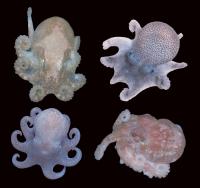
Bottom left: Megeleledone setebos, endemic to the Southern Ocean, surrounded by related octopus species that evolved in the deep-sea. In a report on progress towards the first Census of Marine Life, more than 2,000 scientists from 82 nations announce astonishing examples of recent new finds from the world's ocean depths.
| Biology | November 7, 2008 02:17 AM |
Sea snakes may slither in saltwater, but they sip the sweet stuff.
| Biology | November 5, 2008 06:54 PM |
It seems that our brain can correct speech errors in the same way that it controls other forms of behaviour. Niels Schiller and Lesya Ganushchak, NWO researchers in Leiden, made this discovery while studying how the brain reacts to verbal errors. This research can contribute to improvements in the treatment of people who have problems with speaking or in understanding language.
| Biology | November 4, 2008 12:59 AM |
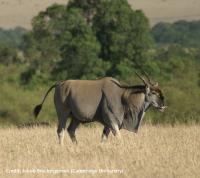
An old eland bull. Knee clicking can establish mating rights among antelopes. A study of eland antelopes, published in the open access journal BMC Biology, has uncovered the dominance displays used by males to settle disputes over access to fertile females, without resorting to genuine violence.
| Biology | November 4, 2008 12:59 AM |
As the saying goes- blondes have more fun, but in the world of insects it may actually be the rare 'redheads' that have the last laugh….at least in terms of evolution.
| Biology | November 3, 2008 10:49 AM |
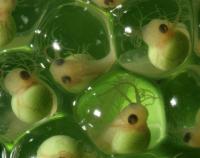
Adult red-eyed treefrogs are the postcard-perfect mascot of tropical biology, but their eye-catching embryos get the cover of the November 2008 issue of the Journal of Experimental Biology. Credit: Karen Warkentin, Boston University and STRI Boston University undergraduate Jessica Rogge and associate professor Karen Warkentin, working at the Smithsonian Tropical Research Institute's laboratories in Gamboa, Panama, discovered that frog embryos at a very early developmental stage actively respond to oxygen levels in the egg—as reported in the Nov. 7, 2008 issue of the Journal of Experimental Biology. These initial responses to the environment may be critical to the frogs' long-term survival.
| Biology | October 31, 2008 09:51 PM |
The sabertooth cat (Smilodon fatalis), one of the most iconic extinct mammal species, was likely to be a social animal, living and hunting like lions today, according to new scientific research. The species is famous for its extremely long canine teeth, which reached up to seven inches in length and extended below the lower jaw.
| Biology | October 30, 2008 08:17 PM |
The world's rarest big cat is alive and well. At least one of them, that is, according to researchers from the Wildlife Conservation Society (WCS) who captured and released a female Far Eastern leopard in Russia last week.
| Biology | October 30, 2008 08:17 PM |
A previously undescribed, cold-loving fungus has been linked to white-nose syndrome, a condition associated with the deaths of over 100,000 hibernating bats in the northeastern United States. The findings are published in this week's issue of Science.
| Biology | October 30, 2008 08:17 PM |
Next week marks a pivotal moment for Eastern Pacific tuna. The Inter-American Tropical Tuna Commission (IATTC), the international body charged with the conservation and management of tuna and associated species in the eastern tropical Pacific Ocean, will meet in San Diego from Nov. 2-7 to consider conservation measures for vulnerable tuna populations. Whether this 16-nation Commission will act to protect declining tuna stocks, or once again demonstrate their impotence to do so, remains to be seen. The fate of Pacific tuna stocks hangs in the balance.
| Biology | October 29, 2008 07:11 PM |
In a twist on nontraditional uses of ultrasound, a group of neuroscientists at Arizona State University has developed pulsed ultrasound techniques that can remotely stimulate brain circuit activity. Their findings, published in the Oct. 29 issue of the journal Public Library of Science (PLoS) One, provide insights into how low-power ultrasound can be harnessed for the noninvasive neurostimulation of brain circuits and offers the potential for new treatments of brain disorders and disease.
| Biology | October 29, 2008 07:11 PM |
A new study in the Journal of Marital and Family Therapy explored how men and women perceive online and offline sexual and emotional infidelity. Results show that men felt sexual infidelity was more upsetting and women felt emotional infidelity was more upsetting.
| Biology | October 29, 2008 07:10 PM |
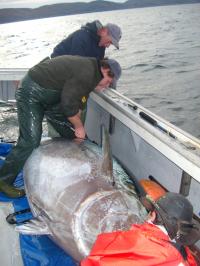
Dr. Michael Stokesbury of Dalhousie University tags a giant bluefin caught in the Gulf of St. Lawrence off Nova Scotia, Canada. The fish, estimated at 1,250 pounds, was released with the 1,000th electronic tag deployed through the Tag-A-Giant research campaign. Credit: Tag-A-Giant A giant Atlantic bluefin tuna weighing more than half a ton had the honor of being fitted with the 1000th electronic tracking tag placed on this threatened species when it was caught and released on Monday (October 20) in the Gulf of St. Lawrence off Port Hood, Nova Scotia.
| Biology | October 28, 2008 08:01 PM |

Psychologist Daniel Niesta holding one of the images used in the study. Participants were asked questions including: "Imagine that you are going on a date with this person and have $100 in your wallet. How much money would you be willing to spend on your date?" A groundbreaking study by two University of Rochester psychologists to be published online Oct. 28 by the Journal of Personality and Social Psychology adds color—literally and figuratively—to the age-old question of what attracts men to women.
| Biology | October 28, 2008 08:01 PM |
It is known for a long time that the plant hormone auxin is transmitted from the top to the bottom of a plant, and that the local concentration of auxin is important for the growth direction of stems, the growth of roots, the sprouting of shoots. To name a few things; auxin is also relevant to, for instance, the ripening of fruit, the clinging of climbers and a series of other processes. Thousands of researchers try to understand the different roles of auxin.
| Biology | October 27, 2008 08:10 PM |
The first known case of someone born without the ability to recognise voices has been reported in a paper by UCL (University College London) researchers, in a study of a rare condition known as phonagnosia. The UCL team are calling for other people to come forward if they think they have also grown up with the condition.
| Biology | October 24, 2008 04:59 PM |
Many animals live longer when raised on low calorie diets. But now researchers at Washington University School of Medicine in St. Louis have shown that they can extend the life spans of roundworms even when the worms are well fed — it just takes a chemical that blocks their sense of smell.
| Biology | October 24, 2008 04:59 PM |
Bumblebees use flower scent to guide their nest-mates to good food sources, according to scientists from Queen Mary, University of London.
| Biology | October 22, 2008 11:37 PM |
A brain isn't born fully organized. It builds its abilities through experience, making physical connections between neurons and organizing circuits to store and retrieve information in milliseconds for years afterwards.
| Biology | October 22, 2008 11:37 PM |
New and old memories have been selectively and safely removed from mice by scientists.
| Biology | October 22, 2008 01:14 PM |
Hypnosis can induce synaesthetic experiences – where one sense triggers the involuntary use of another – according to a new study by UCL (University College London) researchers. The findings suggests that people with synaesthesia, contrary to popular belief, do not necessarily have extra connections in their brain; rather, their brains may simply do more 'cross talking' and this can be induced by changing inhibitory processes in the average brain.
| Biology | October 21, 2008 08:53 PM |
Spinner dolphins have long been known for their teamwork in capturing prey but a new study using high-tech acoustics has found that their synchronization is even more complex than scientists realized and likely evolved as a strategy to maximize their energy intake.
| Biology | October 21, 2008 08:53 PM |
Rare corals may be smarter than we thought. Faced with a dire shortage of mates of their own kind, new research suggests they may be able to cross-breed with certain other coral species to breed themselves out of a one-way trip to extinction.
| Biology | October 21, 2008 08:53 PM |
Contrary to popular belief, polar dinosaurs may not have traveled nearly as far as originally thought when making their bi-annual migration.
| Biology | October 21, 2008 08:53 PM |
A UC Davis researcher known for her honey bee line "New World Carniolans" has crossed her bees with their Old World counterparts to enhance their positive characteristics.
| Biology | October 20, 2008 07:31 PM |
The Earth is in the midst of the sixth mass extinction of both plants and animals, with nearly 50 percent of all species disappearing, scientists say.
| Biology | October 16, 2008 07:35 PM |
A number of red squirrels are immune to squirrelpox viral disease, which many believed would lead to the extinction of the species, scientists have discovered.
| Biology | October 16, 2008 07:35 PM |
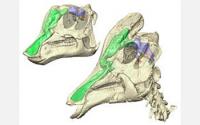
CT scan reconstructions of Corythosaurus; the nasal cavity is green, and the brain purple. Paleontologists have long debated the function of the strange, bony crests on the heads of the duck-billed dinosaurs known as lambeosaurs. The structures contain incredibly long, convoluted nasal passages that loop up over the tops of their skulls.
| Biology | October 16, 2008 07:35 PM |
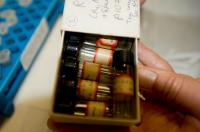
The Bada Lab at Scripps holds the original samples used by Stanley Miller to study the origins of life. Lightning and gases from volcanic eruptions could have given rise to the first life on Earth, according to a new analysis of samples from a classic origin-of-life experiment by NASA and university researchers. The NASA-funded result is the subject of a paper in Science appearing October 16.
| Biology | October 16, 2008 07:35 PM |
When French memoirist Marcel Proust dipped a pastry into his tea, the distinctive scent it produced suddenly opened the flood gates of his memory.
| Biology | October 15, 2008 07:14 PM |
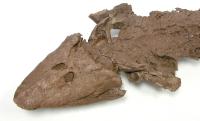
New research by scientists at the Academy of Natural Sciences provides the first detailed look at the internal head skeleton of Tiktaalik roseae, the 375-million-year-old fossil animal that is a step in the evolutionary transition of fish to limbed animals. Credit: Ted Daeschler/ANSP New research by scientists at The Academy of Natural Sciences provides the first detailed look at the internal head skeleton of Tiktaalik roseae, the 375-million-year-old fossil animal that represents an important intermediate step in the evolutionary transition from fish to animals that walked on land.
| Biology | October 15, 2008 07:14 PM |
While an international seed bank in a Norwegian island has been gathering news about its agricultural collection, a group of U.S. scientists has just published an article outlining a different kind of seed bank, one that proposes the gathering of wild species –– at intervals in the future –– effectively capturing evolution in action.
| Biology | October 14, 2008 05:26 PM |
More than 40 million years ago, primates preferred Texas to northern climates that were significantly cooling, according to new fossil evidence discovered by Chris Kirk, physical anthropologist at The University of Texas at Austin.
| Biology | October 14, 2008 05:26 PM |
While paleontologists may scour remote, exotic places in search of prehistoric specimens, Tufts researchers have found what they believe to be the world's oldest whole-body fossil impression of a flying insect in a wooded field behind a strip mall in North Attleboro, Mass.
| Biology | October 13, 2008 11:27 PM |
In a population survey of West African chimpanzees living in Côte d'Ivoire, researchers estimate that this endangered subspecies has dropped in numbers by a whopping 90 percent since the last survey was conducted 18 years ago. The few remaining chimpanzees are now highly fragmented, with only one viable population living in Taï National Park, according to a report in the October 14th issue of Current Biology, a Cell Press publication.
| Biology | October 13, 2008 11:27 PM |
Unlike the male-dominated societies of their chimpanzee relatives, bonobo society—in which females enjoy a higher social status than males—has a "make-love-not-war" kind of image. While chimpanzee males frequently band together to hunt and kill monkeys, the more peaceful bonobos were believed to restrict what meat they do eat to forest antelopes, squirrels, and rodents.
| Biology | October 12, 2008 09:12 PM |
Researchers at McGill University, King's College London and GlaxoSmithKline Inc. have identified two genetic variants in caucasians that together produce an astounding sevenfold increase the risk of male pattern baldness. Their results will be published Oct. 12 in the journal Nature Genetics.
| Biology | October 8, 2008 06:41 PM |
The songbird has a friend in the beaver. According to a study by the Wildlife Conservation Society (WCS), the busy beaver's signature dams provide critical habitat for a variety of migratory songbirds, particularly in the semi-arid interior of the West.
| Biology | October 7, 2008 10:41 AM |
The National Institutes of Health has awarded $4 million to a group of Philippine and American scientists led by Oregon Health & Science University to aid in the discovery of new molecules and biofuels technology from marine mollusks for development in the Philippines.
| Biology | October 6, 2008 07:47 PM |
When the Global Mammal Assessment project results are announced this week at the World Conservation Congress in Barcelona, Spain, there will be at least seven Texas species on the globally threatened list.
| Biology | October 6, 2008 07:47 PM |
Scientists have found lichens can give insight into nitrogen air pollution effects on Sierra Nevada and San Bernardino mountain ecosystems, and protecting them provides safeguards for less sensitive species.
| Biology | October 6, 2008 07:47 PM |
Michigan State University plant scientists have discovered another piece of the genetic puzzle that controls how plants respond to high temperatures. That may allow plant breeders to create new varieties of crops that flourish in warmer, drier climates.
| Biology | October 5, 2008 06:32 PM |
The fossilized trail of an aquatic creature suggests that animals walked using legs at least 30 million years earlier than had been thought.
| Biology | October 4, 2008 08:57 AM |
The latest breakthrough in a 120 year-old debate on the evolution of the bird wing was published in the open-access journal PLoS ONE, October 3, by Alexander Vargas and colleagues at Yale University, the University of Wisconsin-Madison and Yale Peabody Museum of Natural History.
| Biology | October 4, 2008 08:57 AM |
The melodious singing of birds has been long appreciated by humans, and has often been thought to reflect a particularly positive emotional state of the singer. In a new study published in the online, open-access journal PLoS ONE on October 1, researchers at the RIKEN Brain Science Institute in Japan have demonstrated that this can be true. When male birds sang to attract females, specific "reward" areas of their brain were strongly activated. Such strong brain activation resulted in a similar change in brain reward function to that which is caused by addictive drugs.
| Biology | October 2, 2008 09:15 PM |
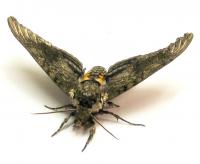
Researchers conditioned a moth to extend its proboscis in anticipation of a dollop of sucrose after being given a scent cue to study how the insect learned. Understanding how associations are built between stimuli and behavior can offer significant insights into how to build artificial systems to discriminate odors. Credit: I. Ito and R.C.Y. Ong, NIH Much like Pavlov conditioned his dog to salivate in anticipation of food when a bell rang, insects can be trained to perform certain behaviors when enticed with different smells. Researchers at the National Institutes of Health (NIH), the Chinese University of Hong Kong and the National Institute of Standards and Technology (NIST) have discovered that when training insects, the interval between the signal, or odor, and the reward—delicious sugar water—is everything. They also found that this process of building odor-sucrose associations would involve a mechanism that allows integration of neural activities (mental representations) that are not nearly coincident. Understanding how associations are built between stimuli and behavior gives insight into the nature of learning. Their findings were published online in Nature Neuroscience.
| Biology | October 2, 2008 09:15 PM |
The Atlantic bluefin tuna is the largest and most sought-after of all tunas, weighing as much as 1,400 pounds and capable of fetching as much as $50,000 or more in Asian markets where its meat is a prized commodity, one big reason why its numbers have declined precipitously since the 1970s. New research findings reported in Science have critical implications for how bluefin tuna are managed on both sides of the Atlantic Ocean.
| Biology | October 2, 2008 09:15 PM |
Humans living in communities often rely on friends to help get what they need and, according to researchers in the lab of Cameron Currie at the University of Wisconsin-Madison, many microbes, plants and animals benefit from 'friendly' associations too.
| Biology | October 1, 2008 12:40 AM |
Reporting in Biology Letters, Steve Brusatte, Professor Michael Benton, and colleagues at the University of Bristol show that dinosaurs did not proliferate immediately after they originated, but that their rise was a slow and complicated event, and driven by two mass extinctions.
| Biology | October 1, 2008 12:40 AM |
Japanese research group led by Prof Makoto Tominaga and Dr Takaaki Sokabe, National Institute for Physiological Sciences (NIPS), Japan, found that a small fly, drosophila, has a receptor for noxious heat. The research group reports their finding in Journal of Neuroscience published on Oct 1, 2008.
| Biology | October 1, 2008 12:40 AM |
A link between reduced levels of the 'stress hormone' cortisol and antisocial behaviour in male adolescents has been discovered by a research team at the University of Cambridge.
| Biology | September 30, 2008 10:56 AM |
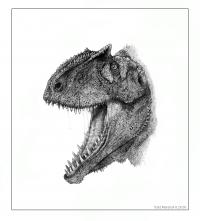
Flesh rendering of the 85 million-year-old meat-eater, Aerosteon ("air bones"), discovered in Mendoza Province, Argentina. More than any other dinosaur, Aerosteon helps to prove that dinosaurs breathed like birds with air sacs and stiff bird-like lungs. Credit: Drawing:Todd Marshall c 2008, courtesy of Project Exploration The remains of a new 10-meter-long predatory dinosaur discovered along the banks of Argentina's Rio Colorado is helping to unravel how birds evolved their unusual breathing system.
| Biology | September 30, 2008 10:56 AM |
An adult froghopper. Froghoppers, also known as spittlebugs, are the champion insect jumpers, capable of reaching heights of 700 mm - more than 100 times their own body length. Research published today in the open access journal BMC Biology reveals that they achieve their prowess by flexing bow-like structures between their hind legs and wings and releasing the energy in one giant leap in a catapult-like action.
| Biology | September 29, 2008 05:11 PM |
Cranberry harvest in New Jersey. Cranberries are tart, tiny fruits packed with powerful antioxidants. The small, red berries offer a wide variety of health benefits. Not only are cranberries a healthy, low-calorie snack, but they can also play a significant role in preventing urinary tract infections, reducing the risk of gum disease and much more. In fact, studies show that the significant amounts of antioxidants in cranberries may help protect against heart disease, cancer, and other diseases.
| Biology | September 29, 2008 05:11 PM |
The latest findings of a University of Pittsburgh-based project to determine the environmental impact of routine pesticide use suggests that malathion—the most popular insecticide in the United States—can decimate tadpole populations by altering their food chain, according to research published in the Oct. 1 edition of Ecological Applications.
| Biology | September 25, 2008 10:45 AM |
Reactive oxygen species (ROS) occur as a by-product of aerobic metabolism and impair cellular function by damaging proteins, nucleotides and lipids. Organisms possess a variety of anti-oxidant mechanisms to mitigate the effects of ROS, and the oxidative stress model of aging and senescence suggests that physiological performance declines with age due to lifetime accrual of ROS-induced damage and progressively limited anti-oxidant capacity. Hence, the onset, pace and duration of energetically-intense behaviors should affect lifetime kinetics of ROS-induced damage, anti-oxidant responses, physiological capacity and longevity. A new study examines how these traits in honey bees are affected by age and behavioral intensity (factors which can be experimentally decoupled via manipulation of colony demographics), and is the first to use such an approach to test the oxidative stress model of aging in a free-living organism.
| Biology | September 25, 2008 10:45 AM |
The coordination of two systems are key for any horse to walk, trot, gallop or win a race. The first are the lower limbs, which allow the animal to move along on a "spring-like" tendon. The second is a complicated respiratory system, which allows a horse to take in one breadth for every stride they make while racing. For more than a decade a team of researchers has been working to unlock the secrets of equines. Their findings may provide a springboard for better muscular horse health, and a different approach to breathing devices for humans.
| Biology | September 25, 2008 01:12 AM |
An international research team studying sound production in deep-sea fishes has found that cusk-eels use several sets of muscles to produce sound that plays a prominent role in male mating calls.
| Biology | September 24, 2008 11:59 AM |
The fifth batch of Great Bustards is being released on Sep. 25. Researchers at the University of Bath and conservationists from the Great Bustard Group will be releasing 19 birds on Salisbury Plain on Thursday 25 September as part of an ongoing reintroduction project in the UK.
| Biology | September 23, 2008 11:57 AM |
Thale cress Arabidopsis thaliana. Plants that grow more slowly stay fresh longer. In their study now published in PLoS Biology, scientists at the Max Planck Institute for Developmental Biology in Tübingen have shown that certain small sections of genes, so-called microRNAs, coordinate growth and aging processes in plants. These microRNAs inhibit certain regulators, known as TCP transcription factors. These transcription factors in turn influence the production of jasmonic acid, a plant hormone. The higher the number of microRNAs present, the lower the number of transcription factors that are active, and the smaller the amount of jasmonic acid, which is produced by the plant. The plant therefore ages more slowly, as this hormone is important for the plant's aging processes. The researchers have succeeded for the first time in describing the antagonistic regulation of growth and aging in plants. Since the quantity of microRNAs in the plants can be controlled by genetic methods, it may be possible in future to cultivate plants that live longer and grow faster. (PLoS Biology, September 23, 2008)
| Biology | September 23, 2008 11:57 AM |
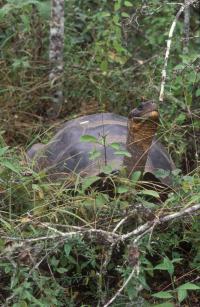
Hybrid tortoise on Volcano Wolf. Yale scientists report that genetic traces of extinct species of Galapagos tortoises exist in descendants now living in the wild, a finding that could spur breeding programs to restore the species, The report appears in Proceedings of the National Academy of Sciences.
| Biology | September 23, 2008 11:57 AM |
An unusual breed of dinosaur that was the size of a chicken, ran on two legs and scoured the ancient forest floor for termites is the smallest dinosaur species found in North America, according to a University of Calgary researcher who analyzed bones found during the excavation of an ancient bone bed near Red Deer, Alberta.
| Biology | September 22, 2008 04:47 PM |
A potentially deadly fungus that can kill frogs and toads was inadvertently introduced into Mallorca by a captive breeding programme that was reintroducing a rare species of toad into the wild, according to a new study published today in the journal Current Biology.
| Biology | September 22, 2008 04:47 PM |
Tetrapods, the first four-legged land animals, are regarded as the first organisms that had fingers and toes. Now researchers at Uppsala University can show that this is wrong. Using medical x-rays, they found rudiments of fingers in the fins in fossil Panderichthys, the “transitional animal,” which indicates that rudimentary fingers developed considerably earlier than was previously thought.
| Biology | September 21, 2008 02:49 PM |
What you smell as you sleep has the power to influence your dreams, says new research presented at the 2008 American Academy of Otolaryngology – Head and Neck Surgery Foundation (AAO-HNSF) Annual Meeting & OTO EXPO in Chicago, IL.
| Biology | September 21, 2008 02:49 PM |
Researchers at the University of Minnesota College of Veterinary Medicine have identified a gene in Labrador retriever dogs highly associated with the syndrome of exercise-induced collapse (EIC). After intense hunting or retrieving exercise, activities these dogs are trained to perform, affected Labradors start to lose control of their hind limbs. In most cases, their legs get wobbly and the limbs give out, and in rare cases the dogs may die. Labradors are the most common dog breed in the world and an estimated 3-5 percent of Labradors have this condition. The research is published in the journal Nature Genetics.
| Biology | September 20, 2008 10:32 AM |
Listening for faint rustling noises made by tasty beetles on a quiet day is simple for bats hunting with their exquisitely sensitive hearing. So try imagining what it must be like trying to locate rustling treats just metres from a roaring highway. It would seem to be almost impossible to pick out a centipede's footsteps as a juggernaut hurtles past; or is it? How animals that locate their prey by sound alone cope in our increasingly noisy world puzzles Björn Siemers from the Max Planck Institute for Ornithology in Germany. Siemers explains that no one had ever measured whether bats that hunt by listening for rustling insects are affected by man-made noise. However, this is a question that Siemers is frequently asked by urban planners keen to minimise our impact on local wildlife populations. Curious to know how sharp-eared bats react to loud background noise, Siemers and his colleagues Andrea Schaub and Joachim Ostwald monitored foraging bats' responses to rustling mealworms in noisy environments and publish their results on 19th September 2008 in The Journal of Experimental Biology on http://jeb.biologists.org.
| Biology | September 20, 2008 10:32 AM |
Researchers led by Dr Robin Allaby of the University of Warwick's plant research arm Warwick HRI have found evidence that genetics supports the idea that the emergence of agriculture in prehistory took much longer than originally thought.
| Biology | September 18, 2008 11:38 AM |
Plants in a forest respond to stress by producing significant amounts of a chemical form of aspirin, scientists have discovered. The finding, by scientists at the National Center for Atmospheric Research (NCAR), opens up new avenues of research into the behavior of plants and their impacts on air quality, and it also has the potential to give farmers an early warning signal about crops that are failing.
| Biology | September 18, 2008 11:38 AM |
A groundbreaking new study into the mating and nesting practices of a common Australian frog has found they partner up to eight males sequentially – the highest recorded of any vertebrate.
| Biology | September 17, 2008 09:49 AM |
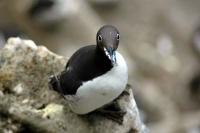
Guillemot on Isle of May, Scotland. One of Britain's best-known species of seabird is increasingly attacking and killing unattended chicks from neighbouring nests due to food shortages.
| Biology | September 16, 2008 12:51 PM |
For the first time in waters surrounding New York City, the beckoning calls of endangered fin, humpback and North Atlantic right whales have been recorded, according to experts from the Bioacoustics Research Program at the Cornell Lab of Ornithology and the New York State Department of Environmental Conservation (DEC).
| Biology | September 16, 2008 12:51 PM |
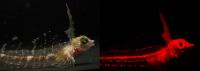
A glowing fish. Credit: Michiels et al. Scientists have discovered that certain fish are capable of glowing red. Research published today in BMC Ecology includes striking images of fish fluorescing vivid red light.
| Biology | September 15, 2008 01:03 PM |
The low timbre and enticing vibrations of a deep voice have long been considered a key element of male attractiveness. Now it seems that it's not just human females that appreciate a husky vocalisation.
| Biology | September 15, 2008 01:03 PM |

According to the study, the decline of pollinators would have main effects on three main crop categories (following FAO terminology); fruits and vegetable were especially affected with a loss estimated at €50 billion each, followed by edible oilseed crops with €39 billion. Credit: Photo: André Künzelmann/UFZ Avignon/Halle(Saale). INRA and CNRS French scientists and a UFZ German scientist found that the worldwide economic value of the pollination service provided by insect pollinators, bees mainly, was €153 billion in 2005 for the main crops that feed the world. This figure amounted to 9.5% of the total value of the world agricultural food production. The study also determined that pollinator disappearance would translate into a consumer surplus loss estimated between €190 to €310 billion. The results of this study on the economic valuation of the vulnerability of world agriculture confronted with pollinator decline are published in the journal "ECOLOGICAL ECONOMICS".
| Biology | September 15, 2008 01:23 AM |
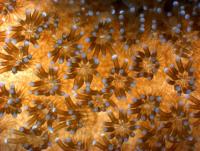
Polyps of the symbiotic coral Stylophora pistillata. Researchers have uncovered a gene in corals that responds to day/night cycles, which provides some tantalizing clues into how symbiotic corals work together with their plankton partners.
| Biology | September 13, 2008 12:37 PM |

Polyps of the symbiotic coral Stylophora pistillata. Researchers have uncovered a gene in corals that responds to day/night cycles, which provides some tantalizing clues into how symbiotic corals work together with their plankton partners.
| Biology | September 11, 2008 11:19 PM |
We all know that people can be influenced in complex ways by their peers. But two new studies in the September 11th issue of Current Biology, a Cell Press publication, reveal that the same can also be said of fruit flies.
| Biology | September 11, 2008 11:19 PM |
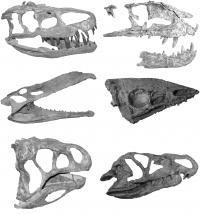
A montage of the skulls of several crurotarsan archosaurs, the "crocodile-line" archosaurs that were the main competitors of dinosaurs during the Late Triassic period (230-200 million years ago). Dinosaurs and crurotarsans shared many of the same ecological niches, and some crurotarsans looked remarkably similar to dinosaurs. However, by the end of the Triassic period most crurotarsans were extinct, save for a few lineages of crocodiles, while dinosaurs weathered the storm and began a 135-million-year reign of dominance. Top (l-r): The rauisuchians Batrachotomus and Postosuchus; middle: the phytosaur Nicrosaurus and the aetosaur Aetosaurus; bottom: the poposauroid Lotosaurus and the ornithosuchid Riojasuchus. Credit: Steve Brusatte In a paper published today in Science, Steve Brusatte and Professor Mike Benton challenge the general consensus among scientists that there must have been something special about dinosaurs that helped them rise to prominence.
| Biology | September 11, 2008 11:19 PM |
Scientists at the University of Rochester have shown for the first time that our brains automatically consider many possible words and their meanings before we've even heard the final sound of the word.
| Biology | September 10, 2008 11:39 PM |
A set of stripy legs in a camera trap photo snapped in an African forest indicates something to cheer about, say researchers from the Wildlife Conservation Society. The legs belong to an okapi—a rare forest giraffe—which apparently has survived in the Democratic Republic of Congo's Virunga National Park, despite over a decade of civil war and increased poaching.
| Biology | September 10, 2008 09:39 AM |
The phenomenon of "shimmering" in giant honeybees, in which hundreds—or even thousands—of individual honeybees flip their abdomens upwards within a split-second to produce a Mexican Wave-like pattern across the bee nest, has received much interest but both its precise mode of action and its purpose have long remained a mystery.
| Biology | September 9, 2008 01:25 PM |
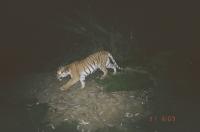
A tiger photographed ny a remote camera in Myanmar's Hukaung Tiger Reserve. Using remote camera traps to lift the veil on Myanmar's dense northern wild lands, researchers from the Wildlife Conservation Society have painstakingly gathered a bank of valuable data on the country's populations of tigers and other smaller, lesser known carnivores (see photo attachments). These findings will help in the formulation of conservation strategies for the country's wildlife.
| Biology | September 9, 2008 01:25 PM |
Water bears (tardigrades) are the first animals in the world to have survived exposure to the vacuum and radiation of space. This has been established by Ingemar Jönsson, a researcher at Kristianstad University in Sweden.
| Biology | September 8, 2008 03:39 PM |
What makes a memory? Single cells in the brain, for one thing. For the first time, scientists at UCLA and the Weizmann Institute of Science in Israel have recorded individual brain cells in the act of calling up a memory, thus revealing where in the brain a specific memory is stored, and how it is able to recreate it.
| Biology | September 8, 2008 03:39 PM |
The McClellan Nuclear Radiation Center (MNRC) in Sacramento, CA was developed by the U.S. Air Force to detect corrosion and defects in aircraft structure using an imaging technique called neutron radiography. This technique is currently helping soil scientists understand the function of plant roots and their uptake of water and nutrients.
| Biology | September 8, 2008 03:39 PM |
The probability of someone cheating during the course of a relationship varies between 40 and 76 percent. "It's very high," says Geneviève Beaulieu-Pelletier, PhD student at the Université de Montréal's Department of Psychology.
| Biology | September 5, 2008 12:19 PM |
A marked T. angusticollis female on an Acacia trunk in Sydney. Evolutionary studies of aging typically utilize small, short-lived animals (insects, worms, mice) under benign conditions – constant temperature and humidity, no parasites, superabundant food – in the laboratory. Oddly enough, very little is known about aging in such animals in their harsh, stressful natural environments. Could it be that these laboratory "guinea pigs" actually age much more slowly in captive luxury than do their wild cousins?
| Biology | September 5, 2008 12:19 PM |
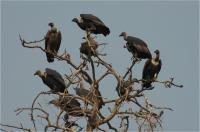
Photos taken in Pakistan. Captive breeding colonies of a critically endangered vulture, whose numbers in the wild have dwindled from tens of millions to a few thousand, are too small to protect the species from extinction, a University of Michigan analysis shows.
| Biology | September 4, 2008 02:37 PM |
Bumblebees learn to avoid camouflaged predators by sacrificing foraging speed for predator detection, according to scientists from Queen Mary, University of London.
| Biology | September 4, 2008 02:37 PM |
The largest study ever conducted of DNA evidence extracted from long-dead woolly mammoths points to a rockier past for the iconic Ice Age giants than many had suspected.
| Biology | September 4, 2008 02:37 PM |
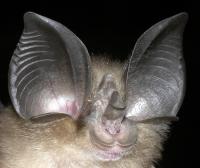
The big-eared horseshoe bat, Rhinolophus macrotis. Echolocation may have evolved more than once in bats, according to new research from the University of Bristol published this week in Proceedings of the National Academy of Sciences (PNAS).
| Biology | September 3, 2008 10:33 PM |
Biocontrol agents, such as insects, are often released outside of their native ranges to control invasive plants. But scientists in Montana have found that through complex community interactions among deer mice, native plants and seeds, the presence of an introduced fly may exacerbate the effects of the invasive plant it was meant to control. The authors report their results in the September issue of the journal Ecological Applications.
| Biology | September 2, 2008 12:18 PM |
A two-week-old black-footed ferret is pictured in its nesting box at the National Zoo's Conservation and Research Center in Front Royal, Va. on July 3, 2008. The kit was born on June 21 to a two-year-old mother and a father who had died in 2000. National Zoo reproductive scientists inseminated the female with frozen black-footed ferret semen stored in their genome resource bank -- a frozen repository of sperm and eggs of a variety of endangered species. Credit: Mehgan Murphy, Smithsonian’s National Zoo Two black-footed ferrets at the Smithsonian's National Zoo have each given birth to a kit that was sired by males who died in 1999 and 2000. These endangered ferrets—part of a multi-institutional breeding and reintroduction program—were artificially inseminated in May with frozen semen from the two deceased males, each giving birth to a kit on June 20 and 21 respectively. The sperm samples were collected and frozen in 1997 and 1998. Successful inseminations with frozen semen are extremely rare—until now only three black-footed ferret kits have been born from this method.
| Biology | September 2, 2008 12:18 PM |
Although most people imagine wolves chasing deer and other hoofed animals, new research suggests that, when they can, wolves actually prefer fishing to hunting. The study, published today in the open access journal BMC Ecology, shows that when salmon is available, wolves will reduce deer hunting activity and instead focus on seafood.
| Biology | August 30, 2008 11:34 AM |
The American Academy of Otolaryngology – Head and Neck Surgery Foundation (AAO-HNSF) will issue the first comprehensive clinical guidelines to help health care practitioners identify patients with cerumen (commonly referred to as earwax) impaction. The guidelines emphasize evidence-based management of cerumen impaction by clinicians, and inform patients of the purpose of ear wax in hearing health.
| Biology | August 30, 2008 11:34 AM |
U. of I. entomology professor James Whitfield and doctoral student Josephine Rodriguez led the taxonomic part of a multi-disciplinary study of microgastrine wasps. A tiny wasp that lays its eggs under the skin of unwitting caterpillars belongs to one of the most diverse groups of insects on Earth. Now researchers report that its diversity is even higher than previously thought.
| Biology | August 28, 2008 04:05 PM |
he eyes of some mammals have evolved to point in the same direction. While animals with forward facing eyes lose the ability to see what's behind them, they gain X-ray vision, which makes it possible for them to see through the clutter in the world. Credit: Rensselaer/Changizi The advantage of using two eyes to see the world around us has long been associated solely with our capacity to see in 3-D. Now, a new study from a scientist at Rensselaer Polytechnic Institute has uncovered a truly eye-opening advantage to binocular vision: our ability to see through things.
| Biology | August 28, 2008 04:05 PM |
Animals "personally" bring their gametes together – seeking out sexual partners, mating, fertilizing, and reproducing. Plants, however, are sessile organisms and require the help of a third party, the pollinator, which can be a bird, mouse or insect that transport pollen to receptive stigmas frequently over large distances. The colors and shapes of flowers as well as their volatile signals and nectar attract and reward the pollinators for their efforts. But not all flower visitors are pollinators, as many come only to steal nectar without transporting pollen or eat flower parts.
| Biology | August 28, 2008 04:05 PM |
Researchers report the discovery of the first new living species of giant clam in two decades, according to a report to be published online on August 28th in Current Biology, a Cell Press publication. While fossil evidence reveals that the new species, called Tridacna costata, once accounted for more than 80 percent of giant clams in the Red Sea, it now represents less than one percent of giant clams living there.
| Biology | August 28, 2008 04:05 PM |
A WCS report reveals surprisingly large populations of two globally threatened primates in a protected area in Cambodia.
| Biology | August 27, 2008 11:46 AM |
It's no secret that humans are having a huge impact on the life cycles of plants and animals. UC Santa Barbara's Steven D. Gaines and fellow researcher Dov Sax decided to test that theory by studying the world's far-flung islands.
| Biology | August 27, 2008 11:46 AM |
A new study could explain why "daddy" and "mommy" are often a baby's first words – the human brain may be hard-wired to recognize certain repetition patterns.
| Biology | August 26, 2008 01:08 AM |
Researchers at the Yerkes National Primate Research Center, Emory University, have shown capuchin monkeys, just like humans, find giving to be a satisfying experience. This finding comes on the coattails of a recent imaging study in humans that documented activity in reward centers of the brain after humans gave to charity. Empathy in seeing the pleasure of another's fortune is thought to be the impetus for sharing, a trait this study shows transcends primate species.
| Biology | August 26, 2008 01:08 AM |
Researchers at the University of Rochester's Eastman School of Music and Department of Brain and Cognitive Sciences have developed a unique test for perfect pitch, and have found surprising results.
| Biology | August 25, 2008 12:18 PM |
The ostentatious, sometimes bizarre qualities that improve a creature's chances of finding a mate may also drive the reproductive separation of populations and the evolution of new species, say two Indiana University Bloomington biologists.
| Biology | August 24, 2008 12:21 AM |
A group of Yale undergraduates have discovered dozens of potentially beneficial bioactive microorganisms within plants they collected in the Amazon rain forest, including several so genetically distinct that they may be the first members of new taxonomical genera.
| Biology | August 22, 2008 04:15 PM |
Throughout history, elephants have been thought of as 'different'. Shakespeare, and even Aristotle, described them as walking on inflexible column-like legs. And this myth persists even today. Which made John Hutchinson from The Royal Veterinary College, London, want to find out more about elephants and the way they move. Are they really that different from other, more fleet-footed species? Are their legs as rigid and 'columnar' as people had thought? Traveling to Thailand and several UK zoos, Hutchinson and his team investigated how Asian Elephants move their legs as they walk and run and publishes his results in The Journal of Experimental Biology on August 22 2008 at http://jeb.biologists.org
| Biology | August 22, 2008 04:15 PM |
Healthy red algae (Devaleraea ramentacea). It is red, it burns and itches: a sunburn on our skin. However, too much sun is not only bad for humans. Many plants react sensitively to an increased dose of ultraviolet radiation, too. Yet they are dependent on sunlight. With the help of pigments absorbing solar energy and light, plants produce their vitally important building blocks by means of photosynthesis. However, this has its limits: too much sun means an over-abundance of energy and thus the destruction of the sensitive pigments. The result are black spots, pale leaves and rotten parts.
| Biology | August 19, 2008 04:36 PM |
Like most things that exist underground, plant roots are out-of-sight and easily forgotten, but while flowers, leaves, and other aboveground plant parts are more familiar, plant roots are equally deserving of our appreciation. Beneath every towering tree, tasty crop, and dazzling ornamental lies a root system that makes it all possible. Roots provide anchor and support for plants, extract water and nutrients from soil, and reduce soil erosion. Roots also play an important role in soil carbon cycling and the global carbon balance.
| Biology | August 16, 2008 08:58 PM |
A male specimen of the newly-discovered olive-backed forest robin is carefully examined in the hand of Brian Schmidt, the Smithsonian ornithologist who discovered the species. Scientists at the Smithsonian Institution have discovered a new species of bird in Gabon, Africa, that was, until now, unknown to the scientific community. Their findings were published in the international science journal Zootaxa today, Aug. 15.
| Biology | August 16, 2008 08:58 PM |
Parrots have a big brain and are also one of the most evolutionarily diversified bird clades. Ever since Darwin, evolutionary biologists have wondered why some lineages have diversified more than others. A classical explanation is that a higher rate of diversification reflects increased ecological opportunities that led to a rapid adaptive radiation of a clade. A textbook example is Darwin finches from Galapagos, whose ancestor colonized a competitors-free archipelago and rapidly radiated in 13 species, each one adapted to use the food resources in a different way. This and other examples have led some to think that the progenitors of the major evolutionary radiations are those that happened to be in the right place and at the right time to take advantage of ecological opportunities. However, is it possible that biological diversification not only depends on the properties of the environment an ancestral species finds itself in, but also on the features of the species itself? Now a study supports this possibility, suggesting that possessing a large brain might have facilitated the evolutionary diversification of some avian lineages.
| Biology | August 14, 2008 03:25 PM |
As poets, songwriters and authors have described, our memories range from misty water-colored recollections to vividly detailed images of the times of our lives.
| Biology | August 12, 2008 05:10 PM |
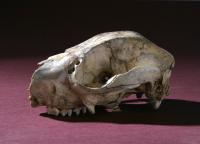
Protemnodon skull from cave at Mt. Cripps, northwest Tasmania. Research led by UK and Australian scientists sheds new light on the role that our ancestors played in the extinction of Australia's prehistoric animals. The study, published this week in the journal Proceedings of the National Academy of Sciences of the USA, provides the first evidence that Tasmania's giant kangaroos and marsupial 'rhinos' and 'leopards' were still roaming the island when humans first arrived. The findings suggest that the mass extinction of Tasmania's large prehistoric animals was the result of human hunting, and not climate change as previously believed.
| Biology | August 12, 2008 12:10 PM |
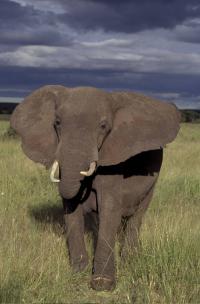
In a recent paper in The Royal Society's Biology Letters, conservationists with the Wildlife Conservation Society and the Zoological of London found that the oldest matriarch elephants may retain valuable memories of permanent sources of food and water and their that become crucial in times of drought. Credit: (c) Charles Foley A recent study by the Wildlife Conservation Society and the Zoological Society of London (ZSL) suggests that old female elephants—and perhaps their memories of distant, life-sustaining sources of food and water—may be the key to survival during the worst of times.
| Biology | August 11, 2008 10:10 PM |
The traditional view of individual brain areas involved in perception of different sensory stimuli—i.e., one brain region involved in hearing and another involved in seeing—has been thrown into doubt in recent years. A new study published in the online open access journal BMC Neuroscience, shows that, in monkeys, the region involved in hearing can directly improve perception in the visual region, without the involvement of other structures to integrate the senses.
| Biology | August 11, 2008 09:10 PM |
The Douglas-fir, state tree of Oregon, towering king of old-growth forests and one of the tallest tree species on Earth, finally stops growing taller because it just can't pull water any higher, a new study concludes.
| Biology | August 11, 2008 08:10 PM |
Dead southern mountain yellow-legged frogs (Rana muscosa) killed by the chytrid fungus. Sixty Lake Basin, Kings Canyon National Park, California USA. Amphibians, reigning survivors of past mass extinctions, are sending a clear, unequivocal signal that something is wrong, as their extinction rates rise to unprecedented levels, according to a paper published by the Proceedings of the National Academy of Sciences (PNAS). Humans are exacerbating two key natural threats – climate change and a deadly disease that is jumping from one species to another.
| Biology | August 10, 2008 07:09 PM |
A brown tree snake on Guam. In the last 60 years, brown tree snakes have become the embodiment of the bad things that can happen when invasive species are introduced in places where they have few predators. Unchecked for many years, the snakes caused the extinction of nearly every native bird species on the Pacific island of Guam.
| Biology | August 10, 2008 07:09 PM |
Hundreds of insect species live mainly underwater, but how do they breathe? University of Alberta researcher Morris Flynn did a study to find out how these species are able to remain underwater without drowning.
| Biology | August 10, 2008 07:09 PM |
Many sports teams select their uniforms based on the mascot, city or country they are representing, not on a referee's preference or bias. But a new study has found that choosing the color red for a uniform in competitive sports can actually affect the referee's split-second decision-making ability and even promote a scoring bias.
| Biology | August 9, 2008 01:09 AM |
Individuals with synesthesia perceive the world in a different way from the rest of us. Because their senses are cross-activated, some synesthetes perceive numbers or letters as having colors or days of the week as possessing personalities, even as they function normally in the world. Now, researchers at the California Institute of Technology have discovered a type of synesthesia in which individuals hear sounds, such as tapping, beeping, or whirring, when they see things move or flash. Surprisingly, the scientists say, auditory synesthesia may not be unusual--and may simply represent an enhanced form of how the brain normally processes visual information.
| Biology | August 8, 2008 01:09 AM |
The ability to work together and capture larger prey has allowed social spiders to stretch the laws of nature and reach enormous colony sizes, UBC zoologists have found.
| Biology | August 7, 2008 01:09 AM |
With long limbs and a soft body, the duck-billed hadrosaur had few defenses against predators such as tyrannosaurs. But new research on the bones of this plant-eating dinosaur suggests that it had at least one advantage: It grew to adulthood much faster than its predators, giving it superiority in size.
| Biology | August 7, 2008 01:09 AM |
In our brains, groups of neurons fire up simultaneously for just milliseconds at a time, in random rhythms, similar to twinkling lightning bugs in our backyards. New research from neuroscientists at Indiana University and the University of Montreal provides a model -- a rhyme and reason -- for this random synchronization.
| Biology | August 7, 2008 01:09 AM |
National Science Foundation-funded scientists working in an ice-free region of Antarctica have discovered the last traces of tundra--in the form of fossilized plants and insects--on the interior of the southernmost continent before temperatures began a relentless drop millions of years ago.
| Biology | August 7, 2008 01:09 AM |
Metabolic changes responsible for the evolution of our unique cognitive abilities indicate that the brain may have been pushed to the limit of its capabilities. Research published today in BioMed Central's open access journal Genome Biology adds weight to the theory that schizophrenia is a costly by-product of human brain evolution.
| Biology | August 4, 2008 07:20 PM |
Tiny fossilized teeth excavated from an Indian open-pit coal mine could be the oldest Asian remains ever found of anthropoids, the primate lineage of today's monkeys, apes and humans, say researchers from Duke University and the Indian Institute of Technology.
| Biology | August 4, 2008 07:20 PM |
Using sophisticated computer modelling techniques they have also calculated that the bite force of the great white's extinct relative, the gigantic fossil species Carcharodon megalodon (also known as Big Tooth) is the highest of all time, making it arguably the most formidable carnivore ever to have existed.
| Biology | August 4, 2008 07:20 PM |
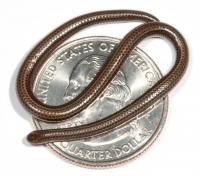
The snake named Leptotyphlops carlae, as thin as a spaghetti noodle, is resting on a US quarter. The world's smallest species of snake, with adults averaging just under four inches in length, has been identified on the Caribbean island of Barbados. The species -- which is as thin as a spaghetti noodle and small enough to rest comfortably on a U.S. quarter --was discovered by Blair Hedges, an evolutionary biologist at Penn State. Hedges and his colleagues also are the discoverers of the world's smallest frog and lizard species, which too were found on Caribbean islands. The most recent discovery will be published on 4 August 2008 in the journal Zootaxa.
| Biology | July 27, 2008 07:39 PM |
Researchers, growers and Industry specialists from 22 countries are sharing the latest research into the use of Brassica species, such as mustard, radish, or rapeseed, to manage soil-borne pests and weeds – a technique known as biofumigation.
| Biology | July 26, 2008 07:31 PM |
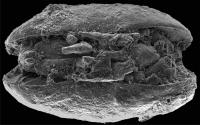
Figure of the fossil ostracod from the Dry Valleys. The specimen is less than 1 mm long, but preserves an array of soft tissues including legs and mouth parts. A new fossil discovery- the first of its kind from the whole of the Antarctic continent- provides scientists with new evidence to support the theory that the polar region was once much warmer.
| Biology | July 26, 2008 12:31 PM |
Since the idea of using DNA to create faster, smaller, and more powerful computers originated in 1994, scientists have been scrambling to develop successful ways to use genetic code for computation. Now, new research from a professor at Rensselaer Polytechnic Institute suggests that if we want to carry out artificial computations, all we have to do is literally look around.
| Biology | July 23, 2008 10:12 PM |
Even a quiet stroll in the park can dramatically change natural ecosystems, according to a new study by conservation biologists from the University of California, Berkeley. These findings could have important implications for land management policies.
| Biology | July 21, 2008 04:50 PM |
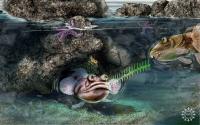
An artist's representation shows the midshipman fish singing to attract a mate. Talking fish are no strangers to Americans. From the comedic portrayal of "Mr. Limpet" by Don Knotts, to the children's Disney favorite, "Nemo," fish can talk, laugh and tell jokes--at least on television and the silver screen. But can real fish verbally communicate? Researchers say, "Yes," in a paper published in the July 18 issue of the journal Science. Further, the findings put human speech--and social communications of all vertebrates--in evolutionary context.
| Biology | July 20, 2008 07:50 PM |
The invasion of predatory lionfish in the Caribbean region poses yet another major threat there to coral reef ecosystems – a new study has found that within a short period after the entry of lionfish into an area, the survival of other reef fishes is slashed by about 80 percent.
| Biology | July 20, 2008 01:50 PM |
It's a long way from the dull hums of the amorous midshipman fish to the strains of a Puccini aria – or, alas, even to the simplest Celine Dion melody. But the neural circuitry that led to the human love song – not to mention birdsongs, frog thrums and mating calls of all manner of vertebrates – was likely laid down hundreds of millions of years ago with the hums and grunts of the homely piscine.
| Biology | July 20, 2008 10:50 AM |
Professors Peter Timms and Ken Beagley from Queensland University of Technology's Institute of Health and Biomedical Innovation (IHBI) said the vaccinated koalas, which are at Brisbane's Lone Pine Koala Sanctuary, were mounting a good response to the vaccine.
| Biology | July 16, 2008 02:27 PM |
With a name like "Leatherback Turtle" you might think the sea turtles could stand up to just about anything the ocean can throw at them, and for more than a hundred million years, they have. But tough, long-lived critters though they are, the population of leatherbacks in the eastern Pacific Ocean has plummeted by over 90 percent in the last 20 years.
| Biology | July 16, 2008 12:27 PM |
It's not always easy spotting the cuckoo in the nest. But if you don't, you pay a high price raising someone else's chick. How hosts distinguish impostor eggs from their own has long puzzled scientists. The problem remained largely unsolved while looking at it through our own eyes. It was only when people started thinking from the birds' perspective that they began to understand how hosts recognise a cuckoo egg in the nest. Marcel Honza from the Academy of Sciences of the Czech Republic explains that birds see UV wavelengths that are well outside our own visual range. Knowing that many bird eggs reflect UV wavelengths, Honza wondered whether altering the reflected UV spectrum of an egg would affect a bird's ability to recognise it as foreign and reject it. Would a blackcap recognise and evict an impostor egg if the reflected UV spectrum were different from the wavelengths reflected by the bird's own clutch? Teaming up with Lenka Polačiková, Honza headed into a near-by forest to test blackcap responses to impostor eggs and publish their findings on July 18th in The Journal of Experimental Biology at http://jeb.biologists.org.
| Biology | July 15, 2008 07:27 PM |
Research published in Nature Genetics by a team of international scientists including the department of zoology at the University of Melbourne, Australia, has established an identical mechanism of genetic imprinting, a process involved in marsupial and human fetal development, which evolved 150 million years ago.
| Biology | July 12, 2008 01:41 AM |
Children between the ages of seven and 12 appear to be naturally inclined to feel empathy for others in pain, according to researchers at the University of Chicago, who used functional Magnetic Resonance Imaging (fMRI) scans to study responses in children.
| Biology | July 12, 2008 01:41 AM |
A typical symptom of Parkinson's disease is tremor in patients. A group of scientists, including Professor Peter Tass from Forschungszentrum Jülich have succeeded in demonstrating the mechanisms which cause the so-called tremor: neuron clusters in the depths of the brain drive the tremor. This discovery supports Tass' research activities aiming at developing a therapy for Parkinson's disease. A new deep brain pacemaker is to bring cells out of the diseased mode for good.
| Biology | July 10, 2008 07:33 PM |
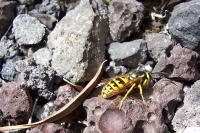
Megan Eckles lures yellowjacket wasps with protein-rich bait. Good pollen makes bees hot, biologists at UC San Diego have found. Wasps warm up too when they find protein-rich meat, a separate experiment has shown.
| Biology | July 9, 2008 10:57 PM |
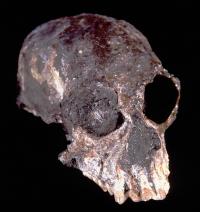
Fossil Chilecebus from South America. After taking a fresh look at an old fossil, John Flynn, Frick Curator of Paleontology at the American Museum of Natural History, and colleagues determined that the brains of the ancestors of modern Neotropical primates were as small as those of their early fossil simian counterparts in the Old World. This means one of the hallmarks of primate biology, increased brain size, arose independently in isolated groups—the platyrrhines of the Americas and the catarrhines of Africa and Eurasia.
| Biology | July 9, 2008 10:57 PM |
A newly identified fossil and the reinterpretation of previously known fossils, all from Europe and about 50 million years old, fill in a "missing link" in the evolution of flatfishes and explain one of nature's most extraordinary phenomena.
| Biology | July 8, 2008 01:38 AM |
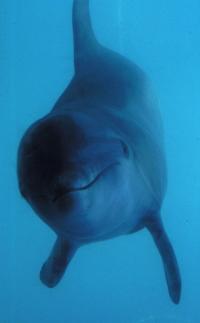
The dolphin uses a high efficiency mechanism to generate large amounts of thrust by the action of its tail fins. Sea creatures have evolved over millions of years to maximise efficiency of movement through water; humans have been trying to perfect streamlined designs for barely a century. So shouldn't we be taking more notice of the experts? Biologists and engineers from across the US have been doing just that. By studying the flippers, fins and tails of whales and dolphins, these scientists have discovered some features of their structure that contradict long-held engineering theories. Dr Frank Fish (West Chester University) will talk about the exciting impact that these discoveries may have on traditional industrial designs on Tuesday 8th July at the Society for Experimental Biology's Annual Meeting in Marseille [Session A2].
| Biology | July 8, 2008 01:38 AM |
North Carolina State University scientists have figured out one reason why pregnant yellow fever mosquitoes (Aedes aegypti), one of the most important disease transmitters worldwide, choose to lay their eggs in certain outdoor water containers while eschewing others.
| Biology | July 8, 2008 01:38 AM |
The baby's smile that gladdens a mother's heart also lights up the reward centers of her brain, said Baylor College of Medicine researchers in a report that appears in the journal Pediatrics today.
| Biology | July 7, 2008 01:21 AM |
Four weeks on from the shocking incident that led to the death of 26 dolphins near Falmouth, research released today (7 July 2008) sheds new light on the extent of the problems facing Cornwall's marine mammals.
| Biology | July 4, 2008 10:44 PM |
Canadian scientists have shown that a noisy brain is a healthy brain.
| Biology | July 2, 2008 07:59 PM |
World Wildlife Fund (WWF) is alarmed by the dramatic decline of at least 30 percent in the Bengal tiger population of Suklaphanta Wildlife Reserve in Nepal, once a refuge that boasted among the highest densities of the endangered species in the Eastern Himalayas. The recent survey of April 2008 showed a population of between 6-14 tigers, down from 20-50 tigers in 2005.
| Biology | July 2, 2008 03:59 PM |
Extinction risks for natural populations of endangered species are likely being underestimated by as much as 100-fold because of a mathematical "misdiagnosis," according to a new study led by a University of Colorado at Boulder researcher.
| Biology | June 29, 2008 11:49 PM |
Scientists are one step closer to understanding the recent demise of billions of honey bees after making an important discovery about the transmission of a common bee virus. Deformed wing virus (DWV) is passed between adult bees and to their developing brood by a parasitic mite called Varroa destructor when it feeds. However, research published in the July issue of the Journal of General Virology suggests that the virus does not replicate in Varroa, highlighting the need for further investigation.
| Biology | June 29, 2008 11:49 PM |
Homosexual behaviour is largely shaped by genetics and random environmental factors, according to findings from the world's largest study of twins.
| Biology | June 27, 2008 09:06 PM |
Canada, Mexico and the United States are joining forces to protect and conserve the Monarch butterfly, which has become a symbol of North America's shared environment.
| Biology | June 27, 2008 09:06 PM |
The ancestors of maize originally grew wild in Mexico and were radically different from the plant that is now one of the most important crops in the world. While the evidence is clear that maize was first domesticated in Mexico, the time and location of the earliest domestication and dispersal events are still in dispute. Now, in addition to more traditional macrobotanical and archeological remains, scientists are using new genetic and microbotanical techniques to distinguish domesticated maize from its wild relatives as well as to identify ancient sites of maize agriculture. These new analyses suggest that maize may have been domesticated in Mexico as early as 10,000 years ago.
| Biology | June 27, 2008 09:06 PM |
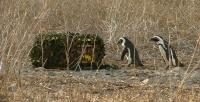
African penguins pass by a camera system on Robben Island, South Africa. Ground-breaking technology that will enable biologists to identify and monitor large numbers of endangered animals, from butterflies to whales, without being captured, will be shown to the public for the first time at this year's Royal Society Summer Science exhibition [30 June to 3 July].
| Biology | June 26, 2008 01:19 PM |
New research from Harvard University neuroscientists has pinpointed exactly how neural activity boosts blood flow to the brain. The finding has important implications for our understanding of common brain imaging techniques such as fMRI, which uses blood flow in the brain as a proxy for neural activity.
| Biology | June 26, 2008 01:19 PM |
Ground-breaking research in the June issue of Integrative Cancer Therapies published by SAGE explored whether ovarian cancer has a scent different from other cancers and whether working dogs could be taught to distinguish it in its different stages.
| Biology | June 26, 2008 01:19 PM |
More than 80 years have passed since the German scientist Hans Spemann conducted his famous experiment that laid the foundations for the field of embryonic development. After dividing a salamander embryo in half, Spemann noticed that one half – specifically, the half that gives rise to the salamander's 'belly' (ventral) starts to wither away. However, the other 'back' (dorsal) half that develops into its head, brain and spinal cord, continues to grow, regenerating the missing belly half and develops into a complete, though be it smaller, fully functional embryo. Spemann then conducted another experiment, where this time, he removed a few cells from the back half of one embryo and transplanted them into the belly half of a different embryo.
| Biology | June 25, 2008 07:28 PM |
New exquisitely preserved fossils from Latvia cast light on a key event in our own evolutionary history, when our ancestors left the water and ventured onto land. Swedish researchers Per Ahlberg and Henning Blom from Uppsala University have reconstructed parts of the animal and explain the transformation in the new issue of Nature.
| Biology | June 25, 2008 07:28 PM |
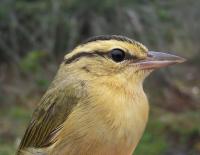
Worm-eating warblers breed in North America, but winter in Central America. While migrating, they frequently inspect "mobs " of local winged residents, Queen's University biologists discovered. (Kingston, ON) – Migrating songbirds take their survival cues from local winged residents when flying through unfamiliar territory, a new Queen's University-led study shows.
| Biology | June 23, 2008 04:10 PM |
No-take marine reserves, in which fishing is completely banned, can lead to very rapid comebacks of the fish species most prized by commercial and recreational fisheries, reveals a new study of Australia's Great Barrier Reef published in the June 24th issue of Current Biology, a Cell Press publication.
| Biology | June 23, 2008 04:10 PM |
For the first time, researchers have shown that the pre-hatching calls of baby Nile crocodiles actually mean something to their siblings and to their mothers. The calls—which are perfectly audible to humans and sound like "umph! umph! umph!"—tell the others in the nest that it's time to hatch, according to the report in the June 23rd issue of Current Biology, a Cell Press publication. Those cries also tell the mother croc to start digging up the nest.
| Biology | June 23, 2008 04:10 PM |
Plants at range limits produce seeds with larger wings, Dr. Eckert discovered. The hardiest plants and those most likely to survive the climatic shifts brought about by global warming are now easier to identify, thanks to new research findings by a team from Queen's University.
| Biology | June 23, 2008 04:10 PM |
Biologists at Harvard University have determined that some African frogs carry concealed weapons: When threatened, these species puncture their own skin with sharp bones in their toes, using the bones as claws capable of wounding predators.
| Biology | June 23, 2008 04:10 PM |
One dose of an insecticide can kill three generations of cockroaches as they feed off of each other and transfer the poison, according to Purdue University entomologists who tested the effectiveness of a specific gel bait.
| Biology | June 20, 2008 03:42 PM |
Scientists at the Smithsonian's National Zoo detected a secondary rise in urinary progestin levels in the Zoo's female giant panda Mei Xiang (may-SHONG) earlier this month. The results from the test on Thursday, June 19 lead scientists to believe the hormone rise indicates that it would be mid- to late-July before Mei Xiang either gives birth to a cub or comes to the end of a pseudopregnancy, or false pregnancy, which is common in giant pandas.
| Biology | June 20, 2008 03:42 PM |
Many birds are arriving earlier each spring as temperatures warm along the East Coast of the United States. However, the farther those birds journey, the less likely they are to keep pace with the rapidly changing climate.
| Biology | June 19, 2008 08:48 PM |
Krakow/Halle. Major Histocompatibility Complex (MHC) genes produce proteins that are crucial in fighting pathogen assault. Researchers from the Jagiellonian University in Krakow and from the Helmholtz Centre for Environmental Research (UFZ) characterized genetic variation and detected more than one MHC class II locus in a tailed amphibian. Unlike mammals, not much has been known until now about the immune defence of amphibians. Globally, amphibian populations are in an unprecedented decline, to a considerable extent caused by rapidly spreading infectious diseases, such as the fungal infection Chytridiomycosis.
| Biology | June 19, 2008 08:48 PM |
A historic meeting next week may decide the fate of tuna in the Eastern Pacific Ocean, one of the world's most important marine resources.
| Biology | June 18, 2008 06:08 PM |
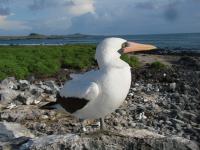
An adult Nazca booby looks over the colony. The Nazca booby, a Galápagos Island seabird, emerges from its shell ready to kill its brother or sister. Wake Forest University biologists and their colleagues have linked the murderous behavior to high levels of testosterone and other male hormones found in the hatchlings.
| Biology | June 18, 2008 06:08 PM |
Apes can plan for their future needs just as we humans can – by using self-control and imagining future events. Mathias and Helena Osvath's research, from Lunds University Cognitive Science in Sweden, is the first to provide conclusive evidence of advanced planning capacities in non-human species. Their findings are published online this week in Springer's journal, Animal Cognition.
| Biology | June 18, 2008 06:08 PM |
Some migratory songbirds figure out the best place to live by eavesdropping on the singing of others that successfully have had baby birds – a communication and behavioral trait so strong that researchers playing recorded songs induced them to nest in places they otherwise would have avoided.
| Biology | June 16, 2008 06:34 PM |
Styela clava, one of the non-native species which has been found in UK waters. Queen's University Belfast is appealing for help from the public in looking at ways to detect and stop the spread of marine aliens.
| Biology | June 13, 2008 12:23 PM |
A new ecological study led by a University of Adelaide researcher should help identify species prone to extinction under environmental change, and species that are likely to become a pest.
| Biology | June 13, 2008 12:23 PM |
Why bother running on hind legs when the four you've been given work perfectly well? This is the question that puzzles Christofer Clemente. For birds and primates, there's a perfectly good answer: birds have converted their forelimbs into wings, and primates have better things to do with their hands. But why have some lizards gone bipedal? Have they evolved to trot on two feet, or is their upright posture simply a fluke of physics? Curious to find the answer, Clemente and his colleagues Philip Withers, Graham Thompson and David Lloyd decided to test how dragon lizards run on two legs.
| Biology | June 12, 2008 06:18 PM |

This composite shows what bones were found and what the Sustut dinosaur may have looked like 70 million years ago. A partial dinosaur skeleton unearthed in 1971 from a remote British Columbia site is the first ever found in Canadian mountains and may represent a new species, according to a recent examination by a University of Alberta researcher.
| Biology | June 12, 2008 06:18 PM |
After a stroke, even unaffected areas of the brain are at risk – depolarization waves arise at the edges of the dead tissue and spread through the adjacent areas of the brain. If these waves are repeated, more cells die. This has previously been observed only in animal studies.
| Biology | June 11, 2008 07:17 PM |
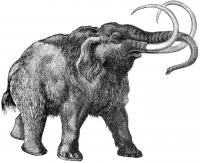
Drawing of a woolly mammoth. A large genetic study of the extinct woolly mammoth has revealed that the species was not one large homogenous group, as scientists previously had assumed, and that it did not have much genetic diversity. "The population was split into two groups, then one of the groups died out 45,000 years ago, long before the first humans began to appear in the region," said Stephan C. Schuster, associate professor of biochemistry and molecular biology at Penn State University and a leader of the research team. "This discovery is particularly interesting because it rules out human hunting as a contributing factor, leaving climate change and disease as the most probable causes of extinction." The discovery will be published later this week in the early online edition of the Proceedings of the National Academy of Sciences (PNAS).
| Biology | June 11, 2008 07:17 PM |
Flies, unlike humans, can't manipulate the temperature of their surroundings so they need to pick the best spot for flourishing. New Brandeis University research in this week's Nature reveals that they have internal thermosensors to help them.
| Biology | June 11, 2008 07:17 PM |
Scientists have discovered that there are more bee species than previously thought. In the first global accounting of bee species in over a hundred years, John S. Ascher, a research scientist in the Division of Invertebrate Zoology at the American Museum of Natural History, compiled online species pages and distribution maps for more than 19,200 described bee species, showcasing the diversity of these essential pollinators. This new species inventory documents 2,000 more described, valid species than estimated by Charles Michener in the first edition of his definitive The Bees of the World published eight years ago.
| Biology | June 11, 2008 07:17 PM |
The temperature inside a healthy, photosynthesizing tree leaf is affected less by outside environmental temperature than originally believed, according to new research from biologists at the University of Pennsylvania.
| Biology | June 10, 2008 11:31 PM |
From paintings and photographs to coins and credit cards, we are constantly surrounded by symbolic artefacts. The mental representation of symbols – objects that arbitrarily represent other objects – ultimately affords the development of language, and certainly played a decisive role in the evolution of our hominid ancestors. Can other animal species also comprehend and use symbols? Some evidence suggests that apes, our closest relatives, can indeed use symbols in various contexts. However, little is known about the symbolic competence of phylogenetically more distant species.
Complete 'family tree' of all British birds gives clues about which species might be endangered next
| Biology | June 10, 2008 11:31 PM |
A new complete evolutionary 'family tree' showing how all British bird species are related to each other may provide clues about which ones are at risk of population decline, according to new research published today (11 June) in Proceedings of the Royal Society B: Biological Sciences.
| Biology | June 10, 2008 12:44 PM |
An older nomad. A propensity for attention deficit hyperactivity disorder (ADHD) might be beneficial to a group of Kenyan nomads, according to new research published in the open access journal BMC Evolutionary Biology. Scientists have shown that an ADHD-associated version of the gene DRD4 is associated with better health in nomadic tribesmen, and yet may cause malnourishment in their settled cousins.
| Biology | June 9, 2008 08:42 PM |
A team of forensic scientists at the University of Copenhagen has studied human remains found in two ancient Danish burial grounds dating back to the iron age, and discovered a man who appears to be of arabian origin. The findings suggest that human beings were as genetically diverse 2000 years ago as they are today and indicate greater mobility among iron age populations than was previously thought. The findings also suggest that people in the Danish iron age did not live and die in small, isolated villages but, on the contrary, were in constant contact with the wider world.
| Biology | June 8, 2008 08:34 PM |
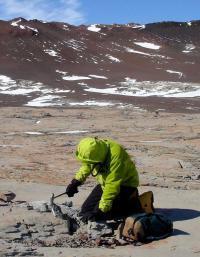
Christian Sidor of the University of Washington digs for tetrapod fossils in Allan Hills, part of the southern Victoria Land area of Antarctica, during field work in January 2006. For the first time paleontologists have found fossilized burrows of tetrapods – any land vertebrates with four legs or leglike appendages – in Antarctica dating from the Early Triassic epoch, about 245 million years ago.
| Biology | June 8, 2008 08:34 PM |
One of the great scientific challenges is to understand the design principles and origins of the human brain. New research has shed light on the evolutionary origins of the brain and how it evolved into the remarkably complex structure found in humans.
| Biology | June 7, 2008 04:22 PM |
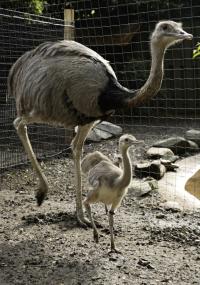
A rhea chick and its father stroll around the rheas' outside exhibit at the birdhouse of the Smithsonian's National Zoo. This rhea chick, along with three brothers and sisters, hatched at the National Zoo on April 20 and has been raised by its father. Although this parenting behavior is unusual, male rheas build the nest, incubate the eggs, and raise the chicks after they hatch. The bird originally comes from South America and can grow to be over five feet tall. Credit: Mehgan Murphy/Smithsonian’s National Zoo How will the only male rhea at the Smithsonian's National Zoo spend Father's Day? He will spend it much like he has spent the past eight weeks: as a proud papa nurturing and caring for his four chicks born April 20. This is the first time in some 30 years that rhea chicks have hatched at the Zoo.
| Biology | June 7, 2008 04:22 PM |
Scientists who dig dinosaurs in Eastern Montana will now be able to chemically analyze fossils the same day they're excavated and before degrading begins.
| Biology | June 5, 2008 08:17 PM |
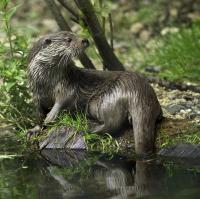
Genetic analyses of the feces could prove to be a promising approach when investigating otter populations, as researchers have written in the scientific journal Conservation Genetics. Researchers of the Helmholtz Center for Environmental Research have developed two new methods, in order to be able to better estimate the numbers of European Otters (Lutra lutra) and their effects on the fish farming industry.
| Biology | June 4, 2008 05:13 PM |
Laboratory tests and field studies conducted by James Madison University (JMU) researchers continue to show promise that probiotic bacteria can be used to help amphibian populations, including the endangered yellow-legged frog, fend off lethal skin diseases.
| Biology | June 3, 2008 07:05 PM |
Aging leads to large changes in gene activity in the ovaries of mice, but only limited changes in testes, according to research published in the open-access journal, BMC Biology. A lifespan-extending calorie-restricted diet reversed some of the aging effects – but, unlike the widespread changes observed in somatic organs, it had an impact only in a small number of gonad-specific genes.
| Biology | June 2, 2008 09:30 PM |
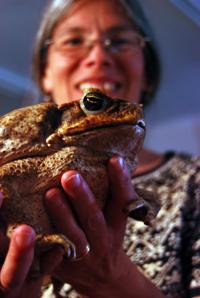
A cane toad from Suriname is helping Northern Arizona University researcher Kiisa Nishikawa understand the speed, power and energy behind the toad's ability to capture prey with its tongue. Her studies offer insight into how muscles function more as springs than motors. Credit: Photo by Danielle Borth A toad sits at a pond's edge eyeing a cricket on a blade of grass. In the blink of an eye, the toad snares the insect with its tongue. This deceptively simple, remarkably fast feeding action offers a new look at how muscles work.
| Biology | June 2, 2008 09:30 PM |
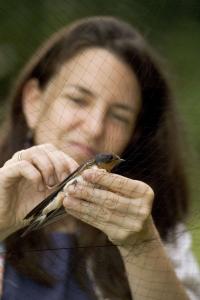
University of Colorado at Boulder Assistant Professor Rebecca Safran of the ecology and evolutionary biology department retrieves a North American barn swallow from a mist net for marking and release. A new study led by the University of Colorado at Boulder has shown the testosterone of male North American barn swallows skyrocketed early in the breeding season when their breast colors were artificially enhanced by researchers, indicating the clothes -- or in this case, the feathers -- make the man.
| Biology | June 2, 2008 12:17 PM |
Forest management that favors single tree species and climate change are just two of the critical factors making forests throughout western North America more susceptible to infestation by bark beetles, according to an article published in the June 2008 BioScience. Bark beetle epidemics have become more extensive and frequent in recent years as winter temperatures have risen, and an eruption of mountain pine beetles is currently devastating lodgepole pines throughout the mountainous West.
| Biology | June 1, 2008 03:44 PM |
Nautiloids are the sole surviving family of externally-shelled cephalopods that thrived in the tropical oceans 450–150 million years ago. However, in the intervening years their modern soft bodied relatives dumped the shell and developed complex central nervous systems; which makes Nautilus ideally suited to discover the ‘evolutionary pathways that led to the development of the complex coleoid [soft bodied cephalopod] brains’ say Robyn Crook and Jennifer Basil. Knowing that the simple Nautilus brain lacks the structures required for memory in more sophisticated cephalopods, Crook and Basil decided to test the living fossil’s memory.
| Biology | May 29, 2008 04:46 PM |
Somewhere in the murky past, between four and seven million years ago, a hungry common ancestor of today’s primates, including humans, did something novel. While temporarily standing on its rear feet to reach a piece of fruit, this protohominid spotted another juicy morsel in a nearby shrub and began shuffling toward it instead of dropping on all fours, crawling to the shrub and standing again.
| Biology | May 29, 2008 04:46 PM |
Long viewed as straitlaced spinsters, sexless freshwater invertebrate animals known as bdelloid rotifers may actually be far more promiscuous than anyone had imagined: Scientists at Harvard University have found that the genomes of these common creatures are chock-full of DNA from plants, fungi, bacteria, and animals.
| Biology | May 28, 2008 04:32 PM |
An Iowa State University researcher has found that sick female deer mice devote their energy to producing healthier offspring.
| Biology | May 28, 2008 04:32 PM |
You went to a wedding yesterday. The service was beautiful, the food and drink flowed and there was dancing all night. But people tell you that you are in hospital, that you have been in hospital for weeks, and that you didn’t go to a wedding yesterday at all.
| Biology | May 27, 2008 02:55 PM |
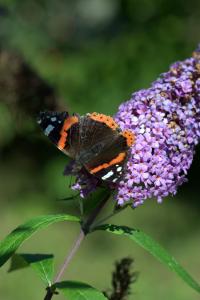
The Butterfly bush was introduced to Europe about one hundred years ago from China and has been cultivated since then. Invasive plant species can flourish better in their new homes than in their place of origin. The reasons for this can be genetic changes or the lack of herbivores such as insects that first have to adapt to the newcomers. These are the conclusions of researchers from the Helmholtz Centre for Environmental Research (UFZ) from their research on Buddleia or the Butterfly bush (Buddleja davidii) and Oregon grape (Mahonia aquifolium). Due to this, invasive plant species would have an advantage over other native plant species and could therefore pose a threat to the ecological balance, as researchers have written in the scientific journal Diversity and Distributions.
| Biology | May 27, 2008 02:55 PM |
Geneticists of Leiden University Medical Centre (LUMC) are the first to determine the DNA sequence of a woman. She is also the first European whose DNA sequence has been determined. This has been announced by the researchers this morning, during a special press conference at ‘Bessensap’, a yearly meeting of scientists and the press in the Netherlands.
| Biology | May 27, 2008 02:55 PM |
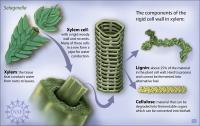
Both lignin and cellulose are found in the rigid cell walls of the xylem cells (those that conduct water) in the primitive plant, Selaginella. Biologists have discovered that a fundamental building block in the cells of flowering plants evolved independently, yet almost identically, on a separate branch of the evolutionary tree--in an ancient plant group called lycophytes that originated at least 420 million years ago.
| Biology | May 27, 2008 02:55 PM |
Is the smell of almonds closer to that of roses or bananas? Weizmann Institute scientists have now answered that question (roses) by showing for the first time that smells can be mapped and the relative distance between various odors determined. Their findings, which appeared recently in Nature Methods, may help scientists to unravel the basic laws underlying our sense of smell, as well as potentially enabling odors to be digitized and transferred via computer in the future.
| Biology | May 23, 2008 06:42 PM |
Honeybees pollinate our crops and produce the honey we enjoy. We all know that. What we are perhaps not aware of, however, is just how or why they do this and why we are so dependent on what they do.
| Biology | May 23, 2008 06:42 PM |
The International Institute for Species Exploration at Arizona State University and an international committee of taxonomists – scientists responsible for species exploration and classification – today announce the top 10 new species described in 2007.
| Biology | May 22, 2008 07:31 PM |
U.S. Forest Service scientists with the Institute of Pacific Islands Forestry have submitted a proposal to release a Brazilian insect to control the spread of strawberry guava, a South American tree that has invaded and degraded native Hawaiían ecosystems since it was introduced in 1825 as a garden plant.
| Biology | May 22, 2008 07:31 PM |
22nd May 2008 – The first study to determine the global threat status of 21 species of wide-ranging oceanic pelagic sharks and rays reveals serious overfishing and recommends key steps that governments can take to safeguard populations. These findings and recommendations for action are published in the latest edition of Aquatic Conservation: Marine and Freshwater Ecosystems.
| Biology | May 22, 2008 12:41 AM |
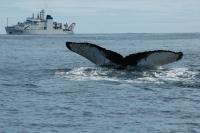
NOAA ship Oscar Dyson stands watch as researchers gather information from humpback whales. Humpback whale flukes, like the one shown here, are unique to each animal just like a fingerprint. This whale could be identified thousands of miles away by its distinctive markings. Credit: NOAA The number of humpback whales in the North Pacific Ocean has increased since international and federal protections were enacted in the 1960s and 70s, according to a new study funded primarily by NOAA and conducted by more than 400 whale researchers throughout the Pacific region.
| Biology | May 22, 2008 12:41 AM |
There are only four specimens of the Yangtze giant softshell turtle left on Earth—one in the wild and three in captivity. In order to save this species from extinction, conservation partners from the Wildlife Conservation Society (WCS) and the Turtle Survival Alliance (TSA), working in conjunction with partners from two Chinese zoos and the China Zoo Society, recently paired two of them. A still reproductive, more than 80-year-old, female, living in China’s Changsha Zoo has been introduced to the only known male in China, a more than 100-year-old living more than 600 miles away at the Suzhou Zoo.
| Biology | May 22, 2008 12:41 AM |
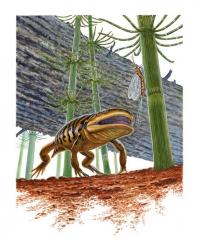
An Early Permian landscape, with Gerobatrachus hottoni lunging at the mayfly Protoreisma between stands of Calamites and under a fallen Walchia conifer. The description of an ancient amphibian that millions of years ago swam in quiet pools and caught mayflies on the surrounding land in Texas has set to rest one of the greatest current controversies in vertebrate evolution. The discovery was made by a research team led by scientists at the University of Calgary.
| Biology | May 22, 2008 12:41 AM |
The brain centers triggered by a betrayal of trust have been identified by researchers, who found they could suppress such triggering and maintain trust by administering the brain chemical oxytocin. The researchers said their findings not only offer basic insights into the neural machinery underlying trust; the results may also help in understanding the neural basis of social disorders such as phobias and autism.
| Biology | May 21, 2008 10:47 AM |
Scientists have discovered the first dinosaur tracks on the Arabian Peninsula. In this week’s issue of the journal PLoS ONE, they report evidence of a large ornithopod dinosaur, as well as a herd of 11 sauropods walking along a Mesozoic coastal mudflat in what is now the Republic of Yemen.
| Biology | May 21, 2008 10:47 AM |
Rats housed in standard conditions show a stronger response to the loss of an expected food reward than those housed in enriched conditions, perhaps indicating a more negative emotional state, according to new research by scientists at Bristol University Veterinary School, published in this week's issue of Royal Society Biology Letters.
| Biology | May 20, 2008 09:30 AM |
Y larvae. First identified in 1899, y-larvae have been one of the greatest zoological mysteries for over a century. No one has ever found an adult of these puzzling crustaceans, despite the plethora of these larvae in plankton, leading generations of marine zoologists to wonder just what y- larvae grow up to be. A study published in BioMed Central’s open access journal, BMC Biology, reports the transformation of the larvae into a previously unseen, wholly un-crustacean-like, parasitic form.
| Biology | May 19, 2008 05:27 PM |
An orthopaedic surgeon at the University of Liverpool has performed a groundbreaking operation on a chimp in Cameroon to correct a deformity more commonly seen in dogs.
| Biology | May 19, 2008 05:27 PM |
Largely unexplored deep-sea coral reefs, some perhaps hundreds of thousands of years old, off the coast of the southeastern U.S. are not only larger than expected but also home to commercially valuable fish populations and many newly discovered and unusual species. Results from a series of NOAA-funded expeditions to document these previously unstudied and diverse habitats and their associated marine life have revealed some surprising results.
| Biology | May 18, 2008 10:57 PM |
Scientists have developed the first genetically altered monkey model that replicates some symptoms observed in patients with Huntington's disease, according to a new study funded by the National Institutes of Health. Researchers are now able to better understand this complex, devastating and incurable genetic disorder affecting the brain. This advance, reported in the May 18 advance of online publication edition of Nature, could lead to major breakthroughs in the effort to develop new treatments for a range of neurological diseases.
| Biology | May 17, 2008 03:11 PM |
Changing the sugars attached to a hormone produced in the pituitary gland increased fertility levels in mice nearly 50 percent, a research group at Washington University School of Medicine in St. Louis has found. The change appears to alter a reproductive "thermostat," unveiling part of an intricate regulatory system that may one day be used to enhance human fertility.
| Biology | May 15, 2008 09:28 PM |
As Charles Darwin showed nearly 150 years ago, bird beaks are exquisitely adapted to the birds' feeding strategy. A team of MIT mathematicians and engineers has now explained exactly how some shorebirds use their long, thin beaks to defy gravity and transport food into their mouths.
| Biology | May 15, 2008 09:28 PM |
Smaller primates expend no more energy climbing than they do walking, Duke University researchers have found. This surprising discovery may explain the evolutionary edge that encouraged the tiny ancestors of modern humans, apes and monkeys to climb into the trees about 65 million years ago and stay there.
| Biology | May 14, 2008 11:37 PM |
A Swiss marine biologist and an Australian quantum physicist have found that a species of shrimp from the Great Barrier Reef, Australia, can see a world invisible to all other animals.
| Biology | May 14, 2008 10:37 PM |
Altizer with monarch. It’s a paradox that has confounded evolutionary biologists since Charles Darwin published On the Origin of Species in 1859: Since parasites depend on their hosts for survival, why do they harm them?
| Biology | May 14, 2008 10:37 PM |
The mouse is a stalwart stand-in for humans in medical research, thanks to genomes that are 85 percent identical. But identical genes may behave differently in mouse and man, a study by University of Michigan evolutionary biologists Ben-Yang Liao and Jianzhi Zhang reveals.
| Biology | May 12, 2008 10:26 PM |
Losing a limb can be a traumatic experience and, in some cases, emotional and physical pain can linger for years. To better understand the phenomenon, dubbed “phantom limb syndrome,” Université de Montréal graduate student Emma Duerden is inviting amputees to come forward and share their experiences for a major study.
| Biology | May 12, 2008 08:26 PM |
Follow that fish -- threespine sticklebacks that were used in the experiments. For animals that live in social groups, and that includes humans, blindly following a leader could place them in danger.
| Biology | May 11, 2008 02:13 PM |
O. tormota lives in a noisy environment on the brushy edge of streams in the Huangshan Hot Springs, in central China, where waterfalls and rushing water provide a constant din. Most female frogs don’t call; most lack or have only rudimentary vocal cords. A typical female selects a mate from a chorus of males and then –silently – signals her beau. But the female concave-eared torrent frog, Odorrana tormota, has a more direct method of declaring her interest: She emits a high-pitched chirp that to the human ear sounds like that of a bird.
| Biology | May 9, 2008 05:35 PM |
Scientists at the University of Amsterdam have discovered how to keep one’s tomatoes from wilting – the answer lies at the molecular level. The story of how the plant beat the pathogen, and what it means for combating other plant diseases, is published May 9th in the open-access journal PLoS Pathogens.
| Biology | May 9, 2008 05:35 PM |
Investigations continue into the cause of a mysterious illness that has resulted in the deaths of thousands of bats since March 2008. At more than 25 caves and mines in the northeastern U.S, bats exhibiting a condition now referred to as “white-nosed syndrome” have been dying.
| Biology | May 8, 2008 05:32 PM |
Since ancient times, locust plagues have been viewed as one of the most spectacular events in nature. In seemingly spontaneous fashion, as many as 10 billion critters can suddenly swarm the air and carpet the ground, blazing destructive paths that bring starvation and economic ruin.
| Biology | May 7, 2008 08:19 PM |
One of the major scientific questions about the brain is how it can translate the simple intent to perform an action—say, reach for a glass—into the dynamic, coordinated symphony of muscle movements required for that action. The neural instructions for such actions originate in the brain’s primary motor cortex, and the puzzle has been whether the neurons in this region encode the details of individual muscle activities or the high-level commands that govern kinetics—the direction and velocity of desired movements.
| Biology | May 7, 2008 06:19 PM |
St. Jude Children's Research Hospital investigators have found that an electrically powered amplification mechanism in the cochlea of the ear is critical to the acute hearing of humans and other mammals. The findings will enable better understanding of how hearing loss can result from malfunction of this amplification machinery due to genetic mutation or overdose of drugs such as aspirin.
| Biology | May 7, 2008 04:19 PM |
Male seagulls may be more vulnerable to their environment during embryonic development than females, according to Maria Bogdanova and Ruedi Nager from the University of Glasgow in the UK. Until now, the sex differences in developmental rate and susceptibility to unfavorable conditions during the embryonic stage in birds have received little attention. The paper (1) has just been published in Springer’s journal, Behavioral Ecology and Sociobiology.
| Biology | May 6, 2008 04:30 PM |
With nearly one-third of amphibian species threatened with extinction worldwide, fueled in part by the widespread emergence of the deadly chytrid fungus, effective conservation efforts could not be more urgent. In a new article in the open-access journal PLoS Biology, Franco Andreone and his colleagues argue that one of the best places to focus these efforts is Madagascar, a global hotspot of amphibian diversity that shows no signs of amphibian declines—or traces of the chytrid fungus.
| Biology | May 2, 2008 09:38 PM |
Scientists in Germany have discovered a new mechanism of infection for the most fatal bee disease. American Foulbrood (AFB) is the only infectious disease which can kill entire colonies of bees. Every year, this notifiable disease is causing considerable economic loss to beekeepers all over the world. The only control measure is to destroy the infected hive.
| Biology | May 2, 2008 12:13 PM |
The greater dwarf cloud rat (Carpomys melanurus) was rediscovered in April 2008 -- 112 years after the first and only time it had ever been seen by scientists. Cloud rats are one of the most spectacular cases of adaptive radiation by mammals anywhere in the world, with at least 15 species ranging in size from 2.6 kg to 15 grams, all living only in the Philippines. A team of Filipino and American scientists have rediscovered a highly distinctive mammal ¨C a greater dwarf cloud rat ¨C that was last seen 112 years ago. Furthermore, it has never before been discovered in its natural habitat and was thought by some to be extinct.
| Biology | May 1, 2008 11:13 PM |
Young songbirds babble before they can mimic an adult’s song, much like their human counterparts. Now, in work that offers insights into how birds—and perhaps people—learn new behaviors, MIT scientists have found that immature and adult birdsongs are driven by two separate brain pathways, rather than one pathway that slowly matures.
| Biology | May 1, 2008 09:13 PM |
Male seahorses are nature’s real-life Mr. Moms – they take fathering to a whole new level: Pregnancy.
| Biology | May 1, 2008 08:13 PM |
A report publishing online on May 1st in the journal Current Biology, a publication of Cell Press, provides the first evidence of an animal using ultraviolet B (UVB) rays to communicate with other members of its species.
| Biology | May 1, 2008 04:31 PM |
To spotlight the widespread importance of evolution, a group of renowned international scientists have launched a scientific journal devoted to using evolutionary biology to tackle the world's major biological crises. The new journal, titled Evolutionary Applications publishes articles that use evolution to address pressing issues such as climate change, endangered species, food safety, infectious diseases, and invasive species.
| Biology | April 30, 2008 11:31 PM |
The latest edition of the Oxford English Dictionary boasts 22,000 pages of definitions. While that may seem far from succinct, new research suggests the reference manual is meticulously organized to be as concise as possible — a format that mirrors the way our brains make sense of and categorize the countless words in our vast vocabulary.
| Biology | April 30, 2008 08:31 PM |
Research by Yale scientists shows that males and females have essentially unisex brains — at least in flies — according to a recent report in Cell designed to identify factors that are responsible for sex differences in behavior.
| Biology | April 30, 2008 06:31 PM |
Annemarie Surlykke from the Institute of Biology, SDU, Denmark, and her colleague, Elisabeth Kalko, from the University of Ulm, Germany, studied the echolocation behavior in 11 species of insect-eating tropical bats from Panamá, the findings of which are reported in this weeks’ PLoS ONE.
| Biology | April 29, 2008 07:18 PM |
A bison and calf in Yellowstone National Park. Bison can repopulate large areas from Alaska to Mexico over the next 100 years provided a series of conservation and restoration measures are taken, according to continental assessment of this iconic species by the Wildlife Conservation Society and other groups. The assessment was authored by a diverse group of conservationists, scientists, ranchers, and Native Americans/First Nations peoples, and appears in the April issue of the journal Conservation Biology.
| Biology | April 29, 2008 06:18 PM |
Researchers discovered a legless lizard and a tiny woodpecker along with 12 other suspected new species in Brazil’s Cerrado, one of the world’s 34 biodiversity conservation hotspots.
| Biology | April 29, 2008 01:56 AM |
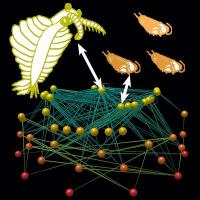
In this depiction of the food web of the Burgess Shale from the Middle Cambrian, spheres represent species or groups of species, and the links between them show feeding relationships. The drawing shows a top predator, Anomalocaris, chasing one of its likely prey species, the trilobite Olenoides, with arrows indicating their positions in the food web. Many aspects of the structure of this ancient ecological network are similar to the architecture of modern food webs.
Credit: Image: N. D. Martinez. Food web produced with Network3D software written by R. J. Williams It was an Anomalocaris-eat-trilobite world, filled with species like nothing on today's Earth. But the ecology of Cambrian communities was remarkably modern, say researchers behind the first study to reconstruct detailed food webs for ancient ecosystems. Their paper, published this week in the open-access journal PLoS Biology, suggests that networks of feeding relationships among marine species that lived hundreds of millions of years ago are remarkably similar to those of today.
| Biology | April 28, 2008 01:32 PM |
A handful of soil is a lot like a banana, strawberry and apple smoothie: Blended all together, it is hard to tell what's in there, especially if you have never tasted the fruits before.
| Biology | April 24, 2008 08:49 PM |
Two genes that help insulin regulate mosquitoes’ growth have been identified as key contributors to how the insects enter a dormant state to survive winter’s cold.
| Biology | April 24, 2008 05:49 PM |
Cotton fields in Parker Valley, Ariz. Biologists call for making available more detailed maps of the locations of biotech crops.
| Biology | April 24, 2008 04:49 PM |
Putting more meat on the theory that dinosaurs’ closest living relatives are modern-day birds, molecular analysis of a shred of 68-million-year-old Tyrannosaurus rex protein – along with that of 21 modern species – confirms that dinosaurs share common ancestry with chickens, ostriches, and to a lesser extent, alligators.
| Biology | April 23, 2008 09:27 PM |
Dutch ecologist Roxina Soler and her colleagues have discovered that subterranean and aboveground herbivorous insects can communicate with each other by using plants as telephones. Subterranean insects issue chemical warning signals via the leaves of the plant. This way, aboveground insects are alerted that the plant is already ‘occupied’.
| Biology | April 23, 2008 07:27 PM |
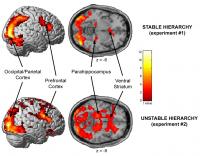
Brain activity was much higher in key brain centers when participants viewed a superior player in an unstable social hierarchy -- when participants had the possibility of upward mobility. Human imaging studies have for the first time identified brain circuitry associated with social status, according to researchers at the National Institute of Mental Health (NIMH) of the National Institutes of Health. They found that different brain areas are activated when a person moves up or down in a pecking order – or simply views perceived social superiors or inferiors. Circuitry activated by important events responded to a potential change in hierarchical status as much as it did to winning money.
| Biology | April 23, 2008 06:27 PM |
Our ability to remember the objects, places and people within our environment is essential for everyday life, although the importance of this is only fully appreciated when recognition memory beings to fail, as in Alzheimer’s disease.
| Biology | April 22, 2008 09:29 PM |
While waiting for colleagues at a small natural history museum in the state of Chiapas, Mexico last year, Cornell paleontologist Greg Dietl chanced upon a discovery that has helped rewrite the evolutionary history of crabs and the shelled mollusks upon which they preyed.
| Biology | April 22, 2008 07:29 PM |
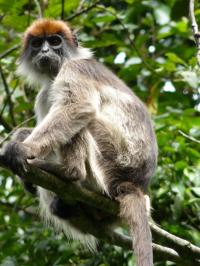
Red colobus monkeys living in a park in western Uganda harbored antibodies to an unknown orthopoxvirus, a pathogen that is related to the viruses that cause smallpox, monkeypox and cowpox. Researchers report this month that red colobus monkeys in a park in western Uganda have been exposed to an unknown orthopoxvirus, a pathogen related to the viruses that cause smallpox, monkeypox and cowpox. Most of the monkeys screened harbor antibodies to a virus that is similar – but not identical – to known orthopoxviruses.
| Biology | April 22, 2008 12:18 PM |
The human brain responds to being treated fairly the same way it responds to winning money and eating chocolate, UCLA scientists report. Being treated fairly turns on the brain's reward circuitry.
| Biology | April 22, 2008 10:18 AM |
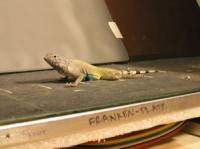
Scientists studied lizard walking and running mechanics on a race track with a built-in force plate. The technique lizards use to grab their grub influences how they move, according to researchers at Ohio University.
| Biology | April 21, 2008 11:18 PM |
New drug research suggests that teens may get addicted and relapse more easily than adults because developing brains are more powerfully motivated by drug-related cues. This conclusion has been reached by researchers who found that adolescent rats given cocaine – a powerfully addicting stimulant – were more likely than adults to prefer the place where they got it. That learned association endured: Even after experimenters extinguished the drug-linked preference, a small reinstating dose of cocaine appeared to rekindle that preference – but only in the adolescent rats.
| Biology | April 21, 2008 02:41 AM |
Scientists at the University of Liverpool have found that female mice avoid mating with inbred males by ‘sensing’ the diversity of a protein type in their urine.
| Biology | April 18, 2008 09:06 PM |
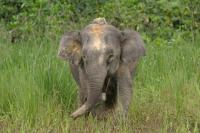
Pygmy elephant with radio collar. The Borneo pygmy elephant may not be native to the island of Borneo after all. Instead, the population could be the last survivors of the Javan elephant race – accidentally saved from extinction by the Sultan of Sulu centuries ago, suggests an article co-authored by World Wildlife Fund (WWF).
| Biology | April 18, 2008 07:06 PM |
Tigers held in captivity around the world—including those in zoos, circuses, and private homes—may hold considerable conservation value for the rapidly dwindling wild populations around the world, according to a new report published online on April 17th in Current Biology, a Cell Press publication. Using a new method for assessing the genetic ancestry of tigers, researchers discovered that many apparently "generic" tigers actually represent purebred subspecies and harbor genomic diversity no longer found in nature.
| Biology | April 18, 2008 05:06 PM |
Soldiers on sentry duty in hostile territory keep in regular radio contact with their colleagues to assure them that all is well and that they are safe to carry on their manoeuvres. New research funded by the Biotechnology and Biological Sciences Research Council (BBSRC) and published in Current Biology today (17 April) reveals that this is also a feature of the bird world and is very likely to be a rare example of truly cooperative behaviour.
| Biology | April 17, 2008 10:51 PM |
People who score high on intelligence tests are also good at keeping time, new Swedish research shows. The team that carried out the study also suspect that accuracy in timing is important to the brain processes responsible for problem solving and reasoning.
| Biology | April 17, 2008 08:51 PM |
When frogs hit the road, many croak.
Researchers found more than 65 animal species killed along a short stretch of roads in a Midwestern county. Nearly 95 percent of the total dead were frogs and other amphibians, suggesting that road-related death, or road-kill, possibly contributes to their worldwide decline, a trend that has concerned and puzzled scientists for decades.
| Biology | April 17, 2008 02:51 PM |
Deep-sea sharks have been tagged and tracked and their habitats precisely mapped in world-first research to test the conservation value of areas closed to commercial fishing. Last month scientists from the CSIRO Wealth from Oceans National Research Flagship fitted acoustic tags to 50 gulper sharks, swellsharks and green eye dogfish near Port Lincoln, South Australia.
| Biology | April 16, 2008 11:51 PM |
Fishing activities can provoke volatile fluctuations in the populations they target, but it’s not often clear why. A new study published in the journal Nature by scientists at Scripps Institution of Oceanography at UC San Diego and colleagues has identified the general underlying mechanism.
| Biology | April 16, 2008 10:51 PM |
Some primates have evolved big brains because their extra brainpower helps them live and reproduce longer, an advantage that outweighs the demands of extra years of growth and development they spend reaching adulthood, anthropologists from Duke University and the University of Zurich have concluded in a new study.
| Biology | April 16, 2008 07:51 PM |
The extra fat we carry around our middle could be making us hungrier, so we eat more, which in turn leads to even more belly fat. Dr. Yaiping Yang and his colleagues at the Lawson Health Research Institute affiliated with The University of Western Ontario found abdominal fat tissue can reproduce a hormone that stimulates fat cell production. The researchers hope this discovery will change in the way we think about and treat abdominal obesity.
| Biology | April 16, 2008 06:51 PM |
Molecules from cone snail venom and African plants are being used by Queensland researchers as a blueprint to develop an oral drug to treat chronic pain.
| Biology | April 16, 2008 06:51 PM |
The world’s oldest recorded tree is a 9,550 year old spruce in the Dalarna province of Sweden.
| Biology | April 16, 2008 02:24 PM |
From autopsies, researchers have long known that some people die with sharp minds and perfect memories, but their brains riddled with the plaques and tangles of Alzheimer’s disease. New research shows that those people have a larger part of the brain called the hippocampus. The research will be presented at the American Academy of Neurology 60th Annual Meeting in Chicago, April 12 – April 19, 2008.
| Biology | April 14, 2008 11:40 PM |
Already several seconds before we consciously make a decision its outcome can be predicted from unconscious activity in the brain. This is shown in a study by scientists from the Max Planck Institute for Human Cognitive and Brain Sciences in Leipzig, in collaboration with the Charite University Hospital and the Bernstein Center for Computational Neuroscience in Berlin. The researchers from the group of Professor John-Dylan Haynes used a brain scanner to investigate what happens in the human brain just before a decision is made. "Many processes in the brain occur automatically and without involvement of our consciousness. This prevents our mind from being overloaded by simple routine tasks. But when it comes to decisions we tend to assume they are made by our conscious mind. This is questioned by our current findings." (Nature Neuroscience, April 13th 2008)
| Biology | April 14, 2008 10:40 PM |
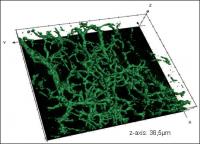
Three-dimensional reconstruction of a vascular system made of human endothelial cells in mice 20 days after injection of the spheroids. Image taken with a confocal microscope, stained green. The formation of new blood vessels, or angiogenesis, is an Achilles’ heel of tumor growth, because tumors depend on the supply of oxygen and nutrients for survival. Therefore, for some years now substances called angiogenesis inhibitors have been used in cancer treatment to suppress this process. In order to advance this new research field, a team of researchers headed by Professor Hellmut Augustin has developed a method to create a complex human vascular system in mice, which stays functional even after several months.
| Biology | April 14, 2008 08:40 PM |
Using fluorescent microscopy, researchers document the predator-prey interaction. The predator cells, shown in green, have caused a prey cell, shown in red, to commit suicide. The elongation and separation of the prey cell is proof of its demise. The hunter-versus-hunted phenomenon exemplified by a pack of lionesses chasing down a lonely gazelle has been recreated in a Petri dish with lowly bacteria.
| Biology | April 13, 2008 06:15 PM |
Darwin's tree of life represents the path and estimates the time evolution took to get to the current diversity of life. Now, new findings suggest that this tree, an icon of evolution, may need to be redrawn. In research to be published in the April 13 advance online issue of Nature, researchers at Rockefeller University and the University of Tokyo have joined forces to reveal that insects have adopted a strategy to detect odors that is radically different from those of other organisms -- an unexpected and controversial finding that may dissolve a dominant ideology in the field.
| Biology | April 10, 2008 10:20 PM |
Female penguins mate with males who bring them pebbles to build egg nests. Hummingbirds mate to gain access to the most productive flowers guarded by larger males.
| Biology | April 10, 2008 08:20 PM |
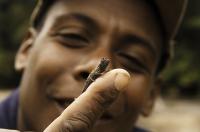
A stump-tailed chameleon from Madagascar. Using data from thousands of species of lemurs, frogs, geckos, butterflies, ants, and plants, scientists from the Bronx Zoo-based Wildlife Conservation Society, University of California, Berkeley and other organizations have completed an analytical colossus for Madagascar that will guide plans to safeguard the island’s unique natural heritage. The massive study is the cover story in the most recent edition of Science.
| Biology | April 10, 2008 07:20 PM |
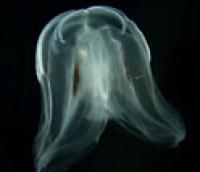
The evolutionary history of the comb jelly has revealed surprising clues about Earth's first animal. A new study mapping the evolutionary history of animals indicates that Earth's first animal--a mysterious creature whose characteristics can only be inferred from fossils and studies of living animals--was probably significantly more complex than previously believed.
| Biology | April 9, 2008 09:50 PM |
One of the world's great wildlife spectacles is under way across Australia: as many as two million migratory shorebirds of 36 species are gathering around Broome before an amazing 10,000-kilometre annual flight to their northern hemisphere breeding grounds.
| Biology | April 9, 2008 05:49 PM |
University of Delaware researchers, in collaboration with U.S. and international colleagues, have found a new type of molecule--a kind of “micro-switch”--that can turn off genes in rice, which is the primary source of food for more than half the world's population. The discovery is reported in the March 25 issue of the Proceedings of the National Academy of Sciences of the United States of America.
| Biology | April 9, 2008 10:11 AM |
A research team from the Department of Genetics, Physical Anthropology & Animal Physiology in the Faculty of Science and Technology at the Leioa campus of the University of the Basque Country (UPV/EHU), and led by Ms Concepción de la Rúa, has reconstructed the history of the evolution of human population and answered questions about history, using DNA extracted from skeleton remains.
| Biology | April 8, 2008 10:11 PM |
Pretending to be dead is an effective self-defense strategy adopted by young fire ant workers under attack from neighboring colonies. This tactic makes them four times more likely to survive aggression than older workers who fight back. As a result, these young workers are able to contribute to brood care and colony growth to ensure the survival and fitness of their queen. These findings (1) by Dr. Deby Cassill from the Biology Department at USF Petersburg in Florida and her team from USF Tampa in Florida, have just been reported online in Naturwissenschaften, a Springer publication.
| Biology | April 7, 2008 07:41 PM |
The battle of the sexes may begin in the womb, researchers from Tel Aviv University believe. And it may have troubling consequences — a male twin can compromise the health of his twin sister before she is born.
| Biology | April 7, 2008 06:41 PM |
Researchers have confirmed the first case of complete lunglessness in a frog, according to a report in the April 8th issue of Current Biology, a publication of Cell Press. The aquatic frog Barbourula kalimantanensis apparently gets all the oxygen it needs through its skin.
| Biology | April 6, 2008 11:10 PM |
Having a lower social standing increases the likelihood that a monkey faced with a stressful situation will choose cocaine over food, according to a study at Wake Forest University School of Medicine. More dominant monkeys undergoing the same stressful situation had fewer changes in brain activity in areas of the brain involved in stress and anxiety and were less likely to choose cocaine.
| Biology | April 6, 2008 11:10 PM |
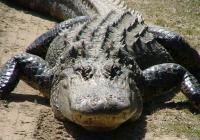
Alligator blood could provide a powerful new source of antibiotics for fighting deadly "superbugs " and other infections, researchers say. Despite their reputation for deadly attacks on humans and pets, alligators are wiggling their way toward a new role as potential lifesavers in medicine, biochemists in Louisiana reported today at the 235th national meeting of the American Chemical Society. They described how proteins in gator blood may provide a source of powerful new antibiotics to help fight infections associated with diabetic ulcers, severe burns, and “superbugs” that are resistant to conventional medication.
| Biology | April 4, 2008 09:21 PM |
A new study shows that 'silver spoon' factors of more food and warmer temperatures can later help newborn female squirrels produce more litters themselves. As the saying goes, some people are born with silver spoons in their mouths. The same goes for at least one species of the animal world, according to research done in part by the University of Alberta.
| Biology | April 4, 2008 06:14 PM |
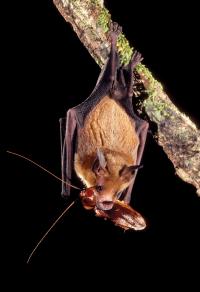
A big-eared bat of the genus Micronycteris. Bats of this genus are found in Mexican coffee plantations, where they glean insects from foliage and help limit pest populations If you get a chance to sip some shade-grown Mexican organic coffee, please pause a moment to thank the bats that helped make it possible.
| Biology | April 4, 2008 02:14 PM |
Enormous numbers of migratory moths that fly high above our heads throughout the night aren’t at the mercy of the winds that propel them toward their final destinations, researchers report online on April 3rd in Current Biology, a publication of Cell Press. Rather, they rely on sophisticated behaviors to control their flight direction, and to speed their long-distance journeys into areas suitable for the next generation of moths.
| Biology | April 4, 2008 12:14 PM |
Preliminary results from DNA analysis of wolverine scat samples collected on the Tahoe National Forest do not match those of historic California wolverine populations, according to U.S. Forest Service scientists.
| Biology | April 4, 2008 10:14 AM |
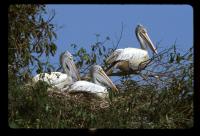
Spot-billed pelicans have increased by 400 percent since conservation measures have been enacted in Cambodia's Prek Toal. According to a report released today by the Wildlife Conservation Society (WCS), several species of rare waterbirds from Cambodia’s famed Tonle Sap region have staged remarkable comebacks, thanks to a project involving a single team of park rangers to provide 24-hour protection to breeding colonies. The project pioneered a novel approach: employing former hunters and egg collectors to protect and monitor the colonies, thereby guaranteeing the active involvement of local communities in the initiative.
| Biology | April 3, 2008 11:14 PM |
A new study by researchers at UC Davis shows how our very short-term "working memory," which allows the brain to stitch together sensory information, operates. The system retains a limited number of high-resolution images for a few seconds, rather than a wider range of fuzzier impressions.
| Biology | April 3, 2008 08:14 PM |
Dog owners, who have noticed that their four-legged friend seem equally delighted to see them after five minutes away as five hours, may wonder if animals can tell when time passes. Newly published research from The University of Western Ontario in London, Canada may bring us closer to answering that very question.
| Biology | April 3, 2008 06:14 PM |
A recent study indicates that wild salmon may account for just 10 percent of California's fall-run chinook salmon population, while the vast majority of the fish come from hatcheries. The findings are especially troubling in light of the disastrous decline in the population this year, which will probably force the closure of the 2008 season for commercial and recreational salmon fishing.
| Biology | April 2, 2008 09:05 PM |
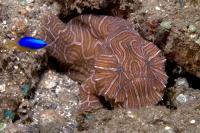
The leglike pectoral fin for walking is the clue that this newly found fish is an anglerfish, even though it does not have a lure on its head for attracting... A fish that would rather crawl into crevices than swim, and that may be able to see in the same way that humans do, could represent an entirely unknown family of fishes, says a University of Washington fish expert.
| Biology | April 1, 2008 05:52 PM |
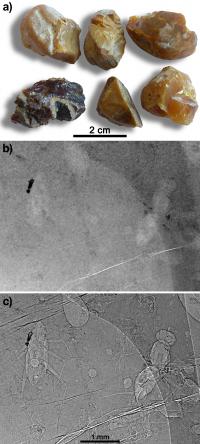
a) Opaque amber blocs from Charente-Maritime. b) radiography of a bloc with inclusions in absorption mode. c) the same radiograph in propagation phase contrast mode with 990 mm of propagation distance (pixel size: 5 µm). Credit: M. Lak, P. Tafforeau, D. Néraudeau (ESRF Grenoble et UMR CNRS 6118 Rennes). Paleontologists from the University of Rennes (France) and the ESRF have found the presence of 356 animal inclusions in completely opaque amber from mid-Cretaceous sites of Charentes (France). The team used the X-rays of the European light source to image two kilogrammes of the fossil tree resin with a technique that allows rapid survey of large amounts of opaque amber. At present this is the only way to discover inclusions in fully opaque amber.
| Biology | March 31, 2008 02:18 PM |
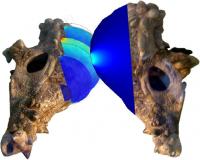
Fossil evidence and computer simulations show which pachycephalosaurs could butt heads. After half a century of debate, a University of Alberta researcher has confirmed that dome-headed dinosaurs called pachycephalosaurs could collide with each other during courtship combat. Eric Snively, an Alberta Ingenuity fellow at the U of A, used computer software to smash the sheep-sized dinosaurs together in a virtual collision and results showed that their bony domes could emerge unscathed.
| Biology | March 31, 2008 12:18 PM |
Looking for evidence of life on Mars or other planets? Finding cellulose microfibers would be the next best thing to a close encounter, according to new research from the University of North Carolina at Chapel Hill.
| Biology | March 28, 2008 03:24 PM |
Oceanic shark populations worldwide are declining from destructive high-seas commercial fishing practices and a rising global demand for shark products (mainly fins and meat), with some shark populations severely depleted and only a few stable or recovering, according to a comprehensive new book co-edited by shark experts from the Pew Institute for Ocean Science (www.pewoceanscience.org), published by Blackwell Publishing, and being released today.*
| Biology | March 27, 2008 03:06 PM |
During ongoing investigations by an Oregon State University graduate student, the Forest Service, and California Department of Fish and Game (DFG), two additional wolverine photographs were captured this past week. A variety of hair, track and scat samples were also sent for analysis to determine if these were from a wolverine. After the initial photograph of a wolverine was taken by a remote camera on Feb. 28, 2008, in the Tahoe National Forest, researchers, biologists and volunteers intensified the search for more detections in the same general area, north of Truckee, Calif.
| Biology | March 26, 2008 11:20 PM |
A deficiency of oxygen and the heavy metal molybdenum in the ancient deep ocean may have delayed the evolution of animal life on Earth for nearly two billion years.
| Biology | March 26, 2008 08:20 PM |
The brain can sense the calories in food, independent of the taste mechanism, researchers have found in studies with mice. Their finding that the brain’s reward system is switched on by this “sixth sense” machinery could have implications for understanding the causes of obesity. For example, the findings suggest why high-fructose corn syrup, widely used as a sweetener in foods, might contribute to obesity.
| Biology | March 26, 2008 06:20 PM |
Chimpanzees make judgments about the actions and dispositions of strangers by observing others’ behavior and interactions in different situations. Specifically, chimpanzees show an ability to recognize certain behavioral traits and make assumptions about the presence or absence of these traits in strangers in similar situations thereafter. These findings¹, by Dr. Francys Subiaul - from the George Washington University in Washington DC - and his team, have just been published online in Animal Cognition, a Springer journal.
| Biology | March 26, 2008 11:09 AM |
They are separated by a vast ocean and by millions of years, but tiny prehistoric bones found on an Australian farm have been directly linked to a strange and secretive little animal that lives today in the southern rainforests of South America.
| Biology | March 25, 2008 05:19 PM |
Scientists at Harvard University have found that a common class of freshwater invertebrate animals called bdelloid rotifers are extraordinarily resistant to ionizing radiation, surviving and continuing to reproduce after doses of gamma radiation much greater than that tolerated by any other animal species studied to date.
| Biology | March 25, 2008 04:54 PM |
Scanning Electron Micrograph of Fuji apples showing extensive branching of callus hairs. A UK scientist has discovered clumps of previously-unreported callus hairs growing in the flesh of mature apples of Fuji and closely-related varieties, which may have storage implications for commercial growers.
| Biology | March 24, 2008 07:38 PM |
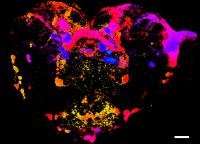
This depth-encoded image shows serotonin clusters in the brain of the drosophila, a type of fruit fly. Before swatting at one of those pesky flies that come out as the days lengthen and the temperature rises, one should probably think twice. A University of Missouri researcher has found, through the study of Drosophila (a type of fruit fly), that by manipulating levels of certain compounds associated with the “circuitry” of the brain, key genes related to memory can be isolated and tested. The results of the study may benefit human patients suffering from Parkinson’s disease and could eventually lead to discoveries in the treatment of depression.
| Biology | March 24, 2008 07:38 PM |
Corn has long been known as the primary food crop in prehistoric North and Central America. Now it appears it may have been an important part of the South American diet for much longer than previously thought, according to new research by University of Calgary archaeologists who are cobbling together the ancient history of plant domestication in the New World.
| Biology | March 24, 2008 03:55 PM |
Over two hundred million humans depend for their subsistence on the fact that coral has an addiction to ‘junk food’ - and orders its partners, the symbiotic algae, to make it.
| Biology | March 23, 2008 06:02 PM |
New technology at Tufts University's Center for Scientific Visualization is enabling researchers to translate the most abstract, complex scientific concepts into clearer, more precise 3-dimensional images than conventional visualization systems can create.
| Biology | March 23, 2008 05:02 PM |
Researchers at the Yerkes National Primate Research Center, Emory University, have identified a language feature unique to the human brain that is shedding light on how human language evolved. The study marks the first use of diffusion tensor imaging (DTI), a non-invasive imaging technique, to compare human brain structures to those of chimpanzees, our closest living relative. The study will be published in the online version of Nature Neuroscience.
| Biology | March 21, 2008 06:36 PM |
One of the oldest and most complete plesiosaur fossils recovered in North America, and the oldest yet discovered from the Cretaceous Period, represents a new genus of the prehistoric aquatic predator according to University of Calgary palaeontologists who have formally described the creature after its remains were uncovered in a Syncrude Canada Ltd. mine near Fort McMurray in 1994.
| Biology | March 21, 2008 02:36 PM |
One day last spring, fossil hunter and anatomy professor Kenneth Rose, Ph.D. was displaying the bones of a jackrabbit’s foot as part of a seminar at the Johns Hopkins University School of Medicine when something about the shape of the bones looked oddly familiar.
| Biology | March 21, 2008 12:36 PM |
Mantis shrimp can see the world in a way that had never been observed in any animal before, researchers report in the March 20th Current Biology, a Cell Press publication. The discovery—which marks the fourth type of visual system—suggests that the ability to perceive circular polarized light may lend mantis shrimp a secret mode of communication.
| Biology | March 20, 2008 10:36 PM |

Mei Xiang, the female giant panda at the Smithsonian's National Zoo, was artificially inseminated March 19 by a team of Zoo scientists and veterinarians. The decision to perform the procedure was made after no successful mating had occurred between Mei Xiang and the Zoo's adult male panda Tian Tian. Timing was critical since giant pandas have one breeding season per year lasting only 24 to 48 hours. If the insemination is successful, the female panda is expected to give birth in the next 90 to 185 days. Credit: Jessie Cohen/Smithsonian’s National Zoo The 2008 giant panda mating season began Tuesday, March 18, at the Smithsonian's National Zoo. Female Mei Xiang (may-SHONG) and male Tian Tian (tee-YEN tee-YEN) attempted to mate throughout the day Tuesday.
| Biology | March 20, 2008 04:17 PM |
The first handbones found of the ancient Hadropithecus lemur reveal a mystery arch by the little finger. Analysis of the first hand bones belonging to an ancient lemur has revealed a mysterious joint structure that has scientists puzzled.
| Biology | March 19, 2008 09:17 PM |
While rabbits continue to ravage Australia’s native landscapes, rabbit fish may help save large areas of the Great Barrier Reef from destruction.
| Biology | March 19, 2008 06:16 PM |
Emotions play an important role in the lives of humans, and influence our behavior, thoughts, decisions, and interactions. The ability to regulate emotions is essential to both mental and physical well-being. “Conversely, difficulties with emotion regulation have been postulated as a core mechanism underlying mood and anxiety disorders,” according to the authors of a new study published in Biological Psychiatry on March 15th. Thus, these researchers set out to further expand our understanding of the differential effects of emotion regulation strategies on the human brain.
| Biology | March 19, 2008 04:16 PM |
Brown bears from the Iberian Peninsula are not as genetically different from other brown bears in Europe as was previously thought. An international study being published this week in Proceedings of the National Academy of Sciences, PNAS, shows that, on the contrary, the Spanish bear was only recently isolated from other European strains. These findings shed new light on the discussion of how to save the population of Spanish bears.
| Biology | March 19, 2008 02:16 PM |
A group of some 15 chimpanzees isolated in a pocket of Rwandan rain forest will have a greater range – and, thus, greater chances for survival – thanks to one of Africa’s most ambitious forest restoration and ecological research efforts ever. Organizers of the project, named the Rwandan National Conservation Park, said today that a 30-mile (50km) tree corridor will be planted to connect the Gishwati Forest Reserve, the chimpanzees’ home range, to Nyungwe National Park.
| Biology | March 18, 2008 10:57 AM |
Clovis-age natives, often noted for overhunting during their brief dominance in a primitive North America, deserve clemency in the case of California's flightless sea duck. New evidence says it took thousands of years for the duck to die out.
| Biology | March 17, 2008 11:57 PM |
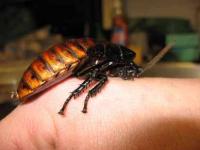
Madagascar hissing cockroach. Their gentle nature, large size, odd sounds and low-maintenance care have made Madagascar hissing cockroaches popular educational tools and pets for years. But the giant insects also have one unfortunate characteristic: Their hard bodies and feces are home to many mold species that could be triggering allergies in the kids and adults who handle the bugs, according to a new study.
| Biology | March 17, 2008 06:57 PM |
It’s common knowledge that humans and other animals are able to visually judge depth because we have two eyes and the brain compares the images from each. But we can also judge depth with only one eye, and scientists have been searching for how the brain accomplishes that feat.
| Biology | March 14, 2008 07:41 PM |
Without a ripple in the water, alligators dive, surface or roll sideways, even though they lack flippers or fins. University of Utah biologists discovered gators maneuver silently by using their diaphragm, pelvic, abdominal and rib muscles to shift their lungs like internal floatation devices: toward the tail when they dive, toward the head when they surface and sideways when they roll.
| Biology | March 14, 2008 03:41 PM |
The organic soup that spawned life on Earth may have gotten generous helpings from outer space, according to a new study. Scientists at the Carnegie Institution have discovered concentrations of amino acids in two meteorites that are more than ten times higher than levels previously measured in other similar meteorites. This result suggests that the early solar system was far richer in the organic building blocks of life than scientists had thought, and that fallout from space may have spiked Earth’s primordial broth.
| Biology | March 14, 2008 02:50 PM |
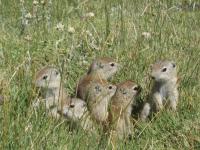
Research at the University of Chicago shows that young squirrels learning to survive in their environment need a moderate level of stress hormones. The study points toward the role of stress hormones on early learning in humans. Credit: University of Chicago Tests on the influence that a stress-related hormone has on learning in ground squirrels could have an impact on understanding how it influences human learning, according to a University of Chicago researcher.
| Biology | March 14, 2008 10:41 AM |
Nature is full of examples of creatures that try to look as big as possible in an effort to scare away potential predators. But to avoid being eaten alive the larvae of sand dollars appear to have a different strategy, in a way exchanging a dollar for a couple of dimes.
| Biology | March 13, 2008 10:48 PM |
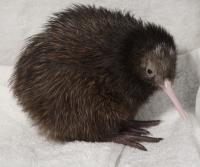
The National Zoo welcomed a new kiwi chick on March 7, 2008. The chick, whose sex has yet to be determined by DNA testing, is the third chick to ever hatch at the National Zoo. The first hatching occurred in 1975 and was the first to occur outside of New Zealand. Kiwis are endangered and are extremely rare to see in captivity -- only four zoos outside of New Zealand have successfully bred kiwis, and only three US zoos exhibit them, including the National Zoo which has exhibited kiwis since 1967. Credit: Jessie Cohen, Smithsonian's National Zoo Early Friday morning, March 7, one of the world’s most endangered species—a North Island brown kiwi—hatched at the Smithsonian’s National Zoo Bird House. Keepers had been incubating the egg for five weeks, following a month long incubation by the chick’s father, carefully monitoring it for signs of pipping: the process in which the chick starts to break through the shell. The chick remained in an isolet for four days and is now in a specially designed brooding box.
| Biology | March 13, 2008 03:48 PM |
Researchers from EPFL and Caltech have made an important neurobiological discovery of how humans learn to predict risk. The research, appearing in the March 12 issue of the Journal of Neuroscience, will shed light on why certain kinds of risk, notably financial risk, are often underestimated, and whether abnormal behavior such as addiction (e.g. to gambling or drugs) could be caused by an erroneous evaluation of risk.
| Biology | March 11, 2008 09:01 PM |
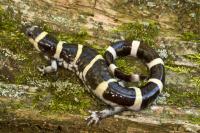
The Ringed Salamander (Ambystoma annulatum) is a species unique to the Ozarks. The number of amphibians drastically decreases in forest areas that are clearcut, according to previous studies. A University of Missouri researcher, however, has found that some animals may not be dying. Instead, the Mizzou biologist said some animals may be moving away (possibly to return later) or retreating underground. The finding could have major implications for both the timber industry and the survival of amphibians.
| Biology | March 11, 2008 08:01 PM |
The strongest creature in the world, the Hercules Beetle, has a colour-changing trick that scientists have long sought to understand. Research published today, Tuesday, 11 March, in the New Journal of Physics, details an investigation into the structure of the specie’s peculiar protective shell which could aid design of ‘intelligent materials’.
| Biology | March 11, 2008 07:01 PM |
Far from being a model of social co-operation, the ant world is riddled with cheating and corruption – and it goes all the way to the top, according to scientists from the Universities of Leeds and Copenhagen.
| Biology | March 11, 2008 06:01 PM |
There’s new evidence supporting the idea that bigger brains are better. A study of a tropical wasp suggests that the brainpower required to be dominant drives brain capacity.
| Biology | March 11, 2008 12:09 AM |
An international group of researchers has found evidence for the earliest transport use of the donkey and the early phases of donkey domestication, suggesting the process of domestication may have been slower and less linear than previously thought.
| Biology | March 11, 2008 12:09 AM |
Since the reporting of the so-called “hobbit” fossil from the island of Flores in Indonesia, debate has raged as to whether these remains are of modern humans (Homo sapiens), reduced, for some reason, in stature, or whether they represent a new species, Homo floresiensis. Reporting in this week’s PLoS ONE in a study funded by the National Geographic Society Mission Programs, Lee Berger and colleagues from the University of the Witwatersrand, Rutgers University and Duke University, describe the fossils of small-bodied humans from the Micronesian island of Palau. These people inhabited the island between 1400 and 3000 years ago and share some – although not all – features with the H. floresiensis specimens.
| Biology | March 11, 2008 12:09 AM |
When exotic species invade new territory, they often present a major threat to the other plants and animals living there—that much is clear. But researchers writing in the March 11th issue of Current Biology, a publication of Cell Press, now show that, in addition to their destructive tendencies, invasive species can also have a surprisingly “creative” side.
| Biology | March 11, 2008 12:09 AM |
Researchers have made what they say is the first experimental demonstration that a primate other than humans conveys meaning by combining distinct alarm calls in particular ways. The study appears in the March 11th issue of Current Biology, a publication of Cell Press.
| Biology | March 10, 2008 12:17 PM |
Contrary to generally accepted belief, Anatolia was not geographically isolated 25 million years ago (during the Oligocene epoch): this has just been demonstrated by researchers from the Laboratoire des Mécanismes et Transferts en Géologie (LMTG) (CNRS/ University of Toulouse 3/IRD) and the Paléobiodiversité et paléoenvironnements laboratory (CNRS/Muséum national d’histoire naturelle/University of Paris 6). These results were obtained thanks to analyses of the first fossilized giant rhinocerotoid bone discovered in 2002 in an Anatolian deposit during a Franco-Turkish paleontology expedition funded by the ECLIPSE INSU-CNRS program. The presence of this bone in Anatolia, with the remains of associated fauna, are indicative of animal migrations between Europe and Asia. The results, published online in the March 2008 issue of the Zoological Journal of the Linnean Society, thus call into question the isolation of Anatolia, which until now was considered to have been an archipelago.
| Biology | March 8, 2008 04:59 PM |
Scientists believe a wolverine was photographed with a remote-controlled camera on Feb. 28 on the Tahoe National Forest. Evidence of wolverines in California has not been scientifically verified since the 1920s. Credit: US Forest Service, Oregon State University photo. U.S. Forest Service scientists believe an Oregon State University graduate student working on a cooperative project with the agency’s Pacific Southwest Research station on the Tahoe National Forest has photographed a wolverine, an animal whose presence has not been confirmed in California since the 1920s.
| Biology | March 6, 2008 10:21 PM |
What makes you suddenly dart into the bakery when you spy chocolate- frosted donuts in the window, though you certainly hadn't planned on indulging? As you lick the frosting off your fingers, don't blame a lack of self-control.
| Biology | March 6, 2008 02:29 PM |
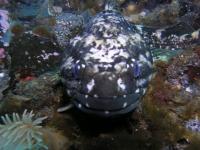
The 'Antarctic Cod' (Notothenia coriiceps) became isolated from its warmer water cousins around 30 million years ago when the Antarctic circumpolar current was formed. Scientists have discovered an Antarctic fish species that adopts a winter survival strategy similar to hibernation. Reporting this week in the journal PLoS ONE, the online journal from the Public Library of Science, scientists from British Antarctic Survey (BAS) and the University of Birmingham reveal, for the first time, that the Antarctic ‘cod’ Notothenia coriiceps effectively ‘puts itself on ice’ to survive the long Antarctic winter.
| Biology | March 5, 2008 11:29 PM |
University of Alaska Museum of the North earth sciences curator Patrick Druckenmiller spent several weeks last summer working with a Norwegian research team to excavate a large pliosaur specimen in the remote Norwegian archipelago of Svalbard. At the time, they knew the Jurassic fossil was significant.
| Biology | March 5, 2008 08:28 PM |
Trees and fungi have constructed a close relationship with the passing of the ages. Fungi like to grow between the roots of trees and the arrangement is beneficial to both partners. Their delicate balance is now being revealed for the very first time. VIB researchers at Ghent University in colaboration with an international team have succeeded in unravelling the genetic code of the Laccaria bicolor fungus. This new information is crucial to our knowledge. It will lead to a better understanding of how fungi help trees to grow and how together they can be indicators of climate change.
| Biology | March 5, 2008 06:07 PM |
The Convention on International Trade in Endangered Species (CITES) announced trade quotas governing the export of wild sturgeon and their prized caviar eggs from the Caspian Sea. The Pew Institute for Ocean Science has analyzed the quotas, which are re-set each year, and has determined that beluga caviar quotas are virtually unchanged from 2007 and do little to halt continued population declines.
| Biology | March 4, 2008 08:07 PM |
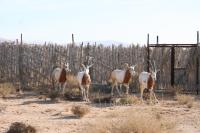
These four scimitar-horned oryx are among the nine that were returned in December 2007 to Tunisia, where they have been extinct since the late 1970s. A male oryx from the Smithsonian's National Zoo's Conservation and Research Center in Front Royal, Va., was included in the group. The animals will eventually be reintroduced into the wild. Credit: Tim Wacher A male scimitar-horned oryx from the Smithsonian’s National Zoo’s Conservation and Research Center in Front Royal, Va., is playing an important role in ensuring the species does not vanish from the planet.
| Biology | March 4, 2008 02:59 PM |
Throughout the world, amateurs, experts and the media agree that prolonged jogging raises people's spirits. And many believe that the body’s own opioids, so called endorphins, are the cause of this. But in fact this has never been proved until now. Researchers at the Technische Universität München and the University of Bonn succeeded to demonstrate the existence of an ‘endorphin driven runner’s high’. In an imaging study they were able to show, for the first time, increased release of endorphins in certain areas of the athletes' brains during a two-hour jogging session. Their results are also relevant for patients suffering from chronic pain, because the body’s own opiates are produced in areas of the brain which are involved in the suppression of pain. The researchers, some of whom are also members of the German Research Network of Neuropathic Pain (Deutscher Forschungsverbund Neuropathischer Schmerz, DFNS), which is also funded by the Federal Ministry of Education and Research (Bundesministerium für Bildung und Forschung, BMBF), thereby show that jogging not only makes you high, but can also relieve pain. The results of the study have now been published in the scientific journal 'Cerebral Cortex'.
| Biology | March 4, 2008 10:59 AM |
Scientists at Schepens Eye Research Institute have found that people with a certain low level of tear production are more likely to develop chronic dry eye syndrome after LASIK (laser-assisted in situ keratomileusis), laser refractive surgery to correct near- and far-sightedness than those with more plentiful tears. Their research, published in the January issue of Investigative Ophthalmology and Vision Science, may offer reliable prescreening criteria for ophthalmologists and patients.
| Biology | March 3, 2008 11:59 PM |
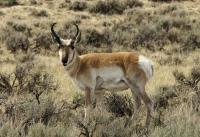
Yellowstone pronghorn populations directly benefit from the presence of wolves, a new Wildlife Conservation Society study says. As western states debate removing the gray wolf from protection under the Endangered Species Act, a new study by the Wildlife Conservation Society cautions that doing so may result in an unintended decline in another species: the pronghorn, a uniquely North American animal that resembles an African antelope.
| Biology | March 3, 2008 09:59 PM |
Although researchers have long agreed that girls have superior language abilities than boys, until now no one has clearly provided a biological basis that may account for their differences.
| Biology | March 3, 2008 08:59 PM |
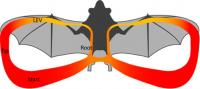
A simplified representation of the strong vortices associated with the unsteady aerodynamics of bat flight at slow speeds. The vortices can be thought of as causing the surrounding air to rotate rapidly around them and this motion around the LEV on top of the wing increases the lift force on it. Just like familiar, fixed-wing planes, the bat also leaves tip vortices in its wake, but the overall flow is further modified by the start vortices created at the beginning of the downstroke. Credit: USC-generated schematic Honey bees and hummingbirds can hover like helicopters for minutes at a time, sucking the juice from their favorite blossoms while staying aloft in a swirl of vortices.
| Biology | March 3, 2008 05:59 PM |
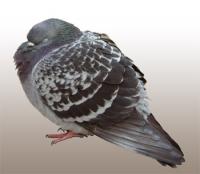
A pigeon taking a little nap. In humans, as in all mammals, sleep consists of two phases: deep, dreamless slow-wave-sleep (SWS) alternates with dream phases, called Rapid Eye Movement (REM)-sleep. Although several studies suggest that information is processed and memories are consolidated during sleep, this remains a hotly debated topic in neurobiology. Comparative studies in birds may help to clarify the function of sleep by revealing overriding principles that would otherwise remain obscure if we only studied mammals. This is because birds are the only taxonomic group other than mammals to show both SWS and REM sleep. Interestingly, the independent evolution of similar sleep states in birds and mammals might be related to the fact that each group also independently evolved large brains capable of performing complex cognitive processes. In their actual study, researchers from the Max-Planck Institute of Ornithology in Seewiesen, Germany showed for the first time that birds compensate for sleep loss in a manner similar to humans (Journal of Sleep Research, Online-Publication February 27, 2008).
| Biology | February 29, 2008 11:44 PM |
A novel genetic study has revealed why chickens have yellow legs, demonstrating that though Charles Darwin was right about many things, his view on the origins of the chicken was not entirely correct. The study, published February 29 in the open-access journal PLoS Genetics, reveals the genetic basis for the appearance of yellow skin in billions of chickens raised worldwide.
| Biology | February 29, 2008 09:54 PM |
An important discovery has been made with respect to the mystery of “handedness” in biomolecules. Researchers led by Sandra Pizzarello, a research professor at Arizona State University, found that some of the possible abiotic precursors to the origin of life on Earth have been shown to carry “handedness” in a larger number than previously thought.
| Biology | February 29, 2008 06:54 PM |
Scientists at the John Innes Centre in Norwich have discovered how roots find their way past obstacles to grow through soil. The discovery, described in the forthcoming edition of Science, also explains how germinating seedlings penetrate the soil without pushing themselves out as they burrow.
| Biology | February 28, 2008 08:54 PM |
The distinctive ability of mothers to identify the cries of their offspring is widely evident in nature, where it is critical to the survival of these offspring. In humans, we are aware that the distinctive ability of mothers to recognize and respond to the smiles and cries of their babies plays an important role in the psychological, cognitive, and social development of these babies. We have had a very limited understanding of how the maternal brain accomplishes these amazing feats, but a new study published in the February 15th issue of Biological Psychiatry now provides some new insight.
| Biology | February 28, 2008 07:28 PM |
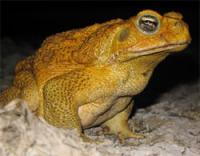
Australian cane toad (Chaunus [Bufo] marinus) Why do some invasive species expand rapidly in a new environment while others do not" Scientists from the United States and Australia are beginning to make headway on this question after analyzing how fast cane toads invaded different regions of Australia.
| Biology | February 28, 2008 06:54 PM |
An area of the brain involved in the planning and production of spoken and signed language in humans plays a similar role in chimpanzee communication, researchers report online on February 28th in the journal Current Biology, a publication of Cell Press.
| Biology | February 28, 2008 06:28 PM |
Why do we almost instinctively treat babies as special, protecting them and enabling them to survive" Darwin originally pointed out that there is something about infants which prompts adults to respond to and care for them which allows our species to survive. Nobel-Prize-winning zoologist Konrad Lorenz proposed that it is the specific structure of the infant face, including a relatively large head and forehead, large and low lying eyes and bulging cheek region, that serves to elicit these parental responses. But the biological basis for this has remained elusive.
| Biology | February 28, 2008 04:28 PM |
They may not be on most people’s list of most attractive species, but bats definitely have animal magnetism. Researchers from the Universities of Leeds and Princeton have discovered that bats use a magnetic substance in their body called magnetite as an ‘internal compass’ to help them navigate.
| Biology | February 28, 2008 12:28 PM |
The research groups of the Department of Biological and Environmental Sciences of the University of Helsinki and the University of California in San Diego have discovered a gene that is centrally involved in the regulation of carbon dioxide uptake for photosynthesis and water evaporation in plants. The discovery can aid the development of drought-tolerant crops. The article is published online ahead of print in Nature’s Advance Online Publication (AOP) on 27 February 2008.
| Biology | February 28, 2008 10:28 AM |
High-speed video of rats using their whiskers to explore different surfaces has given researchers significant insights into the subtle mechanics of their tactile sensory system. Such information is important because the rat tactile machinery is a widely used laboratory model for studying how energy from sound or touch is translated into neural activity. Thus, basic insights from studying the rat system could aid in understanding the senses of hearing and touch in all mammals, including humans.
| Biology | February 27, 2008 09:28 PM |
Some of the oldest tales and wisest mythology allude to the snake as a mischievous seducer, dangerous foe or powerful iconoclast; however, the legend surrounding this proverbial predator may not be based solely on fantasy. As scientists from the University of Virginia recently discovered, the common fear of snakes is most likely intrinsic.
| Biology | February 27, 2008 06:28 PM |
An ability to avoid the plant equivalent of vapor lock and a favorable evolutionary history may explain the unusual drought resistance of junipers, some varieties of which are now spreading rapidly in water-starved regions of the western United States, a Duke University study has found.
| Biology | February 27, 2008 05:28 PM |
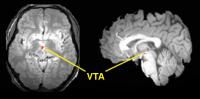
Horizontal (left) and vertical (right) slices of brain show increased blood flow (red region) in brainstem (VTA or ventral tegmental area) in measurements made by functional magnetic resonance imaging. A team of scientists from Princeton University has devised a new experimental technique that produces some of the best functional images ever taken of the human brainstem, the most primitive area of the brain.
| Biology | February 26, 2008 08:17 PM |
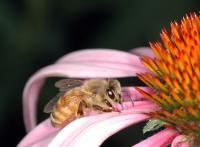
In repeated invasions of a new territory, the honey bee, Apis mellifera, can benefit from the genetic endowment of its predecessors. Like any species that aspires to rule the world, the honey bee, Apis mellifera, invades new territories in repeated assaults. A new study demonstrates that when these honey bees arrive in a place that has already been invaded, the newcomers benefit from the genetic endowment of their predecessors.
| Biology | February 26, 2008 05:40 PM |

Cary Fowler at Svalbard Global Seed Vault. The Svalbard Global Seed Vault opened today on a remote island in the Arctic Circle, receiving inaugural shipments of 100 million seeds that originated in over 100 countries. With the deposits ranging from unique varieties of major African and Asian food staples such as maize, rice, wheat, cowpea, and sorghum to European and South American varieties of eggplant, lettuce, barley, and potato, the first deposits into the seed vault represent the most comprehensive and diverse collection of food crop seeds being held anywhere in the world.
| Biology | February 26, 2008 04:17 PM |
A beautiful black, white and yellow butterflyfish, much admired by eco-tourists, divers and aquarium keepers alike, may be at risk of extinction, scientists have warned.
| Biology | February 25, 2008 10:17 PM |
Scientists have discovered Antarctic krill (Euphausia superba) living and feeding down to depths of 3000 metres in the waters around the Antarctic Peninsula. Until now this shrimp-like crustacean was thought to live only in the upper ocean. The discovery completely changes scientists’ understanding of the major food source for fish, squid, penguins, seals and whales.
| Biology | February 25, 2008 08:17 PM |
Seabird colonies on islands are highly vulnerable to introduced rats, which find the ground-nesting birds to be easy prey. But the ecological impacts of rats on islands extend far beyond seabird nesting colonies, according to a new study by researchers at the University of California, Santa Cruz.
| Biology | February 25, 2008 07:17 PM |
After swabbing the cheeks of more than 200 lemurs and related primates to collect their DNA, researchers at the Duke Institute for Genome Sciences & Policy (IGSP) and Duke Lemur Center now have a much clearer picture of their evolutionary family tree.
| Biology | February 22, 2008 10:51 PM |
University of Missouri scientist Ray Semlitsch studies creatures most people don’t ever see. These creatures are active only at night and thrive in the shallow, cool, wet surroundings of headwater streams, an oft-overlooked biological environment.
| Biology | February 21, 2008 09:00 PM |
Circular markings on creatures such as butterflies are effective against predators because they are conspicuous features, not because they mimic the eyes of the predators’ own enemies, according to research published today in the journal, Behavioral Ecology[1]. Zoologists based at the University of Cambridge challenge the 150-year-old theory about why these markings are effective against predators.
| Biology | February 20, 2008 11:29 PM |
A gene which helps a harmless African butterfly ward off predators by giving it wing patterns like those of toxic species, has been identified by scientists who publish their findings today (20 February 2008).
| Biology | February 19, 2008 10:06 AM |
Continued mismanagement could force some tuna populations to quickly go the way of cod, a highly threatened fishery that once helped shape economies of whole nations, leading scientists said in the symposium “Last Best Chance for Tuna: Learning from the Cod Collapse” at the American Association for the Advancement of Science (AAAS) Annual Meeting in Boston on February 18.
| Biology | February 18, 2008 11:06 PM |
It's hard to study a creature when you only catch fleeting glimpses of it. Up until recently, that was one of the big stumbling blocks for marine biologists and ecologists, but advances in electronic tracking technology have allowed them to peer farther across, and deeper under, the surface of the oceans than ever before.
| Biology | February 18, 2008 03:44 PM |
Shedding new light on the great cognitive rift between humans and animals, a Harvard University scientist has synthesized four key differences in human and animal cognition into a hypothesis on what exactly differentiates human and animal thought.
| Biology | February 18, 2008 12:44 PM |
Sharks are disappearing from the world’s oceans. The numbers of many large shark species have declined by more than half due to increased demand for shark fins and meat, recreational shark fisheries, as well as tuna and swordfish fisheries, where millions of sharks are taken as bycatch each year.
| Biology | February 18, 2008 10:44 AM |
The world’s sharks are disappearing. These fearsome yet charismatic fish continue to fall victim to overfishing and many are now at risk of extinction as a result. New research shows that open-ocean sharks are particularly threatened from overfishing, and other work shows that the deeper sharks live, the longer it takes for their populations to recover. Yet researchers are just now learning critical details of their behavior, including the fact that some species migrate quickly along “superhighway” routes and congregate at established “stepping stone” sites.
| Biology | February 16, 2008 09:32 PM |
The same rules of physics that govern molecules as they condense from gas to liquid, or freeze from liquid to solid, also apply to the activity patterns of neurons in the human brain. University of Chicago mathematician Jack Cowan will offer this and related insights on the physics of brain activity this week in Boston during the annual meeting of the American Association for the Advancement of Science.
| Biology | February 16, 2008 06:32 PM |
Contrary to our previous beliefs, identical twins are not genetically identical. This surprising finding is presented by American, Swedish, and Dutch scientists in a study being published today in the prestigious journal American Journal of Human Genetics. The finding may be of great significance for research on hereditary diseases and for the development of new diagnostic methods.
| Biology | February 16, 2008 05:32 PM |
Frozen in time… frozen in place… frozen solid… All of these phrases have been used to describe Antarctica, and yet they all belie the truth about this southerly point on the globe. Although the area is covered in ice and bears witness to some of the most extreme cold on the planet, this ecosystem is dynamic, not static, and change here has always been dramatic and intense. A report published in the March issue of Ecology argues that the extreme cold and environmental conditions of past Ice Ages have been even more severe than seen today and changed life at the Antarctic, forcing the migration of many animals such as penguins, whales and seals. Understanding the changes of the past may help scientists to determine how the anticipated temperature increases of the future will work to further transform this continent.
| Biology | February 16, 2008 02:32 PM |
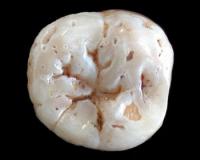
The 40,000-year-old Neanderthal tooth that has given scientists the first direct evidence that Neanderthals moved from place to place during their lifetimes. A 40,000-year-old tooth has provided scientists with the first direct evidence that Neanderthals moved from place to place during their lifetimes. In a collaborative project involving researchers from the Germany, the United Kingdom, and Greece, Professor Michael Richards of the Max Planck institute for Evolutionary Anthropology in Leipzig, Germany and Durham University, UK, and his team used laser technology to collect microscopic particles of enamel from the tooth. By analysing strontium isotope ratios in the enamel - strontium is a naturally occurring metal ingested into the body through food and water - the scientists were able to uncover geological information showing where the Neanderthal had been living when the tooth was formed (Journal of Archaeological Science, February 11th, 2008).
| Biology | February 15, 2008 05:35 PM |
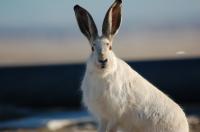
Jack rabbits like these have mysteriously vainished from Yellowstone, a Wildlife Conservation Society study says. A new study by the Bronx Zoo-based Wildlife Conservation Society found that jack rabbits living in the Greater Yellowstone Ecosystem have apparently hopped into oblivion. The study, which appears in the latest issue of the journal Oryx, also speculates that the disappearance of jack rabbits may be having region-wide impacts on a variety of other prey species and their predators.
| Biology | February 14, 2008 07:35 PM |
When it comes to deciding what harvester ant daughters will be when they grow up, mother queens hold considerable sway, according to a new study published online on February 14th in Current Biology, a publication of Cell Press. The researchers report evidence that eggs are predetermined to become workers or queens from the moment they are lain.
| Biology | February 14, 2008 06:35 PM |
To a fruit fly, a piece of rotting fruit or the food in your picnic basket is a little slice of heaven. It’s where the tiny animal—not much more than a speck on your fingertip can find food and a mate, the two passions of its short, two-month lifespan.
| Biology | February 14, 2008 04:06 PM |
Garlic mustard has become an invasive species in temperate forests across the United States, choking out native plants on forest floors and threatening ecosystem diversity. University of Illinois ecologist Adam Davis has created a computer model that in combination with quarantined research tests he believes will be able to predict the perfect predator -- a pest that can be introduced into a forested area that will help reduce the garlic mustard population.
| Biology | February 13, 2008 10:06 PM |
According to the Chinese proverb, a bird sings because it has a song, not because it has an answer. A team of French and Brazilian researchers, however, may have the answer as to how the song of Brazilian white-browed warbler has become so well-adapted to the acoustic properties of the rainforest environment. The study, led by Nicolas Mathevon and Thierry Aubin, is published in the online, open-access journal PLoS ONE on February 13.
| Biology | February 13, 2008 09:06 PM |
The human journey from Asia to the New World was interrupted by a 20,000-year layover in Beringia, a once-habitable region that today lies submerged under the icy waters of the Bering Strait.
| Biology | February 13, 2008 08:06 PM |
Laws protecting the critically endangered Sumatran Tiger have failed to prevent tiger body parts being openly sold in Indonesia, according to a TRAFFIC report launched today.
| Biology | February 12, 2008 08:23 PM |
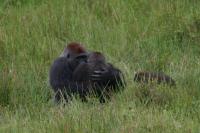
aken by researchers for the Wildlife Conservation Society and the Max Planck Institute for Evolutionary Anthropology, this image is one of a series showing western gorillas mating 'face-to-face' in Mbeli Bai in the Republic of Congo. These images are the first capturing such behavior in wild gorillas. Credit: © Thomas Breuer – WCS/MPI-EVA Scientists from the Wildlife Conservation Society and Max Planck Institute for Evolutionary Anthropology have released the first known photographs of gorillas performing face-to-face copulation in the wild. This is the first time that western gorillas have been observed and photographed mating in such a manner.
| Biology | February 12, 2008 07:23 PM |
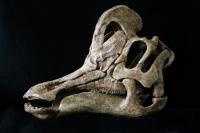
Reconstructed skull of Velafrons coahuilensis, a 72-million-year-old duck-billedspecimen discovered in Coahuila, Mexico. A new species of dinosaur unearthed in Mexico is giving scientists fresh insights into the ancient history of western North America, according to an international research team led by scientists from the Utah Museum of Natural History at the University of Utah.
| Biology | February 9, 2008 06:03 PM |
Shrews are tiny mammals that have been widely characterized as simple and primitive. This traditional view is challenged by a new study of the hunting methods of an aquatic member of the species, the water shrew. It reveals remarkably sophisticated methods for detecting prey that allow it to catch small fish and aquatic insects as readily in the dark as in daylight.
| Biology | February 9, 2008 03:03 PM |
A researcher at the Johns Hopkins Institute of Genetic Medicine has led the effort to compile to date the largest free resource of experimental information about human proteins. Reporting in the February issue of Nature Biotechnology, the research team describes how all researchers around the world can access this data and speed their own research.
| Biology | February 9, 2008 12:03 PM |
Aphids that eat Brussels sprouts are smaller than normal and live in undersized populations, which has a negative knock-on effect up the food chain according to new research published today (8 February) in Science.
| Biology | February 8, 2008 05:03 PM |
A radiated tortoise at Cap Saint Marie -- a protected area on the southernmost tip of Madagascar. Madagascar’s turtles and tortoises, which rank among the most endangered reptiles on earth, will continue to crawl steadily toward extinction unless major conservation measure are enacted, according to a recent assessment by the Wildlife Conservation Society and other groups.
| Biology | February 8, 2008 03:03 PM |
Lice from 1,000-year-old mummies in Peru may unravel important clues about a different sort of passage: the migration patterns of America’s earliest humans, a new University of Florida study suggests.
| Biology | February 8, 2008 09:03 AM |
Crayfish body fossils and burrows discovered in Victoria, Australia, have provided the first physical evidence that crayfish existed on the continent as far back as the Mesozoic Era, says Emory University paleontologist Anthony Martin, who headed up a study on the finds.
| Biology | February 8, 2008 08:03 AM |
A feeding colugo sports a backpack containing accelerometers and flash memory to record several day's worth of data on its gliding, in particular take-offs and landings. The device is glued to a shaved area on the animal's back and falls off after a few days. Credit: Norman Lim/National University of SingaporeThe "flying" lemur of Malaysia is the champion of all gliding mammals, able to drop from the forest canopy, glide more than the length of two football fields, execute 90-degree turns and then alight gently on a tree trunk.
| Biology | February 7, 2008 04:27 PM |
The transparent zebrafish. Zebrafish are genetically similar to humans and are good models for human biology and disease. Now, researchers at Children's Hospital Boston have created a zebrafish that is transparent throughout its life. The new fish allows scientists to directly view its internal organs, and observe processes like tumor metastasis and blood production after bone-marrow transplant in a living organism.
| Biology | February 7, 2008 02:27 PM |
Scientists from the University of Bonn are researching which plants giant dinosaurs could have lived off more than 100 million years ago. They want to find out how the dinosaurs were able to become as large as they did. In actual fact such gigantic animals should not have existed. The results of the research have now been published in the journal 'Proceedings of the Royal Society'.
| Biology | February 6, 2008 08:27 PM |
Very young brains process memories of fear differently than more mature ones, new research indicates. The findings appear in the Feb. 6 issue of The Journal of Neuroscience. The work significantly advances scientific understanding of when and how fear is stored and unlearned, and introduces new thinking on the implications of fear experience early in life.
| Biology | February 6, 2008 07:27 PM |
Compelled to mate, yet firmly attached to the rock, barnacles have evolved the longest penis of any animal for their size - up to 8 times their body length - so they can find and fertilize distant neighbours.
| Biology | February 6, 2008 02:55 PM |
Did modern birds originate around the time of the dinosaurs' demise, or have they been around far longer?
| Biology | February 5, 2008 08:41 PM |
Researchers from San Diego State University and the University of California have been using computer models to mimic the effects of underwater noise on an unusual whale species and have discovered a new pathway for sound entering the head and ears.
| Biology | February 5, 2008 05:41 PM |
DURHAM, N.C. -- Polygamous baboon fathers get more grandchildren if they spend a little time with their children during their juvenile years, according to research directed by scientists at Duke and Princeton universities.
| Biology | February 5, 2008 04:41 PM |
Scientists know that a number of factors can affect the body's immune system: poor diet, certain steroids, chronic stress. Now researchers at Michigan State University have discovered that an appetite-controlling hormone also affects the immune system, while natural versions of certain steroids do not.
| Biology | February 5, 2008 02:41 PM |
Natural flyers like birds, bats and insects outperform man-made aircraft in aerobatics and efficiency. University of Michigan engineers are studying these animals as a step toward designing flapping-wing planes with wingspans smaller than a deck of playing cards.
| Biology | February 4, 2008 11:41 PM |
Allan Reiss, MD, and his colleagues have a pretty good idea why your husband or boyfriend can't put down the Halo 3. In a first-of-its-kind imaging study, the Stanford University School of Medicine researchers have shown that the part of the brain that generates rewarding feelings is more activated in men than women during video-game play.
| Biology | February 4, 2008 07:41 PM |
South East Asia’s tiger economies should prize the long-term health of their environment above the ongoing short-term gains provided by foreign firms that pollute, economists have claimed.
| Biology | February 3, 2008 07:34 PM |
That the cell nurturing growth factor interleukin-7 can help ramp up the ability of the immune system to remember the pathogenic villains it encounters is well known.
Brain region that can be stimulated to reduce the cognitive deficits of sleep deprivation identified
| Biology | February 3, 2008 05:40 PM |
A Columbia University Medical Center research team has uncovered how stimulation of a particular brain region can help stave off the deficits in working memory, associated with an extended sleep deprivation.
| Biology | February 3, 2008 01:40 PM |
While hunting among chimpanzees is a group effort, key males, known as “impact hunters” are highly influential within the group. They are more likely to initiate a hunt, and hunts rarely occur in their absence, according to a new study. The findings, which appear in the current issue of Animal Behaviour, shed light on how and why some animals cooperate to hunt for food, and how individual variation among chimpanzees contributes to collective predation.
| Biology | February 2, 2008 06:40 PM |
Purdue University and USDA-Agricultural Research Service scientists have discovered that a type of gene in grain-producing plants halts infection by a disease-causing fungus that can destroy crops vital for human food supplies.
| Biology | February 2, 2008 04:40 PM |
Although there is unquestionably much left to be discovered about life on Earth, charismatic animals like mammals are usually well documented, and it is rare to find a new species today—especially from a group as intriguing as the elephant-shrews, monogamous mammals found only in Africa with a colorful history of misunderstood ancestry. Like shrews, these small, furry mammals eat mostly insects. Early scientists named them elephant-shrews not because they thought the animals were related to elephants but because of their long, flexible snouts. Ironically, recent molecular research has shown that they are actually more closely related to elephants than to shrews. Members of a supercohort called Afrotheria that evolved in Africa over 100 million years ago, their relatives include elephants, sea cows, and the aardvark. Until recently, only 15 species of elephant-shrews, also called sengis to avoid confusion with true shrews, were known to science. However, in March of 2006, Galen Rathbun of the California Academy of Sciences, Francesco Rovero of the Trento Museum of Natural Sciences, and a team of collaborators confirmed the existence of a new species that lives only in two high-altitude forest blocks in the mountains of south-central Tanzania. Their discovery will appear in the February 4 issue of The Journal of Zoology published by Wiley-Blackwell (available online on January 31).
| Biology | February 1, 2008 10:06 AM |
In the first study to use imaging technology to see what goes on in the brain when we scratch, researchers at Wake Forest University Baptist Medical Center have uncovered new clues about why scratching may be so relieving – and why it can be hard to stop. The work is reported online in the Journal of Investigative Dermatology and will appear in a future print issue.
| Biology | January 31, 2008 09:06 PM |
University of Adelaide geneticist Dr Jozef Gecz and a team of Belgium and UK scientists have achieved a major breakthrough in discovering the causes of intellectual disability.
| Biology | January 31, 2008 06:06 PM |
Eurasian reed warblers captured during their spring migrations and released after being flown 1,000 kilometers to the east can correct their travel routes and head for their original destinations, researchers report online on January 31st in Current Biology, a publication of Cell Press.
| Biology | January 31, 2008 06:01 PM |
A floral shoot of the Orobanche mutelii parasite alongside the nonflowering shoot of its tobacco host. Three types of parasitic plants, each exhibiting a different degree to which it needs its host, are the subject of a three-year, $1.5 million study at Virginia Tech to catalog genes essential to parasitism. Funded by the National Science Foundation (NSF) Plant Genome Program, the study examines hard-to-control weeds in the Orobanchaceae family that can wreak havoc on commodity and food crops, especially in developing countries in Africa and the Middle East.
| Biology | January 31, 2008 04:01 PM |
Twenty-one boxes filled with 7,000 unique seed samples from more than 36 African nations were shipped to the Svalbard Global Seed Vault, a facility being built on a remote island in the Arctic Circle as a repository of last resort for humanity’s agricultural heritage.
| Biology | January 31, 2008 01:01 PM |
The European Molecular Biology Organization (EMBO) and the Federation of European Biochemical Societies (FEBS) announced Naama Barkai of the Weizman Institute of Science in Rehovot, Israel as the first-ever winner of the FEBS/EMBO Women in Science Award. Naama Barkai receives the 2008 award for her outstanding contributions to the field of systems biology and the mathematical modelling of biological systems.
| Biology | January 31, 2008 12:01 PM |
Aggression, testosterone and nepotism don’t necessarily help one climb the social ladder, but the support of a good female can, according to new research on the social habits of an unusual African species of fish.
| Biology | January 31, 2008 11:01 AM |
Deep brain stimulation (DBS) surgery, which is used to treat Parkinson’s disease and other movement disorders, is now being studied for its potential to treat a variety of conditions. For example, DBS of the hypothalamus has been used to treat cluster headaches and aggressiveness in humans, and stimulating this area influences feeding behavior in animals. A new study found that hypothalamic DBS performed in the treatment of a patient with morbid obesity unexpectedly evoked detailed autobiographical memories. The study will be published online in the Annals of Neurology (http://www.interscience.wiley.com/journal/ana), the official journal of the American Neurological Association.
| Biology | January 30, 2008 07:01 PM |
New research shows that people with blue eyes have a single, common ancestor. A team at the University of Copenhagen have tracked down a genetic mutation which took place 6-10,000 years ago and is the cause of the eye colour of all blue-eyed humans alive on the planet today.
| Biology | January 29, 2008 09:14 PM |
The Fertile Crescent of the Middle East has long been identified as a “cradle of civilization” for humans. In a new genetic study, researchers at the University of California, Davis, have concluded that all ancestral roads for the modern day domestic cat also lead back to the same locale.
| Biology | January 29, 2008 06:14 PM |
It is like the premise of a popular home improvement show: in the before photos, the surroundings are undesirable and in the after shot there’s lots of attractive spaces to grab a meal, start a family and relax in seclusion from life’s stresses. The difference here is that the potential new homeowner is a lizard and the renovations come -- not from a sophisticated Manhattan designer -- but instead from a herd of elephants. An examination of the connections between elephants and lizards appears this month in the journal Ecology, where a researcher reports that the elephants’ eating habits have a strong influence on the lizards’ habitat choices. The results demonstrate an important and little understood aspect of ecosystem engineering, and may help land managers working on wildlife refuges in Africa.
| Biology | January 24, 2008 05:39 PM |
Scientists at the University of Liverpool have found that field mice have evolved a unique way of ensuring faster fertilisation, a phenomenon which could explain some cases of infertility in humans.
| Biology | January 24, 2008 03:39 PM |
The regulation of the biological fixation of nitrogen in hydric stress conditions varies with the different species of legume plants studied. This was the conclusion of Ruben Ladrera Fernández in his PhD thesis, “Models of regulation of nitrogen fixation in response to drought: Soya and Medicago”, in which the different ways of distinct species of legumes respond to drought conditions are explained. The PhD work was directed by Professor César Arrese-Igor Sánchez and senior lecturer Ms Esther González García from the Department of Environmental Sciences at the Public University of Navarre
| Biology | January 24, 2008 01:39 PM |
At the end of January, more than 200,000 crop varieties from Asia, Africa, Latin America and the Middle East—drawn from vast seed collections maintained by the Consultative Group on International Agricultural Research (CGIAR)—will be shipped to a remote island near the Arctic Circle, where they will be stored in the Svalbard Global Seed Vault (SGSV), a facility capable of preserving their vitality for thousands of years.
| Biology | January 23, 2008 11:39 PM |
Ever since a forward-thinking trio of physicists identified the phenomenon known as self-organized criticality---a mechanism by which complexity arises in nature---scientists have been applying its concepts to everything from economics to avalanches.
| Biology | January 23, 2008 07:39 PM |
Researchers have found the brain region that controls the decision to halt your midnight exploration of the refrigerator and commence enjoyment of that leftover chicken leg. What’s more, they said, such mechanisms governing exploration are among those that malfunction in addiction and mental illness.
| Biology | January 22, 2008 10:40 AM |
Denizens of oceans, lakes and even wet soil, diatoms are unicellular algae that encase themselves in intricately patterned, glass-like shells. Curiously, these tiny phytoplankton could be harboring the next big breakthrough in computer chips.
| Biology | January 21, 2008 12:47 PM |
A study by the University of Exeter has highlighted the problems of reintroducing animals to the wild for conservation projects. Published online in the journal Biological Conservation, the research highlights the low survival rates of captive carnivores that are released into their natural habitats. On average only one in three captive-born carnivores survives in the wild, with most deaths related to human activities.
| Biology | January 20, 2008 12:27 AM |
The human brain is capable of detecting the slightest visual and auditory changes. Whether it is the flash of a student’s hand into the air or the faintest miscue of a flutist, the brain instantaneously and effortlessly perceives changes in our environment. Several studies have indicated, however, that even a small span of time in between pre- and post-change images can disturb the brain’s ability to detect visual discrepancies.
| Biology | January 20, 2008 12:27 AM |
The full recovery of ecological systems, following the most devastating extinction event of all time, took at least 30 million years, according to new research from the University of Bristol.
| Biology | January 18, 2008 05:28 PM |
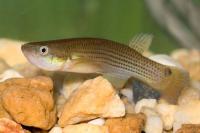
A female killifish (Rivulus hartii). The direct effect predators have on their prey is to kill them. The evolutionary changes that can result from this direct effect include prey that are younger at maturity and that produce more offspring.
| Biology | January 17, 2008 11:28 PM |
Monkeys living on an island without big cat predators do not show any particular alarm when recorded tiger growls are played to them, according to research by a UC Davis graduate student. The pig-tailed langurs do, however, flee in a hurry from the sound of human voices.
| Biology | January 17, 2008 10:09 AM |
A gigantic palm that flowers itself to death and exists as part of an entirely unique genus has been discovered in Madagascar; its name will be published in the Botanical Journal of the Linnean Society on 17 January 2008. The mystery palm has a huge trunk which towers over 18m high and fan leaves which are 5m in diameter ?among the largest known in flowering plants. This is the most massive palm ever to be found in Madagascar.
| Biology | January 16, 2008 01:09 PM |
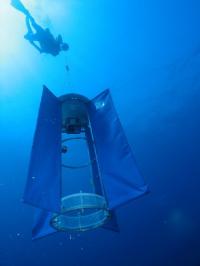
How tiny coral reef fish larvae locate the reef habitat across vast expanses of water has remained an enduring mystery. An innovative observational tool, the OWNFOR (Orientation With No Frame Of Reference) designed by UM Rosenstiel School researchers, is breaking new ground by allowing scientists to detect and quantify the orientation of larval coral reef fish in the pelagic environment; an often pitch black void with little or no frame of reference to navigate. Credit: Evan D'Alessandro One of the most significant questions facing marine ecologists today, is just how much of an impact global variations in the environment are having on the dispersal of larval and juvenile marine species from open oceans to coral reefs. Previously, tracking how fish larvae migrate was done through direct observation by divers on older larvae found near the reefs, after they’d spent weeks to months in the plankton. This method did not permit divers to follow small larvae, diving larvae or larvae as they returned to the reefs at night. How tiny coral reef fish larvae locate the reef habitat across vast expanses of water has remained an enduring mystery.
| Biology | January 15, 2008 07:37 PM |
An international research team, including biologists from NOAA’s Fisheries Service, reported in the scientific journal Conservation Biology, that the estimated population of vaquita, a porpoise found in the Gulf of California, is likely two years away from reaching such low levels that their rate to extinction will increase and possibly be irreversible. Scientists believe only about 150 vaquita remain.
| Biology | January 15, 2008 03:37 PM |
Whether you are dealing with the number of wildebeest on the Serengeti or the number of malaria parasites in the human body, new research shows the same ecological framework determines breeding numbers and population size. New research published today (15 January) in Proceedings of the National Academy of Sciences by a Biotechnology and Biological Sciences Research Council (BBSRC) Fellow shows that the same community ecology principles that determine how different animal species on the savannah affect each other’s population sizes through competition for food and hunting by predators also affect parasite species interacting within the microcosm of a single host.
| Biology | January 15, 2008 01:37 PM |
Dinosaurs had pregnancies as early as age 8, far before they reached their maximum adult size, a new study finds.
| Biology | January 15, 2008 11:37 AM |
Ecologists have long observed that when food becomes scarce, animal populations exploit a wider range of food sources. So scientists studying southern sea otters at different sites in California's coastal waters were not surprised to find that the dietary diversity of the population is higher where food is limited. But this diversity was not reflected in the diets of individual sea otters, which instead showed dietary specialization in response to limited food.
| Biology | January 14, 2008 04:52 PM |
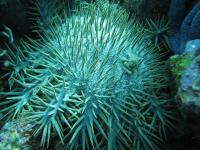
Outbreaks of crown of thorns starfish threaten the heart of the Coral Triangle in Indonesia. Outbreaks of the notorious crown of thorns starfish now threaten the “coral triangle,” the richest center of coral reef biodiversity on Earth, according to recent surveys by the Bronx Zoo-based Wildlife Conservation Society and ARC Centre of Excellence for Coral Reef Studies.
| Biology | January 14, 2008 10:39 AM |
Recognising people, objects or animals by the sound they make is an important survival skill and something most of us take for granted. But very similar objects can physically make very dissimilar sounds and we are able to pick up subtle clues about the identity and source of the sound. Scientists funded by the Biotechnology and Biological Sciences Research Council (BBSRC) are working out how the human ear and the brain come together to help us understand our acoustic environment. They have found that the part of the brain that deals with sound, the auditory cortex, is adapted in each individual and tuned to the world around us. We learn throughout our lives how to localise and identify different sounds. It means that if you could hear the world through someone else's ears it would sound very different to what you are used to.
| Biology | January 14, 2008 09:39 AM |
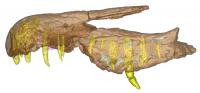
This image shows the results of the CT scan reconstruction. The Baryonyx snout bone is transparent brown. This shows us that the teeth (yellow) had extremely deep roots and that Baryonyx had independently evolved a bony palate (the pink structure), also seen in crocodilians -- another feature that makes this dinosaur even more 'crocodile-like'. Credit: Emily Rayfield An unusual dinosaur has been shown to have a skull that functioned like a fish-eating crocodile, despite looking like a dinosaur. It also possessed two huge hand claws, perhaps used as grappling hooks to lift fish from the water.
| Biology | January 13, 2008 05:21 PM |
In studies involving more than 35,000 people and a survey across the entire human genome, an international team supported in part by the National Institutes of Health (NIH) has found evidence that common genetic variants recently linked to osteoarthritis may also play a minor role in human height. The findings were released today in the advance online publication of the journal Nature Genetics.
| Biology | January 12, 2008 08:40 PM |
People from different cultures use their brains differently to solve the same visual perceptual tasks, MIT researchers and colleagues report in the first brain imaging study of its kind.
| Biology | January 12, 2008 06:40 PM |
In the latest issue of the journal Emerging Infectious Diseases, Swedish researchers report that birds captured in the hyperboreal tundra, in connection with the tundra expedition “Beringia 2005,” were carriers of antibiotics-resistant bacteria. These findings indicate that resistance to antibiotics has spread into nature, which is an alarming prospect for future health care.
| Biology | January 12, 2008 05:40 PM |
The roundworm C. elegans, a staple of laboratory research, may be key in unlocking one of the central biological mysteries: why we sleep. Researchers at the University of Pennsylvania School of Medicine report in this week’s advanced online edition of Nature that the round worm has a sleep-like state, joining most of the animal kingdom in displaying this physiology. This research has implications for explaining the evolution and purpose of sleep and sleep-like states in animals.
| Biology | January 12, 2008 03:40 PM |
Many researchers have tried to create a mathematical model of how cells pack together to form tissue, but most models have many different complicated factors, and no model is universal.
| Biology | January 12, 2008 02:40 PM |
A rare occurrence in Southern California-black abalone cluster together in a rocky, intertidal crag on San Nicolas Island. NOAA Fisheries Service published with the Federal Register today a proposed rule to list black abalone, a marine mollusk coveted by fishermen and gourmets alike, as endangered under the Endangered Species Act (ESA). The proposal comes after NOAA Fisheries Service considered the report of a scientific review team concluding that the species is at risk of extinction.
| Biology | January 9, 2008 07:51 PM |
A male Siberian jay eats with his progeny, which makes the young bird's life much safer. With the aid of various alarm calls the Siberian jay bird species tells other members of its group what their main predators-¬hawks¬-are doing. The alarm calls are sufficient for Siberian jays to evince situation-specific fleeing behaviors, which enhances their chances of survival. This discovery, being published by Uppsala University researcher Michael Griesser in the journal Current Biology, shows for the first time that animals can assess and communicate about the behavior of predators.
| Biology | January 9, 2008 04:50 PM |
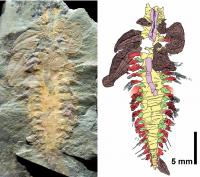
Fossil (left) and depiction (right) of extinct armored machaeridian worm. Colors indicate the trunk (yellow), limb (red), bristles (gray), attachment of shell plates (green), gut (purple) and dorsal linear structure (blue) Credit: Vinther, et al Nature Discovery of an exceptional fossil specimen in southeastern Morocco that preserves evidence of the animal’s soft tissues has solved a paleontological puzzle about the origins of an extinct group of bizarre slug-like animals with rows of mineralized armor plates on their backs, according to a paper in Nature.
| Biology | January 9, 2008 03:50 PM |
Brain scans of hypnotized people that are taken as they forget and are triggered to remember have revealed neural circuitry that is key to the memory suppression and recall process. The researchers who conducted the study said their insights into the memory suppression and recall process may yield insight into the mechanisms underlying amnesia.
| Biology | January 7, 2008 10:05 PM |
Rather than being gentle giants, new research reveals that Pleistocene cave bears ate both plants and animals and competed for food with the other contemporary large carnivores of the time: hyaenas, lions, wolves, and our own human ancestors.
| Biology | January 7, 2008 10:05 PM |
Hybridizing blind cave fish from different cave populations can partially restore the vision of their offspring, biologists at New York University have found. The study suggests that genetic engineering can override, at least in part, half a million years of evolutionary change in one generation.
| Biology | January 4, 2008 02:23 PM |
A group of scientists in Princeton's Department of Ecology and Evolutionary Biology has uncovered a new biological mechanism that could provide a clearer window into a cell's inner workings.
| Biology | January 3, 2008 08:52 PM |
The Ediacara fossil Fractofusus andersoni from the ~565 million year old Mistaken Point Formation in Newfoundland, Canada, represents the earliest Ediacara assemblage, known as the Avalon assemblage. Scientists have known for some time that most major groups of complex animals appeared in the fossils record during the Cambrian Explosion, a seemingly rapid evolutionary event that occurred 542 million years ago. Now Virginia Tech paleontologists, using rigorous analytical methods, have identified another explosive evolutionary event that occurred about 33 million years earlier among macroscopic life forms unrelated to the Cambrian animals. They dubbed this earlier event the "Avalon Explosion."
| Biology | January 3, 2008 08:52 PM |
Practice makes perfect — or at least that’s what we’re told as we struggle through endless rounds of multiplication tables, goal kicks and piano scales — and it seems, based on the personal experience of many, to be true. That’s why neuroscientists have been perplexed by data showing that at the level of individual synapses, or connections between neurons, increased, repetitive stimulation might actually reverse early gains in synaptic strength. Now, neuroscientists from Carnegie Mellon University and the Max Planck Institute have discovered the mechanism that resolves this apparent paradox. The findings are published in the Jan. 4 issue of Science.
| Biology | January 3, 2008 01:06 PM |
Asteroid impacts or massive volcanic flows might have occurred around the time dinosaurs became extinct, but a new book argues that the mightiest creatures the world has ever known may have been brought down by a tiny, much less dramatic force – biting, disease-carrying insects.
| Biology | January 2, 2008 05:56 PM |
The January 2008 issue of BioScience includes an article by biologist Edward O. Wilson that argues for a new perspective on the evolution of advanced social organization in some ants, bees, and wasps (Hymenoptera).
| Biology | December 27, 2007 09:35 PM |
When it comes to choosing a place to live, male chimpanzees in the wild don’t stray far from home, according to a new report in the Dec. 27th Current Biology, a publication of Cell Press. The researchers found that adult male chimps out on their own tend to follow in their mother’s footsteps, spending their days in the same familiar haunts where they grew up. Male chimpanzees are generally very social, but how they use space when they are alone might be critical to their survival, the researchers said.
| Biology | December 26, 2007 10:37 PM |
Animals and insects communicate through an invisible world of scents. By exploiting infrared technology, researchers at Rockefeller University just made that world visible. With the ability to see smells, these scientists now show that when fly larvae detect smells with both olfactory organs they find their way toward a scented target more accurately than when they detect them with one.
| Biology | December 26, 2007 10:37 PM |
The research field has grown from grapheme-colour synaesthesia to include other forms of synaesthesia in which flavours are evoked by music or words (lexical-gustatory synaesthesia), space structures by time units, colours by music, etc. Experts on Experimental Psychology from the University of Granada are studying this phenomenon. The results of this research have been published by the following scientific journals, among others: Cortex, Experimental Brain Research and Consciousness and Cognition.
| Biology | December 26, 2007 10:37 PM |
Up to 20 meters long and weighing as much as 20 tons, its enormous size gives the whale shark (Rhincodon typus) its name. Known as the ‘gentle giant’ for its non-predatory behavior, this fish, with its broad, flattened head and minute teeth, eats tiny zooplankton, sieving them through a fine mesh of gill-rakers. Listed as a rare species, relatively little is known about whale sharks, which live in tropical and warm seas, including the western Atlantic and southern Pacific. However, a new study combines computer-assisted photographic identification with ecotourism to study the rare species and suggests whale shark populations in Ningaloo, Western Australia are healthy. The study appears in the Ecological Society of America’s January issue of Ecological Applications.
| Biology | December 22, 2007 05:02 PM |
In the early 1990s, federal agencies in the West were asked to implement the Northwest Forest Plan. Part of that task involved an inventory and conservation plan for more than 300 rare species believed to be associated with old-growth forests. Debates arose among the agency leads regarding how to begin this daunting task and how best to carry it out.
| Biology | December 21, 2007 04:08 PM |
Plant leaves and surfaces are teeming with microbial life, yet the insects that feed on plants lack adaptive immune systems to fend off any intruding microorganisms they eat along with their greens. Now research published in the online open access journal, BMC Biology shows how food-borne bacteria affect an insect’s immune system.
| Biology | December 21, 2007 03:08 PM |
The melodious sound of a songbird may appear effortless, but his elocutions are actually the result of rigorous training undergone in youth and maintained throughout adulthood. His tune has virtually “crystallized” by maturity. The same control is seen in the motor performance of top athletes and musicians. Yet, subtle variations in highly practiced skills persist in both songbirds and humans. Now, scientists think they know why.
| Biology | December 20, 2007 10:46 PM |
Most modern-day groups of beetles have been around since the time of the dinosaurs and have been diversifying ever since, says new research out in Science today (Friday 21 December 2007).
| Biology | December 20, 2007 06:46 PM |
Biologists at the University of California, San Diego have discovered a gene in plants that disrupts fertilization only when mutations in the gene are present in both the female and male reproductive cells.
| Biology | December 20, 2007 04:46 PM |
Velcro, Superglue and Post-It Notes… Three things that started out as obscure inventions but are now indispensable for everyday life. So what will the next idea to stick with modern society look like" The answer may lie in the tiny toes of a humble lizard, according to a University of Calgary biologist who is trying to figure out how geckos can cling to virtually any surface, including glass.
| Biology | December 20, 2007 03:46 PM |
Thailand’s Western Forest Complex – a 6,900 square mile (18,000 square kilometers) network of parks and wildlife reserves – can potentially support some 2,000 tigers, making it one of the world’s strongholds for these emblematic big cats, according to a new study by Thailand’s Department of National Park, Wildlife, and Plant Conservation and the New York-based Wildlife Conservation Society. The study, which appears in latest issue of the journal Oryx, says that to make these numbers a reality, better enforcement to safeguard both tigers and their prey from poachers is critical.
| Biology | December 19, 2007 05:45 PM |

A curious bear investigates the smell of blood near a wire hair snag. Locks of hair from more than 400 grizzly bears are stored at Montana State University, waiting to tell the tale of genetic diversity in the Yellowstone Ecosystem.
| Biology | December 19, 2007 03:45 PM |
Scientists long have focused on how climate and vegetation allowed human ancestors to evolve in Africa. Now, University of Utah geologists are calling renewed attention to the idea that ground movements formed mountains and valleys, creating environments that favored the emergence of humanity.
| Biology | December 19, 2007 02:45 PM |
No human can survive longer than a few minutes underwater, and even a well-trained Olympic swimmer needs frequent gulps of air. Our brains need a constant supply of oxygen, particularly during exercise.
| Biology | December 18, 2007 01:17 PM |
The ability of Argentine ants to change from carnivorous insect eaters to plant sap-loving creatures has helped these invasive social insects rapidly spread throughout coastal California, according to a new study, displacing many native insects and creating ant infestations familiar to most coastal residents.
| Biology | December 17, 2007 05:31 PM |
A tiny possum and a giant rat were recorded by scientists as probable new species on a recent expedition to Indonesia’s remote and virtually unknown “Lost World” in the pristine wilderness of western New Guinea’s Foja Mountains.
| Biology | December 14, 2007 08:46 PM |
A Queen’s University environmental scientist will head a new international study to determine whether American eels – the slimy, snake-like fish considered worldwide to be a food delicacy – are dying from chemical pollution in Lake Ontario.
| Biology | December 13, 2007 07:10 PM |
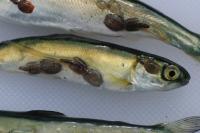
Pink salmon fry infected with sea lice. A study appearing in the December 14 issue of the journal Science shows, for the first time, that parasitic sea lice infestations caused by salmon farms are driving nearby populations of wild salmon toward extinction. The results show that the affected pink salmon populations have been rapidly declining for four years. The scientists expect a 99% collapse in another four years, or two salmon generations, if the infestations continue.
| Biology | December 13, 2007 06:10 PM |
A pioneering study of wild chimpanzees has found that these close human relatives do not routinely experience menopause, rebutting previous studies of captive individuals which had postulated that female chimpanzees reach reproductive senescence at 35 to 40 years of age.
| Biology | December 13, 2007 05:10 PM |
The human spine evolved differently in males and females in order to alleviate back pressure from the weight of carrying a baby, according to research spearheaded at The University of Texas at Austin.
| Biology | December 12, 2007 09:50 PM |
Aggressive territorial male Mozambique tilapia fish (Oreochromis mossambicus) send chemical messages to rival males via their urine. They increase urination, have smellier urine and store more in their bladders than less aggressive males, according to research published in the open access journal BMC Biology. Animal behaviourists have known for some time that the urine of freshwater fish is a vehicle for reproductive hormones that act in the water as pheromones, affecting the behaviour and physiology of members of the opposite sex. Now, this research sheds light on the role of urine in influencing members of the same sex.
| Biology | December 12, 2007 04:50 PM |
A team of U.S. and Chilean scientists working high in the Andes have discovered the fossilized remains of an extinct, tank-like mammal they conclude was a primitive relative of today’s armadillos. The results of their surprising new discovery are described in an upcoming issue of Journal of Vertebrate Paleontology.
| Biology | December 11, 2007 09:11 PM |
Two hundred years ago Lewis and Clark's Corps of Discovery laid the groundwork for a good deal of scientific research with its descriptions of territory acquired through the Louisiana Purchase. While Thomas Jefferson was said to be disappointed by the absence of living megafauna, the area ultimately yielded a wealth of Late Cretaceous fossils. A new volume published by the Geological Society of America makes clear that the process of discovery continues.
| Biology | December 11, 2007 02:25 PM |
IMP Director Barry Dickson and his group are interested in the genetic basis of innate behaviour. They focus on the reproductive behaviour of the fruit fly Drosophila melanogaster. Two years ago, the team was able to identify the fruitless gene as a key regulator of mating behaviour.
| Biology | December 11, 2007 01:25 PM |
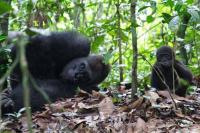
Gorillas in the Lope National Park, Gabon pictured by Dr. Kathryn Jeffery, director of the Gorilla and Chimpanzee Research Station in the Lope National Park. Geography and historical climate change may have both played a major role in gorilla evolutionary diversification, according to a new genetic study by Cardiff University and the University of New Orleans.
| Biology | December 11, 2007 11:25 AM |
Geographic range maps that allow conservationists to estimate the distribution of birds may vastly underestimate the actual population size of threatened species and those with specific habitats, according to a study published online this week in the journal Conservation Biology.
| Biology | December 11, 2007 10:25 AM |
A new genus and species of dinosaur from the Early Jurassic has been discovered in Antarctica. The massive plant-eating primitive sauropodomorph is called Glacialisaurus hammeri and lived about 190 million years ago.
| Biology | December 10, 2007 08:25 PM |
The capacity of the human mind to believe or disbelieve a statement is a powerful force for controlling both behavior and emotion, but the basis of these states in the brain is not yet understood. A new study found that belief, disbelief and uncertainty activate distinct regions of the brain, with belief/disbelief affecting areas associated with the pleasantness/unpleasantness of tastes and odors. The study will publish online in the Annals of Neurology (http://www.interscience.wiley.com/journal/ana), the official journal of the American Neurological Association.
| Biology | December 9, 2007 08:00 PM |
You study the menu at a restaurant and decide to order the steak rather than the salmon. But when the waiter tells you about the lobster special, you decide lobster trumps steak. Without reconsidering the salmon, you place your order—all because of a trait called “transitivity.”
| Biology | December 9, 2007 08:00 PM |
While the biological basis for homosexuality remains a mystery, a team of neurobiologists reports they may have closed in on an answer -- by a nose.
| Biology | December 7, 2007 05:35 PM |
How many times a day do you grab objects such as a pencil or a cup? We perform these tasks without thinking, however the motor planning necessary to grasp an object is quite complex. The way human adults grasp objects is typically influenced more by their knowledge of what they intend to do with the objects than the objects' immediate appearance. Psychologists call this the “end-state comfort effect,” when we adopt initially unusual, and perhaps uncomfortable, postures to make it easier to actually use an object.
| Biology | December 7, 2007 03:35 PM |
Scientists exploring one of the largest remaining blocks of tropical forest in Western Africa discovered significant populations of new, rare and threatened species underscoring the area’s high biological diversity and value.
| Biology | December 6, 2007 11:35 PM |

Adult retrieves turtle from puzzle box as part of experiment that determined children "over-imitate " adult behavior. Children learn by imitating adults—so much so that they will rethink how an object works if they observe an adult taking unnecessary steps when using that object, according to a Yale study today in Proceedings of the National Academy of Sciences.
| Biology | December 6, 2007 08:35 PM |
Comparisons of the brains of young and old people have revealed that normal aging may cause cognitive decline due to deterioration of the connections among large-scale brain systems. The researchers linked the deterioration to a decrease in the integrity of the brain’s “white matter,” the tissue containing nerve cells that carry information. The researchers found that the disruption occurred even in the absence of pathology associated with Alzheimer’s disease (AD).
| Biology | December 6, 2007 06:35 PM |
A team of Howard Hughes Medical Institute researchers has shown that normal aging disrupts communication between different regions of the brain. The new research, which used advanced medical imaging techniques to look at the brain function of 93 healthy individuals from 18 to 93 years old, shows that this decline happens even in the absence of serious pathologies like Alzheimer's disease.
| Biology | December 6, 2007 04:35 PM |
In the wake of a study that documented for the first time the use of weaponry by Cross River gorillas to ward off threats by humans, the Wildlife Conservation Society announced today new field surveys to better protect this most endangered great ape.
| Biology | December 6, 2007 10:35 AM |
A family of proteins commonly found in mouse urine is able to trigger fighting between male mice, a study in the Dec. 6, 2007, issue of Nature has found. The study, which is the first to identify protein pheromones responsible for the aggression response in mice, was funded in part by the National Institute on Deafness and Other Communication Disorders (NIDCD), one of the National Institutes of Health. Pheromones are chemical cues that are released into the air, secreted from glands, or excreted in urine and picked up by animals of the same species, initiating various social and reproductive behaviors.
| Biology | December 4, 2007 10:03 PM |
Life may have begun in the protected spaces inside of layers of the mineral mica, in ancient oceans, according to a new hypothesis.
| Biology | December 3, 2007 08:13 PM |
Piranhas inhabit exclusively the fresh waters of South America. Their geographical distribution extends from the Orinoco River basin (Venezuela) to the North, down to that of the Paraná (Argentina) to the South. Over this whole area, which also embraces the entire Amazon Basin, biologists have recorded 28 carnivorous species of these fish (2). In spite of the evolutionary success of this subfamily of fish, the mechanisms that generated the species richness of this group are still insufficiently known.
| Biology | December 3, 2007 07:13 PM |
Young chimpanzees have an “extraordinary” ability to remember numerals that is superior to that of human adults, researchers report in the December 4th issue of Current Biology, a publication of Cell Press.
| Biology | December 3, 2007 06:13 PM |
Long before tourists arrived in the Bahamas, ancient visitors took up residence in this archipelago off Florida’s coast and left remains offering stark evidence that the arrival of humans can permanently change -- and eliminate -- life on what had been isolated islands, says a University of Florida researcher.
| Biology | December 3, 2007 05:13 PM |
There is considerable interest in determining the range of habitats an invasive alien species could possibly reach. Since its discovery in the Great Lakes, the zebra mussel (Dreissena polymorpha) has spread rapidly throughout waterways in the eastern US, negatively impacting ecosystems and infrastructure. A close relative of the zebra mussel and also of the Dreissena genus is the more slowly-spreading quagga mussel (D bugensis), found primarily in the Great Lakes
| Biology | December 3, 2007 01:31 PM |
Young chimpanzees have an “extraordinary” ability to remember numerals that is superior to that of human adults, researchers report in the December 4th issue of Current Biology, a publication of Cell Press.
| Biology | December 3, 2007 11:31 AM |
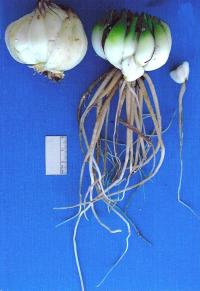
Mature mother bulb before and after root development. Note a bulblet formed on a scale of the middle bulb. On the right is a single bulblet with a contractile root. Confused about the right planting depth for flower bulbs? Trust the bulbs! Researchers have discovered that some flower bulbs are actually "smart" enough to adjust themselves to the right planting depth. A recent study published in the Journal of the American Society for Horticultural Science proved that bulbs can adjust their planting position by moving deeper into the ground, apparently in search of moister, more conducive growing conditions.
| Biology | November 30, 2007 08:44 PM |
Research published in this week’s Science journal shows that some of our closest extinct relatives had more in common with gorillas than previously thought. Dr Charles Lockwood, UCL Department of Anthropology and lead author of the study, said: “When we examined fossils from 1.5 to 2 million years ago we found that in one of our close relatives the males continued to grow well into adulthood, just as they do in gorillas. This resulted in a much bigger size difference between males and females than we see today.
| Biology | November 30, 2007 07:44 PM |
When fruit fly larvae are poked or prodded, they fold themselves up and corkscrew their bodies around, a behavior that appears to be the young insects’ equivalent of a “judo move,” say researchers reporting online on November 29th in the journal Current Biology, a publication of Cell Press. They now trace that rolling behavior to neurons resembling those that sense pain.
| Biology | November 30, 2007 05:44 PM |
The marsh frog (Rana ridibunda) Indigenous water frogs can be crowded out by immigrant or imported species. This is the finding of a Franco-German study. The scientists investigated water frog populations in France and Northern Spain and noticed that the marsh frog (Rana ridibunda), which normally occurs only in Eastern Europe, has the potential to crowd out indigenous species like Graf’s hybrid frog (Rana grafi) and the Iberian water frog (Rana perezi).
| Biology | November 28, 2007 01:44 PM |
More than 30 years in the making, Birds of Peru describes the birds of Peru through 304 color plates, 1,700 species distribution maps, also in color, and concise descriptive text. The first two authors of this landmark publication, Tom Schulenberg, PhD, and Douglas Stotz, PhD, are conservation ecologists and ornithologists in the Field Museum’s Environmental and Conservation Program. Therefore the Museum will host a free public event launching the book on December 5th
| Biology | November 27, 2007 04:05 PM |
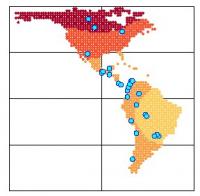
The U-M study, which analyzed genetic data from 29 Native American populations, suggests a Siberian origin is much more likely than a South Asian or Polynesian origin. Did a relatively small number of people from Siberia who trekked across a Bering Strait land bridge some 12,000 years ago give rise to the native peoples of North and South America?
| Biology | November 27, 2007 03:05 PM |
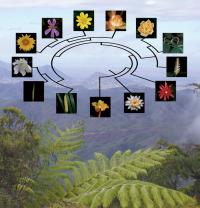
Phylogenetic relationships among the major lineages of flowering plants based on plastid genome sequences. Pictured counter-clockwise from the root at the base of the circle tree are: Amborella trichopoda, Nymphaea odorata, Illicium floridanum, Chloranthus angustifolius, Piper longum, Liriodendron tulipifera, Ceratophyllum demersum, Ranunculus ficaria, Pelargonium exstipulatum, Helianthus annuus, Yucca filamentosa, Triticum aestivum, and Acorus americanus. New Caledonia, home to Amborella trichopoda, is shown in the background. The evolutionary Tree of Life for flowering plants has been revealed using the largest collection of genomic data of these plants to date, report scientists from The University of Texas at Austin and University of Florida.
| Biology | November 26, 2007 05:17 PM |
It was not the isolation of the Ice Age that determined the genetic distribution of bears, as has long been thought. This is shown by an international research team led from Uppsala University in Sweden in the latest issue of Molecular Ecology. One possible interpretation is that the hunting of bears by humans and human land use have been crucial factors.
| Biology | November 26, 2007 11:53 AM |
Moths and butterflies, particularly silkworms, are well known producers of silk. And we all know spiders use it for their webs. But they are not the only invertebrates who make use of the strength and versatility of silk.
| Biology | November 22, 2007 05:28 PM |
A colorful microscope image showing that a solution of tiny DNA molecules has formed a liquid-crystal phase. The DNA molecules pair to form DNA double helices, which, in turn stack end-to-end to make rod-shaped aggregates that orient parallel to one another. Credit: Michi Nakata A team led by the University of Colorado at Boulder and the University of Milan has discovered some unexpected forms of liquid crystals of ultrashort DNA molecules immersed in water, providing a new scenario for a key step in the emergence of life on Earth.
| Biology | November 21, 2007 08:01 PM |
Carnivorous plants supplement the meager diet available from the nutrient-poor soils in which they grow by trapping and digesting insects and other small arthropods. Pitcher plants of the genus Nepenthes were thought to capture their prey with a simple passive trap but in a paper in this week’s PLoS ONE, Laurence Gaume and Yoel Forterre, a biologist and a physicist from the CNRS, working respectively in the University of Montpellier and the University of Marseille, France show that they employ slimy secretions to doom their victims. They show that the fluid contained inside the plants’ pitchers has the perfect viscoelastic properties to prevent the escape of any small creatures that come into contact with it even when diluted by the heavy rainfall of the forest of Borneo in which they live.
| Biology | November 21, 2007 03:01 PM |
The discovery of a giant fossilised claw from an ancient sea scorpion indicates that when alive it would have been about two and a half meters long, much taller than the average man.
| Biology | November 21, 2007 10:01 AM |
An online auction for naming rights to a new owl butterfly species discovered at the University of Florida brought a winning bid of $40,800, with proceeds benefiting continued research on Mexican butterflies.
| Biology | November 20, 2007 12:46 PM |
Sexy dads produce sexy sons, in the insect world at least. While scientists already knew that specific attractive traits, from cricket choruses to peacocks’ tails, are passed on to their offspring, the heritability of attractiveness as a whole is more contentious. Now, new research by the University of Exeter, published today (20 November) in Current Biology, shows that attractiveness is hereditary.
| Biology | November 19, 2007 10:06 PM |
Animal conservationists in Manchester are turning to physics to investigate whether global warming is responsible for killing sun-loving South American tree frogs.
| Biology | November 19, 2007 08:06 PM |
Adding another layer of competition to the mating game, scientists are reporting possible biochemical proof that the reproductive system of female mammals can “sense” the presence of sperm and react to it by changing the uterine environment. This may be the molecular mechanism behind post-copulatory sexual selection, in which females that have mated with several partners play a role in determining which sperm fertilizes their egg.
| Biology | November 19, 2007 04:06 PM |
M.C. Escher’s ambiguous drawings transfix us: Are those black birds flying against a white sky or white birds soaring out of a black sky? Which side is up on those crazy staircases?
| Biology | November 18, 2007 11:44 PM |
For unknown reasons a protein called amyloid beta aggregates into toxic plaques in the brain, killing neurons. These plaques are one of the hallmarks of Alzheimer’s disease. Now two new animal studies show for the first time that the deadly transformation of amyloid beta into plaques can be prevented through an interaction between amyloid beta and another protein called cystatin C.
| Biology | November 18, 2007 11:44 PM |
A multinational team of researchers has shown for the first time that the immune system can stop the growth of a cancerous tumor without actually killing it.
| Biology | November 17, 2007 07:51 PM |
Honeybees somehow manage to efficiently collect a lot of nectar with limited resources and no central command — after all, the queen bee is too busy laying eggs to oversee something as mundane as where the best nectar can be found on any given morning. According to new research from the Georgia Institute of Technology, the swarm intelligence of these amazingly organized bees can also be used to improve the efficiency of Internet servers faced with similar challenges.
| Biology | November 17, 2007 01:51 PM |
It’s well known that the body’s energy levels cycle on a 24-hour, or circadian, schedule, and that this metabolic process is fueled by oxygen. Now, researchers at the University of Pennsylvania School of Medicine have found that a protein called Rev-erb coordinates the daily cycles of oxygen-carrying heme molecules to maintain the body’s correct metabolism.
| Biology | November 16, 2007 06:24 PM |
Refrigeration units began pumping chilly air deep into an Arctic mountain cavern today, launching the innovative and critical “cooling down” phase of the Svalbard Global Seed Vault in advance of its official opening early next year as a fail-safe repository of the world’s vital food crops. Svalbard is now three days into the three-month “Polar Night” period when there is 24 hours of complete darkness.
| Biology | November 15, 2007 08:24 PM |
A 110 million-year-old dinosaur that had a mouth that worked like a vacuum cleaner, hundreds of tiny teeth and nearly translucent skull bones will be unveiled Thursday, Nov. 15, at the National Geographic Society.
| Biology | November 15, 2007 11:33 AM |
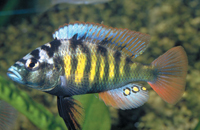
Cichild fish fighting and fishing. A gene has been found in male cichlid fish that evolved to lure female fish so that male cichlids can deposit sperm in the females mouths. A study in the online open access journal BMC Biology reveals that the gene is associated with egg-like markings on the fins of cichlid fishes and uncovers the evolutionary history of these markings, which are central to the success of the fishes' exotic oral mating behaviour.
| Biology | November 13, 2007 09:04 PM |
Whereas most birds are sole proprietors of their nests, some tropical species “time share” together – a discovery that helps clear up a 150-year-old evolutionary mystery, says Queen’s University Biology professor Vicki Friesen.
| Biology | November 13, 2007 03:41 PM |
The Shifting Baselines Toolset is presented to the public and press on Wednesday 14 to Friday 16 this November 2007.
| Biology | November 12, 2007 06:29 PM |
Heather Hallen spent eight years looking for poison in all the wrong places.
| Biology | November 12, 2007 05:29 PM |
Chimpanzees inhabiting a harsh savanna environment and using bark and stick tools to exploit an underground food resource are giving scientists new insights to the behaviors of the earliest hominids who, millions of years ago, left the African forests to range the same kinds of environments and possibly utilize the same foods.
| Biology | November 8, 2007 04:45 PM |
A new study appearing online on November 8th in Current Biology, a publication of Cell Press, offers new insight into how wild house mice avoid mating with their relatives. The mice rely on a diverse set of specially evolved proteins in their urine, called major urinary proteins (MUPs), to identify relatives and avoid mating with them.
| Biology | November 7, 2007 07:50 PM |
Researchers at the University of Reading, School of Pharmacy have developed an important new technique to study one of the most common causes of premature birth and prenatal mortality. The findings are published in the November 7 issue of the online, open-access journal PLoS ONE.
| Biology | November 7, 2007 04:50 PM |
A theory explaining the evolution of giant rodents, miniature elephants, and even miniature humans on islands has been called into questions by new research published today in Proceedings of the Royal Society B: Biological Sciences.
| Biology | November 7, 2007 02:50 PM |
Scientists have discovered how dinosaurs used to breathe in what provides clues to how they evolved and how they might have lived.
| Biology | November 6, 2007 10:51 AM |
Even bird brains can get to know an entire continent -- but it takes them a year of migration to do so, suggests a Princeton research team.
| Biology | November 5, 2007 09:30 PM |
Researchers at the Wildlife Conservation Society and other institutions declare that improvements in management of existing protected areas in South Asia could double the number of tigers currently existing in the region.
| Biology | November 5, 2007 06:30 PM |
The earliest birds acted more like turkeys than common cuckoos, according to a new report in the November 6th issue of Current Biology, a publication of Cell Press. By comparing the claw curvatures of ancient and modern birds, the researchers provide new evidence that the evolutionary ancestors of birds primarily made their livings on the ground rather than in trees.
| Biology | November 4, 2007 12:38 PM |
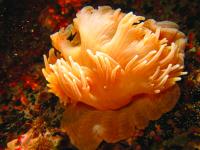
This may be a new species of sea anemone. There are unknown creatures lurking under the windswept islands of the Aleutians, according to a team of scientific divers from the University of Alaska Fairbanks.
| Biology | November 2, 2007 06:40 PM |
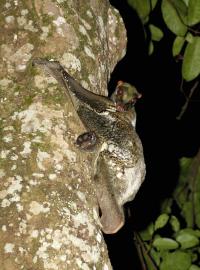
Colugos, like this mother and baby (Cynocephalus variegatus) from southeast Asia, represent the taxonomic group that is the closest to primates, according to a new study to be published in Science on Nov. 2, 2007. Credit: Norman Lim, National University of Singapore While the human species is unquestionably a member of the Primate group, the identity of the next closest group to primates within the entire class of living mammals has been hotly debated. Now, new molecular and genomic data gathered by a team including Webb Miller, a professor of biology and computer science and engineering at the Penn State University, has shown that the colugos -- nicknamed the flying lemurs -- is the closest group to the primates. A paper announcing the results will be published in the journal Science on 2 November, 2008. The team was led by William J. Murphy, associate professor in the Department of Veterinary Integrative Biosciences at Texas A & M University.
| Biology | November 1, 2007 02:38 PM |
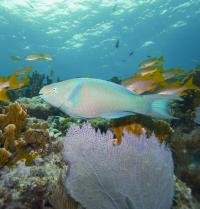
An adult male parrotfish. 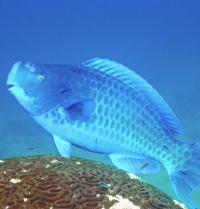
A blue parrotfish. Coral reefs could be damaged beyond repair, unless we change the way we manage the marine environment. New research by the Universities of Exeter and California Davis, published today (1 November 2007) in Nature, shows how damaged Caribbean reefs will continue to decline over the next 50 years.
| Biology | October 31, 2007 11:35 PM |
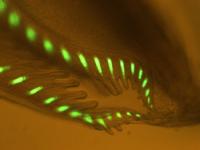
Fluorescence shown along the body structure of amphioxus. Fluorescent proteins found in nature have been employed in a variety of scientific research purposes, from markers for tracing molecules in biomedicine to probes for testing environmental quality. Until now, such proteins have been identified mostly in jellyfish and corals, leading to the belief that the capacity for fluorescence in animals is exclusive to such primitive creatures.
| Biology | October 31, 2007 07:35 PM |
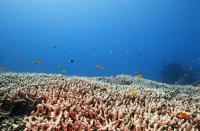
A coral reef and tropical fish off of Ishigaki-jima Island.
The latest development in a major debate over a controversial hypothesis of biodiversity and species abundance is the subject of a paper to be published in the 1 November 2007 issue of the journal Nature. The authors report good agreement between the species richness of two of the world's most vulnerable ecosystems -- tropical forests and coral reefs -- and a simple mathematical model building on the so-called "neutral theory of biodiversity." "We're helping to refine and improve this theory because it might have important implications for the effort to protect terrestrial biodiversity from climate change and urban development," says Jayanth Banavar of the Department of Physics at Penn State, a member of the research team.
| Biology | October 31, 2007 05:35 PM |
Using recently discovered “fossil snapshots” found in rocks more than 500 million years old, three University of Kansas researchers have described the oldest definitive jellyfish ever found.
| Biology | October 30, 2007 05:26 PM |
A series of monumental volcanic eruptions in India may have killed the dinosaurs 65 million years ago, not a meteor impact in the Gulf of Mexico. The eruptions, which created the gigantic Deccan Traps lava beds of India, are now the prime suspect in the most famous and persistent paleontological murder mystery, say scientists who have conducted a slew of new investigations honing down eruption timing.
| Biology | October 30, 2007 04:26 PM |
Unprecedented fossilized body imprints of amphibians have been discovered in 330 million-year-old rocks from Pennsylvania. The imprints show the unmistakably webbed feet and bodies of three previously unknown, foot-long salamander-like critters that lived 100 million years before the first dinosaurs.
| Biology | October 30, 2007 02:26 PM |
How can some people live at high altitudes and thrive while others struggle to obtain enough oxygen to function?
| Biology | October 29, 2007 06:33 PM |
A 50-million-year-old fossilised spider has been brought back to life in stunning 3D by a scientist at The University of Manchester.
| Biology | October 29, 2007 03:33 PM |
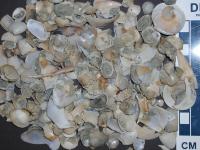
Susan Kidwell explains how studies of molluscs -- clams and snail -- can be used for ecological assessments in the Proceedings of the National Academy of Sciences. Inventories of living and dead organisms could serve as a relatively fast, simple and inexpensive preliminary means of assessing human impact on ecosystems. The University of Chicago's Susan Kidwell explains how measuring the degree of live-dead mismatch could be used as an ecological tool in the Oct. 26 early online edition of the Proceedings of the National Academy of Sciences.
| Biology | October 28, 2007 07:27 PM |
Next time you see a mole digging in tree-root-filled soil in search of supper, take a moment to ponder the mammal's humerus bones. When seen in the lab, they are nothing like the long upper arm bones of any other mammal, says Samantha Hopkins, a paleontologist at the University of Oregon.
| Biology | October 27, 2007 10:07 PM |
Hainan, China (Oct. 25, 2007) – Mankind’s closest living relatives – the world’s apes, monkeys, lemurs and other primates – are under unprecedented threat from destruction of tropical forests, illegal wildlife trade and commercial bushmeat hunting, with 29 percent of all species in danger of going extinct, according to a new report by the Primate Specialist Group of IUCN’s Species Survival Commission (SSC) and the International Primatological Society (IPS), in collaboration with Conservation International (CI).
| Biology | October 27, 2007 09:07 PM |
Scientists have shown that birds with higher stress levels adopt bolder behaviour than their normally more relaxed peers in stressful situations. A University of Exeter research team studied zebra finches, which had been selectively bred to produce three distinct types – ‘laid-back’, ‘normal’ and ‘stressed’ – based on their levels of stress hormone. The group was surprised to find that the ‘stressed’ birds were bolder and took more risks in a new environment than the group that was usually more laid-back. Their findings are published today (26 October) in the journal Hormones and Behaviour.
| Biology | October 27, 2007 08:07 PM |

Fruits of Bhut Jolokia on plants grown in the field at the Leyendecker Plant Science Research Center. Researchers at New Mexico State University recently discovered the world’s hottest chile pepper. Bhut Jolokia, a variety of chile pepper originating in Assam, India, has earned Guiness World Records’ recognition as the world’s hottest chile pepper by blasting past the previous champion Red Savina. In replicated tests of Scoville heat units (SHUs), Bhut Jolokia reached one million SHUs, almost double the SHUs of Red Savina, which measured a mere 577,000.
| Biology | October 27, 2007 07:07 PM |
A new study explores the role of natural enemies, such as predators and parasites, for mixed mating, a reproductive strategy in which hermaphroditic plants and animals reproduce through both self- and cross-fertilization. The findings highlight the possible evolutionary consequences of these interactions.
| Biology | October 27, 2007 06:07 PM |
Fossil remains of Neanderthals paint an incomplete picture; they cannot tell us about their cognitive skills or give us details of what they looked like. Since scientists in Svante Paabo's team at the Max Planck Institute for Evolutionary Anthropology in Leipzig started looking into the DNA of Neanderthals, they have made some new and astonishing discoveries. Just last week, the Leipzig scientists published their discovery of the human variant of the FOXP2 gene in our nearest relatives. And they have now revealed another interesting detail: at least one percent of the Neanderthals in Europe may have had red hair, according to a report by researchers working with Carles Lalueza-Fox at the University of Barcelona, Holger Rompler at the University of Leipzig and Michael Hofreiter at the Max Planck Institute in Leipzig in the online edition of Science (Science Express, October 25, 2007).
| Biology | October 26, 2007 02:07 PM |
When prehistoric fish made their first forays onto land, what did they see" According to a study published in the online open access journal, BMC Evolutionary Biology, it's likely that creatures venturing out of the depths viewed their new environment in full colour.
| Biology | October 26, 2007 12:07 PM |
When it comes to their social behavior, people sometimes act like monkeys, or more specifically, like rhesus macaques, a type of monkey that shares with humans strong tendencies for nepotism and political maneuvering, according to research by Dario Maestripieri, an expert on primate behavior and an Associate Professor in Comparative Human Development and Evolutionary Biology at the University of Chicago.
| Biology | October 25, 2007 11:07 PM |
Soils may dictate the array of fall colors as much as the trees rooted in them, according to a forest survey out of North Carolina.
| Biology | October 25, 2007 08:07 PM |
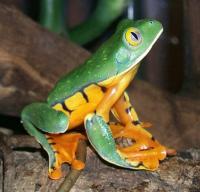
The splendid leaf frog. A brightly coloured tropical frog under threat of extinction is the focus of a new research project hoping to better understand how environment and diet influence its development and behaviour.
| Biology | October 25, 2007 06:07 PM |
The greatest mass extinction in Earth’s history also may have been one of the slowest, according to a study that casts further doubt on the extinction-by-meteor theory.
| Biology | October 25, 2007 05:07 PM |
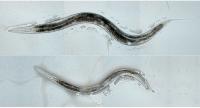
The larger worm in the top image is a hermaphrodite -- a worm with male and female organs -- while the worm on the bottom is male. Biologists at the Brain Institute at the University of Utah genetically manipulated the brains of hermaphrodite worms so they were attracted to other worms of the same sex. The study showed sexual orientation is wired in the worms' brains. Credit: Jamie White, University of Utah University of Utah biologists genetically manipulated nematode worms so the animals were attracted to worms of the same sex – part of a study that shows sexual orientation is wired in the creatures’ brains.
| Biology | October 25, 2007 04:07 PM |
The genes that make a fruit fly's eyes red also produce red wing patterns in the Heliconius butterfly found in South and Central America, finds a new study by a UC Irvine entomologist.
| Biology | October 24, 2007 07:43 PM |
There are many historical stories of shepherds and travellers encountering lions, for example the Old Testament contains dozens of tales about attacks on flocks and people by these fierce predators. Lions have now disappeared from most of their former range, but for livestock owners around the Waza National Park, Cameroon, living with lions is a daily reality. Although loss of human life is rarely reported, lion predation can cost the herders close to 1000 US$ per family each year. Scientists from the Resource Ecology Group, Wageningen University and the Institute of Environmental Sciences, Leiden University, investigated the factors that contributed to these losses and why pastoralists continued to graze their herds close to the lion’s hunting grounds, which has recently been published in the African Journal of Ecology.
| Biology | October 24, 2007 06:43 PM |
By applying state-of-the-art holographic microscopy to a major marine biology challenge, researchers from two Baltimore institutions have identified the swimming and attack patterns of two tiny but deadly microbes linked to fish kills in the Chesapeake Bay and other waterways.
| Biology | October 24, 2007 03:43 PM |
– It used to be dogma that the brain was shut away from the actions of the immune system, shielded from the outside forces of nature. But that’s not how it is at all. In fact, thanks to the scientific detective work of Kevin Tracey, MD, it turns out that the brain talks directly to the immune system, sending commands that control the body’s inflammatory response to infection and autoimmune diseases. Understanding the intimate relationship is leading to a novel way to treat diseases triggered by a dangerous inflammatory response.
| Biology | October 23, 2007 08:44 PM |
Spanish authorities have announced they have discovered a previously unknown population of Iberian lynx, triggering hope for one of the world’s most endangered cat species, said World Wildlife Fund today.
| Biology | October 23, 2007 06:43 PM |
For the first time, researchers at the University of Pennsylvania are able to pinpoint brain waves that distinguish true from false memories, providing a better understanding of how memory works and creating a new strategy to help epilepsy patients retain cognitive function.
| Biology | October 23, 2007 10:30 AM |
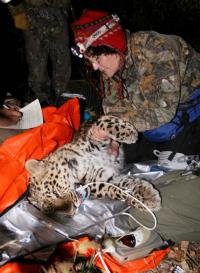
Conservationist examing a recently captured Amur leopard in Russia. A rare Amur leopard (Panthera pardus orientalis), one of only an estimated 30 left in the wild has been captured and health-checked by experts from a consortium of conservation organizations, before being released.
| Biology | October 22, 2007 09:40 PM |
The first fossil tracks belonging to large, carnivorous dinosaurs have been discovered in Victoria, Australia, by paleontologists from Emory University, Monash University and the Museum of Victoria (both in Melbourne). The tracks are especially significant for showing that large dinosaurs were living in a polar environment during the Cretaceous Period, when Australia was still joined to Antarctica and close to the South Pole.
| Biology | October 22, 2007 04:40 PM |
Philosophers and scientists have long been interested in how the mind processes the inevitability of death, both cognitively and emotionally. One would expect, for example, that reminders of our mortality--say the sudden death of a loved one--would throw us into a state of disabling fear of the unknown. But that doesn't happen. If the prospect of death is so incomprehensible, why are we not trembling in a constant state of terror over this fact?
| Biology | October 22, 2007 12:40 PM |
An international team of Australian and Israeli researchers has discovered what could be the aphrodisiac for the biggest moonlight sex event on Earth.
| Biology | October 18, 2007 11:15 PM |
When faced with adversity, some people succumb to debilitating psychological diseases including posttraumatic stress disorder and depression, while others are able to remain remarkably optimistic. Now, a new mouse study in the October 19 issue of the journal Cell, a publication of Cell Press, reveals that the difference may depend in part on the chemistry of the brains’ reward circuits. The findings could point to new psychiatric drugs, and perhaps even new ways to encourage resilience for people in high-stress circumstances, including soldiers in combat, disaster relief workers, and disaster victims, according to the researchers.
| Biology | October 18, 2007 10:15 PM |
A new study published online on October 18th in Current Biology reveals that adaptive changes in a human gene involved in speech and language were shared by our closest extinct relatives, the Neandertals. The finding reveals that the human form of the gene arose much earlier than scientists had estimated previously. It also raises the possibility that Neandertals possessed some of the prerequisites for language.
| Biology | October 18, 2007 08:15 PM |
Bats are the most vocal mammals other than humans, and understanding how they communicate during their nocturnal outings could lead to better treatments for human speech disorders, say researchers at Texas A&M University.
| Biology | October 18, 2007 07:11 PM |
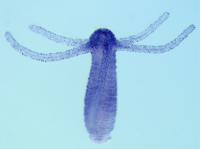
Opsin genes (blue) are present and expressed in the cnidarian Hydra. By peering deep into evolutionary history, scientists at the University of California, Santa Barbara have discovered the origins of photosensitivity in animals.
| Biology | October 18, 2007 06:11 PM |
Ocean Conservancy Scientist, Wallace J. Nichols and University of California-Santa Cruz researcher Hoyt Peckham found surprising results in a recent peer-reviewed loggerhead sea turtle study that Nichols and Peckham conducted over the course of 10 years. The full study will be published on October 17 in the online, open-access journal PLoS ONE.
| Biology | October 18, 2007 05:15 PM |
Sea cucumbers are the champions of organ regrowth because they direct their wound healing abilities towards restoring their organs, according to research published in the online open access journal, BMC Developmental Biology. The discovery that Holothuria glaberrima uses similar cellular mechanisms during wound healing and organ regeneration gives us the opportunity to discover how to repair our own wounds and, perhaps eventually, how to regenerate body parts.
| Biology | October 18, 2007 02:11 PM |
Researchers from Kent State University and the University of Bucharest, Romania, have discovered a new primitive crab species Cycloprosopon dobrogea in eastern Romania. Previously unexamined, these ancient crabs from the Prosopidae family existed more than 150 million years ago during the Jurassic period.
| Biology | October 17, 2007 09:11 PM |
Cashew nut fossils have been identified in 47-million year old lake sediment in Germany, revealing that the cashew genus Anacardium was once distributed in Europe, remote from its modern “native” distribution in Central and South America. It was previously proposed that Anacardium and its African sister genus, Fegimanra, diverged from their common ancestor when the landmasses of Africa and South America separated. However, groundbreaking new data in the October issue of the International Journal of Plant Sciences indicate that Europe may be an important biogeographic link between Africa and the New World.
| Biology | October 17, 2007 05:20 PM |
In an apparent first for butterflies, the Florida Museum of Natural History will auction the naming rights for a newly discovered species online to raise money for butterfly research.
| Biology | October 16, 2007 07:20 PM |
In the jungles of Central and South America, a group of birds has evolved a unique way of finding food – by following hordes of army ants and letting them do all the work.
| Biology | October 16, 2007 06:20 PM |
Thirty years ago this month, researchers at the University of Illinois published a discovery that challenged basic assumptions about the broadest classifications of life. Their discovery – which was based on an analysis of ribosomal RNA, an ancient molecule essential to the replication of all cells – opened up a new field of study, and established a first draft of the evolutionary “tree of life.”
| Biology | October 15, 2007 06:17 PM |
Scientists since the early '90s have seen the potential for cleaning up contaminated sites by growing plants able to take up nasty groundwater pollutants through their roots. Then the plants break certain kinds of pollutants into harmless byproducts that the plants either incorporate into their roots, stems and leaves or release into the air.
| Biology | October 13, 2007 01:00 PM |
Were Neanderthals direct ancestors of contemporary humans or an evolutionary side branch that eventually died out? This is one of the enduring questions in human evolution as scientists explore the relationship of fossil groups, such as Neanderthals, with people alive today. Two recent papers describing the sequencing of Neanderthal nuclear DNA from fossil bone held promise for finally answering this question [1, 2]. However, the two studies came to very different conclusions regarding the ancestral role of Neanderthals. Jeffrey D. Wall and Sung K. Kim from University of California San Francisco now reveal in PLoS Genetics what they found when they reanalyzed the data from the two original studies.
| Biology | October 12, 2007 06:07 PM |
For the first time, scientists have linked the all-too-human preference for a food — chocolate — to a specific, chemical signature that may be programmed into the metabolic system and is detectable by laboratory tests. The signature reads ‘chocolate lover’ in some people and indifference to the popular sweet in others, the researchers say.
| Biology | October 12, 2007 12:07 PM |
Scientists at the University of Delaware have uncovered a hidden weapon that one of the most invasive wetland plants in the United States uses to silently and efficiently “bump off” its neighbors.
| Biology | October 11, 2007 12:35 PM |
Cover of the new book by Professor Itai Bab and associates at the Hebrew University of Jerusalem on the skeletal structure of the mouse. A new book by researchers at the Hebrew University of Jerusalem that details the skeletal structure of the mouse demonstrates a surprising similarity between mice and humans.
| Biology | October 10, 2007 10:35 PM |
The ability to tactually recognize fine spatial details, such as the raised dots used in braille, is especially important to those who are blind. With that in mind, a team of researchers has identified the neural circuitry that facilitates spatial discrimination through touch. Understanding this circuitry may lead to the creation of sensory-substitution devices, such as tactile maps for the visually impaired.
| Biology | October 10, 2007 08:35 PM |
Embryologists at UCL (University College London) have helped solve an evolutionary riddle that has been puzzling scientists for over a century. They have identified a key mechanism in the initial stages of an embryo’s development that helps differentiate more highly evolved species, including humans, from less evolved species, such as fish. The findings of the research, funded by the Biotechnology and Biological Sciences Research Council (BBSRC), were published online today by the journal Nature.
| Biology | October 10, 2007 02:02 PM |
Chemicals on ants’ feet tranquilise and subdue colonies of aphids, keeping them close-by as a ready source of food, says new research published today (10 October). The study throws new light on the complex relationship between ants and the colonies of aphids whose sugary secretions the ants eat.
| Biology | October 10, 2007 10:54 AM |
Marijuana and its main psychoactive component, THC, exert a plethora of behavioral and autonomic effects on humans and animals. Some of these effects are the cause of the widespread illicit use of marijuana, while others might be involved in the potential therapeutic use of this drug for the treatment of several neuronal disorders. The great majority of these effects of THC are mediated by cannabinoid receptor type 1 (CB1), which is abundantly expressed in the central nervous system. The exact anatomical and neuronal substrates of each action, however, were previously unknown. Using an advanced genetic approach, Krisztina Monory and colleagues at the Johannes Gutenberg University Mainz discovered that specific neuronal subpopulations mediate the distinct effects of THC. Their work is published online this week in the open-access journal PLoS Biology.
| Biology | October 9, 2007 06:54 PM |
Two of the three scientists receiving the 2007 Nobel Prize for Physiology or Medicine received funding from the American Cancer Society early in their careers, bringing to 42 the number of Nobel Laureates among the Society’s funded researchers.
| Biology | October 9, 2007 12:44 PM |
From 135,000 to 90,000 years ago tropical Africa had megadroughts more extreme and widespread than any previously known for that region, according to new research.
| Biology | October 8, 2007 07:44 PM |
The success of the “reign” of a honey bee queen appears to be determined to a large degree by the number of times she mates with drone bees.
| Biology | October 8, 2007 02:14 PM |
At a time when encroaching human development in former wildlife areas has compressed African elephants into ever smaller home ranges and increased levels of human-elephant conflict, a study in the October 9th issue of Current Biology, a publication of Cell Press, suggests that strategically placed beehives might offer a low-tech elephant deterrent and conservation measure.
| Biology | October 6, 2007 07:50 PM |
In the ultimatum game - which was developed by another German, Werner Güth, now at the Max Planck Institute for Economics in Jena - one person, the proposer, is given money by an experimenter. That proposer can then divide the "manna from heaven" with a second person, the responder. The responder is not powerless - if he accepts the division, both people take home the offered amounts. But if he rejects it, both get nothing.
| Biology | October 6, 2007 03:50 PM |
The two closely related bird species, the collared flycatcher and the pied flycatcher, can reproduce with each other, but the females are more strongly attracted to a male of their own species. This has been shown by an international research team directed by Anna Qvarnström at Uppsala University in today’s Net edition of Science. They demonstrate that the gene for this sexual preference is found on the sex chromosome that is inherited from the father and that only females have a copy of. The discovery sheds new light on how new species are formed.
| Biology | October 5, 2007 12:59 PM |
The rearing of steelhead trout in hatcheries causes a dramatic and unexpectedly fast drop in their ability to reproduce in the wild, a new Oregon State University study shows, and raises serious questions about the wisdom of historic hatchery practices.
| Biology | October 5, 2007 08:59 AM |
The Bird Spring Shelf in southeastern California and basins to the west reveal a complex history of late Paleozoic sedimentation, sea-level changes, and deformation along the western North American continental margin. A new book published by the Geological Society of America captures insights into the tectonics and paleogeography of the region.
| Biology | October 4, 2007 07:51 PM |
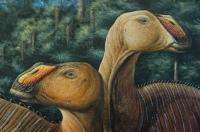
This rendering of Gryposaurus monumentensis shows its robust jaws that allowed thiscreature to eat just about any vegetation it stumbled across. The newest dinosaur species to emerge from Grand Staircase-Escalante National Monument had some serious bite, according to researchers from the Utah Museum of Natural History at the University of Utah.
| Biology | October 4, 2007 05:51 PM |
From an evolutionary perspective, the primary task of an organism is to pass along its genes to future generations. Such genetic transmission is usually assumed to be instinctive. However, a new study shows that species also learn to adapt to their surroundings in order to increase their “reproductive fitness”— the likelihood that they will successfully reproduce.
| Biology | October 3, 2007 10:07 PM |
A new study in the October issue of Cell Metabolism, a publication of Cell Press, reveals that worms live to an older age when they are unable to process the simple sugar glucose. Glucose is a primary source of energy for the body and can be found in all major dietary carbohydrates as a component of starches and other forms of sugar, including sucrose (table sugar) and lactose.
| Biology | October 3, 2007 03:07 PM |
New research shows how the houseplant "mother of thousands" (Kalanchoe diagremontiana) makes the tiny plantlets that drop from the edges of its leaves. Having lost the ability to make viable seeds, the plant has shifted some of the processes that make seeds to the leaves, said Neelima Sinha, professor of plant biology at UC Davis.
| Biology | October 2, 2007 07:33 PM |
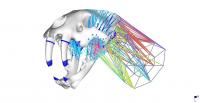
Imaging shows the Smilodon bite had a narrow jaw which restricted its killing behavior. In public imagination, the sabre-toothed cat Smilodon ranks alongside Tyrannosaurus rex as the ultimate killing machine. Powerfully built, with upper canines like knives, Smilodon was a fearsome predator of Ice-Age America's lost giants.
| Biology | October 2, 2007 05:33 PM |
Scientists at the University of Missouri-St. Louis used DNA sequences from feather lice to study how island populations of their host, the Galápagos Hawk might have colonized the Galápagos islands, home to the endangered and declining raptor.
| Biology | October 1, 2007 08:35 PM |
Engineers at Washington University in St. Louis are finding common ground between the shaping of the brain and the heart during embryonic development.
| Biology | October 1, 2007 04:35 PM |
An intricate three-way mating struggle first observed in a species of North American lizard has been discovered in a distant relative, the European common lizard. The two species are separated by 5,000 miles and 175 million years of evolution, yet they share behavioral and reproductive details right down to the gaudy colors of the males, according to new research published in the November issue of American Naturalist and now available online.
| Biology | September 29, 2007 10:49 AM |
Antarctic springtail - Cryptopygus antarcticus. False colour, scanning electron-micrograph. Cryptopygus is one of the most successful terrestrial arthropods to have colonised the Antarctic continent. Although only 1-2 mm long and weighing only a few micro-grams, it is one of the largest animals to complete its lifecycle on the Antarctic continent. Credit: Pete Bucktrout Springtails, mites, worms and plant life could help solve the mystery of Antarctica’s glacial history according to new research published in the journal Science this week.
| Biology | September 28, 2007 04:49 PM |
Researchers at the University of Illinois have used an innovative approach to reveal the molecular basis of altruistic behavior in wasps. The research team focused on the expression of behavior-related genes in Polistes metricus paper wasps, a species for which little genetic data was available when the study was begun. Their findings appear today online in Science Express.
| Biology | September 27, 2007 07:00 PM |
A snake's intended prey might affect the type and evolution of toxins in their venom, research published in the online open access journal BMC Evolutionary Biology shows.
| Biology | September 26, 2007 02:41 PM |
Large estuarine crocodile that is about to be restrained and a tracking device fitted. Three crocodiles relocated from their homes in Far North Queensland have been tracked swimming between 10 and 30 kilometres per day according to a collaborative research project by The University of Queensland, Australia Zoo and Queensland Parks and Wildlife Service.
| Biology | September 26, 2007 02:41 PM |
During evolution, many of a species’ properties are shaped by ecological interactions. This is readily evident in mammalian teeth, whose many features closely reflect what each species eats. However, for a long time scientists have suspected that genetic and developmental interactions may also influence species-specific properties. Now, researchers at the University of Helsinki’s Institute of Biotechnology show how development affects the evolution of teeth, and have devised a simple developmental model to predict aspects of teeth across many species. The results were published in Nature.
| Biology | September 26, 2007 02:41 PM |
World Wildlife Fund scientists said today that the discovery of 11 new animal and plant species in a remote area in central Vietnam underscores the importance of conservation efforts in the ancient tropical forests of the region.
| Biology | September 25, 2007 03:49 PM |
Scientists have discovered how the zebrafish (Danio rerio) develops one of its four stripes.
| Biology | September 25, 2007 01:49 PM |
Researchers at UC San Diego and UC Irvine have found evidence that supports the theory that reproductive competition during the evolution of primate species has occurred at the level of sperm cell motility. In a paper published online by the Journal of the Royal Society Interface, a team led by Michael Berns, an adjunct professor of bioengineering at UCSD and a professor of biomedical engineering at the Beckman Laser Institute at UC Irvine, and UCSD Ph.D. candidate Jaclyn Nascimento reported that sperm cells from the more promiscuous chimpanzee and rhesus macaque species swim much faster and with much greater force than those of humans and gorillas, species where individual females mate primarily with only one male during a reproductive cycle.
| Biology | September 24, 2007 11:27 AM |
A dinosaur skeleton found 24 years ago in Montana has finally been identified as a new species that links North American dinosaurs with Asian dinosaurs. The dinosaur would have weighed 30 to 40 pounds, walked on two feet and stood about three feet tall. The fossil came from sediment that's about 80 million years old
| Biology | September 21, 2007 06:14 PM |
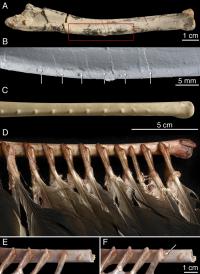
(A) View of right ulna of Velociraptor IGM 100/981.
(B) Detail from cast of red box in (A), with arrows showing six evenly spaced feather quill knobs.
(C) View of right ulna of a turkey vulture (Cathartes).
(D) Same view of Cathartes as in (C) but with soft tissue dissected to reveal placement of the secondary feathers relative to the quill knobs.
(E) Detail of Cathartes, with one quill completely removed to reveal quill knob.
(F) Same view as in (E) but with quill moved to the left to show placement of quill, knob, and follicular ligament. Follicular ligament indicated with arrow. Credit: Mick Ellison A new look at some old bones have shown that velociraptor, the dinosaur made famous in the movie Jurassic Park, had feathers. A paper describing the discovery, made by paleontologists at the American Museum of Natural History and the Field Museum of Natural History, appears in the Sept. 21 issue of the journal Science.
| Biology | September 21, 2007 10:14 AM |
Giving Nobel Laureate James Watson his personal genome was just the beginning. In a future that promises similar information to much of the population, ethicists, scientists and physicians are only beginning to understand and consider the possibilities.
| Biology | September 20, 2007 10:14 PM |
An international team of researchers led by the Smithsonian Institution has completed a new study on Homo floresiensis, commonly referred to as the “hobbit,” a 3-foot-tall, 18,000-year-old hominin skeleton, discovered four years ago on the Indonesian island of Flores. This study offers one of the most striking confirmations of the original interpretation of the hobbit as an island remnant of one of the oldest human migrations to Asia. The research is being published in the Sept. 21 issue of Science.
| Biology | September 20, 2007 01:11 PM |
Researchers have discovered that even the gruesome and brutal lifestyle of the Evarcha culicivora, a blood gorging jumping spider indigenous to East Africa, can’t help but be tempted by that ‘big is beautiful’ mantra no matter what the costs. A study recently published in Ethology found that despite the inherent risk of sexual cannibalism, virgin females were attracted to bigger males when losing their virginity before opting for the safer smaller male as a longer term mate choice.
| Biology | September 19, 2007 11:15 PM |
A new study by biologists at Tufts University has discovered a dark side lurking behind the magical light shows put on by fireflies each summer. Using both laboratory and field experiments to explore the potential costs of firefly courtship displays, the biologists have uncovered some surprising answers.
| Biology | September 19, 2007 07:15 PM |
While the visual regions of the brain have been intensively mapped, many important regions for auditory processing remain terra incognita. Now, researchers have identified the region responsible for a key auditory process—perceiving “sound space,” the location of sounds. The findings settle a controversy in earlier studies that failed to establish the auditory region, called the planum temporale, as responsible for perceiving auditory space.
| Biology | September 18, 2007 06:07 PM |
The answer to a mystery that long has puzzled biologists may lie in prehistoric Polynesians' penchant for pretty white shells, a research team headed by University of Michigan mollusk expert Diarmaid Ó Foighil has found.
| Biology | September 17, 2007 08:36 PM |
For the first time, researchers have discovered that when Cyprian honeybees mob and kill their arch enemy, the Oriental hornet, the cause of death is asphyxiation. They reported their findings in the September 18, 2007, issue of Current Biology, a publication of Cell Press.
| Biology | September 17, 2007 07:36 PM |
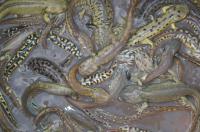
This image shows California Tiger and Barred Tiger Salamanders in a California pond. New research shows that the two species have interbred to create a hybrids that have shown remarkable vigor. Credit: Bruce Delgado/Bureau of Land Management What began more than 50 years ago as a way to improve fishing bait in California has led a University of Tennessee researcher to a significant finding about how animal species interact and that raises important questions about conservation.
| Biology | September 17, 2007 05:18 PM |
Key components of a new approach to discover life on Mars were successfully launched into space Friday as part of a twelve-day, low-Earth orbit experiment to assess their survivability in the space radiation environment—a prelude future journeys to Mars.
| Biology | September 15, 2007 11:58 PM |
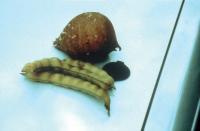
This small bean has great potential to provide high quality food production and offer a sustainable cropping system that has been needed in Africa. The Yam bean originated where the Andes meet the Amazon and is locally grown in South and Central America, South Asia, East Asia and the Pacific. It is produced in three species which are called the Amazonian, Mexican and Andean. Interbreeding of the bean has resulted in fertile and stable hybrids. This gives it potential to be reclassified as a single species, provide high quality food production and offer a sustainable cropping system that has been needed in Africa.
| Biology | September 12, 2007 06:19 PM |
They say that the way to a man’s heart is through his stomach and the same could be said for female chimpanzees. Researchers studying wild chimps in West Africa have discovered that males pinch desirable fruits from local farms and orchards as a means of attracting female mates. The study is published in the September 12 issue of the online, open-access journal PLoS ONE.
| Biology | September 12, 2007 05:19 PM |
The discovery of the first anatomically modern ear in a group of 260 million-year-old fossil reptiles significantly pushes back the date of the origin of an advanced sense of hearing, and suggests the first known adaptations to living in the dark.
| Biology | September 12, 2007 01:19 PM |
A new study by York University biologists Amro Zayed and Laurence Packer has shown that a lone insect can initiate a biological invasion.
| Biology | September 12, 2007 11:19 AM |
For the first time in history, the IUCN Red List of Threatened Species includes ocean corals in its annual report of wildlife going extinct.
| Biology | September 11, 2007 05:19 PM |

Modern and ancient predators leave easy to identify marks on the shells of their prey, such as clean, round holes. The fossil record seems to indicate that the diversity of marine creatures increased and decreased over hundreds of millions of years in step with predator-prey encounters, Virginia Tech geoscientists report in the Proceedings of the National Academy of Science.
| Biology | September 11, 2007 03:19 PM |
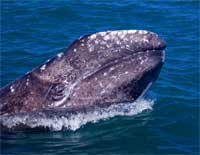
Gray whales (Eschrichtius robustus) return from Arctic feeding grounds to lagoons in Mexico each winter to give birth. New genetic results indicate that in the past, the number of whales returning to these lagoons may have been much larger. Photo location: Laguna San Ignacio, Mexico. Credit: Geoff Shester Gray whales in the Pacific Ocean, long thought to have fully recovered from whaling, were once three to five times as plentiful as they are now, according to a report to be published September 10 in the Proceedings of the National Academy of Sciences.
| Biology | September 11, 2007 01:19 PM |
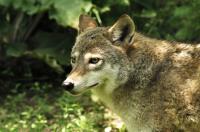
Coyote densities are lower when wolves are present. While the wily coyote reigns as top dog in much of the country, it leads a nervous existence wherever it coexists with its larger relative, the wolf, according to a new study from the Wildlife Conservation Society. In fact, coyote densities are more than 30 percent lower in areas that they share with wolves.
| Biology | September 11, 2007 12:19 PM |
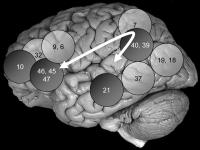
The photo illustration shows brain areas important to intelligence. A primary mystery puzzling neuroscientists -- where in the brain lies intelligence" -- just may have a unified answer.
| Biology | September 10, 2007 09:07 PM |
In the cerebral cortex, the brain’s powerful central processing unit responsible for higher functions, specialized subdivisions known as areas are laid out like a map, but little is known about the genetic forces that shape the geography of our brains.
| Biology | September 10, 2007 05:07 PM |
The eastern hemlock, a tall, long-lived coniferous tree that shelters river and streamside ecosystems throughout the eastern United States and Canada, is in serious danger of extinction because a tiny, non-native insect is literally sucking the life out of it.
| Biology | September 9, 2007 09:41 PM |
To think that world domination could have begun in the cheeks. That's one interpretation of a discovery, published online September 9 in Nature Genetics, which indicates that humans carry extra copies of the salivary amylase gene.
| Biology | September 7, 2007 06:44 PM |
Colour contrast is detected much earlier in the brain than previously thought, a new study shows.
| Biology | September 6, 2007 09:56 PM |
When trying to understand someone's intentions, non-human primates expect others to act rationally by performing the most appropriate action allowed by the environment, according to a new study by researchers at Harvard University.
| Biology | September 6, 2007 04:56 PM |
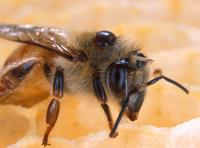
Honey bee worker carrying a parasitic Varroa mite. A comparison of healthy and unhealthy bee colonies points to a virus contributing to Colony Collapse Disorder (CCD), according to a report being published by the journal Science, at the Science Express web site, on 06 September. Science is published by AAAS, the nonprofit science society.
| Biology | September 5, 2007 08:39 PM |
The wily dingo out-competed the much larger marsupial thylacine by being better built anatomically to resist the “mechanical stresses” associated with killing large prey, say Australian scientists.
| Biology | September 5, 2007 07:39 PM |
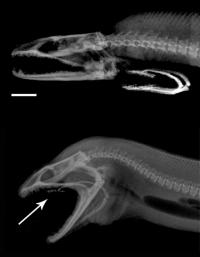
These X-rays show the normal position of the pharyngeal jaws (upper), and how they can move forward into the mouth to seize food (lower). Moray eels have a unique way of feeding reminiscent of a science fiction thriller, researchers at UC Davis have discovered. After seizing prey in its jaws, a second set of jaws located in the moray's throat reaches forward into the mouth, grabs the food and carries it back to the esophagus for swallowing.
| Biology | September 5, 2007 06:39 PM |
Behind the sailor's lore of fearsome battles between sperm whale and giant squid lies a deep question of evolution: How did these leviathans develop the underwater sonar needed to chase and catch squid in the inky depths"
| Biology | September 5, 2007 03:39 PM |
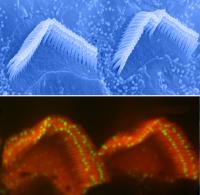
Scanning electron microscopy shows the stair-step pattern of stereocilia. Bottom: Fluorescence microscopy image shows the presence of CDH 23 (green) at the point where each short stereocilium (red) meets the side of its taller neighbor. Credit: B. Kachar, National Institute on Deafness and Other Communication Disorders Our ability to hear is made possible by way of a Rube Goldberg-style process in which sound vibrations entering the ear shake and jostle a successive chain of structures until, lo and behold, they are converted into electrical signals that can be interpreted by the brain. Exactly how the electrical signal is generated has been the subject of ongoing research interest.
| Biology | September 4, 2007 09:33 PM |
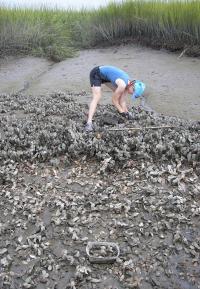
Researcher Amanda Hollebone searches for non-native crabs in oyster reefs along the Georgia coast. A dime-sized tropical crab that has invaded coastal waters in the Southeast United States is having both positive and negative effects on oyster reefs, leaving researchers unable to predict what the creature’s long-term impact will be.
| Biology | September 4, 2007 05:33 PM |
A quest to gain a more complete picture of color vision evolution has led Biodesign Institute researcher Brian Verrelli to an up-close, genetic encounter with one of the world’s most rare and bizarre-looking primates.
| Biology | September 4, 2007 03:20 PM |
Plant biologists at the Max Planck Institute of Developmental Biology and the University of North Carolina at Chapel Hill have discovered that an autoimmune response, triggered by a small number of genes, can be a barrier to producing a viable offspring.
| Biology | September 4, 2007 10:20 AM |
While humans may pride themselves on being highly evolved, most still behave like the stereotypical Neanderthals when it comes to choosing a mate, according to research by Indiana University cognitive scientist Peter Todd. In a new study, Todd and colleagues found that though individuals may claim otherwise, beauty is the key ingredient for men while women, the much choosier of the sexes, leverage their looks for security and commitment.
| Biology | September 2, 2007 02:46 PM |
It became clear nearly a century ago that many genes likely influence how tall a person grows, though little progress, if any, has followed in defining the myriad genes. Now an international research team brings light to this age-old question by pinpointing a genetic variant associated with human height — the first consistent genetic link to be reported.
| Biology | August 31, 2007 11:29 PM |
Voyage to the bottom of the sea, or simply look along the bottom of a clear stream and you may spy lobsters or crayfish waving their antennae. Look closer, and you will see them feeling around with their legs and flicking their antennules – the small, paired sets of miniature feelers at the top of their heads between the long antennae. Both are used for sensing the environment. The long antennae are used for getting a physical feel of an area, such as the contours of a crevice. The smaller antennules are there to both help the creature smell for food or mates or dangerous predators and also to sense motion in the water that also could indicate the presence of food, a fling or danger. The legs also have receptors that detect chemical signatures, preferably those emanating from a nice hunk of dead fish.
| Biology | August 31, 2007 10:29 PM |
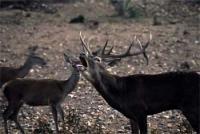
Roaring male Iberian red deer with females (photograph by Juan Carranza) In the September issue of The American Naturalist, Juan Carranza (Biology and Ethology Unit, University of Extremadura, Spain) and Javier Pérez-Barbería (Macaulay Institute, United Kingdom) offer a new explanation for why males of ungulate species subjected to intense competition are born with lower survival expectancies than females. The research reveals that male ungulates have smaller molars relative to their body size – and hence less durable teeth that will wear out sooner, which might contribute to their shorter lives compared with females.
| Biology | August 31, 2007 09:29 PM |
The reported sighting of a Yangtze River dolphin, or Baiji, means there is still a chance for people to take further action and protect the cetaceans in the Yangtze from extinction, according to World Wildlife Fund.
| Biology | August 31, 2007 08:29 PM |
Before the worst mass extinction of life in Earth’s history – 252 million years ago – ocean life was diverse and clam-like organisms called brachiopods dominated. After the calamity, when little else existed, a different kind of clam-like organism, called a bivalve, took over.
| Biology | August 31, 2007 04:27 PM |
If Mark Boyce could converse with elk, he might give them a word of advice: avoid open, flat, snowy areas near rivers and roads.
| Biology | August 31, 2007 12:27 PM |
In work that could one day help prevent millions of dollars in economic losses for seaside communities, MIT chemists have demonstrated how tiny marine organisms likely produce the red tide toxin that periodically shuts down U.S. beaches and shellfish beds.
| Biology | August 30, 2007 10:27 PM |
The mating ritual of the honey bee is a mysterious affair, occurring at dizzying heights in zones identifiable only to a queen and the horde of drones that court her. Now a research team led by the University of Illinois has identified an odorant receptor that allows male drones to find a queen in flight. The receptor, on the male antennae, can detect an available queen up to 60 meters away.
| Biology | August 30, 2007 07:27 PM |
For years, biologists in Africa have known that large mammals – including antelopes and their predators - were disappearing outside reserves. Now a raft of studies, published in the September 2007 issue of the African Journal of Ecology, show that we have moved beyond this. We are losing species from national parks, bastion of biodiversity conservation. Worryingly, this includes the continent’s crown jewels such as Tanzania’s Serengeti National Park.
| Biology | August 30, 2007 04:30 PM |
While you may not catch a fly sipping Perrier, the insect has specialized taste cells for carbonated water that probably encourage it to binge on food with growing microorganisms. Yeast and bacteria both produce carbon dioxide (CO2) when they feast, and CO2 dissolves readily in water to produce seltzer or soda water.
| Biology | August 29, 2007 10:30 PM |
Biologists at Harvard University have identified the ancient fossilized remains of a pollen-bearing bee as the first hint of orchids in the fossil record, a find they say suggests orchids are old enough to have co-existed with dinosaurs.
| Biology | August 29, 2007 07:30 PM |
It appears that chemical warfare has been around a lot longer than poison arrows, mustard gas or nerve weapons – about 100 million years, give or take a little.
| Biology | August 29, 2007 11:39 AM |
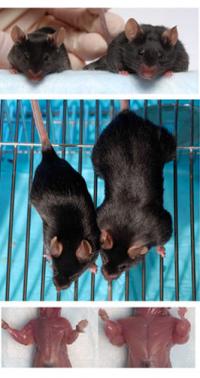
Comparison of body and muscle size between normal (left) and double mutant mice lacking myostatin and overproducing follistatin (right). The Johns Hopkins scientist who first showed that the absence of the protein myostatin leads to oversized muscles in mice and men has now found a second protein, follistatin, whose overproduction in mice lacking myostatin doubles the muscle-building effect.
| Biology | August 28, 2007 06:49 PM |
A new poisonous frog was recently discovered in a remote mountainous region in Colombia by a team of young scientists supported by the Conservation Leadership Programme (CLP). The new frog, which is almost two centimetres in length, was given the name the “golden frog of Supatá.”
| Biology | August 25, 2007 06:51 PM |
Angry bees that fly like mini-missiles could map the futures of unmanned aircraft and planetary explorer robots, thanks to new University of Queensland research backed by the Queensland Government.
| Biology | August 25, 2007 04:51 PM |
Giant panda. The giant panda is not at an “evolutionary dead end” and could have a long term viable future, according to new research involving scientists from Cardiff University.
| Biology | August 25, 2007 02:51 PM |
Female rhesus monkeys use special vocalizations when interacting with their infants, the way human adults use "baby talk, " to engage babies’ attention. Female rhesus monkeys use special vocalizations while interacting with infants, the way human adults use motherese, or “baby talk,” to engage babies’ attention, new research at the University of Chicago shows. “Motherese is a high pitched and musical form of speech, which may be biological in origin,” said Dario Maestripieri, Associate Professor in Comparative Human Development at the University. “The acoustic structure of particular monkey vocalizations called girneys may be adaptively designed to attract young infants and engage their attention, similar to how the acoustic structure of human motherese, or baby talk, allows adults to visually or socially engage with infants.”
| Biology | August 24, 2007 07:05 PM |
While sharks instill fear in beachgoers worldwide, they instill a deep sense of curiosity in University of Tampa assistant professor of biology and shark expert Dan Huber.
| Biology | August 24, 2007 10:05 AM |
Boys with difficulty reading actually respond better to female teachers, according to a new Canadian study. Research shows that boys develop higher positive self-perceptions as readers when they worked with female research assistants compared to working with male research assistants.
| Biology | August 23, 2007 09:05 PM |
Wellcome Trust scientists have identified for the first time how our brain's response changes the closer a threat gets. Using a "Pac Man"-like computer game where a volunteer is pursued by an artificial predator, the researchers showed that the fear response moves from the strategic areas of the brain towards more reactive responses as the artificial predator approaches.
| Biology | August 23, 2007 08:05 PM |
Using virtual reality goggles to mix up the sensory signals reaching the brain, scientists have induced out-of-body-like experiences in healthy people, suggesting a scientific explanation for a phenomenon often thought to be a figment of the imagination.
| Biology | August 22, 2007 11:51 PM |
Scientists who developed a breakthrough research method which reduces the use of animals in the laboratory have been awarded this year’s esteemed Voiceless Eureka Prize.
| Biology | August 22, 2007 04:42 PM |
Originating in Central Africa, Peters' elephantnose fish (Gnathonemus petersii), finds its bearings by means of weak electrical fields. Scientists from the University of Bonn have now been able to show how well this works. In complete darkness the animals can even distinguish the material of objects at a distance or dead organisms from living ones. The results have now been published in the Journal of Experimental Biology.
| Biology | August 21, 2007 10:42 PM |
T. rex may have struggled to chase down speeding vehicles as the movie Jurassic Park would have us believe but the world’s most fearsome carnivore was certainly no slouch, research out today suggests.
| Biology | August 20, 2007 09:52 PM |
When a cat steps over an obstacle with its front legs, how do its hind legs know what to do" A new study in the August 21st issue of Current Biology, a publication of Cell Press, reveals that it is the foreleg stepping movement itself that leaves a lasting impression. By comparison, feline memories of having just seen an obstacle proved rather fleeting.
| Biology | August 19, 2007 10:09 PM |
The Australian spotted jellyfish can weigh up to 25 pounds. The invasive Australian jellyfish, Phyllorhiza punctata, first reported in great quantities in the Gulf of Mexico in 2000, has made a vigorous reappearance this summer in waters from southwestern Louisiana to Morehead City, North Carolina. Beachgoers and boaters are encouraged to report their sightings of these exotic jellies to the Dauphin Island Sea Lab’s jellyfish website, Dockwatch, at http://dockwatch.disl.org.
| Biology | August 19, 2007 08:09 PM |
An international team aboard the RRS James Cook collected hundreds of marine specimens during a 5-week expedition along the Mid-Atlantic Ridge. A scientist from the University of Aberdeen is leading a team of international researchers whose work will continue our understanding of life in the deepest oceans, and contribute to the global Census of Marine Life.
| Biology | August 18, 2007 07:09 PM |
Brain imaging has revealed a breakdown in normal patterns of emotional processing that impairs the ability of people with clinical depression to suppress negative emotional states. Efforts by depressed patients to suppress their feelings when viewing emotionally negative images enhanced activity in several brain areas, including the amygdala, known to play a role in generating emotion, according to a report in the August 15 issue of The Journal of Neuroscience.
| Biology | August 18, 2007 06:09 PM |
Researchers have found that New Caledonian crows—which are known to make complex food-getting tools in the wild—can also spontaneously use one tool on another to get a snack. The researchers report their findings online August 16 in Current Biology, a publication of Cell Press.
| Biology | August 18, 2007 04:09 PM |
Rather than striking out to raise their family, members of some bird species cooperate to help raise their siblings, nephews, nieces, cousins -- or even unrelated young. Researchers have long noted which factors lead to these seemingly altruistic decisions, but now for the first time, Cornell researchers have linked a specific environmental factor to the evolution of cooperative family life in numerous bird species: unpredictable rainfall.
| Biology | August 18, 2007 02:09 PM |
Research from The University of Nottingham sheds new light on a fascinating phenomenon of the natural world — the ability of some species to reproduce sexually without a partner.
| Biology | August 17, 2007 10:36 PM |
Preschoolers are more introspective than we give them credit for, according to new research by Simona Ghetti, assistant professor of psychology at UC Davis.
| Biology | August 17, 2007 09:36 PM |
Asian elephants don’t carry photo identification, so scientists from the Wildlife Conservation Society and India’s Nature Conservation Foundation are providing the service free of charge by creating a photographic archive of individual elephants, which can help save them as well.
| Biology | August 17, 2007 07:36 PM |
A researcher at the University of Sheffield has discovered that the reason birds learn to fly so easily is because latent memories may have been left behind by their ancestors.
| Biology | August 17, 2007 06:36 PM |
Recent probes inside comets show it is overwhelmingly likely that life began in space, according to a new paper by Cardiff University scientists.
| Biology | August 17, 2007 10:36 AM |
An international team of scientists from Canada (Université Laval), the U.K. (University of Hull, Cardiff University) and Spain (Doòana Biological Station), have discovered that a pair of closely related species of East African cichlid fishes – a group of fish whose diversity comprising hundreds of species has puzzled evolutionary biologists for decades – evolved divergent immune gene adaptations which might explain why they do not interbreed, despite living side by side.
| Biology | August 16, 2007 08:36 PM |
Painful, emotional memories that people would most like to forget may be the toughest to leave behind, especially when memories are created through visual cues, according to a new study by the University of North Carolina at Chapel Hill.
| Biology | August 16, 2007 04:36 PM |
It's not a good idea to put all your eggs in one basket… unless you're a senita moth.
| Biology | August 13, 2007 08:46 PM |
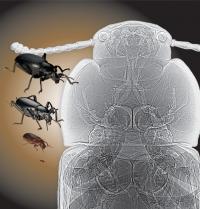
X-ray imaging of beetles helps confirm that tracheal system design may limit size in insects. More of the body is filled with air-filled tracheal tubes in larger species, particularly in the legs, and so much larger species than exist today might not have room for enough tubes. Credit: Argonne National Laboratory Researchers at the U.S. Department of Energy's Argonne National Laboratory have cast new light on why the giant insects that lived millions of years ago disappeared.
| Biology | August 10, 2007 08:07 PM |
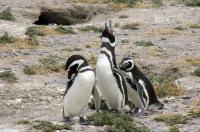
Three Magellanic penguins in the new marine park declared by Argentina on Aug. 8. Over half a million of these marine birds will call home to this new protected area. The Bronx Zoo-based Wildlife Conservation Society announced today that the government of Argentina will create a new marine park along its isolated and windswept Patagonia coast to safeguard more than half a million penguins and other rare seabirds. Located in Golfo San Jorge, the new protected area covers around 250 square miles (647 square kilometers) of coastal waters and nearby islands strung along almost 100 miles (160 kilometers) of shoreline.
| Biology | August 10, 2007 10:07 AM |
An undisturbed, virgin rainforest where the research team worked. The long-held belief that plant-eating insects in tropical forests are picky eaters that stay “close to home” – dining only on locale-specific vegetation – is being challenged by new research findings that suggest these insects feast on a broader menu of foliage and can be consistently found across hundreds of miles of tropical forestland.
| Biology | August 9, 2007 11:53 PM |
New technology has allowed an international team including UK scientists from University of St Andrews and British Antarctic Survey to witness for the first time the behaviour of the southern elephant seal (Mirounga leonina) and how it relates to its physical environment. Small sensors were attached to 85 seals to track their movements and collect data about their marine environment. Results are published this week in the journal Proceedings of the National Academy of Sciences.
| Biology | August 9, 2007 04:53 PM |
Fossils often have provided important insights into the evolution of humans and our ancestors. Even small fossils, such as bones from the hand or foot can tell us much about our ancestor’s and their behavior. Such may be the case with an ape that lived more than nine million years ago.
| Biology | August 9, 2007 02:13 PM |
Hearing and balance experts at Johns Hopkins report successful testing in animals of an electrical device that partly restores a damaged or impaired sense of balance.
| Biology | August 9, 2007 12:53 PM |
A new WWF study tracking pygmy elephants by satellite shows that the remaining herds of these endangered elephants, which live only on the island of Borneo, are under threat from forest fragmentation and loss of habitat.
| Biology | August 8, 2007 03:13 PM |
The feathers of three Magellanic penguins blackened with oil, seen along Argentina's Atlantic coast in October 2005. You could understand if a half-dozen Magellanic penguins developed a "big bird is watching" phobia before this month is over, but the surveillance really will be for their own good.
| Biology | August 8, 2007 11:13 AM |
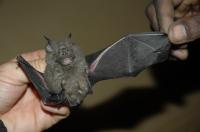
Field teams discovered four mammal species new to science, including a new species of bat of the Rhinolophus genus. Other mammal species included a species of rodent and two shrews. Credit: Andy Plumptre/Wildlife Conservation Society An expedition led by the Wildlife Conservation Society (WCS) to a remote corner of the eastern Democratic Republic of Congo has uncovered unique forests which, so far, have been found to contain six animal species new to science: a bat, a rodent, two shrews, and two frogs. The forested region—including the Misotshi-Kabogo Forest (formerly Mt. Kabobo)—and nearby Marunga Massif is located just west of Lake Tanganyika and has been off limits to scientists since 1960 as a result of continued instability in the area.
| Biology | August 8, 2007 07:13 AM |
University of Queensland researchers have identified microbial remains in some of the oldest preserved organic matter on Earth, confirmed to be 3.5 billion years-old.
| Biology | August 8, 2007 05:13 AM |
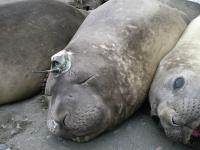
The tag on a male elephant seal on Kerguelen. Miniature oceanographic sensors attached to southern elephant seals have provided scientists with an unprecedented peek into the secret lives of seals.
| Biology | August 3, 2007 10:35 PM |
In studies with monkeys, researchers have identified in detail the brain regions responsible for the unique ability of primates, including humans, to process visual 3D shapes to guide their sophisticated manipulation of objects.
| Biology | August 3, 2007 09:35 PM |
In the wake of the success of previous meetings in Venice in 2002 and Leipzig in 2005, the Fondazione Pierfranco e Luisa Mariani ONLUS announces the third edition of the Neurosciences and Music international conference which will be held in Montreal (Quebec, Canada) from June 26th to 28th, 2008.
| Biology | July 26, 2007 04:57 PM |
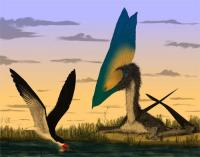
Physical and theoretical models show that pterosaurs (Thalassodromeus, right) could not meet the energy requirements of skimming, a rare feeding strategy practiced habitually by just a few extant Rynchops species (black skimmer, left). Credit: Image: Mark Witton In order to envisage the behaviors and lifestyles of now extinct animals, palaeontology often relies on extrapolating from modern species. Scientists identify shared anatomical features and infer from these shared ways of life. This method is often used to predict the diet of an extinct species based on comparisons of fossilized teeth, or used to conclude that species with large eyes were nocturnal. However, a new paper from Stuart Humphries, Richard Bonser, and colleagues, published in the open access journal PLoS Biology, provides a cautionary tale. Previous work on pterosaurs concluded that some species fed by skimming along the surface of the water with their mouths held open, but this paper overturns that inference, showing that this kind of feeding was highly unlikely to have occurred in pterosaurs after all.
| Biology | July 26, 2007 02:57 PM |
Cochlear implants—electronic devices inserted surgically in the ear to allow deaf people to hear—may restore normal auditory pathways in the brain even after many years of deafness.
| Biology | July 24, 2007 10:57 PM |
Working in the Department of Ecology and Organismal Biology, Justin Boyles and Jonathan Storm examined the possibility of a link between dietary specialization and the risk of extinction for bats in Australia, Europe and North America.
| Biology | July 24, 2007 03:56 AM |
Nature is a valued source of inspiration for artists. But what have artists offered the natural world" Would a bird even like rock and roll"
| Biology | July 22, 2007 04:45 PM |
Fossils discovered in the oft-painted arroyos of northern New Mexico show for the first time that dinosaurs and their non-dinosaur ancestors lived side by side for tens of millions of years, disproving the notion that dinosaurs rapidly replaced their supposedly outmoded predecessors.
| Biology | July 21, 2007 03:45 PM |
Our experiences –the things we see, hear, or do—can trigger long-term changes in the strength of the connections between nerve cells in our brain, and these persistent changes are how the brain encodes information as memory. As reported in Neuron this week, Johns Hopkins researchers have discovered a new biochemical mechanism for memory storage, one that may have a connection with addictive behavior.
| Biology | July 21, 2007 06:45 AM |
New species are evading detection using a foolproof disguise – their own unchanged appearance. Research published in the online open access journal, BMC Evolutionary Biology, suggests that the phenomenon of different animal species not being visually distinct despite other significant genetic differences is widespread in the animal kingdom. DNA profiles and distinct mating groups are the only way to spot an evolutionary splinter group from their look-alike cousins, introducing uncertainty to biodiversity estimates globally.
| Biology | July 20, 2007 09:45 PM |
The metamorphosis of biology into a science offering numerically precise descriptions of nature has taken a leap forward with a Princeton team's elucidation of a key step in the development of fruit fly embryos -- discoveries that could change how scientists think not just about flies, but about life in general.
| Biology | July 20, 2007 06:45 PM |
New research published in the journal Nature (19 July) has proved the single origin of humans theory by combining studies of global genetic variations in humans with skull measurements across the world. The research, at the University of Cambridge and funded by the Biotechnology and Biological Sciences Research Council (BBSRC), represents a final blow for supporters of a multiple origins of humans theory.
| Biology | July 20, 2007 03:45 AM |
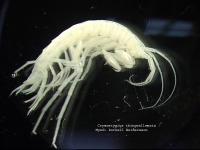
Crymostygius thingvallensis, the only species in a recently described family of groundwater amphipods Crymostygidae. Many scientists believe that the ice ages exterminated all life on land and in freshwater in large parts of the Northern Hemisphere, especially on ocean islands such as Iceland. Scientists at Holar University College and the University of Iceland have challenged that belief, at least when looking at groundwater animals. They have discovered two species of groundwater amphipods in Iceland that are the only animals species found solely in Iceland. “These finding can only be explained by these animals surviving glaciations in some kind of refugium under the glaciers,” says Bjarni K. Kristjánsson, the scientist who found the species.
| Biology | July 18, 2007 06:53 PM |
A thumb’s up for “I’m good.” The rubbing of a pointed forefinger at another for “shame on you.” The infamous and ubiquitous middle finger salute for—well, you know. Such gestures that convey meaning without speech are used and recognized by nearly everyone in our society, but to someone from a foreign country, they may be incomprehensible.
| Biology | July 17, 2007 08:42 PM |
Animals' natural foraging decisions give an insight into their cognitive abilities, and primates do not automatically choose the easy option. Instead, they appear to decide where to feed based on the quality of the resources available and the effect on their social group, rather than simply selecting the nearest food available. These findings¹ by Elena Cunningham and Charles Janson, respectively from the New York University College of Dentistry and the State University of New York, have just been published in a special issue of the journal Animal Cognition². The articles in the issue look at the interaction of social and ecological factors and their influence on the evolution of primate intelligence.
| Biology | July 17, 2007 06:42 PM |
Bees do it, chimps do it… Now it seems Arctic foxes do it, too. New research looking at the DNA fingerprints of canids in the Far North has revealed that foxes once thought to be monogamous are in fact quite frisky.
| Biology | July 17, 2007 12:54 PM |
Your ability to listen to a phone message in one ear while a friend is talking into your other ear—and comprehend what both are saying—is an important communication skill that’s heavily influenced by your genes, say researchers of the National Institute on Deafness and Other Communication Disorders (NIDCD), one of the National Institutes of Health. The finding, published in the August 2007 issue of Human Genetics, may help researchers better understand a broad and complex group of disorders—called auditory processing disorders (APDs)—in which individuals with otherwise normal hearing ability have trouble making sense of the sounds around them.
| Biology | July 17, 2007 10:54 AM |
Researchers at the University of Warwick are co-ordinating a global effort to sequence the genome of one of the World’s most important mushrooms - Agaricus bisporus. The secrets of its genetic make up could assist the creation of biofuels, support the effort to manage global carbon, and help remove heavy metals from contaminated soils.
| Biology | July 16, 2007 05:13 PM |
The first Australian trials of a vaccine developed by Queensland University of Technology that could save Australia's iconic koala from contracting chlamydia are planned to begin later this year.
| Biology | July 16, 2007 04:13 PM |
The growth of most plants depends on the presence of sufficient amounts of nitrogen contained in the soil.
| Biology | July 15, 2007 04:31 PM |
Across the southern United States, an invisible, yet deadly parasite known as the root-knot nematode is crippling soybean crops. While plant breeders are racing to develop cultivars resistant to the root-knot nematode, they are being slowed down by current time-consuming and expensive methods of screening for resistant plants. Now, researchers believe they have found a shortcut for screening resistant soybean crops.
| Biology | July 12, 2007 06:54 PM |
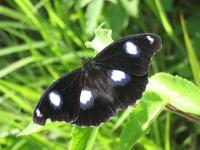
Shown is a male Hypolimnas bolina, also called the Blue Moon or Great Eggfly butterfly. A male-killing bacteria has led to skewed sex ratios in populations of H. bolina in the South Pacific, but researchers have found that male butterflies on some islands have bounced back thanks to the rise of a suppressor gene. Credit: Sylvain Charlat An international team of researchers has documented a remarkable example of natural selection in a tropical butterfly species that fought back - genetically speaking - against a highly invasive, male-killing bacteria.
| Biology | July 12, 2007 10:23 AM |
A Cornell study of genome sequences in African-Americans, European-Americans and Chinese suggests that natural selection has caused as much as 10 percent of the human genome to change in some populations in the last 15,000 to 100,000 years, when people began migrating from Africa.
| Biology | July 11, 2007 09:23 PM |
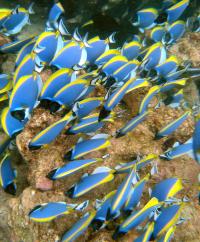
A study on the recovery rates of fishes in exploited reef systems on the coast of Kenya found that some species, such as the powder blue tang, may need decades to recover to pre-fishing levels. Credit: Tim McClanahan/Wildlife Conservation Society In the longest running study on how fish populations in coral reef systems recover from heavy exploitation, researchers from the Wildlife Conservation Society (WCS) and others have found that the fish can recover, but they need lots of time – decades in some cases. The study appears in a recent edition of the journal Ecological Applications.
| Biology | July 10, 2007 10:52 PM |
Golf courses are known as centers for human recreation, but if managed properly, they also could be important wildlife sanctuaries, a University of Missouri-Columbia researcher has found.
| Biology | July 10, 2007 12:38 PM |
A multi-institutional consortium including Duke University has created startlingly crisp 3-D microscopic views of tiny mouse brains -- unveiled layer by layer -- by extending the capabilities of conventional magnetic resonance imaging.
| Biology | July 9, 2007 09:23 PM |
A multi-institutional consortium including Duke University has created startlingly crisp 3-D microscopic views of tiny mouse brains -- unveiled layer by layer -- by extending the capabilities of conventional magnetic resonance imaging.
| Biology | July 9, 2007 01:49 PM |
Unlike moths and butterflies that are often brilliantly colored to warn potential predators that they carry toxins, flowers and the fruits they produce have brilliant colors and unusual shapes because they want to attract the attention of pollinators and frugivores who will disperse their pollen and seed, thus guaranteeing the next generation. In their work, Dr. Endress and his colleagues found that the sizes and positioning of the anthers facilitates pollen collection by buzz-pollinating bees. The male floral structures, anthers, release the pollen gradually, like tiny gumball dispensers. All of these characteristics--size, shape, placement, and timing—may be controlled by networks of genes as well as by regulatory sequences that do not encode proteins. Slight changes in these networks or in the non-coding sequences can change the developmental pattern of a flower and thus its morphology—either dooming it if its pollinators can no longer “fit” properly or guaranteeing the success of the species if it acquires new pollinators. This type of information is becoming ever more critical as we struggle to understand, maintain, and modify the plant and pollinator systems that we depend on for life.
| Biology | July 7, 2007 05:34 PM |
Scientists at the University of Southern California have applied a nanoscale imaging method to a biological system, helping to clear up an old puzzle of the global carbon and nitrogen cycle.
| Biology | July 5, 2007 11:23 PM |
Anybody who’s tried to concentrate on work while suffering a headache knows that pain compellingly commands attention—which is how evolution helped ensure survival in a painful world. Now, researchers have pinpointed the brain region responsible for pain’s ability to affect cognitive processing. They have found that this pain-related brain region is distinct from the one involved in cognitive processing interference due to a distracting memory task.
| Biology | July 5, 2007 10:23 PM |
The idea that animals other than humans can learn from one another and pass on local traditions has long been a matter of debate. Now, a new study reveals that some birds learn not only from each other, but also from their competitors. The findings appear online on July 5th in Current Biology, a Cell Press publication.
| Biology | July 5, 2007 09:23 PM |
Researchers observed the behaviour of Great-tits foraging for artificial prey to understand more clearly how a species evolves to protect themselves from predators.
| Biology | July 5, 2007 08:23 PM |
40 years ago, Prof. Dr. Wolfgang Wiltschko was the first to prove that migrating robins use the Earth’s magnetic field to direct themselves during migration. Their magnetic sensor showed them the course of the field lines of the Earth’s magnetic field. This produces an inclination compass that reacts to the inclination of the Earth’s magnetic field to the surface of the Earth, thus distinguishing between “pole-wards” (the side on which the field lines incline downwards) and “equator-wards” (the side on which they incline upwards). The inbuilt compass is additionally finely tuned to the field strength of the Earth’s local magnetic field, but can also be flexibly adapted to other field strengths that the birds encounter in the course of migration. Since that time a compass of this kind has been found in more than 20 species of birds, the majority of them being those songbirds that undertake annual migration. An international working group under the direction of Wolfgang und Roswitha Wiltschko of Frankfurt University has now succeeded in demonstrating the presence of a magnetic sense of direction in domestic chickens as well.
| Biology | July 4, 2007 10:32 PM |
The ancient gray wolves of Alaska became extinct some 12,000 years ago, and the wolves in Alaska today are not their descendents but a different subspecies, an international team of scientists reports in the July 3 print edition of the journal Current Biology.
| Biology | July 4, 2007 08:32 PM |
Insects make up more than half of the known animal species on our planet and they can be found in all kinds of habitat and feed on all kinds of nutrients. They can even be used in evidence in court cases. So we are talking about forensic entomology.
| Biology | July 4, 2007 07:32 PM |
From the deepest seafloor to the highest mountain, from the hottest region to the cold Antarctic plateau, environments labelled as extreme are numerous on Earth and they present a wide variety of features and characteristics. Investigating life processes in extreme environments not only can provide hints on how life first appeared and survived on Earth (as early earth was an extreme environment) but it can also give indication for the search for life on other planets.
| Biology | July 4, 2007 12:47 PM |
Forget expensive moisturisers and cosmetic surgery, a compound found in the humble elderberry could give a natural boost to skin.
| Biology | July 4, 2007 10:47 AM |
In some regions of Central Europe, salad dressing is made preferably with pumpkin seed oil, which has a strong characteristic nutty flavor and striking color properties. Indeed, in a bottle it appears red, but it looks green in a salad dressing or mixed with yoghurt.
| Biology | July 3, 2007 05:32 PM |
Platynereis dumerilii, a marine bristle worm, is becoming a new model for studying early stages of cell development. University of Oregon biologists studying a common ocean-dwelling worm have uncovered potentially fundamental insights into the evolutionary origin of genetic mechanisms, which when compromised in humans play a role in many forms of cancer.
| Biology | July 3, 2007 04:32 PM |
Despite the mass extermination of Tahiti’s unique species of tree snails in recent decades, much of their original genetic diversity can still be found in remnant populations that survive on the island, researchers report in the July 3rd issue of Current Biology, a Cell Press publication. The findings offer renewed hope that targeted conservation measures may yet preserve a representative, although impoverished, fraction of Tahiti’s endemic tree snail genetic diversity in the wild—a feat earlier believed to be impossible.
| Biology | July 2, 2007 11:32 PM |
A tiny, blind, hairless subterranean rodent that lives in social colonies in the harsh, semi-arid conditions of Africa could shed light on stress-related infertility in humans, the 23rd annual meeting of the European Society of Human Reproduction and Embryology will hear.
| Biology | July 2, 2007 10:32 PM |
Psychologists from the University of Exeter have identified an 'early warning signal' in the brain that helps us avoid repeating previous mistakes. Published in the Journal of Cognitive Neuroscience, their research identifies, for the first time, a mechanism in the brain that reacts in just 0.1 seconds to things that have resulted in us making errors in the past.
| Biology | June 29, 2007 11:14 PM |
A factor in immune cells regulates human semen and seems to determine whether a man will be fertile, according to a new study.
| Biology | June 29, 2007 08:15 PM |
Hormones control growth, metabolism, reproduction and many other important biological processes. In humans, and all other vertebrates, the chemical signals are produced by specialised brain centres such as the hypothalamus and secreted into the blood stream that distributes them around the body. Researchers from the European Molecular Biology Laboratory (EMBL) now reveal that the hypothalamus and its hormones are not purely vertebrate inventions, but have their evolutionary roots in marine, worm-like ancestors. In this week’s issue of the journal Cell they report that hormone-secreting brain centres are much older than expected and likely evolved from multifunctional cells of the last common ancestor of vertebrates, flies and worms.
| Biology | June 28, 2007 05:37 PM |
The reproductive monopoly of the ant queen is not as strong as is often thought. Dr. Heikki Helanterä and Prof. Lotta Sundström, biologists working at the University of Helsinki, Finland, investigated worker ovary development and egg laying in nine Northern European wood ant species of the genus Formica, and revealed wide spread reproductive endeavours by workers. For example, in species such as Formica cinerea, Formica pratensis, and Formica truncorum approximately one in five workers is fully equipped to lay eggs. Furthermore, genetic analysis of egg parentage showed that these workers are really laying eggs on a large scale. For example in the species with the most worker reproduction, Formica truncorum, as many as one in four of eggs are indeed laid by the workers.
| Biology | June 27, 2007 11:32 PM |
A £9.2m research centre at the University of Nottingham will break new ground in our understanding of plant growth and could lead to the development of drought-resistant crops for developing countries.
| Biology | June 26, 2007 08:55 PM |
The adaptive significance of the unique ability in many primates to distinguish red hues from green ones (i.e., trichromatic color vision) has always enticed debate among evolutionary biologists. The conventional theory is that primates evolved trichromatic color vision to assist them in foraging, specifically by allowing them to detect red/orange food items from green leaf backgrounds. However, the results from several empirical studies have called into question the extent to which trichromacy functions in foraging and if it provides a performance advantage over dichromatic primates (who lack red-green color vision). Other studies have suggested that trichromacy evolved in primates so that they could use physical traits like red skin in socio-sexual communication, such as a male providing information to a female about his mate quality.
| Biology | June 26, 2007 07:55 PM |
Fish use the threat of punishment to keep would-be jumpers in the mating queue firmly in line and the social order stable, a new study led by Australian marine scientists has found.
| Biology | June 26, 2007 12:18 PM |
Giant prehistoric penguins? In Peru? It sounds more like something out of Hollywood than science, but a researcher from North Carolina State University along with U.S., Peruvian and Argentine collaborators has shown that two heretofore undiscovered penguin species reached equatorial regions tens of millions of years earlier than expected and during a period when the earth was much warmer than it is now.
| Biology | June 26, 2007 10:18 AM |
With research backgrounds ranging from materials engineering to molecular biophysics, seventeen leading scientists issued a statement today announcing that, much as the discovery of DNA and creation of the transistor revolutionized science, there is a new scientific field on the brink of revolutionizing our approach to problems ranging from eco-safe energy to outbreaks of malaria.
| Biology | June 25, 2007 10:18 PM |
Virginia Tech researchers have received $1.2 million to study protein-protein interactions associated with biomass production in poplar wood. The U.S. Department of Energy (DOE) and the U.S. Department of Agriculture (USDA) jointly selected the Virginia Tech project and 10 others for awards totaling $8.3 million for biofuel research that may increase the availability and use of alternative fuels.
| Biology | June 22, 2007 04:30 PM |
Global climate change is causing Antarctic ice shelves to shrink and split apart, yielding thousands of free-drifting icebergs in the nearby Weddell Sea. According to a new study in this week’s journal Science these floating islands of ice – some as large as a dozen miles across – are having a major impact on the ecology of the ocean around them, serving as “hotspots” for ocean life, with thriving communities of seabirds above and a web of phytoplankton, krill, and fish below.
| Biology | June 22, 2007 10:30 AM |
The extinction of many large mammals at the end of the Ice Age may have packed an even bigger punch than scientists have realized. To the list of victims such as woolly mammoths and saber-toothed cats, a Smithsonian-led team of scientists has added one more: a highly carnivorous form of wolf that lived in Alaska, north of the ice sheets.
| Biology | June 20, 2007 11:50 PM |
The team of Denis Réale, holder of the Canada Research Chair in Behavioural Ecology and Professor in the Department of Biological Sciences at UQAM, recently published some remarkable research findings. Reconstructing the genetic history of a population of mouflons descended from a single pair, the researchers demonstrated that the animals’ genetic diversity increased over time, contrary to what the usual models predict. These results contradict the belief that a population descended from a small number of individuals will exhibit numerous deficiencies and reduced genetic diversity. http://www.video.uqam.ca/kerguelenmouflons
| Biology | June 20, 2007 08:50 PM |
Cornell researchers have discovered that in the battle of the sexes, African electric fish couples not only use specific electrical signals to court but also engage in a sort of dueling "electric duet."
| Biology | June 20, 2007 07:50 PM |
While women may cheat on men for personal reasons, superb starling females appear to stray from their mates for the sake of their chicks, according to recent Cornell research published in the Proceedings of the Royal Society of London B.
| Biology | June 20, 2007 06:50 PM |
Are Asian elk hard-wired to fear the Siberian tigers who stalk them" When wolves disappear from the forest, are moose still afraid of them?
| Biology | June 19, 2007 06:37 PM |
An international research team has documented the link between the way an animal moves and the dimensions of an important part of its organ of balance, the three semicircular canals of the inner ear on each side of the skull. The team's article on its research will be published on 26 June in the print edition of the Proceedings of the National Academy of Sciences and in the journal's online early edition during the week of 18 to 22 June.
| Biology | June 19, 2007 03:37 PM |
Although it may sound like an oxymoron, a University of Iowa anthropologist and his colleagues report the first discovery of a skull from a "pygmy-sized" giant panda -- the earliest-known ancestor of the giant panda -- that lived in south China some two million years ago.
| Biology | June 19, 2007 01:37 PM |
Everyone knows that eating lean fish helps slim waistlines, but researchers from the Center for the Study of Weight Regulation and Associated Disorders at Oregon Health and Science University in Portland, OR, have found a new way fish can help eliminate obesity. In a study to be published in the July 2007 print issue of The FASEB Journal, researchers describe the first genetic model of obesity in a fish. Having this model should greatly accelerate the development of new drugs to help people lose weight and keep it off.
| Biology | June 18, 2007 09:12 PM |
Forest scientists at Oregon State University have used genetic modification to successfully manipulate the growth in height of trees, showing that it’s possible to create miniature trees that look similar to normal trees – but after several years of growth may range anywhere from 50 feet tall to a few inches.
| Biology | June 18, 2007 06:12 PM |
While many may be familiar with potato late blight, the plant disease responsible for widespread potato shortages, the lesser known potato wart has the potential to be as devastating to economies that depend on potato production, say plant pathologists with The American Phytopathological Society (APS).
| Biology | June 16, 2007 03:51 PM |
Four swarms of Asian bees found in Cairns have been cleared of carrying the dreaded Varroa destructor mite but the intruders themselves could pose the beginning of a serious threat to Australian honey bee populations.
| Biology | June 16, 2007 02:51 PM |
Suppressing colony formation is a useful strategy against copepods because they prefer to eat colonies of phytoplankton. A tiny single-celled organism that plays a key role in the carbon cycle of cold-water oceans may be a lot smarter than scientists had suspected.
| Biology | June 14, 2007 08:09 PM |
The next time you venture into your garden armed with plants, consider who you place next to whom. It turns out that the docile garden plant isn’t as passive as widely assumed, at least not with strangers. Researchers at McMaster University have found that plants get fiercely competitive when forced to share their pot with strangers of the same species, but they’re accommodating when potted with their siblings.
| Biology | June 14, 2007 06:09 PM |
Human interaction and stimulation enhance chimpanzees’ cognitive abilities, according to new research from the Chimpanzee Cognition Center at The Ohio State University. The study (1) is the first to demonstrate that raising chimpanzees in a human cultural environment enhances their cognitive abilities, as measured by their ability to understand how tools work. The findings have just been published online in the Springer journal Animal Cognition.
| Biology | June 13, 2007 06:47 PM |
Scientists may be one step closer to finding new drugs to fight MRSA, cancers and other diseases, after CABI, a leading bioservices organisation announced that its fungal collection will be screened by the University of Strathclyde.
| Biology | June 13, 2007 04:47 PM |
Being a devoted husband and father is not enough to keep an avian marriage together for the Nazca booby, a long-lived seabird found in the Galapagos Islands off the coast of Ecuador.
| Biology | June 13, 2007 03:47 PM |
Dr. David Schmale prepares plane to collect Fusarium samples. A Virginia Tech plant pathologist has developed autonomous unmanned aerial vehicles (UAVs) to detect airborne pathogens above agricultural fields.
| Biology | June 13, 2007 02:47 PM |
Researchers at the University of Missouri-Columbia are studying the status of black bears in Missouri. Black bears were abundant in the state during the 18th and 19th centuries, but have been considered almost extinct in Missouri since the late 19th century. The results of the MU study will be used by the Missouri Department of Conservation to help manage Missouri’s black bear population.
| Biology | June 12, 2007 11:44 PM |
Close up CT scan, composite image of fossil gliding reptile Mecistrotrachelos apeoros. Curved foot and ribs are clearly visible The fossilized bones of a previously unknown, 220 million-year-old long-necked, gliding reptile may remain forever embedded in stone, but thanks to an industrial-size CT scanner at Penn State's Center for Quantitative Imaging, the bone structure and behavior of these small creatures are now known.
| Biology | June 12, 2007 07:44 PM |
Mothers know best when it comes to dressing their children, at least among side-blotched lizards, a common species in the western United States. Researchers at the University of California, Santa Cruz, have found that female side-blotched lizards are able to induce different color patterns in their offspring in response to social cues, "dressing" their progeny in patterns they will wear for the rest of their lives. The mother's influence gives her progeny the patterns most likely to ensure success under the conditions they will encounter as adults.
| Biology | June 12, 2007 06:44 PM |
Aerial surveys by the New York-based Wildlife Conservation Society confirm the existence of more than 1.2 million white-eared kob, tiang antelope and Mongalla gazelle in Southern Sudan, where wildlife was thought to have vanished as a result of decades-long conflict. Despite the war, some species of wildlife in Southern Sudan, last surveyed more than 25 years ago, have not only survived but have thrived east of the Nile River in numbers that rival those of the Serengeti.
| Biology | June 12, 2007 12:16 PM |
Undergraduate education generally involves acquiring “received knowledge” – in other words, absorbing the past discoveries of scholars and scientists. But University of North Carolina at Charlotte senior biology major Andrew Pierce went beyond the textbooks and uncovered something previously unknown.
| Biology | June 11, 2007 05:16 PM |
Research into the effects of strokes has furthered our understanding of the different roles of the left and right sides of our brains. A study led by the University of Exeter has highlighted differences in the ability of people to perform basic tasks, depending on whether the left or right sides of their brains have been damaged by a stroke. The research identified the role of the right side of the brain in noticing and correcting errors.
| Biology | June 8, 2007 06:56 PM |
Scientists have long wondered if local animal cultures exist, and now, based on findings by researchers at the Yerkes National Primate Research Center at Emory University, the University of Texas and St. Andrews University, Scotland, they have their answer: Yes.
| Biology | June 8, 2007 12:56 PM |
Some ancient-DNA evidence has offered new clues to a very cold case: the disappearance of the last woolly mammoths, one of the most iconic of all Ice Age giants, according to a June 7th report published online in Current Biology, a publication of Cell Press.
| Biology | June 8, 2007 10:56 AM |
In flowers called columbines, evolution of the length of nectar spurs--the long tubes leading to plants' nectar--happens in a way that allows flowers to match the tongue lengths of the pollinators that drink their nectar, biologists have found.
| Biology | June 7, 2007 02:38 PM |
Red frog from mountains of Haiti. Eleutherodactylus audanti, from
Massif de la Selle. Nearly all of the 162 land-breeding frog species on Caribbean islands, including the coqui frogs of Puerto Rico, originated from a single frog species that rafted on a sea voyage from South America about 30-to-50-million years ago, according to DNA-sequence analyses led by a research group at Penn State, which will be published in the 12 June 2007 issue of the Proceedings of the National Academy of Sciences and posted in the journal's online early edition this week. Similarly, the scientists found that the Central American relatives of these Caribbean amphibians also arose from a single species that arrived by raft from South America.
| Biology | June 5, 2007 09:18 PM |
The growth of most plants depends on the presence of sufficient amounts of nitrogen contained in the soil. However, a family of plants, the legumes, is partially free of this constraint thanks to its ability to live in association with soil bacteria of the Rhizobium, genus, capable of fixing nitrogen from the air. When these bacteria come into contact with their host plant, they trigger in the roots the formation and development of organs, termed nodules, where they continue to live. This close relationship is symbiosis, which benefits both organisms involved: the plant supplies nutritive elements to the bacteria which in return pass on the nitrogen they have stored up.
| Biology | June 5, 2007 07:18 PM |
CSIRO scientists have joined the battle to save Australia’s iconic Tasmanian devils from the deadly cancer currently devastating devil populations.
| Biology | June 5, 2007 11:05 AM |
Indiana University neuroscientists Olaf Sporns and Christopher Honey find the 98 percent of brain activity that other researchers consider just background noise to be fascinating and important.
| Biology | June 4, 2007 07:36 PM |

Orange cauliflower While orange cauliflower may seem unappealing to some, it has distinct nutritional advantages. Now, Cornell researchers have identified the genetic mutation behind the unusual hue. The finding may lead to more nutritious staple crops, including maize, potato, rice, sorghum and wheat.
| Biology | June 4, 2007 05:36 PM |
Why do so many people continue to suffer from life-altering, chronic pain long after their injuries have actually healed"
| Biology | June 4, 2007 04:36 PM |
Scientists exploring the remote highlands of eastern Suriname discovered 24 species believed to be new to science, including a frog with florescent purple markings and other amphibians, fish and insects.
| Biology | June 3, 2007 04:40 PM |
The wild tiger now occupies a mere 7 percent of its historic range, and the area known to be inhabited by tigers has declined by 41 percent over the past decade, according to an article published in the June 2007 issue of BioScience. Growing trade in folk medicines made from tiger parts and tiger skins, along with habitat loss and fragmentation, is believed to be the chief reason for the losses. The assessment, by Eric Dinerstein of the World Wildlife Fund and 15 coauthors, describes the wild tiger's population trajectory as "catastrophic" and urges international cooperation to ensure the animal's continued existence in the wild.
| Biology | June 2, 2007 08:39 PM |
NSW Department of Primary Industries (DPI) fisheries scientists are investigating ways to boost the survival rates of fish caught and then released by anglers.
| Biology | June 2, 2007 10:39 AM |
Aspirin didn’t pan out. Neither did two other potential anti-aging agents. But a synthetic derivative of a pungent desert shrub is now a front- runner in ongoing animal experiments to find out if certain chemicals, known to inhibit inflammation, cancer and other destructive processes, can boost the odds of living longer.
| Biology | May 31, 2007 10:40 PM |
Cuthona behrensi, one of five new species of aeolid nudibranchs discovered in the Eastern Pacific. The Tropical Eastern Pacific, a discrete biogeographic region that has an extremely high rate of endemism among its marine organisms, continues to yield a wealth of never-before-described marine animals to visiting scientists at the Smithsonian Tropical Research Institute in Panama. Alicia Hermosillo, researcher at the Universidad de Guadalajara in Mexico, and Angel Valdes, assistant curator of Malacology at the Natural History Museum of Los Angeles County, describe five newly discovered species of nudibranchs, two of which Hermosillo collected in Panama, in Volume 22 of the American Malacological Bulletin.
| Biology | May 31, 2007 07:40 PM |
In a night sky filled with hungry bats, good-tasting moths increase their chances of survival by mimicking the sounds of their bad-tasting cousins, according to a new Wake Forest University study.
| Biology | May 31, 2007 06:40 PM |
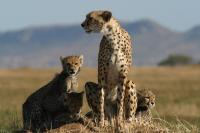
A new cheetah study by the Wildlife Conservation Society and the Zoological Society of London has found that many cheetah litters have more than one father. While promiscuity in the animal kingdom is generally a male thing, researchers for the Wildlife Conservation Society and the Zoological Society of London (ZSL) have found that, in cheetah society, it’s the female with the wandering eye, as reported in a paper in the latest issue of Proceedings of the Royal Society B.
| Biology | May 31, 2007 05:40 PM |
By observing wild orangutans, a research team has found that walking on two legs may have arisen in relatively ancient, tree-dwelling apes, rather than in more recent human ancestors that had already descended to the savannah, as current theory suggests.
| Biology | May 30, 2007 10:07 PM |
Magnetic resonance imaging is a very effective method for revealing anatomical details of soft tissues. Contrast agents can help to make these images even clearer and allow physiological processes to be followed in real time. Conventional gadolinium complexes currently used as MRI contrast agent cannot reveal anatomic structures. As reported in the journal Angewandte Chemie, Korean researchers led by Jung Hee Lee at Samsung Medical Center and Taeghwan Hyeon at Seoul National University have now developed a new MRI contrast agent using manganese oxide nanoparticles that produces images of the anatomic structures of mouse brain which are as clear as those obtained by histological examination.
| Biology | May 30, 2007 08:07 PM |
Brain "pacemakers" that have helped ease symptoms in people with Parkinson's disease and other movement disorders seem to work by drowning out the electrical signals of their diseased brains.
| Biology | May 30, 2007 07:07 PM |
Mule deer are giving new meaning to watching out for other mothers' kids.
| Biology | May 29, 2007 07:46 PM |
Long before the National Security Agency began eavesdropping on the phone calls of Americans, young song sparrows were listening to and learning the tunes sung by their neighbors.
| Biology | May 29, 2007 06:46 PM |
Sharks are known to have a keen sense of smell, which in many species is critical for finding food. However, according to new research from Boston University marine biologists, sharks can not use just their noses to locate prey; they also need their skin – specifically a location called the lateral line. The lateral line is an organ used by all fish to detect, with exquisite sensitivity, movement and vibration in the surrounding water. According to the research team, this is similar to how humans can sense air flow with the small hairs on the face. Until now, it had not been demonstrated that the lateral line also aids in the tracking of odor plumes.
| Biology | May 27, 2007 04:33 PM |
Certain army ants in the rainforests of Central and South America conduct spectacular predatory raids containing up to 200,000 foraging ants. Remarkably, some ants use their bodies to plug potholes in the trail leading back to the nest, making a flatter surface so that prey can be delivered to the developing young at maximum speed.
| Biology | May 27, 2007 04:33 PM |
Mice genetically engineered to lack a single enzyme in their brains are more adept at learning than their normal cousins, and are quicker to figure out that their environment has changed, a team led by researchers at UT Southwestern Medical Center has found.
| Biology | May 24, 2007 05:47 PM |
An extraordinary underwater trackway with 12 consecutive prints provides the most compelling evidence to-date that some dinosaurs were swimmers. The 15-meter-long trackway, located in La Virgen del Campo track site in Spain's Cameros Basin, contains the first long and continuous record of swimming by a non-avian therapod dinosaur.
| Biology | May 24, 2007 03:47 PM |
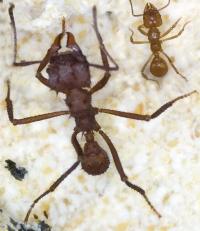
Acromyrmex leaf-cutting ants -- large and small workers. The discovery of a flexible genetic coding in leaf-cutting ants sheds new light on how one of nature's ultimate self-organising species breeds optimum numbers of each worker type to ensure the smooth running of the colony.
| Biology | May 23, 2007 09:37 PM |

Primary succession following a receding glacier in Alaska. Whenever an event such as a fire, clear cut, or lava flow creates an empty habitat, species arrive, interact, and assemble to form a new ecological community—a process known as "succession." How quickly does succession proceed" Most ecologists might expect change to be rapid at first and then decline as the community ages, but there was no systematic analysis of this idea until recently.
| Biology | May 23, 2007 08:37 PM |
In the steamy tropics, even the birds find the pace of life a bit more relaxed, research shows.
| Biology | May 23, 2007 04:37 PM |
If you go fishing for Arctic char you may end up catching distinctly different-looking individuals although they were all caught in the same lake. Similarly, whitefish, threespine stickleback, and some sunfishes also display quite discrete groups living in the same lakes but utilizing different food resources in order to survive. The phenomenon is called resource polymorphism and has been observed and documented as early as in the 18th century, but has continued to receive a lot of scientific interest since it gives us a chance to study ongoing evolution. However, not all species display resource polymorphism, and naturally, in order to gain deeper understanding of evolutionary facilitators, the question arises: Why do some species display resource polymorphism, whereas other don't?
| Biology | May 21, 2007 07:31 PM |
A team of researchers has documented major changes in the behavior, ecology, and geographic range of the northern fur seal over the past 1,500 years using a combination of techniques from archaeology, biochemistry, and ecology. Among their findings is evidence of reproductive behavior in the past that is not seen in modern populations of northern fur seals.
| Biology | May 19, 2007 12:36 PM |
New evidence may help explain the brute strength of the tyrannosaurid, says a University of Alberta researcher whose finding demonstrates how a fused nasal bone helped turn the animal into a "zoological superweapon."
| Biology | May 18, 2007 12:29 PM |
One of the world’s largest and least studied freshwater turtles has been found in Cambodia’s Mekong River, raising hopes that the threatened species can be saved from extinction.
| Biology | May 18, 2007 12:20 PM |
The honeybee's alarm signal may not only bring help, but also attract the small hive beetle. Now, an international team of researchers has found that small hive beetles can detect some alarm pheromones at levels below that detected by honeybees.
| Biology | May 17, 2007 11:29 PM |
A new study analyzing whale meat sold in Korean markets suggests the number of whales being sold for human consumption in the Asian country is much higher than that being reported to the International Whaling Commission – putting threatened populations of coastal minke whales further at risk.
| Biology | May 17, 2007 08:20 PM |
Free will and true spontaneity exist … in fruit flies. This is what scientists report in a groundbreaking study in the May 16, 2007 issue of the open-access journal PLoS ONE.
| Biology | May 17, 2007 06:20 PM |
Scientists have found hundreds of new marine creatures in the vast, dark deep-sea surrounding Antarctica. Carnivorous sponges, free-swimming worms, crustaceans, and molluscs living in the Weddell Sea provide new insights into the evolution of ocean life.
| Biology | May 16, 2007 07:20 PM |
A researcher at the University at Buffalo’s Research Institute on Addictions (RIA) is investigating the “brain’s own marijuana” -- called endocannabinoid -- in the regulation of stress, stress-related behavior and anxiety.
| Biology | May 16, 2007 06:20 PM |
Researchers cruising for creatures that live in the deepest parts of the Pacific Ocean found a new species of sea anemone living in the unlikeliest of habitats – the carcass of a dead whale.
| Biology | May 15, 2007 10:37 PM |
How did the hearing of dinosaurs compare to that of present-day animal species" What are some ways to improve acoustical conditions in office cubicles" How can sound waves diagnose and monitor muscle activity"
| Biology | May 15, 2007 06:53 PM |
Researchers observing wild chimpanzees in Uganda have discovered repeated instances of a mysterious and poorly understood behavior: female-led infanticide. The findings, reported by Simon Townsend, Katie Slocombe and colleagues of the University of St. Andrews, Scotland, and the Budongo Forest Project, Uganda, appear in the May 15th issue of the journal Current Biology, published by Cell Press.
| Biology | May 10, 2007 07:41 PM |
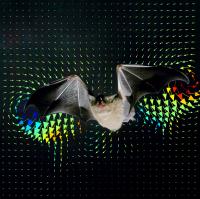
ON THE COVER OF SCIENCE: A bat, Glossophaga soricina, in flight in a wind tunnel at Lund University, Sweden. The velocity field induced by the wingbeat is shown superimposed and to scale. The bat wake reconstructions have features that have not been observed in similar-sized birds. Membranous and feathered wings of natural and engineered flyers may have significantly different aerodynamic properties. Credit: Lund University, Sweden Bats generate a measurably distinct aerodynamic footprint to achieve lift and maneuverability, quite unlike birds and contrary to many of the assumptions that aerodynamicists have used to model animal flight, according to University of Southern California aerospace engineer Geoffrey Spedding.
| Biology | May 10, 2007 05:48 PM |
Many of the world’s leading scientific institutions today announced the launch of the Encyclopedia of Life, an unprecedented global effort to document all 1.8 million named species of animals, plants, and other forms of life on Earth. For the first time in the history of the planet, scientists, students, and citizens would have multi-media access to all known living species, even those that have just been discovered.
| Biology | May 10, 2007 04:48 PM |
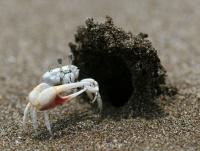
Male Fiddler Crab, Uca terpsichores, with hood. In dangerous environments, females looking for a mate run great risks. Scientists from Seoul National University, in Korea, and the Smithsonian Tropical Research Institute in Panama present a new take on sexual signaling in the May issue of the Public Library of Science. The researchers report that females prefer a male sexual signal that helps them avoid their predators as they sequentially visit and assess potential mates.
| Biology | May 10, 2007 02:48 PM |
Sometimes, it pays to be rare—think of a one-of-a-kind diamond, a unique Picasso or the switch-hitter on a baseball team.
| Biology | May 9, 2007 10:48 PM |
The Fumanya site, in the Bergueda region of central Catalonia, is so delicate that experts cannot get physically close enough to the tracks to examine them.
| Biology | May 8, 2007 02:03 PM |
Ever since the relationship between land area and number of species crystallized into a mathematical power function, islands and island archipelagoes have been thought of as biological destinations where species from large continents arrive and, over time, evolve into new species in geographic seclusion.
| Biology | May 7, 2007 12:34 PM |
Pacific Northwest National Laboratory geologists have put out a call for teeth tusks, femurs and any and all other parts of extinct mammoths left by massive Ice Age floods in southeastern Washington.
| Biology | May 7, 2007 11:34 AM |
Johns Hopkins scientists have discovered to their surprise that nerves in the mammalian brain’s white matter do more than just ferry information between different brain regions, but in fact process information the way gray matter cells do.
| Biology | May 6, 2007 10:25 AM |
Ecologists and philosophers across the nation are protesting a new and narrowed definition of "endangered species."
| Biology | May 5, 2007 11:25 PM |
The humble coral may possess as many genes – and possibly even more – than humans do.
| Biology | May 5, 2007 09:25 PM |
One of the most serious and least understood threats to the world's ecosystems is the problem of invasive species-exotic plants, animals and other organisms that are brought into habitats and subsequently spread at a rapid rate, often replacing native species and reducing biodiversity.
| Biology | May 4, 2007 07:30 PM |
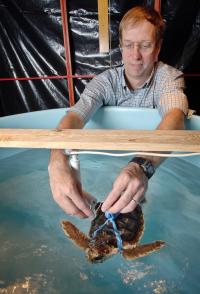
Ken Lohmann, UNC-Chapel Hill professor of biology, with a loggerhead turtle. Thousands of loggerhead turtles die every year when they get tangled or hooked in commercial fishing longlines meant for tuna or swordfish. New research suggests a possible reason why turtles swim into the lines. The glowing light sticks that lure fish to longlines also attract turtles, according to a University of North Carolina at Chapel Hill study.
| Biology | May 4, 2007 06:30 PM |
Biologists have converted protein sequences into classical music in an attempt to help vision-impaired scientists and boost the popularity of genomic biology. New research published today in the open access journal Genome Biology describes how researchers have found a way to present human proteins as musical notes.
| Biology | May 3, 2007 11:25 PM |
There are many reasons why living in dense groups with others of your own kind is a good idea. Oftentimes, aggregations of a species serve as protection from predators and harsh environments or may be beneficial to future reproductive success. However, in the case of oyster larvae, the selection of a place to call home can be a life or death decision.
Global survey of lizards reveals greater abundance of animals on islands than on mainland ecosystems
| Biology | May 3, 2007 10:25 PM |
A comprehensive survey of lizards on islands around the world has confirmed what island biologists and seafaring explorers have long observed: Animals on islands are much more abundant than their counterparts on the mainland.
| Biology | May 2, 2007 09:15 PM |
Whether you are an anxious type, or a fearless person - such individual differences in personality could be partly due to the genes you carry. In humans, it is hard to prove the existence of such "personality genes" - there are simply too many factors that influence human behaviour and these factors are hard to control experimentally. Birds are an easier target for research and indeed, they also have different personalities.
| Biology | May 2, 2007 04:57 PM |
The heart is one of the most energy demanding organs of the human body. Its failure to function properly accounts for 600,000 deaths each year. Similarly, the rainbow trout, native to the Pacific Northwest and beloved as a sport- and food fish, requires dynamic and sustained cardiac function to maintain its health and swimming activity.
| Biology | May 2, 2007 10:57 AM |
A new study appearing in the May issue of The Journal of Geology provides fascinating insight into the factors geologists must account for when examining dinosaur tracks. The authors studied a range of larger tracks from the family of dinosaurs that includes the T. Rex and the tridactyl, and provide a guide for interpreting the effects of many different types of erosion on these invaluable impressions.
| Biology | April 30, 2007 11:57 PM |

Male (left) and bisexual (right) flowers in horsenettle (Solanum carolinense). What would be the opening chapter of the Kamasutra of plant sex? A good pick would be a description of the numerous ways in which plants arrange their sexual organs: from both sexes in the same flower to sexes separated in different flowers or individuals.
| Biology | April 30, 2007 09:57 PM |
Researchers at the Yerkes National Primate Research Center, Emory University, have found bonobos and chimpanzees use manual gestures of their hands, feet and limbs more flexibly than they do facial expressions and vocalizations, further supporting the evolution of human language began with gestures as the gestural origin hypothesis of language suggests. This study appears in the current issue of the Proceedings of the National Academy of Sciences.
| Biology | April 30, 2007 08:57 PM |
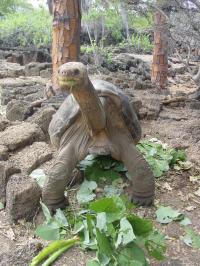
Lonesome George at the Charles Darwin Research Station. "Lonesome George," a giant Galapagos tortoise and conservation icon long thought to be the sole survivor of his species, may not be alone for much longer, according to a multinational team of researchers headed by investigators at Yale University.
| Biology | April 30, 2007 06:28 PM |
Because of new imaging technology, researchers are getting a better understanding of a physiological paradox: how insects, which have a respiratory system built to provide quick access to a lot of oxygen, can survive for days without it.
| Biology | April 29, 2007 09:28 PM |
US and Mexican conservation efforts may have boosted the number of marine turtles visiting UK waters, according to University of Exeter biologists.
| Biology | April 29, 2007 05:24 PM |
Unfed and engorged tick. Sex makes you fat. If you're a female tick, that is.
| Biology | April 27, 2007 08:24 PM |
A recent study in Nature (1) suggested that terrestrial plants may be a global source of the potent greenhouse gas methane, making plants substantial contributors to the annual global methane budget. This controversial finding and the resulting commotion triggered a consortium (2) of Dutch scientists to re-examine this in an independent study. Reporting in New Phytologist, Tom Dueck and colleagues present their results and conclude that methane emissions from plants are negligible and do not contribute to global climate change.
| Biology | April 25, 2007 04:27 PM |
A research team led by the University of Exeter has discovered that, after laying their eggs, sea turtles travel hundreds of miles to feed at exactly the same sites. The research, funded by the Natural Environment Research Council (NERC), shows for the first time that marine turtles appear to be as loyal to specific foraging sites and migratory routes as they are to nesting sites. Published today (25 April) in the journal Proceedings of the Royal Society B: Biological Sciences, the findings strengthen the argument for the protection of key foraging sites of these endangered species.
| Biology | April 24, 2007 08:58 PM |
North American grizzly bear (Ursus arctos) in Denali National Park, Alaska. A fascinating new study from the May/June 2007 issue of Physiological and Biochemical Zoology quantifiably measures the loss of strength and endurance in black bears during long periods of hibernation. T.D. Lohuis (Alaska Department of Fish and Game) and his coauthors find that black bears in hibernation lose about one-half as much skeletal muscle strength as humans confined to bed rest for similar periods of time do.
| Biology | April 24, 2007 07:58 PM |
The planarian is not as well known as other, more widely used subjects of scientific study – model creatures such as the fruit fly, nematode or mouse. But University of Illinois cell and developmental biology professor Phillip Newmark thinks it should be. As it turns out, the tiny, seemingly cross-eyed flatworm is an ideal subject for the study of germ cells, precursors of eggs and sperm in all sexually reproducing species.
| Biology | April 24, 2007 06:58 PM |
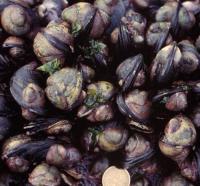
Smaller males on top of larger
females. The eggs are brooded under the shell and so are not visible.
Lizards gave rise to legless snakes. Cave fishes don’t have eyeballs. In evolution, complicated structures often get lost. Dollo’s Law states that complicated structures can't be re-evolved because the genes that code for them were lost or have mutated. A group of sea snails breaks Dollo’s law, Rachel Collin, Staff Scientist at the Smithsonian Tropical Research Institute and colleagues from two Chilean universities announce in the April, 2007, Biological Bulletin.
| Biology | April 24, 2007 12:11 PM |
Scientists at the University of Chicago and the National Museum of Natural History in Washington, D.C., have produced new evidence to finally resolve the mysterious identity of what they regard as one of the weirdest organisms that ever lived.
| Biology | April 23, 2007 07:11 PM |
Following the April 18 announcement that only 25 to 34 of the Amur or Far Eastern leopard (Panthera pardus orientalis) remain in the wild, World Wildlife Fund says the number must now be revised because a female Amur leopard was killed.
| Biology | April 21, 2007 05:58 PM |
The most recent census of mountain gorillas in Uganda’s Bwindi Impenetrable National Park—one of only two places in the world where the rare gorillas exist—has found that the population has increased by 6 percent since the last census in 2002, according to the Uganda Wildlife Authority, the Wildlife Conservation Society, the Max Planck Institute of Anthropology and other groups that participated in the effort.
| Biology | April 21, 2007 04:58 PM |
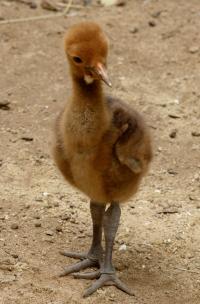
This rare wattled crane chick hatched at the Smithsonian's National Zoo on March 30. The chick is the National Zoo's first in its 118-year history. Visitors can see the wattled crane chick and its parents at the Zoo's Bird House outdoor exhibit. There are 63 wattled cranes in the North America zoo population and an estimated 8,000 in the wild. Adult wattled cranes stand 6 feet tall and weigh approximately 14 pounds. Credit: Jessie Cohen/Smithsonian's National Zoo Smithsonian's National Zoo has announced a first in its 118-year history -- the hatching of a rare wattled crane chick.
| Biology | April 21, 2007 01:58 PM |
The largest study to date of genetic variation among chimpanzees has found that the traditional, geography-based sorting of chimps into three populations—western, central and eastern—is underpinned by significant genetic differences, two to three times greater than the variation between the most different human populations.
| Biology | April 21, 2007 11:58 AM |
The rise of the central nervous system (CNS) in animal evolution has puzzled scientists for centuries. Vertebrates, insects and worms evolved from the same ancestor, but their CNSs are different and were thought to have evolved only after their lineages had split during evolution. Researchers from the European Molecular Biology Laboratory (EMBL) in Heidelberg now reveal that the vertebrate nervous system is probably much older than expected. The study, which is published in the current issue of Cell, suggests that the last common ancestor of vertebrates, insects and worms already had a centralised nervous system resembling that of vertebrates today.
| Biology | April 20, 2007 08:05 PM |
The study reveals the likely mechanism by which the Arabidopsis plant flowers in response to changes in day length. Earlier research had shown that plants' leaves perceived seasonal changes in day length, which triggers a long-distance signal to travel through the plant's vascular system from the leaf to the shoot apex, where flowering is induced. However, the identity of the long-distance signal remained unclear.
| Biology | April 20, 2007 02:05 PM |
Your bird field guide may be out of date now that University of Florida scientists discovered a new genus of frogmouth bird on a South Pacific island.
| Biology | April 20, 2007 12:05 PM |
A pea aphid, Acyrthosiphon pisum, gives birth to a baby aphid. The red spots inside the mother are the eyes of baby aphids that still inside her. For pea aphids, the ability to go forth and multiply can depend on a single gene, according to new research.
| Biology | April 19, 2007 09:48 PM |
We have usually quite strong memories of past events like an exciting holiday or a jolly birthday party. However it is not clear how the brain keeps track of the temporal sequence in such memories: did Paul spill a glass of wine before or after Mary left the party?
| Biology | April 19, 2007 06:48 PM |
A new census of the world's most endangered cat, the Amur or Far Eastern leopard (Panthera pardus orientalis), shows that as few as 25 to 34 are left in the wild, renewing fears for the future of the species.
| Biology | April 19, 2007 12:48 PM |
An international research team has found evidence of the Earth's earliest forest trees, dating back 385 million years.
| Biology | April 18, 2007 10:48 PM |
Mice whose brain cells respond to a flash of light are providing insight into the complexities of the sense of smell and may ultimately yield a better understanding of how the human brain works.
| Biology | April 18, 2007 12:34 PM |
Whiskers provide a mouse with essential information to negotiate a burrow or detect movement that could signal a predator's presence. These stiff hairs relay sensory input to the brain, which shapes neuronal activity. In a first, studies of this system by Carnegie Mellon scientists show just how well a mouse brain can compensate when limited to sensing the world through one whisker. Published April 4 in the Journal of Neuroscience, the results should help shape future studies of sensory deprivation that results from stroke or traumatic brain injury, say the authors.
| Biology | April 17, 2007 11:34 PM |
They're not afraid of heights, they're voracious, and Dr. Spencer Behmer wants to know if you've seen them hanging out in oak trees or on your house.
| Biology | April 16, 2007 07:17 PM |
Ancient aquatic amphibians developed the ability to feed on land before completing the transition to terrestrial life, researchers from Harvard University report this week in the Proceedings of the National Academy of Sciences.
| Biology | April 16, 2007 06:17 PM |
There is a scene in the animated blockbuster "Finding Nemo" when a school of fish makes a rapid string of complicated patterns—an arrow, a portrait of young Nemo and other intricate designs. While the detailed shapes might be a bit outlandish for fish to form, the premise isn’t far off. But how does a school of fish or a flock of birds know how to move from one configuration to another and then reorganize as a unit, without knowing what the entire group is doing? New research by University of Alberta scientists shows that one movement started by a single individual ripples through the entire group—a finding that helps unravel the mystery that has plagued scientists for years.
| Biology | April 13, 2007 08:55 PM |
Tomato growers are likely to soon be able to cultivate new tomato varieties without having to use pesticides against grey mould (Botrytis cinerea). This is the conclusion of the STW-sponsored thesis by Richard Finkers from Wageningen University, with which he hopes to earn his doctorate on 3 April 2007. Finkers designed highly efficient methods whereby tomato varieties can be resistant to grey mould. The leading company De Ruiter Seeds is already applying these methods in its breeding programme.
| Biology | April 12, 2007 10:43 PM |
In a study that could help reveal how illusions are produced in the brain's visual cortex, researchers at the UCSD School of Medicine have found new evidence of rapid integration of auditory and visual sensations in the brain. Their findings, which provide new insight into neural mechanisms by which visual perception can be altered by concurrent auditory events, will be published online in the April 12 edition of the Journal of Neuroscience.
| Biology | April 12, 2007 09:43 PM |
The way the liver renews itself may be simpler than what scientists had been assuming. A new study, appearing in the April 13 issue of The Journal of Biological Chemistry, provides new information on the inner workings of cells from regenerating livers that could significantly affect the way physicians make livers regrow in patients with liver diseases such as cirrhosis, hepatitis, or cancer.
| Biology | April 12, 2007 04:43 PM |
In a venture once thought to lie outside the reach of science, researchers from Harvard Medical School and Beth Israel Deaconess Medical Center have captured and sequenced tiny pieces of collagen protein from a 68 million-year-old Tyrannosaurus rex. The protein fragments—seven in all—appear to most closely match amino acid sequences found in collagen of present day chickens, lending support to a recent and still controversial proposal that birds and dinosaurs are evolutionarily related. The HMS and BIDMC researchers, working with scientists at North Carolina State University, report their findings in the April 13 Science.
| Biology | April 11, 2007 08:27 PM |
Genetic research has revealed that commercially available medicinal leeches used around the world in biomedical research and postoperative care have been misclassified for centuries. Until now, the leeches were assumed to be the species Hirudo medicinalis, but new research reveals they are actually a closely related but genetically distinct species, Hirudo verbana.
| Biology | April 10, 2007 12:51 PM |
Large mammals--humans, monkeys, and even cats--have brains with a somewhat mysterious feature: The outermost layer has a folded surface. Understanding the functional significance of these folds is one of the big open questions in neuroscience.
| Biology | April 6, 2007 04:16 PM |
Stronger than steel and more elastic than rubber: spider silk is unsurpassed in its expandability, resistance to tearing, and toughness. Spider silk would be an ideal material for a large variety of medical and technical applications, and researchers are thus interested in learning the spiders' secrets and imitating their technique. A team lead by Thomas Scheibel at the Technical University of Munich has now made a step in the right direction. As they report in the journal Angewandte Chemie, the interaction between hydrophilic (water friendly) and lipophilic (fat friendly) properties of the silk proteins plays an important role in the spinning process.
| Biology | April 4, 2007 02:23 PM |
Why do male owls hoot? Researchers from the Centre d'Études Biologiques de Chizé (France) and the University of Sussex (UK) have studied the vocal communication of male European Scops owls, one of the smallest living species of nocturnal raptors. The study, published in the April issue of the American Naturalist, was conducted between June 2003 and June 2005 on the isle of Oléron, off the west coast of France, where Christian Bavoux and Guy Burneleau have been studying the local scops owl population since 1981.
| Biology | April 4, 2007 10:23 AM |
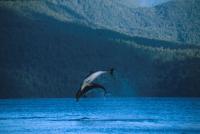
Two bottlenose dolphin males, PL and Gallatin, are sparring in Doubtful Sound, New Zealand. Mating strategies are straightforward in bottlenose dolphins, or are they? Much of the work carried on male-female relationships in that species to date show that males tend to coerce females who are left with little choice about with whom to mate. This explains the complex relationships we observe in male bottlenose dolphins, which are only paralleled by human social strategies: the formation of alliances and alliances of alliances, also called coalitions. These alliances and coalitions are then used to out-compete other male bands to access females.
| Biology | April 3, 2007 11:23 PM |
How you ever stopped to wonder how a fruit fly is able to locate and blissfully drown in your wine glass on a warm summer evening, especially since its flight path seems to be so erratic? Mark Frye at the University of California and Andy Reynolds at Rothamsted Research in the United Kingdom have been pondering this very question.
| Biology | April 3, 2007 02:24 PM |
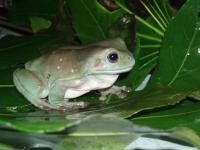
Tree frog. Tree frogs have the unique ability to stick to smooth surfaces even when they are tilted well beyond the vertical - some small tree frogs can even adhere when completely upside down. Conversely when walking or jumping they can detach their toe pads easily. Researchers from the University of Glasgow will present insights into how this fascinating ability is controlled at the Society for Experimental Biology’s Annual Meeting in Glasgow, UK.
| Biology | April 3, 2007 10:24 AM |
Much research has shown that reduced calorie intake can increase health and longevity. Professor Stephen Spindler (University of California) and his collaborators* have discovered that reducing calorie intake later in life can still induce many of the health and longevity benefits of life-long calorie reduction. Importantly, this also includes anti-cancer effects.
| Biology | April 2, 2007 11:24 PM |
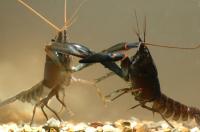
Fighting crayfish Intimidation and threats are common throughout society, whether it’s in the school playground, sporting arena or boardroom. Threatening behaviour is equally widespread among non-human animals. Individuals signal their superior strength to competitors to obtain food, resolve territorial disputes and acquire mates. Current theory insists that signals of strength should be honest. Surprisingly researchers have found that dishonest signals are used routinely during dominance disputes by male Australian crayfish. This work will be presented by Dr Robbie Wilson (University of Queensland) on Monday 2nd April at the Society for Experimental Biology’s Annual Meeting in Glasgow.
| Biology | April 1, 2007 10:34 PM |
Though many spring flowers have bright advertisements offering sweet rewards to honeybees, some common flowers have not-so-sweet or even toxic nectars. Why plants would try to poison the honeybees they wish to attract is a scientific mystery.
| Biology | April 1, 2007 06:34 PM |
Many of us will be familiar with cravings for sweet food, after having overindulged in alcohol the night before. It appears that Egyptian fruit bats also crave particular types of sugar to reduce the effects of ethanol toxicity. Francisco Sanchez from the Ben-Gurion University of the Negev (Israel) will present data demonstrating this on Sunday 1st of April at the Society for Experimental Biology’s Annual Meeting in Glasgow.
| Biology | March 31, 2007 08:26 PM |
With the unappealing prospect of being eaten, one might imagine that during a predator attack it is a case that all fish escape at once in the desperate hurry to escape as quickly as possible. However, new research indicates that this is not the case, and in fact fish in schools escape using a relatively fixed chronological order. This research was carried out at the International Marine Centre (IMC) in Sardinia, Italy, and will be presented at the Annual Meeting of the Society for Experimental Biology in Glasgow (31st March – 4th April).
| Biology | March 31, 2007 06:26 PM |
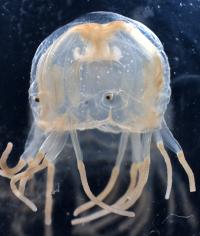
Box jellyfish Box jellyfish are much more active swimmers than other jellyfish – they exhibit strong directional swimming, are able to perform rapid 180 degree turns, and can deftly move in between objects. So how do they manage to manoeuvre the obstacle course that is in the sea bed? Given that they possess an impressive 24 eyes one would think they would be well equipped for this challenge! Dr Anders Garm (Lund University, Sweden) will present data demonstrating that it is one particular sub-set of eyes that performs this job, at the Society of Experimental Biology’s Annual Meeting in Glasgow (31st March – 2nd April).
| Biology | March 31, 2007 12:26 PM |
Biologists at New York University have identified how different species use common genes to control their early development and alter how these genes are used to accommodate their own features. The findings, which were discovered by researchers in Professor Claude Desplan’s and Steve Small’s laboratories in NYU’s Center for Developmental Genetics, offer new insight into the workings of developmental pathways across species. The study is published in the latest issue of the journal Science.
| Biology | March 31, 2007 10:26 AM |
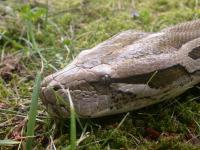
Burmese python. Burmese pythons don’t eat very often, but when they do they like to pig out, ingesting the whole of their prey. There’s very little waste as they are able to digest everything, apart from hair and feathers. Dr Jean-Hervé Lignot (Louis Pasteur University) and Dr Robert K. Pope (Indiana University South Bend) will talk about the implications this has on the way these snakes digest food on Saturday 31st March at the Society for Experimental Biology’s Annual Meeting in Glasgow.
| Biology | March 31, 2007 12:30 AM |
Researchers at the McKnight Brain Institute of the University of Florida have initiated a project to treat human brain and other diseases by plundering the secrets of regeneration from creatures with remarkable powers of self-renewal, such as salamanders, newts, starfish and flatworms.
| Biology | March 30, 2007 05:11 PM |
Fewer big sharks in the oceans mean that bay scallops and other shellfish may be harder to find at the market, according to an article in the March 30 issue of the journal Science, tying two unlikely links in the food web to the same fate.
| Biology | March 30, 2007 10:11 AM |
New research from Columbia University Medical Center may explain why people who are able to easily and accurately recall historical dates or long-ago events, may have a harder time with word recall or remembering the day’s current events. They may have too much memory – making it harder to filter out information and increasing the time it takes for new short-term memories to be processed and stored.
| Biology | March 29, 2007 11:11 PM |
Research in evolutionary developmental biology, known as ‘evo-devo’, is being held back because the dominant model organisms used by scientists are unable to illustrate key questions about evolution, argue biologists in the latest issue of Nature Reviews Genetics.
| Biology | March 29, 2007 04:22 PM |
A new, complete 'tree of life' tracing the history of all 4,500 mammals on Earth shows that they did not diversify as a result of the death of the dinosaurs, says new research published in Nature today.
| Biology | March 27, 2007 09:44 PM |
Migratory birds, such as these gulls seen here at a resting staging post, are too readily blamed for the spread of H5N1 without any evidence to support such claims. Credit: Steve Dudley www.toadsnatcher.com A review to be published shortly in the British Ornithologists' Union's journal, Ibis, critically examines the arguments concerning the role of migratory birds in the global dispersal of the highly pathogenic avian influenza virus H5N1. Ecologists of the Station Biologique de la Tour du Valat and of the GEMI-CNRS in the Camargue (France), Michel Gauthier-Clerc, Camille Lebarbenchon and Frédéric Thomas conclude that human commercial activities, particularly those associated with poultry, are the major factors that have determined its global dispersal.
| Biology | March 26, 2007 02:18 PM |
Too much of a good thing (nutrients or water) actually decreases the diversity of species in an ecosystem while it increases the productivity of a few species, according to a grassland experiment conducted by University of Minnesota researchers.
| Biology | March 26, 2007 12:59 PM |
Dutch researcher Harm Veling has demonstrated that our brains fend off distractions. If we are busy with something we suppress disrupting external influences. If we are tired, we can no longer do this.
| Biology | March 25, 2007 11:18 PM |
Modern man"s earliest known close ancestor was significantly more apelike than previously believed, a New York University College of Dentistry professor has found.
| Biology | March 25, 2007 10:18 PM |
Researchers have recently identified several chemicals produced by ladybugs that can taint the aroma and flavor of wine. Ladybugs may look pretty but they also have a dark side. In some places, the polka-dotted insects have become a nuisance by invading homes and crops, including some vineyards. To make matters worse, the bugs produce a foul-smelling liquid that, besides irritating homeowners, can be inadvertently processed along with grapes and taint the aroma and flavor of wine.
| Biology | March 24, 2007 08:33 PM |
Scientists from the NIOZ Royal Netherlands Institute for Sea Research obtained for the first time a detailed temperature record for tropical central Africa over the past 25,000 years. They did this in cooperation with a German colleague from the University of Bremen, The scientists developed an entirely new method to reconstruct the history of land temperatures based on the molecular fossils of soil bacteria. They applied the method to a marine sediment core taken in the outflow of the Congo River. This core contained eroded land material and microfossils from marine algae. The results show that the land environment of tropical Africa was cooled more than the adjacent Atlantic Ocean during the last ice-age. This large temperature difference between land and ocean surface resulted in drier conditions compared to the current situation, which favours the growth of a lush rainforest. These findings provide further insight in natural variations in climate and the possible consequences of a warming earth on precipitation in central Africa. The results will be published in this week's issue of 'Science'.
| Biology | March 24, 2007 04:33 PM |
Fresh evidence that suggests monkeys can learn skills from each other, in the same manner as humans, has been uncovered by a University of Cambridge researcher.
| Biology | March 23, 2007 12:51 PM |
Unprepared Adriosaurus microbrachis A University of Alberta paleontologist has helped discover the existence of a 95 million-year-old snakelike marine animal, a finding that provides not only the earliest example of limbloss in lizards but the first example of limbloss in an aquatic lizard.
| Biology | March 22, 2007 06:51 PM |
Researchers at the Johns Hopkins School of Medicine and their colleagues have found that mice simply expressing a human light receptor in addition to their own can acquire new color vision, a sign that the brain can adapt far more rapidly to new sensory information than anticipated.
| Biology | March 22, 2007 08:44 AM |
We’ve all heard about the birds and the bees. But apparently when it comes to birds, they have an unusual take on his and hers – and the difference is genetic. Species with differentiated sex chromosomes (X and Y in humans, for example) get around the fact that males and females get different-sized portions of sex chromosome genes with a balancing act geneticists call dosage compensation. But research published today in the Journal of Biology shows that birds are extraordinary, because some bird genomes can live with an apparent overdose of sex-related genes.
| Biology | March 21, 2007 07:24 PM |
The first comprehensive assessment of the world’s 162 species of grouper, a culinary favorite and important commercial fish, found that 20 are threatened with extinction unless proper management or conservation measures are introduced. Eight species previously were listed by the World Conservation Union (IUCN) as under extinction threat, and the new assessment proposes adding 12 more.
| Biology | March 21, 2007 11:34 AM |
Biologists at the University of California, San Diego and the University of Bonn in Germany have produced a global map of estimated plant species richness. Covering several hundred thousand species, the scientists say their global map is the most extensive map of the distribution of biodiversity on Earth to date.
| Biology | March 20, 2007 09:35 PM |
Researchers from CSIRO and UNSW@ADFA have shown that termites can tell what sort of material their food is made of, without having to actually touch it. The findings may lead to improvements in the control of feeding termites.
| Biology | March 20, 2007 07:35 PM |
A group of organisms that has never had sex in over 40 million years of existence has nevertheless managed to evolve into distinct species, says new research published today. The study challenges the assumption that sex is necessary for organisms to diversify and provides scientists with new insight into why species evolve in the first place.
| Biology | March 19, 2007 11:51 PM |
A male roe deer in hard antler. Why are male ungulate antlers and horns so large? Darwin, when proposing his theory of evolution and sexual selection, suggested that the size of male ungulate antlers and horns may reflect male individual quality, and thereby be used by conspecifics as an honest signal of male sexual vigor, health, strength, hierarchical status, or ability to fight.
| Biology | March 19, 2007 10:51 PM |
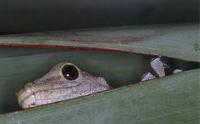
Phelsuma gecko in Pandanus thicket. Neighbors gone, sex gone, fruits gone, species gone. This is the ultra-short conclusion of the findings in a study by Dennis Hansen, Heine Kiesbüy, and Christine Müller from Zurich University, and Carl Jones from the Mauritian Wildlife Foundation, who found that an endangered plant in Mauritius depends on a neighboring plant to provide a safe home for its pollinator, a day-active gecko.
| Biology | March 19, 2007 06:51 PM |
For many years, ecologists from the Centre of Environment and Hydrology (CEH) have investigated the ecology of Maculinea rebeli, a Lycaenid butterfly whose caterpillars live as parasites inside colonies of Myrmica ants, where they feed on regurgitations from the nurse ants. One of the peculiar features of this species' ecology is that only about 25% of the caterpillars complete development within one year. The rest are inactive in the first season and mature only after two years. "The question puzzling us for some time," says Prof. Jeremy Thomas, director of the CEH in Dorset, "was to understand why so many caterpillars waste one year's time by delaying their development. From all what we know, which developmental pathway a caterpillar takes is determined early during the caterpillar's life, presumably by its mother."
| Biology | March 16, 2007 02:21 PM |
Scientists have discovered that the clouded leopard found on the islands of Borneo and Sumatra is an entirely new species of cat. The secretive rainforest animal was originally thought to be the same species as the one found in mainland Southeast Asia.
| Biology | March 16, 2007 12:21 PM |
Video evidence that an extinct woodpecker is alive and well in Arkansas, USA may prove to be a case of mistaken identity. Research published today in the open access journal BMC Biology shows how fleeting images thought to be the Ivory-billed Woodpecker Campephilus principalis could be another native woodpecker species.
| Biology | March 15, 2007 05:21 PM |
An international team of American and Chinese paleontologists has discovered a new species of mammal that lived 125 million years ago during the Mesozoic Era, in what is now the Hebei Province in China.
| Biology | March 15, 2007 02:05 PM |
A team of UBC researchers has re-classified an ancient line of aquatic plants previously thought to be related to grasses and rushes. The discovery clarifies what may be one of the biggest misunderstandings in botanical history.
| Biology | March 15, 2007 12:05 PM |
Using advanced brain imaging techniques, researchers at Georgetown University Medical Center have watched how humans use both lower and higher brain processes to learn novel tasks, an advance they say may help speed up the teaching of new skills as well as offer strategies to retrain people with perceptual deficits due to autism.
| Biology | March 14, 2007 11:05 PM |
It has long been recognized that birds possess the ability to use the Earth’s magnetic field for their navigation, although just how this is done has not yet been clarified. However, the discovery of iron-containing structures in the beaks of homing pigeons in a new study (1) by Gerta Fleissner and her colleagues at the University of Frankfurt offers a promising insight into this complex topic. The article will be published online mid-March in Springer’s journal Naturwissenschaften.
| Biology | March 14, 2007 06:05 PM |
Although the Galápagos finches were to play a pivotal role in the inception of Darwin’s theory of evolution through natural selection, he had no inkling of their significance when he collected them during his voyage on the HMS Beagle.
| Biology | March 14, 2007 05:05 PM |
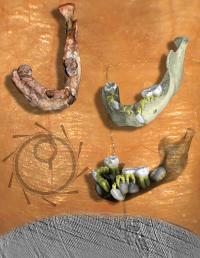
The North African fossil mandible superimposed over horizontal developmental lines on an incisor tooth, with the internal daily lines shown in the black and white image on the bottom. With this non-destructive technique it is now possible to accurately and non-destructively reconstruct how fossil teeth grew and how old juvenile individuals were when they died. The circular image on the left shows the organization of the third generation synchrotron at the European Synchrotron Radiation Facility in Grenoble, France, where the first "virtual tooth histology" images were captured from fossil humans. Credit: Paul Tafforeau/ESRF The origins of modern humans continues to be one of the most hotly debated topics among anthropologists, and there is little consensus about where and when the first members of our species, Homo sapiens, became fully modern. While fossil evidence tells a complex tale of mosaic change during the African Stone Age, almost nothing is known about changes in human 'life history,' or the timing of development, reproductive scheduling, and lifespan.
| Biology | March 14, 2007 04:12 PM |
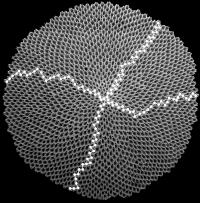
Changes in the body size of fossil cupuladriid bryozoans indicate water temperature. Smithsonian scientists and colleagues report a new study that may shake up the way paleontologists think about how environmental change shapes life on Earth. The researchers summarized the environmental, ecological and evolutionary consequences for Caribbean shallow-water marine communities when the Isthmus of Panama was formed. They concluded that extinctions resulting when one ocean became two were delayed by 2 million years.
| Biology | March 13, 2007 10:12 PM |
Two Iowa State University botanists and their colleague at the University of North Carolina have discovered a new species of North American bamboo in the hills of Appalachia. It is the third known native species of the hardy grass. The other two were discovered more than 200 years ago.
| Biology | March 13, 2007 05:12 PM |
Medical Hypotheses, an Elsevier publication, has announced the winner of the 2006 David Horrobin Prize for medical theory. Written by Judith Rich-Harris, author of The Nurture Assumption and No Two Alike, the article, "Parental selection: a third selection process in the evolution of human hairlessness and skin color" was judged to best embody the spirit of the journal. The £1,000 prize, launched in 2004, is awarded annually and named in honour of Dr. David Horrobin, the renowned researcher, biotechnology expert and founder of Medical Hypotheses (http://www.elsevier.com/wps/find/journaldescription.cws_home/623059/description#description), who died in 2003.
| Biology | March 13, 2007 03:11 PM |
A popular game fish mistaken by scientists for a dog snapper is actually a new species discovered among the reefs of the Abrolhos region of the South Atlantic Ocean.
| Biology | March 13, 2007 10:26 AM |
Whip spiders, considered by many to be creepy-crawly, are giving new meaning to the term touchy-feely.
| Biology | March 12, 2007 08:26 PM |
The arrival of genetically modified crops has added another level of complexity to farming in the developing world, says a sociocultural anthropologist at Washington University in St. Louis.
| Biology | March 12, 2007 05:26 PM |
A newly published study by Northwestern University researchers suggests that Mom was right when she insisted that you continue music lessons -- even after it was clear that a professional music career was not in your future.
| Biology | March 11, 2007 11:32 PM |
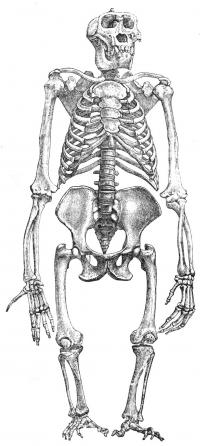
This drawing of a male gorilla skeleton illustrates their very short legs. Male gorillas fight to gain access to reproductively mature females. Relatively short legs increase the stability and... Ape-like human ancestors known as australopiths maintained short legs for 2 million years because a squat physique and stance helped the males fight over access to females, a University of Utah study concludes.
| Biology | March 9, 2007 09:07 PM |
Have your neurons been shouting at your muscles again? It happens, you know.
| Biology | March 9, 2007 07:07 PM |
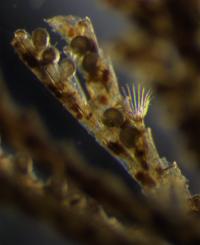
Close-up of the bushy marine bryozoan Bugula neritina. An Oregon Health & Science University researcher believes the discovery of a gene cluster from a bacterium that protects a moss-like marine invertebrate from predators may be the first step toward engineering cancer-fighting drugs.
| Biology | March 9, 2007 06:07 PM |
A whimsical attempt to establish a herd of mouflon for sport hunting on a remote island in the Indian Ocean 50 years ago has inadvertently created a laboratory for genetic researchers and led to a surprising discovery.
| Biology | March 9, 2007 05:28 PM |
A group of European scientists have determined that a male reindeer's air sac, influencing vocal sound and neck contour, may contribute to his sexual prowess and reproductive success. The results of this research have recently been published in Journal of Anatomy.
| Biology | March 9, 2007 02:28 PM |
Smithsonian scientists have discovered a biodiversity bounty in the Eastern Pacific—approximately 50 percent of the organisms found in some groups are new to science. The research team spent 11 days in the Eastern Pacific, a unique, understudied region off the coast of Panama.
| Biology | March 8, 2007 09:28 PM |
The sperm whale and its large prey, the jumbo squid, are among the deepest divers in the ocean, routinely reaching depths of 3,000 feet or more. Now, in a new study, a team of marine scientists reports the successful tagging of sperm whales and jumbo squid swimming together off Mexico’s Pacific coast—the first time that electronic tracking devices have been applied simultaneously to deep-diving predators and prey in the same waters.
| Biology | March 8, 2007 08:28 PM |
Researchers have found evidence that rats are capable of metacognition—that is, they can possess knowledge of their own cognitive states. This ability, which can also be thought of as the capacity to assess or reflect on one's own mental processes, was previously only recognized in humans and other primates. The findings are reported by Allison Foote and Jonathon Crystal of the University of Georgia and appear online in the journal Current Biology, published by Cell Press, on March 8th.
| Biology | March 8, 2007 04:30 PM |
Female chimpanzees may have found a fool-proof way to ensure they mate with only the highest ranking males, namely those with important social and physical characteristics that their offspring may inherit, according to a new study by Akiko Matsumoto-Oda from the Department of Welfare and Culture at Okinawa University in Japan. Female chimpanzees do not synchronize their reproductive activities which reduces the opportunities for less-desirable males to coerce them into mating. The findings have just been published online in Springer's journal Behavioral Ecology and Sociobiology.
| Biology | March 8, 2007 12:30 PM |
Having a twin sister could put male saiga antelopes at a reproductive disadvantage, says new research published today. The study shows that male twins with a sister are born lighter than those with a brother, making them smaller than the optimal size for males. The research also shows that saigas are the supermums of the hoofed animal world with no other similar species investing more in their offspring during pregnancy.
| Biology | March 7, 2007 11:30 PM |
A new report, the first to take a comprehensive look at market competition between wild and farmed salmon, sheds new light on the contentious and complex issues surrounding farmed and wild salmon.
| Biology | March 6, 2007 06:26 PM |
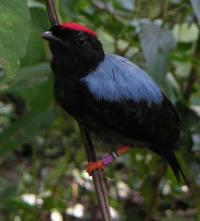
Adult male lance-tailed manakin on a branch Why do some individuals sacrifice their own self-interest to help others? The evolution and maintenance of cooperative behavior is a classic puzzle in evolutionary biology. In some animal societies, cooperation occurs in close-knit family groups and kin selection explains apparently selfless behavior. Not so for the lance-tailed manakin.
| Biology | March 3, 2007 07:58 PM |
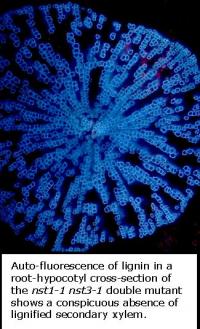
Auto-fluorescence of lignin in a root-hypocotyl cross-section of the nst1-1 nst3-1 double mutant shows a conspicuous absence of lignified secondary xylem. Wood is formed from secondary xylem tissue consisting of cells with a heavily thickened secondary cell wall that is enriched in lignin and cellulose. In contrast, primary cell walls are composed mainly of polysaccharides (including cellulose), but contain very little lignin. Wood formation occurs through a complex series of steps involving cell division and expansion and the biosynthesis of lignin and cellulose. In addition, heartwood (darker wood at the center of the trunk) forms in many tree species through a highly regulated process of programmed cell death.
| Biology | March 3, 2007 12:58 PM |
Ecosystems are such intricate webs of connections that few studies have been able to explore exactly what happens when a species dies out.
| Biology | March 3, 2007 10:58 AM |
A new genus of millipede was recently discovered by a Northern Arizona University doctoral student and a Bureau of Land Management researcher.
| Biology | March 1, 2007 09:36 PM |
Flexibly drawing inferences about the intentions of other individuals in order to cooperate in complex tasks is a basic part of everyday life that we humans take for granted. But, according to evolutionary psychologist Brian Hare at the Max Planck Institute in Germany, this ability is present in other species as well.
| Biology | March 1, 2007 07:36 PM |
An international team of scientists led by the Wildlife Conservation Society working in Iran has successfully fitted two Asiatic cheetahs with Global Positioning System (GPS) collars, marking the first time this highly endangered population of big cats can be tracked by conservationists. Once found throughout the continent, Asiatic cheetahs now live only in extremely arid habitat on the edges of Iran's Kavir Desert. WCS's government partner in Iran, the Department of Environment/CACP project estimates their remaining numbers between 60 and 100 animals, making the Asiatic cheetah one of the most imperiled cats on earth.
| Biology | March 1, 2007 07:14 PM |
While Al Gore's film, An Inconvenient Truth, has generated greater awareness of global warming, most people remain unaware of the more rapid warming that has occurred within major cities. In fact, large cities can be more than 10 degrees hotter than their surroundings. These metropolitan hot spots, which scientists refer to as urban heat islands, can stress the animals and plants that make their home alongside humans. Until recently, biologists had focused so much on the effects of global climate change, that they had overlooked the effects of urban warming.
| Biology | March 1, 2007 04:14 PM |
Digital atlases of the brains of humans, monkeys, dogs, cats, mice, birds and other animals have been created and posted online by researchers at the UC Davis Center for Neuroscience.
| Biology | March 1, 2007 12:14 PM |
Among the central mysteries of neurobiology is what properties of the young brain enable it to so adeptly wire itself to adapt to experience—a quality known as plasticity. The extraordinary plasticity of the young brain occurs only during a narrow window of time known as the critical period. For example, children deprived of normal visual stimulation during an early critical period of the first few years of life suffer the permanent visual impairment of amblyopia.
| Biology | March 1, 2007 10:14 AM |
Using a state-of-the-art technique to map neurons in the spinal cord of a larval zebrafish, Cornell University scientists have found a surprising pattern of activity that regulates the speed of the fish’s movement. The research may have long-term implications for treating injured human spinal cords and Parkinson’s disease, where movements slow down and become erratic.
| Biology | February 28, 2007 09:14 PM |
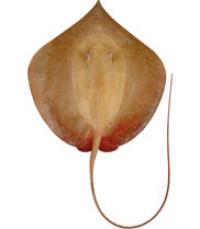
A Hortle's Whipray -- only found in West Papua. At least 20 new species have been discovered in the first comprehensive survey of Indonesia's sharks and rays since the 1850s.
| Biology | February 27, 2007 10:49 PM |
The brain appears to process information more chaotically than has long been assumed. This is demonstrated by a new study conducted by scientists at the University of Bonn. The passing on of information from neuron to neuron does not, they show, occur exclusively at the synapses, i.e. the junctions between the nerve cell extensions. Rather, it seems that the neurons release their chemical messengers along the entire length of these extensions and, in this way, excite the neighbouring cells. The findings of the study are of huge significance since they explode fundamental notions about the way our brain works. Moreover, they might contribute to the development of new medical drugs. The study is due to appear shortly in the prestigious academic journals "Nature Neuroscience" and has already been posted online (doi:10.1038/nn1850).
| Biology | February 27, 2007 06:49 PM |
Ecologists continue to debate how different species manage to coexist. If two species use identical resources, such as food, invariably one will be more efficient and out-compete the other. The classical explanation is that each species has evolved morphological or physiological traits that allow it to exploit some resources more efficiently than all other species. Such partitioning of resources essentially provides each species with exclusive access to resources necessary for its survival. Although coexistence is often attributed to interspecific differences in morphology, direct evidence is relatively rare. Dabbling ducks, which include the ubiquitous mallard, are a good example. Dabbling ducks are primarily filter-feeders. They use lamellae, which are comb-like projections on the bill, to sieve food particles from pond water. Many ecologists, including Darwin, suggested that ducks coexist because interspecific differences in the spacing of bill lamellae allow each species to consume food particles of different sizes. Research published in the March issue of the American Naturalist by Brent Gurd of Simon Fraser University has demonstrated that interspecific differences in lamellar length, not spacing, allow ducks to partition food by size.
| Biology | February 27, 2007 05:51 PM |
The roundscale spearfish bears a close resemblance to the white
marlin at first glance. A close examination of fins, scales, and DNA
reveals a very different species. For years, anglers thinking they were catching the prized white marlin may have caught something quite different, raising concerns about the true remaining numbers of the threatened species, according to an article in the most recent issue of the scientific journal Bulletin of Marine Science.
| Biology | February 26, 2007 02:51 PM |
Marine turtles almost always return to the same beach to lay their eggs. The egg-laying sites are often far from the feeding areas and the females cross several hundred kilometers of ocean with no visual landmarks. How do they manage to return to the same spot? A study by Simon Benhamou of the Center for Functional and Evolutionary Ecology at Montpellier, France, together with other groups (CNRS, IRD, IFREMER, CEDTM2, University of Pisa), shows that the marine turtles use a relatively simple navigation system involving the earth’s magnetic field, and this allows them to return to the same egg-laying site without having the ability to correct for the deflection of ocean currents. This work, published in Current Biology and Marine Ecology Progress Series, should allow better conservation strategies for this endangered species.
| Biology | February 24, 2007 04:39 PM |
According to a new study published in the latest issue of The Journal of Sexual Medicine and conducted in the Department of Psychology of McGill University, thermography shows great promise as a diagnostic method of measuring sexual arousal. It is less intrusive than currently utilized methods, and is the only available test that requires no physical contact with participants. Thermography is currently the only method that can be used to diagnose sexual health problems in both women and men. In fact, women and men demonstrated similar patterns of temperature change during sexual arousal with no significant differences between genders in the time needed to reach peak temperature.
| Biology | February 23, 2007 12:47 PM |
Lizards that signal to rivals with a visual display "shout" to get their point across, UC Davis researchers have found.
| Biology | February 23, 2007 10:47 AM |
Planning and worrying about the future has always been considered an exclusively human activity, but now at least one species of bird has also been found to plan for tomorrow. The finding also raises the intriguing possibility that, like humans, birds may get anxious about the future. Research published today (22 February) in the journal Nature shows that western scrub-jays are able to plan for future food shortages by caching food. The birds are shown to have learned from their previous experiences of food scarcity, storing food for future use in places where they anticipate future slim pickings. The researchers at the University of Cambridge believe this is the first known example of future planning in animals.
| Biology | February 22, 2007 03:47 PM |
Reporting findings that help shape our understanding of how tool use has evolved among primates, researchers have discovered evidence that chimpanzees, at least under some conditions, are capable of habitually fashioning and using tools to hunt mammalian prey. The work, reported by Jill Pruetz of Iowa State University and Paco Bertolani of the University of Cambridge, will appear online in the journal Current Biology on February 22nd.
| Biology | February 21, 2007 07:19 PM |
How does life survive in the black depths of the ocean? At the surface, sunlight allows green plants to "fix" carbon from the air to build their bodies. Around hydrothermal vents deep in the ocean live communities of giant clams with no gut and no functional digestive system, depending on symbiotic bacteria to use energy locked up in hydrogen sulfide to replace sunlight. Now, the genome of this symbiont has been completely sequenced and published in Science.
| Biology | February 21, 2007 02:19 PM |
New research pinpoints specific areas in sound processing centers in the brains of macaque monkeys that shows enhanced activity when the animals watch a video.
| Biology | February 20, 2007 07:55 PM |
How does the heart attain its characteristic shape? Shape may be sculpted by cell movement, cell division, or changes in cell size and shape, all of which can be influenced by the local environment. The heart appears as a simple tube early in development; later, the tube walls bulge outward to form the cardiac chambers.
| Biology | February 20, 2007 06:10 PM |
Studying DNA obtained from teeth of ancient cave bears, researchers have been able to identify a shift in a particular population of the bears inhabiting a European valley in the late Pleistocene era. The findings illustrate the ability of DNA sequence analysis to reveal aspects of animal population dynamics in the distant past and potentially illuminate the influence of human migrations in animal population changes. The new work, reported by a collaborative group of researchers including Michael Hofreiter of the Max Planck Institute for Evolutionary Anthropology in Leipzig, Germany, appears in the February 20th issue of the journal Current Biology, published by Cell Press.
| Biology | February 20, 2007 12:10 PM |
Many commercially prized fish from the depths of the world's oceans are severely threatened by over-fishing and the species' ability to recover is constrained by the fishes' long lifespans and low reproductive success, a panel of experts said today at the annual meeting of the American Association of the Advancement of Science. Some of the fish species living at depths greater than 500 meters take decades to reach breeding maturity, so there are no quick-fix remedies available to replenish the population, said Selina Heppell, a fisheries biologist from Oregon State University.
| Biology | February 18, 2007 05:10 PM |
A lifelong obsession with fossils led to Natural Sciences and Engineering Research Council grantee Robert Reisz discovering the oldest known dinosaur embryos and the oldest known reptile that stands on two legs.
| Biology | February 18, 2007 04:10 PM |
Fungi-infected plants often cause dramatic symptoms such as the formation of colourful masses of fungal spores instead of seeds. Some fungi can even make infected plants smell like rotting fish. In general, these infections cause major headaches for farmers who are counting on their crops, such as wheat and barley, to survive through the growing season.
| Biology | February 18, 2007 02:10 PM |
Modern human mothers are probably happy that they typically have one, maybe two babies at a time, but for early hominids, low birth numbers combined with competition often spelled extinction.
| Biology | February 17, 2007 04:10 PM |
Computer scientists from Texas A&M University and the University of California, Berkeley, have installed a robot in the Cache River National Wildlife Refuge to help natural scientists from Cornell University's Laboratory of Ornithology and the Arkansas Game and Fish Commission find the rare ivory-billed woodpecker.
| Biology | February 15, 2007 05:59 PM |
Researchers, including a paleoethnobotanist at the University of Missouri-Columbia, recently found fossil evidence in seven archaeological sites ranging from the Bahamas to present-day Peru that showed people were eating domesticated chili peppers as long as 6,000 years ago. This makes chili peppers one of the oldest domesticated food sources in the Americas. The study will be published in the Feb. 15 edition of the journal Science.
| Biology | February 15, 2007 05:05 PM |
The far-reaching influence of Spanish and Portuguese colonisers appears not to have extended to South American agriculture, scientists studying a 1,400-year-old Andean mummy have found.
| Biology | February 15, 2007 04:05 PM |
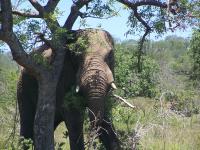
An elephant browsing for fruit in a female Marula tree. Being female can be a risky business, especially if you are a Marula tree in Africa receiving the attention of elephants. The tasty, nutritious and vitamin C-rich Marula fruits are much sought after by both man and animals. It is a stable "wild food" and base for the popular Amarula liquor. But Marula has separate male and female trees so fruiting females attract browsing elephants, which cause damage to branches and bark.
| Biology | February 15, 2007 02:05 PM |
It was until now believed that nocturnally migrating songbirds, while venturing into the unfamiliar night sky for accomplishing their long, challenging trans-continental migrations, could at least release anti-predator vigilance thanks to the concealment of darkness. A new study by Spanish and Swiss scientists – published this week in PLoS ONE – shows that migration at night is not without predation risk for passerines.
| Biology | February 14, 2007 11:05 PM |
Plant poisoning is a significant problem around the world. In the United States, exposures to plant toxins account for approximately ten percent of the annual calls to the nation's Poison Control Centers. Responding to the need for a useful guide to the harmful potential of plants, Handbook of Poisonous and Injurious Plants provides portable, comprehensive information to the toxic plants encountered everywhere, both inside and outside the home.
| Biology | February 14, 2007 12:00 PM |
Researchers have found evidence that chimpanzees from West Africa were cracking nuts with stone tools before the advent of agriculture, thousands of years ago. The result suggests chimpanzees developed this behaviour on their own, or even that stone tool use was a trait inherited from our common ancestor. Julio Mercader, Christophe Boesch and colleagues found the stones at the Noulo site in Cote d'Ivoire, the only known prehistoric chimpanzee settlement.
| Biology | February 13, 2007 10:00 PM |
When they fly, insects use their vision for piloting, just like human pilots. The electric signals from their facetted eyes travel through specialized neurons to stimulate the wing muscles, which let the insects correct their flight and avoid crashes. Could these same neurons be used in a sort of "automatic pilot"? This is what Nicolas Franceschini, Franck Ruffier and Julien Serres have just shown. These biorobotics specialists from the Movement and Perception Laboratory (CNRS/Université de la Méditerranée) in Marseille, France have revealed an automatic mechanism called the "optic flow regulator" that controls the lift force. The researchers obtained these results by modeling the overland flight navigation of insects using experiments carried out on OCTAVE, a captive flying robot microhelicopter that can reproduce much of the mysterious natural insect behavior. Their work is published online in Current Biology, February 8, 2007.
| Biology | February 13, 2007 02:24 PM |
A new statistical method of determining genetic traits that influence social interactions among animals may provide for more productive livestock.
| Biology | February 13, 2007 10:24 AM |
A stable social structure may help control the spread of bovine tuberculosis (TB) among badgers, ecologists have found. The findings – published online in the British Ecological Society's Journal of Animal Ecology – have important implications for the role of badger culling as part of the strategy to control bovine TB in the UK.
| Biology | February 12, 2007 09:24 PM |
Nearly a century ago, John Scopes was found guilty of violating a Tennessee statute when he taught evolution in his classroom. Though an appeals court later reversed his conviction on a technicality, the law lingered on the books, joined by later laws promoting "scientific creationism," and, most recently, "intelligent design." The battle to keep religiously based explanations of the history of life—especially human life—out of the science curriculum continues unabated. And though a number of educational institutions and organizations have had notable success in combating intelligent design in the classroom, what is needed now is a fresh source of evolution materials and anti-creationism ammunition for our school teachers on the front lines of this ongoing battle. Today, on Darwin's 198th birthday, Springer announces plans for a new journal which will do just that.
| Biology | February 11, 2007 07:41 PM |
An immuno-contraceptive vaccine causes an animal's immune system to produce antibodies that act against some essential event or structure in the reproductive process. The antibodies can act against sperm, eggs or reproductive hormones, which prevent either fertilization or the production of sperm and ova.
| Biology | February 10, 2007 02:44 PM |
By imaging patterns of activity in the brain's prefrontal cortex as subjects concentrated on their choice of two future actions, researchers have been able to distinguish cortical activity patterns that correspond to the subjects' different plans. The findings, reported by a collaborative group led by John-Dylan Haynes of the Max Planck Institute for Human Cognitive and Brain Sciences in Leipzig, Germany, appear in Current Biology online on February 8th.
| Biology | February 9, 2007 11:44 PM |
About 1000 Australian males and females of all ages were tested for their ability to detect or identify a range of different odours at different concentrations, and then given an overall score for their sense of smell, or olfactory function.
| Biology | February 9, 2007 07:44 PM |
The regions of the brain that control vision and other sensory information grow dramatically in the first few months following birth, while the area that controls abstract thought experiences very little growth during the same period, University of North Carolina at Chapel Hill researchers have found.
| Biology | February 8, 2007 12:47 PM |
Female Antarctic fur seals will travel across a colony to actively seek males which are genetically diverse and unrelated, rather than mate with local dominant males. These findings, published in this week's Nature, suggest that female choice may be more widespread in nature than previously believed and that such strategies enable species to maintain genetic diversity.
| Biology | February 8, 2007 10:47 AM |
At last, neuroscience is having an impact on computer science and artificial intelligence (AI). For the first time, scientists in Tomaso Poggio's laboratory at the McGovern Institute for Brain Research at MIT applied a computational model of how the brain processes visual information to a complex, real world task: recognizing the objects in a busy street scene. The researchers were pleasantly surprised at the power of this new approach.
| Biology | February 7, 2007 10:47 PM |
An international team of scientists has discovered that the ubiquitous bacteria that causes most painful stomach ulcers has been present in the human digestive system since modern man migrated from Africa over 60,000 years ago. The research, published online today (7 February) by the journal Nature, not only furthers our understanding of a disease causing bacteria but also offers a new way to study the migration and diversification of early humans.
| Biology | February 6, 2007 08:51 PM |
Working in the remote forests of Cambodia, conservationists from the Wildlife Conservation Society (WCS) have just discovered Southeast Asia's only known breeding colony of slender-billed vultures, one of the world's most threatened bird species.
| Biology | February 6, 2007 07:28 PM |
Speed daters who romantically desired most of their potential partners were rejected quickly and overwhelmingly, according to a new Northwestern University study.
| Biology | February 5, 2007 05:15 PM |
The recording device that captured the sounds of black smoker venting sits here between waters that are 660 F, hot enough to poach unsuspecting fish, and cooler places lush with tube worms. It is speculated that the sound generated by hydrothermal vents may help fish navigate around such structures. Credit: University of WashingtonSo you're a fish. Right now some tubeworm tartare and clams on the half shell would really hit the spot, so you're headed for the all-night café. "All-night" being the operative word because the volcanic ridge you're tooling along is nearly 1.5 miles below the surface. The term "where the sun don't shine" perfectly describes the place. It's pitch black. Darn, but what's that loud rumbling up ahead? Must be one of those pesky black smokers. Some of those babies can fry your face off. A detour is highly indicated.
| Biology | February 2, 2007 05:59 PM |
Fluctuations in sex hormone levels during women's menstrual cycles affect the responsiveness of their brains' reward circuitry, an imaging study at the National Institute of Mental Health (NIMH), a component of the National Institutes of Health (NIH), has revealed. While women were winning rewards, their circuitry was more active if they were in a menstrual phase preceding ovulation and dominated by estrogen, compared to a phase when estrogen and progesterone are present.
| Biology | February 2, 2007 05:57 PM |
Although no two brains are alike, they can display a comparable pattern of neural activity when exposed to similar sensory input. Scientists at the Max Planck Institute for Dynamics and Self-Organization in Göttingen have now developed a mathematical method to design networks from neural cells which exhibit a predefined pattern dynamics. The researchers hope that their method will assist them in getting closer to understanding which of the possible network configurations was privileged by evolution - and why (Physica D: Nonlinear Phenomena, December, 2006).
| Biology | February 1, 2007 11:57 PM |
Returning from a recent 1,000-mile expedition across Tibet's remote Chang Tang region, Wildlife Conservation Society (WCS) biologist George Schaller reports that the Tibetan antelope -- once the target of rampant poaching -- may be increasing in numbers due to a combination of better enforcement and a growing conservation ethic in local communities.
| Biology | February 1, 2007 10:48 AM |
Parasite-carrying bloodsucking leeches may be delivering a one-two punch to newts, according to biologists, who say the discovery may provide clues to disease outbreaks in amphibians.
| Biology | January 31, 2007 10:48 PM |
"Time" is the most popular noun in the English language, yet how would we tell time if we didn’t have access to the plethora of watches, clocks and cell phones at our disposal?
| Biology | January 31, 2007 08:48 PM |
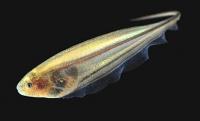
Native to South America, the glass knifefish's ability to emits weak electrical signals makes it a superb subject for the study of how the brain uses sensory information to control locomotion. Scientists have long struggled to figure out how the brain guides the complex movement of our limbs, from the graceful leaps of ballerinas to the simple everyday act of picking up a cup of coffee. Using tools from robotics and neuroscience, two Johns Hopkins University researchers have found some tantalizing clues in an unlikely mode of motion: the undulations of tropical fish.
| Biology | January 31, 2007 06:48 PM |
For the first time in U.S., and probably global, history a fish identified as endangered has been shown to have recovered -- and in the Hudson River, which flows through one of the world's largest population centers, New York City.
| Biology | January 31, 2007 04:48 PM |
March of the Penguins, the Oscar® winning documentary, showed how the emperor penguins endure their incubation and fast for four dark and bitterly cold months each year. The tight huddling among these South Pole penguins is a key energy-saving mechanism that allows them to endure their extremely harsh conditions.
| Biology | January 31, 2007 10:24 AM |
Walking while holding a conversation and writing a letter whilst thinking about its content: we perform many actions without even thinking about them. This is possible due to the cerebellum. It regulates the automation of our movements and as a result the cerebrum can perform other tasks. However, how the cerebellum performs this task is not clear. Dutch researcher Angelique Pijpers reconstructed a part of cerebellar functioning in rats and investigated how it mediates in the control of hind limb muscles. Such research might in future provide a better understanding of how the elderly move.
| Biology | January 30, 2007 10:24 PM |
Probes designed to find life on Mars do not drill deep enough to find the living cells that scientists believe may exist well below the surface of Mars, according to research led by UCL (University College London). Although current drills may find essential tell-tale signs that life once existed on Mars, cellular life could not survive the radiation levels for long enough any closer to the surface of Mars than a few metres deep – beyond the reach of even state-of-the-art drills.
| Biology | January 30, 2007 07:24 PM |
Most snakes are born with poisonous bites they use for defense. But what can non-poisonous snakes do to ward off predators?
| Biology | January 29, 2007 07:07 PM |
As humans exert ever-greater influence on the Earth, their preferences will play a substantial role in determining which other species survive. New research shows that, in some cases, those preferences could be governed by factors as subtle as small color highlights a creature displays.
| Biology | January 29, 2007 12:23 PM |
It's a mystery why the speed and complexity of evolution appear to increase with time. For example, the fossil record indicates that single-celled life first appeared about 3.5 billion years ago, and it then took about 2.5 billion more years for multi-cellular life to evolve. That leaves just a billion years or so for the evolution of the diverse menagerie of plants, mammals, insects, birds and other species that populate the earth.
| Biology | January 26, 2007 07:50 PM |
Should you leave your comfortable job for one that pays better but is less secure? Should you have a surgery that is likely to extend your life but poses some risk that you will not survive the operation? Should you invest in a risky startup company whose stock may soar even though you could lose your entire investment? In the Jan. 26 issue of the journal Science, UCLA psychologists present the first neuroscience research comparing how our brains evaluate the possibility of gaining versus losing when making risky decisions.
| Biology | January 25, 2007 12:47 PM |
Scientists at the University of Bergen, Norway have deduced how bony fishes conquered the oceans by duplicating their yolk-producing genes and filling their eggs with the water of life – the degradation of yolk proteins from one of the duplicated genes causes the eggs to fill with vital water and float. This is the major solution realized by extant marine teleosts that showed an unprecedented radiation during the late Cretaceous and early Paleogene Periods. The work is a unique hypothesis that integrates the cellular and molecular physiology of teleost reproduction with their evolutionary and environmental history.
| Biology | January 24, 2007 11:46 PM |
An ichthyologist from the Wildlife Conservation Society's New York Aquarium received the ultimate honor recently, when a freshwater fish discovered on the African island nation of Madagascar was named after him.
| Biology | January 24, 2007 09:46 PM |
Elpidia glacialisUnder the former Larsen ice shelf east of the Antarctic Peninsula, deep-sea sea cucumbers and stalked feather stars were ubiquitously found in shallow waters. These animals usually inhabit far greater water depths.
| Biology | January 24, 2007 07:46 PM |
A strikingly unusual animal was recently discovered in the cloud-forests of Peru. The large rodent is about the size of a squirrel and looks a bit like one, except its closest relatives are spiny rats.
| Biology | January 24, 2007 05:46 PM |
A male fish can size up potential rivals, and even rank them from strongest to weakest, simply by watching how they perform in territorial fights with other males, according to a new study by Stanford University scientists. The researchers say their discovery provides the first direct evidence that fish, like people, can use logical reasoning to figure out their place in the pecking order.
| Biology | January 24, 2007 02:17 PM |
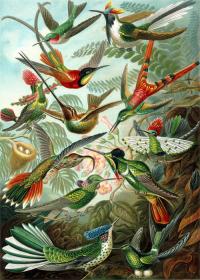
Researchers are just beginning to understand the mechanisms governing the complex network interactions between plants and pollinators, such as hummingbirds, shown in this illustration from Ernst Haeckel's Kunstformen der Natur (1904). Credit: Maravall et al. A field of spring wildflowers, abuzz with busy insects seeking nectar and spreading pollen, may look like a perfect model of random interaction. But ecologists have discovered order within this anarchy. For instance, as the number of species grows, the number of interactions does too, while the connectivity (the fraction of possible interactions that actually occur) and the nestedness (the relative importance of generalist species as mutualistic partners of specialist species) shrinks.
| Biology | January 24, 2007 10:17 AM |
Composite (left) and reconstructed (right) skeletons of D. szalayi, the oldest known ancestor of primates. (Bloch, et al./ PNAS) The origins and earliest branches of primate evolution are clearer and more ancient by 10 million years than previous studies estimated, according to a study featured on the cover of the Jan. 23 print edition of the Proceedings of the National Academy of Sciences.
| Biology | January 23, 2007 08:17 PM |
A University of Florida-led study has determined that Titanis walleri, a prehistoric 7-foot-tall flightless "terror bird," arrived in North America from South America long before a land bridge connected the two continents.
| Biology | January 23, 2007 06:17 PM |
Two scientists from the University of Copenhagen have demonstrated that the spinal cord use network mechanisms similar to those used in the brain. The discovery is featured in the current issue of Science.
| Biology | January 23, 2007 05:17 PM |
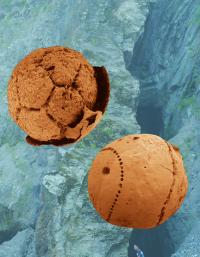
Shown are scanning electron photomicrographs of two fossil embryo specimens from the 600-million-year-old Doushantuo Formation in South China. The soccer-ball-shaped specimen is interpreted as an early stage (blastula) embryo, and... A decade ago, Shuhai Xiao, associate professor of geosciences at Virginia Tech, and his colleagues discovered thousands of 600-million-year-old embryo microfossils in the Doushantuo Formation, a fossil site near Weng'an, South China. In 2000, Xiao's team reported the discovery of a tubular coral-like animal that might be a candidate for parenthood.
| Biology | January 22, 2007 11:10 PM |
Marine scientists working on Australia's Great Barrier Reef have uncovered evidence that baby fish, only millimetres long, manage to find their way to their home coral reef across miles of open sea by using their sense of smell.
| Biology | January 20, 2007 02:25 PM |
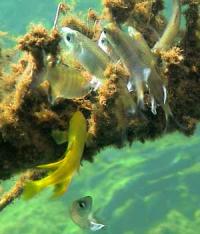
Mating, sneaking and egg cannibalism in T. sarasinorum. A study from the February issue of the American Naturalist is the first to demonstrate that male fish are more likely to eat their offspring when they have been cuckolded during the act of spawning. Moreover, the more males that are present during spawning, the more likely it is that a male will try to eat the eggs when they are laid, as it is less likely that he fertilized them.
| Biology | January 20, 2007 10:25 AM |
It's no secret why we shed tears. But exactly what our tears are made of has remained a mystery to scientists.
| Biology | January 19, 2007 09:25 PM |
Weaning is a problematic time for pigs, especially in intensive production. Piglets commonly become susceptible to bacterial infections, restricting their growth rate; and often leading to losses of 10% or more. The antibiotics used routinely for many years to control these rapidly-spreading infections have now fallen out of use, mainly due to the increase in resistant strains of bacteria.
| Biology | January 19, 2007 02:42 PM |
All bumblebees always aren't as busy as, well, a bee. It all depends on what their job is.
| Biology | January 19, 2007 12:42 PM |
The chestnut-capped piha is an unassuming robin-sized bird restricted to a few tiny remnant forest patches in the Antioquia Department of Colombia, in the Central Cordillera of the Andes. It is so restricted in its distribution that it evaded discovery until 1999, and has been identified by the Alliance for Zero Extinction as a priority conservation species (see www.zeroextinction.org).
| Biology | January 18, 2007 07:42 PM |
Delicate pink hydrocorals and various echinoderms were observed by the ROV. Remotely Operated Vehicles (ROV) remain an efficient technology to uncover the secrets of Antarctic seafloor fauna. As a precursor to the International Polar Year 2007/2008, the current Polarstern expedition conducted by the Alfred Wegener Institute for Polar and Marine research releases short seafloor video clips taken by ROV only a few hours after the robot has been recovered.
| Biology | January 18, 2007 06:42 PM |
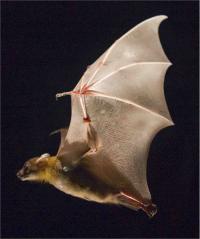
Flexible, highly articulated wings give bats more options for flight than birds: more lift, less drag, greater maneuverability. The maneuverability of a bat in flight makes even Harry Potter's quidditch performance look downright clumsy. While many people may be content to simply watch these aerial acrobats in wonder, Kenneth Breuer and Sharon Swartz are determined to understand the detailed aerodynamics of bat flight – and ultimately the evolutionary path that created it.
| Biology | January 16, 2007 05:33 PM |
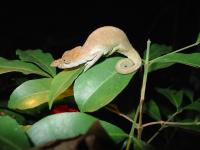
New studies found an amazing concentration of over 1000 species unique to an East African area smaller than Rhode Island called the Eastern Arc Mountains--including 96 animals like this horned chameleon (Chamaeleo tenue), according to World Wildlife Fund. It is the highest concentration of endemic animals in Africa and increasingly endangered as growing human populations nearby need more and more land for subsistence farming. Location: Eastern Arc Mountains, Tanzania
Credit: Burgess/WWF New studies published this month in the scientific journal Biological Conservation document an amazing concentration of over 1000 species unique--or endemic-- to an area slightly larger than Rhode Island in the Eastern Arc Mountains of Tanzania and Kenya. This remaining habitat in the Eastern Arcs has the highest concentration of endemic animals in Africa and is increasingly endangered by complex threats.
| Biology | January 15, 2007 08:05 PM |
Humans continued to evolve significantly long after they were established in Europe, and interbred with Neandertals as they settled across the continent, according to new research published this week in the Proceedings of the National Academy of Sciences (PNAS) USA.
| Biology | January 15, 2007 02:58 PM |
A lost dog is more likely to be reunited with its owner than a lost cat, according to two new studies.
| Biology | January 13, 2007 03:23 PM |
Reliably dated fossils are critical to understanding the course of human evolution. A human skull discovered over fifty years ago near the town of Hofmeyr, in the Eastern Cape Province of South Africa, is one such fossil. A study by an international team of scientists led by Frederick Grine of the Departments of Anthropology and Anatomical Sciences at Stony Brook University in New York published today in Science magazine has dated the skull to 36,000 years ago. This skull provides critical corroboration of genetic evidence indicating that modern humans originated in sub-Saharan Africa and migrated about this time to colonize the Old World. (Science January 12, 2007)
| Biology | January 12, 2007 12:45 PM |
The plant with the world's largest flower -- typically a full meter across, with a bud the size of a basketball -- evolved from a family of plants whose blossoms are nearly all tiny, botanists write this week in the journal Science. Their genetic analysis of rafflesia reveals that it is closely related to a family that includes poinsettias, the trees that produce natural rubber, castor oil plants, and the tropical root crop cassava.
| Biology | January 11, 2007 11:45 PM |
The picture shows a phycobiliphyta cell in fluorescence microscope. The cell nucleus is colored in blue, the cytoplasma in green. The red fluorescence comes from a plastide with phycobiliproteins, pigments that usually occur in red algae, cyanobacteria and cryptophyceae. The cell measures 2x5 µm (1µm = 1/1000 millimeter).
Credit: Fabrice Not/Station Biologique de Roscoff An international group of researchers has succeeded in identifying a previously unknown group of algae. As currently reported in the scientific journal Science, the newly discovered algae are found among the smallest members of photosynthetic plankton - the picoplankton ('Picobiliphytes: A marine picoplanktonic algal group with unknown affinities to other Eukaroytes" Science, Vol. 316'). On account of the minute size of the organisms (no more than a few thousandth of a millimetre) and the appearance of phycobili-proteins, researchers have termed the new group Picobiliphyta.
| Biology | January 11, 2007 10:45 PM |
An international team of scientists including Université Laval biologist Connie Lovejoy has discovered new life forms in the Arctic Ocean. The team's findings are reported in the January 12 edition of the journal Science.
| Biology | January 10, 2007 08:20 PM |
In many animals, males advertise to potential mates with showy traits, many of which are linked to testosterone levels. However, a new study suggests that, in fish, choosing a flashier mate may cause future generations to be more susceptible to pathogens.
| Biology | January 10, 2007 07:20 PM |
Young barn owls waiting for the return of a parent with prey. Fluctuations in weather and the environment affect survival and reproduction of animals. But are all individuals within a population equally susceptible? Theory on the evolution in age-structured populations suggests not – those life stages that are more important for overall fitness should be less susceptible to environmental variation than other life stages.
| Biology | January 10, 2007 06:20 PM |
Waterfowl are "careful, sophisticated bargainers," negotiating not only how much effort each puts into communal rearing of ducklings, but also profit-sharing, says a new study from the American Naturalist. Female eider ducks are well known to team up and share the work of rearing ducklings, but it now appears that they also negotiate not only how much effort each puts into the partnership, but also profit-sharing. An international group of scientists used a long-running study of the eider population in a Finnish archipelago to test predictions about how each hen seeks to maximize her benefits from the partnership without making it so unattractive that other hens withdraw their participation.
| Biology | January 10, 2007 05:20 PM |
A newly identified wheat gene produces proteins that appear to attack the stomach lining of a crop-destroying fly larvae so that the bugs starve to death.
| Biology | January 8, 2007 07:21 PM |
By comparing the productivity of lobster fishing operations in American and Canadian waters of the Gulf of Maine, researchers have identified ways in which cost-saving alterations in fishing strategies can substantially reduce fishing-gear entanglements of the critically endangered North Atlantic right whale. The findings appear in the January 9th issue of the journal Current Biology, published by Cell Press, and are reported by Ransom Myers of Dalhousie University in Nova Scotia, along with colleagues there and at the University of Rhode Island, the Woods Hole Oceanographic Institution, and the University of New Hampshire.
| Biology | January 8, 2007 03:21 PM |
A UCL (University College London) study has found that you are more likely to perform well if you do not think too hard and instead trust your instincts. The research, published online today in the journal Current Biology, shows that, in some cases, instinctive snap decisions are more reliable than decisions taken using higher-level cognitive processes.
| Biology | January 6, 2007 02:35 PM |
Scientists have discovered a new species of bat that has large flat adhesive organs, or suckers, attached to its thumbs and hind feet. This is a remarkable find because the new bat belongs to a Family of bats endemic to Madagascar--and one that was previously considered to include only one rare species.
| Biology | January 6, 2007 12:35 PM |
Infectious bronchitis virus (IBV) causes losses of £23.6M a year to the UK poultry industry but scientists are now developing a new way to vaccinate chicks against the disease – one that can be delivered while they are still in their egg.
| Biology | January 4, 2007 08:48 PM |
Ongoing global climate change causes changes in the species composition of marine ecosystems, especially in shallow coastal oceans. This applies also to fish populations. Previous studies demonstrating a link between global warming and declining fish stocks were based entirely on statistical data. However, in order to estimate future changes, it is essential to develop a deeper understanding of the effect of water temperature on the biology of organisms under question. A new investigation, just published in the scientific journal Science, reveals that a warming induced deficiency in oxygen uptake and supply to tissues is the key factor limiting the stock size of a fish species under heat stress.
| Biology | January 3, 2007 11:28 PM |
Fruit flies' ability to discern one sex from another may depend on the number of receptors on the surface of nerve cells, and the number of receptors is controlled by levels of a ubiquitous brain chemical, University of Illinois at Chicago researchers have found.
| Biology | January 1, 2007 10:19 PM |
Human memory, the ability to recall vivid mental images of past experiences, has been studied extensively for more than a hundred years. But until recently, there's been surprisingly little research into cognitive processes underlying another form of mental time travel -- the ability to clearly imagine or "see" oneself participating in a future event.
| Biology | December 29, 2006 05:09 PM |
None of Takesha Henderson's discoveries are named Charlotte, but they are weaving a new chapter in Texas entomology. Her graduate studies at Texas A&M University have led to the discovery of 25 new spiders in Brazos County and one species found for the first time in Texas.
| Biology | December 28, 2006 05:11 PM |
Siberian hamsters are used by scientists to study seasonal physiology and behavior. A hormone implicated in the onset of human puberty also appears to control reproductive activity in seasonally breeding rodents, report Indiana University Bloomington and University of California at Berkeley scientists in the March 2007 issue of Endocrinology. The paper is now accessible online via the journal's rapid electronic publication service.
| Biology | December 27, 2006 05:58 PM |
If a zebrafish loses a chunk of its tail fin, it'll grow back within a week. Like lizards, newts, and frogs, a zebrafish can replace surprisingly complex body parts. A tail fin, for example, has many different types of cells and is a very intricate structure. It is the fish version of an arm or leg.
| Biology | December 26, 2006 11:56 PM |
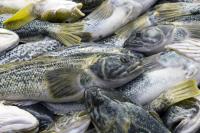
Marbled Antartic cod (Notothenia rossii) Five tons of marbled Antarctic cod (Notothenia rossii), now that was surely a big surprise to scientists and crew on board of Polarstern, alike considering that previous and subsequent hauls barely ever reaped such plentiful harvests.
| Biology | December 26, 2006 09:56 PM |
Kids and adults will stay glued to video games this holiday season because the fun of playing actually is rooted in fulfilling their basic psychological needs.
| Biology | December 26, 2006 08:56 PM |
People estimate that, on average, they make about 15 food- and beverage-related decisions each day. But the truth is, they make more than 15 times that -- more than 200 such decisions.
| Biology | December 22, 2006 11:07 PM |
The giraffe's elongated neck has long been used in textbooks as an illustration of evolution by natural selection, but this common example has received very little experimental attention. In the January issue of the American Naturalist, researchers at the Mammal Research Institute in the Department of Zoology and Entomology at the University of Pretoria tested whether foraging competition with shorter herbivores could explain why giraffes feed mostly on leaves high in trees, despite being able to feed at lower levels as well.
| Biology | December 22, 2006 09:07 PM |
Despite the fact that the people of India constitute more than one-sixth of the world's entire population, they have been underrepresented in studies related to genetic diseases. And with the growth of modernization, complex genetic diseases associated with urban and western lifestyles have risen to near-epidemic proportions, making genetic cataloging and association studies of particular importance.
| Biology | December 21, 2006 09:38 PM |
If you've ever wondered why your golf swings, fastballs or free throws don't quite turn out the same way each time, even after years of practice, there is now an answer: It's mostly in your head. That's the finding of new research published in the Dec. 21 issue of the journal Neuron by electrical engineers at Stanford University.
| Biology | December 21, 2006 06:38 PM |
A Vanderbilt researcher has discovered that some stealthy mammals have been doing something heretofore thought impossible -- using the sense of smell under water.
| Biology | December 21, 2006 04:38 PM |
Increasing levels of inbreeding is a threat against the viabi lity of the Scandinavian wolf population. A study just coming out in the new journal PLoS ONE now demonstrates that inbreeding is not affecting the wolves as badly as expected. The results show that it is the most genetically variable wolf individuals that are recruited into the breeding population. An important consequence of this action of natural selection is that the negative effects of inbreeding are accumulating much slower than previously believed.
| Biology | December 21, 2006 02:38 PM |
It is well known that animals use song as a way of attracting mates, but researchers have found that gibbons have developed an unusual way of scaring off predators – by singing to them.
| Biology | December 20, 2006 08:38 PM |
The giant dinosaurs had a problem. Many of them had narrow, pointed teeth, which were more suited to tearing off plants rather than chewing them. But how did they then grind their food? Until recently many researchers have assumed that they were helped by stones which they swallowed. In their muscular stomach these then acted as a kind of 'gastric mill'. But this assumption does not seem to be correct, as scientists at the universities of Bonn and Tübingen have now proved. Their research findings can be found in the current issue of the journal Proceedings of the Royal Society (doi:10.1098/rspb.2006.3763).
| Biology | December 19, 2006 11:59 PM |
A masked marauder has emerged unexpectedly from the ocean to rescue a dying coral reef from destruction in the nick of time.
| Biology | December 18, 2006 11:24 PM |
Marine iguanas on the Galápagos Islands live without predators - at least this was the case up until 150 years ago. Since then they have been confronted with cats and dogs on some islands of the Archipelago. For scientists, they are therefore a suitable model of study in order to discover if such generally tame animals are capable of adapting their behaviour and endocrine stress response to novel predation threats. Scientists from the Max Planck Institute for Ornithology, the University of Ulm Tufts University and Princeton University were able to show that the stress response induced by corticosterone (CORT) is absent in predator-naïve animals but can be fully restored with experience. However, as the researchers found out, the flight distance of the reptiles does not sufficiently increase, which limits their ability to successfully escape from newly introduced predators (Proceedings of the Royal Society, FirstCite Early Online Publishing December 2006).
| Biology | December 18, 2006 10:24 PM |
Research at the University of Liverpool has found that Shakespearean language excites positive brain activity, adding further drama to the bard's plays and poetry.
| Biology | December 18, 2006 08:24 PM |
The Assisted Reproduction Unit at the Quirón Hospital in Donostia-San Sebastián has managed, for the first time in the Basque Country, to successfully carry out an embryonic sex selection in a woman who is a carrier of the disease Retinosis Pigmentaria, linked with the X chromosome – in order to avoid giving birth to a male child.
| Biology | December 18, 2006 06:24 PM |
It has been known for over 50 years that moths can hear the ultrasonic hunting calls of their nocturnal predator, the bat. Moth ears are among the simplest in the insect world—they have only two or four vibration-sensitive neurons attached to a small eardrum. Previously, it was thought that these ears were only partially sensitive to the sound frequencies commonly used by bats, and it would seem likely that by using high ultrasound, bats would make their hunting calls inaudible to moths. However, as now reported by James Windmill and colleagues at the University of Bristol (UK), moths are not as deaf as they had previously been supposed to be. The findings appear in the December 19th issue of the journal Current Biology, published by Cell Press.
| Biology | December 18, 2006 03:24 PM |
In a study that marks progress in understanding the basis of coral reef recovery, researchers have revealed the critical importance of a rare batfish, Platax pinnatus, in promoting the return to health of a disturbed coral reef overgrown with algae. The findings bring to light a previously unrecognized role for the batfish species, which had not been considered a significant player in reef recovery after overfishing. In doing so, the study provides insight into the poorly understood—and potentially complex—forces that influence the state of coral reefs under ecological stress. The work appears in the December 19th issue of the journal Current Biology, published by Cell Press, and is reported by David Bellwood, Terry Hughes, and Andrew Hoey of the Australian Research Council Centre of Excellence for Coral Reef Studies at James Cook University.
| Biology | December 14, 2006 04:14 PM |
Small but remarkable fossils found in New Zealand will prompt a major rewrite of prehistory textbooks, showing for the first time that the so-called "land of birds" was once home to mammals as well.
| Biology | December 14, 2006 12:14 PM |
Love hurts — really bad, for some unlucky crickets, anyway.
| Biology | December 14, 2006 10:14 AM |
A landmark study by the Wildlife Conservation Society (WCS) and U.S. Geological Survey (USGS) says tigers living in one of India’s best-run national parks lose nearly a quarter of their population each year from poaching and natural mortality, yet their numbers remain stable due to a combination of high reproductive rates and abundant prey. The study, which appears in the journal Ecology, underscores the need of maintaining protected areas with high prey densities in an overall tiger conservation strategy, along with anti-poaching efforts and eliminating trade in tiger body parts.
| Biology | December 13, 2006 12:30 PM |
Waimanalo, HI – December 12, 2006 -- A new study in Journal of the World Aquaculture Society suggests that, while larger shrimp consistently win over smaller shrimp of the same gender when competing for food, male shrimp will almost always beat female shrimp – even though adult males of the species are typically much smaller than the adult females of the same age.
| Biology | December 12, 2006 07:47 PM |
Though promiscuity may be risky behavior for humans, it's healthy for honeybees: Queen honeybees who indulge in sexual surfeits with multiple drones produce more disease-resistant colonies than monogamous monarchs.
| Biology | December 12, 2006 12:47 PM |
Chris Austin, assistant curator of herpetology at LSU's Museum of Natural Science, or LSUMNS, and adjunct professor in biological sciences, recently discovered a new species of lizard while conducting field research in Borneo.
| Biology | December 10, 2006 10:22 PM |
Living things are resourceful, which is a comforting thought unless the living thing in question is a pathogen or a cancer cell. Noxious cells excel at developing drug resistance, outwitting immune systems, and evading cellular controls. They even show an unhealthy talent for surviving internal perturbations such as mutations that affect the function of vital genes, and they do this by evolving new mechanisms to perform old tasks. Somehow the bad guys find a workaround.
| Biology | December 10, 2006 08:22 PM |
How the chicken got its feathers in the right place is not a Rudyard Kipling “Just So” story, but an illustration of how simple causes can stack up into complicated results. For a chicken, it’s the difference between having feathers arranged in spots or stripes. For biologists at the University of Southern California and mathematicians at Oxford University in the UK, it’s all a question of patterning.
| Biology | December 9, 2006 04:36 PM |
Research published in the academic journal Mammal Review has uncovered the missing link in the depleting population of the vaquita. With a body less than 1.5 m long, the vaquita is the smallest living cetacean (the order Cetacea consists of whales, dolphins and porpoises). It also has one of the smallest ranges (c. 2235 km2) and one of the smallest populations (< 600 individuals based on a 1997 survey). This little porpoise is one of the two most critically endangered small cetaceans in the world, suggesting that its chances of survival are small, just like its population size and area of distribution. So, what actions have been and are being taken to prevent the vaquita’s extinction and promote its recovery" In a recent paper published in Mammal Review, the authors from Mexico and Canada reviewed the scientific issues, described previous and ongoing conservation efforts, and identified remaining obstacles, established priorities, and provided recommendations.
| Biology | December 8, 2006 11:35 PM |
The sudden appearance of large animal fossils more than 500 million years ago – a problem that perplexed even Charles Darwin and is commonly known as "Darwin’s Dilemma" – may be due to a huge increase of oxygen in the world’s oceans, says Queen’s paleontologist Guy Narbonne, an expert in the early evolution of animals and their ecosystems.
| Biology | December 8, 2006 10:15 PM |
Ancient remains, once thought to be a key link in the evolution of mankind, have now been shown to be 400,000 years too young to be a part of man’s family tree.
| Biology | December 8, 2006 07:35 PM |
The discovery of a 100-million-year old bee embedded in amber -- perhaps the oldest bee ever found -- "pushes the bee fossil record back about 35 million years," according to Bryan Danforth, Cornell associate professor of entomology.
| Biology | December 6, 2006 11:08 PM |
The formation of long-term memory in fruit flies can be demonstrated by the influx of calcium into cells called mushroom body neurons that occurs after special training that includes periods of rest, said researchers from Baylor College of Medicine (BCM) in a report that appears in the current issue of the journal Neuron.
| Biology | December 6, 2006 06:19 PM |
If I can't remember this morning where I put my car keys last night, it's due to my memory failing me again. Scientists at the Max Planck Institute for Medical Research in Heidelberg have been investigating how memories might be consolidated. Their new study offers the hitherto strongest proof that new information is transferred between the hippocampus, the short term memory area, and the cerebral cortex during sleep. According to their findings and contrary to previous assumptions, the cerebral cortex actively controls this transfer. The researchers developed a new technique for their investigations which promises previously impossible insight into the largely under-researched field of information processing in the brain (Nature Neuroscience, November 2006).
| Biology | December 6, 2006 02:47 PM |
It is commonly thought that animals can be arranged along a ladder of intelligence—a sort of modern-day Scala Naturae—with humans inevitably at the top, followed by our close relatives, the primates, all the way down to fish and other slimy creatures. Over the past decade, this ladder has been challenged by claims of high intelligence and great social complexity in other animals. For example, spotted hyenas establish hierarchies in which dominant females support the rank contests of their daughters. Bottlenose dolphins form "political" coalitions every bit as complex as those of chimpanzees. Caledonian crows not only use tools in the wild, but also modify tools in the lab, an ability once thought to define humans.
| Biology | December 5, 2006 05:19 PM |
When a newt loses a limb, the limb regrows. What is more, a newt can also completely repair damage to its heart. Scientists at the Max Planck Institute for Heart and Lung Research in Bad Nauheim have now started to decode the cellular mechanisms in this impressive ability to regenerate and have discovered the remarkable plasticity of newt heart cells. As mammals, and therefore also humans, do not have this ability, the findings could contribute to new cell therapies for patients with damaged organs (Journal of Cell Science, 2006).
| Biology | December 5, 2006 10:40 AM |
Worker bees, wasps, and ants are often considered neuter. But in many species they are females with ovaries, who although unable to mate, can lay unfertilized eggs which turn into males if reared. For some species, such as bumble bees, this is the source of many of the males in the species. But in others, like the honeybee, workers "police" each other – killing eggs laid by workers or confronting egg-laying workers.
| Biology | December 4, 2006 11:40 PM |
By studying the songs of a bird species that has succeeded in adapting to urban life, researchers have gained insight into the kinds of environmental pressures that influence where particular songbirds thrive, and the specific attributes of city birds that allow them to adjust to noisy urban environments. The findings, reported by Hans Slabbekoorn and Ardie den Boer-Visser of Leiden University, appear in the December 5th issue of Current Biology.
| Biology | December 4, 2006 10:40 PM |
Investigators have revealed that coral reef shark populations are in the midst of rapid decline, and that “no-take zones”—reefs where fishing is prohibited—do protect sharks, but only when compliance with no-take regulations is high. The findings, reported by William Robbins and colleagues at James Cook University and its ARC Centre of Excellence for Coral Reef Studies, appear in the December 5th issue of Current Biology.
| Biology | December 4, 2006 09:40 PM |
Sex is a boon to evolution; it allows genetic material from parents to recombine, giving rise to a unique new genome. But how did sex itself evolve" Researchers at the Department of Energy's Lawrence Berkeley National Laboratory and the University of California at Berkeley have found clues to one part of this complex question in ongoing studies of the nematode Caenorhabditis elegans.
| Biology | December 4, 2006 08:40 PM |
The function of horned beetles' wild protrusions has been a matter of some consternation for biologists. Digging seemed plausible; combat and mate selection, more likely. Even Charles Darwin once weighed in on the matter, suggesting -- one imagines with some frustration -- the horns were merely ornamental.
| Biology | December 1, 2006 06:40 PM |
New mathematical studies of the interactions between oscillating biological populations may shed light on some of the toughest questions in ecology, including the number and types of species in an ecosystem, according to an article in the December 2006 issue of BioScience. The article, by John Vandermeer of the University of Michigan, shows how extensions of established theory suggest that many animal and plant populations oscillate in synchrony because of interactions such as predation and competition. Such synchronization can have far-reaching effects. Vandermeer suggests that several well-known biological conundrums, such as the higher-than-expected diversity of plankton in aquatic ecosystems, may be explained this way.
| Biology | December 1, 2006 05:40 PM |
A study led by University of California, San Diego biologists shows that invasive Argentine ants appear to use genetic differences to distinguish friend from foe, a finding that helps to explain why these ants form enormous colonies in California.
| Biology | December 1, 2006 02:41 PM |
Male fruit flies are smaller and darker than female flies. The hair-like bristles on their forelegs are shorter, thicker. Their sexual equipment, of course, is different, too.
| Biology | November 30, 2006 07:41 PM |
CSIRO researchers have located the gene that controls the colour of apples – a discovery that may lead to bright new apple varieties.
| Biology | November 29, 2006 10:12 PM |
How many wildebeest should live in the Serengeti" How many grizzly bears should call Yellowstone home" Are there too few tigers in the world" Conservationist biologists grapple with the task of setting population targets for the species they are trying to protect – a decision steeped in politics, emotion, and sometimes, science.
| Biology | November 28, 2006 08:22 PM |
The shady pursuit of endangered bird eggs made international headlines in May 2006 when Colin Watson, widely considered Britain's most notorious illegal egg collector, died after falling from a 12-meter tree, allegedly while hunting a rare egg. The Royal Society for the Protection of Birds estimates that up to 30 of Britain's most vulnerable species are targeted by collectors. Classical economics theory predicts that such exploitation is unlikely to extinguish a species because the cost of finding the last individuals would outweigh the benefits. But a new theoretical study in PLoS Biology shows that adding human behavior to the equation--specifically, the human penchant for rarity--reveals an unexpected mechanism of exploitation, with alarming implications for species survival.
| Biology | November 28, 2006 07:22 PM |
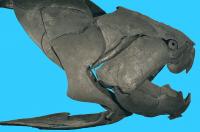
A photograph of the Dunkleosteus terrelli fossil skull upon which this study was based. Scientists created a biomechanical model to simulate the jaw's function. Credit: Photograph by Michael LaBarbera, courtesy of The Field Museum It could bite a shark in two. It might have been the first “king of the beasts.” And it could teach scientists a lot about humans, because it is in the sister group of all jawed vertebrates.
| Biology | November 28, 2006 06:22 PM |
Scientists at Los Alamos National Laboratory have developed a method for training the common honey bee to detect the explosives used in bombs. Based on knowledge of bee biology, the new techniques could become a leading tool in the fight against the use of improvised explosive devices, or IEDs, which present a critical vulnerability for American military troops abroad and is an emerging danger for civilians worldwide.
| Biology | November 28, 2006 10:30 AM |
Two fish that share much in common genetically appear to have markedly different abilities to grow, a finding that could provide a new way to research such disparate areas as muscle wasting disease and fish farming, a new study shows.
| Biology | November 23, 2006 05:59 PM |
A technique used since the 1930s to estimate the abundance of fish has shown for the first time that enforcement patrols are effective at reducing poaching of elephants, African buffaloes and black rhinos in the Serengeti National Park in Tanzania.
| Biology | November 22, 2006 07:55 PM |
The scientists discovered the mother complete with her brood of some 20 eggs and 2 possible juveniles inside, together with other details of her soft part anatomy including legs and eyes.
| Biology | November 20, 2006 09:31 PM |
In new work, researchers report that the ability of plants to defend themselves by accumulating high levels of a toxic element can be overcome by some insects, and that such adaptation potentially echoes in the food web as other predators and parasites may in turn evolve to deal with high levels of the toxic element. The findings, reported by Elizabeth Pilon-Smits of Colorado State University and colleagues there and at the University of California, Berkeley, appear in the November 21st issue of the journal Current Biology, published by Cell Press.
| Biology | November 20, 2006 07:31 PM |
An international team led by scientists from the United States and New Zealand have observed, for the first time, the bizarre deep-sea communities living around methane seeps off New Zealand's east coast.
| Biology | November 20, 2006 06:31 PM |
Researchers studying chimpanzee mating preferences have found that although male chimpanzees prefer some females over others, they prefer older, not younger, females as mates. The findings uncover a stark contrast between chimpanzee behavior and that of humans, their primate cousins. The basis for this difference may lie in the fact that whereas chimpanzees participate in a relatively promiscuous mating system, humans form unusually long-term mating bonds, thereby making young females more valuable as mates with greater reproductive potential. The findings, reported by Martin Muller of Boston University and colleagues at Harvard University, appear in the November 21st issue of Current Biology.
| Biology | November 17, 2006 07:09 PM |
The dynamics of evolution are fully in play within the environment of a tumor, just as they are in forests and meadows, oceans and streams. This is the view of researchers in an emerging cross-disciplinary field that brings the thinking of ecologists and evolutionary biologists to bear on cancer biology.
| Biology | November 17, 2006 06:09 PM |
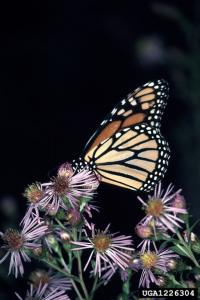
Monarch butterflies rely on fall-blooming flowers during their long migration. Credit: Photo by Jerry A. Payne, USDA Agricultural Research Service, from Forestry Images US Forest Service (FS) research in the Ouachita Mountains of Arkansas suggests that decades of fire suppression have reduced the area's food supply for migrating monarch butterflies—and that restoration efforts that include prescribed burning can reverse this trend. Craig Rudolph and Ron Thill, research ecologists with the FS Southern Research Station (SRS), along with SRS ecologists Charles Ely, Richard Schaefer and J. Howard Williamson, report their findings in the latest issue of the Journal of the Lepidopterists' Society.
| Biology | November 16, 2006 10:26 PM |
Countering the widespread view of evolution as a process played out over the course of eons, evolutionary biologists have shown that natural selection can turn on a dime -- within months -- as a population's needs change. In a study of island lizards exposed to a new predator, the scientists found that natural selection dramatically changed direction over a very short time, within a single generation, favoring first longer and then shorter hind legs.
| Biology | November 16, 2006 07:56 PM |
Controlling population peaks on the edges of the gypsy moth range may help to slow their invasion into virgin territory, according to a team of researchers.
| Biology | November 15, 2006 11:56 PM |
In the most thorough study to date of the Neanderthal genome, scientists suggest an early human-Neanderthal split. The two species have a common ancestry, say the authors, but do not share much else after evolving their separate ways. The study, published in this week's issue of Science, also finds no evidence of genetic admixture between Neanderthals and humans.
| Biology | November 15, 2006 09:56 PM |
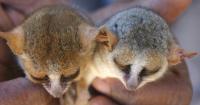
Mouse lemurs with distinct coat colors and shared genetics. Credit: L. R. Godfrey Researchers have found that lemurs suspected to belong to different species because of their strikingly different coat colors, are not only genetically alike, but belong to the same species.
| Biology | November 15, 2006 10:27 AM |
Six million years ago, chimpanzees and humans diverged from a common ancestor and evolved into unique species. Now UCLA scientists have identified a new way to pinpoint the genes that separate us from our closest living relative – and make us uniquely human. The Proceedings of the National Academy of Sciences reports the study in its Nov. 13 online edition.
| Biology | November 14, 2006 07:50 PM |
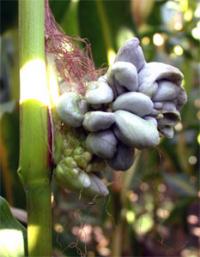
Maize as a fungal host: Ustilago maydis causes maize smut. An international research team working with biologists at the Max Planck Institute for Terrestrial Microbiology has now identified genes of the fungus implicated in the infection of the plant.
Credit: Christoph Basse It doesn't look appetizing: when Ustilago maydis attacks a maize plant, its cobs bear hideous tumours rather than crunchy niblets. So far, no effective means of combating the maize smut pathogen has been found. However, an international team has now made significant progress in the search for a solution. Led by researchers from the Max Planck Institute for Terrestrial Microbiology in Marburg, the scientists have analysed the U. maydis genome. Among the 7,000 genes of the fungus, they have found some with which the fungus lives at the expense of its host plant - without killing it. These genes probably also help the fungus to circumvent the plant’s defences. Researchers are now hoping to apply these findings to other fungi, which like Ustilago maydis depend on living plants (Nature, November 2, 2006).
| Biology | November 13, 2006 11:27 PM |
In a study appearing in the forthcoming issue of The American Naturalist, Tom E. X. Miller, Andrew J. Tyre, and Svata M. Louda (all of the University of Nebraska, Lincoln) examined herbivore dynamics, specifically why plants aren't all eaten at the same rate.
| Biology | November 11, 2006 10:13 AM |
Researchers at the University of Rochester may have answered one of neuroscience's most vexing questions--how can it be that our neurons, which are responsible for our crystal-clear thoughts, seem to fire in utterly random ways?
| Biology | November 10, 2006 04:41 PM |
Researchers at UC Irvine have found that how much detail one remembers of an event depends on whether a certain portion of the brain is activated to "package" the memory.
| Biology | November 9, 2006 08:41 PM |
University of Utah scientists improved a method of testing fossil teeth, and showed that early human relatives varied their diets with the seasons 1.8 million years ago, eating leaves and fruit when available in addition to seeds, roots, tubers and perhaps grazing animals.
| Biology | November 9, 2006 07:25 PM |
Cold seeps are deep-sea environments, usually a few square meters in size, where fluid is released through slow diffusion from the sea floor. Mud volcanoes which are active areas of fluid seepage, are other extreme environments discovered in the 1990s. These harsh conditions give rise to some of the most extreme and scientifically challenging environments for life to exist on the planet.
| Biology | November 8, 2006 09:25 PM |
Memories of events comprise many components--including sights, sounds, smells, and tastes. Somehow the many features of an episodic memory are woven together into a coherent whole, and researchers have had little understanding of how this binding takes place as the memories are processed by the brain's memory center, the hippocampus. A central question has been whether the hippocampus receives an "episodic packet," or a collection of perceptual strands that it must integrate into a memory.
| Biology | November 7, 2006 05:49 PM |
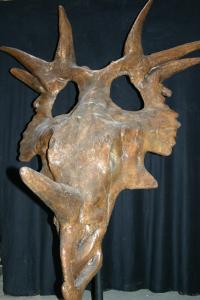
Styracosaurus skull A "spectacular beast" is coming back to its original stomping grounds and making a new home at the University of Alberta--a coup that will allow its researchers to study the rare dinosaur skull up close.
| Biology | November 6, 2006 04:17 PM |
Rhinoceros horns have long been objects of mythological beliefs. Some cultures prize them for their supposed magical or medicinal qualities. Others have used them as dagger handles or good luck charms. But new research at Ohio University removes some of the mystique by explaining how the horn gets its distinctive curve and sharply pointed tip.
| Biology | November 3, 2006 08:18 PM |
Why are there more species in the tropics than in the temperate regions of the globe? Many of the world's species live in the tropics (perhaps more than half), but the reason has been debated for more than 100 years.
| Biology | November 3, 2006 05:22 PM |
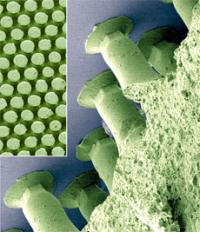
Microscope image of the biomimetic surface structure of the new adhesive material. The material (green), which was inspired by the soles of insects' feet, sticks to the glass (blue). Max Planck Institute for Metals Research Mushroom-shaped microhairs are the secret of a new adhesive material which scientists at the Max Planck Institute for Metals Research in Stuttgart have developed. Inspired by the soles of beetles' feet, and therefore biomimetic, the special surface structure of the material allows it to stick to smooth walls without any adhesives. Potential applications range from reusable adhesive tape to shoe soles for climbing robots and are therefore of considerable relevance to technology (Journal of the Royal Society Interface, 17 October 2006).
| Biology | November 2, 2006 09:18 PM |
A Cayman Islands loggerhead turtle. Ecology and conservation experts from the University of Exeter today urge international governments to work together to protect threatened Caribbean sea turtle populations.
| Biology | November 2, 2006 06:55 PM |
Grainy photographs of America's Old West recall a time when large bison herds migrated across wide prairie lands, 30 million strong, with the changing seasons determining their path and destination. Now, NASA satellite data and computer modeling and U.S. Department of Agriculture (USDA) information are helping track the remnants of this once mighty herd in Yellowstone National Park as they migrate with the melting snowpack.
| Biology | November 2, 2006 04:18 PM |
The most detailed world map of mammals, birds and amphibians ever produced shows that endangered species from these groups do not inhabit the same geographical areas, says new research published today.
| Biology | November 1, 2006 07:18 PM |
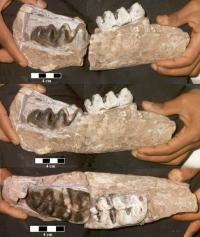
The teeth of the newly described Eritreum melakeghebrekristosi are a tip-off to its position as a missing link in the elephant family tree. Courtesty of U-M News Service A pig-sized, tusked creature that roamed the earth some 27 million years ago represents a missing link between the oldest known relatives of elephants and the more recent group from which modern elephants descended, an international team that includes University of Michigan paleontologist William J. Sanders has found.
| Biology | November 1, 2006 06:18 PM |
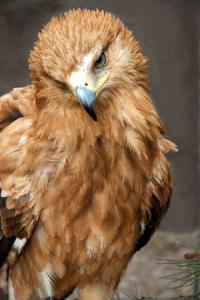
Researchers from Spain looked at population data for the Spanish imperial eagle (Aquila adalberti) over the last century. With less than 150 pairs in the whole Iberian Peninsula, this eagle is one of the most threatened raptors in the world. Courtesy Penteriani et al. In a paper from the November issue of The American Naturalist, Vincenzo Penteriani, Fermín Otalora, and Miguel Ferrer, researchers at the Estación Biológica de Doñana (Consejo Superior de Investigaciones Científicas, Spain), focus on the forgotten and invisible side of animal populations - the floaters. Floaters are dispersed individuals who enter the reproductive population when breeding territory or a potential mate become available.
| Biology | October 31, 2006 06:49 PM |
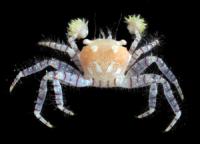
This crab was collected during a three-week expedition to the Northwestern Hawaiian Island National Monument. Joel Martin, NHMLAC, NOAA A three-week scientific expedition to French Frigate Shoals in the Northwestern Hawaiian Islands Marine National Monument returned to Honolulu on Sunday with the discovery of many new species and a better understanding of marine biodiversity in the Hawaiian Archipelago.
| Biology | October 30, 2006 10:25 PM |
We all have tastes we love, and tastes we hate. And yet, our "taste" for certain flavors and foods can change over time, as we get older or we get tired of eating the same old thing.
| Biology | October 30, 2006 12:36 PM |
With their spindly legs, long necks and bright plumage, flamingos are a curiosity of nature. Now a new discovery by a team of Ohio University researchers reveals an anatomical oddity that helps flamingos eat: erectile tissue.
| Biology | October 28, 2006 04:44 PM |
To predict where a bumblebee will carry its pollen next, you have to literally think like one.
| Biology | October 26, 2006 07:26 PM |
The family tree covering almost half the animal species on the planet has been re-drawn following a genetic analysis which has revealed new relationships between four major groups of insects.
| Biology | October 25, 2006 11:56 PM |
One way to make sense of 165-million-year-old dino tracks may be to hang out with emus, say paleontologists studying thousands of dinosaur footprints at the Red Gulch Dinosaur Tracksite in northern Wyoming. Because they are about the same size, walk on two legs and have similar feet, emus turn out to be the best modern version of the enigmatic reptiles that once trotted along a long-lost coastline in the Middle Jurassic.
| Biology | October 25, 2006 09:56 PM |
The general disappearance of cougars from a portion of Zion National Park in the past 70 years has allowed deer populations to dramatically increase, leading to severe ecological damage, loss of cottonwood trees, eroding streambanks, and declining biodiversity.
| Biology | October 24, 2006 11:12 PM |
When a female animal compares males to choose a mate, she can't order a laboratory genetic screen for each suitor. Instead, she has to rely on external cues that may indicate genetic quality. Until now, biologists have focused on elaborate ornaments, such as the peacock's tail, as cues that females might use.
| Biology | October 24, 2006 09:12 PM |
Vertebrate creatures first began moving from the world's oceans to land about 415 million years ago, then all but disappeared by 360 million years ago. The fossil record contains few examples of animals with backbones for the next 15 million years, and then suddenly vertebrates show up again, this time for good.
| Biology | October 24, 2006 08:12 PM |
There's growing evidence that the dinosaurs and most their contemporaries were not wiped out by the famed Chicxulub meteor impact, according to a paleontologist who says multiple meteor impacts, massive volcanism in India, and climate changes culminated in the end of the Cretaceous Period.
| Biology | October 24, 2006 07:12 PM |
Queen's University researchers have discovered that seeking out the most attractive mate may be unhealthy for any offspring.
| Biology | October 24, 2006 06:12 PM |
In a study of orangutans living on the Indonesian islands of Borneo and Sumatra, scientists from Duke University and the University of Zurich have found what they say is the first demonstration in primates of an evolutionary connection between available food supplies and brain size.
| Biology | October 24, 2006 05:12 PM |
Soil from a Copper Age site in northern Kazakhstan has yielded new evidence for domesticated horses up to 5,600 years ago. The discovery, consisting of phosphorus-enriched soils inside what appear to be the remains of horse corrals beside pit houses, matches what would be expected from Earth once enriched by horse manure. The Krasnyi Yar site was inhabited by people of the Botai culture of the Eurasian Steppe, who relied heavily on horses for food, tools, and transport.
| Biology | October 24, 2006 04:12 PM |
One of the most colorful birds in the world may have a less-than-colorful future. Macaws, the largest members of the parrot family, have seen their numbers decline in recent decades, and that trend is continuing today.
| Biology | October 23, 2006 06:33 PM |
Before you request a paternity test, spend a few minutes looking at your child's eye color. It may just give you the answer you're looking for. According to Bruno Laeng and colleagues, from the University of Tromso, Norway, the human eye color reflects a simple, predictable and reliable genetic pattern of inheritance. Their studies, published this week in the Springer journal Behavioral Ecology and Sociobiology, show that blue-eyed men find blue-eyed women more attractive than brown-eyed women. According to the researchers, it is because there could be an unconscious male adaptation for the detection of paternity, based on eye color.
| Biology | October 21, 2006 10:36 PM |
A team from the University of Liverpool's School of Biological Sciences have found that the 100 life-size statues which make up Antony Gormley's 'Another Place' art installation on Crosby Beach have become a haven for a settlement of a particular breed of barnacle - Elminius modestus.
| Biology | October 20, 2006 02:40 PM |
A fossil fish discovered in the West Australian Kimberley has been identified as the missing clue in vertebrate evolution, rewriting a century-old theory on how the first land animals evolved.
| Biology | October 20, 2006 10:40 AM |
A group of scientists led by the New York-based Wildlife Conservation Society (WCS) working in Mongolia's windswept Gobi Desert recently fitted high-tech GPS (Global Positioning System) collars on eight saiga antelope in an effort to help protect one of Asia's most bizarre-looking – and endangered – large mammals.
| Biology | October 18, 2006 09:29 PM |
Ever wondered how ants find their way straight to the uncovered food in your kitchen? Now scientists have discovered how the humble wood ant navigates over proportionally huge distances, using just very poor eyesight and confusing and changing natural landmarks. The research could have significant benefits in the development of autonomous robots and in furthering our understanding of basic animal learning processes.
| Biology | October 18, 2006 08:29 PM |
Almost 50 years ago, Michael Armas, a mining engineer from the central Philippines, discovered some fossils in a tunnel he was excavating while exploring for phosphate. Forty years later, Dr. Hamilcar Intengan, a friend of his who now lives in Chicago, recognized the importance of the bones and donated them to The Field Museum.
| Biology | October 18, 2006 06:29 PM |
For the first time, researchers at the University of Alberta in Edmonton, Canada have been able to put a name and a description to an ancient mammal that still defies classification.
| Biology | October 17, 2006 11:28 PM |
Caterpillars and other invertebrates are helping to provide a cheap, easy and safe way to identify the genes which help bacteria cause infections in humans. Researchers from the University of Bath have discovered a way to sort through large numbers of bacterial gene sequences by testing them in caterpillars to see how their immune systems respond. This new technique known as Rapid Virulence Annotation (RVA) allows them to pinpoint the genes which code for virulence.
| Biology | October 17, 2006 06:28 PM |
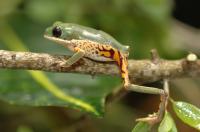
The researchers found that waxed and inactive frogs had about the same metabolic rate as unwaxed, dehydrating frogs. This suggests that waxed frogs are not in a hibernation-like dormant state. In a fascinating new study from the November/December 2006 issue of Physiological and Biochemical Zoology, researchers from the University of Florida explore wiping behaviours in a tree frog that waxes itself, and test whether these frogs become dormant to conserve energy during dehydration. Many amphibians have skin that offers little resistance to evaporative water loss. To compensate, these and some other arboreal frogs secrete lipids and then use an elaborate series of wiping motions to rub the waxy secretions over their entire bodies.
| Biology | October 16, 2006 08:40 PM |
New research offers tantalizing clues as to why some teenagers taking common anti-depressants may become more aggressive or kill themselves. The research is published in the October Behavioral Neuroscience, which is published by the American Psychological Association (APA).
| Biology | October 16, 2006 04:40 PM |
People addicted to cocaine have an impaired ability to perceive rewards and exercise control due to disruptions in the brain's reward and control circuits, according to a series of brain-mapping studies and neuropsychological tests conducted at the U.S. Department of Energy's Brookhaven National Laboratory.
| Biology | October 15, 2006 07:49 PM |
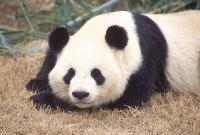
Research at Georgia Tech and Zoo Atlanta shows that giant pandas can distinguish between color and various shades of gray. They may be black and white, but new research at the Georgia Institute of Technology and Zoo Atlanta shows that giant pandas can see in color. Graduate researcher Angela Kelling tested the ability of two Zoo Atlanta pandas, Yang Yang and Lun Lun, to see color and found that both pandas were able to discriminate between colors and various shades of gray. The research is published in the psychology journal Learning and Behavior, volume 34 issue 2.
| Biology | October 14, 2006 03:49 PM |
The levels of a chemical released by the brain determine how detailed a memory will later be, according to researchers at UC Irvine.
| Biology | October 13, 2006 10:53 PM |
Researchers at The University of Manchester have been awarded £130,000 to develop new techniques to reduce the need for animals in drug testing.
| Biology | October 12, 2006 07:53 PM |
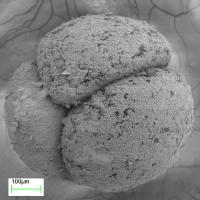
A more-than 551 million year old four-cell embryo magnified using a scanning electronic microscope. The specimen is about 0.65 millimeter in diameter. A group of 15 scientists from five countries has discovered evidence of cell differentiation in fossil embryos that are more than 550 million years old. They also report what appear to be cells about to divide. They used x-ray imaging technologies that produce higher resolutions than hospital-CT scans and digitally extracted cells from the embryos of ancient animals that have been preserved in the Doushantuo Formation, a fossil site in South China.
| Biology | October 12, 2006 10:37 AM |
Researchers have uncovered physiological differences among female Glanville fritillary butterflies that allows some to move away from their birth place and establish new colonies. These venturesome butterflies are stronger fliers and reproduce more quickly compared to their less mobile female relatives.
| Biology | October 11, 2006 10:37 PM |
Women infected with dormant toxoplasmosis are more likely to give birth to boys than women who are Toxoplasma negative, according to research by S. Kankova and colleagues from the Departments of Parasitology, Microbiology and Zoology, Charles University; the Centre of Reproductive Medicine; and GynCentrum, in the Czech Republic. They found that the presence of the parasite Toxoplasma gondii in the mothers' blood, one of the most common parasites in humans with a worldwide prevalence of 20-80%, increased the likelihood that these women would give birth to a boy. This is the first study, published in Springer's journal Naturwissenschaften this week, to suggest an effect of parasitic infection on the sex of a baby.
| Biology | October 11, 2006 08:37 PM |
The delicate lady bug in your garden could be frighteningly large if only there was a greater concentration of oxygen in the air, a new study concludes. The study adds support to the theory that some insects were much larger during the late Paleozoic period because they had a much richer oxygen supply, said the study's lead author Alexander Kaiser.
| Biology | October 11, 2006 07:50 PM |
Seals shiver when exposed to cold air but not when diving in chilly water, a finding that researchers believe allows the diving seal to conserve oxygen and minimize brain damage that could result from long dives.
| Biology | October 10, 2006 11:50 PM |
The thyroid may play an important role in longevity, with longer-lived rodents showing significantly lower levels of a thyroid hormone that speeds metabolism, a new study has found.
| Biology | October 9, 2006 08:45 PM |
Using robotics to manipulate the brain's perception of jaw movement while words are spoken, researchers have deepened our understanding of the importance of non-auditory sensory cues in the brain's control of speech. The findings are reported by Sazzad Nasir and David Ostry of McGill University and appear in the October 10th issue of the journal Current Biology, published by Cell Press.
| Biology | October 9, 2006 06:45 PM |
By studying the ability of newborn rabbit pups to learn the significance of new odors, researchers have found that a mammary pheromone secreted in mother's milk may act as a chemical booster that facilitates the ability of pups to quickly associate environmental odors with the opportunity to nurse.
| Biology | October 9, 2006 05:45 PM |
Archerfish exhibit the remarkable ability to hunt for insects and other small terrestrial animals by firing precisely aimed streams of water that knock prey onto the water's surface. These water shots were once thought to be all-or-none in quality, but researchers have now discovered new levels of sophistication in the archerfish's hunting strategy that shed light on how this impressive predatory behavior has evolved. The findings are reported by Thomas Schlegel, Christine Schmid, and Stefan Schuster of the Universität Erlangen-Nürnberg in Erlangen, Germany, and appear in the October 10th issue of the journal Current Biology, published by Cell Press.
| Biology | October 9, 2006 01:45 PM |
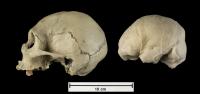
Skull cast and cast of the endocranial cavity (endocast) from the Royal
College of Surgeons in London of a modern adult human who suffered from
microcephaly. What may well turn out to be the definitive work in a debate that has been raging in palaeoanthropology for two years will be published in the November 2006 issue of Anatomical Record.
| Biology | October 8, 2006 06:39 PM |
A major science prize was today awarded to a researcher who is looking for the region of the brain that helps us to hear someone in a noisy place, such as a party or bar, and is responsible for "training" the brain to hear better in these situations.
| Biology | October 8, 2006 04:39 PM |
A new tool developed at Cambridge University represents a breakthrough in the race to find treatments to help sufferers with Huntington's disease.
| Biology | October 8, 2006 12:39 PM |
With wheat stem sawfly natural enemies in demand, Montana State University entomologists are investigating ways of increasing their availability.
| Biology | October 7, 2006 04:17 PM |
Brain formation involves the carefully timed production of different types of nerve cells by neural stem cells: neurons are produced first, then astrocytes. Making too much of one kind of cell and too little of another at a given time could lead to brain malformations. In the October 6 issue of Cell, researchers in the Neurobiology Program at Children's Hospital Boston report discovering a new molecular pathway that influences the timing of nerve-cell production.
| Biology | October 6, 2006 11:17 PM |
Echoing the journey through the human body in Fantastic Voyage, doctors might soon be able to track individual donor cells after a transplant, or to find where and how much of a cancer treatment drug there is within a cell. New technology described in a study published today in the open access journal Journal of Biology makes it possible to image and quantify molecules within individual mammalian or bacterial cells. Claude Lechene and colleagues describe the development of multi-isotope imaging mass spectrometry (MIMS), which has applications in all fields of biology and biomedical research.
| Biology | October 6, 2006 02:17 PM |
A new bird to science was recently discovered on an unexplored mountain range in northern Colombia by a team supported by the BP Conservation Programme. It was named "Yariguies Brush-Finch," with the scientific name Atlapetes latinuchus yariguierum.
| Biology | October 6, 2006 12:17 PM |
"The research Dr. Kornberg did will help open the door to understanding and treating many human ailments, including cancer, heart disease and inflammation, and will help scientists better understand stem cells and their potential for therapeutic applications.
| Biology | October 6, 2006 10:11 AM |
Cancer, drug addiction, neurodegenerative diseases, epilepsy, immune system defects, visual pathologies, heart disease. A tiny insect, the fruit fly (Drosophila melanogaster) is providing an excellent model system to unravel these diseases and many others. More than 5,000 researchers worldwide are currently working with this organism and producing results that will have beneficial effects for health; Spain is among the leading countries for research that uses this animal model.
| Biology | October 5, 2006 09:11 PM |
Armed at first with nothing more than boots, a screen and a bucket, scientists studying a tiny primitive fish that makes up 70 percent of the biomass in Tampa Bay now say they have found the "missing link" marking the point in evolution that led to the development of the modern-day human immune system.
| Biology | October 5, 2006 02:48 PM |
Sexual reproduction is not necessarily sexy (especially when scientists start analyzing it), but it is fascinating. As we all know, the basics entail bringing together an egg and a sperm, a whole lot of cell division and growth, and sooner or later a young organism that carries a mix of genes from both parents. There are many startling events along the way, but one of the most fundamental and important is the transition from unfertilized egg to fertilized embryo.
| Biology | October 4, 2006 10:48 PM |
The controversial practice of killing wild badgers to prevent tuberculosis in cattle is unlikely to succeed, according to a newstudy led by Rosie Woodroffe, an ecologist at the University ofCalifornia, Davis, and a member of Britain's Independent Scientific Group on Cattle TB.
| Biology | October 4, 2006 04:48 PM |
The first real-data study of sharks harvested for their valuable fins estimates as few as 26 million and as many as 73 million sharks are killed each year worldwide--three times higher than was reported originally by the United Nations, according to a paper published as the cover story in the October 2006 edition of Ecology Letters.
| Biology | October 4, 2006 10:26 AM |
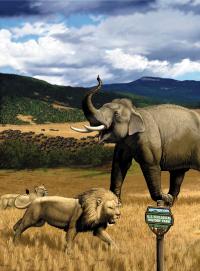
A long-term vision of Pleistocene Rewilding -- a massive Ecological History Park of North America with free-roaming elephants, lions and other large animals that went extinct 13,000 years ago. Dozens of megafauna (large animals over 100 pounds) – such as giant tortoises, horses, elephants, and cheetah – went extinct in North America 13,000 years ago during the end of the Pleistocene. As is the case today in Africa and Asia, these megafauna likely played keystone ecological roles via predation, herbivory, and other processes. What are the consequences of losing such important components of America's natural heritage?
| Biology | October 3, 2006 11:26 PM |
How did bilaterally symmetric flowers evolve from radially symmetric ones? To address this important question, geneticists Francisco Perfectti and Juan Pedro M. Camacho, and ecologist José M. Gómez (Universidad de Granada, Spain) explored how different flower shapes affected plant fitness in natural populations of Erysimum mediohispanicum, a Mediterranean herb. Their findings will be published in the October issue of The American Naturalist.
| Biology | October 3, 2006 08:26 PM |
Reproduction involves a critical decision: Should an organism invest energy in a few large offspring or many small ones? In a new study from The American Naturalist, Michael Angilletta (Indiana State University), Chris Oufiero (University of California, Riverside), and Adam Leaché (University of California, Berkeley) used a new statistical approach that can test multiple theories at the same time, an approach they hope will shed light on many evolutionary problems. They used data from many populations of Eastern Fence Lizards (Sceloporus undulatus), which revealed that the lizards in colder environments produce larger offspring than lizards in warmer environments.
| Biology | October 3, 2006 04:26 PM |
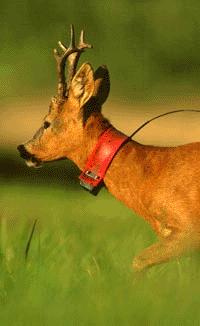
A territorial male during the summer rut in a grassland; animals were marked with uniquely colored collars fitted with a radio tag and a whip antenna. Instead of wandering around aimlessly, most animals tend to stay in a certain area –known as their home range. Understanding an animal's home range has been a central focus of ecological research since Darwin's time. But while explaining why different sized species need different amounts of space is relatively easy, a study from the October issue of The American Naturalist tackles a much more complex question: what determines differences in home range size among individuals of one species?
| Biology | October 3, 2006 12:26 PM |
New research confirms that sea lice from fish farms kill wild salmon. Up to 95 per cent of the wild juvenile salmon that migrate past fish farms die as a result of sea lice infestation from the farms. The results of the research have been published in the Proceedings of the National Academy of Sciences of The United States of America.
| Biology | September 29, 2006 07:22 PM |
A new McGill University study that used thermal imaging technology for the first time ever to measure sexual arousal rates has turned the conventional wisdom that women become aroused more slowly than men on its head.
| Biology | September 29, 2006 04:24 PM |
Leptin, a hormone critical for normal food intake and metabolism, exerts a strong effect on appetite by acting in the mid-brain region as well as in the hypothalamus, according to a Yale School of Medicine study in Neuron.
| Biology | September 28, 2006 04:24 PM |
Parasitic plants do not haphazardly flail about looking for a host but sense volatile chemicals produced by other plants and identify potential hosts by their emissions, according to a team of Penn State chemical ecologists.
| Biology | September 28, 2006 10:49 AM |
MORE than 40 per cent of fertility clinics in the US are allowing couples to choose the sex of their child, a survey conducted by the Genetics and Public Policy Center (GPPC) in Washington DC suggests. The testing method, called preimplantation genetic diagnosis (PGD), was originally designed to test for severe or deadly diseases such as Tay-Sachs. It is typically performed by removing a cell from a three-day-old embryo, which is then screened for a range of chromosomal abnormalities or specific gene mutations. Seemingly healthy embryos are implanted in the womb; others are discarded or frozen. The survey, which covered 186 out of 415 fertility clinics in the US, found that around two-thirds of PGD procedures were performed to identify embryos at risk of birth defects or being miscarried.
| Biology | September 27, 2006 11:49 PM |
University of Georgia professor Richard Hussey has spent 20 years studying a worm-shaped parasite too small to see without a microscope. His discovery is vastly bigger. Hussey and his research team have found a way to halt the damage caused by one of the world's most destructive groups of plant pathogens.
| Biology | September 27, 2006 09:49 PM |
Parasitic flies introduced to control red imported fire ants have spread over four million acres in central and southeast Texas since the flies' introduction in 1999, researchers at The University of Texas at Austin have discovered using new flytraps they developed.
| Biology | September 27, 2006 07:49 PM |
Researchers have found for the first time that tarantulas can produce silk from their feet as well as their spinnerets, a discovery with profound implications for why spiders began to spin silk in the first place.
| Biology | September 27, 2006 04:13 PM |
The phrase "easy on the eyes" may hit closer to the mark than we suspected.
| Biology | September 26, 2006 06:57 PM |
The stereotype of a scientist as a man in a white lab coat hunched over a microscope in a laboratory is far from real life. Consider the scientists who will meet at The American Physiological Society's conference, Comparative Physiology 2006: Integrating Diversity, taking place October 8-11 in Virginia Beach, Virginia.
| Biology | September 26, 2006 04:57 PM |
Mother birds deposit variable amounts of antioxidants into egg yolks, and it has long been theorized that females invest more in offspring sired by better quality males. However, a study from the November/December 2006 issue of Physiological and Biochemical Zoology shows that even ugly birds get their day. Providing new insight into the strategic basis behind resource allocation in eggs, the researchers found that female house finches deposit significantly more antioxidants, which protect the embryo during the developmental process, into eggs sired by less attractive fathers.
| Biology | September 23, 2006 12:14 PM |
The earliest known ancestor of modern-day birds took to the skies by gliding from trees using primitive feathered wings on their arms and legs, according to new research by a University of Calgary paleontologist. In a paper published in the journal Paleobiology, Department of Biological Sciences PhD student Nick Longrich challenges the idea that birds began flying by taking off from the ground while running and shows that the dinosaur-like bird Archaeopteryx soared using wing-like feathers on all of its limbs.
| Biology | September 22, 2006 06:12 PM |
Both vertebrate and fruit fly have so-called visual maps in the brain that represent the world they see. These visual maps consist of millions of nerve cell contacts that need to be wired correctly during development in order for the adult animal to see normally. It is generally thought that the complexity of visual maps, like other brain regions, cannot only be genetically programmed but requires activity by neurons or nerve cells in the brain.
| Biology | September 22, 2006 04:12 PM |
In the animal world, squid are masters of disguise. Pigmented skin cells enable them to camouflage themselves--almost instantaneously--from predators. Squid also produce polarized skin patterns by regulating the iridescence of their skin, possibly creating a "hidden communication channel" visible only to animals that are sensitive to polarized light.
| Biology | September 21, 2006 08:12 PM |
As the annual dolphin drive hunts begin in the Japanese villages of Taiji and Futo, a consortium of scientists and zoo and aquarium professionals has launched a campaign to end the practices through public awareness and by appealing to the government of Japan to put an end to the hunts. The "Act for Dolphins" campaign--which includes members from The New York Aquarium, Emory University, and the World Association of Zoos and Aquariums (WAZA) --maintains that the hunts, which result in the deaths of thousands of dolphins every year, are inhumane by any ethical standard and should be discontinued immediately.
| Biology | September 21, 2006 01:12 PM |
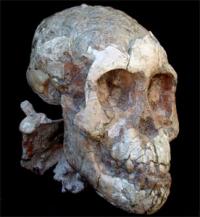
The skull of the Australopithecus afarensis child. 3.3 million years ago, a three year old girl died in present day Ethiopia, in an area called Dikika. Though a baby, she is providing us with unique accounts of our past as a grand mother would! Her completeness, antiquity, and age at death combined make this find unprecedented in the history of paleoanthropology and open many new research avenues to investigate into the infancy of early human ancestors. The extraordinary discovery reported this week in the scientific journal Nature, was found in north-eastern Ethiopia, by a paleoanthropological research team led by Zeresenay Alemseged of the Max Planck Institute in Leipzig, Germany.
| Biology | September 20, 2006 10:51 PM |

Red Monkeyflower Biologists at the University of California, San Diego have discovered that the future of red and yellow varieties of a San Diego wildflower may depend on the fates of two different animals. They report in the current issue of the Journal of Evolutionary Biology that monkeyflowers have two different animal pollinators. The red form, common along the coast, is strongly preferred by hummingbirds, while yellow monkeyflowers, found east of I-15, are favored by hawkmoths.
| Biology | September 20, 2006 07:51 PM |
Even the tiny, mild-mannered fruit fly can be a little mean sometimes – especially when there's a choice bit of rotten fruit to fight over. And, like people, some flies have shorter tempers than others.
| Biology | September 19, 2006 08:11 PM |
Perceived facial similarity of children is effectively an estimate of the probability that two children are close genetic relatives according to a new study recently published in Journal of Vision, an online, free access publication of the Association for Research in Vision and Ophthalmology (ARVO).
| Biology | September 18, 2006 07:07 PM |
In three new independent studies, researchers have deepened our understanding of the remarkable ability of some specialized areas of the brain to activate both in response to one's own actions and in response to sensory cues (such as sight) of the same actions perpetrated by another individual. This ability is thought to be based in the activity of so-called mirror neurons, which have been hypothesized to contribute to skills such as empathy, socialized behavior, and language acquisition.
| Biology | September 15, 2006 10:34 PM |
X-ray image of a seed with the seed-coat virtually removed showing the embryonic leaves (green) and stem (beige). Researchers from the CNRS, the University J. Fourier (UJF) of Grenoble and the ESRF have recently visualised a plant seed in 3D using synchrotron light. This new view has revealed that there is a network of voids between the cells which may be used for oxygen storage that is needed for efficient germination. It is the first time that a living organism is studied using the holotomography technique at a third generation synchrotron source. The team behind the discovery publishes its results in PNAS.
| Biology | September 14, 2006 09:05 PM |
While it is widely accepted that the output of nerve cells carries information between regions of the brain, it's a big mystery how widely separated regions of the cortex involving billions of cells are linked together to coordinate complex activity.
| Biology | September 12, 2006 10:04 PM |
A team of scientists from Texas A&M University and The University of Glasgow Veterinary School in Scotland has discovered that naturally occurring endogenous retroviruses are required for pregnancy in sheep.
| Biology | September 12, 2006 08:04 PM |
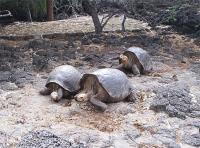
Giant tortoises at the Darwin Station on Isla Santa Cruz in the Galápagos Islands. The notion of islands as natural test beds of evolution is nearly as old as the theory itself. The restricted scale, isolation, and sharp boundaries of islands create unique selective pressures, often to dramatic effect. Following what's known as the "island rule," small animals evolve into outsize versions of their continental counterparts while large animals shrink.
| Biology | September 8, 2006 09:32 PM |
When he started compiling an online database of seashells 15 years ago, Dr. Gary Rosenberg did not envision that his meticulous record-keeping would eventually shed light on a 40-year-old evolutionary debate.
| Biology | September 8, 2006 06:32 PM |
The unusual mollusks of oceanic cold seeps--strange clams, mussels and sea snails that thrive in the sulfur and methane-rich environments--are on average older than the marine mollusk community as a whole, according to a new report in the 8 September issue of the journal Science, published by AAAS, the nonprofit science society.
| Biology | September 8, 2006 10:32 AM |
Biologists at the University of Rochester have discovered that an old and relatively unpopular theory about how a single species can split in two turns out to be accurate after all, and acting in nature.
| Biology | September 7, 2006 08:48 PM |
Padana, a young female orangutan at the Leipzig Zoo, who was one of the research subjects. How did our evolutionary ancestors make sense of their world? What strategies did they use, for example, to find food? Fossils do not preserve thoughts, so we have so far been unable to glean any insights into the cognitive structure of our ancestors. However, in a study recently published in Current Biology (September 5, 2006), researchers at the Max Planck Institute for Psycholinguistics and their colleagues at the Max Planck Institute for Evolutionary Anthropology were able to find answers to these questions using an alternative research method: comparative psychological research. In this way, they discovered that some of the strategies shaped by evolution are evidently masked very early on by the cognitive development process unique to humans.
| Biology | September 6, 2006 06:10 PM |
The human egg's ability to transform into a new life, or into new cells that may someday save lives, is well documented.The mystery lies in the mechanics - in how a single cell can transform so nimbly.
| Biology | September 5, 2006 11:17 PM |
By studying a habituated population of pied babblers (Turdoides bicolor) in the Kalahari Desert, researchers have discovered a surprising new way in which parent birds can extend the period of their care of offspring. The findings are reported by Andrew Radford of the University of Cambridge and Amanda Ridley of the University of Cape Town and appear in the September 5th issue of Current Biology, published by Cell Press.
| Biology | September 5, 2006 08:17 PM |
In a finding that broadens our understanding of primate cooperation, researchers have found that chimpanzees evaluate risk when crossing roads and draw on an evolutionarily old principle--shared with at least some other primates--of protective "socio-spatial" organization that produces flexible, adaptive, and cooperative responses by a group of individuals facing risk. The research is reported by Kimberley Hockings and James Anderson of the University of Stirling and Tetsuro Matsuzawa at the University of Tokyo and appears in the September 5th issue of Current Biology, published by Cell Press.
| Biology | September 4, 2006 08:37 PM |
Psychologists have long known that memories of disturbing emotional events - such as an act of violence or the unexpected death of a loved one - are more vivid and deeply imprinted in the brain than mundane recollections of everyday matters.
| Biology | September 4, 2006 07:37 PM |
The golden age of dinosaur discovery is yet upon us, according to Peter Dodson at the University of Pennsylvania. In a forthcoming issue of the Proceedings of the National Academy of Sciences, Dodson revises his groundbreaking 1990 census on the diversity of discoverable dinosaurs upward by 50%, offering a brighter outlook about the number of dinosaurs waiting to be found. His findings also add evidence that dinosaur populations were stable, and not on the decline, in the time shortly before their extinction 65 million years ago.
| Biology | September 1, 2006 06:58 PM |
Juvenile European blackbird.Animals colonizing cities are exposed to many novel and potentially stressful situations. Chronic stress, however, can cause deleterious effects. Hence, wild animals would suffer from city life unless they adjusted their stress response to the conditions in a city. Jesko Partecke, Ingrid Schwabl and Eberhard Gwinner of the Max Planck Institute for Ornithology Andechs/Seewiesen in Germany have now shown that European blackbirds born in a city have a lower stress response than their forest counterparts. This reduced reactivity probably has a genetic basis and could be the result of the urban-specific selection pressures to which urban blackbirds are exposed (Ecology 87(8) 2006).
| Biology | September 1, 2006 05:58 PM |
Research on communication typically focuses on how individuals use signals to influence the behavior of receivers, thus primarily focusing on pairs of individuals. However, the role communication plays in the emergence of social structures is rarely studied. In a new paper from The American Naturalist, Santa Fe Institute researchers Jessica Flack and David Krakauer study how power structures arise from a status communication network in a monkey society. Power structure is important because it can influence the complexity of interactions among group members.
| Biology | September 1, 2006 12:34 PM |
Fast-warming climate appears to be triggering genetic changes in a species of fruit fly that is native to Europe and was introduced into North and South America about 25 years ago.
| Biology | August 31, 2006 02:36 PM |
A team led by a conservationist from the Bronx Zoo-based Wildlife Conservation Society, working with the Chadian government and the European Union project CURESS near Chad's Zakouma National Park, has discovered 100 slaughtered elephants, most of them missing only their tusks -- a sure sign that poaching is on the upswing just outside of this renowned protected area.
| Biology | August 30, 2006 06:44 PM |
In the foreground, a skull of a Diana monkey. The large hole to the right of the nasal cavity was likely inflicted by an African crowned eagle.A new study suggests that prehistoric birds of prey made meals out of some of our earliest human ancestors.
| Biology | August 30, 2006 02:44 PM |
Transferring knowledge through a chain of generations is a behavior not exclusive to humans, according to new findings by researchers at the Yerkes National Primate Research Center of Emory University and the University of St. Andrews, Scotland. For the first time, researchers have shown chimpanzees exhibit generational learning behavior similar to that in humans. Unlike previous findings that indicated chimpanzees simply conform to the social norms of the group, this study shows behavior and traditions can be passed along a chain of individual chimpanzees. These findings, based upon behavioral data gathered at the Yerkes Field Station in Lawrenceville, Ga., will publish online in the August 28 early edition of the Proceedings of the National Academy of Sciences.
| Biology | August 29, 2006 06:03 PM |
Socks in the sock drawer, shirts in the shirt drawer, the time-honored lessons of helping organize one's clothes learned in youth. But what parts of the brain are used to encode such categories as socks, shirts or any other item, and how does such learning take place?
| Biology | August 25, 2006 10:51 AM |
The recovery of biodiversity after the end-Cretaceous mass extinction was much more chaotic than previously thought, according to paleontologists. New fossil evidence shows that at certain times and places, plant and insect diversity were severely out of balance, not linked as they are today. The extinction took place 65.5 million years ago. Labeled the K-T extinction, it marks the beginning of the Cenozoic Era and the Paleocene Epoch.
| Biology | August 22, 2006 06:53 PM |
The trap-jaw ant, Odontomachus bauri, ready to strike. With peak velocities over 50 meters per second, their mandibles are among the fastest movements in the biological world.Berkeley -- A species of ant native to Central and South America is entering the annals of extreme animal movement, boasting jaws arguably more impressive than such noteworthy contenders as the great white shark and the spotted hyena.
| Biology | August 22, 2006 04:53 PM |
In a finding that challenges a long-held belief regarding the cultural spread of tool use among chimpanzees, researchers report that chimpanzees in the Ebo forest, Cameroon, use stone hammers to crack open hard-shelled nuts to access the nutrient-rich seeds. The findings are significant because this nut-cracking behavior was previously known only in a distant chimpanzee population in extreme western Africa and was thought to be restricted by geographical boundaries that prevented cultural spread of the technique from animal to animal. The findings, which involve the most endangered and least-understood subspecies of chimpanzee, are reported by Dr. Bethan Morgan and Ekwoge Abwe of the Zoological Society of San Diego's Conservation and Research for Endangered Species (CRES) and appear in the August 22nd issue of the journal Current Biology, published by Cell Press.
| Biology | August 22, 2006 02:53 PM |
In a finding that broadens our understanding of time perception in the animal kingdom, researchers have discovered that an insect pollinator, the bumble bee, can estimate the duration of time intervals. Although many insects show daily and annual rhythms of behavior, the more sophisticated ability to estimate the duration of shorter time intervals had previously been known only in humans and other vertebrates.
| Biology | August 18, 2006 10:37 AM |
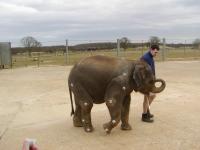
A young elephant steps out at Whipsnade Wild Animal Park while cameras record the movement of the disc shaped markers on its legs and back.If an elephant is thundering towards you at 15mph you are probably not too concerned with the finer points of biomechanics or the thorny question about whether they are truly running or not. But for researchers, understanding these points and getting a clearer picture of how elephants move their seven tonnes of bulk at speed offers the potential to improve animal welfare, inform human biomechanics and even help in the design of large robots.
| Biology | August 16, 2006 10:27 PM |
A habit in some animals to periodically wake up while hibernating may be an evolutionary mechanism to fight bacterial infection, according to researchers at Penn State. The finding could offer an insight into the spread and emergence of infectious disease in wildlife, and has potential implications for human health.
| Biology | August 16, 2006 10:52 AM |
When it comes to sticking power, marine mussels are hard to beat. They can adhere to virtually all inorganic and organic surfaces, sustaining their tenacious bonds in saltwater, including turbulent tidal environments. Little is known, however, about exactly how the bivalves achieve this amazing feat.
| Biology | August 12, 2006 08:10 PM |
Songbirds use multiple sources of directional cues to guide their seasonal migrations, including the Sun, star patterns, the earth's magnetic field, and sky polarized light patterns. To avoid navigational errors as cue availability changes with time of day and weather conditions, these "compass" systems must be calibrated to a common reference. Experiments over the last 30 years have failed to resolve the fundamental question of how migratory birds integrate multiple sources of directional information into a coherent navigational system.
| Biology | August 12, 2006 02:10 PM |
Scientists at the University of New Hampshire (UNH) have found that invasive crab species may precipitate evolutionary change in blue mussels in as little as 15 years. The study, by UNH graduate student Aaren Freeman with associate professor of zoology James Byers and published in the Aug. 11 issue of the journal Science, indicates that such a response can evolve in an evolutionary nanosecond compared to the thousands of years previously assumed. The paper is called "Divergent induced responses to an invasive predator in marine mussel populations."
| Biology | August 12, 2006 10:10 AM |
To a tiny tadpole, life boils down to two basic missions: eat, and avoid being eaten. But there's a trade-off. The more a tadpole eats, the faster it grows big enough to transform into a frog; yet finding food requires being active, which ups the odds of becoming someone else's dinner.
| Biology | August 11, 2006 12:10 AM |
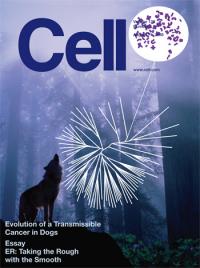
See article by Murgia et al. in the August 11, 2006, issue of the journal Cell for details.A new study in the August 11, 2006 issue of the journal Cell provides evidence that a form of cancer afflicting dogs has spread from one individual to another by the transmission of the tumor cells themselves. The disease demonstrates how a cancer cell can become a successful parasite with a worldwide distribution, according to the researchers.
| Biology | August 10, 2006 08:36 PM |
Embryos with the calamity mutation (shown below a normal embryo) exhibit so many developmental problems that they fall apart when they are about two days old.A humble aquarium fish may be the key to finding therapies capable of preventing the structural birth defects that account for one out of three infant deaths in the United States today.
| Biology | August 9, 2006 10:36 PM |
In the long, dark days of winter, gardeners are known to count the days until spring. Now, scientists have learned, some plants do exactly the same thing.
| Biology | August 9, 2006 07:36 PM |
When scientists study habitats that alien species have invaded, they usually find predictable patterns. The diversity of native species declines, and changes occur in natural processes such as nutrient cycling, wildfire frequency and the movement of water through the system.
| Biology | August 9, 2006 12:50 PM |
Scientific travelers of the 18th and 19th centuries led waves of daring expeditions into Polynesia, netting oceans of discoveries about its geography, flora and fauna and people.
| Biology | August 8, 2006 06:50 PM |
When pregnant, dominant female meerkats subject their subordinates to escalating aggression and temporary eviction causing them to become overly stressed and as a result infertile, a new study finds.
| Biology | August 7, 2006 11:50 PM |
Even in the dark, snakes on a plane (at least those of the pit viper and boa varieties) could keep a close watch on terrorized passengers and crew thanks to small cavities near their snouts known as pit organs. The organs are sensitive to the infrared radiation emitted by warm prey such as rats, rabbits, and Samuel L. Jackson. An optical analysis of pit organs suggests that snakes shouldn't be able to use the organ to track prey very well because the pit aperture is large and the organ is not very deep. However, studies have shown that snakes can localize heat sources to a surprisingly accurate resolution of five degrees (roughly the angular width of "Snakes on a Plane" costar Rachel Blanchard at three meters).
| Biology | August 2, 2006 11:35 PM |
They avoid more intelligent prey such as monkeys which have exceptionally large brains and are more capable of escaping attacks.
| Biology | August 2, 2006 09:35 PM |
Neurobiologists have known that a novel environment sparks exploration and learning, but very little is known about whether the brain really prefers novelty as such. Rather, the major "novelty center" of the brain--called the substantia nigra/ventral tegmental area (SN/VTA)--might be activated by the unexpectedness of a stimulus, the emotional arousal it causes, or the need to respond behaviorally. The SN/VTA exerts a major influence on learning because it is functionally linked to both the hippocampus, which is the brain's learning center, and the amygdala, the center for processing emotional information.
| Biology | August 2, 2006 08:35 PM |
Researchers at the Monell Chemical Senses Center have found that taking as little as a hundred milliseconds longer to smell an odor results in more accurate identification of that odor. This seemingly simple observation has important implications regarding how olfactory information is processed by the brain. The findings appear in the August issue of Neuron.
| Biology | August 2, 2006 07:35 PM |
From gamblers playing blackjack to investors picking stocks, humans make a wide range of decisions that require gauging risk versus reward. However, laboratory studies have not been able to unequivocally determine how the very basic information-processing "subcortical" regions of the brain function in processing risk and reward.
| Biology | August 1, 2006 09:03 PM |
Current conservation assessments of endangered Caribbean sea turtles are too optimistic, according to Loren McClenachan and colleagues from the Scripps Institution of Oceanography. McClenachan, Jeremy Jackson and Marah Newman agree that conservation efforts since the 1970's have dramatically helped increase green and hawksbill turtle populations that nest on protected beaches. However, they argue that dwindling turtle populations on many historically important nesting beaches are overlooked by conservation assessments that focus instead on the few large nesting sites that remain. The study, "Conservation implications of historic sea turtle nesting beach loss," appears in the August issue of Frontiers in Ecology and the Environment.
| Biology | July 31, 2006 09:21 PM |
The rusty crayfish - a voracious, bullying exotic that has visited ecological havoc on numerous Wisconsin lakes - may have finally met its match.
| Biology | July 26, 2006 11:10 PM |
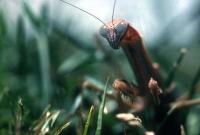
Hungry female praying mantids are more likely to cannibalize.Female praying mantids are notorious for sexual cannibalism – that is, for eating their male partner during mating. However, the possibility that males may also have something to gain from this violent act has never been resolved experimentally. In a paper in the August issue of The American Naturalist, Jonathan Lelito and William Brown (SUNY-Fredonia), study male risk-taking behavior in a praying mantis by altering the risk of cannibalism and observing changes in male behavior. They find that the males are able to assess the risk of cannibalism and become more cautious in the presence of particularly hungry females.
| Biology | July 26, 2006 09:10 PM |
Performance on the dance floor may not always show it, but people are rarely born with two left feet. We have genes that instruct our arms and legs to grow in the right places and point in the right directions. They also provide for the spaces between our fingers and toes and every other formative detail of our limbs.
| Biology | July 26, 2006 08:10 PM |
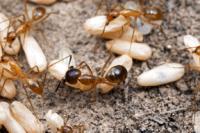
Desert carpetner ants store excess fat and pass it to colony members through lipid-rich oral secretions or unfertilized eggs.In a fascinating new study from the September/October 2006 issue of Physiological and Biochemical Zoology, Daniel A. Hahn (University of Florida) explores the ability of ants to store excess fat and pass it to colony members through lipid-rich oral secretions or unfertilized eggs. For perennial organisms, such as ant colonies, investing heavily in nutrient stores when food availability is high is a potential bet-hedging strategy for dealing with times of famine.
| Biology | July 26, 2006 07:10 PM |
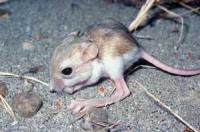
A twenty-seven day old desert kangaroo rat, Dipdomys deserti, learning how to use its cheek pouches.The warm deserts of North America are hopping with multiple species of kangaroo rats and pocket mice despite limited seed resources. Why doesn't one species win out in the rat race? Ecologist Mary Price (University of California, Riverside and University of Arizona) and theoretical biologist John Mittler (University of Washington) teamed up to explore their hunch that coexistence might follow from the propensity of these rodents to store harvested seeds and to steal from one another's caches.
| Biology | July 21, 2006 06:10 PM |
Ten years ago, an international team of scientists reported evidence, in a controversial cover story in the journal Nature, that life on Earth began more than 3.8 billion years ago--400 million years earlier than previously thought. A UCLA professor who was not part of that team and two of the original authors will report in late July that the evidence is stronger than ever.
| Biology | July 21, 2006 10:05 AM |
The diversity of bees and of the flowers they pollinate, has declined significantly in Britain and the Netherlands over the last 25 years according to research led by the University of Leeds and published in Science this Friday (21 July 2006). The paper is the first evidence of a widespread decline in bee diversity.
| Biology | July 20, 2006 09:05 PM |
The ability to spot venomous snakes may have played a major role in the evolution of monkeys, apes and humans, according to a new hypothesis by Lynne Isbell, professor of anthropology at UC Davis. The work is published in the July issue of the Journal of Human Evolution.
| Biology | July 20, 2006 07:05 PM |
The most comprehensive scientific study of tiger habitats ever done finds that the big cats reside in 40 percent less habitat than they were thought to a decade ago. The tigers now occupy only 7 percent of their historic range.
| Biology | July 14, 2006 10:10 PM |
A new study by University of Georgia researchers shows that the common practice of killing wild animals to control disease outbreaks can actually make matters worse in some cases.
| Biology | July 14, 2006 06:10 PM |
Van Morrison sang about it, Peter Fonda starred in a movie about it, and people from all over the world will pay top dollar just to get some of it.
| Biology | July 13, 2006 10:27 PM |
University of Cambridge scientists have discovered that older meerkats teach pups how to obtain food by incrementally introducing dead, injured and then live prey. Although learning per se wouldn't be surprising, whether wild mammals teach their young was still debated. The findings were published in this week's edition of the journal Science.
| Biology | July 13, 2006 08:27 PM |
A massive dinosaur death bed in Alberta has helped map out the animal's life span and thrown doubt on long-held theories about how one species lived, says new research conducted in part at the University of Alberta.
| Biology | July 12, 2006 09:46 PM |
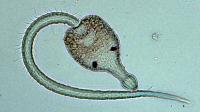
This free-swimming stage of a parasite larva, a trematode cercaria, leaves
an infected snail to encyst on a fish brain. View is 0.267 mm across.Scientists have discovered that parasites are suprisingly important in food webs and their findings appear in a report published this week in the Early Edition of the on-line version of the Proceedings of the National Academy of Sciences. Scientists with the University of California, Santa Barbara, the U.S. Geological Survey, and Princeton University contributed.
| Biology | July 12, 2006 07:46 PM |
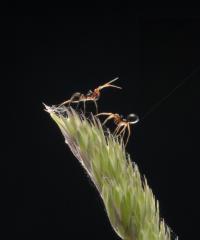
Two male Erigone spiders on a grass seed head. The lower one is in a pre-ballooning posture ready to disperse, known as the "tip-toe" position.Researchers have developed a new model that explains how spiders are able to 'fly' or 'parachute' into new territory on single strands of silk – sometimes covering distances of hundreds of miles over open ocean. By casting a thread of silk into the breeze spiders are able to ride wind currents away from danger or to parachute into new areas. Often they travel a few metres but some spiders have been discovered hundreds of miles out to sea. Researchers have now found that in turbulent air the spiders' silk moulds to the eddies of the airflow to carry them further.
| Biology | July 11, 2006 10:15 PM |
If you think dinosaurs are hot today, just think back to about 110 million years ago when they really ran hot and heavy.
| Biology | July 11, 2006 07:15 PM |
Using unusually rigorous scientific conditions and measures, Johns Hopkins researchers have shown that the active agent in "sacred mushrooms" can induce mystical/spiritual experiences descriptively identical to spontaneous ones people have reported for centuries.
| Biology | July 11, 2006 12:36 PM |
By sampling sea life in a heavily fished region off the coast of Namibia, researchers have found that jellyfish have actually overtaken fish in terms of the biomass they contribute to this ocean region. The findings represent a careful quantitative analysis of what's been called a "jellyfish explosion" after intense fishing in the area in the last few decades. The findings are reported by Andrew Brierley, of the University of St. Andrews, and his colleagues in the July 12th issue of the journal Current Biology.
| Biology | July 10, 2006 08:36 PM |
New research designed to build scientific understanding of fruit genes could revolutionise the way foods, cosmetics and perfumes are created.
| Biology | July 6, 2006 11:37 PM |
The Wildlife Conservation Society has launched an ambitious new program that calls for a 50 percent increase in tiger numbers in key areas over the next decade, according to an article in this week's journal Nature. The new initiative, called "Tigers Forever," blends a business model with hard science, and has already attracted the attention of venture capitalists who have pledged an initial $10 million to support it.
| Biology | July 6, 2006 10:37 PM |
Fifty of the leading amphibian researchers in the world have called for a new Amphibian Survival Alliance, a $400 million initiative to help reduce and prevent amphibian declines and extinctions, an ecological crisis of growing proportion that is continuing to get worse. In a policy statement to be published Friday in the journal Science, the scientists say that 32 percent of all amphibian species are threatened and at least nine – perhaps as high as 122 – have become extinct since 1980. It's time, they say, for a more organized and effective approach to address the various diseases, habitat loss, invading species and other causes of this problem.
| Biology | July 6, 2006 07:37 PM |
Leopards may not be able to change their spots, but corals can change their skeletons, building them out of different minerals depending on the chemical composition of the seawater around them.
| Biology | July 5, 2006 09:29 PM |
Human activities have caused some 500 bird species worldwide to go extinct over the past five millennia, and 21st-century extinction rates likely will accelerate to approximately 10 additional species per year unless societies take action to reverse the trend, according to a new report.
| Biology | July 5, 2006 07:29 PM |
Cantherhines dumeriliiReef fish share genetic connections across what Darwin termed an 'impassable barrier', 5000km of deep ocean separating the eastern and central Pacific, according to a report by Smithsonian scientists in the Proceedings of the Royal Society B.
| Biology | July 4, 2006 06:55 PM |
In research that could have broad implications for women's fertility treatments, scientists have found that despite their age, female mice have a renewable egg supply in their ovaries.
| Biology | June 30, 2006 02:02 PM |
A new study by McGill University Professor of Psychology Dr. Jeffrey Mogil shows that the capacity for empathy, previously suspected but unproven even among higher primates, is also evident in lower mammals.
| Biology | June 29, 2006 08:12 PM |
Beetles from Uzbekistan are more prolific salt cedar eatersthan beetles from Greece. At least that's what Texas AgriculturalExperiment Station researchers hope.
| Biology | June 29, 2006 07:02 PM |
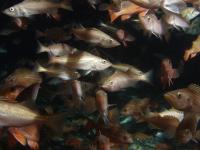
Rockfish thrive with offshore platforms as their home base.While some observers consider offshore oil and gas platforms to be an eyesore on the horizon, new data shows they are performing a critical function for marine life.
| Biology | June 27, 2006 07:36 PM |
A leaf-cutting ant queen (Acromyrmex coronatus) is sheltered in a chamber deep inside of her fungus garden, made of leaf fragments and strands of a symbiotic fungus.Fungus-farming ants around the world cultivate essentially the same fungus and are not as critical to the reproduction of the fungi as previously believed, biologists at The University of Texas at Austin have discovered.
| Biology | June 27, 2006 06:36 PM |
Researchers have used a new technique to monitor brain development in infants and detect disturbances in white matter, according to a study in the July issue of Radiology.
| Biology | June 23, 2006 12:26 PM |
Too much sun – for plants as well as people – can be harmful to long-term health. But to avoid the botanical equivalent of "lobster tans," plants have developed an intricate internal defense mechanism, called photoprotection, which acts like sunscreen to ward off the sun's harmful rays.
| Biology | June 22, 2006 09:26 PM |
The first field surveys of the Rubeho Mountains in Tanzania revealed over 160 animal species--including a new species of frog and eleven endemic species--according to an article published in the African Journal of Ecology this month. The findings elevate the importance of protecting this biologically-rich wilderness area and the broader Eastern Arc Mountain range from destructive activities underway such as clear-cutting for agriculture, logging and poaching.
| Biology | June 21, 2006 10:06 PM |
The commonly held view that IVF is the only culprit in the steady increase in the numbers of twins born over the past thirty years was challenged by a scientist speaking at the 22nd annual conference of the European Society of Human Reproduction and Embryology in Prague, Czech Republic, Wednesday 21 June 2006. Professor Robert Jansen, Medical Director of Sydney IVF, Sydney, Australia, said that his research had shown that improved nutrition, both maternal and in the lab in the case of IVF, had produced better and stronger embryos.
| Biology | June 21, 2006 07:07 PM |
A recent wildlife census conducted in Virunga National Park in the Democratic Republic of Congo (DRC) revealed that several species of large mammal are now recovering from a decade of civil war and rampant poaching, according to the Wildlife Conservation Society (WCS) and the Institut Congolais pour la Conservation de la Nature (ICCN). Specifically, elephants and other species in the park have increased in number since the park's last census, due in large part to the anti-poaching efforts of park guards who patrol this World Heritage Site at great personal risk.
| Biology | June 21, 2006 05:16 PM |
The conditions in which embryos are cultured in the laboratory during in vitro fertilisation could be causing genetic errors that are associated with certain developmental syndromes and other abnormalities in growth and development, such as low birth weight.
| Biology | June 21, 2006 02:49 PM |
Why do some taxanomic families contain many species and others contain far fewer? There has been much debate in the scientific community over the reason for such variation, but a recent study in The American Naturalist by Albert B. Phillimore (Imperial College London, Silwood Park Campus), Robert P. Freckleton (Oxford University), C. David L. Orme (Imperial College London, Silwood Park Campus), and Ian P. F. Owens (Imperial College London, Silwood Park Campus) identifies the two biological traits in birds that account for most of the variation: dispersal and feeding generalization.
| Biology | June 20, 2006 05:49 PM |
The colorful and robust head of an adult male eastern collard lizard (Crotaphytus collaris) from the Wichita Mountains National Wildlife Refuge. The partially unfolded, bright white mouth-corner patch accentuates the...In a paper from the July issue of The American Naturalist, Kristopher Lappin (Northern Arizona University), Yoni Brandt (University of Toronto), Jerry Husak (Oklahoma State University), Joe Macedonia (Arizona State University), and Darrell Kemp (James Cook University), demonstrate that a threat display can provide accurate information about the performance of a weapon.
| Biology | June 19, 2006 10:46 PM |
In an exciting study that provides new understanding of how animals learn--and learn from each other--researchers have demonstrated that bats that use frog acoustic cues to find quality prey can rapidly learn these cues by observing other bats. While numerous examples are known of instances where predators can use so-called "social learning" to learn new visual and olfactory cues associated with prey, this kind of learning of an acoustic cue had not been previously described. The work is reported by Rachel A. Page and Michael J. Ryan of the University of Texas at Austin and the Smithsonian Tropical Research Institute and appears in the June 20th issue of Current Biology.
| Biology | June 19, 2006 10:16 PM |
New findings reported this week reveal that at least some primates can use their stored knowledge of recent weather as a tool for guiding their foraging behavior when searching for ripening fruit. The work, which potentially informs our understanding of how cognitive skills developed in humans and other primates, is reported by Karline Janmaat, Richard Byrne, and Klaus Zuberbühler of the University of St. Andrews in the June 20th issue of Current Biology.
| Biology | June 19, 2006 09:15 PM |

Bahia Honda, PanamaOn 15 June, 2006, the first publication to assemble terrestrial biodiversity information from Bahia Honda, Panama, was presented by Santiago Castroviejo and Alicia Ibaez, editors, at the Smithsonian Tropical Research Institute (STRI) in Panama City.
| Biology | June 19, 2006 08:16 PM |
Thirty-five years ago Arthur DeVries of the University of Illinois at Urbana-Champaign first documented antifreeze glycoproteins (AFGPs) in Antarctic notothenioid fishes. This month three colleagues report they've solved the ensuing, long-running mystery of where these AFGPs, which allow the fish to survive in icy waters, are produced.
| Biology | June 19, 2006 07:16 PM |
Scientists at Cardiff University, using a novel method to estimate population, have found that there may be many more giant pandas remaining in the wild than previously thought.
| Biology | June 17, 2006 12:41 PM |
Duke University Medical Center researchers have discovered how the brain creates a scent symphony from signals sent by the nose.
| Biology | June 16, 2006 09:42 PM |
In a study comparing wild rodents with their laboratory counterparts, researchers at Duke University Medical Center have found evidence that may help to explain why people in industrialized societies that greatly stress hygiene have higher rates of allergy and autoimmune diseases than do people in less developed societies in which hygiene is harder to achieve or considered less critical.
| Biology | June 16, 2006 06:42 PM |
Vampire bats, the only mammals to feed exclusively on blood, including human blood, recognize their prey by the sound of its breathing. In a study published today in the open access journal BMC Biology, vampire bats of the species Desmodus rotondus could recognise recorded human breathing sounds much better than human participants could. Vampire bats feed on the same prey over several nights and the authors of the study propose that the bats use breathing sounds to identify their prey in the same way as humans use voice to recognise each other.
| Biology | June 15, 2006 08:27 PM |
Pick up a leaf and it is hard not to notice the pattern made by the veins. For years, biologists, mathematicians and even poets and philosophers have tried to decipher the rules and regulations behind those varied designs and now new research published in part at the University of Alberta offers a big clue to how those patterns are formed.
| Biology | June 15, 2006 10:09 AM |
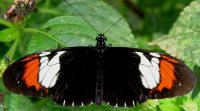
Heliconius heurippa, live specimen, hybrid species resulting from mating of H. cydno x H. melpomene.In a matter of months, butterflies sporting the yellow and red wing color pattern of a wild species were created through simple laboratory crosses of two other wild species, researchers report in the June 15, 2006 edition of the journal Nature.
| Biology | June 14, 2006 07:06 PM |
See the picture in the original press release
A motion-triggered camera trap set up in a remote jungle has captured the first-ever photo of a rhino in the wild on the island of Borneo, World Wildlife Fund and the Sabah Wildlife Department announced today.
| Biology | June 14, 2006 10:40 AM |
A scientific expedition to a remote glacier field in Canada's High Arctic may help researchers unlock the secrets about the beginning of life and provide insights for future exploration of our solar system.
| Biology | June 13, 2006 01:25 PM |
Leptin, the hormone secreted by fat cells that plays an important role in food intake, has been described for the first time in a cold-blooded vertebrate, the South African clawed frog Xenopus.
| Biology | June 12, 2006 06:35 PM |
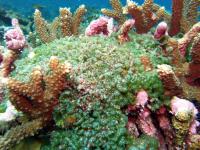
Coral (Acropora) from the Line Islands covered by bubble algae
(Dictyosphaeria)Bacteria and algae are combining to kill coral –– and human activities are compounding the problem.
| Biology | June 12, 2006 04:35 PM |
Biologists from Washington University in St. Louis and their collaborators from Taiwan have examined the DNA sequence family trees of rice varieties and have determined that the crop was domesticated independently at least twice in various Asian locales.
| Biology | June 8, 2006 05:05 PM |
Gazelles in the deserts of Saudi Arabia have evolved the ability to shrink oxygen-demanding organs such as the liver and heart, allowing them to breathe less.How do gazelles and other large desert mammals adjust their physiology to survive when food and water are in short supply? A fascinating new study from the July/August issue of Physiological and Biochemical Zoology reveals that gazelles in the deserts of Saudi Arabia have evolved the ability to shrink oxygen-demanding organs such as the liver and heart, allowing them to breathe less. Fewer breaths reduce the amount of water lost to respiratory evaporation during prolonged periods of drought.
| Biology | June 7, 2006 05:44 PM |
In a new study published in the latest issue of Ethology researchers show that female songbirds can alter the size of eggs and possibly the sex of their chicks according to how they perceive their mate's quality.
| Biology | June 7, 2006 04:44 PM |
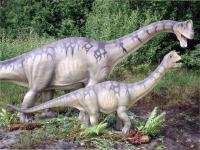
Newly unveiled models of a group of Europasaurus on display at the Dinopark Münchehagen.When unusually small dinosaur fossils were found in a quarry on the northern edge of the Harz Mountains in 1998, it was initially assumed that these were the remains of a group of young dinosaurs. This was a fallacy, as the Bonn palaeontologist, Dr. Martin Sander, recently discovered.
| Biology | June 6, 2006 10:24 PM |
Wheat producers have more than the drought cutting into their yields this year, said two Texas Agricultural Experiment Station researchers.
| Biology | June 6, 2006 08:24 PM |
The rediscovery of two frog species feared extinct has made a new Colombian protected area the focal point for efforts to save amphibians from a deadly fungus decimating their populations in Central and South America.
| Biology | June 6, 2006 05:39 PM |
Like a celebrity living on mineral water, the glassy-winged sharpshooter consumes only the dilute sap of woody plants--including grapevines in California, which is feverishly working to prevent the insect's flight into prized vineyards.
| Biology | June 6, 2006 05:24 PM |
It may sound like Saturday cartoons: a strong-boned rat that can't be broken. But a couple of Texas researchers say the real hero is citrus juice.
| Biology | June 6, 2006 03:22 PM |
Researchers have demonstrated that learning about the appearance of their parents may give birds a preference for mates with exaggerated parental traits, rather than traits that more exactly match those of their parents. Such learned mate preferences may help drive the evolution of exaggerated traits and strong morphological differences between sexes – phenomena seen frequently in birds and other animals. The findings are reported by Carel ten Cate, Machteld Verzijden and Eric Etman of Leiden University, and appear in the June 6th issue of Current Biology.
| Biology | June 6, 2006 12:22 PM |
By comparing how quickly human facial expressions of different types are detected in a crowd of neutral faces, researchers have demonstrated that male angry faces are a priority for visual processing – particularly for male observers. The findings are reported by Mark Williams of the Massachusetts Institute of Technology and Jason Mattingley of the University of Melbourne, Australia, and appear in the June 6th issue of Current Biology.
| Biology | June 5, 2006 08:22 PM |
By studying how genes influence the development and use of neural circuits that control a specific set of mating behaviors in the fruit fly, researchers have provided new insight into how instinctual behaviors – those that are not based on prior experience – arise in the developing nervous system. The work is reported by Jean-Christophe Billeter and other members of Stephen Goodwin's group at the University of Glasgow, along with research groups at Brandeis and California State University, and appears in the June 6th issue of Current Biology.
| Biology | June 5, 2006 06:43 PM |
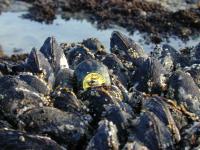
A "robomussel," actually an intertidal temperature data logger, can mimic
the thermal characteristics of an individual mussel and record temperature
data at 10-minute intervals for up to seven months.Based on current trends for both air and water temperatures, by 2100 the body temperatures of California mussels -- found along thousands of miles of coast in the northeast Pacific Ocean and not just in California –- could increase between about 2 degrees F and 6.5 F depending on where they live.
| Biology | June 5, 2006 05:22 PM |
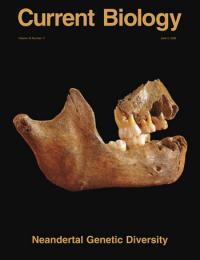
A new neandertal haplotype was recovered from a 100,000 year old specimen from Scladina cave. It confirms that Neandertals and modern humans were only distant relatives but concomitantly reveals that the genetic diversity of Neandertals has been thus far underestimated. Credits: G. FocantBy recovering and sequencing intact DNA from an especially ancient Neandertal specimen, researchers have found evidence suggesting that the genetic diversity among Neandertals was higher than previously thought. The findings also suggest that genetic diversity may have been higher in earlier Neandertal periods relative to later periods that approached the arrival of humans in Europe. Changes in genetic diversity over time are thought to reflect population events, such as low-population bottlenecks caused by disease or environmental change, as well as the influence of random genetic change. The findings are reported in the June 6th issue of Current Biology by a group of researchers including Ludovic Orlando and led by Catherine Hänni of Ecole Normale Supérieur in Lyon, France.
| Biology | June 4, 2006 08:27 PM |
If you're looking for a way to make someone say 'yes', coffee can help. Moderate amounts of caffeine can have an impact on the extent to which we can be persuaded, finds research published today in the European Journal of Social Psychology.
| Biology | June 2, 2006 10:04 PM |
Avoiding quicksand along the banks of the Ivindo River in Gabon, Cornell neurobiologists armed with oscilloscopes search for shapes and patterns of electricity created by fish in the water.
| Biology | June 2, 2006 12:33 PM |
The research team found that the protein myglobin - thought to act as an oxygen store in the heart and muscle cells of humans and vertebrate animals - also exists in many other tissues of the common carp, enabling it to survive in low oxygenated environments.
| Biology | June 2, 2006 10:33 AM |
Archaeobotanists have found evidence that the dawn of agriculture may have come with the domestication of fig trees in the Near East some 11,400 years ago, roughly a thousand years before such staples as wheat, barley, and legumes were domesticated in the region. The discovery dates domesticated figs to a period some 5,000 years earlier than previously thought, making the fruit trees the oldest known domesticated crop.
| Biology | June 1, 2006 08:40 PM |
Whether finding your way through an unfamiliar neighborhood to a friend's house or deciding on a political candidate, your brain is adept at adapting. It can make decisions based on incomplete information and update those decisions based on new information.
| Biology | June 1, 2006 06:40 PM |
Scientists have used data from scans of 183 subjects to identify brain areas that consistently become active in a variety of cognitive tasks, such as reading, learning a rhythm or analyzing a picture.
| Biology | June 1, 2006 12:40 PM |
Washington – Results released today by World Wildlife Fund of the first assessment done in two years in one of Nepal's premier national parks reveal an alarming decline in tiger and rhino populations, indicating widespread poaching. The area only became accessible for visits since the ceasefire between the Maoist insurgents and government troops a month ago.
| Biology | May 31, 2006 09:19 PM |
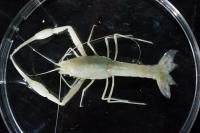
Closeup of one of the crustaceans found in cave near Ramle, IsraelDiscovery of eight previously unknown, ancient animal species within "a new and unique underground ecosystem" in Israel was revealed today by Hebrew University of Jerusalem researchers.
| Biology | May 31, 2006 07:40 PM |
Comfortable living is not why so many different life forms seem to converge at the warmer areas of the planet.
| Biology | May 31, 2006 06:40 PM |
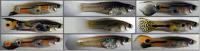
Guppies are small tropical fish native to Trinidad and other areas of the Caribbean. They are characterized by sexual dimorphism in size and color patterns. The color pattern variation of the males (left and right columns) is mostly genetic variation, not environmental. New data indicates that rare-colored males not only attract females (center column), they are also more likely to survive predation.Any owner of a freshwater aquarium likely has had guppies (Poecilia reticulata), those small brightly colored fish with a propensity for breeding. Now guppy populations manipulated in natural habitats in Trinidad have taught researchers an evolutionary lesson on the survival of a rare genetic trait.
| Biology | May 29, 2006 07:19 PM |
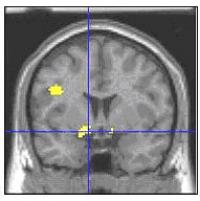
The left amygdala and related structures (yellow area where lines intersect) are part of an emotion-regulating brain circuit where children with bipolar disorder showed greater activation than controls when rating their fear of neutral faces. Structural MRI image with functional MRI data superimposed.Youth with bipolar disorder misread facial expressions as hostile and show heightened neural reactions when they focus on emotional aspects of neutral faces, researchers at the National Institutes of Health's (NIH) National Institute of Mental Health (NIMH) have discovered. The study provides some of the first clues to the underlying workings of the episodes of mania and depression that disrupt friendships, school, and family life in up to one percent of children.
| Biology | May 23, 2006 11:02 PM |
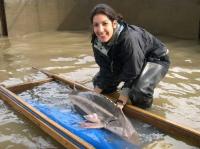
Dr. Phaedra Doukakis of Rosenstiel School's Pew Institute for Ocean
Science with one of the studied sturgeon. Scientists working in the Ural River, Kazakhstan, have successfully attached Pop-up Archival Transmitting (PAT) tags to four sturgeons and have released the animals into the Caspian Sea, hoping to get a clear picture of Caspian Sea sturgeon movement and behavior never before available.
| Biology | May 23, 2006 07:26 PM |
Their journeys are among the longest in the animal kingdom and they have largely remained a mystery until now. An international team of scientists led by the University of Exeter have uncovered the migratory secrets of endangered loggerhead turtles in West Africa and the results could have huge implications for strategies to protect them.
| Biology | May 23, 2006 06:26 PM |
From May 22-30, Harbor Branch scientists, along with colleagues from the University of Miami, will use the Harbor Branch Johnson-Sea-Link II submersible to explore for the first time newly discovered deep-sea reefs between Florida and the Bahamas. The reefs were discovered in 2,000 to 2,900 feet of water last December by a University of Miami team using advanced sonar techniques. A primary goal of the upcoming expedition, which is funded largely by the State of Florida's "Florida Oceans Initiative," will be to search for marine organisms that produce chemical compounds with the potential to treat human diseases such as cancer and Alzheimer's.
| Biology | May 23, 2006 12:26 PM |
Last December, University of Miami Rosenstiel School of Marine and Atmospheric Science researchers using advanced sonar techniques discovered new deepwater reef sites in the Straits of Florida between Miami and Bimini. Today through May 30, the Rosenstiel School scientists will work with Harbor Branch Oceanographic Institution colleagues to explore these areas for the first time. The expedition, which will rely on Harbor Branch's Johnson-Se-Link II submersible, will search for and collect marine organism samples from these new reefs in 2,000-2,900 feet of water to determine which produce chemicals with the potential to treat human diseases such as cancer or Alzheimer's disease. The State of Florida's "Florida Oceans Initiative" is the primary project funder.
| Biology | May 23, 2006 11:26 AM |
Ecologists have at last got a view of sperm whales' behaviour during their long, deep dives, thanks to the use of recently developed electronic "dtags". According to new research published in the British Ecological Society's Journal of Animal Ecology, sperm whales – like bats – use echolocation consistently to track down their prey at depth.
| Biology | May 23, 2006 10:26 AM |
When ancient whales finally parted company with the last remnants of their legs about 35 million years ago, a relatively sudden genetic event may have crowned an eons-long shrinking process.
| Biology | May 22, 2006 04:15 PM |
Studying members of a large population of loggerhead sea turtles that nest on the Cape Verde islands off of West Africa, researchers have found an unexpected dichotomy in turtle behavior: While some turtles leave the nesting grounds to feed on bottom-dwelling sea life in shallow coastal waters, others leave Cape Verde to roam the much deeper open ocean along the African coast and exhibit a distinct feeding strategy. Interestingly, while adults compose both groups, the coastal feeding strategy correlates with larger animal size. These new findings revise our understanding of the turtle's life history and indicate that a multifaceted approach to fishing regulation--in both coastal and oceanic waters--will be required to effectively conserve these animals.
| Biology | May 21, 2006 01:09 PM |
An obstetrician well known for his care of and research into multiple-birth pregnancies has found that dietary changes can affect a woman's chances of having twins, and that her overall chance is determined by a combination of diet and heredity. By comparing the twinning rate of vegan women, who consume no animal products, with that of women who do eat animal products, Gary Steinman, MD, PhD, an attending physician at Long Island Jewish (LIJ) Medical Center in New Hyde Park, NY, found that the women who consume animal products, specifically dairy, are five times more likely to have twins. The study is published in the May 2006 issue of the Journal of Reproductive Medicine, available May 20.
| Biology | May 20, 2006 12:03 PM |
Giant tubeworms found near hydrothermal ventsmore than a mile below the ocean surface donot bother to eat: lacking mouth and stomach,they stand rooted to one spot. Fornourishment, they rely completely onsymbiotic bacteria that live within theirbodies to metabolize the sulphurous volcanicsoup in which they both thrive.
| Biology | May 18, 2006 06:17 PM |
Researchers exploring a Colombian mountain range found surviving members of a species of Harlequin frog believed extinct due to a killer fungus wiping out amphibian populations in Central and South America.
| Biology | May 18, 2006 12:13 PM |
By blowing gentle puffs of air onto a mouse's whiskers and watching how its brain reacts, scientists are discovering that a long-overlooked signaling system in the brain is crucial to our everyday activity.
| Biology | May 17, 2006 11:13 PM |
Studies in which monkeys were asked to manipulate computer cursors for fruit juice rewards have revealed that the brain's "executive" center plans behaviors not by specifying movements required for given actions, but rather the events that will result from those actions.
| Biology | May 17, 2006 08:13 PM |
Bottlenose dolphins that reside in designated Special Areas of Conservation throughout the UK, including Dorset, Anglesey and Cornwall, might be at risk from pile driving. The frequency range of pile driving noise could interfere with their ability to communicate, find food and avoid predators. This has the potential to affect their behaviour, health and their ability to breed successfully. Lactating females and young calves might be particularly vulnerable
| Biology | May 17, 2006 07:13 PM |
A new University of Colorado at Boulder study involving a "living fossil plant" that has survived on Earth for 130 million years suggests its novel reproductive structure may be a "missing link" between flowering plants and their ancestors.
| Biology | May 17, 2006 02:43 PM |
Can one literally "lose oneself" in an experience? Many theoretical models of the mind reject this notion, proposing that awareness is dependent on the mediation of areas involved in self representation – a vigilant, self-aware "observer" network – in the human brain.
| Biology | May 16, 2006 09:43 PM |
In response to cold, plants trigger a cascade of genetic reactions that allow them to survive. University of California, Riverside Professor of Plant Cell Biology Jian-Kang Zhu has described how a little-known biochemical reaction regulates that genetic cascade.
| Biology | May 16, 2006 08:43 PM |
The world is filled with cues that could influence the daily feeding patterns of an organism. Many plants, for example, respond to foraging damage by releasing specialized chemical signals - volatile organic compounds that evaporate in the air - that attract the forager's natural enemies. This strategy is obviously no use against a cow, but proves effective when the offender is a caterpillar and the summoned predator is a wasp. Just how much control such biotic factors exert over a forager's daily routine has remained an open question. But in a new study in the open access journal PLoS Biology, Kaori Shiojiri, Rika Ozawa, and Junji Takabayashi show that plant signals can indeed regulate herbivore behavior.
| Biology | May 16, 2006 07:43 PM |
In an important new paper forthcoming in the June issue of The Quarterly Review of Biology, Robert Shapiro (New York University) argues against the widely held theory that the origin of life began with the spontaneous appearance of a large, replicating molecule such as RNA. Instead, Shapiro raises an alternative that does not depend on a "stupendously improbable accident," presenting the more plausible idea that life began within a mixture of simple organic molecules, multiplied through catalyzed reaction cycles and an external source of available energy.
| Biology | May 12, 2006 11:33 PM |
Two laboratories at Penn State set out to show how an obscure undersea microbe metabolizes carbon monoxide into methane and vinegar. What they found was not merely a previously unknown biochemical process--their discovery also became the inspiration for a fundamental new theory of the origin of life on Earth, reconciling a long-contentious pair of prevailing theories. This new, "thermodynamic" theory of evolution improves upon both previous theories by proposing a central role for energy conservation during early evolution, based on a simple three-step biochemical mechanism.
| Biology | May 12, 2006 09:33 PM |
In a groundbreaking new study in the June issue of American Naturalist, Erika J. Edwards (Yale University and University of California, Santa Barbara) and Michael J. Donoghue (Yale University) explore how leafy, "normal" plants evolved into the leafless succulent cactus.
| Biology | May 12, 2006 08:33 PM |
There is a push to document the biodiversity of the world within 25 years. However, the magnitude of this challenge is not well known, especially when it comes to vast and often inaccessible marine environments. To date, surveys of species diversity in the world's oceans have focused on adult organisms, but new research from Boston University has found that studying marine life in its larval phase with DNA barcoding is a valuable way to estimate biodiversity.
| Biology | May 12, 2006 07:33 PM |
Sexual harassment is a burden that females of many species face, and some may go to extreme lengths to avoid it.
| Biology | May 12, 2006 12:20 PM |
In the past decade, the oyster population in New Hampshire's Great Bay estuary has plummeted by 90 percent, due to the 1995 arrival of the oyster disease MSX. The previous century saw a slower but equally devastating demise of oysters from exuberant overharvesting. "We have seen local extinction on some reefs," says Ray Grizzle, research associate professor at the University of New Hampshire's Jackson Estuarine Laboratory.
| Biology | May 12, 2006 10:20 AM |
Female fish prefer brightly coloured males because they are easier to see and are in better shape concludes Dutch researcher Martine Maan following her study of fish speciation in the East African Lakes. Environmental variation subsequently leads to differences in preference and eventually to speciation.
| Biology | May 11, 2006 11:20 PM |
Scientists have discovered that migrating dragonfliesand songbirds exhibit many of the same behaviors, suggesting the rulesthat govern such long-distance travel may be simpler and more ancientthan was once thought.
| Biology | May 11, 2006 10:20 PM |
Researchers from the Floral Genome Project at Penn State University, with an international team of collaborators, have proposed an answer to Charles Darwin's "abominable mystery:" the inexplicably rapid evolution of flowering plants immediately after their first appearance some 140 million years ago. By developing new statistical methods to analyze incomplete DNA sequences from thirteen strategically selected plant species, the researchers uncovered a previously hidden "paleopolyploidy" event, an ancient whole-genome duplication that preceded the appearance of the ancestral flowering plant. The results will appear in the June issue of Genome Research.
| Biology | May 11, 2006 06:20 PM |
For the first time in 83 years, scientists have identified a new genus of a living primate from Africa, according to research to be published by Science May 11 in the online Science Express.
| Biology | May 10, 2006 10:43 PM |
Individual variation in social behavior is one of the most striking features of cooperative animal societies. In a new study from the June issue of American Naturalist, Michael A. Cant (University of Cambridge), Justine B. Llop (University of Cambridge), and Jeremy Field (University College London) investigate the extent to which differences in aggressive behavior within a cooperative society can be explained by "inheritance rank"--the likelihood that an individual will get to mate successfully in that society based on their rank--or place in the social hierarchy. They can only pass on their genes when they reach the top of the hierarchy, usually after those ahead of them in the rank have died and they have inherited the right to reproduce.
| Biology | May 10, 2006 08:43 PM |
Plant and animal breeders have long used hybridization to transfer useful traits between species. But does the same process happen without human aid? In a new study in the June issue of American Naturalist, Kenneth D. Whitney (Indiana University and Rice University), Rebecca A. Randell (Indiana University), and Loren H. Rieseberg (Indiana University), explore how spontaneous hybridization – known as adaptive trait introgression – has a vital impact on adaptation and evolutionary diversification.
| Biology | May 10, 2006 07:43 PM |
Scientists at UCL (University College London) have discovered that even wasps are driven by their status. The study, published today in Nature, shows that lower-ranked female wasps work harder to help their queen than those higher up the chain because they have less to lose, and consequently are prepared to take more risks and wear themselves out.
| Biology | May 10, 2006 12:17 PM |
A new method to calculate the transfer of nitrogen from Arctic mushrooms to plants is shedding light on how fungi living symbiotically on plant roots transfer vital nutrients to their hosts. The analytical technique, developed by John E. Hobbie, MBL Distinguished Scientist and co-director of the laboratory's Ecosystems Center and his son, Erik A. Hobbie of the University of New Hampshire, may be applied to nearly all conifers, oaks, beeches, birch and shrubs such as blueberry and cranberry--all nitrogen-poor ecosystems--and will be an important tool for future studies of plant nitrogen supply.
| Biology | May 9, 2006 06:16 PM |
New technologies that mimic the way insects, plants and animals overcome engineering problems could help reduce our dependence on energy, according to new research published in the Royal Society journal Interface.
| Biology | May 9, 2006 12:54 PM |
Cold, wet conditions early in the year mean that 2006 is shaping up as the worst year for California's butterflies in almost four decades, according to Art Shapiro, professor of evolution and ecology at UC Davis.
| Biology | May 8, 2006 10:54 PM |
By using an electronic ultra-high-speed camera, researchers have characterized the explosive discharge of stinging jellyfish nematocytes and show that this event represents one of the fastest cellular processes in nature. The research is reported by Thomas Holstein of the University of Heidelberg and his colleagues in the May 9th issue of Current Biology.
| Biology | May 7, 2006 08:55 PM |
A Northern Arizona University doctoral candidate and a National Park Service researcher have discovered a new genus of cave cricket.
| Biology | May 7, 2006 06:55 PM |
Whether it's rice farming or rice research, very few of Asia's best and brightest young people are interested in a career in an industry that has been a foundation of the Asian way of life for generations. Few rice farmers want their children to be rice farmers, and even fewer young Asians are choosing careers in rice science, despite its vital importance to the region.
| Biology | May 7, 2006 10:55 AM |
When it comes to fire ants, most people prefer to wipe the venomous little varmints off the face of the Earth – or at least out of their own back yards. The reviled South American native that invaded the U.S. Sun Belt via 1940s Mobile, Ala., is known in biology circles as Solenopsis invicta and everywhere else as a painful pest in the grass, so to speak.
| Biology | May 5, 2006 09:30 PM |
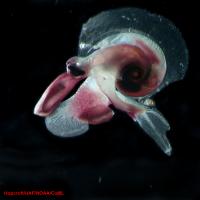
Zooplankton species captured during the latest Atlantic expedition of the Census of Marine Life (aboard NOAA ship Ronald H. Brown). Oxygyrus keraudreni.Census of Marine Life scientists trawled rarely explored tropical ocean depths between the southeast US coast and the Mid-Atlantic Ridge to inventory and photograph the variety and abundance of zooplankton – small sea "bugs" that form a vital link in the ocean food chain – and other life forms.
| Biology | May 5, 2006 10:29 AM |
By studying microscopic hairs called cilia on algae, researchers at UT Southwestern Medical Center have found that an internal structure that helps build cilia is also responsible for a cell's response to external signals.
| Biology | May 4, 2006 11:29 PM |
New research shows that pre-historic horses in Alaska may have been hunted into extinction by man, rather than by climate change as previously thought.
| Biology | May 4, 2006 08:29 PM |
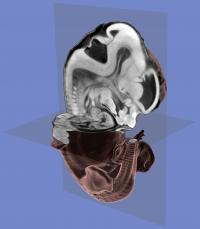
This three-dimensional computer image of a mouse embryo was created using data collected during a CT (computerized tomography) scan of the embryo. Utah and Texas researchers combined miniature medical CT scans with high-tech computer methods to produce detailed three-dimensional images of mouse embryos – an efficient new method to test the safety of medicines and learn how mutant genes cause birth defects or cancer.
| Biology | May 4, 2006 06:43 PM |
It turns out that the sea slug isn't really that sluggish after all. So says the first broad field study of this charismatic orange creature's behavior in the wild, which was just published in the April 2006 issue of The Biological Bulletin.
| Biology | May 3, 2006 08:43 PM |
The prospect of a paycheck, good grade, or promotion wonderfully concentrates the mind, and researchers have now identified the brain circuitry responsible for such reward-motivated learning.
| Biology | May 3, 2006 07:43 PM |
Little attention has been paid to whether systematic economic biases such as risk-aversion are learned behaviors – and thus easily ameliorated through market incentives – or biologically based, arising in novel situations and in spite of experience. In a groundbreaking new study from the Journal of Political Economy, Yale researchers extend this question across species, exploring how a colony of capuchin monkeys responds to economic decisions. They found that monkeys doing business – including trading and gambling – behave in ways that closely mirror our own behavioral inclinations.
| Biology | May 3, 2006 04:20 PM |
Getting beaten up by the neighborhood bully so your buddy can get some tail may seem like a rough life, but it not only works for some lizards, it also gives a fascinating peek into hard-wired altruism in evolutionary biology.
| Biology | May 1, 2006 11:21 PM |
An important source of uncertainty in predictions about global warming is how plants will respond to increasing atmospheric carbon dioxide. Now biologists at the University of California, San Diego have made significant advances toward understanding the mechanism plants use to regulate their carbon dioxide intake.
| Biology | May 1, 2006 07:27 PM |
Biologists have long argued about how birds evolved the ability to fly, because it is not immediately evident what improvement in fitness would result from ancestral, partly evolved wings. Two theories have recently dominated the debate: one postulates that flight evolved in tree-dwelling ancestors that used their forelimbs to help them glide, while the other considers ancestral birds to be terrestrial dinosaurs that developed powered flight from the ground up.
| Biology | April 28, 2006 08:01 PM |
Research investigating attention in infancy has revealed that, at just four months old, babies are able to organise visual information in at least three different ways, according to brightness, shape, and how close the visual elements are together (proximity). These new findings mean that very young infants are much more capable of organising their visual world than psychologists had previously thought. The study also has implications for understanding certain developmental disorders such as Williams syndrome.
| Biology | April 28, 2006 06:01 PM |
A fast, high-resolution, 3D mouse embryo visualization technique developed by collaborators at the University of Texas Health Science Center at San Antonio and the University of Utah will revolutionize the way birth defects and cancer genes are studied in animal models. That's the prediction of the researchers in an article to be published online in PLoS Genetics on April 28, a peer-reviewed, open-access journal from the Public Library of Science.
| Biology | April 27, 2006 05:50 PM |
Psychiatric researchers at The Zucker Hillside Hospital campus of The Feinstein Institute for Medical Research have uncovered evidence of a gene that appears to influence intelligence. Working in conjunction with researchers at Harvard Partners Center for Genetics and Genomics in Boston, the Zucker Hillside team examined the genetic blueprints of individuals with schizophrenia, a neuropsychiatric disorder characterized by cognitive impairment, and compared them with healthy volunteers.
| Biology | April 27, 2006 02:55 PM |
Paleontologists at the Duke Lemur Center have assembled a new picture of a 35-million-year-old fossil mammal -- and they even have added a hint of sound.
| Biology | April 26, 2006 11:55 PM |
Certain species of coral have surprised researchers by showing an unexpectedly successful approach towards survival when seriously bleached.
| Biology | April 26, 2006 08:55 PM |
Scientists have discovered that a dominant hyena puts her cubs on the road to success before they are born by passing on high levels of certain hormones that make her budding young leaders more aggressive and sexually advanced.
| Biology | April 26, 2006 07:55 PM |
Although linguists have argued that certain patterns of language organization are the exclusive province of humans -- perhaps the only uniquely human component of language -- researchers from the University of Chicago and the University of California San Diego have discovered the same capacity to recognize such patterns and distinguish between them in Sturnus vulgaris, the common European starling.
| Biology | April 25, 2006 09:25 PM |
An invasive weed that has spread across much of the U.S. harms native maples, ashes, and other hardwood trees by releasing chemicals harmful to a soil fungus the trees depend on for growth and survival, scientists report this week in the Public Library of Science. The tree-stifling alien, garlic mustard (Alliaria petiolata), first introduced into the U.S. in the 1860s, has since spread to Canada and 30 states in the East and Midwest, with recent sightings as far west as Oregon.
| Biology | April 25, 2006 12:52 PM |
Men become more jealous of dominant males when their female partner is near ovulation, researchers at the University of Liverpool have found.
| Biology | April 24, 2006 06:52 PM |
While most nations excavate their skeletons using a toothbrush, the Norwegians found one using a drill. The somewhat rough uncovering of Norway's first dinosaur happened in the North Sea, at an entire 2256 metres below the seabed. It had been there for nearly 200 million years, ever since the time the North Sea wasn't a sea at all, but an enormous alluvial plane.
| Biology | April 21, 2006 07:18 PM |
A rare Patagonian rodent known as the colonial tuco-tuco fascinates biologists because it seems to defy all odds. This threatened species has so little genetic diversity that the slightest whiff of climate change or disease should have wiped it off the face of the earth long ago. Yet the hearty gopher-like creature has not only managed to survive for thousands of years in the harsh climate of the Argentine highlands, it has evolved a complex social structure that's unique among the more than 50 closely related tuco-tuco species.
| Biology | April 20, 2006 09:28 PM |
When 10,000 honeybees fly the coop to hunt for a new home, usually a tree cavity, they have a unique method of deciding which site is right: With great efficiency they narrow down the options and minimize their bad decisions.
| Biology | April 20, 2006 06:28 PM |
Frogs and lots of them are being discovered in the Southeast Asia nation of Lao PDR, according to the Bronx Zoo-based Wildlife Conservation Society, which says that six new frog species have been found by scientists over a two-year period.
| Biology | April 19, 2006 11:58 PM |
Anatomical features, scientists know, come and go. The animal kingdom is full of critters that have independently gained or lost similar features. Whales and snakes, for instance, have lost their legs. Winged flight evolved separately in birds, bats and pterosaurs at different times in evolutionary history.
| Biology | April 19, 2006 09:58 PM |
Humans have an uncanny ability to skim through text, instantly recognizing words by their shape--even though writing developed only about 6000 years ago--long after humans evolved. Thus, neuroscientists have hotly debated whether an area of the cortex called the Visual Word Form Area (VWFA) is truly a specific and necessary area for recognizing words.
| Biology | April 19, 2006 07:58 PM |
"IT'S the wild west of evolution and ecology," says Joel Brown, an ecologist at the University of Illinois at Chicago. Evolution is operating with a vengeance in the urban environment as animals struggle to adapt to novel conditions and cope with "evolutionary illusions".
| Biology | April 19, 2006 06:58 PM |
Everybody has experienced a sense of "losing oneself" in an activity--whether a movie, sport, sex, or meditation. Now, researchers have caught the brain in the act of losing "self" as it shuts down introspection during a demanding sensory task.
| Biology | April 19, 2006 02:31 PM |
Researchers at the Forsyth Institute have discovered a new mechanism responsible for early left/right patterning, the process by which organs locate themselves on the left or right side of the body. The discovery of this novel mechanism, garnered through the study of three different vertebrates (frogs, chickens and zebrafish), marks the first time that a single common mechanism has been identified in left-right patterning in three distinct species. Such a discovery may have far-reaching implications for the understanding of craniofacial development, right-left hand preference, right/left brain dominance and a variety of birth defects in humans.
| Biology | April 18, 2006 11:51 PM |
The reason people can approach animals in the wild more easily from a car than by foot may be due to an innate "life detector" tuned to the visual movements of an approaching predator's feet, says Queen's University psychologist Niko Troje.
| Biology | April 18, 2006 11:31 PM |
A study conducted by investigators at Georgia State University and the Atlanta-based Center for Behavioral Neuroscience (CBN) reports that anatomical and functional differences in the brain may explain sex differences in the experience of pain and in the effects of certain drugs on pain.
| Biology | April 18, 2006 09:31 PM |
Cuttlefish are wizards of camouflage. Adept at blending in with their surroundings, cuttlefish are known to have a diverse range of body patterns and can switch between them almost instantaneously. New research from MBL Marine Resources scientists, to appear in the May 2006 issue of the journal Vision Research, confirms that while these masters of disguise change their appearance based on visual cues, they do so while being completely colorblind.
| Biology | April 17, 2006 06:02 PM |
The octopus arm is extremely flexible. Thanks to this flexibility--the arm is said to possess a virtually infinite number of "degrees of freedom"--the octopus is able to generate a vast repertoire of movements that is unmatched by the human arm. Nonetheless, despite the huge evolutionary gap and morphological differences between the octopus and vertebrates, the octopus arm acts much like a three-jointed vertebrate limb when the octopus performs precise point-to-point movements. Researchers have now illuminated how octopus arms are able to form joint-like structures, and how the movements of these joints are controlled.
| Biology | April 17, 2006 05:02 PM |
Scientists have long known that the social insects in the order Hymenoptera--which includes ants, bees, and wasps--have an unusual mechanism for sex determination: Unfertilized eggs develop into males, while fertilized eggs become females. But the development of an unfertilized egg into an adult (called parthenogenesis) remains a mysterious process.
| Biology | April 17, 2006 12:01 PM |
A study forthcoming in the June 2006 issue of Current Anthropology sheds new light a contentious issue: How accurate are men's suspicions of whether or not they are a child's biological father? Some studies have suggested that up to 10 percent of fathers are not the biological parents of their alleged child, but little is known about how this differs across cultures and to what extent men's paternity assessments reflect actual biological paternity.
| Biology | April 14, 2006 09:57 PM |
Published in the March 17 issue of Science, their lizard study describes how the "side-blotched" lizard's so-called third, or parietal, eye, distinguishes two different colors, blue and green, possibly to tell the time of day. Specialized nerve cells in that eye, which looks more like a spot on the lizard's forehead, use two types of molecular signals to sense light: those found only in simpler animals, like scallops, and those found only in more complex animals like humans.
| Biology | April 14, 2006 12:42 PM |
Just as baby mammals depend on their mothers' milk, the young of the African amphibian Boulengerula taitanus nourish themselves by stripping off and eating the fat-rich outer layer of their mothers' skin, according to an international team of researchers that includes University of Michigan biologist Ronald Nussbaum.
| Biology | April 14, 2006 10:41 AM |
It happens to all of us, no matter how hard we try. Whether it's deleting a computer file and realizing a split-second later that we can't get it back, or dropping a bag of groceries, or realizing that our gas tank is nearly empty on a lonely stretch of highway, we all make mistakes that aren't just annoying, but potentially costly.
| Biology | April 13, 2006 11:42 PM |
Faces tell the stories in UC Riverside Professor Larry Rosenblum's ecological listening lab, as volunteer test subjects show that they can "read" unheard speech -- not just from lips, but from the simple movements of dots placed on lips, teeth and tongue.
| Biology | April 13, 2006 07:42 PM |
Scientists have found that worms dwelling at deep-sea hydrothermal vents opt for temperatures of 45-55 degrees Celsius (113-131 degrees Fahrenheit) when given a choice of conditions, giving them the highest thermal preference of any animal studied to date. This unique preference for extreme temperatures may be the undersea worms' meal ticket, since they are apparently the only animals able to access -- and feast on -- lush mats of bacteria that thrive around deep-sea vents.
| Biology | April 13, 2006 12:32 PM |
People usually think of the skull as packaging for the brain and researchers usually investigate them separately, but a team of researchers now thinks that developmentally and evolutionarily that the two are incontrovertibly linked.
Males with elevated levels of testosterone lead shorter lives but have more success siring offspring
| Biology | April 12, 2006 09:55 PM |
Comparative studies have studied testosterone levels and related them to mating systems and aggression, but very few studies have attempted to relate testosterone to fitness, that is, the combination of lifetime reproductive success and survival, in the wild or experimentally. Over nine breeding seasons, Wendy Reed (North Dakota State University) and her colleagues followed a group of dark-eyed juncos, small mountain songbirds found throughout North America. They injected males with elevated levels of testosterone and found that they had shorter lives but that they were very successful at siring more offspring – even with females who were mated with other males.
| Biology | April 12, 2006 05:55 PM |
The best way to avoid becoming a fossil is to be small and live in deep, tropical waters. So say four paleontologists who have published a detailed, global study of clam preservation. Their work is intended to enhance evolutionary studies by determining what's missing from the fossil record and why.
| Biology | April 12, 2006 10:58 AM |
In a former cowshed on the edge of the University of New Hampshire campus, David Berlinsky, assistant professor of zoology, peers into a big blue plastic tub. Inside, black sea bass circle slowly in the dim light. The converted barn is now an aquaculture research facility for the College of Life Sciences and Agriculture, and home to Berlinsky's latest research.
| Biology | April 11, 2006 10:58 PM |
Fish kills, foul odors and closed beaches hit Rhode Island's Narragansett Bay during the summer of 2001. The culprit was hypoxia, or oxygen depletion, which literally suffocates sea life. While some evidence of this "dead zone" could be seen on the bay's surface, Brown University ecologists went underwater and discovered a massive mussel die-off.
| Biology | April 9, 2006 02:31 PM |
How long can you hold your breath? Scientists at the University of Oslo have recently discovered how the Crucian Carp, a close relative of the goldfish, is able to live for months without oxygen. The researchers hope that understanding how some animals cope with a lack of oxygen might give clues as to how to solve this problem in humans.
| Biology | April 8, 2006 04:31 PM |
Ants are considerably older than previously believed, having originated 140 to 168 million years ago, according to new research on the cover of this week's issue of the journal Science.
| Biology | April 7, 2006 04:47 PM |
Although the human brain is skilled at facial recognition and discrimination, new research from Georgetown University Medical Center suggests that the brain may not have developed a specific ability for "understanding faces" but instead uses the same kind of pattern recognition techniques to distinguish between people as it uses to search for differences between other groups of objects, such as plants, animals and cars.
| Biology | April 7, 2006 12:47 PM |
Gas leaks can be potentially life threatening in the home, but the presence of gas stresses out plants too.
| Biology | April 7, 2006 10:47 AM |
Fast action by an alliance of conservation groups battling global extinctions has saved one of the world's most important sites for endangered species.
| Biology | April 6, 2006 11:47 PM |
Using new techniques for resurrecting ancient genes, scientists have for the first time reconstructed the Darwinian evolution of an apparently "irreducibly complex" molecular system.
| Biology | April 5, 2006 09:29 PM |
If men think finding a nice partner to settle down and raise children with is tough, consider the plight of the male Australian redback spider. Instead of personality conflicts, spats over in-laws and financial worries, imagine that immediately after the first time you have sex, your partner -- who is 100 to 200 times your body weight -- will eat you alive.
| Biology | April 5, 2006 06:29 PM |
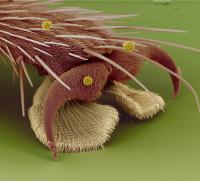
Electron microscope image of a fly footEver wondered how flies are able to walk on the ceiling without falling off? Scientists at the Max Planck Institute in Stuttgart (Germany) are investigating this James Bond-style ability of insects to hang upside down from a ceiling. In the future such knowledge could lead to the design of tiny machines that mimic this phenomenon of nature.
| Biology | April 5, 2006 10:05 AM |
Salmon, like humans, require omega-3 fatty acids in their diet to function healthily. But as the fish farming industry expands, feeding salmon and other aquatic species with pellets containing fishmeal and oil derived from processing wild-caught marine fish is unsustainable in the long term. This is due to rising demands for these commodities for aquafeeds and other purposes in the face of finite or declining annual global fish catches. To provide a solution with respect to fish oil, a team of scientists from the University of British Columbia and the Department of Fisheries and Oceans, Canada, have been studying the effects of replacing anchovy oil with canola oil (also known as rapeseed oil) in the diets of salmon.
| Biology | April 4, 2006 10:05 PM |
Female harbor seal pups whose blubber falls below average levels may be at higher risk of delayed sexual maturation or death, even if they get enough fat in their diets later on, according to a new study sponsored by The American Physiological Society and presented at Experimental Biology 2006.
| Biology | April 4, 2006 09:05 PM |
"The further birds migrate north for the summer, the faster they put on weight", says Dr Williams (Simon Fraser University, Canada) who has been tracking migrating birds for several years. "This research may have implications for the designation of protected areas which will ensure birds can complete their spring and autumn migrations." Dr Williams will present his research on Tuesday 4th April at the Society for Experimental Biology's Annual Main Meeting in Canterbury [session A4].
| Biology | April 4, 2006 08:05 PM |
Have you ever tried to do the limbo? For ants it's a way of life! Scientists at the University of Zurich have discovered that ants are able to learn how to visually judge the height of horizontal barriers so that they can successfully crawl under it without slowing down. Tobias Seidl will be presenting his latest research findings at the Annual Meeting for the Society for Experimental Biology on Tuesday 4th April.
| Biology | April 3, 2006 08:39 PM |
An Australian research team has solved one of biology's most fundamental questions – why males produce sperm and females produce eggs. The finding is a breakthrough that could lead to improved infertility treatment, cancer therapy and pest management.
| Biology | April 3, 2006 04:47 PM |
Do you remember learning to swim? Thrashing around, floundering, until suddenly it all clicks into place and a few feeble strokes of doggy-paddle propel you away from your parent's arms. Surely, you think, fish must be born as expert swimmers. Actually, fish larvae are pretty feeble when it comes to an efficient mode of swimming called 'burst-and-coast'. Dr Ulrike Müller from Wageningen University studies how fish swim: "Fish larvae are the most critical life history stage. In marine fish more than 99% of the mortality occurs in the larval stage so anything that might explain what holds them back is useful". Müller will present her research on Monday 3rd April, at the Society for Experimental Biology's Annual Main Meeting in Canterbury [session A5].
| Biology | April 3, 2006 02:47 PM |
There's no doubt that laughter feels good, but is there real neurophysiology behind it and what can you do about it?
| Biology | April 2, 2006 02:21 PM |
Think twice before you blithely swat, stomp, curse or ignore insects, says Cornell University entomologist John Losey, who co-authored a study that shows the dollar value of some of those insect services is more than $57 billion in the United States annually. The research appears in the journal BioScience today (April 1).
| Biology | March 31, 2006 06:25 PM |
The Bronx Zoo-based Wildlife Conservation Society (WCS) today applauded a decision today by the U.S. Fish and Wildlife Service to list the Tibetan antelope, also known as "chiru," as an endangered species. Through a series of expeditions to China's windswept Chang Tang Reserve over the past two decades, WCS had played a key role in sounding the alarm about the dramatic decline of this elegant animal due to poaching.
| Biology | March 31, 2006 12:17 PM |
Much of what scientists learn about the evolution of Earth's first animals will have to be gleaned from spherical embryos fossilized under very specific conditions, according to a new study by Indiana University Bloomington and University of Bristol researchers in this week's Proceedings of the National Academy of Sciences.
| Biology | March 31, 2006 10:17 AM |
A rare frog that lives in rushing streams and waterfalls in east-central China is able to make itself heard above the roar of flowing water by communicating ultrasonically, scientists reported March 16 in the journal Nature. Attributes that enable the frog to hear ultrasounds are made possible by the presence of an ear canal, which most other frogs don't have.
| Biology | March 30, 2006 04:17 PM |
Youth with superior IQ are distinguished by how fast the thinking part of their brains thickens and thins as they grow up, researchers at the National Institutes of Health's (NIH) National Institute of Mental Health (NIMH) have discovered.
| Biology | March 29, 2006 10:18 PM |
The sweetgum tree grows widely throughout the country and is known for its mace-like green fruit, which are sometimes called "gumballs." Now, this spiny fruit may become an important source of a chemical needed to make a lifesaving drug against bird flu — a drug that is currently in short supply worldwide, researchers say.
| Biology | March 28, 2006 12:45 PM |
If you think you've got a bad boss, one who loves to chew people out, or if you work with backstabbing co-workers, be thankful you are not a wasp.
| Biology | March 24, 2006 11:26 AM |
New evidence from open sea experiments shows there's a constant shuffling of genetic endowments going on among tiny plankton, and the "coinage" they use seems to be a flood of viruses, MIT scientists report.
| Biology | March 24, 2006 10:38 AM |
A new experiment has shed more light on the multi-decade debate about how the brain knows where limbs are without looking at them.
| Biology | March 23, 2006 09:38 PM |
When high-ranking monkeys are shown images of other monkeys glancing one way or the other, they more readily follow the gaze of other high-ranking monkeys, Duke University Medical Center neurobiologists have discovered. By contrast, they tend to ignore glance cues from low-status monkeys; while low-status monkeys assiduously follow the gaze of all other monkeys.
| Biology | March 23, 2006 06:38 PM |
Since the mid-1990s a great debate has raged over whether organic compounds and tiny globules of carbonate minerals imbedded in the Martian meteorite Allan Hills 84001 were processed by living creatures from the Red Planet.
| Biology | March 23, 2006 10:37 AM |
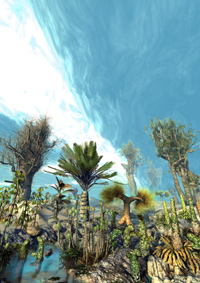
Are plant species real or imaginary? Many botanists have argued grouping plants into species is merely an exercise of convenience.Credit: Robert CzarnyNotoriously "promiscuous" plants like oaks and dandelions have led some biologists to conclude plants cannot be divided into species the same way animals are.
| Biology | March 22, 2006 09:32 PM |
Saving endangered species like pandas, gorillas and tigers helps reduce poverty and improve the lives of local communities, according to a new World Wildlife Fund report. Now as the eighth Conference of the Parties to the Convention on Biological Diversity opens today in Curitiba, Brazil, WWF urges the CBD and member governments to integrate species conservation work into efforts to alleviate poverty.
| Biology | March 22, 2006 08:32 PM |
The songs of the humpback whale are among the most complex in the animal kingdom. Researchers have now mathematically confirmed that whales have their own syntax that uses sound units to build phrases that can be combined to form songs that last for hours.
| Biology | March 21, 2006 10:32 PM |
Choosing a mate is a big decision. And, at least for mice, it's one that is best made with input from one's peers.
| Biology | March 21, 2006 05:32 PM |
A group of scientists from Oregon have discovered that butterflies experience a great loss in body fat during metamorphosis. The details of their findings appear in the March issue of the Journal of Lipid Research, an American Society for Biochemistry and Molecular Biology journal.
| Biology | March 21, 2006 04:05 PM |
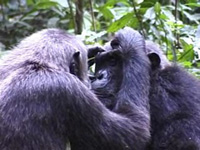
Photo credit: Simone PikaEditor: A video of the behavior is available! Check it out!
Humans commonly use referential gestures that direct the attention of recipients to particular aspects of the environment. Because the recipient of a referential gesture must infer the signaler's meaning, the use of these gestures has been linked with cognitive capacities such as the ability to recognize another individual's mental state. Researchers have now found evidence that such referential gesturing is a natural part of chimpanzee behavior.
| Biology | March 21, 2006 02:05 PM |
Work reported this week provides new evidence that marsupials, like primates, have functional color vision based on three different types of color photoreceptor cones--but unlike primates, a component of marsupial color vision includes sensitivity to ultraviolet wavelengths.
| Biology | March 21, 2006 12:05 PM |
Viruses are famous for evolving quickly, but the organisms they infect can't be expected to sit idly by. There is now new evidence that animals in fact do an impressive job of keeping up in the ongoing evolutionary arms race between viruses and their hosts. Studying a special class of genes thought to have evolved in part as a defense system against viruses, researchers have found evidence that these genes are indeed among the fastest-evolving in the genome of the fruit fly, Drosophila. The work is reported by University of Edinburgh researchers Dr. Darren Obbard and Dr. Tom Little and colleagues and appears in the March 21st issue of Current Biology.
| Biology | March 20, 2006 09:05 PM |
A research team at Uppsala University, Sweden has shown in a new study, published in the journal Acta Zoologica, that the size of the spot on a male collared flycatcher's forehead reflects how well the immune defence system combats viruses such as avian influenza. The white spot is also attractive to female birds searching for a mate.
| Biology | March 18, 2006 12:08 PM |
World Wildlife Fund today released the results of a field survey from the island of Borneo which found that poaching has significantly reduced Borneo's population of Sumatran rhinos, but a small group continues to survive in the "Heart of Borneo," a region covered with vast tracts of rain forest.
| Biology | March 16, 2006 10:20 PM |
First came word that a rare frog (Amolops tormotus) in China sings like a bird, then that the species produces very high-pitch ultrasonic sounds. Now scientists say that these concave-eared torrent frogs also hear and respond to the sounds.
| Biology | March 14, 2006 09:32 PM |
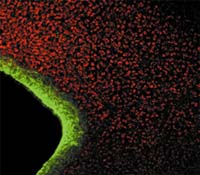
Magnified view of a leaf where leafworms have been feeding. The green colouring indicates calcium-ion influx. Image: Simone Bossi, University of Turin This "electrical black out" drastically reduces the ability of the plant's cells to react and protect themselves against getting eaten by the leafworm. The scientists are now trying to determine the identity, origins, and functioning of every substance responsible for these electrical changes (Plant Physiology, March 13, 2006).
| Biology | March 14, 2006 10:04 AM |
In the first study to link social evolution to climate change, Cornell University entomologists show that the social behavior of many species of sweat bees evolved simultaneously during a period of global warming.
| Biology | March 10, 2006 06:22 PM |
Like an armada of small rototillers, female salmon can industriously churn up entire stream beds from end to end, sometimes more than once, using just their tails.
| Biology | March 10, 2006 04:22 PM |
New research at UT Southwestern Medical Center shows that on a biochemical level, hormone-like molecules in tiny worms called nematodes work similarly to the way in which certain hormones work in humans – findings that one day may help eradicate worm infections that afflict a third of the world's population.
| Biology | March 9, 2006 08:21 PM |
Although conventional wisdom suggests that invasive exotic plants thrive because they escape the natural enemies that kept them in check in their native ranges, a new study in the journal Science suggests the opposite. Exotic plants that are in the presence of their natural enemies actually do better in their introduced ranges. The research from the Georgia Institute of Technology appears in the March 10, 2006 issue of the journal Science, published by the AAAS, the science society, the world's largest general scientific organization.
| Biology | March 9, 2006 07:21 PM |
Within a hormone-triggered cascade of molecular signals that plays a crucial for a wide range of physiological functions, researchers for the very first time have identified a protein that functions specifically to extend lifespan and youthfulness -- without disrupting fertility, immunity or the organism's response to stress.
| Biology | March 9, 2006 02:31 PM |
Researchers at the Salk Institute for Biological Studies have identified an important circuit in the spinal cord that controls the speed with which our leg muscles contract and relax. Their findings mark an important milestone in understanding the neural circuitry that coordinates walking movements - one of the main obstacles in developing new treatments for spinal cord injuries.
| Biology | March 9, 2006 12:31 PM |
Studying neotropical poison dart frogs, biologists at the University of Texas at Austin uncovered a new way that the frog species can evolve to look similar, and it hinges on the way predators learn to avoid the toxic, brightly colored amphibians.
| Biology | March 8, 2006 09:31 PM |
The vast differences between humans and chimpanzees are due more to changes in gene regulation than differences in individual genes themselves, researchers from Yale, the University of Chicago, and the Hall Institute in Parkville, Victoria, Australia, argue in the 9 March 2006 issue of the journal Nature.
| Biology | March 8, 2006 08:11 PM |
Believing that you can retain a good memory even in your twilight years is the first step to achieving that goal. Those who believe they can control their memory are more likely to employ mnemonic strategies that help keep memory fit despite the march of time. These are the conclusions of a new Brandeis study published in the Journals of Gerontology: Psychological Sciences.
| Biology | March 8, 2006 11:10 AM |
A major conservation effort, led by Dr Brendan Godley of the University of Exeter, has just got underway to help protect endangered leatherback turtles which nest in Gabon, West Africa. The region is thought to be the animals' last global stronghold, as pacific populations dwindle precariously.
| Biology | March 7, 2006 08:47 PM |
By stimulating the frontal cortex in adults, researchers have shown that this part of the brain is essential for understanding other people's actions.
| Biology | March 7, 2006 06:47 PM |
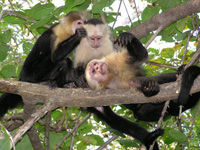 A 14 year behavioral and genetic study of a population of wild capuchin monkeys has shown that fathers almost never mate with their daughters, even though alpha males sire the majority of offspring produced by females unrelated to them. The findings suggest that psychological or other sophisticated behavioral barriers have evolved in this primate species to prevent inbreeding within individual populations.
| Biology | March 7, 2006 12:47 PM |
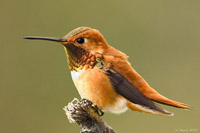
Photo Credit: Susan HealyBy observing rufous hummingbirds revisiting flowers that refill with nectar at regular intervals, researchers have found that these birds can remember when they last visited individual flowers. This so-called "interval timing" is an ability that has received much attention in the laboratory, where it has been shown that animals can learn to time one or two short intervals (on the order of seconds to 1½ hours). However, almost nothing had been known about whether animals in the wild can do this in the course of their normal behavior.
| Biology | March 6, 2006 07:47 PM |
Hatchery-reared steelhead trout show increased growth of some parts of the brain when small stones are scattered on the bottom of their tank, according to a new study by researchers at UC Davis. The brains of those young fish were closer to those of salmon reared in the wild, and the fish also showed behavior closer to wild than to hatchery-reared fish.
| Biology | March 6, 2006 05:47 PM |
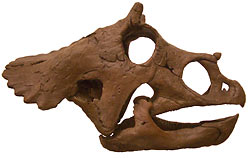
This cast of the Triceratops skull shows characteristics — a shortened face and big eyes — that have made babies lovable throughout the ages. The sprouting horns grow to three feet in the adult, while the scalloped edges of the frill, which can grow to seven feet across, become more wavy and develop scales. (Photo by Mark Goodwin, UC Berkeley Museum of Paleontology)With its big, hockey puck-sized eyes, shortened face and nubby horns, it was probably as cute as a button - at least to its mother, a three-horned dinosaur called Triceratops that could weigh as much as 10 tons and had one of the largest skulls of any land animal on the planet.
| Biology | March 3, 2006 08:56 PM |
Scientists at The University of Manchester and the Manchester Metropolitan University have carried out the first comparative scientific study of ancient spiders trapped in amber more than 30 millions years ago.
| Biology | March 2, 2006 11:32 PM |
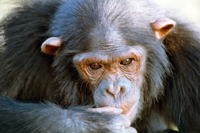
Chimpanzees are skillful cooperators. They recognize when collaboration is necessary and who is the best collaborative partner. Image: Max Planck Institute for Evolutionary Anthropology/Esther Herrmann 'We've never seen this level of understanding during cooperation in any other animals except humans,' says Melis. Cooperation happens all the time in the animal kingdom. A pride of lions cooperates to hunt down a gazelle. A herd of elephants band together to protect themselves from predators. But there may not be much thinking going on behind this kind of cooperation. It could be that by each animal wanting the same thing and working at the same time, success happens by accident.
| Biology | March 2, 2006 11:12 PM |
An international team of researchers, including Kent State University professor Dr. Patrick D. Lorch, have revealed the motivating factors behind the seasonal mass migration of Mormon crickets in western North America.
| Biology | March 1, 2006 08:56 PM |
Whether salamanders transform into their terrestrial, adult form or retain their aquatic, juvenile form depends on the nature of the streambed where they develop.
| Biology | March 1, 2006 06:15 PM |
If the history of life were to play out again from the beginning, it would have a similar plot and outcomes, although with a different cast and timing, argues UC Davis paleontologist Geerat Vermeij in a new paper in the Proceedings of the National Academy of Sciences.
| Biology | March 1, 2006 06:15 PM |
While a bonefish catch is always gratifying for the avid angler, one caught in the Bahamian flats off southwestern Andros Island in December proved even more satisfying for the researchers who study bonefish migration at Bonefish and Tarpon Unlimited (BTU) and the University of Miami Rosenstiel School of Marine and Atmospheric Science. The fish was a record catch, representing the longest movement by a bonefish and measured at more than double the previous distance record.
| Biology | February 28, 2006 11:06 PM |
In the first study of native African honeybees and honey-making stingless bees in the same habitat, humans and chimpanzees are the primary bee nest predators. Robert Kajobe of the Dutch Tropical Bee Research Unit and David Roubik from the Smithsonian Tropical Research Institute report this finding in the March, 2006 issue of Biotropica.
| Biology | February 27, 2006 10:14 PM |
A team of researchers from the University of Alberta, the Yerkes National Primate Research Center of Emory University and the Emory Transplant Center has successfully transplanted insulin-producing neonatal porcine islet cells into monkeys, a procedure the researchers say represents a promising intermediate solution to the critical supply problem in clinical islet cell transplantation.
| Biology | February 27, 2006 10:14 PM |
Scientists can now predict memory of an event before it even happens. A team at UCL (University College London) can now tell how well memory will serve us before we have seen what we will remember.
| Biology | February 27, 2006 09:15 PM |
Anabolic steroids not only make teens more aggressive, but may keep them that way into young adulthood. The effect ultimately wears off but there may be other, lasting consequences for the developing brain. These findings, published in February's Behavioral Neuroscience, also showed that aggression rose and fell in synch with neurotransmitter levels in the brain's aggression control region. Behavioral Neuroscience is published by the American Psychological Association (APA).
| Biology | February 24, 2006 11:06 PM |
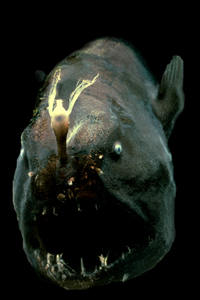
Menacing Deep-sea Anglerfish. Credit: Harbor Branch/E. WidderFor centuries scientists have thought of deep-sea pelagic fish as nomadic wanderers, in part because information about them was so limited. However, new results from the ongoing Mid-Atlantic Ridge Ecosystems program (MAR-ECO), a Sloan Foundation-sponsored component of the Census of Marine Life, have revealed that these fishes may in fact be gathering at features such as ridges or seamounts to spawn.
| Biology | February 24, 2006 09:14 PM |
University of Florida scientists have found that people have an ancient skeleton in their closets - a skeleton personified today by a jawless, eel-like fish.
| Biology | February 23, 2006 11:56 PM |
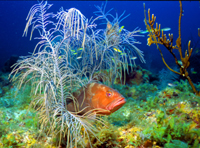
A red grouper pauses on the seabed of Dry Tortugas National Park, Florida, surrounded by gorgonian soft coral, sponges, and algae. (Photo by UM Rosenstiel School Associate Scientist Jiangang Luo.)Rosenstiel School fisheries researchers will embark on state-of-the-art research at the end of February to track black and red grouper in the Dry Tortugas National Park to develop a better understanding of species' movement and habitat requirements, so they can help more efficiently design and assess future marine-protected areas. Through funding from the National Park Service and transportation support from Yankee Fleet Ferry Service, scientists will be able to conduct this high-tech observation that involves surgically implanted transmitters for approximately a year.
| Biology | February 23, 2006 10:15 PM |
Scientists at Carnegie Mellon University have discovered that our ears use the most efficient way to process the sounds we hear, from babbling brooks to wailing babies. These results represent a significant advance in our understanding of how sound is encoded for transmission to the brain, according to the authors, whose work is published with an accompanying "News and Views" editorial in the Feb. 23 issue of Nature.
| Biology | February 23, 2006 06:55 PM |
If mastering flight is your goal, you can't do better than to emulate a dragonfly. With four wings instead of the standard two and an unusual pitching stroke that allows the bug to hover and even shift into reverse, the slender, elegant insect is a marvel of engineering.
| Biology | February 22, 2006 11:40 PM |
Marine scientists have discovered that the deepest oceans of the world would appear to be shark free.
| Biology | February 22, 2006 11:33 PM |
Researchers have identified three new species of lemurs, the small, big-eyed primates native to the island of Madagascar.
| Biology | February 22, 2006 11:32 PM |
Researchers at Yale School of Medicine have found evidence that a hormone produced in the stomach directly stimulates the higher brain functions of spatial learning and memory development, and further suggests that we may learn best on an empty stomach.
| Biology | February 22, 2006 11:29 PM |
University of Florida scientists have found that people have an ancient skeleton in their closets - a skeleton personified today by a jawless, eel-like fish.
| Biology | February 21, 2006 11:01 PM |
Past research on aging and the life histories of diverse species has shown that sexual reproduction is biologically costly for individuals and tends to decrease lifespan rather than increase it. But a new study by Philip Dammann and Hynek Burda from the University of Duisburg-Essen shows that, in a vertebrate species, the opposite can be true as well.
| Biology | February 21, 2006 10:36 PM |
Gone does not necessarily mean forgotten, especially in biology. A recent finding by researchers at the University of Wisconsin, Madison, and colleagues from the University of Manchester have found new evidence that the ability to form previously lost organs--in this case, teeth--can be maintained millions of years after the last known ancestor possessed them.
| Biology | February 21, 2006 09:07 PM |
As the prism of our senses, the human brain has ways of refracting sensory input in defiance of reality.
| Biology | February 21, 2006 09:07 PM |
Each year, the red knot, a medium-sized shorebird, makes a 20,000-mile round-trip from the southern tip of Argentina to the Artic Circle – one of the longest migrations of any bird. And each year from April to June, the red knot stops over in the Delaware Bay to feed on horseshoe crab eggs resulting from the largest spawning of horseshoe crabs found on the East Coast of the United States.
| Biology | February 20, 2006 06:55 PM |
Forget the textbook story about tool use and language sparking the dramatic evolutionary growth of the human brain. Instead, imagine ancient hominid children chasing frogs. Not for fun, but for food.
| Biology | February 20, 2006 06:55 PM |
The late, famed evolutionary biologist Ernst Mayr's theory of genetic revolution , introduced in 1954, remains controversial to this day and has many detractors.
| Biology | February 19, 2006 10:43 PM |
Researchers are enlisting seals, sea lions, tunas, and sharks to serve as ocean sensors, outfitting these top predators with electronic tags that gather detailed reports on oceanographic conditions and, in many cases, transmit the data via satellite. The data are proving useful to both biologists and oceanographers, yielding new information about the migrations and behavior of the animals and about the environments in which they live.
| Biology | February 19, 2006 10:42 PM |
The closest encounter most wildlife biologists have with wolverines in the Pacific Northwest is seeing a set of the animal's tracks in the snow. But wildlife biologist Keith Aubry recently got the call he had eagerly anticipated for several weeks.
| Biology | February 19, 2006 10:42 PM |
The world has passed "peak fish" and fishermen's nets will be hauling in ever diminishing loads unless there's political action to stem the global tide of over fishing, says a fisheries expert based at the University of British Columbia. Dr. Daniel Pauly says the crisis in the world's fisheries is less about scientific proof than about attitude and political will.
| Biology | February 19, 2006 06:33 PM |
With no known enemies in North America, two types of invasive vines are growing rampant in forests and fields, threatening reforestation, fragile butterfly populations and bird habitats.
| Biology | February 18, 2006 10:43 PM |
Princeton biologist reports at AAAS on partnership with St. Louis Zoo to empower Kenyan communities in endangered Grevy's zebra conservation
| Biology | February 18, 2006 06:33 PM |
As thousands of pink-footed geese (Anser brachyrhynchus) prepare for their spring migration north to breeding grounds in the Arctic, ecologists are warning that the escalating conflict between farmers and the geese is threatening the birds' survival. Writing in the new issue of the British Ecological Society's Journal of Applied Ecology, Professor Marcel Klaassen of the Netherlands Institute of Ecology says that international action is urgently required.
| Biology | February 18, 2006 06:33 PM |
UC Riverside researchers have released a new variety of asparagus that offers a higher yield than previous varieties of the vegetable and boasts an excellent spear quality, marked by a high percentage of marketable spears. Higher yield of marketable spears reduces the impact of high land and labor costs, thereby making the asparagus more profitable without raising consumer prices.
| Biology | February 17, 2006 10:43 PM |
Do human newborns develop their preference for speech through in-utero eavesdropping, or is their penchant for speech innate? It's a bedevilling question to test, but one that's central to understanding the origins and dynamics of humans unique propensity for speech. Now a McGill University psychologist believes she's separated out the complicating effects of the uterine sound barrier. And the results, says Dr. Athena Vouloumanos, point to a genetic predilection for listening in on speech above other similar sounds.
| Biology | February 16, 2006 11:45 PM |
The water flea Daphnia pulex is a commonly used model organism among ecologists and other environmental scientists. Copyright Holder: P.D.N. Hebert, University of Guelph When sexual species reproduce asexually, they accumulate bad mutations at an increased rate, report two Indiana University Bloomington evolutionary biologists in this week's Science. The researchers used the model species Daphnia pulex, or water flea, for their studies.
| Biology | February 15, 2006 10:33 PM |
An underwater mountain that forms the world's third-largest atoll has some of the richest diversity of marine life ever found in the Caribbean, according to scientists who recently explored the area.
| Biology | February 15, 2006 06:34 PM |
For the first time, researchers have seen in action how the "hot" emotional centers of the brain can interfere with "cool" cognitive processes such as those involved in memory tasks. Their functional magnetic resonance imaging (fMRI) images of human volunteers exposed to emotional distraction revealed a "see-saw" effect, in which activation of emotional centers damped activity in the "executive" centers responsible for such processing.
| Biology | February 14, 2006 09:43 PM |
Humans and chimps share most of their genes, yet they differ dramatically in many ways---their walk, the sizes of their brains and their capacities for speech and language, for example.
| Biology | February 13, 2006 09:42 PM |
"The wild geese and every species of water fowl darkened the surface of every bay … in flocks of millions…. When disturbed, they arose to fly. The sound of their wings was like that of distant thunder."
--George Yount, California pioneer, at San Francisco Bay in 1833
| Biology | February 13, 2006 09:42 PM |
Very thin but hardy, unblemished skin and slow developing gills appear to be keys to survival for newly hatched Antarctic notothenioids, a group of fish whose adults thrive in icy waters because of antifreeze proteins (AFPs) in their blood.
| Biology | February 13, 2006 09:42 PM |
Assertive and even aggressive human behavior could explain why shark attacks worldwide dipped last year, continuing a five-year downward trend in close encounters with the oceanic predators, new University of Florida research suggests.
| Biology | February 12, 2006 10:38 PM |
They may not be able to make love last, but a team of University of Florida researchers has figured out how to at least make the flowers go the distance.
| Biology | February 11, 2006 10:38 PM |
There is growing concern about the threats that farmed Atlantic salmon escapees constitute to wild salmon populations.
| Biology | February 9, 2006 11:15 PM |
Florida State University paleobiologist Gregory M. Erickson sliced up some ancient dinosaur bones uncovered in China to help an international team of scientists identify a new genus and species. Despite striking skeletal differences and only subtle similarities, the FSU researcher determined that the two remarkably intact specimens were cousins of North America's hulking Tyrannosaurus rex.
| Biology | February 9, 2006 11:11 PM |
The social avoidance that normally develops when a mouse repeatedly experiences defeat by a dominant animal disappears when it lacks a gene for a memory molecule in a brain circuit for social learning, scientists funded by the National Institutes of Health's (NIH) National Institute of Mental Health (NIMH) have discovered. Mice engineered to lack this memory molecule continued to welcome strangers in spite of repeated social defeat. Their unaltered peers subjected to the same hard knocks became confirmed loners – unless the researchers treated them with antidepressants.
| Biology | February 9, 2006 10:11 PM |
A new, more robust analysis of recently derived human gene trees by Alan R. Templeton, Ph.D, of Washington University in St Louis, shows three distinct major waves of human migration out of Africa instead of just two, and statistically refutes –strongly – the 'Out of Africa' replacement theory.
| Biology | February 8, 2006 07:58 PM |
An exotic type of crab is spreading at an alarming rate throughout Britain's coast and rivers, a new study suggests.
| Biology | February 7, 2006 11:20 PM |
An expedition to one of Asia's most isolated jungles – in the mist-shrouded Foja Mountains of western New Guinea – discovered a virtual ''Lost World" of new species, giant flowers, and rare wildlife that was unafraid of humans.
| Biology | February 7, 2006 05:21 PM |
In an extensive study, researchers from the University of Montana, University of California - Santa Cruz, and the University of California - Davis have shown that a top predator strongly affected plants and animals at the bottom of an island food web by eating organisms that transport nutrients between ecosystems. "An introduced predator alters Aleutian island plant communities by thwarting nutrient subsidies," is published in the February issue of Ecological Monographs.
| Biology | February 6, 2006 04:23 PM |
Sharks are known for their almost uncanny ability to detect electrical signals while hunting and navigating.
| Biology | February 6, 2006 04:23 PM |
By studying a particularly short-lived fish species, researchers have been able to show that a natural compound previously shown to extend lifespan in non-vertebrate organisms can also do so in at least one vertebrate species. The findings, reported by Alessandro Cellerino of the Scuola Normale Superiore, Pisa, and colleagues, support the potential utility of the compound in human aging research.
| Biology | February 6, 2006 04:23 PM |
By expressing a protein associated with Alzheimer's disease in the brain of the fruit fly, researchers have demonstrated an intriguing link between neuronal death and proteins previously associated with cancer.
| Biology | February 6, 2006 04:23 PM |
Antarctic researchers have recorded a novel behavior in krill that may help regulate greenhouse gases. Antarctic krill, one of the largest animal resources on Earth, parachute into the deeper layers of the ocean many times a night and sequester large amounts carbon in the process.
| Biology | February 5, 2006 06:16 PM |
It may still be "king of the beasts," but the African lion's kingdom is dwindling, according to a new report released by the New York-based Wildlife Conservation Society (WCS) that says these emblematic big cats have disappeared from 82 percent of their historic distribution over the past several decades. The 200-page report looked at the conservation status of the 20 largest species of African carnivores and examined priorities to help ensure that they persist on the continent.
| Biology | February 4, 2006 09:21 PM |
Researchers at MIT have found a new way of looking beneath the ocean surface that could help definitively determine whether fish populations are shrinking.
| Biology | February 3, 2006 11:21 PM |
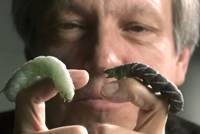
Frederik Nijhout studying polyphenic hornwormsDuke University biologists have evolved a complex trait in the laboratory -- using the pressure of selection to induce tobacco hornworms to evolve the dual trait of turning black or green depending on the temperature during their development. The biologists have also demonstrated the basic hormonal mechanism underlying the evolution of such dual traits.
| Biology | February 3, 2006 10:14 PM |
What makes dancers different than the rest of us? Genetic variants, says a researcher at the Hebrew University of Jerusalem.
| Biology | February 3, 2006 09:22 PM |
A new report released today finds that the illegal trade in the Roti Island snake-necked turtle, found only on one island in Indonesia, has left it all but extinct in the wild. Exotic pet enthusiasts in Europe, North America and East Asia are fueling the illegal trade for the turtle, often without realizing that they are contributing to its demise. No legal trade of this species has been allowed since 2001.
| Biology | February 2, 2006 11:22 PM |
Scientists at the Weizmann Institute of Science recently discovered a new source of well-preserved ancient DNA in fossil bones. Their findings were published in the Proceedings of the National Academy of Sciences (PNAS).
| Biology | February 1, 2006 06:13 PM |
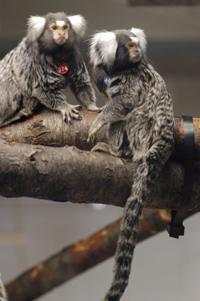
Marmoset monkeys play with and groom one another in a marmoset monkey colony display in the lobby of the National Primate Research Center. A red tag indicates a female monkey of breeding age and a blue indicates a male monkey of breeding age. Photo by Jeff Miller, March 2005. Confirming what many have long suspected, scientists have found that male monkeys of two different species get heavier when their mates are pregnant.
| Biology | February 1, 2006 06:10 PM |
UCLA paleobiologist J. William Schopf and colleagues have produced 3-D images of ancient fossils -- 650 million to 850 million years old -- preserved in rocks, an achievement that has never been done before.
| Biology | January 31, 2006 12:29 AM |
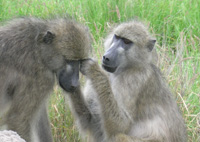
Sylvia grooms Sierra (deceased). (Photo: Anne Engh) When Sylvia the baboon lost Sierra, her closest grooming partner and daughter, to a lion, she responded in a way that would be considered very human-like: she looked to friends for support. According to researchers from the University of Pennsylvania, baboons physiologically respond to bereavement in ways similar to humans, with an increase in stress hormones called glucocorticoids. Baboons can lower their glucocorticoid levels through friendly social contact, expanding their social network after the loss of specific close companions.
| Biology | January 31, 2006 12:29 AM |
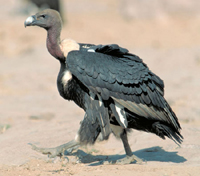
Tens of millions of Asian vultures-including the oriental white-backed vulture (Gyps bengalensis), above-have vanished from the Indian subcontinent since the early 1990s (Image: Goran Ekstrom)Today saw a glimmer of hope for the three species of Asian vulture threatened with extinction.
| Biology | January 31, 2006 12:29 AM |
Deadly and damaging toxins that allow anthrax to cause disease and death in mammals have similar toxic effects in fruit flies, according to a study conducted by biologists at the University of California, San Diego.
| Biology | January 30, 2006 11:32 AM |
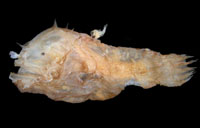
A 6.2 mm long male Photocorynus spiniceps, fused to the middle of the back of a 46 mm long female, is the world's smallest known, sexually mature vertebrate. Credit: T.W. Pietsch/University of Washington The authors of a paper in this week's Proceedings of the Royal Society of London Section B, who say their 7.9 mm-long fish from a peat swamp in Southeast Asia is the smallest fish and vertebrate known, have failed to make note of work published last fall that describes sexually mature, male anglerfishes measuring 6.2 mm to 7.4 mm in length.
| Biology | January 27, 2006 07:12 PM |
A fascinating new study from the forthcoming issue of The American Naturalist attempts to explain the mysterious persistence of two forms of females in many diving beetle populations. Their findings have important implications for theories of sexual conflict, which arises when the costs and benefits of multiple matings differ for males and females.
| Biology | January 26, 2006 10:29 PM |
An article by University of Pittsburgh Professor of Anthropology Jeffrey H. Schwartz and University of Salerno Professor of Biochemistry Bruno Maresca, published Jan. 30 in the New Anatomist journal, shows that the emerging understanding of cell structure lends strong support to Schwartz's theory of evolution, originally explained in his seminal work, Sudden Origins: Fossils, Genes, and the Emergence of Species (John Wiley & Sons, 2000).
| Biology | January 25, 2006 11:41 PM |

Each line in this illustration symbolizes the geographic movement of a single dollar bill (or a bill in any denomination) from either Seattle (blue) or New York (yellow) to various destinations in the U.S. The bills traveled for less than a week. Credit: UCSB and the Max Planck Institute for Dynamics and Self Organization Using a popular internet game that traces the travels of dollar bills, scientists have unveiled statistical laws of human travel in the United States, and developed a mathematical description that can be used to model the spread of infectious disease in this country. This model is considered a breakthrough in the field.
| Biology | January 25, 2006 11:41 PM |
A new general microbiology textbook aimed at undergraduate students comes with not one, but two online resources. Written by eminent scientists with practical teaching, textbook writing and research experience, Microbe, will engage students in the learning process with its clear, reader-friendly style and a unique perspective of the field.
| Biology | January 25, 2006 11:41 PM |
A study published in the latest issue of Conservation Biology examines the effects of humans on Magellanic Penguins and finds no immediate, negative effects of tourism.
| Biology | January 24, 2006 07:51 PM |
Crop yields on farms in developing countries that used sustainable agriculture rose nearly 80 percent in four years, according to a study scheduled for publication in the Feb. 15 issue of the American Chemical Society journal Environmental Science & Technology. The study, the largest of its kind to date -- 286 farm projects in 57 countries -- concludes that sustainable agriculture protects the environment in these countries while substantially improving the lives of farmers who adopt the resource-conserving practices.
| Biology | January 24, 2006 07:12 PM |
In an important new study forthcoming from The American Naturalist, biologists from the University of Oxford tracked a colony of mute swans for more than two decades to explore a longstanding evolutionary question: whether the number of eggs laid by a female bird – known as "clutch size" – changes in accordance with natural selection.
| Biology | January 24, 2006 07:12 PM |
After decades of debate, a U of T researcher has finally determined that duck-billed dinosaurs' massive but hollow crests had nothing to do with what many scientists suspected -- the sense of smell.
| Biology | January 23, 2006 11:50 PM |
A new study published in the open-access journal PLoS Biology shows strong genetic evidence of a catastrophic collapse in orangutan populations living in the fragmented forests of the Kinabatangan Wildlife Sanctuary in Sabah, Malaysia. Benoit Goossens, Lounès Chikhi,
| Biology | January 23, 2006 11:49 PM |
In a discovery that could greatly accelerate the search for genetic causes of heart disease, a multi-disciplinary Duke University research team has found that the common fruit fly can serve as a powerful new model for testing human genes implicated in heart disease.
| Biology | January 20, 2006 06:14 PM |
The disappearance of Neanderthals is frequently attributed to competition from modern humans, whose greater intelligence has been widely supposed to make them more efficient as hunters. However, a new study forthcoming in the February issue of Current Anthropology argues that the hunting practices of Neanderthals and early modern humans were largely indistinguishable, a conclusion leading to a different explanation, also based on archaeological data, to explain the disappearance of the Neanderthals. This study has important implications for debates surrounding behavioral evolution and the practices that eventually allowed modern humans like ourselves to displace other closely-related species.
| Biology | January 19, 2006 10:52 PM |
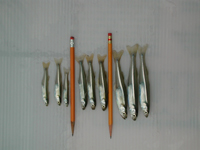
The silverside, having been reared for five generations in laboratory experiments, are all the same age. The fish on the left are from populations from which large individuals were harvested over five generations; the fish in the middle are from populations from which fish were harvested at random over five generations; and the fish on the right are from populations from which only small fish were harvested over five generations. Photo credit: M. Walsh.The practice of harvesting the largest individuals from a fish population introduces genetic changes that harm the overall fish population, a UC Riverside graduate student and colleagues have determined. Removing the large fish over several generations of fish causes the remaining fish in the populations to become progressively smaller, have fewer and smaller eggs with lower survival and growth, and have lower foraging and feeding rates, the researchers report.
| Biology | January 19, 2006 10:51 PM |
Scientists are interested in understanding genetic control of grass inflorescence architecture because seeds of cereal grasses (e.g. rice, wheat, maize) provide most of the world's food.
| Biology | January 18, 2006 11:14 PM |
Constant darkness throws a molecular switch in mammals that shifts the body's fuel consumption from glucose to fat and induces a state of torpor in mice, a research team led by scientists at The University of Texas Medical School at Houston reports in the Jan. 19 edition of Nature.
| Biology | January 18, 2006 11:13 PM |
By tracing the 30-million year history of variation in a gene found in plants such as tomatoes and tobacco, biologists at the University of California, San Diego have found new evidence to support an old idea -- that some evolutionary changes are irreversible.
| Biology | January 18, 2006 09:14 PM |
When a human looks at a number, letter or other shape, neurons in various areas of the brain's visual center respond to different components of that shape, almost instantaneously fitting them together like a puzzle to create an image that the individual then "sees" and understands, researchers at The Johns Hopkins University report.
| Biology | January 18, 2006 09:14 PM |
Just imagine listening to someone talk and also hearing the buzz of the overhead lights, the hum of your computer and the muffled conversation down the hallway. To focus on the person speaking to you, your brain clearly can't give equal weight to all incoming sensory information. It has to attend to what is important and ignore the rest.
| Biology | January 17, 2006 06:35 PM |
Biologists have long believed that bigger is better when it comes to body size, since many lineages of animals, from horses to dinosaurs, have evolved into larger species over time.
Increased sexual competition among flowering plants in biodiversity hotspots may lead to extinctions
| Biology | January 16, 2006 09:31 PM |
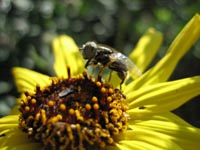
Syrphid fly feeding on nectar of California sunflower. The fly transfers pollen from one flower to the next, playing an important role in pollination.The decline of birds, bees and other pollinators may be putting plants of the world's most diverse ecosystems at risk of extinction, according to a new study that analyzed hundreds of field studies investigating fruit production in hundreds of wild plant species.
| Biology | January 16, 2006 09:31 PM |
Mother Nature could use a few more good pollinators, especially in species-rich biodiversity hotspots, according to a new study in the Proceedings of the National Academy of Science (PNAS).
| Biology | January 14, 2006 10:03 PM |
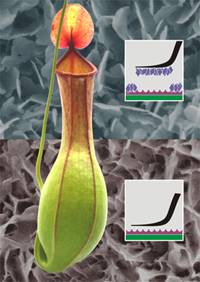
The pitfall trap of the pitcher plant Nepenthes alata. Background: the image from a scanning electron microscope of the upper and lower wax layers. The diagrams show how the two wax layers reduce the adhesive ability of insects. The upper layer contaminates the insects' adhesive pads, whereas the lower layer decreases the amount of contact between the adhesive hairs of the foot and the substrate. Image: Max Planck Institute for Metals ResearchPlants are able, using organic substances, to achieve effects that we otherwise mostly know only from technical materials. One example of this is the carnivorous pitcher plant, as researchers from the Max Planck Institute for Metals Research and the University of Hohenheim have shown. These plants catch insects and hold them using traps with a double layer of crystalline wax. The upper layer has crystalloids which contaminate the attachment organs that insects use to adhere themselves to surfaces. The lower layer additionally reduces the contact area between the insect feet and plant surface. The insects thus slip into the pitcher-shaped traps, where they are digested (The Journal of Experimental Biology, December 2005). These results provide ideas for further developments of technological anti-adhesive surfaces.
| Biology | January 13, 2006 11:38 PM |
Scientists in Sheffield working on the fundamental biological processes of plants could make significant difference to the lives of farmers in many parts of the world. Using model plant species, such as the tiny weed Arabidopsis, the researchers have uncovered one of the processes used by the plants to protect themselves from potentially lethal environmental conditions. Their discoveries are now being applied to improve the productivity of bean farmers in South America and rice producers in Asia.
| Biology | January 13, 2006 10:51 PM |
Trees, particularly those with deep roots, contribute to the Earth's climate much more than scientists thought, according to a new study by biologists and climatologists from the University of California, Berkeley.
| Biology | January 13, 2006 10:51 PM |
Environmental and genetic factors lead to neural tube defects in 1 in every 1,000 births and cause 1 in 20 of every spontaneous abortion. One cause of these defects is the failure of cells within the neural tube to migrate to the middle of the developing neural tube.
| Biology | January 12, 2006 09:38 PM |
With their feathery tuxedoes and charming Chilly Willy-waddle, penguins are the quintessence of cute. Small wonder they're featured in Coke commercials, movies like "Madagascar" and "March of the Penguins" and children's toys galore.
| Biology | January 12, 2006 08:22 PM |
It may be no surprise that marine reserves protect the fish that live in them, but now scientists from the University of Exeter have shown for the first time that they could also help improve the health of coral reefs.
| Biology | January 11, 2006 10:54 PM |
Results of a new study provide the first clear proof that global warming is causing outbreaks of an infectious disease that is wiping out entire frog populations and driving many species to extinction.
| Biology | January 11, 2006 10:51 PM |
Certain species of ant use a technique known as 'tandem running' to lead another ant from the nest to a food source. Signals between the two ants control both the speed and course of the run. It is believed to be the first time a demonstration of 'formal' teaching has been recognised in any non-human animal.
| Biology | January 11, 2006 10:50 PM |
A fundamental process that has puzzled researchers for many years has been explained by UK scientists. Some simple plants that are crucial in maintaining the balance of carbon in the Earth's atmosphere require vitamin B12 to grow properly but it has been a mystery to scientists why some types needed external sources and others did not. Now researchers at the Universities of Cambridge and Kent have discovered that half of all algae have a dependent but beneficial relationship with bacteria that make the vitamin for them.
| Biology | January 10, 2006 11:44 PM |
Researchers at Rutgers, The State University of New Jersey, believe they have located a place in the brain where songbirds store the memories of their parents' songs. The discovery has implications for humans, because humans and songbirds are among the few animals that learn to vocalize by imitating their caregivers.
| Biology | January 9, 2006 06:22 PM |
New research indicates that an area of the brain thought to act in reward circuitry may represent a phase in visual processing during which sexual orientation modulates how we perceive individual faces. The findings are reported by Felicitas Kranz and Alumit Ishai of the University of Zurich.
| Biology | January 7, 2006 06:40 PM |
The Gulf of Maine Program of the Census of Marine Life, with the Huntsman Marine Science Center of St. Andrews, New Brunswick, announced today the first count of known marine species in the Gulf of Maine region -- more than 50% larger than previous estimates.
| Biology | January 6, 2006 10:39 PM |
In a society where lung and breast cancers are leading causes of cancer death worldwide, early detection of the disease is highly desirable. In a new scientific study, researchers present astonishing new evidence that man's best friend, the dog, may have the capacity to contribute to the process of early cancer detection.
| Biology | January 6, 2006 09:38 PM |
Ants that tend and harvest gardens of fungus have a secret weapon against the parasites that invade their crops: antibiotic-producing bacteria that the insects harbor on their bodies.
| Biology | January 4, 2006 11:16 PM |
One of the puzzling questions in the evolution of bees is how some species developed social behaviors. Arizona State University Life Sciences associate professor Gro Amdam thinks part of the answer can be traced back to bee reproductive traits.
| Biology | January 4, 2006 10:16 PM |
Some clinical studies have indicated that marijuana or its active cannabinoid ingredient alleviates symptoms of the inflammatory disease multiple sclerosis (MS). Also, researchers have found that the brain's natural "endocannabinoids" are released after brain injury and are believed to alleviate neuronal damage. However, scientists have not understood how such substances act within the brain's own immune system.
| Biology | January 3, 2006 08:46 PM |
In an important new study assessing the demographic impact of the shift from foraging to farming, anthropologists use evidence from 60 prehistoric American cemeteries to prove that the invention of agriculture led to a significant worldwide increase in birth rate.
| Biology | January 2, 2006 10:25 PM |
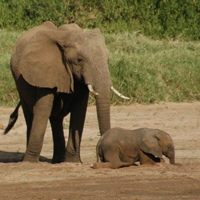
African elephants in Kenya's Samburu National Reserve. Credit: George WittemyerBy analyzing chemicals in tail hair from elephants that wore radio collars, researchers tracked the diet and movements of elephants in Kenya – a method aimed at reducing human-elephant conflicts and determining where to establish sanctuaries to protect the endangered creatures.
| Biology | January 2, 2006 08:25 PM |
Researchers have developed a new tool to help them study endangered whales – autonomous hydrophones that can be deployed in the ocean to record the unique clicks, pulses and calls of different whale species.
| Biology | January 2, 2006 08:25 PM |
Why whales emit their characteristic calls remains largely a biological mystery, but listening for the distinctive underwater sounds provides a valuable way to track the movements of endangered large whales. Autonomous data-recording devices equipped with hydrophones (underwater microphones), deployed in remote waters off Alaska, have been used in recent years to track seasonal occurrences of blue, fin, humpback, North Pacific right, bowhead, and sperm whales, an article in the January 2006 issue of BioScience reports.
| Biology | December 28, 2005 08:15 PM |
Since many animals live beyond their fertile years, biologists have searched for evolutionary clues to this extended lifespan. What role, if any, does natural selection play in the evolution of the postreproductive lifespan?
| Biology | December 27, 2005 08:15 PM |
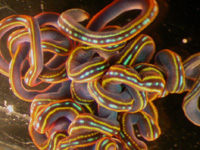
A new, undescribed species of marine worm. Coral reefs, coastal rainforest, land-grab, industrial bananas and organic cacao, mangroves, tourist boom, eclectic cultural mix: A Caribbean Journal of Science special issue presents the first scientific overview of the marine environment in Bocas del Toro Province near Panama's border with Costa Rica. With color photographic guide to marine invertebrates--the volume, edited by Dr. Rachel Collin, director STRI's research station in Bocas--debuts new species and new records for Panama and provides an essential reference for researchers, tourists and conservationists throughout the region.
| Biology | December 27, 2005 08:15 PM |
A UC Riverside-led research team has found that as some populations of an organism evolve a longer lifespan, they do so by increasing only that segment of the lifespan that contributes to "fitness" – the relative ability of an individual to contribute offspring to the next generation.
| Biology | December 27, 2005 08:14 PM |
Neuroscientists at Princeton University have developed a new way of tracking people's mental state as they think back to previous events -- a process that has been described as "mental time travel."
| Biology | December 24, 2005 10:28 PM |
The exact chemical blend of a pheromone emitted by older male elephants in musth influences both a female elephant's interest in mating and how other surrounding elephants behave, a new study has found.
| Biology | December 23, 2005 11:58 PM |
Brain size matters for intellectual ability and bigger is better, McMaster University researchers have found.
| Biology | December 23, 2005 11:58 PM |
Evolution has been the foundation and guiding theory of biology since Darwin gave the theory its proper scientific debut in 1859. But Darwin probably never dreamed that researchers in 2005 would still be uncovering new details about the nuts and bolts of his theory -- how does evolution actually work in the world of influenza genes and chimpanzee genes and stickleback fish armor? Studies that follow evolution in action claim top honors as the Breakthrough of the Year, named by Science and its publisher AAAS, the nonprofit science society.
| Biology | December 23, 2005 10:58 PM |
Using functional magnetic resonance imaging, or fMRI, researchers at the University of Pennsylvania and Princeton University have provided evidence that the act of recalling a memory is a bit like mental time travel. Their study, presented in the Dec. 23 edition of the journal Science, demonstrates that the same areas of the brain that are active during an event are activated when a person attempts to recall that event – seconds before the memory surfaces.
| Biology | December 22, 2005 05:17 PM |
New research by scientists at UCSF sheds light on how the odor detecting system in mice sends signals that affect their social behavior.
| Biology | December 22, 2005 05:17 PM |
Dance has long been recognized as a signal of courtship in many animal species, including humans. Better dancers presumably attract more mates, or a more desirable mate.
| Biology | December 22, 2005 05:17 PM |
Somewhere between three and five million years ago, a massive swarm of locusts took off from the west coast of Africa and made an unlikely voyage across the Atlantic Ocean to colonize the New World, says an international team of researchers.
| Biology | December 21, 2005 09:46 PM |
Screening embryos for genetic diseases during in vitro fertilization offers couples the best chance for a healthy child, but a genetic glitch could potentially cause doctors to misdiagnose a small fraction of them, University of Florida researchers say.
| Biology | December 21, 2005 09:46 PM |
Seeking to catch an arms-race maneuver in action, researchers have uncovered new evidence to explain how bacteria in the process of infecting a plant can shift molecular gears by excising specific genes from its genome to overcome the host plant's specific defenses.
| Biology | December 20, 2005 09:46 PM |
The annual Educational Technology Award of the University of Helsinki has this year been granted to the project 'Virtual microscopy as a teaching aid' of the Biomedical Informatics Research Group of the university. The awarded project utilizes advanced digital imaging and network technology to digitise, store, and view microscopy specimens over the internet.
| Biology | December 20, 2005 09:03 PM |
Researchers have discovered the first brain regulatory gene that shows clear evidence of evolution from lower primates to humans. They said the evolution of humans might well have depended in part on hyperactivation of the gene, called prodynorphin (PDYN), that plays critical roles in regulating perception, behavior and memory.
| Biology | December 19, 2005 08:38 PM |
A team of researchers has proposed new limits on the time when the most recent common ancestor of humans and their closest ape relatives -- the chimpanzees -- lived. Scientists at Arizona State and Penn State Universities have placed the time of this split between 5 and 7 million years ago -- a sharper focus than that given by the previous collection of molecular and fossil studies, which have placed the divergence anywhere from 3 to 13 million years ago.
| Biology | December 19, 2005 08:38 PM |
A groundbreaking new study examines the origins of holiday giving and finds that our early human ancestors were frequently altruistic.
| Biology | December 19, 2005 08:37 PM |
The effects of overfishing may have driven marbled murrelets, an endangered seabird found along the Pacific coast, to increasingly rely upon less nutritious food sources, according to a new study by biologists at the University of California, Berkeley.
| Biology | December 16, 2005 11:27 PM |
The same satellite system used by the U.S. military to track vehicle convoys in Iraq is helping World Wildlife Fund shed light on the little-known world of pygmy elephants in Borneo.
| Biology | December 16, 2005 11:27 PM |
When threatened by predators, sea slugs defend themselves by ejecting a potent inky secretion into the water consisting of hydrogen peroxide, ammonia and several types of acids. A team of researchers with the Atlanta-based Center for Behavioral Neuroscience (CBN) has found that this secretion is produced from normally inert chemicals stored separately in two glands. The discovery, published in the Dec. 16 on-line edition of the Journal of Experimental Biology, provides insight into a natural chemical process with potential industrial applications.
| Biology | December 15, 2005 10:26 PM |
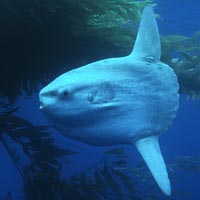
Studying fish, like this ocean sulfish, scientists are revealing the link between evolution and a species' genome. (Photo courtesy: Earthwindow.com/Mike Johnson)Biologists at Georgia Tech have provided scientific support for a controversial hypothesis that has divided the fields of evolutionary genomics and evolutionary developmental biology, popularly known as evo devo, for two years. Appearing in the December 2005 issue of Trends in Genetics, researchers find that the size and complexity of a species' genome is not an evolutionary adaptation per se, but can result as simply a consequence of a reduction in a species' effective population size.
| Biology | December 15, 2005 10:25 PM |
Bats have an "ear" for flying in the dark because of a remarkable auditory talent that allows them to determine their physical environment by listening to echoes. But an Ohio University neurobiology professor says bats have a "feel" for it, too.
| Biology | December 15, 2005 10:25 PM |
The brain's ability to reorganize itself - strengthening or weakening connections between neurons or adding or subtracting those connections - allows it to form memories, make transitions between sleep and waking, and focus attention on objects of interest.
| Biology | December 13, 2005 11:35 PM |
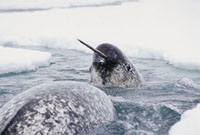 Today, Harvard School of Dental Medicine (HSDM) researcher Martin Nweeia, DMD, DDS, answers a marine science question that has eluded the scientific community for hundreds of years: why does the narwhal, or "unicorn," whale have an 8-foot-long tooth emerging from its head, and what is its function? Nweeia, a clinical instructor in restorative dentistry and biomaterials sciences at HSDM, will be presenting his conclusions at the 16th Biennial Conference on the Biology of Marine Mammals in San Diego.
| Biology | December 13, 2005 11:35 PM |
Thick-skinned bottle gourds widely used as containers by prehistoric peoples were likely brought to the Americas some 10,000 years ago by individuals who arrived from Asia, according to a new genetic comparison of modern bottle gourds with gourds found at archaeological sites in the Western Hemisphere. The finding solves a longstanding archaeological enigma by explaining how a domesticated variant of a species native to Africa ended up millennia ago in places as far removed as modern-day Florida, Kentucky, Mexico and Peru.
| Biology | December 12, 2005 09:03 PM |
Safeguarding 595 sites around the world would help stave off an imminent global extinction crisis, according to new research published today in the Proceedings of the National Academy of Sciences (www.pnas.org).
| Biology | December 12, 2005 09:03 PM |
A study released today at the American College of Neuropsychopharmacology's Annual Meeting revealed that scientists have identified genes related to reaching age 90 with preserved cognition. The study, which was funded by the National Institutes of Health and conducted at the University of Pittsburgh, is among the first to identify genetic links to cognitive longevity.
| Biology | December 9, 2005 11:18 PM |
Many, if not all, plants maintain relationships with bacteria, and like any hardworking homeowner, they have developed ways to get rid of freeloaders, University of California, Berkeley, biologists have found.
| Biology | December 8, 2005 11:51 PM |
The world's smallest elephant species, the newly described Bornean elephant, will be the focus of a Cardiff University study in Sabah, Malaysia for the next three years.
| Biology | December 8, 2005 11:50 PM |
A large portion of plant seeds is endosperm. It has the important task of nourishing the plant embryo during the early stages of its development. In flowering plants, there is a complicated double-fertilisation mechanism that arises among embryos and endosperm.
| Biology | December 7, 2005 09:35 PM |
CAMBIA & IRRI (The International Rice Research Institute) today announced a majorjoint venture to advance the BiOS Initiative - a new strategy that will galvanize agricultural research focused on poverty alleviation and hunger reduction. The ventureis catalyzed by a 2.55M USD grant to CAMBIA from The Ministry of Foreign Affairs of Norway.
| Biology | December 6, 2005 10:18 PM |
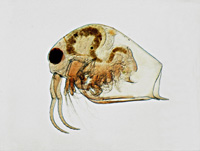
This male water flea of Bosmina genus debuted in a UB lab. Male water fleas that scientists have never seen have made their debut in a University at Buffalo laboratory, providing biologists with their first glimpse of these elusive organisms.
| Biology | December 6, 2005 10:18 PM |
T-ray sensing and imaging technology, which can spot cracks in space shuttle foam, see biological agents through a sealed envelope and detect tumors without harmful radiation, was the focus of a recent symposium at the national meeting of the American Chemical Society.
| Biology | December 5, 2005 11:26 PM |
Dispelling years of anecdotes in travelogues, the popular press, and scholarly works, biologists from the University of Bristol argue that it is nearly impossible for elephants to become intoxicated from eating the fruit of the marula tree.
| Biology | December 5, 2005 11:26 PM |
Strongylocentrotus purpuratus(Nudibranch, or Spanish Dancer). Credit: Dr. Susan Fuhs in Southern California on SCUBA.Inside that seemingly docile sea urchin there's a surprisingly active innate immune system, probably utilizing previously unrecognized immune mechanisms, that may also actively function in vertebrates, including humans, according to researchers at George Washington University, in Washington, D.C.
| Biology | December 5, 2005 11:26 PM |
Tropical areas of south and central America such as the Amazon rainforest are home to some 7500 species of butterfly compared with only around 65 species in Britain. UCL scientists have ruled out the common theory that attributed this richness of wildlife to climate change, in a paper published on 7th December by the journal Proceedings of the Royal Society B (Biological Sciences).
| Biology | December 4, 2005 10:45 PM |
Placing your foot accurately is a complicated process. If something moves where you plan to place your foot then you can adjust your step while your foot is swinging through. Experts thought previously that if nothing changed in the path, or in your plans, then the place where your foot will land is fixed before it even leaves the ground. In this case, you would make no use of immediate visual information during each step.
| Biology | December 4, 2005 10:44 PM |
Memory formation follows a dynamic pattern, allowing for retrieval from different areas of the brain, depending on when an organism needs to remember, said a researcher at Baylor College of Medicine.
| Biology | December 2, 2005 10:57 PM |
The comedians are right. The science proves it. A man's brain and a woman's brain really do work differently.
| Biology | December 2, 2005 10:57 PM |
Systematic overfishing of fresh waters occurs worldwide but is largely unrecognized because of weak reporting and because other pressures can obscure fishery declines, according to an article in the December 2005 issue of BioScience.
| Biology | December 1, 2005 10:57 PM |
Alleged footprints of early Americans found in volcanic rock in Mexico are either extremely old - more than 1 million years older than other evidence of human presence in the Western Hemisphere - or not footprints at all, according to a new analysis published this week in Nature.
| Biology | December 1, 2005 10:56 PM |
As a boy growing up in Brazil 40 years ago, Marc A. Meyers marveled at the lightweight toughness of toucan beaks that he occasionally found on the forest floor. Now a materials scientist and professor of mechanical and aerospace engineering at UCSD's Jacobs School of Engineering, Meyers said makers of airplanes and automobiles may benefit from the first ever detailed engineering analysis of toucan beaks conducted in his lab.
| Biology | December 1, 2005 10:56 PM |
Changes in bird song could be used as an early warning system to detect man-made ecological disturbances, new research published in the British Ecological Society's Journal of Applied Ecology has found. Although much previous research has focused on bird song and vocal mimicry, this is the first study to analyse the role played by habitat loss and fragmentation on song-matching.
| Biology | November 29, 2005 10:12 PM |
By peering into the minds of volunteers preparing to play a brief visual game, neuroscientists at Washington University School of Medicine in St. Louis have found they can predict whether the volunteers will succeed or fail at the game.
| Biology | November 29, 2005 10:11 PM |
RNA continues to shed its reputation as DNA's faithful sidekick. Now, researchers in the lab of Whitehead Institute Member David Bartel have found that a class of small RNAs called microRNAs influence the evolution of genes far more widely than previous research had indicated.
| Biology | November 24, 2005 09:57 PM |
Species evolve at very different rates, and the evolutionary line that produced humans seems to be among the slowest. The result, according to a new study by scientists at the European Molecular Biology Laboratory (EMBL), is that our species has retained characteristics of a very ancient ancestor that have been lost in more quickly-evolving animals. This overturns a commonly-held view of the nature of genes in the first animals. The work appears in the current issue of the journal Science.
| Biology | November 23, 2005 10:26 PM |
Using a novel application of an fMRI (functional magnetic resonance imaging) technique, researchers at the University of Pennsylvania School of Medicine have, for the first time, visualized the effects of everyday psychological stress in a healthy human brain.
| Biology | November 23, 2005 10:06 PM |
By using pathogenic fungi as model systems for understanding fungal diseases, two groups of researchers are reporting new work that offers insight into how carbon dioxide (CO2) governs the morphogenic changes that allow pathogenic fungi to survive in different environments and invade the human body, and they provide new evidence for how CO2 sensing and metabolism utilize evolutionarily conserved enzymes to control the growth and sexual reproduction of pathogenic microbes.
| Biology | November 22, 2005 11:42 PM |
Looks can be deceiving. New gene study redraws family tree of lizards and puts primitive-looking iguanas (shown here) and relatives at the top instead of bottom of the tree." Credit line: Copyright Eladio Fernandez 2005.The most comprehensive analysis ever performed of the genetic relationships among all the major groups of snakes, lizards, and other scaly reptiles has resulted in a radical reorganization of the family tree of these animals, requiring new names for many of the tree's new branches. The research, reported in the current issue of the journal C. R. Biologies, was performed by two biologists working at Penn State University: S. Blair Hedges, professor of biology, and Nicolas Vidal, a postdoctoral fellow in Hedges' research group at the time of the research who now is a curator at the National Museum in Paris.
| Biology | November 22, 2005 11:22 PM |
In an important new study from the forthcoming Quarterly Review of Biology, biologists from Binghamton University explore the evolution of two distinct types of laughter – laughter which is stimulus-driven and laughter which is self-generated and strategic.
| Biology | November 21, 2005 09:06 PM |
Removing an egg from the endangered whooping crane's nest increases the species chances of survival despite governmental concerns about tampering with nature, says a University of Alberta scientist.
| Biology | November 19, 2005 11:02 PM |
The farmers who brought agriculture to central Europe about 7,500 years ago did not contribute heavily to the genetic makeup of modern Europeans, according to the first detailed analysis of ancient DNA extracted from skeletons of early European farmers.
| Biology | November 18, 2005 09:30 PM |
Max Planck researchers in Cologne, Germany demonstrate that a multi-step defence system underlies the durable resistance of plants to fungal parasitesPlants are exposed to many different pathogens in the environment. Only a few of these pathogens, however, are able to attack a species of plant and "make it sick". If a particular pathogen is unable to attack a plant, that means that the plant is resistant to it – in other words, it cannot host the pathogen.
| Biology | November 17, 2005 11:46 PM |
In the Nov. 18 issue of Cell, researchers report the discovery of a gene that controls the ability to react with appropriate fear to impending danger. As a result, mice lacking the gene stathmin become daredevils of a sort, the researchers report. The basic findings may have general implications for the study of anxiety disorders and potential anti-anxiety drugs, according to researchers.
| Biology | November 17, 2005 06:20 PM |
New brain imaging research at the University of North Carolina at Chapel Hill indicates that when people with autism look at a face, activity in the brain area that responds is similar to that of people without autism.
| Biology | November 16, 2005 10:09 PM |
When amateur fossil finder Van Turner discovered a small vertebra at a construction site near Dallas 17 years ago, he knew the creature was unlike anything in the fossil record. Scientists now know the significance of Turner's fossil as the origin of an extinct line of lizards with an evolutionary twist: a land-dwelling species that became fully aquatic.
| Biology | November 15, 2005 10:20 PM |
There's hope for the less-than-perfect male – if you're a swordtail fish, that is. As the size and age of female swordtail fish increase, so does the preference for males with asymmetrical markings, according to a new Ohio University study.
| Biology | November 15, 2005 09:19 PM |
An international team of scientists for the first time has detected a memory trace in a living animal after it has encountered a single, new stimulus. The research, done with honeybees sensing new odors, allows neuroscientists to peer within the living brain and explore short-term memory as never before, according to scientist Roberto Fernández Galán, a leading author on the report who is currently a postdoctoral research associate at Carnegie Mellon University.
| Biology | November 14, 2005 10:19 PM |
The brains of babies born very prematurely do not develop as well as those who are carried to full-term, according to new research presented today at the annual meeting of the Society for Neuroscience in Washington, D.C.
| Biology | November 14, 2005 10:19 PM |
A gene thought to influence perception and susceptibility to drug dependence is expressed more readily in human beings than in other primates, and this difference coincides with the evolution of our species, say scientists at Indiana University Bloomington and three other academic institutions. Their report appears in the December issue of Public Library of Science Biology.
| Biology | November 13, 2005 02:13 PM |
Researchers working with rats have found the first solid evidence that still "sharp" older brains store and encode memories differently than younger brains.
| Biology | November 12, 2005 06:56 PM |
In a study illustrating the apparent linkages between the evolutionary development and embryonic development of species, researchers have uncovered the genetic elements that determine the structure and function of a simple biomechanical system, the lower jaw of the cichlid fish. In addition, they've shown that increasing expression of a particular gene in an embryo can lead to physical changes in the adult fish. The results appear in the November 11, 2005 issue of the Proceedings of the National Academy of Sciences.
| Biology | November 12, 2005 05:25 PM |
Certain behaviors, such as eating, drinking and urinating, are so crucial to survival that the brains of all vertebrates contain clusters of nerve cells that can suppress pain long enough to allow the animal to eat, drink -- or pee -- in peace.
| Biology | November 12, 2005 05:24 PM |
Dartmouth professor of psychological and brain sciences Peter Tse has published new results in his on-going investigation of the brain and how it transforms visual stimuli into conscious experience.
| Biology | November 11, 2005 10:43 PM |
The regular practice of meditation appears to produce structural changes in areas of the brain associated with attention and sensory processing. An imaging study led by Massachusetts General Hospital (MGH) researchers showed that particular areas of the cerebral cortex, the outer layer of the brain, were thicker in participants who were experienced practitioners of a type of meditation commonly practiced in the U.S. and other Western countries. The article appears in the Nov. 15 issue of NeuroReport, and the research also is being presented Nov. 14 at the Society for Neuroscience meeting in Washington, DC.
| Biology | November 11, 2005 10:43 PM |
Can the hold that Intelligent Design theorists have in America be broken by the evolutionists? Professor Michael Ruse, a leading American evolutionist, makes the case for Darwin in The Annual Robert Grant Lecture, "Darwin or Design? Reporting from the front lines of America's struggle over evolution", at the Grant Museum for Zoology at UCL (University College London) on 16th November.
| Biology | November 10, 2005 10:27 PM |
Editor : See pictures on the National Geographic website
Researchers have discovered evidence of an ancient sea creature that would have made Tyrannosaurus rex, think twice before stepping into the ocean.
| Biology | November 10, 2005 10:26 PM |
Gigantopithecus blackii, the largest primate that ever lived.A gigantic ape, measuring about 10 feet tall and weighing up to 1,200 pounds, co-existed alongside humans, a geochronologist at McMaster University has discovered.
| Biology | November 10, 2005 10:26 PM |
Arizona State University geochemist Lynda Williams and her colleagues have discovered that certain clay minerals under conditions at the bottom of the ocean may have acted as incubators for the first organic molecules on Earth.
| Biology | November 10, 2005 10:26 PM |
Howard Hughes Medical Institute researchers have discovered that pheromones essential for mating behavior in mice are recognized by the nose and not by the vomeronasal system, as researchers had long suspected.The new studies demonstrate that the main olfactory epithelium, which was presumed to be mostly involved with the sense of smell, plays a critical role in pheromone detection.
| Biology | November 10, 2005 10:26 PM |
Howard Hughes Medical Institute researchers have discovered a vast network of neurons in the brain of mice that governs reproduction and controls the effects of reproductive status on other brain functions.
| Biology | November 10, 2005 10:26 PM |
A leading neuroscientist at MIT and one from the University of California at San Francisco (UCSF) report in the Nov. 4 special issue of Science dedicated to the brain that the controversy is over: The "protomap" and "protocortex" theories of brain development are dead.
| Biology | November 9, 2005 11:00 PM |
For most people, just a whiff of food that has made them sick in the past is enough to trigger a wave of nausea – and to prevent them from eating that food again. It's a response that's instantaneous, involuntary, and so fundamental to basic biology that it occurs in a broad range of species. Even worms, researchers have now shown, quickly learn to avoid smells associated with foods that have made them ill.
| Biology | November 8, 2005 07:24 PM |
A team of scientists is proposing that endangered California condors raised in captivity be released near seal and sea lion rookeries so that the birds can once again feast on the carcasses of marine mammals as their ancestors did centuries ago.
| Biology | November 3, 2005 10:36 PM |
Scientists at the University of Rochester Medical Center have targeted a new culprit and method of attack on neurologic functions in diseases such as Alzheimer's and dementia associated with HIV.
| Biology | November 3, 2005 10:36 PM |
Samples collected by WCS in international collaboration effort in Mongolia to be used in development of human pandemic influenza vaccineAvian influenza virus samples collected from wild birds in Mongolia by field veterinarians from the New York City-based Wildlife Conservation Society (WCS) have been selected by the World Health Organization to be part of a new human pandemic influenza vaccine currently in development. The samples, collected in the midst of an outbreak in August killing wild ducks, geese and swans in northern Mongolia have unique genetic characteristics which make them a valuable addition to a human vaccine based on a variety of strains of influenza.
| Biology | November 1, 2005 09:45 PM |
 Editor : Be sure to check out the original press release for a mp3 recording of the mouse singing!
Scientists have known for decades that female lab mice or their pheromones cause male lab mice to make ultrasonic vocalizations. But a new paper from researchers at Washington University School of Medicine in St. Louis establishes for the first time that the utterances of the male mice are songs.
| Biology | November 1, 2005 07:38 PM |
Bees have a much more sophisticated visual system than previously thought, according to a new UCL (University College London) study in which bees were able to solve complicated colour puzzles. The findings shed light on how brains resolve one of the most difficult challenges of vision - namely, recognizing different surfaces under different colours of illumination - by suggesting that bees solve this problem using their experience with meaningful colour relationships between objects in a scene. The findings, published in the Proceedings of the National Academy of Sciences, may one day lead to the design of autonomous robotic systems.
| Biology | October 31, 2005 06:08 PM |
What would you call an alien if you encountered it on the street tomorrow? What if that alien didn't come from another world but rather was created in a laboratory right here on Earth and functioned differently from other Earth life?
| Biology | October 31, 2005 06:08 PM |
Visual information can be processed unconsciously when the area of the brain that records what the eye sees is temporarily shut down, according to research at Rice University in Houston.
| Biology | October 30, 2005 07:31 PM |
First-ever images of living human retinas have yielded a surprise about how we perceive our world. Researchers at the University of Rochester have found that the number of color-sensitive cones in the human retina differs dramatically among people--by up to 40 times--yet people appear to perceive colors the same way. The findings, on the cover of this week's journal Neuroscience, strongly suggest that our perception of color is controlled much more by our brains than by our eyes.
| Biology | October 29, 2005 10:06 PM |
The brain is a "time machine," assert Duke neuroscientists Catalin Buhusi and Warren Meck. And understanding how the brain tracks time is essential to understanding all its functions. The brain's internal clocks coordinate a vast array of activities from communicating, to orchestrating movement, to getting food, they said.
| Biology | October 29, 2005 10:06 PM |
Picky female frogs in a tiny rainforest outpost of Australia have driven the evolution of a new species in 8,000 years or less, according to scientists from the University of Queensland, the University of California, Berkeley, and the Queensland Parks and Wildlife Service.
| Biology | October 28, 2005 08:32 PM |
A group of Belgian researchers has determined that a pregnant woman's ability to metabolize fats is determined not only by her genes but by her baby's genes as well. The details of their findings appear in the November issue of the Journal of Lipid Research, an American Society for Biochemistry and Molecular Biology journal.
| Biology | October 27, 2005 07:31 PM |
Scientists have identified the gene responsible for controlling a first key step in the creation of new life, according to new research published in the journal Nature tomorrow (Thursday 27 October 2005).
| Biology | October 27, 2005 07:31 PM |
Scientists from the Wildlife Conservation Society (WCS) and their Russian colleagues from the Russian Far East recently fitted three wild 40-day-old Siberian tiger cubs with tiny radio-collars, marking the youngest wild tigers to be tracked by scientists.
| Biology | October 27, 2005 07:31 PM |
Conference addresses western medicine & society's embrace of meditation, press meeting with Dalai Lama, Hopkins Medical Dean Edward Miller, and Georgetown University Professor Aviad Haramati at 8am on Nov. 8
| Biology | October 26, 2005 05:54 PM |
Nature's finesse revealed in quality surveillance systemWith their latest discovery, researchers have significantly advanced the understanding of how human cells protect themselves from constant and potentially destructive changes in gene expression. According to an article published in this month's Nature Structural & Molecular Biology, the research is important because the protection itself can contribute to disease, and the ability to side-step it may lead to new treatments for hundreds of genetic disorders.
| Biology | October 25, 2005 05:54 PM |
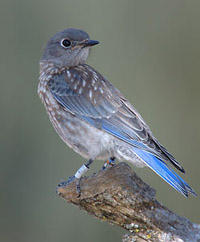
A Western bluebird fledgling, color-banded at UC Berkeley's Hastings Reserve in Carmel Valley. (Copyright 2004 by Neil Losin)Parents whose grown children have not yet flown the nest can only sympathize with the Western bluebird. While female fledglings fly off on their own in late summer, their brothers typically hang around through the winter and into the next breeding season, living off the bounty of their parents' larder.
| Biology | October 25, 2005 05:54 PM |
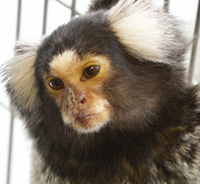
Credit: Jeff Stevens.Across the animal kingdom, individuals face choices between patience and impulsivity. A classic case, confronted by all animals--humans included--is that between a small, immediate food reward and a delayed, but larger, reward. In such cases, impulsivity typically trumps patience as individuals fail to delay gratification. But what factors influence these decisions? Researchers have gained new insight into this question by showing that the particular ways in which animals exhibit patience and impulsivity differ from one context to another and may be closely related to the animals' ecological niches and their everyday interactions with the natural world.
| Biology | October 25, 2005 05:53 PM |
Seafood prices collected from U.S. restaurant menus dating to the 1850s will help plot the shifting harvest of marine species, according to a study to be announced at Oceans Past a Census of Marine Life conference in Denmark on the History of Marine Animal Populations.
| Biology | October 25, 2005 05:53 PM |
New classification conveys important information about the biochemistry and metabolism of disease-causing organisms. The new classification recognizes 6 major clusters of organisms, rather than the 4 traditional Kingdoms.
| Biology | October 25, 2005 05:53 PM |
Many baffled parents have wondered whether their teenagers would ever stop growing. The answer is obvious, but researchers have never really quite understood just how an organism determines when it has reached its optimal size and growth should cease.
| Biology | October 24, 2005 06:12 PM |
Delving ever deeper into the intricate architecture of the brain, researchers at The Salk Institute have now described how two different types of nerve cells, called neurons, work together in tiny sub-networks to pass on just the right amount and the right kind of sensory information.
| Biology | October 20, 2005 08:34 PM |
The evolution of airplanes from the Wright Brothers' first biplanes to monoplanes was an inadvertent replay of the much earlier evolution of dinosaur flight, say two dino flight experts.
| Biology | October 20, 2005 08:34 PM |
The ice ages made massive changes to the Earth's landscape
The ice ages made massive changes to the Earth's landscape. But what was happening below the ice in the oceans?
| Biology | October 19, 2005 10:33 PM |
Editor : Visit this webpage for pictures and videos!
With their long stalks and feathery arms, marine animals known as sea lilies look a lot like their garden-variety namesakes. Perhaps because of that resemblance, scientists had always assumed that sea lilies stayed rooted instead of moving around like their stalkless relatives, the feather stars.
| Biology | October 19, 2005 08:34 PM |
The tracks of a previously unknown, two-legged swimming dinosaur have been identified along the shoreline of an ancient inland sea that covered Wyoming 165 million years ago, according to a University of Colorado at Boulder graduate student.
| Biology | October 17, 2005 03:29 PM |
The fossil teeth and jawbones of two new species of tiny monkey-like creatures that lived 37 million years ago have been sifted from ancient sediments in the Egyptian desert, researchers have reported.
| Biology | October 17, 2005 03:29 PM |
What happened to the chicken when she crossed the road is less important that what happens to what she eats when it is used as fertilizer.
| Biology | October 13, 2005 07:17 PM |
Relative of Velociraptor rewrites evolutionary charts
The recent discovery of a 90-million-year-old dinosaur in Patagonia demonstrates that dromaeosaurs, a group of carnivorous theropods that includes Velociraptor and is closely related to birds, originated much earlier than previously thought. Rather than originating during the Cretaceous, dromaeosaurs can now be traced back to the Jurassic, possibly as far back as 180 million years ago. Meanwhile, the new dinosaur's birdlike features--its huge, hollow wishbone; long, winglike forelimbs; and bird-like pelvis--provide more evidence linking dinosaurs to birds.
| Biology | October 13, 2005 05:17 PM |
Expedition to help protect Florida's unique oculina deepwater reefs
On Wednesday, Oct. 12, 2005, scientists will begin a six-day expedition to explore one of Florida's most vital but least familiar marine resources--the spectacular deepwater coral reefs of the Oculina Bank--some 30 years after their discovery. Among the team's goals is the start of a sustained and critically needed monitoring program to complement , and evaluate the effectiveness of, stricter regulations and enforcement activities in the area. The group will also be exploring new portions of the reef revealed by a recently developed high-resolution seafloor map.
| Biology | October 13, 2005 05:17 PM |
An article published in the latest issue of Conservation Biology finds that cattle grazing plays an important role in maintaining wetland habitat necessary for some endangered species. Removing cattle from grazing lands in the Central Valley of California could, inadvertently, degrade the vernal pool habitat of fairy shrimp and tiger salamanders. Cattle grazing influences the rates of evaporation which work together with climate to determine the depth and duration of wetland flooding. Cattle have been grazing in the land for roughly 150 years and have become a naturalized part of the ecosystem. "In practical terms, this means that grazing may help sustain the kinds of aquatic environments endangered fairy shrimps need to survive," author Christopher R. Pyke states.
| Biology | October 11, 2005 05:10 PM |
By investigating the interplay between pheromone signaling and behavior in fruit flies, researchers have begun to understand how an adult fly's earlier experience as a young individual can influence its behavior towards other flies as an adult. In particular, the researchers found that pheromone signals in the context of experience with adult flies can influence how young flies will behave once they reach maturity.
| Biology | October 11, 2005 05:09 PM |
Vision, like other biological attributes, is shaped by evolution through environmental pressures and demands, and even closely-related species that are in other ways very similar might respond to their particular environments by interpreting the visual world slightly differently, using photoreceptors that are attuned to particular wavelengths of light. By studying a special group of closely-related fish species inhabiting the Great Lakes of Africa, researchers have uncovered clues to understanding how the components of color vision can undergo change over a relatively short period of evolutionary time.
| Biology | October 11, 2005 05:09 PM |
By directly manipulating mating performance in a tropical sea slug, Chelidonura hirundinina, researchers of the University of Tbingen have now shed light on the bizarre reproductive conflicts encountered by hermaphroditic animals. In some hermaphroditic species, such as C. hirundinina, mating partners may insist on copulating as a "male," "female," or both, resulting in unique biological conflicts over gender.
| Biology | October 10, 2005 07:09 PM |
New evidence raises questions about current theoryBiologists examining evidence for the claim that birds evolved from dinosaurs have reached some surprising new conclusions. However, they caution that "the problem of avian origins is far from being resolved." Their analysis is published online October 10, 2005 in the Journal of Morphology, published by John Wiley & Sons, Inc. and available via Wiley InterScience (www.interscience.wiley.com/journal/morphology).
| Biology | October 10, 2005 05:09 PM |
Chinese men spurn traditional virility medicines
Chinese men are selectively switching from traditional Chinese medicine (TCM) to Viagra to treat erectile dysfunction, but sticking with tradition for ailments such as arthritis, indigestion and gout, according to new research published in Environmental Conservation.
| Biology | October 7, 2005 11:17 PM |
To control what you eat and when, your nervous system must coordinate a laundry list of signals: internal signals contain information about energy level, food preferences, and metabolic need, while external signals relay information about the quality of available food, determined by its smell and taste.
| Biology | October 4, 2005 11:23 PM |
It's often said that the key to Bill Bradley's basketball success was summed up in the title of the 1965 book by John McPhee, "A sense of where you are." Bradley always seemed to know where all nine other players were, where Bradley himself was in relation to the basket � and where the open spot was to be found for his stylized jump shot.
| Biology | October 4, 2005 11:09 PM |
Have you ever wondered how the myriad insect forms—beetles, flies, dragonflies, mosquitoes, grasshoppers, ants, wasps, bees, and countless others—evolved?
| Biology | October 3, 2005 11:24 PM |
Editor : Read the original article on PLoS Biology, with pictures!
When chimpanzees were first seen using tools in Liberia in 1951, little was known about great ape behavior in the wild. The sighting was published as a short note by Harry Beatty in the Journal of Mammalogy (recounted by primatologist Frans de Waal in The Ape and the Sushi Master).
| Biology | October 3, 2005 11:23 PM |
Humans have cultivated potatoes for millennia, but there has been great controversy about the ubiquitous vegetable's origins. This week, writing in the Proceedings of the National Academies of Sciences, a team led by a USDA potato taxonomist stationed at the University of Wisconsin-Madison has for the first time demonstrated a single origin in southern Peru for the cultivated potato.
| Biology | October 3, 2005 11:05 PM |
Unscripted biochemical variations, or noise, leads to oscillations in gene regulation that couldn't otherwise be predicted
Geneticists have debated for decades the relative importance of nature versus nurture in determining how an animal looks and behaves, and now UCSD scientists report that noise could also be an important factor in determining phenotype.
| Biology | October 2, 2005 04:43 PM |
For the rats of Hamelin, it was the Pied Piper's tune. For the destructive sea lamprey of the Great Lakes, it's a chemical attractant, or pheromone, released by lamprey larvae living in streambeds. Following the pheromone trail, adults are drawn to streams favorable for spawning. Researchers have long wanted to identify the pheromone so it could be synthesized and used to control the sea lamprey, which laid waste to Great Lakes fisheries of lake trout and other species in the mid-20th century.
| Biology | September 30, 2005 10:01 PM |
In the human brain, cells talk to one another through the routine exchange of electrical signals. But when people fall into a deep sleep, the higher regions of the brain - regions that during waking hours are a bustling grid of neural dialogue - apparently lose their ability to communicate effectively, causing consciousness to fade.
| Biology | September 29, 2005 11:01 PM |
A scientist from the University of Manchester has discovered the first identified droplets of spider blood in a piece of amber up to 20 million years old.
| Biology | September 29, 2005 11:00 PM |
Even after they have paired with a male, the female North American barn swallow still comparison-shops for sexual partners. And forget personality; the females judge males by their looks -- the reddish color of the males' breast and belly feathers.
| Biology | September 29, 2005 11:00 PM |
The first, high resolution continuous record of oxygen concentration in the earth's atmosphere shows that a sharp rise in oxygen about 50 million years ago gave mammals the evolutionary boost they needed to dominate the planet, according to Paul Falkowski, Rutgers professor of marine science and lead author of a paper published Sept. 30 in the journal Science.
| Biology | September 29, 2005 11:00 PM |
Remains of photosynthesizing microbes in prehistoric rocks suggest Earth was not ice-bound
A study that applied innovative techniques to previously unexamined rock formations has turned up strong evidence on the "Slushball Earth" side of a decades-long scientific argument.
The study appears in the Sept. 29 Science Express. The lead author is Alison Olcott, a Ph.D. student of earth sciences in the USC College of Letters, Arts and Sciences.
| Biology | September 29, 2005 10:44 PM |
Scientists studying the humble fruit fly have found a family of proteins that enhances the sensitivity of a cell to a hormone that can trigger abnormal growth and cancer. Their discovery could lead to a completely new approach to tackling some cancers and the development of new drugs to stop uncontrolled growth in a wide variety of tumour cells.
| Biology | September 28, 2005 11:53 PM |
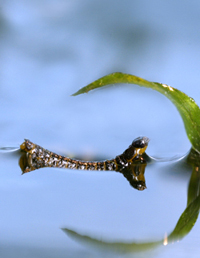
The larva of a waterlily leaf beetle gets ready to propel itself up onto a leaf using a technique recently discovered by MIT researchers. Photo courtesy Hu and Bush, 2005MIT mathematicians have discovered how certain insects can climb what to them are steep, slippery slopes in the water's surface without moving their limbs -- and do it at high speed.
| Biology | September 27, 2005 11:20 PM |
Newly hatched magellanic penguin chicks in breeding grounds with a large number of human visitors show a significant spike in levels of a stress-related hormone compared to chicks hatched in areas not visited by humans, a University of Washington research team has found.
| Biology | September 27, 2005 11:19 PM |
Leeds researchers use NERC grant to understand extreme sea creaturesExtraordinary creatures who inhabit extreme underwater conditions are being investigated by University scientists in a three-year project. These deep-sea communities could reveal an evolutionary history different to anything else on earth and even give us clues to how life could exist onother planets.
| Biology | September 26, 2005 10:49 PM |
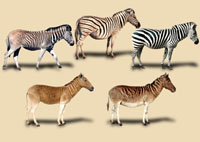
Current living zebras (top row), extinct quaggas (bottom row)DNA from museum samples of extinct animals is providing unexpected information on the extent and effect of the Ice Age as well as the path of species evolution, according to a report by scientists from Yale University, the Smithsonian Institute and the Max Planck Institute for Evolutionary Anthropology.
| Biology | September 26, 2005 10:49 PM |
The biological clock controls the circadian rhythms of a wide range of physiological and behavioral processes, from fluctuating hormone levels to sleep-wake cycles and feeding patterns. While it's well known that circadian clock elements sense and respond to light cycles, much less is known about how daily temperature cycles affect the clock's timing mechanism in vertebrates. In the open-access journal PLoS Biology, Kajori Lahiri, Nicholas Foulkes, and their colleagues study temperature related responses at the genetic and molecular level in zebrafish.
| Biology | September 26, 2005 10:49 PM |
Everyone knows morning people and late-night owls. The variation in individual circadian rhythms is an anecdotal as well as experimentally verified fact. But, until now, to systematically study circadian differences (and thereby hope to rout out the underlying genetic causes), scientists have had to rely on prolonged behavioural observation. To screen for and identify circadian rhythm variations in humans, the required period of lengthy observation is prohibitively costly and labor intensive.
| Biology | September 26, 2005 10:48 PM |
Junk food could be made healthier by adding an extract of an exotic type of seaweed, say British scientists.
| Biology | September 25, 2005 08:04 PM |
One of the remaining challenges for evolutionary developmental studies of mammals, whose evolution is best known from their teeth, is how their tooth shape is altered during development. Researchers of the University of Helsinki together with their Japanese colleagues from the University of Kioto now propose a 'balance of induction' mechanism directing the placement of tooth shape features called cusps. Position and shape of cusps determine whether a tooth shape belongs to human or mouse, for example. Whereas developmental initiation of cusp formation is known to involve several developmental genes at the places of future cusps, it has remained unknown how cusps form at the right places.
| Biology | September 23, 2005 09:24 PM |
A pair of research papers published this week report findings that increase our understanding of how an organism's body size is determined and how the speed of its development is controlled. In particular, the work sheds light on the molecular and cellular pathways that act to convey information about a growing organism's size, as well as on pathways that use that information to correctly time critical transitional events during development.
| Biology | September 23, 2005 05:24 PM |
The evolution of complex and physiologically remarkable structures such as the vertebrate eye has long been a focus of intrigue and theorizing by biologists. In work reported this week in Current Biology, the evolutionary history of a critical eye protein has revealed a previously unrecognized relationship between certain components of vertebrate eyes and those of the more primitive light-sensing systems of invertebrates. The findings help clarify our conceptual framework for understanding how the vertebrate eye, as we know it, has emerged over evolutionary time.
| Biology | September 22, 2005 10:19 PM |
Press release based on a recently published article in Environmental MicrobiologyAn unusual relationship between bacteria and a newly discovered group of marine worms is the only known partnership (or symbiosis) which uses sunken marine mammals as its sole source of nutrition.
| Biology | September 22, 2005 08:52 PM |
Aloe vera gel is best known for its therapeutic effect on burned or irritated skin, but in the future you could be eating the gel as a healthful additive to your fruits and veggies. Researchers in Spain say they have developed a gel from the tropical plant that can be used as an edible coating to prolong the quality and safety of fresh produce. The gel, which does not appear to affect food taste or appearance, shows promise as a safe, natural and environmentally-friendly alternative to conventional synthetic preservatives that are currently applied to produce after harvesting, the researchers say.
| Biology | September 22, 2005 07:52 PM |
New research just released in the September issue of Plant Disease suggests that weeds commonly found in California's wine country may enable the spread of Pierce's disease of grapes, one of the most destructive plant diseases affecting grapes.
| Biology | September 22, 2005 07:52 PM |
The recent use of genetically modified mice and rats in combination with an animal model of obstructive nephropathy, a type of renal disease, has given researchers new insight in the development of kidney disease. This research is published in the September issue of Kidney International.
| Biology | September 21, 2005 11:51 PM |
For the first time, scientists have identified an ant species that produces its own natural herbicide to poison unwanted plants.
| Biology | September 20, 2005 11:33 PM |
A hanging basket style device is at the heart of a plan by researchers at the University of Warwick to harness the sex drive of a major pest of fruit orchards as a weapon to spread a virus to kill that very same pest. The device allows growers to selectively target the pest with a virus that kills its larvae without killing other beneficial insects.
| Biology | September 19, 2005 11:26 PM |
Recent research suggested that ancient Neanderthals might have had an accelerated childhood compared to that of modern humans but that seems flawed, based on a new assessment by researchers from Ohio State University and the University of Newcastle .
| Biology | September 19, 2005 09:26 PM |
About five to seven million years ago, when the lineage of humans and chimpanzees split, edible root plants similar to rutabagas and turnips may have been one of the reasons. According to research by anthropologists Greg Laden of the University of Minnesota and Richard Wrangham of Harvard University, the presence of fleshy underground storage organs like roots and tubers must have sustained our ancestors who left the rain forest to colonize the savannah. They have published their research in the October issue of the Journal of Human Evolution.
| Biology | September 16, 2005 10:45 PM |
A team of researchers led by the University of Toronto has charted how and where a painful event becomes permanently etched in the brain - a discovery that has implications for pain-related emotional disorders such as anxiety and post-traumatic stress.
| Biology | September 16, 2005 10:40 PM |
With their long necks and tails, sauropod dinosaurs---famous as the Sinclair gasoline logo and Fred Flintstone's gravel pit tractor---are easy to recognize, in part because they all seem to look alike.
| Biology | September 16, 2005 10:40 PM |
Marine organisms hidden in caves, such as sponges, play an extremely important role in the nutrient cycle of coral reefs. Indeed they probably play the most important role of all, says Dutch biologist Sander Scheffers. And that is valuable information for nature conservationists who want to preserve the coral reefs.
| Biology | September 15, 2005 11:39 PM |
Nature or nurture? It's the eternal question for so many human interactions and personality traits. Now, it appears, nature may play a larger role than nurture when it comes to family relationships between adolescents and their parents.
| Biology | September 15, 2005 09:39 PM |
The recent discovery of citrus greening (huanglongbing) in samples collected from trees in South Florida poses a definite threat to Florida's $9 billion commercial citrus industry. Proper identification and eradication methods are needed to reduce the amount of crop loss caused by this disease, say plant pathologists with The American Phytopathological Society (APS). Citrus greening is a bacterial disease that affects the phloem system of citrus plants causing the infected trees to yellow, decline, and possibly die within a few years. The bacterium is spread by an insect, the citrus psyllid.
| Biology | September 14, 2005 09:29 PM |
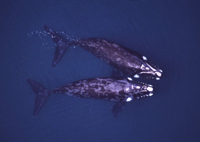
An aerial photograph of two right whales in the Atlantic Ocean offshore from Argentina shows the distinctive white markings created by small crustaceans -- known as cyamids or 'whale lice' -- that attach themselves to callus-like material on the whales' heads. University of Utah researchers learned about the evolution of different species of right whales by studying the genes of the 'whale lice' that ride the whales.
Credit: Roger Payne, Ocean Alliance/Whale Conservation Institute.University of Utah biologists studied the genetics of "whale lice" – small crustaceans that are parasites on endangered "right whales" – and showed the giant whales split into three species 5 million to 6 million years ago, and that all three species probably were equally abundant before whaling reduced their numbers.
The five-year study, published in the October 2005 issue of the journal Molecular Ecology, is the first in which the genes of whale lice were used to track the genetic evolution of whales. They are not true lice, but instead are tiny crustaceans named cyamids. The harmless parasites ride the whales their entire lives, so their evolution reflects the evolution of the whales.
| Biology | September 14, 2005 08:27 PM |
Restoring the rich diversity of trees that once characterized expansive tracts of tropical rainforest gets a helping hand from native birds and bats. Just how big a role these winged gardeners play is a question ecologists from the University of Illinois at Chicago and several Latin American universities are about to find out by setting up essentially a living laboratory in Mexico's gulf coast state of Veracruz.
| Biology | September 13, 2005 10:21 PM |
Researchers at Yale School of Medicine provide direct evidence that two parts of a neuronal system, one that promotes eating and another that suppresses eating, are critical for the acute regulation of eating and body weight, according to a study published online in the September 11 issue of Nature Neuroscience.
| Biology | September 12, 2005 04:06 PM |
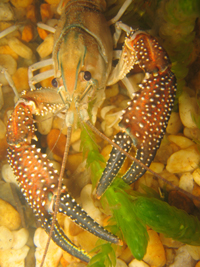
A crayfish dines on an exotic delicacy of Egeria densaHere's a test. Take a crayfish, offer it two meals - one the native plants that it eats everyday, the other a gourmet meal of a similar, but exotic species of plant. Conventional biological wisdom predicts it will stick with the tried and true. But new research at the Georgia Institute of Technology suggests that plant eaters may be more adventurous than previously thought and prefer to nosh on exotic meals by a ratio of three to one. The findings, which appear in the September issue of Ecology Letters, could point the way to better strategies for controlling the billions of dollars in damage that invasive species cause every year.
| Biology | September 12, 2005 04:06 PM |
Researchers at Yale School of Medicine have found that 85 percent of embryos transferred during in vitro fertilization fail to become live births, highlighting the need for improving diagnostic techniques to identify viable embryos.
| Biology | September 10, 2005 12:57 PM |
After first hearing tales of a white giraffe in Tanzania in 1993, Charles Foley of the Wildlife Conservation Society recently snapped this photo of the legendary animal.What do an African researcher and the fictional character Captain Ahab have in common? Both were searching for a legendary white beast, and whereas Ahab searched for his white whale, Wildlife Conservation Society (WCS) researcher Charles Foley sought—and finally found—his white giraffe.
| Biology | September 10, 2005 12:55 PM |
Some 12.3 percent of all babies -- 499,008 infants -- were born prematurely (less than 37 weeks gestation) in 2003, according to the report released by the National Center for Health Statistics (NCHS). That's up from 12.1 percent (or about 480,000 babies) in 2002 -- and an increase of more than 30 percent since the government began tracking premature births in 1981. The prematurity rate was 9.4 in 1981; it has increased every year since then except for slight dips in 1992 and 2000.
| Biology | September 9, 2005 12:27 AM |
Researchers who have analyzed sequence variations in two genes that regulate brain size in human populations have found evidence that the human brain is still evolving.
| Biology | September 8, 2005 12:35 AM |

Photo by Jean K. KrejcaCave crickets travel farther from their homes to forage -- by about double -- than their previously reported range, researchers have discovered. In Texas, that means protective buffer areas around caves may need to be extended to protect endangered invertebrate species that live inside and depend on the crickets.
| Biology | September 8, 2005 12:34 AM |
A new study shows that while we're winning isolated battles, we could well lose the war to prevent the devastating spread of the emerald ash borer in eastern Canada and the United States. It's a failure that would cost billions of dollars in lost timber and ornamental trees, and dramatically change the forest and neighbourhood landscape in eastern North America - with even more impact than Dutch elm disease.
| Biology | September 8, 2005 12:34 AM |
Grizzly bears give bear canister for campers a real testIn a scene reminiscent of the famous Samsonite luggage commercial when a gorilla puts the product's durability to the test, grizzly bears at the Bronx Zoo gave a bear-proof food canister designed for backpackers a real beating, according to the Wildlife Conservation Society (WCS). But in spite of their best efforts, the bears could not open the canister, designed to secure food and garbage near backcountry campsites and thus reduce the number of human-bear encounters in the process.
| Biology | September 6, 2005 11:39 PM |
By experimentally relocating migratory white-crowned sparrows (Zonotrichia leucophrys gambelii) from their breeding area in the Canadian Northwest Territories to regions at and around the magnetic North Pole, researchers have gained new insight into how birds navigate in the high Arctic. In particular, the findings aid our understanding of how birds might determine longitudinal information--a challenging task, especially at the earth's poles.
| Biology | September 4, 2005 11:43 PM |
UCL (University College London) scientists have found that the closest living relative to the extinct Irish Elk (giant deer) lives on our shores. The team tested for DNA and skeletal features to prove that the giant deer - which roamed across Europe and Siberia with prehistoric man and is the subject of numerous cave drawings - has its DNA in common with the fallow deer, one of the most widespread deer in the UK since their introduction by the Normans in the eleventh century.
| Biology | September 3, 2005 10:02 PM |
The biodiversity of the seas and the ocean floors is a mystery for science yet to unravel. With this curiosity, a research team - including a biologist from the University of the Basque Country, is to set sail for the second time on an oceanographic campaign to study this biodiversity of the seas and the ocean floors of the Antarctic.
| Biology | September 3, 2005 08:03 PM |
A study published in the latest issue of Restoration Ecology finds that in coastal Louisiana, oyster reefs help to deter erosion. Oyster reefs are self-sustaining, and are additionally attractive because they use native materials, have the potential for long-term growth, and contribute to overall ecosystem stability and quality.
| Biology | September 3, 2005 08:02 PM |
How insects avoid getting diseases they can carry and spread to humans is the focus of research at Kansas State University.
| Biology | September 1, 2005 11:13 PM |
A scene from Viosca KnollEditor : We have 4 pictures in the article, but they have tons more (and videos!) on their website, be sure to check it out! Creatures from the Depths are always strange and interesting!
Expedition team dodges storm and returns to gulf seafloor
Despite having to evade hurricane Katrina, a team of scientists from Harbor Branch and other institutions is returning to port this Sunday with new tales from the deep after completing their second annual Deep Scope expedition. The group has discovered a mysterious visual capability in a deep-sea crab; captured new video of a large, recently discovered squid species; and took clear video of the world's first known fluorescent shark. The Commerce Department's National Oceanic and Atmospheric Administration funded the mission to sites around the Gulf of Mexico.
| Biology | September 1, 2005 11:12 PM |
Penn State food scientists have shown that the amount of health-linked polyphenols present during roasting or baking influences the toasty aroma developed by oats and might be used to limit the generation of off-flavors in oat products.
| Biology | September 1, 2005 11:11 PM |
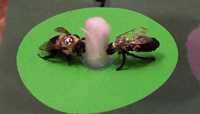
A live Bombus impatiens bumblebee (left) feeds at a cotton wick soaked with sugar water that protrudes from an artificial flower. The bumblebee model on the right is positioned to simulate a feeding bee. Photo credit: Brad Worden.Just as travelers figure out which restaurant is good by the numbers of cars in the parking lot, bumblebees decide which flowers to visit by seeing which ones already have bee visitors.
| Biology | September 1, 2005 11:09 PM |
Male fruit flies lacking the ability to sense female pheromones are left in the dark when it comes to love, according to a new Dartmouth Medial School (DMS) study that could help control harmful insect populations. Published in the Proceedings of the National Academy of Sciences (PNAS), the research shows that mutations in the gene ppk25 disable males flies’ ability to detect female pheromones that regulate key mating behaviors in fruit flies.
| Biology | August 31, 2005 10:59 PM |
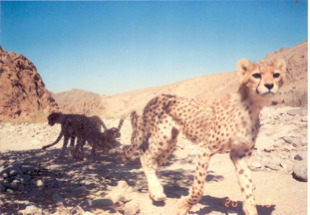
A family of five Asiatic cheetahs (four cubs and their mother) photographed by a remote camera trap in Iran's Dar-e Anjir Wildlife Refuge. The New York-based Wildlife Conservation Society and Iran's Department of Environment are collaborating on a conservation project in this region to safegurd the remaining population of these extremely rare cats. I.R.Iran DOE/CACP/WCS/ UNDP-GEFWildlife Conservation Society (WCS) scientists, working in conjunction with Iran’s Department of Environment (DOE) in an isolated region in the Dar-e Anjir Wildlife Refuge, recently discovered that a remote camera set out to survey wildlife had photographed an entire family of extremely rare Asiatic cheetahs. The pictures show an adult female and her four youngsters resting in the shade of a tree, marking the largest-known group of these rare cats ever photographed in Asia.
| Biology | August 31, 2005 10:58 PM |
Experts call for $30 million action plan to save mankind's closest relatives
A combination of natural and man-made threats is killing gorillas and chimpanzees in Central Africa, and experts say $30 million is needed for special programs to save some of mankind's closest relatives from disappearing.
| Biology | August 31, 2005 10:57 PM |
Though humans may never match the tracking ability of dogs, we apparently have the ability to sniff out and locate odors, according to a new study by scientists from the University of California, Berkeley.
| Biology | August 28, 2005 08:05 PM |
How germ cells decide whether to be sperm or eggs
Johns Hopkins biologists have determined how developing embryos tell their specialized "germ cells" whether to develop into a male's sperm or a female's eggs.
| Biology | August 26, 2005 01:27 AM |
Using muscle tissue from tarantulas, an HHMI international research scholar and his colleagues have figured out the detailed structure and arrangement of the miniature molecular motors that control movement. Their work, which takes advantage of a new technique for visualizing tissues in their natural state, provides new insights into the molecular basis of muscle relaxation, and perhaps its activation too.
| Biology | August 25, 2005 11:27 PM |
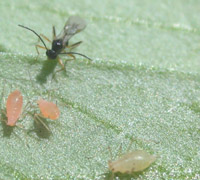
A parasitoid wasp stalks pea aphids so she can lay eggs in them. The wasp is a tad bigger than 0.01 inches long. Photo credit: (c) 2005 Kerry M. Oliver. Carrying the right bacterial hitchhiker can make the difference between life and death for an aphid. Pea aphids are often under attack by wasps seeking to lay their eggs inside aphids, turning them into an all-you-can-eat buffet for the larval wasps.
| Biology | August 25, 2005 01:27 AM |
Killer whales and chimpanzees both pass on "traditions" to other members of their group, according to two separate studies of feeding behaviour. The findings add to evidence that cultural learning is widespread among animals.
| Biology | August 25, 2005 01:24 AM |
Discovery has implications for control of mosquitoes, malaria and West Nile Virus
Prior to coming to Nevada 16 years ago, David Schooley was a key figure at a small company in Palo Alto, Calif. that developed methoprene, an insecticide that halts the maturation of insect larvae to adults.
| Biology | August 24, 2005 11:15 PM |
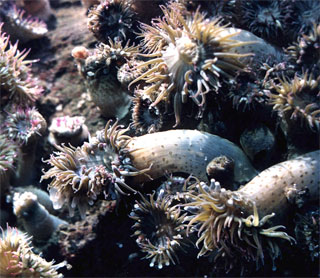
Warrior anemones reach over from several rows behind the front to attack animals from a neighboring colony. (Rick Grosberg/UC Davis photo) Clashing colonies of sea anemones fight as organized armies with distinct castes of warriors, scouts, reproductives and other types, according to a new study.
| Biology | August 24, 2005 10:45 PM |
Magnetic orientation is critical to the migratory success of many bird species. By studying the influence of light on the ability of migratory birds to orient to magnetic signals, researchers have found clues to suggest that birds' orientation abilities may be more complex than previously thought and that birds may be able to interpret magnetic signals by more than one mechanism. The work is reported in Current Biology by a team including Thorsten Ritz, of the University of California, Irvine, and Wolfgang and Roswitha Wiltschko, of the University of Frankfurt, Germany.
| Biology | August 23, 2005 08:05 PM |
Duke University Medical Center neurobiologists have pinpointed circuitry in the brains of monkeys that assesses the level of risk in a given action. Their findings -- gained from experiments in which they gave the monkeys a chance to gamble to receive juice rewards -- could give insights into why humans compulsively engage in risky behaviors, including gambling, unsafe sex, drug use and overeating.
| Biology | August 23, 2005 07:06 PM |
Like humans, other animals are faced with everyday obstacles in their physical environments and must engage appropriate decision-making and motor skills to deal with them. Navigating these obstacles can involve highly complex events in mammals and other vertebrates, but in new work, researchers have employed an ingenious obstacle-based system for studying the control and structure of goal-oriented motor programs in the fruit fly Drosophila.
| Biology | August 22, 2005 09:30 PM |
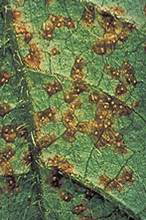 Virginia Tech scientists say that there has been a change in the status of the fungus causing Asian Soybean Rust but that the new information is still too preliminary for any action on the part of the Commonwealth's soybean producers.
A single cluster of six urediniospores found at Virginia Tech's Tidewater Agricultural Research and Extension Center in Suffolk was identified by morphological characteristics as matching the description of the fungus.
| Biology | August 22, 2005 12:05 PM |
Humans are not alone in their desire to conform to cultural norms, according to new study findings that confirm, for the first time, chimpanzees share the same conformist tendencies. Researchers, in determining how chimpanzee communities share and maintain traditions, discovered they possess a natural motivation to copy their peers well into adulthood and say that although other species show some cultural behaviors, the level of cultural variation shown by chimpanzees is exceeded only by humans. The study, conducted at the Yerkes National Primate Research Center of Emory University by a collaborative team of scientists from the United States and the United Kingdom, is published in the current online edition of Nature.
| Biology | August 22, 2005 02:05 AM |
32% increase of African fish supply needed by 2020 just to maintain consumption levels
Calling fisheries critical for nourishing the poor and for helping Africa cope with the health, economic and social devastation of problems like HIV and AIDS, the New Partnership for Africa's Development (NEPAD), the WorldFish Center and partners are making an urgent appeal to boost the continent's fish production and strengthen the contribution of fisheries to economic growth and food security.
| Biology | August 21, 2005 07:32 PM |
Neurobiologists at Duke University Medical Center have found the strongest evidence yet that monkeys show the same keen 'social reflexes' that humans do -- shifting their attention in response to the direction of gaze of another individual. The researchers said their findings mean that monkeys can provide a critically important animal model of how the brain controls what humans pay attention to in social situations.
| Biology | August 20, 2005 11:26 PM |
Researchers have presented the first clear evidence that olfaction is uniquely a "dual" sense, in that the brain perceives the same odorant molecule differently if it arrives through the nose rather than the mouth. In the August 18, 2005, issue of Neuron, researchers report that the smell of chocolate activated different brain regions according to whether the odor was introduced into the olfactory system through the mouth or through the nose.
| Biology | August 19, 2005 11:49 PM |
In the quest to discover new species, a team of international scientists leaves today on a month-long expedition to explore the undiscovered treasures in the Mountains of Southwest China, an extension of the great Himalayan mountain range.
| Biology | August 18, 2005 11:58 PM |
If Cornell University researchers and their colleagues have their way, cheetahs, lions, elephants, camels and other large wild animals may soon roam parts of North America.
| Biology | August 18, 2005 11:36 PM |
Otters cavorting in the water is a scene with which we're all familiar. Yet, unlike many other mammals that spend a considerable amount of time in the water–polar bears, seals, dolphins, and whales–river otters do not have a thick layer of body fat to keep warm. They rely, instead, on a few unique adaptations; namely, their fur and the densely packed layer of specially adapted underhairs.
| Biology | August 18, 2005 11:32 PM |
Understanding why some transplant patients reject their new organs requires a working knowledge of how cells recognize and accept or reject each other. Xavier Fernàndez-Busquets, an MBL researcher visiting from the University of Barcelona, has found the perfect ally in this quest: the red beard sea sponge, an Atlantic species that grows abundantly from just north of Cape Cod down to Florida.
| Biology | August 18, 2005 11:11 PM |
The number of living Florida panthers has grown from a previously estimated 30 to a recently counted 87 as a result of a controversial breeding effort to improve the genetic health of the endangered and inbred animals, according to a new assessment.
| Biology | August 18, 2005 11:07 PM |
Deciphering the subtle, complex electrical signals emanating from the brain has yielded important insights into the still-mysterious neural mechanisms that underlie behavior. By recording a subject's faint brain signals via arrays of scalp electrodes during cognitive tasks, researchers can extract "event-related potentials" (ERPs) that enable them to pinpoint with great accuracy when the brain reacts to components of the tasks.
| Biology | August 18, 2005 10:57 PM |
Since 1990 lions have killed more than 563 Tanzanians, including nursing mothers, children playing outside their huts and people dragged from their beds. Consequently, increasing numbers of lions are being killed by local people. In an effort to find a way to protect both people and lions, University of Minnesota researchers have analyzed the factors involved in attacks and identified the control of bush pigs -- a major agricultural pest -- as the most promising strategy for curbing attacks. The research will be published Aug. 18 in Nature.
| Biology | August 17, 2005 11:41 PM |
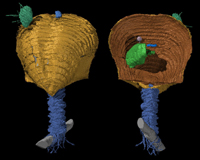
Lamp Shade' fossil recovered from 250 million year old Herefordshire, U.K. lava ashA team of American and British scientists have identified and digitally reconstructed the first example of a fossilized brachiopod complete with its pedicle, the stalk attaching it to the sea floor, and its lophophore or feeding organ, according to a report in the journal Nature.
| Biology | August 17, 2005 11:39 PM |
An ancient shellfish not seen for 425 million years is recreated in vivid 3D images published today, following a unique fossil find in the UK.
| Biology | August 17, 2005 11:33 PM |
A paper published in the recent issue of Psychophysiology describes differences in the brain's response (event-related potentials, or "ERPs") to pictures and words that describe the same object. In two studies, the authors evaluated how the brain reacts differently to a picture of an object or its name when people were looking for either the picture or the name in a visual display.
| Biology | August 17, 2005 11:30 PM |
The first full map of where the world's birds live reveals theirdiversity 'hotspots' and will help to focus conservation efforts,according to research published in Nature today (18 August).
| Biology | August 16, 2005 11:27 PM |
For the first time ever, a genetic study has followed a single humpback whale from one ocean basin to another, adding to traditional notions of the migratory patterns of these majestic marine mammals in the process, according to researchers from the Wildlife Conservation Society (WCS), the American Museum of Natural History (AMNH), and New York University. In the most recent Royal Society's Biology Letters, a male humpback whale that was first sighted in Madagascar's Antongil Bay in 2000 was found in 2002 swimming off the coast of Loango National Park in Gabon--on the other side of the African continent.
| Biology | August 16, 2005 11:18 PM |
Biologists testing a mathematical model of the mechanism birds use to control the growth of complex feathers found that plumed feather structures involve the coordination of at least two genes that activate and that inhibit barb growth.
| Biology | August 15, 2005 11:33 PM |
Since passage of the Endangered Species Act in 1973, over 1,300 endangered species have been protected in the United States and its territories. In the forthcoming issue of Ecology Letters, Male & Bean assess 14 years of endangered plant and animal status trends and show that the length of time species are protected, and the amount of money spent on their conservation are key variables in explaining trends.
| Biology | August 15, 2005 11:29 PM |
Marine environments around the world are being threatened by exotic species of the moon jellyfish being dispersed by international shipping, according to new research.
| Biology | August 15, 2005 11:09 PM |
Across the United States, independent pet rescue organizations are growing in number, working to place abandoned animals in loving new homes. Although the majority of these organizations operate out of clusters of private foster homes, they're successfully winning high visibility for placing their pooches.
| Biology | August 15, 2005 11:03 PM |
Carnegie Mellon CyLab computer scientist Yang Cai is working with NASA's Earth-Sun System Technology Office (ESTO), the Goddard Space Flight Center (GSFC) and the National Oceanic and Atmospheric Administration (NOAA) to develop new software for detecting and tracking toxic algae plaguing North American waters.
| Biology | August 14, 2005 11:33 PM |
Lymph circulates in our bodies through a complex network of lymphatic vessels, of which little is known. This network is, however, of major importance for the support of the immune system and the fluid in our body. Researchers from the Flanders Interuniversity Institute for Biotechnology (VIB) connected with the Catholic University of Leuven, are the first to indicate that this network can be studied with the help of tadpoles. This accelerates research of the lymphatic vessel network. With tadpoles one can now very quickly identify new genes that play a part in the development and functioning of the lymphatic vessel network. This is a first step in the search for solutions for illnesses related to the lymphatic vessel network, such as cancer and lymphedema.
| Biology | August 14, 2005 11:27 PM |
Questions about the existence of life in outer space may have a surprisingly close-to-home answer, according to one University of Houston professor.
Understanding how life evolved on Earth is important in obtaining clues as to where else in the universe one might find life and what it might be like, said George E. Fox, a UH professor of biology and biochemistry. Fox is finishing work on a three-year research grant from NASA's Exobiology Program that seeks to understand life's origin.
| Biology | August 13, 2005 12:21 PM |
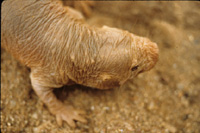
Only in the past 25 years have scientists learned of the strange lifestyle of African mole-rats. All 12 species live entirely underground. A few colonies of naked mole-rats, a social species of the family, have been raised for study purposes in a specially designed observation tunnels. (Texas Agricultural Experiment Station photo by Dr. Rodney Honeycutt)This is all underground, and naked mole-rats prefer it that way: Momma naked mole-rat is the only one having babies, and she's got several naked mole-rat boyfriends.
Were it human, the family would argue it out on a national talk show. As it is, the social behavior of these tiny rodents has scientists intrigued, right down to their naked mole-rat molecules. "African mole-rats are very good models for studying social structure. I'm interested in the genetic markers associated with structure," said Colleen Ingram, whose doctoral degree will be bestowed Friday at Texas A&M University based on her findings about the critters' parentage.
| Biology | August 13, 2005 12:18 PM |
A Duke University study has found that maturing stands of pines exposed to the higher levels of carbon dioxide expected by mid-century produce more needles than those absorbing today's levels of the gas, even under drought conditions. However, the study also found that lack of soil nutrients may impose limitations in many forests.
| Biology | August 13, 2005 12:16 PM |
Swarms of millions of locusts have, since Biblical times and until our very own day, been considered a "plague" of major proportions, with the creatures destroying every growing thing in their path.
| Biology | August 11, 2005 10:59 PM |
A team of genomic researchers headed by biologists at New York University's Center for Comparative Functional Genomics, in collaboration with researchers at Harvard University, the Max Planck Institute, and Cenix Biosciences, has mapped out a preliminary molecular diagram of the early stages of embryo formation, offering for the first time a global look at how a single cell begins its path into a multi-cellular organism. The findings are reported in the August 11 issue of the journal Nature.
| Biology | August 10, 2005 08:20 PM |
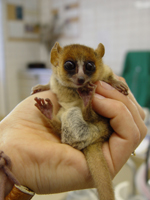
The newly discovered Microcebus lehilahytsara is a distant relative of man's ancestors and therefore important to understanding human origins and evolution. Photo by Robert Zingg German and Malagasy primatologists have discovered two new species of lemurs, naming one of them after Steve Goodman, a Field Museum scientist who has devoted nearly two decades to studying the animals of Madagascar.
Lemurs in the wild are found only in Madagascar, one of the most important conservation hotspots on Earth. Lemurs are the last living link to ancient primates that have a common link to the primate lineage that evolved into humans. Therefore, they are extremely important to understanding the origin, evolution and ecology of human beings.
| Biology | August 10, 2005 08:18 PM |
New discoveries about the timing and speed of gigantic, 6500-foot (2-km) thick lava flows that poured out of the ground 65 million years ago could shift the blame for killing the dinos.
| Biology | August 10, 2005 08:08 PM |
Two peas in a pod may not be so friendly when planted in the ground and even two parts of the same plant, once separated may treat the former conjoined twin as an alien "enemy," according to a Penn State researcher.
| Biology | August 10, 2005 08:04 PM |
Anxiety can be a good thing. It alerts you that something may be wrong, that danger may be close. It helps initiate signals that get you ready to act. But, while an occasional bit of anxiety can save your life, constant anxiety causes great harm. The hormones that yank your body to high alert also damage your brain, your immune system and more if they flood through your body all the time.
| Biology | August 9, 2005 08:23 PM |
In the early 1960s more than 100,000 turkeys died in Britain of cancer of the liver. Eventually, researchers identified mouldy peanut flour from Brazil containing large amounts of aflatoxin as the cause of this mysterious 'turkey X' disease. Even today the toxin is regarded as one of the most virulent natural carcinogenic substances.
| Biology | August 9, 2005 08:21 PM |
By performing sequence analysis of ancient DNA, a team of researchers has obtained data that help clarify our view of the evolutionary relationships shared by the large predatory cats that once roamed the prehistoric New World.
| Biology | August 8, 2005 08:02 PM |
Insects that can withstand the powerful pesticide DDT that was banned in the 1970s have an additional genetic advantage over their rivals that has helped them spread across the globe ever since, according to research published in Current Biology tomorrow (9 August 2005).
This discovery overturns current theories that resistance to pesticides burdens insects with a genetic disadvantage that would stop them from competing with non-resistant insects once farmers stop using that pesticide.
| Biology | August 8, 2005 07:48 PM |
Using a powerful microscope and computer software, a team of scientists from Johns Hopkins, the University of Arkansas, Worcester Polytechnic Institute and elsewhere has developed a faster and more objective way to examine the surfaces of fossilized teeth, a practice used to figure out the diets of our early ancestors.
| Biology | August 5, 2005 05:32 PM |
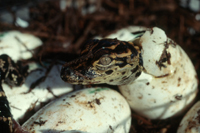
Alligator eggs hatchingThe development of bone structures in alligator eggs raised under varying oxygen concentrations creates a link to fossil records of the evolution of vertebrates and prehistoric atmospheric oxygen concentrations, according to a paper to be presented at the Earth System Processes 2 meeting in Alberta, Canada.
| Biology | August 5, 2005 05:30 PM |
As anyone whose nerves have been jangled by a baby's howl or who have been riveted by the sight of an attractive person knows, nature has evolved sensory systems to be exquisitely tuned to relevant input. A major question in neurobiology is how neurons tune the strength of their interconnections to optimally respond to such inputs.
| Biology | August 5, 2005 05:26 PM |
Prehistoric big game hunters and not the last ice age are the likely culprits in the extinction of giant ground sloths and other North American great mammals such as mammoths, mastodons and saber-toothed tigers, says a University of Florida researcher.
| Biology | August 4, 2005 04:23 PM |
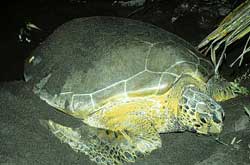 Sea turtles that receive the highest protection in Costa Rica and other neighboring countries are dying by the thousands at the hands of unregulated - and unsustainable - commercial fishing in Nicaragua, according to a study by the Bronx Zoo based Wildlife Conservation Society.
| Biology | August 4, 2005 04:19 PM |
A study conducted by a biologist at the University of California, San Diego that appears in the August issue of the journal Animal Behaviour found that females of the species Uca crenulata may check out 100 or more male fiddler crabs and their burrows before finally deciding on a mate.
| Biology | August 4, 2005 04:19 PM |
In territorial species with polygynous mating systems, reproductive success reflects phenotypic variation. At the gross level, such phenotypic variation can include that of body size and weapon morphology, as well as of weapon function and performance.
| Biology | August 4, 2005 04:17 PM |
Sexual reproduction can be thought of as a cooperative process in which two individuals come together to produce a new individual. It can also be viewed as a process in which two parties with differing interests, investment, and background interact to produce a new individual. From the former perspective, parental interests are unified (both wish to produce vigorous offspring), while the latter suggests possible conflict.
| Biology | August 3, 2005 11:33 PM |
Have you ever met a cat that doesn't go crazy over catnip? As it turns out, half of the cats in the world don't respond to it at all, according to the "What's That Stuff" column in the Aug. 1 issue of Chemical & Engineering News, the weekly newsmagazine published by the American Chemical Society, the world's largest scientific society.
| Biology | August 3, 2005 11:28 PM |
Editor : Link to our previous story about the discovery
After reviewing new sound recordings from the White River of Arkansas, an independent team of ornithologists has confirmed the existence of the Ivory-billed Woodpecker.
| Biology | August 3, 2005 11:23 PM |
Researchers have found that the two primary areas of the human brain appear to age in radically different ways: The cortex used in higher-level thought undergoes more extensive changes with age than the cerebellum, which regulates basic processes such as heartbeat, breathing and balance. Their work, based on an analysis of gene expression in various areas of human and chimpanzee brains, also shows that the two species' brains age very differently, despite their close evolutionary relationship.
| Biology | August 3, 2005 11:21 PM |
The brain may interpret the information it receives from sensory neurons using a code more complicated than scientists previously thought, according to new research from the National Autonomous University of Mexico and Cold Spring Harbor Laboratory. By studying how monkeys perceive a vibrating object when it touches the skin, scientists found that changes in an animal's attention over time influence how a sensory signal is interpreted.
| Biology | August 2, 2005 05:00 PM |
A team of researchers working with colleagues from the Botswana National Museum shed new light on the questions of when cattle were brought to southern Africa and from where. A domestic cow bone, dated to about 2000 years ago was excavated from a site at Toteng, located in the Kalahari Desert of northern Botswana. This bone, dated by the Accelerator Mass Spectrometry (AMS) radiocarbon technique, provides the oldest directly dated evidence of cattle in southern Africa.
| Biology | August 1, 2005 07:23 PM |
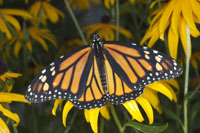
A typical monarch butterfly.
photo courtesy of Scott CamazineWhile "navigation" systems in automobiles are a fairly new (and still costly) innovation, monarch butterflies have managed for millennia to navigate their way for a distance of some 3000 miles (4800 kilometers) each fall from Canada to Mexico (and vice-versa in the spring) without losing their way.
| Biology | August 1, 2005 07:18 PM |
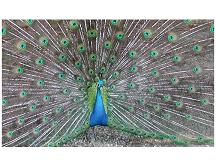
Since Darwin, the peacock exhibiting an elongated tail composed of ocelli has been considered a prime example of the strength of sexual selection. Professor Marion Petrie's classical studies have shown that females prefer males with a high number of ocelli. However, a remaining question concerning the role played by ocelli is how peahens value their number. New research published today in Ethology describes that females may actually assess ocelli density.
| Biology | August 1, 2005 07:17 PM |
Willow trees, riparian willow warblers and beaver dams once were bountiful in an area near the town of Banff, Alberta, Canada. But once wolves left this area, elk grew more plentiful, browsing heavily on young willows. Today, there is little trace of beavers, and sparrows have replaced the warblers in what is now a grassland meadow. These profound changes were driven by the absence of the wolf, a top predator. That's the compelling finding of the paper, "Human Activity mediates a Trophic Cascade caused by Wolves" that appears in the August issue of Ecology by Mark Hebblewhite (University of Alberta) and colleagues.
| Biology | August 1, 2005 07:13 PM |
Researchers have discovered amphibian species at an accelerating rate in recent decades, with over 1,000 new ones recognized between 1992 and 2003. At the same time, amphibians are, for reasons not entirely clear, declining more rapidly than either mammals or birds, underscoring the importance of an accurate evaluation.
| Biology | July 31, 2005 05:34 PM |
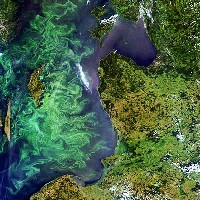
Credits: ESAA colourful summer marine phytoplankton bloom fills much of the Baltic Sea in this Envisat image.
Phytoplankton are microscopic marine plants that drift on or near the surface of the sea, by far the most abundant type of life found in the ocean. Just like plants on land they employ green-pigmented chlorophyll for photosynthesis - the process of turning sunlight into chemical energy. While individually microscopic, phytoplankton chlorophyll collectively tints the surrounding ocean waters, providing a means of detecting these tiny organisms from space with dedicated 'ocean colour' sensors.
| Biology | July 31, 2005 05:27 PM |
A historic expedition of Census of Marine Life explorers to the planet's most northern reaches has revealed a surprising density and diversity of Arctic Ocean creatures, some believed new to science.
| Biology | July 29, 2005 07:38 PM |
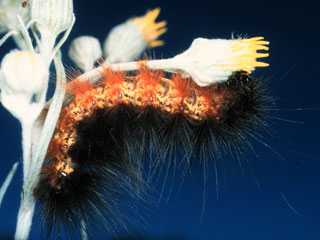
A tiger moth caterpillar feeding on a ragwort plant, which contains toxins that are especially tasty to parasitized caterpillars. Photo: Michael Singer/NATURESome parasites trigger their own destruction by altering their hosts' behavior, researchers at The University of Arizona and Wesleyan University report in Nature. Many parasites have developed mechanisms that suppress their hosts' ability to fight them off or even change their behavior in favor of the parasite. "We found the opposite is true with tiger moth caterpillars and their parasites," said UA Regents' Professor Emerita Elizabeth Bernays.
| Biology | July 29, 2005 07:35 PM |
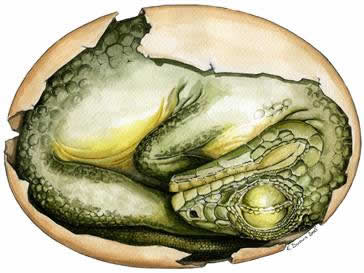
An artist's reconstruction shows a curled-up dinosaur embryo inside an egg. The actual egg is a little more than 2 inches (6 centimeters) in length. Image: Kevin Dupuis, University of Toronto at MississaugaThe embryos of a long-necked, herbivorous dinosaur are the earliest ever recorded for any terrestrial vertebrate and point to how primitive dinosaurs evolved into the largest animals ever to walk on earth, say scientists from the University of Toronto at Mississauga (UTM), the Smithsonian Institution and the University of Witwatersrand, South Africa.
| Biology | July 29, 2005 07:33 PM |
What do hot sauce aficionados and African elephants have in common? They both feel the burn of chilli peppers, the key ingredient for resolving human-elephant conflicts in Africa while raising money for farmers and conservation.
| Biology | July 29, 2005 07:09 PM |
A new study released in Science (via Science Express http://www.sciencexpress.org) on July 28th reveals a striking downward trend in the diversity of fish in the open ocean – the largest and least known part of our planet. Teasing apart the effects of climate change and fishing over the past 50 years, the authors show a clear link to overfishing and highlight a surprising global pattern of open ocean hotspots - areas with predictable congregations of tuna, marlin, swordfish, and other ocean predators.
| Biology | July 28, 2005 06:54 PM |
A male club-winged manakin - Courtesy of Kimberly BostwickHummingbirds and rattlesnakes move parts of their bodies at amazing speeds. But male club-winged manakins -- colorful, sparrow-sized South American birds -- have them both beat, vibrating their wings at more than 100 cycles per second, twice the speed of hummingbirds. The bird uses this unprecedented feat not for fight or flight, but to impress females with its violinlike hum.
| Biology | July 28, 2005 05:41 PM |
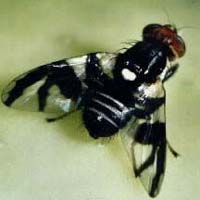
Ragoletis fruit fly. The animal family tree may not be filled just with forks, but may also contain knots: hybrid species with two different ancestors rather than one, according to a team of Penn State researchers.
"We are looking for the origin of species," says Dr. Dietmar Schwarz, post-doctoral researcher in entomology. "In animals, people envision the formation of a new species by a split of one ancestral species to two derived species or a branching of one species from another."
However, according to Schwarz, another way to get a new species is for two species to hybridize – mate with each other – forming a new species lineage while the parental species persists.
| Biology | July 27, 2005 05:55 PM |
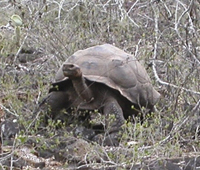
Unnamed taxon of Galapagos Tortoise Almost 150 years after Charles Darwin proposed a mechanism for biological evolution, previously unrecognized diversity has been discovered among the giant tortoises of the Galápagos, Geochelone nigra, whose distinctiveness was an inspiration in formulating the theory of natural selection.
| Biology | July 27, 2005 05:47 PM |
How did University of Alberta researchers discover that animals zig when they were only supposed to zag? A little birdie told them.
In studying the spatial memory of wild-caught mountain chickadees, University of Alberta researchers were surprised to discover the birds contradicting prior research that showed how animals navigate. This study is the first to reveal a different pattern. Previously, only animals that had been raised in human-made enclosures had been tested.
| Biology | July 26, 2005 05:12 PM |
Biologists have discovered that a common corn fungus is by far nature's most powerful known cannoneer, blasting its spores out with a force of 870,000 times the force of gravity. Farmers need not worry about being nailed by a fungal supergun, however. The infinitesimal spore travels only two-tenths of an inch (5 millimeters) before plummeting.
| Biology | July 25, 2005 05:34 PM |
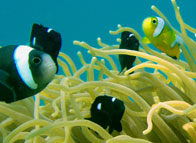
Credit: Jones et al./Current Biology 2005.Tracing the larvae of marine organisms from where they were born to their ultimate destination has been regarded as one of the greatest challenges in ocean science. Managers of marine reserves areas have eagerly sought this information to help determine the optimal size and spacing of marine reserves; well-planned reserves should help ensure that protected populations can sustain themselves as well as provide a source of larvae to maintain exploited populations in areas open to fishing.
| Biology | July 25, 2005 05:33 PM |
We would immediately notice if the outside world suddenly went dark every few seconds. But we rarely become aware of our blinks, even though they cause a similar reduction in the amount of light entering the eye. So why are we not aware of the frequent mini-blackouts caused by blinks?
| Biology | July 25, 2005 05:31 PM |
The brain is bombarded by information about the physical proportions of our bodies. The most familiar sensations, such as a puff of wind or the brush of our own shirt sleeve, serve to constantly remind the brain of the body's outer bounds, creating a sense of what is known as proprioception. In a new study, researchers report this week that the brain's ability to interpret external signals and update its sense of bodily self is more dynamic than had been previously thought and that such updates can happen very quickly, altering within a matter of seconds how body parts and individual touch sensations are perceived.
| Biology | July 24, 2005 11:35 PM |
Unlike most mammals, cats--both domestic and wild--are indifferent to sweets. A new study in PLoS Genetics explains the molecular mechanism behind their strictly carnivorous behavior. "We took a behavioral question and answered it molecularly," says Joseph Brand, senior author of the study and Associate Director of the Monell Chemical Senses Center.
| Biology | July 23, 2005 06:07 PM |
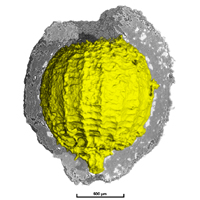
Image of a sycidium gyrogonite surrounded by its utricule.Researchers from the Université de Montpellier II (France), the Institute of Geology of China, and the ESRF have been able to identify enigmatic fossils from Devonian (about 400 million years) as fructification of charophyte algae. Charophytes are land plants living in fresh water that still exist nowadays. This breakthrough allows researchers to better understand the evolution of these very old plants of the Paleozoic era and to have an improved overview of the climate at this period. The use of powerful X-rays beams to perform high resolution microtomography at the ESRF was one of the major keys in helping to understand the internal structure of these fossils. The results of this research are published in the latest issue of the American Journal of Botany with the title "New insights into Paleozoic charophyte morphology and phylogeny".
| Biology | July 23, 2005 01:04 PM |
The North Atlantic right whale's future looks grim if the current mortality rates continue, according to Florida State University assistant professor of oceanography Douglas Nowacek and a group of fellow scientists from across the nation.
| Biology | July 22, 2005 06:29 PM |
Saving large mammals such as elephants and rhino from extinction could be made more effective by focusing efforts on individual species as well as their habitats.
| Biology | July 22, 2005 06:26 PM |
Basking sharks are much more canny predators than previously thought, ecologists have discovered. According to new research published online by the British Ecological Society's Journal of Animal Ecology, basking sharks are able to reverse their normal pattern of diving at dawn and surfacing at dusk in order to foil the attempts of zooplankton trying to evade capture. As well as shedding new light on basking behaviour, the results have important implications for the conservation of shark species.
| Biology | July 21, 2005 05:09 PM |
On any given day, tens of thousands of biologists around the globe run DNA sequences of unknown function through a lightning-fast online algorithm called BLAST – typically submitting 200 to 400 base pairs, or "letters" of genetic code, to be matched against the billions of letters for known genes. Searching for similarities that can shed light on functional or evolutionary relationships, scientists routinely use BLAST to churn through and produce vast amounts of data. Everyday applications include genetic medicine and pharmaceuticals. Yet this process and, more generally, genomics remain dimly understood by the public.
| Biology | July 20, 2005 01:52 PM |
Estimates for the number of living species on earth range from 3.5 million to over 30 million but only 1.9 million species have been classified and described. Estimating historical biodiversity from the fossil record is an even more daunting task.
| Biology | July 19, 2005 07:09 PM |
Ever tried to defeat natural forces? Specialist ants are capable of running on slippery waxy plant surfaces in order to reach their nests and food supplies. Some Macaranga trees in South East Asia have waxy stems to protect themselves from ants and other insects. Only one specific ant is capable of running up and down the stem, in order to access its nest and food supply inside the stem.
| Biology | July 18, 2005 07:08 PM |
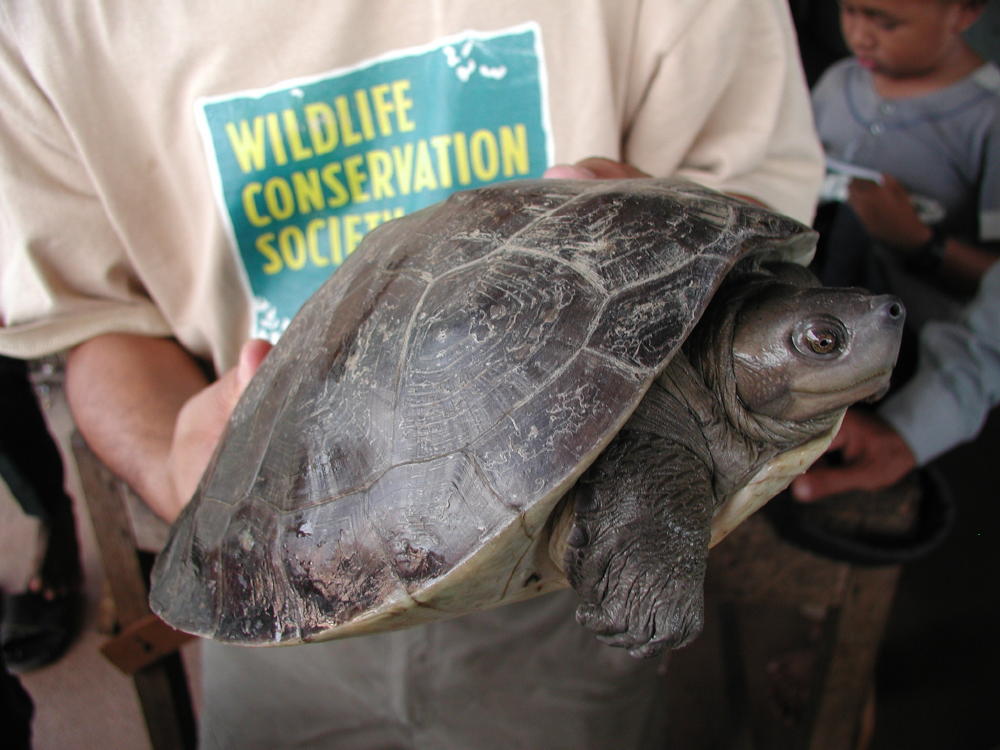
Sre Ambel River mangrove turtle. Picture courtesy of WCS.An extremely rare "royal" turtle narrowly escaped a trip to a Chinese soup-pot, thanks to a tiny microchip implanted in its skin, according to experts from the New York-based Wildlife Conservation Society (WCS), who rediscovered the species four years ago in Cambodia.
Wildlife inspectors discovered the 33-pound (15 kg) turtle in a crate of confiscated wildlife in Vietnam, where smugglers planned to send the shipment on to China. The inspectors used a special reading device to detect the microchip, and quickly learned that the turtle came from Cambodia, where it was released two years ago in the Sre Ambel River ago by Cambodia's Fisheries Department. Authorities also called in the Vietnam-based conservation group Wildlife at Risk who confirmed field identification of the turtle.
| Biology | July 14, 2005 08:04 PM |
What could the fierce dinosaur T. rex and a modern songbird such as the sparrow possibly have in common? Their pulmonary systems may have been more similar than scientists previously thought, according to new research from Ohio University and Harvard University.
| Biology | July 14, 2005 07:53 PM |
 Men! Fed up with women faking headaches? Grant yourself lucky that you are not a mosquito fish, as females wouldn't think twice about attacking you when you make a pass at them. As they are not keen on intercourse, females select for strong male genes by attacking those that show them some interest. Therefore, the lucky (it's often the little) one sneaks up from behind, quickly retracting after copulation to prevent a nasty blast.
| Biology | July 13, 2005 09:30 PM |
Caterpillars are bleeding defensive! Insects are known to lack an antibody-mediated immune response, and research in caterpillars has recently shown that, instead, they produce protective proteins in response to bacterial infection. The pattern recognition receptors (PRR) and antibacterial effectors produced at a first infection still function to protect against a repeated challenge. These results raise important issues in insect research which will be reported by Dr. Ioannis Eleftherianos at the Society of Experimental Biology Annual Meeting at the Universitat Autonoma de Barcelona on Wednesday 13th of July.
| Biology | July 13, 2005 09:27 PM |
Ever wondered why you aren't able to swat a fly? The fly's secret in avoiding death in this way lies in its decision to jump rather than to fly out of the way. "This kind of low-power decision-making could be of interest to those building autonomously navigating robots", according to Gwyneth Card of the California Institute of Technology, who will be presenting her work on triggered escape response at the Society for Experimental Biology Annual Main Meeting in Barcelona, on Wednesday 13th July [session A7.15].
| Biology | July 12, 2005 05:24 PM |
Billions of people tuned into recent Live 8 concert broadcasts, some just for the music, others to support the altruistic cause spearheaded by former Boomtown Rat, Sir Bob Geldof. In today's rat-race climate, what makes some of us look out for each other, while others look out for themselves?
| Biology | July 12, 2005 05:17 PM |
Scientists interested in ancient life have a wealth of fossils and impressions frozen in rocks that they can study from as far back as 540 million years ago – when animals with shells and bones began to become plentiful. But evidence of complex life older than 540 million years is scant and difficult to study.
| Biology | July 11, 2005 06:56 PM |
Methamphetamine, the drug of choice for long-distance truckers and college students pulling all-nighters, appears to do a similar trick for fruit flies, too. This finding is one of several in a new study that demonstrates a critical role for the neurotransmitter dopamine in the modulation of sleep, wake, and arousal states.
| Biology | July 11, 2005 06:54 PM |
 Fakery is seen throughout the animal kingdom and is especially evident in the realm of mate selection and mating behavior. A puzzling behavior frequently observed in many species is copulation between males and females without the delivery of semen. In a world where reproduction is key to a species, survival, such behavior poses a real mystery. In a study that sheds new light on the evolution of sexual behavior, researchers have utilized a novel technique to reveal that in feral chickens, the simple stimulus generated by male mounting--in the absence of actual insemination--reduces the sexual promiscuity of a hen, indicating that even copulations that do not result in semen transfer may be crucial to defend the paternity of a male.
| Biology | July 11, 2005 06:53 PM |
Researchers at the National Institute of Mental Health (NIMH), part of the National Institutes of Health, have discovered a genetically controlled brain mechanism responsible for social behavior in humans--one of the most important but least understood aspects of human nature. The findings are reported in Nature Neuroscience, published online on July 10, 2005.
| Biology | July 8, 2005 05:21 PM |
This photograph shows the newly discovered siphonophore's tentilla—tiny filaments that branch off the main tentacles. Each tentilla contains thousands of stinging cells. The red lures are on separate stalks, which move up and down, causing the lures to wiggle like swimming copepods (a typical food of small midwater fishes). Image: Steven Haddock (c) 2004 MBARI Editor : Other images are available
As successful fishermen know, if you want to catch fish, you have to use the right bait or lure. This is true even in the deep sea, where scientists recently discovered a new species of jelly that attracts fish by wiggling hundreds of glowing red lures. This is the first time any marine invertebrate has been found to use a bioluminescent lure or to display red bioluminescence. This discovery is described in an article written by Steven Haddock of the Monterey Bay Aquarium Research Institute (MBARI), along with several coauthors, in the July 8, 2005 issue of Science magazine.
| Biology | July 8, 2005 05:19 PM |
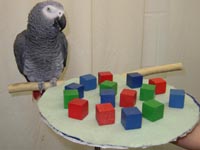
A Brandeis University researcher has shown that an African grey parrot with a walnut-sized brain understands a numerical concept akin to zero – an abstract notion that humans don't typically understand until age three or four, and that can significantly challenge learning-disabled children
| Biology | July 8, 2005 05:17 PM |
Identical twins lose some fundamental similarities as they grow older, a new study reports.
| Biology | July 8, 2005 05:13 PM |
Researchers at Harvard University have found evidence that the retina actively seeks novel features in the visual environment, dynamically adjusting its processing in order to seek the unusual while ignoring the commonplace. The scientists report in this week's issue of the journal Nature on their finding that this principle of novelty-detection operates in many visual environments.
| Biology | July 8, 2005 05:12 PM |
A trail of feathers led a team of Purdue University scientists to confirm that eagles from central Asia are quite possibly the most faithful of birds.
| Biology | July 7, 2005 10:32 PM |
Research into the genetics of barley could lead to improved varieties of the crop most commonly used in the production of whisky and beer. Scientists funded in part by the Biotechnology and Biological Sciences Research Council (BBSRC) are beginning a new programme to uncover key genes that control the specific characteristics of different barley varieties.
| Biology | July 6, 2005 10:48 PM |
The way aquatic plants respond to plant disease and climate change may have applications for managing land-based agriculture, say plant pathologists with The American Phytopathological Society (APS).
| Biology | July 6, 2005 10:45 PM |
A region made impassable by civil war in recent decades will be cleared of landmines to allow huge elephant herds to resume their normal spread in southern Africa, Roots of Peace (RoP) and Conservation International (CI) announced today.
| Biology | July 5, 2005 11:39 PM |
According to folklore, Polynesians originated from a mythical homeland called Hawaiki. Their origins and the existence of such a place, however, have been the subject of much speculation. In a new study in the premier open access journal PLoS Biology, Jean Trejaut and colleagues now provide the first direct evidence for the common ancestry of Polynesians and indigenous Taiwanese.
| Biology | July 5, 2005 10:36 PM |
Rutgers University will lead a new $52.7 million research program that will help reveal the roles that proteins play in life's most fundamental processes and point the way to designing new medicines. Under the direction of Rutgers Professor Gaetano Montelione, the Northeast Structural Genomics Consortium (NESG) will conduct the five-year undertaking.
| Biology | July 4, 2005 11:43 PM |
Women feel pain more than men despite the popular notion that the opposite is true, according to research.
Scientists investigating gender differences in pain have found that not only do women report more pain throughout the course of their lifetime, they also experience it in more bodily areas, more often and for longer duration when compared to men.
| Biology | July 4, 2005 11:42 PM |
Cornell University researchers have learned how a common fish found along the West Coast can hum and hear outside sounds at the same time.
| Biology | July 1, 2005 08:37 PM |
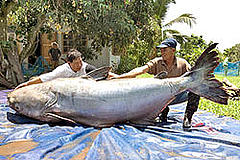
Fishermen in northern Thailand have netted a fish as big as a grizzly bear, a 646-pound Mekong giant catfish, the heaviest recorded since Thai officials started keeping records in 1981. The behemoth was caught in the Mekong River and may be the largest freshwater fish ever found.
| Biology | July 1, 2005 07:57 PM |
A study, published today in the prestigious journal Nature by Dr. Michael Petrides and colleagues at the Montreal Neurological Institute (MNI) at McGill University, challenges current thinking that speech developed as a result of new structures that evolved in the human brain. Dr. Petrides and colleagues have identified a distinct brain region that controls jaw movements in macaque monkeys that is comparable to Broca's area - the region in the human brain critical for speech production. This discovery is important as it suggests that this area of the brain evolved originally to perform high-order control over the mouth and the jaw, and that as humans evolved this area came to control the movements necessary for speech.
| Biology | July 1, 2005 06:44 PM |
Size doesn't matter, at least not the size of the eyespots on a male butterfly's wings when female butterflies consider potential mates.
Instead, females are attracted to the "sparkle" created by the ultraviolet reflectivity of the pupils, the white circles at the center of eyespots, according to new research from University at Buffalo biologists.
| Biology | July 1, 2005 04:41 PM |
Comparative studies of captive breeding strategies conducted at Rice University bolster the case for costly and sometimes troublesome breeding programs that preserve maximum genetic variability in small populations of endangered species.
| Biology | July 1, 2005 01:36 PM |
Ohio State University will lead an interdisciplinary team of scientists in a multi-million dollar project to help improve one of the most important food crops in Africa, cassava.
The Bill and Melinda Gates Foundation selected the BioCassava Plus project as a recipient of one of the foundation's "Grand Challenges in Global Health" program grants. Created two years ago, the goal of the $450 million program is to fund innovative solutions to global health problems.
Unlike other mammals, newborn dolphins and orcas stay active 24/7 during first months of development
| Biology | June 30, 2005 07:34 PM |
If you thought the sleep-deprived months with your newborn were tough, pity the poor mother dolphin or killer whale.
Reporting in the June 30 edition of the peer-reviewed journal Nature, UCLA/Veterans Affairs neuroscientists report a developmental pattern in bottlenose dolphins and killer whales that is unique from other mammals, with calves of both species active 24 hours a day during their first month.
| Biology | June 30, 2005 01:24 PM |
Cardiff (UK) scientists are playing a major role in a NASA mission, which they believe could reveal living matter in the icy layers beneath the surface of a comet.
NASA's Deep Impact spacecraft will make a historic encounter with Comet Tempel-1 on 4th July, when a metre-long projectile will crash into the comet and tunnel through its outer layers, producing a crater and a plume of gas and dust.
| Biology | June 29, 2005 12:18 PM |
Researchers in the area of Vegetable Production Vegetal of the Department of Agricultural Production at the Public University of Navarra have been awarded the prize for the best research in the area of viticulture. The presentation took place at the V Iberian Congress of Horticultural Science recently held in Oporto (Portugal). The awarded work, entitled "Recovery of photosynthetic activity in 4 grape varieties after a hydric stress event", studied the response to the hydric stress event of the grape, in order to enable suitable land irrigation policies to be made and actions carried out while taking into account the peculiarities of each variety.
| Biology | June 28, 2005 09:14 PM |
The open-access journal PLoS Biology has been assessed by Thomson ISI to have an impact factor of 13.9*, which places PLoS Biology among the most highly cited journals in the life sciences. This is an outstanding statistic for a journal less than two years old, from a new publisher promoting a new business model that supports open access to the scientific and medical literature.
| Biology | June 28, 2005 06:54 PM |
The Patagonian Hippidion horse genus and North American stilt-legged horses have found a new place on the evolutionary tree, according to a new article in the open access journal PLoS Biology. In the paper, Jaco Weinstock, Alan Cooper, and colleagues use ancient DNA to argue that the Hippidion genus is younger than previously thought and that American stilt-legged horses were American endemics, not Asian emigres. Their analysis has also whittled down the taxonomy of North American species to just two. "I think the biggest issue is that we showed the apparent lack of species diversity in North American horses in the Late Pleistocene - as horses are a poster child of evolution," says Cooper.
| Biology | June 28, 2005 04:27 PM |
Not all smokers are alike when it comes to cravings, and a new study conducted by researchers at Duke University Medical Center suggests the difference may lie in their brains' sensitivity to drug cues. The researchers found that smokers who report a greater urge to smoke after a period of abstinence also exhibit stronger brain activity after viewing smoking-related images, such as others smoking or a pack of cigarettes.
| Biology | June 26, 2005 06:33 PM |
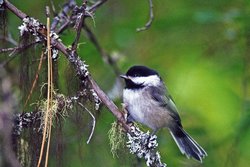
A chickadee's alarm call carries a surprising amount of informationThere's more than meets the human ear when the black-capped chickadee lets its flock mates know a predator is lurking about by giving out its familiar "chick-a-dee-dee-dee" call.
The small songbirds, which are common throughout much of North America, use that signature call in a wide variety of social interactions including warning of predators. And it turns out that those alarms are far more subtle and information-packed than scientists previously imagined.
| Biology | June 26, 2005 04:31 PM |
Impressive impact factors prove that BioMed Central's Open Access journals are high quality and widely read and cited. Journals published by BioMed Central have again received impact factors that compare well with equivalent subscription titles, it was announced today, with five titles in the top five of their specialty. The high impact factors for these journals affirm that they are respected by researchers, and are fast becoming the place for authors to submit important research findings.
| Biology | June 26, 2005 02:29 PM |
The fossilized skeleton of a small crocodile relative excavated last year at Petrified Forest National Park in Arizona throws a wrench into theories of how and where the dinosaurs arose more than 210 million years ago at the end of the Triassic Period.
The animal, one of many creatures from the Late Triassic known only from their teeth, was thought to be an ancestor of the plant-eating ornithischian dinosaurs like Stegosaurus and Triceratops, which roamed the world millions of years later in the Jurassic and Cretaceous periods.
| Biology | June 24, 2005 08:05 PM |
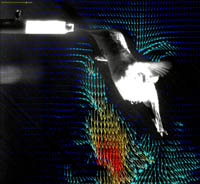 Humans with an appreciation of beauty may have marveled for millennia at the artistry of a darting hummingbird, but scientists announced today that for the first time they can more fully explain how a hummingbird can hover.
Using a powerful technology that was originally developed for engineering, researchers were able to exactly document the movement of air around a hummingbird's wings and show how its flight is accomplished with the body structure of a bird but some of the aerodynamic tricks of an insect.
This gives it an ability to hover almost indefinitely - an evolutionary advantage in feeding on plant nectar that no other bird has - and an elegance that has charmed people for generations.
| Biology | June 24, 2005 06:04 PM |
A tiny fossil found more than 10 years ago in central Alberta has proved to be the key to answering a long unsolved evolutionary question, say researchers from the University of Alberta.
Back in 1991, Dr. Richard Fox and his research team found a 60 million year-old incomplete skull fossil that they now believe is the first evidence of an extinct mammal with a venom delivery apparatus. The research will be published June 23, 2005 in Nature.
| Biology | June 23, 2005 05:09 PM |
Researchers have discovered that a parasite carried by an invasive species of minnow is responsible for the dramatic declines and localized extinctions of a different minnow species in Europe during the past 40 years.
This parasite, which scientists have found can almost totally destroy the spawning success of the small sunbleak minnow, Leucaspius delineatus, may pose threats to the diversity and stability of freshwater ecosystems, and is genetically very similar to a parasite that can be deadly to salmon, researchers say.
| Biology | June 21, 2005 11:17 PM |
This summer, in a darkened meadow west of Boston, Tufts University biologists are continuing to shine new light on the frenzied love life of fireflies.
For the first time, researchers will explore the question of whether male fireflies' flashing light – previously shown in one species to indicate superior physical and genetic quality – has evolved in another species to provide misinformation to prospective mates. In other words, are some male fireflies lying in order to find romance?
| Biology | June 21, 2005 11:13 PM |
Researchers have reported findings that offer a surprising new twist to our understanding of how bumblebees, a vital floral pollinator, select the flowers from which they collect nectar. When faced with unfamiliar plants, foraging bees do not choose flowers entirely alone but instead copy the choices of other bees. The new findings suggest that bees adjust their behavior when dealing with flowers of unfamiliar plant species.
| Biology | June 18, 2005 08:40 PM |
Genetically modified crops containing two insecticidal proteins in a single plant efficiently kill insects. But when crops engineered with just one of those toxins grow nearby, insects may more rapidly develop resistance to all the insect-killing plants, report Cornell University researchers.
| Biology | June 18, 2005 08:30 PM |
It's annual migration time on Cape Cod again, the time of year when Woods Hole squid arrive by the tens of thousands. It's a sign of spring to the fishermen who make a living in this important New England fishery. But here at the Marine Biological Laboratory (MBL), it triggers an influx of hundreds of scientists and students from around the world, who return here faithfully every summer to study the squid and other marine organisms.
| Biology | June 18, 2005 08:28 PM |
Seismic sensors developed to track enemy troop movements during the Vietnam war could help ecologists monitor and conserve elephant populations, according to new research published in the British Ecological Society's Journal of Applied Ecology.
| Biology | June 17, 2005 06:02 PM |
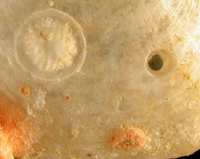
Hole drilled in the shell of a brachiopod. Photo courtesy Daniel Miller (University of Michigan).A study of fossils from the Paleozoic Era, collected across the world, reveals that ancient brachiopods were little bothered by predators. However, the rare predation traces left on brachiopod shells by unknown assailants coupled with a subtle increase in their frequency through time may be the shadows on the wall that show killers were in the room and their numbers increased with time.
From 550 million years ago until 250 million years ago, brachiopods, or "lampshells," were plentiful in the earth's oceans. Today these shelly creatures that superficially resemble clams are rare, mostly lingering in cryptic habitats and subpolar regions of the oceans. But the fossil record, generously endowed with lampshells of diverse shapes, offers an impressive testament to the bygone glory of brachiopods.
| Biology | June 17, 2005 06:01 PM |
Results of the latest full range survey indicate that tiger numbers in Russia appear to be stable, say the coordinators of a 2005 winter effort to count the animals, led by the New York-based Wildlife Conservation Society. After a massive winter endeavor to determine distribution and abundance of tigers in the Russian Far East, the last stronghold of Siberian tigers, researchers report that approximately 334-417 adult tigers remain in the region, along with 97-112 cubs. While stressing that results are preliminary, the news is welcome relief to tiger conservationists around the world, who have seen spiraling decreases in tiger numbers in other parts of Asia. The announcement also comes just a few months after WCS conservationists learned the Olga, a 14-year-old Siberian tiger had been killed by poachers, after scientists had been continuously monitoring her whereabouts from more than a decade.
| Biology | June 16, 2005 06:36 PM |
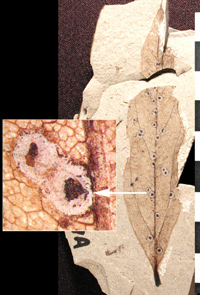
Fossil leaf in the laurel family with over 30 examples of probable fairy moth feeding, from Laguna del Hunco in Patagonia, Argentina (52 Myr). Note leaf cases at centers of damaged areas.South America has the most biodiversity of any major region today and according to an international team of researchers, that biodiversity began at least 52 million years ago.
"What defines terrestrial ecology is plant insect interactions," says Dr. Peter Wilf, assistant professor of geosciences and the John T. Ryan Jr. Faculty Fellow. "But there is very little information about the history of insects eating plants in South America, despite the tremendous number of plant and animal species there today. This study provides the first window to the past on the South American continent's ancient diversity and abundance of insects on plants 52 million years ago. This ancient biodiversity is a legacy that will help us understand today's South American diversity."
| Biology | June 14, 2005 06:37 PM |
Catch an athlete with clear potential early in his career, study his physiology over an incredibly eventful seven years including victory in the Tour de France, and you might uncover some incredibly important, indeed amazing facts about what training and dedication can accomplish.
| Biology | June 13, 2005 06:55 PM |
Researchers at the University of Alberta have discovered that chickens raised for meat can choose whether or not they'll funnel the nutrients they eat towards themselves or their eggs.
That phenomenon of 'reproductive attitude' is a headache for producers who must figure out how to deal with less productive hens that "partition" nutrients needed for egg production into their own bodies. "They like to be a little bit more selfish with their nutrients, and continue growing," said Dr. Martin Zuidhof, an Alberta Agriculture researcher who is collaborating with the University of Alberta to solve the dilemma.
| Biology | June 13, 2005 06:51 PM |
Editor : A 3D scan of one of the new catfish is available at digimorph
A team of researchers from Mexico and the United States has identified a new family of catfish in the state of Chiapas, Mexico. The paper detailing the discovery has been published in Zootaxa, an online scientific journal.
They've named the new family Lacantuniidae and named the species Lacantunia enigmatica. It becomes the 37th family of catfishes, a diverse group of fish found around the world.
Discovery of new families of living vertebrates is rare; in ichthyology there have been just two new families discovered in the past 60 years: the coelacanth in 1938 and the megamouth shark in 1983.
| Biology | June 13, 2005 06:49 PM |
Long before Europeans brought honey bees (Apis mellifera) to the Americas, Mayan bee keepers harvested honey from the log nests of stingless bees native to tropical forests. Now, colleagues from the Colegio de la Frontera Sur in Quintana Roo, Mexico and the Smithsonian Tropical Research Institute (STRI) warn of the imminent demise of stingless bee keeping on the Yucatan — a result of ongoing cultural change and habitat loss.
| Biology | June 11, 2005 08:18 PM |
One of the biggest questions in modern oceanography is how animals in the deep sea get enough to eat. Marine biologists at the Monterey Bay Aquarium Research Institute (MBARI) recently published a paper that helps answer this question, at least for animals that live on the deep seafloor off the coast of Central California. After analyzing hundreds of hours of deep-sea video, Bruce Robison and his colleagues found that "sinkers"-the cast-off mucus nets of small midwater animals called larvaceans-are a significant source of food for deep-sea organisms. They describe their findings in the June 10, 2005 issue of Science magazine.
| Biology | June 11, 2005 08:13 PM |
Melbourne based company Metabolic Pharmaceuticals Limited recently announced successful results in preclinical trials of the toxin. The company will begin clinical trials in humans this month to firstly test the safety of the toxin in normal males, and later its effectiveness in treating the neuropathic pain associated with diabetes.
| Biology | June 11, 2005 08:12 PM |
Organ transplantation is accompanied by nonspecific immune suppression therapy to prevent T cell-mediated rejection. These immunosuppressants can cause infection, hypertension, cancer, and other undesirable side effects. Therefore, specific suppression of the T cells that attack the transplanted organ is needed.
| Biology | June 10, 2005 05:12 PM |
A discovery that may someday help to explain human social behavior and disorders such as autism has been made in a species of pudgy rodents by researchers funded, in part, by the National Institutes of Health's (NIH) National Institute of Mental Health (NIMH) and National Center for Research Resources (NCRR).
| Biology | June 10, 2005 05:09 PM |
Standing still when a threat is detected is a defensive, protective reaction. This ancestral and automatic behavior allows the prey to stay unnoticed by a potential predator. A new study published in Psychophysiology finds that humans, like many other complex animals, freeze when encountering a threat. The mere picture of an injured or mutilated human induces this reaction. When viewing these unpleasant images, the study's participants froze as their heart rate decelerated and amount of their body sway reduced. The authors found that this abrupt reaction, so critical for the survival of some animals, has stayed with humans.
| Biology | June 10, 2005 04:59 PM |
Leading marine scientists for the first time have assessed dolphin and porpoise populations around the world which are severely threatened by entanglement in fishing gear and recommended nine urgent priorities for action in a report commissioned by the World Wildlife Fund. These nine projects highlight species threatened by bycatch that will most likely benefit from immediate action and will continue to languish without intervention.
| Biology | June 9, 2005 05:27 PM |
It seems a mighty feat for a microscopic fungus built from threadlike filaments. But collectively, these spindly mushroom relatives help move several billion tons of nutrients out of the soil and into plants each year. Now, new Michigan State University-supported research on the movement of nitrogen brings into sharper focus this underground process at the root of nearly all of Earth's food chains.
| Biology | June 9, 2005 05:24 PM |
Vast genetic resources – "blue gold" on the international deep sea floor – need protection from unfettered commercial exploitation, warns a new report from the Japan-based United Nations University Institute for Advanced Studies (UNU-IAS).
| Biology | June 8, 2005 05:47 PM |
DNA Diagnostics Center (DDC), the world’s largest private paternity testing company, is offering free DNA testing to families that cannot afford the regular fees. Twenty Tri-State families who visit the DDC Fairfield facility on June 10 and 11 can qualify for the testing by discussing their situation with a paternity counselor.
| Biology | June 8, 2005 05:45 PM |
Usually when you give up something, there's a price to pay. Not so in the case of the Australian Bynoe's gecko. This line of all-female geckos doesn't need sex or a male to reproduce and, contrary to expectations, these "Wonder Woman" geckos can run farther and faster than their sexually reproducing relatives. The research findings are published in the journal Physiological and Biochemical Zoology (Vol. 78, 3, May/June 2005) by Michael Kearney, Rebecca Wahl and Kellar Autumn.
| Biology | June 7, 2005 10:29 PM |
Last year, the World Conservation Union reported an unprecedented decline in biodiversity, with nearly 16,000 species facing extinction. The biggest threat to most species is loss of habitat. And as habitat loss and degradation proceed nearly unabated, the need to accurately predict the population dynamics and extinction risk of potentially endangered species has never been greater. In a new study, John Drake tests models traditionally used to estimate the likelihood of extinction and shows that because they ignore a critical parameter in projecting risk, they underestimate extinction rates.
| Biology | June 7, 2005 10:18 PM |
For most of us, the word “citrus” conjures up images of oranges, grapefruits, lemons, limes -- and possibly citrons or blood oranges, if you’re a true connoisseur of fruit.
But for ARS horticulturalist Robert R. Krueger, the genus Citrus includes at least 16 species, with hundreds of distant relatives, including lesser-known, peelable oddities like pummelos, trifoliate oranges, and kumquats.
| Biology | June 7, 2005 10:14 PM |
Yale biologists have managed to extract and analyze DNA from giant, extinct lemurs, according to a Yale study published in a recent issue of the Proceedings of the National Academy of Sciences.
| Biology | June 6, 2005 06:06 PM |

Photo credit: Olivia CarterIn an unusual but fruitful collaboration between Tibetan Buddhist monks and neuroscientists, researchers have uncovered clues to how mental states--and their underlying neural mechanisms--can impact conscious visual experience. In their study, reported in the June 7 issue of Current Biology, the researchers found evidence that the skills developed by Tibetan Buddhist monks in their practice of a certain type of meditation can strongly influence their experience of a phenomenon, termed "perceptual rivalry," that deals with attention and consciousness.
| Biology | June 6, 2005 06:00 PM |
Monkeys can match the number of voices they hear to the number of faces they expect to see, Duke University scientists have found. The finding indicates that numerical perception is truly an abstract concept and not just a function of a particular sense, said the researchers. The experimental approach also will lead to further studies exploring whether human infants, before they have a verbal capacity, understand similar abstract numerical concepts, they said.
| Biology | June 5, 2005 06:08 PM |
A new study demonstrates that the brain's central timekeeper - the biological clock that regulates waking and sleeping cycles - has two parts that fall out of synchrony during light schedule shifts of six hours, the time it takes to fly across the Atlantic.
| Biology | June 3, 2005 06:12 PM |
A male fly's sexual courtship of a female fly is a complicated business of tapping, singing, wing vibration, and licking, but a single gene is all that is needed to produce this complex behavior, according to new research published in this week's issue of the journal Cell.
The gene encodes the Fruitless protein. Male and female flies carry different versions of the fruitless protein, as a result of sex-specific splicing of the mRNA. The male form of Fruitless is critical for the male courtship ritual and males' preference for mating with females, as previous studies have shown.
| Biology | June 2, 2005 10:05 PM |
Researchers have uncovered the link between two biochemical pathways that plants use to defend themselves against pathogens – pathways that scientists have long believed worked independently of each other.
Knowing how these pathways of immunity work may one day help researchers breed plants that can better resist a variety of pathogens, said David Mackey, the study's lead author and an assistant professor of horticulture and crop science at Ohio State University .
He and his colleagues explain their findings in the current issue of the journal Cell.
| Biology | June 2, 2005 09:56 PM |
For Tadeusz Molinski, the sea is full of riches -- and he does not mean oil fields or fisheries. Molinski, a professor of chemistry at the University of California, Davis, is searching for new treatments for cancer, infectious diseases and other conditions that could be made from natural products in the soft bodies of some of the ocean's simplest inhabitants.
| Biology | June 1, 2005 07:41 PM |
Using a newly released method to analyze functional magnetic resonance imaging (fMRI), Northwestern University researchers have demonstrated that the interconnections between different parts of the brain are dynamic and not static. This and other findings answer longstanding debates about how brain networks operate to solve different cognitive tasks. They are presented in the current (June 1) issue of the Journal of Neuroscience.
| Biology | June 1, 2005 07:40 PM |
Rare salamanders at a Georgia military base are the guinea pigs for Oak Ridge National Laboratory researchers whose goal is to develop methods to better determine whether a species has vanished.
After not finding any flatwoods salamanders since 2001, Fort Stewart biologists were a bit concerned and were looking for a better survey method, said Mark Bevelhimer, an aquatic ecologist and member of ORNL's Environmental Sciences Division. A Strategic Environmental Research and Development Program project is helping in that area and addressing even greater challenges.
| Biology | May 31, 2005 08:33 PM |
Photo: Partridge et al.In April, the United States Centers for Disease Control and Prevention released a study challenging the conventional wisdom that eating less promotes longevity. Now, in a new study in the premier open access journal PLoS Biology, William Mair, Matthew Piper, and Linda Partridge show that flies can actually live longer without reducing calories by eating proportionally less yeast, supporting the notion that calorie-restriction-induced longevity may not be as universal as once thought.
| Biology | May 31, 2005 08:32 PM |
You just can't tell where you might find love these days. A team led by a neuroscientist, an anthropologist and a social psychologist found love-related neurophysiological systems inside a magnetic resonance imaging machine. They detected quantifiable love responses in the brains of 17 young men and women who each described themselves as being newly and madly in love.
| Biology | May 31, 2005 08:29 PM |
Just as disturbance makes a landscape susceptible to invasion by alien plant species, the construction of reservoirs around the globe could be contributing to the accelerating spread of exotic aquatic species, according to a Forum article in the June 2005 issue of BioScience. John A. Havel of Southwest Missouri State University and Carol Eunmi Lee and M. Jake Vander Zanden of the University of Wisconsin survey evidence indicating that the physical and biological properties of reservoirs make them more likely to be invaded by exotic species than natural lakes. The researchers point to cases in which reservoirs are believed to have facilitated the rapid spread of invasive species.
| Biology | May 30, 2005 06:57 PM |
The McGill University Health Center (MUHC) in Montreal is pleased to announce the first successful birth in Canada resulting from frozen eggs. A team led by Professor Seang Lin Tan, Chair of the Department of Obstetrics and Gynecology at McGill University and Director of the McGill Reproductive Centre at the MUHC in Montreal confirmed the birth of a healthy baby boy, weighing 3740grams on April 29. "We are the first in-vitro fertilization (IVF) Centre in Canada to achieve this success," says Dr. Tan. "This is fantastic news for both the family and for fertility health research and we would like to congratulate the parents on the birth of their first child."
| Biology | May 30, 2005 06:53 PM |
Mass extinctions seem to occur on Earth roughly every 26 million years, leading some scientists to propose that they may be caused by rare collisions with comets or asteroids. A researcher in Poland thinks it may be possible that extraordinary predators are at fault instead.
| Biology | May 30, 2005 06:48 PM |
Thinking small in a time when everything was big has helped Queensland researchers to unearth new evidence that climate change, instead of humans, was responsible for wiping out Australian giant marsupials or megafauna 40,000 years ago.
Instead of only excavating 'trophy specimens' such as giant kangaroos and wombats, the researchers from Queensland University of Technology (QUT) and Queensland Museum performed the first systematic analysis of a site in the fossil rich Darling Downs region of south-eastern Queensland.
| Biology | May 26, 2005 06:49 PM |
What does it take to fathom a proverb – catch the figurative meaning of "an apple doesn't fall far from the tree"?
According to research led by V. S. Ramachandran, director of the Center for Brain and Cognition at the University of California, San Diego, a region of the brain known as the angular gyrus is probably at least partly responsible for the human ability to understand metaphor.
| Biology | May 26, 2005 06:47 PM |
Researchers from the Howard Hughes Medical Institute have succeeded in mapping the unique patterns of neural activity produced by a wide range of odors, including vanilla, skunk, fish, urine, musk, and chocolate. Revealing these distinct – but often overlapping – patterns of neural activity represents a significant step in understanding how the brain translates complex signals from odorant receptors in the nose into odor perception in the brain, the researchers said.
| Biology | May 25, 2005 06:05 PM |
Enjoying spring flowers? Flowers have flourished – their beauty evolving over time – simply because we like them, says Terry McGuire, associate professor of genetics at Rutgers and co-author of a paper that examines for the first time the whys and wherefores of flowering plants in an evolutionary context.
While flowers originally came on the scene to attract potential pollinators like bugs and birds, it is their appeal to humans that accounts for the incredible variety of shapes and colors we see in domesticated flowers today. McGuire suggests that nature's prettier flowers got to survive and thrive because people didn't destroy them when they cleared land for agriculture. Instead, they cultivated them and have been doing so for more than 5,000 years.
| Biology | May 25, 2005 06:03 PM |
It has been one of the great mysteries in plant science.
Scientists have known since 1885 that the plant growth hormone auxin exists. They've known of its dramatic effects on plant growth and development since the 1930s. But only now do scientists know how it works.
| Biology | May 25, 2005 06:02 PM |
The small population of North Pacific right whales, found during the summer in Alaska waters, is one of the most critically endangered whale populations in the world. Commercial whaling in the 1800s has now left us with only a few dozens. Recently these whales have been recognized as a different species from right whales seen in the North Atlantic and others in the Southern Hemisphere.
| Biology | May 25, 2005 06:00 PM |
Clams, mussels and oysters are important vehicles for the transmission of enteric diseases when consumed raw or undercooked. Vibrio species, including human pathogens, are particularly abundant in bivalve tissues, where they can persist even after cleaning procedures, thus representing a potential risk for human health. Although different environmental factors are well known to affect the persistence of vibrios in these organisms, the key role of the interactions between vibrios and the immune system of bivalves has been recently highlighted by scientists from the Universities of Genova and Urbino (Italy) in Environmental Microbiology.
| Biology | May 24, 2005 06:49 PM |
Researchers recently discovered a gene essential to one of the plant kingdom's key immune responses--programmed cell death (PCD). Plants use PCD to create a protective zone of dead cells around the infection site to prevent the invading pathogen from spreading. But how the plants keep from killing themselves after they turn on the cell-suicide process was a mystery.
| Biology | May 24, 2005 06:38 PM |
Using the human genome sequence annotation, high-throughput cloning methodologies, and automation, a group at the Harvard Institute of Proteomics lead by Leonardo Brizuela (Harvard Medical School lecturer on biological chemistry and molecular pharmacology) mined public databases to collect the sequence information of all identified human kinase genes and have built a gene repository for this gene class. Their work is described in the online early edition of Proceedings of the National Academy of Sciences and demonstrates uses of the collection in cellular and biochemical assays.
| Biology | May 24, 2005 06:29 PM |
Neurobiologists have discovered a specialized night-vision brain area in night-migratory songbirds. They believe the area might enable the birds to navigate by the stars, and to visually detect the earth's magnetic field through photoreceptor molecules, whose light-sensitivity is modulated by the field.
| Biology | May 23, 2005 05:02 PM |
The worldwide popularity of garlic as a food ingredient and its therapeutic stature in folklore both stem in part from the distinctive pungency associated with its raw, uncooked state. Researchers this week report that this pungency, manifested as a characteristic mixture of burning and prickling sensations and flavor, can be ascribed largely to the effects of a particular compound and its ability to activate specific protein thermoreceptors in the mouth.
| Biology | May 23, 2005 05:01 PM |
Circadian rhythms in mammalian behavior, physiology, and biochemistry are controlled by the central clock within a brain structure known as the suprachiasmatic nucleus (SCN). The clock is synchronized to environmental cycles of light and dark. It is well known, from everyday experience, that adjusting to new light schedules takes several days, though the details of how this adaptation takes place are not well understood. Researchers now report findings that suggest this adaptation process does not necessarily involve a gradual and synchronous adaptation by the neurons that comprise the central circadian clock--rather, that different components of the clock tend to adapt to a shifted light schedule at two different speeds.
| Biology | May 23, 2005 05:00 PM |
When it comes to the world laid before us, our mind's eye has a bias. For reasons that are not entirely clear, during some tasks humans have a tendency to devote more visual attention to the left side of the visual world than the right side, a phenomenon known as pseudoneglect. Researchers now report that pseudoneglect is not restricted to humans but is shared by birds, suggesting not only that brain structures thought to play a requisite role in pseudoneglect may not actually be essential for this phenomenon, but also that pseudoneglect may reflect evolutionary adaptations that allow animals to devote attention to multiple aspects of their environment.
| Biology | May 21, 2005 04:56 PM |
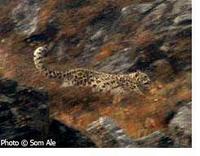 Snow leopards are losing ground in many parts of their range across the mountains of Central Asia, such as in China, Afghanistan, and Kazakhstan. It was therefore heartening news when Som Ale, a doctoral candidate at University of Illinois at Chicago and former Earthwatch principal investigator, photographed the rare cats on the southern slopes of Mount Everest.
Ale photographed two snow leopards, using a Nikon D-70 SLR camera with a 70-300 mm (f/4.5 G) zoom, and saw tracks of two more, the first confirmed sightings of the elusive cats on the Nepal side of Mount Everest since the 1960s. The young biologist, who is originally from Nepal, was investigating whether the national park established here in 1976 to protect habitat for snow leopards is having the desired effect. Apparently it is.
| Biology | May 21, 2005 04:53 PM |
The June 2005 issue of Biology of Reproduction includes a special paper by a team of Spanish scientists indicating that delayed motherhood in mice results in shorter life expectancy and reduced body weight in their offspring.
| Biology | May 21, 2005 04:52 PM |
The human fossil evidence from the Mladec Caves in Moravia, Czech Republic, excavated more than 100 years ago, has been proven for the first time, through modern radiocarbon dating, to be the oldest cranial, dental and postcranial assemblage of early modern humans in Europe.
| Biology | May 20, 2005 08:40 PM |
It begins with receding hairlines, the forehead becomes higher, the hair at the back of the man's head gets thinner and thinner. Every second man suffers from greater or lesser hair loss. There are hardly any successful counter-measures – despite an enormous range of obscure lotions and tinctures.
| Biology | May 19, 2005 06:49 PM |
Editor : Pictures, video and sound of this rare monkey are available on the Saving Wildlife website.
Researchers from the Wildlife Conservation Society, working in conjunction with other partners, have discovered Africa’s first new species of monkey in over 20 years, marking the third monkey WCS scientists have found in the last six months. The new species is described in the current issue of Science.
The latest find is named the “Highland Mangabey” (Lophocebus kipunji), a long-haired forest primate first discovered on the flanks of the 10,000 ft (2961 m) volcano Mt. Rungwe and in the adjoining Kitulo National Park. Last December, WCS researchers found a new species of macaque in India, followed by a new variety of titi monkey in Bolivia.
| Biology | May 18, 2005 07:41 PM |
In mammals, sperm from the male determines the sex of the offspring. In birds, however, it is the female's sex chromosome that determines offspring sex. Now, Cornell University researchers think they understand the mechanism that several bird species use to bias the sex ratios of their offspring toward female.
| Biology | May 18, 2005 07:33 PM |
A new book, Biological Weapons Defense: Infectious Disease and Counterbioterrorism, deals with the intentional causality of disease. Published by Humana Press, this text is also available in e-Book. Many of the contributors come from the U.S. Army Medical Research Institute of Infectious Diseases (USAMRIID), the nation's premier biodefense laboratory.
| Biology | May 18, 2005 07:31 PM |
Chemical communication within insect species is often much more sophisticated than expected. When aphids are attacked by predators such as ladybird beetles, they release an alarm pheromone, (E)-â-farnesene, that has long been known to cause other aphids to walk around or drop from the plant.
| Biology | May 17, 2005 06:40 PM |
A non-native bee mite is causing the dramatic and sudden collapse of bee colonies across the country, but Penn State researchers believe they have found the combination of factors that triggers colony deaths which includes suppression of the bee immune system by the mites.
The Varroa destructor mite is a honey bee parasite that feeds much like a tick on the body of a bee. The mites are about the size of a pin head, dark brown in color and visible on close inspection.
This bee mite probably arose in the Eastern or Chinese Honey Bee population and hopped over to the United States in 1987. They quickly infested western or European honey bees. One sign of infection is the presence of bees with deformed wings. Also, sometimes seemingly healthy colonies become ill and the complete hive collapses in about two weeks.
| Biology | May 16, 2005 06:01 PM |
Have you seen this toad? Canadian toad populations are on the decline in Alberta.A University of Alberta researcher is strapping tiny backpacks to toads in an effort to discover why one species is in serious decline.
Connie Browne, a PhD student in the Department of Biological Sciences, is spending this summer haunting the ponds and sloughs in northern Alberta, Canada, using tiny radio transmitter backpacks to track Canadian and Western toads.
| Biology | May 16, 2005 05:54 PM |
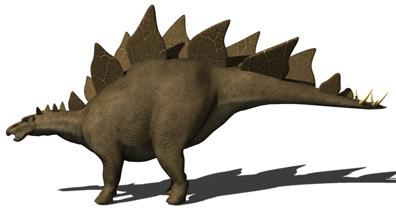 The bizarre plates and spikes that lined the backbones of the long-extinct stegosaurs were probably extreme examples of the often elaborate and colorful displays developed by animals to recognize fellow members of their species, according to an international team of paleontologists.
The team's analysis of stegosaur plates lends support to a growing consensus among paleontologists that the weird adornments of many dinosaurs - the horns of triceratops, the helmet-like domes of the pachycephalosaurs, and the crests of the duck-billed hadrosaurs - likely served no function other than to differentiate species, akin to birds' colorful feather ornamentation.
| Biology | May 15, 2005 04:03 PM |
Most signs of spring, like budding trees, are worth celebrating. But for many in the South, the annual emergence of fertile, winged termites swarming furiously to scatter and search for mates isn't one of them.
In New Orleans, as the swirling, airborne masses of termites become more conspicuous, researchers with the Agricultural Research Service (ARS) are busy developing a biopesticide that could someday knock down large numbers of Formosan subterranean termites--before they ever take flight.
| Biology | May 14, 2005 03:35 PM |
Dutch researcher Nicole de Voogd has investigated the possibilities for rearing sea sponges in Indonesia. Some of these sponges contain substances of interest to the pharmaceutical industry. As these are increasingly difficult to obtain, there is growing interest in alternative methods of exploitation, such as rearing sponges.
| Biology | May 14, 2005 03:30 PM |
Researchers from China and the United States have found evidence of lichen-like symbiosis in 600-million-year-old fossils from South China. The previous earliest evidence of lichen was 400 million years old, discovered in Scotland. The discovery also adds to the scarce fossil record of fungi and raises new questions about lichen evolution.
| Biology | May 12, 2005 12:54 PM |
Bee with radar attached.
© BBSRC and Rothamsted ResearchA paper published in Nature on May 12th provides new data that resolves a long-standing scientific controversy. In the 1960s, Nobel Prize winning zoologist, Karl von Frisch, proposed that honeybees use dance (the"waggle dance") as a coded message to guide other bees to new food sources. However, some scientists did not accept von Frisch's theory. Using harmonic radar, scientists, funded in part by the UK's Biotechnology and Biological Sciences Research Council (BBSRC) have now tracked the flight of bees that had attended a "waggle dance" and found that they flew straight to the vicinity of the feeding site, as predicted by von Frisch. The tracks allowed the scientists to determine how accurately bees translate the dance code into successful navigation, and showed that they correct for wind drift even when en route to destinations they have never visited before.
| Biology | May 12, 2005 12:53 PM |
The brains of one species of mouse actually shrink during the winter, causing the mice to have more difficulty with some types of learning, a new study found.
The results showed that, during the short days of winter, white-footed mice had impaired spatial memory – the mental map that helps them remember important places in their environment.
| Biology | May 12, 2005 12:45 PM |
It seems size does matters after all. But for flying snakes, smaller is better, according to University of Chicago researchers.
In the May 15, 2005, issue of the Journal of Experimental Biology, scientists described the effects of size and behavior of flying snakes, and found that the smaller animals were better gliders.
| Biology | May 11, 2005 07:40 PM |
Editor : Sadly, no picture available yet, but there's a recent wiki article with more details. New family of mammals? Wow!
Is it a squirrel? A rat? A Guinea pig? Try none of the above.
A team of scientists working in Southeast Asia have discovered a long-whiskered rodent with stubby legs and a tail covered in dense hair. But don't call it a squirrel. Or a rat. Because it's actually more like a guinea pig or chinchilla. But not quite. In fact the new species, found in Laos by scientists from the Wildlife Conservation Society (WCS) and other groups, is so unique it represents an entire new family of wildlife.
The new species is described in the recent issue of the journal Systematics and Biodiversity by authors from WCS, The Natural History Museum in London, University of Vermont and WWF Thailand.
| Biology | May 11, 2005 07:36 PM |
In this week's journal Nature, scientists at the Salk Institute for Biological Studies report that they have solved one of the "holy grail" puzzles of developmental biology: the existence of a mechanism that insures that the exterior of our bodies is symmetrical while inner organs are arranged asymmetrically.
| Biology | May 11, 2005 07:33 PM |
A geologist from Washington University in St. Louis is developing new techniques to render a more coherent story of how primitive life arose and diverged on Earth – with implications for Mars. Carrine Blank Ph.D., Washington University assistant professor of earth and planetary sciences in Arts & Sciences, has some insight concerning terrestrial microbes that could lead to provocative conclusions about the nature of life on Mars and other planets.
| Biology | May 11, 2005 07:30 PM |
An understanding of exactly how the brain controls breathing is fundamental to the treatment of respiratory disorders. We know that breathing is an automatic rhythmic process that persists without conscious effort whether we are awake or asleep, but the question that has intrigued many scientists for well over 100 years is what maintains this almost fail safe vital rhythm throughout life?
| Biology | May 9, 2005 06:37 PM |
Agriculture is not unique to humans: some insect groups have also evolved this way of life. One such group is the fungus-farming termites, which cultivate fungi as food inside their nests. Such termites can be found in both rain forest and savannah habitats in the Old World tropics, from Africa to Asia. But as researchers report this week, a combination of DNA sequence analysis and computer modelling suggests that termite agriculture originated in the African rain forest, and gave rise to the many fungus-cultivating termite species alive today in various parts of the Old World.
| Biology | May 9, 2005 06:35 PM |
A biologist at Washington University in St. Louis has shown that for some fish species, females prefer males with larger sexual organs, and actually choose them for mating. That does not exclude males with an average-sized sex organ, called a gonopodium. These fish out-compete the larger-endowed males in a predator-laden environment because they have a faster burst speed than the males with larger genitalia, who lose out because the size of their organ slows them down, making them ripe for capture by larger fish.
| Biology | May 7, 2005 02:32 PM |
This finding, carried by the latest issue of the Japanese journal, Plant Cell Physiology, will enable the design of experiments aimed at enhancing vegetable species in the interest of humanity.
| Biology | May 7, 2005 02:28 PM |
As the brain develops, neurons reach out helter-skelter forming new connections, only a small number of which take hold. How the brain chooses which connections to keep and which to prune back appears to be governed by which branches have the most electrical activity—a finding that could help to explain how early experiences guide brain development.
| Biology | May 6, 2005 06:49 PM |
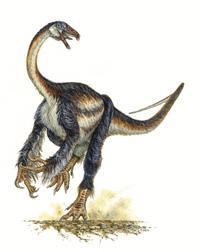
This artist's conception shows the bird-like feathered dinosaur Falcarius utahensis. A mass graveyard with fossils of hundreds to thousands of the creatures was found in Utah by paleontologists from the Utah Geological Survey and the Utah Museum of Natural History at the University of Utah. They reported the discovery in the May 5, 2005, issue of the journal Nature. The small, 4.5-foot-tall dinosaur lived 125 million years ago and represents a missing link between earlier, vicious meat-eaters and later, plant-munching herbivores. Credit: Mike Skrepnick.Scientists have discovered a mass graveyard of bird-like feathered dinosaurs in Utah. The previously unknown species provides clues about how vicious meat-eaters related to Velociraptor ultimately evolved into plant-munching vegetarians.
Discovery of the bizarre new species, Falcarius utahensis, is reported in the Thursday May 5 issue of the journal Nature by paleontologists from the Utah Geological Survey and the Utah Museum of Natural History at the University of Utah.
Scientists do not yet know if the creature ate meat, plants or both, says James Kirkland, Utah state paleontologist at the Utah Geological Survey and principal scientist for the new study. But "Falcarius shows the beginning of features we associate with plant-eating dinosaurs, including a reduction in size of meat-cutting teeth to leaf-shredding teeth, the expansion of the gut to a size needed to ferment plants, and the early stages of changing the legs so they could carry a bulky body instead of running fast after prey."
The adult dinosaur walked on two legs and was about 13 feet long (4 meters) and stood 4.5 feet tall (1.4 meters). It had sharp, curved, 4-inch-long (10 centimeter) claws.
Falcarius, which dates to the Early Cretaceous Period about 125 million years ago, belongs to a group of dinosaurs known as therizinosaurs. The group includes feathered dinosaurs such as Beipiaosaurus that were found in southeast China in recent years. Falcarius and Beipiaosaurus are about the same age and appear to represent an intermediate stage between deadly carnivores and later, plant-eating therizinosaurs. Falcarius is anatomically more primitive than the Chinese therizinosaurs.
| Biology | May 6, 2005 06:48 PM |
Scientists at the University of Washington and their colleagues at other research centers have found a way to significantly extend the lifespan of mice while reducing the impact of the aging process. Their study, which will be published online by the journal Science on May 5, lends more credence to the free-radical theory of aging.
| Biology | May 6, 2005 06:42 PM |
Embryos distinguish vibrational differences, hatching early to snake attacks but not to rain
At the edge of Ocelot Pond, Panama, red-eyed tree frog embryos still in their eggs are about to make a life-or-death decision. The egg clutch, a gelatinous blob clinging to a leaf overhanging the water, has been spied by a bright green parrot snake. In a twinkling, the snake tears a few eggs from the clutch.
| Biology | May 5, 2005 05:08 PM |

Elegance SilverPenn State researchers have discovered an extraordinary new flower that lives longer than an ordinary one. Named Elegance Silver by the researchers, the plant could be the Superman of the flower world.
Elegance Silver is a Regal Pelargonium, a very beautiful flower that is used as a flowering houseplant, and belongs to the genus Pelargonium, the same genus as geraniums. It has a glistening white flower with two burgundy feathers on the top two petals. In terms of flower shape and size, Elegance Silver resembles geraniums. The major differences are the palette of flower colors, symmetry of petals and the highly serrated leaves of the regal.
| Biology | May 5, 2005 04:55 PM |
A Boyce Thompson Institute (BTI) researcher at Cornell University has received a grant to help assemble a unique database of DNA mutations in maize (corn).
The project not only will allow researchers to study the effects of knocking out the function of single genes, one at a time, but also will create seeds for each mutation, or disrupted gene. The seeds will be made widely available to researchers.
| Biology | May 5, 2005 04:54 PM |
Imagine discovering pandas in California or kangaroos in Argentina.
For David Wake, one of the world's leading experts on amphibians and a professor of integrative biology at the University of California, Berkeley, an equivalent surprise was the recent discovery in Korea of a type of salamander that comprises the majority of species in the world, but is totally unknown in Asia and rare outside the Americas.
| Biology | May 5, 2005 04:51 PM |
Two infant boys whose bodies were overloaded with excess fluid have led UCSF pediatricians to the discovery of a new genetic disease. In the process, they have discovered a rare type of mutation where different substitutions in a single amino acid cause two different, opposite genetic disorders.
The new disorder, called Nephrogenic Syndrome of Inappropriate Antidiuresis (NSIAD), is described in the May 5 issue of The New England Journal of Medicine.
- Greenpeace founder dies
- Live Oral Bacteria Found In Arterial Plaque
- Zoo: Test tube gorilla not bonding with newborn
- Monarch butterflies declining
- Toxic Algae Hampers Everglades Restoration
- Borneo's Unique Wildlife at Risk of Illegal Trade, Logging
- Researchers clone a horse
- Creating human-animals for research
- Friendly Bacteria to Help Babies
- Genetic medicine emerging as treatment option
- Thousands of Canadians die each year because of air pollution: Health Canada
| Biology | May 4, 2005 05:39 PM |
To understand the complex processes in the human brain that lead to addiction, some researchers at UCSD have turned to bees.
| Biology | May 4, 2005 05:36 PM |
In their extraordinary annual migration from North America to Mexico, monarch butterflies are known to use the angle of polarized sunlight as a celestial guide to help them keep to a straight and true path southward. But details of their navigational machinery have remained a mystery.
| Biology | May 3, 2005 06:51 PM |
Since humans and chimpanzees forged separate evolutionary paths some 5 million to 6 million years ago, we shed our hirsute coat and heavy brow, mastered bipedal locomotion, and acquired a knack for abstract thought while our next of kin learned to use tools, and developed the skills to construct tree-bound nests high above the forest floor. We differ by just a tad over 1% at the DNA sequence level, yet scientists predict that both species should harbor genetic footprints of our divergence – the subject of a recent study in the premier open-access journal PLoS Biology.
| Biology | May 3, 2005 06:47 PM |
Analysis of approximately 41,000-year-old human remains found in France suggests that Neandertals may have become regionally mobile earlier than scientists once thought.
Cédric Beauval and colleagues from Université Bordeaux 1 in France, Max Planck Institute in Germany, and Washington University in St. Louis, conclude that the human femur fragment found in 2002 in the cave of the Rochers-de-Villeneuve comes from a Neandertal, based on its shape and mitochondrial DNA. Its age places it at the end of the Middle Paleolithic archeological period, just before modern humans arrived in Europe.
| Biology | May 2, 2005 05:14 PM |
Coyotes tend to avoid human contact. But recently, coyotes have been getting increasingly aggressive in the eastern United States, including southeastern New York state, attacking neighborhood pets on the fringe of urban and suburban areas.
| Biology | May 1, 2005 02:50 PM |
The establishment of first polarity in the developing mammalian embryo is one of the most contentious topics in developmental biology today. Drs. Davor Solter and Takashi Hiiragi have new evidence to fuel the ongoing debate. Using various techniques, including comprehensive time-lapse microscopy, the researchers showed compelling evidence for the absence of predetermined polarity in the mouse egg.
| Biology | April 28, 2005 06:18 PM |
Ivory Bill WoodPeckerEd : Don't miss the video news release (thanks to Eurekalert) describing the sighting - you even get to see (very briefly) the bird in flight!
Long believed to be extinct, a magnificent bird - the ivory-billed woodpecker - has been rediscovered in the Big Woods of eastern Arkansas. More than 60 years after the last confirmed sighting of the species in the United States, a research team today announced that at least one male ivory-bill still survives in vast areas of bottomland swamp forest.
Published in the journal Science on its Science Express Web site (April 28, 2005), the findings include multiple sightings of the elusive woodpecker and frame-by-frame analyses of brief video footage. The evidence was gathered during an intensive year-long search in the Cache River and White River national wildlife refuges involving more than 50 experts and field biologists working together as part of the Big Woods Conservation Partnership, led by the Cornell Laboratory of Ornithology at Cornell University and The Nature Conservancy.
| Biology | April 28, 2005 05:09 PM |
A number of articles explore the use of positron emission tomography (PET) and small animal imaging--nonsurgical techniques that open the door to understanding and treating human diseases--in the April issue of the Society of Nuclear Medicine's Journal of Nuclear Medicine.
| Biology | April 27, 2005 05:48 PM |
A significant debate is currently underway in the scientific community over the evolution of the Great White shark, and Chuck Ciampaglio, Ph.D., an assistant professor of geology at the Wright State University Lake Campus, is right in the middle of it.
The issue is if the Great White, one of the most feared predators of the sea, evolved from the huge prehistoric megladon shark or if its ancestry rests with the mako shark.
| Biology | April 27, 2005 05:44 PM |
Starvation, malnutrition and re-feeding can have deadly consequences for humans and most animals but not Australia's green-striped burrowing frog.
PhD student Rebecca Cramp from The University of Queensland has found that unlike most animals, which can't digest food after long periods of starvation, the green-striped burrowing frog is able to absorb nutrients 40 percent more effectively after 3 months without food, than frogs that had eaten regularly.
| Biology | April 26, 2005 05:47 PM |
Formosan subterranean termiteWild celery and two weed species found throughout the western United States may contribute to safe, natural control of the Formosan subterranean termite, Coptotermes formosanus.
Agricultural Research Service (ARS) scientists say that, in lab tests, three compounds that they isolated from these plants scored high kill rates against the invasive termites, which cause about $1 billion in damage annually in the United States.
| Biology | April 26, 2005 05:43 PM |
The University of Washington Alaska Salmon Program, the world's longest-running effort to monitor salmon and their ecosystems, has received nearly $2.4 million from the Gordon and Betty Moore Foundation to expand its sampling scope and sophistication.
| Biology | April 26, 2005 05:40 PM |
A Johns Hopkins University graduate student may have figured out why rates of extinction were so low for many of the major groups of marine life during one of the greatest ice ages of them all, which occurred from about 330 million to 290 million years ago, late in the Paleozoic Era.
| Biology | April 25, 2005 06:47 PM |
Photo Credit: Justine BeckerUsing underwater field observations in conjunction with behavioral experiments, researchers have discovered that a small crustacean, the yellow-beaked cleaner shrimp, performs a specialized dance that affects the behavior of large, predatory client fish. This signaling represents shrimp-to-fish communication that allows both hungry cleaner shrimp and parasite-laden client fish to benefit from a non-predatory, "cleaning" interaction.
| Biology | April 25, 2005 06:44 PM |
Photo credit: J. E. RandallIn a finding that broadens our understanding of the limits of animal "life history"--the life events that characterize a species's reproduction and survival strategy--researchers at James Cook University in Australia have discovered that the record for the shortest life span for a vertebrate animal is held by a tiny coral-reef fish. Living a maximum of just 59 days, the coral-reef pygmy goby Eviota sigillata leads a complex and hectic life.
| Biology | April 25, 2005 06:41 PM |
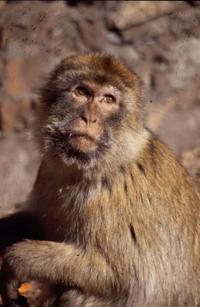
A Gibraltar macaque Photo by Robert D. Martin, Courtesy of The Field MuseumAfter decades of speculation, the origin of Gibraltar's famous Barbary macaques has been determined.
The only free-ranging monkeys in all of Europe, Gibraltar's 200 or so semi-wild macaques enjoy the run of the hillsides in this British territory – much to the delight of millions of tourists, as well as to the chagrin of some officials responsible for their management.
There were not always, however, this many macaques on Gibraltar, which serves as a gateway to the Mediterranean Sea. In 1942, after the population dwindled to almost nothing, British Prime Minister Winston Churchill ordered that their numbers be replenished due to a traditional belief that Britain would lose Gibraltar if the macaques there ever died out.
The clandestine move was taken to bolster Britain's morale during World War II. Ever since, scientists have wondered exactly where the macaques came from.
| Biology | April 25, 2005 06:39 PM |
A newly discovered pathway by which cells protect themselves from a toxic byproduct of photosynthesis may hold important implications for bioenergy sources, human and plant disease, and agricultural yields, a team of University of Wisconsin-Madison bacteriologists announced Monday in the Proceedings of the National Academy of Sciences.
| Biology | April 23, 2005 05:23 PM |
Scientists have yearned to understand how the chirps and warbles of a young bird morph into the recognizable and very distinct melodies of its parents. Neuroscientists at the McGovern Institute for Brain Research at MIT now have come one step closer to understanding that process. They've shown for the first time how a particular brain region in birds serves as the source of vocal creativity.
| Biology | April 23, 2005 12:37 PM |
Scientists at Fred Hutchinson Cancer Research Center have, for the first time, induced a state of reversible metabolic hibernation in mice. This achievement, the first demonstration of "hibernation on demand" in a mammal, ultimately could lead to new ways to treat cancer and prevent injury and death from insufficient blood supply to organs and tissues.
| Biology | April 22, 2005 05:46 PM |
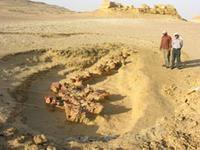
Completed excavation of the skeleton of 18-meter long whale Basilosaurus isis in the Western Desert of Egypt as exhibited last week by University of Michigan and Egyptian Environmental Affairs Agency paleontologists. Photo: Philip GingerichUniversity of Michigan paleontologist Philip D. Gingerich and colleagues at the Egyptian Environmental Affairs Agency (EEAA) announced April 10 the successful excavation of an unusually complete and well-preserved skeleton of the 40 million-year-old fossil whale Basilosaurus isis.
The new skeleton is 18 meters (50 feet) long and was found in Wadi Hitan in the Western Sahara of Egypt. The first Basilosaurus fossil was found in 1905 but no full skeleton has been discovered until now.
| Biology | April 22, 2005 05:40 PM |
As the world prepared to observe Earth Day, World Wildlife Fund and its partners in the International Smart Gear Competition announced three new winning solutions to prevent the accidental maiming and killing of marine mammals, juvenile fish, and sea turtles that become ensnared by fishing nets and longlines--a problem known as bycatch--while also improving the efficiency of commercial fishing.
| Biology | April 22, 2005 05:35 PM |
A NASA funded study has found a decline in winter and spring snow cover over Southwest Asia and the Himalayan mountain range is creating conditions for more widespread blooms of ocean plants in the Arabian Sea.
| Biology | April 22, 2005 05:31 PM |
Relief from soaring prices at the gas pump could come in the form of corncobs, cornstalks, switchgrass and other types of biomass, according to a joint feasibility study for the departments of Agriculture and Energy.
| Biology | April 21, 2005 05:55 PM |
An infectious fungus has been found to defy the most basic tenet of sexual reproduction – that successful mating requires individuals of the opposite sex, according to Howard Hughes Medical Institute researchers at Duke University Medical Center.
| Biology | April 20, 2005 05:24 PM |
Thirty to fifty percent of the global conversion of nutrients to nitrogen gas occurs in these areas. In 'The Proceedings of the National Academy of Science of the United States (PNAS)' of Tuesday 19 April, researchers from Bremen and Nijmegen state that this conversion is not carried out by denitrifying bacteria, as was believed for decades, but by anammox bacteria. Nitrogen compounds act as fertilizers and are the ecological basis for any lifeform on earth as these compounds limit the overall growth rate.
| Biology | April 20, 2005 05:15 PM |
The rapid growth of the earliest cities in northern China starting as far back as 2400 to 2000 BC is the result of successful rice farming combined with other crops, says University of Toronto anthropologist Gary Crawford.
| Biology | April 19, 2005 05:36 PM |
Reconsider relocating aquarium fish into your backyard pond. Restrain yourself from ordering exotic pets off the Internet, no matter how interesting they might look in the pictures. And vote for politicians that encourage sound port inspection. Because, according to recent Proceedings of the National Academy of Sciences article by Drs. Jonathan M. Jeschke and David L. Strayer, our best defense in combating invasive animals is ensuring that they don't infiltrate our natural areas in the first place.
| Biology | April 18, 2005 04:59 PM |
The ones that stay and the ones that stray are biological puzzles among Pacific salmon, of whom the vast majority – but not all – travel thousands of miles to sea and back to the streams where they hatched.
| Biology | April 18, 2005 04:54 PM |
Ocean warming has a negative impact on the condition of elephant seals, reveals a study published in the Open Access journal BMC Biology. High ocean temperatures observed from 1975 to the late 1990s are correlated with a 28% decrease in the weight of elephant seal pups. Elephant seals are shown to be sensitive to ocean temperature changes associated with both long-term 25-year cycles and short-term 3-4 year cycles such as those caused by El Niño.
| Biology | April 15, 2005 04:50 PM |
Ever wondered where your family's ancestors roamed 60,000 years ago?
Now you can find out by participating in the world's most ambitious project tracing the genetic and migratory history of the human race.
| Biology | April 14, 2005 05:59 PM |
Mice lacking a special protein found only in germ-line cells results in infertility in both males and females, according to a new study from researchers at the University of Pennsylvania School of Medicine. Norman Hecht, PhD, Professor of Human Reproduction in Penn's Center for Research in Reproduction and Women's Health, and colleagues say that these investigations point the way to a new type of contraceptive for both men and women. They report their findings in this week's online edition of the Proceedings of the National Academy of Sciences.
| Biology | April 14, 2005 05:56 PM |
Two new 250 million year-old species of large, meat-eating amphibians have been discovered by researchers, including investigators from McGill University. Their findings published in today's issue of Nature, describe the first and oldest amphibious carnivores from the Republic of Niger in West Africa.
| Biology | April 14, 2005 05:47 PM |
The biggest mass extinction in Earth history some 251 million years ago was preceded by elevated extinction rates before the main event and was followed by a delayed recovery that lasted for millions of years. New research by two University of Washington scientists suggests that a sharp decline in atmospheric oxygen levels was likely a major reason for both the elevated extinction rates and the very slow recovery.
| Biology | April 13, 2005 01:51 PM |
U.S. President George Bush, Vice President Dick Cheney and Secretary of Defense Donald Rumsfeld may not all get a library, airport or highway named after them. But each has a slime-mold beetle named in his honor.
| Biology | April 12, 2005 05:24 PM |
Pronounced head-bobbing behavior during walking is a characteristic of diverse species of birds, but how this behavior benefits the birds and under what circumstances it proves useful have remained uncertain. Researchers this week report findings that strongly suggest that for some birds head bobbing is critical for the stabilization of their visual world, despite the motion of their bodies, and thereby enables the accurate detection of objects such as food items.
| Biology | April 11, 2005 05:41 PM |
Animal geneticist Harvey D. Blackburn is responsible for collecting and storing thousands of samples of animal germplasm -- mainly semen and embryos -- to make sure there's enough genetic material to reintroduce a species if necessary. Much of his collection deals with important livestock such as Holstein cattle and Yorkshire pigs.
| Biology | April 11, 2005 05:40 PM |
Another highly destructive termite -- a close relative of the Formosan "super termite" that's gnawing its way across many Southern states -- has become established in South Florida, according to University of Florida researchers.
| Biology | April 10, 2005 08:06 PM |
Credits: AP Photo/Schalk van ZuydamA two-year joint ESA and UNESCO project to chart the habitats of endangered mountain gorillas with satellites came to a fruitful finish in Paris, with end-users receiving final maps and geographical data products for use in the field.
| Biology | April 9, 2005 11:19 AM |
Millions of painted lady butterflies that fluttered into California's Central Valley in the last week of March could be just the advance guard of one of the largest migrations of the species on record, said Arthur Shapiro, a professor and expert on butterflies at UC Davis.
| Biology | April 9, 2005 11:17 AM |
Bacteria acquired up to 90 percent of their genetic material from distantly related bacteria species, according to new research from The University of Arizona in Tucson.
| Biology | April 8, 2005 09:15 PM |
Ed : Don't miss out the cool movies, link at the end of the press release!
Yale University School of Medicine researchers have found a way to exercise a little mind control over fruit flies, making the flies jump, beat their wings, and fly on command by triggering genetic "remote controls" that the scientists designed and installed in the insects' central nervous systems, according to a new report in the 8 April issue of the journal Cell.
| Biology | April 8, 2005 09:13 PM |
Mankind's closest living relatives-the world's apes, monkeys, lemurs and other primates-face increasing peril from humans and some could soon disappear forever, according to a report released today by the Primate Specialist Group of IUCN-The World Conservation Union's Species Survival Commission (SSC) and the International Primatological Society (IPS), in collaboration with Conservation International (CI).
| Biology | April 8, 2005 09:12 PM |
It's been known for a long time that only 2% -- 3% of human DNA codes for proteins. Much of the rest of our genomes -- often referred to as junk DNA -- consists of retroelements: genomic elements that are transcribed into RNA, reverse-transcribed into DNA, and then reinserted into a new spot in the genome. Human endogenous retroviruses make up one class of these retroelements. Retroviruses can insinuate themselves into the host's DNA in either soma (nonreproductive cells) or the germline (sperm or egg).
| Biology | April 8, 2005 09:00 PM |
Photo courtesy of NOAA/Sandy ShumwayExposure to toxins that cause paralytic shellfish poisoning can result in a mutation that makes some clams much more resistant to the toxin, which can result in a greater danger to humans, according to a study published this week in the journal Nature. Paralytic shellfish toxins (PSTs) are produced by algae that appear in certain coastal areas in the United States in an event known as an algal bloom, commonly called a "red tide." People who eat clams exposed to the PSTs can suffer the paralytic effects of the toxins, and there is no cure for the poisoning.
| Biology | April 8, 2005 01:21 PM |
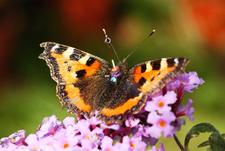 The charming meanderings of butterflies are not as random as they appear, according to new research. Scientists at Rothamsted Research, a research institute sponsored by the Biotechnology and Biological Sciences Research Council (BBSRC) in Hertfordshire, have found that their seemingly irresolute flutterings are in fact decisive flight paths. The harmonic radar has been used before to track the flights of bumblebees and honeybees. Now it has been shown to work for butterflies too, opening a new window on the flight behaviour of these important pollinating species.
| Biology | April 7, 2005 02:03 AM |
A detailed analysis of chromosomes 2 and 4 has detected the largest "gene deserts" known in the human genome and uncovered more evidence that human chromosome 2 arose from the fusion of two ancestral ape chromosomes, researchers supported by the National Human Genome Research Institute (NHGRI), part of the National Institutes of Health (NIH), reported today.
| Biology | April 7, 2005 02:00 AM |
An evolutionary arms race between predatory garter snakes and their newt quarry is turning out to be something of an illusion. At the molecular level, another battle rages. And in this second, miniature realm, it's the newt who's the aggressor.
| Biology | April 7, 2005 01:58 AM |
Dealing a new blow to the dominant evolutionary paradigm, Luiz Rocha and colleagues from the Smithsonian Tropical Research Institute, Harvard University the University of Florida and the University of Hawaii, report coral reef fish from neighboring habitats may differ more from one another than from fish thousands of miles away. An ecological speciation model for coral reef organisms may spur the development of a more synthetic treatment of speciation on land and sea.
| Biology | April 6, 2005 05:32 PM |
Since 1976 the Ebola virus has caused some lethal human epidemics in Central Africa. Research now indicates that humans do not become directly contaminated from the animal reservoir, which is an any case still unknown, but from infected carcasses of chimpanzees, gorillas and certain forest antelopes. Results have come from work conducted over the past several years by IRD scientists and their partners (1) to shed light on the virus's propagation paths. The discovery of Ebola virus antibodies in several species of non-human primate suggests the existence within this fauna of different degrees of susceptibility to Ebola and, possibly, of strains of various levels of virulence. However, most large primates, once infected, soon die of the disease. Their bodies then become a potential source of contamination for humans, but also for certain domestic animals. Ebola virus antibodies were detected in dogs exposed to the virus during the latest epidemics, which suggests that these animals may well have been infected and can therefore be a new source of transmission to humans. Ebola virus infection in humans provokes a violent haemorrhagic fever. It usually flares up as intense epidemics. These kill 80 % of the people infected. Seven such outbreaks have hit Gabon and the Republic of Congo since 1994, leading to 445 cases resulting in 361 deaths. Ebola virus thus constitutes a grave public health problem in these countries. No medicine or vaccine is currently available, only prevention and rapid control of epidemics by isolation of disease victims can limit its spreading.
| Biology | April 5, 2005 06:49 PM |
Combining 13,000-year-old bones with 21st century auto manufacturing techniques, scientists and exhibit preparators at the University of Michigan Exhibit Museum of Natural history are reconstructing a male mastodon skeleton for an exhibit that opens to the public May 21.
| Biology | April 4, 2005 06:30 PM |
A few rare people who consistently nod off early, then wake up wide-eyed much before dawn, can blame a newly-found mutant gene for their sleep troubles, Howard Hughes Medical Institute researchers announced today.
| Biology | April 4, 2005 06:29 PM |
Tiny beetles that munch on saltcedar leaves, shoots and twig bark are helping stop the spread of this rugged, aggressive weed. Also known as tamarisk, saltcedar was brought into the United States in the 1800s to help control erosion. By the mid-1900s, however, saltcedar had become an out-of-control pest, crowding native plants, such as cottonwoods and willows, along streambanks and river channels throughout the American West.
| Biology | April 4, 2005 06:28 PM |
Blue-green algae, or cyanobacteria, in the seas are as vital to the survival of life on earth as the oxygen producing plants are on land. But marine bacteria are attacked by viruses, which can seriously affect their life-sustaining abilities but mow a researcher at the University of Warwick has discovered that these viruses don't work in the dark, according to research presented today (Monday, 04 April 2005) at the Society for General Microbiology's 156th Meeting at Heriot-Watt University, Edinburgh.
| Biology | April 4, 2005 06:25 PM |
On Monday, the Harbor Branch drug discovery group will begin a 2-week expedition to explore the Straits of Florida in search of organisms that produce chemicals with the potential to cure diseases such as cancer and Alzheimer's. The work will include the first submersible exploration of the remote Cay Sal Bank, which encompasses a number of small, uninhabited islands 30 miles north of Cuba. Cay Sal was once notorious for its role in illegal drug smuggling, but researchers expect to discover pristine reefs there down to 3,000 feet that could lead to a new reputation for the area as the source of lifesaving drugs. Regular dispatches and photos from the expedition will be posted at http://www.at-sea.org.
| Biology | April 3, 2005 06:21 PM |
Providing safer shellfish is the goal of Agricultural Research Service (ARS) scientists who are studying the means by which pathogenic bacteria enter shellfish.
| Biology | April 2, 2005 07:20 PM |
An early type of antibiotic-resistant bacteria that caused a global epidemic of infections in the 1950s has re-emerged as one of the community-acquired MRSA 'superbugs', according to a study published in The Lancet tomorrow (Saturday 2 April 2005).
| Biology | April 1, 2005 06:13 PM |
The University of North Carolina at Chapel Hill's newest "library" is not the kind that will entice an average book lover, but it eventually will please thousands of plant scientists around the world. Through such researchers' work, it will undoubtedly contribute to improving crops that humans around the planet depend on every day, its developers say.
| Biology | March 30, 2005 06:44 PM |
Along with Mark Musch, a longtime University of Chicago collaborator, Goldstein conducted an experiment with the red blood cells of skates to understand how these skinny, graceful fish can swim from salt water to fresh water. For humans, such a drastic environmental change would prompt an equally drastic physiological change: Our cells would take in too much water, diluting blood and other body fluids and rapidly causing death. So how do skates do it?
| Biology | March 29, 2005 06:18 PM |
Scientists at the U.S. Department of Energy's Brookhaven National Laboratory have applied some of the same techniques used in medical imaging to track the distribution of nutrients in poplar trees in response to a simulated insect attack. The research provides new insights on a long-debated theory about how plants respond to environmental stress, and shows that radiotracer imaging can be a big help in unraveling plant biochemistry.
| Biology | March 29, 2005 06:17 PM |
Like many other marine creatures, Aplysia, a common sea slug, enlists chemical defenses against its predators, but the mechanisms by which such chemical attacks actually work against their intended targets are not well understood by researchers. New work has now shown that such chemical defenses can involve modes of trickery that had not previously been appreciated as components of chemical defense.
| Biology | March 28, 2005 05:52 PM |
Elephants learn to imitate sounds that are not typical of their species, the first known example after humans of vocal learning in a non-primate terrestrial mammal. The discovery, reported in today's Nature, further supports the idea that vocal learning is important for maintaining individual social relationships among animals that separate and reunite over time, like dolphins and whales, some birds, and bats.
| Biology | March 26, 2005 04:43 PM |
Elephants learn to imitate sounds that are not typical of their species, the first known example after humans of vocal learning in a non-primate terrestrial mammal. The discovery, reported in today's Nature, further supports the idea that vocal learning is important for maintaining individual social relationships among animals that separate and reunite over time, like dolphins and whales, some birds, and bats.
| Biology | March 26, 2005 03:18 PM |
After decades of laboratory work studying how animals evolve, researchers sometimes need to put on the hip waders, pull out the fishing net and go learn how their theory compares to the real world. According to a Stanford University School of Medicine study published in the March 25 issue of Science, Mother Nature is more predictable than lab experiments suggest.
| Biology | March 25, 2005 06:26 PM |
In a stunning example of evolution at work, scientists have now found that changes in a single gene can produce major changes in the skeletal armor of fish living in the wild.
The surprising results, announced in the March 25, 2005, issue of journal Science, bring new data to long-standing debates about how evolution occurs in natural habitats.
| Biology | March 25, 2005 06:24 PM |
Two species of tropical octopus have learned a neat trick to avoid predators - they lift up six of their arms and walk backward on the other two.
This first report of bipedal behavior in octopuses, written by University of California, Berkeley, researchers, will be published in the March 25 issue of Science.
| Biology | March 24, 2005 05:19 PM |
Conventional wisdom among paleontologists states that when dinosaurs died and became fossilized, soft tissues didn't preserve – the bones were essentially transformed into "rocks" through a gradual replacement of all organic material by minerals. New research by a North Carolina State University paleontologist, however, could literally turn that theory inside out.
| Biology | March 24, 2005 05:15 PM |
People with a form of synesthesia in which they see colors when viewing letters and numbers really do see colors, researchers, led by Edward M. Hubbard of the University of California San Diego, have found. What's more, functional magnetic resonance imaging (fMRI) of their brains reveals that they show activation of color-perception areas.
| Biology | March 23, 2005 05:59 PM |
Contrary to inheritance laws the scientific world has accepted for more than 100 years, some plants revert to normal traits carried by their grandparents, bypassing genetic abnormalities carried by both parents.
| Biology | March 22, 2005 06:35 PM |
What is the connection between a fly’s aerodynamic skill and human heart function? Using the nation’s most brilliant X-rays, located at the Advanced Photon Source at the U.S. Department of Energy’s Argonne National Laboratory, a cardiac molecular motors expert from the University of Vermont (UVM) and colleagues from the Illinois Institute of Technology (IIT) and Caltech performed research to answer that and other questions.
| Biology | March 21, 2005 08:04 PM |
He's beautiful and he knows it. A male jaguar recently acted like he was on a fashion runway in Manhattan, rather than his home in Kaa-Iya National Park in Bolivia, when it plopped down in front of a remote "camera trap" and allowed a remarkable 35 pictures to be taken over a five-and-a-half hour period. Two days earlier, the same cat languished for 90 minutes, when 19 photos were shot.
| Biology | March 21, 2005 08:01 PM |
Why do some males smell better than others? Scientists at Cardiff University, in collaboration with colleagues at Max-Plank Society, Germany – and the help of stickleback fish - have identified the chemical responsible.
| Biology | March 21, 2005 07:56 PM |
A recent Genomed-Health 2005 workshop in Tunisia, supported by the European Commission, highlighted the role of the life sciences in improving health in countries bordering the Mediterranean Sea. Delegates at the event also discussed the importance of Euro-Mediterranean partnerships in order to capitalise on post-genomic research.
| Biology | March 20, 2005 05:14 PM |
Scientists at the University of Liverpool have discovered how fish have evolved over the last 400 million years to stay motionless at different water depths.
A research team led by Dr Michael Berenbrink, a Comparative Physiologist at the School of Biological Sciences, has revealed how modern fish, such as pike and cod, have developed a way of floating at certain water levels using a gas-filled swimbladder.
| Biology | March 18, 2005 06:48 PM |
Although most people think of bats as stealthy mammals that flit about in the night sky, at least one species has evolved a terrestrial trot never before seen in bats, according to a recent Cornell University study.
| Biology | March 17, 2005 05:03 PM |
Sound science and ground-breaking research provide the foundation for World Wildlife Fund's conservation successes. But it is WWF's innovative application of everyday technology that is yielding results for tigers on the Indonesian Island of Sumatra. WWF scientists are using camera traps to help conduct presence/absence surveys that will provide a range map for tigers in Sumatra's lowland rainforest. The cameras will also help provide a density estimate of tigers in various habitat types and determine whether there are adequate prey species for tigers to subsist. The results could have significant implications for species and forest preservation here and around the world.
| Biology | March 17, 2005 04:58 PM |
The anthrax attacks in the aftermath of September 11, 2001 in the USA have illustrated the high potential of anthrax for misuse in bio-terrorism. Dissemination of anthrax by letters led to the death of 5 people and chemotherapeutic treatment of 30,000 individuals.
| Biology | March 16, 2005 05:02 PM |
A unique rover-based life detection system developed by Carnegie Mellon University scientists has found signs of life in Chile's Atacama Desert, according to results being presented at the 36th Lunar and Planetary Science Conference March 14-18 in Houston. This marks the first time a rover-based automated technology has been used to identify life in this harsh region, which serves as a test bed for technology that could be deployed in future Mars missions.
| Biology | March 16, 2005 05:01 PM |
The oyster mushroom (Pleurotus ostreatus), apart from reducing cholesterol and having anticancerogenic properties, is characterised for its capacity for breaking down cellulose. Finding out which genes are responsible for this activity – the reason why the fungus is sometimes used as a decontaminating agent, was the aim of the PhD thesis by Arantza Eizmendi Goikoetxea, which she defended at the Public University of Navarre with the title, Molecular Characterisation of a family of genes of cellobiohydrolases in the "Pleurotus ostreatus" fungus.
| Biology | March 16, 2005 04:55 PM |
Call it a chemical crystal ball. A new approach to predict whether a drug in development is likely to work and which dose is best could get antibiotics to market faster and more cheaply, say University of Florida researchers.
| Biology | March 15, 2005 06:42 PM |
Climate change has already had dramatic effects on individual species, with disruptions in range, reproductive success, and seasonal phenomena like migration. But, in a new study from the open-access online journal PLoS Biology (www.plosbiology.org), Christopher Wilmers and Wayne Getz show that the impact of climate change on many different species in Yellowstone Park can be buffered by a top predator - the reintroduced gray wolf (Canis lupus).
| Biology | March 13, 2005 05:58 PM |
A group of plants that uses metal to defend against infection may do so because the normal defense mechanism used by most other plants is blocked.
Purdue University researchers found that this group of plants produces, but does not respond to, the molecule that triggers the infection response used by nearly all other plants. The molecule does, however, allow this group of plants, called metal hyperaccumulators, to store high levels of metal in their tissues, rendering them pathogen resistant.
| Biology | March 10, 2005 06:14 PM |
The telltale paw prints with huge 10 centimetre-long nails spoke volumes. But now definitive corroborating DNA evidence seals the case of the most northerly sighting of a grizzly bear. The discovery fuels mounting evidence that Canada's High Arctic is no longer the sole preserve of the polar bear -- Nanuk is having to make room for its southern cousin.
The evidence of the barren ground grizzly bear (Ursus arctos) was discovered on Melville Island, an uninhabited part of the western Arctic archipelago 1,500 kilometres due north of Yellowknife, and 1,000 kilometres north of the Arctic Circle.
| Biology | March 10, 2005 06:11 PM |
Harbor Branch scientists have received new funding for a research program they hope will make large-scale culturing of spiny lobster economically feasible. The project is based on the serendipitous discovery that lobster larvae are settling on open water fish cages in Puerto Rico by the thousands. The research, along with the some of the lobster's more fascinating habits such as their tendency to crawl in huge single-file lines when crossing open areas between island coasts and reefs, will be the focus of the next Harbor Branch Ocean Science Lecture Series event, on March 9.
| Biology | March 9, 2005 06:13 PM |
An international team led by researchers at the Department of Human Evolution, Max Planck Institute for Evolutionary Anthropology in Liepzig, Germany and Washington University in St. Louis, has extracted and sequenced protein from a Neanderthal from Shanidar Cave, Iraq dating to approximately 75,000 years old.
This is the oldest fossil human protein ever sequenced. The research will be published the week of March 7-11 in the online early edition of Proceedings of the National Academy of Sciences (PNAS).
| Biology | March 8, 2005 06:43 PM |
Researchers Jonathan Flombaum and Dr. Laurie Santos, both from Yale University, have found that rhesus monkeys consider whether a competitor can or cannot see them when trying to steal food.
Working with semi-free-ranging rhesus monkeys on the island of Cayo Santiago in Puerto Rico, Flombaum and Santos set up a food competition game: Lone monkeys were approached by two human "competitors." Each competitor had a grape affixed to a platform by his feet. In each experiment, one of the competitors could see the monkey in front of them, but the other could not. For example, in Experiment 1, one of the competitors stood with his back to the monkey subject, while the other stood facing the subject. Monkeys in this experiment spontaneously chose to approach and steal a grape from only the competitor with his back toward the monkey. In five more experiments, the monkeys revealed similar preferences for an experimenter who could not see them, rather than one who could. Most notably, they reliably stole food from a competitor with only his eyes averted, rather than one facing perfectly forward, as well as an experimenter with a piece of cardboard over his eyes rather than one with cardboard over his mouth. Together, these results reveal not only that rhesus monkeys prefer to steal food from a competitor who cannot see them, but also that they know exactly how blocking or averting one's eyes can render one unable to see. Thus, even without any training, these monkeys were able to accurately consider the visual perspective of others when deciding from whom to steal.
| Biology | March 6, 2005 03:37 PM |
Nematodes comprise a worm family so large it literally covers the earth. They range in size from less than a micron in length to as much as 26 feet. Worldwide interest has begun to focus on microscopic nematodes that live with symbiotic bacteria. "We study these nematodes -- which are actually insect killers -- not only to understand how diverse they are, but also to use them as biological control alternatives," says Patricia Stock, a nematomologist in the University of Arizona College of Agriculture and Life Sciences.
| Biology | March 6, 2005 02:36 PM |
A Burmese python is strong, but is it a model for human exercise? According an article published in the March 3 issue of the journal Nature, the snake's eating habits make it a prime model of cardiovascular fitness. The heart has the amazing ability to adapt to altered physiological requirements, and, according to the authors, this cold-blooded snake may provide insights into how remodeling of the heart occurs in adapting to prolonged exercise and in response to some diseases.
| Biology | March 6, 2005 11:30 AM |
The ancestors of chimpanzees and gorillas were infected with a deadly retrovirus about three to four million years ago, but there is no evidence it infected ancestors of modern-day humans, according to research by genome scientists. The virus struck after humans had split off the evolutionary tree from primates, researchers said. The infection may have played a role in the evolution of such great apes as chimps and gorillas. The research appears in the April issue of the journal Public Library of Science-Biology, which is available online on March 1.
| Biology | March 5, 2005 01:16 PM |
The hydrothermal vents were miles from where anyone could have imagined. One massive seafloor vent was an unheard of 18 stories tall. And all were creamy white and gray, suggesting a very different composition than vent systems studied since the 1970s.
Scientists who named the spot Lost City knew they were looking at something never seen before when the field was serendipitously discovered in December 2000 during a National Science Foundation expedition to the mid-Atlantic.
This week in Science, researchers publish for the first time findings about the gases produced at Lost City and the organisms that make their living off them. Both are so different from so-called black-smoker hydrothermal vents that they may provide a whole new avenue for looking for the earliest life on Earth and for signs of life on other planets, according to Deborah Kelley, University of Washington oceanographer and lead author of the Science article.
| Biology | March 4, 2005 02:14 PM |
Wildlife researchers are being warned that radio-tracking could be affecting the animals they are studying. According to new research published today in the British Ecological Society's Journal of Applied Ecology, fitting radio-collars to water voles was associated with a "dramatic shift" in the sex ratio of the animals' offspring, casting doubt on the assumption that radio-tracking does not fundamentally affect the biology of radio-collared water voles.
| Biology | March 4, 2005 01:13 PM |
The first experimental evidence that birds can be deceived by camouflage in the same way that humans are deceived, is published today in Nature [3 March 2005].
The idea that bold contrasting colours help to break-up the body's outline was rapidly adopted by many armies as long ago as the First World War. And in biology this idea of 'disruptive colouration' has long been used to explain how insects such as moths conceal themselves from predators, shaping the evolution of protective coloration in insects.
| Biology | March 3, 2005 11:38 AM |
In a new and novel study, scientists are looking to nature -- specifically, to ants, bees and viruses -- for ways to improve human collaboration during disaster relief efforts.
At the center of the scientists' sights are a sub-group of their own species -- specifically, civil engineers, who historically have had a limited role in such efforts, especially those involving critical physical infrastructures.
Supported by a five-year $2.37 million grant from the National Science Foundation, and supplemented by the University of Illinois at Urbana-Champaign, the research team at Illinois is attempting to draw inspiration from the collaboration patterns that honeybees and ants use, and the spread patterns viruses typically take.
| Biology | March 1, 2005 07:29 PM |
Bryan Grieg Fry, Ph.D., a scientist from the University of Melbourne, Australia, has conducted the first comprehensive analysis of the origin and evolution of one of nature's most sophisticated bioweapons: snake venom. His results are reported in the March issue of the journal Genome Research.
| Biology | March 1, 2005 06:55 PM |
We have much to learn from bad bugs, according to Gilbert Waldbauer, whose book "Insights From Insects: What Bad Bugs Can Teach Us" was published March 1 (Prometheus Books).
"We know a lot about pests, because so much money is spent on their research," said Waldbauer, professor emeritus of entomology at the University of Illinois at Urbana-Champaign. Of the 900,000 known species of insects, a mere 2 percent are considered pests. Just as some plants growing where they are not wanted are considered weeds, insects are considered pests only when they adversely affect people, Waldbauer writes.
| Biology | March 1, 2005 12:31 PM |
A new species of black coral has been discovered off southern California, including around the Channel Islands, by Milton Love, University of California, Santa Barbara marine researcher, and Mary Yoklavich of NOAA Fisheries. The discovery came during dives by the researchers in "Delta," the submersible.
The new species, found at depths of approximately 300 to 725 feet, is reported this week in the online scientific journal Zootaxa (http://www.mapress.com/zootaxa/content.html) by taxonomist Dennis Opresko of Oak Ridge National Laboratory.
| Biology | March 1, 2005 11:30 AM |
Researchers at the University of California, Santa Barbara, NASA, and other institutions announced at a telephone press conference today the discovery of a method to determine from outer space the productivity of marine phytoplankton—a breakthrough that may provide a new understanding of life in the world's oceans.
The new approach is based on the premise that the "greenness" in phytoplankton, its level of pigmentation per cell, is a reflection of its growth rate, said David Siegel, professor of geography and director of the Institute for Computational Earth System Science at UCSB. The researchers have discovered a means, by satellite, to measure the biomass of phytoplankton from ocean light-scattering properties, and to infer growth rates from simultaneous measurements of the greenness of the individual phytoplankton cells.
| Biology | February 28, 2005 05:26 PM |
New keys to understanding the evolution of life on Earth may be found in the microbes and minerals vented from below the ocean floor, say scientists at the University of California, Santa Barbara.
The UCSB scientists are making new contributions to this field of inquiry in their studies of seafloor hydrothermal fluid discharge into the Earth's oceans, which has been occurring ever since the oceans first formed four billion years ago. Conditions below the sea floor may most closely mimic the environment when life began.
| Biology | February 25, 2005 03:26 PM |
Discovery that termites use vibrations to choose the wood they eat may provide opportunities to new methods of reducing infestations in homes and also may provide insights into the "cocktail party effect" of signal processing – how to ignore most noise but have some signals that trigger attention – that may prove useful in artificial intelligence.
CSIRO entomologist Theo Evans says laboratory experiments have found that termites use their ability to detect vibrations to determine which food source is most suitable. The termites can also detect how the vibrations are made. This ability could be likened to a form of sonar.
Dr Evans says different termite species are known to prefer eating particular sizes of wood; certain drywood termites prefer small blocks, presumably to avoid competition. With Professor Joseph Lai and his students from the University of New South Wales at the Australian Defence Force Academy, Dr Evans investigated how the blind insects measured pieces of wood.
| Biology | February 23, 2005 11:43 AM |
With an incredible lifespan of up to 250 years the deep sea tube worm, Lamellibrachia luymesi is among the longest-lived of all animals, but how it obtains sufficient nutrient – in the form of sulfide - to keep going for this long has been a mystery. In a paper just published in the premier open-access online journal PLoS Biology, Erik Cordes and colleagues now provide a solution: by releasing its waste sulfate not up into the ocean but down into the sediments, L. luymesi stimulates the growth of sulfide-producing microbes, and ensures its own long-term survival.
| Biology | February 22, 2005 06:19 PM |
Tastes and smells are evocative and play a crucial role in finding food for many animals. A new study of smell perception in honeybees published in the freely-available online journal PLoS Biology now explains how bees react to a suite of scents, and reveals an olfactory map that shows remarkable correspondence to brain activity.
| Biology | February 20, 2005 11:09 AM |
Using genetics, Navy sonar, deep-sea submersibles, and toxicology, scientists are peering into the lives of whales – past and present – in ways never before possible. At a 3:00 PM press conference on February 19th at the annual meeting of AAAS, Steve Palumbi of Stanford’s Hopkins Marine Station, Christopher W. Clark of Cornell University, Craig Smith of the University of Hawaii and Roger Payne of the Ocean Alliance will share their latest discoveries emerging from these high tech ventures, using DNA sequences, deep-sea video and sound-clips.
| Biology | February 18, 2005 03:17 PM |
Nearly 40 years after an historic anthropology expedition to Ethiopia's Lake Turkana basin, researchers have uncovered evidence suggesting human bones found at that time are roughly 195,000 years old. The researchers believe the findings may bolster the “Out-of-Africa” hypothesis that suggests we all trace to an ancient line that first evolved in Africa and then displaced other hominids as recently as 50,000 years ago.
Ian McDougall of Australian National University (ANU), Frank Brown of the University of Utah and John Fleagle of Stony Brook University, report their findings in the Feb. 17 issue of the journal Nature.
The fossils, from near the town of Kibish, are far more ancient than researchers originally suspected and nearly 40,000 years older than skulls from Herto, Ethiopia, the previous record holders.
| Biology | February 17, 2005 12:40 PM |
Few events involving animals are more dramatic than when they band together and head out on the march cross-country. Among examples are the many thousands of wildebeests and other hoofed mammals that form herds and migrate across the African plains.
Countless millions of Mormon crickets and young locusts also sometimes unite with their own kind and form teeming, hungry islands of life that devour everything in their path that's edible. Some spectacular marching packs stretch several miles wide and extend 10 miles or so in length. And they can travel a mile or so a day.
Why such groups of insects form has mystified humans for thousands of years. One firmly held belief was that God was punishing men and women for their sins. A more recent, scientific theory has been the "safety-in-numbers" idea -- that the small animals congregate periodically as a way of protecting themselves from predators such as birds and rodents.
Now, a trio of insect experts has developed what they believe is strong new evidence that the latter theory is correct. By gluing radio transmitters -- each weighing less than half a gram -- to the backs of Mormon crickets in northeastern Utah and northwestern Colorado, Drs. Gregory A. Sword, Patrick D. Lorch and Darryl T. Gwynne showed experimentally that band formation indeed boosted insect survival.
| Biology | February 16, 2005 02:40 PM |
Few events involving animals are more dramatic than when they band together and head out on the march cross-country. Among examples are the many thousands of wildebeests and other hoofed mammals that form herds and migrate across the African plains.
Countless millions of Mormon crickets and young locusts also sometimes unite with their own kind and form teeming, hungry islands of life that devour everything in their path that's edible. Some spectacular marching packs stretch several miles wide and extend 10 miles or so in length. And they can travel a mile or so a day.
Why such groups of insects form has mystified humans for thousands of years. One firmly held belief was that God was punishing men and women for their sins. A more recent, scientific theory has been the "safety-in-numbers" idea -- that the small animals congregate periodically as a way of protecting themselves from predators such as birds and rodents.
Now, a trio of insect experts has developed what they believe is strong new evidence that the latter theory is correct. By gluing radio transmitters -- each weighing less than half a gram -- to the backs of Mormon crickets in northeastern Utah and northwestern Colorado, Drs. Gregory A. Sword, Patrick D. Lorch and Darryl T. Gwynne showed experimentally that band formation indeed boosted insect survival.
| Biology | February 16, 2005 02:34 PM |
Parrots, long a favorite pet animal, are attractive to owners because of their vibrant colors. But those colors may mean more to parrots than what meets the eye.
For more than a century, biochemists have known that parrots use an unusual set of pigments to produce their rainbow of plumage colors, but their biochemical identity has remained elusive. Now, an Arizona State University researcher has uncovered the chemistry behind the colors of parrots, describing on a molecular level what is responsible for their bright red feathers.
| Biology | February 16, 2005 10:07 AM |
The fascinating interactions between flowers and their pollinators have resulted in a spectacular diversity of plants. In order to entice pollinators such as bees, flies or butterflies to visit and successfully pollinate their flowers, plants have evolved intriguing mechanisms and attractants, of which nectar is best known.
Thirty years ago, researchers discovered that nectars of flowers pollinated by butterflies contain substantial amounts of amino acids. Recent experiments have shown that butterflies actually prefer nectars with a high amino acid content. These findings led to speculations about the significance of nectar amino acids for butterfly fitness and insinuated that butterflies have acted as agents of natural selection on nectar composition.
| Biology | February 15, 2005 06:02 PM |
A series of studies by researchers at UT Southwestern Medical Center sheds light on the mechanisms used by viruses to thwart a host's immune defenses and may aid in the development of more effective drugs to fight hepatitis C and West Nile viruses, as well as the flu and the common cold.
In a study to appear in a March issue of the Journal of Virology and currently available online, UT Southwestern researchers describe how an essential gene, called RIG-I, turns on a cascade of host immune defenses when the hepatitis C virus (HCV) replicates in cultured human cells.
Those immune defenses should fight off the virus, but in a separate study, scheduled to appear online this week and in an upcoming issue of the Proceedings of the National Academy of Sciences, the researchers show how HCV sidesteps the immune response, allowing the virus to replicate unchecked.
| Biology | February 15, 2005 05:59 PM |
A new study investigating the respiratory system of insects may have solved a mystery that has intrigued physiologists for decades: why insects routinely stop breathing for minutes at a time.
Challenging previous theories, researchers at UC Irvine and Humboldt University propose that insects such as grasshoppers, moths, butterflies, some types of fruit flies, beetles and bugs close off their respiratory systems periodically to keep out excess oxygen, thus preventing damage to their tissues.
Timothy Bradley, professor of ecology and evolutionary biology at UCI, and Stefan Hetz, assistant professor of physiology at Humboldt University, Germany, report their findings in the Feb. 3 issue of Nature.
| Biology | February 10, 2005 10:55 PM |
The adult male zebra finch knows only one scratchy tune learned in its youth, which it performs repeatedly and intensely when females are listening. But occasionally, the finch might improvise, experimenting with a slower, more sultry variation or emphasizing different notes.
Neurobiologists studying the finch now say the improvisation arises from a component of a crucial learning circuit in a section of the forebrain that seems to generate the trial and error necessary to master sophisticated motor skills, such as singing in birds or speech and sports in humans.
| Biology | February 9, 2005 06:48 PM |
An amazing variety of arboreal animals have learned to glide through the forest, from flying squirrels to flying lizards and frogs, and even – frightening as it sounds – snakes.
Now, add ants to that list, say biologists at the University of California, Berkeley, and the University of Texas Medical Branch in Galveston (UTMB).
Gliding ants – the only wingless insects known to actively direct their fall – were first observed last year outside Iquitos, Peru, by insect ecologist Stephen P. Yanoviak of UTMB. While perched 100 feet up in the rainforest canopy waiting for mosquitoes to alight and feed on his blood, Yanoviak casually brushed off a few dozen ants that were attacking him and noticed their uncanny ability to land on the tree's trunk and climb back to the very spot from which they'd fallen.
| Biology | February 8, 2005 09:28 PM |
It seems survival of the fittest affect every organism on Earth, even Monarch butterflies. Migratory Monarchs seem more resistant than non-migratory ones to parasite infections; scientists just uncovered why it is so. Explanation : infected monarchs quite don't make it while migrating long distances, so they can't propagate the infection once arrived at destination.
A little-studied outcome of animal migration is whether these long journeys can limit the spread of parasites by weeding out diseased animals. Monarch butterflies in eastern North America fly up to thousands of kilometers from Canada to Central Mexico – one of the longest migrations of any insect species. Emory University researchers found that monarchs infected with a protozoan parasite fly slower, tire out faster and expend more energy flying than healthy monarchs.
| Biology | February 7, 2005 07:23 PM |
The phenomenon of sexual conflict is a powerful driving force in the evolution of reproductive biology for many animal species. Males often try to manipulate their female mates during copulation--for example, by traumatic inseminations (as in the case of bed bugs) or by the transfer of toxic seminal fluids (as in the case of the fruitfly Drosophila). These manipulations are beneficial to males because, for example, they reduce female re-mating probability or boost their fecundity directly after mating, but they can be very harmful to females, whose lifespan and future reproductive output can be drastically reduced. New findings suggest that in some social insects--in which both sexes ultimately benefit from long, successful reproductive lives of females--sexual cooperation, rather than sexual conflict, may be favored.
| Biology | February 7, 2005 07:22 PM |
The International HapMap Consortium, boosted by an additional $3.3 million in public-private support, today announced plans to create an even more powerful map of human genetic variation than originally envisioned. The map will accelerate the discovery of genes related to common diseases, such as asthma, cancer, diabetes and heart disease.
When the project was launched in October 2002, the consortium set September 2005 as the target for completing its map of common patterns of human genetic variation, also known as haplotypes. By the end of February 2005, however, the group already will have reached completion of its first draft of the human haplotype map, or HapMap, which will consist of 1 million markers of genetic variation, called single nucleotide polymorphisms (SNPs).
| Biology | February 5, 2005 05:21 PM |
Biologists at Lehigh University and the University of Maryland have identified a cricket living in Hawaii's forests as the world's fastest-evolving invertebrate.
Finicky mating behavior appears to be the driving force behind the speedy speciation of the Laupala cricket, the scientists wrote in the Jan. 27 issue of Nature magazine.
Females in the Laupala genus detect tiny differences in the pulse rates of male courtship songs, which differ from one Laupala species to the next. They refuse to mate with males of other species, thus promoting the formation of new species.
The scientists say their findings shed light on the role of individual choices in the evolution of species and the growth of biodiversity.
| Biology | February 3, 2005 08:49 PM |
A study led by Princeton biologists has revealed a remarkably simple mechanism that allows flocking birds, schooling fish or running herds to travel in unison without any recognized leaders or signaling system.
The finding, published in the Feb. 3 issue of Nature, helps settle age-old questions about how animals coordinate their actions. Previously, scientists had looked for subtle signals or other explicit systems that animals may use in disseminating information through groups. The new study showed that such complexity is not necessary: Large groups easily make accurate decisions about where to go even when no individuals are regarded as leaders and very few individuals have any pertinent information.
| Biology | February 1, 2005 07:41 PM |
Duke University neurobiologist Erich Jarvis and a team of 28 other neuroscientists have proposed sweeping changes to the terminology associated with the brain structures of birds--a century-old nomenclature the researchers consider outdated and irrelevant to birds' true brainpower.
The international research group concludes in a Feb. 2005, paper published in Nature Reviews Neuroscience that significant discoveries made over time reveal that birds are much closer to mammals in cognitive ability, and therefore, a new consistency in language will enhance studies of both.
In the journal's "Perspectives" column, authors describe a wide range of studies demonstrating that the so-called "primitive" regions of avian brains are actually sophisticated processing regions homologous to those in mammals. Those studies, which included tracing of neural pathways and behavior, showed that such avian brain regions carry out sensory processing, motor control and sensorimotor learning just as the mammalian neocortex. The scientists add that molecular studies reveal the avian and mammalian brain regions are comparable in their genetic and biochemical machinery.
| Biology | February 1, 2005 01:03 PM |
Using genetically altered zebrafish that glow in the dark, University of Houston researchers have found new tools that shed light upon biological clock cycles.
Gregory M. Cahill, associate professor of biology and biochemistry at UH, and Maki Kaneko, a fellow UH researcher who is now at the University of California-San Diego, presented their findings in a paper titled "Light-dependent Development of Circadian Gene Expression in Transgenic Zebrafish," appearing Feb. 1 in the Public Library of Science's PLoS Biology, an online journal that, along with PLoS Medical, is committed to making scientific and medical literature a public resource.
| Biology | January 31, 2005 09:48 AM |
In the most detailed large-scale study to date of the proteins that package DNA, researchers have mapped a family of switches that turn genes on and off. Their findings may help scientists understand regulatory mechanisms underlying cancer and human development.
The research team includes first author Bradley Bernstein, recipient of a Howard Hughes Medical Institute (HHMI) physician postdoctoral fellowship who works in the Harvard University laboratory of HHMI investigator Stuart L. Schreiber. Other co-authors are from the Broad Institute of MIT and Harvard, and Affymetrix. Their findings are published in the January 28, 2005 issue of Cell.
| Biology | January 30, 2005 05:32 PM |
One in five mammals living on Earth is a bat, yet their evolutionary history is largely unknown because of a limited fossil record and conflicting or incomplete theories about their origins and divergence.
Now, a research team including University of California, Riverside Biology Professor Mark Springer, has published a paper in the Jan. 28 issue of the journal Science that uses molecular biology and the fossil data to fill in many of the gaps.
Return to Biology News Net Homepage
- Biology RSS Feeds

- Display our News
- Bio News Archive
- Biology Links
- Contact Bio News Net
- Bookmark Us!"; } else { echo "Bookmark Us! (CTRL+D)"; } ?>
"; } if ($rand == 1) { echo "
";} ?> 1) { $mtdatetemp= "March 8, 2017 02:29 PM"; $mtdate = strtotime(date("d F Y", strtotime($mtdatetemp)))/86400; $today = strtotime(date("d F Y"))/86400; $daysago = floor(($today - $mtdate)); echo "
- "; } ?>
1) {
echo "
- The proteins that domesticated our genomes "; }?> 1) { echo "
- "; } ?>
1) {
echo "
- Human kidney progenitors isolated, offering new clues to cell renewal "; }?> 1) { echo "
- Study reveals how ionising radiation damages DNA and causes cancer "; }?> 1) { echo "
- "; } ?>
1) {
echo "
- Giraffes more speciose than expected "; }?> 1) { echo "
- New 'Trojan horse' antibody strategy shows promise against all Ebola viruses "; }?> 1) { echo "
- "; } ?>
1) {
echo "
- Brain circuit that drives sleep-wake states, sleep-preparation behavior is identified "; }?> 1) { echo "
- New genus of bacteria found living inside hydraulic fracturing wells "; }?> 1) { echo "
- Biochemists' discovery could lead to vaccine against 'flesh-eating' bacteria "; }?> 1) { echo "
- "; } ?>
1) {
echo "
- New species of pterosaur discovered in Patagonia "; }?> 1) { echo "
- More tomatoes, faster: Accelerating tomato engineering "; }?> 1) { echo "
- "; } ?>
1) {
echo "
- Study finds shark fins & meat contain high levels of neurotoxins linked to Alzheimer's disease "; }?> 1) { echo "
- Artificial intelligence expedites breast cancer risk prediction "; }?> 1) { echo "
- Purest yet liver-like cells generated from induced pluripotent stem cells "; }?> 1) { echo "
- "; } ?>
1) {
echo "
- In some genetic cases of microcephaly, stem cells fail to launch "; }?> 1) { echo "
- Yale team discovers how Zika virus causes fetal brain damage "; }?> 1) { echo "
- Scientists uncover the way a common cell enzyme alerts the body to invading bacteria "; }?> 1) { echo "
- Arctic gives clues on worst mass extinction of life "; }?> 1) { echo "
- Calcium channel blockers caught in the act at atomic level "; }?> 1) { echo "
- ";
while ($row = mysql_fetch_array($result))
{
$date = $row['pubdate'];
if ($date == null)
{
$date = $row['added'];
}
$title = $row['title'];
$cat_title = $row['cat_title'];
$phrase_array = explode(' ',$title);
if(count($phrase_array) > '10')
$title = implode(' ',array_slice($phrase_array, 0, 10)).'...' ;
$url_title = preg_replace("/[^A-Za-z0-9\.]/","_","$title");
$url_cat_title = preg_replace("/[^A-Za-z0-9\.]/","_","$cat_title");
list ($ply, $plm, $pld) = explode("-", $date);
list ($pld, $plh) = explode(" ", $pld);
$url = "http://www.biologynews.net/newsfeed/" . $url_cat_title . "/$ply/$plm/$pld/" . $url_title;
echo "
- " . $title . "" . $cat_title . ""; } echo "
"6", 'Gene Synthesis' => "6", 'AIDS & HIV' => "5", 'Bioinformatics' => "3", 'Biology' => "2", 'Biotechnology' => "7", 'Environment' => "8", 'Gene Therapy' => "9", 'Health & Medicine' => "10", 'Microarray' => "11", 'Microbiology' => "12", 'Molecular & Cell Biology' => "13", 'Stem Cell Research' => "14");
$cat = $CategoryMap[$Category];
$sql = "SELECT t.forum_id, t.topic_last_post_id, t.topic_title, t.topic_poster, i.source, t.topic_replies, t.topic_id, i.url
FROM phpbb_topics AS t
FORCE INDEX (
PRIMARY )
INNER JOIN phpbb_posts AS p ON t.topic_id = p.topic_id
INNER JOIN phpbb_integrate AS i ON t.topic_id = i.topic
WHERE p.is_spam =0
AND ! ( p.poster_id =9
AND t.topic_replies =0 )
AND t.forum_id != '15'
GROUP BY t.topic_id
ORDER BY t.topic_last_post_id DESC
LIMIT 0 , 5";
$result = $db->sql_query($sql);
echo "
Not yet part of the community?- ";
while (($row = $db->sql_fetchrow($result)))
{
$numcomments = $row['topic_replies'];
$poster = $row['topic_poster'];
if ($poster != '9') { $numcomments = $numcomments + 1; }
$title = $row['topic_title'];
$post_id = $row['topic_last_post_id'];
if ($row['url'] != NULL) {
$link = $row['url'];
echo "
- " . $title . "" . $numcomments . " "; } else { echo "
- " . $title ."" . $numcomments . " "; } } echo "
Register Now!
'.$display_userdata['username'].'!';
$sql = "SELECT COUNT(post_id) as total
FROM " . POSTS_TABLE . "
WHERE post_time >= " . $display_userdata['user_lastvisit'] . " AND poster_id != " . $display_userdata['user_id'] . " AND poster_id != '9'";
$result = $db->sql_query($sql);
if( $result )
{
$row = $db->sql_fetchrow($result);
if ($row['total'] != "0")
{
$lang['Search_new'] = $lang['Search_new'] . " (" . $row['total'] . ")";
$total = $row['total'];
echo "
" . $lang['Search_new'] . ""; } else { echo "
No new comments!"; } } ?>
View topics you posted in
View unanswered topics
" . $lang['Search_new'] . ""; } else { echo "
No new comments!"; } } ?>
View topics you posted in
View unanswered topics
Top Biology News about Biology
Biology Articles & News
Last 7 Days
- 0 and DATE_SUB(CURDATE(),INTERVAL 7 DAY) <= entry_created_on AND mt_entry.entry_id = mt_placement.placement_entry_id AND mt_placement.placement_category_id = mt_category.category_id AND mt_category.category_label = '$category'
ORDER by entry_hits DESC
LIMIT 5";
$result = mysql_query($query);
while ($row = mysql_fetch_array($result)) {
$title = $row['entry_title'];
$title_URL = dirify($row['entry_title']);
$hits = $row['entry_hits'];
$permalink_url=$archive_url . ($row['year']) . "/" . ($row['month']) . "/" . ($row['day']) . "/" . $title_URL . ".html";
echo "
- $title ($hits) "; } ?>
Biology Articles & News
Most popular ever in Biology
- 0 AND mt_entry.entry_id = mt_placement.placement_entry_id AND mt_placement.placement_category_id = mt_category.category_id AND mt_category.category_label = '$category'
ORDER by entry_hits DESC
LIMIT 7";
$result = mysql_query($query);
while ($row = mysql_fetch_array($result)) {
$title = $row['entry_title'];
$title_URL = dirify($row['entry_title']);
$hits = $row['entry_hits'];
$permalink_url=$archive_url . ($row['year']) . "/" . ($row['month']) . "/" . ($row['day']) . "/" . $title_URL . ".html";
echo "
- $title ($hits) "; } mysql_close($link);?>