

After fully sequencing the latent HIV "provirus" genomes from 19 people being treated for HIV, scientists at Johns Hopkins Medicine report that even in patients who start treatment very early, the only widely available method to measure the reservoir of dormant HIV in patients is mostly counting defective viruses that won't cause harm, rather than those that can spring back into action and keep infections going.

Category: AIDS & HIV
| AIDS & HIV | July 18, 2016 06:59 PM |
Investigators from the National Institutes of Health have discovered that cells from HIV-infected people whose virus is suppressed with treatment harbor defective HIV DNA that can nevertheless be transcribed into a template for producing HIV-related proteins. This finding may affect scientists' understanding of the long-term effects of HIV infection and what a cure would require.
| Full article | 0 Comments | 30603 views |
| AIDS & HIV | July 12, 2016 05:24 PM |
A new study has found that neither gay men nor heterosexual people with HIV transmit the virus to their partner, provided they are on suppressive antiretroviral treatment.
| Full article | 0 Comments | 31095 views |
| AIDS & HIV | June 9, 2016 09:56 PM |
By watching brightly glowing HIV-infected immune cells move within mice, researchers at the Icahn School of Medicine at Mount Sinai have shown how infected immune cells latch onto an uninfected sister cell to directly transmit newly minted viral particles. These interactions allow HIV to spread efficiently between these immune cells, known as CD4+ helper T cells. The research, published online today in Cell Reports, challenges the long-held perception that the primary route of HIV infection of immune cells is from free-floating viral particles that move within tissue and blood fluids.
| Full article | 0 Comments | 29999 views |
| AIDS & HIV | May 24, 2016 06:13 PM |
Viruses attack cells and commandeer their machinery in a complex and carefully orchestrated invasion. Scientists have longed probed this process for insights into biology and disease, but essential details still remain out of reach.
| Full article | 0 Comments | 30306 views |
| AIDS & HIV | May 18, 2016 07:44 PM |
Acute HIV infection (AHI) contributes significantly to HIV transmission and may be important for intervention strategies seeking to reduce incidence and achieve a functional cure. In a study by the U.S. Military HIV Research Program (MHRP), Walter Reed Army Institute of Research, published in The New England Journal of Medicine, scientists enrolled and intensively followed a cohort of high-risk individuals, tracking their HIV status and characterizing the disease through the acute stages of HIV infection.
| Full article | 0 Comments | 32022 views |
| AIDS & HIV | February 22, 2016 05:56 PM |

This is Tariq Rana, Ph.D. Researchers at University of California, San Diego School of Medicine have discovered that HIV infection of human immune cells triggers a massive increase in methylation, a chemical modification, to both human and viral RNA, aiding replication of the virus. The study, published February 22, 2016 in Nature Microbiology, identifies a new mechanism for controlling HIV replication and its interaction with the host immune system.
| Full article | 0 Comments | 33679 views |
| AIDS & HIV | February 2, 2016 04:38 PM |
New research findings published in the February 2016 issue of the Journal of Leukocyte Biology, suggest that a new therapeutic strategy for HIV may already be available by repurposing an existing prescription drug. The drug, an enzyme called adenosine deaminase, or ADA, ultimately may be able to activate the immune system against HIV and to help the immune system "remember" the virus to prevent or quickly eliminate future infection.
| Full article | 0 Comments | 33883 views |
| AIDS & HIV | January 28, 2016 08:54 PM |
HIV drug resistance to tenofovir, an antiretroviral drug vital to most modern HIV treatment and prevention strategies, is surprisingly and worryingly common according to a large study led by UCL (University College London) and funded by the Wellcome Trust.
| Full article | 0 Comments | 31147 views |
| AIDS & HIV | December 1, 2015 07:53 PM |
Antiretroviral therapies, or ART, have enabled people with HIV and AIDS to live much longer lives, transforming what was considered a death sentence into a chronic condition. Yet concerns for these patients remain. Up to half of people with HIV on these drug regimens have some sort of cognitive impairment, such as memory loss or problems with executive functioning, despite the virus being almost undetectable in their bodies.
| Full article | 0 Comments | 32339 views |
| AIDS & HIV | November 25, 2015 06:55 PM |
Nearly 37 million people worldwide are living with HIV. When the virus destroys so many immune cells that the body can't fight off infection, AIDS will develop. The disease took the lives of more than a million people last year.
| Full article | 0 Comments | 7160 views |
| AIDS & HIV | October 21, 2015 03:43 AM |
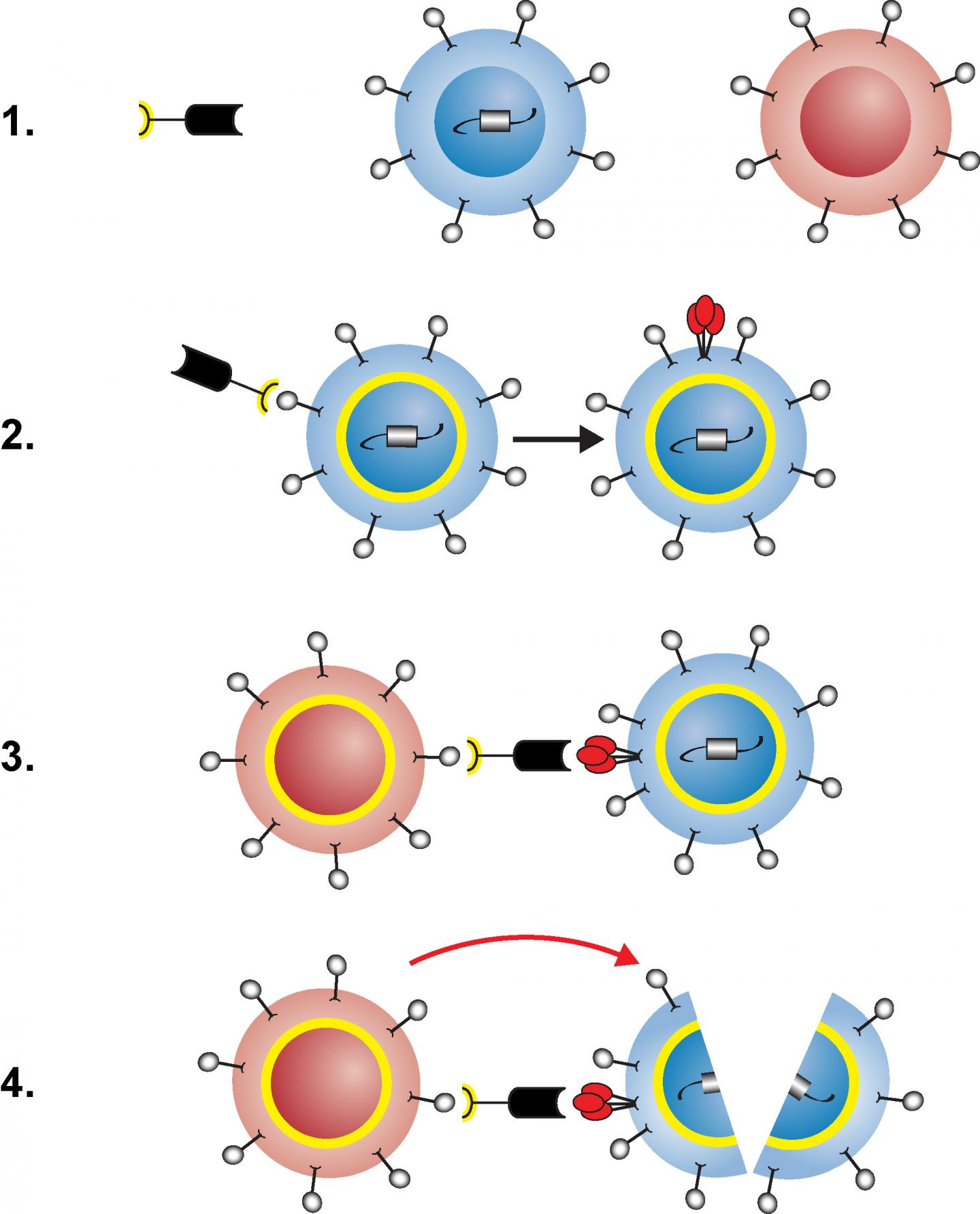
This is an illustration of how the engineered protein facilitates destruction of latently HIV-infected immune cells. Scientists at the National Institutes of Health (NIH) have created a protein that awakens resting immune cells infected with HIV and facilitates their destruction in laboratory studies. The protein potentially could contribute to a cure for HIV infection by helping deplete the reservoir of long-lived, latently HIV-infected cells that can start making the virus when a person stops taking anti-HIV drugs. Further studies in animals and people are needed to determine the viability of this approach.
| Full article | 0 Comments | 7786 views |
| AIDS & HIV | August 27, 2015 04:31 PM |
Researchers led by the UCLA Fielding School of Public Health examined HIV testing trends among adults ages 50 through 64 both before and after 2006, when the Centers for Disease Control and Prevention (CDC) recommended that most doctors automatically screen all patients for HIV regardless of whether they have symptoms.
| Full article | 0 Comments | 5886 views |
| AIDS & HIV | August 27, 2015 04:31 PM |
Researchers from the Gladstone Institutes have revealed that HIV does not cause AIDS by the virus's direct effect on the host's immune cells, but rather through the cells' lethal influence on one another.
| Full article | 0 Comments | 6552 views |
| AIDS & HIV | August 20, 2015 06:01 PM |
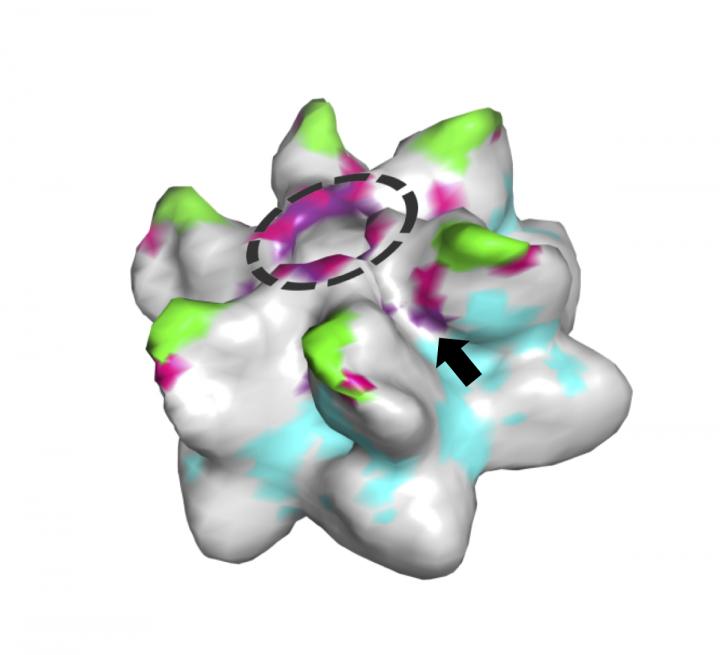
This is a model of a retrovirus capsid hexamer, showing the conserved beta-hairpin domains common to most kinds of retroviruses (circled) and a pocket containing additional sites thought to affect... Disease-causing viruses engage their hosts in ongoing arms races: positive selection for antiviral genes increases host fitness and survival, and viruses in turn select for mutations that counteract the antiviral host factors. Studying such adaptive mutations can provide insights into the distant history of host-virus interactions. A study published on August 20th in PLOS Pathogens of antiviral gene sequences in African monkeys suggests that lentiviruses closely related to HIV have infected primates in Africa as far back as 16 million years.
| Full article | 0 Comments | 6363 views |
| AIDS & HIV | August 11, 2015 05:26 PM |
New research on monkeys vaccinated against HIV's relative SIV calls into question an idea that has driven AIDS vaccine work for years. The assumption: a protective vaccine only needs to stimulate moderate levels of antibodies that neutralize the virus.
| Full article | 0 Comments | 7184 views |
| AIDS & HIV | August 5, 2015 04:50 AM |
HIV can continue to grow in patients who are thought to be responding well to treatment, according to research by the University of Liverpool.
| Full article | 0 Comments | 7578 views |
| AIDS & HIV | July 31, 2015 05:06 AM |
In cells with latent HIV infection, the virus is dormant, and such cells are therefore not attacked by the immune system or by standard antiretroviral therapy. To eradicate the virus from the human body and truly cure a patient, reservoirs of latently infected cells need to be activated and eliminated "the so-called "kick-and-kill" approach. Two studies published on July 30th in PLOS Pathogens report encouraging results on the use of a combination of several drugs to efficiently reactivate HIV in cells with latent infection.
| Full article | 0 Comments | 5844 views |
| AIDS & HIV | July 15, 2015 06:43 PM |
A Canadian research team at the IRCM in Montreal, led by molecular virologist Eric A. Cohen, PhD, made a significant discovery on how HIV escapes the body's antiviral responses. The team uncovered how an HIV viral protein known as Vpu tricks the immune system by using its own regulatory process to evade the host's first line of defence. This breakthrough was published yesterday in the scientific journal PLOS Pathogens and will be presented at the upcoming IAS 2015 conference in Vancouver. The findings pave the way for future HIV prevention or cure strategies.
| Full article | 0 Comments | 5485 views |
| AIDS & HIV | July 8, 2015 05:50 PM |

Susana Valente is an associate professor at the Florida campus of The Scripps Research Institute. HIV-infected patients remain on antiretroviral therapy for life because the virus survives over the long-term in infected dormant cells. Interruption of current types of antiretroviral therapy results in a rebound of the virus and clinical progression to AIDS.
| Full article | 0 Comments | 5670 views |
| AIDS & HIV | July 2, 2015 04:17 AM |
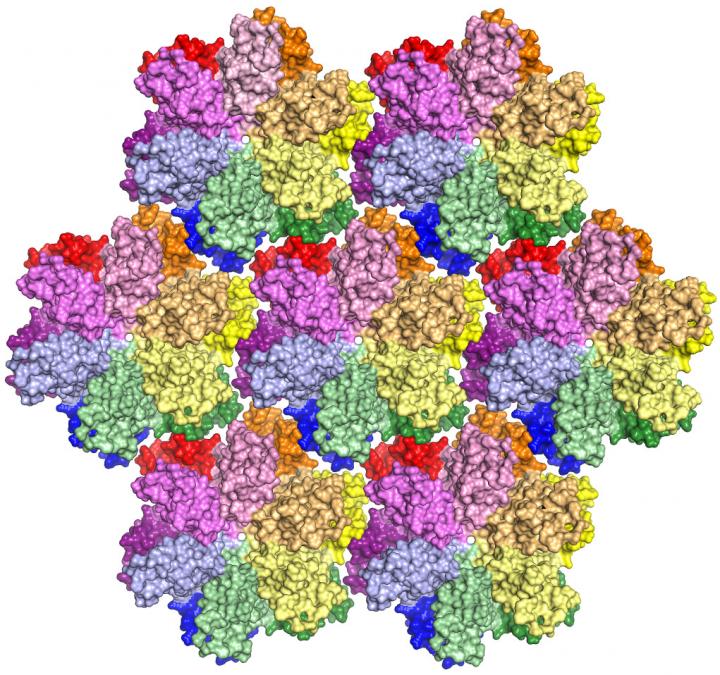
The HIV capsid protein plays a critical role in the virus' life cycle. Mizzou researchers recently developed the most complete model yet of this vital protein. HIV, or human immunodeficiency virus, is the retrovirus that leads to acquired immunodeficiency syndrome or AIDS. Globally, about 35 million people are living with HIV, which constantly adapts and mutates creating challenges for researchers. Now, scientists at the University of Missouri are gaining a clearer idea of what a key protein in HIV looks like, which will help explain its vital role in the virus' life cycle. Armed with this clearer image of the protein, researchers hope to gain a better understanding of how the body can combat the virus with the ultimate aim of producing new and more effective antiviral drugs.
| Full article | 0 Comments | 7836 views |
| AIDS & HIV | June 11, 2015 08:06 PM |
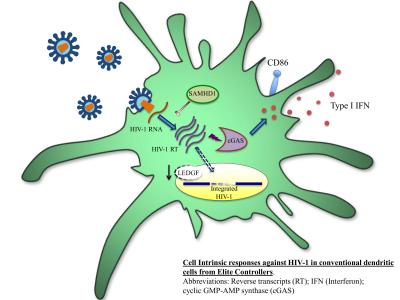
This image shows cell intrinsic responses against HIV-1 in conventional dendritic cells from Elite Controllers. Elite controllers (EC) are a small group of HIV-infected individuals who are able to suppress the virus in the absence of antiretroviral therapy. EC demonstrate that the human immune system, in principle, is capable of rendering HIV harmless. A study published on June 11th in PLOS Pathogens shows that dendritic cells (DC) of EC are supersensitive to early signs of HIV infection, and contribute to a stronger immune response than that seen in individuals who fail to control the virus in the long term.
| Full article | 0 Comments | 5932 views |
| AIDS & HIV | June 2, 2015 06:32 PM |
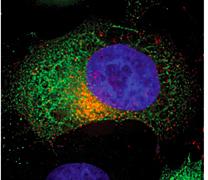
Probing HIV Env's incorporation into viral particles could inform design of virus-like particle vaccines. Virologists at Emory University School of Medicine, Yerkes National Primate Research Center, and Children's Healthcare of Atlanta have uncovered a critical detail explaining how HIV assembles its infectious yet stealthy clothing.
| Full article | 0 Comments | 5601 views |
| AIDS & HIV | May 19, 2015 06:24 PM |
Antiretroviral therapy (ART) has proven lifesaving for people infected with HIV; however, the medications are a lifelong necessity for most HIV-infected individuals and present practical, logistical, economic and health-related challenges. A primary research goal is to find an HIV cure that either clears the virus from an infected person's body or enables HIV-infected individuals to suppress virus levels and replication to extremely low levels without the need for daily ART.
| Full article | 0 Comments | 6469 views |
| AIDS & HIV | May 4, 2015 07:35 PM |
HIV-1 replication requires the coordinated movement of the virus's components toward the plasma membrane of an immune cell, where the virions are assembled and ultimately released. A study in The Journal of Cell Biology reveals how a Rab protein that controls intracellular trafficking supports HIV-1 assembly by promoting high levels of an important membrane lipid.
| Full article | 0 Comments | 8099 views |
| AIDS & HIV | March 26, 2015 07:53 PM |
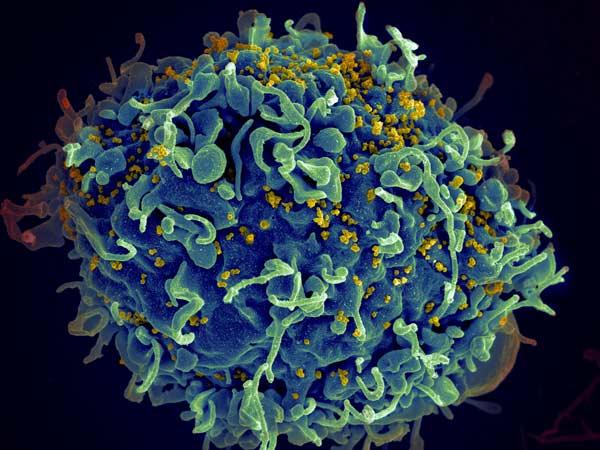
This photo shows HIV, the AIDS virus (yellow), infecting a human immune cell. The AIDS virus can genetically evolve and independently replicate in patients' brains early in the illness process, researchers funded by the National Institutes of Health have discovered. An analysis of cerebral spinal fluid (CSF), a window into brain chemical activity, revealed that for a subset of patients HIV had started replicating within the brain within the first four months of infection. CSF in 30 percent of HIV-infected patients tracked showed at least transient signs of inflammation - suggesting an active infectious process - or viral replication within the first two years of infection. There was also evidence that the mutating virus can evolve a genome in the central nervous system that is distinct from that in the periphery.
| Full article | 0 Comments | 8229 views |
| AIDS & HIV | March 2, 2015 06:03 PM |
Two of the four known groups of human AIDS viruses (HIV-1 groups O and P) have originated in western lowland gorillas, according to an international team of scientists from the Perelman School of Medicine at the University of Pennsylvania, the University of Montpellier, the University of Edinburgh, and others. The scientists, led by Martine Peeters from Montpellier, conducted a comprehensive survey of simian immunodeficiency virus (SIV) infection in African gorillas. Beatrice Hahn, MD, a professor of Medicine and Microbiology, and others from Penn were part of the team, whose findings appear online this week in the Proceedings of the National Academy of Sciences.
| Full article | 0 Comments | 6766 views |
| AIDS & HIV | February 12, 2015 05:45 PM |
Engaging in unprotected sex with multiple partners increases the risk of contracting multiple strains of HIV, the virus that causes AIDS. Once inside a host, these strains can recombine into a new variant of the virus. One such recombinant variant observed in patients in Cuba appears to be much more aggressive than other known forms of HIV. Patients progress to AIDS within three years of infection - so rapidly that they may not even realise they were infected.
| Full article | 0 Comments | 8796 views |
| AIDS & HIV | February 4, 2015 06:40 PM |
Researchers who conducted VOICE, a major HIV prevention trial involving more than 5,000 women in Africa, describe the study's primary results in this week's issue of the New England Journal of Medicine (NEJM), outlining in detail how the three products tested were safe but overall not effective in preventing HIV.
| Full article | 0 Comments | 7795 views |
| AIDS & HIV | February 3, 2015 06:34 PM |
While antiretroviral therapies have significantly improved and extended the lives of many HIV patients, another insidious and little discussed threat looms for aging sufferers - HIV-associated neurocognitive disorders (HAND). The disorders, which strike more often in HIV patients over age 50, can result in cognitive impairment, mild to severe, making everyday tasks a challenge.
| Full article | 0 Comments | 7206 views |
Return to Biology News Net Homepage

- In some genetic cases of microcephaly, stem cells fail to launch
- Yale team discovers how Zika virus causes fetal brain damage
- Scientists uncover the way a common cell enzyme alerts the body to invading bacteria
- Arctic gives clues on worst mass extinction of life
- Calcium channel blockers caught in the act at atomic level
- Flexibility That A.C.A. Lent to Work Force Is Threatened by...International Herald Tribune
- Bacteria Behind Legionnaires’ Disease Found at New York Police StationInternational Herald Tribune
- Prescription Price Crisis? 28 Million Americans See Spike in Drug...MSNBC.com: Health
- Seizing on Opioid Crisis, a Drug Maker Lobbies Hard for...International Herald Tribune
- Republicans are taking a big political risk on health careAP Health News
- Why We're So Divided Over Saving WolvesNational Geographic News
Top Biology News about AIDS & HIV
Biology Articles & News
Last 7 Days
Biology Articles & News
Most popular ever in AIDS & HIV
- Study shows that cells have a natural defense against HIV (36941)
- Adenosine deaminase may help the immune system fight HIV on its own (33883)
- Newly discovered HIV genome modification may put a twist on vaccine and drug design (33679)
- HIV/AIDS drugs interfere with brain's 'Insulation,' Penn-CHOP team shows (32339)
- Early-capture HIV study allows for characterization of acute infection period (32022)
- Resistance to key HIV drug 'concerningly common' (31147)
- Largest HIV transmission study conducted (31095)