

The tooth-protecting sugar substitute xylitol has been incorporated into gummy bears to produce a sweet snack that may prevent dental problems. Research published today in the open access journal BMC Oral Health describes how giving children four of the xylitol bears three times a day during school hours results in a decrease in the plaque bacteria that cause tooth decay.

| AIDS & HIV | July 27, 2008 07:39 PM |
The life expectancy for patients with human immunodeficiency virus (HIV) has increased by more than 13 years since the late 1990s thanks to advancements in antiretroviral therapy, according to researchers at the University of Alabama at Birmingham (UAB) and Simon Fraser University in Vancouver, British Columbia.
| Full story | 0 Comments | 9780 views |

| Health & Medicine | July 27, 2008 07:39 PM |
Children born with hydrocephalus, or "water on the brain" must have shunts implanted to drain the fluid away from the brain to reduce harmful pressure.
| Full story | 0 Comments | 7167 views |
| Health & Medicine | July 27, 2008 07:39 PM |
New research published in the July issue of the Journal of the American College of Surgeons shows elevated plasma DNA is a reliable marker of recurrent esophageal cancer. The study also suggests that plasma DNA levels rise before clinical evidence of cancer recurrence in the majority of patients.
| Full story | 0 Comments | 5780 views |

| Biology | July 27, 2008 07:39 PM |
Researchers, growers and Industry specialists from 22 countries are sharing the latest research into the use of Brassica species, such as mustard, radish, or rapeseed, to manage soil-borne pests and weeds – a technique known as biofumigation.
| Full story | 0 Comments | 8030 views |
| AIDS & HIV | July 27, 2008 07:39 PM |
Researchers at Wake Forest University Baptist Medical Center have disproved a long-standing clinical belief that the hepatitis C virus slows or stunts the immune system's ability to restore itself after HIV patients are treated with a combination of drugs known as the "cocktail."
| Full story | 0 Comments | 7325 views |
| Biology | July 26, 2008 07:31 PM |
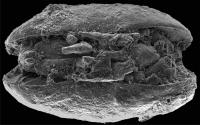
Figure of the fossil ostracod from the Dry Valleys. The specimen is less than 1 mm long, but preserves an array of soft tissues including legs and mouth parts. A new fossil discovery- the first of its kind from the whole of the Antarctic continent- provides scientists with new evidence to support the theory that the polar region was once much warmer.
| Full story | 0 Comments | 8657 views |

| Molecular & Cell Biology | July 26, 2008 07:31 PM |
A report by scientists from The Netherlands published online in The FASEB Journal (http://www.fasebj.org) identifies a compound in human saliva that greatly speeds wound healing. This research may offer hope to people suffering from chronic wounds related to diabetes and other disorders, as well as traumatic injuries and burns. In addition, because the compounds can be mass produced, they have the potential to become as common as antibiotic creams and rubbing alcohol.
| Full story | 0 Comments | 11603 views |
| AIDS & HIV | July 26, 2008 07:31 PM |
Persons infected with schistosomes, and possibly other parasitic worm infections, may be more likely to become infected with HIV than persons without worm infections, according to a study published July 23rd in the open-access journal PLoS Neglected Tropical Diseases. Researchers at the U.S. Centers for Disease Control and Prevention (Atlanta, United States) and the Dana-Farber Cancer Institute and Harvard Medical School (Boston, United States) found that the infectious dose of an HIV-like virus necessary to infect rhesus macaques was 17-fold lower in animals with acute schistosomiasis than in controls.
| Full story | 0 Comments | 6999 views |

| Environment | July 26, 2008 06:31 PM |
With less than a month remaining before the Beijing Olympics, Chinese officials have introduced a series of measures to improve air quality for the Games. A new tool has been installed in the capital city to allow the Chinese to monitor the effectiveness of these efforts.
| Full story | 0 Comments | 8142 views |
| Molecular & Cell Biology | July 26, 2008 04:31 PM |
Male fruit flies missing a gene for one particular odor receptor become clueless in matters of love, scientists at Duke University Medical Center have discovered.
| Full story | 0 Comments | 8106 views |
| Molecular & Cell Biology | July 26, 2008 02:31 PM |
A recent study shows that popular fish oil supplements have an effect on the healing process of small, acute wounds in human skin. But whether that effect is detrimental, as researchers initially suspected, remains a mystery.
| Full story | 0 Comments | 7542 views |
| Biology | July 26, 2008 12:31 PM |
Since the idea of using DNA to create faster, smaller, and more powerful computers originated in 1994, scientists have been scrambling to develop successful ways to use genetic code for computation. Now, new research from a professor at Rensselaer Polytechnic Institute suggests that if we want to carry out artificial computations, all we have to do is literally look around.
| Full story | 0 Comments | 8305 views |
| Molecular & Cell Biology | July 26, 2008 10:31 AM |
UC Irvine researchers have found a molecular link between circadian rhythms – our own body clock – and metabolism. The discovery reveals new possibilities for the treatment of diabetes, obesity and other related diseases.
| Full story | 0 Comments | 7779 views |
| Health & Medicine | July 25, 2008 07:31 PM |
For patients receiving kidney transplants, treatment with cholesterol-lowering "statin" drugs may lead to longer survival, reports a study in the November 2008 Journal of the American Society of Nephrology (JASN).
| Full story | 0 Comments | 7359 views |
| Molecular & Cell Biology | July 25, 2008 06:31 PM |
Scientists at Harvard University and the University of Texas at Austin have found that genetic evolution is strongly shaped by genes' efforts to prevent or tolerate errors in protein production.
| Full story | 0 Comments | 5754 views |
| Molecular & Cell Biology | July 25, 2008 04:31 PM |
Isoforms from Novel Structure Proteins (NSP), a new family of genes discovered by researchers in the Sbarro Institute for Cancer Research and Molecular Medicine in Temple University's College of Science and Technology, could be involved in apoptosis or programmed cell death.
| Full story | 0 Comments | 7532 views |
| Molecular & Cell Biology | July 25, 2008 02:31 PM |
Researchers have taken a first snapshot of how a class of highly reactive molecules inflicts cellular damage as part of aging, heart disease, stroke, cancer, diabetes, kidney disease and Alzheimer's disease to name a few. According to a study published today in the journal Cell, researchers have discovered a tool that can monitor related damage and determine the degree to which antioxidant drugs effectively combat disease.
| Full story | 0 Comments | 5811 views |
| Molecular & Cell Biology | July 25, 2008 12:31 PM |
Steroids bulk up plants just as they do human athletes, but the playbook of molecular signals that tell the genes to boost growth and development in plant cells is far more complicated than in human and animal cells. A new study by plant biologists at the Carnegie Institution used an emerging molecular approach called proteomics to identify key links in the steroid signaling chain. Understanding how these plant hormones activate genes could lead not only to enhanced harvests but also to new insights into how steroids regulate growth in both plant and animal cells.
| Full story | 0 Comments | 8623 views |
| AIDS & HIV | July 25, 2008 10:31 AM |
The National Institute of Allergy and Infectious Diseases (NIAID), part of the National Institutes of Health (NIH), is reshaping its research enterprise to broaden HIV vaccine discovery activities. Many of the initiatives have evolved from ideas and opinions recently expressed by scientists either at NIAID's HIV Vaccine Summit on March 25 or in response to two Requests for Information that NIAID issued in April.
| Full story | 0 Comments | 6246 views |

| Stem Cell Research | July 24, 2008 10:31 PM |
Adult stem cells originate in a different part of the brain than is commonly believed, and with proper stimulation they can produce new brain cells to replace those lost to disease or injury, a study by UC Irvine scientists has shown.
| Full story | 0 Comments | 6843 views |
| Molecular & Cell Biology | July 24, 2008 09:31 PM |
The chromosomal abnormality that causes a rare, but often fatal, disorder that affects infants has been identified by researchers at the University of California, San Diego School of Medicine, who happened to treat two young children with the disease in San Diego – two of perhaps a dozen children in the entire country diagnosed with the disorder.
| Full story | 0 Comments | 7226 views |
| AIDS & HIV | July 24, 2008 08:31 PM |
CD4+ T lymphocytes, or simply CD4 T cells, are the "brains" of the immune system, coordinating its activity when the body comes under attack. They are also the cells that are attacked by HIV, the devastating virus that causes AIDS and has infected roughly 40 million people worldwide. The virus slowly eats away at CD4 T cells, weakening the immune system.
| Full story | 0 Comments | 8833 views |
| Health & Medicine | July 24, 2008 07:31 PM |
A new study by researchers at Yale School of Medicine could explain why the cold and flu virus symptoms that are often mild and transient in non-smokers can seriously sicken smokers. Published in the Journal of Clinical Investigation, the study also identified the mechanism by which viruses and cigarette smoke interact to increase lung inflammation and damage.
| Full story | 0 Comments | 7420 views |
| Biology | July 23, 2008 10:12 PM |
Even a quiet stroll in the park can dramatically change natural ecosystems, according to a new study by conservation biologists from the University of California, Berkeley. These findings could have important implications for land management policies.
| Full story | 0 Comments | 6888 views |
| Molecular & Cell Biology | July 23, 2008 08:12 PM |
A study performed by researchers at the Institute for Research in Biomedicine (IRB Barcelona), in collaboration with researchers at the Instituto de Biología Molecular of the CSIC, reveal a mechanism that controls the movement of cells in a tissue by regulating cell adhesion. This same mechanism may be defective in diseases such as cancer and its metastasis, when tumour cells lose their adhesion to neighbouring cells and migrate through the organism. The results of this research have been published in this week's Nature Cell Biology.
| Full story | 0 Comments | 7304 views |

| Bioinformatics | July 23, 2008 05:12 PM |
The white horse is an icon for dignity which has had a huge impact on human culture across the world. An international team led by researchers at Uppsala University has now identified the mutation causing this spectacular trait and show that white horses carry an identical mutation that can be traced back to a common ancestor that lived thousands of years ago. The study is interesting for medical research since this mutation also enhance the risk for melanoma. The paper is published on July 20 on the website of Nature Genetics.
| Full story | 0 Comments | 10279 views |

| Biotechnology | July 23, 2008 02:12 PM |
A way to turn off one gene at a time has earned acceptance in biology laboratories over the last decade. Doctors envision the technique, called RNA interference, as a tool to treat a variety of diseases if it can be adapted to humans.
| Full story | 0 Comments | 6213 views |
| Health & Medicine | July 23, 2008 12:12 PM |
New research into the treatment of Alzheimer's disease reports improvement in language abilities using a novel immune-based approach. A video accompanying the research, published today in the open access journal BMC Neurology, documents rapid language improvement within minutes of using this new treatment.
| Full story | 0 Comments | 5692 views |

| Microbiology | July 23, 2008 10:12 AM |
Biogeoscientists show evidence of 90 billion tons of microbial organisms—expressed in terms of carbon mass—living in the deep biosphere, in a research article published online by Nature, July 20, 2008. This tonnage corresponds to about one-tenth of the amount of carbon stored globally in tropical rainforests. The authors: Kai-Uwe Hinrichs and Julius Lipp of the Center for Marine Environmental Sciences (MARUM) at University of Bremen, Germany; and Fumio Inagaki and Yuki Morono of the Kochi Institute for Core Sample Research at the Japan Agency for Marine-Earth Science and Technology (JAMSTEC) concluded that about 87 percent of the deep biosphere consists of Archaea. This finding is in stark contrast to previous reports, which suggest that Bacteria dominate the subseafloor ecosystem. To reach this conclusion, the researchers investigated sediment cores collected from several hundred meters beneath the seafloor of the Atlantic and Pacific Oceans and the Black Sea. The cored sediments included samples that were the result of research expeditions conducted by the Integrated Ocean Drilling Program (IODP).
| Full story | 0 Comments | 7117 views |
| Health & Medicine | July 22, 2008 06:12 PM |
Olympic athletes aren't the only ones who need to be concerned about the heavily polluted air in Beijing. The dirty air may trigger serious cardiovascular problems for some spectators.
| Full story | 0 Comments | 6765 views |
| Environment | July 22, 2008 04:12 PM |
No-take marine reserves where fishing is banned can have benefits that extend beyond the exploited fishes they are specifically designed to protect, according to new evidence from Australia's Great Barrier Reef reported in the July 22nd issue of Current Biology, a Cell Press publication. Researchers have found that outbreaks of large, predatory crown-of-thorns starfish (Acanthaster planci), which can devastate coral reefs, occur less often in protected zones, although they don't yet know exactly why.
| Full story | 0 Comments | 7935 views |
| Microbiology | July 22, 2008 02:12 PM |
For millennia, humans and viruses have been locked in an evolutionary back-and-forth -- one changes to outsmart the other, prompting the second to change and outsmart the first. With retroviruses, which work by inserting themselves into their host's DNA, the evidence remains in our genes. Last year, researchers at Rockefeller University and the Aaron Diamond AIDS Research Center brought an ancient retrovirus back to life and showed it could reproduce and infect human cells. Now, the same scientists have looked at the human side of the story and found evidence that our ancestors fought back against that virus with a defense mechanism our bodies still use today.
| Full story | 0 Comments | 7519 views |
| Stem Cell Research | July 22, 2008 12:12 PM |
Montreal, 17 July 2008 – The question of whether insulin-producing cells of the pancreas can regenerate is key to our understanding of diabetes, and to the further development of regenerative therapies against the disease. Dr Rosenberg from the McGill University Health Centre (MUHC) and McGill University together with Dr Bernard Massie from the Centre hospitalier de l'Université de Montréal (CHUM) have just concluded that they can. The results of their study have been published in the July issue of the journal Laboratory Investigation.
| Full story | 0 Comments | 7720 views |
| Environment | July 22, 2008 10:12 AM |

The Chesapeake Bay, like other East Coast estuaries, suffers from pollution by excess nitrogen. If you are living in the eastern United States, the environment around you is being harmed by air pollution. From Adirondack forests and Shenandoah streams to Appalachian wetlands and the Chesapeake Bay, a new report by the Cary Institute of Ecosystem Studies and The Nature Conservancy has found that air pollution is degrading every major ecosystem type in the northeastern and mid-Atlantic United States.
| Full story | 0 Comments | 7979 views |
| Health & Medicine | July 21, 2008 10:50 PM |
Commercial venues are very aware of the effects that the environment – in this case, music – can have on in-store traffic flow, sales volumes, product choices, and consumer time spent in the immediate vicinity. A study of the effects of music levels on drinking in a bar setting has found that loud music leads to more drinking in less time.
| Full story | 0 Comments | 7974 views |
| Biotechnology | July 21, 2008 07:50 PM |
For the first time, researchers have successfully grown functional human blood vessels in mice using cells from adult human donors — an important step in developing clinical strategies to grow tissue, researchers report in Circulation Research: Journal of the American Heart Association.
| Full story | 0 Comments | 7018 views |
| AIDS & HIV | July 21, 2008 05:12 PM |
When individuals infected with HIV become infected with a second strain of the virus, the two viral strains can exchange genetic information, creating a third, recombinant strain of the virus. It is known that the presence of multiple viral strains, called superinfection, frequently leads to a loss of immune control of viral levels. Now a study from the Partners AIDS Research Center at Massachusetts General Hospital (PARC/MGH) shows that how and where viral strains swap DNA may be determined by the immune response against the original infecting strain. Their report will appear in the Journal of Experimental Medicine and has been released online.
| Full story | 0 Comments | 7634 views |
| Biology | July 21, 2008 04:50 PM |
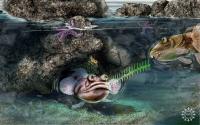
An artist's representation shows the midshipman fish singing to attract a mate. Talking fish are no strangers to Americans. From the comedic portrayal of "Mr. Limpet" by Don Knotts, to the children's Disney favorite, "Nemo," fish can talk, laugh and tell jokes--at least on television and the silver screen. But can real fish verbally communicate? Researchers say, "Yes," in a paper published in the July 18 issue of the journal Science. Further, the findings put human speech--and social communications of all vertebrates--in evolutionary context.
| Full story | 0 Comments | 7297 views |
| AIDS & HIV | July 21, 2008 01:50 PM |
New research into the earliest events occurring immediately upon infection with HIV-I shows that the virus deals a stunning blow to the immune system earlier than was previously understood. According to scientists at Duke University Medical Center, this suggests the window of opportunity for successful intervention may be only a matter of days – not weeks – after transmission, as researchers had previously believed.
| Full story | 0 Comments | 6334 views |

- In some genetic cases of microcephaly, stem cells fail to launch
- Yale team discovers how Zika virus causes fetal brain damage
- Scientists uncover the way a common cell enzyme alerts the body to invading bacteria
- Arctic gives clues on worst mass extinction of life
- Calcium channel blockers caught in the act at atomic level
Search Bio News Net
Free Biology Newsletter
- Flexibility That A.C.A. Lent to Work Force Is Threatened by...International Herald Tribune
- Bacteria Behind Legionnaires’ Disease Found at New York Police StationInternational Herald Tribune
- Prescription Price Crisis? 28 Million Americans See Spike in Drug...MSNBC.com: Health
- Seizing on Opioid Crisis, a Drug Maker Lobbies Hard for...International Herald Tribune
- Republicans are taking a big political risk on health careAP Health News
- Why We're So Divided Over Saving WolvesNational Geographic News