

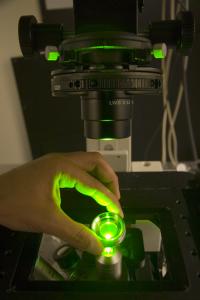
DNA microarrays can be easily interrogated with only the naked eye using a new electrostatic imaging technique developed in the laboratory of Jay Groves, a chemist with Berkeley Lab, UC Berkeley and HHMI. Credit: Photo Michael Barnes, UC Berkeley Chemistry Department The dream of personalized medicine — in which diagnostics, risk predictions and treatment decisions are based on a patient's genetic profile — may be on the verge of being expanded beyond the wealthiest of nations with state-of-the-art clinics. A team of researchers with the U.S. Department of Energy's Lawrence Berkeley National Laboratory (Berkeley Lab) has invented a technique in which DNA or RNA assays — the key to genetic profiling and disease detection — can be read and evaluated without the need of elaborate chemical labeling or sophisticated instrumentation. Based on electrostatic repulsion — in which objects with the same electrical charge repel one another — the technique is relatively simple and inexpensive to implement, and can be carried out in a matter of minutes.

| Microarray | June 30, 2008 05:56 PM |
| Full story | 0 Comments | 12037 views |

| Molecular & Cell Biology | June 30, 2008 05:56 PM |
Eleven years ago, Dr. Mary Estes of Baylor College of Medicine and her colleagues discovered the first viral enterotoxin, rotavirus NSP4, a toxic protein that affects the intestines, causing diarrhea.
| Full story | 0 Comments | 6412 views |
| Molecular & Cell Biology | June 30, 2008 05:56 PM |
Scientists in Sydney have identified a process, a synergistic encounter between two molecules, that may account for the extreme allergic reactions some people experience. By silencing at least one of these molecules, it may be possible to treat allergies.
| Full story | 0 Comments | 6078 views |

| AIDS & HIV | June 30, 2008 05:56 PM |
The widespread use of highly active antiretroviral therapy may reduce the incidence of HIV in individuals and populations but has been overlooked by public health as a prevention strategy, write Dr. Julio Montaner and colleagues in CMAJ.
| Full story | 0 Comments | 6929 views |

| Biotechnology | June 30, 2008 10:38 AM |
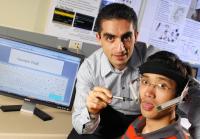
Georgia Tech assistant professor Maysam Ghovanloo (left) points to a small magnet attached to graduate student Xueliang Huo's tongue that allows him to operate a computer mouse and powered wheelchair. Credit: Georgia Tech Photo: Gary Meek A new assistive technology developed by engineers at the Georgia Institute of Technology could help individuals with severe disabilities lead more independent lives.
| Full story | 0 Comments | 8279 views |
| Molecular & Cell Biology | June 30, 2008 10:38 AM |
To survive tough times, cells sometimes resort to a form of self-cannibalism called autophagy. But as Hashimoto et al. reveal, autophagy can have a down side, destroying the pancreas by prematurely activating a digestive enzyme.
| Full story | 0 Comments | 7089 views |

| Biology | June 29, 2008 11:49 PM |
Scientists are one step closer to understanding the recent demise of billions of honey bees after making an important discovery about the transmission of a common bee virus. Deformed wing virus (DWV) is passed between adult bees and to their developing brood by a parasitic mite called Varroa destructor when it feeds. However, research published in the July issue of the Journal of General Virology suggests that the virus does not replicate in Varroa, highlighting the need for further investigation.
| Full story | 0 Comments | 6882 views |

| Health & Medicine | June 29, 2008 11:49 PM |
New research has trebled the number of genetic regions known to be implicated in Crohn's disease, a form of inflammatory bowel disease, to over thirty. The research, published today in the journal Nature Genetics, has identified a number of potential new targets for drug development as well as providing surprising new links between the condition and other common diseases including asthma.
| Full story | 0 Comments | 8341 views |
| Biology | June 29, 2008 11:49 PM |
Homosexual behaviour is largely shaped by genetics and random environmental factors, according to findings from the world's largest study of twins.
| Full story | 0 Comments | 17096 views |
| Health & Medicine | June 29, 2008 11:49 PM |
Scientists at Wake Forest University Baptist Medical Center are about to embark on a human trial to test whether a new cancer treatment will be as effective at eradicating cancer in humans as it has proven to be in mice.
| Full story | 0 Comments | 7599 views |
| Biotechnology | June 29, 2008 11:49 PM |
Climate change is expected to exacerbate drought events throughout the world, resulting in large-scale ecosystem alteration and failure of drought-sensitive crops. In addition, periods of drought vary from year to year in severity and length, making it difficult for plants to adapt to more severe conditions. Many modern varieties of potatoes are considered to be drought-sensitive. However, evolution and cultivation in the cold, dry Andean Altiplano gave rise to a number of potato varieties that could tolerate drought. Scientists are studying these varieties to identify the genes and molecular mechanisms of drought tolerance in order to engineer new drought-resistant crops of potato, as well as other Solanaceous vegetables.
| Full story | 0 Comments | 7470 views |
| Biotechnology | June 29, 2008 11:49 PM |
When tomatoes ripen in our gardens, we watch them turn gradually from hard, green globules to brightly colored, aromatic, and tasty fruits. This familiar and seemingly commonplace transformation masks a seething mass of components interacting in a well-regulated albeit highly complex manner. For generations, agriculturalists and scientists have bred tomatoes for size, shape, texture, flavor, shelf-life, and nutrient composition, more or less, one trait at a time. With the advent of molecular biology, mutagenesis and genetic transformation could produce tomatoes that were more easily harvested or transported or turned into tomato paste. Frequently, however, optimizing for one trait led to deterioration in another. For example, improving flavor could have a negative effect on yield.
| Full story | 0 Comments | 9359 views |
| Health & Medicine | June 29, 2008 11:49 PM |
Rates of sexually transmitted infections have doubled among the over 45s in less than a decade, reveals research published ahead of print in the journal Sexually Transmitted Infections.
| Full story | 0 Comments | 6654 views |
| Biology | June 27, 2008 09:06 PM |
Canada, Mexico and the United States are joining forces to protect and conserve the Monarch butterfly, which has become a symbol of North America's shared environment.
| Full story | 0 Comments | 6997 views |
| Health & Medicine | June 27, 2008 09:06 PM |
Researchers from McGill University's Faculty of Medicine have discovered a compound that reduces resistance to chemotherapy agents used to treat cancer. Their results were published in the June issue of The Journal of Clinical Investigation (JCI).
| Full story | 0 Comments | 6695 views |

| Environment | June 27, 2008 09:06 PM |
The battle to reduce carbon emissions is at the heart of many eco-friendly efforts, and researchers from the University of Missouri have discovered that nature has been lending a hand. Researchers at the Missouri Tree Ring Laboratory in the Department of Forestry discovered that trees submerged in freshwater aquatic systems store carbon for thousands of years, a significantly longer period of time than trees that fall in a forest, thus keeping carbon out of the atmosphere.
| Full story | 0 Comments | 7999 views |
| Health & Medicine | June 27, 2008 09:06 PM |
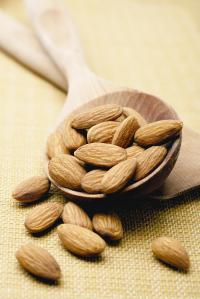
Almonds. Almonds, as well as being high in vitamin E and other minerals, are also thought to have other health benefits, such as reducing cholesterol. Recently published work by the Institute of Food Research has identified potential prebiotic properties of almonds that could help improve our digestive health by increasing levels of beneficial gut bacteria.
| Full story | 0 Comments | 7987 views |
| Biology | June 27, 2008 09:06 PM |
The ancestors of maize originally grew wild in Mexico and were radically different from the plant that is now one of the most important crops in the world. While the evidence is clear that maize was first domesticated in Mexico, the time and location of the earliest domestication and dispersal events are still in dispute. Now, in addition to more traditional macrobotanical and archeological remains, scientists are using new genetic and microbotanical techniques to distinguish domesticated maize from its wild relatives as well as to identify ancient sites of maize agriculture. These new analyses suggest that maize may have been domesticated in Mexico as early as 10,000 years ago.
| Full story | 0 Comments | 8902 views |
| Molecular & Cell Biology | June 27, 2008 09:06 PM |
In the late 19th century Gregor Mendel used peas to show that one copy of a gene (allele) is inherited from the mother and one from the father. In the progeny, the inherited genes are expressed at the right time and in the right place, but until recently, it was thought that although gene products could be modified during the life of the organism, the genes themselves were unchanged, except for random mutation. Now it appears that one copy of some genes can alter the expression of the other copy, and those changes are passed down to the next generation. These epigenetic alterations, called paramutations may be important in introducing changes when plants and other organisms are environmentally stressed. The exact mechanisms of how genes talk to other genes and change their behavior are being investigated, and recent results suggest that these processes could be important in engineering plants responsive to a variety of environmental conditions.
| Full story | 0 Comments | 6777 views |
| Environment | June 27, 2008 09:06 PM |
A detailed analysis of data from nearly 50 years of weekly fish-trawl surveys in Narragansett Bay and adjacent Rhode Island Sound has revealed a long-term shift in species composition, which scientists attribute primarily to the effects of global warming.
| Full story | 0 Comments | 6868 views |
| Biology | June 27, 2008 09:06 PM |
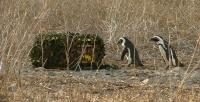
African penguins pass by a camera system on Robben Island, South Africa. Ground-breaking technology that will enable biologists to identify and monitor large numbers of endangered animals, from butterflies to whales, without being captured, will be shown to the public for the first time at this year's Royal Society Summer Science exhibition [30 June to 3 July].
| Full story | 0 Comments | 6503 views |
| Health & Medicine | June 26, 2008 01:19 PM |
Grabbing as little as one glass of lowfat or fat free milk could help protect your heart, according to a new study published in the American Journal of Clinical Nutrition. Researchers found that adults who had at least one serving of lowfat milk or milk products each day had 37 percent lower odds of poor kidney function linked to heart disease compared to those who drank little or no lowfat milk.
| Full story | 0 Comments | 10068 views |
| Molecular & Cell Biology | June 26, 2008 01:19 PM |
People who have never smoked but whose cells cannot efficiently repair environmental insults to DNA are at higher risk of developing lung cancer than those with effective genomic repair capability, according to researchers from the Department of Epidemiology at The University of Texas M. D. Anderson Cancer Center.
| Full story | 0 Comments | 7312 views |
| Biology | June 26, 2008 01:19 PM |
New research from Harvard University neuroscientists has pinpointed exactly how neural activity boosts blood flow to the brain. The finding has important implications for our understanding of common brain imaging techniques such as fMRI, which uses blood flow in the brain as a proxy for neural activity.
| Full story | 0 Comments | 7523 views |
| Biology | June 26, 2008 01:19 PM |
Ground-breaking research in the June issue of Integrative Cancer Therapies published by SAGE explored whether ovarian cancer has a scent different from other cancers and whether working dogs could be taught to distinguish it in its different stages.
| Full story | 0 Comments | 7884 views |
| Biology | June 26, 2008 01:19 PM |
More than 80 years have passed since the German scientist Hans Spemann conducted his famous experiment that laid the foundations for the field of embryonic development. After dividing a salamander embryo in half, Spemann noticed that one half – specifically, the half that gives rise to the salamander's 'belly' (ventral) starts to wither away. However, the other 'back' (dorsal) half that develops into its head, brain and spinal cord, continues to grow, regenerating the missing belly half and develops into a complete, though be it smaller, fully functional embryo. Spemann then conducted another experiment, where this time, he removed a few cells from the back half of one embryo and transplanted them into the belly half of a different embryo.
| Full story | 0 Comments | 7035 views |

| Microbiology | June 26, 2008 01:19 PM |
Recent findings by medical researchers indicate that naturally occurring nanotubes may serve as tunnels that protect retroviruses and bacteria in transit from diseased to healthy cells — a fact that may explain why vaccines fare poorly against some invaders.
| Full story | 0 Comments | 6889 views |
| Health & Medicine | June 26, 2008 01:19 PM |
A novel electronic device designed to "zap" away migraine pain before it starts has proven to be the next form of relief for those suffering from the debilitating disease, according to a study conducted at The Ohio State University Medical Center.
| Full story | 0 Comments | 9543 views |
| Health & Medicine | June 25, 2008 07:28 PM |
University of Pennsylvania School of Medicine physicians and bioethicists are calling for a new, more standardized way for patients in need of organ transplants to be informed of the risks they face. If adopted, their policy recommendations could promote greater equity in how organs are allocated while restricting patients' abilities to "cherry-pick" the best organs.
| Full story | 0 Comments | 7379 views |
| Microbiology | June 25, 2008 07:28 PM |
Research conducted by food science faculty at the University of Idaho and Washington State University indicate that a commercially available fruit and vegetable wash, when used in a food-manufacturing setting, can dramatically decrease the number of disease-causing organisms in produce-processing washwater. That could reduce by manyfold the potential for cross-contamination within the water by such "gram-negative" bacteria as Salmonella and E. coli O157:H7.
| Full story | 0 Comments | 6794 views |
| Molecular & Cell Biology | June 25, 2008 07:28 PM |
Researchers at New York University's Center for Developmental Genetics report that the photoreceptors in an insect's eye can change their traditional functions during metamorphosis. The study appears in the most recent issue of the journal Nature. The researchers found that when photoreceptors responsible for detecting the color green die off during metamorphosis a second class of photoreceptors—those responsible for detecting the color blue—then fill the role of detecting the color green. These rare switches, the authors speculate, are likely the result of changing life patterns.
| Full story | 0 Comments | 6955 views |
| Biology | June 25, 2008 07:28 PM |
New exquisitely preserved fossils from Latvia cast light on a key event in our own evolutionary history, when our ancestors left the water and ventured onto land. Swedish researchers Per Ahlberg and Henning Blom from Uppsala University have reconstructed parts of the animal and explain the transformation in the new issue of Nature.
| Full story | 0 Comments | 8167 views |
| Molecular & Cell Biology | June 25, 2008 07:28 PM |
Wellcome Trust scientists have identified a key region of the brain which encourages us to be adventurous. The region, located in a primitive area of the brain, is activated when we choose unfamiliar options, suggesting an evolutionary advantage for sampling the unknown. It may also explain why re-branding of familiar products encourages to pick them off the supermarket shelves.
| Full story | 0 Comments | 6519 views |
| Biology | June 25, 2008 07:28 PM |
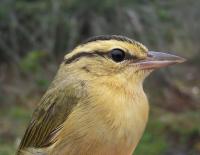
Worm-eating warblers breed in North America, but winter in Central America. While migrating, they frequently inspect "mobs " of local winged residents, Queen's University biologists discovered. (Kingston, ON) – Migrating songbirds take their survival cues from local winged residents when flying through unfamiliar territory, a new Queen's University-led study shows.
| Full story | 0 Comments | 8498 views |

| Bioinformatics | June 24, 2008 04:07 PM |
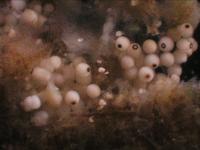
The interior of the brood chamber of a sponge, Amphimedon queenslandica, showing embryos in the early phases of development. Though the slow moving purple sea urchin may look oblivious, lacking a head, eyes and ears, this prickly creature has an impressive suite of sensory receptors to detect outside signals. And don't overlook this animal's self-defense abilities: it has much more ammunition to activate its innate immune system than humans have. The starlet sea anemone lives in coastal areas that face increasing pollution, and it is better equipped than many land, ocean, and freshwater animals to tolerate environmental stress.
| Full story | 0 Comments | 17640 views |
| Biotechnology | June 24, 2008 04:07 PM |
Devices known as brain-machine interfaces could someday be used routinely to help paralyzed patients and amputees control prosthetic limbs with just their thoughts. Now, University of Florida researchers have taken the concept a step further, devising a way for computerized devices not only to translate brain signals into movement but also to evolve with the brain as it learns.
| Full story | 0 Comments | 10356 views |
| Molecular & Cell Biology | June 24, 2008 04:07 PM |
Stimulant medications such as Ritalin have been prescribed for decades to treat attention deficit hyperactivity disorder (ADHD), and their popularity as "cognition enhancers" has recently surged among the healthy, as well.
| Full story | 0 Comments | 9072 views |
| Health & Medicine | June 24, 2008 04:07 PM |
A review article authored by a University of Queensland academic has found overcrowding and understaffing in hospitals are two key factors in the transmission of MRSA (Meticillin – Resistant Staphylococcus Aureus) infections worldwide.
| Full story | 0 Comments | 8268 views |
| Microbiology | June 24, 2008 04:07 PM |
Viruses can travel around cells they infect by hitching a ride on a microscopic transport system, according to new research. Cells are exposed to foreign DNA and RNA and it is understood that some of this genetic material can be integrated into the host genome. Using modern microscopic techniques, scientists have been able to see how virus DNA is transported in the cell.
| Full story | 0 Comments | 8038 views |
| Bioinformatics | June 24, 2008 04:07 PM |
A biomedical engineering professor at The University of Texas at Austin is using a concept called "grid computing" to allow the average person to donate idle computer time in a global effort to fight cancer.
| Full story | 0 Comments | 7150 views |

- In some genetic cases of microcephaly, stem cells fail to launch
- Yale team discovers how Zika virus causes fetal brain damage
- Scientists uncover the way a common cell enzyme alerts the body to invading bacteria
- Arctic gives clues on worst mass extinction of life
- Calcium channel blockers caught in the act at atomic level
Search Bio News Net
Free Biology Newsletter
- Flexibility That A.C.A. Lent to Work Force Is Threatened by...International Herald Tribune
- Bacteria Behind Legionnaires’ Disease Found at New York Police StationInternational Herald Tribune
- Prescription Price Crisis? 28 Million Americans See Spike in Drug...MSNBC.com: Health
- Seizing on Opioid Crisis, a Drug Maker Lobbies Hard for...International Herald Tribune
- Republicans are taking a big political risk on health careAP Health News
- Why We're So Divided Over Saving WolvesNational Geographic News