

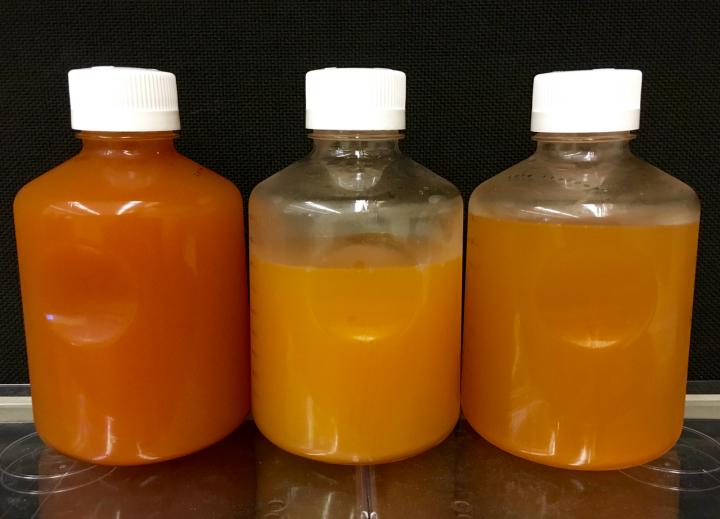
Ohio State University researchers and their colleagues have identified a new genus of bacteria living inside hydraulic fracturing wells. Researchers analyzing the genomes of microorganisms living in shale oil and gas wells have found evidence of sustainable ecosystems taking hold there--populated in part by a never-before-seen genus of bacteria they have dubbed "Frackibacter."

Category: Microbiology
| Microbiology | September 5, 2016 06:38 PM |
| Full article | 0 Comments | 439681 views |
| Microbiology | August 24, 2016 07:26 PM |
Infection by the Zika virus diverts a key protein necessary for neural cell division in the developing human fetus, thereby causing the birth defect microcephaly, a team of Yale scientists reported Aug. 24 in the journal Cell Reports.
| Full article | 0 Comments | 68027 views |
| Microbiology | August 22, 2016 06:24 PM |
Microsporidia cause diarrhea, an illness called microsporidiosis and even death in immune-compromised individuals.
| Full article | 0 Comments | 36968 views |
| Microbiology | August 18, 2016 06:02 PM |
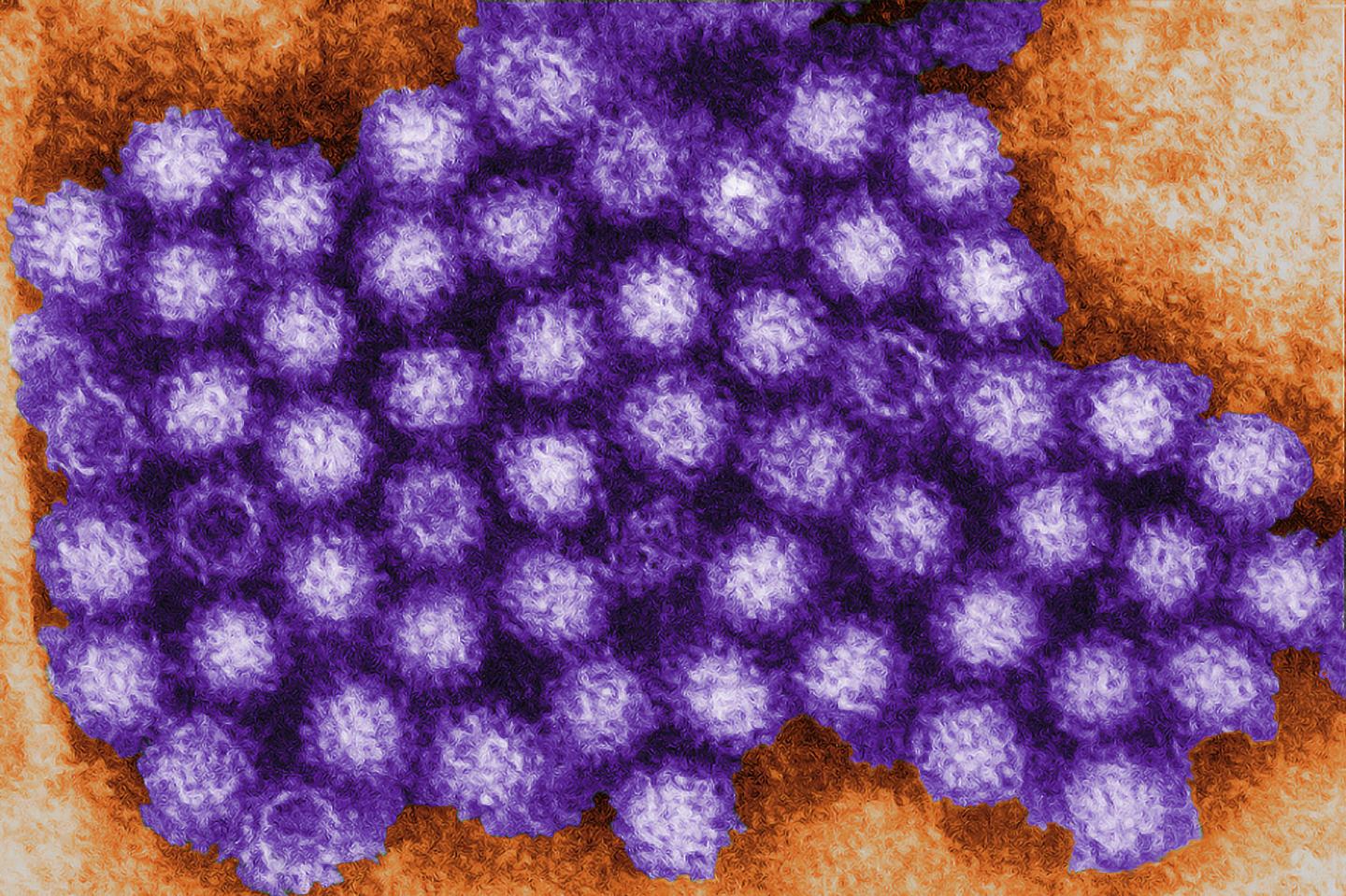
Researchers at Washington University School of Medicine in St. Louis have identified the protein that norovirus -- shown here in a colored transmission electron micrograph -- uses to invade cells. Norovirus is the most common viral cause of diarrhea worldwide, but scientists still know little about how it infects people and causes disease. Research has been hindered by an inability to grow the virus in the lab.
| Full article | 0 Comments | 38428 views |
| Microbiology | July 27, 2016 05:24 PM |
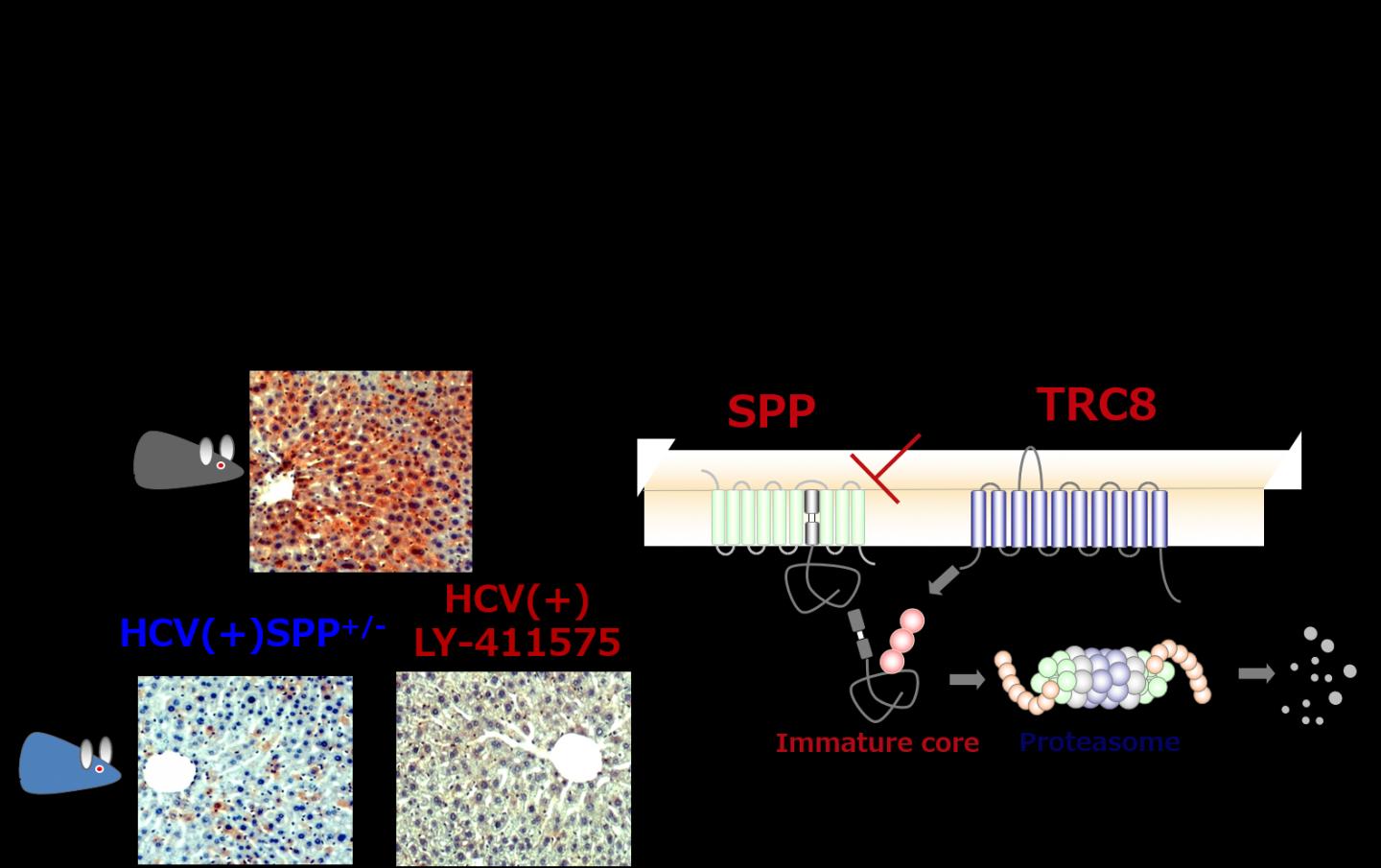
SPP inhibition reduces production of infectious HCV particles and pathogenesis, Researchers at Osaka University, Japan uncovered the mechanisms that suppress the propagation of the hepatitis C virus (HCV) with the potential of improving pathological liver conditions. Using model mice, they confirmed that when a certain enzyme is inhibited, HCV particle production is reduced leading to an improvement of pathological liver conditions. They thereby identified a new drug target for the development of new HCV drugs.
| Full article | 0 Comments | 37058 views |
| Microbiology | July 27, 2016 05:24 PM |
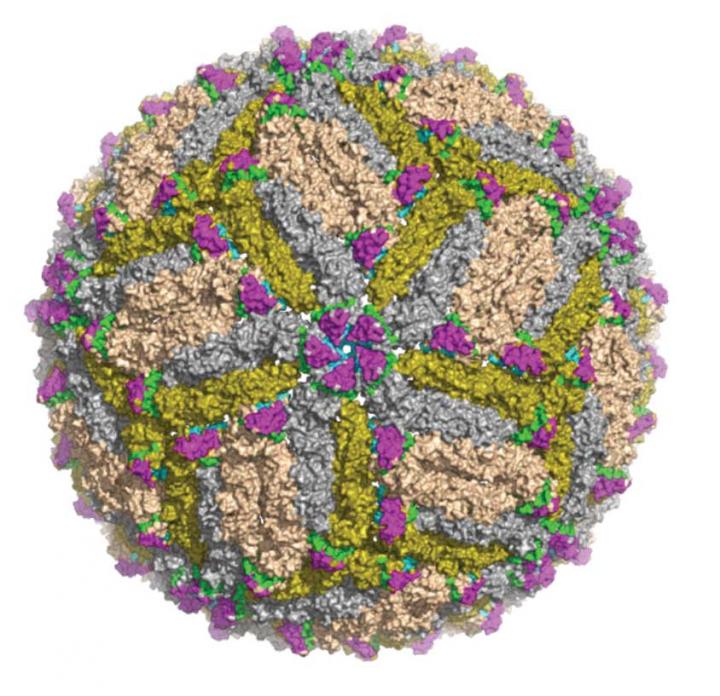
This image shows the mapping of the three distinct Zika virus DIII epitopes onto the mature virion. Antibodies that specifically protect against Zika infection have been identified in mice, report Washington University School of Medicine in St. Louis researchers on July 27 in Cell. This is the second publication in recent weeks (another paper showing human Zika antibodies appeared in Science on July 14, DOI: 10.1126/science.aaf8505) that explores the surfaces that the antibodies target on the virus. The information will help inform the development of vaccines, diagnostics, and antibody-based prophylactic and therapeutic agents.
| Full article | 0 Comments | 36013 views |
| Microbiology | July 26, 2016 03:43 PM |
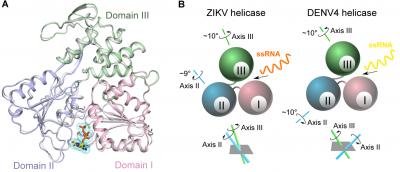
This is the structure of the ZIKV helicase in complex with RNA. Zika virus has now become a household word. It can cause microcephaly, a birth defect where a baby's head is smaller than usual. Additionally, it is associated with Guillain-Barré syndrome, a neurological disorder that could lead to paralysis and even death. However, how this microbe replicates in the infected cells remains a mystery. Now, an international team led by researchers from Tianjin University and Nankai University has unraveled the puzzle of how Zika virus replicates and published their finding in Springer's journal Protein & Cell.
| Full article | 0 Comments | 36849 views |
| Microbiology | July 18, 2016 06:59 PM |
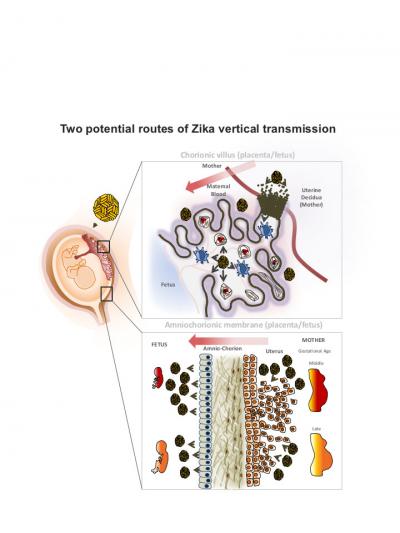
Zika virus infects numerous primary cell types and explants of the human placenta, suggesting placental and paraplacental routes of virus transmission. Zika virus can infect numerous cell types in the human placenta and amniotic sac, according to researchers at UC San Francisco and UC Berkeley who show in a new paper how the virus travels from a pregnant woman to her fetus. They also identify a drug that may be able to block it.
| Full article | 0 Comments | 36124 views |
| Microbiology | July 13, 2016 05:55 PM |
Scientists from the Institut Pasteur and the CNRS have identified two new strains of the HTLV-4 virus in two hunters who were bitten by gorillas in Gabon. These findings, published in the journal Clinical Infectious Diseases, support the notion that gorillas represent a major source of infectious agents that can be passed on to humans.
| Full article | 0 Comments | 35070 views |
| Microbiology | July 7, 2016 05:18 PM |
A new study has found that the little-known member of the human herpesvirus family called HHV-6A infects the lining of the uterus in 43% of women with unexplained infertility but cannot be found in uterine lining of fertile women. The study was conducted by investigators at the University of Ferrara, Italy.
| Full article | 0 Comments | 35123 views |
| Microbiology | June 21, 2016 03:52 PM |
Scientists at the University of Massachusetts Medical School (UMMS) have performed the first CRISPR/Cas9 screen to discover human proteins that Zika virus needs for replication. This work, led by Abraham Brass, MD, PhD, assistant professor in microbiology & physiological systems, reveals new leads that may be useful for halting Zika, dengue and other emerging viral infections. The study appears online in the journal Cell Reports.
| Full article | 0 Comments | 6606 views |
| Microbiology | June 20, 2016 05:52 PM |
Cold viruses cause us irritation by penetrating into our cells and transporting their RNA into the cytoplasma of the infected cells. This is the only way they can multiply. The details of how the transfer of the RNA from within the virus occurs are difficult to study. However, a new method has been developed at TU Wien that can be used to analyse this process. It was developed from the combination of two established procedures - 'molecular beacons' and capillary electrophoresis in chip format. The new method has now been published and the article's title adorns the cover of the scientific journal Analytical and Bioanalytical Chemistry.
| Full article | 0 Comments | 6552 views |
| Microbiology | June 15, 2016 05:37 PM |
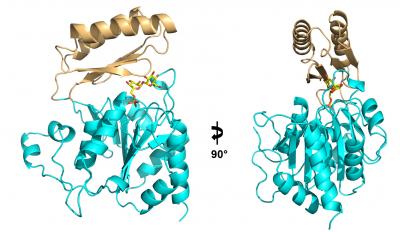
This ribbon diagram shows two views of the structure of the enzyme Tps2 as it removes a phosphate from a sugar molecule (yellow, orange and red). DURHAM, N.C. -- Fungal infections can be devastating to human health, killing approximately 150 people every hour, resulting in over a million deaths every year, more than malaria and tuberculosis combined.
| Full article | 0 Comments | 5910 views |
| Microbiology | June 14, 2016 06:03 PM |
A virus that infects major freshwater bacteria appears to use stolen bits of immune system DNA to highjack their hosts' immune response.
| Full article | 0 Comments | 6723 views |
| Microbiology | June 6, 2016 05:46 PM |
Human well being often flourishes under conditions of cooperation with others and flounders during periods of external conflict and strife.
| Full article | 0 Comments | 6860 views |
| Microbiology | May 16, 2016 01:47 PM |
Australian scientists may have found a way to stop deadly bacteria from infecting patients. The discovery could lead to a whole new way of treating antibiotic-resistant "superbugs". The researchers have uncovered what may be an Achilles heel on the bacteria cell membrane that could act as a potential novel drug target.
| Full article | 0 Comments | 7209 views |
| Microbiology | May 3, 2016 05:58 PM |
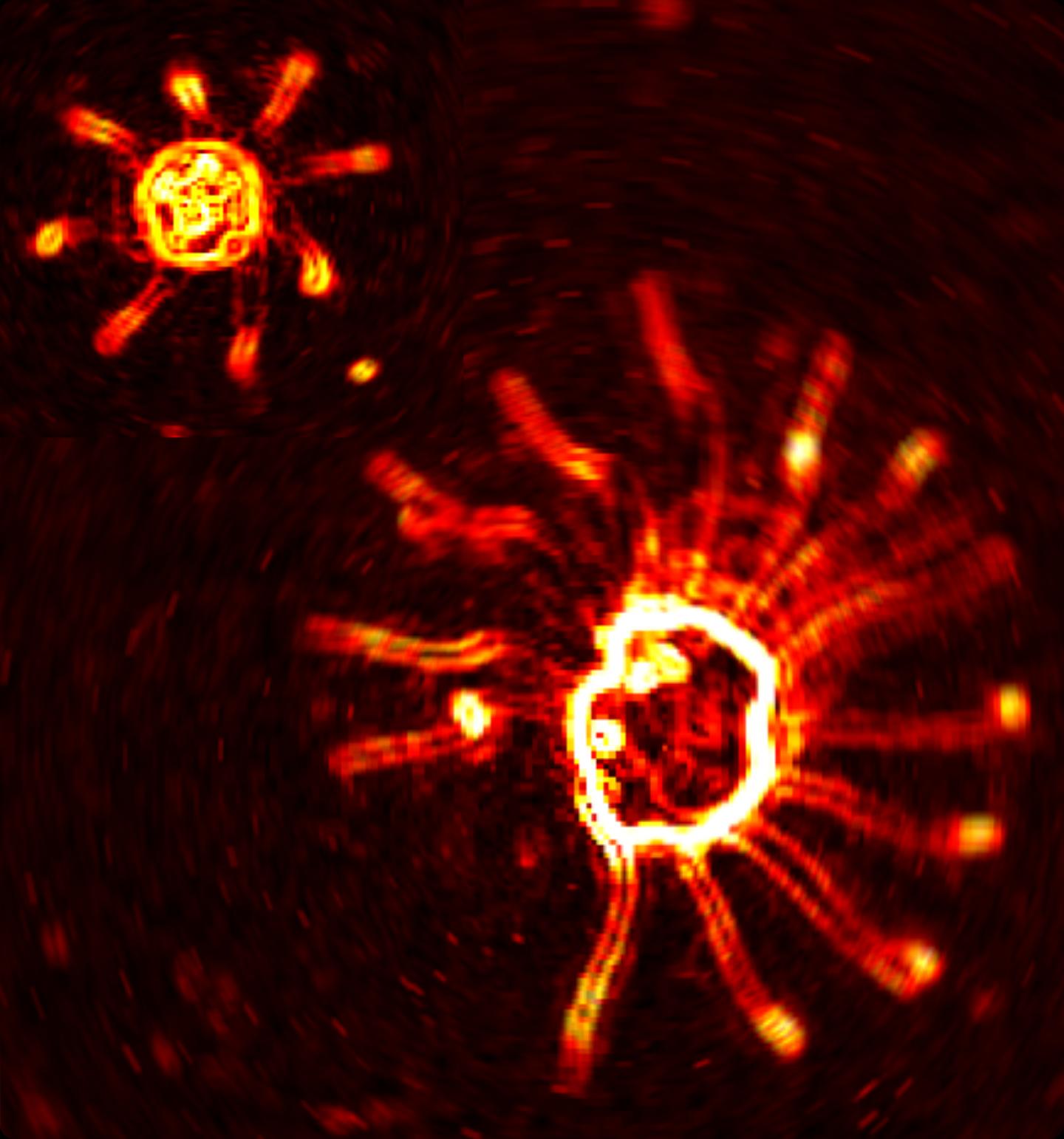
These are microscope images showing two species of algae which swim using tiny appendages known as flagella. Long before there were fish swimming in the oceans, tiny microorganisms were using long slender appendages called cilia and flagella to navigate their watery habitats. Now, new research reveals that species of single-celled algae coordinate their flagella to achieve a remarkable diversity of swimming gaits.
| Full article | 0 Comments | 5470 views |
| Microbiology | April 25, 2016 05:00 PM |
A group of researchers from Osaka University, Hosei University, and Nagoya University have revealed the molecular mechanism that Vibrio cholerae, the etiological agent of cholera, is attracted by bile. This group has also successfully detected the ligand binding to the bacteria chemoreceptor in vivo for the first time. These results may significantly advance research on mechanism and control of V. cholerae.
| Full article | 0 Comments | 6697 views |
| Microbiology | April 11, 2016 06:54 PM |

This is a new and expanded view of the tree of life. The tree of life, which depicts how life has evolved and diversified on the planet, is getting a lot more complicated.
| Full article | 0 Comments | 7263 views |
| Microbiology | March 29, 2016 08:03 PM |
Bacteria are the most abundant form of life on Earth, and they are capable of living in diverse habitats ranging from the surface of rocks to the insides of our intestines. Over millennia, these adaptable little organisms have evolved a variety of specialized mechanisms to move themselves through their particular environments. In two recent Caltech studies, researchers used a state-of-the-art imaging technique to capture, for the first time, three-dimensional views of this tiny complicated machinery in bacteria.
| Full article | 0 Comments | 7365 views |
| Microbiology | March 22, 2016 06:46 PM |
In eLife today (22 March), Wellcome Trust Sanger Institute scientists show how the parasite responsible for the neglected tropical disease Black Fever (visceral leishmaniasis) can become resistant to drug treatment. Studying the whole genomes of more than 200 samples of Leishmania donovani revealed that the addition of just two bases of DNA to a gene known as LdAQP1 stops the parasite from absorbing antimonial drugs.
| Full article | 0 Comments | 7012 views |
| Microbiology | March 16, 2016 06:58 PM |
In the microscopic life that thrives around coral reefs, San Diego State University researchers have discovered an interplay between viruses and microbes that defies conventional wisdom. As the density of microbes rises in an ecosystem, the number of viruses infecting those microbes rises with it. It has generally been assumed that this growing population of viruses, in turn, kills more and more microbes, keeping the microbial population in check. It's a model known as "kill-the-winner" -- the winners being the blooming microbial cells and the killers being the viruses (mostly bacteria-killing viruses known as bacteriophages) that infect them.
| Full article | 0 Comments | 8499 views |
| Microbiology | February 25, 2016 06:09 PM |
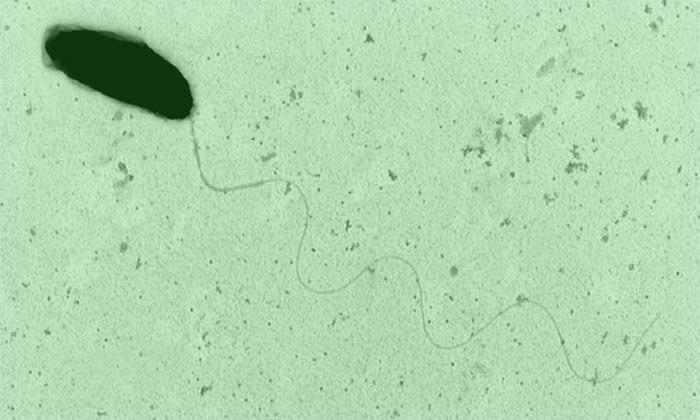
Electron micrograph of the marine bacteria Marinomonas mediterranea is shown. Scientists from The University of Texas at Austin, the Stanford University School of Medicine and two other institutions have discovered that bacteria have a system that can recognize and disrupt dangerous viruses using a newly identified mechanism involving ribonucleic acid (RNA). It is similar to the CRISPR/Cas system that captures foreign DNA. The discovery might lead to better ways to thwart viruses that kill agricultural crops and interfere with the production of dairy products such as cheese and yogurt.
| Full article | 0 Comments | 7903 views |
| Microbiology | February 22, 2016 05:56 PM |
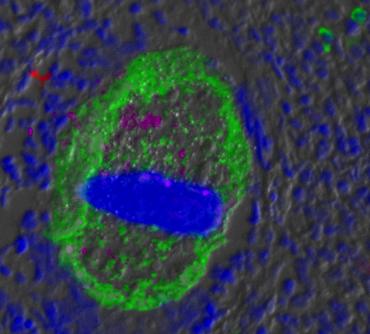
A parasite in a trout gill is coated with IgT, labeled green. IgT both responds to pathogens and appears to control the commensal bacteria in the gills. Oriol Sunyer, a professor at the University of Pennsylvania School of Veterinary Medicine, has described fish as "an open gut swimming." Their mucosal surfaces -- their skin, digestive tract and gills -- are in constant contact with water, including any pathogens that that water may contain.
| Full article | 0 Comments | 7048 views |
| Microbiology | February 1, 2016 04:08 PM |
Scientists chase unicorns because if they could prove the existence of the magical beasts, the world would be a better place.
| Full article | 0 Comments | 7869 views |
| Microbiology | January 15, 2016 06:26 PM |
The Zika virus, possibly linked to serious birth defects in Brazil, has the potential to spread within the Americas, including parts of the United States, according to an international team of researchers who track the spread of infectious diseases.
| Full article | 0 Comments | 11016 views |
| Microbiology | January 15, 2016 06:26 PM |
While scientists have known for years that African trypanosomes cause sleeping sickness, they've been left scratching their heads as to how these tiny single-celled organisms communicate. A University of Georgia study, published Jan. 14 in the journal Cell, helps solve this mystery.
| Full article | 0 Comments | 6044 views |
The Institut Pasteur in French Guiana publishes the first complete genome sequence of the Zika virus
| Microbiology | January 11, 2016 05:41 PM |
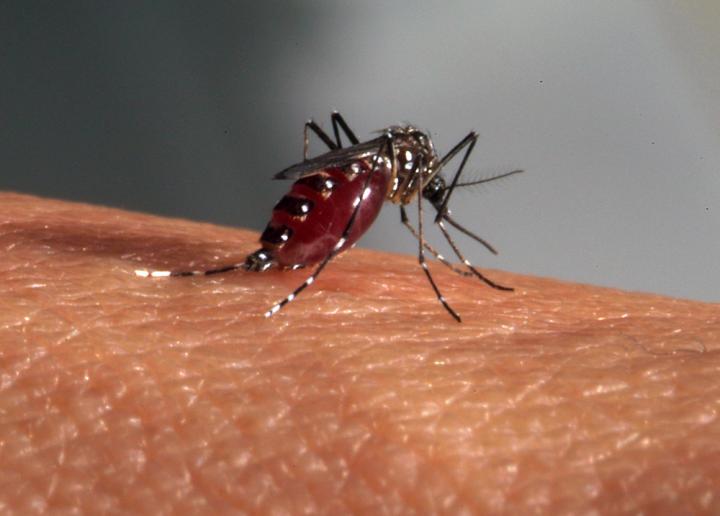
This is an Aedes aegypti mosquito. Having confirmed the first cases of infection in Suriname then in French Guiana, the Institut Pasteur in French Guiana has sequenced the complete genome of the Zika virus, which is responsible for an unprecedented epidemic currently sweeping through the tropical regions of the Americas. Published in The Lancet medical journal, the analysis of this sequence shows almost complete homology with the strains responsible for the epidemic that occurred in the Pacific in 2013 and 2014.
| Full article | 0 Comments | 6962 views |
| Microbiology | December 9, 2015 06:53 PM |
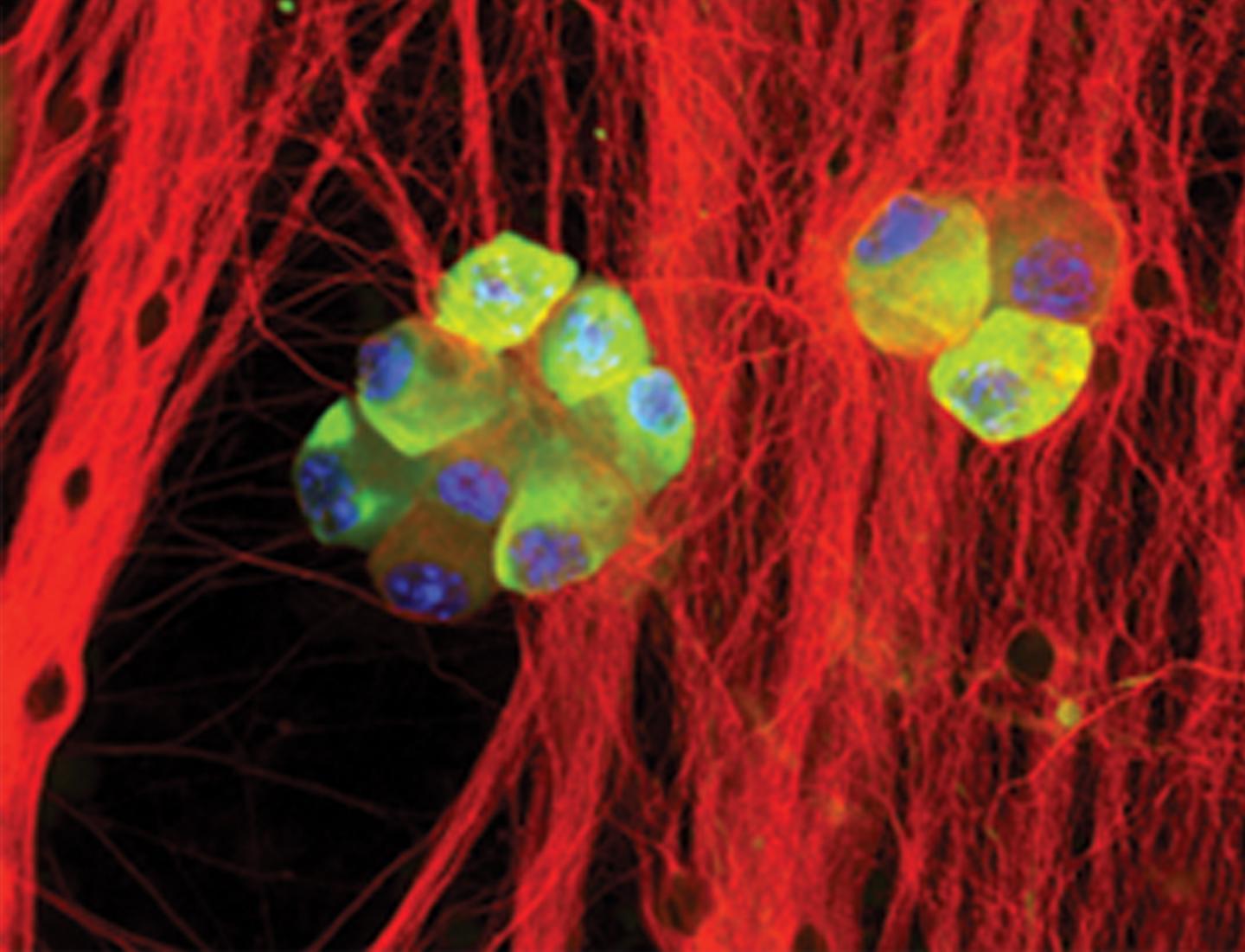
Green fluorescent protein-tagged herpes simplex virus is reactivating from cultures of neurons. When we get cold sores, the reason is likely related to stress. In particular, the neurons in which the herpes simplex virus (HSV) reside, are under stress. For the first time, researchers at the University of North Carolina School of Medicine discovered a cellular mechanism that allows the virus to reactivate. They also found how brain cells are duped into allowing bits of virus to escape the very repressive environment in neurons and cause disease.
| Full article | 0 Comments | 8082 views |
| Microbiology | December 7, 2015 05:51 PM |
Want to make a virus? It's easy: combine one molecule of genomic nucleic acid, either DNA or RNA, and a handful of proteins, shake, and in a fraction of a second you'll have a fully-formed virus.
| Full article | 0 Comments | 10891 views |
Return to Biology News Net Homepage

- In some genetic cases of microcephaly, stem cells fail to launch
- Yale team discovers how Zika virus causes fetal brain damage
- Scientists uncover the way a common cell enzyme alerts the body to invading bacteria
- Arctic gives clues on worst mass extinction of life
- Calcium channel blockers caught in the act at atomic level
- Flexibility That A.C.A. Lent to Work Force Is Threatened by...International Herald Tribune
- Bacteria Behind Legionnaires’ Disease Found at New York Police StationInternational Herald Tribune
- Prescription Price Crisis? 28 Million Americans See Spike in Drug...MSNBC.com: Health
- Seizing on Opioid Crisis, a Drug Maker Lobbies Hard for...International Herald Tribune
- Republicans are taking a big political risk on health careAP Health News
- Why We're So Divided Over Saving WolvesNational Geographic News
Top Biology News about Microbiology
Biology Articles & News
Last 7 Days
Biology Articles & News
Most popular ever in Microbiology
- New genus of bacteria found living inside hydraulic fracturing wells (439681)
- Yale team discovers how Zika virus causes fetal brain damage (68027)
- How household bleach works to kill bacteria (48488)
- Statistical advances help unlock mysteries of the human microbiome (44115)
- New clues found to how 'cruise-ship' virus gets inside cells (38428)
- Discovery of new hepatitis C virus mechanism (37058)
- Single-celled fungi multiply, alien-like, by fusing cells in host (36968)