

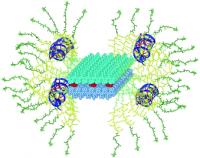
A filament-shaped artificial virus is formed by using a preorganized supramolecular nanoribbon as a template. The artificial virus, which is composed of the nanoribbon, small interfering RNAs (blue, double-helix shape), and hydrophobic guests (red), is highly efficient in delivering genes and drugs to the inside of cells. Credit: (C) Wiley-VCH 2008 Viruses are true experts at importing genetic material into the cells of an infected organism. This trait is now being exploited for gene therapy, in which genes are brought into the cells of a patient to treat genetic diseases or genetic defects. Korean researchers have now made an artificial virus. As described in the journal Angewandte Chemie, they have been able to use it to transport both genes and drugs into the interior of cancer cells.

| Microbiology | May 30, 2008 04:10 PM |
| Full story | 0 Comments | 7976 views |

| Molecular & Cell Biology | May 30, 2008 04:10 PM |
Blocking a common immune system response cleared up plaques associated with Alzheimer’s Disease and enabled treated mice to recover some lost memory, Yale University researchers report Friday in the journal Nature Medicine.
| Full story | 0 Comments | 7340 views |

| Health & Medicine | May 30, 2008 04:10 PM |
Golf can be a good investment for the health, according to a new study from the Swedish medical university Karolinska Institutet. The death rate for golfers is 40 per cent lower than for other people of the same sex, age and socioeconomic status, which correspond to a 5 year increase in life expectancy. Golfers with a low handicap are the safest.
| Full story | 0 Comments | 8318 views |
| Microbiology | May 29, 2008 04:46 PM |
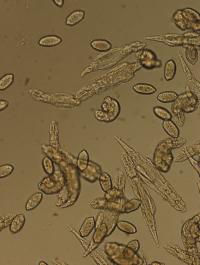
A laboratory culture of the bdelloid rotifer Adineta vaga. Rotifers may be able to incorporate DNA from other species into their genomes during the desiccation and rehydration phases of their life cycle. Credit: Eugene Gladyshev Where do you get your genes? If you are an animal, you inherit them from your parents at the moment of conception, and that's about it. No later incorporation of environmental DNA for you, unless you become host to a parasite or an endosymbiont that somehow transfers bits of its genome into yours (which is a rarely documented event).
| Full story | 0 Comments | 9946 views |
| Molecular & Cell Biology | May 29, 2008 04:46 PM |
In 1999, when Dr. Huda Zoghbi and her Baylor College of Medicine colleagues identified a mutation of the gene MeCP2 as the culprit in Rett syndrome, a neurodevelopmental disorder, the discovery was only the prelude to understanding a symphony of neurological missteps.
| Full story | 0 Comments | 6784 views |

| Biology | May 29, 2008 04:46 PM |
Somewhere in the murky past, between four and seven million years ago, a hungry common ancestor of today’s primates, including humans, did something novel. While temporarily standing on its rear feet to reach a piece of fruit, this protohominid spotted another juicy morsel in a nearby shrub and began shuffling toward it instead of dropping on all fours, crawling to the shrub and standing again.
| Full story | 0 Comments | 8567 views |

| Environment | May 29, 2008 04:46 PM |
In this week’s issue of Science, a team of researchers from the United States and Sweden report on a newly identified factor that controls the natural input of new nitrogen into boreal forest ecosystems. Nitrogen is the primary nutrient that dictates productivity (and thus carbon consumption) in boreal forests. In pristine boreal ecosystems, most new nitrogen enters the forest through cyanobacteria living on the shoots of feather mosses, which grows in dense cushions on the forest floor. These bacteria convert nitrogen from the atmosphere to a form that can be used by other living organisms, a process referred to as “nitrogen-fixation.” The researchers showed that this natural fertilization process appears to be partially controlled by trees and shrubs that sit above the feather mosses.
| Full story | 0 Comments | 7916 views |
| Biology | May 29, 2008 04:46 PM |
Long viewed as straitlaced spinsters, sexless freshwater invertebrate animals known as bdelloid rotifers may actually be far more promiscuous than anyone had imagined: Scientists at Harvard University have found that the genomes of these common creatures are chock-full of DNA from plants, fungi, bacteria, and animals.
| Full story | 0 Comments | 8292 views |

| Bioinformatics | May 29, 2008 04:46 PM |
A new HIV data browser developed by the University of California, Santa Cruz, and the nonprofit organization Global Solutions for Infectious Diseases (GSID) will give researchers access to a wealth of data collected during clinical trials of an AIDS vaccine. Although the vaccine did not succeed in preventing infections, the clinical trial generated a huge amount of valuable data for researchers studying how the virus evolves and causes new infections.
| Full story | 0 Comments | 6950 views |
| Molecular & Cell Biology | May 29, 2008 04:46 PM |
By studying heat-loving microbes, two research teams have gained new insight into how seemingly small differences in a single protein involved in DNA transcription and repair can lead to strikingly different genetic disorders in humans.
| Full story | 0 Comments | 6891 views |

| Biotechnology | May 29, 2008 04:46 PM |
In Germany alone, about three million – mostly elderly – patients suffer from poorly healing large-area wounds caused by complaints such as diabetes, burns or bedsores. The wounds can be treated with conventional collagen dressings or polylactic acid dressings, but the success rate is not as good as it should be.
| Full story | 0 Comments | 12890 views |
| Molecular & Cell Biology | May 29, 2008 04:46 PM |
The common fruit fly circling your week-old peach has helped scientists zero in on a protein critical to the insect's eggshell formation.
| Full story | 0 Comments | 6305 views |
| Microbiology | May 28, 2008 04:32 PM |
The protein MAEBL is critical for completing the life cycle of malaria parasites in mosquitoes, allowing the insects to transmit the potentially deadly infection to humans, a University of South Florida study has shown. The research may ultimately help provide a way to better control malaria by blocking development of the malaria parasite in the mosquito.
| Full story | 0 Comments | 11374 views |
| Microbiology | May 28, 2008 04:32 PM |
Scientists search for drug candidates in some very unlikely places. Not only do they churn out synthetic compounds in industrial-scale laboratories, but they also scour coral reefs and scrape tree bark in the hope of stumbling upon an unsuspecting molecule that just might turn into next year’s big block buster. But one region that scientists have not been searching is their guts. Literally.
| Full story | 0 Comments | 8280 views |
| Biotechnology | May 28, 2008 04:32 PM |
A monkey has successfully fed itself with fluid, well-controlled movements of a human-like robotic arm by using only signals from its brain, researchers from the University of Pittsburgh School of Medicine report in the journal Nature. This significant advance could benefit development of prosthetics for people with spinal cord injuries and those with “locked-in” conditions such as Lou Gehrig’s disease, or amyotrophic lateral sclerosis.
| Full story | 0 Comments | 9629 views |
| Biology | May 28, 2008 04:32 PM |
An Iowa State University researcher has found that sick female deer mice devote their energy to producing healthier offspring.
| Full story | 1 Comment | 8591 views |
| Molecular & Cell Biology | May 28, 2008 04:32 PM |
A study released today reveals a cellular mechanism involved in alcohol dependence. The study, in the May 28 issue of The Journal of Neuroscience, shows that gabapentin, a drug used to treat chronic pain and epilepsy, reduces alcohol intake in alcohol-dependent rats by normalizing chemical communication between neurons, which is altered by chronic alcohol abuse.
| Full story | 0 Comments | 11327 views |
| Biology | May 28, 2008 04:32 PM |
You went to a wedding yesterday. The service was beautiful, the food and drink flowed and there was dancing all night. But people tell you that you are in hospital, that you have been in hospital for weeks, and that you didn’t go to a wedding yesterday at all.
| Full story | 0 Comments | 7990 views |
| Biotechnology | May 28, 2008 04:32 PM |
Researchers at The University of Nottingham have taken some important first steps to creating a synthetic copycat of a living cell, a leading science journal reports.
| Full story | 0 Comments | 7481 views |
| Molecular & Cell Biology | May 28, 2008 04:32 PM |
Researchers from the John Innes Centre and the University of East Anglia have recently elucidated the structure and function of an enzyme which is involved in decorating antibiotics with sugar molecules. Many antibiotics have a variety of different carbohydrate molecules attached to them which can help the antibiotic to be taken up by the target organism or overcome resistance. By manipulating the sugar, it may be possible to restore usefulness in antibiotics to which resistance has developed.
| Full story | 0 Comments | 7301 views |
| Microbiology | May 28, 2008 04:32 PM |
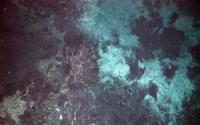
Rocks made of basalt on and under the ocean bottom harbor surprising numbers of deep-sea bacteria. Seafloor bacteria on ocean-bottom rocks are more abundant and diverse than previously thought, appearing to "feed" on the planet's oceanic crust, according to results of a study reported in this week's issue of the journal Nature.
| Full story | 0 Comments | 11222 views |
| Biology | May 27, 2008 02:55 PM |

The Butterfly bush was introduced to Europe about one hundred years ago from China and has been cultivated since then. Invasive plant species can flourish better in their new homes than in their place of origin. The reasons for this can be genetic changes or the lack of herbivores such as insects that first have to adapt to the newcomers. These are the conclusions of researchers from the Helmholtz Centre for Environmental Research (UFZ) from their research on Buddleia or the Butterfly bush (Buddleja davidii) and Oregon grape (Mahonia aquifolium). Due to this, invasive plant species would have an advantage over other native plant species and could therefore pose a threat to the ecological balance, as researchers have written in the scientific journal Diversity and Distributions.
| Full story | 0 Comments | 9200 views |
| Biology | May 27, 2008 02:55 PM |
Geneticists of Leiden University Medical Centre (LUMC) are the first to determine the DNA sequence of a woman. She is also the first European whose DNA sequence has been determined. This has been announced by the researchers this morning, during a special press conference at ‘Bessensap’, a yearly meeting of scientists and the press in the Netherlands.
| Full story | 0 Comments | 6590 views |
| Molecular & Cell Biology | May 27, 2008 02:55 PM |
Scientists at the Swedish medical university Karolinska Institutet have developed a new DNA-sequencing method that is much cheaper than those currently in use in laboratories. They hope that this new method will make it possible to map disease genes in large patient groups, which in turn can mean quicker breakthroughs for new treatments for a wide variety of diseases.
| Full story | 0 Comments | 6567 views |
| Environment | May 27, 2008 02:55 PM |
What causes tropical life to thrive: temperature, or sunlight?
| Full story | 0 Comments | 6495 views |
| Molecular & Cell Biology | May 27, 2008 02:55 PM |
The first large-scale analysis of proteins in the brains of monkeys addicted to cocaine reveals new information on how long-term cocaine use changes the amount and activity of various proteins affecting brain function.
| Full story | 0 Comments | 8466 views |
| Microbiology | May 27, 2008 02:55 PM |
A pair of Los Alamos National Laboratory theorists have developed a mathematical tool that could help health experts and crisis managers determine in real time whether an emerging infectious disease such as avian influenza H5N1 is poised to spread globally.
| Full story | 0 Comments | 6009 views |
| Biology | May 27, 2008 02:55 PM |
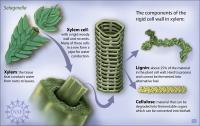
Both lignin and cellulose are found in the rigid cell walls of the xylem cells (those that conduct water) in the primitive plant, Selaginella. Biologists have discovered that a fundamental building block in the cells of flowering plants evolved independently, yet almost identically, on a separate branch of the evolutionary tree--in an ancient plant group called lycophytes that originated at least 420 million years ago.
| Full story | 0 Comments | 12926 views |
| Biology | May 27, 2008 02:55 PM |
Is the smell of almonds closer to that of roses or bananas? Weizmann Institute scientists have now answered that question (roses) by showing for the first time that smells can be mapped and the relative distance between various odors determined. Their findings, which appeared recently in Nature Methods, may help scientists to unravel the basic laws underlying our sense of smell, as well as potentially enabling odors to be digitized and transferred via computer in the future.
| Full story | 0 Comments | 6049 views |
| Molecular & Cell Biology | May 27, 2008 02:55 PM |
A new study into the potential health hazards of the revolutionary nano-sized particles known as ‘buckyballs’ predicts that the molecules are easily absorbed into animal cells, providing a possible explanation for how the molecules could be toxic to humans and other organisms.
| Full story | 0 Comments | 6540 views |
| Health & Medicine | May 26, 2008 07:22 PM |
For people with diabetes, sipping a mug of steaming, flavorful cocoa may seem a guilty pleasure. But new research suggests that indulging a craving for cocoa can actually help blood vessels to function better and might soon be considered part of a healthy diet for the prevention of cardiovascular disease.
| Full story | 0 Comments | 8686 views |
| Molecular & Cell Biology | May 26, 2008 07:22 PM |
When a young gene known as sphinx is inactivated in the common fruit fly, it leads to increased male-male courtship, scientists report in the May 27, 2008, issue of the Proceedings of the National Academy of Sciences.
| Full story | 0 Comments | 7672 views |

| AIDS & HIV | May 26, 2008 01:00 AM |
By identifying a protein that restricts the release of HIV-1 virus from human cells, scientists believe they may be closer to identifying new approaches to treatment. The research is published in the advance online edition of Nature Medicine.
| Full story | 0 Comments | 7128 views |
| AIDS & HIV | May 26, 2008 01:00 AM |
A mapmaker and a mathematician may seem like an unlikely duo, but together they worked out a way to measure longitude – and kept millions of sailors from getting lost at sea. Now, another unlikely duo, a virologist and a biophysicist at Rockefeller University, is making history of their own. By using a specialized microscope that only illuminates the cell’s surface, they have become the first to see, in real time and in plain view, hundreds of thousands of molecules coming together in a living cell to form a single particle of the virus that has, in less than 25 years, claimed more than 25 million lives: HIV.
| Full story | 0 Comments | 6859 views |

| Stem Cell Research | May 23, 2008 06:42 PM |
With improved resolution, tissue-specific molecular markers and precise timing, University of Oregon biologist James A. Weston and colleagues have possibly overturned a long-standing assumption about the origin of embryonic cells that give rise to connective and skeletal tissues that form the base of the skull and facial structures in back-boned creatures from fish to humans.
| Full story | 0 Comments | 8623 views |
| AIDS & HIV | May 23, 2008 06:42 PM |
Researchers at North Carolina State University have discovered that adding tiny bits of gold to a failed HIV drug rekindle the drug’s ability to stop the virus from invading the body’s immune system.
| Full story | 0 Comments | 6799 views |
| Biology | May 23, 2008 06:42 PM |
Honeybees pollinate our crops and produce the honey we enjoy. We all know that. What we are perhaps not aware of, however, is just how or why they do this and why we are so dependent on what they do.
| Full story | 0 Comments | 7733 views |
| Biology | May 23, 2008 06:42 PM |
The International Institute for Species Exploration at Arizona State University and an international committee of taxonomists – scientists responsible for species exploration and classification – today announce the top 10 new species described in 2007.
| Full story | 0 Comments | 10193 views |
| Molecular & Cell Biology | May 23, 2008 06:42 PM |
Diabetes researchers at the John G. Rangos Sr. Research Center at Children’s Hospital of Pittsburgh of UPMC have identified a potential target for the development of new therapies to treat hypertriglyceridemia, a lipid disorder commonly seen in people who are obese and diabetic. Results of their study are published in the June issue of the Journal of Clinical Investigation.
| Full story | 0 Comments | 6242 views |
| Health & Medicine | May 23, 2008 06:42 PM |
Sea buckthorn (Hippophae rhamnoides) berries are well known for their cholesterol busting properties, but scientists in India say that its leaves are also rich in anti-oxidants and may help ward off liver disease, according to new research due to be published in the Society of Chemical Industry’s (SCI) Journal of the Science of Food and Agriculture.
| Full story | 0 Comments | 7425 views |

- In some genetic cases of microcephaly, stem cells fail to launch
- Yale team discovers how Zika virus causes fetal brain damage
- Scientists uncover the way a common cell enzyme alerts the body to invading bacteria
- Arctic gives clues on worst mass extinction of life
- Calcium channel blockers caught in the act at atomic level
Search Bio News Net
Free Biology Newsletter
- Flexibility That A.C.A. Lent to Work Force Is Threatened by...International Herald Tribune
- Bacteria Behind Legionnaires’ Disease Found at New York Police StationInternational Herald Tribune
- Prescription Price Crisis? 28 Million Americans See Spike in Drug...MSNBC.com: Health
- Seizing on Opioid Crisis, a Drug Maker Lobbies Hard for...International Herald Tribune
- Republicans are taking a big political risk on health careAP Health News
- Why We're So Divided Over Saving WolvesNational Geographic News