

Cancer patients may view their tumors as parasites taking over their bodies, but this is more than a metaphor for Peter Duesberg, a molecular and cell biology professor at the University of California, Berkeley.

| Biotechnology | July 26, 2011 10:44 PM |
Scientists seeking to improve cancer treatments have created a tiny drug transporter that maximizes its ability to silence damaging genes by finding the equivalent of an expressway into a target cell.
| Full story | 0 Comments | 8193 views |

| Biology | July 26, 2011 10:44 PM |
Asian elephants typically live in small, flexible, social groups centered around females and calves while adult males roam independently. However, new research published in BioMed Central's open access journal BMC Ecology shows that while Asian elephants (Elephas maximus) in Sri Lanka may change their day to day associations they maintain a larger, stable, network of friends from which they pick their companions.
| Full story | 0 Comments | 8006 views |

| Molecular & Cell Biology | July 25, 2011 09:19 PM |
Researchers have identified an elusive gene responsible for Gray Platelet Syndrome, an extremely rare blood disorder in which only about 50 known cases have been reported. As a result, it is hoped that future cases will be easier to diagnose with a DNA test.
| Full story | 0 Comments | 7433 views |
| Biotechnology | July 25, 2011 09:19 PM |
One of the latest attempts to boost the body's defenses against cancer is called adoptive cell transfer, in which patients receive a therapeutic injection of their own immune cells. This therapy, currently tested in early clinical trials for melanoma and neuroblastoma, has its limitations: Removing immune cells from a patient and growing them outside the body for future re-injection is extremely expensive and not always technically feasible.
| Full story | 0 Comments | 7279 views |
| Biotechnology | July 25, 2011 09:19 PM |
An artificial lung built by Cleveland researchers has reached efficiencies akin to the genuine organ, using air – not pure oxygen as current man-made lungs require - for the source of the essential element.
| Full story | 0 Comments | 7537 views |

| Health & Medicine | July 25, 2011 09:19 PM |
A new strategy to quantify the levels of titanium in the blood of patients fitted with titanium orthopaedic implants is presented in Analytical and Bioanalytical Chemistry, a Springer journal. Yoana Nuevo-Ordóñez and colleagues of the Sanz-Medel research group from the University of Oviedo in Spain have developed a highly sensitive method to determine the levels of titanium in human blood, establishing a baseline for natural levels of titanium in untreated individuals as well as measuring levels in patients with surgical implants.
| Full story | 0 Comments | 6867 views |
| Molecular & Cell Biology | July 25, 2011 09:19 PM |
Researchers who have been working for nearly a decade to piece together the process by which an enzyme repairs sun-damaged DNA have finally witnessed the entire process in full detail in the laboratory.
| Full story | 0 Comments | 8275 views |
| Biology | July 22, 2011 10:52 PM |
An experimental research carried out in Sant Cugat del Vallès and Rubí, coordinated by researchers from UAB, assessed the efficacy of a combination of strategies to reduce the population of tiger mosquitos (Aedes albopictus). The research began in February 2008. The research focused on monitoring eggs found in small experimental traps. Researchers observed that for the first time, the number of eggs diminished after applying the measures.
| Full story | 0 Comments | 8168 views |
| Molecular & Cell Biology | July 22, 2011 10:52 PM |
St. Jude Children's Research Hospital investigators have identified a signaling molecule that functions like a factory supervisor to ensure that the right mix of specialized T cells is available to fight infections and guard against autoimmune disease.
| Full story | 0 Comments | 6609 views |
| Health & Medicine | July 22, 2011 10:52 PM |
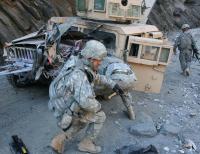
Bioengineers at Harvard have identified the mechanism for diffuse axonal injury and explained why cerebral vasospasm is common after an IED explosion. Bioengineers at Harvard have identified, for the very first time, the mechanism for diffuse axonal injury and explained why cerebral vasospasm is more common in blast-induced brain injuries than in brain injuries typically suffered by civilians.
| Full story | 0 Comments | 6620 views |
| Biotechnology | July 21, 2011 11:07 PM |
Take a second look at your iced or steaming tea. Guided by scientific experts, three New York City high school students using tabletop DNA technologies found several herbal brews and a few brands of tea contain ingredients unlisted on the manufacturers' package.
| Full story | 0 Comments | 8462 views |
| Molecular & Cell Biology | July 21, 2011 11:07 PM |
Mucosal epithelia do not have any receptors on the outer membrane for the absorption of viruses like hepatitis C, herpes, the adenovirus or polio, and are thus well-protected against pathogenic germs. However, certain viruses, such as the human immunodeficiency virus HIV, still manage to enter the body via the mucous membrane. Just how this infiltration occurs on a molecular level has been a mystery. Three hypotheses were discussed: firstly, that it's caused by mechanical damage to the mucous membrane; secondly, the presence of previously unknown receptors on the mucous membrane cells; and, thirdly, that the viruses are smuggled in via a kind of Trojan horse. Now, for the first time, cell biologists from the University of Zurich have succeeded in identifying the infection mechanism for adenoviruses.
| Full story | 0 Comments | 6832 views |
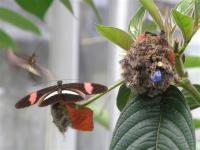
Heliconius butterflies were reared in butterfly houses at the Smithsonian Tropical Research Institute's facilities in Gamboa, Panama. Red may mean STOP or I LOVE YOU! A red splash on a toxic butterfly's wing screams DON'T EAT ME! In nature, one toxic butterfly species may mimic the wing pattern of another toxic species in the area. By using the same signal, they send a stronger message: DON'T EAT US!
| Full story | 0 Comments | 9117 views |
| Health & Medicine | July 20, 2011 06:13 PM |
Inherited forms of Alzheimer's disease may be detectable as many as 20 years before problems with memory and thinking develop, scientists will report July 20, 2011, at the Alzheimer's Association International Conference on Alzheimer's Disease in Paris.
| Full story | 0 Comments | 7849 views |
| Biology | July 20, 2011 06:13 PM |
Taking a trip down memory lane while you are driving could land you in a roadside ditch, new research indicates. Vanderbilt University psychologists have found that our visual perception can be contaminated by memories of what we have recently seen, impairing our ability to properly understand and act on what we are currently seeing.
| Full story | 0 Comments | 7328 views |

| Environment | July 20, 2011 06:13 PM |
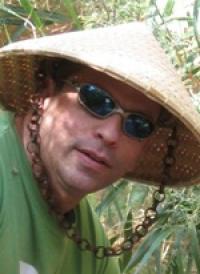
This is Dr. Dror Avisar of Tel Aviv University. The health implications of polluting the environment weigh increasingly on our public consciousness, and pharmaceutical wastes continue to be a main culprit. Now a Tel Aviv University researcher says that current testing for these dangerous contaminants isn't going far enough.
| Full story | 0 Comments | 6868 views |
| Health & Medicine | July 20, 2011 06:13 PM |
For hundreds of thousands of people, injuring a muscle through an accident like falling off a bike or having surgery can result in a strange and serious complication. Their muscles start growing bones.
| Full story | 0 Comments | 8341 views |

| AIDS & HIV | July 19, 2011 12:48 PM |
A landmark study by the BC Centre for Excellence in HIV/AIDS (BC-CfE) and the University of British Columbia (UBC) shows that patients in Africa receiving combination antiretroviral therapy (cART) for HIV can expect to live a near normal lifespan.
| Full story | 0 Comments | 7395 views |
| Biology | July 19, 2011 12:48 PM |
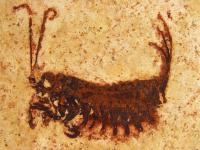
This is a Coxoplectopteralarva. German scientists at the Stuttgart Natural History Museum were leading in the discovery of a new insect order from the Lower Cretaceous of South America. The spectacular fossils were named Coxoplectoptera by their discoverers and their findings were published in a special issue on Cretaceous Insects in the scientific journal Insect Systematics & Evolution.
| Full story | 0 Comments | 7828 views |

| Bioinformatics | July 15, 2011 11:15 PM |
In the decade that has passed since the completion of the first draft sequence of the human genome, biologists have grown increasingly aware of a problem ironically generated by the success of their work. Biological experiments in the age of genomics -- including DNA sequencing, gene expression profiles, studies of cell-signaling pathways, protein binding, and other information-rich inquiries -- generate quantities of raw data so immense that they threaten to overwhelm researchers' ability to make sense of them.
| Full story | 0 Comments | 7421 views |
| Biology | July 15, 2011 11:15 PM |
Your brain works hard to help understand your fellow person – no matter how different they may be.
| Full story | 0 Comments | 7441 views |
| Environment | July 14, 2011 06:52 PM |
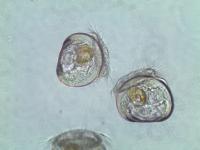
These are veliger-stage larvae of the California mussel, Mytilus californianus. Ocean acidification, a consequence of climate change, could weaken the shells of California mussels and diminish their body mass, with serious implications for coastal ecosystems, UC Davis researchers will report July 15 in the Journal of Experimental Biology.
| Full story | 0 Comments | 8807 views |
| Molecular & Cell Biology | July 14, 2011 06:52 PM |
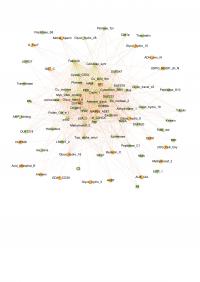
Networks of gene families of the seven analyzed plant species that are associated with the CesA genes Plants have neither supportive bone tissue nor muscles, and yet they can form rigid structures like stalks and even tree trunks. This is due to the fact that plant cells are enveloped by a stable cell wall. The main component of the plant cell wall is cellulose, which represents almost 50 percent of the total cell wall material and, at one billion tonnes per year, is the most frequently produced macromolecule in nature. Very little is known about the way in which cellulose is produced, and the knowledge that is available has mainly been obtained from the model plant thale cress (Arabidopsis thaliana) which, although easy to study, is of no economic significance. Staffan Persson and his research group at the Max Planck Institute of Molecular Plant Physiology have succeeded in showing that knowledge obtained in Arabidopsis can be applied to other plant species and even advanced.
| Full story | 0 Comments | 7683 views |
| Biotechnology | July 14, 2011 06:52 PM |
The power to edit genes is as revolutionary, immediately useful and unlimited in its potential as was Johannes Gutenberg's printing press. And like Gutenberg's invention, most DNA editing tools are slow, expensive, and hard to use—a brilliant technology in its infancy. Now, Harvard researchers developing genome-scale editing tools as fast and easy as word processing have rewritten the genome of living cells using the genetic equivalent of search and replace—and combined those rewrites in novel cell strains, strikingly different from their forebears.
| Full story | 0 Comments | 7427 views |

| Microbiology | July 14, 2011 06:52 PM |
A novel virus that spread through a California New World titi monkey colony in late 2009 has been shown to have also infected a human researcher and a household family member, in a documented example of an adenovirus "jumping" from one species to another and remaining contagious after the jump. Researchers at the UCSF Viral Diagnostics and Discovery Center, led by Dr. Charles Chiu, confirmed that the virus was the same in the New World monkeys and humans, and that the virus is highly unusual in both populations. Their findings appear July 14th in the Open Access journal PLoS Pathogens.
| Full story | 0 Comments | 7104 views |
| Biology | July 13, 2011 01:26 AM |
Humans are getting older and older, and the number of people with dementia is increasing. The factors controlling degeneration of the brain are still mostly unknown. However, researchers assume that factors such as stress, accumulation of toxic waste products as well as inflammation accelerate aging. But, vice versa, there are also mechanisms that can - like a bodyguard - protect the brain from degenerating, or repair defective structures.
| Full story | 0 Comments | 8294 views |
| Bioinformatics | July 13, 2011 01:26 AM |
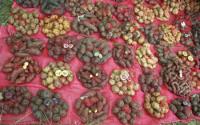
These are various types of potatoes that are grown in Peru. These potatoes differ in shape, skin pigmentation and flesh pigmentation. An international consortium of scientists has produced a new map of the potato genome that may lead to the development of an ultra-nutritious potato that could help feed the world's hungry.
| Full story | 0 Comments | 7869 views |
| Molecular & Cell Biology | July 13, 2011 01:25 AM |
Research has shown that light is the key to getting our 'body clocks' back in sync and now a new study exploring the resynchronisation mechanism in insects has discovered a molecule essential to the process.
| Full story | 0 Comments | 8281 views |
| Biology | July 13, 2011 01:25 AM |
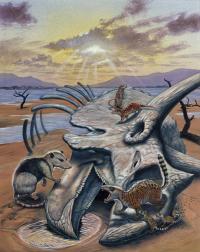
Three small primitive mammals walk over a Triceratops skeleton, one of the last dinosaurs to exist before the mass extinction that gave way to the age of mammals. A team of scientists has discovered the youngest dinosaur preserved in the fossil record before the catastrophic meteor impact 65 million years ago. The finding indicates that dinosaurs did not go extinct prior to the impact and provides further evidence as to whether the impact was in fact the cause of their extinction.
| Full story | 0 Comments | 8544 views |
| Molecular & Cell Biology | July 8, 2011 02:59 AM |
Look up "transcription"—the copying of a gene's DNA into RNA intermediaries—in any old molecular biology text book, and it all seems very simple: RNA polymerase II, the enzyme that catalyzes the reaction, assembles at the start site and starts motoring down the strand, cranking out the RNA ribbon used to construct proteins. But researchers now know that RNA polymerase II often stalls on DNA strands where it was once assumed to just barrel down.
| Full story | 0 Comments | 7199 views |
| Biotechnology | July 8, 2011 02:59 AM |
A new technique which targets antibiotic-resistant bacteria and shields patients from the toxic parts of an antibiotic drug has been developed by Cardiff University scientists.
| Full story | 0 Comments | 8276 views |
| Biology | July 8, 2011 02:59 AM |
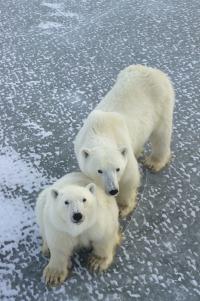
n international team of scientists has discovered that the female ancestor of all living polar bears was a brown bear that lived in the vicinity of present-day Britain and Ireland just prior to the peak of the last ice age An international team of scientists has discovered that the female ancestor of all living polar bears was a brown bear that lived in the vicinity of present-day Britain and Ireland just prior to the peak of the last ice age -- 20,000 to 50,000 years ago. Beth Shapiro, the Shaffer Associate Professor of Biology at Penn State University and one of the team's leaders, explained that climate changes affecting the North Atlantic ice sheet probably gave rise to periodic overlaps in bear habitats. These overlaps then led to hybridization, or interbreeding -- an event that caused maternal DNA from brown bears to be introduced into polar bears. The research, which is led by Shapiro and Daniel Bradley of Trinity College Dublin, is expected to help guide future conservation efforts for polar bears, which are listed as threatened under the Endangered Species Act. The results of the study will be published on 7 July 2011 in the journal Current Biology.
| Full story | 0 Comments | 7989 views |
| Bioinformatics | July 6, 2011 05:48 PM |
BioMed Central and BGI launch a new integrated database and journal, to meet the needs of a new generation of biological and biomedical research as it enters the era of "big-data."
| Full story | 0 Comments | 11342 views |
| Biotechnology | July 6, 2011 05:48 PM |
An automatic and portable detector that takes just fifteen minutes to analyze a sample suspected of contamination with anthrax is being developed by US researchers. The technology amplifies any anthrax DNA present in the sample and can reveal the presence of just 40 microscopic cells of the deadly bacteria Bacillus anthracis.
| Full story | 0 Comments | 7651 views |
| Biotechnology | July 5, 2011 02:46 AM |
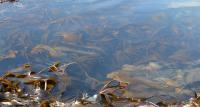
Kelp (Laminaria digitata) forests off the coast of Wales have been shown to provide a viable biofuel especially if harvested in summer. Seaweed may prove a viable future biofuel – especially if harvested in summer.
| Full story | 0 Comments | 10657 views |
| Molecular & Cell Biology | July 5, 2011 02:46 AM |
Research led by the University of East Anglia has discovered the crucial role of a molecule in skeletal muscle development.
| Full story | 0 Comments | 8027 views |

- In some genetic cases of microcephaly, stem cells fail to launch
- Yale team discovers how Zika virus causes fetal brain damage
- Scientists uncover the way a common cell enzyme alerts the body to invading bacteria
- Arctic gives clues on worst mass extinction of life
- Calcium channel blockers caught in the act at atomic level
Search Bio News Net
Free Biology Newsletter
- Flexibility That A.C.A. Lent to Work Force Is Threatened by...International Herald Tribune
- Bacteria Behind Legionnaires’ Disease Found at New York Police StationInternational Herald Tribune
- Prescription Price Crisis? 28 Million Americans See Spike in Drug...MSNBC.com: Health
- Seizing on Opioid Crisis, a Drug Maker Lobbies Hard for...International Herald Tribune
- Republicans are taking a big political risk on health careAP Health News
- Why We're So Divided Over Saving WolvesNational Geographic News