

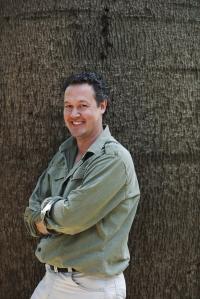
This is professor Andrew Lowe, Director of the Australian Centre for Evolutionary Biology and Biodiversity, University of Adelaide. Advances in DNA 'fingerprinting' and other genetic techniques led by Adelaide researchers are making it harder for illegal loggers to get away with destroying protected rainforests.

| Environment | June 30, 2011 08:33 PM |
| Full story | 0 Comments | 8427 views |

| Biotechnology | June 30, 2011 08:33 PM |
A sizzling genetic discovery by Chinese scientists may one day allow pig tissue to be transplanted successfully into humans. Their research presented in the Journal of Leukocyte Biology (http://www.jleukbio.org) represents a major step forward toward filling the shortage of vital organs for human transplantation. At the core of their work, they showed that altering or overexpressing the human programmed death ligand-1 (PD-L1) molecule in the endothelial cells of pig arteries reduces the conditions that lead to rejection. This strongly suggests that humans could receive altered porcine organs with fewer complications.
| Full story | 0 Comments | 7757 views |

| Biology | June 30, 2011 08:32 PM |
Northwestern University researchers have provided new biological evidence suggesting that the brain works differently when memorizing the face of a person from one's own race than when memorizing a face from another race.
| Full story | 0 Comments | 7694 views |
| Biology | June 30, 2011 08:32 PM |
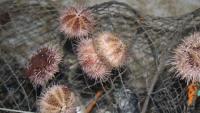
These are sea urchins. Many animals have eyes that are incredibly complex – others manage without. Researchers at the University of Gothenburg have shown that sea urchins see with their entire body despite having no eyes at all. The study has been published in the scientific journal Proceedings of the National Academy of Sciences (PNAS).
| Full story | 0 Comments | 7513 views |

| Molecular & Cell Biology | June 30, 2011 08:32 PM |
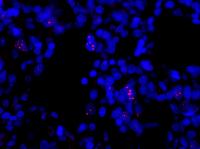
This image shows fluorescent staining of abnormal telomere DNA in pancreatic neuroectodermal tumors. Scientists at Johns Hopkins have provided more clues to one of the least understood phenomena in some cancers: why the "ends caps" of cellular DNA, called telomeres, lengthen instead of shorten.
| Full story | 0 Comments | 7581 views |

| Health & Medicine | June 29, 2011 07:42 PM |
Scientists have begun to reveal the order of the genetic aberrations in individual cancers in a finding they say is key to early diagnosis and personalized medicine.
| Full story | 0 Comments | 6928 views |

| Bioinformatics | June 29, 2011 07:42 PM |
An analysis of genomic changes in ovarian cancer has provided the most comprehensive and integrated view of cancer genes for any cancer type to date. Ovarian serous adenocarcinoma tumors from 500 patients were examined by The Cancer Genome Atlas (TCGA) Research Network and analyses are reported in the June 30, 2011, issue of Nature.
| Full story | 0 Comments | 7104 views |
| Bioinformatics | June 29, 2011 07:42 PM |
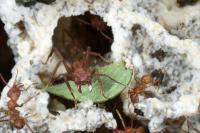
The Panamanian leaf-cutting ant Acromyrmex echinatior farms fungus on leaf fragments for food. The development of agriculture was a significant event in human cultural evolution, but we are not the only organisms to have adopted an agricultural way of life. In a study published online today in Genome Research (www.genome.org), researchers have sequenced the genome of a fungus farming leaf-cutting ant, revealing new insights into the genetics and molecular biology behind this unusual lifestyle.
| Full story | 0 Comments | 6584 views |
| Environment | June 28, 2011 08:12 PM |

The white-plumed antbird has gone "extinct, " then returned, several times in the forest. Bird species in rainforest fragments in Brazil that were isolated by deforestation disappeared then reappeared over a quarter-century, according to research results published today in the journal PLoS ONE.
| Full story | 0 Comments | 7242 views |

| AIDS & HIV | June 28, 2011 08:12 PM |
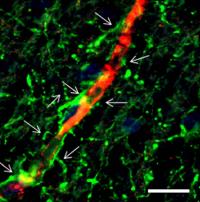
Astrocytes (pictured in green) help to support blood vessels (red) that act as the blood‑brain barrier ‑ a network that keeps potentially harmful chemicals and toxins out of the brain.... HIV weakens the blood-brain barrier — a network of blood vessels that keeps potentially harmful chemicals and toxins out of the brain — by overtaking a small group of supporting brain cells, according to a new study in the June 29 issue of The Journal of Neuroscience. The findings may help explain why some people living with HIV experience neurological complications, despite the benefits of modern drug regimens that keep them living longer.
| Full story | 0 Comments | 7815 views |
| Biology | June 28, 2011 12:12 AM |
A recently completed aerial survey of northern Botswana by Elephants Without Borders (EWB), through the support of Botswana's Dept. of Wildlife & National Parks, indicates that wildebeest, giraffes, kudu, lechwe, ostriches, roan and tsessebe antelope and warthog species are significantly challenged. Populations of these species appear to have dropped significantly over the past 15 years, specifically in Ngamiland, which encompasses the Okavango delta.
| Full story | 0 Comments | 6530 views |

| Microbiology | June 28, 2011 12:12 AM |
Sooty mangabeys, a type of African monkey, have intrigued scientists for years because they can survive infection by SIV, a relative of HIV, and not succumb to AIDS.
| Full story | 0 Comments | 7564 views |
| Biotechnology | June 28, 2011 12:12 AM |
Flower color in plants is determined by pigments such as aurones, anthocyanins, and carotenoids. Research has found that the ultimate color displayed is dependent not only on the pigment present, but also on other factors, including cell shape, presence of metal ions, and pH, among others. Information about the role of pH in creating color has allowed plant geneticists to engineer new hues, adding to the beauty and diversity of ornamental plants.
| Full story | 0 Comments | 7110 views |
| Microbiology | June 28, 2011 12:12 AM |
Marine shallow water sandy bottoms on the surface appear desert-like and empty, but in the interstitial space between the sand grains a diverse fauna flourishes. In addition to bacteria and protozoa numerous animal phyla have been found here, some only here. One of the strangest members of this interstitial fauna is Paracatenula, a several millimeters long, mouth and gut-less flatworm, which is found from tropical oceans to the Mediterranean. These worms are the focus of a research project led by Jörg Ott at the Department of Marine Biology of the University of Vienna with funding from the Austrian Science Foundation (FWF). The surprising results of this research have now been published in the journal Proceedings of the National Academy of Sciences (PNAS).
| Full story | 0 Comments | 8365 views |

| Stem Cell Research | June 28, 2011 12:12 AM |
Researchers at UCLA have identified a new stem cell that participates in the repair of the large airways of the lungs, which play a vital role in protecting the body from infectious agents and toxins in the environment.
| Full story | 0 Comments | 7173 views |
| Molecular & Cell Biology | June 22, 2011 11:34 PM |
Imagine dropping dish soap into a sink full of greasy water. What happens? As soon as the soap hits the water, the grease recoils—and retreats to the edges of the sink.
| Full story | 0 Comments | 7814 views |
| Biotechnology | June 22, 2011 11:34 PM |
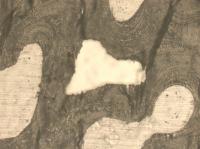
A new technique developed at Rensselaer Polytechnic Institute allows researchers to collect large amounts of biochemical information from nanoscale bone samples. A new technique developed at Rensselaer Polytechnic Institute allows researchers to collect large amounts of biochemical information from nanoscale bone samples.
| Full story | 0 Comments | 6275 views |
| Bioinformatics | June 22, 2011 11:34 PM |

This logo for the Genome Wowser application was designed by the Center for Biomedical Informatics at CHOP. Navigating the human genome with software that you can view on an iPad® sounds pretty impressive, until perhaps you reflect that nature has already encoded trillions of copies of this in your chromosomes. Then again, printing that data using ink and paper would produce a mind-staggering pile of pages—so viewing it on an iPad® may be impressive after all.
| Full story | 0 Comments | 8172 views |
| Health & Medicine | June 21, 2011 09:24 PM |
Researchers at the Intermountain Medical Center Heart Institute in Salt Lake City have identified the first genetic mutation ever associated with a mysterious and potentially devastating form of heart disease that affects women in the final weeks of pregnancy or the first few months after delivery.
| Full story | 0 Comments | 8695 views |
| Biology | June 21, 2011 09:24 PM |
Native bees – often small, stingless, solitary and unnoticed in the flashier world of stinging honeybees – are quite discriminating about where they live, according to U.S. Geological Survey research.
| Full story | 0 Comments | 6849 views |
| Molecular & Cell Biology | June 21, 2011 09:24 PM |
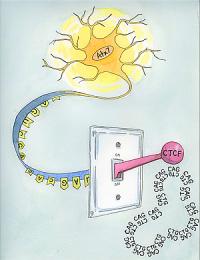
Researchers have discovered that expression of the ataxin‑7 gene – the cause of the neurological disorder spinocerebellar ataxia type 7 – has two regulators A team of scientists, led by researchers at the University of California, San Diego School of Medicine, have uncovered a novel mechanism regulating gene expression and transcription linked to Spinocerebellar ataxia 7, an inherited neurological disorder. The discovery promises to have broad ramifications, suggesting that abundant non-coding transcripts of ribonucleic acid (RNA) may be key players in neurological development and function, and could be powerful targets for future clinical therapies.
| Full story | 0 Comments | 6784 views |
| Molecular & Cell Biology | June 20, 2011 06:01 PM |
Scientists at Karolinska Institutet in Sweden have discovered that a gene linked to dyslexia has a surprising biological function: it controls cilia, the antenna-like projections that cells use to communicate.
| Full story | 0 Comments | 8547 views |
| Molecular & Cell Biology | June 20, 2011 06:01 PM |
Researchers at Virginia Commonwealth University Massey Cancer Center have revealed novel mechanisms in mitochondria that have implications for cancer as well as many other age-related diseases such as Parkinson's disease, heart disease and hypertension. This discovery has pioneered the formation of a whole new field within epigenetics research ripe with possibilities of developing future gene therapies to treat cancer and age-associated diseases.
| Full story | 0 Comments | 11172 views |
| Biotechnology | June 20, 2011 06:01 PM |
Researchers at the University of California, San Diego have developed a novel method of disguising nanoparticles as red blood cells, which will enable them to evade the body's immune system and deliver cancer-fighting drugs straight to a tumor. Their research will be published next week in the online Early Edition of the Proceedings of the National Academy of Sciences.
| Full story | 0 Comments | 7890 views |
| Molecular & Cell Biology | June 16, 2011 05:16 PM |
The bacteria that cause Lyme disease, one of the most important emerging diseases in the United States, appear to hide out in the lymph nodes, triggering a significant immune response, but one that is not strong enough to rout the infection, report researchers at the University of California, Davis.
| Full story | 0 Comments | 9334 views |
| Bioinformatics | June 16, 2011 05:16 PM |
Building upon previous efforts producing a high-quality de novo genome assemblies of deadly 2011 E. coli O104:H4 outbreak strain (http://www.genomics.cn/en/news_show.php?type=show&id=651), the BGI and their collaborators at the University Medical Centre Hamburg-Eppendorf have now released the first complete map of the genome and plasmids without any assembly gaps. (genome publicly available at ftp://ftp.genomics.org.cn/pub/Ecoli_TY-2482/Escherichia_coli_TY-2482.chromosome.20110616.fa.gz and plasmids at ftp://ftp.genomics.org.cn/pub/Ecoli_TY-2482/Escherichia_coli_TY-2482.plasmid.20110616.fa.gz)
| Full story | 0 Comments | 9810 views |
| Health & Medicine | June 15, 2011 08:31 PM |
While people in Japan, Canada, and other nations are enjoying significant gains in life expectancy every year, most counties within the United States are falling behind, according to a new study by the Institute for Health Metrics and Evaluation (IHME) at the University of Washington.
| Full story | 0 Comments | 8708 views |
| Bioinformatics | June 15, 2011 08:31 PM |
It's been called "the Manhattan Project of Entomology," an undertaking that has the potential to revolutionize the way we think about insects.
| Full story | 0 Comments | 7390 views |
| Stem Cell Research | June 15, 2011 08:31 PM |
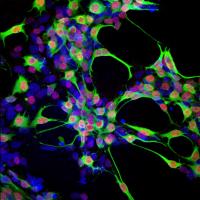
Human-induced pluripotent stem (iPS) cells can be directed to develop into light-sensing photoreceptor cells of the retina. Researchers have used cutting-edge stem cell technology to correct a genetic defect present in a rare blinding disorder, another step on a promising path that may one day lead to therapies to reverse blindness caused by common retinal diseases such as macular degeneration and retinitis pigmentosa which affect millions of individuals.
| Full story | 0 Comments | 9750 views |
| Biology | June 15, 2011 08:31 PM |
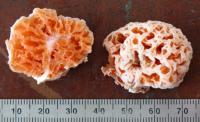
Spongiforma squarepantsii is found in the forests of Borneo. Sing it with us: What lives in the rainforest, under a tree?
| Full story | 0 Comments | 10013 views |
| Bioinformatics | June 14, 2011 12:56 PM |
One of the world's most destructive wheat pathogens is genetically built to evade detection before infecting its host, according to a study that mapped the genome of the fungus.
| Full story | 0 Comments | 7280 views |
| Molecular & Cell Biology | June 14, 2011 12:56 PM |
A team of Australian scientists has discovered a new type of cell in the immune system.
| Full story | 0 Comments | 8489 views |
| Biology | June 10, 2011 10:49 PM |
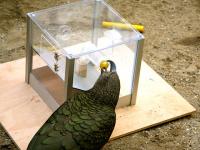
This is the parrot Kea using a ball shaped tool at the Multi Access Box. The kea, a New Zealand parrot, and the New Caledonian crow are members of the two most intelligent avian families. Researchers from the Department of Cognitive Biology of the University of Vienna investigated their problem solving abilities as well as their innovative capacities. They are publishing two new studies – one in cooperation with members of the Behavioral Ecology Research Group in Oxford – in the scientific journals PLoS ONE and Biology Letters.
| Full story | 0 Comments | 8759 views |
| Microbiology | June 10, 2011 10:49 PM |
An outbreak of Escherichia coli causing a severe illness called hemolytic-uremic syndrome (HUS) began in Germany on May 2, 2011 and has killed more than 20 people and sickened more than 2,000. The organism causing the outbreak has been identified as a strain of E. coli O104:H4 that produces a Shiga toxin and causes an illness similar to infection with E. coli O157:H7. Two isolates from this outbreak have been sequenced. Both strains, TY-2482 and LB226692, have been annotated and are now available from Virginia Bioinformatics Institute's (VBI's) Pathosystems Resource Integration Center (PATRIC, patricbrc.org), which is funded by the National Institute of Allergy and Infectious Diseases.
| Full story | 0 Comments | 8043 views |
| Biology | June 9, 2011 10:56 AM |
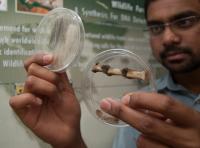
Ph.D. candidate Ashwin Naidu in the School of Natural Resources and the Environment works in the conservation genetics lab to identify individual animals or species from DNA evidence. Wildlife face many threats with spreading urbanization, including habitat loss and inbreeding when populations become fragmented and isolated. It doesn't help that there is a billion-dollar international industry dedicated to the illegal trafficking of wild animals or wild animal parts.
| Full story | 0 Comments | 10665 views |
| Biotechnology | June 9, 2011 10:56 AM |
A team of scientists has developed a way to coax tumor cells in the lab to grow into 3-D spheres. Their discovery takes advantage of an earlier technique of producing spherical cavities in a common polymer and promises more accurate tests of new cancer therapies.
| Full story | 0 Comments | 7012 views |
| Molecular & Cell Biology | June 9, 2011 10:56 AM |
Body cells detect signals that control their behavior through tiny hairs on the cell surface called cilia. Serious diseases and disorders can result when these cilia do not work properly. New research from UC Davis published this week in the journal Nature Cell Biology provides new insights into how these cilia are assembled.
| Full story | 0 Comments | 8212 views |
| Health & Medicine | June 9, 2011 10:56 AM |
The swine flu outbreak of winter 2009-2010 was much more widespread than was previously realised, research suggests.
| Full story | 0 Comments | 6884 views |
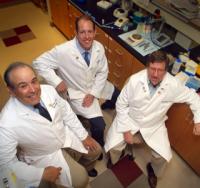
The right nutrients resulting in the right signals could help aging stem cells act more youthful, producing stronger bones longer and reducing the death and disability associated with a frail framework, Georgia Health Sciences University researchers say. from left Drs. Carlos Isales, Mark W. Hamrick and William D. Hill Researchers want to turn back the clock on aging stem cells so they'll make better bone.
| Full story | 0 Comments | 5986 views |
| Biology | June 9, 2011 10:56 AM |
Gazing into the depths of a pond, it's hard to miss the insects that whirl and zip beneath the surface. However, only one species of spider has joined them: the diving bell spider, Argyroneta aquatica. 'It is an iconic animal; I had read about the spider as a small boy in popular literature about ponds,' says Roger Seymour from the University of Adelaide. According to Seymour, each spider constructs a net of silk in vegetation beneath the surface and fills it with air carried down on its abdomen. The spiders spend their entire lives submerged and even lay their eggs in their diving bells. Having already used an oxygen-measuring device called an optode to discover how aquatic insects extract oxygen from water through thin bubbles of air stretched across their abdomens, Seymour was looking for other small bubbles to test his optode. 'The famous water spider came to mind,' remembers Seymour, and when he mentioned the possibility to Stefan Hetz from Humboldt University, Germany, Hetz jumped at the idea. Inviting Seymour to his lab, the duo decided to collect some of the arachnids to find out how they use their diving bells. The duo report their discovery that the spiders can use the diving bell like a gill to extract oxygen from water to remain hidden beneath the surface in The Journal of Experimental Biology at http://jeb.biologists.org/content/214/13/2175.abstract
| Full story | 0 Comments | 6635 views |

- In some genetic cases of microcephaly, stem cells fail to launch
- Yale team discovers how Zika virus causes fetal brain damage
- Scientists uncover the way a common cell enzyme alerts the body to invading bacteria
- Arctic gives clues on worst mass extinction of life
- Calcium channel blockers caught in the act at atomic level
Search Bio News Net
Free Biology Newsletter
- Flexibility That A.C.A. Lent to Work Force Is Threatened by...International Herald Tribune
- Bacteria Behind Legionnaires’ Disease Found at New York Police StationInternational Herald Tribune
- Prescription Price Crisis? 28 Million Americans See Spike in Drug...MSNBC.com: Health
- Seizing on Opioid Crisis, a Drug Maker Lobbies Hard for...International Herald Tribune
- Republicans are taking a big political risk on health careAP Health News
- Why We're So Divided Over Saving WolvesNational Geographic News