

The green anole lizard is an agile and active creature, and so are elements of its genome. This genomic agility and other new clues have emerged from the full sequencing of the lizard's genome and may offer insights into how the genomes of humans, mammals, and their reptilian counterparts have evolved since mammals and reptiles parted ways 320 million years ago. The researchers who completed this sequencing project reported their findings August 31 online in the journal Nature.

| Microbiology | August 31, 2011 03:49 PM |
The digestive system is home to a myriad of viruses, but how they are involved in health and disease is poorly understood. In a study published online today in Genome Research (www.genome.org), researchers have investigated the dynamics of virus populations in the human gut, shedding new light on the gut "virome" and how it differs between people and responds to changes in diet.
| Full story | 0 Comments | 9165 views |

| Biotechnology | August 31, 2011 03:49 PM |
Researchers from the Ottawa Hospital Research Institute (OHRI), the University of Ottawa (uOttawa), Jennerex Inc. and several other institutions today reported promising results of a world-first cancer therapy trial in renowned journal Nature. The trial is the first to show that an intravenously-delivered viral therapy can consistently infect and spread within tumours without harming normal tissues in humans. It is also the first to show tumour-selective expression of a foreign gene after intravenous delivery.
| Full story | 0 Comments | 11635 views |
| Biotechnology | August 29, 2011 04:47 PM |
A new type of laser scanning confocal microscope (LSCM) holds the promise of diagnosing skin cancer in a single snapshot.
| Full story | 0 Comments | 12920 views |

| Health & Medicine | August 29, 2011 04:47 PM |
As guest speaker at the European Society of Cardiology's Congress currently under way in Paris, Dr. Jean-Claude Tardif, Director of the Montreal Heart Institute's Research Centre and professor of medicine at the Université de Montréal, today presented the results of an analysis demonstrating that ivabradine, a medication used to reduce heart rate, also reduces heart volume (left ventricle) among patients with cardiac insufficiency.
| Full story | 0 Comments | 7635 views |
| Biotechnology | August 29, 2011 04:47 PM |
Researchers from Yale University are looking to a virus from the same family as the rabies virus to fight a form of cancer primarily found in children and young adults. They report their findings in the September 2011 issue of the Journal of Virology.
| Full story | 0 Comments | 12952 views |

| Bioinformatics | August 24, 2011 05:55 PM |
What Google is attempting for books, the University of California, Berkeley, plans to do for the world's vertebrate specimens: store them in "the cloud."
| Full story | 0 Comments | 8533 views |

| Molecular & Cell Biology | August 24, 2011 05:55 PM |
When investigating cancer cells, researchers discovered numerous peculiarities: Particular RNA molecules are present in large numbers, particular genes are overactive. Do these characteristics have a relation to cancer? Do they promote cell growth? Do they inactivate growth brakes or are they just a whim of nature? To find clues for answering these questions scientists perform what are called loss-of-function analyses. They knock out (silence) the gene of interest in living cells or whole organisms and subsequently look for any changes in the cells' metabolism, physiology or behavior in order to find out whether specific cellular functions are lost.
| Full story | 0 Comments | 9414 views |
| Molecular & Cell Biology | August 22, 2011 04:10 PM |
Working closely with a team of researchers from Duke University, scientists from the Florida campus of The Scripps Research Institute have helped identify a molecular pathway that plays a key role in stress-related damage to the genome, the entirety of an organism's hereditary information.
| Full story | 0 Comments | 9701 views |
| Microbiology | August 22, 2011 04:10 PM |
Hepatitis G virus was identified in 1995. Some little research was carried out on the virus and the US Food and Drug Administration (FDA) declared it a non-harmful virus in 1997. Researchers in Saudi Arabia, writing in the International Journal of Immunological Studies present evidence to suggest that this may have been the wrong decision. They claim that transmission of the virus through donated blood that was not screened for the virus as well as infection through other routes has led to an increase in cirrhosis of the liver and liver cancer.
| Full story | 0 Comments | 12895 views |

| Biology | August 22, 2011 04:10 PM |
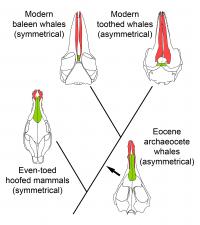
Evolutionary relationships between terrestrial even-toed hoofed mammals (artiodactyls), Eocene archaeocete whales, and modern toothed and baleen whales. Skewed skulls may have helped early whales discriminate the direction of sounds in water and are not solely, as previously thought, a later adaptation related to echolocation. University of Michigan researchers report the finding in a paper to be published online in the Proceedings of the National Academy of Sciences during the week of Aug. 22.
| Full story | 0 Comments | 8194 views |
| Biotechnology | August 18, 2011 03:19 PM |
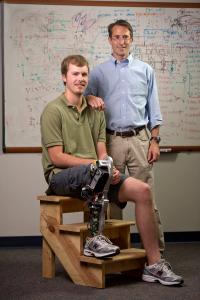
Mechanical engineer Michael Goldfarb, right, and Craig Hutto, the young amputee who has been testing the state-of-the-art prosthetic leg for the Vanderbilt engineers. A new lower-limb prosthetic developed at Vanderbilt University allows amputees to walk without the leg-dragging gait characteristic of conventional artificial legs.
| Full story | 0 Comments | 11657 views |

| Environment | August 18, 2011 03:19 PM |
A key glacier in Greenland is melting faster than previously expected, according to findings by a team of academics, including Dr Edward Hanna from University of Sheffield.
| Full story | 0 Comments | 9304 views |
| Molecular & Cell Biology | August 18, 2011 03:19 PM |
Researchers have uncovered exactly how a human egg captures an incoming sperm to begin the fertilisation process, in a new study published this week in the journal Science.
| Full story | 0 Comments | 8813 views |
| Molecular & Cell Biology | August 16, 2011 12:18 PM |
Medical researchers have discovered a new type of mechanism causing cancer susceptibility, showing that tiny changes in some anti-cancer genes can act as magnets to attract modifying "biochemical tags", effectively switching them off and predisposing families to an increased risk of the disease.
| Full story | 0 Comments | 7944 views |
| Molecular & Cell Biology | August 16, 2011 12:18 PM |
Researchers from VIB (Flanders Institute for Biotechnology) and Ghent University have shown that a defective gene can contribute to the onset of rheumatoid arthritis, an often-crippling inflammation of the joints that afflicts about 1% of the world's population. Until now, the underlying molecular mechanism of the disease was largely unclear. In the study, published in Nature Genetics, the researchers demonstrate that a cell-specific defect in the expression of the A20 gene (TNFAIP3) can contribute to the development of rheumatoid arthritis in mice, thereby identifying A20 as a possible target for the generation of new drugs.
| Full story | 0 Comments | 7720 views |
| Biotechnology | August 16, 2011 12:18 PM |
Tiny particles made of polymers hold great promise for targeted delivery of drugs and as structural scaffolds for building artificial tissues. However, current production methods for such microparticles yield a limited array of shapes and can only be made with certain materials, restricting their usefulness.
| Full story | 0 Comments | 7212 views |

| AIDS & HIV | August 11, 2011 04:35 PM |
Aeras and the Oxford-Emergent Tuberculosis Consortium (OETC) announce today the start of a Phase IIb proof-of-concept efficacy trial of a new investigational tuberculosis (TB) vaccine that involves people living with the human immunodeficiency virus (HIV). The trial will be conducted at research sites in Senegal and South Africa with primary funding support from the European and Developing Countries Clinical Trials Partnership (EDCTP).
| Full story | 0 Comments | 8657 views |
| Biotechnology | August 11, 2011 04:35 PM |
Scientists at the National Physical Laboratory (NPL) have mimicked the ways viruses infect human cells and deliver their genetic material. The research hopes to apply the approach to gene therapy – a therapeutic strategy to correct defective genes such as those that cause cancer.
| Full story | 0 Comments | 8378 views |
| Biology | August 11, 2011 04:35 PM |
A U.S. Department of Agriculture (USDA) scientist is trying to learn what is causing the decline in bumble bee populations and also is searching for a species that can serve as the next generation of greenhouse pollinators.
| Full story | 0 Comments | 13597 views |
| Microbiology | August 11, 2011 04:35 PM |
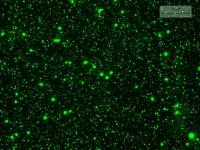
This image shows marine viruses. The small dots are viruses and the large blobs are bacteria, their hosts. Viruses fill the ocean and have a significant effect on ocean biology, specifically marine microbiology, according to a professor of biology at UC Santa Barbara and his collaborators.
| Full story | 0 Comments | 9196 views |
| Biology | August 11, 2011 04:35 PM |
In 1991, Carl Lewis was both the fastest man on earth and a profound long jumper, perhaps the greatest track-and-field star of all time in the prime of his career. On June 14th of that year, however, Carl Lewis was human. Leroy Burrell blazed through the 100-meters, besting him by a razor-thin margin of three-hundredths of a second. In the time it takes the shutter to capture a single frame of video, Lewis's three-year-old world record was gone.
| Full story | 0 Comments | 7792 views |
| Molecular & Cell Biology | August 8, 2011 12:20 PM |
Philadelphia, PA, August 8, 2011 – Researchers have gained a new understanding of the way in which growing tumors are fed and how this growth can be slowed via angiogenesis inhibitors that eliminate the blood supply to tumors. This represents a step forward towards developing new anti-cancer drug therapies. The results of this study have been published today in the September issue of The American Journal of Pathology.
| Full story | 0 Comments | 8156 views |
| Biology | August 8, 2011 12:20 PM |
Scientists at the University of Liverpool have found that male fruitflies experience a type of 'paranoia' in the presence of another male, which doubles the length of time they mate with a female, despite the female of the species only ever mating with one male.
| Full story | 0 Comments | 8438 views |
| Health & Medicine | August 8, 2011 12:20 PM |
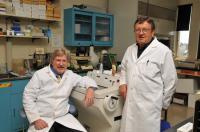
This is D. Craig Hooper, Ph.D., and Bernhard Dietzschold, D.V.M., of Thomas Jefferson University. Thomas Jefferson University received a National Institutes of Health (NIH) $4.8 million grant to test a new rabies vaccine with the potential to cure the virus infection, even after it has made its way into a person's central nervous system (CNS). Today, if an unvaccinated person is infected with rabies and it spreads to the brain, there is little chance for survival.
| Full story | 0 Comments | 7524 views |
| Microbiology | August 5, 2011 07:37 PM |
A team led by Professor Malcolm McConville from the Bio21 Institute, University of Melbourne developed a new analytical method which can be used for many infectious parasites and bacteria. The technique has revealed which metabolic pathways are essential for the parasite's survival, down to the particular atoms it uses as a food source.
| Full story | 0 Comments | 8237 views |
| Biology | August 5, 2011 07:37 PM |
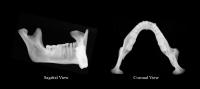
This is a radiograph of adult Arikara specimen. Researchers at Johns Hopkins found that use over time and not just genetics informs the structure of jaw bones in human populations. The researchers say these findings may be used to predict the diet of an ancient population, even if little evidence exists in the fossil record. It can also make it easier for scientists to pinpoint the genetic relationship between fossils.
| Full story | 0 Comments | 9212 views |
| Biotechnology | August 5, 2011 07:36 PM |
A Purdue University scientist is urging federal officials to decide whether genetically engineered salmon would be allowed for U.S. consumption and arguing that not doing so may set back scientific efforts to increase food production.
| Full story | 0 Comments | 7032 views |
| Biology | August 4, 2011 10:53 AM |
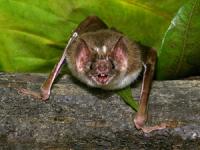
The vampire bat, Desmodus rotundus, must find a blood meal every 1-2 days to survive. Scientists have known for years that when vampire bats tear through an animal's skin with their razor-sharp teeth, their noses guide them to the best spots – where a precise bite will strike a vein and spill forth nourishing blood. But nobody knew exactly how bats knew where to bite.
| Full story | 0 Comments | 10142 views |
| AIDS & HIV | August 4, 2011 10:53 AM |
A new study shows for the first time that natural killer (NK) cells, which are part of the body's first-line defence against infection, can contribute to the immune response against HIV. In an article in the August 4 issue of Nature, a research team based at the Ragon Institute of MGH, MIT and Harvard reports that the HIV strains infecting individuals with particular receptor molecules on their NK cells had variant forms of key viral proteins, implying that the virus had mutated to avoid NK cell activity.
| Full story | 0 Comments | 8258 views |
| Biology | August 4, 2011 10:53 AM |
The research, led by Dr Clea Warburton and Dr Gareth Barker in the University's School of Physiology and Pharmacology and published in the Journal of Neuroscience, has investigated why we can recognise faces much better if we have extra clues as to where or indeed when we encountered them in the first place.
| Full story | 0 Comments | 8308 views |
| Microbiology | August 2, 2011 09:46 PM |
They make up less than one-hundredth of 1 percent of the microbes that live in the colon, but the bacteria and archaea that sop up hydrogen in the gut are fundamental to colon health. In a new study, researchers take a first look at these "hydrogenotrophic" microbes, mapping where they live and how abundant they are in different parts of the lower intestine.
| Full story | 0 Comments | 7043 views |
| AIDS & HIV | August 2, 2011 09:46 PM |
HIV epidemics are emerging among men who have sex with men (a term that encompasses gay, non-gay identified homosexual men, transgendered, and bisexual men) in several countries in the Middle East and North Africa. Importantly, the high level of risky sexual behavior practiced by many men who have sex with men in these countries indicates that they could become the pivotal risk group for HIV sexual transmission in this region.
| Full story | 0 Comments | 8083 views |
| Biology | August 2, 2011 09:46 PM |
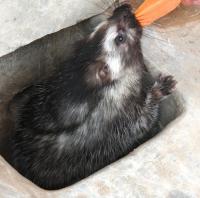
The African crested rat is the only mammal known that acquires its poison from a plant. Woe to the clueless predator trying to make a meal of the African crested rat, a rodent that applies poisonous plant toxin to sponge-like hairs on its flanks, a discovery recently made by Jonathan Kingdon and colleagues from the National Museums of Kenya, the Wildlife Conservation Society, and University of Oxford.
| Full story | 0 Comments | 8175 views |
| Biology | August 1, 2011 11:41 PM |
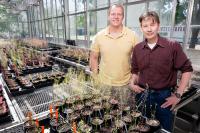
University of Illinois animal biology professor and department head Ken Paige (right) and doctoral student Daniel Scholes discovered that some plants multiply their chromosomes without undergoing cell division Whatever does not kill a plant may actually make it stronger. After being partially eaten by grazing animals, for example, some plants grow bigger and faster and reproduce more successfully than they otherwise would. In a new study, researchers report that one secret to these plants' post-traumatic triumph lies in their ability to duplicate their chromosomes – again and again – without undergoing cell division.
| Full story | 0 Comments | 7893 views |
| Bioinformatics | August 1, 2011 11:41 PM |
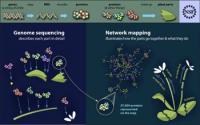
Proteins are essential components of Arabidopsis parts, such as petals, stalks and flowers. The genetics of these essential proteins were previously identified through studies involving genome sequencing. An international consortium of scientists has produced the first systematic network map of interactions that occur between proteins in the plant Arabidopsis thaliana. (Arabidopsis is a mustard plant that has 27,000 proteins and serves as a popular model organism for biological studies of plants, analogous to lab rats that serve as popular model organisms for biological studies of animals.)
| Full story | 0 Comments | 7891 views |

- In some genetic cases of microcephaly, stem cells fail to launch
- Yale team discovers how Zika virus causes fetal brain damage
- Scientists uncover the way a common cell enzyme alerts the body to invading bacteria
- Arctic gives clues on worst mass extinction of life
- Calcium channel blockers caught in the act at atomic level
Search Bio News Net
Free Biology Newsletter
- Flexibility That A.C.A. Lent to Work Force Is Threatened by...International Herald Tribune
- Bacteria Behind Legionnaires’ Disease Found at New York Police StationInternational Herald Tribune
- Prescription Price Crisis? 28 Million Americans See Spike in Drug...MSNBC.com: Health
- Seizing on Opioid Crisis, a Drug Maker Lobbies Hard for...International Herald Tribune
- Republicans are taking a big political risk on health careAP Health News
- Why We're So Divided Over Saving WolvesNational Geographic News