

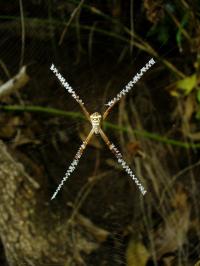
Decorative white silk crosses are an ingenious tactic used by orb-weaving spiders to protect their webs from damage. Decorative white silk crosses are an ingenious tactic used by orb-weaving spiders to protect their webs from damage, a new study from the University of Melbourne has revealed.

| Biology | May 31, 2011 07:34 PM |
| Full story | 0 Comments | 10296 views |

| Microbiology | May 31, 2011 07:34 PM |
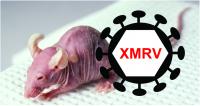
This is a nude mouse with a grafted human prostate tumor (indicated by white bump near shoulder blade). XMRV arose from recombination event in this breed of mouse.
Delineation of the origin of the retrovirus known as XMRV from the genomes of laboratory mice indicates that the virus is unlikely to be responsible for either prostate cancer or chronic fatigue syndrome in humans, as has been widely published. The virus arose because of genetic recombination of two mouse viruses. Subsequent infection of lab experiments with XMRV formed the basis of the original association.
| Full story | 0 Comments | 7696 views |

| Environment | May 30, 2011 05:10 PM |
A new study from University of Miami (UM) Rosenstiel School of Marine & Atmospheric Science scientists Chris Langdon, Remy Okazaki and Nancy Muehllehner and colleagues from the Australian Institute of Marine Science and the Max-Planck Institute for Marine Microbiology in Germany concludes that ocean acidification, along with increased ocean temperatures, will likely severely reduce the diversity and resilience of coral reef ecosystems within this century.
| Full story | 0 Comments | 8831 views |

| Bioinformatics | May 30, 2011 05:09 PM |
Mice and humans share about 95 percent of their genes, and mice are recognized around the world as the leading experimental model for studying human biology and disease. But, says Jackson Laboratory Professor Gary Churchill, Ph.D., researchers can learn even more "now that we really know what a laboratory mouse is, genetically speaking."
| Full story | 0 Comments | 7492 views |
| Microbiology | May 30, 2011 05:09 PM |
An enzyme associated with extensive antibiotic resistance called New Delhi metallo-ß-lactamase-1 (NDM-1), endemic in India and Pakistan and spreading worldwide, has been found in two people in the Toronto area, one of whom acquired it in Canada, states a case report in CMAJ (Canadian Medical Association Journal) (pre-embargo link only) http://www.cmaj.ca/embargo/cmaj110477.pdf. The report outlines challenges and approaches to managing and identifying this pathogen, which is highly resistant to treatment.
| Full story | 0 Comments | 8275 views |
| Biology | May 26, 2011 01:45 PM |
Researchers have discovered that the ultraviolet (UV) light that causes the temporary but painful condition of snow blindness in humans is life-saving for reindeer in the arctic.
| Full story | 0 Comments | 12174 views |
| Biology | May 26, 2011 01:45 PM |
Some birds that live near noisy sites can alter their songs to deal with din. But closely related species with similar songs may tweak their tunes in different ways, says a new study led by Clinton Francis of the National Evolutionary Synthesis Center in Durham, NC.
| Full story | 0 Comments | 8576 views |

| Health & Medicine | May 26, 2011 01:45 PM |
Ionizing radiation is not without danger to human populations. Indeed, exposure to nuclear radiation leads to an increase in male births relative to female births, according to a new study by Hagen Scherb and Kristina Voigt from the Helmholtz Zentrum München. Their work shows that radiation from atomic bomb testing before the Partial Test Ban Treaty in 1963, the Chernobyl accident, and from living near nuclear facilities, has had a long-term negative effect on the ratio of male to female human births (sex odds). Their work is published in the June issue of Springer's journal, Environmental Science and Pollution Research.
| Full story | 1 Comment | 57114 views |
| Health & Medicine | May 26, 2011 01:45 PM |
A woman's risk of developing diabetes during pregnancy can be identified up to seven years before she becomes pregnant based on routinely assessed measures of blood sugar and body weight, according to a Kaiser Permanente study published in the online issue of the American Journal of Obstetrics and Gynecology.
| Full story | 0 Comments | 9221 views |

| Biotechnology | May 26, 2011 01:45 PM |
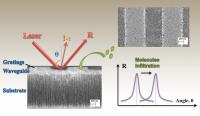
This figure shows how the sensor works. Light comes into the sensor at a particular angle. Part of the light is then reflected out (R), while part of it is... Vanderbilt University engineers have created a "spongy" silicon biosensor that shows promise not only for medical diagnostics, but also for the detection of dangerous toxins and other tiny molecules in the environment. This innovation was originally designed to detect the presence of particular DNA sequences, which can be extremely helpful in identifying whether or not a person is predisposed to heart disease or certain kinds of cancer. The new sensor is described in the Optical Society's open access journal, Optics Express.
| Full story | 0 Comments | 7322 views |
| Microbiology | May 26, 2011 01:45 PM |
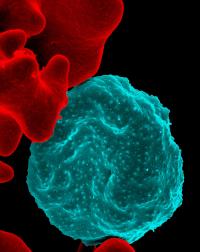
This is a colorized electron micrograph of red blood cell infected with malaria parasites (blue). The small bumps on the infected cell show how the parasite remodels its host... Snug inside a human red blood cell, the malaria parasite hides from the immune system and fuels its growth by digesting hemoglobin, the cell's main protein. The parasite, however, must obtain additional nutrients from the bloodstream via tiny pores in the cell membrane. Now, investigators from the National Institute of Allergy and Infectious Diseases (NIAID), part of the National Institutes of Health, have found the genes that malaria parasites use to create these feeding pores.
| Full story | 0 Comments | 9018 views |
| Microbiology | May 24, 2011 10:31 PM |
A new bacterium that uses caffeine for food has been discovered by a doctoral student at the University of Iowa. The bacterium uses newly discovered digestive enzymes to break down the caffeine, which allows it to live and grow.
| Full story | 0 Comments | 15134 views |
| Health & Medicine | May 24, 2011 10:31 PM |
New information has come to light explaining how injured skin cells and touch-sensing nerve fibers coordinate their regeneration during wound healing. UCLA researchers Sandra Rieger and Alvaro Sagasti found that a chemical signal released by wounded skin cells promotes the regeneration of sensory fibers, thus helping to ensure that touch sensation is restored to healing skin. They discovered that the reactive oxygen species hydrogen peroxide, which is found at high concentrations at wounds, is a key component of this signal.
| Full story | 0 Comments | 10149 views |
| Biology | May 24, 2011 10:31 PM |
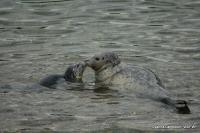
This is a harbor seal and pup. Seals and other marine mammals in the Pacific Northwest are being infected by two kinds of parasites that normally infect land mammals. A study of tissue samples from 161 marine mammals that died between 2004 and 2009 in the Pacific Northwest reveals an association between severe illness and co-infection with two kinds of parasites normally found in land animals. One, Sarcocystis neurona, is a newcomer to the northwest coastal region of North America and is not known to infect people, while the other, Toxoplasma gondii, has been established there for some time and caused a large outbreak of disease in people in 1995.
| Full story | 0 Comments | 8215 views |
| Health & Medicine | May 24, 2011 04:22 AM |
A protein isolated from beneficial bacteria found in yogurt and dairy products could offer a new, oral therapeutic option for inflammatory bowel disorders (IBD), suggests a study led by Vanderbilt University Medical Center researcher Fang Yan, M.D., Ph.D.
| Full story | 0 Comments | 8500 views |
| Biology | May 24, 2011 04:22 AM |
Johns Hopkins scientists say that a newly discovered "survival protein" protects the brain against the effects of stroke in rodent brain tissue by interfering with a particular kind of cell death that's also implicated in complications from diabetes and heart attack.
| Full story | 0 Comments | 9774 views |
| Biology | May 24, 2011 04:22 AM |
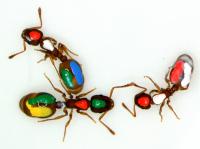
Singled out by unique color codes, ants provide evidence through their interactions that challenges previous assumptions about how social networks function. Be it through the Internet, Facebook, the local grapevine or the spread of disease, interaction networks influence nearly every part of our lives.
| Full story | 0 Comments | 7620 views |
| Health & Medicine | May 24, 2011 04:22 AM |
Researchers at Stanford University have developed a special wound dressing that they report was able to significantly reduce scar tissue caused by incisions.
| Full story | 0 Comments | 7409 views |
| Biology | May 24, 2011 04:22 AM |
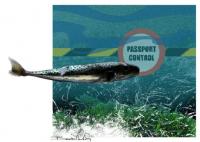
The poisonous pufferfish (Latin: Lagocephalus sceleratus) is one of the species that have invaded the coastal environments of the eastern Mediterranean Sea. More than 900 new alien species have been encountered in the coastal environments of the eastern Mediterranean Sea in recent decades, including the poisonous pufferfish. The invasion of alien species has had the consequence that the whole food chain is changing, while there is a lack of knowledge on which to base relevant risk assessments, a four-year study conducted at the University of Gothenburg shows.
| Full story | 0 Comments | 9229 views |
| Microbiology | May 24, 2011 04:22 AM |
In a study to be published online this week in the Proceedings of the National Academy of Sciences, researchers report the discovery of a novel hepatitis C-like virus in dogs. The identification and characterization of this virus gives scientists new insights into how hepatitis C in humans may have evolved and provides scientists renewed hope to develop a model system to study how it causes disease.
| Full story | 0 Comments | 7391 views |
| Health & Medicine | May 19, 2011 11:46 PM |
When you suffer a heart attack, a part of your heart dies. Nerve cells in the heart's wall and a special class of cells that spontaneously expand and contract – keeping the heart beating in perfect synchronicity – are lost forever. Surgeons can't repair the affected area. It's as if when confronted with a road riddled with potholes, you abandon what's there and build a new road instead.
| Full story | 0 Comments | 9385 views |
| Health & Medicine | May 19, 2011 11:46 PM |
The trip to Mars just got a little more difficult now that French researchers have discovered that antibodies used to fight off disease might become seriously compromised during long-term space flight. In a new report published online in the FASEB Journal (http://www.fasebj.org), the scientists show that antibodies produced in space are less effective than those produced on terra firma. The reduced effectiveness of antibodies makes astronauts more susceptible to illness, while increasing the danger posed by bacteria and viruses likely to coexist with wayfaring astronauts.
| Full story | 0 Comments | 7311 views |
| Biology | May 19, 2011 11:46 PM |
Jaws made of bone are commonplace in the animal kingdom. However, how jaws developed in the course of evolution is still a mystery. Under the direction of paleontologist Nicolas Goudemand, a team of researchers from the University of Zurich and the European Synchrotron Radiation Facility set about solving this puzzle. Living and extinct jawless animals can yield clues as to the development of the jaw. The researchers studied fossilized conodonts – extinct, eel-shaped animals whose precise relationship with the actual vertebrates is still a matter of debate. For their project, which was funded by the Swiss National Science Foundation and just published in the American journal PNAS, the researchers analyzed new conodont fossils that date from around the biggest mass extinction event at the boundary between the Permian and Triassic periods.
| Full story | 0 Comments | 7185 views |

| Molecular & Cell Biology | May 19, 2011 11:46 PM |
Scientists at Penn State University have achieved a major milestone in the attempt to assemble, in a test tube, entire chromosomes from their component parts. The achievement reveals the process a cell uses to package the basic building blocks of an organism's entire genetic code -- its genome. The evidence provided by early research with the new procedure overturns three previous theories of the genome-packaging process and opens the door to a new era of genome-wide biochemistry research. A paper describing the team's achievement will be published in the journal Science on 20 May 2011.
| Full story | 0 Comments | 7568 views |
| Health & Medicine | May 18, 2011 01:51 AM |
CSIRO scientists have shown that a new experimental vaccine helps to protect horses against the deadly Hendra virus. Dr Deborah Middleton from CSIRO's Australian Animal Health Laboratory (AAHL) will announce the successful progress to develop the vaccine at the Australian Veterinary Association conference in Adelaide today.
| Full story | 0 Comments | 8796 views |
| Health & Medicine | May 18, 2011 01:51 AM |
The coronary arteries of Princess Ahmose-Meryet-Amon - as visualised by whole body computerised tomography (CT) scanning - will feature in two presentations at the International Conference of Non-Invasive Cardiovascular Imaging (ICNC) this week in Amsterdam (15-18 May). ICNC is now one of the world's major scientific event in nuclear cardiology and cardiac CT imaging.
| Full story | 0 Comments | 7924 views |
| Microbiology | May 18, 2011 01:51 AM |
Researchers at the University of Alberta have taken an important step in understanding an immune system of bacteria, a finding that could have implications for medical care and both the pharmaceutical and dairy industries.
| Full story | 0 Comments | 8874 views |
| Biology | May 16, 2011 09:57 PM |
Climbing is possibly one of the riskiest things an adult tarantula can do. Weighing in at anything up to 50gm, the dry attachment systems that keep daintier spiders firmly anchored are on the verge of failure in these colossal arachnids. 'The animals are very delicate. They wouldn't survive a fall from any height,' explains Claire Rind from the University of Newcastle, UK. In 2006, Stanislav Gorb and his colleagues published a paper in Nature suggesting that tarantulas may save themselves from falling by releasing silk threads from their feet. However, this was quickly refuted by another group that could find no evidence of the silk. Fascinated by spiders and intrigued by the scientific controversy, Rind decided this was too good a challenge to pass up and discovered that tarantulas shoot silk from their feet when they lose their footing. She publishes her results in The Journal of Experimental Biology at http://jeb.biologists.org/content/214/11/1874.abstract.
| Full story | 0 Comments | 8878 views |

| Stem Cell Research | May 16, 2011 09:57 PM |
What does it take to regenerate a limb? Biologists have long thought that organ regeneration in animals like zebrafish and salamanders involved stem cells that can generate any tissue in the body. But new research suggests that multiple cell types are needed to regrow the complete organ, at least in zebrafish.
| Full story | 0 Comments | 8761 views |
| Molecular & Cell Biology | May 16, 2011 09:57 PM |
An international research team using a new combination of approaches has found two genes that may prove of vital importance to the lives and livelihoods of millions of farmers in a tsetse fly-plagued swathe of Africa the size of the United States. The team’s results were published today in the Proceedings of the National Academy of Sciences (PNAS).
| Full story | 0 Comments | 6762 views |
| Biology | May 16, 2011 09:57 PM |
A new study offers hope for species such as the Siberian Tiger that might be considered 'too rare to save', so long as conservation efforts can target key threats.
| Full story | 0 Comments | 7918 views |
| Health & Medicine | May 13, 2011 08:03 PM |
Around one in 20 men is infertile, but despite the best efforts of scientists, in many cases the underlying causes of infertility have remained a mystery.
| Full story | 0 Comments | 9359 views |
| Biology | May 13, 2011 08:03 PM |
Substances produced by living organisms found in nature—so-called "natural products"—have played a critical role in the development of drugs for life-threatening conditions. The anticancer agent Taxol was sourced from a plant, penicillin from a fungus, and a number of recent breakthroughs have resulted in the development and approval of anticancer drugs derived from marine sources such as coral and sponges.
| Full story | 0 Comments | 14429 views |
| Molecular & Cell Biology | May 13, 2011 08:03 PM |
Two proteins that are abnormally modified in the brains of patients with Alzheimer disease collude, resulting in ill effects on the crucial energy centers of brain cells, according to new findings published online in Neurobiology of Aging.
| Full story | 0 Comments | 7198 views |
| Biology | May 12, 2011 02:26 AM |
Researchers at the University of Exeter have uncovered a 'missing link' in the fungal tree of life after analysing samples taken from the university's pond.
| Full story | 0 Comments | 8563 views |
| Biology | May 12, 2011 02:26 AM |
The ban on a veterinary drug which caused an unprecedented decline in Asian vulture populations has shown the first signs of progress, according to scientists. However, the recovery of the wild vulture populations requires efforts to see the drug completely removed from the birds' food supply.
| Full story | 0 Comments | 7953 views |
| Biology | May 12, 2011 02:26 AM |
Breathing heavily at the edge of an ice hole, an Antarctic emperor penguin prepares to dive. Taking a last gulp of air, the bird descends and may not emerge again for another 20 minutes. The penguin initially carries sufficient oxygen in three stores – the blood, lungs and myoglobin in muscle – to sustain aerobic metabolism. However, around 5.6 minutes after leaving the surface, lactate begins appearing in the penguin's blood and the bird crosses the so-called 'aerobic dive limit', switching to anaerobic metabolism in some tissues. So what triggers this transition?
| Full story | 0 Comments | 10929 views |

| AIDS & HIV | May 10, 2011 02:06 AM |
A key step in the processing of HIV within cells appears to affect how effectively the immune system's killer T cells can recognize and destroy infected cells. Researchers at the Ragon Institute of MGH, MIT and Harvard have found that – as HIV proteins are broken down within cells, a process that should lead to labeling infected cell for destruction by CD8 T cells – there is a great variability in the stability of resulting protein segments, variations that could significantly change how well cells are recognized by the immune system. Their report appears in the June Journal of Clinical Investigation.
| Full story | 0 Comments | 8941 views |
| Biology | May 10, 2011 02:06 AM |
Scientists at Royal Holloway, University of London and the University of Leicester have discovered animals searching for food do not stick to a complicated pattern of movement as previously thought but tend to wander about randomly.
| Full story | 0 Comments | 7646 views |
| Microbiology | May 10, 2011 02:06 AM |
An international team of researchers led by scientists at Scripps Institution of Oceanography at UC San Diego has deciphered the genome of a tropical marine organism known to produce substances potentially useful against human diseases.
| Full story | 0 Comments | 7999 views |

- In some genetic cases of microcephaly, stem cells fail to launch
- Yale team discovers how Zika virus causes fetal brain damage
- Scientists uncover the way a common cell enzyme alerts the body to invading bacteria
- Arctic gives clues on worst mass extinction of life
- Calcium channel blockers caught in the act at atomic level
Search Bio News Net
Free Biology Newsletter
- Flexibility That A.C.A. Lent to Work Force Is Threatened by...International Herald Tribune
- Bacteria Behind Legionnaires’ Disease Found at New York Police StationInternational Herald Tribune
- Prescription Price Crisis? 28 Million Americans See Spike in Drug...MSNBC.com: Health
- Seizing on Opioid Crisis, a Drug Maker Lobbies Hard for...International Herald Tribune
- Republicans are taking a big political risk on health careAP Health News
- Why We're So Divided Over Saving WolvesNational Geographic News