

A Montana State University professor and his colleagues have found evidence suggesting that airborne bacteria are globally distributed in the atmosphere and may play a large role in the cycle of precipitation.

| Bioinformatics | February 29, 2008 11:44 PM |
Researchers from the University of North Carolina at Chapel Hill have identified a key molecular mechanism that may account for the development of cystic fibrosis, which about 1 in 3000 children are born with in the US every year. The findings, published February 29 in the open-access journal PLoS Computational Biology, add new knowledge to understanding the development of this disease and may also point the way to new corrective treatments.
| Full story | 0 Comments | 7759 views |

| Biotechnology | February 29, 2008 11:44 PM |
Researchers have developed a new technology that can simultaneously screen thousands of samples of food or water for several dangerous food-borne pathogens in one to two hours.
| Full story | 0 Comments | 7615 views |

| Health & Medicine | February 29, 2008 11:44 PM |
Kidney stones are very common – and painful – in men. About 3 in 20 men (1 in 20 women) in developed countries develop them at some stage. Mice, however, rarely suffer though the precise reasons are unknown. Jeffrey S. Clark and colleagues, writing in The Journal of Physiology, have come up with some answers.
| Full story | 0 Comments | 8756 views |
| Health & Medicine | February 29, 2008 11:44 PM |
A small striped fish is helping scientists understand what makes people susceptible to a common form of hearing loss, although, in this case, it’s not the fish’s ears that are of interest. In a study published in the Feb. 29 issue of the journal PLoS Genetics, researchers at the University of Washington have developed a research method that relies on a zebrafish’s lateral line—the faint line running down each side of a fish that enables it to sense its surroundings—to quickly screen for genes and chemical compounds that protect against hearing loss from some medications. The study was funded in part by the National Institute on Deafness and Other Communication Disorders (NIDCD), one of the National Institutes of Health.
| Full story | 0 Comments | 6892 views |

| Molecular & Cell Biology | February 29, 2008 11:44 PM |
Investigators at St. Jude Children’s Research Hospital have discovered a dance of proteins that protects certain cells from undergoing apoptosis, also known as programmed cell death. Understanding the fine points of apoptosis is important to researchers seeking ways to control this process.
| Full story | 0 Comments | 8068 views |

| Biology | February 29, 2008 11:44 PM |
A novel genetic study has revealed why chickens have yellow legs, demonstrating that though Charles Darwin was right about many things, his view on the origins of the chicken was not entirely correct. The study, published February 29 in the open-access journal PLoS Genetics, reveals the genetic basis for the appearance of yellow skin in billions of chickens raised worldwide.
| Full story | 0 Comments | 8509 views |
| Biology | February 29, 2008 09:54 PM |
An important discovery has been made with respect to the mystery of “handedness” in biomolecules. Researchers led by Sandra Pizzarello, a research professor at Arizona State University, found that some of the possible abiotic precursors to the origin of life on Earth have been shown to carry “handedness” in a larger number than previously thought.
| Full story | 0 Comments | 6014 views |
| Molecular & Cell Biology | February 29, 2008 08:54 PM |
Now, a group of Scripps Research scientists have shown that EP2-19G2, one of a panel of fluorescent monoclonal antibodies that were first reported in 2000, produces its distinctive bright blue glow through a rare and highly complex recombination of electrical charge.
| Full story | 0 Comments | 6342 views |

| Microbiology | February 29, 2008 07:54 PM |
Brent Christner, LSU professor of biological sciences, in partnership with colleagues in Montana and France, recently found evidence that rain-making bacteria are widely distributed in the atmosphere. These biological particles could factor heavily into the precipitation cycle, affecting climate, agricultural productivity and even global warming. Christner and his colleagues will publish their results in the prestigious journal “Science” on Feb. 29.
| Full story | 0 Comments | 6845 views |
| Biology | February 29, 2008 06:54 PM |
Scientists at the John Innes Centre in Norwich have discovered how roots find their way past obstacles to grow through soil. The discovery, described in the forthcoming edition of Science, also explains how germinating seedlings penetrate the soil without pushing themselves out as they burrow.
| Full story | 0 Comments | 7423 views |

| Microarray | February 28, 2008 11:54 PM |
Differences in gene expression levels between people of European versus African ancestry can affect how each group responds to certain drugs or fights off specific infections, report researchers from the University of Chicago Medical Center and the Expression Research Laboratory at Affymetrix Inc. of Santa Clara, CA.
| Full story | 0 Comments | 12004 views |
| Health & Medicine | February 28, 2008 10:54 PM |
Researchers at the University of Illinois at Chicago have discovered a possible target to treat bloodstream bacterial infections.
| Full story | 0 Comments | 7680 views |
| Health & Medicine | February 28, 2008 09:54 PM |
Schizophrenia emerges from an altered pattern of brain development, and researchers continue to search for the genes that cause the brain to develop along a path that ultimately leads to schizophrenia. In a high priority article to be published in Biological Psychiatry on March 1st, researchers report their findings on a new genetic link to schizophrenia.
| Full story | 0 Comments | 8095 views |
| Biology | February 28, 2008 08:54 PM |
The distinctive ability of mothers to identify the cries of their offspring is widely evident in nature, where it is critical to the survival of these offspring. In humans, we are aware that the distinctive ability of mothers to recognize and respond to the smiles and cries of their babies plays an important role in the psychological, cognitive, and social development of these babies. We have had a very limited understanding of how the maternal brain accomplishes these amazing feats, but a new study published in the February 15th issue of Biological Psychiatry now provides some new insight.
| Full story | 0 Comments | 12409 views |
| Molecular & Cell Biology | February 28, 2008 07:54 PM |
A gene crucial for embryonic development can quickly become a potent cancer promoter in adult mice after a genetic misalignment, according to researchers from Fox Chase Cancer Center, causing white blood cells to become cancerous spontaneously.
| Full story | 0 Comments | 8313 views |
| Biology | February 28, 2008 07:28 PM |
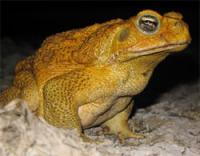
Australian cane toad (Chaunus [Bufo] marinus) Why do some invasive species expand rapidly in a new environment while others do not" Scientists from the United States and Australia are beginning to make headway on this question after analyzing how fast cane toads invaded different regions of Australia.
| Full story | 0 Comments | 9478 views |
| Biology | February 28, 2008 06:54 PM |
An area of the brain involved in the planning and production of spoken and signed language in humans plays a similar role in chimpanzee communication, researchers report online on February 28th in the journal Current Biology, a publication of Cell Press.
| Full story | 0 Comments | 8441 views |
| Biology | February 28, 2008 06:28 PM |
Why do we almost instinctively treat babies as special, protecting them and enabling them to survive" Darwin originally pointed out that there is something about infants which prompts adults to respond to and care for them which allows our species to survive. Nobel-Prize-winning zoologist Konrad Lorenz proposed that it is the specific structure of the infant face, including a relatively large head and forehead, large and low lying eyes and bulging cheek region, that serves to elicit these parental responses. But the biological basis for this has remained elusive.
| Full story | 0 Comments | 7258 views |
| Health & Medicine | February 28, 2008 05:28 PM |
Several strains of the bird flu virus that raged across southern China were blocked from entering Thailand and Vietnam, UC Irvine researchers have discovered.
| Full story | 0 Comments | 6843 views |
| Biology | February 28, 2008 04:28 PM |
They may not be on most people’s list of most attractive species, but bats definitely have animal magnetism. Researchers from the Universities of Leeds and Princeton have discovered that bats use a magnetic substance in their body called magnetite as an ‘internal compass’ to help them navigate.
| Full story | 0 Comments | 7405 views |
| Health & Medicine | February 28, 2008 02:28 PM |
“We have identified a key connection of signaling pathways in the cascade of events leading to sepsis. This defines a crucial point where the immune system spirals out of control to cause severe sepsis and where there is an opportunity for therapeutic intervention,” says Scripps Research Professor Wolfram Ruf, who led the research with his postdoctoral fellow Frank Niessen. Their results are published in the February 27 advance, online issue of Nature.
| Full story | 0 Comments | 7117 views |
| Biology | February 28, 2008 12:28 PM |
The research groups of the Department of Biological and Environmental Sciences of the University of Helsinki and the University of California in San Diego have discovered a gene that is centrally involved in the regulation of carbon dioxide uptake for photosynthesis and water evaporation in plants. The discovery can aid the development of drought-tolerant crops. The article is published online ahead of print in Nature’s Advance Online Publication (AOP) on 27 February 2008.
| Full story | 0 Comments | 9488 views |
| Biology | February 28, 2008 10:28 AM |
High-speed video of rats using their whiskers to explore different surfaces has given researchers significant insights into the subtle mechanics of their tactile sensory system. Such information is important because the rat tactile machinery is a widely used laboratory model for studying how energy from sound or touch is translated into neural activity. Thus, basic insights from studying the rat system could aid in understanding the senses of hearing and touch in all mammals, including humans.
| Full story | 0 Comments | 6435 views |
| Molecular & Cell Biology | February 27, 2008 11:28 PM |
Researchers have discovered that neurons can use two different neurotransmitters that target the same receptor on a receiving neuron to shape the transmission of a nerve impulse. Although the researchers’ experiments identified the “co-release” of the two neurotransmitters only in specific types of neurons in the brain’s auditory center, their finding may apply more broadly in the brain, they said. Thus, the finding may represent a new way in which the brain precisely modulates the nerve impulses that travel from neuron to neuron in its circuitry.
| Full story | 0 Comments | 6821 views |
| Microbiology | February 27, 2008 10:28 PM |
Bacteria that cause the bubonic plague avoid death in our bodies by injecting our cells with immune evasion proteins. Scientists have discovered a new way bacteria build and hold the syringes, according to research published in the journal Microbiology.
| Full story | 0 Comments | 6972 views |
| Biology | February 27, 2008 09:28 PM |
Some of the oldest tales and wisest mythology allude to the snake as a mischievous seducer, dangerous foe or powerful iconoclast; however, the legend surrounding this proverbial predator may not be based solely on fantasy. As scientists from the University of Virginia recently discovered, the common fear of snakes is most likely intrinsic.
| Full story | 0 Comments | 9538 views |
| Microbiology | February 27, 2008 08:28 PM |
MIT graduate student and synthetic biologist Timothy Lu is passionate about tackling problems that pose threats to human health. His current mission: to destroy antibiotic-resistant bacteria.
| Full story | 0 Comments | 7315 views |

| Stem Cell Research | February 27, 2008 07:28 PM |
A gene crucial for embryonic development can quickly become a potent cancer promoter in adult mice after a genetic misalignment, according to researchers from Fox Chase Cancer Center, causing white blood cells to become cancerous spontaneously.
| Full story | 0 Comments | 6874 views |
| Biology | February 27, 2008 06:28 PM |
An ability to avoid the plant equivalent of vapor lock and a favorable evolutionary history may explain the unusual drought resistance of junipers, some varieties of which are now spreading rapidly in water-starved regions of the western United States, a Duke University study has found.
| Full story | 0 Comments | 7472 views |
| Biology | February 27, 2008 05:28 PM |
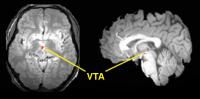
Horizontal (left) and vertical (right) slices of brain show increased blood flow (red region) in brainstem (VTA or ventral tegmental area) in measurements made by functional magnetic resonance imaging. A team of scientists from Princeton University has devised a new experimental technique that produces some of the best functional images ever taken of the human brainstem, the most primitive area of the brain.
| Full story | 0 Comments | 6705 views |

| AIDS & HIV | February 27, 2008 04:28 PM |
Researchers at The Scripps Research Institute have developed a new two-punch strategy against HIV and they have already successfully tested aspects of it in the laboratory.
| Full story | 0 Comments | 7080 views |
| Microbiology | February 27, 2008 02:40 PM |
The first global malaria risk map to be developed in forty years has highlighted the 2.37 billion people at risk from one of the world's deadliest diseases. The findings of the Malaria Atlas Project (MAP), funded by the Wellcome Trust, also offer hope that eliminating the malaria risk for almost one billion of these people should be achievable.
| Full story | 0 Comments | 7260 views |
| Biotechnology | February 27, 2008 12:40 PM |
__IMAGE_2 Using artificial cell-like particles, Yale biomedical engineers have devised a rapid and efficient way to produce a 45-fold enhancement of T cell activation and expansion, an immune response important for a patient’s ability to fight cancer and infectious diseases, according to an advance on line report in Molecular Therapy.
| Full story | 0 Comments | 13519 views |
| Microbiology | February 27, 2008 10:40 AM |
MIT biologists have provoked soil-dwelling bacteria into producing a new type of antibiotic by pitting them against another strain of bacteria in a battle for survival.
| Full story | 0 Comments | 8370 views |
| Molecular & Cell Biology | February 26, 2008 11:40 PM |
New Research at the University of Calgary, Faculty of Kinesiology suggests that Botulinium type-A toxin (BTX-A) passes easily to surrounding muscles and is more difficult to control once injected than many people suspect. The paper will be published in an upcoming issue of the Journal of Biomechanics and is posted on the journal's "In Press" website at: http://www.jbiomech.com.
| Full story | 0 Comments | 6372 views |

| General | February 26, 2008 10:40 PM |
The first 30,000 pages of a massive online Encyclopedia of Life (EOL) were unveiled today as scientists assemble for the prestigious Technology, Entertainment and Design (TED) Conference in Monterey, California.
| Full story | 0 Comments | 13981 views |
| Microbiology | February 26, 2008 09:40 PM |
An experimental, combination vaccine against Ebola and Marburg viruses using virus-like particles (VLPs) provides complete protection against infection in monkeys. Researchers from the U.S. Army Medical Research Institute of Infectious Diseases (USAMRIID) report their results today (Feb. 26) at the 2008 ASM Biodefense and Emerging Diseases Research Meeting in Baltimore, MD.
| Full story | 0 Comments | 9867 views |
| Biotechnology | February 26, 2008 08:40 PM |
Researchers at the University of Pennsylvania School of Medicine have demonstrated that living human nerve cells can be engineered into a network that could one day be used for transplants to repair damaged to the nervous system. They report their findings in the February issue of the Journal of Neurosurgery.
| Full story | 0 Comments | 7455 views |
| Biology | February 26, 2008 08:17 PM |
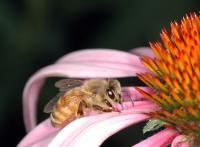
In repeated invasions of a new territory, the honey bee, Apis mellifera, can benefit from the genetic endowment of its predecessors. Like any species that aspires to rule the world, the honey bee, Apis mellifera, invades new territories in repeated assaults. A new study demonstrates that when these honey bees arrive in a place that has already been invaded, the newcomers benefit from the genetic endowment of their predecessors.
| Full story | 0 Comments | 7506 views |

- In some genetic cases of microcephaly, stem cells fail to launch
- Yale team discovers how Zika virus causes fetal brain damage
- Scientists uncover the way a common cell enzyme alerts the body to invading bacteria
- Arctic gives clues on worst mass extinction of life
- Calcium channel blockers caught in the act at atomic level
Search Bio News Net
Free Biology Newsletter
- Flexibility That A.C.A. Lent to Work Force Is Threatened by...International Herald Tribune
- Bacteria Behind Legionnaires’ Disease Found at New York Police StationInternational Herald Tribune
- Prescription Price Crisis? 28 Million Americans See Spike in Drug...MSNBC.com: Health
- Seizing on Opioid Crisis, a Drug Maker Lobbies Hard for...International Herald Tribune
- Republicans are taking a big political risk on health careAP Health News
- Why We're So Divided Over Saving WolvesNational Geographic News