

A smile is one of the most universally recognizable facial expressions, helping to depict an individual’s happiness, confidence, attractiveness, sociability and sincerity. And now, according to a recent study published in the Journal of Periodontology (JOP), the official publication of the American Academy of Periodontology (AAP), a smile may also help convey healthy teeth and gums. Researchers found evidence that periodontal, or gum, disease may negatively affect an individual’s smiling patterns and deter someone from displaying positive emotions through a smile.

| Molecular & Cell Biology | March 31, 2008 10:23 PM |
A team of Canadian and French researchers has identified a novel gene responsible for a significant fraction of ALS (sporadic amyotrophic lateral sclerosis) cases. ALS is commonly referred to as Lou Gehrig’s disease, an incurable neuromuscular disorder that affects motor neurons and leads to paralysis and death within one to five years.
| Full story | 0 Comments | 7554 views |

| Health & Medicine | March 31, 2008 09:23 PM |
The Norwegian Tooth Bank is requesting milk teeth from 100 000 children in Norway and could become the biggest tooth bank in the world. Milk teeth can give unique information about environmental influences and nutrition in the foetus and in early childhood. The Tooth Bank is a sub-project in the Norwegian Mother and Child Cohort Study (MoBa), and is a collaborative project between the Norwegian Institute of Public Health and the University of Bergen.
| Full story | 0 Comments | 7950 views |
| Molecular & Cell Biology | March 31, 2008 08:23 PM |
University of Florida chemists are the first to use a new tool to identify the molecular signatures of serious diseases -- without any previous knowledge of what these microscopic signatures or “biomarkers” should look like.
| Full story | 0 Comments | 6930 views |
| Molecular & Cell Biology | March 31, 2008 07:23 PM |
One of the earliest general anaesthetics to be used by the medical profession, chloroform, has shed light on a mystery that’s puzzled doctors for more than 150 years – how such anaesthetics actually work.
| Full story | 0 Comments | 6873 views |
| Molecular & Cell Biology | March 31, 2008 07:18 PM |
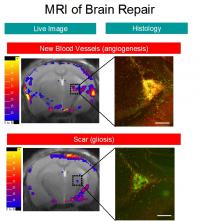
Probes administered by eye drop attach to special cells during repair and cause them to have different magnetic movement, or magnetic resonance, when viewed by a magnetic resonance imaging scanner. The images generated by the MRI scanner make it possible to see these repair processes in action. This method is the first to provide scientists, clinicians, teachers, and students a means to visualize the process of brain repair in live subjects. Credit: Image courtesy Philip Liu of Harvard Medical School. Biologists have just confirmed what poets have known for centuries: eyes really are windows of the soul—or at least of the brain. In a new study published in the April 2008 print issue of The FASEB Journal (http://www.fasebj.org), Harvard researchers describe the development of gene probe eye drops that—for the first time—make it possible to monitor and detect tissue repair in the brain of living organisms using MRI. Current methods involve a risky, invasive, and relatively slow process of penetrating the skull to extract tissue samples and then examining those samples in a laboratory.
| Full story | 0 Comments | 6894 views |

| Environment | March 31, 2008 06:23 PM |
Could part of the answer to saving the Earth from global warming lie in the earth beneath our feet?
| Full story | 0 Comments | 7587 views |

| Microbiology | March 31, 2008 06:18 PM |
Researchers are finding out which bugs grow in intensive care units to develop a novel sampling regime that would indicate the threat of MRSA and other superbugs in the environment, scientists heard today (Monday 31 March 2008) at the Society for General Microbiology’s 162nd meeting being held this week at the Edinburgh International Conference Centre.
| Full story | 0 Comments | 7514 views |
| Molecular & Cell Biology | March 31, 2008 05:18 PM |
It's well known that the left and right sides of the brain differ in many animal species and this is thought to influence cognitive performance and social behaviour. For instance, in humans, the left half of the brain is concerned with language processing whereas the right side is better at comprehending musical melody.
| Full story | 0 Comments | 6197 views |
| Microbiology | March 31, 2008 04:18 PM |
One of the world’s deadliest diseases, caused by the Ebola virus, may finally be preventable thanks to US and Canadian researchers, who have successfully tested several Ebola vaccines in primates and are now looking to adapt them for human use.
| Full story | 0 Comments | 9517 views |
| Health & Medicine | March 31, 2008 03:18 PM |
This is the first time this intervention has been conducted in Europe, and the second in the world. Thanks to the work of the expert group of Hospital Clínic de Barcelona, the extirpation of a kidney ‒affected by a malignant tumour‒ through the vagina has been achieved. This fact sets a milestone in the framework of minimally invasive surgery. The operation, presented this morning in a press conference, uses several cutting edge technology instruments of advanced surgery.
| Full story | 0 Comments | 7027 views |

| Biology | March 31, 2008 02:18 PM |
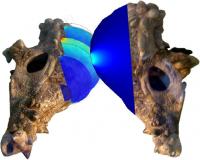
Fossil evidence and computer simulations show which pachycephalosaurs could butt heads. After half a century of debate, a University of Alberta researcher has confirmed that dome-headed dinosaurs called pachycephalosaurs could collide with each other during courtship combat. Eric Snively, an Alberta Ingenuity fellow at the U of A, used computer software to smash the sheep-sized dinosaurs together in a virtual collision and results showed that their bony domes could emerge unscathed.
| Full story | 0 Comments | 9544 views |
| Health & Medicine | March 31, 2008 01:18 PM |
Researchers at Yale School of Medicine now have a clearer understanding of why synthetic estrogens such as those found in many widely-used plastics have a detrimental effect on a developing fetus, cause fertility problems, as well as vaginal and breast cancers.
| Full story | 2 Comments | 7124 views |
| Biology | March 31, 2008 12:18 PM |
Looking for evidence of life on Mars or other planets? Finding cellulose microfibers would be the next best thing to a close encounter, according to new research from the University of North Carolina at Chapel Hill.
| Full story | 0 Comments | 6094 views |
| Health & Medicine | March 30, 2008 02:45 AM |
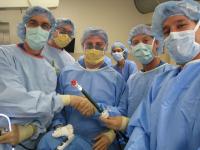
Surgeons from UCSD Center for Future of Surgery remove appendix through vagina, a US first. On March 26, 2008, surgeons at UC San Diego Medical Center removed an inflamed appendix through a patient’s vagina, a first in the United States. Following the 50-minute procedure, the patient, Diana Schlamadinger, reported only minor discomfort. Removal of diseased organs through the body’s natural openings offers patients a rapid recovery, minimal pain, and no scarring. Key to these surgical clinical trials is collaboration with medical device companies to develop new minimally-invasive tools.
| Full story | 0 Comments | 7979 views |
| Health & Medicine | March 30, 2008 02:45 AM |
Boxing is possibly less dangerous for the brain than previously feared – at least for amateurs. However, conclusive statements on the level of danger are not yet possible. Whether professional boxers such as Muhammad Ali contracted their later brain conditions – in his case Parkinson’s disease at the age of 40 – presumably from boxing, remains unclear. The all-clear cannot be given until more extensive studies of both amateur and professional boxers tell us more about the risks for the brain from boxing.
| Full story | 0 Comments | 10342 views |

| Stem Cell Research | March 30, 2008 02:45 AM |
For a rich source of stem cells to be engineered into new blood vessels or skin tissue, clinicians may one day look no further than the hair on their patients’ heads, according to new research published earlier this month by University at Buffalo engineers.
| Full story | 0 Comments | 10294 views |

| AIDS & HIV | March 28, 2008 03:24 PM |
An increase in the CD163+/CD16+ monocyte subset could be a biomarker for the progression of HIV disease, according to researchers at Temple University.
| Full story | 0 Comments | 6719 views |
| Biology | March 28, 2008 03:24 PM |
Oceanic shark populations worldwide are declining from destructive high-seas commercial fishing practices and a rising global demand for shark products (mainly fins and meat), with some shark populations severely depleted and only a few stable or recovering, according to a comprehensive new book co-edited by shark experts from the Pew Institute for Ocean Science (www.pewoceanscience.org), published by Blackwell Publishing, and being released today.*
| Full story | 0 Comments | 11482 views |

| Microarray | March 28, 2008 03:24 PM |
Researchers from the University of Turin, Italy and the University of Nijmegen, The Netherlands, have devised a new method that may help the medical community to determine the genetic basis of many common diseases. Their findings are described in an article published March 21st in the open-access journal PLoS Computational Biology.
| Full story | 0 Comments | 11813 views |
| AIDS & HIV | March 27, 2008 06:06 PM |
More that 1.2 million deaths could be prevented in South Africa over the next five years by accelerating efforts to provide access to antiretroviral therapy (ART), according to a study released online today by the Journal of Infectious Diseases. Using a sophisticated mathematical model of HIV disease and treatment, a team of researchers led by Rochelle Walensky, MD, MPH of Massachusetts General Hospital (MGH) estimated the number of AIDS-related deaths in South Africa through 2012 under alternative ART scale-up assumptions.
| Full story | 0 Comments | 8919 views |
| Molecular & Cell Biology | March 27, 2008 05:06 PM |
Harvard University researchers have discovered a new type of retinal cell that plays an exclusive and unusual role in mice: detecting upward motion. The cells reflect their function in the physical arrangement of their dendrites, branch-like structures on neuronal cells that form a communicative network with other dendrites and neurons in the brain.
| Full story | 0 Comments | 6371 views |
| Health & Medicine | March 27, 2008 04:06 PM |
There is new promise on the horizon for those who suffer from REM Sleep Behaviour Disorder (RBD) according to researchers at the University of Toronto.
| Full story | 0 Comments | 7381 views |
| Biology | March 27, 2008 03:06 PM |
During ongoing investigations by an Oregon State University graduate student, the Forest Service, and California Department of Fish and Game (DFG), two additional wolverine photographs were captured this past week. A variety of hair, track and scat samples were also sent for analysis to determine if these were from a wolverine. After the initial photograph of a wolverine was taken by a remote camera on Feb. 28, 2008, in the Tahoe National Forest, researchers, biologists and volunteers intensified the search for more detections in the same general area, north of Truckee, Calif.
| Full story | 0 Comments | 8254 views |
| Environment | March 27, 2008 02:06 PM |
U.S. Forest Service scientists with the Institute of Pacific Islands Forestry have completed a study on ways to make high-value koa trees grow faster, while increasing biodiversity, carbon sequestration, scenic beauty and recreation opportunities in native Hawaiían forests.
| Full story | 0 Comments | 7544 views |
| Molecular & Cell Biology | March 27, 2008 01:06 PM |
Researchers have identified a key player in the killing of brain cells after a stroke or a seizure. The protein asparagine endopeptidase (AEP) unleashes enzymes that break down brain cells' DNA, scientists at Emory University School of Medicine have found.
| Full story | 0 Comments | 7370 views |
| Biology | March 26, 2008 11:20 PM |
A deficiency of oxygen and the heavy metal molybdenum in the ancient deep ocean may have delayed the evolution of animal life on Earth for nearly two billion years.
| Full story | 0 Comments | 8351 views |
| Molecular & Cell Biology | March 26, 2008 10:20 PM |
The brain cells called astrocytes, and not just neurons, are sensitive to the substances called cannabinoids—the active chemicals in marijuana.
| Full story | 0 Comments | 7402 views |
| Molecular & Cell Biology | March 26, 2008 09:20 PM |
Ten years ago great attention was attracted by the discovery that it was possible to demonstrate signal transfer in proteins using statistical methods. In an article in the journal Proceedings of the National Academy of Science (PNAS) Uppsala researchers are now presenting results of experiments that contradict the theory.
| Full story | 0 Comments | 5760 views |
| Biology | March 26, 2008 08:20 PM |
The brain can sense the calories in food, independent of the taste mechanism, researchers have found in studies with mice. Their finding that the brain’s reward system is switched on by this “sixth sense” machinery could have implications for understanding the causes of obesity. For example, the findings suggest why high-fructose corn syrup, widely used as a sweetener in foods, might contribute to obesity.
| Full story | 0 Comments | 7622 views |
| Molecular & Cell Biology | March 26, 2008 07:20 PM |
Neurons spoke to Dr. Joe Z. Tsien when he was a sophomore college student searching for some meaningful extracurricular activity.
| Full story | 0 Comments | 8560 views |
| Molecular & Cell Biology | March 26, 2008 06:20 PM |

Amino acetonitrile (NH2CH2CN). The "Large Molecule Heimat" is a very dense, hot gas clump within the star forming region Sagittarius B2. In this source of only 0,3 light-year diameter, which is heated by a deeply embedded newly formed star, most of the interstellar molecules known to date have been found, including the most complex ones such as ethyl alcohol, formaldehyde, formic acid, acetic acid, glycol aldehyde (a basic sugar), and ethylene glycol.
| Full story | 0 Comments | 7668 views |
| Biology | March 26, 2008 06:20 PM |
Chimpanzees make judgments about the actions and dispositions of strangers by observing others’ behavior and interactions in different situations. Specifically, chimpanzees show an ability to recognize certain behavioral traits and make assumptions about the presence or absence of these traits in strangers in similar situations thereafter. These findings¹, by Dr. Francys Subiaul - from the George Washington University in Washington DC - and his team, have just been published online in Animal Cognition, a Springer journal.
| Full story | 0 Comments | 6491 views |
| Environment | March 26, 2008 11:09 AM |
CSIRO is collaborating in a NASA-funded project, using a CSIRO-designed instrument, to help develop new methods of measuring forest carbon stores on a large scale.
| Full story | 0 Comments | 6303 views |
| Biology | March 26, 2008 11:09 AM |
They are separated by a vast ocean and by millions of years, but tiny prehistoric bones found on an Australian farm have been directly linked to a strange and secretive little animal that lives today in the southern rainforests of South America.
| Full story | 0 Comments | 7085 views |
| Environment | March 26, 2008 11:09 AM |
In an investigative report published today by Eyes on the Forest, evidence shows that a new logging road in Riau Province -- strongly indicated as illegally built by companies connected to Asia Pulp & Paper (APP) -- is cutting into the heart of Sumatra’s largest contiguous peatland forest, a rare hydrological ecosystem that acts as one of the planet’s biggest carbon stores.
| Full story | 0 Comments | 5831 views |
| Molecular & Cell Biology | March 26, 2008 11:09 AM |
International investigations of an organism that one UT Southwestern Medical Center researcher calls a “silly little green scum” have led to key insights into the basic mechanisms of reproduction.
| Full story | 0 Comments | 6890 views |

| Bioinformatics | March 26, 2008 11:09 AM |
Scientists have discovered two key proteins that guide one of the two groups of pathogenic bacteria to make their hardy outer shells -- their defense against the world.
| Full story | 0 Comments | 6474 views |
| Molecular & Cell Biology | March 25, 2008 06:19 PM |
One day soon patients may spit in a cup, instead of bracing for a needle prick, when being tested for cancer, heart disease or diabetes. A major step in that direction is the cataloguing of the “complete” salivary proteome, a set of proteins in human ductal saliva, identified by a consortium of three research teams, according to an article published today in the Journal of Proteome Research. Replacing blood draws with saliva tests promises to make disease diagnosis, as well as the tracking of treatment efficacy, less invasive and costly.
| Full story | 0 Comments | 10807 views |
| Biology | March 25, 2008 05:19 PM |
Scientists at Harvard University have found that a common class of freshwater invertebrate animals called bdelloid rotifers are extraordinarily resistant to ionizing radiation, surviving and continuing to reproduce after doses of gamma radiation much greater than that tolerated by any other animal species studied to date.
| Full story | 0 Comments | 7017 views |

- In some genetic cases of microcephaly, stem cells fail to launch
- Yale team discovers how Zika virus causes fetal brain damage
- Scientists uncover the way a common cell enzyme alerts the body to invading bacteria
- Arctic gives clues on worst mass extinction of life
- Calcium channel blockers caught in the act at atomic level
Search Bio News Net
Free Biology Newsletter
- Flexibility That A.C.A. Lent to Work Force Is Threatened by...International Herald Tribune
- Bacteria Behind Legionnaires’ Disease Found at New York Police StationInternational Herald Tribune
- Prescription Price Crisis? 28 Million Americans See Spike in Drug...MSNBC.com: Health
- Seizing on Opioid Crisis, a Drug Maker Lobbies Hard for...International Herald Tribune
- Republicans are taking a big political risk on health careAP Health News
- Why We're So Divided Over Saving WolvesNational Geographic News