

Genomatix is a company with a renowned track record in the analysis of genomic data generated by high throughput technologies. Genomatix algorithms include optimized fast mapping strategies and Genomatix already provides the most complete genome annotation in terms of transcriptome and promoters available in its ElDorado database surpassing alternative databases in this specific content by a factor of 2 to 4.

| Biology | January 31, 2008 09:06 PM |
University of Adelaide geneticist Dr Jozef Gecz and a team of Belgium and UK scientists have achieved a major breakthrough in discovering the causes of intellectual disability.
| Full story | 0 Comments | 9935 views |

| Microbiology | January 31, 2008 08:06 PM |
Researchers have identified a potential new mechanism through which human T-lymphotropic virus type-1 (HTLV-1) causes leukemia in adults. The findings, published this week in the online open access journal Retrovirology, represent the first time that a reduction in histone protein levels has been linked to viral infection and the development of cancer.
| Full story | 0 Comments | 7641 views |
| Microbiology | January 31, 2008 07:06 PM |
Recent outbreaks of norovirus–also known as stomach flu–indicate the highly contagious, fast-moving virus is again a public health concern. The Association for Professionals in Infection Control and Epidemiology (APIC) has six simple steps to protect families against noroviruses.
| Full story | 0 Comments | 9124 views |

| Molecular & Cell Biology | January 31, 2008 07:01 PM |
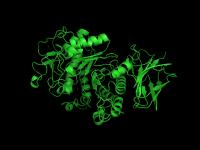
This illustration shows the structure of an endoglucanase enzyme. The arrows indicate straight beta-strands. You can also see the twisted alpha-helices. Peter Reilly's lab discovered the enzyme's structure by producing and crystallizing the enzyme, shooting X-rays through it and analyzing the resulting diffraction pattern. This particular enzyme breaks down cellulose by attacking bonds in the middle of sugar chains. Credit: Peter Reilly/Iowa State University Peter Reilly pointed to the framed journal covers decorating his office.
| Full story | 0 Comments | 8094 views |
| Biology | January 31, 2008 06:06 PM |
Eurasian reed warblers captured during their spring migrations and released after being flown 1,000 kilometers to the east can correct their travel routes and head for their original destinations, researchers report online on January 31st in Current Biology, a publication of Cell Press.
| Full story | 0 Comments | 7530 views |
| Biology | January 31, 2008 06:01 PM |

A floral shoot of the Orobanche mutelii parasite alongside the nonflowering shoot of its tobacco host. Three types of parasitic plants, each exhibiting a different degree to which it needs its host, are the subject of a three-year, $1.5 million study at Virginia Tech to catalog genes essential to parasitism. Funded by the National Science Foundation (NSF) Plant Genome Program, the study examines hard-to-control weeds in the Orobanchaceae family that can wreak havoc on commodity and food crops, especially in developing countries in Africa and the Middle East.
| Full story | 0 Comments | 9138 views |

| Biotechnology | January 31, 2008 05:01 PM |
Results published today in FASEB (the journal of the Federation of American Societies for Experimental Biology) by researchers at Columbia University, including Jeremy Mao of the Columbia College of Dental Medicine, demonstrate a novel way of using porous structures as a drug-delivery vehicle that can help boost the integration of host tissue with surgically implanted titanium.
| Full story | 0 Comments | 6101 views |
| Biology | January 31, 2008 04:01 PM |
Twenty-one boxes filled with 7,000 unique seed samples from more than 36 African nations were shipped to the Svalbard Global Seed Vault, a facility being built on a remote island in the Arctic Circle as a repository of last resort for humanity’s agricultural heritage.
| Full story | 0 Comments | 7371 views |
| Biotechnology | January 31, 2008 03:01 PM |
In an achievement some see as the "holy grail" of nanoscience, researchers at the U.S. Department of Energy's Brookhaven National Laboratory have for the first time used DNA to guide the creation of three-dimensional, ordered, crystalline structures of nanoparticles (particles with dimensions measured in billionths of a meter). The ability to engineer such 3-D structures is essential to producing functional materials that take advantage of the unique properties that may exist at the nanoscale - for example, enhanced magnetism, improved catalytic activity, or new optical properties. The research will be published in the January 31, 2008, issue of the journal Nature.
| Full story | 0 Comments | 6644 views |

| Environment | January 31, 2008 02:01 PM |
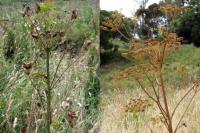
The effects of infestation are dramatic. On the left, a nearly completely devastated New Zealand parsnip. On the right, an unaffected plant. What could be lower than the lowly parsnip, a root once prized for its portable starchiness but which was long ago displaced by the more palatable potato? Perhaps only the parsnip webworm gets less respect. An age-old enemy of the parsnip, the webworm is one of very few insects able to overcome the plant’s chemical defenses. The tenacious parsnip webworm has followed the weedy version of the parsnip in its transit from its ancestral home in Eurasia to Europe, North America and – most recently – New Zealand.
| Full story | 0 Comments | 5855 views |
| Biology | January 31, 2008 01:01 PM |
The European Molecular Biology Organization (EMBO) and the Federation of European Biochemical Societies (FEBS) announced Naama Barkai of the Weizman Institute of Science in Rehovot, Israel as the first-ever winner of the FEBS/EMBO Women in Science Award. Naama Barkai receives the 2008 award for her outstanding contributions to the field of systems biology and the mathematical modelling of biological systems.
| Full story | 0 Comments | 7249 views |
| Biology | January 31, 2008 12:01 PM |
Aggression, testosterone and nepotism don’t necessarily help one climb the social ladder, but the support of a good female can, according to new research on the social habits of an unusual African species of fish.
| Full story | 0 Comments | 7328 views |
| Biology | January 31, 2008 11:01 AM |
Deep brain stimulation (DBS) surgery, which is used to treat Parkinson’s disease and other movement disorders, is now being studied for its potential to treat a variety of conditions. For example, DBS of the hypothalamus has been used to treat cluster headaches and aggressiveness in humans, and stimulating this area influences feeding behavior in animals. A new study found that hypothalamic DBS performed in the treatment of a patient with morbid obesity unexpectedly evoked detailed autobiographical memories. The study will be published online in the Annals of Neurology (http://www.interscience.wiley.com/journal/ana), the official journal of the American Neurological Association.
| Full story | 0 Comments | 7951 views |
| Microbiology | January 31, 2008 10:01 AM |
A vaccine against the most common and deadliest strain of avian flu, H5N1, has been engineered and tested by researchers at the University of Pittsburgh’s Center for Vaccine Research and Novavax Inc. According to a study published by the Public Library of Science in the Jan. 30 issue of PLoS ONE, the vaccine produced a strong immune response in mice and protected them from death following infection with the H5N1 virus. The vaccine is being tested in humans in an early-phase clinical trial.
| Full story | 0 Comments | 8377 views |
| Biotechnology | January 30, 2008 11:01 PM |
For most people, the name “E. coli” is synonymous with food poisoning and product recalls, but a professor in Texas A&M University’s chemical engineering department envisions the bacteria as a future source of energy, helping to power our cars, homes and more.
| Full story | 0 Comments | 10873 views |

| Bioinformatics | January 30, 2008 10:01 PM |
More than 99 percent of all modern potato varieties planted today are the direct descendents of varieties that once grew in the lowlands of south-central Chile. How Chilean germplasm came to dominate the modern potato-which spread worldwide from Europe-has been the subject of a long, contentious debate among scientists.
| Full story | 0 Comments | 8494 views |
| Molecular & Cell Biology | January 30, 2008 09:01 PM |
Researchers in Kobe, Japan, and Montreal, Canada, have uncovered a previously unknown mechanism which causes embryonic germ cells -- which later develop into sperm or ova -- to go through a period of "transcriptional silence," during which information from the cell's DNA cannot be copied. Without this important phase, unique to cells of this type, an organism produces sterile offspring.
| Full story | 0 Comments | 7108 views |
| Bioinformatics | January 30, 2008 08:01 PM |
The identification of disease-causing genes will be much easier and faster using a powerful new gene-networking model developed by researchers at The University of Texas at Austin.
| Full story | 0 Comments | 6969 views |
| Biology | January 30, 2008 07:01 PM |
New research shows that people with blue eyes have a single, common ancestor. A team at the University of Copenhagen have tracked down a genetic mutation which took place 6-10,000 years ago and is the cause of the eye colour of all blue-eyed humans alive on the planet today.
| Full story | 0 Comments | 15481 views |

| Health & Medicine | January 30, 2008 06:01 PM |
Africa's own fruits are a largely untapped resource that could combat malnutrition and boost environmental stability and rural development in Africa, says a new report from the National Research Council. African science institutes, policymakers, nongovernmental organizations, and individuals could all use modern horticultural knowledge and scientific research to bring these "lost crops" -- such as baobab, marula, and butterfruit -- to their full potential, said the panel that issued the report.
| Full story | 0 Comments | 7467 views |
| Biotechnology | January 29, 2008 10:14 PM |
Carbon nanotubes-cylinders so tiny that it takes 50,000 lying side by side to equal the width of a human hair-are packed with the potential to be highly accurate vehicles for administering medicines and other therapeutic agents to patients. But a dearth of data about what happens to the tubes after they discharge their medical payloads has been a major stumbling block to progress.
| Full story | 0 Comments | 7533 views |
| Biology | January 29, 2008 09:14 PM |
The Fertile Crescent of the Middle East has long been identified as a “cradle of civilization” for humans. In a new genetic study, researchers at the University of California, Davis, have concluded that all ancestral roads for the modern day domestic cat also lead back to the same locale.
| Full story | 0 Comments | 12317 views |
| Molecular & Cell Biology | January 29, 2008 08:14 PM |
A team of Penn State University researchers is the first to conduct a genome-wide study to compare the relative importance of factors that contribute to DNA mutations, which are implicated in cancer and over 40 neurological disorders. Led by assistant professor of biology Kateryna Makova, the group investigated the simultaneous effects of numerous factors that are thought to increase the susceptibility to mutations of microsatellites -- variable-length sequences of recurring DNA subunits. Microsatellites are common throughout the genomes of plants and animals. The work is described in the January 2008 issue of the journal Genome Research.
| Full story | 0 Comments | 7890 views |
| Biology | January 29, 2008 06:14 PM |
It is like the premise of a popular home improvement show: in the before photos, the surroundings are undesirable and in the after shot there’s lots of attractive spaces to grab a meal, start a family and relax in seclusion from life’s stresses. The difference here is that the potential new homeowner is a lizard and the renovations come -- not from a sophisticated Manhattan designer -- but instead from a herd of elephants. An examination of the connections between elephants and lizards appears this month in the journal Ecology, where a researcher reports that the elephants’ eating habits have a strong influence on the lizards’ habitat choices. The results demonstrate an important and little understood aspect of ecosystem engineering, and may help land managers working on wildlife refuges in Africa.
| Full story | 0 Comments | 7038 views |
| Health & Medicine | January 29, 2008 05:14 PM |
Heart surgeons at Johns Hopkins have evidence to support further tightening rather than easing of standards used to designate hospitals that are best at performing heart transplants.
| Full story | 0 Comments | 7763 views |

| AIDS & HIV | January 29, 2008 04:14 PM |
The combined supercomputing power of the UK and US ‘national grids’ has enabled UCL (University College London) scientists to simulate the efficacy of an HIV drug in blocking a key protein used by the lethal virus. The method – an early example of the Virtual Physiological Human in action – could one day be used to tailor personal drug treatments, for example for HIV patients developing resistance to their drugs.
| Full story | 0 Comments | 7493 views |
| Microbiology | January 29, 2008 03:14 PM |
In October 2001, letters containing anthrax spores were mailed to several news media offices and two U.S. senators, killing five people and infecting 17 others. Clearing the Senate office building of the spores with chlorine dioxide gas cost $27 million, according to the Government Accountability Office. Cleaning the Brentwood postal facility outside Washington cost $130 million and took 26 months.
| Full story | 0 Comments | 7040 views |
| Microbiology | January 29, 2008 01:14 PM |
We might think we control the climate but unless we harness the powers of our microbial co-habitants on this planet we might be fighting a losing battle, according to an article in the February 2008 issue of Microbiology Today.
| Full story | 0 Comments | 9394 views |
| Molecular & Cell Biology | January 29, 2008 12:14 PM |
Sequences of DNA in the human genome that originated from ancient viral infections have some surprising effects on our bodies and are even essential for a healthy pregnancy, according to an article in the February issue of Microbiology Today.
| Full story | 0 Comments | 7614 views |
| Molecular & Cell Biology | January 28, 2008 08:15 PM |
A novel gene called rumi regulates Notch signaling by adding a glucose molecule to the part of the Notch protein that extends outside a cell, said researchers from Baylor College of Medicine in Houston and Stony Brook University in New York in a report that appears today in the journal Cell.
| Full story | 0 Comments | 6415 views |
| Microbiology | January 28, 2008 07:15 PM |
Marine bacteria come almost a billion to a cup. Until recently, however, little has been known about how these minute creatures live or what they need to flourish.
| Full story | 0 Comments | 6766 views |
| Molecular & Cell Biology | January 28, 2008 06:15 PM |
The more scientists learn about microRNAs – short strands of RNA that can interfere with normal gene activity – the more obvious it becomes how closely they are associated with cancer. In a new study, scientists at The Wistar Institute and their colleagues have identified two microRNAs (miRNAs) that promote tumors’ deadly spread, or metastasis. One of the miRNAs may provide an early warning of metastatic breast cancer and the need for aggressive treatment.
| Full story | 0 Comments | 7379 views |
| Microbiology | January 28, 2008 05:15 PM |
In 2006, Bausch & Lomb withdrew its ReNu with MoistureLoc contact lens solution because a high proportion of corneal infections were associated with it. Now in a new study from University Hospitals Case Medical Center, researchers show that these infections were fueled and made resistant to treatment by the formation of a highly resistant structure of microbial cells held together with a glue-like matrix material. Scientists call this conglomeration of cells biofilms.
| Full story | 0 Comments | 8216 views |
| Health & Medicine | January 28, 2008 04:15 PM |
The number of Russian women who smoke has more than doubled since the collapse of the Soviet Union, according to new research.
| Full story | 0 Comments | 7283 views |
| Molecular & Cell Biology | January 28, 2008 03:15 PM |
The genetic alphabet contains four letters. Although our cells can readily decipher our genetic molecules, it isn’t so easy for us to read a DNA sequence in the laboratory. Scientists require complex, highly sophisticated analytical techniques to crack individual DNA codes. Volker Deckert and his team at the Institute for Analytical Sciences (ISAS) in Dortmund have recently developed a method that could provide a way to directly sequence DNA. Their process is based on a combination of Raman spectroscopy and atomic force microscopy. As reported in the journal Angewandte Chemie, Deckert and Elena Bailo have successfully analyzed DNA’s closest relative, RNA.
| Full story | 0 Comments | 7673 views |
| Molecular & Cell Biology | January 28, 2008 02:15 PM |
Scientists have shown for the first time how a particular family of diseases are passed down from mother to child and how this can lead to the severity of the disease differing widely. The research, funded by the Wellcome Trust, offers hope of being able to predict a child's risk of developing a mitochondrial disease which can cause muscle weakness, diabetes, strokes, heart failure and epilepsy.
| Full story | 0 Comments | 7856 views |
| Microbiology | January 28, 2008 01:15 PM |
There’s a high probability that people who are prone to herpes simplex virus (HSV) outbreaks can inherit that susceptibility through their genes, University of Utah researchers report in a new study.
| Full story | 0 Comments | 7351 views |
| Molecular & Cell Biology | January 27, 2008 12:51 PM |
A University of Saskatchewan team of scientists has isolated a gene that has never before been identified in helping plants to resist stress.
| Full story | 0 Comments | 6320 views |
| Microbiology | January 27, 2008 12:51 PM |
The long-sought-after biological “gateway” that anthrax uses to enter healthy cells has been uncovered by microbiologists at the University of Alabama at Birmingham (UAB).
| Full story | 0 Comments | 8354 views |

- In some genetic cases of microcephaly, stem cells fail to launch
- Yale team discovers how Zika virus causes fetal brain damage
- Scientists uncover the way a common cell enzyme alerts the body to invading bacteria
- Arctic gives clues on worst mass extinction of life
- Calcium channel blockers caught in the act at atomic level
Search Bio News Net
Free Biology Newsletter
- Flexibility That A.C.A. Lent to Work Force Is Threatened by...International Herald Tribune
- Bacteria Behind Legionnaires’ Disease Found at New York Police StationInternational Herald Tribune
- Prescription Price Crisis? 28 Million Americans See Spike in Drug...MSNBC.com: Health
- Seizing on Opioid Crisis, a Drug Maker Lobbies Hard for...International Herald Tribune
- Republicans are taking a big political risk on health careAP Health News
- Why We're So Divided Over Saving WolvesNational Geographic News