

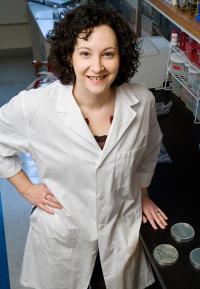
Microbiology professor Carin Vanderpool has identified the unique metabolic activities of one of the small ribonucleic acids in bacteria called SgrS. They are often overlooked, and were once thought to be too small to contribute much to major cellular processes, but in recent years the study of small ribonucleic acids (sRNA) has gained momentum. Now a team from the University of Illinois has identified the unique metabolic activities of one of these bit players, a 200-nucleotide-long RNA molecule in bacteria called SgrS.

| Molecular & Cell Biology | November 30, 2007 09:44 PM |
| Full story | 0 Comments | 7548 views |

| Biology | November 30, 2007 08:44 PM |
Research published in this week’s Science journal shows that some of our closest extinct relatives had more in common with gorillas than previously thought. Dr Charles Lockwood, UCL Department of Anthropology and lead author of the study, said: “When we examined fossils from 1.5 to 2 million years ago we found that in one of our close relatives the males continued to grow well into adulthood, just as they do in gorillas. This resulted in a much bigger size difference between males and females than we see today.
| Full story | 0 Comments | 7414 views |
| Biology | November 30, 2007 07:44 PM |
When fruit fly larvae are poked or prodded, they fold themselves up and corkscrew their bodies around, a behavior that appears to be the young insects’ equivalent of a “judo move,” say researchers reporting online on November 29th in the journal Current Biology, a publication of Cell Press. They now trace that rolling behavior to neurons resembling those that sense pain.
| Full story | 0 Comments | 6839 views |
| Molecular & Cell Biology | November 30, 2007 06:44 PM |
Crossovers and double-strand DNA breaks do not occur randomly on yeast chromosomes during meiosis, but are greatly influenced by the proximity of the chromosome’s telomere, according to research in the laboratory of Whitehead Fellow Andreas Hochwagen. This work may lead to a better understanding of developmental chromosome abnormalities and birth defects.
| Full story | 0 Comments | 8514 views |
| Biology | November 30, 2007 05:44 PM |
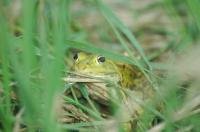
The marsh frog (Rana ridibunda) Indigenous water frogs can be crowded out by immigrant or imported species. This is the finding of a Franco-German study. The scientists investigated water frog populations in France and Northern Spain and noticed that the marsh frog (Rana ridibunda), which normally occurs only in Eastern Europe, has the potential to crowd out indigenous species like Graf’s hybrid frog (Rana grafi) and the Iberian water frog (Rana perezi).
| Full story | 0 Comments | 7843 views |
| Molecular & Cell Biology | November 30, 2007 04:44 PM |
Scientists at Duke University have created the first map of imprinted genes throughout the human genome, and they say a modern-day Rosetta stone – a form of artificial intelligence called machine learning – was the key to their success.
| Full story | 0 Comments | 6214 views |

| Health & Medicine | November 30, 2007 03:44 PM |
Wellcome Trust-funded researchers have successfully completed the clinical trial for a new rapid test for the sexually transmitted infection Chlamydia. The researchers believe the test, which is able to detect Chlamydia in less than 30 minutes – and often much faster – could be a valuable addition to screening programmes already in place, as well as providing a crucial diagnostic test in the developing world.
| Full story | 0 Comments | 6805 views |
| Molecular & Cell Biology | November 30, 2007 02:44 PM |
In the December 15th cover story of G&D, a research team led by Dr. Howard Chang (Stanford University School of Medicine) reports that the blockage of a single gene, called NF-êB, can reverse aging in the mammalian skin. This finding sets the stage for the development of future genetic age-intervention therapies.
| Full story | 0 Comments | 7517 views |

| Stem Cell Research | November 30, 2007 01:44 PM |
A noninvasive, polarized light microscope invented at the Marine Biological Laboratory (MBL) played a crucial role in a recent breakthrough in embryonic stem-cell research aimed at developing medical therapies.
| Full story | 0 Comments | 7707 views |
| Health & Medicine | November 30, 2007 12:44 PM |
Increasing the level of Quitline smoking cessation services and offering free nicotine patches are a successful and cost-effective way to reduce smoking rates, according to two new studies in the December issue of Tobacco Control, a peer-reviewed publication of the British Medical Journal. Both studies were conducted by researchers at Kaiser Permanente’s Center for Health Research in Portland, the Oregon Health Department, and Free & Clear in Seattle, a phone-based tobacco treatment program.
| Full story | 0 Comments | 6794 views |
| Molecular & Cell Biology | November 30, 2007 10:44 AM |
Researchers investigating blood vessels at Barts and The London School of Medicine have hit upon a new discovery in neurobiology that could have implications for patients experiencing peripheral nerve disorders. Their work, which was conducted in close collaboration with scientists at Imperial College London, University College London, Cancer Research UK and the University of Geneva, features in this week’s edition (30 November 2007) of the renowned journal Science.
| Full story | 0 Comments | 7586 views |
| Molecular & Cell Biology | November 29, 2007 08:28 PM |
Expanding evidence that tiny strands of RNA – called microRNAs – play big roles in the progress of some cancers, UC Davis researchers have identified one that helps jump start prostate cancer cell growth midway through the disease process, eventually causing it to become fatal. The discovery is an important link to finding new treatments targeting this cellular function and reducing cancer deaths among American men.
| Full story | 0 Comments | 6765 views |

| Bioinformatics | November 29, 2007 07:28 PM |
Researchers at the University of California San Diego have developed a novel computer technique to search for the side effects of major pharmaceuticals. The study, reported November 30 in PLoS Computational Biology relates to a class of drugs known as Select Estrogen Receptor Modulators (SERMs), which includes tamoxifen, the most prescribed drug in the treatment of breast cancer.
| Full story | 0 Comments | 6881 views |
| Molecular & Cell Biology | November 29, 2007 06:28 PM |
Researchers at the National Institute of Aging and Stanford University have used gene arrays to identify genes whose activity changes with age in 16 different mouse tissues. The study, published November 30 in PLoS Genetics, uses a newly available database called AGEMAP to document the process of aging in mice at the molecular level. The work describes how aging affects different tissues in mice, and ultimately could help explain why lifespan is limited to just two years in mice.
| Full story | 0 Comments | 8378 views |
| Molecular & Cell Biology | November 29, 2007 05:28 PM |
Researchers at Jefferson Medical College and Jefferson’s Kimmel Cancer Center in Philadelphia have used PET imaging to see hyperactive cancer genes inside breast tumors in laboratory animals, marking the first time such gene activity has been observed from outside the body. This technology might someday help physicians to detect and classify cancer, enabling them to find cancerous breast tumors as early as possible, and determine the appropriate treatment.
| Full story | 0 Comments | 8386 views |

| Microarray | November 29, 2007 03:28 PM |
A team led by scientists at MIT and Harvard University and supported in part by the National Institute of Allergy and Infectious Diseases, a component of the National Institutes of Health, collected blood samples from 43 P. falciparum-infected malaria patients in Senegal who were suffering from a range of malaria symptoms. The scientists isolated the parasites’ genomic information and determined which of the nearly 6,000 P. falciparum genes were switched on or off during infection, revealing distinct groups of parasites with characteristic sets of active and inactive genes. By comparing this information about P. falciparum with gene activation patterns in a similar but better-understood organism—baker’s yeast—the scientists described three biological classes of malaria parasites, each with a different metabolic state. One state is well known from laboratory studies, but the other two have never been observed before. One newly described state appears to reflect starving parasites, while the other suggests parasites under extreme environmental stress. Remarkably, say the scientists, the latter group correlated with specific patient symptoms, including high fevers and elevated levels of inflammatory markers in their blood.
| Full story | 0 Comments | 10810 views |
| Molecular & Cell Biology | November 29, 2007 01:28 PM |
Sirtris Pharmaceuticals, Inc. (NASDAQ: SIRT), a biopharmaceutical company focused on discovering and developing small molecule drugs to treat diseases of aging, announced today that findings in the journal Nature demonstrate that Sirtris has developed novel drug candidates that offer a promising, new approach to treating diseases of aging, including Type 2 Diabetes, by targeting SIRT1, a gene that controls the aging process.
| Full story | 1 Comment | 7466 views |

| Microbiology | November 29, 2007 12:28 PM |
As much as $945 million. That's what agricultural economists at Kansas State University say could be the impact on Kansas' economy were there a large-scale foot-and-mouth outbreak in a region thick with livestock operations.
| Full story | 0 Comments | 6809 views |

| Environment | November 29, 2007 10:28 AM |
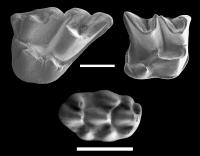
Holotypes from the new species discovered in this research: first superior molar of the Archaeodesmana elvirae, Blarinoides aliciae and Micromys caesaris. The scale is equivalent to 1 mm. How did the rodents which inhabited the south of the Iberian Peninsula live six million years ago" The researcher of the UGR Raef Minwer-Barakat has attempted to answer this question through his doctoral thesis "Rodents and insectivorous of Upper Turoliense and the Pliocene of the central section of the Guadix basin", supervised by doctors Elvira Martín and César Viseras, of the Dept. of Stratigraphy and Palaeontology of the University of Granada. His studied has concluded with the discovering of three new species of rodents and insectivores (Micromys caesaris, Blarinoides aliciae and Archaeodesmana elvirae) and the finding, for the first time in the region, of nine more species.
| Full story | 0 Comments | 6997 views |
| Environment | November 28, 2007 06:44 PM |
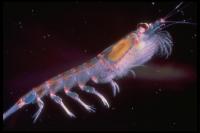
Krill (Euphausia superba) are small, shrimp-like animals that grow up to about 6 cm in length and live for up to 5 years. These are some of the largest members of the plankton, in fact because they swim so well some people think that they are more like little fish than drifting plankton. Credit: Photo: Uwe Kils Source: Alfred Wegener Institute for Polar and Marine Research A ten-week expedition to the Lazarev Sea and the eastern part of the Weddell Sea opens this year's Antarctic research season of the German research vessel Polarstern. On the evening of November 28, just some two hours after an official ceremony at the Berlin Museum of Natural History honouring Polarstern's 25th anniversary of service, the research vessel will begin its 24th scientific voyage to the Southern Ocean from Cape Town.
| Full story | 0 Comments | 10930 views |
| Molecular & Cell Biology | November 28, 2007 05:44 PM |
Statins, the popular class of drugs used to lower cholesterol, are among the most commonly prescribed medications in developed countries. But for some patients, accompanying side effects of muscle weakness and pain become chronic problems and, in rare cases, can escalate to debilitating and even life-threatening damage.
| Full story | 0 Comments | 8008 views |
| Molecular & Cell Biology | November 28, 2007 03:44 PM |
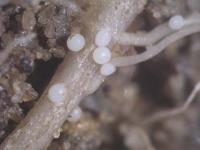
Female G. pallida feeding on the roots of a potato plant The full weight of a consortium of world-leading scientists – including those who helped decode the entire human genome – is being thrown at a parasitic worm less than 1mm long.
| Full story | 1 Comment | 7745 views |
| Biology | November 28, 2007 01:44 PM |
More than 30 years in the making, Birds of Peru describes the birds of Peru through 304 color plates, 1,700 species distribution maps, also in color, and concise descriptive text. The first two authors of this landmark publication, Tom Schulenberg, PhD, and Douglas Stotz, PhD, are conservation ecologists and ornithologists in the Field Museum’s Environmental and Conservation Program. Therefore the Museum will host a free public event launching the book on December 5th
| Full story | 0 Comments | 7996 views |
| Microbiology | November 28, 2007 12:44 PM |
A type of bacterium widely found on our skin and in the environment has now become a major threat in hospitals where it can cause serious infections, such as pneumonia in severely ill patients. Like the well known bacterium MRSA (methicillin resistant Staphylococcus aureus) the new types of Acinetobacter baumannii are resistant to nearly all antibiotics, so doctors have very few treatments available, and three resistant strains are currently circulating in the UK.
| Full story | 0 Comments | 9157 views |

| AIDS & HIV | November 28, 2007 10:44 AM |
Two studies led by researchers at the Johns Hopkins Bloomberg School of Public Health found that people infected with HIV in Thailand die from the disease significantly sooner than those with HIV living in other parts of the world. According to the researchers, the shorter survival time measured in the studies suggests that HIV subtype E, which is the most common HIV subtype in Thailand, may be more virulent than other subtypes of the virus. Both studies are published in a special issue of the journal AIDS.
| Full story | 0 Comments | 8200 views |
| Molecular & Cell Biology | November 27, 2007 07:05 PM |
The cellular mechanism that turns DNA into all of the thousands of proteins that make up a human body is itself both intricate and interesting. A key player in the process—called transcription—is the enzyme RNA polymerase III. Work published online this week in the open-access journal PLoS Biology reports that a mutation of this enzyme prevents cell division, but surprisingly, only affects the development of specific organs. It may also have a therapeutic application against cancer.
| Full story | 0 Comments | 6892 views |
| Environment | November 27, 2007 06:05 PM |
A study by Indiana University researchers found the chlorinated flame retardant Dechlorane Plus in the bark of trees across the northeastern United States, with by far the highest concentrations measured near the Niagara Falls, N.Y., factory where this chemical is produced.
| Full story | 0 Comments | 7697 views |
| Health & Medicine | November 27, 2007 05:05 PM |
Investigators at the University of California, San Diego School of Medicine have developed a new drug called nitrosyl-cobinamide. Cobinamide is a vitamin B12 analog, and, in fact, is the penultimate compound in the biosynthesis of vitamin B12 by bacteria. The UCSD investigators have shown that cobinamide binds relatively tightly to nitric oxide (NO), forming nitrosyl-cobinamide. Because the binding is reversible, nitrosyl-cobinamide can be used as a NO donor. NO is produced by most cells in the body, and helps regulate a variety of physiological functions including maintaining blood pressure, optimizing heart function, and serving as a neurotransmitter. The report on this study, led by Dr. Gerry R. Boss, will appear in the December 07 issue of Experimental Biology and Medicine.
| Full story | 0 Comments | 7255 views |
| Biology | November 27, 2007 04:05 PM |
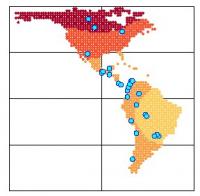
The U-M study, which analyzed genetic data from 29 Native American populations, suggests a Siberian origin is much more likely than a South Asian or Polynesian origin. Did a relatively small number of people from Siberia who trekked across a Bering Strait land bridge some 12,000 years ago give rise to the native peoples of North and South America?
| Full story | 0 Comments | 7480 views |
| Biology | November 27, 2007 03:05 PM |
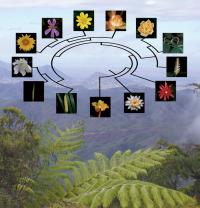
Phylogenetic relationships among the major lineages of flowering plants based on plastid genome sequences. Pictured counter-clockwise from the root at the base of the circle tree are: Amborella trichopoda, Nymphaea odorata, Illicium floridanum, Chloranthus angustifolius, Piper longum, Liriodendron tulipifera, Ceratophyllum demersum, Ranunculus ficaria, Pelargonium exstipulatum, Helianthus annuus, Yucca filamentosa, Triticum aestivum, and Acorus americanus. New Caledonia, home to Amborella trichopoda, is shown in the background. The evolutionary Tree of Life for flowering plants has been revealed using the largest collection of genomic data of these plants to date, report scientists from The University of Texas at Austin and University of Florida.
| Full story | 0 Comments | 9035 views |

| Biotechnology | November 27, 2007 02:05 PM |
A surgeon accidently kills a patient, undoes the error and starts over again. Can mathematics make such science fiction a reality?
| Full story | 0 Comments | 7390 views |
| Health & Medicine | November 27, 2007 01:05 PM |
A vaccine used to protect travelers from cholera, an infection characterized by diarrhea and severe dehydration, could also be used effectively among those living in cholera-prone (endemic) areas, according to a research study by Ira Longini and colleagues published in PLoS Medicine. The study lends support to the idea that public-health officials should consider mass vaccination in their efforts to control endemic cholera.
| Full story | 0 Comments | 7724 views |
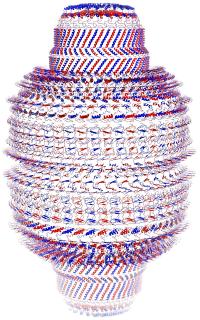
Model of the vault derived by UCLA researchers, with applications to drug delivery (figure published in Nov. 27, 2007, PLoS Biology). Researchers at UCLA's California NanoSystems Institute, the David Geffen School of Medicine at UCLA and the Howard Hughes Medical Institute have modeled the structure of the largest cellular particle ever crystallized, suggesting ways to engineer the particles for drug delivery.
| Full story | 0 Comments | 6800 views |
| Molecular & Cell Biology | November 27, 2007 10:05 AM |
A mouse resistant to cancer, even highly-aggressive types, has been created by researchers at the University of Kentucky. The breakthrough stems from a discovery by UK College of Medicine professor of radiation medicine Vivek Rangnekar and a team of researchers who found a tumor-suppressor gene called "Par-4" in the prostate.
| Full story | 0 Comments | 8883 views |
| AIDS & HIV | November 26, 2007 08:17 PM |
Many people with HIV/AIDS in Serbia and Montenegro experience stigma, loneliness and ostracism, and can find it difficult to secure work and support themselves, according to new research findings.
| Full story | 0 Comments | 6404 views |
| Molecular & Cell Biology | November 26, 2007 07:17 PM |
Huntington’s disease is a genetic time bomb: Programmed in the genes, it appears at a predictable age in adulthood, causing a progressive decline in mental and neurological function and finally death. There is, to date, no cure. Huntington’s, and a number of diseases like it, collectively known as trinucleotide repeat diseases, are caused by an unusual genetic mutation: A three-letter piece of gene code is repeated over and over in one gene. Scientists at the Weizmann Institute have now proposed a mechanism that provides an explanation for the remarkable precision of the time bomb in these diseases. This explanation may, in the future, point researchers in the direction of a possible prevention or cure.
| Full story | 0 Comments | 9294 views |
| Microbiology | November 26, 2007 06:17 PM |
Researchers from the University of Delaware and the University of California at Riverside have thawed ice estimated to be at least a million years old from above Lake Vostok, an ancient lake that lies hidden more than two miles beneath the frozen surface of Antarctica.
| Full story | 0 Comments | 7339 views |
| Biology | November 26, 2007 05:17 PM |
It was not the isolation of the Ice Age that determined the genetic distribution of bears, as has long been thought. This is shown by an international research team led from Uppsala University in Sweden in the latest issue of Molecular Ecology. One possible interpretation is that the hunting of bears by humans and human land use have been crucial factors.
| Full story | 0 Comments | 7785 views |
| Environment | November 26, 2007 04:17 PM |
STORING carbon dioxide deep below the earth’s surface could be a safe, long-term solution to one of the planet’s major contributors to climate change.
| Full story | 0 Comments | 7411 views |
| Biotechnology | November 26, 2007 02:53 PM |
Bioengineers at Yale and Cornell have created a modified chemotherapy that more effectively reaches and remains at the site of brain tumors — by adding a water-soluble polymer to the anti-cancer drug, according to a report in the November-December issue of Bioconjugate Chemistry.
| Full story | 0 Comments | 6661 views |

- In some genetic cases of microcephaly, stem cells fail to launch
- Yale team discovers how Zika virus causes fetal brain damage
- Scientists uncover the way a common cell enzyme alerts the body to invading bacteria
- Arctic gives clues on worst mass extinction of life
- Calcium channel blockers caught in the act at atomic level
Search Bio News Net
Free Biology Newsletter
- Flexibility That A.C.A. Lent to Work Force Is Threatened by...International Herald Tribune
- Bacteria Behind Legionnaires’ Disease Found at New York Police StationInternational Herald Tribune
- Prescription Price Crisis? 28 Million Americans See Spike in Drug...MSNBC.com: Health
- Seizing on Opioid Crisis, a Drug Maker Lobbies Hard for...International Herald Tribune
- Republicans are taking a big political risk on health careAP Health News
- Why We're So Divided Over Saving WolvesNational Geographic News