

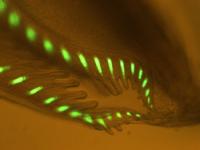
Fluorescence shown along the body structure of amphioxus. Fluorescent proteins found in nature have been employed in a variety of scientific research purposes, from markers for tracing molecules in biomedicine to probes for testing environmental quality. Until now, such proteins have been identified mostly in jellyfish and corals, leading to the belief that the capacity for fluorescence in animals is exclusive to such primitive creatures.

| Biology | October 31, 2007 11:35 PM |
| Full story | 0 Comments | 7779 views |

| Molecular & Cell Biology | October 31, 2007 10:35 PM |
A discovery about the genetics of coat color in dogs could help explain why humans come in different weights and vary in our abilities to cope with stress, a team led by researchers from the Stanford University School of Medicine reports.
| Full story | 0 Comments | 7716 views |

| Biotechnology | October 31, 2007 09:35 PM |
In a feat that seems like something out of a microscopic version of Star Trek, MIT researchers have found a way to use a “tractor beam” of light to pick up, hold, and move around individual cells and other objects on the surface of a microchip.
| Full story | 1 Comment | 6751 views |
| Molecular & Cell Biology | October 31, 2007 08:35 PM |
Interferon, the “superhero” cure for viral infections, may be a strong weapon in the battle against fungal infections in immunocompromised patients, according to an article in the November issue of Microbiology Today.
| Full story | 0 Comments | 7358 views |
| Biology | October 31, 2007 07:35 PM |
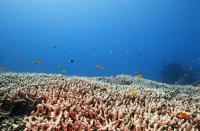
A coral reef and tropical fish off of Ishigaki-jima Island.
The latest development in a major debate over a controversial hypothesis of biodiversity and species abundance is the subject of a paper to be published in the 1 November 2007 issue of the journal Nature. The authors report good agreement between the species richness of two of the world's most vulnerable ecosystems -- tropical forests and coral reefs -- and a simple mathematical model building on the so-called "neutral theory of biodiversity." "We're helping to refine and improve this theory because it might have important implications for the effort to protect terrestrial biodiversity from climate change and urban development," says Jayanth Banavar of the Department of Physics at Penn State, a member of the research team.
| Full story | 0 Comments | 7828 views |

| Health & Medicine | October 31, 2007 06:35 PM |
Duke University Medical Center researchers have used imaging technology to identify a new marker that may help identify those at greatest risk for cognitive decline and the development of Alzheimer's disease.
| Full story | 0 Comments | 6565 views |
| Biology | October 31, 2007 05:35 PM |
Using recently discovered “fossil snapshots” found in rocks more than 500 million years old, three University of Kansas researchers have described the oldest definitive jellyfish ever found.
| Full story | 0 Comments | 8147 views |

| Stem Cell Research | October 31, 2007 04:35 PM |
Heart disease is the leading cause of death in the United States and greatly affects the quality and length of life for individuals with specific forms of muscular dystrophy. Recent discoveries have demonstrated that gene and/or stem cell therapy could help a variety of organs in the body, but until now scientists have been unsure whether the heart could benefit from these treatments. According to a new study, recently published in Circulation Research, a journal of the American Heart Association, University of Missouri-Columbia researchers have demonstrated that a muscular dystrophy patient should be able to maintain a normal lifestyle if only 50 percent of the cells of the heart are healthy.
| Full story | 0 Comments | 7961 views |
| Molecular & Cell Biology | October 31, 2007 03:35 PM |
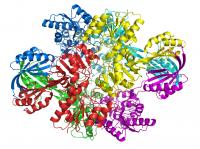
These simplified images from Wayne Anderson's lab show how the polypeptide backbone of a Bacillus anthracis protein folds and curls around itself like a ribbon. It is one of 5,617 proteins in the bacteria that cause anthrax. Credit: Wayne Anderson A scientist slides on a pair of plastic 3-D glasses and an unearthly blue multi-armed creature -- an image right out of a sci-fi horror flick -- seems to leap out of the computer screen into the laboratory.
| Full story | 0 Comments | 6960 views |
| Molecular & Cell Biology | October 31, 2007 01:35 PM |
Researchers at the University of Pittsburgh School of Medicine have identified a new gene responsible for a rare, inherited form of sudden cardiac arrest, known as Brugada syndrome. With the identification of this new gene, the researchers hope this will shed light on the more common forms of sudden death in patients with heart attacks and heart failure, and will help aid in the development of new, effective therapeutic treatments that will prevent all types of fatal arrhythmias.
| Full story | 0 Comments | 7434 views |
| Health & Medicine | October 30, 2007 09:26 PM |
One in seven Americans over the age of 70 suffers from dementia, according to the first known nationally representative, population-based study to include men and women from all regions of the country.
| Full story | 0 Comments | 8365 views |
| Molecular & Cell Biology | October 30, 2007 08:26 PM |
Researchers at MIT studying the architecture of proteins have finally explained why computer models of proteins’ behavior under mechanical duress differ dramatically from experimental observations. This work could have vast implications in bioengineering and medical research by advancing our understanding of the relationship between structure and function in these basic building blocks of life.
| Full story | 1 Comment | 7662 views |
| Molecular & Cell Biology | October 30, 2007 07:26 PM |
Experiments show that simple molecules can combine chemically rather than biologically to form the building blocks of DNA, the key component of all life forms. These processes might have taken place on primitive earth, but how they occur is an unsolved puzzle.
| Full story | 0 Comments | 7431 views |
| Biotechnology | October 30, 2007 06:26 PM |
The automatic molecular assembly and selection steps exhibited by the molecules, which start as random mixtures, demonstrates a fundamental step in the evolution of life. The organization is activated by instructions which are built-in to the molecules. During assembly, molecules exhibit active selection: those in incorrect positions move to make room for others which fit properly. The molecular-level observation of such self-selection gives, for the first time, direct insight into fundamental steps of the biological evolution from inanimate molecules to living entities. The resulting nanostructures also hold great promise as an efficient avenue to new catalysts, nanotechnologies, and surface applications.
| Full story | 1 Comment | 6351 views |
| Biology | October 30, 2007 05:26 PM |
A series of monumental volcanic eruptions in India may have killed the dinosaurs 65 million years ago, not a meteor impact in the Gulf of Mexico. The eruptions, which created the gigantic Deccan Traps lava beds of India, are now the prime suspect in the most famous and persistent paleontological murder mystery, say scientists who have conducted a slew of new investigations honing down eruption timing.
| Full story | 0 Comments | 6561 views |
| Biology | October 30, 2007 04:26 PM |
Unprecedented fossilized body imprints of amphibians have been discovered in 330 million-year-old rocks from Pennsylvania. The imprints show the unmistakably webbed feet and bodies of three previously unknown, foot-long salamander-like critters that lived 100 million years before the first dinosaurs.
| Full story | 0 Comments | 7338 views |
| Molecular & Cell Biology | October 30, 2007 03:26 PM |
Newly created neurons in adults rely on signals from distant brain regions to regulate their maturation and survival before they can communicate with existing neighboring cells—a finding that has important implications for the use of adult neural stem cells to replace brain cells lost by trauma or neurodegeneration, Yale School of Medicine researchers report in The Journal of Neuroscience.
| Full story | 0 Comments | 8527 views |
| Biology | October 30, 2007 02:26 PM |
How can some people live at high altitudes and thrive while others struggle to obtain enough oxygen to function?
| Full story | 0 Comments | 9093 views |

| Microbiology | October 30, 2007 01:26 PM |
Bacterial cells form colonies with complex organization (aka biofilms), particularly in response to hostile environmental conditions. Recent studies have shown that biofilm development occurs when bacterial cells seek out small cavities and populate them at high densities. However, bacteria in cavities may suffer from poor nutrient supply, waste removal, or disorganized expansion, leading to blockage of cell escape. In a new study published online this week in the open-access journal PLoS Biology, HoJung Cho and colleagues at Johns Hopkins University combined experimental and computational approaches to investigate how bacterial cell colonies gradually self-organize in response to these environmental challenges.
| Full story | 0 Comments | 6783 views |
| Biotechnology | October 29, 2007 10:33 PM |
Engineer Dr. Ruth Wilcox, University of Leeds. New research could offer hope for victims of the most devastating spinal injuries - typically those caused in car crashes.
| Full story | 0 Comments | 6207 views |

| Environment | October 29, 2007 09:33 PM |
Ohio State University geologists and their colleagues have uncovered evidence of when Earth may have first supported an oxygen-rich atmosphere similar to the one we breathe today.
| Full story | 0 Comments | 7217 views |
| Microbiology | October 29, 2007 08:33 PM |
Outbreaks of filovirus haemorrhagic fevers (FHFs) such as those caused by the Ebola and Marburg viruses can only be controlled if agencies have the support and trust of local communities, according to two papers just published in the online edition of the Journal of Infectious Diseases as part of a special supplement on filovirusues.
| Full story | 0 Comments | 5595 views |
| Microbiology | October 29, 2007 07:33 PM |
Discovery by Hebrew University of Jerusalem researchers of a new communication factor that enables bacteria to “talk to each other” and causes their death could have significant consequences leading to development of a new class of antibiotic medications.
| Full story | 0 Comments | 6105 views |
| Biology | October 29, 2007 06:33 PM |
A 50-million-year-old fossilised spider has been brought back to life in stunning 3D by a scientist at The University of Manchester.
| Full story | 0 Comments | 10054 views |
| Microbiology | October 29, 2007 05:33 PM |
Genetically engineered mice may hold the key to helping scientists from Queensland University of Technology and Harvard hasten the development of a vaccine to protect adolescent girls against the most common sexually transmitted disease, Chlamydia.
| Full story | 0 Comments | 7120 views |
| Biotechnology | October 29, 2007 04:33 PM |
Placing tiny radioactive spheres directly into the liver through its blood supply halted growth of tumors that had spread to the organ in 71 percent of patients tested in a small clinical trial, researchers from Mayo Clinic Jacksonville report.
| Full story | 0 Comments | 7538 views |
| Biology | October 29, 2007 03:33 PM |
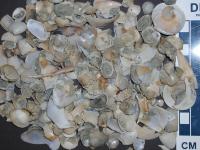
Susan Kidwell explains how studies of molluscs -- clams and snail -- can be used for ecological assessments in the Proceedings of the National Academy of Sciences. Inventories of living and dead organisms could serve as a relatively fast, simple and inexpensive preliminary means of assessing human impact on ecosystems. The University of Chicago's Susan Kidwell explains how measuring the degree of live-dead mismatch could be used as an ecological tool in the Oct. 26 early online edition of the Proceedings of the National Academy of Sciences.
| Full story | 0 Comments | 7054 views |
| Biology | October 28, 2007 07:27 PM |
Next time you see a mole digging in tree-root-filled soil in search of supper, take a moment to ponder the mammal's humerus bones. When seen in the lab, they are nothing like the long upper arm bones of any other mammal, says Samantha Hopkins, a paleontologist at the University of Oregon.
| Full story | 0 Comments | 8046 views |

| Gene Therapy | October 28, 2007 06:27 PM |
Gene therapy administered intravenously could be an effective agent to protect vital organs and tissues from the effects of ionizing radiation in the event of large-scale exposure from a radiological or nuclear bomb, according to an animal study presented today by University of Pittsburgh researchers at the 49th annual meeting of the American Society for Therapeutic Radiology and Oncology (ASTRO) in Los Angeles.
| Full story | 0 Comments | 10092 views |
| Gene Therapy | October 28, 2007 10:07 AM |
Researchers at the Board of Governors Gene Therapeutics Research Institute at Cedars-Sinai Medical Center have shown for the first time that it is possible to sustain therapeutic gene expression in the central nervous system for up to a year, even in the presence of an anti-viral immune response mechanism that is normally present in humans.
| Full story | 0 Comments | 10714 views |

| AIDS & HIV | October 27, 2007 11:07 PM |
The emergence of drug resistant forms of HIV often underlies the failure of current antiretroviral therapies for HIV infection. Specific mutations in the HIV genome confer resistance to individual drugs. Recombination, a process similar to sexual reproduction in higher organisms, can accelerate the accumulation of resistance mutations by mixing the contents of distinct viral genomes and expedite the failure of therapy. The dynamics of the emergence of recombinant forms of HIV in infected individuals remains poorly understood.
| Full story | 0 Comments | 7847 views |
| Biology | October 27, 2007 10:07 PM |
Hainan, China (Oct. 25, 2007) – Mankind’s closest living relatives – the world’s apes, monkeys, lemurs and other primates – are under unprecedented threat from destruction of tropical forests, illegal wildlife trade and commercial bushmeat hunting, with 29 percent of all species in danger of going extinct, according to a new report by the Primate Specialist Group of IUCN’s Species Survival Commission (SSC) and the International Primatological Society (IPS), in collaboration with Conservation International (CI).
| Full story | 0 Comments | 8091 views |
| Biology | October 27, 2007 09:07 PM |
Scientists have shown that birds with higher stress levels adopt bolder behaviour than their normally more relaxed peers in stressful situations. A University of Exeter research team studied zebra finches, which had been selectively bred to produce three distinct types – ‘laid-back’, ‘normal’ and ‘stressed’ – based on their levels of stress hormone. The group was surprised to find that the ‘stressed’ birds were bolder and took more risks in a new environment than the group that was usually more laid-back. Their findings are published today (26 October) in the journal Hormones and Behaviour.
| Full story | 0 Comments | 7522 views |
| Biology | October 27, 2007 08:07 PM |

Fruits of Bhut Jolokia on plants grown in the field at the Leyendecker Plant Science Research Center. Researchers at New Mexico State University recently discovered the world’s hottest chile pepper. Bhut Jolokia, a variety of chile pepper originating in Assam, India, has earned Guiness World Records’ recognition as the world’s hottest chile pepper by blasting past the previous champion Red Savina. In replicated tests of Scoville heat units (SHUs), Bhut Jolokia reached one million SHUs, almost double the SHUs of Red Savina, which measured a mere 577,000.
| Full story | 0 Comments | 12009 views |
| Biology | October 27, 2007 07:07 PM |
A new study explores the role of natural enemies, such as predators and parasites, for mixed mating, a reproductive strategy in which hermaphroditic plants and animals reproduce through both self- and cross-fertilization. The findings highlight the possible evolutionary consequences of these interactions.
| Full story | 0 Comments | 6992 views |
| Biology | October 27, 2007 06:07 PM |
Fossil remains of Neanderthals paint an incomplete picture; they cannot tell us about their cognitive skills or give us details of what they looked like. Since scientists in Svante Paabo's team at the Max Planck Institute for Evolutionary Anthropology in Leipzig started looking into the DNA of Neanderthals, they have made some new and astonishing discoveries. Just last week, the Leipzig scientists published their discovery of the human variant of the FOXP2 gene in our nearest relatives. And they have now revealed another interesting detail: at least one percent of the Neanderthals in Europe may have had red hair, according to a report by researchers working with Carles Lalueza-Fox at the University of Barcelona, Holger Rompler at the University of Leipzig and Michael Hofreiter at the Max Planck Institute in Leipzig in the online edition of Science (Science Express, October 25, 2007).
| Full story | 0 Comments | 9997 views |
| Microbiology | October 27, 2007 04:07 PM |
Microbes such as bacteria tend to live in complex colonies called biofilms, where there can resist antibiotics and cause more problems for the immune system. Biofilms comprising millions of bacteria are at the root of many serious chronic infectious diseases such as cystic fibrosis and periodontal disease, as well as industrial contamination, biofouling and biocorrosion.
| Full story | 0 Comments | 7225 views |
| Environment | October 27, 2007 02:07 PM |
Humans are fundamentally altering the Earth’s chemistry. Many of society’s most pressing environmental problems, from climate change to acid rain, stem from human activities that disrupt natural chemical cycles. Moving toward a sustainable future will depend on identifying and reversing actions that have such a huge impact on the Earth’s chemistry.
| Full story | 0 Comments | 7582 views |
| Biology | October 26, 2007 02:07 PM |
When prehistoric fish made their first forays onto land, what did they see" According to a study published in the online open access journal, BMC Evolutionary Biology, it's likely that creatures venturing out of the depths viewed their new environment in full colour.
| Full story | 0 Comments | 8415 views |
| Biology | October 26, 2007 12:07 PM |
When it comes to their social behavior, people sometimes act like monkeys, or more specifically, like rhesus macaques, a type of monkey that shares with humans strong tendencies for nepotism and political maneuvering, according to research by Dario Maestripieri, an expert on primate behavior and an Associate Professor in Comparative Human Development and Evolutionary Biology at the University of Chicago.
| Full story | 0 Comments | 8099 views |

- In some genetic cases of microcephaly, stem cells fail to launch
- Yale team discovers how Zika virus causes fetal brain damage
- Scientists uncover the way a common cell enzyme alerts the body to invading bacteria
- Arctic gives clues on worst mass extinction of life
- Calcium channel blockers caught in the act at atomic level
Search Bio News Net
Free Biology Newsletter
- Flexibility That A.C.A. Lent to Work Force Is Threatened by...International Herald Tribune
- Bacteria Behind Legionnaires’ Disease Found at New York Police StationInternational Herald Tribune
- Prescription Price Crisis? 28 Million Americans See Spike in Drug...MSNBC.com: Health
- Seizing on Opioid Crisis, a Drug Maker Lobbies Hard for...International Herald Tribune
- Republicans are taking a big political risk on health careAP Health News
- Why We're So Divided Over Saving WolvesNational Geographic News