

In the October 1 issue of G&D, Dr. Guillermo Oliver (St. Jude Children’s Research Hospital) and colleagues present new evidence to resolve a century-old debate over the origin of the mammalian lymphatic vasculature. Understanding the development of the lymphatic vasculature is integral to understanding its function in both health (mediating immunity and maintaining tissue fluid levels) and disease (lymphedema and spreading tumor metastasis).

| AIDS & HIV | September 30, 2007 06:19 PM |
Researchers at the Partners AIDS Research Center at Massachusetts General Hospital (PARC-MGH) may have discovered a second molecular “switch” responsible for turning off the immune system’s response against HIV. Last year members of the same team identified a molecule called PD-1 that suppresses the activity of HIV-specific CD8 T cells that should destroy virus-infected cells. Now the researchers describe how a regulatory protein called CTLA-4 inhibits the action of HIV-specific CD4 T cells that control the overall response against the virus. The report will appear in the journal Nature Immunology and is receiving early online release.
| Full story | 0 Comments | 6399 views |

| Health & Medicine | September 30, 2007 02:19 AM |
Pills, sponges, IUDs, diaphragms-- women have many options for planning their fertility, none of them quite perfect. But what if men want to help out? They have only two options -- vasectomy, which is usually permanent, and condoms, which are crucial for dating but get old in long-term relationships. Will men ever have a way to reliably make sure that nobody is every calling them "Daddy" before they are ready?
| Full story | 0 Comments | 8713 views |
| Health & Medicine | September 30, 2007 02:19 AM |
As policy makers debate what levels of ozone in the air are safe for humans to breathe, studies in mice are revealing that the inhaled pollutant impairs the body’s first line of defense, making it more susceptible to subsequent foreign invaders, such as bacteria.
| Full story | 0 Comments | 7406 views |

| Biology | September 29, 2007 10:49 AM |
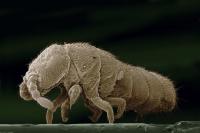
Antarctic springtail - Cryptopygus antarcticus. False colour, scanning electron-micrograph. Cryptopygus is one of the most successful terrestrial arthropods to have colonised the Antarctic continent. Although only 1-2 mm long and weighing only a few micro-grams, it is one of the largest animals to complete its lifecycle on the Antarctic continent. Credit: Pete Bucktrout Springtails, mites, worms and plant life could help solve the mystery of Antarctica’s glacial history according to new research published in the journal Science this week.
| Full story | 0 Comments | 15518 views |
A study by Yale researchers offers a new view of what causes the greatest genetic variability among individuals — suggesting that it is due less to single point mutations than to the presence of structural changes that cause extended segments of the human genome to be missing, rearranged, or present in extra copies.
| Full story | 0 Comments | 7608 views |

| Bioinformatics | September 28, 2007 09:49 PM |
Giardia lamblia, one of the most common human parasites in the United States, causes more than 20,000 intestinal infections a year, often through contact with contaminated drinking or swimming water. In the September 28 issue of Science, an international team led by researchers at the MBL (Marine Biological Laboratory) describe the complete genome (genetic sequence) of Giardia, which could lead to the development of new drugs to combat this persistent infection, called giardiasis.
| Full story | 0 Comments | 7880 views |

| Environment | September 28, 2007 08:49 PM |
Acid rain was one of the world’s worst pollution problems of the 1970s and 1980s, affecting large areas of upland Britain, as well as Europe and North America.
| Full story | 0 Comments | 8601 views |

| Microarray | September 28, 2007 07:49 PM |
Determining the genetic profile of a particular lung tumor can help clinicians make the crucial decision about which chemotherapy treatment to try first.
| Full story | 0 Comments | 6364 views |

| Molecular & Cell Biology | September 28, 2007 06:49 PM |
Kaposi’s sarcoma herpesvirus (KSHV) is a human tumor virus and an etiological agent for Kaposi’s sarcoma (KS). KSHV infection is endemic in sub-Saharan Africa where KS is nowadays the most common malignancy, due to widespread infection with KSHV and human immunodeficiency virus (HIV). Importantly, KS also occurs in HIV-negative individuals. Researchers at the University of Helsinki, Finland, have discovered that activation of the DNA damage response in the early stages of KS development functions as an anti-cancer barrier also in virus induced malignancies.
| Full story | 0 Comments | 6690 views |

| Microbiology | September 28, 2007 05:49 PM |
H5N1 influenza, also known as avian influenza, is considered a major global threat to human health, with high fatality rates. While little had been known about the specific effects of H5N1 on organs and cells targeted by the virus, researchers at Beijing University, Columbia University Mailman School of Public Health, and SUNY Downstate report in the September 29, 2007 issue of the Lancet detailed studies of human H5N1 victims that shed light on the anatomic distribution of the virus and its pathogenesis. Using a combination of molecular and protein labeling techniques, the authors found that H5N1 is present in the gastrointestinal tract and immune and central nervous systems, as well as the respiratory tract. In one patient, virus was transmitted across the placenta to the fetus.
| Full story | 0 Comments | 8033 views |
| Biology | September 28, 2007 04:49 PM |
Researchers at the University of Illinois have used an innovative approach to reveal the molecular basis of altruistic behavior in wasps. The research team focused on the expression of behavior-related genes in Polistes metricus paper wasps, a species for which little genetic data was available when the study was begun. Their findings appear today online in Science Express.
| Full story | 0 Comments | 6927 views |

Drawing of a woolly mammoth. Stephan C. Schuster and Webb Miller of Penn State University, working with Thomas Gilbert from Copenhagen and a large international consortium, discovered that hair shafts provide an ideal source of ancient DNA -- a better source than bones and muscle for studying the genome sequences of extinct animals. Their research achievement, described in a paper to be published in the journal Science on 28 September 2007, includes the sequencing of entire mitochondrial genomes from 10 individual woolly mammoths.
| Full story | 0 Comments | 8044 views |
| Health & Medicine | September 27, 2007 09:00 PM |
A multinational team of environmental and occupational health researchers has found that consumer paints sold in Nigeria contain dangerously high levels of lead.
| Full story | 0 Comments | 8102 views |
| Molecular & Cell Biology | September 27, 2007 08:00 PM |
An international collaboration directed by an Oak Ridge National Laboratory researcher has performed the first-ever atomic-detail computer simulation of how proteins vibrate in a crystal.
| Full story | 0 Comments | 6666 views |
| Biology | September 27, 2007 07:00 PM |
A snake's intended prey might affect the type and evolution of toxins in their venom, research published in the online open access journal BMC Evolutionary Biology shows.
| Full story | 0 Comments | 10284 views |

| Gene Therapy | September 27, 2007 06:00 PM |
To move a gene from point A to point B, scientists and gene therapists have two proven options: a virus, which can effectively ferry genes of interest into cells, and a plasmid, an engineered loop of DNA that can do the same thing, albeit usually only on a short-term basis.
| Full story | 0 Comments | 8390 views |
| Environment | September 27, 2007 04:00 PM |
The Smithsonian’s National Zoo recently acquired 12,000 new animals—microscopic Elkhorn coral larvae harvested by National Zoo scientists in Puerto Rico—as part of an international collaborative program to raise the threatened species. National Zoo scientists hope to one day return the animals, once they are grown, to their wild ocean habitat.
| Full story | 0 Comments | 6602 views |
| Environment | September 27, 2007 02:00 PM |
A research team led by San Jose State University and the University of California, Santa Barbara has discovered forests of a species of kelp previously thought endangered or extinct in deep waters near the Galapagos Islands. The discovery has important implications for biodiversity and the resilience of tropical marine systems to climate change. The research paper describing the discovery is published in this week’s on-line issue of the Proceedings of the National Academy of Sciences.
| Full story | 0 Comments | 7930 views |
| Gene Therapy | September 27, 2007 12:00 PM |
Researchers from MIT, Alnylam Pharmaceuticals and other institutions have demonstrated the safety of a promising type of genetic therapy that could lead to treatments for a wide range of diseases such as cancer.
| Full story | 0 Comments | 8827 views |
| Molecular & Cell Biology | September 26, 2007 02:41 PM |
Cryptochromes, which fulfill the molecular requirements for sensing the magnetic reference direction, have recently been found in retinal neurons of migratory birds (Mouritsen et al., PNAS, 2004). Furthermore, studies investigating what parts of a migratory bird´s brain are active when the birds use their magnetic compass showed that the cryptochrome-containing neurons in the eye and a forebrain region (“Cluster N”; Mouritsen et al., PNAS, 2005; Liedvogel et al., EJN, 2007) are highly active during processing of magnetic compass information in migratory birds. Sensory systems process their particular stimuli along specific brain circuits. Thus, the identification of what sensory system is active during magnetic compass orientation, provides a way to recognize the sensory quality utilized during that specific behavior.
| Full story | 0 Comments | 9227 views |
| Health & Medicine | September 26, 2007 02:41 PM |
Your body goes to a lot of trouble to make sure you stay upright. But when the brain’s neural pathways are impaired through injury, age or illness, muscles are deprived of the detailed sensory information they need to perform the constant yet delicate balancing act required for normal movement and standing.
| Full story | 0 Comments | 7916 views |
| Biology | September 26, 2007 02:41 PM |
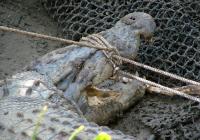
Large estuarine crocodile that is about to be restrained and a tracking device fitted. Three crocodiles relocated from their homes in Far North Queensland have been tracked swimming between 10 and 30 kilometres per day according to a collaborative research project by The University of Queensland, Australia Zoo and Queensland Parks and Wildlife Service.
| Full story | 0 Comments | 11070 views |
| Biology | September 26, 2007 02:41 PM |
During evolution, many of a species’ properties are shaped by ecological interactions. This is readily evident in mammalian teeth, whose many features closely reflect what each species eats. However, for a long time scientists have suspected that genetic and developmental interactions may also influence species-specific properties. Now, researchers at the University of Helsinki’s Institute of Biotechnology show how development affects the evolution of teeth, and have devised a simple developmental model to predict aspects of teeth across many species. The results were published in Nature.
| Full story | 0 Comments | 9233 views |
| Molecular & Cell Biology | September 26, 2007 02:41 PM |
Scientists at the University of California, San Diego (UCSD) School of Medicine have uncovered a novel pathway by which hormones elevated in inflammation, cancer and cell injury act on cells to stimulate their growth.
| Full story | 0 Comments | 7598 views |
| Health & Medicine | September 26, 2007 02:41 PM |
Researchers at the University of Illinois at Chicago College of Medicine have identified a new molecular target in blood clot formation, which seems to reduce clotting without excessive bleeding, the common side-effect of anti-clotting agents.
| Full story | 0 Comments | 6444 views |

| Biotechnology | September 26, 2007 02:41 PM |
Engineers at Ohio State University have found a way to turn discarded chicken eggshells into an alternative energy resource.
| Full story | 0 Comments | 8505 views |
| Health & Medicine | September 26, 2007 02:41 PM |
Women diagnosed with metastatic breast cancer who have also endured previous traumatic or stressful events see their cancer recur nearly twice as fast as other women, according to a report by a University of Rochester Medical Center scientist.
| Full story | 0 Comments | 7471 views |
| Biology | September 26, 2007 02:41 PM |
World Wildlife Fund scientists said today that the discovery of 11 new animal and plant species in a remote area in central Vietnam underscores the importance of conservation efforts in the ancient tropical forests of the region.
| Full story | 0 Comments | 11265 views |
| Molecular & Cell Biology | September 26, 2007 02:41 PM |
The jury is in: microRNAs can cause tumors to metastasize. These tiny molecules fine-tune protein production and play a powerful role in biological processes ranging from development to aging. Now scientists have proved that they can prompt otherwise sedentary cancer cells to move and invade other tissues.
| Full story | 0 Comments | 7792 views |
| Molecular & Cell Biology | September 25, 2007 11:49 PM |
A team, led by researchers at the Carnegie Institution,* has found a key biochemical cycle that suppresses the immune response, thereby allowing cancer cells to multiply unabated. The research shows how the biomolecules responsible for healthy T-cells, the body’s first defenders against hostile invaders, are quashed, permitting the invading cancer to spread. The same cycle could also be involved in autoimmune diseases such as multiple sclerosis. The work is published in the September 25, 2007, issue of PLoS Biology.
| Full story | 0 Comments | 8639 views |
| Microbiology | September 25, 2007 10:49 PM |
Lymph nodes can be crucial for spreading low doses of infective prion agents -the pathogens responsible for conditions such as scrapie and Creutzfeldt-Jakob disease - into the nervous system, according to new research published in the online open access journal BMC Veterinary Research. While we can show that the regional lymph node plays no pivotal role in the neuroinvasion of prions for high doses of infection, we cannot rule out the possibility that lymph nodes are still involved in the distribution of prions throughout the body to other non-neural tissues.
| Full story | 0 Comments | 6591 views |
| Microbiology | September 25, 2007 09:49 PM |
Baseball had its steroids and Black Sox. Politics lived through Watergate. Wall Street has been riddled with insider trading scandals. And before we cast the first stone, who among us has never tried to get through an intersection on a yellow light?
| Full story | 0 Comments | 6619 views |
| Health & Medicine | September 25, 2007 08:49 PM |
Researchers at Texas A&M University are participating in developing a medicine that is worth sneezing about: a treatment for influenza that forms a jelly when sprayed into the nose.
| Full story | 0 Comments | 7367 views |
| Biotechnology | September 25, 2007 07:49 PM |
By placing quantum dots on a specially designed photonic crystal, researchers at the University of Illinois have demonstrated enhanced fluorescence intensity by a factor of up to 108. Potential applications include high-brightness light-emitting diodes, optical switches and personalized, high-sensitivity biosensors.
| Full story | 0 Comments | 8108 views |
| Health & Medicine | September 25, 2007 06:49 PM |
A new review of inpatient data from US hospitals shows that the number of infections caused by a common bacterium increased by over 7 percent each year from 1998 to 2003. The attendant economic burden to hospitals increased by nearly 12 percent annually. The research is published in the November 1 issue of Clinical Infectious Diseases, now available online.
| Full story | 0 Comments | 6724 views |
| Microbiology | September 25, 2007 05:49 PM |
Researchers at the Swedish medical university Karolinska Institutet (KI) and the Swedish Institute for Infectious Disease Control (SMI) have identified the biochemical mechanism behind the adhesive protein that give rise to particularly serious malaria in children. The knowledge of how the malaria parasite makes blood vessels become sticky paves the way for a future vaccine for the disease, which currently kills some 2 million people every year.
| Full story | 0 Comments | 8337 views |
| Molecular & Cell Biology | September 25, 2007 04:49 PM |
Many herbal plants such as strawberry, clover, reed and ground elder naturally form networks. Individual plants remain connected with each other for a certain period of time by means of runners. These connections enable the plants to share information with each other via internal channels. They are therefore very similar to computer networks. But what do plants want to chat to each other about?
| Full story | 0 Comments | 6471 views |
| Biology | September 25, 2007 03:49 PM |
Scientists have discovered how the zebrafish (Danio rerio) develops one of its four stripes.
| Full story | 0 Comments | 6836 views |
| Environment | September 25, 2007 02:49 PM |
The high biodiversity in tropical forests has both fascinated and puzzled ecologists for more than half a century. In the hopes of finding an answer to this puzzle, ecologists have turned their attention to the spatial patterns of such communities and mapped the location of each tree with a stem larger than a pencil in plots covering 25 to 52ha of tropical forest around the world. In a study published in The American Naturalist a German - Sri Lankan research team has now undertaken thousands of spatial pattern analyses to paint an overall picture of the association between tree species in one of these plots in Sri Lanka.
| Full story | 0 Comments | 7166 views |

- In some genetic cases of microcephaly, stem cells fail to launch
- Yale team discovers how Zika virus causes fetal brain damage
- Scientists uncover the way a common cell enzyme alerts the body to invading bacteria
- Arctic gives clues on worst mass extinction of life
- Calcium channel blockers caught in the act at atomic level
Search Bio News Net
Free Biology Newsletter
- Flexibility That A.C.A. Lent to Work Force Is Threatened by...International Herald Tribune
- Bacteria Behind Legionnaires’ Disease Found at New York Police StationInternational Herald Tribune
- Prescription Price Crisis? 28 Million Americans See Spike in Drug...MSNBC.com: Health
- Seizing on Opioid Crisis, a Drug Maker Lobbies Hard for...International Herald Tribune
- Republicans are taking a big political risk on health careAP Health News
- Why We're So Divided Over Saving WolvesNational Geographic News