

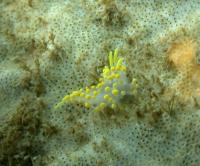
Cuthona behrensi, one of five new species of aeolid nudibranchs discovered in the Eastern Pacific. The Tropical Eastern Pacific, a discrete biogeographic region that has an extremely high rate of endemism among its marine organisms, continues to yield a wealth of never-before-described marine animals to visiting scientists at the Smithsonian Tropical Research Institute in Panama. Alicia Hermosillo, researcher at the Universidad de Guadalajara in Mexico, and Angel Valdes, assistant curator of Malacology at the Natural History Museum of Los Angeles County, describe five newly discovered species of nudibranchs, two of which Hermosillo collected in Panama, in Volume 22 of the American Malacological Bulletin.

| Biology | May 31, 2007 10:40 PM |
| Full story | 0 Comments | 7792 views |

| Stem Cell Research | May 31, 2007 09:40 PM |
Rats paralyzed due to loss of blood flow to the spine returned to near normal ambulatory function six weeks after receiving grafts of human spinal stem cells (hSSCs), researchers from the University of California, San Diego (UCSD) School of Medicine report. The study, led by Martin Marsala, M.D., UC San Diego professor of anesthesiology, is published in the June 29, 2007 issue of the journal Neuroscience, which is now online.
| Full story | 0 Comments | 6773 views |

| Health & Medicine | May 31, 2007 08:40 PM |
The simple notion of copying the body’s own natural "waste disposal" chemistry to mop up potentially toxic nitrogen has saved an estimated 80 percent of patients with urea cycle disorders --- most of them children – according to a report in this week’s New England Journal of Medicine summarizing a quarter century of experience with the treatment.
| Full story | 0 Comments | 5469 views |
| Biology | May 31, 2007 07:40 PM |
In a night sky filled with hungry bats, good-tasting moths increase their chances of survival by mimicking the sounds of their bad-tasting cousins, according to a new Wake Forest University study.
| Full story | 0 Comments | 7994 views |
| Biology | May 31, 2007 06:40 PM |
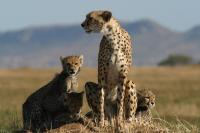
A new cheetah study by the Wildlife Conservation Society and the Zoological Society of London has found that many cheetah litters have more than one father. While promiscuity in the animal kingdom is generally a male thing, researchers for the Wildlife Conservation Society and the Zoological Society of London (ZSL) have found that, in cheetah society, it’s the female with the wandering eye, as reported in a paper in the latest issue of Proceedings of the Royal Society B.
| Full story | 0 Comments | 6519 views |
| Biology | May 31, 2007 05:40 PM |
By observing wild orangutans, a research team has found that walking on two legs may have arisen in relatively ancient, tree-dwelling apes, rather than in more recent human ancestors that had already descended to the savannah, as current theory suggests.
| Full story | 0 Comments | 5777 views |

| Environment | May 31, 2007 04:40 PM |
A robotic vehicle designed for underwater exploration plunged repeatedly into the depths of Mexico’s mysterious El Zacatón sinkhole in late May, finding its previously undiscovered bottom 318 meters below the surface and generating a sonar map of its inner dimensions. The vehicle employed autonomous navigation and mapping systems developed by Carnegie Mellon University’s Robotics Institute.
| Full story | 0 Comments | 5521 views |
| Health & Medicine | May 30, 2007 11:07 PM |
With a $2 million grant from the National Institutes of Health (NIH), researchers from Rensselaer Polytechnic Institute are developing a physics-based virtual model that can simulate a patient's breathing in real time. When used in conjunction with existing 3-D models, adding the fourth dimension of time could significantly improve the accuracy and effectiveness of radiation treatment for lung and liver cancers.
| Full story | 0 Comments | 5146 views |
| Biology | May 30, 2007 10:07 PM |
Magnetic resonance imaging is a very effective method for revealing anatomical details of soft tissues. Contrast agents can help to make these images even clearer and allow physiological processes to be followed in real time. Conventional gadolinium complexes currently used as MRI contrast agent cannot reveal anatomic structures. As reported in the journal Angewandte Chemie, Korean researchers led by Jung Hee Lee at Samsung Medical Center and Taeghwan Hyeon at Seoul National University have now developed a new MRI contrast agent using manganese oxide nanoparticles that produces images of the anatomic structures of mouse brain which are as clear as those obtained by histological examination.
| Full story | 0 Comments | 6889 views |

| Molecular & Cell Biology | May 30, 2007 09:07 PM |
Scientists have identified the receptor in cells of the peripheral nervous system that is most responsible for the body's ability to sense cold.
| Full story | 0 Comments | 7412 views |
| Biology | May 30, 2007 08:07 PM |
Brain "pacemakers" that have helped ease symptoms in people with Parkinson's disease and other movement disorders seem to work by drowning out the electrical signals of their diseased brains.
| Full story | 0 Comments | 9893 views |
| Biology | May 30, 2007 07:07 PM |
Mule deer are giving new meaning to watching out for other mothers' kids.
| Full story | 0 Comments | 7563 views |
| Molecular & Cell Biology | May 30, 2007 06:07 PM |
Many insects living in northern climates don't die at the first signs of cold weather. Rather, new research suggests that they use a number of specialized proteins to survive the chilly months.
| Full story | 0 Comments | 6144 views |

| Microarray | May 30, 2007 05:07 PM |
Idiopathic pulmonary fibrosis (IPF) is a chronic lung disease typically characterized by the slow but progressive onset of shortness of breath or cough. Most patients live about five years after diagnosis. However, according to a new study being published today in the online journal PLoS ONE, a subset of patients with a specific genetic profile has a much more rapid progression to complete pulmonary failure and death without a lung transplant.
| Full story | 0 Comments | 6746 views |
| Environment | May 30, 2007 04:07 PM |
In the wake of the U.S. government’s watershed decision to propose listing the polar bear as "Threatened" under the Endangered Species Act, the Wildlife Conservation Society (WCS) is launching a bold initiative to save the Earth’s largest terrestrial predator, not by following the bears themselves, but the receding sea ice habitat that may drastically shrink as a result of global warming. In a project named "Warm Waters for Cool Bears," WCS will use both current and historical satellite imagery to predict where sea ice is likely to persist and where subsequent conservation efforts to save the species will be most effective.
| Full story | 0 Comments | 8100 views |
| Health & Medicine | May 30, 2007 03:37 PM |
A common antipsychotic drug used in emergency rooms to treat methamphetamine overdose damages nerve cells in an area of the brain known to regulate movement, a new study shows.
| Full story | 0 Comments | 6079 views |
| Health & Medicine | May 30, 2007 01:37 PM |
Idiopathic pulmonary fibrosis (IPF) is a chronic and progressive lung disorder from which most patients die within 5 years after diagnosis. The disease is characterized by the insidious onset of dyspnea or cough and usually evolves slowly.
| Full story | 0 Comments | 7475 views |

| Biotechnology | May 30, 2007 11:37 AM |
Scientists from Institute of Biophysics and Nanosystems Research (IBN), Austrian Academy of Sciences and of Centre for Biomedical Engineering, Massachusetts Institute of Technology, Cambridge, USA report the study of “Tuning Curvature and Stability of Monoolein Bilayers by Designer Lipid-Like Peptide Surfactants” in the May 30th issue of the online, open-access journal PLoS ONE. Their findings not only help us to understand the basic science of how lipid-like peptides interact with lipid molecules, but also may provide new strategies for the encapsulation and the delivery of biological active materials. They detailed their findings in the report on the impact of integrating short surfactant-like designer peptides in lipidic nanostructures.
| Full story | 0 Comments | 5453 views |

| Microbiology | May 30, 2007 09:37 AM |
A new study conducted by researchers from the University of Verona and the Institute G. Gaslini in Genova, Italy, confirms the pivotal role played by Cytomegalovirus infection in the pathogenesis of atherosclerosis.
| Full story | 0 Comments | 5583 views |

| AIDS & HIV | May 29, 2007 09:46 PM |
New research conducted at the Uniformed Services University of the Health Sciences (USU) suggests that it may be possible to develop a vaccine that protects against the myriad strains of the HIV virus. HIV is extremely variable, so an effective vaccine may need to stimulate the body to produce cross-reactive antibodies that will neutralize multiple viral strains. These results demonstrate that induction of truly broad-spectrum neutralizing antibodies may be an achievable goal. This groundbreaking study titled: “Extensively Cross-Reactive Anti-HIV-1 Neutralizing Antibodies Induced by gp140 Immunization” appears this week in the Early Edition of Proceedings of the National Academy of Sciences http://www.pnas.org/papbyrecent.shtml.
| Full story | 0 Comments | 7181 views |
| Health & Medicine | May 29, 2007 08:46 PM |
The most powerful genetic analysis of the DNA codes of over 40,000 women -- including those with breast cancer as well as those without the disease – has uncovered five common genetic variants that increase an individual’s risk for breast cancer.
| Full story | 0 Comments | 7478 views |
| Biology | May 29, 2007 07:46 PM |
Long before the National Security Agency began eavesdropping on the phone calls of Americans, young song sparrows were listening to and learning the tunes sung by their neighbors.
| Full story | 0 Comments | 8333 views |
| Biology | May 29, 2007 06:46 PM |
Sharks are known to have a keen sense of smell, which in many species is critical for finding food. However, according to new research from Boston University marine biologists, sharks can not use just their noses to locate prey; they also need their skin – specifically a location called the lateral line. The lateral line is an organ used by all fish to detect, with exquisite sensitivity, movement and vibration in the surrounding water. According to the research team, this is similar to how humans can sense air flow with the small hairs on the face. Until now, it had not been demonstrated that the lateral line also aids in the tracking of odor plumes.
| Full story | 0 Comments | 6865 views |
| AIDS & HIV | May 29, 2007 05:46 PM |
University of Toronto researchers have uncovered the basis by which pregnant women protect themselves against malaria and have also discovered how the HIV virus works to counteract this defence. The research could lead to improved vaccines for pregnant women in malaria-ravished regions.
| Full story | 0 Comments | 6692 views |
| Molecular & Cell Biology | May 29, 2007 04:46 PM |
"Nurse cells" play an important role in deciding which developing infection-fighting cells, called T cells, live and which die, according to research funded by the National Science Foundation (NSF) and reported in the June issue of the journal Experimental Biology and Medicine.
| Full story | 0 Comments | 6852 views |
| Health & Medicine | May 29, 2007 10:33 AM |
A noninvasive ultrasound procedure effectively shrinks uterine fibroids and significantly relieves fibroid-related symptoms in women, according to the results of a multicenter clinical trial reported in the June issue of the journal Radiology. Magnetic resonance-guided, focused ultrasound surgery (MRgFUS) allows radiologists to precisely target fibroids without harming healthy surrounding tissue.
| Full story | 0 Comments | 7513 views |
| Microbiology | May 29, 2007 09:33 AM |
Adults who have recovered from the potentially deadly H5N1 strain of avian influenza may hold the key to future treatments for the virus, according to an international team of researchers. In a study published today in the open access journal PLoS Medicine, the researchers have shown how specific antibodies taken from avian flu survivors in Vietnam can be reproduced in the laboratory and prove effective at neutralising the virus in culture vitro and in mice.
| Full story | 0 Comments | 7211 views |
| AIDS & HIV | May 29, 2007 07:33 AM |
HIV treatment can be delivered even in settings of armed conflict, and humanitarian health agencies should not wait until a conflict is over before launching HIV care programs, say a team from Médecins Sans Frontières (MSF) in this week’s PLoS Medicine.
| Full story | 0 Comments | 5976 views |
| Health & Medicine | May 29, 2007 05:33 AM |
Using magnetic resonance imaging (MRI), radiologists can better predict the likelihood of full or partial recovery of patients with acute spinal cord injuries (SCI), according to a study published in the June issue of the journal Radiology.
| Full story | 0 Comments | 5471 views |
| Health & Medicine | May 29, 2007 01:33 AM |
"Virtual autopsy" performed with multidetector computed tomography (MDCT) can aid forensics teams in determining if a person has drowned, according to a study published in the June issue of Radiology.
| Full story | 0 Comments | 6767 views |
| Biotechnology | May 28, 2007 12:02 PM |
Herds of cows producing skimmed milk could soon be roaming our pastures, reports Cath O’Driscoll in Chemistry & Industry, the magazine of the SCI. Scientists in New Zealand have discovered that some cows have genes that give them a natural ability to produce skimmed milk and plan to use this information to breed herds of milkers producing only skimmed milk.
| Full story | 1 Comment | 8824 views |
| Biology | May 27, 2007 04:33 PM |
Certain army ants in the rainforests of Central and South America conduct spectacular predatory raids containing up to 200,000 foraging ants. Remarkably, some ants use their bodies to plug potholes in the trail leading back to the nest, making a flatter surface so that prey can be delivered to the developing young at maximum speed.
| Full story | 0 Comments | 9192 views |
| Biology | May 27, 2007 04:33 PM |
Mice genetically engineered to lack a single enzyme in their brains are more adept at learning than their normal cousins, and are quicker to figure out that their environment has changed, a team led by researchers at UT Southwestern Medical Center has found.
| Full story | 0 Comments | 6053 views |

| Bioinformatics | May 25, 2007 05:43 PM |
The genome of the organism that produces the world’s most lethal toxin is revealed today. This toxin is the one real weapon in the genome of Clostridium botulinum and less than 2 kg — the weight of two bags of sugar — is enough to kill every person on the planet. Very small amounts of the same toxin are used in medical treatments, one of which is known as Botox®.
| Full story | 0 Comments | 7312 views |

| Gene Therapy | May 25, 2007 03:43 PM |
Early-stage research has found that a new gene therapy can nearly eliminate arthritis pain, and significantly reduce long-term damage to the affected joints, according to a study published today in the journal Arthritis and Rheumatism. While the study was done in mice, they are the first genetically engineered to develop osteoarthritis like humans, with the same genetic predisposition that makes some more likely to develop the disease, the authors said. If all goes well with a follow-up study currently underway, researchers will apply to the U.S. Food and Drug Administration for permission to begin human trials next year.
| Full story | 0 Comments | 8881 views |
| Stem Cell Research | May 25, 2007 01:43 PM |
In a fundamental discovery that someday may help cure type 1 diabetes by allowing people to grow their own insulin-producing cells for a damaged or defective pancreas, medical researchers here have reported that they have engineered adult stem cells derived from human umbilical cord blood to produce insulin.
| Full story | 0 Comments | 6825 views |
| Microbiology | May 24, 2007 08:47 PM |
Effector proteins are the bad guys that help bacterial pathogens do their job of infecting the host by crippling the body's immune system. In essence, they knock down the front door of resistance and disarm the cell's alarm system.
| Full story | 0 Comments | 6716 views |
| Molecular & Cell Biology | May 24, 2007 07:47 PM |
For the first time anywhere, a researcher at the Hebrew University of Jerusalem has succeeded in observing in vivo the generation of neurons in the brain of a mammal.
| Full story | 0 Comments | 5566 views |
| Microbiology | May 24, 2007 06:47 PM |
Researchers studying the genetics behind why C. difficile causes disease have come to a simple conclusion -- the bacteria do it because they are starving. That just might help them find a new treatment for what can sometimes be a very difficult disease to treat.
| Full story | 0 Comments | 6373 views |
| Biology | May 24, 2007 05:47 PM |
An extraordinary underwater trackway with 12 consecutive prints provides the most compelling evidence to-date that some dinosaurs were swimmers. The 15-meter-long trackway, located in La Virgen del Campo track site in Spain's Cameros Basin, contains the first long and continuous record of swimming by a non-avian therapod dinosaur.
| Full story | 0 Comments | 5810 views |

- In some genetic cases of microcephaly, stem cells fail to launch
- Yale team discovers how Zika virus causes fetal brain damage
- Scientists uncover the way a common cell enzyme alerts the body to invading bacteria
- Arctic gives clues on worst mass extinction of life
- Calcium channel blockers caught in the act at atomic level
Search Bio News Net
Free Biology Newsletter
- Flexibility That A.C.A. Lent to Work Force Is Threatened by...International Herald Tribune
- Bacteria Behind Legionnaires’ Disease Found at New York Police StationInternational Herald Tribune
- Prescription Price Crisis? 28 Million Americans See Spike in Drug...MSNBC.com: Health
- Seizing on Opioid Crisis, a Drug Maker Lobbies Hard for...International Herald Tribune
- Republicans are taking a big political risk on health careAP Health News
- Why We're So Divided Over Saving WolvesNational Geographic News