


Male (left) and bisexual (right) flowers in horsenettle (Solanum carolinense). What would be the opening chapter of the Kamasutra of plant sex? A good pick would be a description of the numerous ways in which plants arrange their sexual organs: from both sexes in the same flower to sexes separated in different flowers or individuals.

| Biology | April 30, 2007 11:57 PM |
| Full story | 0 Comments | 6473 views |

| Environment | April 30, 2007 10:57 PM |
According to a study in the May/June 2007 issue of the journal Ground Water, pharmaceuticals are being found in septic tanks and, consequentially, ground water due to incomplete human metabolism and excretion into the waste stream or by disposal of unused medications in the toilet or down the sink.
| Full story | 0 Comments | 6157 views |
| Biology | April 30, 2007 09:57 PM |
Researchers at the Yerkes National Primate Research Center, Emory University, have found bonobos and chimpanzees use manual gestures of their hands, feet and limbs more flexibly than they do facial expressions and vocalizations, further supporting the evolution of human language began with gestures as the gestural origin hypothesis of language suggests. This study appears in the current issue of the Proceedings of the National Academy of Sciences.
| Full story | 0 Comments | 8322 views |
| Biology | April 30, 2007 08:57 PM |

Lonesome George at the Charles Darwin Research Station. "Lonesome George," a giant Galapagos tortoise and conservation icon long thought to be the sole survivor of his species, may not be alone for much longer, according to a multinational team of researchers headed by investigators at Yale University.
| Full story | 0 Comments | 15501 views |
| Biology | April 30, 2007 06:28 PM |
Because of new imaging technology, researchers are getting a better understanding of a physiological paradox: how insects, which have a respiratory system built to provide quick access to a lot of oxygen, can survive for days without it.
| Full story | 0 Comments | 7564 views |

| Molecular & Cell Biology | April 30, 2007 04:28 PM |
In the May 15th issue of G&D, Dr. Michael Carey (UCLA's Jonsson Comprehensive Cancer Center) and colleagues lend new insight into the mechanism of epigenetic silencing of euchromatic genes.
| Full story | 0 Comments | 7125 views |

| Health & Medicine | April 30, 2007 02:28 PM |
By giving ordinary adult mice a drug - a synthetic designed to mimic fat - Salk Institute scientist Dr. Ronald M. Evans is now able to chemically switch on PPAR-d, the master regulator that controls the ability of cells to burn fat. Even when the mice are not active, turning on the chemical switch activates the same fat-burning process that occurs during exercise. The resulting shift in energy balance (calories in, calories burned) makes the mice resistant to weight gain on a high fat diet.
| Full story | 0 Comments | 7710 views |

| Stem Cell Research | April 30, 2007 12:28 PM |
Hopkins researchers have identified a backup supply of stem cells that can repair the most severe damage to the nerves responsible for our sense of smell. These reservists normally lie around and do nothing, but when neighboring cells die, the scientists say, the stem cells jump into action. A report on the discovery will appear online next week in Nature Neuroscience.
| Full story | 0 Comments | 5816 views |
| Molecular & Cell Biology | April 30, 2007 10:28 AM |
In earlier work, Northwestern University scientist Mary J.C. Hendrix and colleagues discovered that aggressive melanoma cells (but not normal skin cells nor less aggressive melanoma cells) contain specific proteins similar to those found in embryonic stem cells. This groundbreaking work led to the first molecular classification of malignant melanoma and may help to explain how, by becoming more like unspecialized stem cells, the aggressive melanoma cell gained enhanced abilities to migrate, invade and metastasize while virtually undetected by the immune system.
| Full story | 0 Comments | 8589 views |
| Molecular & Cell Biology | April 29, 2007 11:28 PM |
A team of researchers investigating the effects of oxytocin, a peptide produced by the brain that regulates social behavior, has found that it can prevent detrimental cardiac responses in adult female animals exposed to social isolation. The findings may provide further insight into how these mechanisms affect humans.
| Full story | 0 Comments | 8210 views |
| Molecular & Cell Biology | April 29, 2007 10:28 PM |
In the May 15th issue of Genes & Development, an international collaboration of researchers, led by Dr. Yijun Qi (National Institute of Biological Sciences, China), report on their discovery of microRNAs in the unicellular green alga, Chlamydomonas reinhardtii. This is the first finding of microRNAs in a unicellular organism.
| Full story | 0 Comments | 8095 views |
| Biology | April 29, 2007 09:28 PM |
US and Mexican conservation efforts may have boosted the number of marine turtles visiting UK waters, according to University of Exeter biologists.
| Full story | 0 Comments | 6641 views |
| Biology | April 29, 2007 05:24 PM |
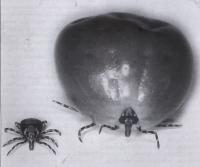
Unfed and engorged tick. Sex makes you fat. If you're a female tick, that is.
| Full story | 0 Comments | 9006 views |
| Molecular & Cell Biology | April 29, 2007 02:24 PM |
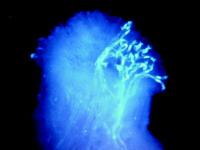
Ultraviolet fluorescence microscopy image of a stigma of an arabidopsis plant that has been genetically modified to resist self-pollination. The left side was self-pollinated and the right side pollinated from another variety, and pollen tubes form only on the cross-pollinated side. Credit: Nasrallah Lab Some plants need a partner to reproduce. Pollen from one plant pollinates the stigma of another, and a seed is formed. But other plants can self-pollinate, a handy survival mechanism for a lonely plant.
| Full story | 0 Comments | 6111 views |
| Health & Medicine | April 29, 2007 12:24 PM |
A researcher at the Stanford University School of Medicine has helped confirm the reliability of a new test for liver disease that is ushering in the long-promised era of personalized medicine based on each individual's genetic makeup.
| Full story | 0 Comments | 5667 views |

| AIDS & HIV | April 29, 2007 10:24 AM |
The ability of HIV-1 to develop high levels of genetic diversity and acquire mutations to escape immune pressures contributes to our difficulties in producing a vaccine. David Nickle et al present here an efficient algorithm to develop vaccines that cope with the diversity of HIV or other variable pathogens.
| Full story | 0 Comments | 5986 views |
| Health & Medicine | April 28, 2007 09:24 PM |
Armed with more than a decade’s worth of statistics, researchers are sounding a new alarm about growing rates of syphilis among gay and bisexual men.
| Full story | 0 Comments | 6307 views |

| Biotechnology | April 28, 2007 08:24 PM |
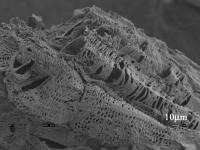
A magnified image of a cornstalk particle shows the many tiny pores that pretreatment -- a phase of the ethanol production process -- opens up. These pores create more surface area for subsequent reactions to take place and give enzymes better access to cellulose, the source for cellulosic ethanol. Researchers said this information could help in establishing an economic method for industrial production of cellulosic ethanol. Credit: Purdue University photo/Meijuan Zeng Tiny pores within plant cells may hold promise for green fuels.
| Full story | 0 Comments | 6958 views |
| Environment | April 28, 2007 07:24 PM |
A team of scientists announced today confirmation of a link between massive volcanic eruptions along the east coast of Greenland and in the western British Isles about 55 million years ago and a period of global warming that raised sea surface temperatures by five degrees (Celsius) in the tropics and more than six degrees in the Arctic.
| Full story | 0 Comments | 9656 views |
| Molecular & Cell Biology | April 28, 2007 06:24 PM |
A role for a microRNA in the immune system has been shown by study of one of the world’s first microRNA knockout mouse, reported Friday 27 April in Science. The microRNA acts as a lynchpin to balance the response of immune defences and the researchers suggest the corresponding human gene will have a similar vital role.
| Full story | 0 Comments | 7212 views |
| Health & Medicine | April 28, 2007 05:24 PM |
Cancer researchers led by Dr. John Dick at Ontario Cancer Institute (OCI) have developed a method to convert normal human blood cells into "human" leukemia stem cells. The converted cells, when transplanted into special mice that permit the growth of human cells, can replicate the entire disease process from the very moment it begins. The findings are published in the journal Science.
| Full story | 0 Comments | 6025 views |
| Stem Cell Research | April 28, 2007 04:24 PM |
Nearly 50% of couples who were interviewed at least 3 years after undergoing in vitro fertilization (IVF) chose to donate their surplus, stored embryos for stem cell research, according to a report by the Spanish Stem Cell Bank in an April 26, 2007, advanced online publication of Cell Stem Cell, a new publication of Cell Press in affiliation with the International Society for Stem Cell Research.
| Full story | 0 Comments | 6045 views |
| Biotechnology | April 28, 2007 02:24 PM |
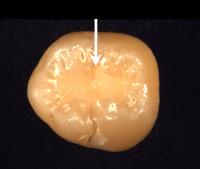
A calcium phosphate nanocomposite filling in a tooth. The nanocomposite can "smartly" release decay-fighting agents to buffer against acids produced by bacteria, and rebuild the lost tooth minerals by releasing ions into the mineral-deficient area of the tooth. Credit: NIST The mouth is a tough environment—which is why dentists do not give lifetime guarantees. Despite their best efforts, a filling may eventually crack under the stress of biting, chewing and teeth grinding, or secondary decay may develop where the filling binds to the tooth. Fully 70 percent of all dental procedures involve replacements to existing repairs, at a cost of $5 billion per year in the United States alone.
| Full story | 0 Comments | 5780 views |
| Biotechnology | April 28, 2007 12:24 PM |
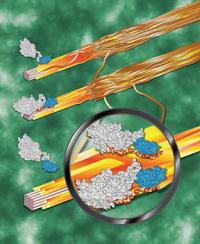
This schematic diagram shows the newly discovered class of plant enzymes with a cellulose-binding module (shown in blue), sticking to a plant cell wall. The binding module of the enzyme helps the catalytic region of the enzyme (shown in more detail in gray in the pullout part of the picture) break down the crystalline cellulose. Credit: Daniel Ripoll and Chris Pelkie/Cornell Theory Center In a breakthrough that could make the production of cellulosic ethanol less expensive, Cornell researchers have discovered a class of plant enzymes that potentially could allow plant materials used to make ethanol to be broken down more efficiently than is possible using current technologies.
| Full story | 0 Comments | 7168 views |
| Molecular & Cell Biology | April 28, 2007 10:24 AM |
Researchers at Johns Hopkins have discovered to their surprise that a drug commonly used to treat toenail fungus can also block angiogenesis, the growth of new blood vessels commonly seen in cancers. The drug, itraconazole, already is FDA approved for human use, which may fast-track its availability as an antiangiogenesis drug.
| Full story | 0 Comments | 7385 views |
| Health & Medicine | April 27, 2007 11:24 PM |
Researchers at Johns Hopkins have discovered that the same ingredient used in dandruff shampoos to fight the burning, itching and flaking on your head also can calm overexcited nerve cells inside your head, making it a potential treatment for seizures. Results of the study can be found online in Nature Chemical Biology.
| Full story | 0 Comments | 6635 views |
| Environment | April 27, 2007 10:24 PM |
As climate change continues to make headlines across the world, participants at the 2007 Envisat Symposium this week are hearing how Earth observation satellites allow scientists to better understand the parameters involved in global warming and how this is impacting the planet.
| Full story | 0 Comments | 7749 views |

| Microbiology | April 27, 2007 09:24 PM |
Biomedical researchers have identified a cellular protein that interferes with hepatitis C virus replication, a finding that ultimately may help scientists develop new drugs to fight the virus.
| Full story | 0 Comments | 8904 views |
| Biology | April 27, 2007 08:24 PM |
A recent study in Nature (1) suggested that terrestrial plants may be a global source of the potent greenhouse gas methane, making plants substantial contributors to the annual global methane budget. This controversial finding and the resulting commotion triggered a consortium (2) of Dutch scientists to re-examine this in an independent study. Reporting in New Phytologist, Tom Dueck and colleagues present their results and conclude that methane emissions from plants are negligible and do not contribute to global climate change.
| Full story | 0 Comments | 7789 views |
| Environment | April 27, 2007 07:24 PM |
Changes in growth rates in some coastal and long-lived deep-ocean fish species in the south west Pacific are consistent with shifts in wind systems and water temperatures, according to new Australian research published in the United States this week.
| Full story | 0 Comments | 7238 views |
| Environment | April 27, 2007 06:24 PM |
A major study sheds new light on the role of carbon dioxide once it's transported to the oceans' depths. The research indicates that instead of sinking, carbon dioxide is often consumed by animals and bacteria and recycled in the "twilight zone," a dimly lit area 100 to 1,000 meters below the surface. Because the carbon often never reaches the deep ocean, where it can be stored and prevented from re-entering the atmosphere as a green-house gas, the oceans may have little impact on changes in the atmosphere or climate.
| Full story | 0 Comments | 8179 views |
| Health & Medicine | April 27, 2007 05:24 PM |
A new study, led by Felix Aigner, M.D., has identified a protein known as Lipocalin-2 (Lcn-2) as potentially responsible for regulating the body's inflammatory response during heart transplants. One of the major complications involved with many transplantations is the damage done to the transplanted heart during and immediately following surgery, known as ischemia and reperfusion (IR). In particular, inflammatory cells infiltrate the donated heart, which then releases enzymes and other proteins that attack the transplanted tissue, and can seriously impair the viability of replacement organs and jeopardize the health of the patient. The identification of Lcn-2 could be a first step towards reducing this inflammatory response and increasing the success rate of heart transplants worldwide. The study appears in American Journal of Transplantation.
| Full story | 0 Comments | 5500 views |
| Health & Medicine | April 26, 2007 10:33 PM |
New technology, the size of a mobile phone, which could save the life of an unborn child, has been developed by scientists from The University of Nottingham. The device monitors the baby’s heart for signs of potential danger. It is small and easy to use so that mother’s-to-be can keep a regular check on their baby’s heart beat without having to go into hospital and be attached to a machine. No other technology allows them to do this.
| Full story | 0 Comments | 7069 views |
| Microbiology | April 26, 2007 09:33 PM |
Responding to the urgent need for alternative energy, Florida Tech Professor of Biological Science, Junda Lin, has received a $430,000 contract from Aurora Biofuels for large-scale production of microalgae. Successful microalgae production for fuel so far is in small-scale cultivation.
| Full story | 0 Comments | 6575 views |
| Health & Medicine | April 26, 2007 08:33 PM |
"I had a perfectly normal baby. He hit all his developmental landmarks but after his first birthday he seemed to be sick all of the time, with infection after infection. He stopped eating and was no longer happy and playful. By 17 months he had stopped talking, interacting, or even looking at us anymore; he was in his own little world. At four years old, he had no language, was not potty trained, and was smearing (feces) on the walls. My baby had been stolen away from us."
| Full story | 1 Comment | 7897 views |
| Health & Medicine | April 26, 2007 07:33 PM |
Employers can blame hay fever for the loss of millions of hours of work productivity this spring.
| Full story | 0 Comments | 7084 views |
| Molecular & Cell Biology | April 26, 2007 06:33 PM |
A Johns Hopkins team has stopped in its tracks a form of blood cancer in mice by engineering and inactivating an enzyme, telomerase, thereby shortening the ends of chromosomes, called telomeres.
| Full story | 0 Comments | 10574 views |
| AIDS & HIV | April 26, 2007 05:33 PM |
One out of three sexually active older adults infected with HIV has unprotected sex, according to a study by Ohio University researchers. A survey of 260 HIV-positive older adults found that of those having sex, most were male, took Viagra and were in a relationship.
| Full story | 0 Comments | 7371 views |
| Molecular & Cell Biology | April 26, 2007 04:33 PM |
Morphine, as little as a single dose, blocks the brain’s ability to strengthen connections at inhibitory synapses, according to new Brown University research published in Nature.
| Full story | 0 Comments | 7484 views |
| Environment | April 26, 2007 03:33 PM |
On May 7, a National Research Council committee will hold a meeting in Toronto to gather information on trade in the Great Lakes region and ways to eliminate further introductions of nonindigenous aquatic species into the lakes by vessels traveling the St. Lawrence Seaway. The committee's final report will comment on the strengths and weaknesses of various options and recommend those that seem most promising.
| Full story | 0 Comments | 5763 views |

- In some genetic cases of microcephaly, stem cells fail to launch
- Yale team discovers how Zika virus causes fetal brain damage
- Scientists uncover the way a common cell enzyme alerts the body to invading bacteria
- Arctic gives clues on worst mass extinction of life
- Calcium channel blockers caught in the act at atomic level
Search Bio News Net
Free Biology Newsletter
- Flexibility That A.C.A. Lent to Work Force Is Threatened by...International Herald Tribune
- Bacteria Behind Legionnaires’ Disease Found at New York Police StationInternational Herald Tribune
- Prescription Price Crisis? 28 Million Americans See Spike in Drug...MSNBC.com: Health
- Seizing on Opioid Crisis, a Drug Maker Lobbies Hard for...International Herald Tribune
- Republicans are taking a big political risk on health careAP Health News
- Why We're So Divided Over Saving WolvesNational Geographic News