

In the July 1st issue of G&D, Dr. Douglas Black (UCLA) and colleagues detail how alternative splicing is reprogrammed during neuronal development.

| Biology | June 29, 2007 11:14 PM |
A factor in immune cells regulates human semen and seems to determine whether a man will be fertile, according to a new study.
| Full story | 0 Comments | 6982 views |

| Stem Cell Research | June 29, 2007 10:15 PM |
Researchers from Columbia University Medical Center received a $2.5 million grant from the National Institute of Biomedical Imaging and Bioengineering to use stem cells to engineer soft tissue, developing a process that should ultimately allow scientists to use a patient’s own stem cells to develop tissue for facial reconstruction following disfiguring injuries from war, cancer surgery or accidents.
| Full story | 0 Comments | 8222 views |

| Biotechnology | June 29, 2007 09:14 PM |
In May, Nobel Laureate James D. Watson, the scientist who co-discovered the structure of DNA, became the first person to receive his own complete personal genome -- all three billion base pairs of his DNA code sequenced. The cost was $1 million, and the process took two months.
| Full story | 0 Comments | 6270 views |
| Biology | June 29, 2007 08:15 PM |
Hormones control growth, metabolism, reproduction and many other important biological processes. In humans, and all other vertebrates, the chemical signals are produced by specialised brain centres such as the hypothalamus and secreted into the blood stream that distributes them around the body. Researchers from the European Molecular Biology Laboratory (EMBL) now reveal that the hypothalamus and its hormones are not purely vertebrate inventions, but have their evolutionary roots in marine, worm-like ancestors. In this week’s issue of the journal Cell they report that hormone-secreting brain centres are much older than expected and likely evolved from multifunctional cells of the last common ancestor of vertebrates, flies and worms.
| Full story | 0 Comments | 7611 views |

| Molecular & Cell Biology | June 28, 2007 10:37 PM |
Large, seemingly useless pieces of RNA - a molecule originally considered only a lowly messenger for DNA - play an important role in letting cells know where they are in the body and what they are supposed to become, researchers at Stanford University School of Medicine have discovered.
| Full story | 0 Comments | 7861 views |

| AIDS & HIV | June 28, 2007 09:37 PM |
A growing number of drug-resistant strains of HIV are a threat to the effectiveness of current treatments despite anti-HIV drug cocktails decreasing the number of HIV-related deaths and improving the quality of life for HIV patients. Existing methods of detecting drug-resistant forms of HIV are expensive, time consuming, and often fail to identify small populations of drug-resistant HIV. Now, researchers at the University of Pennsylvania School of Medicine have developed a drug resistance screening method that analyzes multiple HIV variants at the same time, while also saving time and money.
| Full story | 0 Comments | 6011 views |
| Molecular & Cell Biology | June 28, 2007 08:37 PM |
The body may hold a secret to normalizing skin cell growth that is over zealous in psoriasis and non-melanoma skin cancers and too slow in aging and sun-damaged skin, researchers say.
| Full story | 0 Comments | 8270 views |
| Molecular & Cell Biology | June 28, 2007 07:37 PM |
Researchers at the University of Warwick’s Warwick Medical School have uncovered a process that locks the body’s metabolism in a diabetic state after only relatively limited exposure to high glucose levels.
| Full story | 0 Comments | 6688 views |
| Molecular & Cell Biology | June 28, 2007 06:37 PM |
Exercise has a similar effect to antidepressants on depression. This has been shown by previous research. Now Astrid Bjørnebekk at Karolinska Institutet has explained how this can happen: exercise stimulates the production of new brain cells.
| Full story | 0 Comments | 12690 views |
| Biology | June 28, 2007 05:37 PM |
The reproductive monopoly of the ant queen is not as strong as is often thought. Dr. Heikki Helanterä and Prof. Lotta Sundström, biologists working at the University of Helsinki, Finland, investigated worker ovary development and egg laying in nine Northern European wood ant species of the genus Formica, and revealed wide spread reproductive endeavours by workers. For example, in species such as Formica cinerea, Formica pratensis, and Formica truncorum approximately one in five workers is fully equipped to lay eggs. Furthermore, genetic analysis of egg parentage showed that these workers are really laying eggs on a large scale. For example in the species with the most worker reproduction, Formica truncorum, as many as one in four of eggs are indeed laid by the workers.
| Full story | 0 Comments | 8274 views |

| Health & Medicine | June 28, 2007 04:37 PM |
Can adopting a healthier lifestyle later in life help -- or is it too late? In a study published in the July 2007 issue of The American Journal of Medicine, researchers from the Medical University of South Carolina, Charleston found that people 45 to 64 years of age who added healthy lifestyle behaviors could substantially reduce their risk for cardiovascular disease (CVD) and reduce their death rate. Once these people achieved 4 healthy behaviors, eating at least 5 fruits and vegetables daily, exercising at least 2.5 hours per week, maintaining their Body Mass Index (BMI) between 18.5 and 30 kg/m, and not smoking, investigators saw a 35% reduction in CVD incidence and a 40% reduction in mortality compared to people with less healthy lifestyles.
| Full story | 0 Comments | 5745 views |
| Biotechnology | June 28, 2007 02:32 PM |
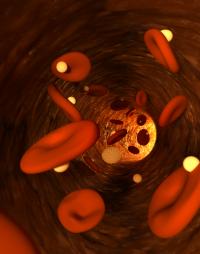
Polymer nanoparticles attach to red blood cells and remain in circulation for prolonged times. Unattached nanoparticles are rapidly cleared by body's immune system. Researchers at the University of California, Santa Barbara have discovered that attaching polymeric nanoparticles to the surface of red blood cells dramatically increases the in vivo lifetime of the nanoparticles. The research, published in the July 07 issue of Experimental Biology and Medicine, could offer applications for the delivery of drugs and circulating bioreactors.
| Full story | 0 Comments | 6258 views |
| Health & Medicine | June 28, 2007 10:32 AM |
The respiratory form of tularemia, a potentially serious bacterial disease, is a significant public health concern because it is highly infectious, it has a high mortality rate if untreated, and it could be introduced into a population in an intentional act of bioterror. Though much research is focused on developing drugs and vaccines targeted to the bacterium that causes tularemia, Francisella tularensis, little is known about the role that antibodies play in protecting against infection.
| Full story | 0 Comments | 5841 views |
| Biology | June 27, 2007 11:32 PM |
A £9.2m research centre at the University of Nottingham will break new ground in our understanding of plant growth and could lead to the development of drought-resistant crops for developing countries.
| Full story | 0 Comments | 5647 views |

| Environment | June 27, 2007 10:32 PM |
World Wildlife Fund today announced its opposition to a plan by Planktos, Inc. (OTCBB: PLKT) to dump iron dust in the open ocean west of the Galapagos Islands. The experiment seeks to induce phytoplankton blooms in the hopes that the microscopic marine plants will absorb carbon dioxide. The company is speculating on lucrative ways to combat climate change.
| Full story | 0 Comments | 5382 views |
| Molecular & Cell Biology | June 27, 2007 09:32 PM |
Scientists from the National Institute of Arthritis and Musculoskeletal and Skin Diseases (NIAMS), National Cancer Institute (NCI), and Integrative Bioinformatics Inc. have made an important discovery about the role of an enzyme called ataxia telangiectasia mutated protein (ATM) in the body’s ability to repair damaged DNA. NIAMS and NCI are part of the National Institutes of Health (NIH).
| Full story | 0 Comments | 6116 views |

| Microbiology | June 27, 2007 08:32 PM |
CSIRO scientists have played a key role in discovering that bats are the likely host of a new virus that can cause a serious but apparently non-fatal respiratory tract illness in humans.
| Full story | 0 Comments | 6197 views |
| Molecular & Cell Biology | June 27, 2007 02:55 PM |
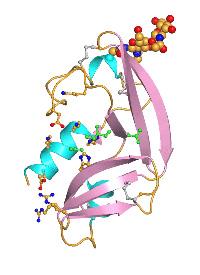
Amphinase molecule A synthetic version of a molecule found in the egg cells of the Northern Leopard frog (Rana pipiens) could provide the world with the first drug treatment for brain tumours.
| Full story | 0 Comments | 6476 views |
| Molecular & Cell Biology | June 27, 2007 12:55 PM |
Investigators from the Institute of Research in Biomedicine (IRB Barcelona) have identified a new signalling mechanism among cells in the fruit fly, Drosophila melanogaster. The researchers found that two independent groups of cells generate the same signal by different pathways and that these cells subsequently act together to send the signal to the target cell. In this manner, the receptor cell receives the signal from two distinct sources. The results of this study appear in today’s advanced electronic issue of the journal, PNAS.
| Full story | 0 Comments | 6450 views |
| Microbiology | June 27, 2007 10:55 AM |
For more than 100 years, scientists have known that humans carry a rich ecosystem within their intestines. An astonishing number and variety of microbes, including as many as 400 species of bacteria, help humans digest food, mitigate disease, regulate fat storage, and even promote the formation of blood vessels. By applying sophisticated genetic analysis to samples of a year’s worth baby poop, Howard Hughes Medical Institute researchers have now developed a detailed picture of how these bacteria come and go in the intestinal tract during a child’s first year of life.
| Full story | 0 Comments | 8611 views |
| Health & Medicine | June 26, 2007 11:55 PM |
Researchers at UT Southwestern Medical Center have determined how a substance derived from the bark of the South American lapacho tree kills certain kinds of cancer cells, findings that also suggest a novel treatment for the most common type of lung cancer.
| Full story | 0 Comments | 6179 views |
| Health & Medicine | June 26, 2007 10:55 PM |
Children suffering from pneumonia could be spared the pain of the doctor’s needle, thanks to new research funded by the British Lung Foundation.
| Full story | 0 Comments | 5551 views |
| Biotechnology | June 26, 2007 09:55 PM |
With U.S. biodiesel production at an all-time high and a record number of new biodiesel plants under construction, the industry is facing an impending crisis over waste glycerin, the major byproduct of biodiesel production. New findings from Rice University suggest a possible answer in the form of a bacterium that ferments glycerin and produces ethanol, another popular biofuel.
| Full story | 0 Comments | 7905 views |
| Biology | June 26, 2007 08:55 PM |
The adaptive significance of the unique ability in many primates to distinguish red hues from green ones (i.e., trichromatic color vision) has always enticed debate among evolutionary biologists. The conventional theory is that primates evolved trichromatic color vision to assist them in foraging, specifically by allowing them to detect red/orange food items from green leaf backgrounds. However, the results from several empirical studies have called into question the extent to which trichromacy functions in foraging and if it provides a performance advantage over dichromatic primates (who lack red-green color vision). Other studies have suggested that trichromacy evolved in primates so that they could use physical traits like red skin in socio-sexual communication, such as a male providing information to a female about his mate quality.
| Full story | 0 Comments | 7268 views |
| Biology | June 26, 2007 07:55 PM |
Fish use the threat of punishment to keep would-be jumpers in the mating queue firmly in line and the social order stable, a new study led by Australian marine scientists has found.
| Full story | 0 Comments | 5213 views |
| Health & Medicine | June 26, 2007 06:55 PM |
Sweden, like much of Scandinavia, is known for its high quality care for older adults. Most importantly, the system helps to keep older adults independent. With the growing demand brought on by aging baby boomers however, the government has been challenged to maintain this high level of services.
| Full story | 0 Comments | 5047 views |
| Biology | June 26, 2007 12:18 PM |
Giant prehistoric penguins? In Peru? It sounds more like something out of Hollywood than science, but a researcher from North Carolina State University along with U.S., Peruvian and Argentine collaborators has shown that two heretofore undiscovered penguin species reached equatorial regions tens of millions of years earlier than expected and during a period when the earth was much warmer than it is now.
| Full story | 0 Comments | 5407 views |
| Biology | June 26, 2007 10:18 AM |
With research backgrounds ranging from materials engineering to molecular biophysics, seventeen leading scientists issued a statement today announcing that, much as the discovery of DNA and creation of the transistor revolutionized science, there is a new scientific field on the brink of revolutionizing our approach to problems ranging from eco-safe energy to outbreaks of malaria.
| Full story | 0 Comments | 5141 views |
| Health & Medicine | June 25, 2007 11:18 PM |
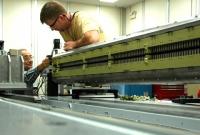
Preparation -- Isaac Vasserman (left) and Matt Kasa of Argonne's Accelerator Systems Division prepare an undulator for magnetic tuning and verification. Argonne reached another milestone in the design and construction of the Linac Coherent Light Source (LCLS) undulator system.
| Full story | 0 Comments | 6217 views |
| Biology | June 25, 2007 10:18 PM |
Virginia Tech researchers have received $1.2 million to study protein-protein interactions associated with biomass production in poplar wood. The U.S. Department of Energy (DOE) and the U.S. Department of Agriculture (USDA) jointly selected the Virginia Tech project and 10 others for awards totaling $8.3 million for biofuel research that may increase the availability and use of alternative fuels.
| Full story | 0 Comments | 5572 views |
| Molecular & Cell Biology | June 25, 2007 09:18 PM |
Researchers in Delft University of Technology’s Kavli Institute of Nanoscience in The Netherlands have cast new light on the workings of the important cancer inhibitor topotecan. Little had been known about the underlying molecular mechanism, but the Delft scientists can now view the effects of the medicine live at the levelin of a single DNA molecule. The research is being published this week in the journal Nature. The lead author of the article, Daniel Koster, will receive his PhD at TU Delft on Monday June 25, partly on the results described in the article.
| Full story | 0 Comments | 5799 views |
| Stem Cell Research | June 25, 2007 08:18 PM |
Tokyo, Japan -- Researchers have shown that bone marrow stem cells injected into a damaged inner ear can speed hearing recovery after partial hearing loss. The related report by Kamiya et al, “Mesenchymal stem cell transplantation accelerates hearing recovery through the repair of injured cochlear fibrocytes,” appears in the July issue of The American Journal of Pathology.
| Full story | 0 Comments | 7453 views |
| Health & Medicine | June 25, 2007 07:18 PM |
Studies show that the incidence of mental illness on college campuses is rising, and a new survey of 2,785 college students indicates that more than half of students with significant symptoms of anxiety or depression do not seek help.
| Full story | 0 Comments | 6305 views |
| Health & Medicine | June 25, 2007 06:18 PM |
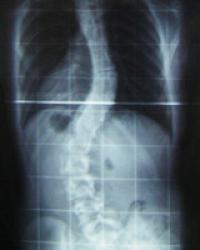
An X-ray of a case of scoliosis showing the abnormal curvature of the spine. Physicians have recognized scoliosis, the abnormal curvature of the spine, since the time of Hippocrates, but its causes have remained a mystery -- until now. For the first time, researchers have discovered a gene that underlies the condition, which affects about 3 percent of all children.
| Full story | 0 Comments | 6950 views |
| Molecular & Cell Biology | June 23, 2007 06:35 PM |
Investigators at St. Jude Children's Research Hospital have discovered how a single molecular “on switch” triggers gene activity that might cause effects ranging from learning and memory capabilities to glucose production in the liver.
| Full story | 0 Comments | 5693 views |
| Microbiology | June 23, 2007 04:35 PM |
Researchers at the University of California, San Diego (UCSD) Skaggs School of Pharmacy and Pharmaceutical Sciences have patented a strategy for developing a human vaccine to prevent against Human Cytomegalovirus (hCMV) infection and disease.
| Full story | 0 Comments | 5824 views |
| Biotechnology | June 23, 2007 02:35 PM |
Mushrooms might serve as biofactories for the production of various beneficial human drugs, according to plant pathologists who have inserted new genes into mushrooms.
| Full story | 0 Comments | 6907 views |
| Health & Medicine | June 23, 2007 12:35 PM |
Why does putting our feelings into words — talking with a therapist or friend, writing in a journal — help us to feel better" A new brain imaging study by UCLA psychologists reveals why verbalizing our feelings makes our sadness, anger and pain less intense.
| Full story | 0 Comments | 7103 views |
| Health & Medicine | June 23, 2007 10:35 AM |
Treatment with the oral antiviral Tamiflu (oseltamivir) and prophylaxis for people exposed to infected patients could be one of the most cost-effective strategies for reducing illness and death during an influenza pandemic. According to modelling research presented by Beate Sander, University of Toronto, Canada, a stockpile of Tamiflu sufficient to cover 65% of a country’s population could cut deaths by approximately half. This study was announced at the leading influenza conference, Options for the Control of Influenza VI, in Toronto.1
| Full story | 0 Comments | 6332 views |

- In some genetic cases of microcephaly, stem cells fail to launch
- Yale team discovers how Zika virus causes fetal brain damage
- Scientists uncover the way a common cell enzyme alerts the body to invading bacteria
- Arctic gives clues on worst mass extinction of life
- Calcium channel blockers caught in the act at atomic level
Search Bio News Net
Free Biology Newsletter
- Flexibility That A.C.A. Lent to Work Force Is Threatened by...International Herald Tribune
- Bacteria Behind Legionnaires’ Disease Found at New York Police StationInternational Herald Tribune
- Prescription Price Crisis? 28 Million Americans See Spike in Drug...MSNBC.com: Health
- Seizing on Opioid Crisis, a Drug Maker Lobbies Hard for...International Herald Tribune
- Republicans are taking a big political risk on health careAP Health News
- Why We're So Divided Over Saving WolvesNational Geographic News