

Studies in mice have indicated that the effects of prion disease could be reversed if caught early enough. The researchers said that their findings support developing early treatments that aim to reduce levels of prion protein in the brains of people with prion disease. Also, they said that their findings suggest testing the efficacy of treatments in a new way: by analyzing their cognitive effects in prion-infected mice.

| Biology | January 31, 2007 10:48 PM |
"Time" is the most popular noun in the English language, yet how would we tell time if we didn’t have access to the plethora of watches, clocks and cell phones at our disposal?
| Full story | 0 Comments | 10239 views |

| Health & Medicine | January 31, 2007 09:48 PM |
Tricking a key enzyme can soothe over-excited receptors in the brain, say neuroscientists, calling this a possible strategy against stroke, Alzheimer's and other neurodegenerative diseases.
| Full story | 0 Comments | 7852 views |
| Biology | January 31, 2007 08:48 PM |
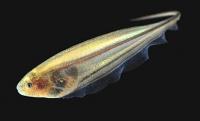
Native to South America, the glass knifefish's ability to emits weak electrical signals makes it a superb subject for the study of how the brain uses sensory information to control locomotion. Scientists have long struggled to figure out how the brain guides the complex movement of our limbs, from the graceful leaps of ballerinas to the simple everyday act of picking up a cup of coffee. Using tools from robotics and neuroscience, two Johns Hopkins University researchers have found some tantalizing clues in an unlikely mode of motion: the undulations of tropical fish.
| Full story | 0 Comments | 6169 views |

| Biotechnology | January 31, 2007 07:48 PM |
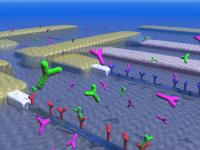
Schematic of nanowire sensors operating in solution. A novel approach to synthesizing nanowires (NWs) allows their direct integration with microelectronic systems for the first time, as well as their ability to act as highly sensitive biomolecule detectors that could revolutionize biological diagnostic applications, according to a report in Nature.
| Full story | 0 Comments | 6539 views |
| Biology | January 31, 2007 06:48 PM |
For the first time in U.S., and probably global, history a fish identified as endangered has been shown to have recovered -- and in the Hudson River, which flows through one of the world's largest population centers, New York City.
| Full story | 0 Comments | 9651 views |
| Health & Medicine | January 31, 2007 05:48 PM |
According to a review of the latest clinical trials, coronary artery bypass surgery performed on a beating heart, without the aid of a heart-lung machine, is a safe option that leads to fewer negative side effects for bypass patients. This review is featured in Journal of Cardiac Surgery.
| Full story | 0 Comments | 6839 views |
| Biology | January 31, 2007 04:48 PM |
March of the Penguins, the Oscar® winning documentary, showed how the emperor penguins endure their incubation and fast for four dark and bitterly cold months each year. The tight huddling among these South Pole penguins is a key energy-saving mechanism that allows them to endure their extremely harsh conditions.
| Full story | 0 Comments | 7676 views |

| Microbiology | January 31, 2007 04:24 PM |
Since 1995 there has been a considerable increase in the number of infections with a specific type of Salmonella bacteria transmitted via food. This type, Salmonella serovar Typhimurium DT104, is resistant to at least five different antibiotics. Dutch researcher Armand Hermans found new genetic information in DNA of DT104 that might be involved in its survival and infection mechanism. This genetic information might also be involved in the increase in the number of infections caused by this pathogen.
| Full story | 0 Comments | 6834 views |
| Health & Medicine | January 31, 2007 02:24 PM |
Temple University Hospital's Center For Women's Health is participating in a national study to determine the safety and effectiveness of an investigational treatment for cervical dysplasia. According to the American Cancer Society, approximately 500,000 women are diagnosed with high-grade cervical dysplasia each year, with roughly 10,000 cases progressing to cervical cancer.
| Full story | 0 Comments | 6702 views |

| Environment | January 31, 2007 12:24 PM |
That plants grow better if grown in a greenhouse in the correct climate is nothing new. Dutch researcher Rachel van Ooteghem has designed a control system for an improved solar greenhouse that yields more. In the new greenhouse, good climate control with sustainable energy resulted not only in an increased crop yield but also a lower gas bill.
| Full story | 0 Comments | 6140 views |
| Biology | January 31, 2007 10:24 AM |
Walking while holding a conversation and writing a letter whilst thinking about its content: we perform many actions without even thinking about them. This is possible due to the cerebellum. It regulates the automation of our movements and as a result the cerebrum can perform other tasks. However, how the cerebellum performs this task is not clear. Dutch researcher Angelique Pijpers reconstructed a part of cerebellar functioning in rats and investigated how it mediates in the control of hind limb muscles. Such research might in future provide a better understanding of how the elderly move.
| Full story | 0 Comments | 6600 views |
| Health & Medicine | January 30, 2007 11:24 PM |
Persistent, chronic pain has risen dramatically among full-time U.S. workers in the past 10 years, but workers today opt to go to their jobs rather than call in sick, leading to a growing trend of presenteeism – a negative impact on work despite being physically present at the job. These data, released today, are from a 2006 national survey conducted by Harris Interactive® on "Pain in the Workplace" (www.painandwork.com), sponsored by PriCaraÔ, Unit of Ortho-McNeil, Inc., and conducted in partnership with the National Pain Foundation (NPF). The survey was an update to the 1996 Louis Harris & Associates poll on the subject, sponsored by Ortho-McNeil Pharmaceutical, Inc.
| Full story | 0 Comments | 5689 views |
| Biology | January 30, 2007 10:24 PM |
Probes designed to find life on Mars do not drill deep enough to find the living cells that scientists believe may exist well below the surface of Mars, according to research led by UCL (University College London). Although current drills may find essential tell-tale signs that life once existed on Mars, cellular life could not survive the radiation levels for long enough any closer to the surface of Mars than a few metres deep – beyond the reach of even state-of-the-art drills.
| Full story | 0 Comments | 6433 views |

| Molecular & Cell Biology | January 30, 2007 09:24 PM |
Researchers at the University of Pennsylvania School of Medicine have discovered that microtubules -- components responsible for shape, movement, and replication within cells -- use proteins that act as molecular motors and brakes to organize into their correct structure. If microtubules are not formed properly such basic functions as cell division and transport can go wrong, which may have implications in such disease processes as cancer and dementia. The study, published in the January issue of Cell, is featured on the cover of that issue.
| Full story | 0 Comments | 8215 views |

| Bioinformatics | January 30, 2007 08:24 PM |
Virginia Tech researchers in computer science and biology have used the university's supercomputer, System X, to create models and algorithms that make it possible to simulate the cell cycle -- the processes leading to cell division. They have demonstrated that the new mathematical models and numerical algorithms provide powerful tools for studying the complex processes going on inside living cells.
| Full story | 0 Comments | 6199 views |
| Biology | January 30, 2007 07:24 PM |
Most snakes are born with poisonous bites they use for defense. But what can non-poisonous snakes do to ward off predators?
| Full story | 0 Comments | 7465 views |
| Health & Medicine | January 30, 2007 06:24 PM |
DNA testing is transforming health care and medicine, but current technologies only give a snapshot of an individual's genetic makeup. Any patient wanting a complete picture of their inherited DNA, or genome, would drop their jaw at the sight of the bill -- to the current tune of $10 million or more charged for every human or mammalian-sized genome sequenced.
| Full story | 0 Comments | 5567 views |

| AIDS & HIV | January 30, 2007 05:24 PM |
Researchers at Johns Hopkins Bloomberg School of Public Health conducted a historical analysis to examine the relationship between the Centers for Disease Control and Prevention's (CDC) HIV prevention budget and HIV incidence in the U.S. from 1978 to 2006. The results are published in the January 2007 edition of the American Journal of Preventive Medicine.
| Full story | 0 Comments | 5618 views |
| Molecular & Cell Biology | January 29, 2007 08:07 PM |
New research suggests that choosing a mate may be partially determined by your genes. A study published in Psychological Science has found a link between a set of genes involved with immune function and partner selection in humans.
| Full story | 0 Comments | 10674 views |
| Biology | January 29, 2007 07:07 PM |
As humans exert ever-greater influence on the Earth, their preferences will play a substantial role in determining which other species survive. New research shows that, in some cases, those preferences could be governed by factors as subtle as small color highlights a creature displays.
| Full story | 0 Comments | 7119 views |
| AIDS & HIV | January 29, 2007 06:07 PM |
An international study led by Johns Hopkins suggests that the rate of HIV-associated dementia is so high in sub-Saharan Africa that HIV dementia along with Alzheimer’s disease and dementia from strokes may be among the most common forms of dementia in the world.
| Full story | 0 Comments | 5909 views |
| Health & Medicine | January 29, 2007 12:23 PM |
Antibiotic doses could be reduced by up to 50 times using a new approach based on bacteriophages.
| Full story | 0 Comments | 7430 views |
| Biology | January 29, 2007 12:23 PM |
It's a mystery why the speed and complexity of evolution appear to increase with time. For example, the fossil record indicates that single-celled life first appeared about 3.5 billion years ago, and it then took about 2.5 billion more years for multi-cellular life to evolve. That leaves just a billion years or so for the evolution of the diverse menagerie of plants, mammals, insects, birds and other species that populate the earth.
| Full story | 0 Comments | 6934 views |
| Microbiology | January 29, 2007 12:23 PM |
Researchers at Rensselaer Polytechnic Institute have discovered new details about how bacteria generate energy to live. In two recently published papers, the scientists add key specifics to the molecular mechanism behind the pathogen that causes cholera. The work could provide a better understanding of this pathogen, while also offering insight into how cells transform energy from the environment into the forms required to sustain life.
| Full story | 0 Comments | 6262 views |
| Molecular & Cell Biology | January 29, 2007 12:23 PM |
A single protein in brain cells may act as a linchpin in the body’s weight-regulating system, playing a key role in the flurry of signals that govern fat storage, sugar use, energy balance and weight, University of Michigan Medical School researchers report.
| Full story | 0 Comments | 6204 views |
| Molecular & Cell Biology | January 28, 2007 04:54 PM |
A new technique that employs RNA, a tiny chemical cousin of DNA, to turn on genes could lead to therapeutics for conditions in which nudging a gene awake would help alleviate disease, researchers at UT Southwestern Medical Center say.
| Full story | 0 Comments | 6273 views |
| Health & Medicine | January 28, 2007 04:54 PM |
When it comes to some of today’s health issues, 100 percent fruit and vegetable juices do help reduce risk factors related to certain diseases.
| Full story | 0 Comments | 8321 views |
| Biology | January 26, 2007 07:50 PM |
Should you leave your comfortable job for one that pays better but is less secure? Should you have a surgery that is likely to extend your life but poses some risk that you will not survive the operation? Should you invest in a risky startup company whose stock may soar even though you could lose your entire investment? In the Jan. 26 issue of the journal Science, UCLA psychologists present the first neuroscience research comparing how our brains evaluate the possibility of gaining versus losing when making risky decisions.
| Full story | 0 Comments | 7441 views |
| Environment | January 26, 2007 05:50 PM |
Reaching into a box glowing with fluorescent light, Stacie Grassano pulls out a tube. "This is a great one," she says, holding the clear plastic up to her face. Inside, a tree branch is speckled with white fluff. "It's growing really well," she says, handing it to Scott Costa.
| Full story | 0 Comments | 7476 views |
| Health & Medicine | January 26, 2007 03:50 PM |
New data from the World Health Organization (WHO) show that the GAVI Alliance, a groundbreaking global initiative to increase access to children’s vaccines, has brought immunisation rates to record highs in poor countries.
| Full story | 0 Comments | 5845 views |
| Environment | January 26, 2007 01:50 PM |
Researchers working in Australia have discovered ways in which fruit flies might react to extreme fluctuations in temperature. Short-term exposure to high heat stress ("heat hardening") has been known to have negative effects on Drosophila. But Loeschcke and Hoffmann discovered that it can have advantages too. Flies exposed to heat hardening were much more able to find their way to bait on very hot days than were the flies that were exposed to cooler temperatures, but the heat hardened flies did poorly on cool days.
| Full story | 0 Comments | 6922 views |
| Biotechnology | January 25, 2007 08:40 PM |
The layers of mucus that protect sensitive tissue throughout the body have an undesirable side effect: they can also keep helpful medications away. To overcome this hurdle, Johns Hopkins researchers have found a way to coat nanoparticles with a chemical that helps them slip through this sticky barrier.
| Full story | 0 Comments | 6152 views |
| Microbiology | January 25, 2007 07:40 PM |
Buried under 243 acres in an East Tennessee valley adjacent to the Oak Ridge National Laboratory's Y-12 National Security Complex, toxic waste from weapons manufacturing at the facility between 1951 and 1983 leaches into groundwater that extends in radioactive plumes for miles from the contaminated site.
| Full story | 0 Comments | 7122 views |
| Health & Medicine | January 25, 2007 06:40 PM |
Smokers with a damaged insula – a region in the brain linked to emotion and feelings – quit smoking easily and immediately, according to a study in the Jan. 26 issue of the journal Science.
| Full story | 0 Comments | 6478 views |
| Health & Medicine | January 25, 2007 05:40 PM |
Substances extracted from a marine seaweed may protect against skin cancer caused by too much sun, new research suggests.
| Full story | 0 Comments | 6527 views |
| AIDS & HIV | January 25, 2007 04:40 PM |
A new study shows a significantly increased risk of HIV infection among women with a common sexually transmitted disease, trichomoniasis. Although studies have been undertaken in the past to show the link between sexually transmitted infections and susceptibility to HIV, the study published in the March 1 issue of The Journal of Infectious Diseases, now available online, is one of the first to demonstrate a statistically significant association between trichomoniasis and HIV infection.
| Full story | 0 Comments | 5730 views |
| Biology | January 25, 2007 12:47 PM |
Scientists at the University of Bergen, Norway have deduced how bony fishes conquered the oceans by duplicating their yolk-producing genes and filling their eggs with the water of life – the degradation of yolk proteins from one of the duplicated genes causes the eggs to fill with vital water and float. This is the major solution realized by extant marine teleosts that showed an unprecedented radiation during the late Cretaceous and early Paleogene Periods. The work is a unique hypothesis that integrates the cellular and molecular physiology of teleost reproduction with their evolutionary and environmental history.
| Full story | 0 Comments | 6424 views |
| Molecular & Cell Biology | January 25, 2007 10:46 AM |
Howard Hughes Medical Institute researchers have developed two strategies to reactivate the p53 gene in mice, causing blood, bone and liver tumors to self destruct. The p53 protein is called the "guardian of the genome" because it triggers the suicide of cells with damaged DNA.
| Full story | 0 Comments | 5914 views |
| Biology | January 24, 2007 11:46 PM |
An ichthyologist from the Wildlife Conservation Society's New York Aquarium received the ultimate honor recently, when a freshwater fish discovered on the African island nation of Madagascar was named after him.
| Full story | 0 Comments | 8981 views |

- In some genetic cases of microcephaly, stem cells fail to launch
- Yale team discovers how Zika virus causes fetal brain damage
- Scientists uncover the way a common cell enzyme alerts the body to invading bacteria
- Arctic gives clues on worst mass extinction of life
- Calcium channel blockers caught in the act at atomic level
Search Bio News Net
Free Biology Newsletter
- Flexibility That A.C.A. Lent to Work Force Is Threatened by...International Herald Tribune
- Bacteria Behind Legionnaires’ Disease Found at New York Police StationInternational Herald Tribune
- Prescription Price Crisis? 28 Million Americans See Spike in Drug...MSNBC.com: Health
- Seizing on Opioid Crisis, a Drug Maker Lobbies Hard for...International Herald Tribune
- Republicans are taking a big political risk on health careAP Health News
- Why We're So Divided Over Saving WolvesNational Geographic News