

None of Takesha Henderson's discoveries are named Charlotte, but they are weaving a new chapter in Texas entomology. Her graduate studies at Texas A&M University have led to the discovery of 25 new spiders in Brazos County and one species found for the first time in Texas.

| Microbiology | December 29, 2006 05:09 PM |
Scientists at the National Institute of Arthritis and Musculoskeletal and Skin Diseases (NIAMS), part of the National Institutes of Health in Bethesda, Md., and colleagues at the University of Virginia in Charlottesville have succeeded in imaging, in unprecedented detail, the virus that causes influenza.
| Full story | 0 Comments | 7643 views |

| Molecular & Cell Biology | December 28, 2006 11:11 PM |
Recent studies show promise for significantly reducing vascular aging by inactivating TNFa, which has been linked to blood vessel dysfunction and cell death. The related report by Csiszar et al., "Vasculoprotective effects of anti-TNFa treatment in aging," appears in the January issue of The American Journal of Pathology.
| Full story | 0 Comments | 5847 views |
| Molecular & Cell Biology | December 28, 2006 10:11 PM |
Researchers at the University of Southern California have provided the first 3-D view of a protein from an enzyme family that, through its ability to mutate genes, can both help and hinder human health.
| Full story | 0 Comments | 6991 views |
| Molecular & Cell Biology | December 28, 2006 09:11 PM |
Scientists analyzing the genomics of a marine snail have gotten an unprecedented look at brain mechanisms, discovering that the neural processes in even a simple sea creature are far from sluggish.
| Full story | 0 Comments | 6480 views |

| Environment | December 28, 2006 08:11 PM |
More than half of the dust needed for fertilizing the Brazilian rainforest is supplied by a valley in northern Chad, according to an international research team headed by Dr. Ilan Koren of the Institute's Environmental Sciences and Energy Research Department. In a study published recently in Environmental Research Letters, the scientists have explained how the Bodélé valley's unique features might be responsible for making it such a major dust provider.
| Full story | 0 Comments | 6919 views |
| Microbiology | December 28, 2006 07:11 PM |
A unique Mayo Clinic collaboration has revived the healing wisdom of Pacific Island cultures by testing a therapeutic plant extract described in a 17th century Dutch herbal text for its anti-bacterial properties. Early results show that extracts from the Atun tree effectively control bacteria that can cause diarrhea, as claimed by naturalist Georg Eberhard Rumpf, circa 1650. He documented his traditional healing methods in the book Ambonese Herbal.
| Full story | 0 Comments | 6711 views |

| Stem Cell Research | December 28, 2006 06:11 PM |
In hemophilia, a mutated gene prevents the production of a critical blood-clotting protein. Treatments for hemophilia and other such genetic diseases, when they exist, may consist of risky blood transfusions or expensive enzyme replacement therapy. But what if the body could be induced to begin producing these proteins, say by transplanting healthy tissue with the abilities that are lacking?
| Full story | 0 Comments | 5491 views |

| Biology | December 28, 2006 05:11 PM |
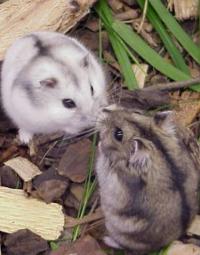
Siberian hamsters are used by scientists to study seasonal physiology and behavior. A hormone implicated in the onset of human puberty also appears to control reproductive activity in seasonally breeding rodents, report Indiana University Bloomington and University of California at Berkeley scientists in the March 2007 issue of Endocrinology. The paper is now accessible online via the journal's rapid electronic publication service.
| Full story | 0 Comments | 5451 views |
| Molecular & Cell Biology | December 27, 2006 08:58 PM |
Peering deep within the cells of fruit flies, developmental biologists at the Kimmel Cancer Center at Thomas Jefferson University in Philadelphia may have discovered a new way that genes are turned on and off during development. If they're right, and the same processes are at work in higher organisms, including mammals, the findings could eventually have implications for improving the understanding of a range of diseases, including childhood cancer.
| Full story | 0 Comments | 9538 views |
| Stem Cell Research | December 27, 2006 07:58 PM |
Stem cells grew, multiplied and differentiated into brain cells on a new three-dimensional scaffold of tiny protein fragments designed to be more like a living body than any other cell culture system.
| Full story | 0 Comments | 6185 views |

| Health & Medicine | December 27, 2006 06:58 PM |
The incidence of stroke in the U.S. over the past 50 years has declined, although the severity of stroke has not, according to a study in the December 27 issue of JAMA.
| Full story | 0 Comments | 5953 views |
| Biology | December 27, 2006 05:58 PM |
If a zebrafish loses a chunk of its tail fin, it'll grow back within a week. Like lizards, newts, and frogs, a zebrafish can replace surprisingly complex body parts. A tail fin, for example, has many different types of cells and is a very intricate structure. It is the fish version of an arm or leg.
| Full story | 0 Comments | 7401 views |
| Biology | December 26, 2006 11:56 PM |
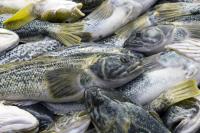
Marbled Antartic cod (Notothenia rossii) Five tons of marbled Antarctic cod (Notothenia rossii), now that was surely a big surprise to scientists and crew on board of Polarstern, alike considering that previous and subsequent hauls barely ever reaped such plentiful harvests.
| Full story | 0 Comments | 7415 views |
| Molecular & Cell Biology | December 26, 2006 10:56 PM |
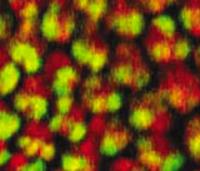
Photoreceptor cells (red) in the developing eye of a fruit fly initiate an unfolded protein response (yellow) to help them cope with a stressful environment. Misfolded proteins are implicated in many diseases, including neurodegenerative diseases, diabetes and types of blindness.
Credit: Rockefeller University When cells get stressed, their proteins go unfolded. It's a reaction with a straightforward name: the unfolded protein response. Now, new research from Rockefeller University shows that this phenomenon actually serves a protective role; rather than a sign that the cell has given up, it may be a mechanism by which the cells cope with adversity. The findings were reported as an advance online publication in the EMBO Journal on the Dec. 14.
| Full story | 0 Comments | 8764 views |
| Biology | December 26, 2006 09:56 PM |
Kids and adults will stay glued to video games this holiday season because the fun of playing actually is rooted in fulfilling their basic psychological needs.
| Full story | 2 Comments | 11944 views |
| Biology | December 26, 2006 08:56 PM |
People estimate that, on average, they make about 15 food- and beverage-related decisions each day. But the truth is, they make more than 15 times that -- more than 200 such decisions.
| Full story | 0 Comments | 5288 views |
| Molecular & Cell Biology | December 26, 2006 07:56 PM |
Despite the explosive growth in size and complexity of the human brain, the pace of evolutionary change among the thousands of genes expressed in brain tissue has actually slowed since the split, millions of years ago, between human and chimpanzee, an international research team reports in the December 26, 2006, issue of the journal, PLOS Biology.
| Full story | 0 Comments | 7266 views |
| Microbiology | December 26, 2006 06:56 PM |
Upon entering a cell, a virus often becomes dormant, turning off its genes and laying low until awakened by som e trigger from its environment. When that trigger is pulled, the virus quickly ramps up production of proteins through built-in positive-feedback loops that turn up gene transcription. (In positive feedback, production of something stimulates more production of that thing, resulting in exponential, or faster, growth.) If the viral environment were perfectly regulated and viral gene expression perfectly silenced during latency, this system would be foolproof. But this is almost never the case--there is always noise and always the potential for some low level of erroneous transcription. This poses a problem for the virus--how does it prevent stray transcription from erupting into full-blown activation?
| Full story | 0 Comments | 6104 views |
| Molecular & Cell Biology | December 26, 2006 05:56 PM |
Much like flipping a light switch, the hepatitis C virus turns on human immune defenses upon entering the body but also turns off those defenses by manipulating interaction of key cellular proteins, UT Southwestern Medical Center researchers have found.
| Full story | 0 Comments | 5862 views |
| Environment | December 26, 2006 03:56 PM |
Scientists can predict how the distance marine larvae travel varies with ocean temperature – a key component in conservation and management of fish, shellfish and other marine species – according to a new study from the University of North Carolina at Chapel Hill.
| Full story | 0 Comments | 5807 views |
| Molecular & Cell Biology | December 23, 2006 10:07 AM |
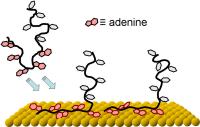
Single-strand DNA can be anchored to a gold substrate for use in biodetectors by attaching a tail of adenine bases. Adenine's strong affinity for gold not only bonds the strands in place but also allows some control over the spacing by adjusting the length of the tail. Credit: NIST Researchers from the National Institute of Standards and Technology (NIST), the Naval Research Laboratory (NRL) and the University of Maryland (UMD) have demonstrated a deceptively simple technique for chemically bonding single strands of DNA to gold. Among other features, they report in a forthcoming issue* of the Proceedings of the National Academy of Sciences, the technique offers a convenient way to control the density of the DNA strands on the substrate, which could be important for optimizing DNA sensor arrays.
| Full story | 0 Comments | 8102 views |
| Biology | December 22, 2006 11:07 PM |
The giraffe's elongated neck has long been used in textbooks as an illustration of evolution by natural selection, but this common example has received very little experimental attention. In the January issue of the American Naturalist, researchers at the Mammal Research Institute in the Department of Zoology and Entomology at the University of Pretoria tested whether foraging competition with shorter herbivores could explain why giraffes feed mostly on leaves high in trees, despite being able to feed at lower levels as well.
| Full story | 0 Comments | 10301 views |

| Gene Therapy | December 22, 2006 10:07 PM |
Since the late 1980s, gene therapy, more than virtually any other type of therapy, has given rise not only to high expectations of treatment success but also great concerns regarding health risks. Since the Deutsche Forschungsgemeinschaft (German Research Foundation, DFG) issued its first memorandum in 1995, this field of research has developed enormously.
| Full story | 0 Comments | 11984 views |
| Biology | December 22, 2006 09:07 PM |
Despite the fact that the people of India constitute more than one-sixth of the world's entire population, they have been underrepresented in studies related to genetic diseases. And with the growth of modernization, complex genetic diseases associated with urban and western lifestyles have risen to near-epidemic proportions, making genetic cataloging and association studies of particular importance.
| Full story | 0 Comments | 6616 views |
| Health & Medicine | December 22, 2006 08:07 PM |
Fat zapping to shed excess weight, miniature telescopes to restore vision, and smart nappies to detect common childhood infections: these are some of the new technologies that promise to transform medicine, according to this week's Christmas issue of the BMJ.
| Full story | 0 Comments | 5091 views |
| Health & Medicine | December 22, 2006 07:07 PM |
In recent years, health professionals and the general public alike have been acutely aware of the potential ravages that could result from a flu pandemic. Although many people might still recall the pandemics of 1968 and 1957, it is the infamous 1918-1920 pandemic--and the possibility of a recurrence on that scale--that causes the most trepidation.
| Full story | 0 Comments | 5106 views |
| Health & Medicine | December 22, 2006 06:07 PM |
UCSF scientists have identified a cell population that is a primary target of the degenerative brain disease known as frontotemporal dementia, which is as common as Alzheimer's disease in patients who develop dementia before age 65.
| Full story | 0 Comments | 5480 views |
| Molecular & Cell Biology | December 21, 2006 10:38 PM |
The new neurons generated as a result of neural damage due to epilepsy show a reduced excitability that could alleviate the disorder, researchers have found. The researchers said their results suggest that therapies for epilepsy aimed at inducing neurogenesis could prove effective in alleviating the disorder.
| Full story | 0 Comments | 7314 views |
| Biology | December 21, 2006 09:38 PM |
If you've ever wondered why your golf swings, fastballs or free throws don't quite turn out the same way each time, even after years of practice, there is now an answer: It's mostly in your head. That's the finding of new research published in the Dec. 21 issue of the journal Neuron by electrical engineers at Stanford University.
| Full story | 0 Comments | 5721 views |
| Molecular & Cell Biology | December 21, 2006 08:38 PM |
You know the sensation. When something has your full attention you see it vividly. And when you don't pay attention, you're liable to miss something important. Now a new Northwestern University study sheds light on how attention operates.
| Full story | 0 Comments | 5952 views |
| Health & Medicine | December 21, 2006 07:38 PM |
The widely used breast cancer drug tamoxifen (Nolvadex®), which can become less effective over time, might retain its full strength indefinitely if used along with a second drug, according to new research in mice conducted by investigators from the National Cancer Institute (NCI), part of the National Institutes of Health, and their partners. The results appear in the December 11, 2006, issue of Cancer Cell*.
| Full story | 0 Comments | 7260 views |
| Biology | December 21, 2006 06:38 PM |
A Vanderbilt researcher has discovered that some stealthy mammals have been doing something heretofore thought impossible -- using the sense of smell under water.
| Full story | 0 Comments | 7453 views |
| Biology | December 21, 2006 04:38 PM |
Increasing levels of inbreeding is a threat against the viabi lity of the Scandinavian wolf population. A study just coming out in the new journal PLoS ONE now demonstrates that inbreeding is not affecting the wolves as badly as expected. The results show that it is the most genetically variable wolf individuals that are recruited into the breeding population. An important consequence of this action of natural selection is that the negative effects of inbreeding are accumulating much slower than previously believed.
| Full story | 0 Comments | 5605 views |
| Biology | December 21, 2006 02:38 PM |
It is well known that animals use song as a way of attracting mates, but researchers have found that gibbons have developed an unusual way of scaring off predators – by singing to them.
| Full story | 0 Comments | 6096 views |
| Molecular & Cell Biology | December 21, 2006 12:38 PM |
Researchers at the University of Minnesota have identified a group of novel genes that are critical in organ development.
| Full story | 0 Comments | 4759 views |

| Microarray | December 21, 2006 10:38 AM |
Researchers at the University of Pennsylvania School of Medicine have pinpointed a key regulatory protein that translates blood flow into gene expression. The investigators showed that in a model of mouse embryonic development a transcription factor called Klf2, which resides in cells that line blood vessels, is activated by rapid, pulsed blood flow, as reported in the December issue of Developmental Cell. Understanding Klf2's role in blood vessel and muscle biology could help with fighting atherosclerosis.
| Full story | 0 Comments | 6168 views |
| Molecular & Cell Biology | December 20, 2006 11:38 PM |
The accumulation of genetic damage in our cells is a major contributor to how we age, according to a study being published today in the journal Nature by an international group of researchers. The study found that mice completely lacking a critical gene for repairing damaged DNA grow old rapidly and have physical, genetic and hormonal profiles very similar to mice that grow old naturally. Furthermore, the premature aging symptoms of the mice led to the discovery of a new type of human progeria, a rare inherited disease in which affected individuals age rapidly and die prematurely.
| Full story | 0 Comments | 10749 views |
| Microbiology | December 20, 2006 10:38 PM |
The oldest-known animal eggs and embryos, whose first pictures made the cover of Nature in 1998, were so small they looked like bugs – which, it now appears, they may have been.
| Full story | 0 Comments | 7025 views |
| Microbiology | December 20, 2006 09:38 PM |
A team from the Institut Pasteur has recently shown that the tuberculosis bacillus hides from the immune system in its host's fat cells. This formidable pathogen is protected against even the most powerful antibiotics in these cells, in which it may remain dormant for years. This discovery, published in PLoS ONE, sheds new light on possible strategies for fighting tuberculosis. Attempts to eradicate the bacillus entirely from infected individuals should take these newly identified reservoir cells into account.
| Full story | 0 Comments | 5953 views |

- In some genetic cases of microcephaly, stem cells fail to launch
- Yale team discovers how Zika virus causes fetal brain damage
- Scientists uncover the way a common cell enzyme alerts the body to invading bacteria
- Arctic gives clues on worst mass extinction of life
- Calcium channel blockers caught in the act at atomic level
Search Bio News Net
Free Biology Newsletter
- Flexibility That A.C.A. Lent to Work Force Is Threatened by...International Herald Tribune
- Bacteria Behind Legionnaires’ Disease Found at New York Police StationInternational Herald Tribune
- Prescription Price Crisis? 28 Million Americans See Spike in Drug...MSNBC.com: Health
- Seizing on Opioid Crisis, a Drug Maker Lobbies Hard for...International Herald Tribune
- Republicans are taking a big political risk on health careAP Health News
- Why We're So Divided Over Saving WolvesNational Geographic News