

Brain specialists at The Neuroscience Institute at University Hospital and the University of Cincinnati have taken a significant step forward in their quest to treat difficult tumors while preserving areas of the brain that are responsible for speech and movement. The Cincinnati specialists are among the first in the country to use new technology that integrates functional MRI (fMRI) data into high-tech surgical navigation systems.

| Microbiology | February 28, 2007 10:14 PM |
University of Newcastle researcher Kathryn Skelding, funded by the National Breast Cancer Foundation and Viralytics Ltd, has been working on a new treatment which only affects cancer cells – this would be an improvement on conventional chemotherapy and radiation treatment, which also impact on normal body cells.
| Full story | 0 Comments | 8861 views |

| Biology | February 28, 2007 09:14 PM |

A Hortle's Whipray -- only found in West Papua. At least 20 new species have been discovered in the first comprehensive survey of Indonesia's sharks and rays since the 1850s.
| Full story | 0 Comments | 7244 views |

| Health & Medicine | February 28, 2007 08:14 PM |
Drinking a little alcohol every day, especially wine, may be associated with an increase in life expectancy. That’s the conclusion of Dutch researchers who reported the findings of their study today at the American Heart Association’s 47th Annual Conference on Cardiovascular Disease Epidemiology and Prevention.
| Full story | 0 Comments | 7716 views |

| AIDS & HIV | February 28, 2007 07:14 PM |
A Johns Hopkins study has proven false established medical practice that an antiretroviral drug widely used to treat hepatitis B liver infections was safe to use on its own in patients co-infected with HIV. Their findings demonstrate that treatment with entecavir leads to cross-resistance to other antiviral drugs used to treat the AIDS virus.
| Full story | 0 Comments | 7451 views |

| Bioinformatics | February 28, 2007 06:14 PM |
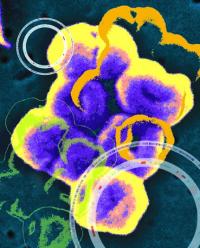
Scanning electron microscope image of A. baumannii, with maps of its genome (outer circle) and alien island sequences (inner circle – red). Researchers at Yale have identified multiple pathogenic "alien islands" in the genome of the A. baumannii, bacteria that has been responsible for new and highly drug-resistant infections in combat troops in the Middle East, according to a report in the March 1 issue of Genes and Development.
| Full story | 0 Comments | 6957 views |

| Molecular & Cell Biology | February 28, 2007 05:49 PM |
Researchers at Mount Sinai School of Medicine have just developed an advanced imaging technique to capture the movement of the microdomains of leukocytes or white blood cells. Microdomains are restricted areas on the surface of the cells in which receptors and signaling molecules accumulate during cell activation. Using digital multi-channel videomicroscopy, researchers were able to view white blood cell subsets and their forming microdomains in the vascular system in real time. In the upcoming March issue of Nature Methods, the new research displays the migration and inner workings of white blood cells in the small veins and bone marrow of mice.
| Full story | 0 Comments | 6151 views |

| Stem Cell Research | February 28, 2007 04:49 PM |
MIT researchers have developed a technique to encourage the survival and growth of adult stem cells, a step that could help realize the therapeutic potential of such cells.
| Full story | 0 Comments | 6785 views |

| Biotechnology | February 28, 2007 02:49 PM |
Deep red tomatoes get their rich color from lycopene, a disease-fighting antioxidant. A new study, however, suggests that a special variety of orange-colored tomatoes provide a different form of lycopene, one that our bodies may more readily use.
| Full story | 0 Comments | 7166 views |
| Molecular & Cell Biology | February 28, 2007 12:49 PM |
New information about a link between the growth of blood vessels critical to the spread of cancer and the copper in our bodies has been discovered by researchers from the U.S. Department of Energy's Argonne National Laboratory and the University of Chicago, using a beamline at the Advanced Photon Source.
| Full story | 0 Comments | 5997 views |
| Biotechnology | February 28, 2007 10:49 AM |
University of Delaware researchers have developed an inexpensive, nonchlorine-based technology that can remove harmful microorganisms, including viruses, from drinking water.
| Full story | 0 Comments | 8309 views |
| Molecular & Cell Biology | February 27, 2007 11:49 PM |
Music under the microscope: the relation between biology and genetics and human music, its peculiarities and reasons. These are the main themes of the International Workshop on the Biology and Genetics of Music, to be held in Bologna, May 20 to 22, with leading scientists currently involved in researching the mysteries of music, invited to explain their recent findings to the audience. The meeting is organized by the European Genetics Foundation and the Fondazione Pierfranco e Luisa Mariani, in collaboration with the Orchestra Mozart, the Municipality of Bologna and the University of Bologna. It is part of the agenda of the second edition of the Festival of Music and Genetics, taking place from May 12 to 22, 2007 (www.musicagenetica.it).
| Full story | 0 Comments | 14648 views |
| Biology | February 27, 2007 10:49 PM |
The brain appears to process information more chaotically than has long been assumed. This is demonstrated by a new study conducted by scientists at the University of Bonn. The passing on of information from neuron to neuron does not, they show, occur exclusively at the synapses, i.e. the junctions between the nerve cell extensions. Rather, it seems that the neurons release their chemical messengers along the entire length of these extensions and, in this way, excite the neighbouring cells. The findings of the study are of huge significance since they explode fundamental notions about the way our brain works. Moreover, they might contribute to the development of new medical drugs. The study is due to appear shortly in the prestigious academic journals "Nature Neuroscience" and has already been posted online (doi:10.1038/nn1850).
| Full story | 0 Comments | 7022 views |
| Health & Medicine | February 27, 2007 09:49 PM |
Even regular use of prenatal multivitamin supplements is not adequate to prevent vitamin D insufficiency, University of Pittsburgh researchers report in the current issue of the Journal of Nutrition, the publication of the American Society for Nutrition. A condition linked to rickets and other musculoskeletal and health complications, vitamin D insufficiency was found to be widespread among women during pregnancy, particularly in the northern latitudes.
| Full story | 0 Comments | 7450 views |
| Molecular & Cell Biology | February 27, 2007 08:49 PM |
If you're particularly good with puzzles or chess, the reason may be in your genes.
| Full story | 0 Comments | 9066 views |

| Environment | February 27, 2007 07:49 PM |
A stunning series of satellite imagery of Australia's Great Barrier Reef released by the CSIRO shows for the first time visual confirmation of the theory that sediment plumes travel to the outer reef, and beyond.
| Full story | 0 Comments | 6559 views |
| Biology | February 27, 2007 06:49 PM |
Ecologists continue to debate how different species manage to coexist. If two species use identical resources, such as food, invariably one will be more efficient and out-compete the other. The classical explanation is that each species has evolved morphological or physiological traits that allow it to exploit some resources more efficiently than all other species. Such partitioning of resources essentially provides each species with exclusive access to resources necessary for its survival. Although coexistence is often attributed to interspecific differences in morphology, direct evidence is relatively rare. Dabbling ducks, which include the ubiquitous mallard, are a good example. Dabbling ducks are primarily filter-feeders. They use lamellae, which are comb-like projections on the bill, to sieve food particles from pond water. Many ecologists, including Darwin, suggested that ducks coexist because interspecific differences in the spacing of bill lamellae allow each species to consume food particles of different sizes. Research published in the March issue of the American Naturalist by Brent Gurd of Simon Fraser University has demonstrated that interspecific differences in lamellar length, not spacing, allow ducks to partition food by size.
| Full story | 0 Comments | 6215 views |
| Biology | February 27, 2007 05:51 PM |
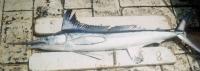
The roundscale spearfish bears a close resemblance to the white
marlin at first glance. A close examination of fins, scales, and DNA
reveals a very different species. For years, anglers thinking they were catching the prized white marlin may have caught something quite different, raising concerns about the true remaining numbers of the threatened species, according to an article in the most recent issue of the scientific journal Bulletin of Marine Science.
| Full story | 0 Comments | 7369 views |
| Health & Medicine | February 27, 2007 05:49 PM |
Systemic lupus erythomatosus (SLE), often simply called lupus, is a complex autoimmune disease marked by joint pain, skin rashes, extreme fatigue, and depression, among other symptoms. Some studies have described a possible link between SLE’s most severe psychiatric manifestation, psychosis, and a protein autoantibody associated with the central nervous system, anti-ribosomal P.
| Full story | 0 Comments | 5632 views |
| Health & Medicine | February 27, 2007 04:49 PM |
A study of eight hospitals in Peru has shown that opening windows and doors provided ventilation more than double that of mechanically ventilated negative-pressure rooms and 18 times that of rooms with windows and doors closed.
| Full story | 0 Comments | 6606 views |
| Health & Medicine | February 27, 2007 03:51 PM |
Seafood allergy sufferers may soon be able to eat prawns without the fear of an adverse reaction. Chinese scientists have taken a promising step towards removing from prawns the proteins that cause an allergic response without resorting to genetic manipulation, reports Lisa Richards in Chemistry & Industry, the magazine of the SCI.
| Full story | 0 Comments | 5980 views |
| Health & Medicine | February 27, 2007 01:51 PM |
A breath test can successfully pick up lung cancer with "moderate accuracy" even in the early stages, reveals research published ahead of print in Thorax.
| Full story | 0 Comments | 7690 views |
| Health & Medicine | February 26, 2007 10:51 PM |
Use of growth hormone to boost athletic performance can lead to diabetes, reports a study published ahead of print in the British Journal of Sports Medicine.
| Full story | 0 Comments | 8439 views |
| Health & Medicine | February 26, 2007 09:51 PM |
A diet rich in black soya beans could help control weight, lower fat and cholesterol levels, and aid in the prevention of diabetes, reports Lisa Richards in Chemistry & Industry, the magazine of the SCI.
| Full story | 0 Comments | 6603 views |
| Health & Medicine | February 26, 2007 08:51 PM |
A once-a-day, short-term treatment with a drug compound substantially improved learning and memory in mice with Down syndrome symptoms, say researchers at the Stanford University School of Medicine and Lucile Packard Children’s Hospital. What’s more, the gains lasted for months after the treatment was discontinued. The researchers are now considering a clinical trial to test whether the compound has a similar effect in humans with Down syndrome.
| Full story | 0 Comments | 9124 views |
| Biotechnology | February 26, 2007 07:51 PM |
Instead of using the usual cancer-fighting modalities, surgery, chemotherapy, or radiation, researchers from a drug development company called Advaxis, have embarked on a novel approach to fighting cancer: Engaging the immune system to attack cancer in the same the way it would a flu vaccine, by creating new life forms.
| Full story | 0 Comments | 6605 views |
| Microbiology | February 26, 2007 06:51 PM |
Yale engineers who study both flow hydrodynamics and how bacteria propel themselves report that one reason for the high incidence of infections associated with catheters in hospital patients may be that some pathogenic bacteria swim "to the left," in a study published in Physical Review Letters.
| Full story | 0 Comments | 6299 views |
| Microbiology | February 26, 2007 05:51 PM |
In 1918, 50 million people died during a worldwide influenza pandemic caused by mutation of a bird-specific strain of the influenza virus. Recently H5N1, another highly infectious avian strain has caused outbreaks of bird flu around the world. There is great concern that this virus might also mutate to allow human-to-human transmission and cause another catastrophic pandemic. Specific mutations in a viral protein, the polymerase, contribute to the ability of the bird virus to jump the species barrier to humans. Researchers from the European Molecular Biology Laboratory (EMBL) in Grenoble and Heidelberg, the Institut de Biologie Structurale (IBS) and the Unit of Virus Host Cell Interactions (UVHCI)*, both in Grenoble, have now produced the first 3-dimensional image of part of this key protein. The study, which is published in the current issue of Nature Structural and Molecular Biology, investigates the structure and function of the protein and sheds light on how polymerase mutations contribute to transmission of avian flu to humans.
| Full story | 0 Comments | 7557 views |
| Health & Medicine | February 26, 2007 04:51 PM |
What influence does the variation in estrogen level have on the activation of the female brain? Using functional Magnetic Resonance Imaging, Jean-Claude Dreher, a researcher at the Cognitive Neuroscience Center (CNRS/Université Lyon 1), in collaboration with an American team from the National Institute of Mental Health (Bethesda, Maryland) directed by Karen Berman, has identified, for the first time, the neural networks involved in processing reward-related functions modulated by female gonadal steroid hormones. This result, which was published online on January 29, 2007 on the PNAS website, is an important step in better comprehension of certain psychiatric and neurological pathologies.
| Full story | 0 Comments | 7695 views |
| Health & Medicine | February 26, 2007 03:51 PM |
New research at Ohio State University answers an infectious question about eating at restaurants: How clean are manually washed dishes?
| Full story | 0 Comments | 6302 views |
| Biology | February 26, 2007 02:51 PM |
Marine turtles almost always return to the same beach to lay their eggs. The egg-laying sites are often far from the feeding areas and the females cross several hundred kilometers of ocean with no visual landmarks. How do they manage to return to the same spot? A study by Simon Benhamou of the Center for Functional and Evolutionary Ecology at Montpellier, France, together with other groups (CNRS, IRD, IFREMER, CEDTM2, University of Pisa), shows that the marine turtles use a relatively simple navigation system involving the earth’s magnetic field, and this allows them to return to the same egg-laying site without having the ability to correct for the deflection of ocean currents. This work, published in Current Biology and Marine Ecology Progress Series, should allow better conservation strategies for this endangered species.
| Full story | 0 Comments | 7709 views |
| Molecular & Cell Biology | February 26, 2007 01:51 PM |
Our immune system finds it difficult to eliminate tumours effectively. Deciphering the strategies it implements may increase the immune system's effect on tumour cells and thus improve the clinical perspectives for anticancer immune therapy. At the Institut Curie, INSERM and CNRS researchers have used two-photon microscopy to demonstrate, for the first time in vivo and real-time, how T lymphocytes infiltrate a solid tumour in order to fight it.
| Full story | 0 Comments | 7441 views |
| Environment | February 25, 2007 06:16 PM |
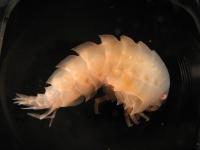
A suspected new species of Shackletonia, an amphipod crustacean sampled near Elephant Island, Antarctic Pensisula, during the RV Polarstern expedition ANTXXIII/8 in the Weddell Sea 2006/07. Credit: © C. d'Udekem, Royal Belgium Institute for Natural Sciences, 2007 Once roofed by ice for millennia, a 10,000 square km portion of the Antarctic seabed represents a true frontier, one of Earth's most pristine marine ecosystems, made suddenly accessible to exploration by the collapse of the Larsen A and B ice shelves, 12 and five years ago respectively. Now it has yielded secrets to some 52 marine explorers who accomplished the seabed's first comprehensive biological survey during a 10-week expedition aboard the German research vessel Polarstern.
| Full story | 0 Comments | 11573 views |
| Molecular & Cell Biology | February 24, 2007 05:39 PM |
At any given time, most of the roughly 30,000 genes that constitute the human genome are inactive, or repressed, closed to the cellular machinery that transcribes genes into the proteins of the body. In an average cell, only about one in ten genes is active, or expressed, at any given moment, with its DNA open to the cell' transcriptional machinery.
| Full story | 0 Comments | 8435 views |
| Biology | February 24, 2007 04:39 PM |
According to a new study published in the latest issue of The Journal of Sexual Medicine and conducted in the Department of Psychology of McGill University, thermography shows great promise as a diagnostic method of measuring sexual arousal. It is less intrusive than currently utilized methods, and is the only available test that requires no physical contact with participants. Thermography is currently the only method that can be used to diagnose sexual health problems in both women and men. In fact, women and men demonstrated similar patterns of temperature change during sexual arousal with no significant differences between genders in the time needed to reach peak temperature.
| Full story | 0 Comments | 8829 views |
| AIDS & HIV | February 24, 2007 03:39 PM |
Male circumcision significantly reduces the risk of acquiring HIV in young African men, according to a study led by University of Illinois at Chicago professor of epidemiology Robert Bailey.
| Full story | 0 Comments | 7106 views |
| Molecular & Cell Biology | February 24, 2007 02:39 PM |
Tiny molecules called microRNAs, only 19 to 21 nucleotides in length, are able to effectively silence sometimes large sets of genes. They do this by specifically binding to and neutralizing another form of RNA called messenger RNA, responsible for conveying the information from genes to the cellular machinery that uses that information to create proteins, the building blocks of the body. Several hundred species of microRNAs have been identified to date, and increasingly they are being seen as vitally important players in regulating the genome.
| Full story | 0 Comments | 6152 views |
| Stem Cell Research | February 23, 2007 10:47 PM |
Researchers from Biotech Research & Innovation Centre (BRIC) at University of Copenhagen have identified a new group of proteins that regulate the function of stem cells. The results are published in the new issue of Cell.
| Full story | 0 Comments | 7190 views |
| Microbiology | February 23, 2007 09:47 PM |
Scientists from the University of Illinois at Champaign-Urbana have found that people employed in chimpanzee-focused research and tourism in a park in western Uganda are exchanging gastrointestinal bacteria – specifically Escherichia coli – with local chimpanzee populations. And some of the E. coli strains migrating to chimps are resistant to antibiotics used by humans in Uganda.
| Full story | 0 Comments | 8147 views |
| Molecular & Cell Biology | February 23, 2007 08:47 PM |
Two enzymes in meningitis bacteria which prevent the body from successfully fighting off the disease, and make the infection extremely virulent, have been identified in new research published today.
| Full story | 0 Comments | 6118 views |

- In some genetic cases of microcephaly, stem cells fail to launch
- Yale team discovers how Zika virus causes fetal brain damage
- Scientists uncover the way a common cell enzyme alerts the body to invading bacteria
- Arctic gives clues on worst mass extinction of life
- Calcium channel blockers caught in the act at atomic level
Search Bio News Net
Free Biology Newsletter
- Flexibility That A.C.A. Lent to Work Force Is Threatened by...International Herald Tribune
- Bacteria Behind Legionnaires’ Disease Found at New York Police StationInternational Herald Tribune
- Prescription Price Crisis? 28 Million Americans See Spike in Drug...MSNBC.com: Health
- Seizing on Opioid Crisis, a Drug Maker Lobbies Hard for...International Herald Tribune
- Republicans are taking a big political risk on health careAP Health News
- Why We're So Divided Over Saving WolvesNational Geographic News