Biology News Net
Biology

If you thought the sleep-deprived months with your newborn were tough, pity the poor mother dolphin or killer whale.

Reporting in the June 30 edition of the peer-reviewed journal Nature, UCLA/Veterans Affairs neuroscientists report a developmental pattern in bottlenose dolphins and killer whales that is unique from other mammals, with calves of both species active 24 hours a day during their first month.

Health & Medicine

Which is more likely to happen - you being in a car wreck or being bitten by a shark?

Those who answered that cars are greater killers win a free trip to the beach. It's really no contest, says a Texas A&M University professor. Your chances of being in a wreck are far greater than being a shark's lunch, says John McEachran, a professor of wildlife and fishery sciences who has studied sharks for years.

AIDS & HIV

As a part of a research collaboration, scientists at the Sahlgrenska Academy at Göteborg University, Sweden, have developed a new drug candidate against HIV-infection. The new substance, named alphaHGA, will be tested on patients this year. In a thesis from the Sahlgrenska Academy, parts of the research essential for the performance of the clinical trial are presented.

Microarray

Agilent Technologies Inc. (NYSE: A) today introduced the industry's most up-to-date microarray to provide genome-wide coverage of the zebrafish (Danio rerio), and the first commercial whole mouse genome microarray based on the National Institute on Aging (NIA) Mouse Gene Index. The zebrafish and mouse microarrays were developed in collaboration with Icoria (a member of the Toxicogenomics Consortium) and the NIA, respectively.

Environment

On July 19, 2005, at the Society of Conservation Biology annual meetings, in Brasília, Brazil, the Woods Hole Research Center and the Instituto de Pesquisa Ambiental da Amazonia (IPAM) will hold an international symposium on the prospects for large-scale conservation of natural resources in the Amazon Basin.

Biology

Cardiff (UK) scientists are playing a major role in a NASA mission, which they believe could reveal living matter in the icy layers beneath the surface of a comet.

NASA's Deep Impact spacecraft will make a historic encounter with Comet Tempel-1 on 4th July, when a metre-long projectile will crash into the comet and tunnel through its outer layers, producing a crater and a plume of gas and dust.

Bioinformatics

Investigators from the University California, San Diego (UCSD) Branch of the Ludwig Institute for Cancer Research (LICR) and NimbleGen Systems have developed an efficient method to identify thousands of regulatory sequences in the human genome, according to a study published today in Nature.

Biotechnology

The dry, dusty, treeless expanse of Chile's Atacama Desert is the most lifeless spot on the face of the Earth, and that's why Alison Skelley and Richard Mathies joined a team of NASA scientists there earlier this month.

The University of California, Berkeley, scientists knew that if the Mars Organic Analyzer (MOA) they'd built could detect life in that crusty, arid land, then it would have a good chance some day of detecting life on the planet Mars.

Health & Medicine

Six million children could be saved if $5.1 billion in new resources for preventive and therapeutic interventions were provided each year, according to researchers from the Johns Hopkins Bloomberg School of Public Health and other institutions. Approximately 90 percent of all child deaths occur in 42 countries around the world. In those countries, the average cost per child saved would be $887 or $1.23 per capita. With the recent publication of the potential impact of proven interventions that are feasible to deliver in low-income settings to children younger than age 5 years, this is the first time the global cost of implementing child survival programs could be estimated. The study is published in the June 25, 2005, issue of The Lancet.

Molecular & Cell Biology

A new method for manipulating macromolecules has been developed by researchers at the University of Illinois at Urbana-Champaign. The technique uses double-stranded DNA to direct the behavior of other molecules.

In previous DNA nanotechnology efforts, duplex DNA has been used as a static lattice to construct geometrical objects in three dimensions. Instead of manipulating DNA alone into such shapes, the researchers are using DNA to control the folding and resulting structure of RNA. Eventually, they envision building supramolecular machines whose inner workings are governed by twisted strands of DNA.

Environment

For the first time, an environmentally friendly weapon against Desert Locusts has been successfully tested under large-scale field conditions, FAO said today.

During a field trial organized jointly by the plant protection authorities of Algeria and FAO near El Oued in eastern Algeria, the biopesticide, called Green Muscle®, was sprayed on more than 1 400 hectares of land infested by Desert Locust larvae. Locusts were clearly weakened and started moving slowly after four days and were then eaten by birds, lizards and ants.

Health & Medicine

According to a new study the amount of money spent treating obesity-related health problems in the U.S. has increased tenfold over 15 years.

Health & Medicine

Eighty-eight percent of women rely on their healthcare providers to learn about gynecological issues, yet only 19 percent said their doctor has talked to them about cervical cancer and its cause - the human papillomavirus (HPV) - according to a new survey released by the Association of Reproductive Health Professionals (ARHP). HPV is extremely common, affecting an estimated 80 percent of sexually active adults in their lifetime, in some cases staying dormant until years after the initial infection. Yet few are talking about the relationship between HPV and cervical cancer despite the fact that advanced screening is available, which can detect the virus early and help prevent cervical cancer.

AIDS & HIV

Johns Hopkins infectious disease specialists who have spent more than two decades leading efforts to combat HIV and AIDS worldwide are warning that limited international relief supplies of antiretroviral therapies currently being distributed in Africa, Asia and the Caribbean will not get to those who can least afford to pay for them.

Biology

Researchers in the area of Vegetable Production Vegetal of the Department of Agricultural Production at the Public University of Navarra have been awarded the prize for the best research in the area of viticulture. The presentation took place at the V Iberian Congress of Horticultural Science recently held in Oporto (Portugal). The awarded work, entitled "Recovery of photosynthetic activity in 4 grape varieties after a hydric stress event", studied the response to the hydric stress event of the grape, in order to enable suitable land irrigation policies to be made and actions carried out while taking into account the peculiarities of each variety.

Biology

The open-access journal PLoS Biology has been assessed by Thomson ISI to have an impact factor of 13.9*, which places PLoS Biology among the most highly cited journals in the life sciences. This is an outstanding statistic for a journal less than two years old, from a new publisher promoting a new business model that supports open access to the scientific and medical literature.

Molecular & Cell Biology

University of Nevada, Reno scientists have ended a decade-long controversy over the process by which bark beetles make pheromones: they manufacture their own monoterpenes – the fragrant substances plants produce and which are often used in perfumes. It had been thought that insects and other animals were incapable of making these substances.

Biology

The Patagonian Hippidion horse genus and North American stilt-legged horses have found a new place on the evolutionary tree, according to a new article in the open access journal PLoS Biology. In the paper, Jaco Weinstock, Alan Cooper, and colleagues use ancient DNA to argue that the Hippidion genus is younger than previously thought and that American stilt-legged horses were American endemics, not Asian emigres. Their analysis has also whittled down the taxonomy of North American species to just two. "I think the biggest issue is that we showed the apparent lack of species diversity in North American horses in the Late Pleistocene - as horses are a poster child of evolution," says Cooper.

Health & Medicine

Linus Pauling's book Vitamin C and The Common Cold, published in 1970, was a bestseller and led many people to believe in the value of the vitamin for cold prevention and treatment. But an article in this month's PLoS Medicine reviewing all of the best clinical research on this topic, suggests that the public's enthusiasm for the vitamin may be unjustified.

Biology

Not all smokers are alike when it comes to cravings, and a new study conducted by researchers at Duke University Medical Center suggests the difference may lie in their brains' sensitivity to drug cues. The researchers found that smokers who report a greater urge to smoke after a period of abstinence also exhibit stronger brain activity after viewing smoking-related images, such as others smoking or a pack of cigarettes.

Microbiology

Mice given a relatively new cancer drug can survive an otherwise lethal dose of vaccinia virus, a relative of smallpox virus, report scientists supported by the National Institute of Allergy and Infectious Diseases (NIAID), part of the National Institutes of Health. The findings, say the investigators, suggest that Gleevec or similar drugs might be useful in preventing adverse side effects of smallpox vaccine. The classic smallpox vaccine is made from live, weakened vaccinia virus and is not recommended for people with compromised immunity, except in emergency situations where they may have been exposed to smallpox virus.

Molecular & Cell Biology

The cellular cascade of molecular signals that instructs cells with fatally damaged DNA to self-destruct pivots on the p53 tumor suppressor gene. If p53 is inactivated, as it is in over half of all human cancers, checks and balances on cell growth fail to operate, and body cells start to accumulate mutations, which ultimately may lead to cancer. Not surprisingly, the regulation of this vital safeguard has been studied in great detail for many years but mainly in tissue culture, or in vitro, models.

Microarray

Using technology that makes it possible to zoom in on smaller sections of cell chromosomes than ever before, researchers at Dana-Farber Cancer Institute have identified nearly 100 chromosome regions where genes are either over-copied or missing in non-small cell lung cancer. The findings provide new clues about the location of genes potentially involved in the most common type of lung cancer –– and one of the deadliest of all malignancies –– and a range of possible targets for future therapies.

Bioinformatics

In a study expected to greatly benefit crop plants, scientists have deciphered the genome of a root- and seed-dwelling bacterium that protects plants from diseases.

The research provides clues to better explain how the helpful microbe, Pseudomonas fluorescens Pf-5, naturally safeguards roots and seeds from infection by harmful microbes that cause plant diseases. The genome paper will be published in Nature Biotechnology and was scheduled to be posted online on June 26.

Biotechnology

Proteins are the puzzle-pieces of life, involved in how organisms grow and flourish, but studying their complex biological processes in living systems has been extremely difficult. Now, a team of chemists and neurobiologists led by Timothy Dore at the University of Georgia and Erin M. Schuman at the California Institute of Technology has found a way to use light to regulate protein synthesis in specific locations.

The new method, which uses so-called "caged compounds" that can be turned on with light, could lead to more intricate studies of such important but poorly understood processes, such as protein synthesis in nerve synapses.

Microbiology

ubonn062405.1sm.jpg
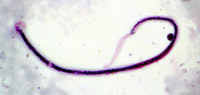
Wuchereria worms under the microscope (c) Sabine Wand
The disease is triggered off by the bite of an infected mosquito: together with its anticoagulant the mosquito pumps threadworm larvae into its host's body. These gravitate towards the lymph nodes, where they grow into threadworms which may be up to ten centimetres long. The body reacts by producing inflammation which halts the flow of lymphatic fluid. The consequence of this is that arms, legs and genitals swell to monstrous proportions – hence the name elephantiasis. More than 120 million people worldwide are infected with the pathogen wuchereria bancrofti.

Health & Medicine

H. Lee Moffitt Cancer Center & Research Institute, working in partnership with the University of South Florida (USF), has discovered a new use for an old, previously discredited anti-cancer drug that could add another weapon in the arsenal against several cancers, including tumors of the breast, ovary, colon, skin and prostate.

Molecular & Cell Biology

Scientists have found a new role for a previously identified enzyme that may make it a target for anti-inflammatory treatments.

The finding by researchers at Washington University School of Medicine in St. Louis shows that an enzyme known as cathepsin G regulates the ability of immune cells known as neutrophils to secrete chemicals that attract other immune cells and start the local inflammatory process. Over time, the excessive accumulation of immune cells can lead to tissue and cartilage damage in joints, causing pain and limiting mobility.

Stem Cell Research

In a ground-breaking study, scientists at Children's Hospital of Pittsburgh have discovered that adult, or post-natal, stem cells have the same ability as embryonic stem cells to multiply, a previously unknown characteristic indicating that post-natal stem cells may play an important therapeutic role.

Biology

20050616_pid10733_aid10732_chickadee_w250.jpg
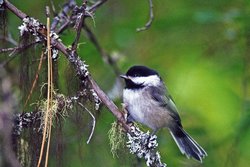
A chickadee's alarm call carries a surprising amount of information
There's more than meets the human ear when the black-capped chickadee lets its flock mates know a predator is lurking about by giving out its familiar "chick-a-dee-dee-dee" call.

The small songbirds, which are common throughout much of North America, use that signature call in a wide variety of social interactions including warning of predators. And it turns out that those alarms are far more subtle and information-packed than scientists previously imagined.

Molecular & Cell Biology

Microtubules are active protein polymers critical to the structure and function of cells and the process of cell division. In a living cell their growing ends constantly elongate and retreat in a thrashing frenzy of polymerization and depolymerization, like the writhing snakes of Medusa's hair. Known prosaically as "dynamic instability," this ongoing rapid growth and shrinkage is key to the diverse workings of microtubules in the cell.

Biology

Impressive impact factors prove that BioMed Central's Open Access journals are high quality and widely read and cited. Journals published by BioMed Central have again received impact factors that compare well with equivalent subscription titles, it was announced today, with five titles in the top five of their specialty. The high impact factors for these journals affirm that they are respected by researchers, and are fast becoming the place for authors to submit important research findings.

Biotechnology

The Rehabilitation Institute of Chicago (RIC) announced at a press conference today that it is pursuing advancements in engineering and neuroscience technology which have the opportunity to transform the lives of millions of people within the next five years suffering from paralysis, major consequences of stroke, amputation and limb loss.

In a demonstration of one of these breakthroughs, the Institute unveiled the world's first "bionic man" showcasing his bionic arm which is the most advanced prosthesis of its kind today based on its precise, thought-powered movement and its greatest range of motion. The RIC also announced the donation of a $5 million gift from the Searle Funds at the Chicago Community Trust to establish the Searle Program for Neurological Restoration, which will oversee progress to help achieve these breakthroughs.

Biology

The fossilized skeleton of a small crocodile relative excavated last year at Petrified Forest National Park in Arizona throws a wrench into theories of how and where the dinosaurs arose more than 210 million years ago at the end of the Triassic Period.

The animal, one of many creatures from the Late Triassic known only from their teeth, was thought to be an ancestor of the plant-eating ornithischian dinosaurs like Stegosaurus and Triceratops, which roamed the world millions of years later in the Jurassic and Cretaceous periods.

Biotechnology

Agilent Technologies Inc. (NYSE: A) introduced a high-capacity version of its human protein Multiple Affinity Removal System, which removes up to 99 percent of the six most common proteins from human blood serum. The new system allows researchers to purify approximately twice the volume of serum per sample compared with other protein removal systems, and will facilitate the detection and identification of low-abundance proteins that may serve as markers for a wide range of diseases.

Stem Cell Research

UC Irvine School of Medicine researchers have discovered how new neurons born from endogenous neural stem cells are sent to regions of the brain where they can replace old and dying cells, a finding that suggests how stem cell therapies can be specifically targeted to brain regions affected by neurodegenerative diseases or by stroke.

Bioinformatics

Regulating when and where certain proteins are made is crucial to the normal functioning of living things. To make proteins, information from DNA is transcribed into RNA molecules and then translated into the amino acids building blocks of proteins. But not all genes code for proteins--some make RNA molecules called microRNAs. These small RNA molecules interfere with--and therefore control--the production of proteins. A new paper in PLoS Computational Biology shows how important microRNAs are in the biology of diverse.

Microbiology

niaid062005_1sm.jpg
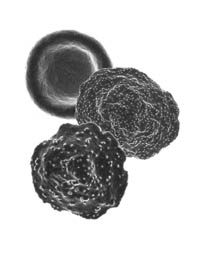
From back to front: normal, uninfected human red blood cell; malaria parasite-infected red blood cell containing hemoglobin A and showing even distribution of small, knob protrusions; malaria parasite-infected red blood cell containing hemoglobin C and displaying abnormally large knob protrusions. (Credit: NIAID)
Scientists have discovered why people with a specific type of hemoglobin--the oxygen-carrying molecule that gives red blood cells their color--are less prone to severe malaria. In a series of experiments, the researchers determined how hemoglobin type C impairs the ability of malaria parasites to cause disease symptoms.

"This research gives us a new insight into malaria, a major global killer that preys especially on young children and claims a life every 30 seconds," notes Anthony S. Fauci, M.D., director of the National Institute of Allergy and Infectious Diseases (NIAID), part of the National Institutes of Health, where the research was conducted.

"If we better understand the natural protective mechanisms against malaria, we might be able to mimic that protective effect through vaccines or drugs," says NIAID researcher Thomas E. Wellems, M.D., Ph.D., whose team's findings appear this week in the journal Nature.

Bioinformatics

The human brain contains from 10 to 100 billion neurons, and each has hundreds of connections with neighboring neurons. Making sense of these intricate connections is essential to understanding brain function, and the task is a monumental one.

Molecular & Cell Biology

Experimenting with Arabidopsis, a fast-growing cousin of the humble mustard plant, scientists at the University of North Carolina at Chapel Hill got a big surprise while investigating how plants respond to attacks from disease organisms such as bacteria and viruses.


Search Bio News Net

Free Biology Newsletter