

Göttingen-based scientists working at DESY's PETRA III research light source have carried out the first studies of living biological cells using high-energy X-rays. The new method shows clear differences in the internal cellular structure between living and dead, chemically fixed cells that are often analysed. "The new method for the first time enables us to investigate the internal structures of living cells in their natural environment using hard X-rays," emphasises the leader of the working group, Prof. Sarah Köster from the Institute for X-Ray Physics of the University of Göttingen. The researchers present their work in the scientific journal Physical Review Letters.

| Molecular & Cell Biology | February 27, 2014 05:54 PM |
A new report appearing in the March 2014 issue of The FASEB Journal helps shed light on what drives the evolution of pathogens, as well as how our bodies adapt to ward them off. Specifically, the report shows that our bodies naturally employ a mechanism, called "CD33rSiglecs," that not only dampens unwanted immune responses against one's own cells, but also evolves rapidly to recognize foreign invaders. What's more, the report explains how pathogens exploit this immunological "vulnerability" of "self-recognition" to evade our bodies' defenses. This leads to a seemingly endless "arms race" between constantly evolving pathogens and immune systems. Understanding this phenomenon may become crucial for developing novel drugs against various pathogens that try to take advantage of this system.
| Full story | 0 Comments | 7371 views |

| Biotechnology | February 26, 2014 06:37 PM |
Stars, diamonds, circles. Rather than your average bowl of Lucky Charms, these are three-dimensional cell cultures generated by an exciting new digital microfluidics platform, the results of which have been published in Nature Communications this week by researchers at the University of Toronto. The tool, which can be used to study cells in cost-efficient, three-dimensional microgels, may hold the key to personalized medicine applications in the future.
| Full story | 0 Comments | 7262 views |
| Biotechnology | February 26, 2014 06:36 PM |
Photoreactive compounds developed by scientists of Ludwig-Maximilians-Universitaet (LMU) in Munich directly modulate nerve-cell function, and open new routes to the treatment of neurological diseases, including chronic pain and certain types of visual impairment.
| Full story | 0 Comments | 6303 views |

| Microbiology | February 25, 2014 06:31 PM |
With antibiotic resistant infections on the rise and a scarce pipeline of novel drugs to combat them, researchers at the Los Angeles Biomedical Research Institute at Harbor-UCLA Medical Center (LA BioMed) are pursuing entirely new approaches to meet the challenge of drug-resistant infections by taming microbes rather than killing them.
| Full story | 0 Comments | 8042 views |
| Molecular & Cell Biology | February 24, 2014 06:07 PM |
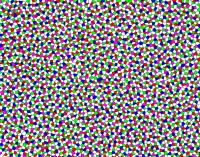
Researchers from Princeton University and Washington University in St. Louis report that the unusual arrangement of cells in a chicken's eye constitutes the first known biological occurrence of a potentially new state of matter known as "disordered hyperuniformity," which has been shown to have unique physical properties. These states have a "hidden order" that allows them to behave like crystal and liquid states of matter. They exhibit order over large distances and disorder over small distances. This diagram depicts the spatial distribution of the five types of light-sensitive cells known as cones in the chicken retina. Along with eggs, soup and rubber toys, the list of the chicken's most lasting legacies may eventually include advanced materials such as self-organizing colloids, or optics that can transmit light with the efficiency of a crystal and the flexibility of a liquid.
| Full story | 0 Comments | 7923 views |
| Biotechnology | February 24, 2014 06:07 PM |
A biologist at the University of York is part of an international team which has shown that advanced DNA sequencing technologies can be used to accurately measure the levels of inbreeding in wild animal populations.
| Full story | 0 Comments | 7095 views |
| Biotechnology | February 24, 2014 06:07 PM |
Engineers like to make things that work. And if one wants to make something work using nanoscale components—the size of proteins, antibodies, and viruses—mimicking the behavior of cells is a good place to start since cells carry an enormous amount of information in a very tiny packet. As Erik Winfree, professor of computer science, computation and neutral systems, and bioengineering, explains, "I tend to think of cells as really small robots. Biology has programmed natural cells, but now engineers are starting to think about how we can program artificial cells. We want to program something about a micron in size, finer than the dimension of a human hair, that can interact with its chemical environment and carry out the spectrum of tasks that biological things do, but according to our instructions."
| Full story | 0 Comments | 5738 views |
| Biotechnology | February 23, 2014 05:59 PM |
The power of regenerative medicine now allows scientists to transform skin cells into cells that closely resemble heart cells, pancreas cells and even neurons. However, a method to generate cells that are fully mature—a crucial prerequisite for life-saving therapies—has proven far more difficult. But now, scientists at the Gladstone Institutes and the University of California, San Francisco (UCSF), have made an important breakthrough: they have discovered a way to transform skin cells into mature, fully functioning liver cells that flourish on their own, even after being transplanted into laboratory animals modified to mimic liver failure.
| Full story | 0 Comments | 10346 views |
| Microbiology | February 23, 2014 05:59 PM |
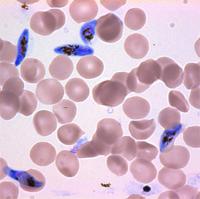
In blue are Plasmodium falciparum malaria parasites in the sexual, gametocyte stage of development. In red are uninfected red blood cells. Two teams have independently discovered that a single regulatory protein acts as the master genetic switch that triggers the development of male and female sexual forms (termed gametocytes) of the malaria parasite, solving a long-standing mystery in parasite biology with important implications for human health. The protein, AP2-G, is necessary for activating a set of genes that initiate the development of gametocytes -- the only forms that are infectious to mosquitos. The research also gives important clues for identifying the underlying mechanisms that control this developmental fate, determining whether or not a malaria parasite will be able to transmit the disease.
| Full story | 0 Comments | 7910 views |
| Molecular & Cell Biology | February 20, 2014 06:28 PM |

Caltech researchers separate blood stem cells from other bone marrow cells and load them onto a newly developed microfluidic chip. Fluorescent signals indicate the presence of secreted proteins with one... In the battle against infection, immune cells are the body's offense and defense—some cells go on the attack while others block invading pathogens. It has long been known that a population of blood stem cells that resides in the bone marrow generates all of these immune cells. But most scientists have believed that blood stem cells participate in battles against infection in a delayed way, replenishing immune cells on the front line only after they become depleted.
| Full story | 0 Comments | 6869 views |
| Molecular & Cell Biology | February 20, 2014 06:28 PM |
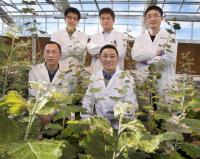
This is a photo of Brookhaven National Laboratory biochemist Chang-Jun Liu with Mingyue Gou, Huijun Yang, Yuanheng Cai and Xuebin Zhang. Plant growth is orchestrated by a spectrum of signals from hormones within a plant. A major group of plant hormones called cytokinins originate in the roots of plants, and their journey to growth areas on the stem and in leaves stimulates plant development. Though these phytohormones have been identified in the past, the molecular mechanism responsible for their transportation within plants was previously poorly understood.
| Full story | 0 Comments | 6172 views |
| Biotechnology | February 19, 2014 05:46 PM |
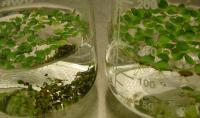
Duckweed is a relatively simple plant with fronds that float on the surface of the water and roots that extend into the water. Duckweed is a tiny floating plant that's been known to drive people daffy. It's one of the smallest and fastest-growing flowering plants that often becomes a hard-to-control weed in ponds and small lakes. But it's also been exploited to clean contaminated water and as a source to produce pharmaceuticals. Now, the genome of Greater Duckweed (Spirodela polyrhiza) has given this miniscule plant's potential as a biofuel source a big boost. In a paper published February 19, 2014 in the journal Nature Communications, researchers from Rutgers University, the Department of Energy Joint Genome Institute and several other facilities detailed the complete genome of S. polyrhiza and analyzed it in comparison to several other plants, including rice and tomatoes.
| Full story | 0 Comments | 6672 views |
| Molecular & Cell Biology | February 19, 2014 05:46 PM |
The switch in the brain that sends us off to sleep has been identified by researchers at Oxford University's Centre for Neural Circuits and Behaviour in a study in fruit flies.
| Full story | 0 Comments | 10073 views |
| Molecular & Cell Biology | February 18, 2014 06:47 PM |
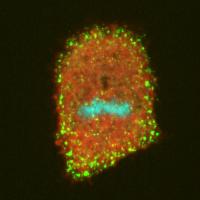
This shows restarted endocytosis in a mitotic cell. Researchers from Warwick Medical School have discovered the key role of a protein in shutting down endocytosis during mitosis, answering a question that has evaded scientists for half a century.
| Full story | 0 Comments | 9615 views |
| Biotechnology | February 18, 2014 06:47 PM |
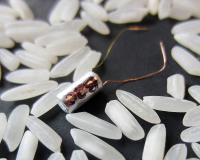
This image shows the microbattery, created by Jie Xiao and Daniel Deng and colleagues, amid grains of rice. Scientists have created a microbattery that packs twice the energy compared to current microbatteries used to monitor the movements of salmon through rivers in the Pacific Northwest and around the world.
| Full story | 0 Comments | 6110 views |
| Microbiology | February 17, 2014 06:16 PM |
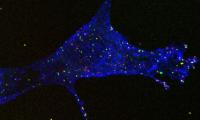
How dengue virus enters cells of our immune system: a 3D projection of a cell expressing on its surface DC-SIGN (stained in blue with antibodies) that have captured many dengue viruses (in green or green combined with red) and internalized dengue viruses (shown only in red). Dengue fever, an infectious tropical disease caused by a mosquito-borne virus, afflicts millions of people each year, causing fever, headache, muscle and joint pains and a characteristic skin rash. In some people the disease progresses to a severe, often fatal, form known as dengue hemorrhagic fever. Despite its heavy toll, the prevention and clinical treatment of dengue infection has been a "dramatic failure in public health compared to other infectious diseases like HIV," said Ping Liu of the University of North Carolina at Chapel Hill.
| Full story | 0 Comments | 6800 views |

| Biology | February 17, 2014 06:16 PM |
Why does a mouse's heart beat about the same number of times in its lifetime as an elephant's, although the mouse lives about a year, while an elephant sees 70 winters come and go? Why do small plants and animals mature faster than large ones? Why has nature chosen such radically different forms as the loose-limbed beauty of a flowering tree and the fearful symmetry of a tiger?
| Full story | 0 Comments | 6936 views |
| Biology | February 13, 2014 06:13 PM |
Invasive "crazy ants" are rapidly displacing fire ants in areas across the southeastern U.S. by secreting a compound that neutralizes fire ant venom, according to a University of Texas at Austin study published this week in the journal Science Express. It's the first known example of an insect with the ability to detoxify another insect's venom.
| Full story | 0 Comments | 9044 views |
| Microbiology | February 13, 2014 06:13 PM |
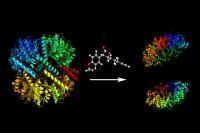
Some smaller molecules (such as the Lactone in the middle) are able to destruct the arrangement of the amino acids required for the cohesion of the subunits of the bacterial protease ClpP. As a result the protease breaks into two parts, which are completely inactive. This approach massively disturbs the metabolism of the bacterium, giving the immune system time to react. And, because the bacterium isn't killed, the development of new resistances can be avoided. Proteins are made up of a chain of amino acids and are vital for all cell processes. Proteases are among the most important types of protein. Like "molecular scissors", they cut other proteins at given positions and thereby execute important cell functions. By cutting the amino acid chains to the right length or breaking proteins apart they, for example, activate or deactivate proteins, decompose defective ones or switch signal sequences that serve to transport proteins to their proper position within a cell.
| Full story | 0 Comments | 7163 views |
| Molecular & Cell Biology | February 12, 2014 05:46 PM |
The elusive progenitor cells that give rise to innate lymphoid cells—a recently discovered group of infection-fighting white blood cells—have been identified in fetal liver and adult bone marrow of mice, researchers from the University of Chicago report early online in the journal Nature.
| Full story | 0 Comments | 6677 views |
| Biology | February 12, 2014 05:46 PM |
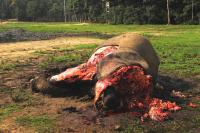
New data from the field in Central Africa shows that between 2002 and 2013, 65 percent of forest elephants were killed. New data from the field in Central Africa shows that between 2002 and 2013, 65 percent of forest elephants were killed. They are being poached, for their ivory, at a shocking 9 percent per year.
| Full story | 0 Comments | 7978 views |

| Environment | February 11, 2014 05:46 PM |
Recent decades may have been the wettest in 3,500 years in North East Tibet – according to climate researchers at the University of East Anglia (UK) and the Chinese Academy of Sciences (Lanzhou, China).
| Full story | 0 Comments | 5885 views |

| Health & Medicine | February 11, 2014 05:46 PM |
As human beings, we expend a great deal of time, money, and energy in the pursuit of happiness. From exotic travel to simply spending time with our grandchildren, the things that make us happy change as we age. A new study in the Journal of Consumer Research explores the role of age on the happiness we receive from both the ordinary and the extraordinary experiences in our lives.
| Full story | 0 Comments | 7110 views |
| Biotechnology | February 11, 2014 05:46 PM |
Inspired by tiny particles that carry cholesterol through the body, MIT chemical engineers have designed nanoparticles that can deliver snippets of genetic material that turn off disease-causing genes.
| Full story | 0 Comments | 6280 views |
| Microbiology | February 10, 2014 05:38 PM |
The hepatitis C virus (HCV) has a previously unrecognized tactic to outwit antiviral responses and sustain a long-term infection. It also turns out that some people are genetically equipped with a strong countermeasure to the virus' attempt to weaken the attack on it.
| Full story | 0 Comments | 6695 views |
| Biology | February 10, 2014 05:38 PM |
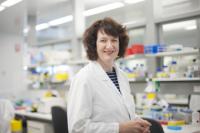
Associate Professor Joan Heath has uncovered a new way that protein production is regulated in development. Melbourne researchers have made a major step forward in understanding how changes in an essential cellular process, called minor class splicing, may cause a severe developmental disease.
| Full story | 0 Comments | 5944 views |
| Molecular & Cell Biology | February 10, 2014 05:38 PM |
NYU Langone Medical Center researchers have found a biological weakness in the workings of the most commonly mutated gene involved in human cancers, known as mutant K-Ras, which they say can be exploited by drug chemotherapies to thwart tumor growth.
| Full story | 0 Comments | 6546 views |
| Health & Medicine | February 10, 2014 05:38 PM |
Many people suffer from chronic inflammation because their immune systems overreact to 'self' tissue. Sydney scientists believe that a small molecule known as Interleukin 21 is a promising therapeutic target in such cases.
| Full story | 0 Comments | 5233 views |
| Biotechnology | February 10, 2014 05:38 PM |
Researchers at Brigham and Women's Hospital (BWH) and Carnegie Mellon University have introduced a unique micro-robotic technique to assemble the components of complex materials, the foundation of tissue engineering and 3D printing.
| Full story | 0 Comments | 6246 views |
| Biology | February 6, 2014 08:22 PM |
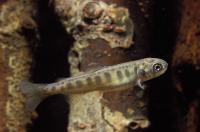
A new study using small Chinook salmon "parr " found the fish use the Earth's magnetic field to orient themselves. A team of scientists last year presented evidence of a correlation between the migration patterns of ocean salmon and the Earth's magnetic field, suggesting it may help explain how the fish can navigate across thousands of miles of water to find their river of origin.
| Full story | 0 Comments | 8400 views |
| Health & Medicine | February 6, 2014 08:22 PM |
Scientists have for the first time sequenced an ancient RNA genome – of a barley virus once believed to be only 150 years old - pushing its origin back at least 2,000 years and revealing how intense farming at the time of the Crusades contributed to its spread.
| Full story | 0 Comments | 5719 views |
| Molecular & Cell Biology | February 6, 2014 08:22 PM |
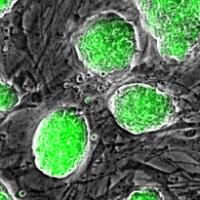
This image shows iPS cells (green) generated using histone variants TH2A and TH2B and two Yamanaka factors (Oct3/4 and Klf4). One major challenge in stem cell research has been to reprogram differentiated cells to a totipotent state. Researchers from RIKEN in Japan have identified a duo of histone proteins that dramatically enhance the generation of induced pluripotent stem cells (iPS cells) and may be the key to generating induced totipotent stem cells.
| Full story | 0 Comments | 6542 views |
| Biology | February 5, 2014 08:33 PM |
Sponges are an important animal for marine and freshwater ecology and represent a rich animal diversity found throughout the world, from tropical climates to the arctic poles. For evolutionary biologists, they also present an interesting animal for comparative study because they are simple filter feeders, and lack nervous, digestive or circulatory systems, suggesting that they diverged early from other animals.
| Full story | 0 Comments | 7191 views |
| Biology | February 5, 2014 08:33 PM |

A speculative life rendering of the fossil whale Balaenoptera bertae unearthed in the San Francisco Bay Area.
The whale belongs within the same genus as minke and fin whales, indicating... The pre-Ice Age marine mammal community of the North Pacific formed a strangely eclectic scene, research by a Geology PhD student at New Zealand's University of Otago reveals.
| Full story | 0 Comments | 9517 views |
| Biotechnology | February 4, 2014 07:34 PM |
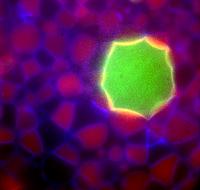
Illustration: Green artificial vesicle is loaded with a basic cellular machinery derived from bacterial cells. This enables it to translate an encapsulated genetic blueprint into a functional protein. It is a big dream in science: To start from scratch with simple artificial microskopic building blocks and end up with something much more complex: living systemts, novel computers or every-day materials. For decades scientists have pursied the dream of creating artificial building blocks that can self-assemble in large numbers and reassemble to take on new tasks or to remedy defects. Now researchers from University of Southern Denmark have taken a step forward to make this dream come true.
| Full story | 0 Comments | 6790 views |
| Health & Medicine | February 4, 2014 07:34 PM |
A recent prospective study published in Reproductive BioMedicine Online comparing conventional IVF with a novel simplified laboratory method of culturing embryos suggested that fertilization and implantation rates were similar for the simplified system when compared with those reported by conventional IVF programs. Sixteen healthy babies have already been born with this new method. According to the results of this study, IVF may be offered at a more reasonable price and made available to a larger part of the world population. Other quality studies are needed to determine the reduction in cost and the prospect of different patient groups using this simplified approach.
| Full story | 0 Comments | 5116 views |
| Environment | February 3, 2014 08:19 PM |
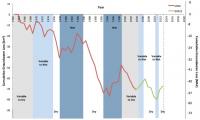
This image shows umulative groundwater losses (cubic km and million acre-ft) in California's Central Valley since 1962. Updates to satellite data show that California's Sacramento and San Joaquin River basins are at near decade-low water storage levels. These and other findings on the State's dwindling water resources were documented in an advisory report released today from the UC Center for Hydrologic Modeling (UCCHM) at the University of California, Irvine.
| Full story | 0 Comments | 7459 views |

| AIDS & HIV | February 3, 2014 08:19 PM |
A team of researchers has reported a novel method for tracking CD4+ T cells in people infected with HIV. CD4+ T cells are critical for immune defense against an array of pathogens and are a primary target of HIV. In the study, researchers used a unique, replication-incompetent (defective) form of HIV identified in a patient in the early 1990s. The defective virus had integrated into the genome of a single CD4+ T cell. Like a barcode, this "provirus" marked the originally infected CD4+ T cell and its progeny, enabling researchers to track its lineage for 17 years. This new method allows scientists to distinguish dividing cells from dying ones, something that has not been possible with existing labeling techniques, but is essential for studying how immune cells survive HIV infection.
| Full story | 0 Comments | 7719 views |

- In some genetic cases of microcephaly, stem cells fail to launch
- Yale team discovers how Zika virus causes fetal brain damage
- Scientists uncover the way a common cell enzyme alerts the body to invading bacteria
- Arctic gives clues on worst mass extinction of life
- Calcium channel blockers caught in the act at atomic level
Search Bio News Net
Free Biology Newsletter
- Flexibility That A.C.A. Lent to Work Force Is Threatened by...International Herald Tribune
- Bacteria Behind Legionnaires’ Disease Found at New York Police StationInternational Herald Tribune
- Prescription Price Crisis? 28 Million Americans See Spike in Drug...MSNBC.com: Health
- Seizing on Opioid Crisis, a Drug Maker Lobbies Hard for...International Herald Tribune
- Republicans are taking a big political risk on health careAP Health News
- Why We're So Divided Over Saving WolvesNational Geographic News