

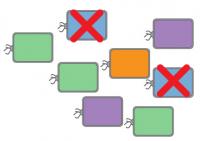
North Carolina State University researchers have developed a technique to selectively kill specific strains of bacteria. Researchers from North Carolina State University have developed a de facto antibiotic "smart bomb" that can identify specific strains of bacteria and sever their DNA, eliminating the infection. The technique offers a potential approach to treat infections by multi-drug resistant bacteria.

| Microbiology | January 30, 2014 07:02 PM |
| Full story | 0 Comments | 9851 views |

| Biotechnology | January 30, 2014 07:02 PM |
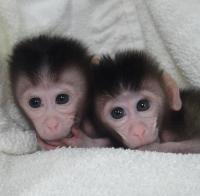
Researchers achieved precise gene modification in monkeys. Monkeys are important for modeling diseases because of their close similarities to humans, but past efforts to precisely modify genes in primates have failed. In a study published by Cell Press January 30th in the journal Cell, researchers achieved precise gene modification in monkeys for the first time using an efficient and reliable approach known as the CRISPR/Cas9 system. The study opens promising new avenues for the development of more effective treatments for a range of human diseases.
| Full story | 0 Comments | 9579 views |

| AIDS & HIV | January 30, 2014 07:02 PM |
The human intestinal tract, or gut, is best known for its role in digestion. But this collection of organs also plays a prominent role in the immune system. In fact, it is one of the first parts of the body that is attacked in the early stages of an HIV infection. Knowing how the virus infects cells and accumulates in this area is critical to developing new therapies for the over 33 million people worldwide living with HIV. Researchers at the California Institute of Technology (Caltech) are the first to have utilized high-resolution electron microscopy to look at HIV infection within the actual tissue of an infected organism, providing perhaps the most detailed characterization yet of HIV infection in the gut.
| Full story | 0 Comments | 7873 views |

| Bioinformatics | January 29, 2014 08:26 PM |
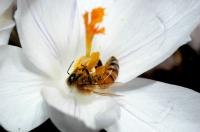
MSU scientists have identified how a single gene in honey bees separates the queens from the workers. Scientists have identified how a single gene in honey bees separates the queens from the workers.
| Full story | 0 Comments | 10358 views |

| Molecular & Cell Biology | January 29, 2014 08:26 PM |
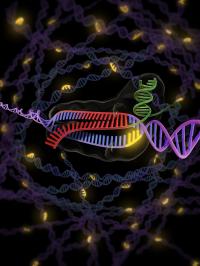
Short DNA sequences known as "PAM " (shown in yellow) enable the bacterial enzyme Cas9 to identify and degrade foreign DNA, as well as induce site-specific genetic changes in animals. A central question has been answered regarding a protein that plays an essential role in the bacterial immune system and is fast becoming a valuable tool for genetic engineering. A team of researchers with the Lawrence Berkeley National Laboratory (Berkeley Lab) and the University of California (UC) Berkeley have determined how the bacterial enzyme known as Cas9, guided by RNA, is able to identify and degrade foreign DNA during viral infections, as well as induce site-specific genetic changes in animal and plant cells. Through a combination of single-molecule imaging and bulk biochemical experiments, the research team has shown that the genome-editing ability of Cas9 is made possible by the presence of short DNA sequences known as "PAM," for protospacer adjacent motif.
| Full story | 0 Comments | 6733 views |

| Health & Medicine | January 28, 2014 06:29 PM |
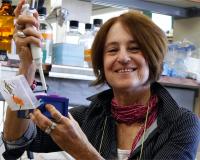
Hebrew University of Jerusalem scientist Daphne Atlas is developing molecules to reduce Alzheimer's and dementia risk in diabetic patients. Researchers at the Hebrew university of Jerusalem have created a molecule that could potentially lower diabetic patients' higher risk of developing dementia or Alzheimer's disease.
| Full story | 0 Comments | 7577 views |
| Health & Medicine | January 28, 2014 06:29 PM |
Researchers from Weill Cornell Medical College have added to the growing body of evidence that multiple sclerosis may be triggered by a toxin produced by common foodborne bacteria. The presented their research at the 2014 ASM Biodefense and Emerging Diseases Research Meeting.
| Full story | 0 Comments | 6112 views |
| Biotechnology | January 27, 2014 06:14 PM |
A team of researchers at the University of Toronto has discovered a method of assembling "building blocks" of gold nanoparticles as the vehicle to deliver cancer medications or cancer-identifying markers directly into cancerous tumors. The study, led by Warren Chan, Professor at the Institute of Biomaterials & Biomedical Engineering (IBBME) and the Donnelly Centre for Cellular & Biomolecular Research (CCBR), appears in an article in Nature Nanotechnology this week.
| Full story | 0 Comments | 6806 views |
| Molecular & Cell Biology | January 27, 2014 06:14 PM |
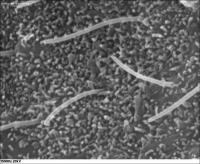
Using mouse models, Penn State cellular biologist Aimin Liu and his colleagues discovered a protein that is required for the growth of critical, hair-like structures called cilia on cell surfaces.... A team of researchers from Penn State University and the University of California has discovered a protein that is required for the growth of tiny, but critical, hair-like structures called cilia on cell surfaces. The discovery has important implications for human health because lack of cilia can lead to serious diseases such as polycystic kidney disease, blindness and neurological disorders.
| Full story | 0 Comments | 6523 views |

| Biology | January 26, 2014 06:14 PM |
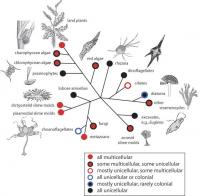
Representative diverse origins of multicellularity are shown on a highly redacted and unrooted phylogenetic diagram of the major eukaryotic clades (modified from a variety of sources). In the beginning there were single cells. Today, many millions of years later, most plants, animals, fungi, and algae are composed of multiple cells that work collaboratively as a single being. Despite the various ways these organisms achieved multicellularity, their conglomeration of cells operate cooperatively to consume energy, survive, and reproduce. But how did multicellularity evolve? Did it evolve once or multiple times? How did cells make the transition from life as a solo cell to associating and cooperating with other cells such that they work as a single, cohesive unit?
| Full story | 0 Comments | 7466 views |
| Biotechnology | January 26, 2014 06:14 PM |
A simple adjustment to a powerful gene-editing tool may be able to improve its specificity. In a report receiving advance online publication in Nature Biotechnology, Massachusetts General Hospital (MGH) investigators describe how adjusting the length of the the guide RNA (gRNA) component of the synthetic enzymes called CRISPR-Cas RNA-guided nucleases (RGNs) can substantially reduce the occurrence of DNA mutations at sites other than the intended target, a limitation the team had previously described just last year.
| Full story | 0 Comments | 5543 views |
| Molecular & Cell Biology | January 26, 2014 06:14 PM |
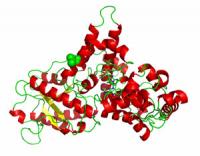
This is a 3D structure of Cryptochrome -- a blue light photoreceptor; a natural variation in a single amino acid shown in green, has impact on behavior and development of... The circadian clock is a molecular network that generates daily rhythms, and is present in both plants and animals.
| Full story | 0 Comments | 5419 views |
| Bioinformatics | January 24, 2014 05:22 PM |
A landmark study across many cancer types reveals that the universe of cancer mutations is much bigger than previously thought. By analyzing the genomes of thousands of patients' tumors, a Broad Institute-led research team has discovered many new cancer genes — expanding the list of known genes tied to these cancers by 25 percent. Moreover, the study shows that many key cancer genes still remain to be discovered. The team's work, which lays a critical foundation for future cancer drug development, also shows that creating a comprehensive catalog of cancer genes for scores of cancer types is feasible with as few as 100,000 patient samples.
| Full story | 0 Comments | 5911 views |
| Microbiology | January 23, 2014 05:24 PM |
The Annals of the American Thoracic Society has released a comprehensive supplement on the 56th annual Thomas L. Petty Aspen Lung Conference entitled "The Lung Microbiome: A New Frontier in Pulmonary Medicine."
| Full story | 0 Comments | 7255 views |

| Environment | January 23, 2014 05:24 PM |
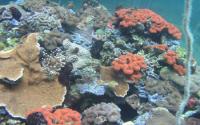
Corals living in more acidic bays around Palau's Rock Islands are surprisingly healthy. Marine scientists working on the coral reefs of Palau have made two unexpected discoveries that could provide insight into corals' resistance and resilience to ocean acidification.
| Full story | 0 Comments | 6545 views |
| Biology | January 20, 2014 06:56 PM |
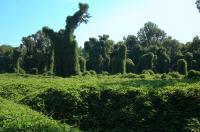
One of the most damaging invasive species in history, kudzu, or Japanese arrowroot, found its way from Japan to the southeastern United States. In 1859 an Australian farmer named Thomas Austin released 24 grey rabbits from Europe into the wild because it "could do little harm and might provide a touch of home, in addition to a spot of hunting."
| Full story | 0 Comments | 7886 views |
| Health & Medicine | January 16, 2014 07:21 PM |
New research from David Westaway, PhD, of the University of Alberta and Jiri Safar, PhD, Case Western Reserve University School of Medicine has uncovered a quality control mechanism in brain cells that may help keep deadly neurological diseases in check for months or years.
| Full story | 0 Comments | 7433 views |
| Biology | January 15, 2014 07:04 PM |
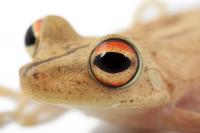
Gunther's Banded Treefrog, Hypsiboas fasciatus, was believed to have a wide distribution in the Amazon region. Amazonian biodiversity has been studied for hundreds of years. Early explorers of Amazonian plants and animals included renowned naturalists of the stature of Alexander von Humboldt and A. R. Wallace. Despite this long history of exploration, new studies are resulting in the discovery of a large number of new species. The key of these discoveries lies in the use of advanced new tools for species detection.
| Full story | 0 Comments | 8383 views |
| Environment | January 15, 2014 07:04 PM |
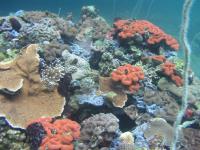
Despite living in waters that are more acidic than average seawater, the corals living in the bays around Palau's Rock Islands are unexpectedly diverse and healthy. Ocean researchers working on the coral reefs of Palau in 2011 and 2012 made two unexpected discoveries that could provide insight into corals' resistance and resilience to ocean acidification, and aid in the creation of a plan to protect them.
| Full story | 0 Comments | 6745 views |
| Biotechnology | January 15, 2014 07:04 PM |
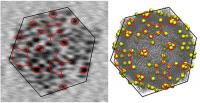
Left: This is a transmission electron microscopy (TEM) image of a single CVB3 virus showing tens of gold nanoparticles attached to its surface. Researchers at the Nanoscience Center (NSC) of University of Jyväskylä in Finland have developed a novel method to study enterovirus structures and their functions. The method will help to obtain new information on trafficking of viruses in cells and tissues as well as on the mechanisms of virus opening inside cells. This new information is important for example for developing new antiviral drugs and vaccines. The study was published in the journal Proceedings of the National Academy of Sciences January 13, 2014. (1) The research was funded by the Academy of Finland and the TEKES FiDiPro -project NOVAC (Novel methods for vaccination and virus detection).
| Full story | 0 Comments | 7232 views |
| Environment | January 14, 2014 07:31 PM |
If you've ever slipped on a slimy wet rock at the beach, you have bacteria to thank. Those bacteria, nestled in a supportive extracellular matrix, form bacterial biofilms—often slimy substances that cling to wet surfaces. For some marine organisms—like corals, sea urchins, and tubeworms—these biofilms serve a vital purpose, flagging suitable homes for such organisms and actually aiding the transformation of larvae to adults.
| Full story | 0 Comments | 6797 views |
| Molecular & Cell Biology | January 13, 2014 05:44 PM |
When a tumor is treated with an anti-cancer drug, some cells die and, unfortunately, some cells tend to live. A University of Colorado Cancer Center study published in the journal Nature Cell Biology details a possible difference between the susceptible and resistant cells: the rate at which cells are able to cleanse themselves via the process known as autophagy.
| Full story | 0 Comments | 6753 views |
| Microbiology | January 13, 2014 05:44 PM |
Innovative work by two Florida State University scientists that shows the structural and DNA breakdown of a bacteria-invading virus is being featured on the cover of the February issue of the journal Virology.
| Full story | 0 Comments | 7550 views |
| Biology | January 9, 2014 05:46 PM |
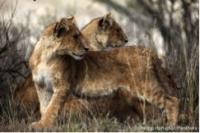
This shows two lion cubs in West Africa. A report published today concludes that the African lion is facing extinction across the entire West African region. The West African lion once ranged continuously from Senegal to Nigeria, but the new paper reveals there are now only an estimated 250 adult lions restricted to four isolated and severely imperiled populations. Only one of those populations contains more than 50 lions.
| Full story | 0 Comments | 11257 views |
| Bioinformatics | January 9, 2014 05:46 PM |
Through DNA analysis, Illinois researchers have disproved decades of rumors and hearsay surrounding the ancient Battle of Raphia, the only known battle between Asian and African elephants.
| Full story | 0 Comments | 8098 views |
| Molecular & Cell Biology | January 9, 2014 05:46 PM |
Scientists have solved a longstanding mystery of the central nervous system, showing how a key protein gets to the right spot to launch electrical impulses that enable communication of nerve signals to and from the brain.
| Full story | 0 Comments | 6610 views |
| Molecular & Cell Biology | January 9, 2014 05:46 PM |
Penn State University molecular biologists have discovered a brand-new pathway for repairing nerve cells that could have implications for faster and improved healing. The researchers describe their findings in a paper titled "Dendrite injury triggers DLK-independent regeneration," which will be published in the 30 January 2014 issue of the journal Cell Reports. These findings demonstrate that dendrites, the component of nerve cells that receive information from the brain, have the capacity to regrow after an injury.
| Full story | 0 Comments | 7479 views |
| Biology | January 8, 2014 07:54 PM |
Great white sharks—top predators throughout the world's ocean—grow much slower and live significantly longer than previously thought, according to a new study led by the Woods Hole Oceanographic Institution (WHOI).
| Full story | 0 Comments | 8869 views |
| Environment | January 8, 2014 07:54 PM |
A new study of four Antarctic emperor penguin colonies suggest that unexpected breeding behaviour may be a sign that the birds are adapting to environmental change.
| Full story | 0 Comments | 6740 views |
| Molecular & Cell Biology | January 8, 2014 07:54 PM |
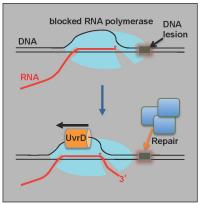
A new model of DNA repair is revealed in a new study. In this model, RNA polymerase patrols tracks of double-stranded DNA and stalls over damaged areas. Our health depends in large part upon the ability of specialized enzymes to find and repair the constant barrage of DNA damage brought on by ultraviolet light radiation and other sources. In a new study NYU School of Medicine researchers reveal how an enzyme called RNA polymerase patrols the genome for DNA damage and helps recruit partners to repair it. The result: fewer mutations and consequently less cancer and other kinds of disease.
| Full story | 0 Comments | 5401 views |
| Bioinformatics | January 8, 2014 07:54 PM |
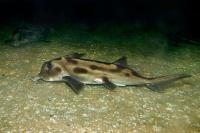
The immune system of the elephant shark is simpler than many other vertebrates studied so far. The present studies also explain, why cartilaginous fishes do not generate human-like bones. An international team of researchers, including scientists of the Max Planck Institute of Immunobiology and Epigenetics, has sequenced and analyzed the genome of the elephant shark. Comparison of the elephant shark genome with human and other vertebrate genomes has revealed why the skeleton of sharks is made up largely of cartilage and not bone like the human skeleton and that the immune system of the shark is much simpler than that of humans. The findings of Byrappa Venkatesh and his coworkers are published in the latest issue of the scientific journal, Nature
| Full story | 0 Comments | 6385 views |
| Health & Medicine | January 3, 2014 11:11 PM |
Researchers from the University of Illinois at Chicago College of Medicine have found that dysfunction in a single gene in mice causes fasting hyperglycemia, one of the major symptoms of type 2 diabetes. Their findings were reported online in the journal Diabetes.
| Full story | 0 Comments | 7814 views |
| Bioinformatics | January 3, 2014 11:11 PM |
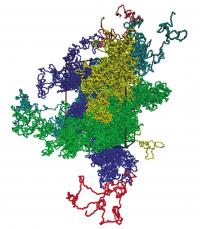
This image shows a DNA computer simulation. DNA carries out its activities "diluted" in the cell nucleus. In this state it synthesises proteins and, even though it looks like a messy tangle of thread, in actual fact its structure is governed by precise rules that are important for it to carry out its functions. Biologists have studied DNA by observing it experimentally with a variety of techniques, which have only recently been supplemented by research in silico, that is to say, the study of DNA by means of computer simulations. This is a recent area of study, but it has already given a major contribution to knowledge in this field. Angelo Rosa, a theoretical physicist of the International School for Advanced Studies (SISSA) in Trieste, with the collaboration of Christophe Zimmer, an experimental physicist from the Pasteur Institute in Paris has assessed the state of the art of this novel but powerful approach in a systematic review that has just been published in the journal International Review of Cell and Molecular Biology.
| Full story | 0 Comments | 6067 views |
| Biology | January 3, 2014 11:11 PM |
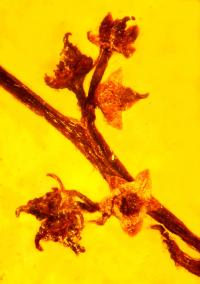
This flower preserved in 100-million-year old amber is one of the most complete ever found. A 100-million-year old piece of amber has been discovered which reveals the oldest evidence of sexual reproduction in a flowering plant – a cluster of 18 tiny flowers from the Cretaceous Period – with one of them in the process of making some new seeds for the next generation.
| Full story | 0 Comments | 7325 views |
| Biotechnology | January 3, 2014 11:11 PM |
Scientists have discovered a mutation with a built-in dilemma for dairy cattle breeders. The deleted gene sequence has a positive effect on milk yield but causes embryonic death in dairy cattle.
| Full story | 0 Comments | 7111 views |
| Molecular & Cell Biology | January 2, 2014 12:05 AM |
New research by scientists at the University of Exeter has shown that cells demonstrate remarkable flexibility and versatility when it comes to how they divide - a finding with potential links to the underlying causes of many cancers.
| Full story | 0 Comments | 7086 views |
| Biology | January 2, 2014 12:05 AM |
Scientists have discovered how plants use steroid hormones to choose growth over defence when their survival depends on it.
| Full story | 0 Comments | 6327 views |
| Health & Medicine | January 2, 2014 12:05 AM |
A new study from Uppsala University, Sweden, shows that one night of sleep deprivation increases morning blood concentrations of NSE and S-100B in healthy young men. These molecules are typically found in the brain. Thus, their rise in blood after sleep loss may indicate that a lack of snoozing might be conducive to a loss of brain tissue. The findings are published in the journal SLEEP.
| Full story | 0 Comments | 10036 views |

- In some genetic cases of microcephaly, stem cells fail to launch
- Yale team discovers how Zika virus causes fetal brain damage
- Scientists uncover the way a common cell enzyme alerts the body to invading bacteria
- Arctic gives clues on worst mass extinction of life
- Calcium channel blockers caught in the act at atomic level
Search Bio News Net
Free Biology Newsletter
- Flexibility That A.C.A. Lent to Work Force Is Threatened by...International Herald Tribune
- Bacteria Behind Legionnaires’ Disease Found at New York Police StationInternational Herald Tribune
- Prescription Price Crisis? 28 Million Americans See Spike in Drug...MSNBC.com: Health
- Seizing on Opioid Crisis, a Drug Maker Lobbies Hard for...International Herald Tribune
- Republicans are taking a big political risk on health careAP Health News
- Why We're So Divided Over Saving WolvesNational Geographic News