

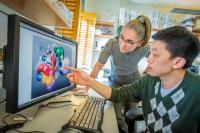
Eva Nogales and Yuan He used cryo-electron microscopy to record how a complex of biomolecules is able to read the human genome one gene at a time. Researchers with the U.S. Department of Energy (DOE)'s Lawrence Berkeley National Laboratory (Berkeley Lab) have achieved a major advance in understanding how genetic information is transcribed from DNA to RNA by providing the first step-by-step look at the biomolecular machinery that reads the human genome.

| Molecular & Cell Biology | February 27, 2013 05:55 PM |
| Full story | 0 Comments | 9398 views |

| AIDS & HIV | February 27, 2013 05:55 PM |
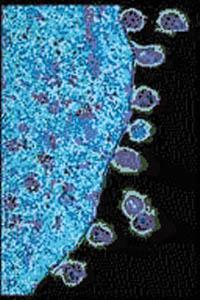
This image shows new HIV particles exiting an infected T-cell. Studying HIV-1, the most common and infectious HIV subtype, Johns Hopkins scientists have identified 25 human proteins "stolen" by the virus that may be critical to its ability to infect new cells. HIV-1 viruses capture many human proteins from the cells they infect but the researchers believe these 25 proteins may be particularly important because they are found in HIV-1 viruses coming from two very different types of infected cells. A report on the discovery, published online in the Journal of Proteome Research on Feb. 22, could help in building diagnostic tools and novel treatment strategies to fight HIV infection.
| Full story | 0 Comments | 9426 views |

| Microbiology | February 27, 2013 05:55 PM |
Scientists are reporting "laboratory resurrections" of several 2-3-billion-year-old proteins that are ancient ancestors of the enzymes that enable today's antibiotic-resistant bacteria to shrug off huge doses of penicillins, cephalosporins and other modern drugs. The achievement, reported in the Journal of the American Chemical Society, opens the door to a scientific "replay" of the evolution of antibiotic resistance with an eye to finding new ways to cope with the problem.
| Full story | 0 Comments | 10794 views |

| Biotechnology | February 26, 2013 06:09 PM |
Fat worms confirm that researchers from Michigan State University have successfully engineered a plant with oily leaves -- a feat that could enhance biofuel production as well as lead to improved animal feeds.
| Full story | 0 Comments | 11665 views |
| Biotechnology | February 25, 2013 07:29 PM |
For decades scientists around the world have attempted to regenerate primary liver cells known as hepatocytes because of their numerous biomedical applications, including hepatitis research, drug metabolism and toxicity studies, as well as transplantation for cirrhosis and other chronic liver conditions. But no lab in the world has been successful in identifying and growing liver stem cells in culture -- using any available technique – until now.
| Full story | 0 Comments | 13987 views |

| Biology | February 20, 2013 05:13 PM |
A team of researchers at UC San Francisco has uncovered the neurological basis of speech motor control, the complex coordinated activity of tiny brain regions that controls our lips, jaw, tongue and larynx as we speak.
| Full story | 0 Comments | 15050 views |

| Health & Medicine | February 20, 2013 05:13 PM |
A European consortium of medical, research and higher education institutions is developing a network for banks containing digitalised images of human tissue—"biobanks"— which will help doctors to diagnose different types of possible cancerous tissues taken from patients' biopsies in a shorter time.
| Full story | 0 Comments | 7031 views |

| Bioinformatics | February 18, 2013 05:29 PM |
The National Center for Supercomputing Applications (NCSA) has gifted the Institute for Genomic Biology (IGB) a highly parallel shared memory supercomputer named Ember. Originally funded by the NSF, Ember will be managed by the High-Performance Biological Computing (HPCBio) group.
| Full story | 0 Comments | 8437 views |
| Molecular & Cell Biology | February 18, 2013 05:29 PM |
Long segments of RNA— encoded in our DNA but not translated into protein—are key to physically manipulating DNA in order to activate certain genes, say researchers at The Wistar Institute. These non-coding RNA-activators (ncRNA-a) have a crucial role in turning genes on and off during early embryonic development, researchers say, and have also been connected with diseases, including some cancers, in adults.
| Full story | 0 Comments | 10242 views |
| Bioinformatics | February 13, 2013 03:30 AM |
A new form of genetic testing of the bacteria that causes tuberculosis can provide better information on TB transmission and also trace TB outbreaks more accurately than the current standard test, according to a study from Germany published in this week's PLOS Medicine.
| Full story | 0 Comments | 8528 views |
| AIDS & HIV | February 11, 2013 06:40 PM |
A team of UCLA-led researchers has identified a protein with broad virus-fighting properties that potentially could be used as a weapon against deadly human pathogenic viruses such as HIV, Ebola, Rift Valley Fever, Nipah and others designated "priority pathogens" for national biosecurity purposes by the National Institute of Allergy and Infectious Disease.
| Full story | 0 Comments | 14414 views |
| Molecular & Cell Biology | February 11, 2013 06:40 PM |
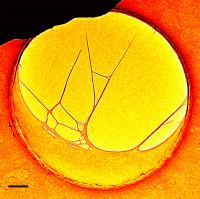
This is a DNA structure as seen through the 4-D electron microscope invented at Caltech. Every great structure, from the Empire State Building to the Golden Gate Bridge, depends on specific mechanical properties to remain strong and reliable. Rigidity—a material's stiffness—is of particular importance for maintaining the robust functionality of everything from colossal edifices to the tiniest of nanoscale structures. In biological nanostructures, like DNA networks, it has been difficult to measure this stiffness, which is essential to their properties and functions. But scientists at the California Institute of Technology (Caltech) have recently developed techniques for visualizing the behavior of biological nanostructures in both space and time, allowing them to directly measure stiffness and map its variation throughout the network.
| Full story | 0 Comments | 7374 views |
| Health & Medicine | February 11, 2013 06:40 PM |
The new study published in Cancer Discovery, the flagship journal of the American Association of Cancer Research (AACR), involving three Spanish and six American research centres, presents significant results in treating cancer patients with nanoparticles containing ribonucleic acid interference (RNAi) molecules. This marks the first time that the therapeutic effect of RNAi has been demonstrated in humans.
| Full story | 0 Comments | 7008 views |

| Stem Cell Research | February 11, 2013 06:40 PM |
Scientists at the University of Southampton have created a new method to generate bone cells which could lead to revolutionary bone repair therapies for people with bone fractures or those who need hip replacement surgery due to osteoporosis and osteoarthritis.
| Full story | 0 Comments | 10511 views |
| Health & Medicine | February 11, 2013 06:40 PM |
In a study to be presented on February 14 between 1:15 p.m., and 3:30 p.m. PST, at the Society for Maternal-Fetal Medicine's annual meeting, The Pregnancy Meeting ™, in San Francisco, California, researchers will present findings showing perinatal outcomes of frozen/thawed embryo replacement (FER) have better outcomes compared to fresh in vitro fertilization (IVF), but worse outcomes compared to the non-IVF general population.
| Full story | 0 Comments | 6317 views |

| Environment | February 5, 2013 06:43 PM |
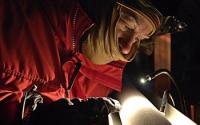
Donald Voigt, chief scientist at the WAIS Divide Camp, examines an ice core. A team of U.S. ice-coring scientists and engineers in Antarctica, funded by the National Science Foundation (NSF), have recovered from the ice sheet a record of past climate and greenhouse gases in the atmosphere that extends back 68,000 years.
| Full story | 0 Comments | 11210 views |
| Biology | February 5, 2013 06:43 PM |
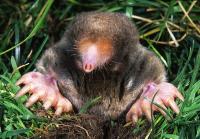
The eastern mole (Scalopus aquaticus) Most mammals, including humans, see in stereo and hear in stereo. But whether they can also smell in stereo is the subject of a long-standing scientific controversy. Now, a new study shows definitively that the common mole (Scalopus aquaticus) – the same critter that disrupts the lawns and gardens of homeowners throughout the eastern United States, Canada and Mexico – relies on stereo sniffing to locate its prey. The paper that describes this research, "Stereo and Serial Sniffing Guide Navigation to an Odor Source in a Mammals," was published on Feb. 5 in the journal Nature Communications.
| Full story | 0 Comments | 11218 views |
| Biotechnology | February 5, 2013 06:43 PM |
The behavior of cells strongly depends on their environment. If they are to be researched an manipulated, it is crucial to embed them in suitable surroundings. Aleksandr Ovsianikov is developing a laser system, which allows living cells to be incorporated into intricate taylor-made structures, similar to biological tissue, in which cells are surrounded by the extracellular matrix. This technology is particularly important for artificially growing biotissue, for finding new drugs or for stem cell research. Ovsianikov has now been awarded the ERC Starting Grant from the European Research Council (ERC) of approximately 1.5 million Euros.
| Full story | 0 Comments | 7658 views |
| Biotechnology | February 5, 2013 06:43 PM |
Many medically minded researchers are in hot pursuit of designs that will allow drug-carrying nanoparticles to navigate tissues and the interiors of cells, but University of Michigan engineers have discovered that these particles have another hurdle to overcome: escaping the bloodstream.
| Full story | 0 Comments | 6529 views |
| Molecular & Cell Biology | February 5, 2013 06:43 PM |
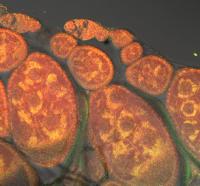
Mitochondria (bright areas) are visible in these stained fruit fly ovary cells. Diseases from a mutation in one genome are complicated enough, but some illnesses arise from errant interactions between two genomes: the DNA in the nucleus and in the mitochondria. Scientists want to know more about how such genomic disconnects cause disease. In a step in that direction, scientists at Brown University and Indiana University have traced one such incompatibility in fruit flies down to the level of individual nucleotide mutations and describe how the genetic double whammy makes the flies sick.
| Full story | 0 Comments | 8167 views |
| Biology | February 4, 2013 06:06 PM |
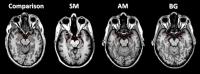
Researchers at the University of Iowa show that the human brain has new regions that sense internally derived fear. When doctors at the University of Iowa prepared a patient to inhale a panic-inducing dose of carbon dioxide, she was fearless. But within seconds of breathing in the mixture, she cried for help, overwhelmed by the sensation that she was suffocating.
| Full story | 0 Comments | 13816 views |
| Biology | February 4, 2013 06:06 PM |
A new kind of pterosaur, a flying reptile from the time of the dinosaurs, has been identified by scientists from the Transylvanian Museum Society in Romania, the University of Southampton in the UK and the Museau Nacional in Rio de Janiero, Brazil.
| Full story | 0 Comments | 9878 views |
| Environment | February 4, 2013 06:06 PM |
Microscopic ocean algae called coccolithophores are providing clues about the impact of climate change both now and many millions of years ago. The study found that their response to environmental change varies between species, in terms of how quickly they grow.
| Full story | 0 Comments | 8178 views |
| Environment | February 4, 2013 06:06 PM |
A University of Alberta polar bear researcher along with eleven international co-authors are urging governments to start planning for rapid Arctic ecosystem change to deal with a climate change catastrophe for the animals.
| Full story | 0 Comments | 8050 views |

- In some genetic cases of microcephaly, stem cells fail to launch
- Yale team discovers how Zika virus causes fetal brain damage
- Scientists uncover the way a common cell enzyme alerts the body to invading bacteria
- Arctic gives clues on worst mass extinction of life
- Calcium channel blockers caught in the act at atomic level
Search Bio News Net
Free Biology Newsletter
- Flexibility That A.C.A. Lent to Work Force Is Threatened by...International Herald Tribune
- Bacteria Behind Legionnaires’ Disease Found at New York Police StationInternational Herald Tribune
- Prescription Price Crisis? 28 Million Americans See Spike in Drug...MSNBC.com: Health
- Seizing on Opioid Crisis, a Drug Maker Lobbies Hard for...International Herald Tribune
- Republicans are taking a big political risk on health careAP Health News
- Why We're So Divided Over Saving WolvesNational Geographic News