

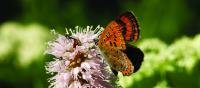
Lycaena helle (Violet Copper) are declining rapidly across Europe where it breeds in damp meadows where its food plants, Polygonum species (Bistort), are abundant. New guidelines on how to save some of Europe's most threatened butterfly species have been published by a team of scientists co-ordinated by Butterfly Conservation Europe. The report covers 29 threatened species listed on the EU Habitats Directive. Each Member State has a responsibility to conserve these species. The new report will provide crucial information on how to achieve this goal and meet their international biodiversity targets.

| Environment | March 28, 2012 06:34 PM |
| Full story | 0 Comments | 9427 views |

| Biology | March 28, 2012 06:34 PM |
A team of scientists has announced the discovery of a 3.4 million-year-old partial foot from the Woranso-Mille area of the Afar region of Ethiopia. The fossil foot did not belong to a member of "Lucy's" species, Australopithecus afarensis, the famous early human ancestor. Research on this new specimen indicates that more than one species of early human ancestor existed between 3 and 4 million years ago with different methods of locomotion. The analysis will be published in the March 29, 2012 issue of the journal Nature.
| Full story | 0 Comments | 10827 views |

| Health & Medicine | March 28, 2012 06:34 PM |
A report from the nation's leading cancer organizations shows rates of death in the United States from all cancers for men and women continued to decline between 2004 and 2008. The findings come from the latest Annual Report to the Nation on the Status of Cancer.
| Full story | 0 Comments | 9496 views |

| Biotechnology | March 26, 2012 06:12 PM |
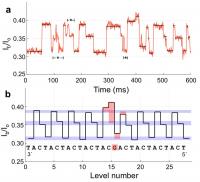
The various levels of electrical signal from the sequence of a DNA strand pulled through a nanopore reader (top) corresponds to specific DNA nucleotides, thymine, adenine, cytosine and guanine (bottom). Researchers have devised a nanoscale sensor to electronically read the sequence of a single DNA molecule, a technique that is fast and inexpensive and could make DNA sequencing widely available.
| Full story | 0 Comments | 9071 views |

| Microbiology | March 26, 2012 06:12 PM |
New biological research reveals how an invading virus hijacks a cell's workings by imitating a signaling marker to defeat the body's defenses. By manipulating cell signals, the virus destroys a defensive protein designed to inhibit it. This finding, from studies in human cell cultures, may represent a broader targeting strategy used by other viruses, and may lay the scientific groundwork for developing more effective treatments for infectious diseases.
| Full story | 0 Comments | 10728 views |
| Biotechnology | March 26, 2012 06:12 PM |
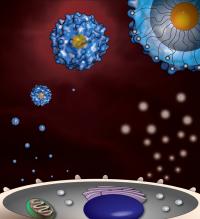
Gold particles modified with chemical residues interact with immune cells. Developing a drug or vaccine requires a delicate balancing act with the immune system. On one hand, medications need to escape detection by the immune system in order to perform their function. But vaccinations — de-activated versions of a disease or virus — need to do the reverse. They prompt the immune system to create protective antibodies. But scientists are still stumped by how the immune system recognizes different particles, and how it chooses whether or not to react against them.
| Full story | 0 Comments | 9128 views |
| Biology | March 22, 2012 08:05 PM |
Hunting in the ocean's murky depths, vision is of little use, so toothed whales and dolphins (odontocetes) rely on echolocation to locate tasty morsels with incredible precision. Laura Kloepper from the University of Hawaii, USA, explains that odontocetes produce their distinctive echolocation clicks in nasal structures in the forehead and broadcast them through a fat-filled acoustic lens, called the melon. 'Studies by other people showed odontocetes have the ability to control the shape of the echolocation beam and it has always been assumed that they are using the melon to focus sound' explains Kloepper. However, no one had ever tested this directly, so Kloepper and her PhD supervisor, Paul Nachtigall, decided to tackle the question. They publish their discovery that false killer whales are able to focus their echolocation beams on targets in The Journal of Experimental Biology at http://jeb.biologists.org.
| Full story | 0 Comments | 9809 views |

| Stem Cell Research | March 22, 2012 08:05 PM |
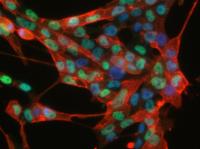
This is an immunofluorescence microscopy image of the induced neural stem cells (iNSCs) using antibodies against two neural stem cell markers SSEA1 (red color) and Olig2 (green color). Breaking new ground, scientists at the Max Planck Institute for Molecular Biomedicine in Münster, Germany, have succeeded in obtaining somatic stem cells from fully differentiated somatic cells. Stem cell researcher Hans Schöler and his team took skin cells from mice and, using a unique combination of growth factors while ensuring appropriate culturing conditions, have managed to induce the cells' differentiation into neuronal somatic stem cells. "Our research shows that reprogramming somatic cells does not require passing through a pluripotent stage," explains Schöler. "Thanks to this new approach, tissue regeneration is becoming a more streamlined - and safer - process."
| Full story | 0 Comments | 11611 views |
| Health & Medicine | March 21, 2012 07:36 PM |
When the intestines are not able to properly process our diet, a variety of disorders can develop, with chronic diarrhea as a common symptom. Chronic diarrhea can also be inherited, most commonly through conditions with genetic components such as irritable bowel syndrome. Researchers in Norway, India, and at the HudsonAlpha Institute for Biotechnology have identified one heritable DNA mutation that leads to chronic diarrhea and bowel inflammation.
| Full story | 0 Comments | 11006 views |
| Health & Medicine | March 21, 2012 07:36 PM |
The vast majority of sinus infections are caused by viruses and should not be treated with antibiotics, suggest new guidelines released by the Infectious Diseases Society of America (IDSA).
| Full story | 0 Comments | 13122 views |
| Biology | March 19, 2012 05:59 PM |

These are blood and blonde varieties of sweet orange (Citrus sinensis). The anthocyanin pigments that provide the "blood" color of blood oranges are not produced in significant amounts unless the fruit is exposed to cold conditions during its development or post-harvest. No cold exposure means poor anthocyanin production and the loss of the entire crop. This means that blood oranges can be grown in many areas of the world, but they are most likely to be exposed to the correct temperature conditions in only a few regions, including their major area of production in Sicily. Solving the mystery of why cold exposure causes anthocyanin production would benefit both agriculture and health; like many other anthocyanin-rich foods, blood oranges have notable human health benefits. Indeed, blood oranges have the healthful vitamin C, fiber, and carotenoids of regular "blonde" oranges, with the added antioxidant punch provided by anthocyanins. However, unreliable production limits the availability and consumption of these delicacies.
| Full story | 0 Comments | 15856 views |
| Environment | March 19, 2012 05:59 PM |
A study by the Wildlife Conservation Society, the ARC Centre for Excellence for Coral Reef Studies, and other groups on more than 40 coral reefs in the Indian and Pacific Oceans indicates that "co-management"—a collaborative arrangement between local communities, conservation groups, and governments—provides one solution to a vexing global problem: overfishing.
| Full story | 0 Comments | 8346 views |
| Health & Medicine | March 19, 2012 05:59 PM |
The Nutritional Immunology and Molecular Medicine Laboratory (NIMML) research team at Virginia Tech has discovered important new information on the efficacy of conjugated linoleic acid (CLA) in treating Crohn's disease, a form of inflammatory bowel disease (IBD). CLA is a naturally occurring acid found in meat and dairy products known for its anti-cancer and immune modulatory properties.
| Full story | 0 Comments | 10644 views |

| Molecular & Cell Biology | March 14, 2012 05:45 PM |
Every cell is enclosed by a thin double layer of lipids that separates the distinct internal environment of the cell from the extracellular space. Damage to this lipid bilayer, also referred to as plasma membrane, disturbs the cellular functions and may lead to the death of the cell. For example, downhill walking tears many little holes into the plasma membranes of the muscle cells in our legs. To prevent irreparable damage, muscle cells have efficient systems to seal these holes again. Researchers at Karlsruhe Institute of Technology (KIT) and Heidelberg University have succeeded for the first time in observing membrane repair in real-time in a living organism.
| Full story | 0 Comments | 10952 views |
| Biology | March 14, 2012 05:45 PM |
Fossils from two caves in south-west China have revealed a previously unknown Stone Age people and give a rare glimpse of a recent stage of human evolution with startling implications for the early peopling of Asia.
| Full story | 0 Comments | 11263 views |
| Molecular & Cell Biology | March 14, 2012 05:45 PM |
A research team has identified epigenetic signatures, markers on DNA that control transient changes in gene expression, within reprogrammed skin cells. These signatures can predict the expression of a wound-healing protein in reprogrammed skin cells or induced pluripotent stem cells (iPSCs), cells that take on embryonic stem cell properties. Understanding how the expression of the protein is controlled brings us one step closer to developing personalized tissue regeneration strategies using stem cells from a patient, instead of using human embryonic stem cells. The study was published in the Journal of Cell Science.
| Full story | 0 Comments | 7641 views |
| Health & Medicine | March 14, 2012 05:45 PM |
A Loyola University Chicago Stritch School of Medicine study has revealed details of the complex molecular process involving a protein that enables cancer cells to establish tumors in distant parts of the body.
| Full story | 0 Comments | 12475 views |
| Molecular & Cell Biology | March 14, 2012 05:45 PM |
A team of researchers led by scientists at The Rockefeller University has identified a novel mechanism by which influenza interferes with antiviral host response. The finding, reported in this week's issue of the journal Nature, shows that the immunosuppressive NS1 protein of the influenza A virus hijacks key regulators of antiviral gene function by mimicking a core component of gene regulating machinery. The results they describe have major implications for our understanding of the biology of seasonal influenza virus and its pathogenesis. This research also suggests a possible target for a new class of antiviral and anti-inflammatory drugs.
| Full story | 0 Comments | 7817 views |
| Molecular & Cell Biology | March 13, 2012 08:23 PM |
Cancer is usually attributed to faulty genes, but growing evidence from the field of cancer epigenetics indicates a key role for the gene "silencing" proteins that stably turn genes off inside the cell nucleus. A new study from Rice University and Baylor College of Medicine (BCM) promises to speed research in the field by rapidly identifying the genes that epigenetic proteins can target for silencing.
| Full story | 0 Comments | 8189 views |
| Molecular & Cell Biology | March 12, 2012 05:12 PM |
Within all our cells lies two meters of DNA, highly ordered in a structure of less than 10 micro meters in diameter. Special proteins called histones act as small building bricks, organising our DNA in this structure. Preservation of the structure is necessary to maintain correct function of our genes, making histones detrimental for maintaining a healthy and functional body. The research group of Associate Professor Anja Groth from BRIC, University of Copenhagen, has just elucidated a function of the protein Codanin-1, shedding light on the rare anemic disease CDAI where development of the red blood cells is disturbed. The new results also contribute with important knowledge on how our DNA-structure is maintained and how our genes are regulated.
| Full story | 0 Comments | 7989 views |
| Biology | March 12, 2012 05:12 PM |
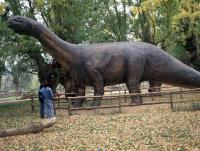
Aragosaurus is the oldest of its kind and could even be a common ancestor. The research group from Aragon that has the same name as the first Aragosaurus ischiaticus dinosaur discovered 25 years ago in Teruel reveals that it is 15 million years younger than originally believed. Its new dating now means that it was the ancestor of the Titanosauriforms, which includes the biggest dinosaurs.
| Full story | 0 Comments | 9703 views |
| Molecular & Cell Biology | March 12, 2012 05:12 PM |
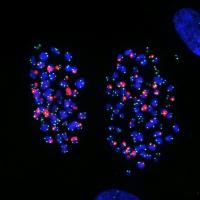
This microscope image shows chromosomes in human lung cells exhibiting telomere damage caused by colcemid, a drug that arrests cell division. The well-being of living cells requires specialized squads of proteins that maintain order. Degraders chew up worn-out proteins, recyclers wrap up damaged organelles, and-most importantly-DNA repair crews restitch anything that resembles a broken chromosome. If repair is impossible, the crew foreman calls in executioners to annihilate a cell. As unsavory as this last bunch sounds, failure to summon them is one aspect of what makes a cancer cell a cancer cell.
| Full story | 0 Comments | 7644 views |
| Health & Medicine | March 12, 2012 05:12 PM |
A new study from Harvard School of Public Health (HSPH) researchers has found that red meat consumption is associated with an increased risk of total, cardiovascular, and cancer mortality. The results also showed that substituting other healthy protein sources, such as fish, poultry, nuts, and legumes, was associated with a lower risk of mortality.
| Full story | 0 Comments | 9567 views |
| Biology | March 9, 2012 06:48 PM |
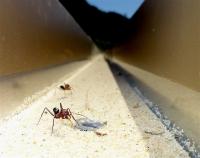
Cataglyphis noda ants approach their nest entrance -- a small hole in the ground of an experimental tube.
Desert ants have adapted to a life in a barren environment which only provides very few landmarks for orientation. Apart from visual cues and odors the ants use the polarized sunlight as a compass and count their steps in order to return safely to their home after searching for food. In experiments with ants of the genus Cataglyphis in their natural habitats in Tunisia and Turkey, behavioral scientists of the Max Planck Institute for Chemical Ecology in Jena, Germany, have now discovered that ants can also use magnetic and vibrational landmarks in order to find their way back to their nest − a small hole in the desert ground. In addition, carbon dioxide produced by their nestmates' breathing also helps homing ants to pinpoint their nest entrance. Hence, the ants' navigational skills prove enormously adaptable to their inhospitable environment. (PLoS ONE, March 7, 2012; Current Biology, March 8, 2012)
| Full story | 0 Comments | 9113 views |

| Bioinformatics | March 9, 2012 06:48 PM |
Researchers announce today that they have completed the genome sequence for the gorilla, the last genus of the living great apes to have its genome decoded. While confirming that mankind's closest relative is the chimpanzee, the team shows that much of the human genome more closely resembles the gorilla than it does the chimpanzee genome. This is the first time scientists have been able to compare the genomes of all four living great apes: humans, chimpanzees, gorillas and orangutans. This study provides a unique perspective on human origins and is an important resource for research into human evolution and biology as well as for gorilla biology and conservation.
| Full story | 0 Comments | 12228 views |
| Stem Cell Research | March 6, 2012 06:58 PM |
A team of scientists at the University of California, San Diego Moores Cancer Center has identified a novel protein expressed by breast cancer cells – but not normal adult tissues – that could provide a new target for future anti-cancer drugs and treatments.
| Full story | 0 Comments | 10828 views |
| Health & Medicine | March 6, 2012 06:58 PM |
An Oregon State University researcher has reviewed the body of evidence around weight loss supplements and has bad news for those trying to find a magic pill to lose weight and keep it off – it doesn't exist.
| Full story | 0 Comments | 12763 views |
| Molecular & Cell Biology | March 6, 2012 03:04 AM |
Studying tiny bits of genetic material that control protein formation in the brain, Johns Hopkins scientists say they have new clues to how memories are made and how drugs might someday be used to stop disruptions in the process that lead to mental illness and brain wasting diseases.
| Full story | 0 Comments | 9694 views |
| Molecular & Cell Biology | March 6, 2012 03:04 AM |
The generation of new memories in the human immune system doesn't come at the cost of old ones, according to a study published on March 5th in the Journal of Experimental Medicine (www.jem.org).
| Full story | 0 Comments | 8652 views |
| Health & Medicine | March 6, 2012 03:04 AM |
A new marker of Alzheimer's disease can predict how rapidly a patient's memory and other mental abilities will decline after the disorder is diagnosed, researchers at Washington University School of Medicine in St. Louis have found.
| Full story | 0 Comments | 8360 views |
| Stem Cell Research | March 6, 2012 03:04 AM |
A new cornea may be the only way to prevent a patient going blind – but there is a shortage of donated corneas and the queue for transplantation is long. Scientists at the Sahlgrenska Academy at the University of Gothenburg, Sweden, have for the first time successfully cultivated stem cells on human corneas, which may in the long term remove the need for donators.
| Full story | 0 Comments | 10322 views |
| Molecular & Cell Biology | March 1, 2012 05:35 PM |
Non-fouling materials that resist cell adhesion are very important in fundamental research on cell–biomaterial interactions and for practical applications. Thus, they have been extensively investigated during the last decade. Natural biomacromolecules such as bovine serum albumin (BSA) have conventionally been used to block cell adhesion. Zhao and Ding (Fudan University, Shanghai, China) recently reported that the purple membrane (PM) containing a natural photoresponsive protein, bacteriorhodopsin (BR), can serve as a new basic substance that resists adhesion of mammalian cells.
| Full story | 0 Comments | 8922 views |
| Environment | March 1, 2012 05:35 PM |
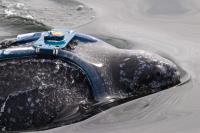
A major new study of migration patterns has identified high-use areas -- potential danger zones -- in the Pacific Ocean for the critically endangered leatherback turtle. The majestic leatherback turtle is the largest sea turtle in the world, growing to more than 6 feet in length. It is also one of the most threatened. A major new study of migration patterns has identified high-use areas—potential danger zones—in the Pacific Ocean for this critically endangered species. This new understanding could help inform decisions about fishing practices to help reduce further deaths of this fragile species.
| Full story | 0 Comments | 11992 views |
| Microbiology | March 1, 2012 05:35 PM |
Leafcutter ants, the tiny red dots known for carrying green leaves as they march through tropical forests, are also talented farmers that cultivate gardens of fungi and bacteria. Ants eat fungi from the so-called fungal gardens, but the bacteria's role has been unclear until now.
| Full story | 0 Comments | 9938 views |
| Health & Medicine | March 1, 2012 05:35 PM |
Depression is common enough – afflicting one in ten adults in the United States – that it seems the possibility of depression must be "hard-wired" into our brains. This has led biologists to propose several theories to account for how depression, or behaviors linked to it, can somehow offer an evolutionary advantage.
| Full story | 0 Comments | 11563 views |

- In some genetic cases of microcephaly, stem cells fail to launch
- Yale team discovers how Zika virus causes fetal brain damage
- Scientists uncover the way a common cell enzyme alerts the body to invading bacteria
- Arctic gives clues on worst mass extinction of life
- Calcium channel blockers caught in the act at atomic level
Search Bio News Net
Free Biology Newsletter
- Flexibility That A.C.A. Lent to Work Force Is Threatened by...International Herald Tribune
- Bacteria Behind Legionnaires’ Disease Found at New York Police StationInternational Herald Tribune
- Prescription Price Crisis? 28 Million Americans See Spike in Drug...MSNBC.com: Health
- Seizing on Opioid Crisis, a Drug Maker Lobbies Hard for...International Herald Tribune
- Republicans are taking a big political risk on health careAP Health News
- Why We're So Divided Over Saving WolvesNational Geographic News