

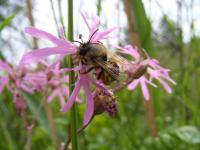
A red mason bee female feeds on ragged robin. Wild bees are important pollinators and numerous studies dealing with pollination of wild plants and crops underline their vital role in ecosystems functioning. While honey bees can be easily transported to various location when needed, wild bees' presence is dependent on the availability of high quality semi-natural habitats. Some crops, such as apples and cherries, and many wild flowers are more effectively pollinated by wild bees and other insects rather than managed honey bees.
| Full story | 0 Comments | 11091 views |

| Health & Medicine | February 29, 2012 05:41 PM |
Adding prebiotic ingredients to infant formula helps colonize the newborn's gut with a stable population of beneficial bacteria, and probiotics enhance immunity in formula-fed infants, two University of Illinois studies report.
| Full story | 0 Comments | 9703 views |

| Biotechnology | February 29, 2012 05:41 PM |
An inexpensive device used by millions of people with diabetes could be adapted into a home DNA detector that enables individuals to perform home tests for viruses and bacteria in human body fluids, in food and in other substances, scientists are reporting in a new study. The report on this adaptation of the ubiquitous personal glucose monitor, typically used to test blood sugar levels, appears in ACS' journal Analytical Chemistry.
| Full story | 0 Comments | 8328 views |
| Biotechnology | February 29, 2012 05:41 PM |
A new method for creating nanofibers made of proteins, developed by researchers at Polytechnic Institute of New York University (NYU-Poly), promises to greatly improve drug delivery methods for the treatment of cancers, heart disorders and Alzheimer's disease, as well as aid in the regeneration of human tissue, bone and cartilage.
| Full story | 0 Comments | 7189 views |
| Health & Medicine | February 28, 2012 03:56 PM |
Using genome sequencing and household surveillance, National Institutes of Health (NIH) scientists and their colleagues from Columbia University Medical Center and St. George's University of London have pieced together how a newly emerging type of Staphylococcus aureus bacteria has adapted to transmit more easily among humans. Their new study underscores the need for vigilance in surveillance of S. aureus.
| Full story | 0 Comments | 6510 views |
| Biotechnology | February 28, 2012 03:56 PM |
University of British Columbia researcher Hongshen Ma has developed a simple and accurate device to study malaria, a disease that currently affects 500 million people per year worldwide and claims a million lives.
| Full story | 0 Comments | 7126 views |

| Bioinformatics | February 27, 2012 11:42 AM |
Genomes are catalogs of hereditary information that determine whether an organism becomes a plant, animal, fungus or microbe, and whether the organism is adapted to its surroundings. Determining the sequence of DNA within genomes is crucial to human medicine, crop genetics, biotechnology, forensic science, threatened species management, and evolutionary studies. The last 5 years have witnessed tremendous advances in DNA sequencing technologies, and it is now possible to sequence millions of fragments of DNA in a single analysis, and at a fraction of their previous cost. These "next-generation" methods are spurring a revolution in plant biology by providing powerful tools to examine previously-unimagined questions, in any plant of interest.
| Full story | 0 Comments | 8682 views |
| Biotechnology | February 27, 2012 11:42 AM |
For the past decade, scientists have been pursuing cancer treatments based on RNA interference — a phenomenon that offers a way to shut off malfunctioning genes with short snippets of RNA. However, one huge challenge remains: finding a way to efficiently deliver the RNA.
| Full story | 0 Comments | 7864 views |

| Molecular & Cell Biology | February 23, 2012 06:05 PM |
After we sense a threat, our brain center responsible for responding goes into gear, setting off a chain of biochemical reactions leading to the release of cortisol from the adrenal glands.
| Full story | 0 Comments | 10949 views |
| Health & Medicine | February 23, 2012 06:05 PM |
The first clinical trial of a new vaccine for visceral leishmaniasis (VL) has been launched by the Infectious Disease Research Institute (IDRI), a Seattle-based nonprofit that develops products to prevent, detect, and treat diseases of poverty. The Phase 1 trial is taking place in Washington State, with a companion Phase 1 trial planned in India, an epicenter of the disease.
| Full story | 0 Comments | 8041 views |
| Molecular & Cell Biology | February 23, 2012 06:05 PM |
Researchers at Sanford-Burnham Medical Research Institute (Sanford-Burnham) and the Medical School of Hannover in Germany recently discovered how the botulinum neurotoxin, a potential bioterrorism agent, survives the hostile environment in the stomach on its journey through the human body. Their study, published February 24 in Science, reveals the first 3D structure of a neurotoxin together with its bodyguard, a protein made simultaneously in the same bacterium. The bodyguard keeps the toxin safe through the gut, then lets go as the toxin enters the bloodstream. This new information also reveals the toxin's weak spot—a point in the process that can be targeted with new therapeutics.
| Full story | 0 Comments | 12813 views |
| Bioinformatics | February 23, 2012 06:05 PM |
Only 10 years ago, deciphering the genetic information from one individual in a matter of weeks to find a certain disease-causing genetic mutation would have been written off as science fiction.
| Full story | 0 Comments | 10130 views |

| Biology | February 22, 2012 05:51 PM |
Scientists have recently described the deepest terrestrial animal ever found, together with 4 new species for science. These animals are springtails (Arthropoda, Insecta, Collembola), a minute primitive wingless insect with six-legs and without eyes that live in total darkness.
| Full story | 0 Comments | 11239 views |
| Molecular & Cell Biology | February 22, 2012 05:51 PM |
The notion of a pain switch is an alluring idea, but is it realistic? Well, chemists at LMU Munich, in collaboration with colleagues in Berkeley and Bordeaux, have now shown in laboratory experiments that it is possible to inhibit the activity of pain-sensitive neurons using an agent that acts as a photosensitive switch. For the LMU researchers, the method primarily represents a valuable tool for probing the neurobiology of pain. (Nature Methods, 19.02.2012)
| Full story | 0 Comments | 13329 views |
| Biotechnology | February 22, 2012 05:51 PM |
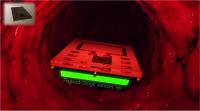
Engineers at Stanford have developed a wirelessly powered, self-propelled medical device that can propel itself through the blood stream to deliver drugs, perform diagnostics or microsurgeries. Someday, your doctor may turn to you and say, "Take two surgeons and call me in the morning." If that day arrives, you may just have Ada Poon to thank.
| Full story | 0 Comments | 12132 views |
| Biotechnology | February 22, 2012 05:51 PM |
University of California, San Diego researchers have developed a new injectable hydrogel that could be an effective and safe treatment for tissue damage caused by heart attacks.
| Full story | 0 Comments | 9103 views |

| Environment | February 22, 2012 05:51 PM |
It takes a lot of energy to extract heavy, viscous and valuable bitumen from Canada's oil sands and refine it into crude oil. Companies mine some of the sands with multi-story excavators, separate out the bitumen, and process it further to ease the flow of the crude oil down pipelines. About 1.8 million barrels of oil per day in 2010 were produced from the bitumen of the Canadian oil sands – and the production of those fossil fuels requires the burning of fossil fuels.
| Full story | 0 Comments | 7114 views |
| Bioinformatics | February 21, 2012 04:25 PM |
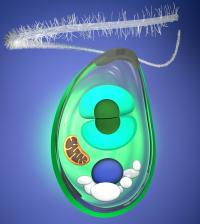
This is a schematic image of the "living fossil " Cyanophora paradoxa that is a member of the algal phylum Glaucophyta. Atmospheric oxygen really took off on our planet about 2.4 billion years ago during the Great Oxygenation Event. At this key juncture of our planet's evolution, species had either to learn to cope with this poison that was produced by photosynthesizing cyanobacteria or they went extinct. It now seems strange to think that the gas that sustains much of modern life had such a distasteful beginning.
| Full story | 0 Comments | 14692 views |
| Molecular & Cell Biology | February 21, 2012 04:25 PM |
Johns Hopkins and National Taiwan University researchers have discovered more details about how an energy sensing "thermostat" protein determines whether cells will store or use their energy reserves.
| Full story | 0 Comments | 7662 views |
| Health & Medicine | February 20, 2012 04:06 PM |
Aggressive infections in hospitals are an increasing health problem worldwide. The development of bacterial resistance is alarming. Now a young Danish scientist has found a natural substance in a Chilean rainforest plant that effectively supports the effect of traditional treatment with antibiotics.
| Full story | 0 Comments | 9705 views |
| Biology | February 20, 2012 04:06 PM |
Cuttlefish have the most acute polarization vision yet found in any animal, researchers at the University of Bristol have discovered by showing them movies on a modified LCD computer screen to test their eyesight.
| Full story | 0 Comments | 9028 views |
| Molecular & Cell Biology | February 19, 2012 12:57 PM |
Some 90 percent of people are exposed to the Epstein Barr virus (EBV) at some point in their life. Even though it is quickly cleared from the body, the virus can linger silently for years in small numbers of infected B cells. According to researchers at Children's Hospital Boston and the Immune Disease Institute (IDI), the immune system subdues the virus by watching for a single viral protein called LMP1, knowledge that has already helped suggest two new treatments for the EBV-fueled cancers seen in some immunosuppressed patients.
| Full story | 0 Comments | 8787 views |
| Molecular & Cell Biology | February 19, 2012 12:57 PM |
What we perceive as the beating of our heart is actually the co-ordinated action of more than a billion muscle cells. Most of the time, only the muscle cells from the larger heart chambers contract and relax. But when the heart needs to work harder it relies on back-up from the atrial muscle cells deep within the smaller chambers (atria) of the heart.
| Full story | 0 Comments | 9702 views |

| Microbiology | February 19, 2012 12:57 PM |
Noroviruses are believed to make up half of all food-borne disease outbreaks in the United States, causing incapacitating (and often violent) stomach flu. These notorious human pathogens are responsible for 90 percent of epidemic nonbacterial outbreaks of gastroenteritis around the world.
| Full story | 0 Comments | 9464 views |
| Biotechnology | February 19, 2012 12:57 PM |
A North Carolina State University chemist has found a way to give DNA-based computing better control over logic operations. His work could lead to interfacing DNA-based computing with traditional silicon-based computing.
| Full story | 0 Comments | 7470 views |
| Biology | February 16, 2012 05:37 PM |

This is an artist's rendering of Ramat Rahel site. Researchers have long been fascinated by the secrets of Ramat Rahel, located on a hilltop above modern-day Jerusalem. The site of the only known palace dating back to the kingdom of Biblical Judah, digs have also revealed a luxurious ancient garden. Since excavators discovered the garden with its advanced irrigation system, they could only imagine what the original garden might have looked like in full bloom — until now.
| Full story | 0 Comments | 8797 views |
| Environment | February 16, 2012 05:37 PM |
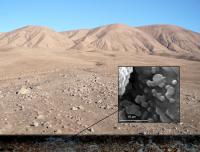
Microbes grow in salt crystals below the Atacama Desert. Two metres below the surface of the Atacama Desert there is an 'oasis' of microorganisms. Researchers from the Center of Astrobiology (Spain) and the Catholic University of the North in Chile have found it in hypersaline substrates thanks to SOLID, a detector for signs of life which could be used in environments similar to subsoil on Mars.
| Full story | 0 Comments | 7436 views |
| Environment | February 16, 2012 05:37 PM |
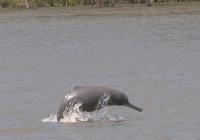
Ganges River dolphins will be protected in three new wildlife sanctuaries recently declared by the government of Bangladesh. Three new wildlife sanctuaries for Ganges River and Irrawaddy dolphins declared by the Government of Bangladesh.
| Full story | 0 Comments | 9064 views |
| Biology | February 16, 2012 05:37 PM |
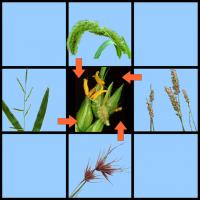
New research shows genes can travel from plant to plant between distant cousins, not just from one generation to the next. The evolution of plants and animals generally has been thought to occur through the passing of genes from parent to offspring and genetic modifications that happen along the way. But evolutionary biologists from Brown University and the University of Sheffield have documented another avenue, through the passing of genes from plant to plant between species with only a distant ancestral kinship.
| Full story | 0 Comments | 10944 views |
| Health & Medicine | February 16, 2012 05:37 PM |
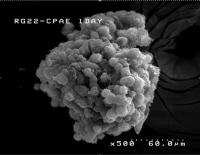
The 3-D glioma model, developed at Brown University, allows the glioma and the supporting endothelial cells to assemble naturally, just as they would in real life. Brown University scientists have created the first three-dimensional living tissue model, complete with surrounding blood vessels, to analyze the effectiveness of therapeutics to combat brain tumors. The 3-D model gives medical researchers more and better information than Petri dish tissue cultures.
| Full story | 0 Comments | 7294 views |
| Molecular & Cell Biology | February 16, 2012 05:37 PM |
Writing in the February 17, 2012 issue of the journal Cell, researchers at the Ludwig Institute for Cancer Research, the University of California, San Diego School of Medicine and the Toronto Western Research Institute peel away some of the enduring mystery of how zygotes or fertilized eggs determine which copies of parental genes will be used or ignored.
| Full story | 0 Comments | 6891 views |
| Environment | February 16, 2012 05:37 PM |
The Republic of Congo has formally expanded Nouabalé-Ndoki National Park to protect an increasingly rare treasure: one of Africa's most pristine forests and a population of "naïve" chimpanzees with so little exposure to humans that the curious apes investigate the conservationists who study them rather than run away.
| Full story | 0 Comments | 7155 views |
| Biology | February 15, 2012 05:48 PM |
Four new species of miniaturized lizards have been identified in Madagascar. These lizards, just tens of millimeters from head to tail and in some cases small enough to stand on the head of a match, rank among the smallest reptiles in the world. The full report can be found in the Feb. 15 issue of the open access journal PLoS ONE.
| Full story | 0 Comments | 8914 views |
| Biology | February 15, 2012 05:48 PM |
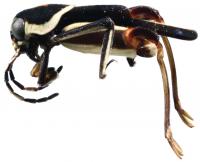
This is the new insect, Ripipteryx mopana. Scientists at the University of Illinois, USA have discovered a new species of tiny, grasshopper-like insect in the tropical rainforests of the Toledo District in southern Belize. Dr Sam Heads and Dr Steve Taylor co-authored a paper, published in the open access journal ZooKeys, documenting the discovery and naming the new species Ripipteryx mopana. The name commemorates the Mopan people – a Mayan group, native to the region.
| Full story | 0 Comments | 8578 views |
| Health & Medicine | February 15, 2012 05:48 PM |
Imagine a "smart pill" containing a biodegradable electronic chip that monitors how your body responds to the medicine, broadcasts the information to your iPhone, which then emails the information to your physician. It may sound like science fiction, but drug companies have been studying just such an approach, according to an article in the current edition of ACS's Chemical & Engineering News, the weekly newsmagazine of the American Chemical Society, the world's largest scientific society.
| Full story | 0 Comments | 9579 views |
| Biotechnology | February 14, 2012 03:43 PM |
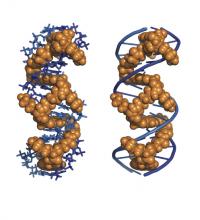
This shows a model of the "threading tetra-intercalator " bound up in the double helix of a DNA sequence. Chemists at The University of Texas at Austin have created a molecule that's so good at tangling itself inside the double helix of a DNA sequence that it can stay there for up to 16 days before the DNA liberates itself, much longer than any other molecule reported.
| Full story | 0 Comments | 9934 views |
| Biotechnology | February 14, 2012 03:43 PM |
The biological scaffold that gives structure to a heart valve after its cellular material has been removed can be freeze-dried and stored for later use as a tissue-engineered replacement valve to treat a failing heart, as described in an article in Tissue Engineering, Part C: Methods, a peer-reviewed journal from Mary Ann Liebert, Inc. (http://www.liebertpub.com). The article is available free online at http://www.liebertpub.com/ten
| Full story | 0 Comments | 7137 views |
| Environment | February 14, 2012 03:43 PM |
The models used to understand how Earth's climate works include thousands of different variables from many scientific including atmospherics, oceanography, seismology, geology, physics and chemistry, but few take into consideration the vast effect that microbes have on climate. Now, a new report from the American Academy of Microbiology, "Incorporating Microbial Processes into Climate Models", offers a plan for integrating the latest understanding of the science of microbiology into climate models.
| Full story | 0 Comments | 6446 views |
| Biology | February 14, 2012 12:59 AM |
When it comes to choosing a place to hang out, big reef fish like coral trout, snappers and sweetlips have strong architectural preferences.
| Full story | 0 Comments | 8212 views |
| Biotechnology | February 14, 2012 12:59 AM |
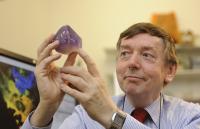
This is Dr. Brad Amos, Visiting Scientist, University of Strathclyde. A new form of microscope which can produce results in seconds rather than hours – dramatically speeding up the process of drug development - is being developed by researchers at the University of Strathclyde in Glasgow, Scotland.
| Full story | 0 Comments | 6466 views |

- In some genetic cases of microcephaly, stem cells fail to launch
- Yale team discovers how Zika virus causes fetal brain damage
- Scientists uncover the way a common cell enzyme alerts the body to invading bacteria
- Arctic gives clues on worst mass extinction of life
- Calcium channel blockers caught in the act at atomic level
Search Bio News Net
Free Biology Newsletter
- Flexibility That A.C.A. Lent to Work Force Is Threatened by...International Herald Tribune
- Bacteria Behind Legionnaires’ Disease Found at New York Police StationInternational Herald Tribune
- Prescription Price Crisis? 28 Million Americans See Spike in Drug...MSNBC.com: Health
- Seizing on Opioid Crisis, a Drug Maker Lobbies Hard for...International Herald Tribune
- Republicans are taking a big political risk on health careAP Health News
- Why We're So Divided Over Saving WolvesNational Geographic News