

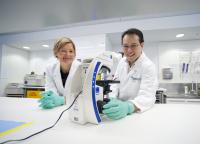
Drs Maria Kauppi (left) and Ashley Ng from the Walter and Eliza Hall Institute in Melbourne, Australia, study blood 'progenitor' cells A study of the cells that respond to crises in the blood system has yielded a few surprises, redrawing the 'map' of how blood cells are made in the body.

| Molecular & Cell Biology | January 31, 2012 06:54 PM |
| Full story | 0 Comments | 9594 views |

| Health & Medicine | January 31, 2012 06:54 PM |
In the US alone, at least 500,000 people suffer from Parkinson's disease, a neurological disorder that affects a person's ability to control his or her movement. New technology from the University of Bonn in Germany lets researchers observe the development of the brain cells responsible for the disease.
| Full story | 0 Comments | 7651 views |

MSU researchers found a moonlighting enzyme in Arabidopsis that works double shifts 24/7. A team of researchers led by Michigan State University has discovered an overachieving plant enzyme that works both the day and night shifts.
| Full story | 0 Comments | 7395 views |
| Molecular & Cell Biology | January 30, 2012 04:49 PM |
Researchers in Lille and Paris demonstrated that mutations in the melatonin receptor gene (melatonin or the "hormone of darkness" induces sleep) lead to an almost sevenfold increase in the risk of developing diabetes. This research, which was published in Nature Genetics on 29 January 2012, could contributed to the development of new drugs for the treatment or prevention of this metabolic disease.
| Full story | 0 Comments | 8360 views |
| Health & Medicine | January 30, 2012 04:49 PM |
Glioblastomas grow extremely aggressively into healthy brain tissue and, moreover, are highly resistant to radiation therapy and chemotherapy. Therefore, they are regarded as the most malignant type of brain tumor. Currently available treatment methods are frequently not very effective against this type of cancer. Glioblastoma can affect people of all ages, but is less common in children than in adults.
| Full story | 0 Comments | 7798 views |

| Environment | January 27, 2012 04:39 PM |
Over dinner on R.V. Calypso while anchored on the lee side of Glover's Reef in Belize, Jacques Cousteau told Phil Dustan that he suspected humans were having a negative impact on coral reefs. Dustan—a young ocean ecologist who had worked in the lush coral reefs of the Caribbean and Sinai Peninsula—found this difficult to believe. It was December 1974.
| Full story | 0 Comments | 8061 views |

| Biology | January 27, 2012 04:39 PM |
The camera enables the researchers to see an aspect of light that humans are essentially blind to: polarized light. Though humans aren't sensitive to polarized light, many reef dwelling animals are but this has not always been taken into account in previous studies of reef communities.
| Full story | 0 Comments | 8386 views |
| Biology | January 27, 2012 04:39 PM |
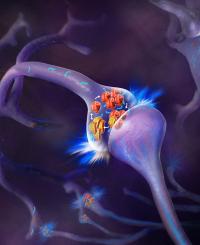
Drosophila Orb2 plays an important role in the persistence of memory. Memories in our brains are maintained by connections between neurons called "synapses". But how do these synapses stay strong and keep memories alive for decades? Neuroscientists at the Stowers Institute for Medical Research have discovered a major clue from a study in fruit flies: Hardy, self-copying clusters or oligomers of a synapse protein are an essential ingredient for the formation of long-term memory.
| Full story | 0 Comments | 12821 views |
| Molecular & Cell Biology | January 24, 2012 05:58 PM |
The many factors that contribute to how cells communicate and function at the most basic level are still not fully understood, but researchers at Baylor College of Medicine have uncovered a mechanism that helps explain how intracellular membranes fuse, and in the process, created a new physiological membrane fusion model.
| Full story | 0 Comments | 9774 views |

| AIDS & HIV | January 24, 2012 05:58 PM |
A saliva test used to diagnose the human immunodeficiency virus (HIV), is comparable in accuracy to the traditional blood test, according to a new study led by the Research Institute of the McGill University Health Centre (RI-MUHC) and McGill University. The meta-analysis, which compared studies worldwide, showed that the saliva HIV test, OraQuick HIV1/2, had the same accuracy as the blood test for high-risk populations. The test sensitivity was slightly reduced for low risk populations. The study, published in this week's issue of The Lancet Infectious Diseases, has major implications for countries that wish to adopt self-testing strategies for HIV.
| Full story | 0 Comments | 11029 views |
| Molecular & Cell Biology | January 24, 2012 05:58 PM |
Scientists at USC have uncovered evidence that even when hydrothermal sea vents go dormant and their blistering warmth turns to frigid cold, life goes on.
| Full story | 0 Comments | 8321 views |

| Stem Cell Research | January 23, 2012 05:22 PM |
The survival of the endangered snow leopard is looking promising thanks to Monash University scientists who have, for the first time, produced embryonic stem-like cells from the tissue of an adult leopard.
| Full story | 0 Comments | 13458 views |
| Molecular & Cell Biology | January 23, 2012 05:22 PM |
A group of researchers led by the Institute of Biotechnology and Biomedicine (IBB) and Universitat Autònoma de Barcelona (UAB) have achieved to quantify with precision the effect of protein aggregation on cell aging processes using as models the Escherichia coli bacteria and the molecule which triggers Alzheimer's disease. Scientists demonstrated that the effect can be predicted before it occurs. Protein aggregation is related to several diseases, including neurodegenerative diseases.
| Full story | 0 Comments | 15954 views |
| Biology | January 23, 2012 05:21 PM |
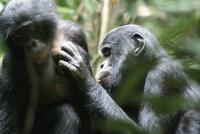
Bonobos groom each other in Lui Kotale, Salonga National Park, Democratic Republic of Congo. Mate competition by males over females is common in many animal species. During mating season male testosterone levels rise, resulting in an increase in aggressive behavior and masculine features. Male bonobos, however, invest much more into friendly relationships with females. Elevated testosterone and aggression levels would collide with this increased tendency towards forming pair-relationships.
| Full story | 0 Comments | 10325 views |
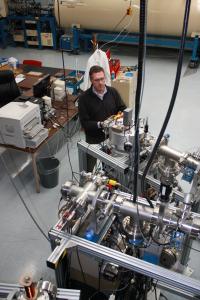
University of Arizona physicist Greg Hodgins awaits results from the accelerator mass spectrometer. If you think a Chihuahua doesn't have much in common with a Rottweiler, you might be on to something.
| Full story | 0 Comments | 8252 views |
| Molecular & Cell Biology | January 23, 2012 05:21 PM |
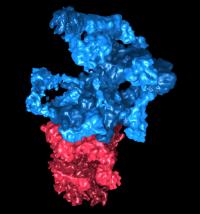
The "regulatory particle " (in blue) detects the proteins tagged with ubiquitin and prepares them for degradation. The "core particle " (in red) breaks the proteins down into their single components. Defective proteins that are not disposed of by the body can cause diseases such as Alzheimer's or Parkinson's. Scientists at the Max Planck Institute (MPI) of Biochemistry recently succeeded in revealing the structure of the cellular protein degradation machinery (26S proteasome) by combining different methods of structural biology. The results of collaboration with colleagues from the University of California, San Francisco and the Swiss Federal Institute of Technology Zurich (ETH Zürich) represent an important step forward in the investigation of the 26S proteasome. The findings have now been published in Proceedings of the National Academy of Sciences.
| Full story | 0 Comments | 10241 views |
| Health & Medicine | January 23, 2012 05:21 PM |
Brain scans of people under the influence of the psilocybin, the active ingredient in magic mushrooms, have given scientists the most detailed picture to date of how psychedelic drugs work. The findings of two studies being published in scientific journals this week identify areas of the brain where activity is suppressed by psilocybin and suggest that it helps people to experience memories more vividly.
| Full story | 0 Comments | 9514 views |
| Biology | January 23, 2012 05:21 PM |
An excavation at a site in South Africa has unearthed the 190-million-year-old dinosaur nesting site of the prosauropod dinosaur Massospondylus – revealing significant clues about the evolution of complex reproductive behaviour in early dinosaurs.
| Full story | 0 Comments | 7814 views |
| Biology | January 21, 2012 02:51 PM |
Simon Fraser University PhD student Brent Loken was hoping to capture images of the elusive Bornean clouded leopard when he set up a camera trap in the rainforest. Instead, he made the re-discovery of a lifetime.
| Full story | 0 Comments | 8714 views |
| Environment | January 19, 2012 04:46 PM |
A comprehensive multi-disciplinary synthesis just published in Environmental Reviews reveals the urgent need for further investigation and policy development to address significant environmental, social and economic impacts of invasive alien species (IAS) and climate change. "Effects of climate change on the distribution of invasive alien species in Canada: a knowledge synthesis of range change prediction in a warming world" is the collaborative effort of a team of dedicated researchers at York University's Institute for Research and Innovation in Sustainability (IRIS).
| Full story | 0 Comments | 7737 views |
| Health & Medicine | January 19, 2012 04:46 PM |
With mounting concerns over childhood obesity and its associated health risks in the U.S., would a ban on junk-food advertising aimed at children be more effective than the current voluntary, industry-led ban? According to published research from a University of Illinois economist, advertising bans do work, but an outright ban covering the entire U.S. media market would be the most effective policy tool for reducing fast-food consumption in children.
| Full story | 0 Comments | 8049 views |

| Biotechnology | January 18, 2012 06:04 PM |
Scientists from the Florida campus of The Scripps Research Institute have identified a compound that can help repair a specific type of defect in RNA, a type of genetic material. The methods in the new study could accelerate the development of therapeutics to treat a variety of incurable diseases such as Huntington's disease, Spinocerebellar ataxia, and Kennedy disease.
| Full story | 0 Comments | 7973 views |
| Biology | January 18, 2012 06:03 PM |
A new study suggests that the impact of predation on juvenile Steller sea lions in the Gulf of Alaska has been significantly underestimated, creating a "productivity pit" from which their population will have difficulty recovering without a reduction of predators.
| Full story | 0 Comments | 6497 views |

| Bioinformatics | January 18, 2012 06:03 PM |
Scientists have cracked the genetic code and predicted some high priority drug targets for the blood parasite Schistosoma haematobium, which is linked to bladder cancer and HIV/ AIDS and causes the insidious urogenital disease schistosomiasis haematobia in more than 112 million people in Africa.
| Full story | 0 Comments | 8257 views |
| Biology | January 18, 2012 06:03 PM |
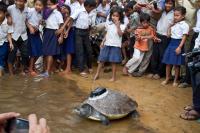
This shows the release of the Southern River terrapin at a ceremony on the Sre Ambel River in Cambodia attended by representatives of WCS, Cambodia’s Fisheries Administration’s Conservation Department The Wildlife Conservation Society, in conjunction with the Cambodian Fisheries Administration and Wildlife Reserves Singapore, announced today the successful release of a Southern River terrapin (Batagur affinis) – one of the most endangered turtles on earth – into the Sre Ambel River in Cambodia.
| Full story | 0 Comments | 9057 views |
| Molecular & Cell Biology | January 17, 2012 04:17 PM |
A devastating neurodegenerative disease that first appears in toddlers just as they are beginning to walk has been traced to defects in mitochondria, the 'batteries' or energy-producing power plants of cells. This finding by a team of researchers, led by investigators from the Montreal Neurological Institute and Hospital – The Neuro- at McGill University, was published in this week's issue of the Proceedings of the National Academy of Sciences of the USA (PNAS). The research, which was highlighted as "Novel & Newsworthy" by the American Society for Cell Biology (ASCB), significantly increases understanding of the disease and reveals an important common link with other neurodegenerative diseases, providing renewed hope and potential new therapeutic strategies for those affected around the world.
| Full story | 0 Comments | 6969 views |
| Health & Medicine | January 17, 2012 04:17 PM |
What happens in the brain of right-handed people if their dominant hand is immobile for two weeks? This is the question addressed in the latest study led by Professor Lutz Jäncke and the Trauma Surgery Department at Zurich University Hospital. For the study, ten right-handed people with broken upper right arms were examined. Because of the plaster or sling, the test people's right hands were restricted to little or no movement for fourteen days. Therefore they used their left hands for daily activities such as eating, brushing their teeth or writing. The participants were given two MRI brain scans: one 48 hours after injury and a second 16 days after the arm was immobilized. Based on the scans, the neuropsychologists analyzed the test people's gray and white brain matter. They calculated the thickness of the cerebral cortex and the values of the corticospinal tract and measured the fine motor skills of the left, free-moving hand.
| Full story | 0 Comments | 8804 views |
| Biology | January 17, 2012 04:17 PM |
More than 500 million years ago, single-celled organisms on the Earth's surface began forming multicellular clusters that ultimately became plants and animals. Just how that happened is a question that has eluded evolutionary biologists.
| Full story | 0 Comments | 7889 views |
| Molecular & Cell Biology | January 16, 2012 04:54 PM |
Telomeres, the very ends of chromosomes, become shorter as we age. When a cell divides it first duplicates its DNA and, because the DNA replication machinery fails to get all the way to the end, with each successive cell division a little bit more is missed. New research published in BioMed Central's open access journal Arthritis Research & Therapy shows that cells from osteoarthritic knees have abnormally shortened telomeres and that the percentage of cells with ultra short telomeres increases the closer to the damaged region within the joint.
| Full story | 0 Comments | 8412 views |
| Environment | January 16, 2012 04:54 PM |
Worldwide pandemics of influenza caused widespread death and illness in 1918, 1957, 1968 and 2009. A new study examining weather patterns around the time of these pandemics finds that each of them was preceded by La Niña conditions in the equatorial Pacific. The study's authors--Jeffrey Shaman of Columbia University's Mailman School of Public Health and Marc Lipsitch of the Harvard School of Public Health—note that the La Niña pattern is known to alter the migratory patterns of birds, which are thought to be a primary reservoir of human influenza. The scientists theorize that altered migration patterns promote the development of dangerous new strains of influenza.
| Full story | 0 Comments | 6552 views |
| Molecular & Cell Biology | January 15, 2012 07:26 PM |
Why do we like fatty foods so much? We can blame our taste buds.
| Full story | 0 Comments | 9751 views |
| Molecular & Cell Biology | January 15, 2012 07:26 PM |
The blood-brain barrier is essential for maintaining the brain's stable environment—preventing entry of harmful viruses and bacteria and isolating the brain's specific hormonal and neurotransmitter activity from that in the rest of the body.
| Full story | 0 Comments | 6550 views |
| Molecular & Cell Biology | January 15, 2012 07:25 PM |
Killer T-cells in the human body which help protect us from disease can inadvertently destroy cells that produce insulin, new research has uncovered.
| Full story | 0 Comments | 8210 views |
| Molecular & Cell Biology | January 11, 2012 06:10 PM |
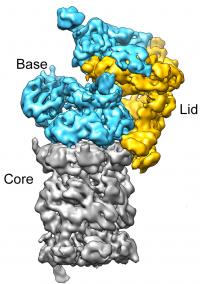
Berkeley researchers have provided the most detailed look ever at the “regulatory particle” used by proteasomes to identify and degrade proteins that have been marked for destruction. Important new information on one of the most critical protein machines in living cells has been reported by a team of researchers with the U.S. Department of Energy's Lawrence Berkeley National Laboratory (Berkeley Lab) and the University of California (UC) Berkeley. The researchers have provided the most detailed look ever at the "regulatory particle" used by the protein machines known as proteasomes to identify and degrade proteins that have been marked for destruction. The activities controlled by this regulatory particle are critical to the quality control of cellular proteins, as well as a broad range of vital biochemical processes, including transcription, DNA repair and the immune defense system.
| Full story | 0 Comments | 8338 views |
| Biology | January 11, 2012 06:10 PM |
LSU's Chris Austin recently discovered two new species of frogs in New Guinea, one of which is now the world's tiniest known vertebrate, averaging only 7.7 millimeters in size – less than one-third of an inch. It ousts Paedocypris progenetica, an Indonesian fish averaging more than 8 millimeters, from the record. Austin, leading a team of scientists from the United States including LSU graduate student Eric Rittmeyer, made the discovery during a three-month long expedition to the island of New Guinea, the world's largest and tallest tropical island.
| Full story | 0 Comments | 9907 views |
| Health & Medicine | January 11, 2012 04:28 AM |
Every year, Americans drink 13.8 billion gallons of soda, fruit punch, sweet tea, sports drinks, and other sweetened beverages—a mass consumption of sugar that is fueling soaring obesity and diabetes rates in the United States.
| Full story | 0 Comments | 9664 views |
| Biotechnology | January 11, 2012 04:28 AM |
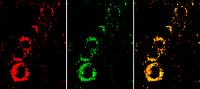
The yellow nanosensor signal in the overlay image (right) shows that the cells are active. If they were unhealthy, they would appear much redder. Center: the indicator dye signal. Left:... Countless mice, rats and rabbits die every year in the name of science – and the situation is getting worse. While German laboratories used some 2.41 million animals for scientific research in 2005, by 2009 this number had grown to 2.79 million. One third were destined for fundamental biology research, and the majority were used for researching diseases and developing medical compounds and devices. People demand medicines that are safe and therapies that are tolerable, but hardly anyone is happy to accept the need for animal testing. This is why scientists have spent years looking for methods that can replace them. Now researchers at the Fraunhofer Research Institution for Modular Solid State Technologies EMFT in Munich have found an alternative: they hope to use novel nanosensors to reduce the number of experiments that are carried out on animals. "We're basically using a test tube to study the effects of chemicals and their potential risks. What we do is take living cells, which were isolated from human and animal tissue and grown in cell cultures, and expose them to the substance under investigation," explains Dr. Jennifer Schmidt of the EMFT. If a given concentration of the substance is poisonous to the cell, it will die. This change in "well-being" can be rendered visible by the sensor nanoparticles developed by Dr. Schmidt and her team.
| Full story | 0 Comments | 13032 views |
| Health & Medicine | January 11, 2012 04:28 AM |
Researchers at Linköping University in Sweden are now launching a plan to effectively treat psoriasis.
| Full story | 0 Comments | 9042 views |
| Biotechnology | January 11, 2012 04:28 AM |
The available amount of fossil fuels is limited and their combustion in vehicle motors increases atmospheric carbon dioxide levels. The generation of fuels from biomass as an alternative is on the rise. In the journal Angewandte Chemie, Johannes A. Lercher and his team at the Technische Universitaet Muenchen have now introduced a new catalytic process that allows the effective conversion of biopetroleum from microalgae into diesel fuels.
| Full story | 0 Comments | 9458 views |
| Environment | January 8, 2012 07:31 PM |
An article in the forthcoming issue of the Journal of Integrated Pest Management (JIPM) refutes claims by Greenpeace Germany that the western bean cutworm (WBC), Striacosta albicosta (Smith), is "a new plant pest" that was "caused by genetically engineered corn." The Greenpeace Germany report, which was written by author Richard Then of Testbiotech, offers a "surprisingly simplistic conclusion" regarding the spread of western bean cutworm over the last decade, according to the JIPM authors.
| Full story | 0 Comments | 7484 views |

- In some genetic cases of microcephaly, stem cells fail to launch
- Yale team discovers how Zika virus causes fetal brain damage
- Scientists uncover the way a common cell enzyme alerts the body to invading bacteria
- Arctic gives clues on worst mass extinction of life
- Calcium channel blockers caught in the act at atomic level
Search Bio News Net
Free Biology Newsletter
- Flexibility That A.C.A. Lent to Work Force Is Threatened by...International Herald Tribune
- Bacteria Behind Legionnaires’ Disease Found at New York Police StationInternational Herald Tribune
- Prescription Price Crisis? 28 Million Americans See Spike in Drug...MSNBC.com: Health
- Seizing on Opioid Crisis, a Drug Maker Lobbies Hard for...International Herald Tribune
- Republicans are taking a big political risk on health careAP Health News
- Why We're So Divided Over Saving WolvesNational Geographic News