

Today's ubiquitous MP3 players permit users to listen to crystal-clear tunes at high volume for hours on end — a marked improvement on the days of the Walkman. But according to Tel Aviv University research, these advances have also turned personal listening devices into a serious health hazard, with teenagers as the most at-risk group.

| Health & Medicine | December 29, 2011 09:34 PM |
In March 2011, a surgical team at Brigham and Women's Hospital (BWH) performed the first full face transplantation (FFT) in the United States and went on to complete a total of three FFTs this year. Now, in the first research publication to evaluate FFT in the US, and largest series worldwide, the researchers describe details of patient preparation, novel design and execution of the operation as well as unique immunosuppression protocol allowing for lowest long-term maintenance drug regimen. They also share details of the early functional outcomes and demonstrate FFT as a viable option in the treatment of severe facial deformities and injuries. This research is published in the New England Journal of Medicine in the December 27, 2011 issue.
| Full story | 0 Comments | 7555 views |

| Molecular & Cell Biology | December 29, 2011 09:34 PM |
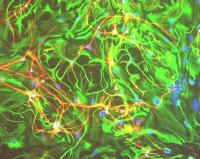
This is a network of neurons (in red) and glia cells (in green) grown in a petri dish. Blue dots are the cells' nuclei. Glia cells, named for the Greek word for "glue," hold the brain's neurons together and protect the cells that determine our thoughts and behaviors, but scientists have long puzzled over their prominence in the activities of the brain dedicated to learning and memory. Now Tel Aviv University researchers say that glia cells are central to the brain's plasticity — how the brain adapts, learns, and stores information.
| Full story | 0 Comments | 7422 views |
| Health & Medicine | December 19, 2011 05:55 PM |
New research shows 63% of women age 50 and older reported persistent, incident, or intermittent knee pain during a 12-year study period. Predictors for persistent pain included higher body mass index (BMI), previous knee injury, and radiographic osteoarthritis (OA). Details of this longitudinal study are available in Arthritis & Rheumatism, a journal published by Wiley-Blackwell on behalf of the American College of Rheumatology (ACR).
| Full story | 0 Comments | 7501 views |

| Biology | December 19, 2011 05:55 PM |
For the first time, the presence of large bodied herbivorous dinosaurs in Antarctica has been recorded. Until now, remains of sauropoda - one of the most diverse and geographically widespread species of herbivorous dinosaurs - had been recovered from all continental landmasses, except Antarctica. Dr. Ignacio Alejandro Cerda, from CONICET in Argentina, and his team's identification of the remains of the sauropod dinosaur suggests that advanced titanosaurs (plant-eating, sauropod dinosaurs) achieved a global distribution at least by the Late Cretaceous*. Their work has just been published online in Springer's journal, Naturwissenschaften – The Science of Nature.
| Full story | 0 Comments | 9407 views |
| Biology | December 19, 2011 05:55 PM |
New research has found that a protein associated with learning and memory plays an integral role in changing the behaviour of locusts from that of harmless grasshoppers into swarming pests.
| Full story | 0 Comments | 7289 views |
| Health & Medicine | December 19, 2011 05:55 PM |
A hike in your blood pressure during middle age significantly raises the risk of having a heart attack or a stroke during your lifetime, according to new Northwestern Medicine research. The study offers a new understanding on the importance of maintaining low blood pressure early in middle age to prevent heart disease later in life.
| Full story | 0 Comments | 7459 views |
| Molecular & Cell Biology | December 15, 2011 06:25 PM |
A discovery in fruit flies may be able to tell us more about how animals, including humans, sense potentially dangerous discomforts.
| Full story | 0 Comments | 14763 views |

| Biotechnology | December 15, 2011 06:25 PM |
Endoscopes — small cameras or optic fibres that are usually attached to flexible tubing designed to investigate the interior of the body — can be dangerously invasive. Procedures often require sedative medications and some recovery time. Now a researcher at Tel Aviv University is developing a "capsule endoscope" that can move through the digestive tract to detect problems independent of any attachments.
| Full story | 0 Comments | 13298 views |
| Biology | December 15, 2011 06:25 PM |
WHAT: UCR entomologists will release Tamarixia radiata, a tiny parasitic wasp that lays eggs in Asian citrus psyllid (ACP) nymphs. The larvae eat the ACP nymphs, killing them, and emerge as adults about 12 days later. Adult female Tamarixia also eat other ACP nymphs, thus killing them.
| Full story | 0 Comments | 12545 views |

| Bioinformatics | December 15, 2011 06:25 PM |
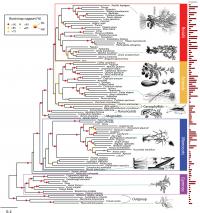
This is a phylogenomic reconstruction of the evolutionary diversification of seed plants. Scientists at the American Museum of Natural History, Cold Spring Harbor Laboratory, The New York Botanical Garden, and New York University have created the largest genome-based tree of life for seed plants to date. Their findings, published today in the journal PLoS Genetics, plot the evolutionary relationships of 150 different species of plants based on advanced genome-wide analysis of gene structure and function. This new approach, called "functional phylogenomics," allows scientists to reconstruct the pattern of events that led to the vast number of plant species and could help identify genes used to improve seed quality for agriculture.
| Full story | 0 Comments | 13780 views |
| Health & Medicine | December 15, 2011 06:25 PM |
Scientists have found a gene that causes Weaver syndrome, a rare genetic disorder that typically causes large size at birth, tall stature, developmental delay during childhood, and intellectual disability. Published today in the American Journal of Human Genetics, the discovery means that testing the EZH2 gene for mutations could help families who are seeking a diagnosis for their child.
| Full story | 0 Comments | 14214 views |
| Molecular & Cell Biology | December 14, 2011 05:24 PM |
A team from the Research Institute of the McGill University Health Centre (RI-MUHC) and McGill University has made a major breakthrough by unraveling the inner workings of melatonin, also known as the "sleep hormone." The research, conducted in collaboration with scientists in Italy, reveals the key role played by the melatonin receptor in the brain that promotes deep, restorative sleep. This discovery led the researchers to develop a novel drug called UCM765, which selectively activates this receptor. The results, published in The Journal of Neuroscience, may pave the way for the development of new and promising treatments for insomnia, a common public health problem that affects millions of people worldwide.
| Full story | 0 Comments | 15400 views |
| Health & Medicine | December 14, 2011 05:24 PM |
Researchers at Mayo Clinic in Arizona (http://www.mayoclinic.org/arizona/) and the University of Georgia (UGA) have developed a vaccine that dramatically reduces tumors in a mouse model that mimics 90 percent of human breast and pancreatic cancer cases — including those that are resistant to common treatments.
| Full story | 0 Comments | 15056 views |
| Biology | December 14, 2011 05:24 PM |
Researchers from the University of Bristol have discovered that a chemical compound in the brain can weaken the synaptic connections between neurons in a region of the brain important for the formation of long-term memories. The findings, published today [13 Dec] in the Journal of Neuroscience, may also provide a potential explanation for the loss of memory associated with Alzheimer's.
| Full story | 0 Comments | 13704 views |

| AIDS & HIV | December 14, 2011 05:23 PM |
__IMAGE_2 Scientists at the Gladstone Institutes have discovered new protein fragments in semen that enhance the ability of HIV, the virus that causes AIDS, to infect new cells -- a discovery that one day could help curb the global spread of this deadly pathogen.
| Full story | 0 Comments | 13665 views |

| Environment | December 14, 2011 05:23 PM |
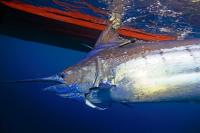
This is a blue marlin with a PSAT (Popoff Satellite Archival Transmitting) tag used to monitor horizontal and vertical habitat use in a new study The science behind counting fish in the ocean to measure their abundance has never been simple. A new scientific paper in Nature Climate Change shows that expanding 'ocean dead zones' (areas of low oxygen) driven in part by climate change makes that science even more complex.
| Full story | 0 Comments | 12773 views |
| Molecular & Cell Biology | December 13, 2011 05:08 PM |

F-ara-Edu is injected into zebrafish eggs. Interactions of biological macromolecules are the central bases of living systems. Biological macromolecules are synthesized in living cells by linking many small molecules together. Naturally occurring macromolecules include genetic materials (DNA) and proteins. A detailed understanding of the synthesis of these macromolecules in whole animals is a basic requirement for understanding biological systems, and for the development of new therapeutic strategies.
| Full story | 0 Comments | 12423 views |
| Molecular & Cell Biology | December 13, 2011 05:08 PM |
Plants must supply their various tissues with the carbohydrates they produce through photosynthesis in the leaves. However, they do not have a muscular pump like the human heart to help transport this vital fuel. Instead, they use pump proteins in their cell membranes for this purpose. Together with colleagues from the Carnegie Institution for Science in California, Alisdair Fernie from the Max Planck Institute of Molecular Plant Physiology in Potsdam has identified a hitherto unknown protein in the carbohydrate transport chain. The researchers' discovery could help to protect plants against pests and increase harvest yields.
| Full story | 0 Comments | 15656 views |
| Biology | December 13, 2011 05:08 PM |
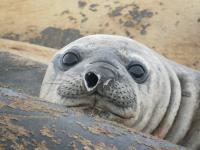
Jackson is the male southern elephant seal tracked by the Wildlife Conservation Society that traveled an astonishing 18,000 miles The Wildlife Conservation Society tracked a southern elephant seal for an astonishing 18,000 miles – the equivalent of New York to Sydney and back again.
| Full story | 0 Comments | 13486 views |
| Health & Medicine | December 13, 2011 05:08 PM |
Individuals suffering from mood and anxiety disorders such as bipolar, panic disorder and major depressive disorder may be more likely to abuse opioids, according to a new study led by researchers from the Johns Hopkins Bloomberg School of Public Health. They found that mood and anxiety disorders are highly associated with non-medical prescription opioid use. The results are featured in a recent issue of the Journal of Psychological Medicine.
| Full story | 0 Comments | 12865 views |
| Biology | December 12, 2011 05:49 PM |
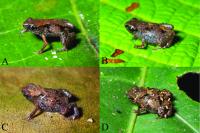
These are images of specimens of Paedophryne dekot (A) and (B), and P. verrucosa (C), and (D). Field work by researcher Fred Kraus from Bishop Museum, Honolulu has found the world's smallest frogs in southeastern New Guinea. This also makes them the world's smallest tetrapods (non-fish vertebrates). The frogs belong to the genus Paedophryne, all of whose species are extremely small, with adults of the two new species - named Paedophryne dekot and Paedophryne verrucosa - only 8-9 mm in length. The study was published in the open access journal ZooKeys.
| Full story | 0 Comments | 14732 views |
| Health & Medicine | December 12, 2011 05:49 PM |
Scientists at University College Dublin, Ireland, have identified a genetic alteration which causes a child to be born with no eyes – a condition called anophthalmia.
| Full story | 0 Comments | 20557 views |
| Environment | December 11, 2011 05:48 PM |
With current news of additional radioactive leaks from the Fukushima nuclear power plants, the impact on the ocean of releases of radioactivity from the plants remains unclear.
| Full story | 0 Comments | 12781 views |

| Stem Cell Research | December 11, 2011 05:48 PM |
Pig stem cell research conducted by two animal scientists at the University of Georgia reveals a better way to determine the safety of future stem cell therapies than rodent-based models.
| Full story | 0 Comments | 12476 views |
| Biology | December 8, 2011 06:19 PM |
Swarms of bees and brains made up of neurons make decisions using strikingly similar mechanisms, says a new study in the Dec. 9 issue of Science.
| Full story | 0 Comments | 8099 views |
| Biology | December 8, 2011 06:19 PM |
Recent studies show that the populations of African great apes are rapidly decreasing. Many areas where apes occur are scarcely managed and weakly protected. Researchers from the Max Planck Institute for Evolutionary Anthropology in Leipzig, Germany, have carried out an international collaborative project together with field researchers and park managers. The project aim was to evaluate how the lack of conservation effort influences the extinction risk of African great apes. Records were collected over the last 20 years from 109 resource management areas. The researchers found that the long-term presence of local and international non-governmental organization support and of law enforcement guards are the most crucial factors affecting ape survival, and that they have a clear measurable impact. Conversely, national development, often cited as a driver of conservation success, and high human population density had a negative impact on the likelihood of ape survival.
| Full story | 0 Comments | 6228 views |
| Molecular & Cell Biology | December 7, 2011 02:51 PM |
MicroRNAs (miRNAs) that regulate processes including fertilization, development, and aging show promise as biomarkers of disease. They can be collected from routinely collected fluids such as blood, saliva, and urine. However, a number of factors can interfere with the accuracy of miRNA tests. In a study published online today in the Journal of Molecular Diagnostics, a group of researchers provide clear procedures for the collection and analysis of miRNA, significantly improving their diagnostic accuracy.
| Full story | 0 Comments | 6709 views |
| Health & Medicine | December 7, 2011 02:51 PM |
Treating 'brain tsunamis' or 'killer waves' could stop many victims of major head injury from suffering additional brain damage, a study published in Lancet Neurology has found.
| Full story | 0 Comments | 7234 views |
| Biology | December 5, 2011 04:51 PM |
The extent to which we are able to activate our muscles voluntarily depends on motivation and will power or the physical condition and level of fatigue of the muscles, for instance. The latter particularly leads to noticeable and measurable performance impairments. For a long time, the research on muscle fatigue was largely confined to changes in the muscle itself. Now, a joint research project between the University of Zurich and ETH Zurich has shifted the focus to brain research. Headed by neuro-psychologist Kai Lutz from the University of Zurich in collaboration with Urs Boutellier from the Institute of Human Movement Sciences and Sport at ETH Zurich, the researchers discovered neuronal processes for the first time that are responsible for reducing muscle activity during muscle-fatiguing exercise. The third and final part of this series of experiments, which was conducted by Lea Hilty as part of her doctoral thesis, has now been published in the European Journal of Neuroscience.
| Full story | 0 Comments | 10131 views |
| Biology | December 5, 2011 04:51 PM |

This image shows a Cockerell’s Bumblebee. A team of scientists from the University of California, Riverside recently rediscovered the rarest species of bumblebee in the United States, last seen in 1956, living in the White Mountains of south-central New Mexico.
| Full story | 0 Comments | 10549 views |
| Molecular & Cell Biology | December 4, 2011 05:48 PM |
When RNA component units called ribonucleotides become embedded in genomic DNA, which contains the complete genetic data for an organism, they can cause problems for cells. It is known that ribonucleotides in DNA can potentially distort the DNA double helix, resulting in genomic instability and altered DNA metabolism, but not much is known about the fate of these ribonucleotides.
| Full story | 0 Comments | 9574 views |
| Health & Medicine | December 4, 2011 05:48 PM |
Pediatric researchers analyzing genetic influences in attention-deficit/hyperactivity disorder (ADHD) have found alterations in specific genes involved in important brain signaling pathways. The study raises the possibility that drugs acting on those pathways might offer a new treatment option for patients with ADHD who have those gene variants—potentially, half a million U.S. children.
| Full story | 0 Comments | 10053 views |
| Stem Cell Research | December 1, 2011 05:47 PM |
Established human embryonic cell lines, including those approved for federal research funding under former President George W. Bush, are different than newly derived human embryonic stem cell lines, according to a study by UCLA stem cell researchers.
| Full story | 0 Comments | 7866 views |
| AIDS & HIV | December 1, 2011 05:47 PM |
A cheaper laboratory test that helps guide anti-retroviral drug treatment for people with HIV/AIDS may be just as effective as a more sophisticated test, a group of international researchers has found – a discovery that could be particularly important in rural Africa.
| Full story | 0 Comments | 8086 views |

- In some genetic cases of microcephaly, stem cells fail to launch
- Yale team discovers how Zika virus causes fetal brain damage
- Scientists uncover the way a common cell enzyme alerts the body to invading bacteria
- Arctic gives clues on worst mass extinction of life
- Calcium channel blockers caught in the act at atomic level
Search Bio News Net
Free Biology Newsletter
- Flexibility That A.C.A. Lent to Work Force Is Threatened by...International Herald Tribune
- Bacteria Behind Legionnaires’ Disease Found at New York Police StationInternational Herald Tribune
- Prescription Price Crisis? 28 Million Americans See Spike in Drug...MSNBC.com: Health
- Seizing on Opioid Crisis, a Drug Maker Lobbies Hard for...International Herald Tribune
- Republicans are taking a big political risk on health careAP Health News
- Why We're So Divided Over Saving WolvesNational Geographic News