

As global temperatures rise and climatic zones move polewards, species will need to find different environments to prevent extinction. New research, published today in the journal Molecular Ecology, has revealed that climate change is causing certain species to move and adapt to a range of new habitats.

| Biotechnology | November 30, 2011 06:18 PM |
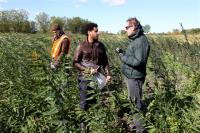
Mohamed Hijri's team evaluates the progress of work on a contaminated site in the Greater Montreal region, where they have planted cuttings that carry petrol‑eating mushrooms. Take a Petri dish containing crude petroleum and it will release a strong odor distinctive of the toxins that make up the fossil fuel. Sprinkle mushroom spores over the Petri dish and let it sit for two weeks in an incubator, and surprise, the petroleum and its smell will disappear. "The mushrooms consumed the petroleum!" says Mohamed Hijri, a professor of biological sciences and researcher at the University of Montreal's Institut de recherche en biologie végétale (IRBV).
| Full story | 0 Comments | 10187 views |

| Bioinformatics | November 28, 2011 04:09 PM |
An international team of scientists - including Ghent VIB scientists - has succeeded in deciphering the genome of the spider mite. This is also the first known genome of an arachnid. This premiere not only brings along new insights into the evolution of arthropods, but also offers new opportunities to develop means of crop protection against the spider mite.
| Full story | 0 Comments | 10026 views |

| Biology | November 28, 2011 04:09 PM |
The elusive snow leopard (Panthera uncia) lives high in the mountains across Central Asia. Despite potentially living across 12 countries the actual numbers of this beautiful large cat are largely unknown. It is thought that there might be somewhere between 350 and 500 distributed across Nepal's northern frontier. New research published in BioMed Central's open access journal BMC Research Notes has used genetic analysis to show that the numbers of snow leopards in the central Himalayas is actually much lower than suggested.
| Full story | 0 Comments | 12047 views |

| AIDS & HIV | November 25, 2011 06:12 PM |
WHAT: HIV is coated in sugars that usually hide the virus from the immune system. Newly published research reveals how one broadly neutralizing HIV antibody actually uses part of the sugary cloak to help bind to the virus. The antibody binding site, called the V1/V2 region, represents a suitable HIV vaccine target, according to the scientists who conducted the study. In addition, their research reveals the detailed structure of the V1/V2 region, the last part of the virus surface to be visualized at the atomic level.
| Full story | 0 Comments | 11533 views |
| Biology | November 25, 2011 06:12 PM |
Guppies in the wild have evolved over at least half-a-million years — long enough for the males' coloration to have changed dramatically. Yet a characteristic orange patch on male guppies has remained remarkably stable, though it could have become redder or more yellow. Why has it stayed the same hue of orange over such a long period of time?
| Full story | 0 Comments | 10054 views |

| Health & Medicine | November 25, 2011 06:12 PM |
A new study has revealed that immature neurons taken from healthy mouse embryos can repair damaged brain circuitry and partially normalize metabolism when transplanted into adult mice that have grown morbidly obese due to a genetic deficiency. This proof-of-principle discovery represents one step down a long road toward neuronal replacement therapy, which researchers hope might one day be used to repair brains that have been injured by trauma or disease.
| Full story | 0 Comments | 6695 views |
| Bioinformatics | November 23, 2011 05:04 PM |
The International Cooperation to Sequence the Atlantic Salmon Genome (ICSASG, the "Cooperation") has awarded the Phase II contract for next-generation sequencing and analysis of the Atlantic salmon genome to the J. Craig Venter Institute (JCVI) in Rockville, Maryland. The JCVI will be sequencing the salmon genome using next-generation technologies, including assembly to integrate Sanger and next-generation sequence, and comparative genomics. This effort is expected to generate a high-quality resource for those responsible for the management of wild salmon stocks and the salmon aquaculture industry, as well as providing a reference genome for work with other salmonids.
| Full story | 0 Comments | 6728 views |
| Bioinformatics | November 23, 2011 05:04 PM |
The Monarch butterfly is famous for its ability to travel up to 2,000 miles from North America to central Mexico every fall. Now, it's enjoying fame of a different sort. In the November 23rd issue of Cell, researchers report the full genomic sequence of this iconic butterfly. The new genome is the first for any butterfly. It is also the first complete genome of any long-distance migrant.
| Full story | 0 Comments | 8289 views |
| Bioinformatics | November 23, 2011 05:04 PM |
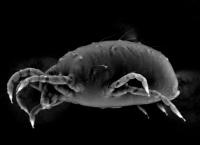
Scanning electron microscope image of a two-spotted spider mite, which is less than one millimeter long. A University of Utah biologist and an international research team decoded the genetic blueprint of the two-spotted spider mite, raising hope for new ways to attack the major pest, which resists pesticides and destroys crops and ornamental plants worldwide.
| Full story | 0 Comments | 7473 views |

| Molecular & Cell Biology | November 22, 2011 06:42 PM |
University of Central Florida researchers, for the first time, have used stem cells to grow neuromuscular junctions between human muscle cells and human spinal cord cells, the key connectors used by the brain to communicate and control muscles in the body.
| Full story | 0 Comments | 10178 views |
| Molecular & Cell Biology | November 22, 2011 06:42 PM |
Researchers at Washington University School of Medicine in St. Louis have obtained new evidence that at least some persistent stuttering is caused by mutations in a gene governing not speech, but a metabolic pathway involved in recycling old cell parts.
| Full story | 0 Comments | 8809 views |
| Biotechnology | November 21, 2011 04:13 PM |
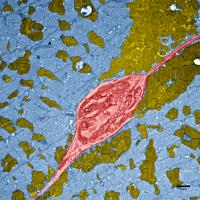
This image shows dramatically enhanced muscle tissue in a high performing mouse, which has greater numbers of mitochondria (brown), the energy factories of cells. An international team of scientists has created super-strong, high-endurance mice and worms by suppressing a natural muscle-growth inhibitor, suggesting treatments for age-related or genetics-related muscle degeneration are within reach.
| Full story | 0 Comments | 12069 views |
| Molecular & Cell Biology | November 21, 2011 04:13 PM |
Researchers at the Swedish medical university Karolinska Institutet have developed a new method for counting molecules. Quantifying the amounts of different kinds of RNA and DNA molecules is a fundamental task in molecular biology as these molecules store and transfer the genetic information in cells. Thus, improved measurement techniques are crucial for understanding both normal and cancer cells.
| Full story | 0 Comments | 7193 views |

| Environment | November 21, 2011 04:13 PM |
A new model developed by scientists of the European Commission's Joint Research Centre (JRC) allows the potential presence of bluefin tuna to be tracked through daily updated maps, helping to protect endangered stocks and fight illegal fishing. The model, based on satellite remote sensing data, provides for the first time an overall view of the preferred bluefin tuna habitats in the Mediterranean Sea, as well as their changes over time. Satellite-based habitat mapping can help identify more precisely areas to be inspected or to be closed for fisheries and it can also help refine estimates of fish stocks, thus contributing to a more effective fisheries management. European Commissioner for Research and Innovation, Máire Geoghegan-Quinn, said: "This model will help to ensure sustainable management of bluefin tuna, actively contributing to two of the most pressing challenges for the future: food security and protection of the environment. Another good example of how science and research provide support to European Union policies."
| Full story | 0 Comments | 6687 views |
| Molecular & Cell Biology | November 21, 2011 04:12 PM |
Researchers have found long-sought genes in the sensory hair cells of the inner ear that, when mutated, prevent sound waves from being converted to electric signals – a fundamental first step in hearing. The team, co-led by Jeffrey Holt, PhD, in the department of otolaryngology at Children’s Hospital Boston, and Andrew Griffith, MD, PhD, of the NIH’s National Institute on Deafness and other Communication Disorders (NIDCD), then restored these electrical signals in the sensory cells of deaf mice by introducing normal genes.
| Full story | 0 Comments | 7602 views |
| Health & Medicine | November 17, 2011 06:18 PM |
An international team of researchers led by clinicians at Weill Cornell Medical College have discovered a genetic Achilles' heel in an aggressive type of prostate cancer -- a vulnerability they say can be attacked by a targeted drug that is already in clinical trials to treat other types of cancers.
| Full story | 0 Comments | 7450 views |
| Biology | November 17, 2011 06:18 PM |
Examining venom from a variety of poisonous snakes, a group of researchers at the University of California, San Francisco has discovered why the bite of one small black, yellow and red serpent called the Texas coral snake can be so painful.
| Full story | 0 Comments | 11082 views |
| Biology | November 17, 2011 06:18 PM |
Vultures in South Asia were on the brink of extinction until Lindsay Oaks and Richard Watson, from The Peregrine Fund in the US, undertook observational and forensic studies to find out why the number of birds was falling so rapidly. They discovered the vultures were being poisoned by residues of an anti-inflammatory drug (diclofenac) used in cattle and other livestock, whose carcasses they feed on. The work is presented in a chapter of the new book, 'Wildlife Ecotoxicology - Forensic Approaches,' published by Springer.
| Full story | 0 Comments | 8373 views |
| Biology | November 17, 2011 06:18 PM |
The lowly and simple roundworm may be the ideal laboratory model to learn more about the complex processes involved in repairing wounds and could eventually allow scientists to improve the body's response to healing skin wounds, a serious problem in diabetics and the elderly.
| Full story | 0 Comments | 7599 views |
| Biotechnology | November 17, 2011 06:18 PM |
The removal of rare tumor cells circulating in the blood might be possible with the use of biomolecules bound to dendrimers, highly branched synthetic polymers, which could efficiently sift and capture the diseased cells, according to new research at the University of Illinois at Chicago.
| Full story | 0 Comments | 7517 views |
| Molecular & Cell Biology | November 16, 2011 07:19 PM |
The research teams headed by Prof. Johanna Ivaska (University of Turku and VTT Technical Research Centre of Finland) and Prof. Marko Salmi (University of Turku and the National Institute for Health and Welfare) have discovered that the SHARPIN protein regulates human cell activity.
| Full story | 0 Comments | 7689 views |

| Gene Therapy | November 16, 2011 07:19 PM |
A new episode in the American Chemical Society's (ACS) award-winning "Global Challenges/Chemistry Solutions" podcast series spins a real-life tale in which spider silk shows promise for overcoming a major barrier to the use of gene therapy in everyday medicine.
| Full story | 0 Comments | 11627 views |
| Molecular & Cell Biology | November 15, 2011 04:58 PM |
An extraordinary breakthrough in understanding what stops a common form of skin cancer from developing could make new cancer treatments and prevention available to the public in five years.
| Full story | 0 Comments | 11861 views |

| Microbiology | November 15, 2011 04:58 PM |
An important new study from the Laboratory for Developmental Genetics at USC has confirmed cytomegalovirus (CMV) as a cause of the most common salivary gland cancers. CMV joins a group of fewer than 10 identified oncoviruses — cancer-causing viruses — including HPV.
| Full story | 0 Comments | 11453 views |
| Biotechnology | November 15, 2011 04:58 PM |
Purdue University scientists have developed a method for stacking synthetic DNA and carbon nanotubes onto a biosensor electrode, a development that may lead to more accurate measurements for research related to diabetes and other diseases.
| Full story | 0 Comments | 7791 views |
| Bioinformatics | November 14, 2011 04:44 PM |
BGI, the world's largest genomic organization, announces several bioinformatics analysis pipelines and software, including assembly and binning tools, genetic variation software, as well as two cloud-based green solutions for genomic-based research. In addition, GigaScience, an upcoming research journal published by BGI, announces the launch of its new, freely accessible, large-scale database: GigaDB. The launch of GigaDB is heralded by today's release of numerous large datasets of different types and from a variety of organisms. GigaDB is unique because it is directly affiliated with a journal and all of its datasets are assigned a Digital Object Identifier (DOI), which allows these data to be directly cited in future publications.
| Full story | 0 Comments | 9201 views |
| Biotechnology | November 14, 2011 04:44 PM |
Sonar and ultrasound, which use sound as a navigational device and to paint accurate pictures of an environment, are the basis of countless technologies, including medical ultrasound machines and submarine navigation systems. But when it comes to more accurate sonar and ultrasound, animals' "biosonar" capabilities still have the human race beat.
| Full story | 0 Comments | 8284 views |
| Biology | November 14, 2011 04:44 PM |
"Certain bats can deform the shapes of their ears in a way that changes the animal's ultrasonic hearing pattern. Within just one tenth of a second, these bats are able to change their outer ear shapes from one extreme configuration to another," said Rolf Müller, associate professor of mechanical engineering at Virginia Tech.
| Full story | 0 Comments | 8234 views |
| Health & Medicine | November 14, 2011 04:44 PM |
Tuberculosis, which kills over 2 million people each year, is caused primarily by infectious bacteria known as Mycobacterium tuberculosis – or Mtb. Mtb targets human immune cells as part of its strategy to avoid detection, effectively neutralizing the body's immune response.
| Full story | 0 Comments | 9001 views |
| Molecular & Cell Biology | November 11, 2011 04:00 PM |
The olfactory sensory neurons in the nasal mucosa perceive the myriad smells in the air with the aid of odorant receptors. Each sensory neuron chooses one and only one receptor gene for expression. The probability that a particular receptor gene is chosen for expression determines how many olfactory sensory neurons in total produce this receptor type. Scientists from the Max Planck Institute of Biophysics in Frankfurt have unveiled an aspect of how the probability of the choice of an odorant receptor gene is regulated in olfactory sensory neurons. Regulatory elements in the genome regulate the probability of the choice of individual odorant receptor genes within a gene cluster. These elements act as on-off-switches for gene choice, but they do not regulate the number of receptor molecules that are produced by a cell once a particular gene is chosen for expression.
| Full story | 0 Comments | 7177 views |
| Environment | November 10, 2011 05:39 PM |
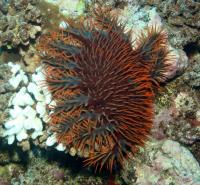
This is a crown-of-thorns sea star feeding on a coral. Can fish save coral reefs from dying? UC Santa Barbara researchers have found one case where fish have helped coral reefs to recover from cyclones and predators.
| Full story | 0 Comments | 8592 views |
| Biotechnology | November 10, 2011 05:39 PM |
A team of researchers at EPFL, the University of Lausanne and the Salk Institute created super strong, marathon mice and nematodes by reducing the function of a natural inhibitor, suggesting treatments for age-related or genetically caused muscle degeneration are within reach.
| Full story | 0 Comments | 11431 views |
| Molecular & Cell Biology | November 10, 2011 05:39 PM |
Cells develop and thrive by turning genes on and off as needed in a precise pattern, a process known as regulated gene transcription. In a paper published in the Nov. 9 issue of the Journal of Neuroscience, researchers at the University of California, San Diego School of Medicine say this process is even more complex than previously thought, with regulated genes actually relocated to other, more conducive places in the cell nucleus.
| Full story | 0 Comments | 7238 views |
| Molecular & Cell Biology | November 10, 2011 05:39 PM |
Atherosclerosis, commonly referred to as "hardening of the arteries," is a major risk factor for heart attack and stroke. The cause of atherosclerosis is not well understood but, for some time, chronic inflammatory immune responses have been implicated in driving disease pathology. Now, a new study, published online on November 10th by Cell Press from the journal Immunity, identifies a type of immune cell that is not associated with promoting disease, but with protection against atherosclerosis. The findings substantially advance the understanding of the complex immune responses associated with atherosclerosis and may guide research to develop new therapeutic interventions.
| Full story | 0 Comments | 7602 views |
| Biology | November 10, 2011 05:38 PM |
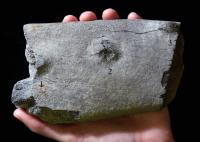
Whale bone fossil showing three tooth marks from a shark. The marks on the rib indicate the whale was once severely bitten by a strong-jawed animal. A fragment of whale rib found in a North Carolina strip mine is offering scientists a rare glimpse at the interactions between prehistoric sharks and whales some 3- to 4-million years ago during the Pliocene.
| Full story | 0 Comments | 8302 views |
| Bioinformatics | November 8, 2011 06:35 PM |
A 79-year-old collection of fungal cultures and the U.S. Forest Service's Northern Research Station are part of a team that will sequence 1,000 fungal genomes in the next 5 years.
| Full story | 0 Comments | 6854 views |
| Biology | November 8, 2011 06:35 PM |
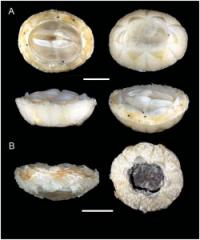
These are barnacles collected from Olive Ridley and green sea turtles during a survey. "It is strange to think of a sea turtle as an ecosystem," says Amanda Feuerstein, program coordinator and research assistant at the Smithsonian's National Museum of Natural History, "but they are…they have all of these other animals living on their skin and shells."
| Full story | 0 Comments | 7397 views |
| Biology | November 7, 2011 04:18 PM |
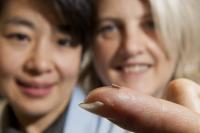
A leaf hopper on a finger, watched by Dr. Akiko Sugio and Dr. Saskia Hogenhout. Pathogens can alter their hosts, for example malaria parasites can make humans more attractive to mosquitoes, but how they do it has remained a mystery. Scientists from the John Innes Centre on Norwich Research Park have identified for the first time a specific molecule from a parasite that manipulates plant development to the advantage of the insect host.
| Full story | 0 Comments | 8809 views |
| AIDS & HIV | November 7, 2011 04:18 PM |
The Centre de recherche du Centre hospitalier de l'Université de Montréal (CRCHUM) announced today that one of its researchers will receive funding of 100,000 US $ through Grand Challenges Explorations, an initiative created by the Bill & Melinda Gates Foundation that enables researchers worldwide to test unorthodox ideas that address persistent health and development challenges. Dr. Andrés Finzi will pursue an innovative global health research project, titled "Reverse Fusion: a new approach to eradicate HIV/AIDS" to deliver toxic genes to HIV-infected cells and eliminate them.
| Full story | 0 Comments | 7651 views |

- In some genetic cases of microcephaly, stem cells fail to launch
- Yale team discovers how Zika virus causes fetal brain damage
- Scientists uncover the way a common cell enzyme alerts the body to invading bacteria
- Arctic gives clues on worst mass extinction of life
- Calcium channel blockers caught in the act at atomic level
Search Bio News Net
Free Biology Newsletter
- Flexibility That A.C.A. Lent to Work Force Is Threatened by...International Herald Tribune
- Bacteria Behind Legionnaires’ Disease Found at New York Police StationInternational Herald Tribune
- Prescription Price Crisis? 28 Million Americans See Spike in Drug...MSNBC.com: Health
- Seizing on Opioid Crisis, a Drug Maker Lobbies Hard for...International Herald Tribune
- Republicans are taking a big political risk on health careAP Health News
- Why We're So Divided Over Saving WolvesNational Geographic News