

A University of Alberta-led research team has taken a rare look inside the skull of a dinosaur and come away with unprecedented details on the brain and nasal passages of the 72 million year old animal.

| Molecular & Cell Biology | September 29, 2011 05:57 PM |
Imagine a single drug that would treat most, if not all, autoimmune disorders, such as asthma, inflammatory bowel disease, and Lupus. That might not be so hard to do thanks to a team of researchers who have discovered a molecule normally used by the body to prevent unnecessary immune reactions. This molecule, pronounced "alpha v beta 6," normally keeps our immune systems from overreacting when food passes through our bodies, and it may be the key that unlocks entirely new set of treatments for autoimmune disorders. This discovery was recently published in research report appearing the Journal of Leukocyte Biology (https://www.jleukbio.org).
| Full story | 0 Comments | 12488 views |
| Molecular & Cell Biology | September 29, 2011 05:57 PM |
A new technique developed by researchers at the Stanford University School of Medicine allows researchers to identify the exact DNA sequences and locations bound by regulatory RNAs. This information is necessary to understand how the recently identified RNA molecules control the expression of neighboring and distant genes.
| Full story | 0 Comments | 8769 views |

| Biology | September 29, 2011 05:57 PM |
As nocturnal animals, bats rely echolocation to navigate and hunt prey. By bouncing sound waves off objects, including the bugs that are their main diet, bats can produce an accurate representation of their environment in total darkness. Now, researchers at the University of Southern Denmark and the University of Pennsylvania have shown that this amazing ability is enabled by a physical trait never before seen in mammals: so-called "superfast" muscles.
| Full story | 0 Comments | 7737 views |
| Molecular & Cell Biology | September 29, 2011 05:57 PM |
Ever wondered why you wake up in the morning ---- even when the alarm clock isn't making jarring noises? Wonder no more. Researchers at the Salk Institute for Biological Studies have identified a new component of the biological clock, a gene responsible for starting the clock from its restful state every morning.
| Full story | 0 Comments | 16001 views |
| Molecular & Cell Biology | September 28, 2011 02:15 PM |
University of Alberta researchers have identified a key regulator that controls the speed of development in the fruit fly. When the researchers blocked the function of this regulator, animals sped up their rate of development and reached maturity much faster than normal.
| Full story | 0 Comments | 7887 views |
The first video of tool use by a fish has been published in the journal Coral Reefs by Giacomo Bernardi, professor of ecology and evolutionary biology at the University of California, Santa Cruz.
| Full story | 0 Comments | 7860 views |
| Molecular & Cell Biology | September 26, 2011 02:58 PM |
A compound tested by UT Southwestern Medical Center investigators destroys several viruses, including the deadly Spanish flu that killed an estimated 30 million people in the worldwide pandemic of 1918.
| Full story | 0 Comments | 10450 views |
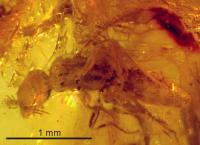
This is a holotype of Plumalexius rasnitsyni. After being alerted by Alexandr Rasnitsyn (Palaeontological Institute of the Russian Academy of Sciences, Moscow) to two unusual wasps in amber found in New Jersey, USA, Denis Brothers (University of KwaZulu-Natal, South Africa) has determined that they represent a new family of wasps, but with its closest relatives found in South America and South Africa. The study was published in a special issue of the open-access journal ZooKeys dedicated to the 75th birthday of Professor Rasnitsyn.
| Full story | 0 Comments | 10079 views |
| Molecular & Cell Biology | September 26, 2011 02:58 PM |
The mitochondria are the cell's power stations. In animal cells, they supply energy in usable form by converting nutrients into the universal energy currency of the cell, adenosine triphosphate (ATP). Mitochondria possess their own DNA, and are inherited via the maternal line. The mitochondrial DNA codes for a small number of proteins that are essential for energy production in the organelle. The first step in the decoding of this genetic information is the synthesis, or transcription, of RNA copies of the DNA by the enzyme mitochondrial RNA polymerase. The RNA molecules are then used to program protein synthesis. However, exactly how the mitochondrial RNA polymerase actually works has not been clear, as its structure was unknown – until now. Biochemist Professor Patrick Cramer, Director of the Gene Center at LMU, in collaboration with Professor Dmitry Temiakov of the University of Medicine and Dentistry of New Jersey (USA), has now determined the architecture of this molecular copy machine. "With the help of a synchrotron as a source of radiation and using the method of X-ray diffraction, we were able to determine the first three-dimensional structure of a human polymerase, the mitochondrial RNA polymerase, in atomic detail," Cramer explains.
| Full story | 0 Comments | 8313 views |

| Biotechnology | September 22, 2011 04:41 PM |
Researchers have discovered a method for simultaneously visualizing gene number and protein expression in individual cells. The fluorescence microscopy technique could permit a detailed analysis of the relationship between gene status and expression of the corresponding protein in cells and tissues, and bring a clearer understanding of cancer and other complex diseases, according to researchers who led the study.
| Full story | 0 Comments | 7814 views |
| Biotechnology | September 22, 2011 04:41 PM |
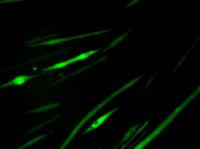
Mature muscle fibers were marked to glow green. Researchers at the University of California, Berkeley, have turned back the clock on mature muscle tissue, coaxing it back to an earlier stem cell stage to form new muscle. Moreover, they showed in mice that the newly reprogrammed muscle stem cells could be used to help repair damaged tissue.
| Full story | 0 Comments | 11043 views |

| Stem Cell Research | September 21, 2011 02:49 AM |
Adult stem cells from mice converted to antigen-specific T cells -- the immune cells that fight cancer tumor cells -- show promise in cancer immunotherapy and may lead to a simpler, more efficient way to use the body's immune system to fight cancer, according to Penn State College of Medicine researchers.
| Full story | 0 Comments | 13958 views |
| Biology | September 21, 2011 02:49 AM |
Scientists have discovered how living organisms – including humans – avoid poisoning from carbon monoxide generated by natural cell processes.
| Full story | 0 Comments | 15667 views |
| Stem Cell Research | September 21, 2011 02:49 AM |

Special enzymes transfer methyl groups to the cytosine building blocks of DNA. A methyl group consists of one carbon atom combined with three associated atoms of hydrogen (CH3). Jean-Baptiste Lamarck would have been delighted: geneticists no longer dismiss out of hand his belief that acquired traits can be passed on to offspring. When Darwin published his book on evolution, Lamarck's theory of transformation went onto the ash heap of history. But in the last decade, we have learned that the environment can after all leave traces in the genomes of animals and plants, in form of so-called epigenetic modifications. Scientists at the Max Planck Institute of Developmental Biology in Germany have now produced the first comprehensive inventory of spontaneous epigenetic changes. Using Arabidopsis, the workhorse of modern plant genetics, the researchers determined how often and where in the genome epigenetic modifications occur – and how often they disappear again. They found that epigenetic changes are many orders of magnitude more frequent than conventional DNA mutations, but also often short lived. They are therefore probably much less important for long-term evolution than previously thought.
| Full story | 0 Comments | 7859 views |
| Stem Cell Research | September 21, 2011 02:49 AM |
Researchers have shown they can reverse the aging process for human adult stem cells, which are responsible for helping old or damaged tissues regenerate. The findings could lead to medical treatments that may repair a host of ailments that occur because of tissue damage as people age. A research group led by the Buck Institute for Research on Aging and the Georgia Institute of Technology conducted the study in cell culture, which appears in the September 1, 2011 edition of the journal Cell Cycle
| Full story | 0 Comments | 10167 views |
| Molecular & Cell Biology | September 20, 2011 02:57 AM |
A compound initially isolated from sharks shows potential as a unique broad-spectrum human antiviral agent, according to a study led by a Georgetown University Medical Center investigator and reported in the Proceedings of the National Academy of Sciences Early Edition online September 19.
| Full story | 0 Comments | 10385 views |

| Health & Medicine | September 20, 2011 02:57 AM |
Examination of lung tissue and other autopsy material from 68 American soldiers who died of respiratory infections in 1918 has revealed that the influenza virus that eventually killed 50 million people worldwide was circulating in the United States at least four months before the 1918 influenza reached pandemic levels that fall.
| Full story | 0 Comments | 7522 views |
| Molecular & Cell Biology | September 20, 2011 02:57 AM |
The ability to produce neuroprotectors, proteins that protect the human brain against neurodegenerative disorders such as Parkinson's and ALS, is the holy grail of brain research. A technology developed at Tel Aviv University does just that, and it's now out of the lab and in hospitals to begin clinical trials with patients suffering from amyotrophic lateral sclerosis (ALS), also known as Lou Gehrig's disease.
| Full story | 0 Comments | 11134 views |
| Stem Cell Research | September 15, 2011 04:33 PM |
Scientists have found a control switch that regulates stem cell "pluripotency," the capacity of stem cells to develop into any type of cell in the human body. The discovery reveals that pluripotency is regulated by a single event in a process called alternative splicing.
| Full story | 0 Comments | 10531 views |
| Biology | September 15, 2011 04:33 PM |
Secrets from the age of the dinosaurs are usually revealed by fossilized bones, but a University of Alberta research team has turned up a treasure trove of Cretaceous feathers trapped in tree resin. The resin turned to resilient amber, preserving some 80 million-year-old protofeathers, possibly from non-avian dinosaurs, as well as plumage that is very similar to modern birds, including those that can swim under water.
| Full story | 0 Comments | 11211 views |
| Biology | September 15, 2011 04:33 PM |
Seemingly simple animals such as the snail and squid have ransacked the genetic toolkit over the last half billion years to find different ways to build complex brains, nervous systems and shells, according to an international team of researchers, including a neuroscientist with the University of Florida Whitney Laboratory for Marine Bioscience.
| Full story | 0 Comments | 8413 views |
| Health & Medicine | September 15, 2011 04:33 PM |
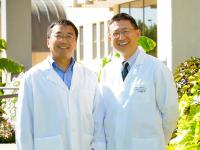
Michael Wang, M.D., Ph.D., right, assistant professor of pathology and anatomical sciences, and Li-Qun Gu, Ph.D., associate professor of biological engineering, have developed a new technology for the early detection of lung cancer. Worldwide and in the United States, lung cancer is the most common cause of cancer-related death. When lung cancer strikes, it often spreads silently into more advanced stages before being detected. In a new article published in Nature Nanotechnology, biological engineers and medical scientists at the University of Missouri reveal how their discovery could provide a much earlier warning signal.
| Full story | 0 Comments | 8335 views |
| Biology | September 14, 2011 03:30 PM |
No, this isn't Jurassic Park. Researchers at the Johns Hopkins University School of Medicine with help from an amateur fossil hunter in College Park, Md., have described the fossil of an armored dinosaur hatchling. It is the youngest nodosaur ever discovered, and a founder of a new genus and species that lived approximately 110 million years ago during the Early Cretaceous Era. Nodosaurs have been found in diverse locations worldwide, but they've rarely been found in the United States. The findings are published in the September 9 issue of the Journal of Paleontology.
| Full story | 0 Comments | 15224 views |

| Bioinformatics | September 14, 2011 03:30 PM |
Precise diagnosis of disease and developmental syndromes often depends on understanding the genetics underlying them. Most cases of early onset hearing loss are genetic in origin but there are many different forms. Heretofore, it has been difficult to identify the gene responsible for the hearing loss of each affected child, because the critical mutations differ among countries and populations. New research published in BioMed Central's open access journal Genome Biology has identified six critical mutations in Israeli Jewish and Palestinian Arab families. Mutations in one gene, TMC1, was found in 38% of children with genetic hearing loss in the Moroccan Jewish population.
| Full story | 0 Comments | 7829 views |
| Biotechnology | September 14, 2011 03:29 PM |
In the quest to understand genomes—how they're built, how they're organized and what makes them work—a team of Johns Hopkins researchers has engineered from scratch a computer-designed yeast chromosome and incorporated into their creation a new system that lets scientists intentionally rearrange the yeast's genetic material. A report of their work appears September 14 as an Advance Online Publication in the journal Nature.
| Full story | 0 Comments | 7487 views |
| Molecular & Cell Biology | September 13, 2011 06:45 PM |
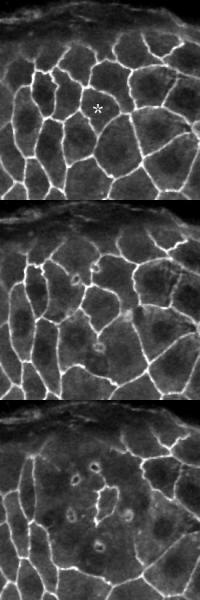
Time-lapse microscopy of a fruit fly epithelium in which a single cell is isolated from the remainder of the cell sheet using a single holographically-shaped laser pulse. Researchers at Vanderbilt University have developed a new technique that uses a single UV laser pulse to zap away biological tissue at multiple points simultaneously, a method that could help scientists study the mechanical forces at work as organisms grow and change shape.
| Full story | 0 Comments | 8206 views |
| Health & Medicine | September 13, 2011 06:45 PM |
A new imaging technique could help doctors and researchers more accurately assess the extent of nerve damage and healing in a live patient. Researchers at Laval University in Québec and Harvard Medical School in Boston aimed lasers at rats' damaged sciatic nerves to create images of the individual neurons' insulating sheath called myelin. Physical trauma, repetitive stress, bacterial infections, genetic mutations, and neurodegenerative disorders such as multiple sclerosis can all cause neurons to lose myelin. The loss slows or halts the nerve's transmission of electrical impulses and can result in symptoms such as numbness, pain, or poor muscle control.
| Full story | 0 Comments | 7108 views |
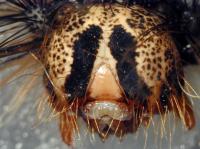
A photo of a Gypsy moth caterpillar 'face.' Gypsy moth caterpillars infected with baculovirus forfeit safety and stay in the treetops during the day because a virus gene manipulates their hormones to eat continuously and forego molting, according to entomologists. The caterpillars die where they climb and infect other gypsy moth caterpillars. "Normally, gypsy moth caterpillars are active at night," said Kelli Hoover, professor of entomology, Penn State. "They hide during the day in the soil or bark crevices protected from birds. They climb up the foliage at night to feed." Researchers have long known that gypsy moth caterpillars, like nearly all caterpillars, have baculoviruses that infect them and that a gene in the virus, egt, blocks molting in the caterpillar, keeping it in a feeding state. These viruses use most of the tissue of their hosts to reproduce and almost always kill their host.
| Full story | 0 Comments | 8830 views |
| Bioinformatics | September 12, 2011 08:28 AM |
A study involving more than 200,000 people worldwide has identified 29 DNA sequence variations in locations across the human genome that influence blood pressure. These genes, whose sequence changes are associated with alterations in blood pressure and are linked to heart disease and stroke, were found with the help of decades' worth of population data that were pooled and analyzed by a large international consortium, including Johns Hopkins researchers.
| Full story | 0 Comments | 7311 views |
| Stem Cell Research | September 12, 2011 08:28 AM |
Ever since human induced pluripotent stem cells were first derived in 2007, scientists have wondered whether they were functionally equivalent to embryonic stem cells, which are sourced in early-stage embryos.
| Full story | 0 Comments | 7128 views |
| Biotechnology | September 12, 2011 08:28 AM |
Molecules in their breath, sweat and skin have been used to detect humans in a simulation of a collapsed building, raising the prospect of portable sensors for use in real-life situations, such as the devastating aftermath of the 9/11 attacks and more recent disasters in New Zealand and Japan.
| Full story | 0 Comments | 9073 views |
| Biology | September 7, 2011 06:39 PM |
A team of leading marine scientists from around the world is recommending an end to most commercial fishing in the deep sea, the Earth's largest ecosystem. Instead, they recommend fishing in more productive waters nearer to consumers.
| Full story | 0 Comments | 16574 views |
| Biotechnology | September 7, 2011 06:39 PM |
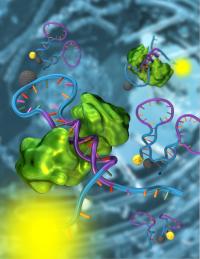
A structure-switching nanosensor made from DNA (blue and purple) detects a specific transcription factor (green). Sensors made from custom DNA molecules could be used to personalize cancer treatments and monitor the quality of stem cells, according to an international team of researchers led by scientists at UC Santa Barbara and the University of Rome Tor Vergata.
| Full story | 0 Comments | 14088 views |
| Molecular & Cell Biology | September 6, 2011 05:31 PM |
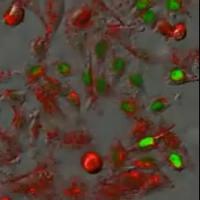
Watching cells communicate: CMO cells in "listening " (red) and "sending " (green) modes, as photographed in Dr. Sprinzak's laboratory. Cell communication is essential for the development of any organism. Scientists know that cells have the power to "talk" to one another, sending signals through their membranes in order to "discuss" what kind of cell they will ultimately become — whether a neuron or a hair, bone, or muscle. And because cells continuously multiply, it's easy to imagine a cacophony of communication.
| Full story | 0 Comments | 10866 views |

| Microbiology | September 6, 2011 05:31 PM |
Researchers at Michigan State University have unraveled the mystery of how microbes generate electricity while cleaning up nuclear waste and other toxic metals.
| Full story | 0 Comments | 10568 views |
| Health & Medicine | September 6, 2011 05:31 PM |
In Leigh syndrome, infants are born apparently healthy only to develop movement and breathing disorders that worsen over time, often leading to death by the age of 3. The problem is that the mitochondria responsible for powering their cells can't keep up with the demand for energy in their developing brains.
| Full story | 0 Comments | 8740 views |
| Biology | September 5, 2011 05:12 PM |
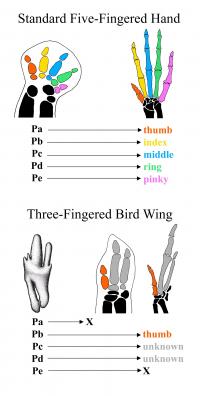
A genomic analysis shows that precursor cells pb that form index finger in five-fingered vertebrates can form the "thumb " (in orange) or first digit in three-digit bird wing Evolution adds and subtracts, and nowhere is this math more evident than in vertebrates, which are programmed to have five digits on each limb. But many species do not. Snakes, of course, have no digits, and birds have three.
| Full story | 0 Comments | 9617 views |
| Microbiology | September 5, 2011 05:12 PM |
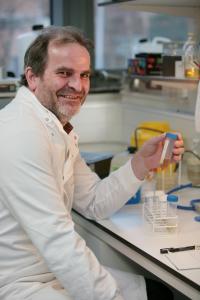
Professor Nigel Minton works at the University of Nottingham. A bacterial strain that specifically targets tumours could soon be used as a vehicle to deliver drugs in frontline cancer therapy. The strain is expected to be tested in cancer patients in 2013 says a scientist at the Society for General Microbiology's Autumn Conference at the University of York.
| Full story | 0 Comments | 16337 views |
| Microbiology | September 2, 2011 02:20 AM |
Understanding the flow and processing of carbon in the world's oceans, which cover 70 percent of Earth's surface, is central to understanding global climate cycles, with many questions remaining unanswered. Between 200 and 1,000 meters below the ocean surface exists a "twilight zone" where insufficient sunlight penetrates for microorganisms to perform photosynthesis. Despite this, it is known that microbes resident at these depths capture carbon dioxide that they then use to form cellular structures and carry out necessary metabolic reactions so that they can survive and reproduce. Details are now emerging about a microbial metabolic pathway that helps solve the mystery of how certain bacteria do this in the dark ocean. These research results, which are enabling a better understanding of what happens to the carbon that is fixed in the oceans every year, were published by a team of researchers, including those from the U.S. Department of Energy (DOE) Joint Genome Institute (JGI), in the September 2, 2011 edition of Science.
| Full story | 0 Comments | 9526 views |

- In some genetic cases of microcephaly, stem cells fail to launch
- Yale team discovers how Zika virus causes fetal brain damage
- Scientists uncover the way a common cell enzyme alerts the body to invading bacteria
- Arctic gives clues on worst mass extinction of life
- Calcium channel blockers caught in the act at atomic level
Search Bio News Net
Free Biology Newsletter
- Flexibility That A.C.A. Lent to Work Force Is Threatened by...International Herald Tribune
- Bacteria Behind Legionnaires’ Disease Found at New York Police StationInternational Herald Tribune
- Prescription Price Crisis? 28 Million Americans See Spike in Drug...MSNBC.com: Health
- Seizing on Opioid Crisis, a Drug Maker Lobbies Hard for...International Herald Tribune
- Republicans are taking a big political risk on health careAP Health News
- Why We're So Divided Over Saving WolvesNational Geographic News