


Flesh rendering of the 85 million-year-old meat-eater, Aerosteon ("air bones"), discovered in Mendoza Province, Argentina. More than any other dinosaur, Aerosteon helps to prove that dinosaurs breathed like birds with air sacs and stiff bird-like lungs. Credit: Drawing:Todd Marshall c 2008, courtesy of Project Exploration The remains of a new 10-meter-long predatory dinosaur discovered along the banks of Argentina's Rio Colorado is helping to unravel how birds evolved their unusual breathing system.

| Biology | September 30, 2008 10:56 AM |
| Full story | 0 Comments | 10932 views |
| Biology | September 30, 2008 10:56 AM |
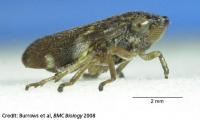
An adult froghopper. Froghoppers, also known as spittlebugs, are the champion insect jumpers, capable of reaching heights of 700 mm - more than 100 times their own body length. Research published today in the open access journal BMC Biology reveals that they achieve their prowess by flexing bow-like structures between their hind legs and wings and releasing the energy in one giant leap in a catapult-like action.
| Full story | 0 Comments | 9179 views |

| Molecular & Cell Biology | September 30, 2008 10:56 AM |
The roadmap to the future of the gorgeously-decorated fish which throng Australia's coral reefs and help earn the nation $5 billion a year from tourism may well be written in their genes.
| Full story | 0 Comments | 7403 views |
| Biology | September 29, 2008 05:11 PM |

Cranberry harvest in New Jersey. Cranberries are tart, tiny fruits packed with powerful antioxidants. The small, red berries offer a wide variety of health benefits. Not only are cranberries a healthy, low-calorie snack, but they can also play a significant role in preventing urinary tract infections, reducing the risk of gum disease and much more. In fact, studies show that the significant amounts of antioxidants in cranberries may help protect against heart disease, cancer, and other diseases.
| Full story | 0 Comments | 9103 views |

| Environment | September 29, 2008 05:11 PM |
A plot of land on the campus of Auburn University shows that 110 years of sustainable farming practices can produce similar cotton crops to those using other methods.
| Full story | 0 Comments | 8290 views |

| Microbiology | September 29, 2008 05:11 PM |
Common strains of tuberculosis-causing bacteria have hijacked the human body's immune response to play tricks on cells in the lungs, scientists say.
| Full story | 0 Comments | 8710 views |
| Biology | September 29, 2008 05:11 PM |
The latest findings of a University of Pittsburgh-based project to determine the environmental impact of routine pesticide use suggests that malathion—the most popular insecticide in the United States—can decimate tadpole populations by altering their food chain, according to research published in the Oct. 1 edition of Ecological Applications.
| Full story | 0 Comments | 7353 views |
| Molecular & Cell Biology | September 29, 2008 11:56 AM |
A protein required for the earliest steps in embryonic development also plays a key role in solidifying fear memories in the brains of adult animals, scientists have revealed. An apparent "hub" for changes in the connections between brain cells, beta-catenin could be a potential target for drugs to enhance or interfere with memory formation.
| Full story | 0 Comments | 7743 views |

| Bioinformatics | September 29, 2008 11:56 AM |
Researchers at the Georgia Institute of Technology have developed a computer program that trains itself to predict genes in the DNA sequences of fungi.
| Full story | 0 Comments | 7649 views |

| Biotechnology | September 28, 2008 02:31 PM |
Singapore's Institute of Bioengineering and Nanotechnology (IBN), which celebrates its fifth anniversary this year, has invented a unique user-friendly gel that can liquefy on demand, with the potential to revolutionize three-dimensional (3D) cell culture for medical research.
| Full story | 0 Comments | 7656 views |
| Molecular & Cell Biology | September 28, 2008 02:31 PM |
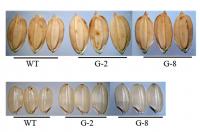
The researchers created transgenic lines of rice (G-2 and G-8) in which the GIF1 gene was overexpressed. Compared to normal strains (WT), they found that the transgenic rice had larger and heavier grains. In this figure, the grains on the top are from white rice and the grains on the bottom are from brown rice. Credit: Zuhua He, Chinese Academy of Sciences A team of scientists, including Penn State Distinguished Professor of Biology Hong Ma, has identified a gene in rice that controls the size and weight of rice grains. The gene may prove to be useful for breeding high-yield rice and, thus, may benefit the vast number of people who rely on this staple food for survival. "Our work shows that it is possible to increase rice's yield by enhancing the expression of a particular gene," said Ma. The team's results will be published on 28 September 2008 in an early online edition of the journal Nature Genetics, and in the November print issue of the journal.
| Full story | 0 Comments | 7040 views |

| Health & Medicine | September 26, 2008 09:58 PM |
For decades now, cigarette makers have marketed so-called light cigarettes — which contain less nicotine than regular smokes — with the implication that they are less harmful to smokers' health. A new UCLA study shows, however, that they deliver nearly as much nicotine to the brain.
| Full story | 0 Comments | 17582 views |
| Health & Medicine | September 25, 2008 10:55 PM |
Scientists at the University of Leicester have published findings about a new advance in the study of major diabetes drug target.
| Full story | 0 Comments | 20633 views |
| Bioinformatics | September 25, 2008 10:45 AM |
Mostly hidden from the scrutiny of the naked eye, microbes have been said to run the world. The challenge is how best to characterize them given that less than one percent of the estimated hundreds of millions of microbial species can be cultured in the laboratory. The answer is metagenomics—an increasingly popular approach for extracting the genomes of uncultured microorganisms and discerning their specific metabolic capabilities directly from environmental samples. Now, some ten years after the term was coined, metagenomics is going mainstream and already paying provocative dividends according to a "Q&A," News and Views by the U.S. Department of Energy Joint Genome Institute (DOE JGI) microbial ecology program head Philip Hugenholtz and MIT researcher Gene Tyson, published in the 25 September edition of the journal Nature.
| Full story | 0 Comments | 21965 views |
| Biology | September 25, 2008 10:45 AM |
Reactive oxygen species (ROS) occur as a by-product of aerobic metabolism and impair cellular function by damaging proteins, nucleotides and lipids. Organisms possess a variety of anti-oxidant mechanisms to mitigate the effects of ROS, and the oxidative stress model of aging and senescence suggests that physiological performance declines with age due to lifetime accrual of ROS-induced damage and progressively limited anti-oxidant capacity. Hence, the onset, pace and duration of energetically-intense behaviors should affect lifetime kinetics of ROS-induced damage, anti-oxidant responses, physiological capacity and longevity. A new study examines how these traits in honey bees are affected by age and behavioral intensity (factors which can be experimentally decoupled via manipulation of colony demographics), and is the first to use such an approach to test the oxidative stress model of aging in a free-living organism.
| Full story | 0 Comments | 17937 views |
| Biology | September 25, 2008 10:45 AM |
The coordination of two systems are key for any horse to walk, trot, gallop or win a race. The first are the lower limbs, which allow the animal to move along on a "spring-like" tendon. The second is a complicated respiratory system, which allows a horse to take in one breadth for every stride they make while racing. For more than a decade a team of researchers has been working to unlock the secrets of equines. Their findings may provide a springboard for better muscular horse health, and a different approach to breathing devices for humans.
| Full story | 0 Comments | 18900 views |
| Microbiology | September 25, 2008 10:45 AM |
HBV infection remains a major health problem in the world. Several data have revealed that lamivudine can efficiently promote the treatment of hepatitis B. However, a long-term treatment of lamivudine leads to the emergence of lamivudine-resistant mutants (YMDD mutants), which hampers the anti-HBV therapy. Therefore, researches related to HBV lamivudine-resistant mechanism has been of great significance. Up to date, many researches using eukaryotic plasmids containing either one type of HBV YMDD mutant or wild-type strains, without specification of HBV genotype, were reported. However, serial plasmids containing a specific HBV genotype, such as genotype C, and lamivudine-resistant sequences, which will allow systematic studies on the combined effects of HBV genotype together with lamivudine-resistant mutations, have not been reported.
| Full story | 0 Comments | 19816 views |
| Microbiology | September 25, 2008 01:12 AM |
Microbiologically contaminated water plagues approximately 1.1 billion people in rural and peri-urban populations in developing countries. Roughly 2.2 million people without safe access to drinking water die each year from the consumption of unsafe water, and most of them are children under 5 years of age.
| Full story | 0 Comments | 21419 views |
| Biology | September 25, 2008 01:12 AM |
An international research team studying sound production in deep-sea fishes has found that cusk-eels use several sets of muscles to produce sound that plays a prominent role in male mating calls.
| Full story | 0 Comments | 18856 views |
| Microbiology | September 25, 2008 01:12 AM |
Life has been discovered in the barren depths of Rome's ancient tombs, proving catacombs are not just a resting place for the dead. The two new species of bacteria found growing on the walls of the Roman tombs may help protect our cultural heritage monuments, according to research published in the September issue of the International Journal of Systematic and Evolutionary Microbiology.
| Full story | 0 Comments | 36691 views |
| Biology | September 24, 2008 11:59 AM |

The fifth batch of Great Bustards is being released on Sep. 25. Researchers at the University of Bath and conservationists from the Great Bustard Group will be releasing 19 birds on Salisbury Plain on Thursday 25 September as part of an ongoing reintroduction project in the UK.
| Full story | 0 Comments | 18995 views |
| Microbiology | September 24, 2008 11:59 AM |
Probiotic bacteria are widely used to relieve the symptoms of many disorders such as inflammatory bowel syndrome, diarrhea, and allergies. Probiotic mixtures have also been found to reduce the symptoms of diarrhea. In children a probiotic bacterium L. rhamnosus GG has been shown to prevent the onset of atopy and allergies. However, the mechanisms that cause these beneficial actions are yet to be characterized. One of the factors contributing to the health promoting effects of probiotic bacteria could be their capacity to induce cytokine production that further regulates the development of innate and adaptive immune responses. Cytokines are small signaling molecules secreted by immune cells that direct the activation of innate and adaptive immune responses during microbial infections. Cytokines activate and recruit immune cells to the site of infection and increase host responses to pathogens. Many clinical trials have proven probiotic bacteria to be effective in preventing certain diseases or relieving their symptoms. However, there is a need for novel probiotic bacteria for clinical use.
| Full story | 0 Comments | 21219 views |
| Biology | September 23, 2008 11:57 AM |
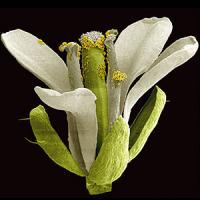
Thale cress Arabidopsis thaliana. Plants that grow more slowly stay fresh longer. In their study now published in PLoS Biology, scientists at the Max Planck Institute for Developmental Biology in Tübingen have shown that certain small sections of genes, so-called microRNAs, coordinate growth and aging processes in plants. These microRNAs inhibit certain regulators, known as TCP transcription factors. These transcription factors in turn influence the production of jasmonic acid, a plant hormone. The higher the number of microRNAs present, the lower the number of transcription factors that are active, and the smaller the amount of jasmonic acid, which is produced by the plant. The plant therefore ages more slowly, as this hormone is important for the plant's aging processes. The researchers have succeeded for the first time in describing the antagonistic regulation of growth and aging in plants. Since the quantity of microRNAs in the plants can be controlled by genetic methods, it may be possible in future to cultivate plants that live longer and grow faster. (PLoS Biology, September 23, 2008)
| Full story | 0 Comments | 21795 views |
| Biology | September 23, 2008 11:57 AM |
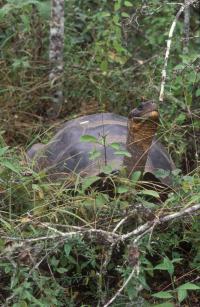
Hybrid tortoise on Volcano Wolf. Yale scientists report that genetic traces of extinct species of Galapagos tortoises exist in descendants now living in the wild, a finding that could spur breeding programs to restore the species, The report appears in Proceedings of the National Academy of Sciences.
| Full story | 0 Comments | 20471 views |
| Health & Medicine | September 23, 2008 11:57 AM |
Honey is very effective in killing bacteria in all its forms, especially the drug-resistant biofilms that make treating chronic rhinosinusitis difficult, according to research presented during the 2008 American Academy of Otolaryngology-Head and Neck Surgery Foundation (AAO-HNSF) Annual Meeting & OTO EXPO, in Chicago, IL.
| Full story | 0 Comments | 19522 views |
| Biotechnology | September 23, 2008 11:57 AM |
Researchers at The Johns Hopkins University School of Medicine in Baltimore have developed a novel test to screen for chemical modifications to DNA known as methylation. The technology potentially could be used both for early cancer diagnoses and for assessing patients' response to cancer therapies.
| Full story | 0 Comments | 17635 views |
| Environment | September 23, 2008 11:57 AM |
Scientists at the University of Illinois have developed a new class of disposable, microplate-based optical biosensors capable of detecting protein-DNA interactions. Based on the properties of photonic crystals, the biosensors are suitable for the rapid identification of inhibitors of protein-nucleic acid and protein-protein interactions.
| Full story | 0 Comments | 19000 views |
| Bioinformatics | September 23, 2008 11:57 AM |
North Carolina State University scientists and colleagues have completed the genome sequence and genetic map of one of the world's most common and destructive plant parasites - Meloidogyne hapla, a microscopic, soil-dwelling worm known more commonly as the northern root-knot nematode.
| Full story | 0 Comments | 19634 views |
| Biology | September 23, 2008 11:57 AM |
An unusual breed of dinosaur that was the size of a chicken, ran on two legs and scoured the ancient forest floor for termites is the smallest dinosaur species found in North America, according to a University of Calgary researcher who analyzed bones found during the excavation of an ancient bone bed near Red Deer, Alberta.
| Full story | 0 Comments | 19151 views |
| Biology | September 22, 2008 04:47 PM |
A potentially deadly fungus that can kill frogs and toads was inadvertently introduced into Mallorca by a captive breeding programme that was reintroducing a rare species of toad into the wild, according to a new study published today in the journal Current Biology.
| Full story | 0 Comments | 8282 views |
| Biology | September 22, 2008 04:47 PM |
Tetrapods, the first four-legged land animals, are regarded as the first organisms that had fingers and toes. Now researchers at Uppsala University can show that this is wrong. Using medical x-rays, they found rudiments of fingers in the fins in fossil Panderichthys, the “transitional animal,” which indicates that rudimentary fingers developed considerably earlier than was previously thought.
| Full story | 0 Comments | 7100 views |
| Microbiology | September 22, 2008 04:47 PM |
University of Pittsburgh scientists are uncovering more evidence that a virus they recently discovered is the cause of Merkel cell carcinoma, an aggressive and deadly form of skin cancer.
| Full story | 0 Comments | 7049 views |
| Environment | September 22, 2008 04:47 PM |
How much carbon dioxide is too much? According to United Nations Framework Convention on Climate Change (UNFCCC) greenhouse gases in the atmosphere need to be stabilized at levels low enough to "prevent dangerous anthropogenic interference with the climate system." But scientists have come to realize that an even more acute danger than climate change is lurking in the world's oceans—one that is likely to be triggered by CO2 levels that are modest by climate standards.
| Full story | 0 Comments | 6733 views |
| Health & Medicine | September 22, 2008 04:47 PM |
Cancer patients who receive stereotactic radiosurgery (SRS) and whole brain radiation therapy (WBRT) for the treatment of metastatic brain tumors have more than twice the risk of developing learning and memory problems than those treated with SRS alone, according to new research from The University of Texas M. D. Anderson Cancer Center.
| Full story | 1 Comment | 9493 views |
| Biology | September 21, 2008 02:49 PM |
What you smell as you sleep has the power to influence your dreams, says new research presented at the 2008 American Academy of Otolaryngology – Head and Neck Surgery Foundation (AAO-HNSF) Annual Meeting & OTO EXPO in Chicago, IL.
| Full story | 0 Comments | 11552 views |
| Biology | September 21, 2008 02:49 PM |
Researchers at the University of Minnesota College of Veterinary Medicine have identified a gene in Labrador retriever dogs highly associated with the syndrome of exercise-induced collapse (EIC). After intense hunting or retrieving exercise, activities these dogs are trained to perform, affected Labradors start to lose control of their hind limbs. In most cases, their legs get wobbly and the limbs give out, and in rare cases the dogs may die. Labradors are the most common dog breed in the world and an estimated 3-5 percent of Labradors have this condition. The research is published in the journal Nature Genetics.
| Full story | 0 Comments | 6999 views |
| Health & Medicine | September 21, 2008 02:49 PM |
In a dramatic illustration of the potential for microbes to prevent disease, researchers at Yale University and the University of Chicago showed that mice exposed to common stomach bacteria were protected against the development of Type I diabetes.
| Full story | 0 Comments | 7935 views |
| Biology | September 20, 2008 10:32 AM |
Listening for faint rustling noises made by tasty beetles on a quiet day is simple for bats hunting with their exquisitely sensitive hearing. So try imagining what it must be like trying to locate rustling treats just metres from a roaring highway. It would seem to be almost impossible to pick out a centipede's footsteps as a juggernaut hurtles past; or is it? How animals that locate their prey by sound alone cope in our increasingly noisy world puzzles Björn Siemers from the Max Planck Institute for Ornithology in Germany. Siemers explains that no one had ever measured whether bats that hunt by listening for rustling insects are affected by man-made noise. However, this is a question that Siemers is frequently asked by urban planners keen to minimise our impact on local wildlife populations. Curious to know how sharp-eared bats react to loud background noise, Siemers and his colleagues Andrea Schaub and Joachim Ostwald monitored foraging bats' responses to rustling mealworms in noisy environments and publish their results on 19th September 2008 in The Journal of Experimental Biology on http://jeb.biologists.org.
| Full story | 0 Comments | 8320 views |
| Biology | September 20, 2008 10:32 AM |
Researchers led by Dr Robin Allaby of the University of Warwick's plant research arm Warwick HRI have found evidence that genetics supports the idea that the emergence of agriculture in prehistory took much longer than originally thought.
| Full story | 0 Comments | 6296 views |
| Molecular & Cell Biology | September 20, 2008 10:32 AM |
Three RND efflux systems had been identified in H pylori, namely hefABC, hefDEF, and hefGHI, each of which consisted of a translocase, an accessory protein. But the contribution of efflux proteins to antibiotic resistance is not well established. 27 putative translocases also had been identified in the H pylori 26695 genome, but only four putative H pylori OEPs or TolC homologs were identified. While they could not quantitate the operons expression levels of the efflux systems in multidrug resistance strains of H pylori.
| Full story | 0 Comments | 7141 views |

- In some genetic cases of microcephaly, stem cells fail to launch
- Yale team discovers how Zika virus causes fetal brain damage
- Scientists uncover the way a common cell enzyme alerts the body to invading bacteria
- Arctic gives clues on worst mass extinction of life
- Calcium channel blockers caught in the act at atomic level
Search Bio News Net
Free Biology Newsletter
- Flexibility That A.C.A. Lent to Work Force Is Threatened by...International Herald Tribune
- Bacteria Behind Legionnaires’ Disease Found at New York Police StationInternational Herald Tribune
- Prescription Price Crisis? 28 Million Americans See Spike in Drug...MSNBC.com: Health
- Seizing on Opioid Crisis, a Drug Maker Lobbies Hard for...International Herald Tribune
- Republicans are taking a big political risk on health careAP Health News
- Why We're So Divided Over Saving WolvesNational Geographic News