

The sabertooth cat (Smilodon fatalis), one of the most iconic extinct mammal species, was likely to be a social animal, living and hunting like lions today, according to new scientific research. The species is famous for its extremely long canine teeth, which reached up to seven inches in length and extended below the lower jaw.

| Molecular & Cell Biology | October 31, 2008 09:51 PM |
University of Delaware scientists, in collaboration with researchers from the University of Arizona and South Dakota State University, have identified unusual differences in the natural mechanisms that turn off, or "silence," genes in corn.
| Full story | 0 Comments | 7129 views |
| Molecular & Cell Biology | October 31, 2008 09:51 PM |
Scientists have discovered a crucial step in hormone-triggered bone growth, a finding that could lead to new osteoporosis drugs and better bone-building therapies, according to a new study.
| Full story | 0 Comments | 7777 views |
University of Adelaide scientists are part of an international research team that has uncovered the first example of a bacterium causing disease in humans by targeting a molecule that is incorporated into our bodies from our diet. The discovery has been published in the prestigious international journal Nature.
| Full story | 0 Comments | 9950 views |
| Molecular & Cell Biology | October 30, 2008 08:17 PM |
A major puzzle for neurobiologists is how the brain can modify one microscopic connection, or synapse, at a time in a brain cell and not affect the thousands of other connections nearby. Plasticity, the ability of the brain to precisely rearrange the connections between its nerve cells, is the framework for learning and forming memories.
| Full story | 0 Comments | 9025 views |

| Biology | October 30, 2008 08:17 PM |
The world's rarest big cat is alive and well. At least one of them, that is, according to researchers from the Wildlife Conservation Society (WCS) who captured and released a female Far Eastern leopard in Russia last week.
| Full story | 0 Comments | 8681 views |
| Molecular & Cell Biology | October 30, 2008 08:17 PM |
Two biologists at the University of California, San Diego have discovered the first of a new class of cellular motor proteins that "rewind" sections of the double-stranded DNA molecule that become unwound, like the tangled ribbons from a cassette tape, in "bubbles" that prevent critical genes from being expressed.
| Full story | 0 Comments | 7460 views |

| Bioinformatics | October 30, 2008 08:17 PM |
Researchers have revealed the complete mitochondrial genome of one of the world's most celebrated mummies, known as the Tyrolean Iceman or Ötzi. The sequence represents the oldest complete DNA sequence of modern humans' mitochondria, according to the report published online on October 30th in Current Biology, a Cell Press publication.
| Full story | 0 Comments | 8858 views |
| Biology | October 30, 2008 08:17 PM |
A previously undescribed, cold-loving fungus has been linked to white-nose syndrome, a condition associated with the deaths of over 100,000 hibernating bats in the northeastern United States. The findings are published in this week's issue of Science.
| Full story | 0 Comments | 7960 views |

| Health & Medicine | October 30, 2008 08:17 PM |
A new discovery by London biologists may yield new ways of handling the problem of transplant rejection. In a research article published in the November 2008 print issue of The FASEB Journal (http://www.fasebj.org), the scientists confirm the two-way transfer of a molecule (called "MHC") that instructs the immune system to tell "self" from "non-self." By disrupting the transfer of this molecule, newly transplanted organs should become "invisible" to the host's immune system. Such an advance would be considered a major medical breakthrough because current methods of preventing organ rejection involve weakening the host's immune system, which can lead to life-threatening infections.
| Full story | 0 Comments | 6391 views |
| Biology | October 30, 2008 08:17 PM |
Next week marks a pivotal moment for Eastern Pacific tuna. The Inter-American Tropical Tuna Commission (IATTC), the international body charged with the conservation and management of tuna and associated species in the eastern tropical Pacific Ocean, will meet in San Diego from Nov. 2-7 to consider conservation measures for vulnerable tuna populations. Whether this 16-nation Commission will act to protect declining tuna stocks, or once again demonstrate their impotence to do so, remains to be seen. The fate of Pacific tuna stocks hangs in the balance.
| Full story | 0 Comments | 6050 views |

| Environment | October 30, 2008 08:17 PM |
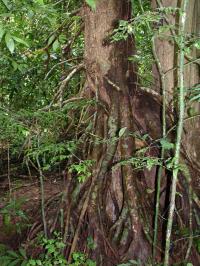
The distinctive trunk and aerial roots of the tropical tree Symphonia globulifera in a rain forest in Panama. A "living fossil" tree species is helping a University of Michigan researcher understand how tropical forests responded to past climate change and how they may react to global warming in the future.
| Full story | 0 Comments | 11147 views |
| Health & Medicine | October 30, 2008 08:17 PM |
The incidence of malaria has fallen significantly in The Gambia in the last 5 years, according to a study carried out by experts there with support from scientists based in London.
| Full story | 0 Comments | 6511 views |
| Health & Medicine | October 29, 2008 07:11 PM |
A vaccine developed by University of Melbourne researchers that could eradicate a fatal form of brain disease will be delivered to Peru next week, and could soon be commercially available thanks to multi-million dollar funding.
| Full story | 0 Comments | 8177 views |

| Microbiology | October 29, 2008 07:11 PM |
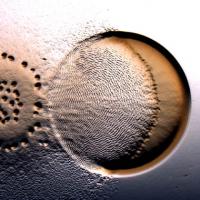
Image shows swarm of M. xanthus bacteria (left) invading a colony of prey bacteria (right). The rippling pattern is the highly organized behavior of thousands of M. xanthus cells working in concert to digest the prey. Credit: John Kirby, University of Iowa Carver College of Medicine Like something from a horror movie, the swarm of bacteria ripples purposefully toward their prey, devours it and moves on.
| Full story | 0 Comments | 8201 views |
| Biology | October 29, 2008 07:11 PM |
In a twist on nontraditional uses of ultrasound, a group of neuroscientists at Arizona State University has developed pulsed ultrasound techniques that can remotely stimulate brain circuit activity. Their findings, published in the Oct. 29 issue of the journal Public Library of Science (PLoS) One, provide insights into how low-power ultrasound can be harnessed for the noninvasive neurostimulation of brain circuits and offers the potential for new treatments of brain disorders and disease.
| Full story | 0 Comments | 6814 views |
| Biology | October 29, 2008 07:11 PM |
A new study in the Journal of Marital and Family Therapy explored how men and women perceive online and offline sexual and emotional infidelity. Results show that men felt sexual infidelity was more upsetting and women felt emotional infidelity was more upsetting.
| Full story | 0 Comments | 8083 views |
| Health & Medicine | October 29, 2008 07:11 PM |
Prof. Stefanie Dimmeler, a researcher and director of the Institute for Cardiovascular Regeneration at Frankfurt's University Hospital has been awarded an ,ERC Advanced Grant' from the European Research Council to support her research work over the next five years. She will be investigating how to improve the healing process following a heart attack by promoting cardiovascular regeneration and the repair of heart tissue. This research application is one of eleven - Life Science - projects in Germany to be selected for funding, chosen from approximately 800 competitive applications from all over Europe.
| Full story | 0 Comments | 7342 views |
| Molecular & Cell Biology | October 29, 2008 07:11 PM |
As millions of Americans gear up for the Thanksgiving holiday, a new research report published online in The FASEB Journal (http://www.fasebj.org), may provide some relief for those leery of having a second helping. In the report, researchers describe a discovery that may allow some obese people avoid common obesity-related metabolic problems without actually losing weight: they make a common antioxidant, melanin, in excess. Even more promising is that some of the antioxidant drugs that can mimic the melanin effect are FDA-approved and available. This availability would greatly speed the development of new treatments, should they prove effective in clinical trials.
| Full story | 0 Comments | 8574 views |
| Biology | October 29, 2008 07:10 PM |
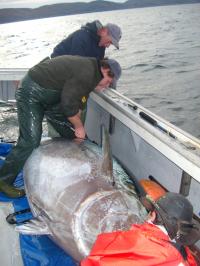
Dr. Michael Stokesbury of Dalhousie University tags a giant bluefin caught in the Gulf of St. Lawrence off Nova Scotia, Canada. The fish, estimated at 1,250 pounds, was released with the 1,000th electronic tag deployed through the Tag-A-Giant research campaign. Credit: Tag-A-Giant A giant Atlantic bluefin tuna weighing more than half a ton had the honor of being fitted with the 1000th electronic tracking tag placed on this threatened species when it was caught and released on Monday (October 20) in the Gulf of St. Lawrence off Port Hood, Nova Scotia.
| Full story | 0 Comments | 8950 views |
| Molecular & Cell Biology | October 29, 2008 07:10 PM |
Whether we choose to admit it or not, we all experience memory errors from time to time. Research has suggested that false memory may be a result of having too many other things to remember or perhaps if too much time has passed. However, previous studies have indicated that a specific type of false memory known as "boundary extension" occurs for different reasons. Boundary extension is a mistake that we often make when recalling a view of a scene—we will insist that the boundaries of an image stretched out farther than what we actually saw. Although this error is very common and occurs in people of all ages (from young children to the elderly), few studies have been done examining how quickly boundary extension occurs. That is, it was unknown how long a scene needs to be interrupted before the viewer experiences boundary extension and is convinced they saw more than they actually did.
| Full story | 0 Comments | 6832 views |
| Molecular & Cell Biology | October 29, 2008 07:10 PM |
Imagine a bathtub with two soap bubbles colliding but never fusing. Then you add detergent, and the surface of the water goes flat as the walls of the bubbles collapse and merge.
| Full story | 0 Comments | 6698 views |
| Biology | October 28, 2008 08:01 PM |

Psychologist Daniel Niesta holding one of the images used in the study. Participants were asked questions including: "Imagine that you are going on a date with this person and have $100 in your wallet. How much money would you be willing to spend on your date?" A groundbreaking study by two University of Rochester psychologists to be published online Oct. 28 by the Journal of Personality and Social Psychology adds color—literally and figuratively—to the age-old question of what attracts men to women.
| Full story | 0 Comments | 17451 views |
| Molecular & Cell Biology | October 28, 2008 08:01 PM |
A novel cell division mechanism has been discovered in a microorganism that thrives in hot acid. The finding may also result in insights into key processes in human cells, and in a better understanding of the main evolutionary lineages of life on Earth. The study is published today in the online version the American National Academy of Sciences, PNAS.
| Full story | 0 Comments | 10330 views |
| Biology | October 28, 2008 08:01 PM |
It is known for a long time that the plant hormone auxin is transmitted from the top to the bottom of a plant, and that the local concentration of auxin is important for the growth direction of stems, the growth of roots, the sprouting of shoots. To name a few things; auxin is also relevant to, for instance, the ripening of fruit, the clinging of climbers and a series of other processes. Thousands of researchers try to understand the different roles of auxin.
| Full story | 0 Comments | 8992 views |
| Microbiology | October 28, 2008 08:01 PM |
Humans have an innate defence system against deadly bacteria. However, how the step from gene to anti-bacterial effect occurs in the body is not yet known. To date, B. Pseudomallei, a bacterium suitable for bioweapons, had managed to elude medics. It can remain hidden in the human body for many years without being detected by the immune system. The bacteria can suddenly become activated and spread throughout the body, resulting in the patient dying from blood poisoning. AMC physician Joost Wiersinga and the Laboratory for Experimental Internal Medicine discovered which gene-protein combination renders the lethal bacteria B. pseudomallei harmless.
| Full story | 0 Comments | 7424 views |
| Environment | October 28, 2008 08:01 PM |
Rising carbon dioxide levels in the world's oceans could deliver a disastrous blow to the ability of coral reefs to withstand climate change.
| Full story | 0 Comments | 9658 views |
| Molecular & Cell Biology | October 28, 2008 08:01 PM |
University of Pennsylvania School of Medicine researchers have discovered how the expression of the Sonic hedgehog gene is regulated during brain development and how mutations that alter this process cause brain malformations. The results appear online this month in Nature Genetics.
| Full story | 0 Comments | 7127 views |
| Environment | October 28, 2008 08:01 PM |
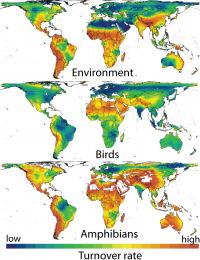
The study found that species turnover in amphibians more closely follows changes in the environment when compared to birds. Biologists have long suspected that amphibians, whose moist permeable skins make them susceptible to slight changes in the environment, might be good bellwethers for impending alterations in biodiversity during rapid climate change.
| Full story | 0 Comments | 7422 views |
| Environment | October 28, 2008 08:01 PM |
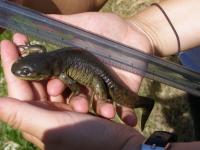
A tiger salamander (Ambystoma tigrinum) in Yellowstone. Frogs and salamanders, those amphibious bellwethers of environmental danger, are being killed in Yellowstone National Park. The predator, Stanford researchers say, is global warming.
| Full story | 0 Comments | 10723 views |
| Biology | October 27, 2008 08:10 PM |
The first known case of someone born without the ability to recognise voices has been reported in a paper by UCL (University College London) researchers, in a study of a rare condition known as phonagnosia. The UCL team are calling for other people to come forward if they think they have also grown up with the condition.
| Full story | 0 Comments | 8552 views |
| Health & Medicine | October 27, 2008 08:10 PM |
For many women, including the growing number who choose later-in-life pregnancy, predicting their biological clock's relation to the timing of their menopause and infertility is critically important.
| Full story | 0 Comments | 7228 views |
| Microbiology | October 27, 2008 08:10 PM |
The assumption that time, weather, and pollution are what cause buildings to decline is only partly true. Bacteria are also responsible for the ageing of buildings and monuments – a process known as biodeterioration, where organisms change the properties of materials through their vital activities. Leonila Laiz from the Institute for Natural Resources and Agrobiology in Seville, Spain, and colleagues have just isolated five new strains of bacteria that degrade old buildings. Their work1 is published online this week in Springer's journal Naturwissenschaften.
| Full story | 0 Comments | 7420 views |
| Microbiology | October 27, 2008 08:10 PM |
A University of Alberta researcher has found a possible treatment for the E.coli strain that killed seven people in Walkerton, Ontario, in 2000 and has just been linked to more than 200 illnesses in North Bay, Ontario.
| Full story | 0 Comments | 8102 views |
| Molecular & Cell Biology | October 27, 2008 08:10 PM |
In the first study ever to genetically link the immune system to normal behavior, scientists at Rockefeller and Columbia universities show that mast cells, known as the pharmacologic bombshells of the immune system, directly influence how mice respond to stressful situations. The work, to appear this week in the Proceedings of the National Academy of Sciences and to be highlighted in Science, chips away at the increasingly stale idea that the two most complex systems in the body have entirely separate modes of operation.
| Full story | 0 Comments | 7124 views |
| Molecular & Cell Biology | October 27, 2008 11:57 AM |
Construction of the brain's border fence is supervised by Wnt/b-catenin signaling, report Liebner et al. in The Journal of Cell Biology.
| Full story | 0 Comments | 7098 views |
| Health & Medicine | October 27, 2008 12:07 AM |
Researchers from the John Innes Centre in Norwich, Great Britain, in collaboration with other European centres participating to the FLORA project, have obtained genetically modified tomatoes rich in anthocyanins, a category of antioxidants belonging to the class of flavonoids. These tomatoes, added to the diet of cancer-prone mice, showed a significant protective effect by extending the mice lifespan. The research has been published in the 26 October issue of Nature Biotechnology.
| Full story | 0 Comments | 9178 views |
| Molecular & Cell Biology | October 27, 2008 12:07 AM |
Viruses -- long regarded solely as disease agents -- now are being used in therapies for cancer. Concerns over the safety of these so-called oncolytic viruses stem from their potential to damage healthy tissues. Now Mayo Clinic researchers have discovered a way of controlling the viruses behind potential cancer therapeutics. They are engineering the virus's genetic sequence, using microRNAs to restrict them to specific tissues. The microRNAs destabilize the virus's genome, making it impossible for the virus to run amok. The discovery is reported in the current issue of Nature Medicine.
| Full story | 0 Comments | 7932 views |
| Biology | October 24, 2008 04:59 PM |
Many animals live longer when raised on low calorie diets. But now researchers at Washington University School of Medicine in St. Louis have shown that they can extend the life spans of roundworms even when the worms are well fed — it just takes a chemical that blocks their sense of smell.
| Full story | 0 Comments | 10598 views |
| Bioinformatics | October 24, 2008 04:59 PM |
Researchers have put forward a simple model of development and gene regulation that is capable of explaining patterns observed in the distribution of morphologies and body plans (or, more generally, phenotypes). The study, by Elhanan Borenstein of the Santa Fe Institute and Stanford University and David Krakauer of the Santa Fe Institute was published in this month's issue of PLoS Computational Biology.
| Full story | 0 Comments | 7880 views |

- In some genetic cases of microcephaly, stem cells fail to launch
- Yale team discovers how Zika virus causes fetal brain damage
- Scientists uncover the way a common cell enzyme alerts the body to invading bacteria
- Arctic gives clues on worst mass extinction of life
- Calcium channel blockers caught in the act at atomic level
Search Bio News Net
Free Biology Newsletter
- Flexibility That A.C.A. Lent to Work Force Is Threatened by...International Herald Tribune
- Bacteria Behind Legionnaires’ Disease Found at New York Police StationInternational Herald Tribune
- Prescription Price Crisis? 28 Million Americans See Spike in Drug...MSNBC.com: Health
- Seizing on Opioid Crisis, a Drug Maker Lobbies Hard for...International Herald Tribune
- Republicans are taking a big political risk on health careAP Health News
- Why We're So Divided Over Saving WolvesNational Geographic News