

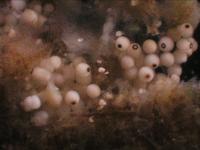
The interior of the brood chamber of a sponge, Amphimedon queenslandica, showing embryos in the early phases of development. Though the slow moving purple sea urchin may look oblivious, lacking a head, eyes and ears, this prickly creature has an impressive suite of sensory receptors to detect outside signals. And don't overlook this animal's self-defense abilities: it has much more ammunition to activate its innate immune system than humans have. The starlet sea anemone lives in coastal areas that face increasing pollution, and it is better equipped than many land, ocean, and freshwater animals to tolerate environmental stress.

| Bioinformatics | June 24, 2008 04:07 PM |
| Full story | 0 Comments | 17569 views |

| Biotechnology | June 24, 2008 04:07 PM |
Devices known as brain-machine interfaces could someday be used routinely to help paralyzed patients and amputees control prosthetic limbs with just their thoughts. Now, University of Florida researchers have taken the concept a step further, devising a way for computerized devices not only to translate brain signals into movement but also to evolve with the brain as it learns.
| Full story | 0 Comments | 10307 views |

| Molecular & Cell Biology | June 24, 2008 04:07 PM |
Stimulant medications such as Ritalin have been prescribed for decades to treat attention deficit hyperactivity disorder (ADHD), and their popularity as "cognition enhancers" has recently surged among the healthy, as well.
| Full story | 0 Comments | 9009 views |

| Health & Medicine | June 24, 2008 04:07 PM |
A review article authored by a University of Queensland academic has found overcrowding and understaffing in hospitals are two key factors in the transmission of MRSA (Meticillin – Resistant Staphylococcus Aureus) infections worldwide.
| Full story | 0 Comments | 8217 views |

| Microbiology | June 24, 2008 04:07 PM |
Viruses can travel around cells they infect by hitching a ride on a microscopic transport system, according to new research. Cells are exposed to foreign DNA and RNA and it is understood that some of this genetic material can be integrated into the host genome. Using modern microscopic techniques, scientists have been able to see how virus DNA is transported in the cell.
| Full story | 0 Comments | 7990 views |
| Bioinformatics | June 24, 2008 04:07 PM |
A biomedical engineering professor at The University of Texas at Austin is using a concept called "grid computing" to allow the average person to donate idle computer time in a global effort to fight cancer.
| Full story | 0 Comments | 7107 views |

- In some genetic cases of microcephaly, stem cells fail to launch
- Yale team discovers how Zika virus causes fetal brain damage
- Scientists uncover the way a common cell enzyme alerts the body to invading bacteria
- Arctic gives clues on worst mass extinction of life
- Calcium channel blockers caught in the act at atomic level
Search Bio News Net
Free Biology Newsletter
- Flexibility That A.C.A. Lent to Work Force Is Threatened by...International Herald Tribune
- Bacteria Behind Legionnaires’ Disease Found at New York Police StationInternational Herald Tribune
- Prescription Price Crisis? 28 Million Americans See Spike in Drug...MSNBC.com: Health
- Seizing on Opioid Crisis, a Drug Maker Lobbies Hard for...International Herald Tribune
- Republicans are taking a big political risk on health careAP Health News
- Why We're So Divided Over Saving WolvesNational Geographic News