


University of Pennsylvania School of Medicine physicians and bioethicists are calling for a new, more standardized way for patients in need of organ transplants to be informed of the risks they face. If adopted, their policy recommendations could promote greater equity in how organs are allocated while restricting patients' abilities to "cherry-pick" the best organs.

| Microbiology | June 25, 2008 07:28 PM |
Research conducted by food science faculty at the University of Idaho and Washington State University indicate that a commercially available fruit and vegetable wash, when used in a food-manufacturing setting, can dramatically decrease the number of disease-causing organisms in produce-processing washwater. That could reduce by manyfold the potential for cross-contamination within the water by such "gram-negative" bacteria as Salmonella and E. coli O157:H7.
| Full story | 0 Comments | 6747 views |

| Molecular & Cell Biology | June 25, 2008 07:28 PM |
Researchers at New York University's Center for Developmental Genetics report that the photoreceptors in an insect's eye can change their traditional functions during metamorphosis. The study appears in the most recent issue of the journal Nature. The researchers found that when photoreceptors responsible for detecting the color green die off during metamorphosis a second class of photoreceptors—those responsible for detecting the color blue—then fill the role of detecting the color green. These rare switches, the authors speculate, are likely the result of changing life patterns.
| Full story | 0 Comments | 6903 views |

| Biology | June 25, 2008 07:28 PM |
New exquisitely preserved fossils from Latvia cast light on a key event in our own evolutionary history, when our ancestors left the water and ventured onto land. Swedish researchers Per Ahlberg and Henning Blom from Uppsala University have reconstructed parts of the animal and explain the transformation in the new issue of Nature.
| Full story | 0 Comments | 8122 views |
| Molecular & Cell Biology | June 25, 2008 07:28 PM |
Wellcome Trust scientists have identified a key region of the brain which encourages us to be adventurous. The region, located in a primitive area of the brain, is activated when we choose unfamiliar options, suggesting an evolutionary advantage for sampling the unknown. It may also explain why re-branding of familiar products encourages to pick them off the supermarket shelves.
| Full story | 0 Comments | 6466 views |
| Biology | June 25, 2008 07:28 PM |
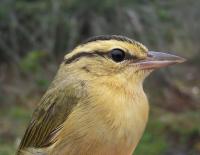
Worm-eating warblers breed in North America, but winter in Central America. While migrating, they frequently inspect "mobs " of local winged residents, Queen's University biologists discovered. (Kingston, ON) – Migrating songbirds take their survival cues from local winged residents when flying through unfamiliar territory, a new Queen's University-led study shows.
| Full story | 0 Comments | 8439 views |

- In some genetic cases of microcephaly, stem cells fail to launch
- Yale team discovers how Zika virus causes fetal brain damage
- Scientists uncover the way a common cell enzyme alerts the body to invading bacteria
- Arctic gives clues on worst mass extinction of life
- Calcium channel blockers caught in the act at atomic level
Search Bio News Net
Free Biology Newsletter
- Flexibility That A.C.A. Lent to Work Force Is Threatened by...International Herald Tribune
- Bacteria Behind Legionnaires’ Disease Found at New York Police StationInternational Herald Tribune
- Prescription Price Crisis? 28 Million Americans See Spike in Drug...MSNBC.com: Health
- Seizing on Opioid Crisis, a Drug Maker Lobbies Hard for...International Herald Tribune
- Republicans are taking a big political risk on health careAP Health News
- Why We're So Divided Over Saving WolvesNational Geographic News