

The latest edition of the Oxford English Dictionary boasts 22,000 pages of definitions. While that may seem far from succinct, new research suggests the reference manual is meticulously organized to be as concise as possible — a format that mirrors the way our brains make sense of and categorize the countless words in our vast vocabulary.

| AIDS & HIV | April 30, 2008 10:31 PM |
Social factors, including economic pressures caused by climate change, could lead to an increase in HIV infection rates world-wide, warns a leading researcher from the University of New South Wales (UNSW).
| Full story | 0 Comments | 7699 views |

| Molecular & Cell Biology | April 30, 2008 09:31 PM |
Scientists at The Australian National University are a step closer to understanding the rare Hartnup disorder after discovering a surprising link between blood pressure regulation and nutrition that could also help to shed light on intestinal and kidney function.
| Full story | 0 Comments | 6439 views |

| Biology | April 30, 2008 08:31 PM |
Research by Yale scientists shows that males and females have essentially unisex brains — at least in flies — according to a recent report in Cell designed to identify factors that are responsible for sex differences in behavior.
| Full story | 0 Comments | 10032 views |

| Stem Cell Research | April 30, 2008 07:31 PM |
Stem cell researchers at UCLA were able to grow functioning cardiac cells using mouse skin cells that had been reprogrammed into cells with the same unlimited properties as embryonic stem cells.
| Full story | 0 Comments | 9620 views |
| Biology | April 30, 2008 06:31 PM |
Annemarie Surlykke from the Institute of Biology, SDU, Denmark, and her colleague, Elisabeth Kalko, from the University of Ulm, Germany, studied the echolocation behavior in 11 species of insect-eating tropical bats from Panamá, the findings of which are reported in this weeks’ PLoS ONE.
| Full story | 0 Comments | 8012 views |
| Stem Cell Research | April 30, 2008 05:31 PM |
The ability to regenerate lost body parts is unevenly distributed among higher organisms. Among vertebrates, some amphibians are able to replace lost limbs completely, while mammals are unable to regenerate complex appendages. The only exception to this rule is the annual replacement of deer antlers. The annual regrowth of these structures is the only example of regeneration of a complete, anatomically complex appendage in a mammal, and antlers are therefore of high interest to regeneration biologists.
| Full story | 0 Comments | 7911 views |

| Microbiology | April 29, 2008 11:18 PM |
British and Canadian scientists expect to begin trials next month (May) to find out whether microbes can unlock the vast amount of energy trapped in the world's unrecoverable heavy oil deposits.
| Full story | 0 Comments | 9269 views |
| Molecular & Cell Biology | April 29, 2008 10:18 PM |
Botulinum neurotoxin – responsible for the deadly food poisoning disease botulism and for the beneficial effects of smoothing out facial wrinkles – can also be used as a dreaded biological weapon. When ingested or inhaled, less than a billionth of an ounce can cause muscle paralysis and eventual death. Although experimental vaccines administered prior to exposure can inhibit the destructive action of this neurotoxin – the most deadly protein known to humans – no effective pharmacological treatment exists.
| Full story | 0 Comments | 8225 views |

| Biotechnology | April 29, 2008 09:18 PM |

Compounds from oilseeds could be used to make plastics and other products. Australian researchers are a step closer to turning plants into ‘biofactories’ capable of producing oils which can be used to replace petrochemicals used to manufacture a range of products.
| Full story | 0 Comments | 9237 views |

| Health & Medicine | April 29, 2008 08:18 PM |
Age at menopause may now be predicted more realistically according to a new study accepted for publication in the Journal of Clinical Endocrinology & Metabolism (JCEM). The study revealed that anti-Müllerian hormone (AMH) levels are related to the onset of menopause and are able to specify a woman’s reproductive age more accurately than chronological age alone.
| Full story | 0 Comments | 8687 views |
| Biology | April 29, 2008 07:18 PM |
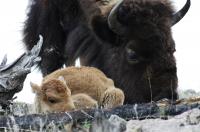
A bison and calf in Yellowstone National Park. Bison can repopulate large areas from Alaska to Mexico over the next 100 years provided a series of conservation and restoration measures are taken, according to continental assessment of this iconic species by the Wildlife Conservation Society and other groups. The assessment was authored by a diverse group of conservationists, scientists, ranchers, and Native Americans/First Nations peoples, and appears in the April issue of the journal Conservation Biology.
| Full story | 0 Comments | 8436 views |

| Environment | April 29, 2008 07:18 PM |
__IMAGE_2 Ancient Sunflower Fuels Debate About Agriculture in the Americas Researchers at the University of Cincinnati and Florida State University have confirmed evidence of domesticated sunflower in Mexico — 4,000 years before what had been previously believed.
| Full story | 0 Comments | 7393 views |
| Biology | April 29, 2008 06:18 PM |
Researchers discovered a legless lizard and a tiny woodpecker along with 12 other suspected new species in Brazil’s Cerrado, one of the world’s 34 biodiversity conservation hotspots.
| Full story | 0 Comments | 8941 views |
| Molecular & Cell Biology | April 29, 2008 05:18 PM |
CSIRO Entomology business manager, Cameron Begley, said researchers believed the discovery opened up an entirely new class of chemistry.
| Full story | 0 Comments | 6631 views |
| Biotechnology | April 29, 2008 01:56 AM |
Intravenous administration of isotonic fluids is the standard emergency treatment in the U.S. for patients with severe blood loss, but UC San Diego bioengineering researchers have reported improved resuscitation with a radically different approach. Building on earlier studies in humans that have shown benefits of intravenous fluids that are eight times saltier than normal saline, the researchers combined hypertonic saline with viscosity enhancers that thicken blood.
| Full story | 0 Comments | 8358 views |
| Health & Medicine | April 29, 2008 01:56 AM |
The key focus of the Diogenes study is to identify the most effective diet to help adults stop regaining weight after initial successful weight loss.
| Full story | 0 Comments | 7847 views |
| Biotechnology | April 29, 2008 01:56 AM |
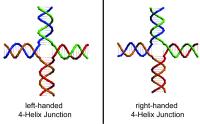
Biodesign Institute scientist John Chaput and his research team have made the first self-assembled nanostructures composed entirely of glycerol nucleic acid -- a synthetic analog of DNA. The nanostructures contain additional properties not found in natural DNA, including the ability to form mirror image structures. The ability to make mirror image structures opens up new possibilities for nanotechnology. Credit: Biodesign Institute at Arizona State University In the rapid and fast-growing world of nanotechnology, researchers are continually on the lookout for new building blocks to push innovation and discovery to scales much smaller than the tiniest speck of dust.
| Full story | 0 Comments | 7782 views |
| Biology | April 29, 2008 01:56 AM |
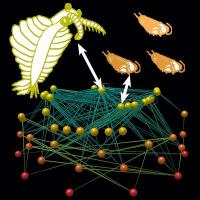
In this depiction of the food web of the Burgess Shale from the Middle Cambrian, spheres represent species or groups of species, and the links between them show feeding relationships. The drawing shows a top predator, Anomalocaris, chasing one of its likely prey species, the trilobite Olenoides, with arrows indicating their positions in the food web. Many aspects of the structure of this ancient ecological network are similar to the architecture of modern food webs.
Credit: Image: N. D. Martinez. Food web produced with Network3D software written by R. J. Williams It was an Anomalocaris-eat-trilobite world, filled with species like nothing on today's Earth. But the ecology of Cambrian communities was remarkably modern, say researchers behind the first study to reconstruct detailed food webs for ancient ecosystems. Their paper, published this week in the open-access journal PLoS Biology, suggests that networks of feeding relationships among marine species that lived hundreds of millions of years ago are remarkably similar to those of today.
| Full story | 0 Comments | 8600 views |
| AIDS & HIV | April 28, 2008 06:54 PM |
A research group supported by the National Institutes of Health (NIH) has uncovered a new route for attacking the human immunodeficiency virus (HIV) that may offer a way to circumvent problems with drug resistance. In findings published today in the online edition of the Proceedings of the National Academy of Sciences, the researchers report that they have blocked HIV infection in the test tube by inactivating a human protein expressed in key immune cells.
| Full story | 0 Comments | 8360 views |
| Microbiology | April 28, 2008 06:54 PM |
Researchers at Washington University in St. Louis have gained the first detailed insight into the way circadian rhythms govern global gene expression in Cyanothece, a type of cyanobacterium (blue-green alga) known to cycle between photosynthesis during the day and nitrogen fixation at night.
| Full story | 0 Comments | 6823 views |
| Stem Cell Research | April 28, 2008 06:54 PM |
A team of researchers led by scientists at Cold Spring Harbor Laboratory have for the first time identified stem cells that allow the pituitary glands of mice to grow even after birth. They found that, in contrast to most adult stem cells, these cells are distinct from those that fuel the initial growth of this important organ. The results suggest a novel way that the hormone-secreting gland may adapt, even in adolescents and adults, to traumatic stress or to normal life changes like pregnancy.
| Full story | 0 Comments | 5946 views |
| Molecular & Cell Biology | April 28, 2008 01:32 PM |
Brain-imaging studies performed in animals at the U.S. Department of Energy’s (DOE) Brookhaven National Laboratory provide researchers with clues about why an increasingly popular recreational drug that causes hallucinations and motor-function impairment in humans is abused. Using trace amounts of Salvia divinorum – also known as “salvia,” a Mexican mint plant that can be smoked in the form of dried leaves or serum – Brookhaven scientists found that the drug’s behavior in the brains of primates mimics the extremely fast and brief “high” observed in humans. Their results are now published online in the journal NeuroImage.
| Full story | 0 Comments | 6900 views |
| Biology | April 28, 2008 01:32 PM |
A handful of soil is a lot like a banana, strawberry and apple smoothie: Blended all together, it is hard to tell what's in there, especially if you have never tasted the fruits before.
| Full story | 0 Comments | 5861 views |
| Health & Medicine | April 27, 2008 02:48 PM |
Minimally invasive heart bypass surgery using a DaVinci robot means a shorter hospital stay and faster recovery for patients, as well as fewer complications and a better chance that the new bypass vessels will stay open. And, according to a University of Maryland study, robotic heart bypass surgery also makes good economic sense for hospitals. The study will be presented at the American Surgical Association on April 26, 2008.
| Full story | 0 Comments | 7331 views |
| Molecular & Cell Biology | April 27, 2008 02:48 PM |
A new technique that marries a fast-moving laser beam with a special microscope that look at tissues in different optical planes will enable scientists to get a three-dimensional view of neurons or nerve cells as they interact, said Baylor College of Medicine scientists in a report that appears today in the journal Nature Neuroscience.
| Full story | 0 Comments | 6076 views |
| Molecular & Cell Biology | April 27, 2008 02:48 PM |
Enzymes regulating genetic expression can be just as important as the genome itself, increasing evidence shows. The expanding field of epigenetics focuses on the multiple influences on DNA and surrounding molecules that determine whether genes are turned on or off during development and disease processes.
| Full story | 0 Comments | 7724 views |
| Molecular & Cell Biology | April 25, 2008 02:49 PM |
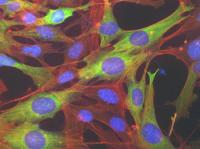
In response to energy stress, AMPK, which acts like a gas gauge by sensing how much energy a cell has, puts a damper on cell proliferation. It muffles a cellular protein called raptor (shown in green), which keeps starving cells from dividing. Nuclei are shown in blue and actin, which forms an integral part of the cellular architecture, is shown in red. Credit: Image: Courtesy of Dr. Reuben Shaw, Salk Institute for Biological Studies A team of scientists at the Salk Institute for Biological Studies think they know how many—if not most—living organisms answer this question. They recently showed that when food supplies dwindle, mammals, fruitflies, or frogs probably activate the same ancient cell signaling pathway in order to conserve energy.
| Full story | 0 Comments | 8672 views |
| Environment | April 25, 2008 12:49 PM |

Recovering Antarctic ozone hole may modify Southern Hemisphere climate change, amplify Antarctic warming, according to new study. A full recovery of the stratospheric ozone hole could modify climate change in the Southern Hemisphere and even amplify Antarctic warming, according to scientists from the University of Colorado at Boulder, the National Oceanic and Atmospheric Administration and NASA.
| Full story | 0 Comments | 7690 views |
| Biotechnology | April 25, 2008 10:49 AM |
A patent for a system that gives more reliable results in gene technology-based diagnostic tests has been granted to researchers at the Norwegian Institute of Public Health (NIPH).
| Full story | 0 Comments | 6588 views |
| Health & Medicine | April 24, 2008 11:49 PM |
The Centre for Addiction and Mental Health (CAMH) has discovered a new form of intellectual disability involving mental retardation (MR) along with the eye defect retinitis pigmentosa (RP). CAMH also discovered the previously unidentified gene that causes this disorder, CC2D2A. This scientific advance will help understand the developmental and biological processes involved in brain development, and may help identify ways to diagnose and treat intellectual disabilities.
| Full story | 0 Comments | 6437 views |
| Health & Medicine | April 24, 2008 10:49 PM |
The risk of suffering depression increases 41% in smokers, in comparison with non-smokers. This was the conclusion of a study undertaken with 8,556 participants by scientists of the University of Navarra, in collaboration with the University of Las Palmas de Gran Canaria and the Harvard School of Public Health (USA), and which demonstrates in a pioneering way the direct relationship between tobacco use and this disease.
| Full story | 0 Comments | 8071 views |
| Molecular & Cell Biology | April 24, 2008 09:49 PM |
By restoring two small molecules that are often lost in chronic leukemia, researchers were able to block tumor growth in an animal model.
| Full story | 0 Comments | 6520 views |
| Biology | April 24, 2008 08:49 PM |
Two genes that help insulin regulate mosquitoes’ growth have been identified as key contributors to how the insects enter a dormant state to survive winter’s cold.
| Full story | 0 Comments | 6238 views |
| Molecular & Cell Biology | April 24, 2008 07:49 PM |
Just as fire engines arrive quickly at the scene to save people and property, the cells that fight viruses have to reach the site of an infection promptly to mount a protective response.
| Full story | 0 Comments | 7828 views |
| Molecular & Cell Biology | April 24, 2008 06:49 PM |
When the eye tracks a bird’s flight across the sky, the visual experience is normally smooth, without interruption. But underlying this behavior is a complex coordination of neurons that has remained mysterious to scientists. Now, UCSF researchers have broken ground in understanding how the brain generates this tracking motion, a finding that offers a window, they say, into how neurons orchestrate all of the body’s movements.
| Full story | 1 Comment | 7064 views |
| Biology | April 24, 2008 05:49 PM |

Cotton fields in Parker Valley, Ariz. Biologists call for making available more detailed maps of the locations of biotech crops.
| Full story | 0 Comments | 5905 views |
| Biology | April 24, 2008 04:49 PM |
Putting more meat on the theory that dinosaurs’ closest living relatives are modern-day birds, molecular analysis of a shred of 68-million-year-old Tyrannosaurus rex protein – along with that of 21 modern species – confirms that dinosaurs share common ancestry with chickens, ostriches, and to a lesser extent, alligators.
| Full story | 0 Comments | 6864 views |
| Health & Medicine | April 23, 2008 11:27 PM |
It has been reported for the first time in Germany that healthy ovarian tissue has been taken from a non-pregnant woman with cancer and then re-implanted after cancer therapy. The patient is now 32 years old and could become pregnant as a result. This case is described by Ralf Dittrich and his colleagues from Erlangen University Hospital in the current issue of Deutsches Ärzteblatt International (Dtsch Arztebl Int 2008; 105[15]: 274-8).
| Full story | 0 Comments | 7694 views |
| Biotechnology | April 23, 2008 10:27 PM |
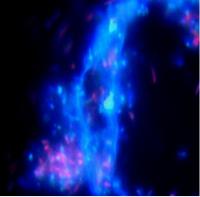
A photosynthetic cyanobacterium with chlorophyll (red) and the cellulose material (blue) it produced. A newly created microbe produces cellulose that can be turned into ethanol and other biofuels, report scientists from The University of Texas at Austin who say the microbe could provide a significant portion of the nation’s transportation fuel if production can be scaled up.
| Full story | 0 Comments | 9269 views |

- In some genetic cases of microcephaly, stem cells fail to launch
- Yale team discovers how Zika virus causes fetal brain damage
- Scientists uncover the way a common cell enzyme alerts the body to invading bacteria
- Arctic gives clues on worst mass extinction of life
- Calcium channel blockers caught in the act at atomic level
Search Bio News Net
Free Biology Newsletter
- Flexibility That A.C.A. Lent to Work Force Is Threatened by...International Herald Tribune
- Bacteria Behind Legionnaires’ Disease Found at New York Police StationInternational Herald Tribune
- Prescription Price Crisis? 28 Million Americans See Spike in Drug...MSNBC.com: Health
- Seizing on Opioid Crisis, a Drug Maker Lobbies Hard for...International Herald Tribune
- Republicans are taking a big political risk on health careAP Health News
- Why We're So Divided Over Saving WolvesNational Geographic News