

University of Alaska Museum of the North earth sciences curator Patrick Druckenmiller spent several weeks last summer working with a Norwegian research team to excavate a large pliosaur specimen in the remote Norwegian archipelago of Svalbard. At the time, they knew the Jurassic fossil was significant.

| Biotechnology | March 5, 2008 10:28 PM |
It’s a technique that has previously been used for oil exploration — now researchers at The University of Nottingham have developed a new, highly sensitive, anti-doping steroid test using hydropyrolysis.
| Full story | 0 Comments | 6883 views |

| Stem Cell Research | March 5, 2008 09:28 PM |
Researchers at the Gladstone Institute of Cardiovascular Disease (GICD) and the University of California, San Francisco have identified for the first time how tiny genetic factors called microRNAs may influence the differentiation of pluripotent embryonic stem (ES) cells into cardiac muscle. As reported in the journal Cell Stem Cell, scientists in the lab of GICD Director, Deepak Srivastava, MD, demonstrated that two microRNAs, miR-1 and miR-133, which have been associated with muscle development, not only encourage heart muscle formation, but also actively suppress genes that could turn the ES cells into undesired cells like neurons or bone.
| Full story | 0 Comments | 6557 views |

| Biology | March 5, 2008 08:28 PM |
Trees and fungi have constructed a close relationship with the passing of the ages. Fungi like to grow between the roots of trees and the arrangement is beneficial to both partners. Their delicate balance is now being revealed for the very first time. VIB researchers at Ghent University in colaboration with an international team have succeeded in unravelling the genetic code of the Laccaria bicolor fungus. This new information is crucial to our knowledge. It will lead to a better understanding of how fungi help trees to grow and how together they can be indicators of climate change.
| Full story | 0 Comments | 7371 views |

| Bioinformatics | March 5, 2008 07:28 PM |
A study led by Brown University biologist Casey Dunn uses new genomics tools to answer old questions about animal evolution. The study is the most comprehensive animal phylogenomic research project to date, involving 40 million base pairs of new DNA data taken from 29 animal species.
| Full story | 0 Comments | 6384 views |

| Environment | March 5, 2008 06:28 PM |
The midges that periodically swarm by the billions from Iceland's Lake Myvatn are a force of nature.
| Full story | 0 Comments | 5173 views |

| Molecular & Cell Biology | March 5, 2008 06:07 PM |
Happiness in life is as much down to having the right genetic mix as it is to personal circumstances according to a recent study.
| Full story | 0 Comments | 10773 views |
| Biology | March 5, 2008 06:07 PM |
The Convention on International Trade in Endangered Species (CITES) announced trade quotas governing the export of wild sturgeon and their prized caviar eggs from the Caspian Sea. The Pew Institute for Ocean Science has analyzed the quotas, which are re-set each year, and has determined that beluga caviar quotas are virtually unchanged from 2007 and do little to halt continued population declines.
| Full story | 0 Comments | 5503 views |

| Microbiology | March 5, 2008 04:06 PM |
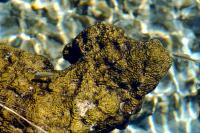
Bacteria in the pozas form coral-like "stromatolites" that are geologically identical to 3.5 billion-year-old fossils that are believed to be the oldest evidence of life on Earth. Credit: Tommy LaVergne/Rice University Biologists examining ecosystems similar to those that existed on Earth more than 3 billion years ago have made a surprising discovery: Viruses that infect bacteria are sometimes parochial and unrelated to their counterparts in other regions of the globe.
| Full story | 0 Comments | 6409 views |
| Biotechnology | March 5, 2008 02:06 PM |
Researchers at MIT Lincoln Laboratory have developed a powerful sensor that can detect airborne pathogens such as anthrax and smallpox in less than three minutes.
| Full story | 0 Comments | 7722 views |

| AIDS & HIV | March 5, 2008 12:06 PM |
Impaired brain function is a prominent and still unsolved problem in AIDS . Shortly after an individual becomes infected with HIV, the virus can invade the brain and persist in this organ for life. Many HIV-infected individuals experience disturbances in memory functions and movement, which can progress to serious dementia. How the virus causes brain disease is still unclear.
| Full story | 0 Comments | 6995 views |
| Molecular & Cell Biology | March 5, 2008 10:06 AM |
University of Iowa researchers have identified a molecular pathway in blood vessels that controls blood pressure and vascular function and may help explain why certain drugs for type II diabetes also appear to lower patients' blood pressure. The study is published in the March 5 issue of Cell Metabolism.
| Full story | 0 Comments | 6761 views |

- In some genetic cases of microcephaly, stem cells fail to launch
- Yale team discovers how Zika virus causes fetal brain damage
- Scientists uncover the way a common cell enzyme alerts the body to invading bacteria
- Arctic gives clues on worst mass extinction of life
- Calcium channel blockers caught in the act at atomic level
Search Bio News Net
Free Biology Newsletter
- Flexibility That A.C.A. Lent to Work Force Is Threatened by...International Herald Tribune
- Bacteria Behind Legionnaires’ Disease Found at New York Police StationInternational Herald Tribune
- Prescription Price Crisis? 28 Million Americans See Spike in Drug...MSNBC.com: Health
- Seizing on Opioid Crisis, a Drug Maker Lobbies Hard for...International Herald Tribune
- Republicans are taking a big political risk on health careAP Health News
- Why We're So Divided Over Saving WolvesNational Geographic News