


American eels are fast disappearing from restaurant menus as stocks have declined sharply across the North Atlantic. While the reasons for the eel decline remain as mysterious as its long migrations, a recent study by a NOAA scientist and colleagues in Japan and the United Kingdom says shifts in ocean-atmosphere conditions may be a primary factor in declining reproduction and survival rates.

| Biology | March 6, 2008 10:21 PM |
What makes you suddenly dart into the bakery when you spy chocolate- frosted donuts in the window, though you certainly hadn't planned on indulging? As you lick the frosting off your fingers, don't blame a lack of self-control.
| Full story | 0 Comments | 9014 views |

| AIDS & HIV | March 6, 2008 09:21 PM |
By outfitting immune-system killer cells with a new pair of genes, scientists at the Albert Einstein College of Medicine of Yeshiva University transformed them into potent weapons that destroy cells infected with HIV, the virus that causes AIDS. Their novel strategy of genetically engineering immune cells to redirect their infection-fighting ability toward killing HIV-infected cells could lead to an entirely new approach for combating AIDS and other viral diseases. The findings appear in the March issue of the Journal of Virology.
| Full story | 0 Comments | 6649 views |

| Molecular & Cell Biology | March 6, 2008 08:21 PM |
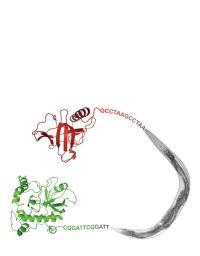
Artistic rendering of C. elegans telomeres. Unlike mammals, the tiny roundworm protects the tips of its chromosomes with two different motifs. A team of scientists at the Salk Institute for Biological Studies has discovered that the roundworm C. elegans constructs the protective tips of its chromosomes — known as telomeres — with a little more panache than do mammals, a finding that could deepen our understanding of the interrelationship of aging and cancer.
| Full story | 0 Comments | 7396 views |

| Bioinformatics | March 6, 2008 07:21 PM |
BGI-Shenzhen is pleased to announce the launch of the International Giant Panda Genome Project. This announcement follows on the heels of the Panda Genome workshop held on January 21–22, 2008, in Shenzhen, China. Dr. Hongmei Zhu, a scientist from BGI-Shenzhen, stated that, "The goal of this project is to finish the sequencing and assembling of the draft sequence within six months."
| Full story | 0 Comments | 7834 views |
| Biology | March 6, 2008 02:29 PM |
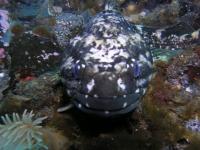
The 'Antarctic Cod' (Notothenia coriiceps) became isolated from its warmer water cousins around 30 million years ago when the Antarctic circumpolar current was formed. Scientists have discovered an Antarctic fish species that adopts a winter survival strategy similar to hibernation. Reporting this week in the journal PLoS ONE, the online journal from the Public Library of Science, scientists from British Antarctic Survey (BAS) and the University of Birmingham reveal, for the first time, that the Antarctic ‘cod’ Notothenia coriiceps effectively ‘puts itself on ice’ to survive the long Antarctic winter.
| Full story | 0 Comments | 6899 views |

| Stem Cell Research | March 6, 2008 12:28 PM |
Solving a long-standing biological mystery, UCLA stem cell researchers have discovered that blood stem cells, the cells that later differentiate into all the cells in the blood supply, originate and are nurtured in the placenta.
| Full story | 0 Comments | 5714 views |
| Molecular & Cell Biology | March 6, 2008 10:28 AM |
Iron is vital to human life; for example, it is a component of hemoglobin, the substance that makes our blood red and supplies our cells with oxygen. However, iron can also cause heavy damage; it is thought that iron deposits in the brain contribute to certain forms of neurodegenerative diseases such as Parkinson’s, Huntington’ s, and Alzhiemer’s. A malfunction of the blood transporter transferrin may be to blame. A team led by Peter J. Sadler at the University of Warwick (Coventry, UK) and Sandeep Verma of the Indian Institute of Technology (Kanpur, India) has now been able to show that transferrin can clump together to form wormlike fibrils. As reported in the journal Angewandte Chemie, this process releases rustlike iron particles.
| Full story | 0 Comments | 8467 views |

- In some genetic cases of microcephaly, stem cells fail to launch
- Yale team discovers how Zika virus causes fetal brain damage
- Scientists uncover the way a common cell enzyme alerts the body to invading bacteria
- Arctic gives clues on worst mass extinction of life
- Calcium channel blockers caught in the act at atomic level
Search Bio News Net
Free Biology Newsletter
- Flexibility That A.C.A. Lent to Work Force Is Threatened by...International Herald Tribune
- Bacteria Behind Legionnaires’ Disease Found at New York Police StationInternational Herald Tribune
- Prescription Price Crisis? 28 Million Americans See Spike in Drug...MSNBC.com: Health
- Seizing on Opioid Crisis, a Drug Maker Lobbies Hard for...International Herald Tribune
- Republicans are taking a big political risk on health careAP Health News
- Why We're So Divided Over Saving WolvesNational Geographic News