


Heavy metals are present in variable amounts in the natural environment in the UK. Dr Jennifer Sneddon (Liverpool John Moores University) will present the results of a pilot study assessing the use of upland sheep wool as a bio-monitoring device for natural levels of heavy metals in the Lake District and Wales at the Society for Experimental Biology’s Annual Meeting in Glasgow (31st March – 2nd April).

| Biology | March 31, 2007 08:26 PM |
With the unappealing prospect of being eaten, one might imagine that during a predator attack it is a case that all fish escape at once in the desperate hurry to escape as quickly as possible. However, new research indicates that this is not the case, and in fact fish in schools escape using a relatively fixed chronological order. This research was carried out at the International Marine Centre (IMC) in Sardinia, Italy, and will be presented at the Annual Meeting of the Society for Experimental Biology in Glasgow (31st March – 4th April).
| Full story | 0 Comments | 5931 views |
| Biology | March 31, 2007 06:26 PM |
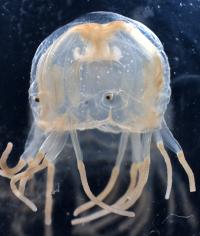
Box jellyfish Box jellyfish are much more active swimmers than other jellyfish – they exhibit strong directional swimming, are able to perform rapid 180 degree turns, and can deftly move in between objects. So how do they manage to manoeuvre the obstacle course that is in the sea bed? Given that they possess an impressive 24 eyes one would think they would be well equipped for this challenge! Dr Anders Garm (Lund University, Sweden) will present data demonstrating that it is one particular sub-set of eyes that performs this job, at the Society of Experimental Biology’s Annual Meeting in Glasgow (31st March – 2nd April).
| Full story | 0 Comments | 11395 views |

| Health & Medicine | March 31, 2007 04:26 PM |
By recognizing sugars, a technique developed by University of Michigan analytical chemist Kristina Hakansson sets the stage for new cancer diagnosis and treatment options.
| Full story | 0 Comments | 5871 views |

| Biotechnology | March 31, 2007 02:26 PM |
DNA-wrapped single-walled carbon nanotubes (SWCNTs) shorter than about 200 nanometers readily enter into human lung cells and so may pose an increased risk to health, according to scientists at the National Institute of Standards and Technology (NIST). The results of their laboratory studies appear in an upcoming issue of Advanced Materials.*
| Full story | 0 Comments | 5984 views |
| Biology | March 31, 2007 12:26 PM |
Biologists at New York University have identified how different species use common genes to control their early development and alter how these genes are used to accommodate their own features. The findings, which were discovered by researchers in Professor Claude Desplan’s and Steve Small’s laboratories in NYU’s Center for Developmental Genetics, offer new insight into the workings of developmental pathways across species. The study is published in the latest issue of the journal Science.
| Full story | 0 Comments | 6222 views |
| Biology | March 31, 2007 10:26 AM |
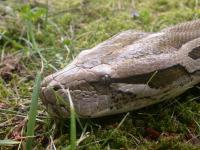
Burmese python. Burmese pythons don’t eat very often, but when they do they like to pig out, ingesting the whole of their prey. There’s very little waste as they are able to digest everything, apart from hair and feathers. Dr Jean-Hervé Lignot (Louis Pasteur University) and Dr Robert K. Pope (Indiana University South Bend) will talk about the implications this has on the way these snakes digest food on Saturday 31st March at the Society for Experimental Biology’s Annual Meeting in Glasgow.
| Full story | 0 Comments | 10035 views |
| Biology | March 31, 2007 12:30 AM |
Researchers at the McKnight Brain Institute of the University of Florida have initiated a project to treat human brain and other diseases by plundering the secrets of regeneration from creatures with remarkable powers of self-renewal, such as salamanders, newts, starfish and flatworms.
| Full story | 0 Comments | 6577 views |

| Molecular & Cell Biology | March 30, 2007 06:11 PM |
On a popular children's game participants stand as close as possible without touching. But on a microscopic level, coaxing cells to be very, very close without actually touching one another has been among the most frustrating challenges for cell biologists.
| Full story | 0 Comments | 5296 views |
| Biology | March 30, 2007 05:11 PM |
Fewer big sharks in the oceans mean that bay scallops and other shellfish may be harder to find at the market, according to an article in the March 30 issue of the journal Science, tying two unlikely links in the food web to the same fate.
| Full story | 0 Comments | 6295 views |
| Molecular & Cell Biology | March 30, 2007 04:11 PM |
Scientists have discovered how an unusual protein helps a cell bypass damage when making new DNA, thereby averting the cell's self-destruction.
| Full story | 0 Comments | 6135 views |
| Health & Medicine | March 30, 2007 02:11 PM |
Autistic children are able to interpret the mental state of others by looking at their eyes, contrary to previous research, a new University of Nottingham study has found.
| Full story | 0 Comments | 7643 views |

| Microarray | March 30, 2007 12:11 PM |
Two years and more than 2,000 samples after researchers at Baylor College of Medicine started to use a new gene-chip technology called chromosomal microarray analysis to look for potential genetic abnormalities in children, they find that it is remarkably sensitive in detecting abnormalities in individual chromosomes, according to a report that appears online today in the journal Public Library of Science ONE.
| Full story | 0 Comments | 7385 views |
| Biology | March 30, 2007 10:11 AM |
New research from Columbia University Medical Center may explain why people who are able to easily and accurately recall historical dates or long-ago events, may have a harder time with word recall or remembering the day’s current events. They may have too much memory – making it harder to filter out information and increasing the time it takes for new short-term memories to be processed and stored.
| Full story | 0 Comments | 6754 views |
| Biology | March 29, 2007 11:11 PM |
Research in evolutionary developmental biology, known as ‘evo-devo’, is being held back because the dominant model organisms used by scientists are unable to illustrate key questions about evolution, argue biologists in the latest issue of Nature Reviews Genetics.
| Full story | 0 Comments | 5663 views |
| Biotechnology | March 29, 2007 10:11 PM |
Biodegradable polymers created from poultry feathers may add value to the poultry industry and help solve the growing environmental problem of plastic waste.
| Full story | 0 Comments | 6602 views |
| Molecular & Cell Biology | March 29, 2007 09:22 PM |
Today, researchers report the identification of a gene that may play a role in susceptibility to osteoporosis—the crippling disease that leads to bone fractures, especially of the hip and spine. The study, conducted by scientists at the Musculoskeletal Diseases Center of the Jerry L Pettis Memorial Veteran's Affairs Medical Center at Loma Linda, shows convincing evidence that a gene called DARC negatively regulates bone density in mice. The report appears online in Genome Research.
| Full story | 0 Comments | 5377 views |
| Microarray | March 29, 2007 09:11 PM |
Genetics tests could help provide cystic fibrosis (CF) patients with targeted treatment in future, pilot study authors suggest. Results from a French clinical trial published today in BMC Medicine show how a small percentage of CF sufferers with a rare genetic stop mutation responded positively to gentamicin treatment.
| Full story | 0 Comments | 5993 views |
| Microarray | March 29, 2007 08:22 PM |
The NIH Neuroscience Microarray Consortium today announced that it has added high-density genotyping on both the Affymetrix and Illumina platforms to its list of services. Stan Nelson, the principal investigator at UCLA, says that "adding ultra-high throughput genotyping for its user-base of ~10,000 investigators across the world keeps the Consortium current with the demands of the scientific community."
| Full story | 0 Comments | 6855 views |
| Health & Medicine | March 29, 2007 08:11 PM |
A new report published in the prestigious New England Journal of Medicine (NEJM) shows that patients treated with bronchial thermoplasty, the first non-drug treatment for asthma, demonstrated an overall improvement in asthma control.
| Full story | 0 Comments | 6898 views |
| Health & Medicine | March 29, 2007 07:22 PM |
A study led by scientists from the University of North Carolina at Chapel Hill may have identified a molecular mechanism involved in the development of schizophrenia.
| Full story | 0 Comments | 5757 views |

| Microbiology | March 29, 2007 07:11 PM |
Scientists at MIT have created an ocean model so realistic that the virtual forests of diverse microscopic plants they "sowed" have grown in population patterns that precisely mimic their real-world counterparts.
| Full story | 0 Comments | 6625 views |
Researchers at UC San Diego have discovered that iron-containing nanoparticles being tested for use in several biomedical applications can be toxic to nerve cells and interfere with the formation of their signal-transmitting extensions.
| Full story | 0 Comments | 7254 views |
| Molecular & Cell Biology | March 29, 2007 06:11 PM |
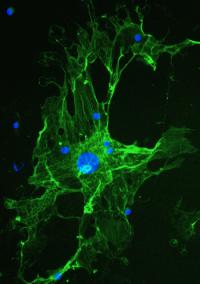
A hepatic stellate cell activated by the p75 Neurotrophin Receptor promotes repair in the liver.
In studies in mouse models, researchers at the University of California, San Diego (UCSD) School of Medicine have found that a cellular receptor involved in triggering cell death is also a necessary component of tissue repair and regeneration immediately following liver injury. This discovery could have implications for early intervention or therapy in liver disease such as cirrhosis or hepatitis.
| Full story | 0 Comments | 8874 views |
| Molecular & Cell Biology | March 29, 2007 05:22 PM |
Scientists at Penn State University will reveal in the 29 March 2007 issue of the journal Nature the first complete high-resolution map of important structures that control how genes are packaged and regulated throughout an entire genome. "For the first time, we are seeing in very high resolution on a genome-wide scale how nucleosomes control the expression of an organism's genes," said B. Franklin Pugh, professor of biochemistry and molecular biology and the study's lead investigator.
| Full story | 0 Comments | 6569 views |
| Biology | March 29, 2007 04:22 PM |
A new, complete 'tree of life' tracing the history of all 4,500 mammals on Earth shows that they did not diversify as a result of the death of the dinosaurs, says new research published in Nature today.
| Full story | 0 Comments | 8408 views |
| Health & Medicine | March 29, 2007 02:22 PM |
Mayo Clinic researchers report that freezing kidney tumors through percutaneous cryoablation shows promise for patients who are not good candidates for surgery. Their early findings showing short-term success in more than 90 percent of selected patients are published in this month’s issue of Radiology.
| Full story | 0 Comments | 8813 views |

| Stem Cell Research | March 29, 2007 12:22 PM |
For the millions of Americans whose vision is slowly ebbing due to degenerative diseases of the eye, the lowly neural progenitor cell may be riding to the rescue.
| Full story | 0 Comments | 26842 views |
| Molecular & Cell Biology | March 29, 2007 10:22 AM |
Breaking down bone is a tough job. Yet, our bones undergo remodeling every day of our lives, as old material is cleared away so that new bone can form. In diseases such as osteoporosis, an imbalance in this process is responsible for the characteristic bone loss. New research at the Weizmann Institute of Science, which recently appeared in the online journal PLoS ONE, has revealed in unprecedented detail how the roving cells whose job is to digest bone seal off their work area as they get down to business.
| Full story | 0 Comments | 8298 views |
| Microbiology | March 28, 2007 11:22 PM |
The emerging field of metagenomics, where the DNA of entire communities of microbes is studied simultaneously, presents the greatest opportunity -- perhaps since the invention of the microscope -- to revolutionize understanding of the microbial world, says a new report from the National Research Council. The report calls for a new Global Metagenomics Initiative to drive advances in the field in the same way that the Human Genome Project advanced the mapping of our genetic code.
| Full story | 0 Comments | 5651 views |
| Biotechnology | March 28, 2007 10:22 PM |
Alan Garen, professor of molecular biophysics and biochemistry at Yale has received a $100,000 award from the Prostate Cancer Foundation to expand research on the delivery of a targeted therapy for prostate cancer using nanoparticles.
| Full story | 0 Comments | 7562 views |
| Molecular & Cell Biology | March 28, 2007 09:22 PM |
Scientists at the MIT Media Lab have invented a way to reversibly silence brain cells using pulses of yellow light, offering the prospect of controlling the haywire neuron activity that occurs in diseases such as epilepsy and Parkinson's disease.
| Full story | 0 Comments | 7679 views |
| Stem Cell Research | March 28, 2007 08:22 PM |
Heart attack patients who received an new intravenous adult stem cell therapy, Provacel™, experienced a lower number of adverse events, such as cardiac arrhythmias, and had significant improvements in heart, lung and global function compared to those who received a placebo, according to six-month Phase I study data presented at the American College of Cardiology's Innovation in Intervention: i2Summit in New Orleans on March 25.
| Full story | 0 Comments | 6009 views |
| Molecular & Cell Biology | March 28, 2007 07:22 PM |
Those small fruit flies buzzing around your bananas are more than pests—they may be allies in a fruitful search for clues to human diseases caused when genes malfunction.
| Full story | 0 Comments | 5546 views |
| Biotechnology | March 28, 2007 06:22 PM |
As more and more corn grain is diverted to make ethanol, there have been public concerns about food shortages. However, ethanol made from cellulosic materials instead of corn grain, renders the food vs. fuel debate moot, according to research by a Michigan State University ethanol expert.
| Full story | 0 Comments | 7725 views |

| Bioinformatics | March 28, 2007 02:44 PM |
Until a decade ago, scientists categorized microorganisms almost exclusively by their physical characteristics: how they looked, what they ate, and the by-products they produced. With the advent of genomic sequencing and genetic analysis in the 1990s, our understanding of the relationships between different microorganisms fundamentally changed. In light of this new knowledge, what exactly is the definition of a microbial species, and how should microbiologists be categorizing microorganisms? These questions are the focus of a new report released by the American Academy of Microbiology (AAM) entitled Reconciling Microbial Systematics and Genomics.
| Full story | 0 Comments | 7184 views |
| Microbiology | March 28, 2007 12:44 PM |
Blacksburg, Va., March 26, 2007 – Common bacteria with an overt reaction to toxins that cause oxidative stress show promise as a biosensor to predict public health threats.
| Full story | 0 Comments | 5620 views |
| Biotechnology | March 28, 2007 10:44 AM |
In its first laboratory tests on human tissue, a light-based probe built by researchers at Duke University's Pratt School of Engineering almost instantly detected the earliest signs of cancer in cells that line internal organs.
| Full story | 0 Comments | 6515 views |
| Biotechnology | March 27, 2007 10:44 PM |
Maren Roman is taking nanocrystal research to a new level that may lead to a new generation of vaccines and better computer printer ink.
| Full story | 0 Comments | 7035 views |
| Biology | March 27, 2007 09:44 PM |
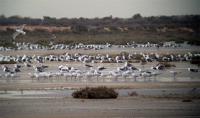
Migratory birds, such as these gulls seen here at a resting staging post, are too readily blamed for the spread of H5N1 without any evidence to support such claims. Credit: Steve Dudley www.toadsnatcher.com A review to be published shortly in the British Ornithologists' Union's journal, Ibis, critically examines the arguments concerning the role of migratory birds in the global dispersal of the highly pathogenic avian influenza virus H5N1. Ecologists of the Station Biologique de la Tour du Valat and of the GEMI-CNRS in the Camargue (France), Michel Gauthier-Clerc, Camille Lebarbenchon and Frédéric Thomas conclude that human commercial activities, particularly those associated with poultry, are the major factors that have determined its global dispersal.
| Full story | 1 Comment | 9575 views |

- In some genetic cases of microcephaly, stem cells fail to launch
- Yale team discovers how Zika virus causes fetal brain damage
- Scientists uncover the way a common cell enzyme alerts the body to invading bacteria
- Arctic gives clues on worst mass extinction of life
- Calcium channel blockers caught in the act at atomic level
Search Bio News Net
Free Biology Newsletter
- Flexibility That A.C.A. Lent to Work Force Is Threatened by...International Herald Tribune
- Bacteria Behind Legionnaires’ Disease Found at New York Police StationInternational Herald Tribune
- Prescription Price Crisis? 28 Million Americans See Spike in Drug...MSNBC.com: Health
- Seizing on Opioid Crisis, a Drug Maker Lobbies Hard for...International Herald Tribune
- Republicans are taking a big political risk on health careAP Health News
- Why We're So Divided Over Saving WolvesNational Geographic News