


The first human study using gene transfer to treat erectile dysfunction (ED) shows promising results and suggests the potential for using the technology to treat overactive bladder, irritable bowel syndrome and asthma, according to the researchers.

| AIDS & HIV | November 30, 2006 10:41 PM |
Findings from one of the largest HIV/AIDS therapy studies conducted to date show that a specific strategy of interrupting antiretroviral therapy more than doubles the risk of AIDS or death from any cause. Researchers affiliated with the Mailman School of Public Health and Harlem Hospital Hospital led a large multi-center international study, known as Strategies for Management of Anti-Retroviral Therapies, or SMART, comparing two treatment strategies for people with human immunodeficiency virus (HIV). Findings from the study, published in the November 30 New England Journal of Medicine, demonstrate the value of continuous antiretroviral therapy.
| Full story | 0 Comments | 7615 views |

| Environment | November 30, 2006 09:41 PM |
New research shows the rate of increase in carbon dioxide emissions more than doubled since the 1990s.
| Full story | 0 Comments | 10647 views |

| Microbiology | November 30, 2006 08:41 PM |
University of California, Berkeley, chemists have discovered a trick that anthrax bacteria use to make an end run around the body's defenses, but which may turn out to be their Achilles' heel.
| Full story | 0 Comments | 6625 views |

| Biology | November 30, 2006 07:41 PM |
CSIRO researchers have located the gene that controls the colour of apples – a discovery that may lead to bright new apple varieties.
| Full story | 0 Comments | 17091 views |

| Molecular & Cell Biology | November 30, 2006 06:41 PM |
P(acman) – a new method of introducing DNA into the genome of fruit flies or Drosophila – promises to transform the ability of scientists to study the structure and function of virtually all the fly’s genes, and the method may be applicable to other frequently studied organisms such as mice, said its Baylor College of Medicine developers in an article in the current issue of the journal Science.
| Full story | 0 Comments | 5961 views |

| Biotechnology | November 30, 2006 02:12 PM |
In a new twist on the slogan “milk does a body good,” radiologists are testing use of the dairy staple as a contrast agent in gastrointestinal imaging exams—with excellent results. The researchers reported their findings today at the annual meeting of the Radiological Society of North America (RSNA).
| Full story | 0 Comments | 5805 views |
| Molecular & Cell Biology | November 30, 2006 12:12 PM |
Scientists at Wake Forest University Baptist Medical Center and colleagues at four other medical centers have launched a $10 million multi-year study to identify genes that may contribute to early atherosclerosis.
| Full story | 0 Comments | 6504 views |
| Molecular & Cell Biology | November 30, 2006 10:12 AM |
Researchers at Johns Hopkins have discovered what they believe is the "smoking gun" responsible for most tissue and organ damage after a period of blood oxygen loss followed by a sudden restoration of blood oxygen flow.
| Full story | 0 Comments | 5829 views |
| Molecular & Cell Biology | November 29, 2006 11:12 PM |
A molecular ‘battle of the sexes’ long considered the major driving force in a baby’s development is being challenged by a new genetic theory of parental teamwork.
| Full story | 0 Comments | 6771 views |
| Biology | November 29, 2006 10:12 PM |
How many wildebeest should live in the Serengeti" How many grizzly bears should call Yellowstone home" Are there too few tigers in the world" Conservationist biologists grapple with the task of setting population targets for the species they are trying to protect – a decision steeped in politics, emotion, and sometimes, science.
| Full story | 0 Comments | 6826 views |
| Molecular & Cell Biology | November 29, 2006 09:12 PM |
Results from a brain-imaging study conducted at the U.S. Department of Energy's Brookhaven National Laboratory in collaboration with Mount Sinai School of Medicine in New York indicate that levels of a brain protein proposed as a diagnostic marker for attention-deficit hyperactivity disorder (ADHD) are not positively correlated with the disease. In fact, the study found lower levels of these "dopamine transporter" proteins in certain brain regions of ADHD patients compared with controls. The study, which will be published in an upcoming issue of the journal Neuroimage and is now available online, also found that for any given level of dopamine transporters in the brain, ADHD patients experienced much higher levels of inattention compared with control subjects.
| Full story | 0 Comments | 8056 views |
| Molecular & Cell Biology | November 29, 2006 08:12 PM |
A biologist at Washington University in St. Louis and his collaborators have identified the factor in mammalian brain cells that keeps cells in synchrony so that functions like the wake-sleep cycle, hormone secretion and loco motor behaviors are coordinated daily over a 24-hour period.
| Full story | 0 Comments | 7053 views |
| Environment | November 29, 2006 07:12 PM |
Sandia National Laboratories researchers Todd Lane and Victoria VanderNoot have been awarded a research grant to develop a technology that can successfully detect deadly toxins from harmful algal blooms (HABs). The funding is provided by the Cooperative Institute for Coastal and Estuarine Environmental Technology (CICEET), a partnership of the National Oceanic and Atmospheric Administration (NOAA) and the University of New Hampshire.
| Full story | 0 Comments | 5842 views |
| Biotechnology | November 29, 2006 06:22 PM |
In the first experiments of their kind, researchers at Rice University and The University of Texas M. D. Anderson Cancer Center have determined that carbon nanotubes injected directly into the bloodstream of research lab animals cause no immediate adverse health effects and circulate for more than one hour before they are removed by the liver.
| Full story | 0 Comments | 10541 views |

| Health & Medicine | November 29, 2006 06:12 PM |
More than half of breast cancer patients who sought a second opinion from a multidisciplinary tumor board received a change in their recommended treatment plan, according to a new study from the University of Michigan Comprehensive Cancer Center.
| Full story | 0 Comments | 5516 views |
| Health & Medicine | November 29, 2006 05:22 PM |
Chronic smoking affects nerve cells and alters the chemical makeup of the brain, according to research presented today at the annual meeting of the Radiological Society of North America (RSNA).
| Full story | 0 Comments | 9965 views |
| Environment | November 29, 2006 04:22 PM |
The increasing violence of storms under global climate change will have major effects on coral reefs – and has important implications for their future management.
| Full story | 0 Comments | 5631 views |
| Biotechnology | November 29, 2006 02:22 PM |
Scientists at the Max Planck Institute of Colloids and Interfaces have presented a new method with which to precisely control the permeability of microcapsules using the salt content and the temperature of the solution. In order to accomplish this, the researchers developed a theoretical model which exactly describes the processes in the polymer shell of the capsules.
| Full story | 0 Comments | 5587 views |
| Health & Medicine | November 29, 2006 12:22 PM |
Halving the number of cigarettes smoked every day in the belief that it will stave off an early death makes no difference, suggests research in Tobacco Control.
| Full story | 0 Comments | 6919 views |
| Molecular & Cell Biology | November 29, 2006 10:22 AM |
Skeletal progenitor cells differentiate into cartilage cells when one master gene actually suppresses the action of another, said Baylor College of Medicine researchers in a report that appears online in the journal Proceedings of the National Academy of Sciences.
| Full story | 0 Comments | 5500 views |
| Microbiology | November 28, 2006 11:22 PM |
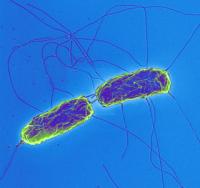
Salmonella typhi. In a study published in the latest issue of Science (24 November, 2006), an international consortium from the Max-Planck Society, Wellcome Trust Institutes in Britain and Vietnam, and the Institut Pasteur in France have elucidated the evolutionary history of Salmonella Typhi. Typhi is the cause of typhoid fever, a disease that sickens 21 million people and kills 200,000 worldwide every year. The results indicate that asymptomatic carriers played an essential role in the evolution and global transmission of Typhi. The rediscovered importance of the carrier state predicts that treatment of acute disease, including vaccination, will not suffice to eradicate this malady. The results also illuminate patterns leading to antibiotic resistance after the indiscriminate use of antibiotics. Fluoroquinolone treatment in southern Asia over two decades has resulted in the emergence of multiple, independent nalidixic acid-resistant mutants, of which one group, H58, has multiplied dramatically and spread globally. The prevalence of these bacteria hampers medical cure of clinical disease via antibiotics.
| Full story | 0 Comments | 7451 views |
| Environment | November 28, 2006 10:22 PM |
An international research team has discovered that forest fragmentation poses an even greater threat to Amazonian biodiversity than previously thought.
| Full story | 0 Comments | 6794 views |
| Molecular & Cell Biology | November 28, 2006 09:22 PM |
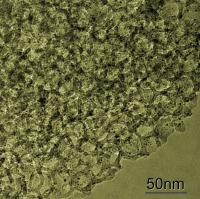
An electron microscopic image shows gold nanoparticles staining enzymes (tiny dark spots) trapped inside functionalized mesoporous silica chambers (larger blobs). (Color added.) Credit: Pacific Northwest National Laboratory. Inactive enzymes entombed in tiny honeycomb-shaped holes in silica can spring to life, scientists at the Department of Energy’s Pacific Northwest National Laboratory have found.
| Full story | 0 Comments | 5349 views |
| Biology | November 28, 2006 08:22 PM |
The shady pursuit of endangered bird eggs made international headlines in May 2006 when Colin Watson, widely considered Britain's most notorious illegal egg collector, died after falling from a 12-meter tree, allegedly while hunting a rare egg. The Royal Society for the Protection of Birds estimates that up to 30 of Britain's most vulnerable species are targeted by collectors. Classical economics theory predicts that such exploitation is unlikely to extinguish a species because the cost of finding the last individuals would outweigh the benefits. But a new theoretical study in PLoS Biology shows that adding human behavior to the equation--specifically, the human penchant for rarity--reveals an unexpected mechanism of exploitation, with alarming implications for species survival.
| Full story | 0 Comments | 5106 views |
| Biology | November 28, 2006 07:22 PM |
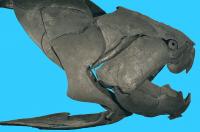
A photograph of the Dunkleosteus terrelli fossil skull upon which this study was based. Scientists created a biomechanical model to simulate the jaw's function. Credit: Photograph by Michael LaBarbera, courtesy of The Field Museum It could bite a shark in two. It might have been the first “king of the beasts.” And it could teach scientists a lot about humans, because it is in the sister group of all jawed vertebrates.
| Full story | 0 Comments | 8162 views |
| Biology | November 28, 2006 06:22 PM |
Scientists at Los Alamos National Laboratory have developed a method for training the common honey bee to detect the explosives used in bombs. Based on knowledge of bee biology, the new techniques could become a leading tool in the fight against the use of improvised explosive devices, or IEDs, which present a critical vulnerability for American military troops abroad and is an emerging danger for civilians worldwide.
| Full story | 0 Comments | 7449 views |
| Biotechnology | November 28, 2006 04:30 PM |
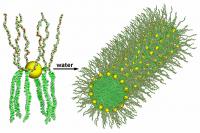
V-shaped amphiphilic molecules containing gold nanoparticles form cylindrical micelles when exposed to water. Credit: Eugene Zubarev/Rice University Chemists at Rice University have discovered how to assemble gold and silver nanoparticle building blocks into larger structures based on a novel method that harkens back to one of nature's oldest known chemical innovations – the self-assembly of lipid membranes that surround every living cell.
| Full story | 0 Comments | 5822 views |
| Health & Medicine | November 28, 2006 02:30 PM |
A new ultrasound technique allows radiologists to accurately distinguish benign from malignant breast lesions. Using elasticity imaging, researchers correctly identified both cancerous and harmless lesions in nearly all of the cases studied. The findings were presented today at the annual meeting of the Radiological Society of North America (RSNA).
| Full story | 0 Comments | 6365 views |
| Health & Medicine | November 28, 2006 12:30 PM |
Egyptian radiologists who performed the first-ever computed tomography (CT) evaluation of King Tutankhamun’s mummy believe they have solved the mystery of how the ancient pharaoh died. The CT images and results of their study were presented today at the annual meeting of the Radiological Society of North America (RSNA).
| Full story | 0 Comments | 7020 views |
| Biology | November 28, 2006 10:30 AM |
Two fish that share much in common genetically appear to have markedly different abilities to grow, a finding that could provide a new way to research such disparate areas as muscle wasting disease and fish farming, a new study shows.
| Full story | 0 Comments | 6414 views |
| Health & Medicine | November 27, 2006 11:30 PM |
Researchers have discovered that even a small amount of MDMA, better known as ecstasy, can be harmful to the brain, according to the first study to look at the neurotoxic effects of low doses of the recreational drug in new ecstasy users. The findings were presented today at the annual meeting of the Radiological Society of North America (RSNA).
| Full story | 0 Comments | 8102 views |
| Biotechnology | November 27, 2006 10:30 PM |
The successful synthesis of an antibiotic in a non-native host has provided a team of researchers at the University of Illinois at Urbana-Champaign with the potential for developing new treatments for bacterial infections.
| Full story | 0 Comments | 6802 views |
| Molecular & Cell Biology | November 27, 2006 09:30 PM |
Scientists now understand how an important protein converts chemical energy to mechanical force, thus powering the process of cell division, thanks to a new structural model by University of North Carolina at Chapel Hill researchers.
| Full story | 0 Comments | 5878 views |
| Molecular & Cell Biology | November 27, 2006 08:30 PM |
Cancer scientists at the Kimmel Cancer Center at Thomas Jefferson University in Philadelphia have shown that a gene that is involved in regulating aging also blocks prostate cancer cell growth. The researchers, led by Kimmel Cancer Center director Richard Pestell, M.D., Ph.D., hope the newly found connection will aid in better understanding the development of prostate cancer and lead to new drugs against the disease.
| Full story | 0 Comments | 7272 views |
| Biotechnology | November 27, 2006 07:25 PM |
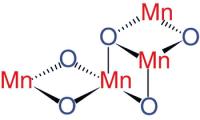
Arrangement of atoms in the heart of photosystem II: four manganese, five oxygen and one calcium atom are linked in the cluster on which water is split. Johannes Messinger and his fellow researchers have not yet been able to pinpoint the position of the latter unambiguously, which is why it is not shown in the illustration. Credit: Johannes Messinger - MPI for Bioinorganic Chemistry Coal, oil or natural gas: all fossil fuels contain the energy of sunlight, stored with the aid of photosynthesis in energy-rich chemical compounds. A researcher at the Max Planck Institute for Bioinorganic Chemistry in Mülheim on the Ruhr working with colleagues from the Technical University in Berlin, the Free University in Berlin and the Lawrence Berkeley National Laboratory has shed light on an important detail in this process. The scientists have determined the structure of the complex in photosystem II, in which water is split with the energy of sunlight. This creates, in addition to molecular oxygen, protons and electrons which in principle can be combined to create hydrogen. If it were possible to copy this process, an inexhaustible source of carbon dioxide-free energy would become available (Science, November 3, 2006).
| Full story | 0 Comments | 9711 views |
| Health & Medicine | November 27, 2006 06:25 PM |
The real cost of Herceptin is borne by other patients whose treatment has to be dropped to balance the books, say doctors in this week’s BMJ.
| Full story | 0 Comments | 6430 views |
| Health & Medicine | November 27, 2006 05:25 PM |
Researchers have linked chemotherapy with short-term structural changes in cognitive areas of the brain, according to a new study. Published in the January 1, 2007 issue of CANCER (http://www.interscience.wiley.com/cancer-newsroom), a peer-reviewed journal of the American Cancer Society, the study reveals that within 12 months of receiving adjuvant chemotherapy, significant regions of the brain associated with memory, analysis and other cognitive functions were significantly smaller in breast cancer patients who received chemotherapy than those who did not. Within four years after treatment, however, there were no differences in these same regions of the brain.
| Full story | 0 Comments | 6230 views |
| Health & Medicine | November 27, 2006 03:25 PM |
It is time to protect patients from “vile and cynical exploitation” by the alternative medicines industry, argues a cancer expert in this week’s BMJ.
| Full story | 0 Comments | 5829 views |
| AIDS & HIV | November 27, 2006 01:25 PM |
Researchers have demonstrated HIV replication within resident immune cells of the testis, providing an explanation for the persistence of virus in semen even after effective highly active antiretroviral therapy. The related report by Roulet et al., “Susceptibility of human testis to human immunodeficiency virus-1 infection in situ and in vitro,” appears in the December issue of The American Journal of Pathology.
| Full story | 0 Comments | 7470 views |

- In some genetic cases of microcephaly, stem cells fail to launch
- Yale team discovers how Zika virus causes fetal brain damage
- Scientists uncover the way a common cell enzyme alerts the body to invading bacteria
- Arctic gives clues on worst mass extinction of life
- Calcium channel blockers caught in the act at atomic level
Search Bio News Net
Free Biology Newsletter
- Flexibility That A.C.A. Lent to Work Force Is Threatened by...International Herald Tribune
- Bacteria Behind Legionnaires’ Disease Found at New York Police StationInternational Herald Tribune
- Prescription Price Crisis? 28 Million Americans See Spike in Drug...MSNBC.com: Health
- Seizing on Opioid Crisis, a Drug Maker Lobbies Hard for...International Herald Tribune
- Republicans are taking a big political risk on health careAP Health News
- Why We're So Divided Over Saving WolvesNational Geographic News