Biology News Net
General
GeneralApril 30, 2005 02:12 PM

I'm glad most of you like the new design. For those who preferred the old one, don't worry. I'm working on an alternate stylesheet that will have the same look (you will be able to switch to it, and it'll remember your preference). No ETA on that, as I'm quite busy.

Some links (yeah, as usual, saturday is a slow news day) :

- Visualizing Antibiotic Resistance
- Biophotonics technology harnesses power of light
- No evidence that calcium and vitamin D prevent fractures
- Study shows genes predict how well diabetes drug will work
- Sydney team invents a 3D hearing aid
- Generex begins testing new vaccine for breast cancer patients
- Researchers show protein's role in stopping bacterial-induced inflammation
- AECOM activates longevity gene
- Robots confirm global warming

0 Comments 955 views
Biotechnology

Kinovate Life Sciences, Inc, a provider of tools for oligonucleotide synthesis and gene delivery, announced today that it will officially launch its new NittoPhase™ solid support for oligonucleotide synthesis at the TIDES meeting commencing in Boston on May 1st. The joint development of this solid phase support product was announced on November 8th, 2004 by Kinovate’s sole shareholder, Nitto Denko Corporation (Osaka, Japan), a leading multi-national polymer synthesis company and Isis Pharmaceuticals, Inc. (NASDAQ: ISIS), a leader in RNA-based drug discovery and development.

Health & Medicine

Some structural and functional measures of cardiovascular disease risk may improve by the eighth week of a diet and exercise regimen, according to a study presented today at the American Heart Association's Sixth Annual Conference on Arteriosclerosis, Thrombosis and Vascular Biology.

Health & Medicine

Exposure to carcinogens in traffic emissions at particular lifetime points may increase the risk of developing breast cancer in women who are lifetime nonsmokers, a study by epidemiologists and geographers at the University at Buffalo has found.

Their study was conducted among women who lived in Erie and Niagara counties of New York State between 1996 and 2001. They found that higher exposure around the time of first menstruation to polycyclic aromatic hydrocarbons (PAHs), potential carcinogens found in traffic emissions, was associated with increased risk of premenopausal breast cancer.

Environment

In East Africa, where days of heavy rains and flooding have led to numerous deaths and entire villages being wiped out, locals are reporting an unprecedented rise in Somalia's Shabelle River and that a major water surge may be headed into the centre of the country, the United Nations said today.

AIDS & HIV

New insights by Duke University Medical Center researchers as to how HIV evades the human immune system may offer a new approach for developing HIV vaccines. The findings suggest some HIV vaccines may have failed because they induce a class of antibodies that a patient's own immune system is programmed to destroy.

The Duke team discovered that certain broadly protective antibodies, which recognize and latch onto the HIV protein gp41, resemble antibodies made in autoimmune diseases. In most people, the immune system destroys these types of antibodies to prevent attacks against self.

AIDS & HIV

By studying animals, Johns Hopkins researchers have discovered that the antibiotic minocycline might help alleviate HIV's negative effects on the brain and central nervous system, problems that can develop even though antiretroviral therapy controls the virus elsewhere in the body.

Five monkeys infected with simian immunodeficiency virus (SIV), a very close relative of HIV, and treated with minocycline had less damage to brain cells, less brain inflammation, and less virus in the central nervous system than six infected monkeys that received no treatment, the researchers report in the April 27 issue of the Journal of the American Medical Association.

Biotechnology

Ophthalmologists at Rush University Medical Center implanted Artificial Silicon Retina (ASR) microchips in the eyes of five patients to treat vision loss caused by retinitis pigmentosa (RP). The implant is a silicon microchip 2mm in diameter and one-thousandth of an inch thick, less than the thickness of a human hair.

Four patients had surgery Tuesday, January 25. The fifth patient is scheduled for a later date.

Bioinformatics

Nonlinear Dynamics Ltd, a leading provider of bioinformatics solutions, today announced further details of its global OEM partnership with PerkinElmer, Inc. (NYSE: PKI), a leading provider of drug discovery, life science research and analytical solutions.

Biology

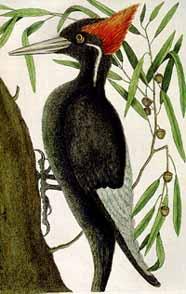
ibwpctby.jpg
Ivory Bill WoodPecker
Ed : Don't miss the video news release (thanks to Eurekalert) describing the sighting - you even get to see (very briefly) the bird in flight!

Long believed to be extinct, a magnificent bird - the ivory-billed woodpecker - has been rediscovered in the Big Woods of eastern Arkansas. More than 60 years after the last confirmed sighting of the species in the United States, a research team today announced that at least one male ivory-bill still survives in vast areas of bottomland swamp forest.

Published in the journal Science on its Science Express Web site (April 28, 2005), the findings include multiple sightings of the elusive woodpecker and frame-by-frame analyses of brief video footage. The evidence was gathered during an intensive year-long search in the Cache River and White River national wildlife refuges involving more than 50 experts and field biologists working together as part of the Big Woods Conservation Partnership, led by the Cornell Laboratory of Ornithology at Cornell University and The Nature Conservancy.

Health & Medicine

A severe allergic reaction to a medication robbed Elma Phifer of her vision two decades ago when she was 39. The reaction scarred her corneas and reduced the ability of her eyes to soothe their damaged surfaces by remaining moist.

Health & Medicine

Farmers growing genetically modified rice in field trials in China report higher crop yields, reduced pesticide use and fewer pesticide-related health problems, according to a study by researchers in China and at Rutgers University and the University of California, Davis.

Results of the study will appear in the April 29 issue of the journal Science.

Health & Medicine

New research shows that farmers who used agricultural insecticides experienced increased neurological symptoms, even when they were no longer using the products. Data from 18,782 North Carolina and Iowa farmers linked use of insecticides, including organophosphates and organochlorines, to reports of reoccurring headaches, fatigue, insomnia, dizziness, nausea, hand tremors, numbness and other neurological symptoms. Some of the insecticides addressed by the study are still on the market, but some, including DDT, have been banned or restricted.

Biotechnology

Luca Technologies LLC today announced that its researchers have confirmed the presence of a resident, methane-generating community of microorganisms ("microbial consortium") in substrate samples taken from the 110,000 acre Monument Butte oilfield located in North Eastern Utah. This site represents the latest in a series of active "GeobioreactorsTM" that Luca Technologies has identified since its first demonstration of this phenomenon in the Powder River Basin coalfields of Wyoming.

Molecular & Cell Biology

Researchers at Yale, in collaboration with NIH researchers, have identified a specific protein molecule that is used by the immune system for detection of parasitic infections, leading the way for development of future vaccines to combat these infections.

Researchers using an extremely fast and accurate imaging technique have shed light on the tiny movements of molecular motors that shuttle material within living cells. The motors cooperate in a delicate choreography of steps, rather than engaging in the brute-force tug of war many scientists had imagined.

Microbiology

Many pathogens are able to infect multiple species within a community and are commonly transmitted across species. Cross-species transmission is often associated with pathogen emergence and therefore has been considered as a negative factor for humans, wildlife, and species of agricultural importance. Many pathogens like malaria, Lyme disease or West Nile encephalitis that infect multiple hosts are commonly transmitted by vectors, and their transmission rate is often thought to depend on the proportion of hosts or vectors infected (i.e. frequency dependence). A study, to appear in the July 2005 issue of The American Naturalist, by Volker H. W. Rudolf and Janis Antonovics provides an important conceptual counterexample to the idea that sharing pathogens necessarily affects host populations negatively.

Health & Medicine

Two Scandinavian studies have provided further evidence that environmental factors could be affecting men's reproductive health.

The studies, published online today (Thursday 28 April) in Europe's leading reproductive medicine journal Human Reproduction, suggest that environmental pollutants could be changing the ratio of sperm carrying the X or Y (sex determining) chromosomes and that they could be contributing towards male reproductive disorders.

Health & Medicine

UAB and international scientists studying iron-overload disorders have made the unexpected discovery that Asians and Pacific Islanders have the highest levels of iron in their blood of all racial/ethnic groups who were screened.

Biology

A number of articles explore the use of positron emission tomography (PET) and small animal imaging--nonsurgical techniques that open the door to understanding and treating human diseases--in the April issue of the Society of Nuclear Medicine's Journal of Nuclear Medicine.

Biotechnology

Ed : Sadly no picture is available; however, you can find one in an article from last year, describing the group's research.

In a step toward making living cells function as if they were tiny computers, engineers at Princeton have programmed bacteria to communicate with each other and produce color-coded patterns.

The feat, accomplished in a biology lab within the Department of Electrical Engineering, represents an important proof-of-principle in an emerging field known as "synthetic biology," which aims to harness living cells as workhorses that detect hazards, build structures or repair tissues and organs within the body.

Molecular & Cell Biology

Zeroing in on the core cellular mechanisms of sleep, researchers at University of Wisconsin Medical School have identified for the first time a single gene mutation that has a powerful effect on the amount of time fruit flies sleep.

In its normal state, the Drosophila (fruit fly) gene, called Shaker, produces an ion channel that controls the flow of potassium into cells, a process that critically affects, among other things, electrical activity in neurons. A handful of recent studies suggest that potassium channels are also involved in the generation of sleep in humans.

Trees in the world¹s most productive forests -- forests that add the most new growth each year -- also tend to die young, according to a U.S. Geological Survey (USGS) study published in a recent issue of the journal Ecology Letters. This discovery could help scientists predict how forests will respond to ongoing and future environmental changes.

Molecular & Cell Biology

Mount Sinai School of Medicine researchers have discovered how the membrane protein that allows us to sense cold works and how this protein becomes desensitized so that one no longer feels the cold. The study, published this week as an advance online publication by Nature Neuroscience, focused on a specific region of the cold receptor which is found in many other receptors, including ones involved in taste, vision and fertilization. Therefore, the findings may have important implications across a wide range of areas.

Environment

A new online portal consolidates decades of rich marine data, much of it available for the first time, enabling resource managers and scientific researchers to combine and analyze information in unprecedented ways, creating new insights into the Gulf of Maine's ecology.

Environment

The "dead zone" area of the Gulf of Mexico – a region that annually suffers from low oxygen which can result in huge marine life losses – has appeared much earlier this year, meaning it could be potentially larger in 2005 and affect marine life more adversely than normal, researchers are reporting.

Gene Therapy

High-intensity focused ultrasound emitted in short pulses is a promising, non-invasive procedure for enhancing gene delivery to cancerous cells without destroying healthy tissue, according to a study in the May issue of the journal Radiology.

Biology

A significant debate is currently underway in the scientific community over the evolution of the Great White shark, and Chuck Ciampaglio, Ph.D., an assistant professor of geology at the Wright State University Lake Campus, is right in the middle of it.

The issue is if the Great White, one of the most feared predators of the sea, evolved from the huge prehistoric megladon shark or if its ancestry rests with the mako shark.

Molecular & Cell Biology

New research shows that a protein produced by a cancer-causing virus influences a key signaling pathway in the immune cells that the virus infects. This stimulates the cells to divide, helping the virus spread through the body.

The study, led by researchers at Ohio State University, examined the human T lymphotropic virus type 1 (HTLV-1) and a protein that it produces called p12.

Biology

Starvation, malnutrition and re-feeding can have deadly consequences for humans and most animals but not Australia's green-striped burrowing frog.

PhD student Rebecca Cramp from The University of Queensland has found that unlike most animals, which can't digest food after long periods of starvation, the green-striped burrowing frog is able to absorb nutrients 40 percent more effectively after 3 months without food, than frogs that had eaten regularly.

Biology

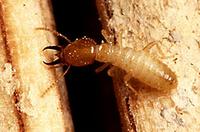
k8085-3i.jpg
Formosan subterranean termite
Wild celery and two weed species found throughout the western United States may contribute to safe, natural control of the Formosan subterranean termite, Coptotermes formosanus.

Agricultural Research Service (ARS) scientists say that, in lab tests, three compounds that they isolated from these plants scored high kill rates against the invasive termites, which cause about $1 billion in damage annually in the United States.

Molecular & Cell Biology

Research from Dartmouth Medical School, demonstrating how malaria parasites form mutations that make them stubbornly resistant to drug therapy, may hold the key to a new treatments for a disease that afflicts more than half a billion people worldwide.

Health & Medicine

There are 300 million cases of malaria each year worldwide, causing one million deaths. Around 90% of these deaths occur in Africa, mostly in young children. One of the greatest challenges facing Africa in the fight against malaria is drug resistance; resistance to chloroquine (CQ), the cheapest and most widely used antimalarial, is common throughout Africa, and resistance to sulfadoxine-pyrimethamine (SP), the first-developed and least expensive alternative to CQ, is also increasing. These trends have forced many countries to change their treatment policies and use more expensive drugs, including drug combinations that will hopefully slow the development of resistance and minimize transmission of resistant parasites.

Biology

The University of Washington Alaska Salmon Program, the world's longest-running effort to monitor salmon and their ecosystems, has received nearly $2.4 million from the Gordon and Betty Moore Foundation to expand its sampling scope and sophistication.

Bioinformatics

The Institute for Systems Biology announced today at its 2005 international symposium on Computational Challenges in Systems Biology that ISB's Human Proteome Folding Project launched on IBM's World Community Grid in November 2004 has already predicted 50,000 protein structures.

Biology

A Johns Hopkins University graduate student may have figured out why rates of extinction were so low for many of the major groups of marine life during one of the greatest ice ages of them all, which occurred from about 330 million to 290 million years ago, late in the Paleozoic Era.

Molecular & Cell Biology

Mitochondria, as they are defined in textbooks, are essential for eukaryotic cells--including our own--because they make large amounts of energy as they use oxygen. However, some eukaryotic cells, including important parasites of humans--such as Entamoeba histolytica, the causal agent of amoebic dysentery--live in environments that are too oxygen poor to support this process. Nevertheless, Entamoeba still contains a somewhat mysterious organelle, called a mitosome, that is evolutionarily derived from mitochondria. As reported by researchers this week, the mitosome can represent a surprisingly pared-down version of the much more sophisticated mitochondrion.

Molecular & Cell Biology

Researchers at the University of Chicago have found that a recently discovered biological process known as sumoylation -- until now thought to be active only in the nucleus -- also occurs near the cell's surface where it regulates at least one and possibly many kinds of proteins, providing a novel target for the development of new drugs.

Stem Cell Research

With careful coaxing, stem cells from the brain can form insulin-producing cells that mimic those missing in people with diabetes, according to a paper published in the April 26 issue of PLoS Medicine.

Molecular & Cell Biology

New research on prions, the infectious proteins behind "mad cow" disease and Creutzfeld-Jakob disease in humans, suggests that the ability of prions in one species to infect other species depends on the shape of the toxic threadlike fibers produced by the prion. Two studies on the topic appear in the 8 April issue of the journal Cell.


Search Bio News Net

Free Biology Newsletter