

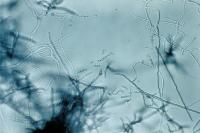
The soil bacteria Streptomyces form filamentous branches that extend into the air to create spiraling towers of spores. Scientists have identified the developmental on-off switch for Streptomyces, a group of soil microbes that produce more than two-thirds of the world's naturally derived antibiotic medicines.

| Molecular & Cell Biology | August 28, 2014 05:58 PM |
| Full story | 0 Comments | 7415 views |

| Health & Medicine | August 28, 2014 05:58 PM |
A candidate Ebola vaccine could be given to healthy volunteers in the UK, The Gambia and Mali as early as September, as part of an series of safety trials of potential vaccines aimed at preventing the disease that has killed more than 1,400 people in the current outbreak in West Africa.
| Full story | 0 Comments | 7918 views |
| Health & Medicine | August 28, 2014 05:58 PM |
In response to an ongoing, unprecedented outbreak of Ebola virus disease (EVD) in West Africa, a team of researchers from the Broad Institute and Harvard University, in collaboration with the Sierra Leone Ministry of Health and Sanitation and researchers across institutions and continents, has rapidly sequenced and analyzed more than 99 Ebola virus genomes. Their findings could have important implications for rapid field diagnostic tests. The team reports its results online in the journal Science.
| Full story | 0 Comments | 6766 views |

| Bioinformatics | August 27, 2014 06:44 PM |
A big step in understanding the mysteries of the human genome was unveiled today in the form of three analyses that provide the most detailed comparison yet of how the genomes of the fruit fly, roundworm, and human function.
| Full story | 0 Comments | 7366 views |

| Biology | August 27, 2014 06:44 PM |
About 400 million years ago a group of fish began exploring land and evolved into tetrapods – today's amphibians, reptiles, birds, and mammals. But just how these ancient fish used their fishy bodies and fins in a terrestrial environment and what evolutionary processes were at play remain scientific mysteries.
| Full story | 0 Comments | 10180 views |

| Gene Therapy | August 26, 2014 06:45 PM |
Treating the rare disease MPS I is a challenge. MPS I, caused by the deficiency of a key enzyme called IDUA, eventually leads to the abnormal accumulation of certain molecules and cell death.
| Full story | 0 Comments | 8943 views |
| Bioinformatics | August 25, 2014 06:06 PM |
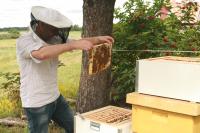
New findings show a surprisingly high level of genetic diversity in honeybees, and indicate that the species most probably originates from Asia, and not from Africa as previously thought. In a study published in Nature Genetics, researchers from Uppsala University present the first global analysis of genome variation in honeybees. The findings show a surprisingly high level of genetic diversity in honeybees, and indicate that the species most probably originates from Asia, and not from Africa as previously thought.
| Full story | 0 Comments | 8292 views |
| Biology | August 25, 2014 06:06 PM |
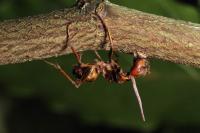
A dead ant manipulated by a species of so-called "zombie ant fungus " clings to a twig in a South Carolina forest. A parasitic fungus that reproduces by manipulating the behavior of ants emits a cocktail of behavior-controlling chemicals when encountering the brain of its natural target host, but not when infecting other ant species, a new study shows.
| Full story | 0 Comments | 9348 views |
| Biology | August 20, 2014 06:08 PM |
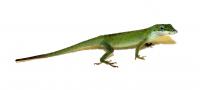
The green anole lizard (Anolis carolinensis), when caught by a predator, can lose its tail and then grow it back. By understanding the secret of how lizards regenerate their tails, researchers may be able to develop ways to stimulate the regeneration of limbs in humans. Now, a team of researchers from Arizona State University is one step closer to solving that mystery. The scientists have discovered the genetic "recipe" for lizard tail regeneration, which may come down to using genetic ingredients in just the right mixture and amounts.
| Full story | 0 Comments | 14142 views |

| Environment | August 20, 2014 06:08 PM |
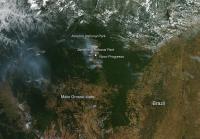
Multiple fires are visible in in this image of the Para and Mato Grosso states of Brazil. Multiple fires are visible in in this image of the Para and Mato Grosso states of Brazil. Many of these were most likely intentionally set in order to deforest the land. Deforestation is the removal of a forest or stand of trees where the land is thereafter converted to a nonforest use. Examples of deforestation include conversion of forestland to farms, ranches, or urban use. The herringbone-patterned tan lines cutting through the dark green of the Amazon Rainforest in the middle of the image are evidence of deforestation in the Brazilian state of Pará. The deforestation in Pará follows the Brazialian national motorway BR 163, passing by cities such as Novo Progresso. The lower half of the image shows the state of Mato Grosso.
| Full story | 0 Comments | 8335 views |
| Health & Medicine | August 20, 2014 06:08 PM |
University of Adelaide researchers have discovered that the immune system is defective in people suffering from irritable bowel syndrome, which is a major reason why sufferers have ongoing issues with pain.
| Full story | 0 Comments | 7177 views |
| Bioinformatics | August 19, 2014 05:16 PM |
Daylight was breaking over the central Pacific and coffee brewing aboard the MY Hanse Explorer. Between sips, about a dozen scientists strategized for the day ahead. Some would don wetsuits and slip below the surface to collect water samples around the southern Line Islands' numerous coral reefs. Others would tinker with the whirring gizmos and delicate machinery strewn throughout the 158-foot research vessel. All shared a single goal: Be the first research group to bring a DNA sequencer out into the field to do remote sequencing in real time. Against an ocean of odds, they succeeded.
| Full story | 0 Comments | 6751 views |
| Health & Medicine | August 19, 2014 05:16 PM |
Handwashing with antibacterial soap exposes hospital workers to significant and potentially unsafe levels of triclosan, a widely-used chemical currently under review by the U.S. Food and Drug Administration, according to a study led by researchers from UC San Francisco.
| Full story | 0 Comments | 7327 views |
| Biology | August 13, 2014 06:16 PM |

The arapaima fish, which once dominated Amazon fisheries, is long and can weigh as much as 400 pounds. An international team of scientists has discovered that a large, commercially important fish from the Amazon Basin has become extinct in some local fishing communities.
| Full story | 0 Comments | 10308 views |
| Molecular & Cell Biology | August 13, 2014 06:16 PM |
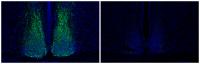
A peptide responsible for cell communication in the brain, Vip (green) is reduced in the brains of mice that have little or no Lhx1 (right). Scientists at the Salk Institute for Biological Studies have identified a gene that regulates sleep and wake rhythms.
| Full story | 0 Comments | 9873 views |
| Health & Medicine | August 13, 2014 06:16 PM |
The Ebola outbreak in West Africa has brought a lot of attention to the deadly virus. According to the World Health Organization, up to 90% of those infected with Ebola die from the virus. Now, researchers publishing August 13 in the Cell Press journal Cell Host & Microbe reveal how Ebola blocks and disables the body's natural immune response. Understanding how Ebola disarms immune defenses will be crucial in the development of new treatments for the disease.
| Full story | 0 Comments | 10171 views |
| Bioinformatics | August 12, 2014 05:46 PM |
Few animals can boast of being as tough as the Antarctic midge. Its larvae develop over not one but two Antarctic winters, losing nearly half their body mass each time. It endures high winds, salt, and intense ultraviolet radiation. As an adult, the midge gets by without wings and lives for only a week or so before starting its life cycle all over again.
| Full story | 0 Comments | 7718 views |
| Molecular & Cell Biology | August 7, 2014 07:27 PM |
With a featured publication in the Aug. 7 issue of Science, Montana State University researchers have made a significant contribution to the understanding of a new field of DNA research, with the acronym CRISPR, that holds enormous promise for fighting infectious diseases and genetic disorders.
| Full story | 0 Comments | 7324 views |
| Health & Medicine | August 7, 2014 07:27 PM |
Researchers with The Cancer Genome Atlas (TCGA) Research Network have completed the largest, most diverse tumor genetic analysis ever conducted, revealing a new approach to classifying cancers. The work, led by researchers at the UNC Lineberger Comprehensive Cancer Center at the University of North Carolina at Chapel Hill and other TCGA sites, not only revamps traditional ideas of how cancers are diagnosed and treated, but could also have a profound impact on the future landscape of drug development.
| Full story | 0 Comments | 8601 views |
| Molecular & Cell Biology | August 6, 2014 05:38 PM |

This is a black truffle. Black truffles, also known as Périgord truffles, grow in symbiosis with the roots of oak and hazelnut trees. In the world of haute cuisine, they are expensive and highly prized.
| Full story | 0 Comments | 7726 views |
| Biology | August 5, 2014 04:55 PM |
Spider silk is an impressive material; lightweight and stretchy yet stronger than steel. But the challenge that spiders face to produce this substance is even more formidable. Silk proteins, called spidroins, must convert from a soluble form to solid fibers at ambient temperatures, with water as a solvent, and at high speed. How do spiders achieve this astounding feat? In new research publishing in the open access journal PLOS Biology on August 5, Anna Rising and Jan Johansson show how the silk formation process is regulated. The work was done at the Swedish University of Agricultural Sciences (SLU) and Karolinska Institutet in collaboration with colleagues in Latvia, China and USA.
| Full story | 0 Comments | 11098 views |
| Biology | August 5, 2014 04:55 PM |
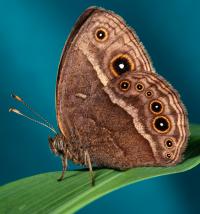
Yale University scientists have performed the first artificial selection on a structural color, using butterfly wings. This image shows a male Bicyclus anynana butterfly Yale University scientists have chosen the most fleeting of mediums for their groundbreaking work on biomimicry: They've changed the color of butterfly wings.
| Full story | 0 Comments | 9672 views |
| Biology | August 5, 2014 05:36 AM |
Whale sharks (Rhincodon typus)—which grow more than 30 feet long—are the largest fish in the world's ocean, but little is known about their movements on a daily basis or over years. A newly discovered juvenile whale shark aggregation off Saudi Arabia is giving researchers a rare glimpse into the lives of these gentle giants.
| Full story | 0 Comments | 6533 views |
| Biology | August 5, 2014 05:36 AM |
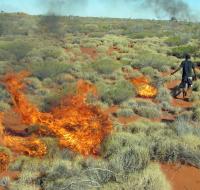
A member of the Martu Aboriginal community in western Australia sets fire to mature spinifex grass as a way to expose burrows occupied by sand monitor lizards Australia's Aboriginal Martu people hunt kangaroos and set small grass fires to catch lizards, as they have for at least 2,000 years. A University of Utah researcher found such man-made disruption boosts kangaroo populations – showing how co-evolution helped marsupials and made Aborigines into unintentional conservationists.
| Full story | 0 Comments | 5688 views |

| Stem Cell Research | August 5, 2014 05:36 AM |
When embryonic cells get the signal to specialize the call can come quickly. Or it can arrive slowly. Now, new research from Rockefeller University suggests the speed at which a cell in an embryo receives that signal has an unexpected influence on that cell's fate. Until now, only concentration of the chemical signals was thought to matter in determining if the cell would become, for example, muscle, skin, brain or bone.
| Full story | 0 Comments | 6297 views |
| Biology | August 5, 2014 05:36 AM |

LB1 is shown in three different views to illustrate facial asymmetry. In October 2004, excavation of fragmentary skeletal remains from the island of Flores in Indonesia yielded what was called "the most important find in human evolution for 100 years." Its discoverers dubbed the find Homo floresiensis, a name suggesting a previously unknown species of human.
| Full story | 0 Comments | 5895 views |

- In some genetic cases of microcephaly, stem cells fail to launch
- Yale team discovers how Zika virus causes fetal brain damage
- Scientists uncover the way a common cell enzyme alerts the body to invading bacteria
- Arctic gives clues on worst mass extinction of life
- Calcium channel blockers caught in the act at atomic level
Search Bio News Net
Free Biology Newsletter
- Flexibility That A.C.A. Lent to Work Force Is Threatened by...International Herald Tribune
- Bacteria Behind Legionnaires’ Disease Found at New York Police StationInternational Herald Tribune
- Prescription Price Crisis? 28 Million Americans See Spike in Drug...MSNBC.com: Health
- Seizing on Opioid Crisis, a Drug Maker Lobbies Hard for...International Herald Tribune
- Republicans are taking a big political risk on health careAP Health News
- Why We're So Divided Over Saving WolvesNational Geographic News