

How tiny fish larvae travel away from the reef, then know how to navigate their way back home is a scientific mystery.

| Biotechnology | August 26, 2013 05:31 PM |
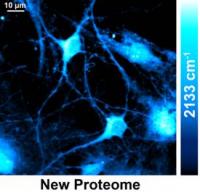
This image shows stimulated Raman scattering imaging of newly synthesized protein in live hippocampal neurons incubated in a deuterium-labeled amino acids medium for 20 hours by targeting the unique 2,133... Researchers at Columbia University, in collaboration with biologists in Baylor College of Medicine, have made a significant step in understanding and imaging protein synthesis, pinpointing exactly where and when cells produce new proteins. Assistant Professor Wei Min's team developed a new technique to produce high-resolution imaging of newly synthesized proteins inside living cells. The findings were published in the July 9th issue of The Proceedings of the National Academy of Sciences (Volume 110; Issue 28).
| Full story | 0 Comments | 12800 views |

| Molecular & Cell Biology | August 26, 2013 05:31 PM |
The molecule interleukin-7 (IL-7) is an important immune messenger protein which ensures that a sufficient number of T cells are present in our body for immune defence. Researchers from ETH Zurich have now demonstrated that IL-7 has another important function: it enhances the drainage function of lymphatic vessels, which collect fluid that has leaked out of blood vessels into the body tissue and return it to the bloodstream. In the future, this finding could become useful for lymphedema patients, whose lymphatic drainage system does not work properly, resulting in fluid accumulation and tissue swelling.
| Full story | 0 Comments | 9931 views |
| Biotechnology | August 22, 2013 05:16 PM |
A simple kitchen sink experiment helped Northwestern University researchers discover that green tea leaves not only can be used to steep a good cup of tea, but they make an excellent antibacterial coating, too.
| Full story | 0 Comments | 10240 views |

| Biology | August 22, 2013 05:16 PM |

When a member of the wolf pack leaves the group, the howling by those left behind isn't a reflection of stress but of the quality of their relationships. When a member of the wolf pack leaves the group, the howling by those left behind isn't a reflection of stress but of the quality of their relationships. So say researchers based on a study of nine wolves from two packs living at Austria's Wolf Science Center that appears in Current Biology, a Cell Press publication, on August 22.
| Full story | 0 Comments | 15116 views |

| AIDS & HIV | August 21, 2013 06:06 PM |
August 21, 2013—The HIV/AIDS epidemic is changing in unexpected ways in countries around the world, showing that greater attention and financial investment may be needed in places where the disease has not reached epidemic levels, according to a new study from the Institute for Health Metrics and Evaluation (IHME) at the University of Washington.
| Full story | 0 Comments | 11341 views |

| Bioinformatics | August 21, 2013 06:06 PM |
By any measure, tuberculosis (TB) is a wildly successful pathogen. It infects as many as two billion people in every corner of the world, with a new infection of a human host estimated to occur every second.
| Full story | 0 Comments | 9595 views |
| Bioinformatics | August 21, 2013 06:06 PM |

The genome sequencing started with the Chinese hamster (picture). Genome researchers from Bielefeld University's Center for Biotechnology (CeBiTec) headed by Professor Dr. Alfred Pühler have succeeded in sequencing the genome of the Chinese hamster. The Chinese hamster supplies the cell cultures used by the pharmaceutical industry to produce biopharmaceutical products such as antibodies used in medicine. This costly project was only possible thanks to a cooperation between Bielefeld University and its international project partners. The researchers have now published their results in the internationally renowned scientific journal 'Nature Biotechnology'.
| Full story | 0 Comments | 10122 views |
| Biotechnology | August 19, 2013 05:40 PM |
A study published today found that Droplet Digital PCR (ddPCR™) can be used as an accurate and precise method for quality control of next-generation sequencing (NGS) libraries. NGS library QC is essential to optimizing sequencing data yield, thereby increasing efficiency and throughput while lowering cost. The research was published in the in the August issue of Biotechniques.
| Full story | 0 Comments | 9586 views |
| Biology | August 19, 2013 05:40 PM |
Small prey fish can grow a bigger 'eye' on their rear fins as a way of distracting predators and dramatically boosting their chances of survival, new scientific research has found.
| Full story | 0 Comments | 12171 views |

| Microbiology | August 19, 2013 05:40 PM |
The human body is full of tiny microorganisms—hundreds to thousands of species of bacteria collectively called the microbiome, which are believed to contribute to a healthy existence. The gastrointestinal (GI) tract—and the colon in particular—is home to the largest concentration and highest diversity of bacterial species. But how do these organisms persist and thrive in a system that is constantly in flux due to foods and fluids moving through it? A team led by California Institute of Technology (Caltech) biologist Sarkis Mazmanian believes it has found the answer, at least in one common group of bacteria: a set of genes that promotes stable microbial colonization of the gut.
| Full story | 0 Comments | 9552 views |
| AIDS & HIV | August 15, 2013 06:29 PM |
Infection by human immunodeficiency virus (HIV) causes acquired immunodeficiency syndrome (AIDS), a debilitating disorder in which progressive weakening of the immune system makes affected individuals more susceptible to potentially life-threatening infections and chronic diseases. Despite advances in the treatment and management of AIDS, there is no cure, and HIV infection remains a major global health problem. According to the WHO, there were an estimated 34 million infected individuals in 2011. Over the last three decades, a number of animal models have been developed to study aspects of HIV infection, pathogenesis and control. However, the currently available models do not recapitulate the physiological environment of the most common route of HIV transmission worldwide, vaginal intercourse. Now, Mary Jane Potash and colleagues from St. Luke's-Roosevelt Hospital Center and Columbia University Medical Center in New York, NY, have developed an approach for modelling heterosexual transmission of HIV in vivo. Their work was published recently in Disease Models & Mechanisms.
| Full story | 0 Comments | 10142 views |

| Health & Medicine | August 15, 2013 06:29 PM |
Children with a particularly lethal cancer could benefit from potentially life-saving treatment, following breakthrough work led by researchers at the University of New South Wales (UNSW).
| Full story | 0 Comments | 12327 views |
| Molecular & Cell Biology | August 15, 2013 06:29 PM |
The DNA in human cells is translated into a multitude of proteins required for a cell to function. When, where and how proteins are expressed is determined by regulatory DNA sequences and a group of proteins, known as transcription factors, that bind to these DNA sequences. Each cell type can be distinguished based on its transcription factors, and a cell can in certain cases be directly converted from one type to another, simply by changing the expression of one or more transcription factors. It is critical that the pattern of transcription factor binding in the genome be maintained. During each cell division, the transcription factors are removed from DNA and must find their way back to the right spot after the cell has divided. Despite many years of intense research, no general mechanism has been discovered which would explain how this is achieved.
| Full story | 0 Comments | 10367 views |
| Molecular & Cell Biology | August 15, 2013 06:29 PM |
Research led by scientists from the University of California, San Diego has decoded the genetic basis of chronic mountain sickness (CMS) or Monge's disease. Their study provides important information that validates the genetic basis of adaptation to high altitudes, and provides potential targets for CMS treatment. It will be published online August 15 in advance of print in the September 5 issue of American Journal of Human Genetics.
| Full story | 0 Comments | 10556 views |
| Molecular & Cell Biology | August 13, 2013 07:02 PM |
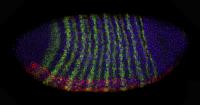
The dorsal-ventral patterning gene snail (shown in red) is one of the few genes that are active before as well as after the midblastula transition. The segmentation gene paired (shown... When egg and sperm combine, the new embryo bustles with activity. Its cells multiply so rapidly they largely ignore their DNA, other than to copy it and to read just a few essential genes. The embryonic cells mainly rely on molecular instructions placed in the egg by its mother in the form of RNA.
| Full story | 0 Comments | 7083 views |
| Biotechnology | August 13, 2013 07:02 PM |
Ottawa researchers have developed unique virus-derived particles that can kill human blood cancer cells in the laboratory and eradicate the disease in mice with few side effects. The study is published in Blood Cancer Journal by co-senior authors Drs. David Conrad and John Bell of the Ottawa Hospital Research Institute (OHRI) and the University of Ottawa (uOttawa).
| Full story | 0 Comments | 6350 views |

| Environment | August 13, 2013 07:02 PM |
Corals can survive the early stages of their development even under the tough conditions that rising carbon emissions will impose on them says a new study from the ARC Centre of Excellence for Coral Reef Studies.
| Full story | 0 Comments | 6405 views |
| Health & Medicine | August 13, 2013 07:02 PM |
A strain of bacteria that causes skin and soft tissue infections in humans originally came from cattle, according to a study to be published in mBio®, the online open-access journal of the American Society for Microbiology. The researchers who conducted the genetic analysis of strains of Staphylococcus aureus known as CC97 say these strains developed resistance to methicillin after they crossed over into humans around forty years ago. Today, methicillin-resistant S. aureus (MRSA) strain CC97 is an emerging human pathogen in Europe, North and South America, Africa, and Asia. The findings highlight the potential for cows to serve as a reservoir for bacteria with the capacity for pandemic spread in humans.
| Full story | 0 Comments | 5718 views |
| Biology | August 11, 2013 07:10 PM |
A new analysis of dinosaur fossils by University of Pennsylvania researchers has revealed that a number of specimens of the genus Psittacosaurus — once believed to represent three different species — are all members of a single species. The differences among the fossil remains that led other scientists to label them as separate species in fact arose from how the animals were buried and compressed, the study found.
| Full story | 0 Comments | 9949 views |
| Molecular & Cell Biology | August 11, 2013 07:10 PM |
A decade ago, gene expression seemed so straightforward: genes were either switched on or off. Not both. Then in 2006, a blockbuster finding reported that developmentally regulated genes in mouse embryonic stem cells can have marks associated with both active and repressed genes, and that such genes, which were referred to as "bivalently marked genes", can be committed to one way or another during development and differentiation.
| Full story | 0 Comments | 6181 views |
| Biology | August 5, 2013 05:59 PM |
Using direct human brain recordings, a research team from Drexel University, the University of Pennsylvania, UCLA and Thomas Jefferson University has identified a new type of cell in the brain that helps people to keep track of their relative location while navigating an unfamiliar environment.
| Full story | 0 Comments | 11709 views |

- In some genetic cases of microcephaly, stem cells fail to launch
- Yale team discovers how Zika virus causes fetal brain damage
- Scientists uncover the way a common cell enzyme alerts the body to invading bacteria
- Arctic gives clues on worst mass extinction of life
- Calcium channel blockers caught in the act at atomic level
Search Bio News Net
Free Biology Newsletter
- Flexibility That A.C.A. Lent to Work Force Is Threatened by...International Herald Tribune
- Bacteria Behind Legionnaires’ Disease Found at New York Police StationInternational Herald Tribune
- Prescription Price Crisis? 28 Million Americans See Spike in Drug...MSNBC.com: Health
- Seizing on Opioid Crisis, a Drug Maker Lobbies Hard for...International Herald Tribune
- Republicans are taking a big political risk on health careAP Health News
- Why We're So Divided Over Saving WolvesNational Geographic News