

Who would not want to live a long and healthy life? A freely available food supplement could help in this respect, scientists from ETH Zurich have demonstrated in roundworms. Vitamin B3 – also known as niacin – and its metabolite nicotinamide in the worms' diet caused them to live for about one tenth longer than usual.

| Molecular & Cell Biology | September 30, 2013 05:34 PM |
By detailing a process required for repairing DNA breakage, scientists at the Duke Cancer Institute have gained a better understanding of how cells deal with the barrage of damage that can contribute to cancer and other diseases.
| Full story | 0 Comments | 6961 views |
| Molecular & Cell Biology | September 30, 2013 05:34 PM |
A mix of serendipity and dogged laboratory work allowed a diverse team of University of Pittsburgh scientists to report in the Oct. 1 issue of Nature Cell Biology that they had solved the mystery of a basic biological function essential to cellular health.
| Full story | 0 Comments | 5586 views |
| Molecular & Cell Biology | September 27, 2013 03:55 PM |
The receptor used by baculovirus to enter and interact with human cells has been identified. This syndecan-1 receptor was identified for the first time in a recent collaborative study carried out by the University of Eastern Finland and the University of Jyväskylä in Finland. The findings increase our understanding of the strategies by which the virus causes infection in cells and further facilitates the development of baculovirus for applications of gene transfer. According to the researchers, the identification of the syndecan-1 receptor helps in understanding the ways baculovirus interacts with human cells and sheds further light on the mechanisms the virus uses in human cells.
| Full story | 0 Comments | 8502 views |
| Molecular & Cell Biology | September 27, 2013 03:55 PM |
Scanning the DNA of nearly 5,000 tumor samples, a team led by scientists at Dana-Farber Cancer Institute and the Broad Institute has identified 140 regions of scrambled genetic code believed to contain many undiscovered cancer genes.
| Full story | 0 Comments | 9959 views |
| Molecular & Cell Biology | September 27, 2013 03:55 PM |
Our genetic heritage is contained—and protected—in the nucleus of the cells that compose us. Copies of the DNA exit the nucleus to be read and translated into proteins in the cell cytoplasm. The transit between the nucleus and the cytoplasm takes place through the nuclear pores, genuine "customs agents" that monitor the import-export between these two compartments. Françoise Stutz, professor in the Faculty of Science at the University of Geneva (UNIGE), Switzerland, and her team have just discovered how nuclear pores also regulate the production speed of these DNA copies. This work, published in the journal Molecular Cell, reveals a new role for each nucleus' several hundred pores, which constitute as many microscopic factories of gene transcription.
| Full story | 0 Comments | 8187 views |

| AIDS & HIV | September 27, 2013 03:55 PM |
It's often said that the HIV/AIDS epidemic has a woman's face. The proportion of women infected with HIV has been on the rise for a decade; in sub-Saharan Africa, women constitute 60 percent of people living with disease. While preventative drugs exist, they have often proven ineffective, especially in light of financial and cultural barriers in developing nations.
| Full story | 0 Comments | 10509 views |

| Biology | September 26, 2013 04:33 PM |
Animals living in marine environments keep to their schedules with the aid of multiple independent—and, in at least some cases, interacting—internal clocks. The findings, presented by two research groups in papers appearing in the Cell Press journals Current Biology and Cell Reports on September 26, suggest that multiple clocks—not just the familiar, 24-hour circadian clock—might even be standard operating equipment in animals.
| Full story | 0 Comments | 9201 views |

| Stem Cell Research | September 26, 2013 04:33 PM |
Scientists have used a brand new technique for examining individual stem cells to uncover dramatic differences in the gene expression levels – which genes are turned 'up' or 'down'– between apparently identical 'sister' pairs.
| Full story | 0 Comments | 10636 views |
| Stem Cell Research | September 26, 2013 04:33 PM |
Stem cell scientists have moved one step closer to producing blood-forming stem cells in a Petri dish by identifying a key regulator controlling their formation in the early embryo, shows research published online today in Cell.
| Full story | 0 Comments | 9203 views |

| Health & Medicine | September 26, 2013 04:33 PM |
Even more surprising, analysis show that the molecule is identical to Tramadol, a wholly synthetic medication that is used world-wide as a painkiller. According to the research team, this is the first time ever that a synthetic medication produced by the pharmaceutical industry has been discovered in strong concentrations in a natural source. This unexpected discovery had just been published in the chemical journal' "Angewandte Chemie"
| Full story | 0 Comments | 8423 views |
| Biology | September 26, 2013 04:33 PM |
Professor Hannes Lohi's research group at the University of Helsinki and Folkhälsan Research Center has identified a mutation in ITGA10 gene, causing chondrodysplasia in two dog breeds, the Norwegian Elkhound and the Karelian Bear Dog. The research revealed a new chondrodysplasia gene in dogs, and a candidate gene for human chondrodysplasias. The finding has implications on bone biology as well as canine health. A genetic test can now be used to identify mutation carriers in the two affected dog breeds. The study was published on the scientific journal PLOS ONE on 25 September 2013.
| Full story | 0 Comments | 10439 views |
| Biology | September 26, 2013 04:33 PM |
When termites munch on wood, the small bits are delivered to feed a community of unique microbes living in their guts, and in a complex process involving multiple steps, these microbes turn the hard, fibrous material into a nutritious meal for the termite host. One key step uses hydrogen to convert carbon dioxide into organic carbon—a process called acetogenesis—but little is known about which gut bacteria play specific roles in the process. Utilizing a variety of experimental techniques, researchers from the California Institute of Technology (Caltech) have now discovered a previously unidentified bacterium—living on the surface of a larger microorganism in the termite gut—that may be responsible for most gut acetogenesis.
| Full story | 0 Comments | 9338 views |
| Biology | September 25, 2013 07:07 PM |
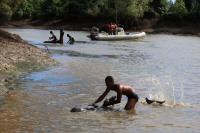
In May-June of 2008, WCS led an international stranding response team to a mass stranding of approximately 100 melon-headed whales in the coastal mangroves of northeastern Madagascar. An independent scientific review panel has concluded that the mass stranding of approximately 100 melon-headed whales in the Loza Lagoon system in northwest Madagascar in 2008 was primarily triggered by acoustic stimuli, more specifically, a multi-beam echosounder system operated by a survey vessel contracted by ExxonMobil Exploration and Production (Northern Madagascar) Limited.
| Full story | 0 Comments | 9026 views |

| Environment | September 25, 2013 07:07 PM |
Consumers are increasingly demanding higher standards for how their meat is sourced, with animal welfare and the impact on the environment factoring in many purchases. Unfortunately, many widely-used livestock production methods are currently unsustainable. However, new research out today from the University of Cambridge has identified what may be the future of sustainable livestock production: silvopastoral systems which include shrubs and trees with edible leaves or fruits as well as herbage.
| Full story | 0 Comments | 7598 views |
| Molecular & Cell Biology | September 25, 2013 07:07 PM |
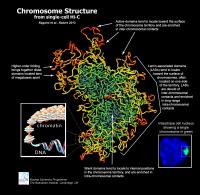
This is the chromosome structure from single-cell Hi-C. A new method for visualising chromosomes is painting a truer picture of their shape, which is rarely like the X-shaped blob of DNA most of us are familiar with.
| Full story | 0 Comments | 11034 views |
| Biology | September 25, 2013 07:07 PM |
A specific gene variant is more frequent among elite athletes in power sports, reports a study in the October issue of The Journal of Strength and Conditioning Research, official research journal of the National Strength and Conditioning Association (NSCA). The journal is published by Lippincott Williams & Wilkins, a part of Wolters Kluwer Health.
| Full story | 0 Comments | 11461 views |
| AIDS & HIV | September 20, 2013 04:43 AM |
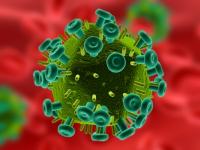
This image shows the HIV virus. A team of researchers led by King's College London has for the first time identified a new gene which may have the ability to prevent HIV, the virus that causes AIDS, from spreading after it enters the body.
| Full story | 0 Comments | 13534 views |
| Biology | September 20, 2013 04:43 AM |
Scientists have successfully analysed the genetic make-up of the offspring of pregnant coelacanth females for the first time. They found that the likelihood that the offspring is fathered by one single individual is very high – unlike with many other fish species. Dr Kathrin Lampert from the Ruhr-Universität Bochum and Prof Dr Manfred Schartl from the University of Würzburg, together with their colleagues, report about their findings in the journal "Nature Communications".
| Full story | 0 Comments | 6617 views |

| Microbiology | September 20, 2013 04:43 AM |
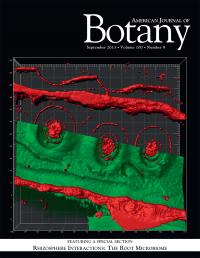
This is the cover of the American Journal of Botany September issue featuring the Rhizosphere Interactions special section. We often ignore what we cannot see, and yet organisms below the soil's surface play a vital role in plant functions and ecosystem well-being. These microbes can influence a plant's genetic structure, its health, and its interactions with other plants. A new series of articles in a Special Section in the American Journal of Botany on Rhizosphere Interactions: The Root Microbiome explores how root microbiomes influence plants across multiple scales—from cellular, bacterial, and whole plant levels to community and ecosystem levels.
| Full story | 0 Comments | 8166 views |
| Molecular & Cell Biology | September 20, 2013 04:43 AM |
Researchers at Weill Cornell Medical College have discovered why a tiny alteration in a brain gene, found in 20 percent of the population, contributes to the risk for anxiety, depression and memory loss.
| Full story | 0 Comments | 6332 views |
| Stem Cell Research | September 12, 2013 04:28 PM |
We often think of human cells as tiny computers that perform assigned tasks, where disease is a result of a malfunction. But in the current issue of Science, researchers at The Mount Sinai Medical Center offer a radical view of health — seeing it more as a cooperative state among cells, while they see disease as result of cells at war that fight with each other for domination.
| Full story | 0 Comments | 9006 views |
| Biology | September 12, 2013 04:28 PM |
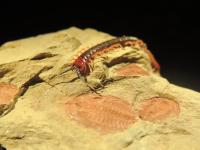
A living arthropod (centipede Cormocephalus) crawls over its 515-million-year-old relative that lived during the Cambrian explosion (trilobite Estaingia). The incredible burst of innovation in animals' body plans and habits during the Cambrian explosion, between 540 and 520 million years ago, can be explained by a reasonable uptick in evolutionary rates. The discovery, based on the first rigorous estimates of early evolutionary rates in arthropods, shows that evolution's "big bang" is compatible with natural selection as Darwin envisioned it, say researchers reporting their findings in Current Biology, a Cell Press publication, on September 12.
| Full story | 0 Comments | 8848 views |
| Health & Medicine | September 10, 2013 07:24 PM |
Use of stimulant medications to treat Attention-Deficit/Hyperactivity Disorder (ADHD) in children and adolescents has increased significantly over the past several years. This trend toward increased use of prescription stimulants extends beyond ADHD to other types of neuropsychiatric disorders in children and teens as well, including Autism Spectrum Disorder (ASD), according to a study published in Journal of Child and Adolescent Psychopharmacology (JCAP), a peer-reviewed journal from Mary Ann Liebert, Inc., publishers. The article is available on the JCAP website.
| Full story | 0 Comments | 8355 views |
| Molecular & Cell Biology | September 10, 2013 07:24 PM |
Medical researchers at the University of Alberta have made a basic science discovery that advances the understanding of how DNA repairs itself. When DNA becomes too damaged it ultimately leads to cancer.
| Full story | 0 Comments | 15757 views |

| Biotechnology | September 9, 2013 04:49 PM |
A team of researchers at the Wyss Institute of Biologically Inspired Engineering at Harvard University has found a way to self-assemble complex structures out of bricks smaller than a grain of salt. The new method could help solve one of the major challenges in tissue engineering: creating injectable components that self-assemble into intricately structured, biocompatible scaffolds at an injury site to help regrow human tissues.
| Full story | 0 Comments | 8860 views |
| Biotechnology | September 9, 2013 04:49 PM |
A new study has revealed that the stunning iridescent wings of the tropical blue Morpho butterfly could expand the range of innovative technologies. Scientific lessons learnt from these butterflies have already inspired designs of new displays, fabrics and cosmetics.
| Full story | 0 Comments | 10242 views |
| Microbiology | September 5, 2013 05:53 PM |
Researchers have found that apoptosis, a natural process of programmed cell death, can reactivate latent herpesviruses in the dying cell. The results of their research, which could have broad clinical significance since many cancer chemotherapies cause apoptosis, was published ahead of print in the Journal of Virology.
| Full story | 0 Comments | 8378 views |
| Biotechnology | September 5, 2013 05:53 PM |
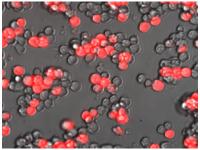
Fluorescent molecular beacons allow identification and purification of cardiac muscle cells. Pure cardiac muscle cells, ready to transplant into a patient affected by heart disease.
| Full story | 0 Comments | 7735 views |
| Environment | September 5, 2013 05:53 PM |
Coral reefs are tremendously important for ocean biodiversity, as well as for the economic and aesthetic value they provide to their surrounding communities. Unfortunately they have been in great decline in recent years, much of it due to the effects of global climate change. One such effect, called bleaching, occurs when the symbiotic algae that are essential for providing nutrients to the coral either lose their identifying photosynthetic pigmentation and their ability to perform photosynthesis or disappear entirely from the coral's tissue. Without a healthy population of these algae, the coral cannot survive.
| Full story | 0 Comments | 7666 views |
| Biology | September 2, 2013 06:11 PM |
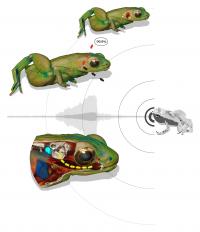
This is an illustration how a Gardiner's frog can hear with its mouth. Gardiner's frogs from the Seychelles islands, one of the smallest frogs in the world, do not possess a middle ear with an eardrum yet can croak themselves, and hear other frogs. An international team of scientists using X-rays has now solved this mystery and established that these frogs are using their mouth cavity and tissue to transmit sound to their inner ears. The results are published in PNAS on September 2, 2013.
| Full story | 0 Comments | 20076 views |
| Biology | September 2, 2013 06:11 PM |
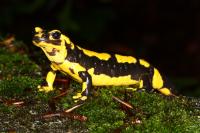
This image shows a fire salamander. A new species of fungus that eats amphibians' skin has ravaged the fire salamander population in the Netherlands, bringing it close to regional extinction.
| Full story | 0 Comments | 14944 views |
| Biology | September 2, 2013 06:11 PM |
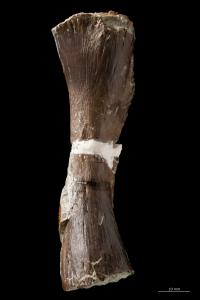
This is the femur of Metoposaurus diagnosticus krasiejowensis as viewed from behind (posterior). The sectioned plane is marked by the white stripe. Krasiejów, Poland was a vastly different place 230 million years ago during the Triassic Period. It was part of a giant continent called Pangea, had a warm climate throughout the year, and was populated by giant amphibians that weighed half a ton and were 10 feet long. Metoposaurus diagnosticus was one of these giant amphibians, and its environment had only two seasons: wet and dry. Like modern amphibians, Metoposaurus needed water for its lifestyle, but the extremely long dry season in Triassic Krasiejów drove this species to burrow underground and go dormant when water was scarce.
| Full story | 0 Comments | 9600 views |
| Molecular & Cell Biology | September 2, 2013 06:11 PM |
The idea that men and women are fundamentally different from each other is widely accepted. And throughout the world, this has created distinct ideas about which social and physical characteristics are necessary in each gender to maintain healthy human development.
| Full story | 0 Comments | 8486 views |

- In some genetic cases of microcephaly, stem cells fail to launch
- Yale team discovers how Zika virus causes fetal brain damage
- Scientists uncover the way a common cell enzyme alerts the body to invading bacteria
- Arctic gives clues on worst mass extinction of life
- Calcium channel blockers caught in the act at atomic level
Search Bio News Net
Free Biology Newsletter
- Flexibility That A.C.A. Lent to Work Force Is Threatened by...International Herald Tribune
- Bacteria Behind Legionnaires’ Disease Found at New York Police StationInternational Herald Tribune
- Prescription Price Crisis? 28 Million Americans See Spike in Drug...MSNBC.com: Health
- Seizing on Opioid Crisis, a Drug Maker Lobbies Hard for...International Herald Tribune
- Republicans are taking a big political risk on health careAP Health News
- Why We're So Divided Over Saving WolvesNational Geographic News