

A simpler and faster way of producing designer bacteria used in biotechnology processes has been developed by University of Adelaide researchers.

| Molecular & Cell Biology | May 28, 2013 04:35 PM |
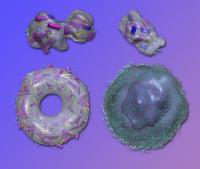
Fluctuation x-ray scattering is the basis of a new technique for rapidly modeling the shapes of large biological models. To learn how biological molecules like proteins function, scientists must first understand their structures. Almost as important is understanding how the structures change, as molecules in the native state do their jobs.
| Full story | 0 Comments | 6253 views |

| Biology | May 28, 2013 04:35 PM |
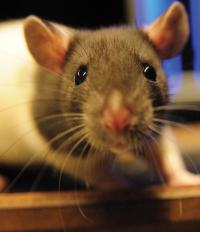
Rats process visual information from their eyes similar to other mammals. Nevertheless, their eyes move in a very different way. Unlike humans, their eyes can move in opposite directions. Scientists from the Max Planck Institute for Biological Cybernetics in Tübingen, using miniaturised high-speed cameras and high-speed behavioural tracking, discovered that rats move their eyes in opposite directions in both the horizontal and the vertical plane when running around. Each eye moves in a different direction, depending on the change in the animal's head position. An analysis of both eyes' field of view found that the eye movements exclude the possibility that rats fuse the visual information into a single image like humans do. Instead, the eyes move in such a way that enables the space above them to be permanently in view – presumably an adaptation to help them deal with the major threat from predatory birds that rodents face in their natural environment.
| Full story | 0 Comments | 11652 views |
| Biology | May 28, 2013 04:35 PM |
The growth of plants toward light is particularly important at the beginning of their lifecycle. Many seeds germinate in the soil and get their nutrition in the dark from their limited reserves of starch and lipids. Reaching for the surface, the seedlings rapidly grow upwards against the gravitational pull, which provides an initial clue for orientation. With the help of highly sensitive light-sensing proteins, they find the shortest route to the sunlight – and are even able to bend in the direction of the light source.
| Full story | 0 Comments | 11855 views |

| Bioinformatics | May 28, 2013 04:35 PM |
Camels are divided into two species, the one-humped dromedary and the two-humped Bactrian camel. Whether equipped with one or two humps, camels are precious in desert regions throughout the world. Their ability to carry heavy loads over long distances makes them ideally suited for transportation. In addition, camels are able to survive for weeks in hostile environments without food and water. Despite the extremely arid conditions, camels still provide enough milk for human consumption and also have an important role as a source of meat. Camels are specialists when it comes to adapting to the environment and have been characterized as sustainable food producers.
| Full story | 0 Comments | 10804 views |
| Molecular & Cell Biology | May 26, 2013 06:18 PM |
In Parkinson's disease, the protein "alpha-synuclein" aggregates and accumulates within neurons. Specific areas of the brain become progressively affected as the disease develops and advances. The mechanism underlying this pathological progression is poorly understood but could result from spreading of the protein (or abnormal forms of it) along nerve projections connecting lower to upper brain regions. Scientists at the German Center for Neurodegenerative Diseases (DZNE) in Bonn have developed a novel experimental model that reproduces for the first time this pattern of alpha-synuclein brain spreading and provides important clues on the mechanisms underlying this pathological process. They triggered the production of human alpha-synuclein in the lower rat brain and were able to trace the spreading of this protein toward higher brain regions. The new experimental paradigm could promote the development of ways to halt or slow down disease development in humans. The research team headed by Prof. Donato Di Monte presents these results in the scientific journal "EMBO Molecular Medicine".
| Full story | 0 Comments | 7059 views |
| Biology | May 22, 2013 06:10 PM |
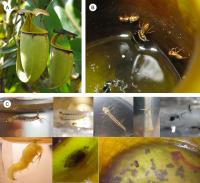
The carnivorous pitcher plant Nepenthes bicalcarata (A) and the ant Camponotus schmitzi (B) team up to fight fly larvae (C) that steal the plant's prey. An insect-eating pitcher plant teams up with ants to prevent mosquito larvae from stealing its nutrients, according to research published May 22 in the open access journal PLOS ONE by Mathias Scharmann and colleagues from the University of Cambridge and the University Brunei Darussalam.
| Full story | 0 Comments | 8827 views |

| Stem Cell Research | May 21, 2013 05:21 PM |
When infections occur in the body, stem cells in the blood often jump into action by multiplying and differentiating into mature immune cells that can fight off illness. But repeated infections and inflammation can deplete these cell populations, potentially leading to the development of serious blood conditions such as cancer. Now, a team of researchers led by biologists at the California Institute of Technology (Caltech) has found that, in mouse models, the molecule microRNA-146a (miR-146a) acts as a critical regulator and protector of blood-forming stem cells (called hematopoietic stem cells, or HSCs) during chronic inflammation, suggesting that a deficiency of miR-146a may be one important cause of blood cancers and bone marrow failure.
| Full story | 0 Comments | 8967 views |

| Health & Medicine | May 21, 2013 05:21 PM |
Using the Department of Defense Serum Repository (DoDSR), University of Cincinnati (UC) researchers have identified a number of biomarkers for inflammatory bowel disease (IBD), which could help with earlier diagnosis and intervention in those who have not yet shown symptoms.
| Full story | 0 Comments | 6024 views |
| Biology | May 16, 2013 04:57 PM |
A scientist has discovered an ancient extinct creature with 'scissor hand-like' claws in fossil records and has named it in honour of his favourite movie star.
| Full story | 0 Comments | 9277 views |

| Biotechnology | May 16, 2013 04:57 PM |
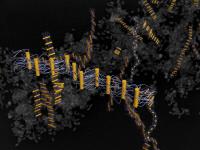
DNA-tethered nanorods link up like rungs on a ribbonlike ladder—a new mechanism for linear self-assembly that may be unique to the nanoscale. Scientists at the U.S. Department of Energy's Brookhaven National Laboratory have discovered that DNA "linker" strands coax nano-sized rods to line up in way unlike any other spontaneous arrangement of rod-shaped objects. The arrangement-with the rods forming "rungs" on ladder-like ribbons linked by multiple DNA strands-results from the collective interactions of the flexible DNA tethers and may be unique to the nanoscale. The research, described in a paper published online in ACS Nano, a journal of the American Chemical Society, could result in the fabrication of new nanostructured materials with desired properties.
| Full story | 0 Comments | 6928 views |
| Stem Cell Research | May 16, 2013 04:57 PM |
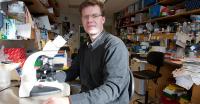
This image shows Matthias Hebrok, Ph.D., University of California, San Francisco. Raising hopes for cell-based therapies, UC San Francisco researchers have created the first functioning human thymus tissue from embryonic stem cells in the laboratory. The researchers showed that, in mice, the tissue can be used to foster the development of white blood cells the body needs to mount healthy immune responses and to prevent harmful autoimmune reactions.
| Full story | 0 Comments | 7584 views |
| Stem Cell Research | May 11, 2013 05:33 AM |
May 9, 2013, New York, NY and San Diego, CA – A large, multi-institutional research team involved in the NIH Epigenome Roadmap Project has published a sweeping analysis in the current issue of the journal Cell of how genes are turned on and off to direct early human development. Led by Bing Ren of the Ludwig Institute for Cancer Research, Joseph Ecker of The Salk Institute for Biological Studies and James Thomson of the Morgridge Institute for Research, the scientists also describe novel genetic phenomena likely to play a pivotal role not only in the genesis of the embryo, but that of cancer as well. Their publicly available data, the result of more than four years of experimentation and analysis, will contribute significantly to virtually every subfield of the biomedical sciences.
| Full story | 0 Comments | 7607 views |
| Biology | May 11, 2013 05:33 AM |
Different brain areas are activated when we choose to suppress an emotion, compared to when we are instructed to inhibit an emotion, according a new study from the UCL Institute of Cognitive Neuroscience and Ghent University.
| Full story | 0 Comments | 13913 views |
| Bioinformatics | May 11, 2013 05:32 AM |
Children born with rare, inherited conditions known as Congenital Disorders of Glycosylation, or CDG, have mutations in one of the many enzymes the body uses to decorate its proteins and cells with sugars. Properly diagnosing a child with CDG and pinpointing the exact sugar gene that's mutated can be a huge relief for parents—they better understand what they're dealing with and doctors can sometimes use that information to develop a therapeutic approach. Whole-exome sequencing, an abbreviated form of whole-genome sequencing, is increasingly used as a diagnostic for CDG.
| Full story | 0 Comments | 8038 views |

| AIDS & HIV | May 11, 2013 05:32 AM |
A team of NIH scientists has developed a new tool to identify broadly neutralizing antibodies (bNAbs) capable of preventing infection by the majority of HIV strains found around the globe, an advance that could help speed HIV vaccine research. Scientists have long studied HIV-infected individuals whose blood shows powerful neutralization activity because understanding how HIV bNAbs develop and attack the virus can yield clues for HIV vaccine design. But until now, available methods for analyzing blood samples did not easily yield specific information about the HIV bNAbs present or the parts of the virus they targeted. In addition, determining where and how HIV bNAbs bind to the virus has been a laborious process involving several complicated techniques and relatively large quantities of blood from individual donors.
| Full story | 0 Comments | 6420 views |
| Biotechnology | May 6, 2013 06:10 PM |
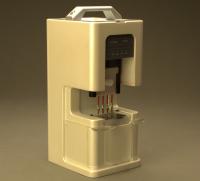
This is the hand-held device for extracting DNA. Take a swab of saliva from your mouth and within minutes your DNA could be ready for analysis and genome sequencing with the help of a new device.
| Full story | 0 Comments | 27077 views |
| Bioinformatics | May 6, 2013 06:10 PM |
When Woods Hole Oceanographic Institution (WHOI) marine paleoecologist Marco Coolen was mining through vast amounts of genetic data from the Black Sea sediment record, he was amazed about the variety of past plankton species that left behind their genetic makeup (i.e., the plankton paleome).
| Full story | 0 Comments | 9139 views |
| Bioinformatics | May 5, 2013 06:13 PM |
The U.S. Department of Energy Joint Genome Institute (DOE JGI) is among the world leaders in sequencing the genomes of microbes, focusing on their potential applications in the fields of bioenergy and environment. As a national user facility, the DOE JGI is also focused on developing tools that more cost-effectively enable the assembly and analysis of the sequence that it, as well as other genome centers, generates.
| Full story | 0 Comments | 8076 views |
| Molecular & Cell Biology | May 5, 2013 06:13 PM |
UCSF scientists controlled seizures in epileptic mice with a one-time transplantation of medial ganglionic eminence (MGE) cells, which inhibit signaling in overactive nerve circuits, into the hippocampus, a brain region associated with seizures, as well as with learning and memory. Other researchers had previously used different cell types in rodent cell transplantation experiments and failed to stop seizures.
| Full story | 0 Comments | 9460 views |
| Bioinformatics | May 5, 2013 06:13 PM |
A new study led by researchers from Harvard School of Public Health (HSPH) and the Wellcome Trust Sanger Institute in the UK has, for the first time, used genome sequencing technology to track the changes in a bacterial population following the introduction of a vaccine. The study follows how the population of pneumococcal bacteria changed following the introduction of the 'Prevnar' conjugate polysaccharide vaccine, which substantially reduced rates of pneumococcal disease across the U.S. The work demonstrates that the technology could be used in the future to monitor the effectiveness of vaccination or antibiotic use against different species of bacterial pathogens, and for characterizing new and emerging threats.
| Full story | 0 Comments | 7327 views |
| Biotechnology | May 1, 2013 07:37 PM |
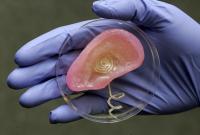
Scientists used 3-D printing to merge tissue and an antenna capable of receiving radio signals. Scientists at Princeton University used off-the-shelf printing tools to create a functional ear that can "hear" radio frequencies far beyond the range of normal human capability.
| Full story | 0 Comments | 10746 views |
| Bioinformatics | May 1, 2013 07:37 PM |
Endometrial tumors can be reclassified into distinct subtypes based partly on their genomic makeup and may respond to targeted drugs already being tested in clinical trials, according to a large-scale genomic analysis led by researchers at Memorial Sloan-Kettering Cancer Center and other centers within The Cancer Genome Atlas (TCGA) Research Network.
| Full story | 0 Comments | 7679 views |

- In some genetic cases of microcephaly, stem cells fail to launch
- Yale team discovers how Zika virus causes fetal brain damage
- Scientists uncover the way a common cell enzyme alerts the body to invading bacteria
- Arctic gives clues on worst mass extinction of life
- Calcium channel blockers caught in the act at atomic level
Search Bio News Net
Free Biology Newsletter
- Flexibility That A.C.A. Lent to Work Force Is Threatened by...International Herald Tribune
- Bacteria Behind Legionnaires’ Disease Found at New York Police StationInternational Herald Tribune
- Prescription Price Crisis? 28 Million Americans See Spike in Drug...MSNBC.com: Health
- Seizing on Opioid Crisis, a Drug Maker Lobbies Hard for...International Herald Tribune
- Republicans are taking a big political risk on health careAP Health News
- Why We're So Divided Over Saving WolvesNational Geographic News