


Researchers can now compare not only the genomes, but all the genes expressed, by domestic and wild tomatoes. You say tomato, I say comparative transcriptomics. Researchers in the U.S., Europe and Japan have produced the first comparison of both the DNA sequences and which genes are active, or being transcribed, between the domestic tomato and its wild cousins.

| Bioinformatics | June 26, 2013 06:31 PM |
| Full story | 0 Comments | 12203 views |
| Bioinformatics | June 26, 2013 06:31 PM |
It is nothing short of a world record in DNA research that scientists at the Centre for GeoGenetics at the Natural History Museum of Denmark (University of Copenhagen) have hit. They have sequenced the so far oldest genome from a prehistoric creature. They have done so by sequencing and analyzing short pieces of DNA molecules preserved in bone-remnants from a horse that had been kept frozen for the last 700.000 years in the permafrost of Yukon, Canada. By tracking the genomic changes that transformed prehistoric wild horses into domestic breeds, the researchers have revealed the genetic make-up of modern horses with unprecedented details. The spectacular results are now published in the international scientific journal Nature.
| Full story | 0 Comments | 9515 views |

| Biology | June 26, 2013 06:31 PM |
Contrary to popular belief, crabgrass does not thrive in lawns, gardens and farm fields by simply crowding out other plants. A new study in ACS' Journal of Agricultural and Food Chemistry has found that the much-despised weed actually produces its own herbicides that kill nearby plants.
| Full story | 0 Comments | 6908 views |

| Biotechnology | June 24, 2013 06:09 PM |
Nanoparticles that deliver short strands of RNA offer a way to treat cancer and other diseases by shutting off malfunctioning genes. Although this approach has shown some promise, scientists are still not sure exactly what happens to the nanoparticles once they get inside their target cells.
| Full story | 0 Comments | 7310 views |
| Biotechnology | June 24, 2013 06:09 PM |
Parentage-based tagging (PBT) is an emerging genetic-based fish tagging method that involves genotyping hatchery broodstock. PBT is a passive non-invasive approach to stock identification because the parents, not the offspring, are genetically sampled at spawning, thereby "tagging" the offspring. This method provides the same information as traditional physical tags but also allows for collection of more detailed information that previously was impossible or impractical to gather using traditional tagging methods.
| Full story | 0 Comments | 5584 views |
| Biology | June 24, 2013 06:09 PM |
The brain's pleasure response to tasting food can be measured through the eyes using a common, low-cost ophthalmological tool, according to a study just published in the journal Obesity. If validated, this method could be useful for research and clinical applications in food addiction and obesity prevention.
| Full story | 0 Comments | 7467 views |

| Microbiology | June 24, 2013 06:09 PM |
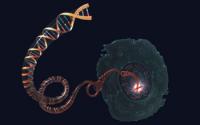
This drawing depicts a DNA molecule unwinding from a chromosome inside the nucleus of a cell. Bacterial DNA may integrate into the human genome more readily in tumors than in normal human tissue, scientists have found.
| Full story | 0 Comments | 6503 views |

| Molecular & Cell Biology | June 24, 2013 06:09 PM |
MIT biologists have discovered a mechanism that allows cells to read their own DNA in the correct direction and prevents them from copying most of the so-called "junk DNA" that makes up long stretches of our genome.
| Full story | 0 Comments | 5288 views |

| Health & Medicine | June 20, 2013 04:17 PM |
A study led by researchers from Lawrence Berkeley National Laboratory has found for the first time that thirdhand smoke—the noxious residue that clings to virtually all surfaces long after the secondhand smoke from a cigarette has cleared out—causes significant genetic damage in human cells.
| Full story | 0 Comments | 6650 views |
| Health & Medicine | June 20, 2013 04:17 PM |
Scientists have discovered the survival secret to a genetic mutation that stokes leukemia cells, solving an evolutionary riddle and paving the way to a highly targeted therapy for leukemia. In a paper published today in Cell, researchers at NYU Langone Medical Center describe how a mutated protein, called Fbxw7, behaves differently when expressed in cancer cells versus healthy cells. "Fbxw7 is essential for making blood cells, so the big mystery is why a mutation on a gene so important for survival would persist," says lead author Iannis Aifantis, PhD, chair of pathology at NYU Langone Medical Center and an Early Career Scientist at Howard Hughes Medical Institute. "What we've found is that the mutation affects cancerous cells but not healthy cells."
| Full story | 0 Comments | 5199 views |
| Biology | June 20, 2013 04:17 PM |
A line of genetically modified mice that Western University scientists call "Forrest Gump" because, like the movie character, they can run far but they aren't smart, is furthering the understanding of a key neurotransmitter called acetylcholine (ACh). Marco Prado and his team at Robarts Research Institute say the mice show what happens when too much of this neurotransmitter becomes available in the brain. Boosting ACh is a therapeutic target for Alzheimer's disease because it's found in reduced amounts when there's cognitive failure. Prado's research is published in the Journal of Neuroscience.
| Full story | 0 Comments | 5826 views |

| Environment | June 20, 2013 04:17 PM |
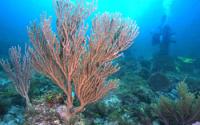
Researchers study how coral responds to ocean acidification at natural undersea springs. Ocean acidification due to rising carbon dioxide levels reduces the density of coral skeletons, making coral reefs more vulnerable to disruption and erosion.
| Full story | 0 Comments | 6464 views |
| Health & Medicine | June 17, 2013 06:21 PM |
Young women who have cancer treatment often lose their fertility because chemotherapy and radiation can damage or kill their immature ovarian eggs, called oocytes. Now, Northwestern Medicine® scientists have found the molecular pathway that can prevent the death of immature ovarian eggs due to chemotherapy, potentially preserving fertility and endocrine function.
| Full story | 0 Comments | 6235 views |
| Environment | June 17, 2013 06:21 PM |
Ocean acidification due to rising carbon dioxide levels will reduce the density of coral skeletons, making coral reefs more vulnerable to disruption and erosion, according to a new study of corals growing where submarine springs naturally lower the pH of seawater.
| Full story | 0 Comments | 6207 views |
| Molecular & Cell Biology | June 17, 2013 06:21 PM |
Discovery of a mutant gene responsible for a disease is a milestone, but for most conditions, it may be only a first step towards a treatment or cure. Understanding Rett Syndrome, an autism spectrum disorder, is further complicated by the fact that the implicated gene controls a suite of other genes. Two papers, published in today's Nature Neuroscience and Nature, reveal key steps in how mutations in the gene for methyl CpG-binding protein (MECP2) cause the condition. The Rett Syndrome Research Trust (RSRT) funded this work with generous support from partners Rett Syndrome Research Trust UK and Rett Syndrome Research & Treatment Foundation.
| Full story | 0 Comments | 5687 views |
| Biotechnology | June 17, 2013 06:21 PM |
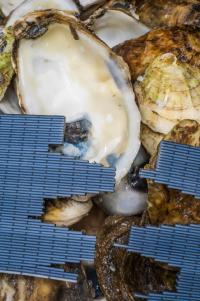
This photo shows the brick-and-mortar pattern of simulated bone and nacre against the backdrop of real nacre found in the inner shell of many molluscs. Researchers working to design new materials that are durable, lightweight and environmentally sustainable are increasingly looking to natural composites, such as bone, for inspiration: Bone is strong and tough because its two constituent materials, soft collagen protein and stiff hydroxyapatite mineral, are arranged in complex hierarchical patterns that change at every scale of the composite, from the micro up to the macro.
| Full story | 0 Comments | 6173 views |
| Molecular & Cell Biology | June 12, 2013 06:18 PM |
Slowdowns in the transport and delivery of nutrients, proteins and signaling molecules within nerve cells may contribute to the development of the neurodegenerative disorder ALS, according to researchers at the University of Illinois at Chicago College of Medicine.
| Full story | 0 Comments | 5959 views |
| Biology | June 12, 2013 06:18 PM |
The teeth of a kangaroo and other extinct marsupials reveal that southeastern Queensland 2.5-5-million-years ago was a mosaic of tropical forests, wetlands and grasslands and much less arid than previously thought. The chemical analysis of tooth enamel that suggests this diverse prehistoric habitat is published June 12 in the open access journal PLOS ONE by Shaena Montanari from the American Museum of Natural History and colleagues from other institutions.
| Full story | 0 Comments | 5448 views |
| Biology | June 12, 2013 06:18 PM |

Singing siblings: zebra finches that grew up without their dads and therefore without a "song model ", don't have to worry about a lack of singing repertoire. The song of songbirds is usually transmitted from one generation to the next by imitation learning and is thought to be similar to the acquisition of human speech. Although song is often learnt from an adult model, there is some evidence of active vocal learning among siblings. Researchers from the Max Planck Institute for Ornithology in Seewiesen now showed that juvenile zebra finches that have been raised without their fathers are able to learn their song via a brother that for a short period had been exposed to the father's' song.
| Full story | 0 Comments | 8653 views |
| Biology | June 12, 2013 06:18 PM |

This is an artist's illustration of how Archaeopteryx may have looked sporting its new pigmentation. The first complete chemical analysis of feathers from Archaeopteryx, a famous fossil linking dinosaurs and birds, reveals that the feathers were patterned—light in color, with a dark edge and tip—rather than all black, as previously thought.
| Full story | 0 Comments | 6417 views |
| Health & Medicine | June 11, 2013 05:56 PM |
Hours spent at the video gaming console not only train a player's hands to work the buttons on the controller, they probably also train the brain to make better and faster use of visual input, according to Duke University researchers.
| Full story | 0 Comments | 6579 views |
| Microbiology | June 11, 2013 05:56 PM |
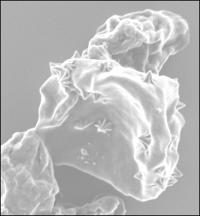
This is a scanning electron micrograph of Sulfolobus solfataricus cells infected with STIV, showing pyramid-like structures on the surface of the cell. Biologists from Indiana University and Montana State University have discovered a striking connection between viruses such as HIV and Ebola and viruses that infect organisms called archaea that grow in volcanic hot springs. Despite the huge difference in environments and a 2 billion year evolutionary time span between archaea and humans, the viruses hijack the same set of proteins to break out of infected cells.
| Full story | 0 Comments | 6696 views |
| Molecular & Cell Biology | June 6, 2013 07:20 PM |
The genome is full of sequence repetitions. Sequence motif is added after sequence motif, sometimes more than a hundred times. Erratically it seems. And these sequence motifs bind proteins that control transcription factors in regions of the genome where no transcription should occur. A conundrum.
| Full story | 0 Comments | 5750 views |
| Biology | June 5, 2013 04:36 PM |
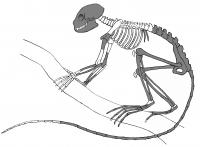
This is an artist's illustration of the skeleton of Archicebus achilles. The darkened bones represent the known bony elements of the skeleton found in China. An international team of paleontologists that includes Northern Illinois University anthropologist Dan Gebo is announcing the discovery of a nearly complete, articulated skeleton of a new tiny, tree-dwelling primate dating back 55 million years.
| Full story | 0 Comments | 8765 views |
| Molecular & Cell Biology | June 3, 2013 06:50 PM |
A new study provides surprising evidence that people with narcolepsy have an increased number of neurons that produce histamine, suggesting that histamine signaling may be a novel therapeutic target for this potentially disabling sleep disorder.
| Full story | 0 Comments | 6322 views |
| Biotechnology | June 3, 2013 06:50 PM |
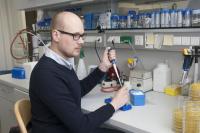
This is Christian Derntl in the bio-lab. Lignocellulosic waste such as sawdust or straw can be used to produce biofuel – but only if the long cellulose and xylan chains can be successfully broken down into smaller sugar molecules. To do this, fungi are used which, by means of a specific chemical signal, can be made to produce the necessary enzymes. Because this procedure is, however, very expensive, Vienna University of Technology has been investigating the molecular switch that regulates enzyme production in the fungus. As a result, it is now possible to manufacture genetically modified fungi that produce the necessary enzymes fully independently, thus making biofuel production significantly cheaper.
| Full story | 0 Comments | 7389 views |
| Biology | June 3, 2013 06:50 PM |
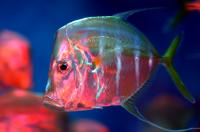
Researchers found that lookdown fish camouflage themselves through a complex manipulation of polarized light after it strikes the fish skin. Fish can hide in the open ocean by manipulating how light reflects off their skin, according to researchers at The University of Texas at Austin. The discovery could someday lead to the development of new camouflage materials for use in the ocean, and it overturns 40 years of conventional wisdom about fish camouflage.
| Full story | 0 Comments | 8378 views |
| Biology | June 3, 2013 06:50 PM |
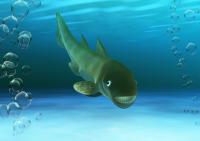
This is Machaeracanthus goujeti. Researchers from the University of Valencia and the Natural History Museum of Berlin have studied the fossilised remains of scales and bones found in Teruel and the south of Zaragoza, ascertaining that they belong to a new fish species called Machaeracanthus goujeti that lived in that area of the peninsula during the Devonian period. The fossils are part of the collection housed in the Palaeontology Museum of Zaragoza.
| Full story | 0 Comments | 6415 views |

- In some genetic cases of microcephaly, stem cells fail to launch
- Yale team discovers how Zika virus causes fetal brain damage
- Scientists uncover the way a common cell enzyme alerts the body to invading bacteria
- Arctic gives clues on worst mass extinction of life
- Calcium channel blockers caught in the act at atomic level
Search Bio News Net
Free Biology Newsletter
- Flexibility That A.C.A. Lent to Work Force Is Threatened by...International Herald Tribune
- Bacteria Behind Legionnaires’ Disease Found at New York Police StationInternational Herald Tribune
- Prescription Price Crisis? 28 Million Americans See Spike in Drug...MSNBC.com: Health
- Seizing on Opioid Crisis, a Drug Maker Lobbies Hard for...International Herald Tribune
- Republicans are taking a big political risk on health careAP Health News
- Why We're So Divided Over Saving WolvesNational Geographic News