

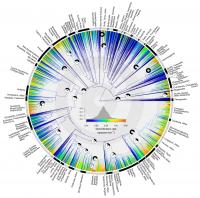
This shows the Bird Family Tree. The world's first family tree linking all living bids and revealing when and where they evolved and diversified since dinosaurs walked the earth has been created by scientists from the University of Sheffield.

| Biology | October 31, 2012 07:06 PM |
| Full story | 0 Comments | 10277 views |

| Bioinformatics | October 31, 2012 07:06 PM |
By decoding the genomes of more than 1,000 people whose homelands stretch from Africa and Asia to Europe and the Americas, scientists have compiled the largest and most detailed catalog yet of human genetic variation. The massive resource will help medical researchers find the genetic roots of rare and common diseases in populations worldwide. By decoding the genomes of more than 1,000 people whose homelands stretch from Africa and Asia to Europe and the Americas, scientists have compiled the largest and most detailed catalog yet of human genetic variation. The massive resource will help medical researchers find the genetic roots of rare and common diseases in populations worldwide.
| Full story | 0 Comments | 8545 views |
| Biology | October 30, 2012 07:17 PM |
Biologists from the University of Bonn have discovered that the cichlid fish Pelvicachromis taeniatus can see in the near infrared range; this was thought to be unlikely until now. Seeing in the infrared range is apparently helping fish to hunt in shallow African rivers. The results will be published in the journal "Naturwissenschaften" and are already available online now.
| Full story | 0 Comments | 8848 views |
| Biology | October 30, 2012 07:17 PM |
Bacteria in the guts of honeybees are highly resistant to the antibiotic tetracycline, probably as a result of decades of preventive antibiotic use in domesticated hives. Researchers from Yale University identified eight different tetracycline resistance genes among U.S. honeybees that were exposed to the antibiotic, but the genes were largely absent in bees from countries where such antibiotic use is banned. The study appears on October 30 in mBio®, the online open-access journal of the American Society for Microbiology.
| Full story | 0 Comments | 9051 views |

| Stem Cell Research | October 29, 2012 06:17 PM |
A team of Duke Medicine researchers has engineered cartilage from induced pluripotent stem cells that were successfully grown and sorted for use in tissue repair and studies into cartilage injury and osteoarthritis.
| Full story | 0 Comments | 7436 views |

| Health & Medicine | October 29, 2012 06:17 PM |
A regular exercise routine can make you fitter than ever – mentally fit.
| Full story | 0 Comments | 12272 views |

| Molecular & Cell Biology | October 24, 2012 07:01 PM |
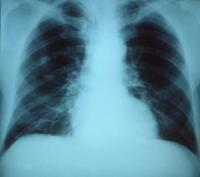
Researchers report they have found a way to disrupt the spread of antibiotic-resistance genes among S. pneumoniae bacteria, which can contribute to pneumonia (pictured), meningitis and other dangerous ailments. The bacterium Streptococcus pneumoniae – which can cause pneumonia, meningitis, bacteremia and sepsis – likes to share its antibiotic-defeating weaponry with its neighbors. Individual cells can pass resistance genes to one another through a process called horizontal gene transfer, or by "transformation," the uptake of DNA from the environment.
| Full story | 0 Comments | 14998 views |
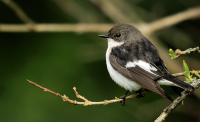
The European pied flycatcher, and later its close relative the collared flycatcher, have long been an important research organism for scientists at many universities. Just how new species are established is still one of the most central questions in biology. In an article in the leading scientific journal Nature, researchers at Uppsala University in Sweden describe how they mapped the genomes of the European pied flycatcher and the collared flycatcher and found that it is disparate chromosome structures rather than separate adaptations in individual genes that underlies the separation of the species.
| Full story | 0 Comments | 7448 views |

| Biotechnology | October 23, 2012 06:05 PM |
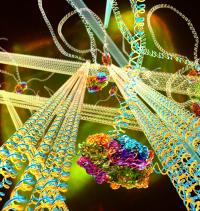
The DNA gel is composed of stiff DNA nanotubes connected to each other via long, flexible DNA linkers. Artificial muscles and self-propelled goo may be the stuff of Hollywood fiction, but for UC Santa Barbara scientists Omar Saleh and Deborah Fygenson, the reality of it is not that far away. By blending their areas of expertise, the pair have created a dynamic gel made of DNA that mechanically responds to stimuli in much the same way that cells do. The results of their research were published online in the Proceedings of the National Academy of Sciences.
| Full story | 0 Comments | 12365 views |
| Health & Medicine | October 23, 2012 06:05 PM |
Lead scientist Professor Simon Cutting, from the School of Biological Sciences at Royal Holloway, has developed the jabs through the use of probiotic spores. He carried out fundamental studies into the biology of the bacterium Bacillus subtilis which attracted the attention of microbiologists due to its ability to form spores that can last millions of years before germinating under the appropriate environmental conditions.
| Full story | 0 Comments | 12763 views |

| Environment | October 23, 2012 06:04 PM |
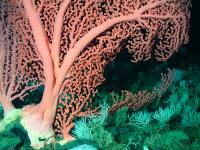
Paragorga arborea, also known as bubblegum coral, is a conspicuous and locally abundant coral species that can grow massive colonies, which can reach up to 8 meters in height The ability of deep-sea corals to harbor a broad array of marine life, including commercially important fish species, make these habitat-forming organisms of immediate interest to conservationists, managers, and scientists. Understanding and protecting corals requires knowledge of the historical processes that have shaped their biodiversity and biogeography.
| Full story | 0 Comments | 8012 views |
| Biology | October 23, 2012 06:04 PM |
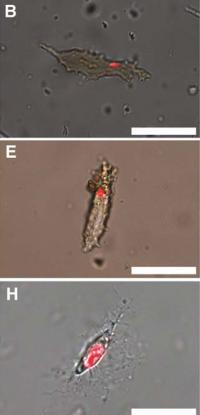
T.rex (B), B. canadensis (E) and ostrich osteocytes (H) showing positive response to propidium iodide A team of researchers from North Carolina State University and the Palo Alto Research Center (PARC) has found more evidence for the preservation of ancient dinosaur proteins, including reactivity to antibodies that target specific proteins normally found in bone cells of vertebrates. These results further rule out sample contamination, and help solidify the case for preservation of cells – and possibly DNA – in ancient remains.
| Full story | 0 Comments | 9045 views |

| AIDS & HIV | October 22, 2012 04:59 PM |
Wits researchers have played a pivotal role in an AIDS study published today in the journal, Nature Medicine, which describes how a unique change in the outer covering of the virus found in two HIV infected South African women enabled them to make potent antibodies which are able to kill up to 88% of HIV types from around the world.
| Full story | 0 Comments | 8265 views |
| Environment | October 22, 2012 04:59 PM |
Sweden's only remaining cold-water coral reef, the Säcken reef in the Koster Fjord, is under threat of extinction. Because of that, researchers from the University of Gothenburg have started a restoration project where healthy corals from nearby reefs in Norway are being removed and placed on the Säcken reef.
| Full story | 0 Comments | 7933 views |
| Molecular & Cell Biology | October 22, 2012 04:59 PM |
The immune system is comprised of multiple cell types each capable of specialized functions to protect the body from invading pathogens and promote tissue repair after injury. One cell type, known as monocytes, circulates throughout the organism in the blood and enters tissues to actively phagocytose (eat!) foreign cells and assist in tissue healing. While monocytes can freely enter most bodily tissues, the healthy, normal brain is different as it is sequestered from circulating blood by a tight network of cells known as the blood brain barrier. Thus, the brain must maintain a highly specialized, resident immune cell, known as microglia, to remove harmful invaders and respond to tissue damage.
| Full story | 0 Comments | 8526 views |
| Biology | October 22, 2012 04:59 PM |
For the first time, researchers have been able to show by acoustic analysis that whales—or at least one very special white whale—can imitate the voices of humans. That's a surprise, because whales typically produce sounds in a manner that is wholly different from humans, say researchers who report their findings in the October 23 issue of Current Biology, a Cell Press publication.
| Full story | 0 Comments | 15849 views |
| Molecular & Cell Biology | October 22, 2012 04:59 PM |
Like job-seekers searching for a new position, living things sometimes have to pick up a new skill if they are going to succeed. Researchers from the University of California, Davis, and Uppsala University, Sweden, have shown for the first time how living organisms do this.
| Full story | 0 Comments | 7797 views |

| Microbiology | October 18, 2012 04:56 PM |
Researchers at the University of Leeds have identified a crucial stage in the lifecycle of simple viruses like polio and the common cold that could open a new front in the war on viral disease.
| Full story | 0 Comments | 10305 views |
| Molecular & Cell Biology | October 18, 2012 04:56 PM |
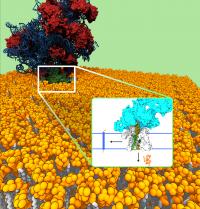
The ribosome (red-blue) in complex with the translocon channel (green), which is embedded in the cell membrane (yellow, white). Chemists at the California Institute of Technology (Caltech) have managed, for the first time, to simulate the biological function of a channel called the Sec translocon, which allows specific proteins to pass through membranes. The feat required bridging timescales from the realm of nanoseconds all the way up to full minutes, exceeding the scope of earlier simulation efforts by more than six orders of magnitude. The result is a detailed molecular understanding of how the translocon works.
| Full story | 0 Comments | 8185 views |
| Molecular & Cell Biology | October 18, 2012 04:56 PM |
An team of Rutgers University scientists led by Richard H. Ebright and Eddy Arnold has determined the three-dimensional structure of the transcription initiation complex, the key intermediate in the process by which cells read out genetic information in DNA.
| Full story | 0 Comments | 7359 views |
| Biology | October 16, 2012 05:48 PM |
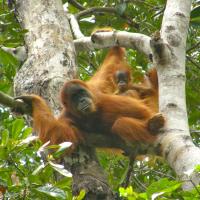
Sumatran orangutans have undergone a substantial recent population decline Sumatran orangutans have undergone a substantial recent population decline, according to a new genetic study, but the same research revealed the existence of critical corridors for dispersal migrations that, if protected, can help maintain genetic diversity and aid in the species' conservation.
| Full story | 0 Comments | 11641 views |
| Molecular & Cell Biology | October 16, 2012 05:48 PM |
The genomes of birds are riddled with DNA sequences from viruses, according to a study to be published on October 16 in mBio®, the online open-access journal of the American Society for Microbiology. Analysis of these viral sequences, known as endogenous retroviruses (ERVs), can provide insights into how both hosts and viruses have evolved over the eons.
| Full story | 0 Comments | 7007 views |
| Biotechnology | October 15, 2012 03:38 PM |
Soybean cyst nematode (SCN) does hundreds of millions of dollars' worth of damage each year. Matt Hudson and Brian Diers, crop sciences researchers at the University of Illinois and Andrew Bent at the University of Wisconsin, think they may have found a way to strengthen plant resistance. The research has just been published in Science Express.
| Full story | 0 Comments | 8796 views |
| Biotechnology | October 15, 2012 03:38 PM |
By force of habit we tend to assume computers are made of silicon, but there is actually no necessary connection between the machine and the material. All that an engineer needs to do to make a computer is to find a way to build logic gates — the elementary building blocks of digital computers — in whatever material is handy.
| Full story | 0 Comments | 7448 views |
| Biology | October 10, 2012 05:19 PM |
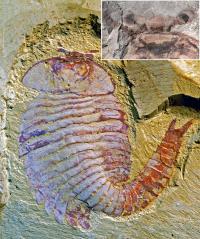
This picture shows a nearly intact fossil of Fuxianhuia protensa. The inset shows the fossilized brain in the head of another specimen. The remarkably well-preserved fossil of an extinct arthropod shows that anatomically complex brains evolved earlier than previously thought and have changed little over the course of evolution. According to University of Arizona neurobiologist Nicholas Strausfeld, who co-authored the study describing the specimen, the fossil is the earliest known to show a brain.
| Full story | 0 Comments | 12067 views |
| Stem Cell Research | October 10, 2012 05:19 PM |
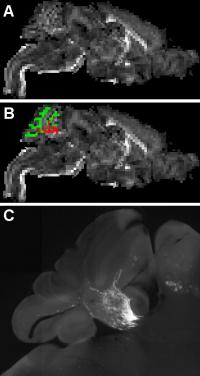
A. This is a high-field MRI scan of the entire brain of a mouse that received the transplant of human stem cells Physician-scientists at Oregon Health & Science University Doernbecher Children's Hospital have demonstrated for the first time that banked human neural stem cells — HuCNS-SCs, a proprietary product of StemCells Inc. — can survive and make functional myelin in mice with severe symptoms of myelin loss. Myelin is the critical fatty insulation, or sheath, surrounding new nerve fibers and is essential for normal brain function.
| Full story | 0 Comments | 13770 views |
| Biotechnology | October 9, 2012 03:21 AM |
Environmental problems, such as depleting natural resources, highlight the need to establish a renewable chemical industry. Metabolic engineering enhances the production of chemicals made by microbes in so-called "cell factories". Next Monday, world class scientist Professor Sang Yup Lee of KAIST (Korea Advanced Institute of Science and Technology) will explain how metabolic engineering could lead to the development of solutions to these environmental problems.
| Full story | 0 Comments | 11076 views |
| Molecular & Cell Biology | October 9, 2012 03:21 AM |
Scientists at the Gladstone Institutes have mapped the precise frequency by which genes get turned on across the human genome, providing new insight into the most fundamental of cellular processes—and revealing new clues as to what happens when this process goes awry.
| Full story | 0 Comments | 7890 views |
| Health & Medicine | October 9, 2012 03:21 AM |
A new model of influenza transmission, published in BioMed Central's open access journal BMC Medicine, using more detailed information about patterns and severity of infection than previous models, finds that cases and transmission rates of H1N1 during the 2009-2010 flu pandemic have been underestimated. This model can provide a more robust and accurate real-time estimate of infection during a pandemic, which will help health services prepare and respond to future outbreaks.
| Full story | 0 Comments | 7469 views |
| Biology | October 5, 2012 03:01 AM |
Nearly 100 years after a British neurologist first mapped the blind spots caused by missile wounds to the brains of soldiers, Perelman School of Medicine researchers at the University of Pennsylvania have perfected his map using modern-day technology. Their results create a map of vision in the brain based upon an individual's brain structure, even for people who cannot see. Their result can, among other things, guide efforts to restore vision using a neural prosthesis that stimulates the surface of the brain. The study appears in the latest issue of Current Biology, a Cell Press journal.
| Full story | 0 Comments | 9794 views |
| Stem Cell Research | October 5, 2012 03:01 AM |
Researchers have discovered a way to generate new human neurons from another type of adult cell found in our brains. The discovery, reported in the October 5th issue of Cell Stem Cell, a Cell Press publication, is one step toward cell-based therapies for the treatment of neurodegenerative diseases, such as Alzheimer's and Parkinson's.
| Full story | 0 Comments | 12576 views |
| Molecular & Cell Biology | October 5, 2012 03:01 AM |
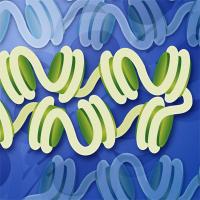
This shows DNA packaged into 10-nm chromatin fibers. Scientists in Canada and the United States have used three-dimensional imaging techniques to settle a long-standing debate about how DNA and structural proteins are packaged into chromatin fibres. The researchers, whose findings are published in EMBO reports, reveal that the mouse genome consists of 10-nm chromatin fibres but did not find evidence for the wider 30-nm fibres that were previously thought to be important components of the DNA architecture.
| Full story | 0 Comments | 8908 views |
| Biology | October 5, 2012 03:01 AM |
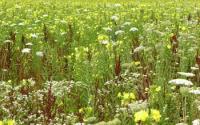
This is a large natural population of evening primrose (yellow), which is a common plant in eastern North America.
Agrawal's team set up 16 identical plots. During each growing season for... At first blush, many people would probably love to get rid of insects, such as pesky mosquitoes, ants and roaches. But a new study indicates that getting rid of insects could trigger some unwelcome ecological consequences, such as the rapid loss of desired traits in plants, including their good taste and high yields.
| Full story | 0 Comments | 14969 views |
| Biology | October 5, 2012 03:01 AM |
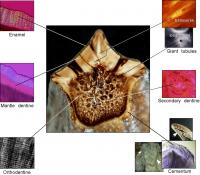
This cross-section of a duck-billed dinosaur tooth (Edmontosaurus) shows the remarkably complex architecture. Six main tissues compose the tooth, where most reptiles only have two (enamel and orthodentine). A team of paleontologists and engineers has found that duck-billed dinosaurs had an amazing capacity to chew tough and abrasive plants with grinding teeth more complex than those of cows, horses, and other well-known modern grazers. Their study, which is published today in the journal Science, is the first to recover material properties from fossilized teeth.
| Full story | 0 Comments | 9803 views |
| Biotechnology | October 2, 2012 05:54 PM |
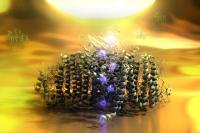
Photosystem-I (green) is optically excited by an electrode (top). An electron then is transferred step by step in only 16 nanoseconds. A team of scientists, led by Joachim Reichert, Johannes Barth, and Alexander Holleitner (Technische Universitaet Muenchen, Clusters of Excellence MAP and NIM), and Itai Carmeli (Tel Aviv University) developed a method to measure photocurrents of a single functionalized photosynthetic protein system. The scientists could demonstrate that such a system can be integrated and selectively addressed in artificial photovoltaic device architectures while retaining their biomolecular functional properties. The proteins represent light-driven, highly efficient single-molecule electron pumps that can act as current generators in nanoscale electric circuits. The interdisciplinary team publishes the results in ´Nature Nanotechnology´ this week.
| Full story | 0 Comments | 12349 views |
| Stem Cell Research | October 2, 2012 05:54 PM |
The team led by Manel Esteller, director of the Cancer Epigenetics and Biology Program in the Bellvitge Biomedical Research Institute (IDIBELL), Professor of Genetics at the University of Barcelona and ICREA researcher, has identified epigenetic changes that occur in adult stem cells to generate different body tissues. The finding is published this week in The American Journal of Pathology.
| Full story | 0 Comments | 13880 views |
| AIDS & HIV | October 1, 2012 05:21 PM |
A team of scientists led by virologists Prof. Oliver T. Fackler and Prof. Oliver T. Keppler from Heidelberg University Hospital have decoded a mechanism used by the human immune system to protect itself from HIV viruses. A protein stops the replication of the virus in resting immune cells, referred to as T helper cells, by preventing the transcription of the viral genome into one that can be read by the cell. The ground-breaking results provide new insights into the molecular background of the immunodeficiency syndrome AIDS and could open up starting points for new treatments. The study has now been published – ahead of print online – in the international journal Nature Medicine.
| Full story | 0 Comments | 12565 views |
| Health & Medicine | October 1, 2012 05:21 PM |
A new study has outlined for the first time a biological mechanism by which zinc deficiency can develop with age, leading to a decline of the immune system and increased inflammation associated with many health problems, including cancer, heart disease, autoimmune disease and diabetes.
| Full story | 0 Comments | 10769 views |
| Environment | October 1, 2012 05:21 PM |
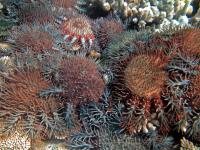
Outbreaks of the coral eating crown of thorns starfish have been responsible for 42 percent of the over 50 percent decline in coral cover on the Great Barrier Reef The Great Barrier Reef has lost half its coral cover in the last 27 years. The loss was due to storm damage (48%), crown of thorns starfish (42%), and bleaching (10%) according to a new study published in the Proceedings of the National Academy of Sciences today by researchers from the Australian Institute of Marine Science (AIMS) in Townsville.
| Full story | 0 Comments | 13214 views |

- In some genetic cases of microcephaly, stem cells fail to launch
- Yale team discovers how Zika virus causes fetal brain damage
- Scientists uncover the way a common cell enzyme alerts the body to invading bacteria
- Arctic gives clues on worst mass extinction of life
- Calcium channel blockers caught in the act at atomic level
Search Bio News Net
Free Biology Newsletter
- Flexibility That A.C.A. Lent to Work Force Is Threatened by...International Herald Tribune
- Bacteria Behind Legionnaires’ Disease Found at New York Police StationInternational Herald Tribune
- Prescription Price Crisis? 28 Million Americans See Spike in Drug...MSNBC.com: Health
- Seizing on Opioid Crisis, a Drug Maker Lobbies Hard for...International Herald Tribune
- Republicans are taking a big political risk on health careAP Health News
- Why We're So Divided Over Saving WolvesNational Geographic News