

Corals are an invaluable part of the marine ecosystem, fostering biodiversity and protecting coastlines. But they're also increasingly endangered. Pathogenic bacteria, along with pollution and harmful fishing practices, are one of the biggest threats to the world's coral populations today.

| Bioinformatics | August 30, 2012 05:50 PM |
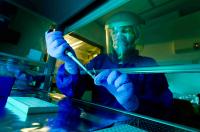
Matthias Meyer at work in the clean lab. The analyses of an international team of researchers led by Svante Pääbo of the Max Planck Institute for Evolutionary Anthropology in Leipzig, Germany, show that the genetic variation of Denisovans was extremely low, suggesting that although they were present in large parts of Asia, their population was never large for long periods of time. In addition, a comprehensive list documents the genetic changes that set apart modern humans from their archaic relatives. Some of these changes concern genes that are associated with brain function or nervous system development.
| Full story | 0 Comments | 9341 views |

| Biology | August 30, 2012 05:50 PM |
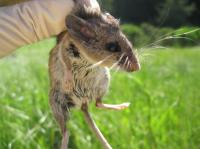
The California mouse (Peromyscus californicus) is a species of rodent in the family Cricetidae found in northwestern Mexico and central to southern California. In the foothills of the Santa Cruz Mountains two closely related species of mice share a habitat and a genetic lineage, but have very different social lives. The California mouse (Peromyscus californicus) is characterized by a lifetime of monogamy; the deer mouse (Peromyscus maniculatus) is sexually promiscuous.
| Full story | 0 Comments | 10035 views |
| Biology | August 30, 2012 05:50 PM |
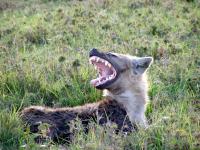
MSU researchers show that microbes help hyenas communicate via scent. Bacteria in hyenas' scent glands may be the key controllers of communication.
| Full story | 0 Comments | 10844 views |
| Biology | August 29, 2012 06:51 PM |
On the surface, ants and the Internet don't seem to have much in common. But two Stanford researchers have discovered that a species of harvester ants determine how many foragers to send out of the nest in much the same way that Internet protocols discover how much bandwidth is available for the transfer of data. The researchers are calling it the "anternet."
| Full story | 0 Comments | 8782 views |

| Biotechnology | August 29, 2012 06:51 PM |
University of Adelaide researchers are working with colleagues in Italy to produce better quality pasta that also adds greater value to human health.
| Full story | 0 Comments | 7711 views |
| Biology | August 29, 2012 06:51 PM |
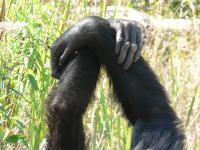
This image shows a wrist-to-wrist grooming handclasp. A research collaboration between the Gonzaga University and the Max Planck Institute shows that the way in which chimpanzees groom each other depends on the community to which they belong. Specifically, it is the unique handclasp grooming behaviour that reveals this local difference.
| Full story | 0 Comments | 11099 views |

| Health & Medicine | August 29, 2012 06:51 PM |
Research at Imperial College London examining influenza transmission in ferrets suggests that the virus can be passed on before the appearance of symptoms. If the finding applies to humans, it means that people pass on flu to others before they know they're infected, making it very difficult to contain epidemics.
| Full story | 0 Comments | 8915 views |
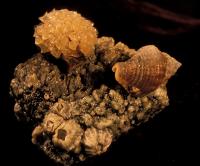
Males of the whelk Solenoptera macrospira provide all parental care, carrying egg capsules on their back Pity the male of the marine whelk, Solenosteira macrospira. He does all the work of raising the young, from egg-laying to hatching — even though few of the baby snails are his own.
| Full story | 0 Comments | 7587 views |

| Molecular & Cell Biology | August 28, 2012 06:05 PM |
Proteins adorning the surfaces of human cells perform an array of essential functions, including cell signaling, communication and the transport of vital substances into and out of cells. They are critical targets for drug delivery and many proteins are now being identified as disease biomarkers — early warning beacons announcing the pre-symptomatic presence of cancers and other diseases.
| Full story | 0 Comments | 12437 views |
| Molecular & Cell Biology | August 27, 2012 04:06 PM |
Some RNA molecules spend time in a restful state akin to hibernation rather than automatically carrying out their established job of delivering protein-building instructions in cells, new research suggests.
| Full story | 0 Comments | 7659 views |

| Environment | August 27, 2012 04:06 PM |
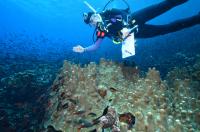
A coral species that is found in abundance from Indonesia eastward to Fiji, Samoa, and the Line Islands rarely crosses the Eastern Pacific Barrier toward the coast of the Americas A coral species that is found in abundance from Indonesia eastward to Fiji, Samoa, and the Line Islands rarely crosses the Eastern Pacific Barrier toward the coast of the Americas, according to a team of researchers led by Iliana Baums, an assistant professor of biology at Penn State University. Darwin hypothesized in 1880 that most species could not disperse across the marine barrier, and Baums's study is the first comprehensive test of that hypothesis using coral. The results of the scientific paper, which will be published in the journal Molecular Ecology, has important implications for climate-change research, species-preservation efforts, and the economic stability of the eastern Pacific region, including the Galapagos, Costa Rica, Panama, and Ecuador.
| Full story | 0 Comments | 7486 views |
| Molecular & Cell Biology | August 23, 2012 06:00 PM |
It's widely accepted that molecular mechanisms mediating epigenetics include DNA methylation and histone modifications, but a team from Thomas Jefferson University has evidence to the contrary regarding the role of histone modifications.
| Full story | 0 Comments | 8285 views |
| Biology | August 23, 2012 06:00 PM |
Ninety-six percent of a chimpanzee's genome is the same as a human's. It's the other 4 percent, and the vast differences, that pique the interest of Georgia Tech's Soojin Yi. For instance, why do humans have a high risk of cancer, even though chimps rarely develop the disease?
| Full story | 0 Comments | 12160 views |
| Molecular & Cell Biology | August 23, 2012 05:59 PM |
Numerous processes in our body fluctuate in a regular pattern during the day. These circadian (or daily) variations can be driven by local oscillators present within our cells or by systemic signals controlled by the master pacemaker, located in the brain. Ueli Schibler, profes- sor at the University of Geneva (UNIGE), Switzerland, unveils a mo- lecular mechanism by which body temperature rhythms influence the expression of 'clock genes' and synchronize local oscillators. This study, made in collaboration with a team at the Ecole polytechnique fédérale of Lausanne (EPFL), also demonstrates how the production of DBP, a protein involved in detoxification and drug metabolism, is modulated by daily variations of temperature. This research has been published in Science magazine.
| Full story | 0 Comments | 8230 views |

| Stem Cell Research | August 23, 2012 05:59 PM |
Cancer stem cells are defined by three abilities: differentiation, self-renewal and their ability to seed a tumor. These stem cells resist chemotherapy and many researchers posit their role in relapse. A University of Colorado Cancer Center study recently published in the journal Stem Cells, shows that melanoma cells with these abilities are marked by the enzyme ALDH, and imagines new therapies to target high-ALDH cells, potentially weeding the body of these most dangerous cancer creators.
| Full story | 0 Comments | 6805 views |
| Biology | August 22, 2012 06:17 PM |

This is a reconstruction of the Odontogriphus mouthparts. The radula sounds like something from a horror movie – a conveyor belt lined with hundreds of rows of interlocking teeth. In fact, radulas are found in the mouths of most molluscs, from the giant squid to the garden snail. Now, a "prototype" radula found in 500-million-year-old fossils studied by University of Toronto graduate student Martin Smith, shows that the earliest radula was not a flesh-rasping terror, but a tool for humbly scooping food from the muddy sea floor.
| Full story | 0 Comments | 7327 views |
| Environment | August 22, 2012 06:17 PM |
Carbon nanotubes (CNTs) are some of the strongest materials on Earth and are used to strengthen composite materials, such as those used in high-performance tennis rackets. CNTs have potential uses in everything from medicine to electronics to construction. However, CNTs are not without risks. A joint study by the University of Missouri and United States Geological Survey found that they can be toxic to aquatic animals. The researchers urge that care be taken to prevent the release of CNTs into the environment as the materials enter mass production.
| Full story | 0 Comments | 7315 views |
| Biotechnology | August 21, 2012 04:50 PM |
Numerous viruses are used in the service of science today. They serve as gene taxis to transfer therapeutic genes into body cells or as therapeutic viruses targeted to infect and destroy cancer cells. For such applications, the viruses are often equipped with additional genes, such as for immune mediators or for proteins inducing programmed cell death. However, these gene products can harm the body if they are released at the wrong moment or at excessive levels. "Ideally, we want to be able to turn on and off the transferred genes at a specific time," says Dr. Dirk Nettelbeck, a virologist from DKFZ.
| Full story | 0 Comments | 7714 views |
| Health & Medicine | August 21, 2012 04:50 PM |
Regardless of how much a high school student generally studies each day, if that student sacrifices sleep in order to study more than usual, he or she is more likely to have academic problems the following day. Because students tend to increasingly sacrifice sleep time for studying in the latter years of high school, this negative dynamic becomes more and more prevalent over time.
| Full story | 0 Comments | 12905 views |
| Molecular & Cell Biology | August 21, 2012 04:50 PM |
Transcription is a cellular process by which genetic information from DNA is copied to messenger RNA for protein production. But anticancer drugs and environmental chemicals can sometimes interrupt this flow of genetic information by causing modifications in DNA.
| Full story | 0 Comments | 7420 views |
| Molecular & Cell Biology | August 21, 2012 04:50 PM |
An international team led by New York University School of Medicine and BGI, the largest genomics organization in the world, has completed the first genome-wide and single-nucleotide resolution DNA methylomes of two ant species: Camponotus floridanus and Harpegnathos saltator. It provides new insights into the relationship between epigenetic regulation and caste differentiation of ants and also shed light on the epigenetic mechanism involved in social behavior, neurobiology and life-span of other animals. The latest study was published in Current Biology, one sister journal of Cell.
| Full story | 0 Comments | 5696 views |
| Molecular & Cell Biology | August 20, 2012 05:19 PM |
The code determines the recognition of RNA molecules by a superfamily of RNA-binding proteins called pentatricopeptide repeat (PPR) proteins.
| Full story | 0 Comments | 6992 views |
| Health & Medicine | August 17, 2012 02:03 AM |
Scientists at the University of Liverpool have identified a type of E. coli bacteria that may encourage the development of colon cancer.
| Full story | 0 Comments | 9530 views |

| Microbiology | August 17, 2012 02:03 AM |
__IMAGE_2 A parasite thought to be harmless and found in many people may actually be causing subtle changes in the brain, leading to suicide attempts.
| Full story | 0 Comments | 14281 views |
| Microbiology | August 17, 2012 02:02 AM |
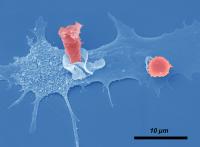
T cells are immune cells important for the defense against viruses. The ongoing exposure to cytomegalovirus impairs their function. The cytomegalovirus (CMV) is a member of the herpesvirus family. Although most people carry CMV for life, it hardly ever makes them sick. Researchers from the Helmholtz Centre for Infection Research and from the USA have now unveiled long term consequences of the on-going presence of CMV: Later in life, more and more cells of the immune system concentrate on CMV, and as a result, the response against other viruses is weakened. These research results help to explain why the elderly are often more prone to infectious diseases than young people.
| Full story | 0 Comments | 9422 views |
| Biology | August 15, 2012 04:04 PM |
Brain scans have revealed distinctive features in the brain structure of karate experts, which could be linked to their ability to punch powerfully from close range. Researchers from Imperial College London and UCL (University College London) found that differences in the structure of white matter – the connections between brain regions – were correlated with how black belts and novices performed in a test of punching ability.
| Full story | 0 Comments | 7720 views |
| Biotechnology | August 15, 2012 04:04 PM |
By sequencing cancer-cell genomes, scientists have discovered vast numbers of genes that are mutated, deleted or copied in cancer cells. This treasure trove is a boon for researchers seeking new drug targets, but it is nearly impossible to test them all in a timely fashion.
| Full story | 0 Comments | 7783 views |
| Microbiology | August 14, 2012 03:30 PM |
A mysterious condition called Inclusion Body Disease (IBD) strikes captive boa constrictors and pythons, causing bizarre behavioral changes and eventually death. Scientists investigating an outbreak of IBD among snakes at the Steinhart Aquarium in San Francisco report they may well have found a virus that is responsible for this common but deadly disease, a discovery that could eventually lead to prevention and treatment options. The study appears in the August 14 issue of mBio®, the online open-access journal of the American Society for Microbiology. The authors report that the virus represents a whole new class of arenaviruses scientists have never seen before.
| Full story | 0 Comments | 9572 views |
| Biotechnology | August 14, 2012 03:30 PM |
Pioneering mass spectrometry methods developed at the U.S. Department of Energy's Ames Laboratory are helping plant biologists get their first glimpses of never-before-seen plant tissue structures.
| Full story | 0 Comments | 6832 views |
| Biology | August 13, 2012 04:37 PM |
University of Florida researchers curating a 17-foot-7-inch Burmese python, the largest found in Florida, discovered 87 eggs in the snake, also a state record.
| Full story | 0 Comments | 9015 views |
| Biotechnology | August 13, 2012 04:37 PM |
Engineers at Oregon State University have made a breakthrough in the performance of microbial fuel cells that can produce electricity directly from wastewater, opening the door to a future in which waste treatment plants not only will power themselves, but will sell excess electricity.
| Full story | 0 Comments | 8265 views |
| Biology | August 9, 2012 03:41 PM |
Geckos are remarkable little creatures, clinging to almost any dry surface, and Alyssa Stark, from the University of Akron, USA, explains that they appear to be equally happy scampering through tropical rainforest canopies as they are in urban settings. 'A lot of work is done on geckos that looks at the very small adhesive structures on their toes to really understand how the system works at the most basic level', says Stark. She adds that the animals grip surfaces with microscopic hairs on the soles of their feet that make close enough contact to be attracted to the surface by the minute van der Waals forces between atoms. However, she and her colleagues Timothy Sullivan and Peter Niewiarowski were curious about how the lizards cope on surfaces in their natural habitat.
| Full story | 0 Comments | 8695 views |
| Environment | August 9, 2012 03:41 PM |
1.5 million years of climate history revealed after scientists solve mystery of the deep Study successfully reconstructed temperature from the deep sea to reveal how global ice volume has varied over the glacial-interglacial cycles of the past 1.5 million years
| Full story | 0 Comments | 6497 views |
| Stem Cell Research | August 9, 2012 03:41 PM |
Scientists from The Scripps Research Institute have identified a new stem cell population that may be responsible for giving birth to the neurons responsible for higher thinking. The finding also paves the way for scientists to produce these neurons in culture—a first step in developing better treatments for cognitive disorders, such as schizophrenia and autism, which result from disrupted connections among these brain cells.
| Full story | 0 Comments | 8207 views |
| Biology | August 8, 2012 03:46 PM |
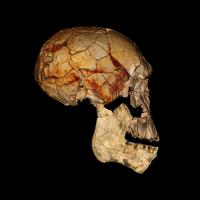
The KNM-ER 1470 cranium, discovered in 1972, combined with the new lower jaw KNM-ER 60000; both are thought to belong to the same species. Exciting new fossils discovered east of Lake Turkana confirm that there were two additional species of our genus – Homo – living alongside our direct human ancestral species, Homo erectus, almost two million years ago. The finds, announced in the prestigious scientific journal Nature on August 9th, include a face, a remarkably complete lower jaw, and part of a second lower jaw. They were uncovered between 2007 and 2009 by the Koobi Fora Research Project (KFRP), led by Meave and Louise Leakey. KFRP's fieldwork was facilitated by the Turkana Basin Institute (TBI), and supported by the National Geographic Society, which has funded the KFRP since 1968.
| Full story | 0 Comments | 8850 views |
| Molecular & Cell Biology | August 8, 2012 03:46 PM |
At its most fundamental level, diabetes is a disease characterized by stress -- microscopic stress that causes inflammation and the loss of insulin production in the pancreas, and system-wide stress due to the loss of that blood-sugar-regulating hormone.
| Full story | 0 Comments | 9197 views |
| Health & Medicine | August 7, 2012 05:09 PM |
Corticosteroids, frequently prescribed to alleviate acute sinusitis, show no clinical benefit in treating the condition, according to a randomized controlled trial published in CMAJ (Canadian Medical Association Journal) (pre-embargo link only) http://www.cmaj.ca/site/press/cmaj.120430.pdf.
| Full story | 0 Comments | 5803 views |
| Molecular & Cell Biology | August 6, 2012 04:53 PM |
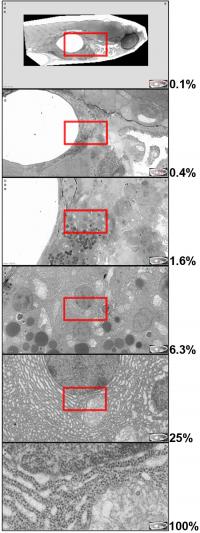
Advances in “virtual nanoscopy” enable the generation of large-scale composite images of biological tissues, as described in The Journal of Cell Biology (JCB) Just as users of Google Earth can zoom in from space to a view of their own backyard, researchers can now navigate biological tissues from a whole embryo down to its subcellular structures thanks to recent advances in electron microscopy and image processing, as described in The Journal of Cell Biology (JCB). An upgrade to the JCB DataViewer (http://jcb-dataviewer.rupress.org), JCB's browser-based image presentation tool, now also makes these data publicly accessible for exploration and discovery.
| Full story | 0 Comments | 6861 views |
| Biology | August 6, 2012 04:53 PM |
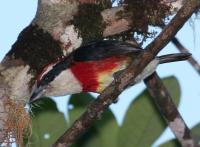
The Sira Barbet, Capito fitzpatricki, has been discovered and named by Cornell University graduates following an expedition to the remote Peruvian Andes. A colorful, fruit-eating bird with a black mask, pale belly and scarlet breast – never before described by science – has been discovered and named by Cornell University graduates following an expedition to the remote Peruvian Andes
| Full story | 0 Comments | 11421 views |

- In some genetic cases of microcephaly, stem cells fail to launch
- Yale team discovers how Zika virus causes fetal brain damage
- Scientists uncover the way a common cell enzyme alerts the body to invading bacteria
- Arctic gives clues on worst mass extinction of life
- Calcium channel blockers caught in the act at atomic level
Search Bio News Net
Free Biology Newsletter
- Flexibility That A.C.A. Lent to Work Force Is Threatened by...International Herald Tribune
- Bacteria Behind Legionnaires’ Disease Found at New York Police StationInternational Herald Tribune
- Prescription Price Crisis? 28 Million Americans See Spike in Drug...MSNBC.com: Health
- Seizing on Opioid Crisis, a Drug Maker Lobbies Hard for...International Herald Tribune
- Republicans are taking a big political risk on health careAP Health News
- Why We're So Divided Over Saving WolvesNational Geographic News