

A new study shows significant differences in brain development in high-risk infants who develop autism starting as early as age 6 months. The findings published in the American Journal of Psychiatry reveal that this abnormal brain development may be detected before the appearance of autism symptoms in an infant's first year of life. Autism is typically diagnosed around the age of 2 or 3.

| Microbiology | June 27, 2012 04:33 PM |
Scientists have identified a new mechanism of bacterial pathogenesis. The results of the research project, partly funded by the Academy of Finland, have been published in the journal Proceedings of the National Academy of Sciences of the United States of America (PNAS).
| Full story | 0 Comments | 7445 views |

| Biotechnology | June 26, 2012 06:50 PM |
Optimal stem cell therapy delivery to damaged areas of the heart after myocardial infarction has been hampered by inefficient homing of cells to the damaged site. However, using rat models, researchers in France have used a magnet to guide cells loaded with iron oxide nanoparticles to key sites, enhancing the myocardial retention of intravascularly delivered endothelial progenitor cells.
| Full story | 0 Comments | 7093 views |
| Biotechnology | June 25, 2012 06:03 PM |
Microcirculation Imaging is the first handbook of its kind, introducing many different technical approaches for the visualization of microcirculation. Clearly structured throughout, this book is a must for every clinician and researcher relying on microcirculation imaging.
| Full story | 0 Comments | 6668 views |

| Environment | June 25, 2012 06:03 PM |
The California condor is chronically endangered by lead exposure from ammunition and requires ongoing human intervention for population stability and growth, according to a new study led by the University of California, Santa Cruz, and involving the University of Colorado Boulder.
| Full story | 0 Comments | 6449 views |

| Molecular & Cell Biology | June 25, 2012 06:03 PM |
A new study suggests that the appetite-inducing hormone ghrelin increases the incentive for humans to eat high-calorie foods, even on a full stomach. The results will be reported Sunday at The Endocrine Society's 94th Annual Meeting in Houston.
| Full story | 0 Comments | 7571 views |
| Microbiology | June 25, 2012 06:03 PM |
A 150-foot-high garbage dump in Colombia, South America, may have new life as a public park. Researchers at the University of Illinois have demonstrated that bacteria found in the dump can be used to neutralize the contaminants in the soil.
| Full story | 0 Comments | 7974 views |

| Biology | June 21, 2012 05:54 PM |
In a 0-60 mph stand off, most cars would be hard pressed to give a cheetah a run for its money, and at their highest recorded speed of 29m/s (65mph) cheetahs easily outstrip the fastest greyhounds. But, according to Alan Wilson from the Royal Veterinary College, UK, there is no clear reason for the cheetah's exceptional performance. 'Cheetahs and greyhounds are known to use a rotary gallop and physically they are remarkably similar, yet there is this bewitching difference in maximum speed of almost a factor of two', he says. Teaming up with Penny Hudson and Sandra Corr, Wilson decided to compare how cheetahs and greyhounds sprint to see if there were any mechanical differences between the two animals' movements and they publish their findings in The Journal of Experimental Biology at http://jeb.biologists.org.
| Full story | 0 Comments | 8674 views |
| Molecular & Cell Biology | June 21, 2012 05:54 PM |
A team of researchers led by UC Davis Health System has found that human alpha-defensin 6 (HD6) – a key component of the body's innate defense system – binds to microbial surfaces and forms "nanonets" that surround, entangle and disable microbes, preventing bacteria from attaching to or invading intestinal cells.
| Full story | 0 Comments | 7493 views |
| Biotechnology | June 21, 2012 05:54 PM |
Regenerative medicine researchers at Wake Forest Baptist Medical Center have reached an early milestone in a long-term project that aims to build replacement kidneys in the lab to help solve the shortage of donor organs.
| Full story | 0 Comments | 7259 views |
| Molecular & Cell Biology | June 20, 2012 05:44 AM |
Double-stranded breaks in cellular DNA can trigger tumorigenesis. Researchers from Ludwig-Maximilians-Universitaet (LMU) in Munich have now determined the structure of a protein involved in the repair and signaling of DNA double-strand breaks. The work throws new light on the origins of neurodegenerative diseases and certain tumor types.
| Full story | 0 Comments | 7985 views |

| Stem Cell Research | June 20, 2012 05:44 AM |
A cutting-edge method developed at the University of Michigan Center for Arrhythmia Research successfully uses stem cells to create heart cells capable of mimicking the heart's crucial squeezing action.
| Full story | 0 Comments | 8019 views |
| Molecular & Cell Biology | June 18, 2012 05:30 PM |
Tiny, transient loops of genetic material, detected and studied by the hundreds for the first time at Brown University, are providing new insights into how the body transcribes DNA and splices (or missplices) those transcripts into the instructions needed for making proteins.
| Full story | 0 Comments | 9062 views |
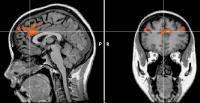
This image shows brain activity when people exert self-control. New pictures from the University of Iowa show what it looks like when a person runs out of patience and loses self-control.
| Full story | 0 Comments | 10090 views |
A single-dose vaccine capable of providing immunity against the effects of cocaine offers a novel and groundbreaking strategy for treating cocaine addiction is described in an article published Instant Online in Human Gene Therapy, a peer-reviewed journal from Mary Ann Liebert, Inc. (http://www.liebertpub.com) The article is available free online at the Human Gene Therapy website (http://www.liebertpub.com/hum).
| Full story | 0 Comments | 8367 views |

| Health & Medicine | June 14, 2012 05:00 PM |
Breast cancer cells frequently move from their primary site and invade bone, decreasing a patient's chance of survival. This process of metastasis is complex, and factors both within the breast cancer cells and within the new bone environment play a role. In next week's Journal of Biological Chemistry "Paper of the Week," Roger Gomis and colleagues at the Institute for Research in Biomedicine in Spain investigated how breast cancer cells migrate to bone.
| Full story | 0 Comments | 9132 views |
| Environment | June 14, 2012 04:59 PM |
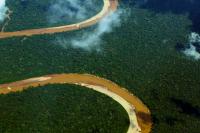
New evidence challenges the idea that the Amazon basin was densely inhabited before European arrival. Population estimates for the Amazon basin just before Europeans arrived range from 2 to 10 million people. The newly reported reconstruction of Amazonian prehistory by Smithsonian scientist Dolores R. Piperno and colleagues suggests that large areas of western Amazonia were sparsely inhabited. This clashes with the belief that most of Amazonia, including forests far removed from major rivers, was heavily occupied and modified. The team's research is published in the June 15 issue of Science.
| Full story | 0 Comments | 7263 views |
| Molecular & Cell Biology | June 14, 2012 04:59 PM |
It has long been known that cancer is a disease of aging, but a molecular link between the two has remained elusive.
| Full story | 0 Comments | 8060 views |

| Bioinformatics | June 13, 2012 03:40 AM |
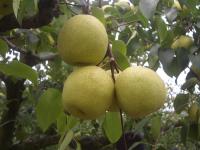
This is an Asiatic pear tree. The first sequencing of the Asiatic pear genome has recently been completed by an international consortium of seven worldwide universities and institutions including the University of Illinois.
| Full story | 0 Comments | 8182 views |
| Molecular & Cell Biology | June 13, 2012 03:40 AM |
MicroRNAs (miRNAs) – tiny strands of non-protein-coding RNAs – start off as long strands of precursor miRNAs. These long strands get chopped up by a special kind of machinery, the "Microprocessor" complex, to transform them into their shorter functional form. The resulting miRNAs bind to messenger RNA (mRNAs) molecules, inhibiting their protein production capacity and thus regulating the levels of hundreds of different proteins.
| Full story | 0 Comments | 6280 views |
| Environment | June 13, 2012 03:40 AM |
In an effort to advance the field of coastal restoration, The Nature Conservancy and a team of scientists from more than a dozen management agencies and research institutions led by the University of Cambridge conducted an in-depth study of oyster reef area and, for the first time, the actual biomass (the "living weight") of oyster reefs in dozens of estuaries throughout the United States.
| Full story | 0 Comments | 6525 views |
| Health & Medicine | June 11, 2012 05:05 PM |
Sportsmen and women dope with the blood hormone Epo to enhance their performance. Researchers from the University of Zurich now discovered by animal testing that Epo has a performance-enhancing effect in the brain shortly after injection and not only after days by improving oxygen transport in blood. As Epo also increases motivation, it could be useful in treating depression.
| Full story | 0 Comments | 7259 views |
| Biotechnology | June 11, 2012 05:05 PM |
In April 2009, the world took notice as reports surfaced of a virus in Mexico that had mutated from pigs and was being passed from human to human. The H1N1 "swine flu," as the virus was named, circulated worldwide, killing more than 18,000 people, according to the World Health Organization. The Centers for Disease Control and Prevention in the United States said it was the first global pandemic in more than four decades.
| Full story | 0 Comments | 7138 views |

| AIDS & HIV | June 11, 2012 05:05 PM |
The rare ability of some individuals to control HIV infection with their immune system alone appears to depend – at least partially – on specific qualities of the immune system's killer T cells and not on how many of those cells are produced. In a Nature Immunology paper that has received advance online publication, researchers at the Ragon Institute of Massachusetts General Hospital, MIT and Harvard report that – even among individuals sharing a protective version of an important immune system molecule – the ability of HIV-specific killer T cells to control viral replication appears to depend on the particular sequence of the protein that recognizes HIV infected cells.
| Full story | 0 Comments | 7624 views |
| Microbiology | June 11, 2012 05:05 PM |
Bacteria are omnipresent – in the water, the air and the soil, as well as in plants, animals and even people. We tend to think of bacteria as pathogenic, causing disease. We associate them with intestinal upsets and throat infections, pneumonia and blood poisoning. However, the great majority of bacteria are really useful – they play a role in our digestion, clean up waste water in sewage treatment plants, produce yoghurt and cheese from milk, and some are even used in the manufacture of drugs.
| Full story | 0 Comments | 6528 views |
Alkaloids constitute a very large group of natural nitrogen-containing compounds with diverse effects on the human organism. A large variety of plant-produced alkaloids have strong pharmacological effects, and are used as toxins, stimulants, pharmaceuticals or recreational drugs, including caffeine, nicotine, morphine, quinine, strychnine, atropine and cocaine. Atropine, used to dilate the pupils of the eye, and the addictive drug cocaine are both tropane alkaloids which possess two distinctive, inter-connecting five- and seven-membered rings.
| Full story | 0 Comments | 7893 views |
| Microbiology | June 6, 2012 06:26 PM |
Microorganisms in the human gastrointestinal tract form an intricate, living fabric made up of some 500 to 1000 distinct bacterial species, (in addition to other microbes). Recently, researchers have begun to untangle the subtle role these diverse life forms play in maintaining health and regulating weight.
| Full story | 0 Comments | 7171 views |
| Biology | June 6, 2012 06:26 PM |
In a finding that could fundamentally re-write science's understanding of how some parasite-host relationships work, Harvard researchers have found that, despite being separated by more than 100 million years of evolution, the parasitic "corpse flower" found in southeast Asian rainforests appears to share large parts of its genome with its host vines, members of the grapevine family.
| Full story | 0 Comments | 8323 views |
| Molecular & Cell Biology | June 6, 2012 06:26 PM |
A genetically-modified version of the rabies virus is helping scientists at Harvard to trace neural pathways in the brain, a research effort that could one day lead to treatments for Parkinson's disease and addiction.
| Full story | 0 Comments | 7587 views |
| Biotechnology | June 4, 2012 06:32 PM |
Using a technique known as "nucleic acid origami," chemical engineers have built tiny particles made out of DNA and RNA that can deliver snippets of RNA directly to tumors, turning off genes expressed in cancer cells.
| Full story | 0 Comments | 8191 views |
| Biology | June 4, 2012 06:32 PM |
An international team of researchers has announced the discovery of Afrasia djijidae, a new fossil primate from Myanmar that illuminates a critical step in the evolution of early anthropoids—the group that includes humans, apes, and monkeys. The 37-million-year-old Afrasia closely resembles another early anthropoid, Afrotarsius libycus, recently discovered at a site of similar age in the Sahara Desert of Libya. The close similarity between Afrasia and Afrotarsius indicates that early anthropoids colonized Africa only shortly before the time when these animals lived. The colonization of Africa by early anthropoids was a pivotal step in primate and human evolution, because it set the stage for the later evolution of more advanced apes and humans there. The scientific paper describing the discovery appears today in Proceedings of the National Academy of Sciences.
| Full story | 0 Comments | 10815 views |

- In some genetic cases of microcephaly, stem cells fail to launch
- Yale team discovers how Zika virus causes fetal brain damage
- Scientists uncover the way a common cell enzyme alerts the body to invading bacteria
- Arctic gives clues on worst mass extinction of life
- Calcium channel blockers caught in the act at atomic level
Search Bio News Net
Free Biology Newsletter
- Flexibility That A.C.A. Lent to Work Force Is Threatened by...International Herald Tribune
- Bacteria Behind Legionnaires’ Disease Found at New York Police StationInternational Herald Tribune
- Prescription Price Crisis? 28 Million Americans See Spike in Drug...MSNBC.com: Health
- Seizing on Opioid Crisis, a Drug Maker Lobbies Hard for...International Herald Tribune
- Republicans are taking a big political risk on health careAP Health News
- Why We're So Divided Over Saving WolvesNational Geographic News